GENDER EQUALITY IN EDUCATION: EXAMINING THE DIALOGUE
BETWEEN INTERNATIONAL AND NATIONAL POLICIES IN GHANA
“IT'S LIKE POURING WATER ON RUBBER - IT DOESN'T
REALLY SINK”
Keren Dalyot
A dissertation submitted to the faculty of the University of North Carolina at Chapel Hill in partial fulfillment of the requirements for the degree of Doctor of Philosophy in the School of
Education.
Chapel Hill 2015
Approved by:
Catherine Marshall
Rune Simeonsson
Sharon Palsha
Xue Rong
ii ABSTRACT
Keren Dalyot: Gender Equality In Education: Examining The Dialogue Between International And National Policies In Ghana
(Under the direction of Catherine Marshall)
Gender equality in education is not a novel concept. What is newly important, however,
is the way states define and approach it. This is reflected most clearly in the education services
states provide to their citizens and residents. This is especially crucial in developing countries
where public services are generally weaker and less developed. In the 21st century, gender quality in education is a principle acknowledged by the international community both as a basic
right and as a goal which governments need to actively commit to. Even though this is a
well-acknowledged principle, progress on the ground is uneven and often slow.
My dissertation is focused on several guiding questions that are all centered on a
qualitative investigation of policy processes and implementation. The questions that have guided
my research are: How are international policies on gender equality in education being translated
and interpreted by national policymakers in developing countries? How do local leaders define
and make sense of international policies in their daily work? What are the challenges they
identify in their daily work? What can we learn from the way they work with development
partners and international actors? These questions are then answered in a particular setting of a
developing West African country – Ghana.
Ghana provides a great context for studying the interplay between international policy,
iii
indicators the situation in Ghana is very promising in terms of parity. My research opens a small
window to the reality of policymaking and project development in Ghana, using qualitative
methods that are focused on exposing policy disconnects and deeper meanings of equality and
education. The qualitative methods used in my dissertation include documents analysis and
interviews with local Ghanaian elites.
The findings of my research includedeveloping an understanding that the common
perspective on gender equality in education in Ghana tends to ignore the complex set of
obstacles girls in Ghana face. The policy texts written by international organizations or DPs
often ignore the implications of being educated for women and girls by overlooking the wider
social context of life in Ghana (or other developing countries) (Sutton, 2001). One of the major
themes that emerges from my analysis resonates with Sutton’s (2001) findings from over a
decade ago, albeit in a different continent: “Any large-scale change in patterns of educational
attainment by girls becomes a matter of altering gender relations – and thus the dynamics of
power between genders” (p. 79). The centrality of this to policymaking cannot be overstated,
because if gender equality in education is the aim (as opposed to just getting more girls into
iv
ACKNOWLEDGEMENTS
I would like to start by dedicating this dissertation to my children and to my grandparents
and especially to my last remaining grandfather Katri. My grandfather predicted many years ago
that I would do something in the field of education, although at the time I went to study
communications and media. He was a true educator and a high school principle and I am
honored to walk in his footsteps in more ways than both of us imagined. For the past 5 years, my
children have experienced the ups and downs of academic life and especially the long hours
spent reading, writing and just thinking. I think that watching their mother go through this has
showed them that elementary school is actually fun.
As with any big adventure, one rarely does it alone. I would have never even begun if it
wasn’t for my partner in life’s journey that has always encouraged me to grab any opportunity
that comes my way. However, if it wasn’t for meeting the right academic mentor at the right
time, this journey would have probably ended years ago. Dr. Catherine Marshall has been much
more that an academic advisor. When I first met her it was clear to me that when I grow up I
want to be like her, so it was just a matter of let her know. Dr. Marshall has guided me in many
academic endeavors over the past 5 years and I am forever in her debt for opening doors but also
holding those wide open so that I could easily walk in. A special thanks is also due to Brooke
Midkiff, my friend and colleague who has helped me through some tough times in the last years
v
I would lie if I took all credit for a relative smooth sail through this journey. My parents,
Haim and Leah Helfgot’s lending hand has been crucial in the past 5 years, saying that I couldn’t
have done it without them is an understatement. Doing research on gender equality in education
has also enabled me to appreciate the amount faith and support I have received at home since I
was a child. Michal and Borale Dalyot, my loving in-laws have also played a part in my journey
and I am thankful for them for their love and support.
Last but not least, my astute doctoral committee has navigated me in the past 3 years
from the initial stages of having an idea, to a complete doctoral dissertation that I can be proud
of. Dr. Simeonsson, Dr. Palsha, Dr. Mount-Cors and Dr. Rong have all added important inputs to
my work, and have made is so much better.
Finally a special thanks is also due to Rotary International and to Zeev Barkai from
Rotary Ma’alot. If it wasn’t for Zeev’s insistence that I should become a Rotary Peace Fellow, I
vi
TABLE OF CONTENTS
LIST OF TABLES………..ix
LIST OF FIGURES……….x
LIST OF ABBREVIATIONS ……….………...xi
CHAPTER 1: INTRODUCTION ……….…..1
“In qualitative studies… the ongoing process of questioning is an integral part of understanding the unfolding lives and perspectives of others” (Agee, 2009, p. 432)…………2
Structure of Dissertation ...………4
Gender Equality in Education in the ‘Global Space’……….5
Inter-national ‘Global Space’……….9
In/ternational ‘Global Space’: The Adoption of the Beijing Platform for Action (1995), the Dakar EFA Framework and the MDGs (2000)…..………11
CHAPTER 2: GLOBAL DEFINITION, LOCAL PERSPECTIVE - DEFINING “GENDER” AND “GENDER EQUALITY IN EDUCATION” ………..………....16
Historic Evolution of Defining Gender Equality in Education: Different Perspectives……..18
Definitions Promoted by Development Partners………..24
Can Gender Equality be Measured?...27
vii
Brief Historical Background………29
Key Economic and Social Indicators ………. 41
Why Ghana?: “The only way to find a larger vision is to be somewhere in particular” (Haraway, 1988, p. 590)………...53
An Obroni Doing Research in Ghana. “I was defined as white before I was defined as female” (Rich, 2008, P. 450)………56
CHAPTER 4: KEY POLICIES AND PROGRAMS ………..…..64
Theoretical Framework………64
Background on Documents Analyzed………..79
Thematic Analysis………87
CHAPTER 5: TWO PARTS OF A WHOLE? VOICES FROM THE GOVERNMENT AND VOICES OF DEVELOPMENT PARTNERS………...124
MDG and EFA………...127
Culture………131
Challenges to implementation and girls’ education………...139
DPs and their relationships with GOG, MOE and universities………..144
Finance/budgets/cost of education……….150
Policy initiation………..152
Anything Else?...156
Women leaders………...159
viii
Connecting the Interviews and Document Analysis—Emerging Themes……….161
Moving beyond issues of funding for gender equality in education to Ghana………..176
Facing the Future with Cautious Optimism………...178
Promising alternatives………182
Alternative framing for the discourse………184
Importance of education………185
Policy gaps……….186
Conclusions: A more ideal policy model………...191
APPENDIX A: METHODOLOGICAL APPENDIX ………195
APPENDIX B: INTERVIEW GUIDES ……….211
APPENDIX C :POLITICAL REGIMES AND EDUCATION POLICY TEXTS 1951-2008…214 APPENDIX D: ORGANIZATIONAL STRUCTURE OF MOE………217
APPENDIX E: UEW BROCHURE………218
LIST OF TABLES
Table 1 - Framing Gender, Development and Education Definitions …..………...…….31
Table 2 - Select Demographic and Contextual Indicators ……….52-53 Table 3 - Select Economic Indicators ………...56
Table 4- Select Educational Indicators ..………..58
Table 5 - Regional data on Antenatal care coverage provided by a skilled health provider, at least one visit (%) ………..………...64
Table 6 - Documents Analyzed ……...……….88
Table 7 - Formal Interviews by Pseudonym and Position ………..……...133
Table A1 - Use of Validity in five overarching purposes undergirding contemporary qualitative research ……….……….196
Table A2 - Formal Interviews by Pseudonym and Position …...………198
Table A3 - Documents Analyzed ………...………...202
x
LIST OF FIGURES
Figure 1 - Map of Ghana and neighboring countries ……….. 42
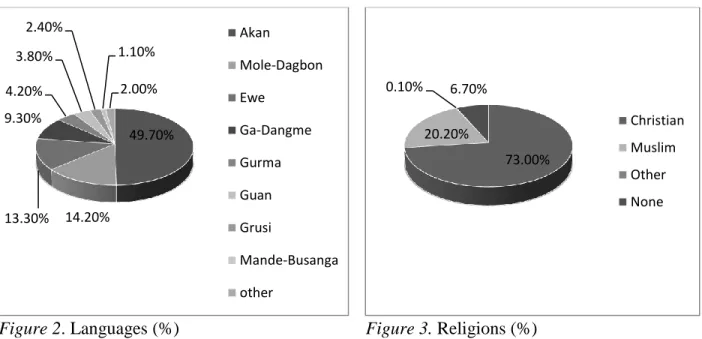
Figure 2 - Ethnic groups (%) ………54
Figure 3 - Religions (%)………54
Figure 4 - Age structure (%) ……….55
Figure5 - Religious affiliation by region ………55
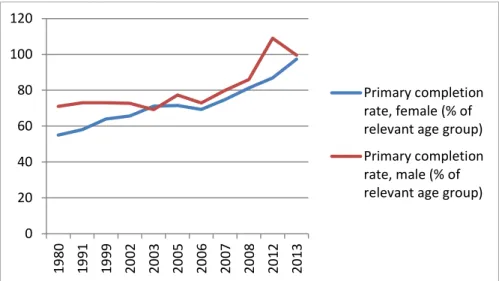
Figure 6 - Primary completion rates by gender ………59
Figure7 - Lower secondary completion rates by gender …………...……….60
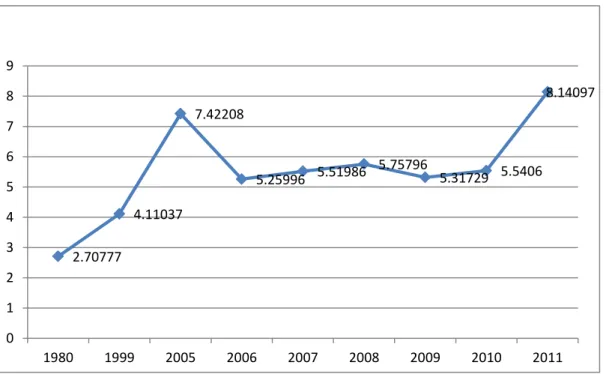
Figure 8 - Public spending on education, total (% of GDP) ……….61
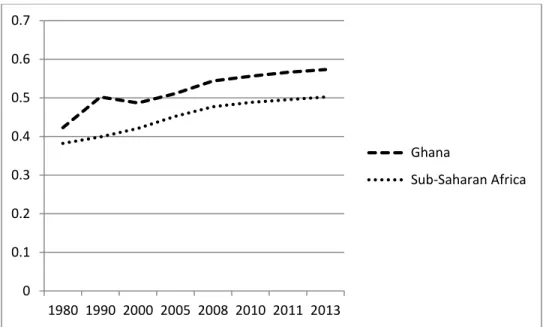
Figure 9 - Human Development Index (over time) ...………..63
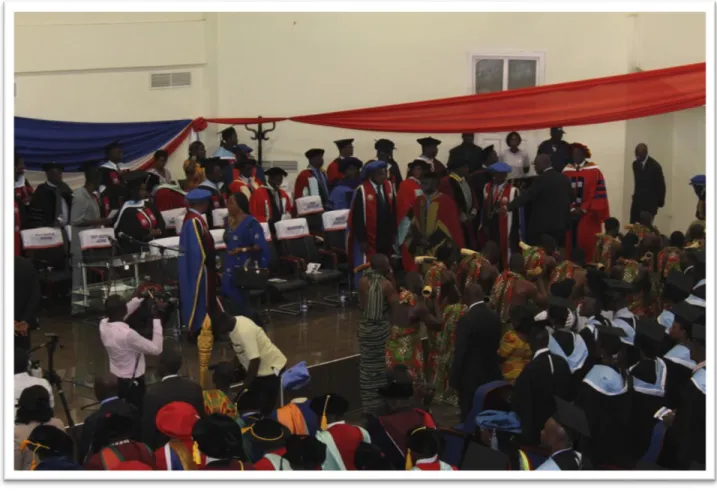
Figure 10 - Commencement ceremony at the University of Education, Winneba. 11.29.2014 …….………...66
Figure 11 - “Oxford” (Osu) St. the heart of the commercial area in Accra ...………..67
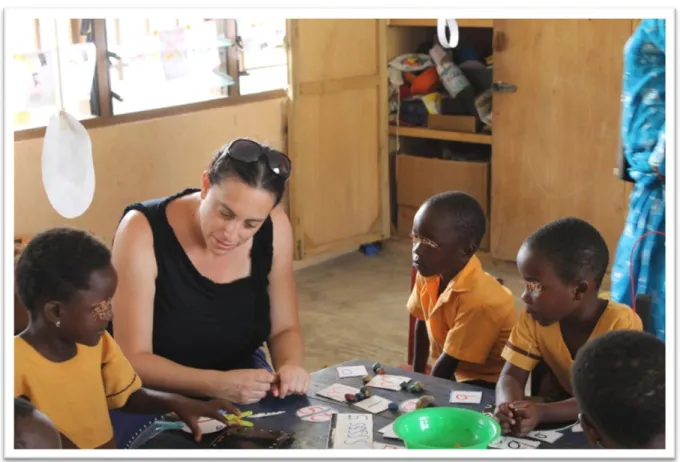
Figure 12 - Visiting a kindergarten class in Kumasi ………..69
Figure 13 -Title of Ghana Country Report April 2012 ………..………...111
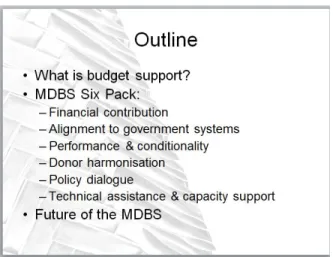
Figure 14 - Slide 2 from presentation on the MDBS in Ghana ………120
Figure 15 - Slide 8 from presentation on the MDBS in Ghana ………121
Figure 16 -An implementation framework for gender policy adapted from Snyder, Berry & Mavima (1996) p. 1483 ……….………..175
xi
LIST OF ABBREVIATIONS
CAS Country Assistance Strategy
COTVET Council for Technical and Vocational Education and Training
CRDD Curriculum Research and Development
Division
CSO Civil Society Organizations
DFID Department of Foreign and International Development (UK)
DP Development Partner
EFA Education For All
EMIS Education Management Information System
FCUBE Free Compulsory Universal Basic Education
GES Ghana Education Service
GEU Girl Education Unit
GLSS Ghana Living Standards Survey
GoG Government of Ghana
GPE Global Partnership for Education
GPEF Global Partnership for Education Fund
GPRS Ghana Poverty Reduction Strategy
ICT Information and Communication Technology
IMF International Monetary Fund
xii
JHS Junior High School
JICA Japan International Cooperation Agency
MDG Millennium Development Goal
MEO Ministry of Education
NCTE The National Council for Tertiary Education
SSS Senior Secondary School
UCC University of Cape Coast
UEW University of Education Winneba
UN United Nations
UNESCO United Nations Educational, Scientific and Cultural Organization
UNICEF United Nations International Children's Emergency Fund
USAID United States Agency for International Development
WB World Bank
WFP World Food Program
1
CHAPTER 1: INTRODUCTION
Once upon a time education was thought to be a unique opportunity afforded only to the
richest people in society. However, in a striking and rather rapid development, education for the
masses became a service provided mostly by the modern state (Samoff, 2007). Nowadays, as
Stromquist (1995) reminds us, states have a “monopoly of formal education, it shapes the supply
of schooling: the quantity and content of schooling, types of personnel, and overall learning
experience” (p. 439). Thus, how states define and approach gender equality in education is
important, and it is reflected most clearly in the education services it provides to its citizens and
residents. This is especially crucial in developing countries where public services are generally
weaker and less developed.
The call for gender equality in education is not new; women in Europe were fighting for
their right to be educated from as early as the 18th century. However, codifying a moral
understanding into a legal right is a development of the 20th century. In the 21st century, gender quality in education is a principle acknowledged by the international community both as a basic
right and as a goal which governments need to actively commit to. Even though this is a
well-acknowledged principle, progress on the ground is uneven and often slow. In Martha
Nussbaum’s (2004) words:
Despite a constant focus on women’s education as a priority in global discussions of
2
governments, women still lag well behind men in many countries of the world, even at
the level of basic literacy. (p. 330)
Nussbaum wrote these words in 2004, but they still ring true more than a decade later..
“In qualitative studies… the ongoing process of questioning is an integral part of understanding the unfolding lives and perspectives of others” (Agee, 2009, p. 432)
This dissertation is focused on several guiding questions that are all centered on a
qualitative investigation of policy processes and implementation, focusing on the following
questions: How are international policies on gender equality in education being translated and
interpreted by national policymakers in developing countries? How do local leaders define and
make sense of international policies in their daily work? What are the challenges they identify in
their daily work? What can we learn from the way they work with development partners and
international actors? Agee (2009) reminds us that the importance of questions in qualitative
research is also in moving “the researcher toward discovering what is happening in a particular
situation with a particular person or group” (p. 434). In this dissertation the particular situation
is Ghana and the particular group is people engaged in Ghana in educational policies and
programs; more specifically, programs pertaining to gender equality in education.
The decision to use qualitative methods in the field of policy analysis was a
self-conscience one; the questions I was interested in (and which are described above) led me to the
realization that quantitative methods do not answer my questions. As Piotrkowski (1979) says:
Social Science research involves the self-conscious and publicly articulated investigation
3
and the type of knowledge we desire, and what we learn is shaped, in turn, by our
procedure – our methodology (p. 288).
The knowledge I am seeking—namely, learning about policy processes and strategies, and about
policymakers’ sense-making and attitudes—calls, I believe, for qualitative methodology.
There are, nonetheless, a few distinct characteristics of qualitative research that also
guided the way I shaped this research and the decisions I made along the way. In qualitative
research, the researcher is the main instrument of research (Marshall & Rossman, 2011), and so
my prior knowledge and language proficiency were crucial in all phases of the research. Another
issue that guided me in choosing a particular location was the fact that I was interested in policy
processes and interpretations that happen in the routine course of policymaking and not in
conflict or fragile countries. Therefore, I needed to choose an English-speaking, stable West
African country. As it turned out, the Ebola virus disease outbreak in 2014 narrowed the pool of
potential countries. Liberia, a potentially good case country, was severely hit by the outbreak
which prevented conducting field research there. Ultimately, Ghana made for a good case study
country, and I was able to reach out to key people who helped me in accessing potential
interviewees.
Given this context the overarching questions are: How are international policies on
gender equality in education being translated and interpreted by national policymakers in
developing countries? How do local leaders define and make sense of international policies in
their daily work? What are the challenges they identify in their daily work? What can we learn
from the way they work with development partners and international actors? These questions are
4
project I was envisioning my findings as gap identification, but from my current perspective I
can see that this vision was somewhat skewed. The emphasis is not on identifying gaps, these
have been long identified, but on understanding the intricate policy processes in a country where
national policies are strongly connected to international policies and international organizations
initiate, design, implement and evaluate them. In figure 17 (p.195) at the end of this dissertation I
develop these understandings into a visual model that emphasizes the dynamic nature of policy
processes and pressures in Ghana.
Structure of Dissertation
The development of gender equality in education as a legal and moral right has spanned
documents, continents and decades throughout the 20th century. Later in this chapter, I will present a short history of this development that will help set the stage for my research. Chapter 2
will focus on questions of definitions. It will weave the literature on definitions of gender
equality in education with the ways in which my interviewees made sense of these definitions,
adding their own understandings and interpretations. Chapter 3 will look more carefully at the
Ghanaian context. Historical background and some key country data will be included in this
chapter, as well as comparative regional data (West Africa). It will also contain methodological
details about my research. Chapter 4 will scrutinize policies and programs in Ghana and provide
some critique on policy formulation and instigation. Chapter 5 will concentrate on the words of
my research participants and their perception of the policies discussed in the preceding chapter.
Chapter 6 will be devoted to identifying the challenges Ghana (and similar countries) face,
5
issues. Finally, I will end with cautious optimism, developing a model for better understanding
the intricate network of policymaking, policy implementation and the various stakeholders as
well as make some specific and careful policy recommendations.
Gender Equality in Education in the ‘Global Space’1
Unterhalter (2008) articulates how gender equality in education is approached in the
‘global space’ and sees two distinct historical eras: 1970-1992, and 1993 until today. She names
them inter-national and in/ternational respectively (p. 19). I add a third era, or a first era to be
precise. It is an era of concentrated codification of human rights principles in the international
arena; an era which started with the establishment of the UN in 1947. Unterhalter’s first era saw
an intensification of the codification process. It was an era of intense state-to-state negotiation
and deliberation – the emphasis was on agreement between governments and the prominence of
UN mechanism. The second is an era of multinational networks that Unterhalter (2008) identifies
as “hybrid affiliations across diverse sectors concerned with political economy, social and
cultural processes” (p. 21). In other words, an era of intense globalization.
The codification era. Thebasic principle of equality within the International Human Rights framework can be traced back to 1948 and the Universal Declaration on Human Rights
(UDHR) adopted by the newly established United Nations. The first article of the declaration is
[my emphasis]: “All human beings are born free and equal in dignity and rights. They are
1
6
endowed with reason and conscience and should act towards one another in a spirit of
brotherhood.”
The declaration, which reflects its time in history – the ruins of the two World Wars were
fresh in everyone’s minds – “is the closest document in our world to international public
law”(Benhabib, 2008, p. 95). Much criticism has been leveled at the Western bias of this
document, especially by philosophers from Africa, Asia and Latin America. “Efforts to impose
the Declaration as it currently stands not only reflect a moral chauvinism and ethnocentric bias,
but are also bound to fail” ( Pollis & Schwab as quoted in Morsink, 1999, p. x). However,
Morsink (1999) makes the point that “because it floats above all local and regional contingencies
and is a statement of more or less abstract moral rights and principles, the Declaration served as a
midwife in the birth of all these other more concrete and detailed international instruments” (p.
xi). Hence, the UDHR set the stage for much of the ensuing human rights discourse.
As seen in the previous quote, the first article in the declaration affirms the right to
equality, and in addition to a long list of rights, it also acknowledged the right to education in the
lengthy article 26 [my emphasis]:
(1) Everyone has the right to education. Education shall be free, at least in the elementary and fundamental stages. Elementary education shall be compulsory… (2) Education shall be directed to the full development of the human personality and to
the strengthening of respect for human rights and fundamental freedoms. It shall
7
(3) Parents have a prior right to choose the kind of education that shall be given to their children.
Morsink (1999) quotes a Brazilian delegate to one of the drafting committees: “the right of all to
education was indisputable. The right to share in the heritage of mankind formed the basis of our
civilization, and could not be denied to anyone….” (p. 212). Education was seen by the drafters
as a basic right that should be made available to everyone. However, there was no further
elaboration on the definition of “everyone” or on the direct link between the right to equality and
the right to education. The main paragraph of this article invokes the basic right to have an
education and even a free one. The second paragraph describes the kind of education we have a
right to, and the third one invokes the rights of parents in the process of education for their
children. There is, however, no direct linking between the right to equality between men and
women and the right to education.
In the years following the declaration, there was a sense in the international community
that this codification work was for the benefit of “humanity at large” (Benhabib, 2008, p. 96). At
the UN, work commenced on writing a comprehensive document protecting international human
rights to accompany and complement the UDHR. Two documents came out of that process in
the mid-1960s: the International Covenant on Civil and Political Rights (ICCPR) and the
International Covenant on Economic, Social and Cultural Rights (ICESCR). The decision to
write two separate documents arose from Cold War rivalry and the debate on issues such as civil
8
ICESCR— are commonly referred to as the International Bill of Human Rights. I will briefly
discuss the ICESCR since that is the document more relevant to this discussion.
The first article in the ICESCR does not invoke the right to equality but the right to
self-determination. Equality is mentioned in the preamble [my emphasis]:“Considering that, in
accordance with the principles proclaimed in the Charter of the United Nations, recognition of
the inherent dignity and of the equal and inalienable rights of all members of the human family is the foundation of freedom, justice and peace in the world.” Article 3 affirms the equal rights of men and women to enjoy all the rights protected by the covenant. Interestingly, the first
mention of education in the document is in Article 10 when the rights of the family as a
fundamental unit of society are implemented; the family is considered to be responsible for the
care and education of dependent children. But the main education article is Article 13 as in the
following excerpts [my emphasis]:2
1. … They agree that education shall be directed to the full development of the human personality and the sense of its dignity, and shall strengthen the respect for human rights and fundamental freedoms…
2. The States Parties to the present Covenant recognize that, with a view to achieving the
full realization of this right:
(a) Primary education shall be compulsory and available free to all;
(b) Secondary education in its different forms, including technical and vocational
secondary education, shall be made generally available and accessible to all by every appropriate means, and in particular by the progressive introduction of free education…
2
9
3. The States Parties to the present Covenant undertake to have respect for the liberty of parents…
This is a very detailed article, and many of the principles mentioned, especially those in
paragraph 1 and 3, have already been introduced in the UDHR. However, the new details include
a comprehensive path on how to realize the right to education nationally. It is very interesting to
see the addition of Article 14 which describes the actions a state needs to take (progressively but
within a specific time frame) in cases where free compulsory education is not yet available.
Relevant to my analysis is the fact that education and equality are linked only indirectly in
Article 3which mentions the equality of men and women to achieve all rights in the covenant.
This issue needs to be highlighted since it is one of the characteristics of the rights discourse:
there is a right to equality and there is a right to education, but their linkages are not always
mapped out. However, 30 years later, gender, equality and education will seem almost
inalienable in so many international policy instruments.
Inter-national ‘Global Space’
These linkages will start to become clearer as we move a decade forward to the UN
Decade for Women (1975-1985) and the Convention on the Elimination of all Forms of
Discrimination against Women (CEDAW). The Economic, Social and Cultural Council of the
UN established the Commission on the Status of Women (CSW) as early as 1946. However, it
took over 20 years until the CSW was commissioned to draft the declaration on the Elimination
of Discrimination against Women, which was adopted by the UN General Assembly in 1967. It
10
instrument: CEDAW. Subrahmanian (2007) describes how the UN Decade for Women let loose
an “explosion of women’s organizational activity and political agenda” (p. 112), with the
adoption of the new international treaty CEDAW at the center of the decade. The convention
contains a long list of rights to be protected, including women’s rights to health, women’s rights
within marriage, the rights of prostitutes and the rights of rural women. The relevant articles are
Article 1, which is a general discrimination clause, and Article 10(c) [my emphasis]:
The elimination of any stereotyped concept of the roles of men and women at all levels and in all forms of education by encouraging coeducation and other types of education which will help to achieve this aim and, in particular, by the revision of
textbooks and school programmes and the adaptation of teaching methods;
CEDAW laid down the main framework for gender equality in education. The different
paragraphs of Article 10 deal with issues ranging from adult education and literacy to health
education, and gender stereotypes in education and textbooks. Even though CEDAW has been
signed by many countries and has a higher obligatory status in international relations than many
other declarations and documents, it is not often invoked by feminist and activists in the
developing world. Perhaps this is an indication of the unusefulness of human rights discourse in
development work.
Even though there is such a rich history of global discussion and understanding about the
importance of gender equality and the right to education, “most donor attention to gender equity,
11
1985 and in education it only become a priority for many after the launch of the Education For
All (EFA) initiative in 1990” (Leach, 2000, p. 334).
Each document discussed so far added a layer to the existing framework and awareness
without always changing the reality for women across the globe. The question remains: What
was the cumulative contribution of these documents on international relations and the grassroots
situations? The answer depends, I believe, on your context: your geography and your race. The
next section will introduce the evolution of the international regime on gender equality and
education over the past 15 years and how it contributes to our current state of affairs.
In/ternational ‘Global Space’: The Adoption of the Beijing Platform for Action (1995), the Dakar EFA Framework and the MDGs (2000)
International standards play a pivotal role in the discourse regarding education and the
allocation of aid. As we have seen from the above section, since 1948 and the UDHR, education
has been recognized as a human right, however the understanding of what constitutes this right
has evolved immensely over the passing decades.
In 1990, UNICEF, UNESCO and The World Bank Education Sector co-hosted the World
Conference on Education For All, held in Jomtien, Thailand (K. Mundy & Verger, 2014), where
the Education For All (EFA) initiative was announced. The background to the conference is
often described as pervasive concern over the dismal state of education and literacy all around
the world (Leach, 2000). The conference brought together 155 national governments and the
12
systems, especially those in developing countries. Out of this conference came a declaration that
included a pledge by the signatory countries (all 155 of them) to “[pursue] the goal of basic
education in its various forms.” Governments finally acknowledged important issues
surrounding the right to education: “The fact that two-thirds of children not in school were girls
was noted, and the importance of increasing access for girls strongly supported. The gender,
education and development discourse was thus prominently established” (Heward, 1999, p. 5).
Vavrus (2002) claims that “it is only since the early 1990s that education for women has become
perhaps the cause célèbre of education and development…” (p. 51) The Jomtien conference, as
well as the Beijing Conference in 1995, played a major part in this global interest.
Five years after Jomtien, in 1995, The Beijing Platform for Action was adopted at the
Fourth World Conference on Women. In Beijing, the rights-based approach was reiterated and
women’s enduring disadvantage in access to health and education was highlighted. (Heward,
1999). The Beijing Declaration and Platform for Action underlined 12 critical areas of action to
be achieved within a period of five years, namely by 2000. The acknowledgement of gender
mainstreaming as an important tool in promoting women’s rights and equality was a major
achievement of the conference (Madsen, 2012). Cornwall, Harrison, and Whitehead (2007) claim
that “gender mainstreaming was seen by many feminists as a response to the need to more fully
‘integrate women’ in development policy and practice” (p. 3). There are two Articles relevant to
issues of education and development:
27. Promote people-centered sustainable development, including sustained
economic growth, through the provision of basic education, life-long education, literacy
13
30. Ensure equal access to and equal treatment of women and men in education
and health care and enhance women's sexual and reproductive health as well as
education.
We find here the same buzz words that appeared in several earlier documents, as well as
the beginning of the discourse clearly linking development with education for women and girls.
It might be observed that:
The Beijing process unleashed remarkable political will and worldwide visibility. It
connected and reinforced the activism of women’s movements on a global scale.
Conference participants went home with great hope and clear agreement on how to
achieve equality and empowerment.3
This optimistic assessment appears on the UN Women Beijing+20 website. Twenty years after
the adoption of the platform for action, there should probably be more careful assessment of the
progress on the ground for women and girls. The following statement, admitting that there is still
work to be done, can be found further down the web page: “the Platform for Action envisioned
gender equality in all dimensions of life—and no country has yet finished this agenda.”
It was a decade after Jomtien, in April 2000 (in Dakar, Senegal) that a clear and
comprehensive framework for implementing the Education For All initiative was established.
The forum at Dakar looked at assessments of the progress since the 1990 Jomtien conference and
adopted 6 goals and 12 strategies4—185 governments pledged to help achieve them. Many writers agree that “the Dakar Framework for Action represents to-date the most important
3
http://beijing20.unwomen.org/en/about#sthash.O4zkQM2k.dpuf
4
14
international political commitment towards promoting education for all.” (Subrahmanian, 2005,
p. 396). This is because the Dakar Framework not only sets goals for individual countries but
also presents a set of strategies countries can utilize to achieve them. The Dakar framework is a
comprehensive document, dealing with issues ranging from teacher training to linkages with
poverty elimination, including gender disparity.
Only a few months after the Dakar conference, the international community came
together for another global conference, the Millennium Summit. At this meeting, the Millennium
Development Goals (MDGs) were announced. The overall aim of the MDGs was “meeting the
needs of the world’s poorest.”5
The MDGs deal with several development issues, and only two
are focused on education: MDG 2 Universal Primary Education, and MDG 3 Gender Parity in
education. These two MDGs include very specific benchmarks and focus mainly on primary
education.
Although there are many who criticize these documents, and the subsequent programs
and policies they espouse, still others point to a few benefits or potential benefits. Dr. Peggy
Antrobus (2006), a feminist activist from the Caribbean, acknowledges:
We can decide to sit on the side-lines and criticize the MDGs; or we can engage in the
policy debates on MDGs critiquing them, showing the links to women’s equality and
empowerment and in the process capture some resources that would enable us to
implement element of the BPA [Beijing Platform for Action] (p. 52).
5
15
Following the same logic, Subrahmanian (2007) makes an excellent argument about
expectations: “those who expect bureaucracies to effect miraculous impact on women’s
gender identities and their relationships with men are inevitably confronted with the
disappointing realization that this is not what bureaucracies can do” (p.119). According to
Subrahmanian, the expectation that international organizations and governments will affect
true change in societies is somewhat farfetched, but Antrobus claims that the MDGs give us
an opening through which we can promote the things that are really important to women
worldwide. My research is located within this discourse that criticizes the MDGs but at the
same time engages with them to learn more about how the accompanying resources
16
CHAPTER 2: GLOBAL DEFINITION, LOCAL PERSPECTIVE - DEFINING “GENDER” AND “GENDER EQUALITY IN EDUCATION”
All the consequences and implications hold more for women and children than for men because
women and children are more or less the underdog here in the country when it comes to politics,
economics, and land distribution and all that. It is women who suffer more”
(Shani, Registrar at a public university)
Gender equality is a universal value and in Ghana, like other places, women (and some
men) demand, ask and advocate for more of it. The above quote could have been said by activist
women the world over. However, it was said in Ghana in 2014, almost 15 years after the MDGs
and the EFA were adopted. Why is a discussion on the definition of gender equality in education
important? It is because the way in which the term is operationalized locally by policymakers
and implementers has a direct effect on the lives of girls and boys. In other words, the way in
which gender, equality, and education are defined is directly linked to the kinds of policies and
programs that are advocated, developed, and funded. In this and subsequent chapters, I embed
quotes from participants in my study in order to illustrate and expand upon my statements.
The common liberal feminist assumption is that equality means ‘the same.’ “The
measure, or the normative standard, of that equality has been men’s lives” (Hughes, 2002, p. 33).
In my interviews this sentiment was articulated clearly, for example: Gender equality is about
having both sexes, male and females, getting equal opportunity in education at all levels
17
Hughes (2002) describes how this approach has been critiqued and attacked globally by
feminist movements whose “political goal is to have an equal value placed on women’s
difference” (p. 34). Thus, these two opposing approaches – equality as sameness and equality as
difference – both appear and influence global and national policymaking. In my interviews,
gender equality was defined and described in various different ways and words, some clearly
reflecting international debates. On the one hand there were definitions that embraced a broad
vision of gender, as one participant said:
In my working definition, gender equity is such a way that both women and men can work
along the line of what is due to the woman is based on her quality and ability and fits into
the community of gender. Because when we talk about gender, we don't talk only of
women but also of men (Masika, dean at a university of education).
Likewise, for another participant gender equality is:
Fairness in terms of access to education, fairness in terms of opportunities within the
academic institution, and fairness in terms of resources made available and recognition
and respect (Ogechi, head of Gender Mainstreaming Directorate, at a university of
education).
On the other hand, I also heard words which placed a strong emphasis on parity:
It is one of our objectives to ensure that girls and boys are on par in education (Comfort,
director at Ghana Education Service, GES).
Phillips’ (2002) discussion on the multiple meanings of equality is relevant to our
specific focus on education. She advocates for “strict equality” as opposed to the more common
18
“indifference to difference” (p. 222), an approach to equality that fails to acknowledge that there
are differences between men and women. The critique of this approach “does not, however,
imply that any difference is compatible with equality” (p. 224). She defines “strict equality…
[as] a notion that what we are aiming for is a world in which there would be no differentiation
between the sexes in the kinds of jobs they do, the kinds of caring responsibilities they assume,
or the nature and extent of their political engagement…” (p. 223).
What Phillips would like us to do is move beyond the “different but equal” approach and
“towards convergence in the life experiences of women and men….” (p. 224). This approach
resonates in Narayan’s (2003) call to focus “on parallels, not identities, between different sorts of
oppressions” (p. 314). Both argue that parallels or convergence between different groups – be it
women and men, western and non-western, colonized and colonizers – is the epistemological
way to move forward.
Due to my interest in how my interviewees (who were mostly non-western) perceive
gender equality and where they stand in these debates, one of the first questions I asked was:
“How would you define gender equality in education?” This chapter is centered on the dialogue
between my participants’ definitions and the global, academic, and “official” definitions found in
the literature.
Historic Evolution of Defining Gender Equality in Education: Different Perspectives Using an historical perspective, Unterhalter (2006) identifies four different approaches to
defining gender equality in education in the developing world that have influenced policymaking
in the last 40 years (see table 1 below for a summary). The first approach can be traced to the
19
for widespread schooling for girls. “Here gender is understood descriptively in terms of
biological categories” (Unterhalter, 2006, p. 96). Most accounts trace the use of WID to
women-targeted development projects which aimed at producing sources of livelihood (Heward, 1999).
Vavrus (2002) adds: “In the 1970s, the Women in Development (WID) movement drew attention
to women’s critical yet neglected role in public (state orchestrated) economic development
initiatives…” (p. 51).
The precise point in time when the term WID left the international stage and the second
approach, Gender and Development (GAD), appeared is not so clear. The concepts and
underlying assumptions of WID are with us to this day, however, as will be described later in
this chapter. Broadly speaking, Heward (1999) and Unterhalter (2006) claim that GAD language
has been gaining momentum since the 1980s, especially using ‘gender analysis’ as an analytical
framework. Another buzz word in the GAD world, ‘gender mainstreaming,’ has been identified
by Subrahmanian (2007). She explains the term as “the label associated with strategies adopted
by feminists to make the state an agent of transformative change for women” (p. 112). It seems
that gender mainstreaming was, however, only adopted globally and widely in 1995 as a
consequence of the Beijing Women’s Conference (see introduction to this dissertation).
Unterhalter (2006) claims that GAD approaches had some limited influence on education
policies. Equity was also a concept identified with this movement.
There are several scholars who call our attention to the intricate differences between the
concepts of equality and equity. Whereas the liberal discourse of the Millennium Development
Goals (MDGs) and other international instruments usually suggests that equality is our ultimate
20
problematic nature of defining equality in a political context (Phillips, 2002). Chisamya et al.
(2012) advocate the use of the term equity because, “as a concept, equity is less unified in its
units of measurement and therefore may have multiple, sometimes conflicting, and often less
easily counted measures of success” (p. 744). This openness of meaning is what makes it
attractive. However, it is important to note that this approach has not been widely adopted by the
international organizations working in the field or by governments.
The third approach identified by Unterhalter is the Post-structuralist approach which
questions “the stability of definitions of gender, paying particular attention to the fluidity of
gendered identification and shifting forms of action” (p. 96). This approach has been gaining
momentum since the 1990s and is closely identified with post-colonial theory. Lastly,
Unterhalter acknowledges the Human Development approach, also on the international stage
since the 1990s: “In some ways, this is a metatheory, working at a higher level of abstraction,
and suggesting not concrete policies or forms of practice, but a framework in which these can be
developed ethically” (p. 98). In a succinct table (Unterhalter 2006, p. 97-98) she illustrates how
each approach frames the way gender, development, education, and equality were and are still
defined.
Table 1
Framing Gender, Development and Education Definitions
Framework Understandings of gender Understandings of development Understandings of education Understandings of equality Women in Development WID Gender = women, girls Growth, efficiency, good
21 governance, social cohesion termed parity Gender and Development GAD Constructed social relations, Power challenging inequity and oppression
Conscientization Redistribution of power; sometimes termed equity Post-structuralist Shifting and performed identities Struggling with the
past in the present to shape
multifaceted identities and new narratives
Deconstructive Stress on difference Human Development Inequality and capability denial Development as freedom A basic capability Equality of rights and capabilities
This table helps to demonstrate how definitions do influence policymaking. For example,
if we define gender as girls and education as schooling and equality as parity, then direct policy
linkage will be policies promoting girls in schools, also known as MDG 2+3. Similarly, by
defining just one concept more broadly, we can imagine much more comprehensive policies. If,
therefore, we define equality as redistribution of power, then we can envisage policies that might
promote the shift of gender power relations in schools. Especially interesting is the prospect of
defining equality as the equality of rights and capabilities (the Human Development framework):
What are girls and boys able to do when they graduate from school? Do they have the same
22
can help in analyzing the implementation of relevant policies and which will be further explored
in Chapter 6.
Fennell (2012) and Unterhalter (2008) claim that the theoretical lens that has been
adopted for thinking about gender equality in education is inadequate and thus leads to an
“inability to address the structural asymmetries and to only focus on the symptoms, such as the
low number of girls in education“ (Fennell, 2012, p. 261-261). In light of this, it is not surprising
that in Ghana the unit dealing with equality in the MOE is named the “Girls’ Education Unit”
(not unlike the United Nations Girls’ Education Initiative, the UN agency dealing with gender
equality in education). This conflation of gender and girls that is the hallmark of the WID
framework since the 1970s needs further elaboration and investigation.
Stromquist & Fischman (2009) discuss the current usage of the term “gender,” stating
that “gender is frequently used in place of ‘sex,’ or as an indication of an interest in ‘women’s’
issues, or of concerns with sexualities, femininities and masculinities” (p. 463). There is a
difference between how the term gender is used in feminist and critical theory and how it is
being used in development discourse (Stromquist & Fischman, 2009, Unterhalter, 2012).
Feminists believe that “gender is always in the process of being done, performed and acted, and
is thus present in the relationships between individuals of the same or different sexes, between
individuals and society, and between individuals and institutionalised structures of power”
(Stromquist & Fischman, 2009, p. 466). If we approach gender equality in education with this
understanding of gender, our recommendations and suggestions will follow the same logic.
However, in the international development arena, the discourse of aid agencies and states often
23
that boys and girls are equal in what they can access and in what they can do. An excellent
example is:
Girls should have the same opportunities as boys. In the form of admission, scholarships
and space [like in dormitories]. What is given to boys in the form of facilities [refers
specifically to SSS—secondary boarding schools] is equal to what is given to girls. (Eshe,
regional director at GES6).
Unterhalter (2012) cautions that the different ways in which gender is defined and
performed is instrumental in the outcome for women in society – both the definition and the
outcome can be beneficial but also disastrous: “Gender forms and is formed by different
processes where poverty presents lines of income or consumption, nets of difficult or rewarding
relationships and fuels to drive or undermine change” (p. 258).
Gender as a broad concept is defined neatly by Stromquist (2012), and her definition
reminds us to always look at the broader implications for society: “As is amply recognized,
gender refers not only to the conditions of women and men but to a structural relationship
between the sexes which is linked to the state, the economy, and other macro- and
micro-processes and institutions” (p. 160). One participant talked exactly about how gender equality
policy is linked with definitions and policy:
When it comes to the policy it is very difficult because our culture is male domineering
and they don't see the reason why we should be coming with all these demands...although
some men do advocate for us…. We are not saying we want to overtake the men but that
we should move on par and be on the same level (Comfort).
6
24
Comfort is very realistic in her assessment of the situation, and she clearly mirrors men’s fear of
women’s domination in her society when she says they “only” want to be at the same level and
not overtake them. This structured relationship is also echoed in the quote opening this chapter:
women and children are the underdog here in the country.
It is very important to discuss gender equality within a concrete context. Many feminist
scholars, and especially those from the developing world, acknowledge that “gender is first and
foremost a socio-cultural construct” (Oyěwùmí, 2002, p. 2), and thus, any analysis of gender
equality should be firmly situated within this construct. My interviewees acknowledge this by
talking about the unique characteristics of their society and also by asking me about my own
country and culture. Comfort, an educated professional woman, laments that:
In Ghana, from time immemorial women are relegated to the background. You are to be
there and take care of the house and the children. But now we are changing; that what
women can do men can also do it.
Although she recognizes a cultural history of consigning women to the background, she explains
that things are now changing. She continues by saying,:
If men are in leadership positions, women also need to be in leadership position.
Moreover, as the head of the GEU, she also emphasizes that this is what “we” (the unit) work
for.
Definitions Promoted by Development Partners
Phillips’ (2002) discussion points to the challenges of defining gender equality in a
political context where liberal discourse dominates. The liberal feminist underpinning of some
25
ultimate goal and interprets equality as parity (Chisamya, DeJaeghere, Kendall, & Khan, 2012).
However, Subrahmanian (2005) notes that “the lack of a universally accepted definition of
gender equality in relation to education goals makes measuring progress towards its achievement
hard if not impossible to achieve” (p. 397). The resulting reality is that international actors, as
well as countries, do not deal with the more complex questions of definition and go straight to
measurements and the language of indicators. Here, for example, are two definitions used by the
World Bank and UNICEF, organizations which are prominent in Ghana and work closely with
the MOE (my emphasis).
UNICEF7 - United National Children’s Fund
Girls’ education is both an intrinsic right and a critical lever to reaching other
development objectives. Providing girls with an education helps break the cycle of
poverty: educated women are less likely to marry early and against their will; less likely
to die in childbirth; more likely to have healthy babies; and are more likely to send their
children to school. When all children have access to a quality education rooted in human
rights and gender equality, it creates a ripple effect of opportunity that influences
generations to come.
The World Bank8
Why is it crucial to ensure that nearly 4 billion girls and women around the world have
the same chances to receive an education as boys and men? First, education is a human
right, enshrined in the Universal Declaration of Human Rights and the United Nations
7
http://www.unicef.org/education/bege_70640.html
8
26
Convention on the Rights of the Child. Second, girls’ education is a strategic
development investment – evidence shows that countries with greater gender equality are
more likely to have higher economic growth.
As can be seen from these excerpts, the fact that gender equality is more than just access and
parity is acknowledged by all three organizations. For the World Bank and UNICEF, however,
education as a moral right is only one part of the picture. The other part is still a narrow focus on
parity, as well as viewing girls’ education as a solution to all of developments problems.
The language of the international organizations is echoed in the language used by my
participants. It was particularly striking to hear the head of the GEU declaring that:
Next year, 2015, we need to achieve gender parity of 1, and we are at enrollment ratio of
0.98. So we need to work towards those international goals. Because Ghana signed all
these documents and we need to ensure we work towards the goals.
Juxtaposing this quote with her earlier one reflects the duality in her approach – perhaps the
duality of personal feeling and understandings versus institutional (MOE) norms and
expectations.
The following quote can be found on the MDG’s website:
The ratio between the enrolment rate of girls and that of boys grew from 91 in 1999 to 97
in 2010 for all developing regions. The gender parity index value of 97 falls within the
plus-or-minus 3-point margin of 100 per cent, the accepted measure for parity.9
9
27
For me, talking about a parity of 1 or 0.99 or 0.98 obscures the situation of girls in the most
deprived regions as well as whether the schooling experience of the girls is meaningful and
beneficial for their wellbeing.
Can Gender Equality be Measured?
Questions of definition and measurement are thus intertwined and interrelated. Defining
gender equality becomes laden with political implications, but measuring is more easily
politically accessible as a myriad of development indicators. And so “the international debate
about how to ‘measure’ gender equality across nations tends to be associated with indicators
which relate more to the presence of female students and teachers in schools rather than to their
gendered experiences within national educational institutions” (Arnot & Fennell, 2008, p. 515).
The MDGs are then criticized for allowing a very narrow measurement strategy for gender
equality in education that “almost inherently undermines their prospects of success.” (Archer,
2005, p. 21). Fennell (2012) is even harsher, asserting that “gender equality will not be achieved
if we continue to follow narrow statistical measures” (p. 261).
What is missing from this “counting” are relevant issues such as “patriarchy, gender bias
in teacher attitudes, cultural practices and beliefs that privilege boys (or girls in some areas), or
other more complex issues that are not easily measurable” (Monkman & Hoffman, 2012, p. 78).
Only the introduction of profound measures within national education systems, for both boys and
girls, can “bring about social transformations” (Fennell, 2012, p. 261).
One of the reasons for the narrow statistical approach is that while the Education For All
initiative “tried to associate basic learning needs with a broad range of ideas about how such
28
tracked whether five years of schooling had been achieved for girls and boys” (Unterhalter,
2008, p.26, my emphasis). Despite an initial policy that might have been broad and encompassed
relevant obstacles, implementation (and monitoring) lacks nuance.
Robertson (2012) criticizes these monitoring systems – indices and indicators – and notes
that:
scopic systems in global education policy take fragments (partial understandings) of
knowledge about complex education processes, yet present them as fractal (a smaller
version of a whole). In doing so, the complexity and diversity of education systems, and
their need for diverse policies for diverse issues, also disappears (Robertson, 2012, pp.
40-41).
As mentioned above, although the intention in developing the EFA framework was to create a
comprehensive definition, the practicality of development work, coupled with the adoption of the
MDGs, has proved otherwise.
To end this chapter I would like to quote one of my interviewees:
We are fighting to be like the developed countries, so if elsewhere this is working, than it
should be working in Ghana as well. We should all have this opportunity (Mudiwa).
This chapter opened declaring that gender equality is a universal value and is closing similarly
by stating that gender equality in education in Ghana is well acknowledged as a global value.
However, it is defined, measured and advocated on different levels and understandings that
29
CHAPTER 3: GENDER, EDUCATION AND DEVELOPMENT IN GHANA
Brief Historical Background
An historical review of Ghana necessitates looking at the history of West Africa as a
region, since in precolonial Africa, Ghana did not exist. The country borders in West Africa were
mostly drawn by the colonial powers during the 19th and early 20th century. In precolonial West Africa cultural similarities followed (and often continue to follow) ecological divisions. These
ecological divisions are horizontal and were formed in relation to distance from the coast on the
one hand and the deserts of North Africa on the other hand (Webb, 2006). However, there were
mechanisms, including trade routes and connection, which created unity, linking the north and
south.
Different cultural ideas, as well as new religious movements like Islam, moved through
the different trade networks. By the eighth century, an intricate web of commercial routes
linking western and northern African communities, known as the trans-Saharan trade, had
emerged (Rashid, 2006, p. 122).
Trade routes going north and south, east and west, engendered a diverse society in West Africa,
and a society susceptible to new ideas such as Islam. Islam was introduced in West Africa prior
to Christianity,10 and while Christianity was “mostly confined to the coastal regions – indeed to forts and castles and communities with resident European soldiers and traders” (Obeng, 2006, p.
10
30
143) Islam was more common inland and started to spread more widely after being adopted by
African rulers. However, Islam and Christianity were not simply copied from the Arabs and
Europeans, but rather ‘hybridized’ religions were established showing “the critical role of
African agency in pre-colonial times” (Obeng, 2006, p. 158).
This is an important point because “post-colonial literature often gives the impression
that Africans began to assert their agency after the 1960s when nations south of the Sahara
gained their independence” (Obeng, 2006, p. 148). In other words, the perception that prior to
colonialism and post colonialism Africa was a deserted continent is currently acknowledged as
mostly wrong. In what is now known as Ghana, named under colonial rule the Gold Coast, a
flourishing native African kingdom – the Ashanti kingdom— thrived between 400-1200 and
31 Figure 1. Map of Ghana and neighboring countries11
11
32
The Ashanti was a matrilineal kingdom where women played an important role. It was
one of the most prominent kingdoms in West Africa (Oduyoye, 1979). The British Empire used
confrontations between the two kingdoms – the Ashanti and Fante —to usurp judicial powers in
the area known as the Gold Coast. On July 24, 1874, the British proclaimed the Gold Coast an
official colony. The British (and other European) colonizers brought with them, amongst other
things, an oppression of women previously unknown in Africa, as well as a sense of social
relations between the genders that was not historically present in Africa (Mama, 1997;
Oyěwùmí, 1997). Oyěwùmí goes further and claims that gender as known and defined in the
West was a totally foreign concept in Africa (she refers specifically to the Yoruba in Nigeria).
“This is a result of the fact that the architecture and furnishings of gender research have been by
and large distilled from Europe and American experiences” (Oyěwùmí, 2002, p. 2). Not only was
the definition imported by European colonizers but also by western researchers.
Mama (1997) also notes: “that the legal status of African women was steadily degraded
as imperialism advanced, consolidating patriarchal and racist gender values…. these trends were
continued by colonial states” (p. 50). And we see traces of them in modern day statehood as well.
African women’s history with education is also fraught with colonialism’s patriarchal
fingerprints.
In a 1922 report by the Phelps Stokes Fund about education in Africa12 the Gold Coast is described as:
12
33
The native population is over two million and the European population is about 3,000,
negligible in proportion but all-powerful in direction and control. Numerous coast
fortresses of large dimensions and romantic architecture record the dramatic struggles of
various European nations to possess the mineral and human resources of the country from
the fifteenth century to our time. It is generally agreed that European colonization has had
a beneficent influence and a greater degree of success in the Gold Coast than in any other
African colony. (Jones, 1922, p. 121)
However, this beneficial colonial rule does not seem to have such a great influence on modern
day Ghana or other African countries. In the powerful words of Kalu (2006):
Colonialism was a system consisting of administrative machinery, a judiciary and an
economic order, all sanctified by a monotheistic religion imbued with ‘civilized’ values.
The colonial project sought to entrench a new moral economy in other cultures in order to
remodel them into reflections of its own image…. Suffice it to say that development
failures in contemporary West Africa could be traced to many of the unresolved aspects
of colonial hegemony and the clash of worldviews; the failure of poverty alleviation
strategies emanates more from privileging the neocolonial models that from a congenital
African pathology (p. 178)
In the Gold Coast colony, as in other West African colonies, schools were initially set up
by the church to serve the elites, and the main purpose of education for Africans was to train
them to serve the colonial powers in administration and other areas (Carnoy & Samoff, 1990).
Until the First World War about 98% of schools were run by churches using a model transported
34
colonial bureaus of education were established (Scanlon, 1963). Although the financing and
management of the schools became the responsibility of these bureaus, the churches and
missions were still responsible for the daily operations of the schools. The missions’ educational
task became much more important than their evangelical work (Scanlon, 1963). This dual system
of church/mission schools funded by the government alongside official government schools
continued in West Africa until well after independence (Scanlon, 1963).
In 1957, Ghana was the first African country to gain independence from British colonial
rule. Dr. Kwameh Nkrumah, Ghana’s first president, had also headed the regional decolonization
struggle (Daddieh, 2006). It is important to note that the liberation movements in West Africa
were based on the successful mobilization of “masses of people into peaceful but formidable
national coalitions that cut cross ethnic, religious, regional and class cleavages (Daddieh, 2006,
p. 265). Thus these new states, including Ghana, were built upon a vision of a pluralistic society.
The African leaders in the region managed to successfully move their people through the process
of decolonization without any major violent incidents. However, President Nkrumah’s (and the
rest of these leaders) legitimacy was based on the premise that “material progress and social
welfare” would be the result of independence and decolonization (Daddieh, 2006).
In the years following Ghana’s independence a comprehensive education policy was
announced. Efforts included primary and secondary education access, technical and science
education, as well as teacher training and their status recognition. As President Nkrumah
articulated:
We must seek an African view to the problems of Africa. This does not mean that