R-MAC Schedule Protocol for Improving
Performance of Wireless Sensor Network
Author:- Ms. Laxmi Singh #1, Prof. Dr. Biplabkumarsarker*2
#
M-Tech (CSE), TIT, Bhopal,* HOD (CSE),TIT Bhopal, (M.P.) India
Abstract- Various MAC protocols with different objectives were proposed for wireless sensor networks. MAC protocols employ identical schedules for both unicast and broadcast packet transmissions, and modify their “unicast schedule” to work with broadcast packets. Unlike other wireless networks, it is generally hard to charge/replace the exhausted battery, which gives way to the primary objective of maximizing node/network lifetime, leaving the other performance metrics as secondary objectives. Since the communication of sensor nodes will be more energy-consuming than their computation, it is a primary concern that the communication is minimized while achieving the desired network operation. The MAC schedule should be chosen to maximize the life of the network, which includes reducing contention. MAC schedule to node and network conditions to improve performance under a wide range of conditions and for both unicast and broadcast packets the “transmit / receive schedule” to synchronize nodes on a slowly changing path so that throughput and delay are further reduced, at no cost of overhead in most cases. the transmit / receive schedule to automatically synchronize the nodes can reduce packet delivery delays, providing an efficiency and throughput will increases. The Route-MAC (R-MAC). The purpose of this paper is to study the needs for more life of sensor nodes handling, in the above mentioned situations of WSN, by exploring the usage of mobile sensor nodes that cooperate with the static nodes. This cooperation ncease the life of nodes needs as to maintain the network functionality. R-MAC attempts to pick the MAC schedule that yields the best operating points by adapting the MAC schedule, based on a look-up table. Thus, this research work must populate this adaptation table and find the appropriate switching thresholds. As discussed next, this research work begin this evaluation with the simulation of an analytical model, and verify it with a Matlab implementation.
Keywords- Wireless sensor networks (WSNs), Transmit, Receive Schedule, MAC Schedule , Efficiency and Throughput, IEEE 802.11, unicast and broadcast packet, network.
I. INTRODUCTION
The Wireless sensor networks are made up of one or more battery-operated sensor devices with embedded processor, small memory and low power radio. Coverage and communication range for sensor nodes compared to other mobile devices is limited due to low power capacities of sensor nodes. Sensor networks are composed of large
number of nodes to cover the target area. Nodes in wireless sensor network communicate with each other to give a common task [1].
The Wireless sensor networks (WSNs) have been used for many applications, including environmental monitoring, health monitoring, security and surveillance [2]. As new sensor platforms have appeared on the market, a simple observation was made that idle listening, far from being negligible, was a major source of energy consumption [3] [4] [5]. A MAC protocol may reduce energy consumption for unicast packets, it may at the same time waste energy when applied to broadcast packets. Such inefficiencies become significant as broadcast packets make up a larger percentage of the total packets sent on a network—for example, in the case of a room monitoring application at night when no events are reported and only protocol administration packets are exchanged. Until now, protocol designers have only adapted their unicast MAC schedules to function in a broadcast configuration without concern for other design considerations. Instead, this research work propose adopting the transmission schedule that yields the best life taken from a pool of compatible protocols.
A sensor networks make the best possible use of their initial energy resources, by constantly adapting their protocols to the changing conditions in the network. Both protocol-specific and cross-layer schemes have offered a plethora of energy reducing techniques. In particular, there are also some other protocols that focus on reducing energy at the data link / MAC layer, which constitutes the scope of this work. In this paper discusses MAC schedules to adopt the most throughput efficient pattern of packet transmissions and receptions. Because different areas in the network experience different and changing loads of traffic, the MAC protocol should utilize the schedule most economical for the local conditions. This research work also try to synchronize nodes so as to reduce transmission time and thus throughput decreases and packet delivery delays.x
consumption [3]. the sending node occupies the medium for long intervals to signal its imminent packet transmission. Receiving nodes are thus allowed to sleep for at most the duration of this preamble and they must stay awake when they sense a busy medium until the packet transfer is complete. (although many of our results can be transposed to other MAC protocols), and this research work define ) MAC schedule‖ as the pattern of packet transmissions occurring within the interval. Our Solution to modify the MAC schedule of X-MAC by repeating the data packet and waiting for ACK frames between transmissions. A received ACK signifies that the data packet has been correctly received and stops the transmission flow of data packets. This renders the MAC protocol immune to false positive packet receptions. For broadcast packets, the flow of data packets is still interleaved with periods of listening for acknowledgments. Consequently, multiple receivers of the same packet may wake up, stay in Rx mode until the full reception of a packet, and go back to sleep.
In the initial part of this work, this research work prove that while the MAC protocols generally throughput consumption without resorting to explicit exchange of active / inactive schedules between nodes, low duty cycles drastically favor receiving nodes over mostly sending nodes and induce higher delays and contention.
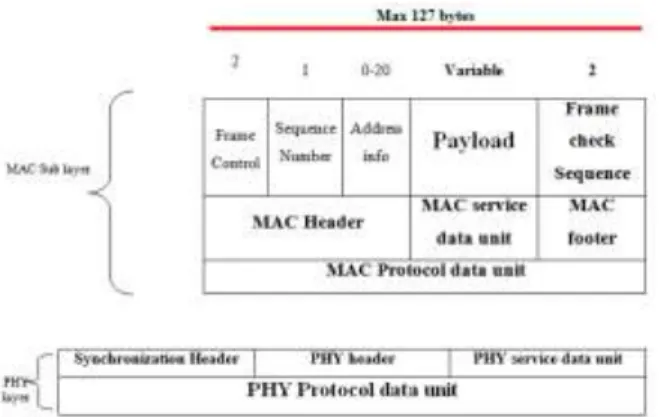
Figure 1 shows the construction of the data frame, also called a data packet.
Switching MAC schedules from a pool of MAC protocols at the transmitter to minimize energy consumption based on parameters such as packet size, whether the packet is broadcast or unicast, and the estimated ratio of transmit to receive packets in the local neighborhood. The protocols are ―compatible‖ because they are interchangeable: the receiver does not need to know what specific schedule is being used, it simply wakes up and senses the channel every seconds and sends an ACK frame when required by the received packet. Also to synchronize nodes along a slowly changing routing path so as to minimize error and packet delay, without
explicit scheduling between nodes or overhead of any sort. For unicast packets, the sender stops its stream of advertisement data MX-MAC packets after receiving an acknowledgement frame. Sender and receiver can then be synchronized to wake-up sequentially within a short interval. Conversely, Speck MAC, which cannot be interrupted, needs explicit notification within nodes to synchronize.
II. LITERATURE SURVEY
Use of Wireless sensor networks [7] have been widely seen in the fields of target detection and tracking, environmental monitoring, industrial process monitoring, and tactical systems. In wireless sensor networks nodes work with a incomplete power source, energy efficient operations in an important factor of the nodes in wireless sensor network. Energy conservation plays important role in different layers of the TCP/IP protocol suit, and for MAC layer it is the effective part. Therefore, to work in wireless communicating sensors network, we use MAC protocol which improve energy efficiency by increasing sleep duration, decreasing idle listening and overhearing, and eliminating hidden terminal problem or collision of packets. In this paper First section we describe the accessible energy –efficient MAC protocols for sensor networks their energy saving method. In Second section we discuss the architecture of same protocols and then compare same protocols depending on their Advantages and Disadvantages. Designing a MAC protocol which can improve energy-efficiency to extend network lifetime in wireless sensor networks is a challenging problem. It is mainly due to stringent resource constraint both in sensor nodes and in wireless media. Several energy-efficient medium access control protocols both contention-based and Schedule-based for the wireless sensor network that have been proposed by the researchers are presented in this paper. Although there are various MAC layer protocols proposed for sensor networks, there is no protocol accepted as a standard. One of the reasons behind this is the MAC protocol choice will, in general, be application-dependent, which means that there will not be one standard MAC for WSNs.
MC-LMAC takes advantage of interference and contention-free parallel transmissions on different channels. It is based on scheduled access which eases the coordination of nodes, dynamically switching their interfaces between channels and makes the protocol operate effectively with no collisions during peak traffic. Time is slotted and each node is assigned the control over a time slot to transmit on a particular channel. This research work analyze the performance of MC-LMAC with extensive simulations in Glomosim. MC-LMAC exhibits significant bandwidth utilization and high throughput while ensuring an energy-efficient operation. Moreover, MC-LMAC outperforms the contention-based multi-channel MMSN protocol, a cluster-based channel assignment method, and the single-channel CSMA in terms of data delivery ratio and throughput for high data rate, moderate-size networks of 100 nodes at different densities.
A MAC protocol that reduces the preamble length before sending a data packet by exchanging wake-up schedules between neighbors. However, Wise MAC (like B-MAC) cannot be implemented on 802.15.4 radios. It also requires fine time synchronization between nodes, and at a cost that may be difficult to quantify. For these reasons, it was not included as such in our study. Moreover, other work [9] shows that implicit synchronization can be achieved between nodes running some of the protocols studied here, reducing the need for synchronization overhead.
In [10], Wong and Arvind also propose Speck MAC-B, which is compared, along with Speck MAC-D, to B-MAC. The Speck MAC protocol family is intended for miniature motes called specks. Speck MAC-B stands for Back off and replaces the long preamble with a sequence of wake up packets containing the destination target and the time when the data packet will be sent. This allows receiving nodes to sleep for the remainder of ti and activate just in time for data reception. However, this scheduling supposes fine time synchronization between nodes. The authors thoroughly compare B-MAC to SMAC [4] and T-MAC [5]. To curb limitations imposed on the receiving node to stay awake for the time of the preamble, Polastre et al. propose sending packets with half-sized preambles. Post-B-MAC protocols include X-MAC [11] and Speck MAC-D [10]. Both protocols are of the channel-probing family and tried to improve the scheme presented by B-MAC. Although more recent, C-MAC [12] uses the same schedule as X-MAC and is therefore included in our work under the same principles that govern X-MAC.
Existing MAC protocols employ identical schedules for both unicast and broadcast packet transmissions or, when
impossible, simply modify their ―unicast schedule‖ to work with broadcast packets
III. PROPOSEDTECHNIQUE
When a receiver node receives more than one packet at the same time, these packets are called ―collided packets‖ even when they coincide partially. All packets that cause the collision have to be discarded and the re-transmissions of these packets are required which increase the energy consumption. Although some packets could be recovered by a capture effect, a number of requirements have to be achieved for its success. The second reason of energy waste is overhearing, meaning that a node receives packets that are destined to other nodes. The third energy waste occurs as a result of control packet overhead. Minimal number of control packets should be used to make a data transmission. One of the major sources of energy waste is idle listening, i.e., listening to an idle channel to receive possible traffic. The last reason for energy waste is overemitting, which is caused by the transmission of a message when the destination node is not ready. Given the facts above, a correctly-designed MAC protocol should prevent these energy wastes.
X-MAC Schedule Under the X-MAC [13] schedule, a sender repeats the transmission of an advertisement packet containing the address of the intended receiver. Upon hearing the advertisement packet, the receiver replies with an ACK, which is followed by the transmission of the data packet by the sender. Figure 1 illustrates this process. Research work know to Modified X-MAC for Broadcast Transmissions In [13], Buettner et al. make a convincing case for the energy and latency gains achieved by their proposed X-MAC protocol. Although efficient for unicast packets, this simple scheme is not well suited for broadcast transmissions. A additional drawback to X-MAC is its sensitivity to the hidden node problem and the persistence of a high risk of false positive packet reception acknowledgements. Indeed, early ACKs are sent and received before the data packet is transmitted, which does not guarantee successful reception of the packet.
This research work propose to modify the MAC schedule of X-MAC by R-Mac repeating the data packet and waiting for ACK frames between transmissions. our algorithm find shortest path in between router for send data packets and advertisement. A received ACK signifies that the data packet has been correctly received and stops the transmission flow of data packets. This renders the MAC protocol immune to false positive packet receptions.
expend energy, as simulations have shown that medium probes account for most of the energy consumption for low traffic patterns and short Tx values. This research work also noticed that for a value of 500 μs between R-Mac the delivery reliability of the MAC did not always increase for smaller packets. The reason is that the second R-Mac would ―overshoot‖ the packet transmission and not bring any advantage. the packet delivery ratios for two nodes randomly sending 100 packets to each other, including collisions, missed packets, bad radio states, etc. As the packet size increases, it is generally easier for a receiver to hear a transmission.
A. Throughput
In order to evaluate the throughput of the MAC protocols, this research work let one node send 100 packets to three different neighbors. For R-MAC and X-MAC, a failed packet transmission was followed by two subsequent attempts to send after 200ms. Speck MAC does not provide any retransmission mechanism. the number of correct bits transmitted in one second. For smaller values of Tx (not shown), X-MAC has the highest throughput. With larger values of Tx and for larger than 20B packets.
This is because R-MAC is capable of staggering packet transmissions, which compensates for retransmissions. As the packet size increases, fewer retransmissions occur, which increases the throughput by up to 76%. When Tx is too small, R-MAC cannot fit more transmissions.
B. Proposed Algorithm
Start sensor nodes sending advertisement packets
find smallest path select router for Packet if router is free then tx packet else
select new router
Modify MAC schedule from R-MAC send packet from new schedule Waiting for ACK
If received ACK signifies
Data packet has been correctly received else
Stay in Rx mode until the full reception of a packet Receives a message
If the sensor not sensing any signal in given time slot Go back to sleep
Stops the transmission flow of data packets
For increasing the life of packet research work measured the throughput and time spent probing the medium, starting a transmission, sending one packet and switching the radio back to Tx mode, stopping a transmission after a successful
and failed transmission, and receiving a packet. Every scenario is then reconstructed with Matlab by adding the energy expended during each operation. Moreover, our measurements allow us to determine the radio switch time Selecting a MAC protocol supposes a compromise between excellent performance under certain circumstances (hoped to be the common case), and suboptimal operation otherwise. Various protocols may perform differently according to the broadcast / unicast nature of the packets, This research work give solution creating a pool of MAC protocols that are compatible with one another: while the sender may decide which schedule to follow based on the parameters mentioned above, the receiver need not be informed of the changes in MAC Protocals. For instance, a sender choosing a certain MAC Protocals may expect an ACK frame between packet transmissions; it will thus stay in receiving mode for a given time before it returns to transmitting mode. At the other end of the communication, a receiver simply wakes up periodically, and occasionally receives packets. If a received packet is marked with an acknowledgment request, it immediately sends an ACK frame. Switching between interchangeable MAC Protocals guarantees that gains in energy and latency are achieved without any overhead save the computation required to determine the best Protocals to use.
IV. TESTRESULTSANDANALYSIS
to be informed of any hanges in MAC scheduling, based on the packets received.
Figure 2 shows the sending and receiving of advertisement.
Contrary to unicast packets, consistently spares the throughput of the node, over the range of packet sizes. The broadcast small gains in lifetime and it will greatly improve packet delivery.
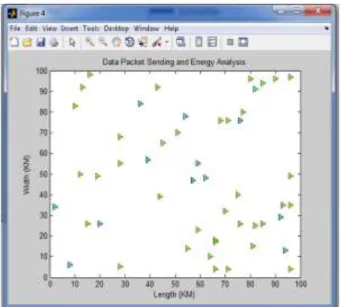
Figure 3 showsdata packet sending and energy analysis.
The Advertisement Packet sending and receiving As figure 2. Shows, R-Mac may be adapted to conditions in the network to increase lifetime or throughput. Matlab implementation will demonstrate the feasibility of compatible simulation.
R-Mac uses fixed sized advertisement packets, its throughput increases linearly with the data packet size as shown by the figure 4. Synchronization of transmit / receive schedules has several benefits it drastically reduces the packet delay, and it reduces the energy use at every node by a factor of about ti/2tS , removing the limit standing in the way of lower duty cycles. In some strategies to increase the packet rate and further reduce the packet delay. Pipelining packets over synchronized paths doubles the packet rate. Urgent packets are delivered almost immediately, Although node synchronization may be implemented without the benefit of the other, their combined impact on node lifetime and packet delivery delay exceeds that of each approach independently. This is because R-Mac may select the most reliable schedule, which in turns greatly facilitates node synchronization.
Figure 4 shows the cluster heads for sending data frame RMax.
Figure 5 shows the life of nodes.
V. CONCLUSION
The improvements on the node life and packet delays require no overhead or cost in most WSN. nodes do not need to exchange On / Off schedules with their neighbors, and in the unidirectional case, no explicit synchronization phase or messages are required. the nodes organize themselves automatically. This research work will implement and test in matlab. Wireless automatic technology can not only save human resources, but also improve the accuracy and instantaneity. It enables management sector to timely and accurately access power consumption messages. Moreover, no cabling is required with relatively economical investment. For the proposed wireless automatic system, wireless communication links can be quickly built, engineering period significantly shortened, and it has better scalability compared to a wired system. this research paper give a solution for MAC schedule to node and network conditions to improve performance under a wide range of conditions and for both unicast and broadcast packets. the number of parameters and metrics to switch MAC schedules. from the fig 5 it show life of nodes is max in 500 max no of rounds packet sending. MAC can significantly increase per-node life and that node synchronization is both possible and practical. Packet delivery ratio shows that the R-MAC schedule is more reliable then SP-MAK and MX-MAC. And for unicast packets, the main difference between simulation and implementation results stems from the size of the advertisement packets sent by X-MAC. This research paper observe that the optimal Tx time value decreases with an increase in packet transmissions. .
VI. REFERENCE
[1]. A Roy and N Sarma, ―Energy Saving in MAC Layer of Wireless Sensor Networks:a Survey‖ Department of Computer Science and Engineering, Tezpur University, INDIA 2010
[2]. D. Cassioli, M. Z. Win, and A. F. Molisch, ―A statistical model for the UWB indoor channel,‖ Proc. Vehicular Technology Conference(VTC), vol. 2, pp. 1159–1163, 2001.
[3]. J. Polastre, J. Hill, and D. Culler, ―Versatile low power media access for wireless sensor networks,‖ in Proceedings of the 2nd ACM Conference on Embedded Networked Sensor Systems (SenSys‘04), Nov. 2004, pp. 95–107.
[4]. Wei, Y., Heidemann, J., Estrin, D.: An energy-efficient MAC protocol for wireless sensor networks. In: Proc. INFOCOM ‘02. (June 2002)
[5]. Van Dam, T., Langendoen, K.: An adaptive energy-efficient MAC protocol for wireless sensor networks. In: Proc. SenSys ‘03. (October 2003)
[6]. C. J. Merlin and W. B. Heinzelman, ―Duty cycle control for low power listening MAC protocols,‖ in Proceedings 5th IEEE Conference on Mobile Ad-hoc and Sensor Systems (MASS‘08), Sep. 2008.
[7]. Bhavana Narain, Anuradha Sharma, Sanjay Kumar and Vinod Patle ENERGY EFFICIENT MAC PROTOCOLS FOR
WIRELESS SENSOR NETWORKS: A SURVEY
International Journal of Computer Science & Engineering Survey (IJCSES) Vol.2, No.3, August 2011
[8]. Ozlem Durmaz Incel, Lodewijk van Hoesel, Pierre Jansen, Paul Havinga ― MC-LMAC: A multi-channel MAC protocol for wireless sensor networks‖ Elsevier, 2010
[9]. Merlin, C.J., Heinzelman, W.B.: Node synchronization for minimizing delay and energy consumption in low-power-listening MAC protocols. In: Proc. MASS ‘08. (September 2008)
[10].Wong, K.J., Arvind, D.: SpeckMAC: Low-power
decentralised MAC protocol low data rate transmissions in specknets. In: Proc. IEEE International Workshop on Multi-hop Ad Hoc Networks: from Theory to Reality (REALMAN ‘06). (May 2006)
[11].Buettner, M., Yee, G.V., Anderson, E., Han, R.: X-MAC: a short preamble MAC protocol for duty-cycled wireless sensor networks. In: Proc. SenSys ‘06. (November 2006) 307–320
[12].Liu, S., Fan, K.W., Sinha, P.: CMAC: An energy efficient MAC layer protocol using convergent packet forwarding for wireless sensor networks. In: Proc. SECON ‘07. (June 2007)