IMPROVING EXCLUSIVE BREASTFEEDING RATES IN LATINA WOMEN: PILOTING HUG YOUR BABY USING PEER COUNSELORS
LaKasha G. White
A Doctor of Nursing Practice project submitted to faculty at the University of North Carolina at Chapel Hill in partial fulfillment of the requirements for the degree of Doctor of Nursing Practice
in the School of Nursing.
Chapel Hill 2019
Approved by:
ABSTRACT
LaKasha G. White: Improving Exclusive Breastfeeding Rates in Latina Women: Piloting HUG Your Baby Using Peer Counselors
(Under the direction of Julee Waldrop)
Background: In the first few hours, days or weeks of an infant’s life, some mothers implement formula feeding along with breastfeeding—commonly known as “Los Dos” or mixed feeding. Mixed feeding or Los Dos occurs despite the American Academy of Pediatrics’ (AAP)
recommendation of exclusive breastfeeding (EBF) for the first six months of life. Increasing the opportunities for continuing education and training among peer counselors diminishes barriers to breastfeeding within minority populations. Local Problem: The local Women, Infants, and
Children (WIC) staff and project leader identified educational needs about infant feeding cues and child development as key interventions that may help Latina mothers increase breastfeeding
exclusivity. Aim: The primary purpose of this quality improvement (QI) project was to improve EBF rates among Latina women through providing a model of care using strategies from an evidence-based program called HUG Your Baby: The Roadmap to Breastfeeding Success (The
Roadmap). The second purpose was to evaluate the feasibility of implementing this model of care within the WIC department of a public health center. Methods: Using the Lewin Change
theory and quality improvement methods, three WIC peer counselors (PCs) were trained on HUG Your Baby: The Roadmap to Breastfeeding Success with the intent that they would use the strategies with their Latina clients. Results: Upon conclusion of the 8-month project, PCs found
Latina Women decreased over time; however, EBF duration improved. Conclusions: Findings
ACKNOWLEDGEMENTS
First, I would like to thank God, who has given me a vision for my life. God, your word promised me that you know the plans you have for me, plans for me to prosper and be in good health, even as my soul prospers. Next, my wonderful Husband Shaun Sr., my soulmate and best
friend. You made sacrifices with me on the journey and provided for our family. For that, I promise to continue to love you forever and WE MADE IT! To my boys Shaun Jr. and Shane,
you’ve helped mommy smile and laugh on days when crying would have been more
comfortable. You both helped mommy understand the importance of her project (breastfeeding you both presented different journeys and challenges). To my parents, Brenda and Jackie, I did it
again, I am no longer your professional student, I have reached my zenith. My grandmother, Bertha, you raised me to be a woman of determination and faith, which has helped me to chase
after open dreams. To my Aunts Fannie and Joyce, you both provided for my family during this time and helped whenever and wherever. I would like to thank my sister village (Dr. Stephanie DeVane-Johnson, Janiya M. Williams, Janece Moore, Venus Standard, Keatrah Honeyblue,
Charmina Turner, Dorothy Nesmith, and Natasha Best), for your love, encouragement, support, and dedication throughout this journey.
I express gratitude and appreciation to my committee, Drs. Julee Waldrop, Jennifer D’Auria, and Kimberly Newton for your support, wisdom, and guidance throughout this learning process, without you, my project would have remained just a BIG idea going South. Thank you,
PREFACE
Keywords: breastfeeding, lactation, los dos, exclusive breastfeeding, Latinas, Hispanics, peer counselors, infant hunger cues, infant behavior
Definitions: For purposes of this project, exclusive breastfeeding (EBF) means infants receive only breast milk without supplementation of food or drink, not even water. Infants may receive expressed milk with vitamins, minerals, and medicines. The term “Hispanic women” is
comprised of Latina women, Mexican-American, Dominican, and Puerto Rican. Peer Counselors (PCs) are trained women who provide emotional, informational, and instrumental support. Providers are health care providers, such as nurse practitioners, midwives, physicians and
TABLE OF CONTENTS
LIST OF TABLES ... x
LIST OF ABBREVIATIONS... xi
CHAPTER 1: LATINA WOMEN AND BREASTFEEDING ... 1
Background and Significance ... 1
CHAPTER 2: REVIEW OF LITERATURE ... 7
Results for Review of Literature ... 8
Sample characteristics ... 8
Study characteristics ... 9
EBF results ... 9
Use of education on hunger cues ... 11
Summary and Conclusion from Literature Review ... 11
CHAPTER 3: THEORETICAL FRAMEWORK AND METHODOLOGY ... 13
Theoretical Framework ... 13
Application of Lewin’s Change Theory ... 14
Unfreezing. ... 15
Driving forces ... 15
Restraining forces ... 16
Moving. ... 16
Refreezing. ... 16
Specific Aims ... 16
Methods ... 17
Educational Intervention ... 18
Pre-implementation. ... 20
PDSA cycle 1. ... 20
PDSA cycle 2. ... 21
PDSA cycle 3. ... 21
Data Collection ... 22
Exclusive breastfeeding rates ... 22
Staff/Peer Counselor ... 23
Caseload. ... 23
Feasibility. ... 23
Instruments ... 23
Budget ... 25
CHAPTER 4: RESULTS ... 26
Data Analysis ... 26
Ethical Considerations ... 26
Results... 26
Breastfeeding. ... 26
PCs surveys ... 28
Evaluation of PDSA cycles and feasibility. ... 30
Cycle 2. ... 33
Cycle 3. ... 34
CHAPTER 5: DISCUSSION ... 37
Conclusion ... 43
Sustainability ... 44
Implications for Nursing Practice ... 45
APPENDIX C: SAMPLE CELLS FROM EXCEL ... 59
APPENDIX D: FIT WIC SURVEY TOOL ... 61
APPENDIX E: GRANT AWARD LETTER ... 62
APPENDIX F: STAFF LOG ... 63
APPENDIX G: PDSA WORKSHEET ... 64
APPENDIX H: H.U.G. ROADMAP TO BREASTFEEDING SUCCESS ... 65
APPENDIX I: WRAP-UP STAFF SURVEY ... 66
LIST OF TABLES
Table 1. Demographics and Characteristics of Participants ... 47
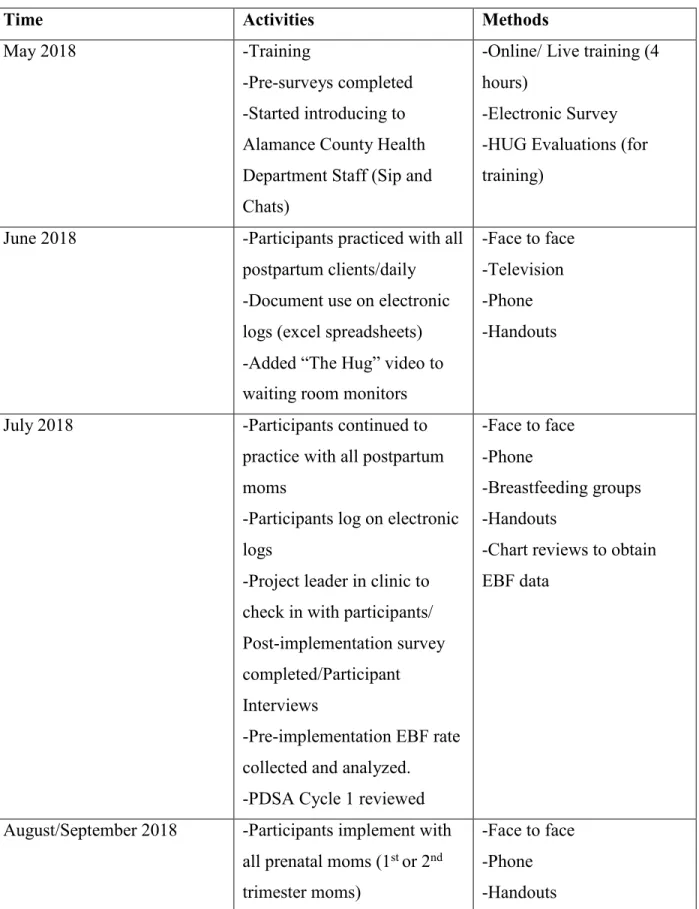
Table 2. Project Timeline ... 48
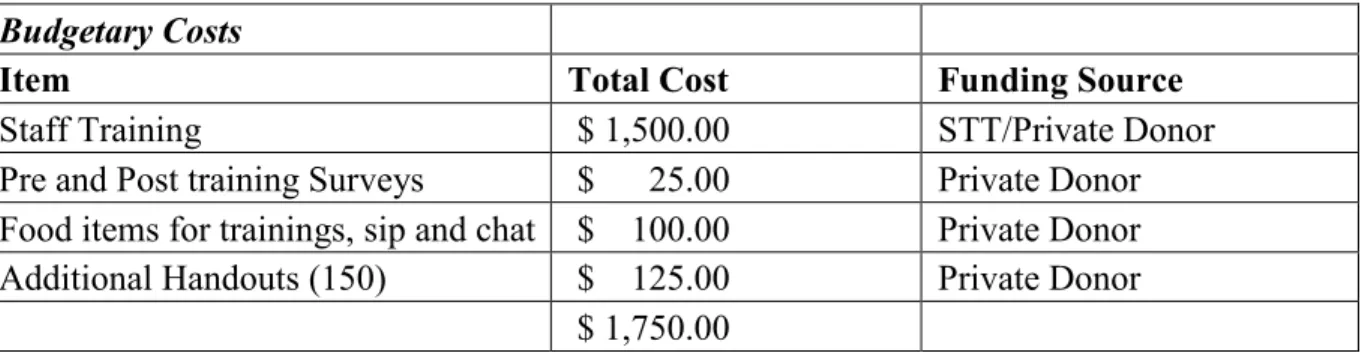
Table 3. Budget ... 50
LIST OF ABBREVIATIONS
ACHD Alamance County Health Department AAP American Academy of Pediatrics
AHQR Agency for Healthcare Research and Quality CDC Centers for Disease Control and Prevention DNP Doctor of Nursing Practice
EBF Exclusive Breastfeeding FNP Family Nurse Practitioner FFA Force Field Analysis
FF Formula Feeding
HUG Helping Understanding Guidance
MD Medical Doctor
MESH Medical Subject Headings NC North Carolina
NT Nipple Trauma PC Peer Counselor PDSA Plan Do Study Act
PMI Perceived Milk Insufficiency
PRISMA Preferred Reporting Items for Systematic Reviews and Meta-Analysis QI Quality Improvement
S Supplementing (Los Dos)
US United States
CHAPTER 1: LATINA WOMEN AND BREASTFEEDING
Background and Significance
Despite the literature-supported benefits of breastfeeding, suboptimal breastfeeding remains a public health crisis (American Academy of Pediatrics [AAP], 2012; Dieterich, Felice, O’Sullivan, & Rasmussen, 2013; Ip, Chung, Raman, Trikalinos & Lau, 2009; US DHHS, 2011).
Breastfeeding is optimal nutrition for infants, as well as beneficial for mothers, society, and the environment (Dieterich et al., 2013; U.S. Department of Health and Human Services (US
DHHS), 2011). Breastfeeding rates have increased throughout all ethnic and racial backgrounds across the United States (US), but disparities remain among minority populations (Centers for Disease Control and Prevention (CDC), 2016). Eighty-one percent of all newborns were
breastfed at birth, 51.8% are breastfeed at 6 months, and 30.7% at 12 months. However, many mothers stop breastfeeding or introduce infant formula early (Bartick & Reyes, 2012; CDC,
2016; Waldrop, 2013). Regardless of high initiation rates and continued improvement, most states, including North Carolina (NC), have not met the Healthy People 2020 objective of EBF ever, at 3 months nor 6 months (CDC, 2017). Only 83.5 % of mothers in NC ever breastfed,
57.2 % continued breastfeeding at 6 months, 50.8 % exclusively breastfed, and 26.1% exclusively breastfed at 6 months (CDC, 2017).
According to the National Immunization Survey (2011–2015), 81.9% of mothers who are Latina initiate breastfeeding; however, at 6 months, only 18.2% continue EBF (CDC, 2016). Latina women initiate breastfeeding more than other races; however, EBF rates at 12 weeks of
breastfeed, to initiate breastfeeding, and engage in exclusive breastfeeding. While the
postpartum period is a critical time for establishing and supporting breastfeeding, earlier interventions among this population may be needed (Waldrop, 2013).
Suboptimal breastfeeding impacts the burden and costs associated with maternal and
childhood illnesses and diseases. Illnesses and diseases that disproportionately affect minority populations include sudden infant death; early childhood ear, respiratory, and gastrointestinal
infections; diarrhea; diabetes; and obesity (Bartick et al., 2017; Dietrich, Felice, O’Sullivan & Rasmussen, 2013; US DHHS, 2011). Latina infants are 1.4 times more likely to suffer from gastrointestinal disease than non-Hispanic and White infants; 1.5 times more likely to experience
acute otitis media; and 1.5 times more likely to experience childhood death (Bartick et al., 2017; Ip, Chung, Raman, Trikalinos, & Lau, 2009). On average, suboptimal breastfeeding in Latina-
mother–infant dyads cost an additional $1,414.34 per 100,000 women and infants (Bartick et al., 2017). The burden of disease among this population calls for early intervention that promotes EBF among Latina women (Bartick et al., 2017).
A mother’s ability to initiate and continue breastfeeding may be influenced by several community factors, including but not limited to Women, Infants, and Children (WIC) programs
and peer counselors (PCs) (US DHHS, 2011). Peer counseling is an economically feasible program for diverse cultures like Latina women (US DHHS, 2011). Telephone calls, hospital or home visits, and group classes are methods in which PCs may impact breastfeeding outcomes
(US DHHS, 2011). Thus, providing opportunities for continuing education and training to PCs may decrease barriers of breastfeeding (US DHHS, 2011). In response to the growing need to
Latina women face unique challenges when deciding to breastfeed. Providing
breastfeeding support from PCs during those times may impact breastfeeding decisions (US DHHS, 2011). Latina women face certain challenges including cultural beliefs, employment, access to support, language barriers and access to information that promotes breastfeeding
(Jones, Power, Queenan, & Schulkin, 2015; Neifert & Bunik, 2013; Waldrop, 2013). Cultural beliefs consist of views on healthy baby weight, returning to work, formula being as good as
breast milk, and infant crying as a sign of insufficient breast milk supply (Bartick & Reyes, 2012; NICHQ, 2018; Waldrop, 2013). Specifically, more than half of all new Latina mothers return to work shortly after birth or during the first year of a newborn’s life (Neifert & Bunik,
2013; Waldrop, 2013). The anticipation of returning to work prompts mothers to begin
supplementing breastmilk with formula as early as postpartum day 2 (Neifert & Bunik, 2013).
As a result, breastfeeding exclusivity and duration are shortened (Linares, Rayens, Gomez, Gokun & Dignan, 2015; Neifert & Bunik, 2013; NICHQ, 2018; Waldrop, 2013). Prenatal breastfeeding education and support are key strategies for informing pregnant women
about the benefits of breastfeeding, normal infant child development and strengthening their intentions to breastfeed (Teddar, 2008; US DHHS, 2011), but women who are Latina may have
limited or no access to support due to employment, transportation, or translators (CDC, 2016; Neifert & Bunik, 2013; Linares et al., 2015; US DHHS, 2011). Because some women who are Latina must return to work before breastfeeding is well established, early strategies and support
systems are needed to help overcome employment barriers (Jones et al., 2015; Waldrop, 2013). Other barriers to EBF pertain to maternal perceptions of infant feeding behaviors. Poor infant
why Latina mothers stop breastfeeding early and begin Los Dos (Bartick & Reyes, 2012; Li et
al., 2008; Waldrop 2013).
The findings of several studies found that maternal perceptions of increased crying are related to poor milk supply. The samples from those studies included young, single Latina
mothers in WIC settings. Li et al. (2008), using a sample 1,323 mothers, found that women in the Midwest and South stopped all breastfeeding due to perceived poor infant satisfaction with
breastmilk (49.7%–55.6%) and perceived deceased milk supply (51%). In El Paso, Texas, 300 Mexican-American women began breastfeeding during their hospital stay; 70.7% stopped or began supplementation within 48 hours of birth (Flores, Anchondo, Huang, Villanos & Finch,
2016). Additional research found that most mothers’ reasons for changing infant feeding methods included poor infant satisfaction with breastmilk (infant crying), perceived milk
insufficiency, plans to return to work, and lack of support (Flores et al., 2016). Women who decided to continue EBF at discharge reported that their decision was made during the prenatal period, and health care professional support played a role in their breastfeeding decision (Flores
et al., 2016).
Women who are Latina in the Southeastern United States shared similar reasons for
discontinuing EBF and misinterpreting infant crying. In a sample of 19 women, Waldrop (2013) found that 63% chose Los Dos in the immediate postpartum periods, and 26% identified infant crying as a sign of hunger and reported plans of returning to work as reason for Los Dos. Infant
crying occurs for other reasons, and the misinterpretation of infant crying as hunger may cause early breastfeeding cessation or supplementation (Teddar 2008; CDC, 2016; Waldrop, 2013).
may require PC implementation designed to help mothers overcome poor infant satisfaction and
perceived decreased milk supply barriers (Bartick et al., 2017; Jones et al., 2015; Li et al., 2008; Waldrop, 2013). PC interventions has demonstrated a delay of solid food introduction (Heinig, Banuelos, Goldbronn, & Kampp, 2009; US DHHS, 2011). Also, breastfeeding support programs
like PCs have a greater impact on breastfeeding outcomes (Heinig et al., 2009; Jones et al., 2015).
Problem Description
Latina women make up the second largest population served at Alamance County Health
Department’s WIC program (Healthy Alamance, 2015; State of County Report, 2015). This population of women is more likely to breastfeed than other minority populations. In Alamance County, 56% of mothers who are Latina initiate breastfeeding at birth and 32.6% continue at 6
weeks, which coincides with changes in infant developmental and physiological changes (Healthy Alamance, 2015; State of County Report, 2015; Teddar, 2015). During this sensitive
period, some Latina mothers stop or implement a Los Dos form of feeding (Bartick & Reyes, 2012; Waldrop, 2013). Los Dos still occurs despite the AAP’s (2012) recommendation of EBF during the first 6 months of life. The WIC clinic staff and providers have identified educational
needs for mothers who are Latina regarding infant feeding cues and child development to help increase breastfeeding rates and exclusivity. Targeted interventions using PCs and other health
care professionals increase EBF rates (up to 90%), exclusivity (up to 6 months), and duration (extended at least 1 month) (Chapman et al., 2010; Chapman et al., 2004).
Purpose of the Project
The primary purpose of this quality improvement (QI) project was to improve EBF rates
second purpose was to evaluate the feasibility of implementing this model of care within the
WIC department of a public health center. The projected outcome was that successful implementation of an evidence-based program would favorably increase EBF among Latina women in the first 6 weeks of infant life. An additional outcome was that PC use of The
CHAPTER 2: REVIEW OF LITERATURE
An abundance of breastfeeding literature revealed its benefits and decreased incidence of disease in both infants and mothers (Dietrich et al., 2013). The risk of early breastfeeding
cessation and Los Dos in this population calls for early interventions that promote EBF among women who are Latina (Bartick et al., 2017). Literature reveals that breastfeeding support and education of those who provide support, like PCs, help mothers meet breastfeeding goals and
impact exclusivity (Teddar, 2015; US DHHS, 2011; McFadden et al., 2017). Since evidence- based programs like HUG your Baby: The Roadmap to Breastfeeding Success help professionals
understand normal infant development and how this development may influence maternal to breastfeeding decisions, the US Surgeon General and literature support its use with breastfeeding support persons, such as PCs (US DHHS, 2011).
The Preferred Reporting Items for Systematic Reviews and Meta-Analysis (PRISMA) guidelines were used to structure a methodical review of electronic databases CINAHL, PubMed
and Google Scholar. A review of the literature was performed from October 2017 through March 2018. The literature search returned 1,295 articles. The concept of “Los Dos” was first described in breastfeeding literature as early as 1999. Literature from all years was included to
prevent any elimination of classic studies or interventions and ensure a widespread review. As of March 2018, only six reports met the inclusion criteria.
Hispanic Women, PCs, WIC, minority, infant feeding cues, and infant behavior. The following
terms or phrases were combined: infant feeding cues + breastfeeding, Los Dos + breastfeeding, infant feeding cues + breastfeeding + Hispanic/Latina Women, and infant behavior +
breastfeeding + Hispanic/Latina Women + WIC.
Articles that met the inclusion criteria of the project were those published in (1) English, (2) focused on Hispanic or Latina women, (3) utilized PC interventions, (4) included EBF rates,
(5) discussed infant feeding cues or infant behavior, and (6) examined breastfeeding support. Exclusion criteria included articles if researchers did not (1) describe sample population, (2) did not include Hispanic/Latina women in the sample, (3) hospital interventions, (4) formula studies,
(5) depression and breastfeeding studies, (6) anxiety or self-efficacy studies, (7) breastfeeding educational interventions only, and (8) breastfeeding and pain control. Studies that did not
describe the setting or intervention, and studies on early childhood interventions were also excluded.
Results for Review of Literature
Sample characteristics. The total number of participants across all six studies was 13,818 women. The sample size ranged from 45 to 13,818 (Heinig et al., 2009; Kellams et al.,
2016; McFadden et al., 2017; Reeder et al., 2014; Rozga, Kerver &Olson, 2014; Vari, Camburn & Henly, 2000). The majority of the participants across each study were single, Latina, and low
income. The education level was reported as 9 years and up with reported breastfeeding duration ranging from 1 to 18 months. The women were from all regions of the US (Midwest, South, East, West, and North) and representative of all women who are Latina in the US and NC. The
studies took place in WIC settings, large hospitals, and prenatal clinics. The studies conducted within large sample and geographical areas should improve the generalizability and feasibility of
Study characteristics. Studies supporting the need for this quality improvement (QI) project consisted of a systematic review (McFadden, 2017), randomized control trials (Heinig, et al., 2009; Kellams et al., 2016; Reeder et al., 2014), quasi-experimental studies (Vari, et al., 2000), and a secondary analysis of program data (Rozga, Kerver, & Olson, 2014). Various
methods used to provide breastfeeding promotion interventions consist of small groups (Heinig et al., 2009; McFadden et al., 2017; Vari et al., 2000), telephone calls (McFadden et al., 2017;
Reeder et al., 2014; Rozga et al., 2014), one-on-one support (McFadden et al., 2017; Rozga et al., 2014), or videos (Heinig et al., 2009; Kellams et al., 2016; McFadden et al., 2017). Clients participated in intervention studies on average for 1–6 months during the prenatal or postpartum
period. The average time spent during interventions varied from 10 to 60 minutes (Heinig et al., 2009; Kellams et al., 2016; McFadden et al., 2017; Reeder et al., 2014; Rozga et al., 2014; Vari
et al., 2000).
EBF results. All intervention methods demonstrated an increase in the length of time Latina women exclusively breastfeed. In a systematic review of 73 studies, only eight studies
dealt with Latina populations (McFadden et al., 2017). McFadden et al. (2017) classified interventions as high intensity or low intensity. Low-intensity interventions included contacts
with only prenatal education or postpartum support via telephone. High-intensity interventions included at least three contacts, provided both prenatal and postpartum support and had a majority of face-to-face sessions.
Intervention intensity ranged from 1-17 contacts and involved both prenatal and
postpartum contact (McFadden et al., 2017). Peer counselor contact with Latina mothers began
exclusively breastfed longer than usual care groups (on average (50.08 % vs. 39.63%) even
though 57.2% of women in all studies stopped EBF at 6 weeks.
However, in two of the chosen studies with low intensity interventions, there was no difference in EBF rates (p=0.14; p=0.54) (McFadden et al, 2017). High-intensity interventions
(i.e., face-to-face) are more likely to improve breastfeeding outcomes compared to low-intensity interventions (i.e., telephone) and usual care (p = 0.005) (McFadden et al., 2017). In addition,
interventions implemented through diverse methods (telephone calls, videos, handouts or one- on-one support) with scheduled visits improved EBF rates up to 6 weeks among intervention groups (McFadden et al., 2017).
Latina women who attended 2–3 PC facilitated group sessions versus those with no breastfeeding support tended to breastfeed for longer periods (5.42 weeks vs. 4 weeks) (Vari et
al., 2000). Sixty-seven percent of 5,886 women who received 1–3 in-person PC contacts continued EBF at 3 months versus only 5% of women with continued EBF who received fewer in-person PC contacts (p < 0.001; Vari et al., 2000). In studies with at least 3–17 prenatal
contacts, EBF rates birth to 3 months were higher on average 44.8% intervention versus 26.7% control (Chapman & Pérez-Escamilla, 2012). Heinig et al. (2009) discovered a 5% increase
among pre- and post-EBF rates among mothers in the intervention group versus 3% decrease in the control group. Marginal differences (p < 0.10) were seen in breastfeeding exclusivity at 4 months (Heinig et al., 2009).
Although telephone contacts are low-intensity interventions, multiple PC telephone contacts (4–8 calls) increased EBF rates versus no contact (Reeder et al., 2014). A risk
Educational breastfeeding videos alone were also ineffective in improving EBF at birth or
during the hospital stay (Kellams et al., 2016). The women in the intervention group (n = 174) viewed an educational breastfeeding video about EBF at the same rate (50%) as the women in the control group (n = 172) who watched a video about nutrition in pregnancy (Kellams et al.,
2016). No statistically significant differences were found among the groups (p = 0.87) (Kellams et al., 2016).
Use of education on hunger cues. Limited research supports the use of educational strategies on the importance of understanding infant development and communication to
improve feeding competencies and breastfeeding overall. Only one large study could be located
that was conducted in Northern and Southern California WIC clinics using infant feeding cues education (Heinig et al., 2009). The prenatal group in this study focused on infant behavior—
specifically infants’ states and feeding cues. Participants included 1,083 women who were Hispanic, Asian, Black, Indian, Native American, and White. After the intervention, 18.1% of the participants reported EBF at 4 months as opposed to 12.3% of the mothers in the comparison
group (Heinig et al., 2009). Marginal increases in EBF rates were seen at 6 months in intervention groups (p<0.10) and infant solid food introduction before 4 months decreased
(p<0.10) (Heinig et al., 2009).
Summary and Conclusion from Literature Review
Upon reviewing the literature, suboptimal breastfeeding rates result in excess health costs and preventable diseases for many children in the US. Early interventions are warranted.
Breastfeeding is one of the single most significant factors that may decrease the chance of illness
and improve health outcomes in minority populations (AAP, 2012; Allen & Hector, 2005; Bartick et al., 2017; Ip et al., 2009; US DHHS, 2011). Among Latina women, Los Dos occurs
& Reyes, 2012; Flores et al., 2016; Waldrop, 2013). PC interventions decrease the risk for
women to use supplements early like Los Dos. On average, high-intensity PC support or interventions enable women to exclusively breastfeed for at least 6 weeks and up to 6 months (Bartick et al., 2017; Heinig et al., 2009; Kellams et al., 2016; McFadden et al., 2017; Reeder et
al., 2014; Rozga et al., 2014; Vari et al., 2000).
PC intervention occurs more frequently in the postpartum period among WIC
participants; however, earlier intervention may be needed (CDC, 2016; Chapman et al., 2010; Chapman & Escamilla-Perez, 2012; Heinig et al., 2009; McFadden et al., 2017; Waldrop, 2013). Educating mothers early about infant behaviors like hunger cues and child development is
equally critical to increasing EBF rates (Gill &Vierheller, 2015; Gross et al., 2010; Heinig et al., 2009; Teddar, 2015; Li et al., 2008). Improving EBF, universal educational programs, and
support are all necessary to help mothers relate and understand their infants better (McFadden et al., 2017; Teddar, 2015). A paucity of literature exists that closely examines the impact of PC interventions on EBF rates in Latina women. However, a consistent body of evidence is
CHAPTER 3: THEORETICAL FRAMEWORK AND METHODOLOGY
Theoretical Framework
A review of the literature supports the implementation of such interventions as HUG your Baby and Peer Counselors to improve EBF rates among Latina women in Alamance County. While there are several methods to implement change in clinical care, Lewin’s Change Theory
(1947) and the Plan, Do, Study and Act (PDSA) model were used to guide the methods and interpretation of outcomes for this project. Lewin’s Change Theory includes a Force Field
Analysis (FFA). The FFA is composed of 3 stages and helps one understand human behaviour in relation to change and patterns of resistance to change (Lewin, 1947). In order for change to be successful, the process of change must progress through 3 steps (unfreezing, moving, and
refreezing) while modifying three concepts: driving force, restraining force, and equilibrium (Lewin, 1947).
Unfreezing is the initial step in Lewin’s Change theory and involves several components. First, helping those involved in practice change let go of old counterproductive practices,
identify key players or change agents, and enlist strategies to strengthen driving forces and
reduce restraining forces (Bozak, 2003; Lewin 1947; Petiprin, 2016). Driving forces move change in a positive direction that supports further change (Bozak, 2003; Lewin 1947; Petiprin,
2016). Restraining forces maintain the present situation and status quo or counter driving forces, thus impeding change and pushing in opposing directions (Bozak, 2003; Lewin 1947; Petiprin, 2016). Equilibrium is the state of balance between driving forces and restraining forces in which
The second or change stage, known as Moving, is where project implementation begins
and desired changes occur. Also, participants involved begin to change thoughts, feelings, behaviors, or all three to a more productive manner (Bozak 2003; Petiprin, 2016). Lastly,
refreezing establishes the change as the new standard. Evaluation of program sustainability and overall effectiveness typically occurs (Bozak 2003; Petiprin, 2016).
Planned change occurs in practice for a variety of reasons, but this transition can be very
challenging (Mitchell, 2013). Integrating practice change into clinical practice daily is one way to reform (Mitchell, 2013). Lewin’s Change Theory created a logical approach to implementing change in the WIC setting. This theory was chosen because it allowed change to be introduced
gradually; guided stakeholders away from the status quo and toward the new change; and provided ways to address driving and restraining forces in a manner that produced satisfactory
change (Lewin, 1947; Mitchell, 2013).
Application of Lewin’s Change Theory
Using Lewin’s Change Theory and PDSA cycles, this QI project focused on changing the behavior of PCs to implement a new process into practice. The current practice included a
recommendation from Maternity Clinic Nurses to enroll a pregnant woman in WIC services.
Once a client decided to participate in WIC services, an evaluation occurs between the client and a Nutritionist. During the initial evaluation mothers determined their planned infant feeding
preference (breast, formula or Los Dos), discussed WIC benefits, and received information (commonly a handout) about PC services and free breastfeeding classes.
If breastfeeding (exclusive or mixed) was the infant feeding preference, a referral for PC
services was made. PCs received the referral and reach out to patients. However, there was no guaranteed follow-up or proof of PC contact. Most mothers were lost to early prenatal follow-up
due to employment or other children and/or family obligations. Most PC contact was therefore
made in the last trimester of pregnancy (28-32 weeks) or the postpartum period (up to 6 months after baby was born). The new process included making PC contact and introducing The
Roadmap on the same date as the initial nutritionist visit. If available, PCs were to introduce The
Roadmap to prenatal clients (face to face). When PCs were unavailable, clients were to receive a printed handout of The Roadmap or brief talk by the nutritionist (who also received The
Roadmap training).
Unfreezing. To understand and utilize change theories and frameworks can help increase reform success (Mitchell, 2013). Applying the first stage of change theory involved identifying
the current need for change, preparing for change, anticipating barriers, and employing change agents (Bozak, 2003; Shirley, 2013). Key components of this step involved identifying change
agents. Change agents for this project included a WIC PC/Supervisor, Board-Certified Lactation Counselor, the project leader (a family nurse practitioner), and a physician (family medicine).
The main role of change agents during implementation was to be driving forces/champions for change. Driving forces are positives that moved the project to completion.
Driving forces. Other driving forces for this project included data from the Healthy Beginnings Initiative, a community needs assessment and PC supervisors recognizing the need for additional training to enhance breastfeeding support services. Healthy Beginnings and Community Needs Assessment data identified Alamance County as one of the counties with a
higher infant mortality rate than the North Carolina average. In attempt to combat infant mortality, the benefits of breastfeeding and breastfeeding support services were identified as
Restraining forces. Restraining forces are opposing forces that work against change and make change more difficult. Well established practice routines may be difficult to change, although literature supports practice changes (Agency for Healthcare, 2015). Restraining forces for this project were a culture of resistance to change, communication between interdisciplinary
teams (i.e. Maternity Clinic and WIC), staff turnover, work-load, and time frame (prenatal versus postpartum) client enrollment in WIC.
Moving. The moving stage is the period of time when change occurs including the planning and implementation stages of the project (Bozak, 2003). During this stage,
communication is important (Bozak, 2003). Prior to implementation and informing staff of
planned practice change, a staff meeting was held to introduce intentions of piloting a new program during the prenatal period to encourage breastfeeding behavior change in Latina women
and a review of evidence-based benefits of EBF. Staff were given a brief summary of the HUG program and information on the training requirements. Staff were also provided a time frame of implementation and planned PDSA cycles.
Refreezing. The final and longest step of Lewin’s Change Theory is refreezing. Through refreezing, the new practice change is stabilized and ready for evaluation (Burnes,
2004). Mitigating restraining forces and decreasing the risk of more restraining forces, ongoing support for staff is important during this stage (Bozak, 2003). Thus, as project leader attended the clinic bi-weekly, as well as sent weekly HUG tips and evidence-based resources to support
using The Roadmap via electronic mail. Staff received feedback during monthly staff meetings.
Specific Aims
The primary was to improve EBF rates among Latina women through providing a model of care using strategies from The Roadmap. The secondary aim was to evaluate the feasibility of
Methods
A QI design using pre-post measures was used. Primary outcome measures were to increase the number of Latina mothers who exclusively breastfeed during the first 6 weeks of life
by at least 5% by the end of the project. Secondary outcome measures were to examine the feasibility of using HUG your Baby: The Roadmap to Breastfeeding Success in a rural WIC setting by examining PCs’ attitudes and intentions to use The Roadmap, knowledge uptake, and
reported ease of use.
Context setting. The project took place at Alamance County Health Department (ACHD) in Burlington, NC. The Health Department was built in January 1917. Alamance County is made up of rural areas and one small central urban area. The county consists of nine cities and is located between two large metropolitan areas: Research Triangle Park and Piedmont
Triad (Healthy Alamance, 2015). During the last two decades, families that are Latina have relocated to the area, and growth among this population has doubled (Healthy Alamance, 2015).
The total population is 158, 276, 12.4% of the population is Hispanic Latino (State of County Report, 2015).
The ACHD WIC department is rated at or above the NC state average for breastfeeding
initiation and duration at 6 weeks; however, neither the local or state average meet the Healthy People 2020 goals (CDC, 2016; State of County Report, 2015). Multiple incentives are
occurring in Alamance County to improve the overall infant mortality rate and breastfeeding outcomes. The goal of the organization is to offer minority women like Latina’s support that will encourage exclusive breastfeeding the first six weeks of life and extend breastfeeding
duration. The literature reviewed supports use of evidenced-base programs like HUG you Baby: The Roadmap to Breastfeeding Success as an education tool for breastfeeding support personnel
Alamance County WIC department PCs serve on average about 415 families a month
across all ethnic and racial backgrounds. Latina mother baby dyads make up the 2nd largest
group served. The WIC department is employed by 5 nutritionists, 3 breastfeeding PCs, and 2 clerks. The all-female staff are ages 26-64 and composed of White, Black, and Latina
ethnicities. Staff years of experience ranged from 2 months to over 30 years. The majority of
WIC staff members and one MD are bilingual, and two interpreters are available in-house. The WIC department is open Monday through Friday 0800-1700. Clients may schedule an
appointment or open access appointments. Extended hours are offered on Mondays through
Friday during lunch (1200-1300) and Mondays 1700-1800 by appointment only.
Population and sample. A sample of 39 out of 303 medical records of Latina women 18 and up, who planned to EBF with an assigned PC, or breastfeeding mothers who attended
breastfeeding support groups with PCs were followed over the course of this project. Data collection began with the initial WIC enrollment visit which might occur up until 6 weeks
postpartum. Originally, the records of patients who attended the ACHD Maternity Clinic were to be included but those records were unavailable for review due to staffing issues and staff
disinterest in participation.
All staff of the WIC department (N=8) were invited to participate in the training. A cohort of PCs (n=3) agreed, to voluntarily participate in the quality improvement project. Peer
counselors were required to complete a The Roadmap 2-hour online training in addition to a live 2-hour session on additional HUG strategies.
Educational Intervention
The Roadmap is an evidence-based component of HUG Your Baby that integrates
lactation support with child development theory with the goal of helping parents understand how
educators, lactation professionals and other healthcare professionals (e.g., PCs) with family-
friendly concepts and language that help mothers meet breastfeeding goals while promoting health and well-being of mothers, babies, families and communities (Teddar, 2008; 2015). This program has been used around the world with several professionals (nurses, residents, midwifes,
doctors) and parents (https://hugyourbaby.org/). Piloting HUG Your Baby provides WIC PCs with the necessary resources to enhance staff competency, knowledge and care for diverse
populations, such as Latinas.
The initial educational component consisted of a 2-hour online independent study (https://hugyourbaby.org/roadmap-to-breastfeeding-success-program/) that follows a come and
go format. The online independent study helps professionals understand why and when predicable changes occurring in infants eating, sleeping or general behavior (Teddar, 2008).
These behaviors can confuse mothers (Teddar, 2008). Online sessions also include strategies and resources are giving to help WIC PCs help parents anticipate and problem solve during infant development (Teddar, 2008). The health education literature supports this program format
through confirming the effectiveness of e-learning for teaching professionals. Peer counselors completed this portion of the program during the time period April 20, 2018 – May 18, 2018.
The online component was followed by a 2-hour in-person education session with a certified HUG teacher for further development of skills and other HUG strategies to be used with patients. In-person training offered multicultural videos of professional and mother baby
interactions, memorable graphics, and case studies. The in-person educational session was offered on May 21, 2018, at 2 separate times (0800-1000 or 1400-1600) to accommodate all PCs
Prior to training, all staff (N=8) were asked to complete an anonymous pre-training
survey via email. Baseline surveys were collected by the WIC director and PC Supervisor and data was reviewed by the Project leader. All PCs received the same training, emails and access to the project leader. The original HUG trainer remained available throughout the project to
offer additional trainings as needed.
Pre-implementation. HUG your Baby: The Roadmap to Breastfeeding Success was guided by Lewin’s Change Theory and a PDSA model. Prior to implementation the project leader and the supervising PC developed 3 PDSA cycles to facilitate implementation, feedback and continuous evaluation, project timeline, planned goals for each PDSA cycle, and created an
excel spreadsheet for staff to log their use of The Roadmap. A kick-off campaign was completed July 23-27, 2018. The kick-off campaign included a sip and chat with a review of the project
purpose and key talking points on The Roadmap, small clips of “The HUG” video across television monitors in the waiting room, and staff received Ask me about the HUG buttons. The project goals (See Worksheets 1-3), timeline (See Worksheets 1-3), copies of The Roadmap
handout in English (Appendix H) and an electronic excel log (Appendix F) to use for daily documentation were distributed at that time.
PDSA cycle 1. Plan, Do: The first PDSA cycle was implemented July 1, 2018 through
August 31, 2018. The aim of this initial cycle was to focused on practicing the HUG language (i.e. signs of overstimulation and infant zones), introducing postpartum moms (all mother baby
dyads birth to 3 months) to The Roadmap, and documenting use. It was expected that PCs would use The Roadmap in WIC with at least 50% of the PC caseload for at least three days a
reviews were also done to determine any changes in EBF rates among Latina women. The
project leader was in clinic 2 days a week for 8 hours for the first month to facilitate, increase project awareness, answer questions and concerns, and help staff implement The Roadmap.
PDSA cycle 2. Plan, Do: The second PDSA cycle focused on implementing The Roadmap during the prenatal period. This 2-month cycle began September 1 through October 31, 2018. The plan was to implement The Roadmap with all Latina moms during the early
prenatal period, ideally the first trimester. The first trimester of pregnancy is defined as the first 13 weeks of pregnancy. We expected all PCs to document on the electronic spreadsheet and observe an increase in use from PDSA 1. We were expecting staff to continue to report ease of
use, no burden to client care, retained knowledge and positive attitudes related to using HUG strategies with clients. Secondly, we anticipated that mother-baby dyads from the initial chart
review, who reported an initial EBF preference who started EBF at birth and would continue EBF for at least the first six weeks of infant life. Client charts were also examined for changes in the duration of EBF from baseline data. Study, Act: The project leader continued to attend clinic
once a week for 4 hours, attended breastfeeding support groups, and email PCs to provide targeted tips from The Roadmap and address concerns.
PDSA cycle 3. Plan, Do: The final PDSA cycle concluded November 1, 2018 through December 31, 2018. The focus for this cycle was continuing utilization (50% of total caseload, improving documentation on the electronic spreadsheet (50% of total caseload), and sustaining
change. A medical record review of EBF rates and duration of exclusive breastfeeding
continued. Staff were provided with additional handouts, 2 large wall maps, and an additional
for 4 hours and continued to send bi-weekly email reminders to encourage continued use and full
adaption.
Data Collection
Exclusive breastfeeding rates. The original intent was to collect information on Latina breastfeeding rates clinic-wide from the State Department of Public Health database, Crossroads. During the pre-implementation phase, a few barriers to using Crossroads were identified.
Crossroads data was only accessible by the WIC Director and PC Supervisor during this project via a password-protected electronic medical record and locked computer. Local reports on
breastfeeding are only generated by the state quarterly. Also, clients only have the option to choose from White, Black, Asian, or American Indian as a race and non-Hispanic/Latino as an ethnicity.
Based on personal conversation, Latina women in this WIC setting often find it difficult to identify with a race and commonly choose the White race, as a result, breastfeeding data for
Latina women then may most often be documented and included with White women in the Crossroads database. Therefore, the DNP project leader and implementation team decided to use a sample from Crossroads to represent the broader Latina WIC population at this health
department. The WIC Director then selected a sample of 39 records from the compiled list of names. In groups of four, names were picked from the top, middle, and bottom of the list until at
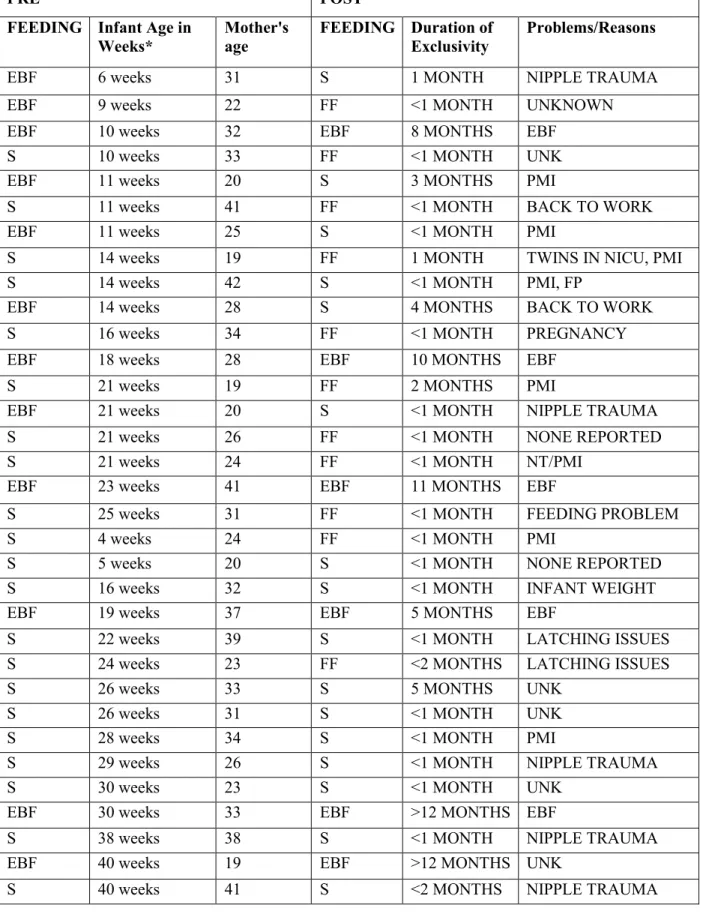
total of 13% (n=39) were selected. Data extracted included feeding preference, the current feeding type, the duration of EBF, breastfeeding problems, and reasons for no longer breastfeeding (Table 4). All data were used to determine the pre-implementation rates of
breastfeeding (initiation, duration, and exclusivity) among women who are Latina.
Four months after implementation, the project leader and WIC director performed a
changes in client feeding preferences. Client charts included in the review were clients who
returned to the clinic for follow-up and at least one PC contact. After the QI project, all original records were reviewed for rates of exclusivity and duration of EBF.
Staff/Peer Counselor
Caseload. Data from completion of the PC logs would be used to determine percentage of their caseloads where The Roadmap was used as a counseling strategy. During this QI
project, 2,070 families from all races had PC contact. The Latina population made up 620 (~ 30%) of these families. The stated goal for the PCs was to document the use of The Roadmap
with 50% (310 (~ 38%) of mother-baby dyads per month throughout the project (8 months).
Feasibility. Feasibility was assessed using questions adapted from Teddar and Heinig surveys (Appendix A) and HUG you Baby Program Evaluation (Appendix I). During the PDSA
cycles, sample question from Agency for Healthcare Research and Quality (AHRQ) Health Literacy Universal Precautions PDSA Blank Worksheet (Appendix G) were asked. Questions
included multiple choice, Likert scale and open-ended answers to capture feelings, attitudes, knowledge, document behavior change and barriers to use.
Instruments
Before training, staff members were asked to complete a pre-implementation survey to
establish baseline knowledge about sharing newborn behavior with parents, experience and confidence in sharing newborn behavior information, and intentions to use The Roadmap in the WIC setting. An adoption of the Teddar (2015) and Heinig (2009) pre- and posttest intervention
surveys were used to obtain data. Both surveys have been used in previous research studies (Heinig et al., 2009; Teddar, 2008) (see Appendix A, B, C). The pre- and post-intervention
Completely Disagree). After training, the same questions were administered during week 4 of
implementation.
Heinig pre-intervention survey was developed, tested and revised by the FIT WIC research team and used in previous studies, no documented psychometric testing data is
available. The pre-intervention survey consisted of 27 questions. Twenty-five questions assess responses based on a Likert Scale (1=completely disagree to 5 = completely agree) and 2 open-
ended questions. Heinig’s post-intervention survey were a revision of the pre-intervention survey. The post-intervention survey was composed of 25 questions using a 5-point Likert Scale (1 = completely disagree to 5 = completely agree). Questions about WIC trainings and classes
were removed and replaced with the intervention assessment, material evaluation and dissemination (Heinig et al., 2009).
Teddar pre- and post-surveys were also used in previous studies, but no psychometric testing data was available as of March 2018 (Teddar, 2008). Eight questions assess PCs’ knowledge and experience sharing newborn behavior with parents, using a 5-point Likert scale
as described above. ( Permission for use of both surveys is located in Appendix F).
Combining questions from Heinig and Teddar surveys, a 25-item survey, was developed
by the project leader. The survey was made up of 2 parts for a total of 25 questions containing a combination of Likert scale and opened-ended questions. Part 1 included questions to obtain demographic data and evaluate pre-implementation knowledge on infant behavior. Part 2
captured data on PCs’ intentions, knowledge, and attitudes towards infant behavior and breastfeeding. Open-ended questions were recorded by hand or typed and added to PDSA
ensure confidentiality, PCs were instructed to place all completed surveys into a sealed envelope,
and returned to the WIC director mailbox.
Budget
The QI project took place in a rural community setting with limited resources. The largest percentage of budgeted monies went towards staff training sessions. After a letter of permission to use the tool was drafted for The HUG your Baby owner, detailing the setting and
project goals, an all-inclusive package was granted. The package included online and live training, a 20-minute parent education streaming video/DVD, printed handouts in English (50)
and Spanish (50), and The Roadmap Poster in English (1) and Spanish Language (1). The anticipated cost of the project was $1500, and the actual cost was $1750 (see Table 3). Funding for the project was secured from Sigma Theta Tau International Research grant for $600
CHAPTER 4: RESULTS
Data Analysis
Data from the staff survey was placed into an excel spreadsheets (see sample in
Appendix C). The results were analyzed using descriptive statistics to compare results from the pre-test and post-test immediately after the training and an additional post-test 4 months later.
Data on the initial feeding preference, the current feeding type, the duration of EBF,
breastfeeding problems, and reasons for no longer breastfeeding were extracted during chart
reviews and analyzed descriptively at the beginning to the end of the project (Table 4).
Ethical Considerations
The University of North Carolina IRB approved this quality improvement project under exempt status May 1, 2018 and approved for implementation by Alamance County Health Department May 21, 2018.
Results
Outcomes measures were assessed based on a comparison of pre- and post-intervention surveys and breastfeeding data.
Breastfeeding. The PCs saw a total of 303 Latina Women from January to July before initiation of the program. A sample of 39 Latina women from this group received PC contact, The Roadmap and return WIC visits. Before implementation of The Roadmap strategies, this
sample’s EBF rate was 33% (N=13). The average duration among all 13 women who
exclusively breastfeeding. Data revealed that EBF continued to a greater degree in women
between ages 26-30 (n=2). The duration of EBF was 1 month (n=1; 10%) to 4 months (n=2; 20%). Los Dos was observed in seven (n=7;70%) of the ten women and began as early as four weeks. In this population, Los Dos was stratified equally across all maternal ages 18-21 (n=2);
22-26 (n=2); 31-35 (n=1); 36-42 (n=2) (Table 4). The most common reasons reported for stopping EBF changing to Los Dos at 1 month was perceived milk insufficiency (n=4; 40%),
nipple trauma (n=1; 10%), and unknown (n=1; 10%). One additional woman (n=1; 10%) stopped EBF and switched to formula only also for an unknown reason.
The same sample of Latina Women (n=39) continued to work with PCs, and a chart
review of the same sample population was completed in January 2019. At that time, eight of 13 the mothers (62%) who were exclusively breastfeeding at the beginning of the project continued
EBF mother's continued EBF, five (38%) changed to formula, and two (15 %) changed from Los Dos to EBF bringing the total of EBF to 10 (26%) of the total sample illustrating only an 8.3% decrease in EBF over the program implementation in this cohort of Latina mothers. Latina
women ages 31-35 (n=4) continued to EBF more than other ages (19-29; n=2); (36-40; n=2). Seventy-seven percent (n=10) of the 13 who continued EBF did so for at least 12 weeks.
demonstrating a 9% increase in EBF duration.
The longest duration of EBF was six months (n=3; 23%). Mothers who switched to formula or began Los Dos reported perceived insufficient milk supply due to infant crying (n=4),
PCs surveys. Although (N=8) members of the HD participated in the HUG/TRMBS training, only 3 PCs are included in the implementation phase of this project. Three participants (n=3) completed the HUG training and all three (n=3) were full participants, demonstrating a participant rate of 100%. This section provides information on PC demographic and survey data.
Three PCs (n=3) completed the pre-survey and two (n=2) completed the post-survey. One (n=1) completed the post-training survey during PDSA cycle 1 (week 4) as instructed and
the other did not complete it until the end of the project, limiting comparison of pre- and post- intervention data to descriptive statistical analysis. All 3 PCs were female, ages 30-32. Two (n=2) completed college and one (n=1) had some college. Two PCs (n=2) speak Spanish and
English, and work experience in the WIC setting averaged 2 years. (Table 1)
Pre-survey data shows that one (n=1) PC had prior training on infant behavior. Two
(n=2) PCs had training related to infant feeding or infant feeding issues. When asked what they hoped to learn from the HUG training, specifically The Roadmap, common themes included any information that will help become a better educator on infant feeding cues (n=2), ways to help
moms understand that infant crying and other infant behaviors are not always related to poor milk production or breastfeeding (n=3).
All PCs (n=3) completely agreed that babies have behaviors that help caregivers know what they need. When asked if biggest babies are healthiest babies, two (n=2) PCs completely disagreed, which indicates that have some awareness of cultural barriers Latina women face.
There was no consensus on WIC providing client education on infant behaviors (n=1 somewhat agree, n=1 completely agree, n=1 no opinion). All PCs completely agreed that mixed feeding is
and classes provided by WIC are useful to clients(n=2). Peer counselors demonstrated minimal
knowledge about newborn sleep cycles, self-comfort, and getting newborns ready to eat (n=2). Two (n=2) of the PCs had prior knowledge about how a newborn body changes in response to overstimulation. All PCs (n=3) had prior understanding of newborn behaviors likes
gaze aversion, orientation to face, voice, and/or a toy, and providing parent information about newborn behavior.
Post-surveys data demonstrated a positive improvement toward knowledge and intentions to use The Roadmap to Breastfeeding Success. All 3 PCs completed training, and 2 PCs felt prepared to share information and material with patients. At week 4, PC #1 reported using The
Roadmap daily and handouts as the primary method to teach about infant behavior changes, feeding cues and breastfeeding changes. There were no changes in the pre-training survey and
post training survey for PCs concerning babies’ behaviors, using the WIC setting to educate parents about infant behavior, or identifying mixed feeding “Los Dos” as a common practice.
When asked, “I did not have time to talk to clients about The Roadmap on a regular basis.” PC 1 completely disagreed with this statement, as talking with clients was seen as a positive driving force for incorporating The Roadmap in the WIC setting. The pre-training and
post-training survey of the all PCs demonstrated an improvement on knowledge about newborn sleep cycles, ability to self-comfort, showing parent how to get a newborn ready to eat, and newborns body changes to overstimulation. Another driving force was all PCs reported
Evaluation of PDSA cycles and feasibility. Cycle one began July 1 and ended August 31, 2018. Data were analyzed within 7 days of completing the cycle, but after cycle 2 had begun. Again, the plan was to use The Roadmap with at least 50% of postpartum clients. On average, each PC (n=3) caseload included 15-20 Latino families each month.
As intended, the nutritionist completed the training and served as support staff during project implementation. Also, “The HUG” and The Roadmap video clips were played
periodically on waiting room televisions. The change in client flow throughout the clinic were predicted not to cause any additional barriers to workload or increase workload.
Peer counselors were expected to document all contacts on an electronic excel
spreadsheet (APPENDIX F). The type of intervention (face to face, telephone, group), feeding method (formula, EBF, or Los Dos), newborn age (in weeks or months), and tool used (handout,
video, group, or talk) were expected to be documented. If the same client was contacted more than once each intervention was to be documented in the same manner. Each cycle lasted 60 days and ended with PC feedback using open ended questions.
One concern was return of written documentation among PCs. Only one (n=1) of the three 3 PCs returned required documentation. The PC spreadsheet included a total of 9 clients
(n=1 white, n=4 Hispanic/Latina, n=4 African American/Black), ages 19-33, all postpartum and breastfeeding at birth. Latina women were aged 19-40, all (n=3) exclusively breastfed at birth, (n=3) were exclusively breastfeeding at 12 weeks. All (n=4) clients received The Roadmap via
face to face. Time spent with clients ranged from 20 minutes to 50 minutes.
One of the PCs did not implement The Roadmap during this cycle. This PC was a new
guided by the AHQR Health Literacy Universal Precautions PDSA Blank Worksheet (Agency
for Healthcare, 2015).
Peer counselors (n=3) were asked how well they felt The Roadmap fit into the flow of clinic. Common themes seen among this question: educational (n=2), takes time to adjust (n=2),
satisfaction with the tool (n=2), no interruption of client flow (n=3), clients not willing to stay (n=3), and tool is similar to current practice (n=2). One PC (n=1) reported, “I like this tool
better, because it is based off of infant age and helps mothers better understand”. Another PC (n=1) said, “pulling out The Roadmap, discussing increased crying at 3 weeks and showing mom a visual tool helped a mom to continue EBF at 7 weeks, after seeking formula”. The same PC
said, “using little pieces of information at a time like this and not overextending moms has been helping”.
Peers counselors (n=3) were asked if they would recommend any changes or improvements to the current quality improvement project? All (n=3) reported no
recommendations, just need some kind of reminder to help peer counselors keep track of usage
on top of other work requirements. All PCs (n=3) asked for more handouts for patients. When asked if they were ready to implement with prenatal moms, one PC 1 (n=1) responded that her
job role changed and she would primarily see postpartum clients starting September 2018 and assist the prenatal clients when staffing was low, PC 2 and 3 (n=2) responded “yes” but wanted more handouts for prenatal folders.
Measurement goals were not meet during cycle one. One out of three (n=1) PCs documented using The Roadmap with patients. Two out of 3 (n=2) verbally reported using the
Analysis of PDSA cycle one revealed a need for an intervention that would increase written
documented use to match peer counselors verbal report of using the tool.
The project leader determined visual reminders might be helpful to the PC and responded to this need by sending weekly emails (n=14) to all PCs (n=3). The emails highlighted key
information to document (i.e. interventions, time spent, infant age, method used for deliverance, and feeding preference) during client encounters, bullets along The Roadmap timeline (i.e.
starting at the prenatal to returning to work), recommendations from US Surgeon General Call to Action to Support Breastfeeding, and highlights from HUG articles.
The project leader also offered a review and reminder session because some of those who
initially competed the HUG training were unclear about directions and felt more training was needed. The session was offered for 1 day in 2-hour increments (morning 0800-1000) or
evening 1400-1600). Snacks were provided and extra handouts in (English and Spanish) of The Roadmap.
Seven staff (n=3 PCs, n=3 nutritionist, n=1 clerk) attended the session. A 3-4-minute snippet of the QI project was given. The snippet included a brief reminder of the project
purpose, when to give The Roadmap, and clarifying documentation. A 2-minute video clip from
The Roadmap was played in the background (https://hugyourbaby.org/roadmap-to-breastfeeding- success-program/). During the session, the project leader asked open-ended questions to gain feedback on the overall project implementation.
Questions included the following: what barriers, if any, are you experiencing? Do you find The Roadmap helpful? All WIC staff (N=8) stated that The Roadmap was very helpful.
State of NC, so adding an extra piece of documentation was not always a priority. Staff reported
including the documentation in the Crossroad chart, but forget to include documentation in the excel document. One staff (nutritionist) said, “they may use the tool 10 times a day, but they don’t have time to log those 10 patients, because 5 more clients are waiting.” Staff discussed
that clients often wanted to spend time on what was necessary to recertify for benefits and left clinic while waiting for PCs. These barriers to use may have impacted staff willingness to fully
implement The Roadmap and potentially optimum EBF outcomes.
Cycle 2. Cycle 2 occurred September 2018 through October 2018. During this cycle, the time frame to initiate PC contact to introduce to The Roadmap to clients was the prenatal period
(preferably the 1st or 2nd trimester). Additional target goals for this cycle included using The Roadmap in WIC with at least 25% of all prenatal patients in addition to postpartum patients.
We hoped to see an increase in staff written documentation of use (5-10%) and a gradual increase in exclusive breastfeeding rates (2-5%).
Again, only one of the three PCs provided an electronic log of documentation. The PC
spreadsheet included a total of 7 clients (n=2 white, n=3 Hispanic/Latina, n=2 African
American/Black), ages 18-35, postpartum (n=3), prenatal (n=2). Four (n=4) were exclusively breastfeeding at birth and continue at 12 weeks (n=2). Latina women were aged 22-35, all three
exclusively breastfed at birth, one was exclusively breastfeeding at 12 weeks. Three clients received The Roadmap, but initiated contact in the postpartum period. Time spent with clients
Analysis of this cycle demonstrated that all the PCs continued to report that The
Roadmap was easy to use, and they felt very confident in using the tool. However, one PC continued to report difficulty remembering to log document: “I even printed it off and taped the sheet to my desk, but other work documentation over shadow. I do use the tool at least 5 times a
day.” A second PC stated that weekly reminders triggered her to use the tool, but she forgot to use the tool when everything seemed to be going well for the mother and baby for the first 8-10
weeks. She reported, “Most of my mom’s will quit EBF right before returning to work (around 10-16 weeks), I discussed The Roadmap with those moms; however, moms still voice feelings of being overwhelmed, and at that point The Roadmap doesn’t help.” The third PC lost her
spreadsheet or did not save the data, even though she reported using it with at least 10-12 clients that week. Staff reported gratitude for the weekly emails and handouts, and declined to make
changes or adopt other implementation measures. All PCs felt that clients continued to seek care late or more in the postpartum period than the prenatal period.
Cycle 3. Cycle three occurred October 2018 through December 2018. Cycle 3 was extended to account for end of the year staff vacations and capture BF data to the end of Crossroads reporting period. Implementation goals remained the same for feasibility,
documentation, and EBF rates. One PC provided a documentation log, although, while 2 PCs continued to verbally report using the tool at least daily. The WIC Director reported, “I frequently seeing The Roadmap tips documented in Crossroads, I even see where PCs
documented client responses about The Roadmap” (personal conversation, January 2019). Two PCs reported introducing The Roadmap and handouts to clients during prenatal breastfeeding
pregnant. During the last open-ended question session, themes included good tool, helpful, easy
to understand, and continued barriers (staff and client time).
Two PCs reported that The Roadmap was a great tool and easy to use; however, patients in this setting face several barriers that impact the ability for PCs to provide The Roadmap at
each visit. Both made statements centered around client barriers, transportation difficulties when clients are trying to get to appointments, or staying in the clinic for long periods, or attending
“free” breastfeeding classes. One PC said, “With this in mind, we [PCs] try to address immediate needs [feeding issues, food needs, and so on] while providing guidance.
Unfortunately, there is not always time for extra. While incorporating the tool with other work
requirements, I’ve seen it help at least 3-4 moms extend EBF.”
One PC completed the post-training survey during cycle 3 (October 2018-December
2018). A review of the survey data confirmed The Roadmap training was completed and the PC felt prepared to share information and material with patients. This PC felt enough training was provided to use the materials. There were significant changes in this PCs’ pre-training survey
and post training survey knowledge of babies’ behaviors. The peer counselor pre and post survey illustrates a positive change in knowledge, intentions to use and satisfaction with The
Roadmap. Another PC reported using The Roadmap weekly and most commonly, handouts were used to teach about infant behavior changes and feeding cues.
A common theme shared among the three PCs, was summarized by one PC: “I did not have time to talk to clients about HUG: The Roadmap on a regular basis.” Only one of the PCs demonstrated significant improvement on the pre-training and post-training knowledge survey
behavior, The Roadmap and completely agreed that the WIC setting should be used to educate
CHAPTER 5: DISCUSSION
The purpose of this 8-month QI project was to evaluate the impact of integrating an evidenced-based tool like The Roadmap to Breastfeeding Success on exclusive breastfeeding
rates in Latina women who have prenatal contact with PCs. The primary aim of this QI project was to improve exclusive breastfeeding rates in Latina Women. The secondary aim was to provide WIC PCs a feasible evidenced-based tool to use in the prenatal period to enhance
breastfeeding support and education.
Women who are Latina are known to have the highest onset of breastfeeding initiation;
however, Los Dos or mixed breastfeeding is a common practice due to misinterpretation of infant crying or behaviors and other influences (CDC, 2016; Jones et al., 2014; Waldrop, 2013). The random chart review of a subset population demonstrated that ACHD-WIC Latina mother
baby dyads shared similar characteristics (i.e. perceived insufficient milk supply due to infant crying, nipple trauma, and worry over infant size) as to reasons to start Los Dos. Like other
studies, PC interventions and The Roadmap tool demonstrated an improvement of breastfeeding duration among minority populations like women who are Latina (Anderson, Damio, Young, Chapman, & Perez-Escamilla, 2005; Rozga, et al., 2014). While the total percentage of Latina
women exclusively breastfeeding decreased, more mothers exclusively breastfed for a longer period of time (Bartick et al., 2016, Chapman et al., 2004, Chapman et al., 2010, Heinig, 2009).
choosing a pre and post implementation sample, and try to collect data on mothers within the
same age group equally.
Any form of organized breastfeeding support show increases in the duration of EBF before 4 to 6 weeks and 6 months (McFadden et al., 2017). This QI project demonstrated that
EBF rates in this cohort of Latina women commonly dropped before implementing The
Roadmap strategies. However, EBF duration among this group of Latina women increased after
implementing HUG your Baby The Roadmap. Also, PCs reported implementing The Roadmap strategies encouraged Latina Women in this cohort to switch from Los Dos to EBF.
Contact with a PC was consistently encouraged by WIC nutritionists prior to the
implementation of the project, the only change was the time recommended to start peer
counselor contact. During implementation PCs were to provide documentation on the number of
months pregnant a client was at the time of enrolled in WIC, limited documentation was provided to examine the time clients started peer counselor interventions. Review of provided written documentation confirmed that more clients enter WIC in the postpartum periods, which
is similar to other research findings (Heinig et al., 2009, Chapman & Perez-Escamillia, 2012). Often, PCs and the WIC Director provided verbal feedback on making prenatal contacts
despite the lack of written documentation. While, PC contact made in the immediate postpartum visit wasn’t an aim of this quality improvement project, clients did receive peer counselor services in the immediate postpartum period. Peer Counselors reported these postpartum
contacts to the project leader and all moms who had made the choice to exclusively breastfeed were still doing so during the first 48 of life. At follow-up WIC appointments at least 50% of