Brenda L. Cepeda.Evaluating the Acceptance and use of an Electronic Medical Record at a Student-Run Free Clinic.A Master’s Paper for the M.S. in I.S. degree. April, 2011. 52 pages. Advisor: Diane Kelly
This study is an evaluation of the implementation of an Electronic Medical Record (EMR) at the Student Health Action Coalition (SHAC), a student-run free clinic. The implementation is evaluated in light of the constructs of performance expectancy, effort expectancy, and facilitating conditions presented in the Unified Theory for Acceptance and Use of Technology (UTAUT). The methodology encompassed nine one-on-one interviews with SHAC volunteers to learn their perspectives on the EMR. Findings show that use of and acceptance of the EMR at SHAC is influenced mainly by the performance and effort expectancy the volunteer associates with it and by the facilitating conditions supporting the system. Training volunteers more extensively on how to use the system may improve the efficiency of the EMR implementation. This research contributes to the field of medical informatics and may be of interest to other small clinics that are in the process of adopting and implementing an EMR.
Headings:
Medical Records.
EVALUATING THE ACCEPTANCE AND USE OF AN ELECTRONIC MEDICAL RECORD AT A STUDENT-RUN FREE CLINIC
by
Brenda L. Cepeda
A Master’s paper submitted to the faculty of the School of Information and Library Science of the University of North Carolina at Chapel Hill
in partial fulfillment of the requirements for the degree of Master of Science in
Information Science.
Chapel Hill, North Carolina April 2011
Approved by
TABLE OF CONTENTS
Evaluating the Acceptance and use of an Electronic Medical Record at a Student-Run
Free Clinic ... 2
Table of Contents ... 3
Introduction ... 5
SHAC’s Organizational Structure and Clinical Workflow ... 6
Table 1. SHAC Medical Clinic Branches ... 7
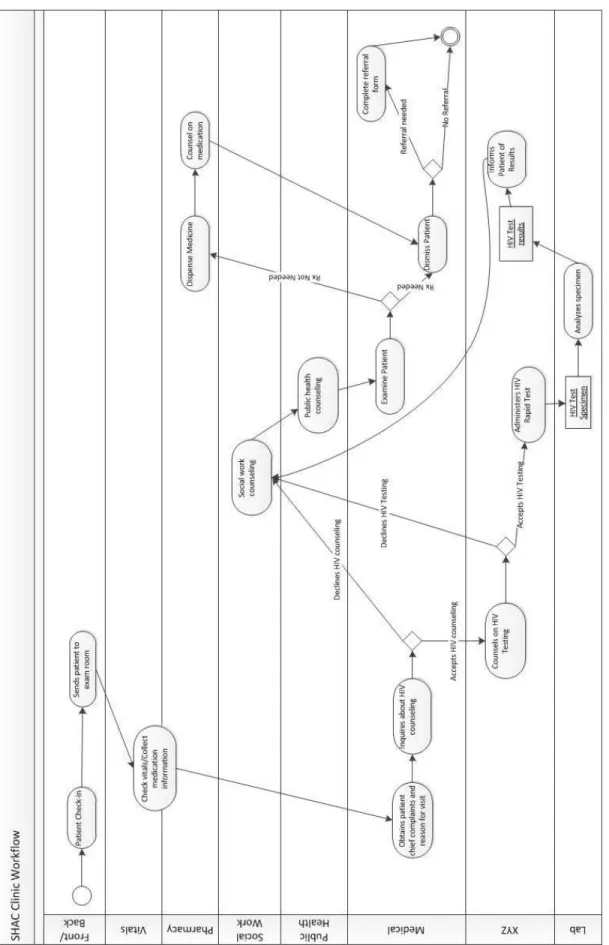
Figure 1. Activity diagram of SHAC’s clinic workflow, including the 8 branches that direct interact with the patient records ... 9
Selecting an EMR for SHAC ... 10
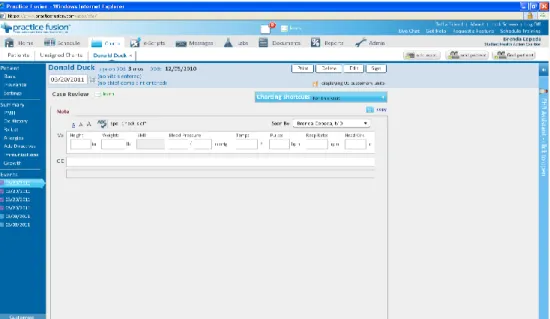
Figure 2. Screenshot of Practice Fusion Chart note ... 12
Figure 3. Screenshot of Practice Fusion Clinic Schedule ... 12
Literature Review... 14
EMR Adoption ... 14
Technology Use and Acceptance Research ... 15
Performance Expectancy ... 16
Effort Expectancy ... 17
Social Influence ... 18
Facilitating Conditions ... 19
Methods... 21
Table 2. Demographics Questionnaire ... 23
Table 3. Items Used in Phase 1, Estimating UTAUT ... 24
Table 4. Tasks Performed in Phase 2 ... 25
Table 5. Phase 3 Discussion Guide ... 26
Role of the Researcher ... 26
Results ... 27
Data Analysis ... 27
Study Volunteers ... 27
Table 6. Characteristics of Sample, Total n=9 ... 28
Quantitative Results ... 28
Table 7. Descriptive Statistics for Phase 1Items, total n=9 ... 29
Table 8. Correlations of UTAUT Constructs ... 31
Qualitative Results ... 31
Figure 4. Tree map of Emergent Themes ... 32
Performance Expectancy ... 32
Effort Expectancy ... 33
Facilitating Conditions ... 37
Patient Care ... 39
How do volunteers perceive the usability of the EMR and how accepting of it are
they? ... 41
How do volunteers perceive the integration of the EMR with clinical workflow? .. 42
Do volunteers feel that the EMR has added value over paper records? ... 42
How do volunteers perceive that the EMR has affected quality of patient care at SHAC? ... 43
How do these perceptions relate to the users’ intention and desire to continue of the EMR? ... 44
Limitations ... 44
Conclusion ... 45
INTRODUCTION
Studying Health Information Technology (HIT) adoption has become increasingly
important with the push for HIT implementation by United States legislation such as the
Health Information Technology for Economic and Clinical Health (HITECH) act
(HITECH, 2009). HIT systems have potential for savings in health care and can make up
for the costliness and inefficiencies of paper record systems (Hillestad et al., 2005). The
adoption of Electronic Medical Records1 (EMRs) by health care providers, however, has
been a gradual and irregular process (DesRoches et al., 2008). Uneven adoption of
non-standardized, non-interoperable EMR systems will only delay the chance to move closer
to a transformed health care system (Hillestad et al., 2005). Research on HIT suggests
that the benefits cannot be attained unless adoption is regular and standardized across
institutions (DesRoches et al., 2008; Hillestad et al., 2005) with proper and efficient
implementation. Before benefits of IT in health care can be realized, more should be
known about the adoption and usage of HIT (Ilie, Van Slyke, Parikh, & Courtney, 2009).
Generally, the adoption of a new technology of various natures by an organization
has promise for improvements in the area that the innovation is being applied (Rogers,
1995). However, a technology cannot reach its potential if it is not used or is not used as
1
intended. A number of factors can affect the adoption of information systems, such as
personal beliefs, and accessibility (Venkatesh, 2003; Ilie, 2009). Before investing in the
adoption of an innovation, the degree of its acceptance by users should be evaluated. This
study will add to the literature on HIT and technology acceptance, by evaluating the pilot
adoption of a HIT system in a student-run free clinic.
Student-run free clinics are a special type of free clinic that are managed by
students in schools of medicine and other health professions. The Student Health Action
Coalition (SHAC) at the University of North Carolina-Chapel Hill (UNC-CH) is the
longest running student-led health clinic serving indigent patients in the United States
(Steiner, Calleson, Curtis, Goldstein, & Denham, 2005). Like many other free clinics,
SHAC is lagging behind in Health IT. Past assessment of SHAC by volunteer nursing
students revealed that the clinic would benefit greatly from the implementation of an
Electronic Medical Record (EMR). While these potential clinical advantages are
attractive to the administrators at SHAC, other considerations of how the EMR relates to
the organization and users need to be made before final decisions are made about
adoption in order to ease implementation. This study will add to the literature on HIT and
technology acceptance, by evaluating the pilot adoption of a HIT system in a student-run
free clinic.
SHAC’s Organizational Structure and Clinical Workflow
SHAC’s medical clinic is composed of various branches: front/ back, flow,
medical, vitals, pharmacy, XYZ (HIV counseling), public health, social work, laboratory,
administrative, and SALSA. Table 1 describes the duties of each branch. Each branch has
intermittently. When a patient visits SHAC, they first check in at the front desk and fill
out a form with demographic information, if an interpreter is needed the patient’s record
is flagged.
Table 1. SHAC Medical Clinic Branches
BRANCH DUTIES
Front/Back Registers and check in patients Flow Checks volunteers in upon arrival
Keeps track of the EMR as each branch sees patients
Manages the patient rooms, make sure we know who is in each room, and manage time “limits/suggestions” that each team has with the patient
Medical Provides medical care and assess patient under supervision of an attending physician
Vitals Takes patient vitals and chief complaints Pharmacy Dispenses medications
Provides pharmaceutical counseling
XYZ HIV testing and counseling, including: pre-test client-centered risk-reduction counseling, rapid test administration, post-test counseling and providing test results
Public Health Talks to all patients ages 9 and up about their health habits and help them think of ways they can make small changes to improve their health
Social Work See all SHAC patients to assess psychosocial and financial issues, make referrals to community resources, and provide brief
counseling.
Laboratory Interprets lab tests, administer vaccines, and draw blood for tests ordered by medical team or XYZ.
Administrative Consists of clinic co-directors. Manages all aspects of the clinic, oversees volunteers of all branches, processes patient referrals SALSA Provides consistent and reliable Spanish interpreting services for
patients
A patient visit typically lasts 2 to 3 hours. Regardless of reason for the visit, the
patient must meet with a representative from each branch (except for laboratory,
pharmacy, and SALSA if the nature of the visit does not demand these services).
Therefore a chart note from each branch is needed per patient for a given visit. SHAC’s
Assessment, and Plan) that is a method of documentation employed by health care providers to write out notes in a patient's chart. Instead, SHAC’s paper records were
designed to follow the clinic’s workflow (Figure 1).Traditionally, each branch’s paper form was added to the patient’s record. Unfortunately, paper charts were often lost and
they were not very accessible to everyone since only one person could view it at once.
The EMR presents an opportunity for improvement of workflow efficiency; the
computer-based record allows for multiple branches to access the patient’s charts at the
same time and access all the clinical notes. In the shift from paper record to EMR,
templates were designed for each branch to replace the forms. Volunteers are being
Selecting an EMR for SHAC
The pilot implementation of SHAC’s EMR began during the fall of 2010. Prior to
implementing the system, much assessment and discussion took place. During the fall of
2009, a group of students at UNC-CH’s School of Nursing conducted an evaluation of SHAC’s EMR needs in order to identify a viable EMR vendor. They identified ease of
use, customizability, and web access as the most important requirements when selecting
an EMR. High volunteer turnover is characteristic of student-run clinics, so the same care
provider may not see a given patient more than once. Thus, effectively sharing a patient’s
information is integral in providing quality care and saving time. Since volunteers
typically are only at SHAC about twice a month for the duration of one academic year,
they will not have a lot of time to be trained on and become acclimated with the
technology. It is thus imperative to have a system that is user friendly and easy to use.
Many EMR systems were considered before a final decision was made.
There are numerous proprietary EMRs in the market; many have costs that are
prohibitive to SHAC because it does not have regular income. While grants are an
alternative source of funding, they are not a reliable or regular source of income and
require habitual re-application and grant writing. SHAC’s staffing structure is not
conducive to tasks required by grant funding because there would be no one who could
be the regular procurer of grant funding for the clinic. There are also a number of open
source options that are free and customizable and would overcome the funding hurdle
(Kalogriopoulos, 2009). However, many require computer programming or IT
infrastructure that are beyond SHAC’s resources. After weighing the various options, the
for SHAC.
Practice Fusion is a cloud based EMR that, according to the developer, is user-friendly and can be activated in less than five minutes, according to the developer’s
website (Practice Fusion, 2010). This is of particular importance for SHAC because given
organizational constraints; any newly implemented process must be quick and easy to
implement and to understand. Practice Fusion claims that the system does not require any
extensive end user training (Practice Fusion, 2010), which is ideal for SHAC since each week there are different volunteers. Most significantly, Practice Fusion’s EMR is free in
licensing, hosting, training and support. However, its free status is sustained by ads; an
ad-free version is available for $100 per month. The software is completely web-based,
so users may access patient charts and schedule from a computer that supports Adobe Flash at any location. Practice Fusion “meets or exceeds Health Insurance Portability and
Accountability Act (HIPAA) requirements while storing data in a bank-level encryption database” (Practice Fusion, 2010). Another benefit to this EMR is the ability to adapt it to
the medical practice. It would not be feasible for SHAC to work with the same system as
a large hospital because it has a different structure. In using Practice Fusion, SHAC can
disable irrelevant features such as billing. The schedule, charts, and documents modules
will be the enabled features. Figure 2 and Figure 3 are screenshots of the chart note and
schedule in the EMR. Practice Fusion follows the SOAP note format, which is not the
chart note format traditionally used at SHAC. When using this EMR SHAC faces the
challenge of adapting Practice Fusion to the fit workflow by creating customized
Figure 2. Screenshot of Practice Fusion Chart note
Figure 3. Screenshot of Practice Fusion Clinic Schedule
Practice Fusion comes with some limitations as well. A downside to cloud-based
EMRs is the reliance on Internet speed, reliability, and access (Sittig & Singh, 2009); in
the event of a network outage patient care may be delayed. The accessibility of the
cloud-based software, an authorized user may access it anywhere, so precaution needs to be
taken in authorizing users. Practice Fusion was found to be the most feasible option
despite the potential disadvantages. However, it is necessary to evaluate the progress of
the implementation of the EMR at SHAC before adoption is complete and further
investments are made.
This study will evaluate the implementation of the EMR during the initial four
(4) months by investigating how SHAC volunteers accept and use the system. The
research questions for this study are:
1. How do volunteers perceive the usability of the EMR and how accepting of it are they?
2. How do volunteers perceive the integration of the EMR with clinical workflow? 3. Do users feel that the EMR has added value over paper records?
4. How do volunteers perceive that the EMR has affected quality of patient care at SHAC?
5. How do these perceptions relate to the volunteers’ intention to continue of the EMR?
SHAC has a unique organizational structure and clinic workflow that varies from more
conventional care delivery organizations such as hospitals. Therefore, user interactions
with the EMR may be considerably different than health care professionals in larger
organizations. The majority of use and acceptance research has focused on hospitals;
studying these concepts at SHAC may also demonstrate if existing theoretical models in
LITERATURE REVIEW
EMR Adoption
Technology adoption can be gauged by the “extent to which employees faithfully
appropriate and use business processes as designed and intended by the designers and by
management, the extent and frequency with which employees seek and execute
workarounds, and the extent and frequency with which employees revert to old business processes” (Venkatesh, 2006, p.501). As the prevalence of HIT has increased, so has the
need for more research on the adoption of this technology. Researchers have identified
gaps in the literature that looks at the degree to which EMRs are actually used (Simon et
al., 2007). It is necessary to understand what factors are slowing down the adoption of
this technology. Much of the existing literature looks at the advent of HIT in hospital
settings or larger ambulatory care settings, but there is a dearth of research that looks at
EMR adoption in a small health care setting such as SHAC. Even less research has been
done on the adoption of health information technology in privately funded free clinics,
such as SHAC.
HIT adoption in hospitals serving the poor or federally funded community health
centers (CHCs) has been studied. These environments are similar to SHAC in that they
offer free or low cost health services to the uninsured and underinsured. Hospitals serving
a higher proportion of poor patients had modestly lower levels of adoption of HIT (Jha et
al., 2006, 2009). CHCs that serve the highest proportion of poor and uninsured patients
are significantly less likely to have an EHR system (Shields et al., 2007). There has been
speculation that slower adoption of HIT among providers of care to historically
divide in health care (Ferris, Kuhlthau, Ausiello, Perrin, & Kahn, 2006). Jhah et al.'s
study (2006) on the adoption of EHRs by hospitals serving a disproportionate number of
poor patients found no statistical evidence that such a divide exists, but they did identify
barriers that are universal to health care organizations. While not the emphasis of their
discussion, their study also explored computer skills, technical support, and training as
potential barriers to adoption. Research that directly looks at the effects of these technical
factors in use and acceptance of HIT in small health care organizations is even scarcer;
this study aims to fill that void.
Technology Use and Acceptance Research
There has been extensive research in the fields of information systems (IS) and
decision making that focus on the motivating factors behind the adoption, use, and
acceptance of information technology (IT). Early research looked at the adoption of
technology such as software, but the advancement of information systems has extended
research to explore more complex technologies such as Electronic Medical Records (Ilie
et al., 2009). Various theoretical models have been developed to explain the concepts
behind IT adoption in various industries. The most salient theories are: the Theory of
Reasoned Action (TRA), the Technology Acceptance Model (TAM), the Motivation
Model (MM), the Theory of Planned Behavior (TPB), the Combined TAM and TPB
(c-TAM-TPB), the Model of PC Utilization (MPCU), Innovation Diffusion Theory (IDT)
and Social Cognitive Theory (SCT). Research has been done on how these models can be
adapted to better inform planning for HIT implementation (Chiasson & Davidson, 2004;
Ilie et al., 2009). It has been cited that it is possible that no one theory may be adequate
complexity of the health care industry (Seeman & Gibson, 2009). However, since the
Unified Theory of Acceptance and Use of Technology (UTAUT) incorporates aspects
from various models it may provide a more complete picture than any one model on its
own. Most of the models were developed in settings where use of the technology was
voluntary. UTAUT examines both mandatory and voluntary settings (Venkatesh, Morris,
Davis, & Davis, 2003). At SHAC the use of the EMR will be mandatory, therefore my
study will focus on UTAUT as a theoretical framework.
The UTAUT was formulated as a tool to assess the likelihood of success for
technology adoption in organizations (Venkatesh et al., 2003). Venkatesh et al. (2003)
reviewed the eight aforementioned models in user acceptance literature, in order to
synthesize a unified model. Performance expectancy, effort expectancy, social influence,
and facilitating conditions were identified as the constructs that would determine
acceptance and usage behavior. These constructs were derived from numerous concepts
that recur in all the technology acceptance models. Using this model might identify social
and technical challenges regarding new technology adoption before implementation
(Söderholm & Sonnenwald, 2010).
Performance Expectancy
Performance expectancy is defined as “the degree to which an individual believes
that using the system will help him or her to attain gains in job performance” (Venkatesh
et al., 2003 p. 447). Perceived usefulness is at the core of performance expectancy; it is
derived from the Technology Acceptance Model (Davis 1989; Davis et al. 1989) and is
defined as the degree to which the prospective user believes using a new technology will
expectancy was identified as the strongest predictor of intention to use the technology
(Venkatesh et al., 2003). Other studies relating to clinical information systems confirmed
the influence of performance expectancy in adoption (Chau & Hu, 2002; Taylor & Todd,
1995). Physicians have been found to have pragmatic perceptions to have toward the
adoption of information technology (Chismar Wiley-Patton, 2003).
Effort Expectancy
Effort expectancy is defined as “the degree of ease associated with the use of the
system” (Venkatesh et al. 2003, p. 450). Its root constructs are perceived ease of use and
ease of use. Perceived ease of use is derived from the Technology Acceptance Model (Davis 1989; Davis et al. 1989), and is defined as “the degree to which a person believes
that using a particular system would be free of effort” (Venkatesh et al., p. 451). Ease of
use was derived from Innovation Diffusion Theory (Moore and Benbasat 1991), and is defined as “the degree to which an innovation is perceived as being difficult to use”
(Venkatesh et al., 2003, p. 451).
The impact of effort expectancy has had varied influence on acceptance in health
care settings. The results of a study on technology acceptance among health
professionals, confirmed the effect of effort expectancy on intention to adopt (Schaper &
Pervan, 2007). On the other hand, multiple studies focusing on health care found that
effort expectancy did not predict intention to use IT among physicians (Chau & Hu,
2002; Chismar & Wiley-Patton, 2003; Söderholm & Sonnenwald, 2010). This may be
attributed to the fact that generally, physicians have relatively high general competence
and mental/cognitive capacity and may comprehend the use of a technology quickly
population (Chau & Hu, 2002). It also prevails that if users fail to see the advantages of a
technology they will not adopt it, regardless of whether the technology is easy to use or
not.
Social Influence
Social influence is defined as “the degree to which an individual perceives that
important others believe he or she should use the new system” (Venkatesh et al. 2003, p.
451). Subjective norm and image are at the root of this construct. Subjective norm is
covered by some of the theories upon which UTAUT is built (Ajzen, 1991; Davis et al. 1989), and is defined as “the person’s perception that most people who are important to
him think he should or should not perform the behavior in question” (Venkatesh et al.
2003, p. 452). The concept of image comes from the Innovation Diffusion Theory (Rogers 1995; Moore and Benbasat 1991), and is defined as “the degree to which use of
an innovation is perceived to enhance one’s image or status in one’s social system” (Venkatesh et al., p. 452). Söderholm and Sonnenwald’s (2010) application of UTAUT
confirmed that subjective norm is influential in adoption. Another study, however, found
subjective norms to have no apparent significance on behavioral intention; physicians are
likely to develop independent opinions (Chau & Hu, 2002).
Other studies suggest that culture may be among the strongest social influences in
an organization (Trimmer, Cellucci, Wiggins, & Woodhouse, 2009) (Wenzel, F. J., 2005,
p. 54). Culture in a specific health service organization may be understood by the
organizational mission and value prioritization. The success of a newly introduced
technology is due, in part, on how the change is fitting with the organizational culture
organizations because it is student-run and volunteer based. Therefore, social influence
may factor differently in this study.
Facilitating Conditions
Facilitating conditions are defined as “the degree to which an individual believes
that an organizational and technical infrastructure exists to support use of the system”
(Venkatesh et al. 2003, p. 453). Root constructs for this facet of the UTAUT model
include perceived behavioral control, facilitating conditions, and compatibility. Perceived
behavioral control’s definition is adapted from the Theory of Reasoned Action/Theory of Planned Behavior (Ajzen, 1991). It “reflects perceptions of internal and external
constraints on behavior and encompasses self-efficacy, resource facilitating conditions, and technology facilitating conditions” (Venkatesh et al., p.454). Facilitating conditions
are “objective factors in the environment that observers agree make an act easy to do,
including the provision of computer support” (Venkatesh et al., p.454). Compatibility is
derived from Innovation Diffusion Theory (Moore and Benbasat 1991; Rogers 1995) and is defined as “the degree to which an innovation is perceived as being consistent with
existing values, needs, and experiences of potential adopters” (Venkatesh et al., 2003,
p.454). When tested in various organizations, UTAUT was found to be helpful for
managers to devise a plan for implementation, including interventions to facilitate
conditions for users that were less likely to adopt (Venkatesh et al., 2003).
One study found that facilitating conditions such as required resources (i.e.
hardware and software), knowledge of IT, and technical support will remove the barriers
of using new IT, thus facilitate the physical behavior of IT utilization (Taylor & Todd,
looked at physical accessibility and logical accessibility. Physical accessibility refers to
the availability of computers that can be used to access the EMR, while logical
accessibility refers to the ease or difficulty of logging into the system. They found that IT
acceptance is facilitated by improved accessibility. SHAC leases a space from a
community health center and does not have fixed technological infrastructure in the
community health center, so the technology used to access the EMR will likely influence
its acceptance by SHAC users.
In addition to accessibility, data entry is another important concept to be
facilitated. Making data entry as easy as possible is essential if clinicians are to use
electronic means to enter and share accurate patient records (Walsh, 2004). In a study on
EHR use during patient visits, clinicians cited workflow and technical barriers to using
the EHR with patients (Linder, Schnipper, Tsurikova, & et al., 2006), they were
concerned with the speed of the EHR. Other studies have found that the use of EHRs do
not increase clinic time and can eventually lead to an increase in productivity (Pizziferri
et al., 2005). Among clinics that had implemented EHRs, improved workflow was the
second most highly rated perceived benefit of having an EHR. Future usability
considerations EHRs focused on efficiency, navigation, and the user interface may
increase EHR use during patient visits (Linder et al., 2006).
While not directly cited in the original UTAUT model, usability of a system
relates to facilitating conditions. The National Institute of Standards and Technology (NIST) defines usability as the “effectiveness, efficiency and satisfaction with which the
intended users can achieve their tasks in the intended context of product use” (NIST,
setting (Linder et al., 2006). In order to support the healthcare process, EMRs must
support clinical workflows and have easily understandable interfaces (Ash, Berg, &
Coiera, 2004). Successful implementation of a system depends on a match between the system design and the users’ expectations and abilities. The degree to which a given
system connects to the knowledge and ability of the user determines the quality of
interactions with the EMR (Sox, 2010). Thus, the concept of usability is critically
important in promoting the widespread adoption of EMRs. Tang and Patel (1994) note
the particular importance of usability in health systems. Due to the time pressures on
health-care professionals, system ease of use is critical (Tang & Patel, 1994). At SHAC
time is an important factor since the clinic is only open for a limited time once a week.
METHODS
This study incorporated a combination of quantitative and qualitative research
methods: questionnaire and semi-structured interviews. A questionnaire was used to get
quantifiable information on UTAUT concepts. Qualitative research methods were used to
get feedback from real system users in order to improve implementation and usability of
EMR. This method was selected for its proven efficacy in evaluating usability of
information systems and quality of care in healthcare settings. Interviews have been used
in past studies that have assessed EMR usability (Rose et al., 2005) and volunteer views
of health care quality (Sofaer, 2002).
Combining methods from usability tests with other methods makes it possible to
identify usability problems (Lilholt et al., 2006). To optimize the benefits and balance
methodology that combines elements of traditional focus group and usability testing. The
method consisted of three phases. The first phase was a questionnaire about user
experience. The second phase asked volunteers to individually perform four tasks that are
representative of their interactions with the EMR. They were asked to think-aloud as they
perform the tasks to elicit feedback about the difficulty of each task. The third phase was
a summative discussion of the most significant issues with the system. For this study, Yoder’s method was adapted to one-on-one interviews.
One-on-one interviews with SHAC volunteers were conducted. The purpose of the
interviews was two-fold:
1. Assess the use, acceptance, and usability of the EMR.
2. Get a sense of volunteers’ acceptance of the EMR and solicit opinions on how the EMR fits with the clinic’s workflow.
The interviews took place four months post-implementation of the EMR. This timeframe
was selected because it allows for a significant number of interactions with the EMR to
take place as well as to fit into the time constraints of the researcher.
Recruitment emails were sent to all SHAC volunteers through SHAC’s listserv in
late February and early March of 2011. In order to be included in the study, each
volunteer needed to have volunteered at SHAC and interacted with the EMR at least
once. The interviews took place in March 2011. Each individual interview lasted
approximately 15 minutes and was composed of three phases. Before participating in the
three phases, volunteers were asked to sign an institutional review board consent form
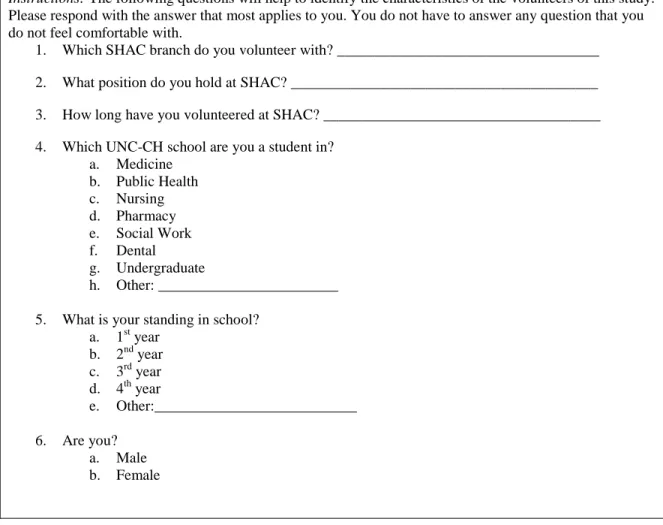
Table 2. Demographics Questionnaire
Instructions: The following questions will help to identify the characteristics of the volunteers of this study. Please respond with the answer that most applies to you. You do not have to answer any question that you do not feel comfortable with.
1. Which SHAC branch do you volunteer with? ___________________________________
2. What position do you hold at SHAC? _________________________________________
3. How long have you volunteered at SHAC? _____________________________________
4. Which UNC-CH school are you a student in? a. Medicine
b. Public Health c. Nursing d. Pharmacy e. Social Work f. Dental g. Undergraduate
h. Other: ________________________
5. What is your standing in school? a. 1st year
b. 2nd year c. 3rd year d. 4th year
e. Other:___________________________
6. Are you? a. Male b. Female
The first phase includes a questionnaire about the volunteer’s past experiences
with the EMR. The questionnaire was an adaptation of the measures used by Venkatesh
(2003) in evaluating the UTAUT. Seven-point Likert-type scales were used, where
1=strongly disagree and 7=strongly agree. The items for the questionnaire given in Phase
1 (see Table 3) were adapted from “Table 16. Items Used in Estimating UTAUT” of the
original UTAUT study. Minor changes were made to the items, such as the replacement of the phrase “system” with “EMR” for the sake of specificity. The only significant
months” because that study aimed to test intention prior to implementation (Venkatesh,
2003).
Table 3. Items Used in Phase 1, Estimating UTAUT
Instructions: For the following questions, please think about the experiences you have had with SHAC’s EMR when you have used it at the clinic. Please rate your level of agreement with the following statements on a scale of 1 to 7, where 1=Strongly Disagree and 7=Strongly Agree. Performance expectancy
PE1: I find the EMR useful in my role at SHAC.
PE2: Using the EMR enables me to accomplish tasks more quickly. PE3: Using the EMR increases my productivity.
Effort expectancy
EE1: It has been easy for me to become skillful at using the EMR. EE2: I find the EMR easy to use.
EE3: Learning to operate the EMR was easy for me. Social influence
SN1: People who influence my behavior think that I should use the system. SN2: People who are important to me think that I should use the system. SN3: In general, the organization has supported the use of the system. Facilitating conditions
FC1: I have the resources necessary to use the system. FC2: I have the knowledge necessary to use the system.
FC3: A specific person (or group) is available for assistance with system difficulties. Behavioral intention to use the system
BI1: If I had a choice, I would choose to continue using the EMR. Patient Care
PC1: Using the EMR has improved how I care for my patients.
PC2: Using the EMR has helped me see more patients in a shorter period of time.
Since my study explored user acceptance in a mandatory context, I changed the question
to reflect intention to adopt if a choice was given.
The second phase asked volunteers to perform four tasks that are representative of
their interactions with the EMR using a dummy record (Table 4).The purpose of this
section was not to test the usability of the Practice Fusion’s design; instead to assess the
protected health information2 and not tampering with SHAC’s EMR, the usability tests
were performed using a dummy Practice Fusion setup that modeled SHAC’s set up. They
were given a maximum of 5 minutes to complete the tasks. Each volunteer was asked to
think-aloud as they completed the tasks.
Table 4. Tasks Performed in Phase 2
The volunteers will be asked to perform the following three tasks in 5 minutes:
1. Please locate the schedule for today’s date and identify which patients have yet to be seen by the medical team.
2. Open the chart for patient, “Donald Duck” and create a new chart note. 3. Upload a document and associate it with patient, “Donald Duck”. 4. Print the chart
During the completion of all tasks the users will be asked to think-aloud about their experiences in performing them. Think-aloud questions will include:
What was easy and why? What was difficult and why?
How did performing these tasks differ from performing them on paper (where applicable)?
The third phase was a summative discussion of the most significant issues with
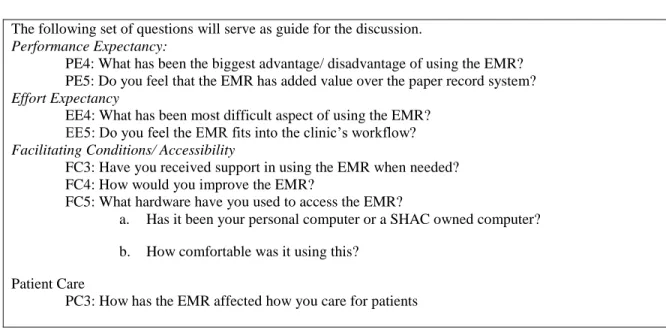
the system. The discussion was guided using questions stated in Table 5. The discussion
was recorded on a digital audio recorder and paper. Questions PE4 and PE5 addressed
performance expectancy. These questions asked volunteers about how useful the EMR is
to them and how easy it is to use. Questions EE4 and EE5 referenced effort expectancy,
since they ask about the ease or using and learning the system. Question FC3 sought the
volunteer’s perceptions on the facilitating conditions for using the EMR. The dimension
of accessibility suggested by Ilie (2009) was also examined through questions FC4 and
FC5. SHAC owns a very limited number of laptops (n=6) that are older and have
significantly slow processors. Therefore, volunteers typically access the EMR using their
personal laptops. It is important to learn how they are accessing the EMR and their
comfort level with this system. The discussion questions for both of these phases were
adapted from the discussion questions used by Yoder et al. (2010).
Table 5. Phase 3 Discussion Guide The following set of questions will serve as guide for the discussion. Performance Expectancy:
PE4: What has been the biggest advantage/ disadvantage of using the EMR? PE5: Do you feel that the EMR has added value over the paper record system? Effort Expectancy
EE4: What has been most difficult aspect of using the EMR? EE5: Do you feel the EMR fits into the clinic’s workflow? Facilitating Conditions/ Accessibility
FC3: Have you received support in using the EMR when needed? FC4: How would you improve the EMR?
FC5: What hardware have you used to access the EMR?
a. Has it been your personal computer or a SHAC owned computer?
b. How comfortable was it using this?
Patient Care
PC3: How has the EMR affected how you care for patients
Role of the Researcher
As a graduate student at UNC-CH’s School of Information and Library Science, I
currently volunteer as the IT Director for SHAC. As such, my responsibilities entail maintenance of SHAC’s website, hardware and support of the organization’s information
systems. In regards to the EMR release at SHAC, I was involved in planning for the EMR
by acquiring laptops, establishing internet access at the clinic, and serving as a
stakeholder in the selection of an EMR vendor. The setup of the EMR was completed by
consulting with coordinators of SHAC’s clinic to design customized EMR templates,
entering users into the system, and providing support for SHAC volunteers. My distance
from the design and setup of the templates and modules in the EMR will aid in
maintaining objectivity when analyzing their usability. My IT Director role motivated a
concern with the evaluation of the outcomes of the EMR implementation that will be
revealed by this study.
RESULTS
Data Analysis
Statistics of the data obtained from the study were computed using the statistical
software SPSS. The interviews were audio recorded and later transcribed. The qualitative
data obtained from the transcripts were analyzed using NVivo 9, a qualitative data
analysis software package. The transcripts were coded for major themes that emerged
under the main constructs that were being explored: performance expectancy, effort
expectancy, social influence, facilitating conditions, and patient care. Of these, social
influence did not emerge in the discussions by the volunteers. This construct, was thus
not further analyzed in the qualitative data.
Study Volunteers
Nine SHAC Clinic volunteers participated in the study. Usability testing
guidelines recommend the use of 5-20 volunteers (Nielsen, 1993; Nielsen, 2006) for
usability centered studies. The interviews took place over the span of three weeks; they
were conducted in a room at the SHAC clinic or in a private room in the UNC-CH
following branches of the medical clinic: Medical, Vitals , SALSA, Pharmacy, Flow,
XYZ , and Administrative. Of the volunteers, 67% were female and 33% were male. All
volunteers were students of UNC-CH, representing the following schools; Pharmacy
(33%), Nursing (22%), Public Health (22%), and Medicine (22%).
Table 6. Characteristics of Sample, Total n=9
Characteristic n
Clinic Branch
Administrative 2
Flow 1
Laboratory 1
Medical 1
Pharmacy 1
SALSA 1
Vitals 1
XYZ 1
Position
2 Co-Director
Coordinator 4
Volunteer 3
Sex
6 F
M 3
School
2 Medicine
Nursing 2
Pharmacy 3
Public Health 2
Standing in School
3 1st yr Grad Student
2nd yr Grad Student 1 3rd yr Grad Student 2
Junior 1
Senior 2
Quantitative Results
The first phase of the interviews was an orally administered questionnaire related to
the UTAUT concepts discussed in the literature review section. The interviewer read
items that asked about performance expectancy, effort expectancy, social influence, and
facilitating conditions. The volunteers were asked to rate their level of agreement with
“Strongly Agree”. Descriptive statistics of the responses were computed. Table 7 reports
the mean, standard deviation, median, and maximum and minimum values of the
responses to each item.
Table 7. Descriptive Statistics for Phase 1Items, total n=9
Dimension Item Overall
Mean Std Min Median Max
Performance Expectancy
PE1: I find the EMR useful in my role at SHAC 5.9 1.05 4 6 7
PE2: Using the EMR enables me to accomplish
tasks more quickly 5.2 1.48 3 5 7
PE3: Using the EMR increases my productivity 5.3 1 4 5 7
Effort Expectancy
EE1: It has been easy for me to become skillful at
using the EMR 5.9 1.27 3 6 7
EE2: I find the EMR easy to use 6 1 4 6 7
EE3: Learning to operate the EMR was easy for
me 5.9 0.93 4 6 7
Social Influence
SN1: People who influence my behavior think
that I should use the system 5.8 0.83 4 6 7
SN2: People who are important to me think that I
should use the system 5.8 0.67 5 6 7
SN3: In general, the organization has supported
the use of the system 6.4 1.01 4 7 7
Facilitating Conditions
FC1: I have the resources necessary to use the
system 6.7 0.71 5 7 7
FC2: I have the knowledge necessary to use the
system 6.4 1.01 4 7 7
FC3: A specific person (or group) is available
for assistance with system difficulties 4.3 1.66 2 5 6
Behavioral Intention
BI1: If I had a choice, I would choose to continue
using the EMR 6.7 0.71 5 7 7
Patient Care
PC1: Using the EMR has improved how I care
for my patients. 5.3 1.28 3 5.5 7
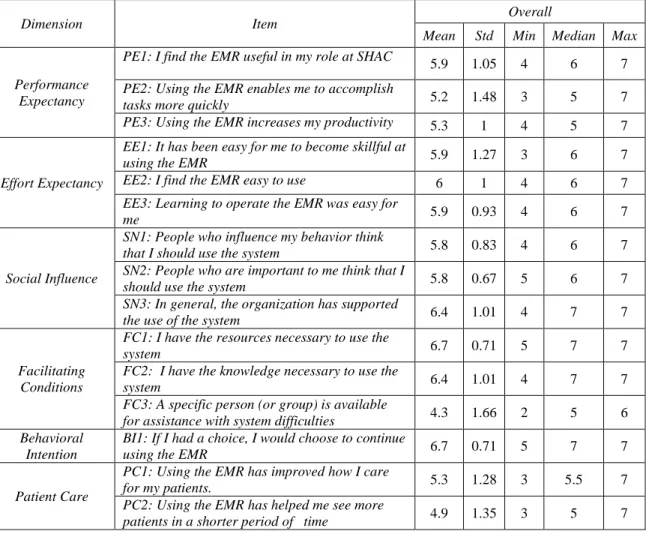
PC2: Using the EMR has helped me see more
patients in a shorter period of time 4.9 1.35 3 5 7
Performance expectancy items 1, 2, and 3 had means of 5.9, 5.2, and 5.3,
respectively. Items PE1 and PE3 had standard deviations that were approximately one (1)
and were about the average standard deviation for this data set. PE2 had the second to
largest standard deviation. This large distribution may be due to the fact that volunteers
had different opinions on how the EMR affects the speed of their tasks. Perceptions of
expectancy items had a mean score of approximately 6. The effort expectancy items 2
and 3 had standard deviations that were about the average for this data set. The standard
deviation for EE1 was a bit higher (1.27). The social influence items had among the
lowest variance in responses. The topic of social influence did not emerge in any further
conversation during the study. Facilitating conditions items 1 and 3 had among the
highest means of the dataset, their means were 6.7 and 6.4, respectively. Item FC3 had
lowest mean score (4.3) among all the results, this variable also had the largest standard
deviation. The low mean for this item shows that the sentiment towards presence of
assistance with system difficulties was more towards the negative end. The broad
distribution is likely due to varying experiences with support. There is limited support
available for tech support during clinic hours. During the discussion portion of the study,
volunteers were able to elaborate on their responses and this will also be further discussed
in the Qualitative Results section. Behavioral intention to use the system had among the
highest scoring means (6.7). The standard deviation of this item was among the lowest.
These results show that most of the volunteers in the sample felt positively about
continuing to use the system. Patient care items had among the lowest mean scores (5.3
and 4.9), but among the highest standard deviations (1.28 and 1.35). The distribution of
opinions with respect to patient care will be further discussed in the qualitative data
section.
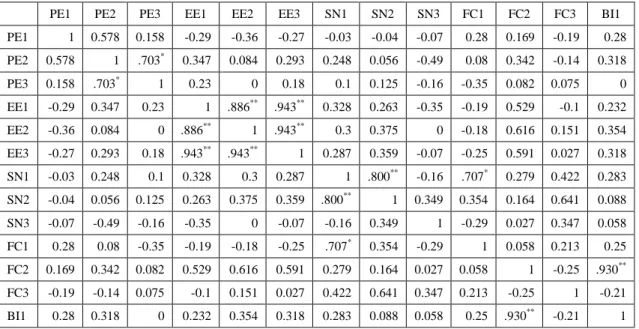
A two-tailed Pearson’s correlation coefficient was calculated using SPSS to
measure the correlation between the UTAUT constructs and behavioral intention (BI) to
use the system. Table 8 shows the results of the correlation calculations. Only FC2 (“I
The original UTAT model posits performance expectancy, effort expectancy, and social
influence as direct determinants of intention to use. Facilitating conditions are a
determinant of usage behavior, not intention (Venkatesh, 2003). However, the small
sample size prevents any solid conclusions from this data.
Table 8. Correlations of UTAUT Constructs
PE1 PE2 PE3 EE1 EE2 EE3 SN1 SN2 SN3 FC1 FC2 FC3 BI1 PE1 1 0.578 0.158 -0.29 -0.36 -0.27 -0.03 -0.04 -0.07 0.28 0.169 -0.19 0.28 PE2 0.578 1 .703*
0.347 0.084 0.293 0.248 0.056 -0.49 0.08 0.342 -0.14 0.318 PE3 0.158 .703* 1 0.23 0 0.18 0.1 0.125 -0.16 -0.35 0.082 0.075 0 EE1 -0.29 0.347 0.23 1 .886** .943** 0.328 0.263 -0.35 -0.19 0.529 -0.1 0.232 EE2 -0.36 0.084 0 .886** 1 .943** 0.3 0.375 0 -0.18 0.616 0.151 0.354 EE3 -0.27 0.293 0.18 .943** .943** 1 0.287 0.359 -0.07 -0.25 0.591 0.027 0.318 SN1 -0.03 0.248 0.1 0.328 0.3 0.287 1 .800** -0.16 .707* 0.279 0.422 0.283 SN2 -0.04 0.056 0.125 0.263 0.375 0.359 .800** 1 0.349 0.354 0.164 0.641 0.088 SN3 -0.07 -0.49 -0.16 -0.35 0 -0.07 -0.16 0.349 1 -0.29 0.027 0.347 0.058 FC1 0.28 0.08 -0.35 -0.19 -0.18 -0.25 .707* 0.354 -0.29 1 0.058 0.213 0.25 FC2 0.169 0.342 0.082 0.529 0.616 0.591 0.279 0.164 0.027 0.058 1 -0.25 .930** FC3 -0.19 -0.14 0.075 -0.1 0.151 0.027 0.422 0.641 0.347 0.213 -0.25 1 -0.21 BI1 0.28 0.318 0 0.232 0.354 0.318 0.283 0.088 0.058 0.25 .930** -0.21 1
Notes: *. Correlation is significant at the 0.05 level (2-tailed). **. Correlation is significant at the 0.01 level (2-tailed).
PE: Performance expectancy; EE: Effort Expectancy; SN: Social Influence; FC: Facilitating Conditions; BI: Behavioral intention to use the system; PC: Patient Care
Qualitative Results
Phases 2 and 3 of the interviews provided the qualitative data for the study. In
Phase 2, volunteers were asked to perform tasks in the EMR and think-aloud about the
usability of the system and difficulty of tasks. Overall, no one had issues with completing
the four tasks. Everyone was able to complete them well under the 5 minutes allotted.
The discussions that followed the tasks provided useful information in evaluating the
design of EMR that is non-customizable to customers and are beyond this study. Some
volunteers discussed that they have issues completing other tasks that were not
specifically addressed in Phase 2. These will be further discussed below.
In Phase 3, volunteers were engaged in a guided discussion that explored
performance expectancy, effort expectancy, facilitating conditions, and patient care. The
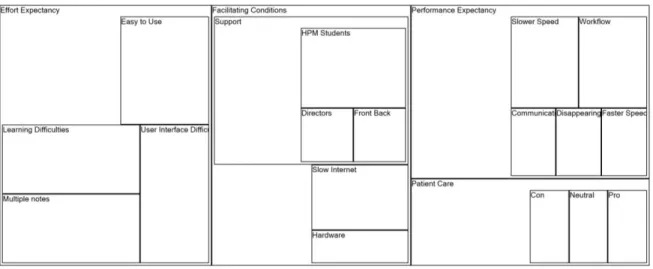
discussions were transcribed and coded using NVivo 9. The coded data was used to
produce Figure 4, a tree diagram of the most prevalent themes that emerged from the
discussions in Phases 2 and 3. The themes are organized under the main constructs to
which they correspond. The size of the box for each theme represents the proportion of
volunteers that addressed it.
Figure 4. Tree map of Emergent Themes
Performance Expectancy
Performance expectancy measures how the user perceives the system to improve
versus paper. Enhanced performance by the EMR was perceived to be seen in the areas of
speed and communication.
Perceptions of how the EMR has affected speed of tasks varied by branch. The
effect was seen as positive, negative, or neutral. The variance was due mainly to the fact
that each branch interacts with the EMR at a different level. The following are
observations made by distinct volunteers on the topic of speed of performance:
Here at SHAC they [the patients] are already waiting a pretty significant amount of time to see everybody, but I think it's shortened their time. I've heard that staff used to be at SHAC until midnight, now on average we get out about 10:30 for flow and we're one of the longest people here. So we're seeing the same amount of patients in an average time of an hour to one and a half less. It's cut out a significant amount.
I don't think it's made a huge difference either negative or positive. I just think it's nice to look things up [on the computer] if we have questions, but it's obviously not as easy as just writing things down on paper. Nothing drastic.
Unanimously, volunteers felt that communication is improved by the EMR. It
allows for everyone to be able to see what’s going and communicate patient information
more quickly and effectively. One volunteer discussed experiences with the EMR over
paper:
It's good that instead of passing off paper charts, sometimes those have been misplaced or someone is holding on to them too long you can just pull them up on the computer. That's definitely a good thing.
The EMR provides centralization of patient information that the paper record system
lacked.
Effort Expectancy
Effort Expectancy relates to the amount of effort or ease associated with learning
and using the system. During the study, the primary issues of effort expectancy that came
Some of the volunteers expressed that it was difficult to learn to use the system on
their own or that they are unaware of how to complete other pivotal tasks such as creating
chart templates. These issues are a cause of the design of the system’s interface. Many
volunteers found that performing some tasks is counterintuitive. They also reported that
some tasks such as creating chart notes are more complicated than they are assumed to
be. Here are some observations about effort expectancy and system usability:
How to make chart notes should be a little easier, there are like 3 or 4 steps that need to be taken to create a new chart note for some , now I'm not good with the user interface business , but I know they're too many steps there . I know it should be easier than it is.
Creating, editing, and using templates and chart notes are essential knowledge for
volunteers. The fact that they have difficulty performing these tasks can potentially affect
system efficiency.
The EMR is seen to require more effort to learn and use than paper. A pharmacy
volunteer finds the EMR to be more difficult to deal with than paper. She stated:
For us, with pharmacy, it's easier to write on paper...This isn't a reason to not use the system but it does make us less efficient. We go to the prescription list and instead of writing things you have to search for the drug and then you click on the drug, then there are drop-down menus instead of just typing.
Another volunteer also found EMR to be more difficult to acclimate to, but sees value in
the effort:
I guess it was easier right off to use the paper, but this [the EMR] makes the administrative side, I feel, easier. It's all here and it's not going anywhere. I don't think it's faster, but it's more reliable and durable.
Since Practice Fusion was not designed specifically for SHAC’s work flow, it
lacks a place in its standard chart note to include information for all of the SHAC
for that. The downside to the templates is that when each branch creates a new note, it is considered a separate “event” by the EMR. Therefore for one given date, multiple chart
notes will appear for a patient. When asked about the difficult aspects of working with
the system, the multiple note issue was cited by 3 volunteers. It takes a great deal of
effort for the volunteers to view various notes for a patient visit rather than just viewing
one. A couple of volunteers said:
Under "Events" there's a bunch of dates, one visit isn't just one date. I think it's annoying that for one date there will be four listings.
It is a disadvantage that notes are separated between different groups, it would be nice to be able to see what social work or public health talk about in the same tab.
These issues are related to fact the Practice Fusion was not designed for clinics with
individual providers, not to specifically fit SHAC’s workflow of various branches and
volunteers.
Workflow integration is a major part of how the easy or not it will be for volunteers
to use the system. Overall, the EMR was perceived to fit well with the clinic’s workflow.
The Flow team is a bit more eased from the burden of having to constantly answer
questions about patients, as is described by a volunteer:
[Before the EMR] no one knew where the patient was exactly. Now as soon as they hit front/back they're in the system, we can always find them. Flow is less harassed by all of us. Last year, I was constantly running up to Flow asking “where so and so was, where there charts were?”, now I don't need to worry about that. Before, it's not that you were in competition with the other teams, but you were always hassling the other team to give you the chart to make notes on it and you were always hassled by them too and now that's taken care of.
The few grievances expressed with respect the workflow are due primarily to
shows the schedule of patients and allows for the status of the patient to be set to pending,
in room, or seen.
If the statuses are updated, they can provide valuable information for volunteer
staff. At SHAC it is the job of the Flow branch to update these statuses. Some volunteers
expressed that this system is not always used as intended and the statuses are not always
updated as they should. The result is increased effort, misinformation or frustration for
other EMR users. A SALSA coordinator discussed his experience with the schedule:
What's difficult at this point is to know if this [the EMR clinic schedule] actually reflects the actual situation...The way I use it is to know which patients have been seen so I can assign my volunteers to different SALSA patients. What's difficult is when they have been seen but Flow doesn't mark them as seen in the system. So it's kind of hard for me to know without going and asking them. If that worked out and this reflected the actual status of patients, it would be really great.
The fact that statuses are not always updated may relay back to a usability issue. The
interface of the EMR makes it confusing to update statuses at times. A Flow volunteer
commented on the issue of incorrect statuses. She mentions that it is difficult to adjust an
incorrect status:
It is difficult if you accidentally do a status wrong, like if we say they're in room 8, but they're really supposed to be in room 9. To adjust that it's kind of confusing at times. I guess what happened before was they marked it as someone being seen and they hadn't, they were still in the room and we couldn't get it back. We had to get one the directors to get that back for us.
All Flow volunteers need to be instructed on how to update the status and fix a status that
was incorrectly updated. They also need to be made aware of how important completing
this task for the efficiency of all branches.
Another issue related to human error is the occurrence of multiple charts for a
single patient. Before the EMR a patient would visit the clinic and new chart is created
The Front/Back volunteers are able to see if a record for a patient exists by querying the
system. However, a patient might still have multiple charts if there name is misspelled or
if a birth date was entered incorrectly. One volunteer spoke about this problem:
There are certainly still some organizational problems with the EMR, like if a patient gets entered twice, either because they spelled their name differently or because their birthdate is listed differently twice, so it's not impossible for that to happen, but I think the occurrence of that problem has definitle been minimized.
Encountering multiple charts for one patient may interfere with continuity of care for the
patient and become a burden for volunteers that are seeking accurate information.
Facilitating Conditions
Facilitating conditions relate to organizational and technical infrastructure that
exist to support use of the system The main issues that emerged as barriers to facilitating
use of the system were technical support and internet connection. As seen from the
quantitative results, the greatest distribution of opinions appeared in respect to technical
support available. Many felt that there was no one available to provide help when they
experienced system difficulties. For the first 4 weeks of the EMR implementation there
was a group of undergraduate students present weekly to provide support for EMR issues.
The students were there for a class project and after their commitment was over no one
was present at the clinic to specifically provide support. A few of the volunteers
expressed receiving support from this group but later lacking that aid. One volunteer
stated:
For the first couple of weeks the undergrads were here. After that there hasn't been anyone here. We figured out how to do things mostly, but there's nobody here to troubleshoot. If someone had a question I would have to sit here and figure it out
There's no designated Practice Fusion support staff person, but Front/Back deals with all these issues all the time because I guess they use Practice Fusion more than anyone else. When I have had an issue I go to Front/Back because they would probably know the answer. It was kind of late at night and they didn't have as much to do so they were happy to answer my question.
The lack of onsite EMR support is an issue for clinic efficiency. When a volunteer has to
take time to figure out how to use the EMR or teach another how to do something in the
EMR, they are using valuable time that may dedicate to patient care. For more efficient
use and workflow integration facilitating conditions need to be improved. This may be
done by introducing a technical support agent and supporting knowledge of the EMR. For
the future, SHAC should consider recruiting a volunteer to be a dedicated IT person
within during clinic hours throughout the entire school year. Establishing formal training
may mediate the limited knowledge and lack of tech support present. As one volunteer
stated, an improvement would be, “If we had a more formal training session so we know what's available, rather than just using what we could figure out”.
The volunteers unanimously used their personal laptops to access the EMR at the
clinic. A couple had attempted to use the SHAC owned laptops, but were put off by their
slow speed and reverted to their own laptops. One volunteer expressed the minor
discomfort of using a personal laptop: “It's ok, a little annoying to carry around... It's a little annoying to tote around, but not too bad”. While not the ideal situation, no one was
opposed to using their own computer. The clinic Co-Director mentioned the desire to
purchase computer tablets for accessing the EMR. This however is pricey and may not be
immediately possibly due to budget constraints. It is reassuring that volunteers are
accepting of accessing EMR through their own computers until SHAC owned tablets can
While the design of EMR was generally perceived to be quite usable, there were
other facilitating conditions issues, such as internet connection, that hinder its efficient
use. One volunteer expressed the challenges of using the clinics internet connection:
I think one the problems we struggle with at the clinic now is our network might not be strong enough to support the EMR. I mean it's reasonably fast, but I think there's some lag when there's a number of users all on it at the same time. I believe that lag doesn’t come from the EMR server but from the local server we're using to access it.
The SHAC clinic gets its internet access from a wireless access point (WAP)3 on the
network of the community health center it leases space from. The WAP is limited in the
number of clients it can serve and the volume of users at SHAC often reaches the limit
and speed of the connection slows down. A slow internet connection for a web-based
EMR means slower data entry and possibly delayed patient care. An attempt to acquire
an internet connection with larger capacity is necessary in order to improve EMR speed.
Patient Care
Speed of patient visits and continuity of care were the main subjects that emerged under
the theme of patient care. Competing views of the effect that the EMR has on patient care
were expressed by study volunteers. As represented in Figure 4, an equal amount of
volunteers referenced that the EMR is a pro, a con, or a neutral in regards to the patient
care. Some branches, such as SALSA, do not have direct contact with patients, so those
volunteers could not comment on patient care.
It still may be early in the implementation to determine the effect of the EMR on
speed of patient care. The opinions of the volunteers varied with respect to speed:
3
The EMR makes patient care a little faster every time. Being in SHAC is a long process, even if you're just walking in for an HIV appointment. It takes a long time. The EMR probably shaves of like 15 minutes, in between like getting someone's chart and entering the information, which is kind of a big deal-- on average, not all the time.
Patient Care is a tough one for me. The think what patients complain the most about at SHAC is the amount of time it takes them to get through. Whether or not the EMR has decreased the amount of time a patient stays at SHAC I can't say for sure. I don’t think it's made it longer. I can't say for sure it’s made it shorter to this date. I think additional efficiencies will be seen moving forward. One of the attending physicians that frequents SHAC a lot would say to me, "It takes a year for an institution to implement an EMR". We've only been doing this for less than 6 months and we only meet once a week where most practices meet at least multiple dates a week, so I feel like it might be premature to see any effect on patient care at this point. It's still kind of in its infancy. I don't think it's harmed patient care…we wouldn't be using it if it harmed patient care.
Unlike other factors evaluated in this study, time is not subjective, there will be a definite
answer as to whether the EMR has sped up or slowed down the process. Moving on
length of visits can be timed in order to track the changes over time.
Volunteers commented on the EMR improving the continuity of patient care, both
between visits and overtime. Between visits, the EMR allows the volunteers to have more access to a patient’s information so that they may address a patent’s needs or
communicate with a patient beyond clinic hours. One of the volunteers said:
Previously our charts were stored at our clinic location which is not a location that is immediately accessible to SHAC volunteers and our attending physicians who take care of these patients. So for the purpose of following up with patients and continuing care, referring patient to outside resources is a big part of SHAC. So having access to those records that we need to make a referral and being able to follow up and say "okay this referral happened, that is very useful for an
institution as SHAC that is so amorphous sort of. I think it's nice to know that our records are accessible anytime, more so than they were previously.
A volunteer from the laboratory spoke in regards to giving patients lab results in a timely
For me, sometimes I have to do work at home, if the patient doesn't answer the phone while I'm here, so it's def easier to pull up the info on the computer and talk to them. Easier to look back and see what's going on.
The EMR allows for continuity in patients care, they do not necessarily need to wait until
their next visit to receive information. Also, the providers do not have wait an entire
week until they can follow up with their work with a particular visit.
Over time, the EMR will also allow for a centralized place to see a patient’s
medical history at the clinic without the risk of losing a paper chart. The current
challenge lies in entering the old paper records into the EMR. When a returning patient
comes to the clinic, the volunteers are not able to see their patient history in the EMR.
That makes caring for the patient more difficult for the volunteer. One medical volunteer
said:
I'm not sure it's changed a lot other than some patients that have been before you only see their records for the last couple of months, that's a downfall. We can always go back and look up paper record, but as we get more and more into the system, it will be more useful.
Another volunteer also alluded to the issue of merging paper and electronic records:
I think the only difficulty we have now is integrating the two [systems]. I know we have a lot of paper charts. We have volunteers scanning in information every week, but just being here for however long I've been here, I know it's a slow process.
The paper charts are being scanned, but it is a slow process. It may be a while until the
benefit of continuity of care is realized.
DISCUSSION
How do volunteers perceive the usability of the EMR and how accepting of it are they? Some of the issues that emerged under effort expectancy are related to usability of
couple of things can be done to help the situation. More training on using the EMR can
be done. There can also be a group of SHAC volunteers that is dedicated to providing
technical for the EMR. SHAC administrators may also contact Practice Fusion and
express their concerns with the design. Practice Fusion is a small and growing company
that considers customer feedback in altering system features. It is recommended that SHAC post to Practice Fusion’s user forum request changes to the application.
How do volunteers perceive the integration of the EMR with clinical workflow? The EMR is perceived to ease the clinic’s workflow. The only issues mentioned
in regards to workflow involved human error in using the system. At times, the patient
schedule in the EMR is not updated because volunteers may be confused on how to
update the status or are unaware that they need to do so. Policy and training about how to
do such tasks in the EMR be implemented. These steps may help make the use of the
EMR more efficient for the clinic’s workflow.
Do volunteers feel that the EMR has added value over paper records?
The EMR was perceived to have added value over the paper record system. With
the EMR, SHAC volunteers are able to communicate more effectively. They have shared and simultaneous access to a patient’s chart, so they are aware of where a patient is and
what the patient needs. However, even the volunteers that felt that the EMR has added
value over paper acknowledge that the value will be greater over time. The advantages of
the EMR system may be maximized when the older paper records can be integrated into
it. There is currently a group of students working on scanning the paper charts to later
import them into Practice Fusion. The process of importing the records needs to be