Joseph Sanders. Audiobook Collection Development in North Carolina Public Libraries. A Master's paper for the M.S. in L.S. degree. April, 2016. 40 pages. Advisor: Ericka Patillo.
This study describes a questionnaire survey of librarians responsible for audiobook selection in the public libraries of North Carolina. The survey was conducted to determine the selection criteria employed by those librarians for audiobook selection, how they differed from print, and how technological change affected the process. The criteria used by public libraries to select audiobooks vary, but are largely similar to that of print materials. Responses show that patron demand is the most influential factor in audiobook selection, and that budgetary restrictions heavily shape the collection. The trend towards digital media has had a significant effect on the way that libraries build their collections, but a consensus on providing digital audiobooks in public libraries has not been reached. Currently, audiobook selection is based primarily around popularity.
Headings:
Audiobooks
Collection development in public libraries
Digital audiobooks
Nonbook materials selection
AUDIOBOOK COLLECTION DEVELOPMENT IN NORTH CAROLINA PUBLIC LIBRARIES
by
Joseph D. Sanders, Jr.
A Master’s paper submitted to the faculty of the School of Information and Library Science of the University of North Carolina at Chapel Hill
in partial fulfillment of the requirements for the degree of Master of Science in
Library Science.
Chapel Hill, North Carolina
April 2016
Approved by
_______________________________________
Table of Contents
Table of Contents ... 1
Introduction ... 2
Literature Review... 3
Background ... 4
Public Library Practice ... 6
Patron Behavior ... 8
Selection Methods ... 10
Audiobooks Now ... 12
Research Design... 13
Results ... 15
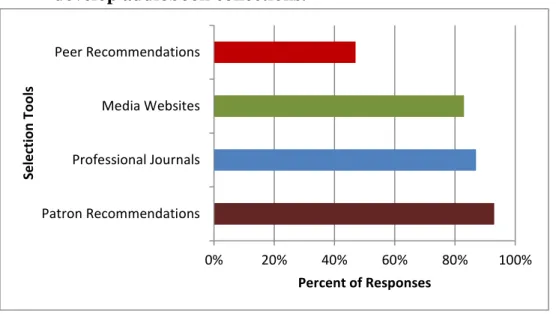
Figure 1. Please check any categories of selection tools that you use to develop audiobook collections. ... 17
Figure 2. How often are new audiobooks added to the collection in each of the following formats? ... 18
Discussion ... 21
Conclusion ... 24
Bibliography ... 27
Appendix A ... 34
Appendix B ... 37
Introduction
A library’s collection development decisions are made using a variety of criteria,
depending on the character of the library and the intended audience which it serves. One
decision that libraries must face in deciding how best to meet the goals of their institution
is to determine which format of material best suits the library’s needs. Issues of
formatting are not always touched on in institutional collection development
plans. Collection development decisions in the public library setting may be made by
different individuals, depending on many factors such as the size, administration, and
priorities of the institution. However, the individual who makes these decisions must
take certain factors into account. These factors include what audience the item is aimed
at, as well as which of its objectives the library is trying to achieve. Selection decisions in
libraries are typically made pursuant to certain guidelines, usually formalized in a
collection development policy. These policies emphasize a library’s organizational goals
and are shaped by the community it serves. Other significant factors in the selection
process include professional reviews and patron recommendations. All of these factors
are affected by the format of an item, which can have a significant impact on the way it is
used by patrons. One format that has become increasingly prominent in library
collections over the past several decades is the audiobook.
The history of the audiobook, or the sound recording of text, as a popularly used
a number of upheavals in technology, listening trends, and library practice concerning the
format. These changes have both influenced and been informed by other changes in the
library field. Increased storage capacities have led to longer titles being made
available. Online vendors have enabled different forms of distribution. All of these
changes affect the roles that audiobooks perform within an institution’s collection.
The purpose of this study is to determine, through a survey of collection
development specialists in public libraries in North Carolina, how selection decisions for
audiobooks are made. By gaining a greater understanding of current practice, we can
evaluate current practices more clearly and predict future trends more accurately. The
questions examined in this study are:
How do public librarians make collection development decisions with respect to
audiobooks?
How do these policies differ from those for print resources?
How does patron feedback affect audiobook collection development?
The research in the following literature review explores some of the past and current
trends in library audiobook service and how they affect collection development.
Literature Review
The literature on collection development policy in the library has typically
focused more on the genre and subject matter of material collected, rather than the
format. However, format has a profound effect on the institution’s ability to address the
demands of its patron base. Some formats may work to meet needs that other formats
consistent with the goals and missions of the library in order to be useful and effective
(Michnik 2014).
In this review, I have sought to examine the adoption of audiobooks in a library
setting, as well as the ways that patrons have interacted with the format. As scholarly
research in this area is lacking, much of the background is drawn from professional
literature. I primarily focus on the public library practice and the factors that affect it,
although data from other libraries and from publishers are included. In this section I
focus on unique factors of the audiobook format and how they affect library collection
development, the methods libraries use to distribute them and the services they aid in,
how programs concerning audiobooks can be implemented, and how patrons interact with
these materials.
Background
The first audiobooks were produced by the British Royal National Institute for the
Blind in 1935, meant to cater to the needs of soldiers who were blinded during World
War I. Audiobooks began to gain prominence in the 1970s and 1980s as cassette tapes
proliferated, their ubiquity and inexpensiveness turning what had been a specialized tool
into a leisure commodity. They became ensconced in public libraries during the same
period (Philips 2007). Audiobooks became especially popular for use by three
populations: the vision-impaired, developing readers, and, most recently, adult leisure
readers, especially commuters (Stern 2011).
A large body of research exists on the effects of audiobook use on student
learning outcomes in an educational setting. Audiobooks have been used to allow
2012). Listening to audio recordings has been found to have similar effect to reading
aloud, which has been considered “the single most important activity for building
knowledge required for eventual success in reading” (Wolfson 2008, 106). Also,
audiobooks develop listening skills, part of the Common Core State Standards (Lesesne
2013). Audiobooks are most effective when working with those who learn better through
audio formats (Goldsmith 2015). According to a study by the National Endowment for
the Arts, audiobook listening is one of the few types of media consumption that increases
general literacy (Pope, Peters, Bell, & Bastian 2009).
Audiobooks have also been proven effective when working with ESL students of
any age. Non-native English speakers find auditory listening to be more conducive to
learning than navigating text. Audiobooks can also be a channel for Spanish-language
materials. The OverDrive service offers such a selection of Spanish audiobooks (Yelton
2012).
Downloadable audio files such as podcasts have become an informational
resource, with users rating the trustworthiness of podcasts highly. Some academic
libraries have begun adding podcasts, along with traditional audio material, to their
collections (Peoples & Tilley 2011, Fox 2004). These resources present unique
challenges in that they “do not enter normal channels or systems of publication,
distribution [or] bibliographic control” (Tillett & Newbold 2006, 70).
Some researchers have experimented with different navigational components for
audiobooks. They note that listeners tend to prefer to have material divided into larger
sections, rather than having a very large degree of control (Carriço, Guimaraes, Duarte,
Audio recordings of books for recreational purposes have been common
components of public library collections since the 1980s, and there has been debate over
the usefulness of developing audiobook collections in other types of libraries. Some
academic and special libraries have experimented with using audio formats to provide
information and instruction. In June 2007, the Research Library at the National Institute
of Standards and Technology instituted a program in which they distributed audiobooks
on leadership and management, with the result that those books were circulated more
than six times as much as print copies (Allmang 2009). Business libraries have also used
downloadable audiobooks to supplement their collections (Lannon 2013).
Public Library Practice
Beginning in the late 1980s and early 1990s, libraries acted to keep up with the
growing demand for audiobooks as well as other audiovisual material. According to a
Library Journal survey, public libraries, on average, increased their audiovisual budgets
53% between 1993 and 1998, much more than the budgets for other areas of the
collection (Oder 1998).
According to North Carolina public library data from 2014 to 2015, audiobooks
and audiobooks comprise an average of 4.25% of public library
circulation. Mecklenburg County has the highest percentage with audio titles making up
9.76% of their total circulation, while Halifax County has the lowest audio circulation,
with 0.38% (North Carolina State Library 2015). This wide disparity in the range of
audiobook use by patrons indicates that many factors influence the popularity of
Audiobooks on physical formats like CDs carry distinct challenges for library
collections, as they can easily become scratched or damaged and require culling or
replacement (Lesesne 2011). They also run the risk of becoming rapidly
outdated. Formats like MP3 CDs were initially praised for their higher storage capacity
as compared to traditional compact discs (Crawford 2001). However, as they have been
supplanted by digital files, their prevalence on library shelves has decreased.
A growing trend in public library practice of the 21st century has been the rise of
interest in electronic resources, which include digital audiobook files as well as
e-books. According to a 2010 Library Journal survey, the market for digital audiobooks
was increasing by 71% a year, faster than any other media sector (Moyer 2012). A 2011
study of library users in Queensland, Australia found that e-books and electronic
audiobooks were rapidly gaining ground on circulation of traditional materials. The most
frequently-stated reason for this, at 81%, was the portability of downloadable digital
materials. Other significant rationales include the convenience of not having to visit a
physical location, and the ease of use (Duncan 2011). Digital audiobooks also have the
advantage of not requiring cumbersome swapping of cassette tapes or CDs to listen to a
complete book (Rubery 2008). This shift is also partially attributable to the increase in
number and strength of broadband networks and partially to the decreasing price of
portable media players (Furini 2008). A surprising new user base for this technology is
older adults, who often have trouble physically accessing the library (Meyer 2014).
Libraries have struggled to meet the new digital demand, with public libraries
lagging behind in making digital media available to all patrons (Kelley 2012). As
between more and less affluent and digitally proficient patrons has also increased
(Bonacci 2011). Another way in which libraries seek to promote accessibility is by
making their resources, including audiobooks, accessible via mobile devices (Yelton
2012). A drawback to the digital format is that, even with the decrease in price of
portable media players, many patrons do not have such devices, which are necessary to
support the format. This means that either a large portion of patrons are underserved, or
the library must act to provide devices as well as digital resources (Kim 2006). Another
drawback is the many restrictions that are placed on digital materials by distributors,
including Digital Rights Management software (DRM) that limits how files can be used,
and access that lasts only as long as libraries continue to have an agreement in place with
the distributor (Buczynski 2006). Susan Hoy addresses the decisions libraries have to
make when considering new formats, concluding that librarians must make decisions on
what formats to adopt on the basis of their user populations as well as changing markets
(Hoy 2009).
Patron Behavior
An early study of public library audiobook use, in Salem Public Library in 1998,
showed that users preferred unabridged audiobooks and chose their selections primarily
by subject. In addition, many audiobook listeners accessed audiobooks exclusively from
among the library’s holdings (Yingling 1998). A study by the Audio Publishers
Association showed that younger, well-educated consumers were more likely to be
audiobook listeners (Burkey 2013).
Genre fiction, like mystery and crime, enjoys much popularity among
to capitalize on the advantages that the audio format offers to language learners (Coon
2003). Self-help books also enjoy popularity (Ownes 2006). Unlike with traditional
print books, some patrons tend to put as much emphasis on the narrator of the audiobook
as they do the author and subject matter (Kunzel, Saricks, Stover, & Wyatt 2011).
A key aspect to increasing patron usage of the audiobook collection is to put them
in the appropriate location. This includes placing audiobook materials in the appropriate
area of the library, including placing materials for teens and young adults in their
respective sections. This has been found to be more effective than having all library
audio holdings in a central location. (King 2010). Promotional efforts such as posters and
reading lists have also been found to increase user interest in the collections (Kucalaba
2000).
One traditional patron population which continues to utilize audiobook recordings
consists of the vision-impaired. Many of these individuals are older adults who can no
longer read print materials (Mayo 2001). While talking books for the blind have long
been provided by the Library of Congress, commercial recordings are also popular
(Stringer 2008). Many of these services can be performed in concert with libraries
associated with institutions for the blind. A study conducted by the Royal Victorian
Institute for the Blind in Australia found that 30% of the population receiving audiobooks
from the Institute also used the public library to retrieve materials (Murray, Huynh, &
Williamson, 1995). Sweden’s Library of Talking Books and Braille worked in tandem
with public libraries to provide audiobooks to the nation’s vision-impaired population
(Hirschfeldt 2005). Providing materials for this population are a way for librarians to
Young adults may greatly benefit from the audiobook format. Research shows that
reading aloud can help introduce new language and concepts to inexperienced readers
(Whittingham, Huffman, Christensen, & McAllister 2013). Providing audio copies of
texts assigned in the school system is one way that public libraries can increase service to
local teens (Lesesne 2013).
Selection Methods
The literature on public library selection methods specific to audiobooks is still
limited. However, in general, most library collection development procedures during the
last few decades have shifted towards a philosophy of patron-driven acquisition. Instead
of basing collection decisions primarily on librarians’ expertise, selection decisions are
frequently based off of the desires of patrons, as indicated by patron recommendations
and loan requests (Fulton 2014).
One tool that libraries use in making selection decisions is review
literature. Review journals, both standard and specific to the audio industry, highlight
selected titles. Additionally, several awards for audio recordings for books are released
annually. The Audie Awards, presented by the Audio Publishers Association, recognize
several different categories of recording each year. Also, the American Library
Association releases annual lists recognizing audiobooks for different segments of the
population. They include the Notable Recordings for Children list, from the Association
of Library Services to Children, and Selected Audiobooks for Young Adults, from the
Young Adult Library Services Association. The Odyssey Awards also present an annual
award for children’s audiobooks (Grover 2008). Another method for selection,
notices of distributors, and familiarizing oneself with producers and narrators as a method
for prepublication selection.
An early debate for libraries investing in audiobooks was whether to invest in
abridged or unabridged recordings of literature. Clunky early formats like cassette tapes
took up a great deal of shelf space, often requiring several dozen cassettes to
accommodate one unabridged work of literature. Patrons also disliked having to switch
tapes many times. Many professionals, however, felt like the prevalence of abridged
recordings was a discouraging trend (Fakih 1989). Kaye and Baxter (1994) framed this
debate as convenience versus traditional library practice. Newer technologies, such as
digital recordings, have eliminated the physical space issue, and unabridged recordings
have largely become the medium of choice for public libraries.
Libraries have used various programs to tailor their audio collections to the needs
of their user population. One part of the library’s programming can be making audio
recordings of local publications or lectures. The California State Library has partnered
with the National Library for the Blind and Physically Handicapped to employ volunteers
to record books on local history for the benefit of the vision-impaired (Swafford 2008).
The Winnebago public library has expanded their audiobook selection in order to
provide a bridge between the oral tradition of the Winnebago tribe and English literacy
(Library Services 2008). The project is intended to help foster the continuance of an oral
culture in populations ranging from early childhood to the college-aged (Yelton
2012). Similarly, the Tennessee State Library implemented a program that will allow for
The rising prominence of digital media distributors like OverDrive and hoopla in
providing digital audiobooks as well as e-books has interesting implications for collection
development. Public libraries subscribe to these services, in exchange for providing a
catalog of titles for download. This alleviates much of the technical burden of libraries,
as the responsibility for updating and maintaining access is shifted to the distributor
(Peters 2007). However, the library has limited input into the titles that these distributors
make available. Thus, if this model persists, public libraries’ ability to shape their
audiobook collections will most likely decrease.
Audiobooks Now
The research shows that patron interest in audiobooks persists. Digital audio
formats, in particular, are a rising trend in public library offerings. However, there is still
as yet little research into the distinct characteristics of audiobooks and how public
libraries can best use audiobook collections to supplement their objectives.
At present, there has been relatively little research done on audiobook use in public
libraries, and almost none about how collection development decisions are made. While
public libraries have proven responsive to patrons regarding the genres of audiobooks
that they enjoy and the formats that they are interested in, they still have not gained much
data concerning how patrons use audiobook titles. Although academic and community
college libraries have begun to examine the information implications of audiobook
technology, most of the trade literature relating to public libraries tend to treat
audiobooks primarily as recreational sources. This study examines the ways in which
public libraries select audiobook collections, and to examine what influence the public
Research Design
This study was designed to examine how public librarians make decisions
concerning audiobook collection development. In order to do this, a survey was
distributed to public librarians who identified themselves as being responsible for
audiobook collection development. Here, audiobook collection specialists are defined as
employees of a public library whose professional responsibilities include making the
determination of which prose works to acquire in an audio format, whether on physical or
digital media.
To maximize the accuracy of the data and the transferability of the findings, these
surveys were distributed to every public library system in North Carolina. Given the size
of the region, distributing to the total population was deemed more feasible than
employing a sampling scheme. Contact information was identified using the North
Carolina Library Directory available from the State Library of North Carolina. An e-mail
containing an invitation to the survey was sent to the director of each public library
system in North Carolina, or to the individual responsible for collections if one was
specified by the library’s staff directory. The e-mail included a request to forward the
survey to the appropriate staff member, if applicable. The survey was distributed through
the e-mail feature of the Qualtrics software. This allowed for a greater geographic area to
be sampled, while lowering expenses for the researcher and the participants. One week
after the survey was sent, a follow-up e-mail was distributed to non-respondents
triggering a second round of responses.
A sixteen-item survey was developed using the Qualtrics software. The survey
demographic, open-ended, and Likert-style questions. This survey included three
demographic items in order to establish characteristics of the population. Several more
questions were designed to be free-text to allow the respondents to offer their own
thoughts on the subject of collection development. Open-ended, free-text questions were
judged to be appropriate because of the exploratory nature of the study, and the
likelihood that the recipients’ professional experience would allow them to illuminate
new areas of study. The free-text responses were coded by the researcher to determine
the librarians’ behaviors and attitudes towards audiobook collection development. The
remaining questions were multiple-choice, or were positioned on the Likert scale for ease
of analysis. Some of the Likert-scale data was analyzed by means of a paired t-test.
The questions were arranged with the free-text responses interspersed with
multiple-choice and Likert-style questions throughout the survey. This was done in order
to encourage participants to answer the free-text questions and minimize question
skipping.
The target population of the survey consists of public librarians of North Carolina
who work with audiobook media. As the population was deemed too large for direct
observation, survey methodology was chosen as the most effective method of
measurement. The survey instrument drew from existing research on collection
development. However, the study included questions based off of recent trends in
practice and technological shifts, such as the prevalence of outsourcing the provision of
digital media to online distributors.
The study was judged by the author to be low-risk to the participants. Steps were
their responses would remain private and anonymous. Any Qualtrics-collected
information that could be used to identify the respondents was discarded at the
conclusion of the study. The study was in conformance with accepted ethical standards.
One concern, as with many surveys, was that the response rate to the survey
would be low. The author believed that this could be mitigated by focusing on members
of a professional community and emphasizing the personal and professional significance
of the study. A politely worded follow-up email was sent by the author of the study to
the recipients of the initial e-mail who had not returned responses after seven days.
Results
Out of the 81 library systems surveyed, 31 surveys were returned, for a response
rate of 38.27%. The job titles listed by survey respondents varied widely. Ten of the
thirty respondents who chose to give their title identified themselves as library
directors. Three respondents had a title pertaining to collections or collection
development. Librarians from the Reference, Circulation, Adult Services, and Youth
departments also participated in the study. In some cases, laypersons or
paraprofessionals such as library assistants apparently had the responsibility of selecting
audiobooks for their libraries. The survey also found the scope of collection
responsibility of the respondents to vary from institution to institution. 52% of
respondents claimed responsibility for audio titles in the adult collection only, while 39%
had selection duties for the entire collection. The remaining 9% consisted of librarians
Most of the respondents came from larger library systems, with 48% (nearly half)
serving populations of more than 100,000. This may partially result from the fact that
larger library systems generally have larger staffs with more specialization, making a
survey such as the one in this study more pertinent to their duties. 6% of respondents
served a library or library system with a population of between 75,000 and 100,000,
while 19% came from systems serving 50,000 to 75,000 patrons. 16% served
populations of between 30,000 and 50,000 patrons. Only 10% served populations of
between 10,000 and 30,000, the smallest unit.
84% of librarians surveyed responded that their library had a collection
development plan. Of those, fully 93% indicated that the collection development plan
was either “highly significant” or “somewhat significant” in their collection decisions.
Figure 1 shows the frequency of the patron selection tools that selection
specialists employed. Patron recommendation was the most common selection tool cited,
with 93% of respondents citing that as a major factor in their selection
decisions. Professional review journals were also commonly employed, as 87% of the
respondents used them. Websites were only slightly behind, at 83%. 47% of librarians
Figure 1. Please check any categories of selection tools that you use to develop audiobook collections.
When asked to name the resources employed, journals topped the list, with 9
respondents citing Library Journal reviews as a source, 6 mentioning Publishers Weekly,
4 using Booklist, and 4 using Audiofile. A few of the responses also mentioned lists
from booksellers like Barnes & Noble and Amazon. Lists compiled directly from the
vendor were also a very common resource, with five libraries employing these. Five
responses also mentioned patron requests or suggestions in this category. Relatedly, one
librarian mentioned ordering audiobook titles when the print version of the title had
multiple holds placed upon, proving community interest in that title.
As implied by the literature, respondents currently overwhelmingly favor
unabridged recordings. 90% of the respondents, representing 27 out of 30 institutions,
preferred this format to abridged recordings in their purchasing decisions.
The survey results demonstrate that library collection specialists have a variety of
viewpoints on the changing technological landscape and how it affects their
collections. The most commonly mentioned challenge was the difficulty of balancing
0% 20% 40% 60% 80% 100%
Patron Recommendations Professional Journals Media Websites Peer Recommendations
Percent of Responses
Sel
ec
tio
n T
oo
physical and digital formats, with 13 out of 27 respondents mentioning this as a
concern. Four respondents stated that there had been essentially no change in their
institutions due to technological shifts, with one saying that demographic shifts have a
greater effect on selection decisions.
Figure 2 shows the distribution of formats among the new audiobook acquisitions
of libraries. Although audio recording technology has changed rapidly and significantly,
the standard CD, a format that has been around for two decades, is still the most popular
choice for public libraries, with 27 out of 31 respondents saying they “often” provided
this format. 16 respondents provide online digital files at their institutions, more than
half of the total, with another 6 often providing those files. However, 7 respondents,
nearly a quarter of the total, “never” provide this format, and while another 2 only make
such materials available “rarely”. Only 2 provided MP3 CDs more frequently than
“rarely”.
Figure 2. How often are new audiobooks added to the collection in each of the following formats?
Question Often Sometimes Rarely Never Total
Responses Standard
CDs
27 3 1 0 31
MP3 CDs 2 0 9 15 26
Online digital files
16 6 2 7 31
Preloaded digital audio players
3 3 5 17 28
Other 1 0 1 10 12
The most common way that patron feedback is incorporated into the selection
surveyed take requests directly from patrons. One respondent claimed that their
institution only makes new audiobook purchases on request from patrons. Two librarians
said they attempted to fulfill all requests of which the materials were available. One
librarian noted that budgetary limitations made retrospective acquisitions, when patrons
asked for copies of older materials, impossible. In several institutions, patron feedback is
solicited through both online and paper forms.
When asked about the differences in the selection processes for print and
audiobook resources, 26 out of 31 respondents chose to answer. For six respondents,
there was no difference in selection between the sources. Many of the other responses
reiterated the emphasis on bestsellers and patron demand, stating that these factors drove
their selection to a greater degree for audio materials than for print. Several also said that
their audiobook selections were much rarer than for other materials and made up a very
small portion of the overall collection. Three respondents mentioned that the reputation
of the narrator, as well as the author, was also taken into account during the selection
process. One respondent replied that their audiovisual collection was a single floating
collection throughout the system, so they were moving towards having one single person
in charge of it. One respondent said that their institution’s policy had shifted over the life
of the audiobook format, from a more involved process of evaluating reviews to focusing
on demand only.
When asked about the digital audiobook services they made available, 20 out of
the 29 librarians who responded indicated their institution provided access to the North
Carolina Digital Library, an OverDrive-based consortium. 16 library systems provided
systems. Only two respondents indicated that their institution did not employ any online
service.
When asked to name their greatest challenge, the one reported by the most
respondents was the cost of materials. Fourteen out of 26 librarians, more than half of
those who responded, maintained that the expense of items was a concern. Several
mentioned that maintaining balance between formats, especially physical and digital, was
a concern. Eleven respondents mentioned the concerns of balancing acquisitions in
varying physical and digital formats. One noted that certain segments of the population
prefer physical media, while others prefer downloadable titles. Two respondents claimed
that having limited space for new physical titles was their biggest concern. Two others
reported that patrons frequently expected them to have or be able to obtain all of the print
titles they currently held in audiobook format, even the books for which no audio version
had been released.
When asked what they would change if they had no limitations on resources,
almost all respondents said that they would expand the number of titles their library
makes available. Over half of the respondents specifically mentioned digital titles as
being something that they would like to see expanded. Seven responses mentioned that
they would like to increase the amount of physical audiobook titles carried by the
library. In particular, four librarians said that they were interested in expanding or
reintroducing their collection of playaways, preloaded devices carrying specific audio
titles. One librarian said that they would like to expand their collection beyond popular
material and purchase more material for self-directed education such as the Great Courses
On a scale of 1-10, patron influence was rated the most important factor in
audiobook selection, with an average score of 8.83. Collection balance received a score
of 7, and formal collection policy received a score of 6.75. Trade publications were rated
the lowest, with a score of 6.28.
A paired t-test was conducted to compare the respondents’ rating of selection
factors with the size of their institutions to observe the correlation between library size
and selection factors. The correlation between the size of the library and reliance on a
formal collection development policy was found to be significant, with a two-tailed P
value of 0.0012. The correlation between size and patron demand and between size and
collection balance were also statistically significant, with a two-tailed P value of less than
0.0001, as was the P value for trade publications, at 0.0036.
Discussion
The purpose of this study was to examine the ways in which public librarians
implement collection development strategies for audiobooks, how these strategies differ
from those implemented for other media formats, and how they could be affected by
shifts in the technological landscape. Overall, the results of this study show that the
audiobook selection decisions of public librarians incorporate many factors, especially
patron demand and budgetary limitations. They also show that members of this field
have different interpretations of technological changes, especially the move towards
increased digital content, and what it means for the future of audiobooks in public
The selection process for audiobooks does not appear to differ substantially from
that of traditional media, except that the process is more strongly focused on patron
preferences. Results suggest that audiobook collection development practices follow the
general trend within public libraries of focusing selection efforts on the most popular
materials. This trend is more pronounced with audiobooks collections because of the
smaller size of the collection and of the budget allotted to it relative to the print collection
in most library systems. Many librarians mentioned bestsellers as comprising a large
portion of their audiobook purchases. Comments suggest that audiobooks are viewed
primarily as “recreational” materials and that this drives the emphasis on more popular
titles. It is unclear whether this viewpoint is shared with the majority of patrons. Use of
audiobooks for educational purposes, while having some success in the realm of
education, has not become common practice in the public library setting. This, along
with the rise in the use of audiobooks during travel and exercise, may have some impact
on the perception of audiobooks as being primarily intended for leisure.
Technological changes have influenced all selection personnel. This can be
indicated by the fact that all of the surveyed personnel use state-provided online services
to distribute titles, and some use others as well. Focusing on digital titles may also
alleviate the necessity of providing the space to store bulky collections of CD sets,
mentioned as a concern by several respondents. However, the results show a variety of
approaches by librarians to audiobook collections in light of these changes. Some
librarians are moving from physical formats to digital ones, while others are moving
away from audiobooks altogether. The so-called “digital gap” may factor into this, as
digital materials than others do. Based on these survey answers, it may take some time
before the overall library response to the advent of digital audiobooks stabilizes and a
paradigm is set throughout the public library sector.
Judging from the responses received, budget limitations are a significant factor in
shaping audiobook collection development, as they are in library collection development
in general. Public libraries must justify their expenditures to the institutions that support
them and the taxpayers that fund them. This is commonly done by reporting performance
measures, particularly circulation, leading to a focus on popular items that are more likely
to increase these measures.
The results indicate that larger library systems have more diversified selection
criteria than those of smaller systems. Larger libraries typically have the staff size that
allows them to dedicate more labor to audiobook selection and to incorporate more
factors into the process. Additionally, the size of a library’s budget and its holdings
typically increases with the size of the population it serves, allowing librarians the ability
to develop a larger and more diversified audiobook collection.
Lack of patron awareness of and knowledge about the audiobook collection may
also impact its success. Several respondents reported that their patrons were unfamiliar
with the extent of the library’s audiobook collection and which titles were held
within. Some might anticipate the library having an audio collection just as extensive as
its print collection, while others might not be aware of the collection at all. With more
files being located online without a physical equivalent, many patrons may be unaware of
One potential limitation of this survey is the somewhat low response rate. The
surveys that were returned originated disproportionately from the larger library
systems. This may be because these systems were more likely to have larger staff that
include individuals who have direct responsibility over audiovisual collections and who
would be directly interested in the results of this survey. Smaller libraries and library
systems, with fewer staff and a smaller service population, may employ very different
selection strategies.
Conclusion
The results of this survey underlie the ways in which public library selection
strategies, particularly those concerning audiobooks, are affected by shifts in technology,
as well as the library’s own objectives. Although audiobooks have had a relatively short
lifespan as a popular medium, the format, and the way libraries approach it, has changed
significantly during that period. These changes have left librarians questioning the future
of the format, or if it even has a future at all as a part of the library’s holdings.
Over the past several decades, the trend in library service has been to focus
service on meeting patron demands, rather than attempting to shape them. This trend is
exacerbated for non-print items such as video and audio materials, which are generally
considered to be “extras” and not part of an item’s core collection. Statistics show that
the circulation levels of these items as a proportion of the library’s total collection vary
widely between library systems, which suggests that the demand for them is not uniform
The results of this survey suggests some potential avenues for future
research. The views that public library patrons hold of audiobook services in libraries is
largely unreported, except in figures such as circulation statistics. Subsequent studies
could examine how the shift away from physical media formats has affected the
audiobook sector of public libraries, and the level of investment that public library
patrons have in this format.
One potential avenue of research that could expand on the results of this study is
to compare the patron demographics, such as age, ethnicity, and financial status, of
various library systems with how they approach audio collection development in varying
formats. It has been established that different populations, such as early childhood
learners and the hearing-impaired, are served in different ways by audio materials, but the
needs of individual population groups often go unstated in formal selection
processes. Certain populations that lack familiarity with multimedia resources may not
consider audiobooks as a resource when formulating their information
needs. Understanding how patron demographics and special populations relate to the
selection decisions of libraries could be useful in addressing the inequalities of service
implicit in the concept of a “digital gap”.
The current research study has established that public library selection specialists
employ a variety of factors in their audiobook collection development. These factors
include both traditional sources for collection development, such as professional journals,
as well as newer sources like blogs and audiobook awards. However, the results also
show that patron demand is currently the largest factor shaping the development of
demand is also most likely behind the lack of consensus on the effects of technological
change on the library’s audiobook section, as differences among the populations the
library serves and their enthusiasm for and aptitude with varying technologies affects
their demand for audiobooks in digital and other formats. Currently, audiobooks are
chiefly viewed by both librarians and library patrons as leisure items whose primary role
in the collection is to provide additional formats for popular materials. As public
libraries continue to withstand budget crunches and the level of online services provided
by the institution continues to expand, it remains to be seen whether audiobooks maintain
their standing within public library collections and continue to comprise a substantial part
Bibliography
Properties of Audiobooks and Effects on Learning
Carriço, L., Guimaraes, N., Duarte, C., Chambel, T., & Simoes, H. (2003). Spoken books: Multimodal interaction and information repurposing. Proceedings of HCII, 680-684.
http://www.researchgate.net/profile/Carlos_Duarte4/publication/256015207_Spoken_Bo oks_Multimodal_Interaction_and_Information_Repurposing/links/00b7d521666839535d 000000.pdf
Coon, J. (2003). Speaking in tongues. Library Journal, 121(18), 43-46.
http://web.b.ebscohost.com.libproxy.lib.unc.edu/ehost/detail/detail?sid=a66b4356-ff44-
48b1-8d1e-3f7aa65395a8%40sessionmgr111&vid=0&hid=125&bdata=JnNpdGU9ZWhvc3QtbGl2Z SZzY29wZT1zaXRl#db=lls&AN=502912749
Fox, R. (2004). Do audiobooks belong in academic libraries? Georgia Library Quarterly, 40(4), 9-11.
http://web.b.ebscohost.com.libproxy.lib.unc.edu/ehost/detail/detail?sid=dbef3eb7-41ab-
4fc0-90ab-a8f19396c32b%40sessionmgr198&vid=0&hid=125&bdata=JnNpdGU9ZWhvc3QtbGl2Z SZzY29wZT1zaXRl#AN=502940392&db=lls
Furini, M. (2008). Digital audiobook: from passive to active pursuit. Multimedia Tools and Applications, 40(1), 23-39.
http://search.proquest.com/docview/234430711?pq-origsite=summon
Goldsmith, F. (2015). Audiobooks and literacy. Audiofile, 24(1), 68.
http://web.b.ebscohost.com.libproxy.lib.unc.edu/ehost/detail/detail?sid=bb545993-73ef-
4045-91c1-61f3a9f709e3%40sessionmgr110&vid=0&hid=106&bdata=JnNpdGU9ZWhvc3QtbGl2Z SZzY29wZT1zaXRl#AN=103003786&db=lls
Grover, S. & Hannegan, L. (2008). Hear and now: Connecting outstanding audiobooks to classroom instruction. Teacher Librarian, 35(3), 17-21.
http://web.b.ebscohost.com.libproxy.lib.unc.edu/ehost/detail/detail?sid=a6e9c396-d4bc-
Grover, S. & Hannegan, L. (2012). Listening to learn: Audiobooks supporting literacy. Chicago: ALA Editions.
Lesesne, T. (2011). Lessons in listening: Reflecting on the listening experience. Voice of Youth Advocates, 34(1), 44-46.
http://web.b.ebscohost.com.libproxy.lib.unc.edu/ehost/detail/detail?sid=5d03f619-2ce4-
498e-ba96-961d0e664ff0%40sessionmgr198&vid=0&hid=125&bdata=JnNpdGU9ZWhvc3QtbGl2Z SZzY29wZT1zaXRl#AN=503012226&db=lls
Lesesne, T. (2013). Reading
with our ears. Young Adult Library Services, 11(3), 30-32.
http://web.b.ebscohost.com.libproxy.lib.unc.edu/ehost/detail/detail?sid=73c56b5a-b918-
4b74-8d51-a6eef63396b2%40sessionmgr111&vid=0&hid=125&bdata=JnNpdGU9ZWhvc3QtbGl2Z SZzY29wZT1zaXRl#AN=87118853&db=lls
King, N. (2010). Listener for life. Young Adult Library Services, 8(3), 25-27.
http://web.b.ebscohost.com.libproxy.lib.unc.edu/ehost/detail/detail?sid=3edd098a-d8a0-
459f-ba24-34c82df21784%40sessionmgr198&vid=0&hid=125&bdata=JnNpdGU9ZWhvc3QtbGl2 ZSZzY29wZT1zaXRl#AN=51153507&db=lls
Peoples, B. & Tilley, C. (2011). Podcasts as an emerging information resource. College & Undergraduate Libraries, 18(1), 44-57.
http://web.b.ebscohost.com.libproxy.lib.unc.edu/ehost/detail/detail?sid=769f9c17-c078-
4c9b-ab69-0e876276a807%40sessionmgr110&vid=0&hid=106&bdata=JnNpdGU9ZWhvc3QtbGl2 ZSZzY29wZT1zaXRl#AN=59272216&db=lls
Philips, D. (2007). Talking books: The encounter of literature and technology in the audio book. Convergence: The International Journal of Research into New Media
Technologies, 13(3), 293-306.
http://con.sagepub.com/content/13/3/293.short
Rubery, M. (2008). Play it again, Sam Weller: New digital audiobooks and old ways of reading. Journal of Victorian Culture, 13(1), 58 - 79.
http://www.tandfonline.com/doi/citedby/10.3366/E1355550208000088#.VeTyhMaA2FI
Stern, C. (2011). The rise of audiobooks in academic libraries. College & Undergraduate Libraries, 18(1), 77-91.
http://web.b.ebscohost.com.libproxy.lib.unc.edu/ehost/detail/detail?sid=a6e9c396-d4bc-
Tillett, S. & Newbold, E. (2006). Grey literature at The British Library: revealing a hidden resource. Interlending & Document Supply, 34(2), 70-73.
http://www.emeraldinsight.com/doi/full/10.1108/02641610610669769
Wolfson, G. (2008). Using audiobooks to meet the needs of adolescent readers. American Secondary Education 36(2), 105-114.
http://www.jstor.org/stable/41406113?seq=1#page_scan_tab_contents
Public Library Practice
Allmang, N. (2009). Audiobooks on iPods: Building a program for a research library. College and Research Libraries, 70(3), 173 - 176.
http://crln.acrl.org/content/70/3/173.full.pdf
Bonacci, A., & Oakleaf, M. (2011). eTCPL: Planning, marketing, and assessment for Tompkins County Public Library’s digital download education.
http://abonacci.mysite.syr.edu/BonacciPMA.pdf.
Bryant, M., Renfro, N., & Bengel, T. (2006). R.E.A.D.S. for Tennessee: Downloadable e-books and audio. Tennessee Libraries, 56(2), 1-7.
http://web.b.ebscohost.com.libproxy.lib.unc.edu/ehost/detail/detail?sid=930b4642-6a4e-
4519-908d-b46a3f976862%40sessionmgr110&vid=0&hid=125&bdata=JnNpdGU9ZWhvc3QtbGl2 ZSZzY29wZT1zaXRl#AN=502973179&db=lls
Hirschfeldt, I. (2005). Libraries for all - the Swedish way. IFLA Conference Proceedings, 1-5.
http://202.206.214.254:8089/GYZJ/NEPAPER/papers/085e-Beckman-Hirschfeldt.pdf
Kelley, M., Rapp, D., & Lee, M. (2012). No downloadable media for 39% of public libraries. Library Journal, 137(1), 15.
http://web.b.ebscohost.com.libproxy.lib.unc.edu/ehost/detail/detail?sid=146bba74-9fd9-
46ec-9750-e9e1ac957ea1%40sessionmgr110&vid=0&hid=125&bdata=JnNpdGU9ZWhvc3QtbGl2Z SZzY29wZT1zaXRl#AN=70144619&db=lls
Kucalaba, L. (2000). The effect of a poster, display, and recommended listening list on the circulation of audiobooks in the public library.
http://eric.ed.gov/?id=ED449815
Mayo, K. (2001). Reaching library patrons with special services and materials. The Acquisitions Librarian, 13(25), 123-130.
http://web.b.ebscohost.com.libproxy.lib.unc.edu/ehost/detail/detail?sid=e8fe8b09-0ad5-
Murray, J., Huynh, T. T. T., & Williamson, K. (1995). A needs-analysis survey of users of an audio book library. Journal of Visual Impairment and Blindness, 89(1), 161. http://www.afb.org/jvib/jvibabstractNew.asp?articleid=jvib890210
North Carolina State Library. (2015). 2014 - 2015 Statistical Report of North Carolina Public Libraries. http://statelibrary.ncdcr.gov/ld/aboutlibraries/plstats/1415/1415rpt.htm
Peters, T. (2007). Digital audiobook services through libraries. Library Technology Reports, 2007, 43(1), 5-56.
http://web.b.ebscohost.com.libproxy.lib.unc.edu/ehost/detail/detail?sid=1c7c1c4e-1f94-
4938-aaf7-0a52fce61296%40sessionmgr112&vid=0&hid=106&bdata=JnNpdGU9ZWhvc3QtbGl2Z SZzY29wZT1zaXRl#AN=502899733&db=lls
Pope, K., Peters, T., Bell, L., & Bastian, J. (2009). Find a way to offer playaway: A new kind of audio book. Searcher, 17(3), 48-53.
http://web.b.ebscohost.com.libproxy.lib.unc.edu/ehost/detail/detail?sid=994a96be-6028-
4831-9889-4098f7967dc2%40sessionmgr113&vid=0&hid=125&bdata=JnNpdGU9ZWhvc3QtbGl2 ZSZzY29wZT1zaXRl#AN=502973070&db=lls
Stringer, I. (2008). Downloads by the busloads - the way forward for talking books. IFLA Conference Proceedings, 1-11.
http://web.b.ebscohost.com.libproxy.lib.unc.edu/ehost/detail/detail?sid=59507eaa-1512-
4408-a9cf-6c0234eb6e1e%40sessionmgr114&vid=0&hid=125&bdata=JnNpdGU9ZWhvc3QtbGl2 ZSZzY29wZT1zaXRl#AN=44057626&db=lls
Swafford, S. (2008). Listening to history: Recording history books for the blind and disabled. California State Library Foundation Bulletin, 91, 2-5.
http://web.b.ebscohost.com.libproxy.lib.unc.edu/ehost/detail/detail?sid=34dbb707-0805-
4b8b-b369-9efefef886d8%40sessionmgr110&vid=0&hid=125&bdata=JnNpdGU9ZWhvc3QtbGl2Z SZzY29wZT1zaXRl#AN=502937215&db=lls
Yelton, Andromeda. (2012). Expanding access to devices, collections, and services (2012). Library Technology Reports, 48(1), 19-24.
http://web.b.ebscohost.com.libproxy.lib.unc.edu/ehost/detail/detail?sid=1399801f-d7ad-
4ac6-99c5-93e4bab8c6e1%40sessionmgr113&vid=0&hid=125&bdata=JnNpdGU9ZWhvc3QtbGl2 ZSZzY29wZT1zaXRl#AN=76923885&db=lls
http://www.ala.org/aasl/sites/ala.org.aasl/files/content/aaslpubsandjournals/slr/vol16/SLR _Use_of_AudiobooksV16.pdf
Patron Behaviors
Buczynski, J. A. (2006). The library patron prefers listening: Living in Ray Bradbury's personal audio universe. Internet Reference Services Quarterly, 11(2), 97-103. http://dx.doi.org/10.1300/J136v11n02_07.
Duncan, R. (2011). EBooks and beyond: Update on a survey of library users. APLIS, 24(4), 182-193.
http://web.b.ebscohost.com.libproxy.lib.unc.edu/ehost/detail/detail?sid=80b014ad-f0d1-
4ed5-b2f5-db7b3e8c2e0a%40sessionmgr198&vid=0&hid=125&bdata=JnNpdGU9ZWhvc3QtbGl2 ZSZzY29wZT1zaXRl#AN=70050766&db=lls
Oder, N. (1998). AV rising: Demand, budgets, and circulation are all up. Library Journal, 123(19), 30-33.
http://search.proquest.com.libproxy.lib.unc.edu/docview/211204590?pq-origsite=summon
Yingling, J. (1998). A study of audiobook users at the Salem, Ohio public library.
http://eric.ed.gov/?id=ED424859
Selection Methods
Burkey, M. (2013). Audiobooks for Youth: A practical guide to sound literature. Chicago: ALA Editions.
Crawford, W. (2001). MP3 audiobooks: A new library medium? American Libraries, 32(7), 64-66.
http://www.jstor.org/stable/25645999?seq=1#page_scan_tab_contents
Fakih, K. (1989). Books unbound: Abridged vs unabridged audiocassettes. Library Journal, 114(19), 38-42.
http://web.b.ebscohost.com.libproxy.lib.unc.edu/ehost/detail/detail?sid=5260fd9c-eace-
4075-aa33-2f4b39f38dba%40sessionmgr198&vid=0&hid=125&bdata=JnNpdGU9ZWhvc3QtbGl2Z SZzY29wZT1zaXRl#AN=502701136&db=lls
Fulton, K. (2014). The rise of patron-driven acquisitions. Georgia Library Quarterly, 51(3), 22-30. http://digitalcommons.kennesaw.edu/glq/vol51/iss3/10
Hoy, S. (2009). What talking books have to say: Issues and options for public libraries.
Australasian Public Libraries and Information Services, 22(4), 164.
Kaye, S., & Baxter, B. (1994). Breaking the SOUND barrier: starting and maintaining an audiobook collection. Library Journal, 119(9), 34-36.
http://vb3lk7eb4t.search.serialssolutions.com.libproxy.lib.unc.edu/?ctx_ver=Z39.88- 2004&ctx_enc=info%3Aofi%2Fenc%3AUTF-8&rfr_id=info:sid/summon.serialssolutions.com&rft_val_fmt=info:ofi/fmt:kev:mtx:journ al&rft.genre=article&rft.atitle=Breaking+the+Sound+Barrier%3A+Starting+and+Maintai ning+an+Audiobook+Collection&rft.jtitle=Library+Journal&rft.au=Kaye%2C+Sheldon &rft.au=Baxter%2C+Beth&rft.date=1994&rft.issn=0363-0277&rft.volume=119&rft.issue=9&rft.spage=34&rft.externalDocID=EJ483809
Kim, A. (2006). The future is now. Library Journal, 121(9), 60-63.
http://web.b.ebscohost.com.libproxy.lib.unc.edu/ehost/detail/detail?sid=0b6c43a7-bd4a-
4997-bcee-2d07801aed71%40sessionmgr110&vid=0&hid=125&bdata=JnNpdGU9ZWhvc3QtbGl2 ZSZzY29wZT1zaXRl#AN=502984124&db=lls
Kunzel, B., Saricks, J., Stover, K. M., & Wyatt, N. (2011). Selecting audiobooks:
Towards a core collection of narrators. Reference and User Services Quarterly, 51(2), 98-104.
http://www.jstor.org/stable/refuseserq.51.2.98?seq=1#page_scan_tab_contents
Lannon, A. & McKinnon, D. (2013). Business e-books: What can be learned from vendor supplied statistics? Journal of Business and Finance Librarianship, 18(2), 89-99. http://web.b.ebscohost.com.libproxy.lib.unc.edu/ehost/detail/detail?sid=fd84a060-547f-
4856-a925-f8002cb46077%40sessionmgr113&vid=0&hid=125&bdata=JnNpdGU9ZWhvc3QtbGl2 ZSZzY29wZT1zaXRl#db=lls&AN=86417725
Meyer, K. (2014). Digital audiobook lending is finding its groove. Publishers Weekly, 261 (50), 29-32.
http://web.b.ebscohost.com.libproxy.lib.unc.edu/ehost/pdfviewer/pdfviewer?sid=1d0913 95-7eb1-44be-a17c-4d88a65e3459%40sessionmgr112&vid=1&hid=106
Michnik, K., & Eriksson, C. (2014). Non-traditional library collections - in digital and other worlds. Interlending & Document Supply, 42(4),
165-170. https://auth.lib.unc.edu/ezproxy_auth.php?url=http://search.ebscohost.com/login.as px?direct=true&db=lls&AN=100685550&site=ehost-live&scope=site
Moyer, J. (2012). Audiobooks and e-books. Reference & User Services Quarterly, 51(4), 340-354.
http://web.b.ebscohost.com.libproxy.lib.unc.edu/ehost/detail/detail?sid=1d091395-7eb1-
Ownes, D. (2006). Listen for success! Library Journal, 131(19), 43-45.
http://web.b.ebscohost.com.libproxy.lib.unc.edu/ehost/detail/detail?sid=163f4094-cc76-
4aba-b4c5-36ffca94caef%40sessionmgr113&vid=0&hid=125&bdata=JnNpdGU9ZWhvc3QtbGl2Z SZzY29wZT1zaXRl#AN=502891959&db=lls
Williams, W. (2008). The sound of crime fiction. Library Journal, 133(7), 36-39. http://web.b.ebscohost.com.libproxy.lib.unc.edu/ehost/detail/detail?sid=537713ab-a203-
Appendix A
Questions
1. What is your current job title?
2. What is the scope of your collection responsibility?
Entire collection Children
Young Adult Adult
Other
3. What is the approximate size of the population that your library serves?
Less than 10,000 10,000 – 30,000 30,000 – 50,000 50,000 – 75,000 75,000 – 100,000 More than 100,000
4. Does your institution possess a formal collection development plan?
Yes No
5. If so, how significant is the collection development plan in your audiobook selections?
Highly significant Somewhat significant Not very significant No significance
6. Please check any categories of selection tools that you use to develop audiobook
collections.
Professional review journals Professional books
Recommendations from patrons
Recommendations from library professionals Other
7. What are some of the specific selection tools that you use for audiobooks?
8. Do you give preference to abridged or unabridged audiobooks?
Abridged Unabridged
9. How does the changing state of technology affect your audiobook selection decisions?
10. How often are new audiobooks added to the collection in each of the following
formats?
Standard CDs MP3 CDs
Online digital files P
11. In what ways, if any, do you incorporate feedback from patrons into your audiobook
selection decisions?
12. In what ways does your selection process for audiobooks differ from those for print
materials?
13. Does your institution make use of an online audiobook distributor (e.g., OverDrive,
North Carolina Digital Library) to offer digital titles? If so, through which service?
14. What do you feel is the greatest challenge that you currently face in audiobook
selection?
15. Given unlimited resources, what changes would you make to your institution’s
16. Please rate, from 1-10, the extent to which the following factors play a part in your
audiobook selection decisions.
Formal collection policy Patron demand
Appendix B
Invitation E-Mail
To the Directors and Collection Specialists of North Carolina Public Libraries:
I am a graduate student in the School of Information and Library Science at UNC - Chapel Hill and am currently working on my Master’s Paper. I am conducting a study to examine the factors utilized in audiobook collection development decisions and how they compare to those for traditional print materials. To do this, I am gathering information on the audiobook selection process from personnel in North Carolina public libraries. If you are willing to participate in the study, please complete this survey or forward it to the individual involved in audiobook selection for your library or library system. I hope you will be willing to spare a few minutes to assist me by completing this survey.
To participate in this study, simply complete the survey found at the URL indicated by the following link: https://unc.az1.qualtrics.com/SE/?SID=SV_bfJ2VNURXwAjQI5. Your
completion of the survey signifies your consent to participate in the study. No personal information will be collected by this survey. All results will be confidential.
Your participation in this study will help me to complete my degree, as well as advance understanding of collection development practices for audiobook materials. If you have any questions about this study, please contact me at [email protected]. Thank you for your assistance with this project.
Sincerely, Joseph Sanders
School of Information and Library Science University of North Carolina at Chapel Hill [email protected]
Ericka Patillo Faculty Adviser
School of Information and Library Science University of North Carolina at Chapel Hill
Appendix C
Follow-up E-mail
To the Directors and Collection Specialists of North Carolina Public Libraries:
I am a graduate student in the School of Information and Library Science at UNC - Chapel Hill and am currently working on my Master’s Paper. I am conducting a study to examine the factors utilized in audiobook collection development decisions and how they compare to those for traditional print materials. To do this, I am gathering information on the audiobook selection process from personnel in North Carolina public libraries.
One week ago, you received an e-mail with a link to this survey, and I would like to remind you of the benefits of this survey. Your participation in this study will help me to complete my degree, as well as advance understanding of collection development
practices for audiobook materials. If you are willing to participate in the study, please complete this survey or forward it to the individual involved in audiobook selection for your library or library system. I hope you will be willing to spare a few minutes to assist me by completing this survey.
To participate in this study, simply complete the survey found at the URL indicated by the following link: https://unc.az1.qualtrics.com/SE/?SID=SV_bfJ2VNURXwAjQI5. Your
completion of the survey signifies your consent to participate in the study. No personal information will be collected by this survey. All results will be confidential.
If you have any questions about this study, please contact me at
[email protected]. Thank you for your assistance with this project.
Sincerely, Joseph Sanders
School of Information and Library Science University of North Carolina at Chapel Hill [email protected]
Ericka Patillo Faculty Adviser