IN THE GARDEN OF LETTERS: MARGUERITE CAETANI AND THE INTERNATIONAL LITERARY REVIEW “BOTTEGHE OSCURE”
Lorenzo Salvagni
A dissertation submitted to the faculty of the University of North Carolina at Chapel Hill in partial fulfillment of the requirements for the degree of Doctor of Philosophy in the Department of Romance Languages (Italian).
Chapel Hill 2013
Approved by:
Federico Luisetti (director)
Dino Cervigni
Ennio Rao
Roberto Dainotto
ABSTRACT LORENZO SALVAGNI:
In the Garden of Letters: Marguerite Caetani and the International Literary Review “Botteghe Oscure” (Under the direction of Federico Luisetti)
This study focuses on the international, multilingual literary review Botteghe Oscure (1948-60), which has so far received undeservedly little attention, and its editor, the American-Italian Marguerite Chapin Caetani (1880-1963). In spite of her active role as founder and editor of two modernist anthologies, Marguerite Caetani has long been considered merely as a “lady bountiful” for the multitude of authors she supported during her forty-year career in publishing. Building on an extensive study of Caetani’s
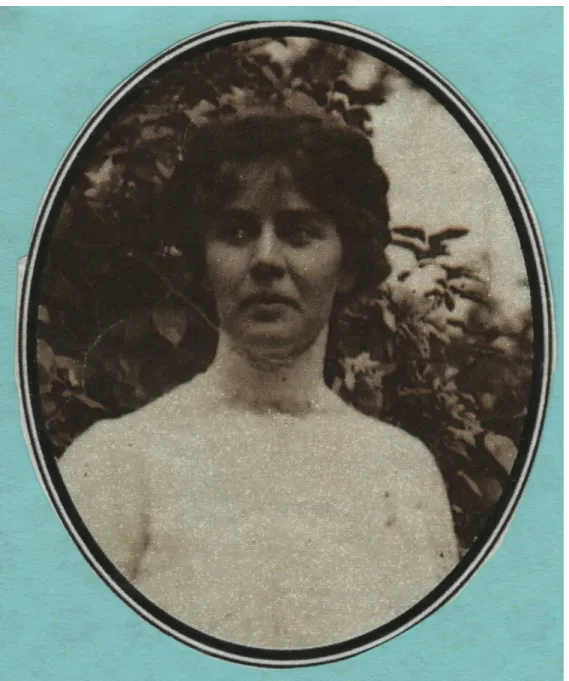
Marguerite Chapin Caetani (1880-1963)
Fig. 1. Marguerite Caetani, ca. 1911.
TABLE OF CONTENTS
LIST OF FIGURES………. vi
LIST OF ABBREVIATIONS………. vii
Chapter INTRODUCTION………...1
I. Life of Marguerite Caetani………29
II. Commerce……….61
III. Main Collaborators: Eugene Walter and Giorgio Bassani….……….82
IV. Botteghe Oscure……….109
V. Reception………....142
VI. A Case Study: René Char………..165
VII. Conclusion………185
APPENDIX A: List of Contributors to Botteghe Oscure……….202
APPENDIX B: Botteghe Oscure Statistics………..232
LIST OF FIGURES
LIST OF ABBREVIATIONS
AC Archivio Caetani
BO Botteghe Oscure
CCF Congress for Cultural Freedom GBP Gene Baro Papers
JMP Jackson Mathews Papers KBP Katherine Biddle Papers NRF Nouvelle Revue Française NYT New York Times
OSS Office of Strategic Services TLS The Times Literary Supplement
TR Transatlantic Review
TRP Theodore Roethke Papers
INTRODUCTION
In the middle of the political turmoil that followed the collapse of the fascist regime at the end of WWII, Italian intellectuals’ active engagement in the re-shaping of the country resulted in an outburst of creative energies. Their effect became evident in the great number of literary reviews that emerged in reaction to the intellectual stagnationof the fascist cultural apparatus. These publications propelled a new generation of writers and poets into notoriety. My study’s goal is to retrace this unique era in Italian literary history by focusing on the international, multilingual literary review Botteghe Oscure (1948-60), which has so far received undeservedly little attention, and its editor, the American-Italian Marguerite Chapin Caetani.
Literary historians and critics agree on the importance of Botteghe Oscure in the post-war Italian cultural scene and acknowledge the fact that it published some of the most prominent literary contributions of the last century, including Dylan Thomas’s Do Not Go Gentle into That Good Night (1952) and the first chapter of Il Gattopardo by Giuseppe Tomasi di Lampedusa (1958). It is rare, however, to find more than a paragraph on Botteghe Oscure in histories of twentieth-century Italian literature. This neglect is all the more surprising if one considers that Botteghe Oscure outlived most of the
in the fact that Botteghe Oscure, unlike its counterparts, never published anything but literature; it did not contribute reviews or criticism, provide any room for ideological confrontations, or offer critical reflection on the role of intellectuals that were so common in other publications.
As early as 1924, Giuseppe Sciortino, an intellectual close to Piero Gobetti, observed that Italy had entered “The Age of Criticism” (Borsellino 75). The observation lost none of its acumen in the following years; so much so that Natalino Sapegno, in analyzing the role and scope of literary criticism in the twentieth century, would observe: “La riflessione critica sui fatti artistici [. . .] acquista nel quadro della civiltà letteraria italiana del Novecento un rilievo inconsueto, una vastità e varietà di manifestazioni, un rigore metodico, quali forse non aveva conosciuto mai nei secoli precedenti [. . .]” (Sapegno 883). The abundance of criticism, overflowing from literary reviews into newspapers and even illustrated magazines, was a prominent manifestation of the
tendency indicated by Sciortino and Sapegno. From Leonardo to La voce, from Solaria to Letteratura, down to the contemporaries of Botteghe Oscure like Paragone and Officina, the majority of highbrow periodicals dedicated ample room to dissect, analyze, praise or condemn literature past and present. Marguerite Caetani’s review, then, stands out as a remarkable exception, one that deserves further investigation precisely because of its singularity.
standard fare, with the later addition of German and Spanish (starting in 1954). In his essay "Requiem for a Literary Haven," first published in 1960 in Saturday Review and later reprinted, slightly revised, as foreword for the Botteghe Oscure Index (1964), poet and Librarian of Congress Archibald MacLeish quantified the international scope of Botteghe Oscure: "During its twelve years the magazine published work by some 650 writers of thirty-odd nationalities, including 28 writing in Spanish (Spaniards, Mexicans, Cubans and South Americans), 39 writing in German (Germans, Austrians, Swiss), 98 writing in French (French, Belgian and Swiss) and 362 writing in English (more than half of them American and the rest British, Canadian, Australian, New Zealander) with five Filipinos, four Indians and a scattering from a dozen other countries" (MacLeish, Requiem 26). As MacLeish convincingly summarizes, Botteghe Oscure offered its readers a remarkable assortment of new international literature.
One of the promotional booklets printed for the magazine proudly announced that it stood as “a sort of United Nations of literature.” Indeed, in a world increasingly divided into factions, blocks, and spheres of influence, the universalistic message sent by
Botteghe Oscure could not pass unnoticed: the review became political without ever printing a word on politics; it became an example of the virtuous cultural exchange that took place in the free West. In reviewing Botteghe Oscure, several U.S. critics made this connection explicit, even if it is unlikely that Marguerite Caetani shared the
propagandistic zeal of some commentators.1 Nevertheless, a comprehensive analysis of
1 For example, on June 2, 1957 Paul Engle writes in The New York Times Book Review: “We hear a great
the magazine must take the political aspect into consideration. Despite the journal editor’s reluctance to participate in politicized national debates, I contend that Botteghe Oscure was ideologically just as significant as other contemporary journals; it helped strengthen that “Atlantic community of norms and values” that American officials and authors sympathetic to the cause of the Free West were actively pursuing during the cultural Cold War (Rietzler 156).2 Marguerite Caetani fostered a productive exchange between European and American literatures at a time when most intellectuals deplored the growing influence of US culture in their countries. In fact, many Italian reviews contemporary of Botteghe Oscure were sympathetic to the ideals of the political Left or directly linked to the Italian Communist Party (PCI). At least three magazines from the latter category are worth mentioning: Rinascita (1944-91), founded by PCI’s secretary
2 The general elections held in Italy in 1948 had brought to power a group closely tied to US interests, the
Christian Democratic Party (Democrazia Cristiana, or DC); this victory sanctioned Italy’s adherence to the Atlantic block after a fierce political campaign, which directly involved the two world’s emerging
superpowers with covert financing and propaganda operations. In the following years, USA and URSS fought to gain the cultural upper hand in Italy and Europe by financing friendly publications, organizing lectures and conferences, and winning intellectuals and artists to their side. The first CIA-sponsored Congress for Cultural Freedom (CCF) took place in 1950 in West Berlin; it was a response to a similar event backed by the Cominform in New York one year earlier under the name “Cultural and Scientific Conference for World Peace.” After the Berlin conference the CCF became a permanent structure based in Paris, with branches in most European countries. The CCF financed the Italian Association for Cultural Freedom (Associazione per la libertà della cultura, 1951). The first reports from CCF operatives trying to rally support for the organization in Italy spoke of “provincialism and anti-Americanism” of the Italian intellectuals. In order to obtain results, the agents wrote in their report, it would be necessary to proceed slowly and discreetly (Saunders 102). The CCF gained an early supporter in Ignazio Silone, who joined the executive committee of the organization. Together with Nicola Chiaromonte, Silone started the review
Tempo Presente (1956-68). A founding member of the Italian Communist Party in 1921, Silone later distanced himself from the leadership of Palmiro Togliatti and was expelled from the Party. He regularly attended the receptions hosted by Marguerite and her husband, prince Roffredo Caetani, at their Roman residence. Marguerite’s brother-in-law, Francis Biddle, was also a member of the American Committee for Cultural Freedom, affiliated with the CCF. In the fall of 1945 Francis Biddle visited Roffredo and
Palmiro Togliatti, which published the first Lettere dal carcere by Antonio Gramsci instrumental in shaping the development of militant criticism in Italy; the new series of Società (1945-61), which called for the reconstruction of Italian society along Marxist lines. Finally, Elio Vittorini’s Il Politecnico (1945-47), which, subject to an increasing ideological pressure by party officials, led to a widely publicized feud between Vittorini and Togliatti.
In this context, Marguerite Caetani’s efforts to promote Italian authors in the States and vice versa carried great political significance. For two years (1949-50), the Italian translation of English literature printed in Botteghe Oscure was issued in separate booklets by the title Poeti inglesi e americani. At the same time Marguerite Caetani edited an anthology of Botteghe’s Italian contributors for the British and American markets. The anthology, entitled New Italian Writers, was received favorably and opened the way to a wider circulation of contemporary Italian literature in both countries. Not only did Marguerite Caetani connect Italian authors to American and British publishers like Blanche Knopf and Jamie Hamilton, she also introduced the poetry of René Char to the American audience by promoting the publication of his first full-length anthology, Hypnos Waking, with Random House in 1956. Because of these and other editorial projects connected with Botteghe Oscure, which I will examine in the following chapters, Marguerite Caetani can be considered an important cultural mediator between her native country and Europe. She inspired other editors to follow her example, notably Joseph McCrindle, editor of the Transatlantic Review (1959-77).
formation of a new literary canon in post-WWII Italy. Chief editor Giorgio Bassani looked beyond the dominant cultural trends of hermeticism and neorealism to include in Botteghe Oscure works that eschewed categorization like Guglielmo Petroni’s novel Il mondo è una prigione, which features a tormented and doubt-ridden main character attempting to reconnect with a changed world in the wake of his imprisonment. This short novel challenged the clear-cut ideological reading common to other strands of post-war narrative; it appeared in the first issue of the magazine and obtained a number of flattering reviews in the press. It is thanks to Botteghe Oscure that Petroni’s name started circulating in the literary world after years of silence; three more of his works were printed on Botteghe Oscure in the following years, establishing his reputation as novelist in Italy and abroad. One of Botteghe Oscure’s most important literary scoops, however, was the publication in the spring 1958 of the first chapter of Il Gattopardo by Tomasi di Lampedusa, almost one year after the author’s death. Elena Croce delivered the
manuscript to Bassani, who published the novel with Feltrinelli in the fall of the same year. The novel’s pessimistic representation of the changes brought about by the Risorgimento in Southern Italy led to a mixed reception by the critics, who accused the book of being outdated and even reactionary. The examples of Il mondo è una prigione and Il Gattopardo show how Botteghe Oscure could challenge established cultural trends by introducing to the public authors who had been marginalized because of their
unorthodox views.
of all time” in a 1957 article appeared on Time magazine (“Botteghe Oscure”). The label of “little magazine,” however, applies to Botteghe Oscure only in a very general sense; the journal did not appeal to any specific group of readers, never expressed a spirit of revolt, and – last but not least – was bigger than most books. Several formats coexisted in Botteghe Oscure – little magazine, luxury review, pocket book – which, combined with the absence of editorial statements, made any comparison with other periodicals rather difficult. A 1949 promotional brochure associated Botteghe Oscure with a number of periodicals that appeared in the U.K. after WWII: New Writing and Daylight, Penguin New Writing, New Road, and Modern Reading. According to the anonymous writer (probably John Lehmann, British publisher and close friend of Marguerite Caetani), all these magazines shared with Botteghe Oscure the desire to nurture a dialogue between literatures of different countries, in order to “re-establish contact on the spiritual and artistic plane, which is ultimately the only one capable of overcoming the barriers of nationalism and of antagonistic points of view.” In the last paragraph the author pens a programmatic statement that undoubtedly met with Marguerite Caetani’s approval, and is therefore of great interest for the purpose of this study:
To set the literature of all countries on an equal footing; to discover the best fruits which each literature is able to yield; to collect the younger and less known writers beside those who have already won a wide recognition, thus gauging the spiritual vitality of the different countries; to convey, as reflected in art, the most interesting problems of the various peoples; to harmonize many and different ways of life into the supreme way of being of poetical creation, so that knowledge and information may be obtained by making known first-rate work of varying tendencies – these are the aims of this new periodical, the only of its kind at present in Italy3
3 Written in English and printed in Rome, similar brochures were periodically made to advertise the latest
The last point in the above passage suggests that Marguerite Caetani and the editors of Botteghe Oscure, in line with the modernist ethos, considered literature as a “supreme and irreplaceable form of understanding” (Bell 29) and each text as a self-sufficient entity that needed no further explanation.4 In this sense, Botteghe Oscure resembled
interventionist anthologies like Pound’s Des Imagistes (1914) more than its contemporary counterparts. Instead of carrying the message of a distinct poetic current, however,
Marguerite Caetani’s journal aimed to include “the best fruits that each literature is able to yield,” leaving open the question of how to determine which “fruits” were to be picked.
Marguerite’s idealistic interpretation of art, combined with her privileged social status, left her vulnerable to allegations of elitism and loftiness. Moreover, while the multi-lingual and cosmopolitan Botteghe Oscure did connect literary traditions, artists, and readers and exposed new work to an ever-increasing international readership, Marguerite’s central role in both the financing and editing of the review was not without criticism. A 1955 review of the Times Literary Supplement, besides positive remarks, deemed her publication “swollen with spoil” as it “loom[ed] strangely on the English literary scene”; another critic compared the review to “a literary jumble sale” (“Field for Experiment” 1955, Potts 1957). Such criticism was determined by the heterogeneous content of the review, which alternated masterpieces and works of dubious literary
4 It may seem paradoxical, but such views were similar to those expressed by New Critics like poets Allen
quality; but it also revealed a looming attitude toward Marguerite, who was often seen by her critics as a “lady bountiful” with an oversized checkbook and highbrow pretenses. Other women editors of the modernist age have suffered the same fate, their
achievements debased or ignored altogether; only in recent years studies have appeared that call into question the validity of assumptions based on social attitudes and prescribed roles.5
Editorial Philosophy
An enduring connection to aesthetic principles associated with literary modernism informed Marguerite’s editorial philosophy. I have already mentioned her ideas
concerning the autonomy of art and her cosmopolitism, which led her to envision an ideal of global literature that would overcome nationalism and nihilism. In addition, in
assembling the list of works present in each number of Botteghe Oscure she followed two main criteria, novelty and quality. It was paramount that each work included in the final selection should be unpublished and not reprinted for at least six months after its
5 In Women Editing Modernism, Jayne Marek shows how a biased historiography has systematically abated
or erased altogether the role of women editors in the diffusion of modernist literature. “No compelling argument upholds such exclusion,” Marek observes: “Any assessment of the nature of modernism that aims to provide a sufficient overview [. . .] must address how women’s writing, criticism, and publishing affected literary history” (5). In this work I intend to address the issue Marek raises by focusing on several female protagonists of literary modernism who resided in Paris during the interwar period, and were part of the Franco-American community in which Marguerite also played an important role. Adrienne Monnier and Sylvia Beach were among the first women to own and run bookstores in France; life-long friends and partners, they operated “La Maison des Amis des Livres” and “Shakespeare and Company,” both on Rue de l’Odeon, on the Left Bank of the Seine. Monnier helped Marguerite to start her first literary magazine,
appearance in Botteghe Oscure. This policy was strictly enforced by Marguerite, and revealed a desire to claim exclusive rights on a text that would be “exhibited” not unlike a painting or a statue in an art gallery. Being an intrinsically subjective category, quality referred to Marguerite’s ability to evaluate the literary merits of a text; she reserved the right to include or exclude works from her collection, and to assemble them in the arrangement she saw fit.
Marguerite’s interest in both art collecting and editing helps to understand the notion of value she applied to aesthetic objects, be they paintings, sculptures, or texts.6 Her intense activity of collecting and commissioning artwork, both in France and Italy, deeply influenced her ideas on artistic creation and fruition. Applying the same principles to her editorial work, she interpreted her reviews – Commerce in Paris and Botteghe Oscure in Rome – as itinerant collections that carried an institutional purpose, i.e., to instill in her readers a modern and transnational artistic sensibility. In this sense, both periodicals can be considered as “provisional institutions,” a theoretical category used by author Jeremy Braddock in his book Collecting as Modernist Practice to indicate art collections and anthologies that embodied “a mode of public engagement modeling future […] relationships between audience and artwork” (3). Braddock observes that a “collecting aesthetic” informs both the form of modernist art (e.g., works that are similar to collections for their structural use of citations and quotations: Eliot’s The Waste Land, Joyce’s Ulysses, Pound’s Cantos etc.) and the collecting practices associated with
6 The collection’s value transcends that of its components; moreover, the curator’s assemblage shows
modernism, which aimed not only to represent but also to interpret the movement’s call for social and cultural intervention.
The selection of certain works, the order and the context in which they are displayed, are all aspects of mediation between art and its audience. In the case of modernist art, the lack of a codified canon and the loosening of formal constraints meant that mediators – private collectors, editors of anthologies – used their individual
sensibility to assemble innovative, sometimes idiosyncratic collections, which often challenged the views expressed in official institutions like public museums and
academies. “Authored” collections became particularly influential in countries, like the United States, where the institutional dimension was far less developed and pervasive than in Europe; as Braddock observes, many American museums had not even been built in the 1920s, when modernism was at its heyday.
Braddock identifies the modernist anthology as the form of literary collection that most successfully contributed to the formation of new literary canons; the long-term influence of little magazines was comparatively weaker, mostly because their disruptive charge tended to exhaust itself rather quickly, whereas anthologies had a longer shelf life and were considered as dependable sources for years after their publication. Still,
Braddock stresses the fact that, in some cases, editors did not perceive little magazines and anthologies as separate entities; they used those terms in an interchangeable manner when describing “hybrid” periodicals such as Margaret Anderson’s Little Review or Amy Lowell’s Some Imagist Poets.
Marguerite’s idea of “quality” and meant to influence the formation of a new literary canon, transnational and multilingual, in both Europe and the U.S.A. Despite the important role played by her collaborators, Marguerite retained control on the reviews’ content and demonstrated her unwavering commitment to preserve their artistic purity; hence the vetoes to any kind of criticism, advertisement, and the refusal to compromise quality for the sake of longevity when Botteghe Oscure ran into serious financial difficulties.
In order to better understand the context in which Marguerite’s second review appeared, the next section of this introduction consists of a brief survey of literary reviews in twentieth century Italy. As a reference I used two essays written by Elisabetta Mondello and published in Borsellino and Pedullà’s Storia generale della letteratura italiana (2004).
The fragmented and politically unstable nature of Italian society has always fostered the emergence of numerous groups and currents among its intellectuals. A unique set of geopolitical factors has hindered the acceptance and the diffusion of artistic and literary trends on a national scale. Whether to accept relatively homogenous,
irrational or the meta-rational. In Italy, the work of Neo-idealist philosopher and critic Benedetto Croce turned into the paradigm that would shape forty years of literary criticism and polarize the views of a new generation of writers, who took stance in favor or against Croce’s ideas. From the tables of literary cafes the debate moved to newly founded reviews: Il Leonardo, Il Regno, Hermes, and Croce’s own La Critica all started in 1903-04. For the first time, their animators called themselves intellettuali
(intellectuals) rather than letterati (men of letters), and aspired to a broader involvement in social and political issues. Enthused over philosophical currents like idealism, vitalism, and aestheticism, these young minds ushered in the age of militant criticism.
A second wave of reviews started in 1908 when Giovanni Papini and Giuseppe Prezzolini published La Voce. The ecumenical reach and formative mission of the
strategies. The founder of the Futurist movement, Filippo Tommaso Marinetti, started three magazines (Poesia, Roma Futurista, and Il Futurismo) and inspired the creation of many others.
In the years following the war, Rome replaced Florence as the hub of highbrow editorial activity. A committee of seven members started La Ronda (1919-23), a review that marked a decisive break from the inclusive approach of previous periodicals. Its editors intended to abstain from any form of extra-literary “engagement” and to refuse the futuristic lures in the name of a renewed bond between classicism and modernity, symbolically represented by Alessandro Manzoni and Giacomo Leopardi. This proud detachment from politics for the sake of a higher literary ideal would prove inadequate when confronted with the rise of fascism.
A strong opposition to Mussolini’s liberticidal power came from Piero Gobetti’s Il Baretti (1924-28), a periodical of militant culture based in Turin. Gobetti had founded a small but prolific publishing house and directed two other reviews, Energie Nove and La Rivoluzione Liberale, both openly political in nature. Inspired by Prezzolini and close to Antonio Gramsci, Gobetti started Il Baretti to counter the mix of provincialism and populism set forth by the fascists; he aimed to expand the cultural horizons of its readers through a healthy dose of European literature. The magazine published numerous
translations and critical essays on foreign authors. Gobetti understood that fascism drew consensus from the parochial mentality widespread among all social classes, and
attempted to correct this attitude through his publications. His death in 1926, a
As the fascist grip on power intensified, Italian intellectuals split into opposite factions, pro and against the regime. The bitter feud between Strapaese and Stracittà represented two irreconcilable visions of literature, one provincial and organic to the regime, the other cosmopolitan and modernist. The battle was fought on the pages of two magazines, both established in 1926: Il Selvaggio, directed by Mino Maccari, and 900, guided by Massimo Bontempelli and Curzio Malaparte (the latter switched sides one year later). The writers of Il Selvaggio claimed for themselves the role of guardians of national values and traditions against any foreign influence. They set out to defend the myth of a rural, pure, and archaic society, a model that was remarkably similar to the one proposed by the Southern Agrarians in the United States at approximately the same time.
Bontempelli’s review came out four times a year as a 200-page volume, in French, entitled 900, Cahiers d’Italie et d’Europe. The choice of French for a magazine published in Italy was unusual, and reflected the international reach of the magazine, whose editorial staff included Pierre McOrlan, Georg Kaiser, Ramòn Gomez de la Serna, James Joyce, and Ilya Ehrenburg; Corrado Alvaro and Nino Frank were editorial officers in Rome and Paris, respectively. 900 was an anthology of contemporary writings on various topics: fashion, sport, linguistic, entertainment, with a focus on music,
architecture, and literature. It shunned literary criticism and aimed instead to present an ample selection of literature from different countries and to foster dialogue with other forms of art, in what could be roughly defined as a comparative approach. In the spring of 1927 the magazine became bilingual, French and Italian. In July 1928, after an
became known as Quaderni d’Italia e d’Europa. Bontempelli aimed to establish an intellectual exchange between Italy and the rest of Europe in order to counter the provincialism of the Strapaese movement, which was inspired by principles of nationalism and autarchy in full synch with the fascist government. The cultural movement inspired by 900 was strongly criticized and ironically named Stracittà mocking its cosmopolitism.
For its international scope, extensive network of collaborators, and for its focus on literature rather than literary criticism, 900 can be considered among the precursors of Botteghe Oscure, but the journal that most resembled Marguerite’s concept was Alberto Carocci’s Solaria, established in Florence in 1926. Some of its collaborators had worked at Il Baretti (1924-28), the literary supplement to Piero Gobetti’s second review La Rivoluzione liberale. Like Gobetti, Carocci believed that Italy should embrace the culture and literature of other countries in order to renew its own; more specifically, Solaria documented the evolution of the novel in authors like Proust, Mann, Joyce, Woolf, Kafka, Gide, Hemingway, and Faulkner. The Italians were represented by Pirandello, Italo Svevo, and Federigo Tozzi for the prose; Eugenio Montale, Giuseppe Ungaretti, and Umberto Saba for the poetry. The review was also instrumental in developing a modern literary criticism through the publication of a series of critical essays by Giacomo Debenedetti, Sergio Solmi, Renato Poggioli, and others. Like many other magazines of its era, Solaria too was forced to close down in the mid-Thirties because of the
Another forerunner of Botteghe Oscure, Letteratura’s first series ran for ten years, from 1937 to 1947; it was a quarterly publication based in Florence and directed by Alessandro Bonsanti, previously co-director of Solaria. It countered the provincialism of Italian culture by opening up to European literature; critics like Giuseppe De Robertis, Gianfranco Contini, and Carlo Bo published important essays on the latest literary production from abroad. Among the most notable collaborators of the review were Carlo Emilio Gadda, Elio Vittorini, Eugenio Montale, Salvatore Quasimodo, Umberto Saba, Tommaso Landolfi, Sandro Penna, Mario Luzi. Campo di Marte was a short-lived review (only one year, from 1938 to 1939) directed by Enrico Vallecchi, Alfonso Gatto, and Vasco Pratolini, but represented a brave experience of cultural dissent and published important essays on the relationship between literature and society.
Don Giuseppe De Luca, older brother of Botteghe Oscure printer Luigi De Luca, was an important contributor and animator of the Catholic literary magazine
essay entitled Letteratura come vita, published in 1938, in which the author advocates his idea of literature as instrument of self-knowledge, tightly connected with life itself and therefore irreducible to a set of pre-established rules and conventions. Bo’s reflection makes explicit the principal themes that characterized the literary movement called Ermetismo (Hermeticism; the definition is Francesco Flora’s): the poet’s desire to find haven in an intimate space, in which to recover the sense of a verse pure and essential, free from the myths spread by Romanticism and Positivism; stylistically, the movement was characterized by the rejection of fixed forms and punctuation in favor of free-flowing verse and a heavy use of analogies, according to a model set by Ungaretti’s collection Sentimento del Tempo (1933).
Some of Il Frontespizio’s “exiles” migrated to Corrente (1938-40), a little review that came out twice a month in Milan, founded by the seventeen-year old Ernesto
Carlo Carrà, Giacomo Manzù, and Domenico Cantatore. These events were followed by roundtables attended, among others, by Renato Birolli, Renato Guttuso, and Aligi Sassu.
Corrente was also influential in the “rediscovery” of important composers like Bartók, Hindemith, Casella, Malipiero, and Schoenberg; furthermore, future film directors Alberto Lattuada and Luigi Comencini published in Corrente their reflections on cinematography that would later influence the development of Neorealism. The youthful enthusiasm of Corrente’s founder and director, eclecticism (which would became a staple of post-WWII magazines), and a desire to evade the narrow mentality of the dominant culture were the traits that attracted writers, moviemakers, painters,
musicologists, and intellectuals in general to the review. They were also the reason why Mussolini decided to suppress it on June 10th 1940, the same day Italy went to war. Corrente continued its activities as a clandestine movement, publishing works by Salvatore Quasimodo, Vittorio Sereni, and Alberto Lattuada.
order to avoid repeating the same errors? To what extent should they take a stand in political matters? How can they contribute to shape a “new culture” in society?
Most publications dealt with such complex topics by adopting an
interdisciplinary, eclectic approach; editors felt they had to avoid the traditional separation of literature and life, and freely juxtaposed writings about art, politics,
philosophy, criticism, and social sciences. In the first issue of his Quaderni della Critica (1945), however, Benedetto Croce raised his authoritative voice against such
“promiscuous” attitude, claiming that literary magazines should refrain from politics and economics. There should be only one clear partition between those publications who specialize in a certain area (mathematics, natural sciences, medicine, law, philology, glottology etc.) and those who instead adopt a more general approach to culture, and should therefore be concerned with literary history and criticism, historiography, and philosophy (111-12). Croce’s stance provoked a fierce reaction especially among intellectuals close to the political left. Many attacked the philosopher by questioning his credibility: his anti-fascism was too bland, they claimed, and could not effectively counter the regime’s agenda; how could he defend methods that proved to be so inefficient in countering the spread of fascist ideology? The diffusion of Antonio Gramsci’s writings from prison dealt a further blow to Croce’s position.7
7 Palmiro Togliatti supervised the publication of Gramsci’s notebooks in separate volumes from 1948 to
One of the first literary reviews of post-WWII Italy was Aretusa, published in Naples in 1944, directed by Francesco Flora with the collaboration of Elena Croce. This self-proclaimed “first creature of liberated Italy” promoted the study of the relationship between literature, politics, and society; it urged intellectuals to coordinate their efforts in order to restore Italy’s role as bearer of civilization, a role betrayed during the fascist regime. Palmiro Togliatti’s Rinascita, also founded in Naples in 1944, attempted a critical evaluation of fascist culture from a politically oriented perspective: the review was an instrument of the Italian Communist Party (PCI) and the first to publish Gramsci’s Lettere dal carcere (Letters from Prison). Published in Florence, Società was also
directed by a group of Communist intellectuals concerned with getting past Croce’s idealist philosophy by elaborating a new theoretical approach.
The year in which Botteghe Oscure started its publication, 1948, witnessed the emergence of a second wave of literary magazines that are not easily classifiable
according to one specific feature, like the programmatic eclecticism of the previous four years. The 1950s were characterized by a reaction against Neorealism, especially in reviews like Officina (established in Bologna in 1955) made by young and talented intellectuals like Pier Paolo Pasolini, Francesco Leonetti, and Roberto Roversi, later joined by Angelo Romanò, Gianni Scalia, and Franco Fortini. Equally detached from the hermetic poets as from the Neorealist movement, they invoked a new kind of poetry that showed more attention toward the issues deriving from the rapid transformation of Italian society. Differences within the team of Officina eventually caused it to disband; Pasolini joined Nuovi Argomenti, Fortini and Scalia collaborated with Ragionamenti, Roversi founded Rendiconti, and Leonetti went to Il Menabò.
The second half of the 1950s saw the diffusion of neo-avantgarde literature in reviews like Il Menabò and Il Verri. The first started in Milan in 1959 with the help of Elio Vittorini, who after Il Politecnico had collaborated with the influential book series I Gettoni. Il Menabò gave ample space to young and unknown authors and to foreign literature; it was instrumental in shaping the features of Italian neo-avantgarde one year before the movement held its founding convention in Palermo in 1963. The death of Vittorini in 1966 marked the end of Il Menabò; one last issue was published the following year to celebrate the memory of its founder. Il Verri was started in 1956 by Luciano Anceschi; his collaborators were poets and critics such as Sanguineti, Pagliarani, Giuliani, and Porta, who shared an ambition to overturn the traditional values of
intolerance for ideological dogmas resulted in a preeminence of works characterized by a high degree of linguistic and structural innovation.
The emergence of neo-avantgarde movements roughly coincided with the end of Botteghe Oscure’s tenure. The two events are not necessarily connected; Marguerite’s health issues and the death of her trusted printer and consultant, Luigi De Luca, precipitated this negative outcome. It is also true that, by the end of the 1950s, the repertoire published in the magazine was no longer in sync with the latest literary trends. In accordance with the aesthetic sensibility of its creator, Botteghe Oscure remained faithful to more traditional narrative models.
The literary precursors of Botteghe Oscure can be found in those reviews that opened up to foreign literatures, eschewed local onslaughts, and envisioned the renewal of national cultures through a constant and constructive literary and linguistic exchange. But rarely did such features coexist in a single magazine, especially in post-WWII Italy and at the onset of Cultural Cold War. Marguerite was inspired by modernist anthologies of the interwar period (including her own Commerce) and chose not to directly
consulted by countless aspiring editors. In Italy, her contribution was more elusive, but essential to de-provincialize many writers starting with Giorgio Bassani, who came to value American culture and literature thanks to his job as chief editor of Botteghe Oscure. Another writer to benefit from Marguerite’s cultural openness was Guglielmo Petroni, whose first novel was published in the first issue of the magazine, after being refused and denounced by other editors for its supposedly lukewarm attitude toward the “new order” most intellectuals hastily proclaimed only days after the end of twenty grim years of dictatorship.
Chapters Synopsis
The first chapter of this study is a biography of Marguerite Caetani. Except for a biographical essay wrote by Helen Barolini and included in her book Their Other Side: Six American Women and the Lure of Italy, no account of Marguerite’s remarkable life has ever been recorded.8 A modern, cosmopolitan woman, Marguerite had the enviable opportunity of witnessing the rise of modernism and meeting some of its protagonists, from Picasso to James Joyce, from T. S. Eliot to Stravinsky. Her privileged status and artistic sensitivity allowed her to support artists, writers, and composers through
8 Since Marguerite Caetani left no published work of her own, very little is known about her views on
commissions, donations, and finally by publishing their work in Commerce. She followed her husband to fascist-ruled Italy and had to deal with the growing hostility between her two countries, until the war broke out and her only male son was killed. After the conflict Marguerite promptly restarted her activity as cultural animator, fostering a productive dialogue between Italians and Anglo-Americans. Finally, with Botteghe Oscure she established a platform for young and unknown writers to publish their work regardless of their language, country, or political ideas.
In the second chapter I describe Marguerite’s transition from art collector to literary editor in Paris in the 1920s. Commerce was Marguerite’s contribution to the growing number of little magazines, often edited and/or financed by women, which had such a fundamental role for the diffusion of modernist literature; it gave her the
possibility to enter the world of publishing as a protagonist, and to work with the best creative minds of her time. In presenting a wide selection of international literature, this publication excluded any extra-literary content, implicitly subscribing to the modernist view of literature as “supreme and irreplaceable form of understanding” (Bell 29). During the first phase of her editorial career, Caetani relied primarily on the use of translation, a tool she considered essential to the development of a global “commerce of ideas” that could counter the rise of nationalism and nihilism in Europe. To this end, she introduced her readership to the latest works produced in her native language; from Joyce’s Ulysses, translated in French for the first time by Valery Larbaud and Auguste Morel, to Virginia Woolf’s To the Lighthouse, published before the original was printed in England.
international literature that focused on the present without forgetting the past, and relied on translation to convey its intercultural message to a French-speaking audience.
The cosmopolitan and pan-historical modernism at the core of Commerce’s editorial philosophy satisfied the sophisticated taste of a small but influential readership; operating in a deeply transformed historical context, Botteghe Oscure aimed to extend its reach beyond the Atlantic to foster a productive exchange between American and
European writers. Marguerite Caetani’s boldest bet was abandoning the systematic use of translation in favor of a multilingual edition. Specifically targeting learning institutions such as university and public libraries, she was able to increase the magazine’s
circulation to over five thousand copies (versus the two thousand of Commerce).
The third chapter of my study presents Marguerite’s two principal collaborators in Botteghe Oscure, chief editor Giorgio Bassani and assistant to the editor Eugene Walter. As I will show, their contribution shaped the review’s identity in very different ways. Marguerite hired Bassani when he was a young and little-known poet; his role as editor of the Italian section of Botteghe Oscure allowed him to advance rapidly in the literary establishment. He published all but one of his Storie Ferraresi on Marguerite’s review, and received credit for discovering Tomasi di Lampedusa’s Il Gattopardo. Even if Walter is almost completely ignored by the extant literature on Botteghe Oscure, his
In the fourth chapter I examine technical details and provide statistical data concerning Botteghe Oscure’s format, distribution, and publication history. I took
particular care in describing Marguerite’s vexed relationship with editors and distributors. Her strong character and unwillingness to make compromises caused Botteghe Oscure to retain its prestige and authority, but it also negatively affected the review’s diffusion. In the second part of the chapter I present significant examples of Marguerite’s interaction with authors at different stages of their career. In this section I show how Marguerite was able to encourage and support budding and seasoned writers alike. For example, Dylan Thomas was able to establish fruitful connections in the States thanks to Marguerite’s intercession, but he took advantage of her generosity and ultimately betrayed her; William Wilcox, a young student of Italian literature at Yale University, enthusiastically promoted the review among his peers and helped Botteghe Oscure’s subscription
campaign in the States; finally, poet Theodor Roethke became a friend and confidant of Marguerite until his tragic death. By studying her correspondence with these and other authors, one is able to discern the nuances of Marguerite’s editorial work. She reached out to “her” writers with the utmost trust, to the point of being naïve.
CHAPTER I
Life of Marguerite Chapin-Caetani
Marguerite Chapin was born in 1880 from a wealthy New England family. Her father, Lindley Hoffman Chapin, started traveling in his youth; first he went to Italy, where he hoped the mild climate would improve his health condition (he was suffering from a throat ailment).9 He reveled in the splendor of Italian art and culture, and was so enraptured after a visit to St. Peter’s Basilica, in Rome, that he decided to convert to Catholicism. Then he travelled to Paris, where he was able to master the language in a short time and adopted the French way of life.10 Here he married Leila Gibert in 1878, and shortly after moved back to the States with his wife. The Chapins lived comfortably
9 Detailed information on Marguerite's father can be found in the Appleton’s Cyclopedia of American Biography, Volume 8 (1918), ed. By James Grant Wilson and John Fiske: “Chapin, Lindley Hoffman, capitalist, b. in Springfield, Mass., 16 Feb. 1854; d. in New York City, 25 Jan., 1896, son of Abel Dexter and Julia Irene (Clark) Chapin. His first American ancestor, Deacon Samuel Chapin, came from England with his wife, Cicely Benney, before 1642 and settled in Springfield, Mass. (…) His father was a prominent man in Springfield, and president of the Hadley Falls Bank. Mr. Chapin was educated in the schools of Springfield, and at St. Mark’s and St. Paul’s Schools in Southboro and Concord, N. H. Not being engaged in active business, he spent much of his early life in traveling abroad, and later became interested in the managing and improving of his country place at New London, Conn., containing sixty acres of land, which was mostly given over to a farm, specializing in intensive cultivation vegetable gardens. In this he took keen and intelligent interest, with satisfactory results. Mr. Chapin was a talented man, was fond of music, and spoke several languages – a well-bred, Christian gentleman in the highest sense of the term. He married twice: first, in November, 1877, Leila M., daughter of Frederick E. and Margaret (Reynolds) Gibert, of New York, who died in 1885; second, 14 Feb. 1888, Cornelia Garrison, daughter of Barret H. and
Catherine M. (Garrison) Van Auken, of New York, and granddaughter of Commodore Cornelius Kingsland Garrison. By his first marriage he had one daughter, Marguerite Gibert, who married Roffredo Caetani, Prince of Bassiano, in 1911; by his second marriage, one son, Lindley Hoffman Paul Chapin, and two daughters, Katherine Garrison and Cornelia Van Auken Chapin, who reside with their mother in New York City.”
10 The information about Lindley Chapin comes mostly from an interview his daughter Katherine
(half-sister of Marguerite) gave to Mary Ann Scheuhing (“Princess Marguerite Caetani and the Review
between the family townhouse in New York City and their country residence at Goshen Point, off the coast of Waterford in Connecticut. Lindley deeply loved and cared for this property, which included a greenhouse, stables, and a chapel. This is where their daughter Marguerite was born on June 24, 1880; she was baptized in the chapel, a richly decorated building that contained notable artwork including a chalice crafted by Benvenuto
Cellini.11 The young Marguerite was influenced by her father’s love of art and by her mother’s European heritage; she read poetry, learned French, and showed an early disposition for singing, which motivated her to study Italian and German as well.
Leila Gibert Chapin died when Marguerite was only five years old; in 1888 her father entered a second marriage with Cornelia Garrison Van Auken, who bore him three more children: Katherine, Cornelia, and Paul (Lindley Hoffman Paul). Marguerite loved her stepsiblings but detested their mother; she deeply missed Leila’s presence and often felt excluded from the life of the family, e.g. when they would all go to Protestant service while she alone attended mass in the Chapel with the Irish housekeepers (Barolini 187). Her half sister Katherine remembered her as “very much an older sister, someone to be proud of and to be admired for her loveliness and kindness, someone who spent time talking and reading to Cornelia and myself, although we were quite a bit younger than she was” (Scheuhing 4).
Beside her mother’s premature death, Marguerite's childhood was indelibly marked by two more dramatic events: first the fire that burned down the house at Goshen
Point; New London's daily newspaper, The Day, gave great emphasis to the fire on its issue of November 12, 1894. As much as he would have loved to, Lindley never had the time to rebuild his beloved home; he died in 1896 for the consequences of a badly treated hunting wound.12 Cornelia took residence at the 37th St. townhouse in New York City with the three children and a now adolescent Marguerite, who continued her music studies, read poetry, and fulfilled a variety of social commitments. At the turn of the century she decided to leave for France, officially to refine her singing skills, but there was also the desire to break free from her stepmother. Marguerite had inherited most of her father’s fortune and was eager to retrace her natural parents’ life in Europe. In 1902, aged 21, Marguerite left the United States for Paris, escorted by a Canadian dame de
compagnie.13 Initially she lived with her mother's relatives at 101 avenue des
Champs-Elysées; later she moved with them to a flat at 44 avenue d'Iéna.
When Marguerite arrived in Paris, the city was at the peak of a scientific and artistic renaissance. This era of prosperity and optimism was later to be called “La Belle Époque;” its most distinctive symbol was the tower built for the 1889 Exposition
Universelle by Gustave Eiffel. Visitors walked under the tower’s iron arch to access the fair, which consisted of a series of pavilions representing nations and cultures from all around the world. Many “exotic” countries like Turkey, Cambodia, China, and Japan offered a brightly-colored display of ethnic art, clothing, craft, and music. Another fair was held in 1900 to celebrate the new century; it featured the latest technological
12 Several sources report Lindley’s death in 1896, with one exception: an article on The New York Times
dated 29 October 1911 (written to announce Marguerite’s wedding) refers to his passing ten years earlier, in 1901. Such a date would reduce to one year the interval between Marguerite’s departure to Europe and her father’s demise.
13 There is again a degree of uncertainty about this date. Francis Biddle and Gloria Groom report 1900;
advancements like movies with synchronized sound and an internal combustion engine built by Rudolf Diesel. At a time when the streets of Paris were still bristling with horse-drawn carts, Paris Métro opened its first line, adorned by iconic art-nouveau signs that soon became part of the city’s extraordinary artistic heritage.
Paris offered Marguerite the spiritual nourishment she had always longed for; thanks to her curious, outgoing personality and to her financial independence, she was able to delve deep into the city’s lively artistic and intellectual milieu. She became the youngest voice student of celebrated tenor Jean de Reszke. It is likely that she had heard one of his legendary performances at the Metropolitan Opera; she was also attracted by the group of artists and intellectuals that gathered at his private study-theatre, where she sometimes performed. 14 Through her Gibert relatives Marguerite befriended princess Marthe Bibesco and her cousins Antoine and Emmanuel. Members of a noble Romanian family, the Bibescos enjoyed long stays in Paris where they had important connections in both the artistic and the political world. Marthe was a successful writer and shared with her cousins a passion for the arts. Antoine and his wife Elizabeth Asquith hosted a
popular salon in their Quai Bourbon home; writer Marcel Proust was a frequent guest and a good friend of Antoine’s. The Bibescos introduced Marguerite to many artists including painters Pierre Bonnard and Édouard Vuillard, initiators of the "Nabis" movement.15
14 Jean De Reszke was hailed as the greatest tenor of his generation. His siblings Edouard and Josephine
were also professional singers. They often appeared together on stage, the two brothers especially, and their reputation was so widespread that Sir Arthur Conan Doyle put them in his Sherlock Holmes novel, "The Hound of the Baskervilles:" [Sherlock Holmes] And now, my dear Watson, we have had some weeks of severe work, and for one evening, I think, we may turn our thoughts into more pleasant channels. I have a box for 'Les Huguenots.' Have you heard the De Reszkes? Might I trouble you then to be ready in half an hour, and we can stop at Marcini's for a little dinner on the way?" (Doyle 395).
15 In both Hebrew and Arabic the word "Nabi" means prophet. Poet Henri Cazalis first used the term to
Marguerite immediately started supporting their work through purchases and commissions.
Marguerite’s move to 110 Rue de l’Université (ca.1910) brought her closer to the blooming artistic community of the Left Bank, which included other American
expatriates like writers Ernest Hemingway and Djuna Barnes, poet Ezra Pound, New Yorker correspondent Janet Flanner, and playwright, poet and novelist Natalie Barney. Barney held a much-celebrated salon at 20 Rue Jacob, only fifteen minutes away from Marguerite’s flat. A native of Dayton, Ohio, Barney had inherited a fortune from her father and used it to establish a cultural circle and support the work of countless artists, especially women. She never concealed her bisexuality and always opposed monogamy. While she is not remembered today as a particularly talented writer, she was among the first women writers to openly address lesbianism in her work. For sixty years Barney’s salon hosted readings, plays, and concerts in her two-story pavilion and adjacent garden featuring a Doric “Temple of Friendship.” We know that Marguerite attended some of these events, although her puritan ethics must have kept her from appreciating Barney’s boldest theatrical events, like the one in which dancer Mata Hari rode a white horse into the garden dressed as Lady Godiva. Marguerite did take part in at least two fund-raising initiatives, one promoted by Miss Barney and the other one by Ezra Pound with Barney’s help, to benefit Paul Valery and T. S. Eliot, respectively.16
(http://www.historyofpainters.com/nabi.htm). The term was also employed mockingly, give that most "Nabis" painters had long beards and some of them were Jews.
16 It is hard to assess the extent of Barney’s influence on Marguerite’s decision to sponsor Commerce.
It is in her Left-Bank apartment that Marguerite met Édouard Vuillard on 11 March 1910. The luncheon was also attended by prince Emmanuel Bibesco and Pierre Bonnard, who would paint a famous portrait of Marguerite sitting on a blue sofa (fig. 1.1).17 Vuillard was quite smitten with the beauty and simplicity of her American host. He recorded impressions from that first meeting in his journal: he recalls admiring the simplicity of Marguerite's apartment, "almost bare" and with "pretty delicate things" (Groom 179-80). The painter soon obtained his first commission from Mlle Chapin: a portrait that would be known with the title Interior with a Lady and her Dog (fig. 1.2). In his journal Vuillard expresses his satisfaction in working with Marguerite; by the end of the summer he was given a commission for a more ambitious project: a large panel, similar to the ones he had already painted for the Bibescos, to decorate the library in Marguerite's flat.
Vuillard took this opportunity very seriously and for the next five months was deeply engaged in preparatory studies for the Chapin panel. Art historian Gloria Groom hints at the possibility that the artist's interest toward Marguerite could have been more than just professional; several entries in Vuillard's journal seem to avail her hypothesis, but there is no evidence of anything beyond a cordial friendship between the two.18 Six months later the panel was ready to be installed in Marguerite's library. In La
bibliotheque Marguerite is portrayed in a dark green dress, almost black, severely cut; the large golden buckle on her shoe, Groom comments, could be "a visual pun on her Puritan
17 An earlier portrait of Marguerite by Bonnard has disappeared, probably sold or lost as many other
paintings in Marguerite’s collection.
18 For example, Groom cites the following journal entry, recorded after a luncheon with Marguerite:
roots" (193). She was happy with the results and commissioned Vuillard a five-panel screen called "La Place Ventimille"; the work was completed in the spring of 1911.
If indeed Vuillard had tender feelings toward Mlle Chapin, he must have been sorely disappointed when, that very fall, she announced her engagement to prince Roffredo Caetani. Marguerite was an attractive woman and had no shortage of gallant suitors; in New York she was sometimes referred to as "the bachelor girl" because of her display of independence in setting up home in Paris "without taking the trouble of incumbering herself with a chaperon" (“Miss Chapin to Wed an Italian Prince” 1911)
True to her byname, she politely but firmly refused any serious commitments and was still single at age 31, when one night at the opera changed everything. According to one version of the story, it was prince Bibesco who introduced her to a handsome forty-year-old composer, Roffredo Caetani, a prince in his own right as well as scion of one of Rome’s most illustrious families. In a different rendering of the same story, it was prince Caetani who saw Marguerite from afar, still at the opera house, and immediately resolved to marry her. In both accounts the only constants are the opera and the fact that the couple fell in love within minutes.
goes on to describe the Caetani family’s millenarian history (“Miss Chapin Becomes a Princess” X4). The ceremony took place in the Royal Spanish Chapel at St. James' Palace and was nothing short of regal, both for the crowd in attendance and for the service itself: a "full choral service ... with a wedding march composed by the prince, who is an
accomplished musician" (“Marries Italian Prince” 7).
It is ironic that Roffredo’s title should cause so much uproar in the news of two continents; Bassiano was but a tiny mountain town with a population of 2420 (in 1911), about sixty kilometers southeast of Rome, on the brim of the large Pontine Marshes. The title made an impression, however, and for the following two decades Paris would speak with deference of the prince and princess Bassiano. They had a daughter, Lelia, born in 1913, followed two years later by a son, Camillo. In 1921 Vuillard, now reconciled with the family, made a beautiful portrait of the “Bassiano children” (fig. 1.3).
In the Caetani family music had always been more than simple entertainment. Roffredo’s father, Onorato, was a gifted pianist and one of Wagner’s first sponsors in Rome. Roffredo’s grandfather, Michelangelo, used to host Franz Liszt at the Caetani residence during the composer’s concert tours in central Italy.19 Liszt felt so close to the Caetanis that he accepted to be Roffredo’s godfather and later became his musical mentor.20
As a composer Roffredo was an amateur, in the positive sense of the word: he was free to explore different styles and genres without having to worry about the economical return of his work. His musical language was closer to Wagner than to Verdi; he wrote
19 Michelangelo’s first wife, Polish countess Kalista Rzewuska (1810-1842), was an accomplished pianist
and composer.
mainly instrumental music with the exception of two operas: Hypatia and La città del sole, both very ambitious in scope and writing. His works were being performed in the States as early as 15 November 1902, when his Preludio sinfonico in E flat was
performed at a concert of the Philarmonic Society. The young Caetani failed to impress the New York Times critic who the next day commented: "A title is not necessarily a disqualification for writing music with originality and force; but it was either that or something else that has kept both out of Don Roffredo's prelude. He has spoken in an impressive way, and has said little or nothing. His music may be approved for a certain command of orchestra color that it displays; but even that is taught better nowadays to talented conservatory pupils" (“Philarmonic Society”). Again in New York, on April 7, 1908, the Kneisel Quartet played at Mendelssohn Hall; the program consisted in Cesar Franck's piano quintet, with Olga Samaroff at the piano, Haydn's quartet in G major, Op. 76 No. 1, as well as a new quartet written by Roffredo Caetani. This time the NYT reviewer was more lenient: "Caetani is one of the few Italian composers who have turned their attention to absolute music. He studied in Germany and France as well as with Sgambati at Rome, and was spoken of as one of the ardent Italian adherents of Wagner ... The quartet is modern in style and with scarcely a hint of typically Italian musical
utterance. The passionate unrest of the first movement and the poignant song of the second are even further removed from the rut of convention than the impetuous finale" (“The Fifth Kneisel Quartet”).
fails to give it life. It is so un-Italian, that a German might have written it. It is the work of a highly cultivated artist, who in his fifty-four years has amalgamated all styles, from Liszt to the present day. Caetani is a mixture of Liszt, Wagner, Strauss, Italian and French influences. He understands how to treat instrumentation and much of his
orchestration is quite beautiful, but it lacks power, it lacks spiritual and personal potency and the true dramatic accent" (“The Dutch Co-opera-tie”). One must point out that the reviewers, especially the last two, seemed to be looking for some sort of "Italianness" that Roffredo was purposely trying to eschew in his music.
French and Italian critics were much more sympathetic than the American ones toward Roffredo's music. An article appeared on Le Figaro on 15 December 1902 thus comments on a performance by the Concerts-Lamoreux of the same symphonic prelude slated by the NYT one month earlier:
Don Roffredo Caetani a complété ses études à Berlin et à Vienne. La dualité de ces deux éducations musicales si différentes se fait jour à travers le beau et sévère Prélude symphonique que Chevillard nous a révélé hier. Cela est même frappant. Tandis que Mascagni, Puccini et Leoncavallo sont restés uniquement de leur race en répandant à profusion ces mélodies abondantes, faciles a retenir et à chanter, on sent au contraire chez don Roffredo Caetani l'influence de la symphonie allemande à laquelle sont venus se joindre un esprit et un sentiment nouveaux, mai profondément italiens. Sous l'instrumentation de ce Prélude symphonique, complexe sans obscurité, et traitée sainement sans la recherche vaine de l'effet, nous pouvions suivre, sans en perdre le fil, la trame mélodique, à la fois
puissant et belle, émergeant de l'orchestre. Vivifier l'indestructible mélodie au commerce des grands maîtres, et la parer de tous les attraits de
l'harmonie et de l'instrumentation modernes, n'est-ce point là que serait l'avenir de la musique? Quoi qu'il en soit, le public a fait un chaleureux accueil au jeun compositeur italien. (Salvagni 19)
Academy of Rome, a performance of Roffredo's symphonic prelude conducted by Pietro Mascagni received a standing ovation (“Il concerto di Mascagni a S. Cecilia”).
Roffredo's activity as a composer slowed down once he became administrator of the Caetani estate, a large stretch of land between Rome and Naples, facing the
Tyrrhenian sea. In 1921 his older brother, Leone, gave up all responsibilities as administrator, sold off his share of the property, and expatriated to British Columbia together with his partner, Ofelia Fabiani, and their daughter Sveva. He was still formally married to Vittoria Colonna: divorce was taboo in Italy at the time. His decision put a strain on the relationship with the rest of the family; it seems that only Marguerite kept writing to him. Leone bought a house in Vernon, a small farming community in Okanega County, BC, and enjoyed living a simple life in the Canadian woods; he chopped trees, drove a small truck and took care of his orchard (“Sveva Caetani”).
Marguerite too felt the need to retreat in a world of her own, at times; her favorite pastime was gardening, an activity she may have taken up at Goshen Point following the example of her father. Marguerite’s Parisian apartment housed an internal garden, much admired by her guests. One of them, the Anglo-German count Harry Kessler, left a vivid description of the garden in his diary:
Paris, May 28, 1911. Sunday.
Lunch at the beautiful Miss Chapin’s, the American, 11, rue de
l’Université: old Louis XV hotel. The salon and study, which has been painted by Vuillard, leads to a pretty, square, architectonically laid-out garden, where Miss Chapin has had yews planted in a strictly
old-fashioned English style, also many irises and roses. This mixture of Louis XV and English Tudor gardening offers a very curious harmony,
especially where the garden is reflected in the large Louis XV mirrors in the salon.”21 (Kessler 536)
21 Harry Graf Kessler (1868-1937) was a fascinating character of Belle-Epoque Europe. His multifarious