HIV TESTING AMONG ORPHANED AND SEPARATED YOUTH
IN ETHIOPIA, KENYA AND TANZANIA: THE POTENTIAL ROLE OF LIVING ARRANGEMENTS
Allison Prickett Pack
A dissertation submitted to the faculty at the University of North Carolina at Chapel Hill in partial fulfillment of the requirements for the degree of Doctor of Philosophy in the Department of Health
Behavior in the Gillings School of Global Public Health.
Chapel Hill 2019
Approved by: Carol Golin Suzanne Maman Laura Nyblade
ABSTRACT
Allison Prickett Pack: HIV Testing Among Orphaned and Separated Youth in Ethiopia, Kenya and Tanzania: The Potential Role of Living Arrangements
(Under the direction of Carol E. Golin)
Introduction: Orphaned and separated youth (OSY) in Sub-Saharan Africa are thought to have higher rates of HIV risk behavior and twice the odds of HIV infection compared to non-orphaned youth. Yet, evidence also suggests OSY have lower rates of HIV testing than non-orphaned youth. OSY may therefore experience unique barriers to HIV testing.
Methods: The dissertation used data from 423 OSY participating in the ongoing NICHD-funded (R01HD046345-04) Positive Outcomes for Orphans study. Aim 1 examined the extent to which orphan-specific living arrangements (whether OSY lived in residential or family-based care environments and whether they lived with siblings) longitudinally predicted recent HIV testing. Aim 2 assessed whether perceived social support mediated a relationship between living with siblings and recent HIV testing. Aim 3 explored whether living with siblings and recent HIV testing varied by gender. Aims were theory-informed and used standard survey methods appropriate for use with complex survey data.
Results: Results from Aim 1 revealed over a third of the sample reported recent HIV testing, and female OSY were more likely than male OSY to report recent testing. Nevertheless, orphan-specific living arrangements were not related to recent HIV testing. Similarly, results from Aim 2 revealed perceived social support did not mediate a relationship between living with siblings and recent HIV testing. However, female OSY and OSY living in residential care centers, had higher perceived social support than male OSY and OSY living in family-based care environments,
ACKNOWLEDGEMENTS
The PhD program in the department of Health Behavior at the Gillings School of Global Public Health at UNC is challenging; there is no doubt about that. I have learned a tremendous amount about public health theory, methods and topic-specific content. In fact, the program has pushed me beyond what I had thought was possible. I know that I am not only a stronger researcher for it, but I am also a stronger person. I am grateful to the department, to the Health Behavior faculty and students with whom I interacted.
I am especially indebted to my advisor, Dr. Carol Golin. I could not have asked for a better mentor throughout the program. She has been there for the highs and lows, encouraging me to move forward, to grow and, when warranted, to celebrate. From her, I learned to be a better researcher, writer, and a more effective communicator. I also learned the importance of taking a breath and practicing mindfulness. I can only hope that, one day, I will be as gifted a researcher and mentor as she is.
I am also indebted to my committee members: Drs. Suzanne Maman; Laura Nyblade; Luz Reyes; and Kathryn Whetten. Each of them has provided such thoughtful guidance throughout the entirety of my dissertation journey. My confidence and ability to complete this work is not only a result of the training I received from the PhD program, but also a result from the encouragement I received from my committee. I so appreciate they ways in which they provided feedback, helping me to navigate the detail, while always keeping in mind the policy and practice implications of my work.
I want to acknowledge the POFO site coordinators and participants who have given so much of themselves to be part of the Positive Outcomes for Orphans study, and by extension, this
research that meaningful contributes to lives of orphaned children and youth worldwide. I am honored to have been able to work with them.
Dr. Catherine Zimmer at the Odum Institute has been a consistent source of methodological and mental health support. She is truly talented in her ability to provide guidance on even the most basic questions, without any hint of judgement. I am grateful for her support.
My family has been with me every step of the way, and I honestly would not be here without them. In particular, my husband, Shaun Pack, has helped me navigate this program by offering unwavering emotional and logistical support, and I will forever be grateful to him for believing in me. He made it possible to complete the program while raising two precious toddlers. Our sons, Carter (5) and Sanford Pack (3), have inspired me to do better and be better. My dad, stepmom, and in-laws have also offered unwavering support along the way that has helped to keep me moving forward. And my mom instilled in me a desire to see the world and to leave it better than I found it. I am grateful to her and her memory.
TABLE OF CONTENTS
LIST OF TABLES ... xiv
LIST OF FIGURES ... xv
LIST OF ABBREVIATIONS ... xvi
CHAPTER 1. INTRODUCTION ... 1
Overview ... 1
Aims of this Dissertation Research... 3
Significance of this Dissertation Research ... 4
Dissertation Structure ... 4
CHAPTER 2. BACKGROUND AND LITERATURE REVIEW ... 6
Overview of the Literature Review... 6
HIV Prevalence, Incidence & Key Populations ... 6
HIV Prevalence Globally and Regionally ... 6
HIV Prevalence in Ethiopia ... 7
HIV Prevalence in Kenya ... 8
HIV Prevalence in Tanzania ... 9
Importance of Youth in the Global HIV Epidemic ... 9
Orphaned, Separated, and Vulnerable Children ... 10
Definitions of Orphaned, Separated and Vulnerable Children ... 10
Global and Regional Prevalence of Orphans ... 11
Prevalence of Orphans in Ethiopia ... 11
Prevalence of Orphans in Kenya ... 12
Prevalence of Orphans in Tanzania ... 12
HIV Prevalence and Acquisition among OSC ... 14
Vertically Acquired versus Sexually Acquired HIV ... 15
HIV Testing as a Key Component of HIV Prevention ... 16
Global HIV Testing Benefits... 16
Global HIV Testing Approaches and Policies ... 16
Youth and Orphan-specific HIV Testing Approaches ... 17
Youth-friendly HIV Testing Services ... 17
HIV Testing Guidelines for Orphans ... 18
Legal Age of Consent for HIV Testing ... 18
HIV Testing Rates among Youth ... 19
Global and Regional HIV Testing Rates among Youth ... 19
HIV Testing among Youth in Ethiopia, Kenya and Tanzania ... 20
Barriers and Facilitators of HIV Testing among Youth ... 20
Predisposition for Youth in SSA to Test for HIV ... 21
Factors that Impede or Enable HIV Testing among Youth in SSA ... 22
Perceived and Evaluated Need for HIV Testing Services among Youth in SSA ... 23
Identified Gaps in the Literature ... 23
Chapter 2 Conclusion ... 24
CHAPTER 3. THEORETICAL FRAMEWORKS AND CONCEPTUAL MODELS ... 26
Overview ... 26
The Utility of Theoretical Frameworks ... 26
Theoretical Framework for Aim 1 ... 26
Theoretical Framework for Aim 2 ... 29
Theoretical Framework for Aim 3 ... 31
Chapter 3 Conclusion ... 33
CHAPTER 4. METHODS ... 34
Parent Study Participant Recruitment ... 35
Parent Study Data Collection and Analysis ... 36
Dissertation Study Design ... 37
Inclusion and Exclusion Criteria for this Dissertation ... 37
Data Sources for the Dissertation ... 38
Measures for the Proposed Dissertation ... 39
Outcome Measure ... 39
Aim 1 Focal Predictors ... 40
Aim 1 Covariates ... 40
Aim 2 Focal Predictors, Covariates, and Mediating Factor ... 43
Aim 3 Focal Predictors, Covariates and Moderator ... 44
Analysis ... 44
Data Management and Missing Data ... 44
Factor Analysis ... 45
Examination of Descriptive Statistics and Preliminary Analyses ... 46
Aim 1 Hypotheses and Analysis Plan ... 46
Aim 2 Hypothesis and Analysis Plan ... 48
Aim 3 Hypothesis and Analysis Plan ... 50
Sample Size and Power ... 51
CHAPTER 5. PAPER 1: PREDICTORS OF HIV TESTING AMONG ORPHANED AND SEPARATED YOUTH IN EAST AFRICA: DO LIVING ARRANGEMENTS MATTER? ... 53
Overview ... 53
Methods ... 55
Parent Study ... 55
Analytic Sample (Figure 5) ... 55
Data Collection ... 56
Measures (Figure 6) ... 56
Ethical Approval ... 59
Results ... 60
Characteristics of the Study Sample (Table 3) ... 60
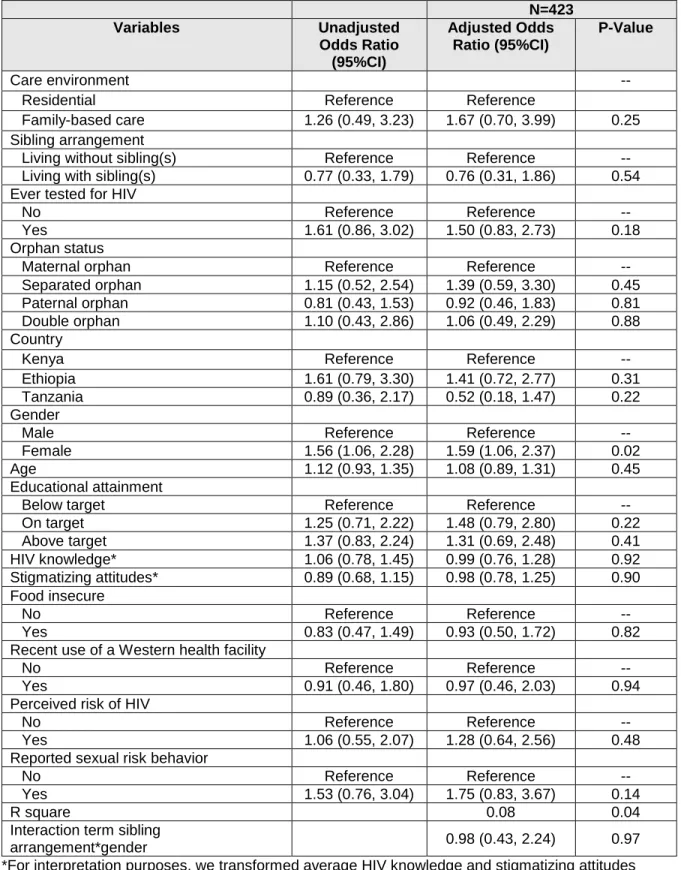
Longitudinal Multivariable Logistic Regression (Table 4) ... 61
Moderation Analysis ... 61
Discussion ... 61
Conclusion ... 66
CHAPTER 6. PAPER 2: SIBLINGS, SOCIAL SUPPORT AND HIV TESTING: LONGITUDINAL ASSOCIATIONS AMONG A COHORT OF ORPHANED AND SEPARATED YOUTH LIVING IN EASTERN SUB-SAHARAN AFRICA ... 76
Introduction ... 76
Methods ... 77
Study Design and Data Collection ... 77
Analytic Sample ... 78
Measures ... 78
Data Analysis ... 82
Results ... 82
Descriptive Analysis (Table 8) ... 82
Mediation Analysis (Tables 9-11) ... 83
Discussion ... 84
Conclusions ... 88
Tables ... 89
CHAPTER 7. SUMMARY OF THE FINDINGS, CONCLUSIONS AND RECOMMENDATIONS ... 99
Purpose of the Dissertation ... 99
Summary of the Findings ... 99
Strengths of the Dissertation Research ... 101
Target Population ... 102
Rigorously Sampled Data ... 103
Potentially Generalizable Data ... 103
Theory-based ... 103
Grounded in the Empirical Literature ... 104
Limitations of the Dissertation Research ... 104
Self-reported Data ... 104
Missing Data ... 105
Unmeasured Variables ... 105
HIV Stigmatizing Attitudes Scale ... 106
Recommendations for Future Research ... 107
Where and Under What Circumstances are OSY Testing for HIV? ... 107
Are OSY Testing More or Less than Non-OSY in Sub-Saharan Africa? ... 107
What Aspects of the Living Arrangements Impact HIV Testing?... 108
Why Were Male OSY Less Likely to Report Past-Year HIV Testing than Female OSY? ... 108
What Preferences Do OSY Have When Seeking Social Support for Health Behaviors Such as HIV Testing? ... 109
Can Increasing Perceived Social Support Enhance OSY’s Likelihood of HIV Testing? ... 109
Policy and Intervention Practice Implications ... 109
Findings Add to Current Policy Debates ... 110
Increasing Perceived Social Support Among OSY Could Be A Key Strategy for HIV Testing Interventions ... 111
Conclusion ... 113
APPENDIX A. MAPS OF POFO EAST AFRICAN STUDY SITES ... 114
APPENDIX B. ALL 16 ITEM STIGMATIZING ATTITUDES TOWARDS CHILDREN LIVING WITH HIV ... 115
APPENDIX D. SENSITIVITY ANALYSIS EXAMINING PREDICTORS OF PAST-YEAR HIV TESTING AMONG THOSE REPORTING NEVER TESTING FOR HIV AT
ROUND 10 ... 118 APPENDIX E. SENSITIVITY ANALYSIS EXAMINING PREDICTORS OF
PAST-YEAR HIV TESTING (RECODING 50 INCONSISTENCIES SUCH THAT THOSE WHO REPORTED HAVING PREVIOUSLY TESTED FOR HIV AT R10 BUT AT R11 SAID THEY HAD NEVER TESTED – ARE NOW CODED AS HAVING NEVER
TESTED AT R10) N=423 ... 119 APPENDIX F. CONCEPTUAL MODEL USED IN THE POST-HOC ANALYSIS
ASSESSING RECENT USE OF A WESTERN HEALTH FACILITY ... 120 APPENDIX G. RECENT USE OF WESTERN HEALTH FACILITIES, BY TYPE OF
FACILITY ... 121 APPENDIX H. FULL LOGISTIC REGRESSION RESULTS FOR PREDICTORS OF
RECENT USE OF A WESTERN HEALTH FACILITY AT ROUND 11 ... 122 APPENDIX I. T-TEST RESULTS OF PERCEIVED SOCIAL SUPPORT AT ROUND
10 BY GENDER (DESPITE NON-NORMALITY) ... 123 APPENDIX J. CROSSTAB BETWEEN MENTIONED SEXUAL RISK BEHAVIOR
AND PAST-YEAR HIV TESTING (UNWEIGHTED) ... 124 APPENDIX K. EXAMINING GENDER DIFFERENCES WITHIN TWO VARIABLES:
LIST OF TABLES
Table 1. Data Collection Time Points ... 39 Table 2. Confirmatory Factor Analysis Results for 9-Item Stigmatizing Attitudes
Towards Children Living with HIV ... 70 Table 3. Characteristics of the Sample of 423 OSY in Ethiopia, Kenya and Tanzania ... 71 Table 4. Outcome Variable, Past-Year HIV Testing at Round 11 ... 74 Table 5. Multivariable Longitudinal Logistic Regression Results for Predictors of
Past-Year HIV Testing at Round 11 ... 75 Table 6. MOS Perceived Social Support Scale Items ... 89 Table 7. Confirmatory Factor Analysis Results for 9-Item Stigmatizing Attitudes
Towards Children Living with HIV ... 90 Table 8. Characteristics of the Sample of 423 Orphaned and Separated Youth Living
in Ethiopia, Kenya or Tanzania ... 91 Table 9. Linear Regression of Perceived Social Support on Key Predictor Variables
and Covariates... 94 Table 10. Logistic Regression of Past-Year HIV Testing on the Mediator and
Covariates ... 95 Table 11. Decomposition of Effects of Sibling Arrangements on Past-Year HIV
LIST OF FIGURES
Figure 1. Conceptual Model for Aim 1 ... 29
Figure 2. Conceptual Model for Aim 2 ... 31
Figure 3. Conceptual Model for Aim 3 ... 33
Figure 4. Mediation Model ... 49
Figure 5. Analytic Sample ... 68
Figure 6. List of Measures Organized by BMVP Factors ... 69
LIST OF ABBREVIATIONS ANC Antenatal Care
ANOVA Analysis of Variance ART Antiretroviral Therapy
BMVP Behavioral Model for Vulnerable Populations CFA Confirmatory Factor Analysis
CFI Comparative Fit Index CI Confidence Interval DEFF Design Effect
DHS Demographic and Health Survey GEE Generalized Estimating Equations HTC HIV Testing and Counseling KAIS Kenya AIDS Indicator Surveys KR20 Krudder Richardson 20 MARP Most At-Risk Populations MI Multiple Imputation
ML Maximum Likelihood
MTCT Maternal-To-Child Transmission
NICHD National Institute of Child Health and Human Development
OR Odds Ratio
OSC Orphans and separated children OSY Orphans and separated youth
PITC Provider Initiated Testing and Counseling POFO Positive Outcomes for Orphans
RMSEA Root Mean Square Error of Approximation SSA Sub-Saharan Africa
TLI Tucker Lewis Index
UNAIDS Joint United Nations Programme on HIV/AIDS WHO World Health Organization
CHAPTER 1. INTRODUCTION Overview
Orphaned and separated children are children under the age of 18 who have lost or are permanently separated from one or both parents.1 There are an estimated 153 million orphaned and separated children throughout the world, the majority of whom live in countries simultaneously burdened by high HIV prevalence.2 As policymakers struggle with how best to care for these
children,1 increasingly researchers have been exploring how the contexts in which orphans live shape their health outcomes.3,4 These contexts include the care environment (whether orphans live in residential or family-based care)3–5 and whether they live with siblings.6,7 Moreover, although much attention has focused on the needs of orphaned children, researchers have recently called attention to the importance of addressing the needs of orphans as they develop into youth, ages 15-24.8
Globally, HIV is a leading cause of death among youth, particularly in Sub-Saharan Africa (SSA).9,10 Additionally, studies have shown orphaned and separated youth (OSY) have higher rates of HIV risk behavior and twice the odds of HIV infection compared to non-orphaned youth.11 Higher levels of psychosocial,8,12–15 economic,12,16,17 and educational11,17–20 disadvantages among OSY are thought to be some of the reasons why they are at greater risk for HIV. Studies have also shown an orphan’s care environment is associated with their sexual HIV risk behavior. Specifically, orphans living in family-based care have been found to engage in higher rates of sexual risk behavior than those in residential care.15,21
likely to test for HIV than non-OSY.6 Given that OSY have higher levels of HIV risk but are less likely to test for HIV than non-OSY, it is important to understand any unique or additional barriers to HIV testing that OSY encounter which may lead to these higher rates. Yet, unlike in research examining sexual risk behavior, the extent to which the circumstances in which orphans live are predictive of HIV testing remains largely unknown. However, one single-country cross-sectional study from Malawi identified that living with siblings was associated with testing for female youth, including orphaned youth.6
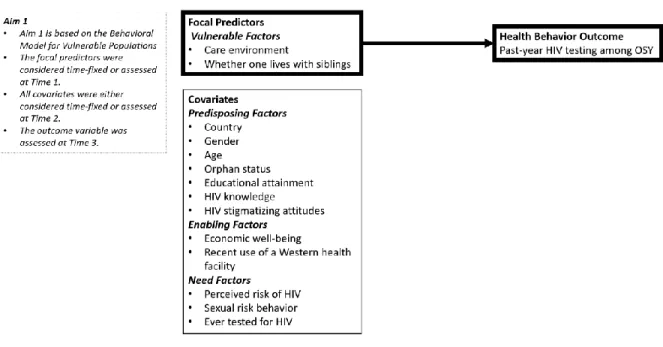
Drawing from the Behavioral Model for Vulnerable Populations (BMVP), an established conceptual framework for understanding utilization of health services, Aim 1 of this dissertation examines the extent to which orphan-specific contexts are longitudinally predictive of HIV testing. The BMVP suggests individuals seek health services as a result of factors that predispose and enable them to do so, and as a result of their perceived and experienced need for the services.23 Application of the BMVP offers an opportunity to examine whether orphan-specific living arrangements (their care environment and whether they live with siblings) predict HIV testing, after controlling for other
predictors that have been theoretically and empirically identified with testing among general populations of youth in Sub-Saharan Africa.
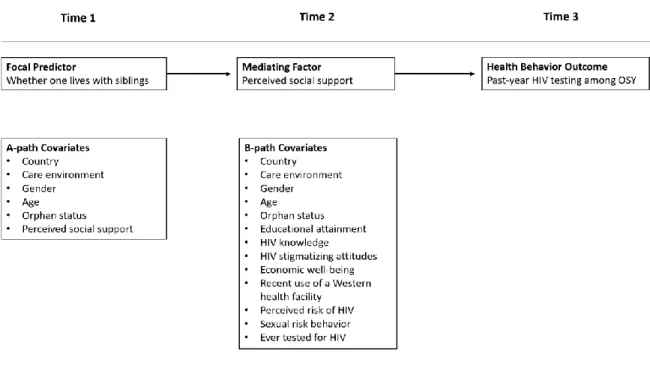
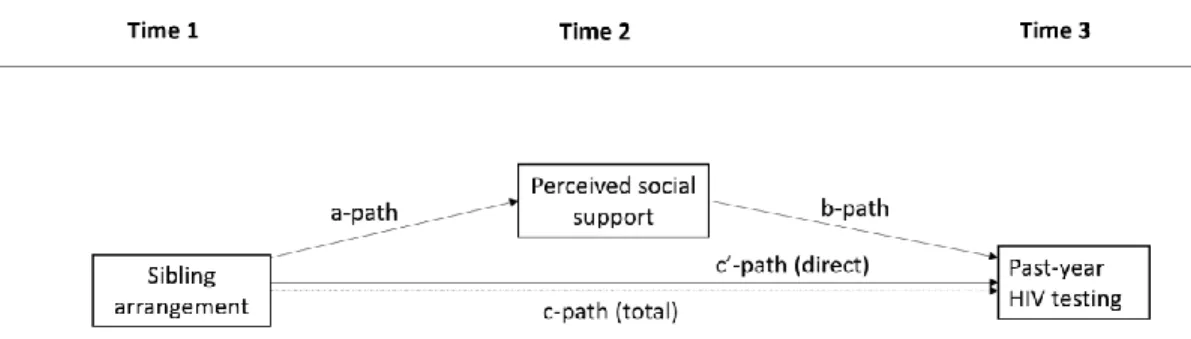
Aim 2 of this dissertation employs the Life Span Perspective of Perceived Support24 to examine whether perceived social support among OSY mediates a fully longitudinal relationship between living with siblings and HIV testing. This perspective suggests an individual’s early family environment influences their perceived social support, which in turn, influences health behaviors, such as HIV testing.24 In global settings, living with siblings has been identified as having a positive impact on the lives of orphaned and fostered youth.7,25 Moreover, studies have shown that orphaned youth who live with siblings reported higher levels of perceived social support than those who did not live with siblings26 and that siblings are the most consistent source of social support for orphans.27 Furthermore, perceived social support has been shown to predict HIV testing among other
Aim 3 of this dissertation employs both Gender Socialization Theory and Stages of
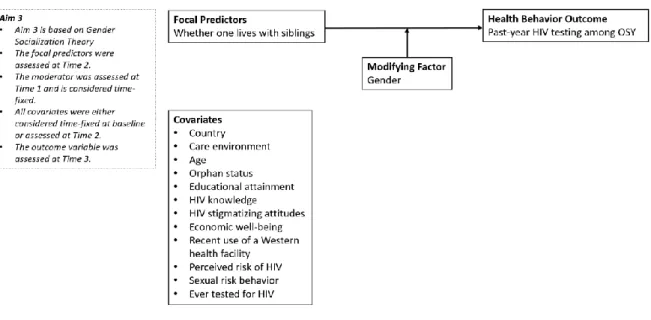
Psychosocial Development which, together with traditional male gender norms, suggest gender may moderate the associations between certain predictors and HIV testing. Gender Socialization Theory suggests the period during adolescence and early youth is a critical time when gendered behaviors and attitudes are formed that can shape health outcomes; this includes health-seeking behaviors, such as HIV testing.31–33 Similarly, Stages of Psychosocial Development postulates the period of adolescence and early youth is the time when individuals experiment with their identity and role in society.34 Studies have shown that in areas with pervasive traditional male gender norms, boys are often socialized to avoid health-seeking behavior, such as attending a clinic for HIV testing.35 Moreover, previous studies have found differences in HIV testing rates between female and male youth, with girls testing at higher rates than boys; yet, few studies have examined the extent to which predictors of HIV testing are moderated by gender.6,36–38 Previous studies have, however,
acknowledged relationship differences between boys and girls, with girls being more likely to draw on support from dyadic relationships, such as relationships with siblings.39 Aim 3 of the proposed
dissertation will build on previous research to examine whether gender moderates the longitudinal relationship between living with siblings and HIV testing among OSY.6
Overall, using three points of longitudinal data from a cohort of orphaned youth living in Ethiopia, Kenya or Tanzania, this secondary analysis explores the extent to which, and mechanisms by which, orphan-specific living arrangements (their care environment and whether they live with siblings) predict HIV testing among 423 HIV-negative OSY (aged 14-19 at time 1). Together, findings from these analyses can inform future HIV testing interventions and policies for OSY in SSA. Data come from the ongoing NICHD-funded (R01HD046345-04) Positive Outcomes for Orphans (POFO)
study.3
Aims of this Dissertation Research
Aim 1: Identify the extent to which orphan-specific living arrangements (their care
Aim 2: Examine whether perceived social support at Time 2 mediates a positive relationship between living with siblings at Time 1 and past-year HIV testing at Time 3 among OSY. Aim 3: Explore whether the relationship between living with siblings at Time 1 and past-year HIV testing at Time 3 varies by gender among OSY.
Significance of this Dissertation Research
HIV testing has population-level benefits by reducing the spread of HIV and by leading to enhanced treatment-as-prevention.40 But it also has individual-level benefits, such as providing individuals with knowledge about their HIV status and, for those who test positive, linking them to clinical care for improved quality of life.41 Globally, OSY are recognized as a substantial and vulnerable population at increased risk of HIV, yet evidence indicates they are less likely to test for HIV than their non-orphaned peers. Moreover, little is known about factors that drive HIV-testing behavior among this higher-risk group, though research suggests that their care environment and whether they live with siblings may be important contributing factors. These variables are of particular interest, as they can be improved through policy changes, and can enhance scientific understanding of how the living arrangements of orphans might affect their health-seeking behaviors.
Results from the multivariable logistic regression analysis in Aim 1 help to inform the extent to which these orphan-specific contexts should be considered when developing HIV testing or health service utilization interventions for OSY in SSA. Similarly, the fully longitudinal mediation analysis in Aim 2 was designed so that its results could potentially enhance testing interventions for this
population by identifying a possible mechanism (perceived social support) through which the effect of living with siblings influences HIV testing; as such, this phenomenon could be targeted in future interventions. Finally, results from the simple moderation analysis in Aim 3 are informative for identifying whether HIV testing interventions would benefit from including gender-specific components.
Dissertation Structure
that HIV testing plays in HIV prevention, as well as HIV testing policies, and the gaps in testing that exist among youth and orphaned youth. As a whole, the review provides rationale for the dissertation analyses to understand HIV testing influences among OSY by showing the extent of the problem among youth in SSA and the tremendous potential to reduce HIV spread by better understanding barriers and facilitators to HIV testing for this population.
In Chapter 3, I describe the theoretical frameworks that shaped my analyses: The Behavioral Model for Vulnerable Populations; the Life Span Perspective of Perceived Support; and elements of developmental psychology (Gender Socialization Theory, and Stages of Psychosocial Development). I also present my conceptual model. In Chapter 4, I present the study methods, including a
CHAPTER 2. BACKGROUND AND LITERATURE REVIEW Overview of the Literature Review
To identify key gaps in the literature that could inform future interventions and provide rationale for the analyses carried out in this dissertation, I have conducted the following literature review. First, I briefly examine HIV prevalence and incidence globally and note the increased rates in SSA. I then examine how youth are disproportionately affected by HIV in SSA and, more specifically, in the three focal countries of Ethiopia, Kenya and Tanzania. I introduce the topic of orphaned and separated youth in SSA and explore how their unique situations place them at increased risk of HIV compared to their non-orphaned peers. Next, I examine the benefits of HIV testing, noting a lack of comprehensive information about HIV testing rates among youth in SSA, and in the three focal countries. Finally, as there are few studies of HIV testing among OSY specifically, I draw from the literature of adolescents (aged 15-19) and youth (aged 15-24) in SSA more generally to identify known barriers and facilitators to HIV testing, and I explore evidence regarding whether such factors might differ for OSY. I present this information in accordance with the Behavioral Model for
Vulnerable Populations (BMVP), a theory used to explain the health-seeking behavior of vulnerable individuals.23 Additional details of this theory are described in Chapter 4. I conclude with a brief summary illustrating how OSY are a population at increased risk of HIV though they may not be testing as frequently as non-orphaned youth, and how research has yet to provide sufficient information that could be used to develop HIV testing interventions for OSY.
HIV Prevalence, Incidence & Key Populations
HIV Prevalence Globally and Regionally
Despite global progress in the fight against HIV/AIDS, the disease remains a substantial global public health concern. In 2016, an estimated 36.7 million people were living with HIV.
endemic heterosexual transmission.42 Youth make up a large proportion of the population in SSA and simultaneously are more affected by HIV than any other age group. In 2013, Ethiopia, Kenya and Tanzania, each, accounted for an estimated 7% of all adolescents (aged 15-19) globally living with the virus.43 Of note, across the region, female youth aged 15-24 years are at greater risk of HIV than their male counterparts.44
Below, I provide specific epidemiologic information related to the three focal countries of this proposal: Ethiopia, Kenya and Tanzania (see Appendix A for maps). However, due to country-specific data collection techniques, it is often difficult to compare statistics across countries. Nevertheless, in an effort to streamline results, I have largely pulled information from the latest progress reports, prepared in March of 2014, by each country in accordance with the United Nations (UN) Declaration of Commitment on HIV/AIDS. I have also consulted the latest Demographic and Health Surveys (DHS) for each country. From these documents, I have gleaned data related to each country’s epidemic, including HIV prevalence, rates of maternal-to-child transmission (MTCT), and information related to key and priority populations. Key populations for HIV testing, according to the World Health Organization, are “groups who, due to specific higher-risk behaviors, are at increased risk for HIV
irrespective of the epidemic type or local context.”45 These include “men who have sex with men, people who inject drugs, people in prisons and other closed settings, sex workers and transgender people.”45 In contrast, priority populations are those deemed at higher-risk than the general public
within a specific epidemic or local context. In many countries, youth and orphans are identified as priority populations.
HIV Prevalence in Ethiopia
reports that it has increased efforts to reduce MTCT, in 2013 there were an estimated 200,300 children and adolescents under the age of 15 living with HIV, the majority of whom are believed to have acquired the virus through perinatal infection; this was roughly 25% of all people living with HIV in Ethiopia at the time.46
Key populations, according to the Ethiopian Progress Report, “have not been monitored over time or well defined,” resulting in a lack of empirical data related to these high prevalence groups.46 Nevertheless, in their HIV prevention package for most at risk populations, the Ethiopian Federal HIV Prevention and Control Office has identified a mix of key and priority populations: female sex workers, long distance truck drivers, uniformed services, prison inmates, and notably, in-school youth, aged 15-24.46
HIV Prevalence in Kenya
In Kenya, the HIV epidemic is simultaneously generalized throughout the country and also highly concentrated among key populations, most notably: sex workers and their clients; men who have sex with men; and people who inject drugs.48 Estimates based on three different surveys (the Demographic and Health Survey (2003 and 2008/9), AIDS Indicator Surveys (KAIS 2007 and 2012) and Antenatal Clinic (ANC) Sentinel Surveillance) suggest that the HIV prevalence among individuals aged 15-49 was 5.6% in 2012.48-49 However, wide regional variation is evident with prevalence estimates in 2012 of 0.2% in the northeastern Wajir county to 27.1% in the western county of Homa Bay.
In 2015, youth aged 15-24 accounted for 51% of all new infections throughout Kenya, and the odds of infection among female youth was approximately double the odds among male youth.50 The prevalence of MTCT decreased from 16% of all live births among HIV positive mothers in 2012, to 8.3% in 2015.50
In contrast to the response in Ethiopia, the Kenyan government has historically been highly proactive in fighting the HIV epidemic, most recently launching their Prevention Revolution Roadmap to End New HIV Infections by 2030, a document that clearly defines and targets all globally
government has defined adolescent girls and young women as priority populations for HIV prevention.52
HIV Prevalence in Tanzania
The HIV epidemic in Tanzania is predominantly categorized as one with wide “geographical and population variability.” 53 Country-level prevalence in 2014 was estimated to be 5.3% among individuals aged 15-49, though estimates ranged from 1.5% in the administrative region of Manyara to 14.8% in the Njombe region.53 Of note, The United Republic of Tanzania consists of the Tanzanian mainland as well as the semi-autonomous archipelago of Zanzibar, where, in contrast to heterosexual transmission, HIV transmission is largely concentrated among people who inject drugs.53
Among youth aged 15-24, the HIV prevalence in Tanzania was estimated to be about 2% in 2012.53 Yet, across the country, like in Kenya and Ethiopia, female youth are disproportionately affected by HIV; in 2014 the prevalence estimate of 6.6% among female youth aged 23-24 was nearly three times the prevalence estimated among their male counterparts.53 Moreover, in 2014, MTCT was thought to account for 18% of all existing HIV infections.53 And third, the Tanzanian government has chosen to focus their HIV prevention efforts heavily on the globally recognized key populations, as the progress report and additional documents, unlike Ethiopia and Kenya, do not specifically call out other priority populations.
In summary, HIV prevalence among youth and adults over the age of 15 ranges from less than 2% in Ethiopia to over 5% in Kenya and Tanzania. Moreover, while Ethiopia is described as having a concentrated HIV epidemic, both Kenya and Tanzania have generalized epidemics. Efforts to target key and priority populations vary somewhat among the three countries. Nevertheless, all three countries have noted that youth and, in particular, female youth, remain at elevated risk for HIV. Moreover, despite advancements towards the elimination of MTCT of HIV, perinatal infection
continues to be a phenomenon in Ethiopia, Kenya and Tanzania that contributes to the number of orphans who may be living with HIV.
Importance of Youth in the Global HIV Epidemic
guidance for HIV testing.45 Adolescence is characterized as a period of transition to adulthood. During this time, individuals are more likely to engage in risky behavior, including sexual risk behavior and experimentation with alcohol and drugs. Furthermore, they do so with a sense of invulnerability, and often under the lure of negative peer pressure.54 But these behaviors can also set in motion habits that are likely to affect their health for years to come.54,55 Although the global literature has historically defined adolescents as children aged 10-18, the decision-making portion of a human brain is not fully mature until the age of 25; therefore youth under the age of 25 are increasingly, and interchangeably, being thought of as adolescents and /or youth by researchers and practioners.56 The increasing population size of youth across SSA, often known as the “youth bulge,”57,58 makes them an important target group within the HIV care continuum (that is the steps—e.g. diagnosis, linkage to care, antiretroviral treatment—that each individual living with HIV must pass through to achieve viral suppression and hence avoid passing HIV to others), and prevention services, such as HIV testing.43 Moreover, because orphaned youth are at even greater risk than their non-orphaned peers, they are an important population to target for improving HIV testing and prevention service delivery.
To put this dissertation into context, the following section provides more detailed information about orphans, including the estimated prevalence of orphans throughout SSA, their unique
vulnerabilities and their likelihood of HIV acquisition. As noted previously, most of the published literature about orphans has focused on orphaned and vulnerable children rather than orphaned and separated youth.
Orphaned, Separated, and Vulnerable Children
Definitions of Orphaned, Separated and Vulnerable Children
necessities for them, or a need to seek employment elsewhere.3,62 Throughout this dissertation, I refer to orphans and orphaned and separated youth (OSY) interchangeably.
Vulnerable children, on the other hand, are children, also under the age of 18, who are “at risk of or currently lacking adequate care and protection.”63 In light of the HIV epidemic, the term “vulnerable children” has been used not only to characterize children whose parents are living with HIV, but also children who are living in homes where any adult is chronically ill or has recently died.64,65 Broader definitions of vulnerable children are also used by some researchers and policymakers. These definitions aim to highlight the material and emotional vulnerability some children face, and can extend to include a lack of social support, experiences of extreme poverty, regional conflict and/or exploitations.61,66 Because the definitions by which children are considered vulnerable vary from context to context, it is important for interventionists and policymakers to investigate the definition used in each study or setting to best understand its implications.
Global and Regional Prevalence of Orphans
Globally, there are an estimated 153 million orphans, though the number is highest in countries also suffering from high HIV prevalence and/or countries that have recently experienced armed conflict.1,2 In SSA, there are an estimated 34 million orphans, more than 11 million of whom are children and adolescents who were orphaned by HIV or AIDS.59,1
Prevalence of Orphans in Ethiopia
In Ethiopia, there are an estimated 5 million orphans, of whom 1.5 million are thought to be orphaned from HIV or AIDS.59,67 These 5 million orphans represent roughly 8% of all youth under the age of 24 in Ethiopia.68 In fact, the government of Ethiopia has recognized “orphanhood” as one of the most important aspects of the HIV epidemic, as many children have been orphaned as a result of their parents dying from HIV or AIDS.46 Not only does orphanhood leave children and youth
vulnerable at a critical time of development, but recent empirical data from nearly 100,000
households in Ethiopia found 11.9% of orphans under the age of 18 were living with HIV, suggesting that HIV prevalence among orphans in Ethiopia is more than 10 times that among the general
Prevalence of Orphans in Kenya
In 2013, there were an estimated 2.5 million orphans in Kenya, nearly half of whom were thought to be orphaned from HIV or AIDS.48 These estimates suggest that 1 in 10 children under the age of 18 is orphaned in Kenya.70 Similar to Ethiopia, the government of Kenya has recognized the severity of the growing number of orphaned and separated children in the country. In their response to the HIV epidemic, the past and most recent Kenya AIDS Strategic Frameworks have identified orphans as an important population, with funding allocated to improve the “educational, economic, and social support” of orphans, efforts which are aimed to also help reduce HIV risk.64,71 More specifically, Kenya’s AIDS Response Progress Report (2014) suggests that 8% of the country’s total HIV expenditure from 2009-2013 was targeted for care and support services to assist orphans and children made vulnerable from HIV.48
Prevalence of Orphans in Tanzania
More than 2 million children in Tanzania are considered orphaned; this is 5% of all Tanzanian children.53 Half of these children are thought to be orphaned from HIV or AIDS,72 and, unfortunately, the number is on the rise.53 As such, Tanzania has a National Costed Plan of Action that identifies goals for increasing funding for vulnerable children, including orphaned and separated children. However, though the report indicates that Tanzania had planned to increase funding for vulnerable children to approximately $210 million US dollars in 2017, it is unclear what proportion was
designated for HIV prevention and treatment services. Also unclear is whether the plan was achieved, as an updated report has yet to be published.73
In summary, in each of these three countries, there are increasingly large numbers of OSC. In both Kenya and Tanzania, roughly half of all orphans are thought to be orphaned due to HIV or AIDS; in Ethiopia, however, this proportion is somewhat lower. Nevertheless, each of the
Vulnerabilities among Orphans and Separated Children and Youth
A number of factors contribute to the overall vulnerability of orphans for health and wellbeing. For example, watching a parent suffer and die from illness can have detrimental life-long
consequences.1 Among those with siblings, being separated from a sibling after the death or separation from a parent can further compound poor mental health and behavioral outcomes.7,25 Moreover, among those with limited resources, some survival strategies “such as eating less and selling assets, can intensify the vulnerability of both children and youth.”59 A systematic review and meta-analysis conducted in 2011 revealed associations between orphan status and poor educational, mental health and economic outcomes.11 Since then, researchers have continued to find associations between orphans and mental health and economic hardships.14,74 Nutritional deficits among orphans have also been identified.66,75 These vulnerabilities may vary by gender and orphan type, with female, double-orphans (orphans who have lost both parents) most severely affected.76 In a more recent systematic review, researchers identified potential contributing factors to the vulnerabilities faced specifically by youth orphaned through parental HIV: stressful life events, including separation from siblings, stigma and poverty were associated with having more, and more severe, vulnerabilities. However, they also identified potential resilience factors, including coping skills, trusting relationships with caregivers, and social support that provided protection from poor psychological health
outcomes.77
Policymakers and researchers alike are increasingly interested in the effect of an orphan’s care environment, including residential or family-based care, on their overall health and wellbeing.3– 5,21 Much of this interest originated with data from the 1990s, largely out of Romania and Russia, which revealed orphans in residential care (or institutions) had significantly worse health and
wellbeing outcomes compared to orphans in family-based care; outcomes included delayed physical and emotional development as well as challenges among orphans to create appropriate attachments with their caregivers due to the “structural neglect” imposed by a high turnover of staff and low staff to orphan ratios. These findings resulted in a view that residential care should, universally, be
challenged this view, noting that in some cases, orphans living in residential care have much better health outcomes than those living in family-based care.3,4 This is particularly true in economically strained areas, where families are less able to provide basic needs for orphans than residential care centers. For example, in SSA, where the vast majority of orphans are cared for by family-based care, through support from extended families and other informal networks,80 recent data have indicated residential care can have a protective effect against orphans engaging in transactional sex and other sexual HIV risk behaviors,21 though it is unknown whether the care environment influences one’s HIV protective behavior as well.
Furthermore, it should be noted that policymakers and researchers have had an increasing interest in examining the effect that living with siblings might play on reducing the vulnerabilities faced by orphaned youth.7,25–27,81 Policies in the United States,82 based largely on research conducted among fostered youth, strive to keep siblings together, as living with siblings has been found to protect orphans against poor mental health outcomes.25 In contrast to the United States, however, the effect that living with siblings has on health outcomes among orphans in SSA is largely under-studied. It has been noted, however, that financial and practical challenges related to caring for orphans commonly results in the separation of orphaned siblings in Kenya,7 and similar findings have been noted for Tanzania.83 Despite this, siblings have been identified as a primary source of social support for orphans in SSA,27 and orphans who live with siblings report higher levels of perceived social support than those who don’t live with siblings.26 Results are mixed, however, regarding the effect of living with siblings on health outcomes in SSA. For example, researchers found that living with siblings did not reduce psychological distress among orphaned youth in Zimbabwe,81 though living with siblings was associated with HIV testing among female youth, including female orphans, in Malawi.6
HIV Infection among Orphaned and Separated Children and Youth
HIV Prevalence and Acquisition among OSC
countries (11 in SSA) found that HIV sero-prevalence was significantly higher among orphans (10.8%) as compared with non-orphans (5.9%) (OR= 1.97; 95%CI=1.41-2.75).11 However, data are mixed regarding whether the high HIV prevalence among orphaned youth is largely due to late diagnoses of perinatal acquisition or risky sexual behavior.
Vertically Acquired versus Sexually Acquired HIV
Some researchers report evidence of an epidemic of older survivors of MTCT in SSA.69,84– 86,88 Though previously it was not thought possible that perinatally-infected children could survive into adolescence without appropriate medical intervention,11 some data now indicate that this may not actually be the case.85,88 Most recently, evidence from a review of Demographic and Health Survey (DHS) data from 17 countries across SSA suggested a direct relationship between adolescent maternal orphans and HIV infection (odds ratio [OR]: 2.45; 95% confidence interval [CI]: 1.72-3.51 for female orphans and OR: 2.45; 95% CI: 1.53-3.90 for male orphans), whereas associations between orphan status (maternal, paternal and/or double) and other sexually transmitted diseases was not found to be significant.89 The authors interpreted these findings to indicate that many of these adolescent orphans likely were slow-progressors, that is, individuals who had been perinatally infected but had remained undiagnosed into adolescence. As also noted by researchers and global advocates, failure to recognize the potential for slow-progressors means that the clinical needs of these adolescents are not being met, and improved HIV diagnostics and care are desperately needed.69,86 As such, researchers are currently arguing for the importance of HIV testing for all adolescents, regardless of sexual behavior.89
Nevertheless, the existing evidence that orphaned youth in SSA are also at increased risk of engaging in sexual HIV risk behavior, as compared with non-orphaned youth, is also quite
significantly more likely to have ever had sex than non-orphans in Burkina Faso, Ghana and Malawi.91
In summary, regardless of the means of potential acquisition, substantial empirical evidence indicates that orphaned youth would benefit from HIV testing.95 The following section explains why HIV testing is important, by describing its specific benefits. It also provides information about global and country-specific testing policies.
HIV Testing as a Key Component of HIV Prevention
Global HIV Testing Benefits
Prior to availability of affordable, quality antiretroviral therapy (ART) to treat HIV, HIV testing was not widely promoted. However, with increasing access to ART, efforts to increase HIV testing have gained substantial traction. In fact, the WHO and UNAIDS have recently stated that “HIV testing services are an essential gateway to HIV prevention, treatment, care and support services”.22 Those who test positive can be linked to clinical care and appropriate ART. Linkage to care results not only in individual-level health benefits, but also in population-level benefits,22 as early and sustained ART have been shown to improve the health and prolong the lives of individuals living with HIV, and also to reduce the likelihood of forward transmission when viral suppression is achieved.40 For those who test negative, the results, as well as the process of testing and counseling, can assist individuals in making informed decisions about their sexual health to avoid potential HIV acquisition in the future. Moreover, voluntary HIV testing and counseling (HTC) has been shown to foster ongoing HIV prevention behavior.96,97 Unfortunately, however, uptake of HIV testing and knowledge of HIV sero-status, globally, remain low.22
Global HIV Testing Approaches and Policies
Despite this, in 2016 there were still an estimated 30% of individuals living with HIV who were unaware of their seropositive status.22
The WHO and UNAIDS are both committed to increasing the number of individuals
presenting for HIV testing and repeat testing throughout the world. Current technologies enable HIV testing to be conducted using a variety of approaches: “facility-based, community-based, self-testing, and voluntary partner notification”.22 These approaches have greatly diversified across SSA since 2010, when provider-initiated testing and counseling (PITC) was first promoted and 42 African countries adopted their own PITC policies.100 Initially, PITC was primarily offered to pregnant women and infants of HIV-positive mothers, though the success of implementation varied.100 More recently, the diversification of HIV testing approaches beyond those that are only provider-initiated (such as self-testing) makes it easier for individuals to know their status, and to check it more frequently.
To achieve the goal that 90% of HIV-infected individuals know their status, repeat testing is recommended in SSA every one to three years for individuals at lower risk of infection, every year for those with higher risk behaviors, and every three to six months for key populations at highest risk of infection.22,101
Youth and Orphan-specific HIV Testing Approaches
Youth-friendly HIV Testing Services
HIV Testing Guidelines for Orphans
Although there is wide variation in the categorization of orphaned and vulnerable youth, all three countries in this dissertation do endorse specific guidelines for HIV-testing among this
population. The HIV testing guidelines in Ethiopia suggest the rising number of orphans is a result of the HIV epidemic and list orphans and vulnerable children under the legal age of consent as one of the eligible groups for opt-out provider initiated testing and counseling.103 In Kenya, the 2015 guidelines call for the need to test all orphans and vulnerable children, but they do not specify mechanisms to enhance testing in this group.52 And finally, in Tanzania, the most recent guidelines dedicate a section to orphans and vulnerable children, stating: 1) they should have access to HIV testing and treatment as appropriate; 2) they should not be forced to test for HIV, “but shall be supported to do so when it is in their best interest, i.e. for their own health”; and 3) guardians should be encouraged to talk to orphans and vulnerable children about HIV testing, as well as care and treatment in “an age-appropriate manner”.102 While all three countries recommend orphans test for HIV, very little research has been conducted to identify strategies for delivering HIV testing
interventions to orphans in various living contexts.
Legal Age of Consent for HIV Testing
In Ethiopia, the legal age for HIV testing without needing consent from a parent or guardian is 15, though those meeting the definition of “mature minors” aged 13-14 can also test without parental consent. Mature minors in Ethiopia are defined as “children aged 13-14, who are married, pregnant, street children, heads of families, sexually active or commercial sex workers.”103 In Kenya, the legal age for testing without parental/guardian consent is also 15, and exceptions are similarly provided for “emancipated minors” under the age of 15.52 In Tanzania, however, the guidelines are not quite as clear. Adolescents under the age of 18 are encouraged to have a parent or guardian present to “ease disclosure and provide support”, though it also appears to be up to the discretion of the provider for adolescents under the age of 18 to provide their own consent if they report being sexually active or are otherwise considered at risk of HIV.102
contexts. However, as seen in the next section, these country-specific efforts have not been enough to achieve universal uptake of HIV testing, particularly among youth. The next section provides more detailed information related to HIV testing among youth aged 15-24, documenting the continued need to better understand barriers and facilitators that might affect testing rates. Data are provided globally, regionally and by country.
HIV Testing Rates among Youth
Global and Regional HIV Testing Rates among Youth
Globally, although comprehensive HIV testing data for youth are lacking, the general
consensus is that testing rates among youth remain much lower than among adults.104 Some studies suggest only about 10-15% of male and female youth aged 15-24, respectively, have ever tested for HIV.6,104 As a result of low estimates such as these, in 2015, UNAIDS and other global entities
created the social change campaign entitled “All In to #EndAdolescentAIDS.” Among other things, the campaign promotes HIV testing of adolescents and youth.98
In SSA, where youth are disproportionately affected by HIV, results from two separate systematic reviews of HIV testing among youth also indicate that HIV testing is low, though not as low as in other regions of the world.95,100 A study conducted with DHS data from four countries found that only 36.5% of youth aged 15-24 had ever tested for HIV.55 And in a separate study conducted in South Africa, similar rates were found for female youth age 15-24 (32.7%), though testing rates among male youth were lower (17.7%).36 Having higher rates among female youth, however, is not unexpected as young women are more likely to have engaged with the health system through services for family planning, maternal health or antenatal care105 and traditional male gender norms are thought to discourage health seeking behavior among men.35 Moreover, a study conducted among undergraduates in Nigeria found that young women reported a higher willingness to test for HIV than their male counterparts.106
and testing rates for orphans in each of these three countries are largely unknown. The following sections provide a snapshot of what is known in each of the three focal countries.
HIV Testing among Youth in Ethiopia, Kenya and Tanzania
According to the most recent DHS data in Ethiopia (2016), an estimated 34.1% of female youth aged 15-24 have ever tested for HIV and received the results, whereas for male youth, this estimate was 28.9%.110 Results from a 2017 study among university students were slightly better, with an estimated 48% of respondents having ever tested for HIV.111
The most recent DHS data from Kenya (2014) suggests that HIV testing may be more ubiquitous than in many other Sub-Saharan African countries, with substantial progress being made towards their goal of having universal access to HIV testing.108,112 Among female youth aged 15-24, an estimated 70.4% had ever tested for HIV and received the results. Rates were lower, however, among male youth (56.6%).112
In Tanzania, the most recent DHS does not provide any HIV-related information and the most recent HIV/AIDS and Malaria Indicator survey (2011-2012) does not provide youth-specific
information on previous HIV testing.113,114 The 2010 DHS, however, does provide some estimates. Among a sub-sample of youth aged 15-25 who reported sexual intercourse in the twelve months prior to the survey, 39% of girls and 25% of boys had tested for HIV and received their results.115
Furthermore, a 2015 study conducted among Tanzanian secondary students in Arusha, found that 29.3% of the 400 participants had ever tested for HIV and received the results.116
In summary, while it is clear that youth, particularly orphaned youth in SSA, are at increased risk of HIV, there is very little information about their HIV testing rates. The information we do have, indicates a potential need to increase HIV testing uptake among these individuals.
Barriers and Facilitators of HIV Testing among Youth
there is little known about the HIV testing of OSY, the following section explores the empirical
literature for factors found to be associated with HIV testing among youth, generally, throughout SSA, and where possible, in the three focal countries of Ethiopia, Kenya and Tanzania.
I have organized the findings in accordance with the Behavioral Model for Vulnerable Populations (BMVP),23 an extension of the 1970’s version: The Behavioral Model.117 Both of these models suggest health care utilization is “a function of a predisposition by people to use health services, factors that enable or impede use, and people’s need for care”.23 I have provided more detail about the BMVP model in Chapter 3 but introduce it briefly here to explain the structure around which I have organized findings from the available literature.
Predisposition for Youth in SSA to Test for HIV
This domain, according to the BMVP comprises demographic characteristics, as well as health beliefs, knowledge, attitudes and social structure. In general, demographic factors are often what researchers first turn to as a means to help explain health care utilization. An in-depth look at the empirical literature reveals that these factors are also associated with HIV testing among youth in SSA. For example, numerous studies have demonstrated that older youth are more likely to test for HIV than younger youth.55,101,106,110,118–121 Some authors suggest this may pertain to age-related legal barriers that have discouraged younger youth from accessing services independently of a parent or guardian. Moreover, studies have also repeatedly shown that female youth are more likely to test for HIV than their male counterparts.55,118,119,121–123 As noted previously, this is often thought to be
In addition to the predisposing demographic factors, multiple studies have shown that the predisposing psychosocial factors, such as health beliefs, knowledge, attitudes and social structure also explain HIV testing among youth in SSA. For example, youth with greater or more
comprehensive knowledge of HIV are more likely to test than youth with less comprehensive
knowledge.6,37,97,106,119 Youth who have more positive attitudes towards HIV testing,104,123 who simply want to know their status,124,125 or perceive it to be important to know their status,86,111,120 are more likely to test for HIV than those who do not have such feelings. Conversely, numerous studies have revealed that youth who fear the results of their HIV test, or who fear stigma associated with HIV testing and an HIV diagnosis, are less likely to test than those who do not have such
fears.56,100,111,120,122,124,126–129 Youth who report knowing someone who has died of HIV36,123 are also likely to test for HIV than youth who do not report knowing someone who has died of HIV. And some researchers have shown that youth who have greater parental attachments (something that could have implications for orphaned youth) are more likely to test for HIV than those who report lower levels of attachment.130 Finally, as previously mentioned, orphans are less likely to test for HIV than non-orphans.6
Factors that Impede or Enable HIV Testing among Youth in SSA
The BMVP defines enabling factors as those that are largely related to resources of the individual, family or community that facilitate or hinder health care utilization; these resources are described as being either economic or social.23 The empirical literature reveals youth in SSA who live closer to HIV testing facilities are more likely to test than those who need to travel greater distances to access the same services.97,116,121,123,131 Similarly, some researchers indicate youth who have been offered an HIV test by a health care provider,118,120 and youth who know they have the ability to access HIV treatment if they test positive,132 are more likely to test than those who have not been offered a test or do not feel they can access treatment.
Studies also indicate youth may turn to their family members and peers for support and affirmation before testing for HIV.125,133 As noted previously, living with siblings has been shown to be associated with HIV testing among female youth.6 Studies also reveal that youth who report
of female youth.36,97,104,119 Conversely, however, other researchers have found that female youth who report having greater trust in their relationship with their sexual partner are less likely to test for HIV than those who report not having as much trust in the relationship.104,127,134 And finally, some researchers note that youth with greater economic resources are more likely to test for HIV than those with fewer economic resources.129
Perceived and Evaluated Need for HIV Testing Services among Youth in SSA
The BMVP need factors are divided into “self-perceptions (perceived need) and objective evaluations (evaluated need)” that are relevant to a particular vulnerable population.23 Researchers have often found that youth who perceive themselves to be at a higher risk of HIV acquisition are more likely to test than those who perceive themselves to have low or no risk.97,118,123 Similarly, youth who have concerns about their future health104 or have recurrent or chronic illness132 are also more likely to test for HIV than those who do not report concern or recurrent illness. Not surprisingly, given global efforts to eliminate perinatal infection, youth who have ever been pregnant or impregnated someone36,111,119 are more likely to test for HIV than those who have not been pregnant or not impregnated anyone. Finally, researchers also found evidence that youth in SSA who are sexually experienced123 or have multiple sexual partners118,135, are more likely to test for HIV than those who do not report being sexually active or having multiple partners. These characteristics are evidence of evaluated need.
Identified Gaps in the Literature
With HIV testing rates lower among orphans than non-orphans,6 it is likely that orphans encounter unique barriers to testing, beyond those that are encountered by the general population of youth in SSA. Orphan-specific contexts, including living arrangements such as the care environment21 and whether orphans live with siblings6, may uniquely contribute to HIV testing for this population; however, this remains understudied.
their health behaviors, such as HIV testing.24 Combining this perspective with evidence that: 1) sources of support change from parental to social support as we age;136 2) siblings are the most consistent form of social support for orphans;27 3) orphaned youth who live with their siblings have higher levels of perceived social support than those who do not live with siblings;26 and 4) perceived support is predictive of HIV testing among other populations,125,133 provides rationale that perceived social support could mediate the relationship between living with siblings and HIV testing for OSY.
Finally, evidence indicates that, among youth in Malawi, the relationship between living with siblings and HIV testing varies by gender.6 However, this has not been examined specifically among OSY, nor in other Sub-Saharan African countries. Combining this evidence with theoretical concepts from Gender Socialization and the Stages of Psychosocial Development, described in more detail in Chapter 3, suggests it is plausible that the effect that living with siblings has on HIV testing may differ for boys and girls as a result of learned gender norms which discourage health-seeking behavior among male individuals living in regions where traditional male gender norms are prevalent. Chapter 2 Conclusion
As this review has demonstrated, HIV continues to pose a significant threat to the health of individuals globally, and youth in SSA are disproportionately affected. Moreover, among youth in SSA, orphaned youth have an even greater odds of HIV infection than their non-orphaned peers. Although HIV testing offers substantial health benefits cited in this review, HIV testing rates among youth remain low and are even lower among orphaned youth. Finally, as highlighted in the review using the BMVP, little is known about the factors that influence HIV testing behavior among orphaned and separated youth.
CHAPTER 3. THEORETICAL FRAMEWORKS AND CONCEPTUAL MODELS Overview
In this section, I review the definition and utility of theoretical frameworks for health behavior research. I then highlight the Behavioral Model for Vulnerable Populations and argue for its
application not only to Aim 1, but to the dissertation in general. Next, I introduce the Life Span Perspective of Perceived Support as theoretical justification for Aim 2. Finally, I discuss concepts from the theories of Gender Socialization and Stages of Psychosocial Development to support the rationale for Aim 3.
The Utility of Theoretical Frameworks
Theory is defined as “a set of interrelated constructs, definitions, and propositions that present a systematic view of phenomena by specifying relationships among variables, with the purpose of explaining and predicting phenomena”.137 For health behavior researchers and
interventionists, theories also provide “tools for moving beyond intuition to design and evaluate health behavior and health promotion interventions based on an understanding of behavior.”138 Theories help to identify key constructs and causal relationships between variables, and to place the findings within a broader context. For this dissertation, I draw from four separate theories to organize and provide rationale for the analyses conducted in each aim.
Theoretical Framework for Aim 1
For Aim 1, I draw from the Behavioral Model for Vulnerable Populations (BMVP), an extension of The Behavioral Model for Health Care Utilization (the Behavioral Model).23 The Behavioral Model was originally developed in the 1970s to help explain why individuals seek health services in the United States.117 Domains include: 1) factors that predispose someone to seek health services, such as demographic, social structure, and psychosocial characteristics; 2) factors that
enable or hinder them from doing so, such as financial or social support; 3) and factors that reflect
explain health care use among homeless and other vulnerable individuals; the resulting model is the Behavioral Model for Vulnerable Populations (BMVP). The model illustrates how predisposing, enabling and need factors all impact health behavior which, in turn, influences health outcomes that can then reinforce or change each of the other components in the model. Unlike the original
Behavioral Model, the BMVP recognizes that, for vulnerable populations, there may be population-specific factors that predispose or enable individuals to seek health services. Similarly, there may be population-specific factors that reflect real or perceived need for services. In their article, Gelberg et al. (2000), call these population-specific factors vulnerable factors, which they distinguish from the
traditional factors found in the Behavioral Model. Vulnerable factors are related specifically to “social
structure and enabling resources”. For example, under the predisposing domain, Gelberg et al. list age and gender, health beliefs, and social structure. Traditional factors related to the social structure include “ethnicity, education, and employment” while vulnerable factors include those that are more likely to be related to homeless individuals, such as living arrangements or conditions, and mental illness. This flexibility to incorporate population-specific vulnerable factors enables the BMVP to be used with other populations, beyond the homeless.
To date, at least one study has used the BMVP with orphaned and separated youth. Scott et al. (2015) assessed help-seeking behavior from formal and informal settings among young, black, male youth who were, or had been, in foster care in Missouri. Results revealed that youth who ascribed to emotional control norms were less likely to seek help from informal or formal sources than youth who did not ascribe to such norms.139 Moreover, a few studies have applied the BMVP to HIV-related behaviors, though none have done so with OSY. For example, Solorio et al. (2006) used the BMVP to longitudinally assess predictors of testing for sexually transmitted infections (STIs) in a cohort of newly homeless youth in Los Angeles, CA.140 The results indicated that youth who were older, self-identified as African American or mixed race, or where lesbian/gay or bisexual, were more likely to have recently tested for an STI than other youth.
factors associated with HIV testing among female youth aged 15-24 in three Caribbean countries.142 Both of those studies utilized nationally representative, cross-sectional data. Conserve et al. found that men who had tested for HIV were wealthier, more educated, more likely to be married, have positive attitudes towards people living with HIV, and to report condom use at last sex than those who had not tested for HIV.141 For Andrews, the Behavioral Model helped to identify that female youth who lived in urban areas, who were more educated and were married, were more likely to have tested for HIV than other groups of youth.
Given these previous applications, the BMVP offers a useful framework for examining individual and contextual-level factors associated with HIV testing among OSY. Specifically, I am interested in whether either the orphan-specific living arrangements of the care environment
(residential/ family-based care) or whether living with siblings influences HIV testing over and beyond other factors associated with HIV testing among general populations of youth in SSA. In the following section, I provide additional details describing how the BMVP informs Aim 1.
The conceptual model for Aim 1 (Figure 1) of this dissertation is adapted from the depiction of the BMVP in the Gelberg et al. article.23 The first domain listed is predisposing factors. As noted above, this is comprised of demographic and psychosocial characteristics. As shown in Figure 1, predisposing factors for Aim 1 include: country, gender, age and orphan status as demographic characteristics; educational attainment as a characteristic of the social structure; and HIV knowledge; and HIV stigmatizing attitudes as psychosocial characteristics. Next, the model includes the domain
enabling factors. This domain refers to economic or social resources that facilitate or hinder health care utilization; in my conceptual model this domain is captured by economic well-being and recent use of a Western health facility. The third domain – needfactors – consists of both perceived and
evaluated need for health services. To capture these, the conceptual model includes both perceived risk of HIV as well as a measure assessing whether a participant mentioned engaging in sexual HIV risk behavior and a measure to assess whether individuals have ever tested for HIV.