© 2019 by the Serbian Biological Society 39
Evaluation of the river snail
Viviparus acerosus
as a potential bioindicator species of
metal pollution in freshwater ecosystems
Svetlana G. Despotović*, Marko D. Prokić, Jelena P. Gavrić, Branka R. Gavrilović, Tijana B. Radovanović, Slavica S. Borković-Mitić, Slađan Z. Pavlović and Zorica S. Saičić
Department of Physiology, Institute for Biological Research “Siniša Stanković”, University of Belgrade, Bulevar despota Stefana 142, 11060 Belgrade, Serbia
*Corresponding author: [email protected]
Received: August 1, 2018; Revised: September 27, 2018; Accepted: October 8, 2018; Published online: October 10, 2018
Abstract: Metal pollution of the aquatic environment is of global concern because metals are ubiquitous and can be accumulated in natural habitats as well as in organisms through the food chain. Accumulated metals are capable of inducing toxicity in living organisms, altering their reproductive success, behavior, immune response and biochemical processes. We examined the
correla-tion between the concentracorrela-tions of 9 metals (As, Cd, Cr, Cu, Fe, Mn, Ni, Pb and Zn) in the whole body of the river snail Viviparus
acerosus, river water and sediment from three Serbian rivers with different levels of metal pollution, the Danube, Tisa and Velika Morava. Data about water quality showed that the concentrations of As, Cr, Fe and Ni were highest in the water of the Danube and of Cu, Mn and Zn in the water of the Velika Morava River. The concentrations of As and Mn were highest in the Danube River sediment, of Cd, Cu, Fe, Pb and Zn in the Tisa and of Cr and Ni in the sediment of the Velika Morava. The concentrations of all of the examined metals, except for Cu, were highest in snails from the Velika Morava. Correspondence analysis showed stronger correlations between metal concentrations in snails and the river sediment than between snails and river water. Several correlations between metal concentrations in snails and river sediment and water were established by Pearson’s correlation test. The concentrations of metals in snail bodies were affected to a greater extent by the river sediment than by the river-water metal
content. We conclude that V. acerosus has great potential as a bioindicator species of metal pollution in freshwater basins.
Keywords: Viviparus acerosus; metals; Danube; Tisa; Velika Morava
How to cite this article: Despotović SG, Prokić MD, Gavrić JP, Gavrilović BR, Radovanović TB, Borković-Mitić SS, Pavlović SZ, Saičić ZS. Evaluation of the river snail Viviparus acerosus as a potential bioindicator species of metal pollution in freshwater ecosystems. Arch Biol Sci. 2019;71(1):39-47.
INTRODUCTION
Freshwater basins are exposed to considerable anthro-pogenic pressure and their quality is deteriorating due to intensive industrial and agricultural activities [1,2]. The majority of pollutants, including heavy metals, are toxic to aquatic organisms [3-5]. Among the pollutants in river systems, metals are a special case because their origin can be lithogenic and anthropogenic [6]. Metals have adverse effects only after their uptake and accumulation, and the determination of metal concentrations in organisms is an essential part of assessment and monitoring programs [7]. Certain metals, such as Cu, Zn, Mn and Cr, play important roles in different physiological processes and are essential for living organisms; however, these metals become toxic at higher concentrations [8-10]. Other metals, such as Hg, Cd, Pb and Ni, exert toxic effects even when found in trace amounts [11-14].
River sediments are suitable for monitoring metal deposition because they concentrate metals. Also, the concentrations of elements in river sediments are less variable than in river water [15]. Heavy metals that have low solubility in water are easily adsorbed and accumulated in riverbed sediments that often represent major repositories of discharged contaminants [16]. Heavy metals adsorbed in sediments can be desorbed back into the overlying water under certain conditions, causing secondary pollution and exerting toxic effects on organisms [17]. Equilibrium partitioning of met-als at the sediment-water interface influences their biogeochemical processes and bioavailability [18].
organisms only in biomonitoring studies [19]. The trophic position, age, body size and home range of a species influence the metal bioaccumulation patterns. The biological effects of metals are often linked to their ability to induce oxidative stress, to inactivate proteins by binding to their functional groups through metal-induced steric effects [20,21,22]. Because metals do not degrade, they display a tendency to bioaccumulate along the food chain [23].
The largest river in Serbia is the Danube with its tributaries, the Tisa and Velika Morava, and monitoring their pollution levels is of great importance. The main sources of pollution of these rivers are municipal and industrial waste waters and the erosion of agricultural areas [24,25].
Molluscs are useful bioindicators and biomoni-toring subjects. Bivalvia and Gastropoda are the two largest groups of molluscs. They are widespread and abundant in all types of ecosystems and are one of the most important components of macroinvertebrate communities in Serbian rivers [26-31]. Their sedentary lifestyle and reduced ability to excrete contaminants causes higher bioaccumulation of many toxicants in their bodies. They are very tolerant to many pollutants and, in particular, have high capacities for bioaccumu-lation of heavy metals. Molluscs are generally easy to sample. These properties make molluscs suitable for biomonitoring studies [32,33]. Mussels have served as bioindicators of pollution in aquatic systems for a wide range of different toxicants [34,35], but more in biomonitoring programs of marine pollution [36] than in freshwater ecosystems [23].
Several studies have shown that snails can ac-cumulate a considerable amount of metals [37]. The river snail Viviparus acerosus (Bourguignat, 1862) is a central European species originally inhabiting the Danube drainage system. It has a dextrose shell that grows to 30-57 mm in length. The shell is grayish-yellow to grayish-yellowish-green and it has three red-brown bands of varying width. Its reproductive pattern is characterized by viviparity associated with iteroparity and parental care [38].
The aim of this study was to determine whether the concentrations of different metals in the whole body of the river snail V. acerosus can be a reflection of the metal concentrations in their habitat and if these organisms
can serve as a bioindicator species for the monitoring of freshwater metal pollution. For this purpose, we esti-mated the concentrations of 9 metals (As, Cd, Cr, Cu, Fe, Mn, Ni, Pb and Zn) in whole bodies of snails collected from three Serbian rivers, the Danube, Tisa and Velika Morava, that exhibit different levels of metal pollution. We compared these data with the river water and river sediment metal concentrations presented in the Water Quality Yearbook of the Republic Hydrometeorological Service of Serbia (2010) using statistical procedures.
MATERIALS AND METHODS
Sampling sites and snail collection
Specimens of the river snail Viviparus acerosus
(Bourguignat, 1862) were collected in April 2010 at three different localities: Stari Slankamen (Dan-ube: N45°09ʹ1.56ʹʹ; E20°14ʹ55.47ʹʹ), Ada (Tisa: N45°47ʹ53.97ʹʹ; E20°08ʹ52.66ʹʹ) and Bagrdan (Velika Morava: N44°05ʹ6.06ʹʹ; E21°11ʹ22.86ʹʹ) (Fig. S1). The principle features of the samples were as follows: Stari Slankamen site: 12 specimens with an average length of 2.21±0.04 cm and an average weight of 2.91±0.15 g; Ada site: 12 specimens; average length 2.17±0.04 cm, average weight 2.69±0.13 g; Bagrdan site: 10 specimens; average length 2.28±0.11 cm, average weight 2.91±0.22 g. Live snails were brought to the laboratory, measured, weighed, and the soft tissue was separated from the shell and washed with distilled water.
Sample preparation and analysis
Metal analysis was performed by inductively-coupled plasma optical spectrometry (ICP-OES) (Spec-tro Genesis EOP II, Spec(Spec-tro Analytical Instruments GmbH, Kleve, Germany). The concentrations of the 9 metals (As, Cd, Cr, Cu, Fe, Mn, Ni, Pb and Zn) were determined. The wavelength lines of the ICP-OES analysis used for the metals were: As – 189.042 nm; Cd – 228.802 nm; Cr – 205.552 nm; Cu – 324.754 nm; Fe – 259.941 nm; Mn – 259.373 nm; Ni – 231.604 nm; Pb – 220.353 nm and Zn – 206.191 nm. The quality of the analytical process was controlled by analysis of the IAEA-336 lichen reference material. The obtained concentrations were within 90-115% of the respective certified values for the elements. Concentrations were expressed as μg/g dry weight.
Statistical analyses
The metal concentrations in snail bodies are expressed as the mean±standard error. One-way ANOVA was used to determine significant differences between the
samples from the different rivers. A minimum signifi-cance level of p<0.05 was accepted. Correspondence analysis, a multivariate statistical technique, was em-ployed to detect associations between the metals in the bodies of snails and their concentrations in the river water and river sediment [39]. Pearson’s test was used to analyze correlations between the concentrations of different metals in snails and sediment and in snails and water. All statistical analyses were performed using STATISTICA 8.0 (StatSoft, Inc., 2007).
RESULTS
The data available in the Water Quality Yearbook of the Republic Hydrometeorological Service of Serbia (RHMZ, 2010) show that in April 2010, the concen-trations of As, Cr, Fe and Ni were highest in Danube River water. The water from the Velika Morava had the highest concentrations of Cu, Mn and Zn (Table 1). The concentrations of As and Mn were highest in Danube River sediments; the Tisa River sediment had
Table 1. Concentrations of metals in the river waters (μg/L) of the Danube, Tisa and Velika Morava.
Element As Cd Cr Cu Fe Mn Ni Pb Zn
Danube 4.30 0.0025 3.90 11.80 150.00 10.00 25.8 0.50 10.20
Tisa 1.00 0.20 1.00 6.00 140.00 20.00 1.00 1.00 23.00
Velika Morava 3.00 0.20 1.00 21.00 140.00 70.00 2.00 1.00 24.00
Table 2. Concentrations of metals in the river sediments (mg/kg) of the Danube, Tisa and Velika Morava.
Element As Cd Cr Cu Fe Mn Ni Pb Zn
Danube 21.00 0.60 72.00 152.00 48112.00 2352.00 82.00 102.00 222.00
Tisa 15.00 3.00 92.00 356.00 56000.00 1712.00 55.00 105.00 510.00
Velika Morava 15.00 1.00 108.00 119.00 42788.00 1091.00 128.00 85.00 230.00
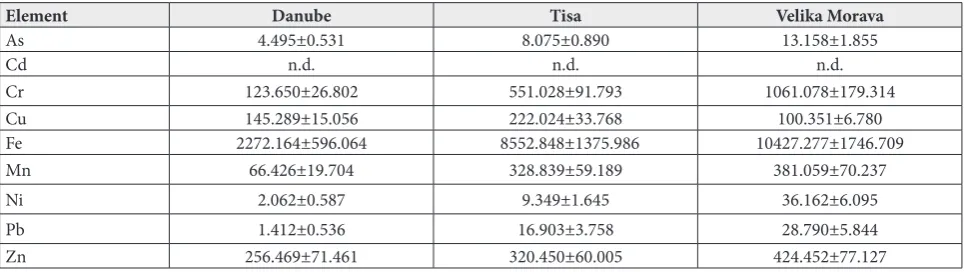
Table 3. Concentrations of metals (μg/g dry weight) in the whole body of the river snail Viviparus acerosus from the Danube, Tisa and Velika Morava.
Element Danube Tisa Velika Morava
As 4.495±0.531 8.075±0.890 13.158±1.855
Cd n.d. n.d. n.d.
Cr 123.650±26.802 551.028±91.793 1061.078±179.314
Cu 145.289±15.056 222.024±33.768 100.351±6.780
Fe 2272.164±596.064 8552.848±1375.986 10427.277±1746.709
Mn 66.426±19.704 328.839±59.189 381.059±70.237
Ni 2.062±0.587 9.349±1.645 36.162±6.095
Pb 1.412±0.536 16.903±3.758 28.790±5.844
Zn 256.469±71.461 320.450±60.005 424.452±77.127
the highest concentrations of Cd, Cu, Fe, Pb and Zn; the Velika Morava River sediment had the highest concentrations of Cr and Ni (Table 2). River snailsfrom the Velika Morava had the highest concentrations of all the examined metals, except for Cu, followed by snails from the Tisa and Danube (Table 3). According to one-way ANOVA (not shown), there were signifi-cant differences between the concentrations of Fe, Mn and Pb in snails from the Danube when compared to
snails from its two tributaries. Significant differences in the concentrations of Cr in all three groups of snails were observed. The concentration of Cu was highest in snails from the Tisa, followed by snails from the Danube and Velika Morava; it was significantly higher in snails from the Tisa as compared to snails from the Velika Morava. Concentrations of As and Ni were significantly lower in snails from the Danube and Tisa compared to snails from the Velika Morava.
Fig. 1. Correspondence analysis of metal concentrations in river water and sediment and whole bodies of the river snail Viviparus acerosus (VA) from the Danube River.
Fig. 2. Correspondence analysis of metal concentrations in river water and sediment and whole bodies of the river snail Viviparus acerosus (VA) from the Tisa River.
Table 4. Correlation matrixes of the metal concentrations in the river snail Viviparus acerosus and river sediment from the Danube, Tisa and Velika Morava.
As (V) Cr (V) Cu(V) Fe (V) Mn(V) Ni (V) Pb (V) Zn (V) As (S) Cr (S) Cu (S) Fe (S) Mn(S) Ni (S) Pb (S) Zn (S)
As (V) 1.00 1.00* -0.46 0.92 0.89 0.98 0.98 1.00* -0.81 0.99 -0.23 -0.49 -0.99 0.70 -0.85 -0.07 Cr (V) 1.00 -0.41 0.94 0.91 0.96 0.99 1.00 -0.84 0.99 -0.18 -0.45 -1.00* 0.66 -0.82 -0.03 Cu(V) 1.00 -0.07 -0.01 -0.64 -0.29 -0.49 -0.15 -0.30 0.97 1.00* 0.36 -0.96 0.86 0.92
Fe (V) 1.00 1.00* 0.81 0.97 0.91 -0.98 0.97 0.17 -0.11 -0.96 0.36 -0.57 0.32
Mn(V) 1.00 0.77 0.96 0.88 -0.99 0.95 0.24 -0.04 -0.94 0.30 -0.51 0.38
Ni (V) 1.00 0.92 0.98 -0.67 0.93 -0.43 -0.67 -0.95 0.84 -0.94 -0.29
Pb (V) 1.00 0.98 -0.90 1.00* -0.05 -0.33 -1.00* 0.56 -0.74 0.10
Zn (V) 1.00 -0.79 0.98 -0.26 -0.52 -0.99 0.72 -0.86 -0.11
As (S) 1.00 -0.90 -0.38 -0.11 0.87 -0.15 0.37 -0.52
Cr (S) 1.00 -0.06 -0.34 -1.00* 0.57 -0.75 0.09
Cu (S) 1.00 0.96 0.12 -0.86 0.71 0.99
Fe (S) 1.00 0.39 -0.97 0.88 0.91
Mn(S) 1.00 -0.62 0.78 -0.03
Ni (S) 1.00 -0.97 -0.77
Pb (S) 1.00 0.60
Zn (S) 1.00
The results of correspondence analysis are presented in Figs. 1-3 that contain row and column sets of data points. Row data points refer to the metal concentra-tions in the river water, river sediment and whole snail body. The column data points refer to the examined metals. Data points for the metal concentrations in snail bodies are grouped near the point that is related to the concentration of elements in the sediment,
while the point for the concentration of elements in the water stands out. This mode of grouping is slightly less pronounced in the Tisa (Fig. 2) than in the Danube (Fig. 1) and the Velika Morava (Fig. 3). The metals are also grouped according to their concentrations in the three compartments. Correspondence analysis points to a greater influence of the metal concentration in the sediment than of the metal concentration in the water on snail metal concentration.
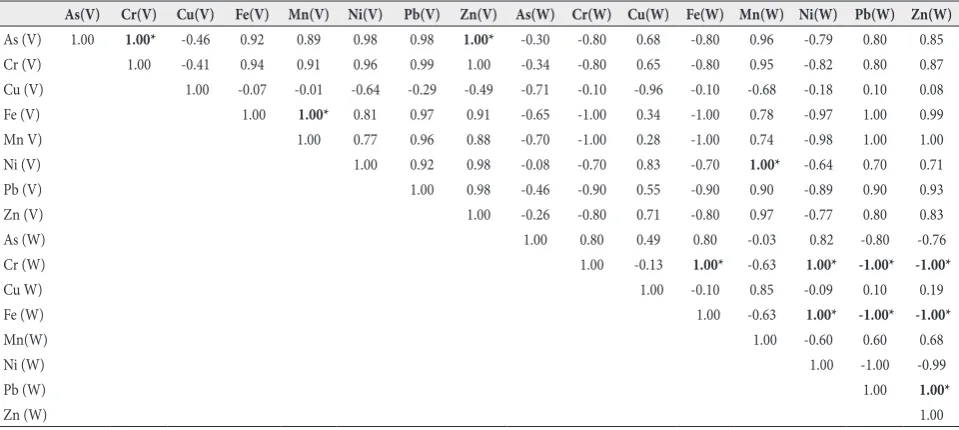
Pearson’s rank-order correlation coefficients among metal concentrations in snail bodies and river sediment, and in snail bodies and river water are given in Tables 4 and 5, respectively. The data demonstrate two positive (Cu(V)-Mn(S); Pb(V)-Cr(S)) and two negative (Cr(V)-Mn(S); Pb(V)-Mn(S)) correlations among metals in snails and sediment, but only one positive correlation between metals in snails and water (Ni(V)-Mn(W)). Metal-metal pairs showed significant correlations in a greater number in water than in sediment.
DISCUSSION
Determinations of metal concentrations in water and sediment are insufficient for evaluating environmental pollution because the biological effects of metals depend
Fig. 3. Correspondence analysis of metal concentrations in river water and sediment and whole bodies of the river snail Viviparus acerosus (VA) from the Velika Morava River.
Table 5. Correlation matrixes of the metal concentrations in the river snail Viviparus acerosus and river water from the Danube, Tisa and Velika Morava.
As(V) Cr(V) Cu(V) Fe(V) Mn(V) Ni(V) Pb(V) Zn(V) As(W) Cr(W) Cu(W) Fe(W) Mn(W) Ni(W) Pb(W) Zn(W)
As (V) 1.00 1.00* -0.46 0.92 0.89 0.98 0.98 1.00* -0.30 -0.80 0.68 -0.80 0.96 -0.79 0.80 0.85 Cr (V) 1.00 -0.41 0.94 0.91 0.96 0.99 1.00 -0.34 -0.80 0.65 -0.80 0.95 -0.82 0.80 0.87 Cu (V) 1.00 -0.07 -0.01 -0.64 -0.29 -0.49 -0.71 -0.10 -0.96 -0.10 -0.68 -0.18 0.10 0.08
Fe (V) 1.00 1.00* 0.81 0.97 0.91 -0.65 -1.00 0.34 -1.00 0.78 -0.97 1.00 0.99
Mn V) 1.00 0.77 0.96 0.88 -0.70 -1.00 0.28 -1.00 0.74 -0.98 1.00 1.00
Ni (V) 1.00 0.92 0.98 -0.08 -0.70 0.83 -0.70 1.00* -0.64 0.70 0.71
Pb (V) 1.00 0.98 -0.46 -0.90 0.55 -0.90 0.90 -0.89 0.90 0.93
Zn (V) 1.00 -0.26 -0.80 0.71 -0.80 0.97 -0.77 0.80 0.83
As (W) 1.00 0.80 0.49 0.80 -0.03 0.82 -0.80 -0.76
Cr (W) 1.00 -0.13 1.00* -0.63 1.00* -1.00* -1.00*
Cu W) 1.00 -0.10 0.85 -0.09 0.10 0.19
Fe (W) 1.00 -0.63 1.00* -1.00* -1.00*
Mn(W) 1.00 -0.60 0.60 0.68
Ni (W) 1.00 -1.00 -0.99
Pb (W) 1.00 1.00*
Zn (W) 1.00
on the chemical state of the metal, its bioavailability and the degree of resorption. Metals in aquatic ecosystems enter aquatic organisms through different routes [40]. The level of accumulation of metals depends on the duration of exposure of an organism to the metal, the organism’s feeding habits, growth rates and its age. The bioavailability of metals depends on water hardness, pH, concentration and composition of particulate mat-ter, the concentrations of acid-volatile sulfides in the water and other factors [41,42]. Our results agree with this and they show different levels of accumulation of metals in individuals of the Viviparus acerosus from different rivers. Thus, the highest metal concentra-tions were measured in snails from the Velika Morava and the lowest metal concentrations were observed in snails from the Danube. It can be concluded that the Velika Morava River was the most polluted; however, the concentrations of metals in the sediment and water did not follow the same trend as in the snail. It is well known that larger rivers have higher capacities for au-topurification. Also, because there is a proportionality between the concentrations of Cu and Cr in the bodies of snails and the concentrations of these metals in the sediments of the three rivers, and proportionality of the concentrations of Mn and Zn in snails and water, particular attention should be devoted to these metals if V. acerosus is used in biomonitoring.
The metal concentrations reported in this study indicate that V. acerosus accumulates metals in higher concentrations in relation to the concentrations re-ported by other authors for some freshwater snail species. Thus, authors [43] showed that the concentra-tion of Cu was in the range of 58.33 to 83.33 mg/kg dry weight in the body of Brotia costula, from 85.00 to 115.00 mg/kg in the body of Melanoides tuberculata, and from 29.50 to 37.00 mg/kg in the body of Clithon
sp. In the body of V. acerosus, the concentration of Cu was in the range of 100.35 to 222.02 μg/g. According to available literature data, similar ratios of investigated metal concentrations were observed in V. acerosus
and other species of the same genus, for example V. viviparus [41] and V. bengalensis [44].
In the assessment of water quality, implementation of the regulations of the Republic of Serbia waterways are classified into four classes based on the concentra-tions of As and heavy metals (Cd, Cu, Hg, Ni, Pb, Zn). According to these regulations, the waterways of the
Danube and its tributaries are classified as first and second class [45]; however, according to the Water Framework Directive [46] and the Trans National Monitoring Network (TNMN) that are in accordance with European regulations, the Danube is a class I waterway in terms of Cd and Pb concentrations and a class II waterway in terms of As, Cr, Ni and Zn con-centrations. The concentrations of dissolved Ni were extremely high at Stari Slankamen (Danube) in April 2010. According to earlier data, the concentrations of As, Hg, Cd and Ni were within the limits of a class I waterway, the concentration of Pb was as proposed for class II, and the concentrations of Zn and Cu were somewhere between classes III and IV [25].
The concentrations of Cr in the river sediments of the Velika Morava, of Pb in the Danube and the Tisa, of Zn in the Tisa, and of Cu and Ni in all three rivers, exceeded the maximum allowable concentra-tions (MAC) of heavy metals in soil [47], and Cd concentration in the Danube River sediment was at the threshold. Applying global sediment quality criteria on the data presented in this study, it can be observed that the concentrations of As, Ni and Pb in the Danube, of Cr, Cu, Ni, Pb and Zn in the Tisa, and of Cr and Ni in the Velika Morava exceeded the probable effect levels (PEL) that represent the values above which harmful effects are likely to be observed [48,49].
To our knowledge, V. acerosus has not been used as a bioindicator species. Before a species can obtain the status of a reliable tool in bioindicator-based studies, it is necessary to perform laboratory research. To determine the kinetics of specific metals in the body of V. acerosus, in addition to field studies, laboratory studies under controlled conditions need to be undertaken in order to explore the rates of uptake and excretion of metals by this organism, as has been suggested for species Crassostrea virginica [50] and Bellamya aeruginosa [51]. Toxicity tests serve to determine the LT50 and LC50 values for every metal in a species. It was shown that for the species
river sediments. Interestingly, Cd was detected in the liver, muscle and gills of several species of freshwater fish from the Danube [52,53].
Comparison of metal concentrations in snails with their concentrations in river water and sediment by correspondence analysis revealed the grouping of data points for snails and sediments, and the separation of the river water metal content. As a deposit-feeding organism, V. acerosus is in direct contact with the river sediment. Extensive literature data support the positive correlation between metal concentrations in the sediment and bodies of deposit-feeding organisms [54,7,3]. It has been shown that organisms reared in the laboratory accumulate higher concentrations of metals in the treatment that includes the presence of water and sediment compared to the treatment with the water only [55].
Results obtained by Pearson’s correlation test indi-cate that V. acerosus can potentially serve as a bioindica-tor for several metals (Cr, Fe, Mn, Pb). However, it is necessary to continuously monitor the concentrations of metals in river sediment, river water, as well as in snails over a longer period of time in order to extract individual elements that would reveal V. acerosus as the best bioindicator.
CONCLUSIONS
The investigation of heavy metal contamination in aquatic organisms is very important because it could more directly reflect hazards to human health. The results of our study show that the concentrations of different metals in Viviparus acerosus are influenced to a greater extent by the metal content of the river sediment than by the metal content of river water. In light of our data, we conclude that V. acerosus has the potential to serve as a bioindicator species of metal pollution in freshwater basins. Since Serbia does not have established water-quality criteria for metal con-centrations in river sediments, results obtained from field studies conducted throughout the year would contribute towards the establishment of these values.
Acknowledgments: This study was supported by the Ministry of Education, Science and Technological Development of the Republic of Serbia, Project No. 173041.
Author contributions: Svetlana G. Despotović, Slađan Z. Pavlović and Zorica S. Saičić designed the study. Svetlana G. Despotović, Marko D. Prokić, Jelena P. Gavrić, Branka R. Gavrilović, Tijana B. Radovanović, Slavica S. Borković-Mitić, Slađan Z. Pavlović and Zorica S. Saičić participated in the collecting, analysis and inter-pretation of the data and critical revision. Svetlana G. Despotović wrote the paper and is responsible for its final content. All of the listed authors contributed sufficiently to the work to be included as authors and approved final version of manuscript.
Conflict of interest disclosure: The authors declare no conflict of interest.
REFERENCES
1. Malmqvist B, Rundle S. Threats to the running water ecosys-tems of the world. Environ Conserv. 2002;29:134-53. 2. Li L, Zheng B, Liu L. Biomonitoring and bioindicators used
for river ecosystems: definitions, approaches and trends. Procedia Environ Sci. 2010;2:1510-24.
3. Wang Y, Liang L, Shi J, Jiang G. Study on the contamination of heavy metals and their correlations in mollusks collected from coastal sites along the Chinese Bohai Sea. Environ Int. 2005;31:1103-13.
4. Vajargah MF, Yalsuyi AM, Hedayati A, Faggio C. Histopath-ological lesions and toxicity in common carp (Cyprinus car-pio L. 1758) induced by copper nanoparticles. Microsc Res Tech. 2018;81:724-29.
5. Capillo G, Silvestro S, Sanfilippo M, Fiorino E, Giangrosso G, Ferrantelli V, Vazzana I, Faggio C. Assessment of elec-trolytes and metals profile of the Faro Lake (Capo Peloro Lagoon, Sicily, Italy) and its impact on Mytilus galloprovin-cialis. Chem Biodivers. 2018;15:e1800044.
6. Sakan S, Đorđević D, Dević G, Relić D, Anđelković I, Đuričić J. A study of trace element contamination in river sediments in Serbia using microwave-assisted aqua regia digestion and multivariate statistical analysis. Microchem J. 2011;99:492-502.
7. Shulkin VM, Presley BJ, Kavun VIa. Metal concentrations in mussel Crenomytilus grayanus and oyster Crassostrea gigas in relation to contamination of ambient sediments. Environ Int. 2003;29:493-502.
8. Aliko V, Hajdaraj G, Caci A, Faggio C. Copper induced lysosomal membrane destabilisation in haemolymph cells of Mediterranean green crab (Carcinus aestuarii, Nardo, 1847) from the Narta Lagoon (Albania). Braz Arch Biol Technol. 2015;58:750-6.
9. Aliko V, Qirjo M, Sula E, Morina V, Faggio C. Antioxidant defense system, immune response and erythron profile modulation in gold fish, Carassius auratus, after acute man-ganese treatment. Fish Shellfish Imunol. 2018;76:101-9. 10. Gobi N, Vaseeharan B, Rekha R, Vijayakumar S, Faggio C.
Bioaccumulation, cytotoxicity and oxidative stress of the acute exposure selenium in Oreochromis mossambicus. Ecotoxicol Environ Saf. 2018;162:147-59.
in blood and tissue of striped mullet in two iatlian lakes. J Aquat Anim Health. 2014;26:278-84.
12. Pagano M, Porcino C, Briglia M, Fiorino E, Vazzana M, Sil-vestro S, Faggio C. The influence of exposure of cadmium chloride and zinc chloride on haemolymph and digestive gland cells from Mytilus galloprovincialis. Int J Environ Res. 2017;11:207-16.
13. Savorelli F, Manfra L, Croppo M, Tornambè A, Palazzi D, Canepa S, Trentini PL, Cicero AM, Faggio C. Fitness evalu-ation of Ruditapes philippinarum exposed to Ni. Biol Trace Elem Res. 2017;177:384-93.
14. Torre A, Tridchitta F, Faggio C. Effect of CdCl2 on regu-latory volume decrease (RVD) in Mytilus galloprovincialis digestive cells. Toxicol In Vitro. 2013;27:1260-6.
15. Monroy M, Maceda-Veiga A, de Sostoa A. Metal concen-tration in water, sediment and four fish species from Lake Titicaca reveals a large-scale environmental concern. Sci Tot Environ. 2014;487:233-44.
16. Ma ZW, Chen K, Yuan ZW, Bi J, Huang L. Ecological risk assessment of heavy metals in surface sediments of six major Chinese freshwater lakes. J Environ Qual. 2013;42:341-50. 17. Niu HY, Deng WJ, Wu QH, Chen XG. Potential toxic risk
of heavy metals from sediment of the Pearl River in South China. J Environ Sci. 2009;21:1053-8.
18. Huo SL, Xi BD, Yu XJ, Su J, Zan FY, Zhao GC. Application of equilibrium partitioning approach to derive sediment qual-ity criteria for heavy metals in a shallow eutrophic lake, Lake Chaohu, China. Environ Earth Sci. 2013;69:2275-85. 19. Lam PKS. Use of biomarkers in environmental monitoring.
Ocean Coast Manage 2009;5:348-54.
20. Borković-Mitić S, Pavlović S, Perendija B, Despotović S, Gavrić J, Gačić Z, Saičić Z. Influence of some metal trations on the activity of antioxidant enzymes and concen-trations of vitamin E and SH-groups in the digestive gland and gills of the freshwater bivalve Unio tumidus from the Serbian part of Sava River. Ecol Indic. 2013;32:212-21. 21. Burgos-Aceves MA, Cohen A, Smith Y, Faggio C.
MicroR-NAs and their role on fish oxidative stress during xeno-biotic environmental exposures. Ecotoxicol Environ Saf. 2018;148:995-1000.
22. Burgos-Aceves MA, Cohen A, Paolella G, Lepretti M, Smith Y, Faggio C, Lionetti L. Modulation of mitochondrial func-tions by xenobiotic-induced microRNA: from environ-mental sentinel organisms to mammals. Sci Total Environ. 2018;645:79-88.
23. Waykar B, Deshmukh G. Evaluation of bivalves as bioindi-cators of metal pollution in freshwater. B Environ Contam Tox. 2012;88:48-53.
24. Lazarević M, Milovanović D, Simonović P, Simić V, Simić S, Cakić P, Paunović M. Introduction. In: Simonović P, Simić V, Simić S, Paunović M, editors. The Danube in Serbia. Repub-lic of Serbia, Ministry of Agriculture, Forestry and Water Managment - Republic Directorate for Water, University of Belgrade, Institute for Biological Research ”Siniša Stanković”, Belgrade, University of Kragujevac, Faculty of Science; 2010. p. 15-30.
25. Vasiljević M. Results of physical and chemical analyses of water and sediment in the Danube River and observed tributaries. In: Simonović P, Simić V, Simić S, Paunović M,
editors. The Danube in Serbia. Republic of Serbia, Ministry of Agriculture, Forestry and Water Managment - Republic Directorate for Water, University of Belgrade, Institute for Biological Research ”Siniša Stanković”, Belgrade, University of Kragujevac, Faculty of Science; 2010. p. 111-38.
26. Tomović J, Vranković J, Tubić B, Borković Mitić S, Pavlović S, Saičić Z, Paunović M. Malakofauna of the Serbian strech of the Danube River and studied tributaries (the Tisa, Sava and Velika Morava). In: Simonović P, Simić V, Simić S, Paunović M, editors. The Danube in Serbia. Republic of Serbia, Minis-try of Agriculture, ForesMinis-try and Water Managment - Repub-lic Directorate for Water, University of Belgrade, Institute for Biological Research ”Siniša Stanković”, Belgrade, University of Kragujevac, Faculty of Science; 2010. p. 207-24.
27. Burgos-Aceves MA, Faggio C. An approach to the study of the immunity functions of bivalve haemocytes: physiology and molecular aspects. Fish Shellfish Immunol. 2017;67:513-7. 28. Faggio C, Tsarpali V, Dailianis S. Mussel digestive gland as a
model tissue for assessing xenobiotics: an overview. Sci Total Environ. 2018;636:220-9.
29. Faggio C, Pagano M, Alampi R, Vazzana I, Felice MR. Cytotoxicity, haemolymphatic parameters, and oxidative stress following exposure to sub-lethal concentrations of quaternium-15 in Mytilus galloprovincilais. Aquat Toxicol. 2016;180:258-65.
30. Pagano M, Capillo G, Sanfilippo M, Palato S, Trischitta F, Manganaro A, Faggio C. Evaluation of functionality and bio-logical responses of Mytilus galloprovincialis after exposure to quaternium-15 (methenamine 3-chloroallylochloride). Molecules. 2016;21:e144.
31. Sehanova P, Svobodova Z, Dolezelova P, Vosmerova P, Fag-gio C. Effects of waterborne antidepressants on non-target animals living in the aquatic environment: a review. Sci Total Environ. 2018;631-632:789-94.
32. Oehlmann J, Schulte-Oehlmann U. Molluscs as bioindica-tors. In: Markert BA, Breure AM, Zechmeister HG, edibioindica-tors. Bioindicators and Biomonitors. Elsevier Science BV; 2003. p. 577-635.
33. Foeckler F, Deichner O, Schmidt H, Castella E. Suitability of Molluscs as bioindicators for Meadow- and Flood-Channels of the Elbe -Floodplains. Int Rev Hydrobiol. 2006;91:314-25. 34. Roméo M, Frasila C, Gnassia-Barelli M, Damiens G, Micu
D, Mustata G. Biomonitoring of trace metals in the Black Sea (Romania) using mussels Mytilus galloprovincialis. Water Res. 2005;39:596-604.
35. Hamed MA, Emara AM. Marine mollusks as biomonitors for heavy metal levels in the Gulf of Suez, Red Sea. J Marine Syst. 2006;60:220-34.
36. Liang LN, He B, Jiang GB, Chen DY, Yao ZW. Evaluation of mollusks as biomonitors to investigate heavy metal con-taminations along the Chinese Bohai Sea. Sci Tot Environ. 2004;324:105-13.
37. Gundacker C. Comparison of heavy metal bioaccumulation in freshwater mollusks of urban river habitats in Vienna. Environ Pollut. 2000;110:61-71.
39. Carroll JD, Green PE, Schaffer CM. Interpoint distance comparisons in correspondence analysis. J Marketing Res. 1986;3:271-80.
40. Dummee V, Kruatrachue M, Trinachartvaint W, Tanhan P, Pokethitiyook P, Damrongphol P. Bioaccumulation of heavy metals in water, sediments, aquatic plant and histopatho-logical effects on the golden apple snail in Beung Boraphet reservoir, Thailand. Ecotox Environ Safe. 2012;86:204-12. 41. Baršyté Lovejoy D. Heavy metal concentrations in water,
sediments and mollusc tissues. Acta Zool Lituanica Hydro-biologia. 1999;9:12-20.
42. Shuhaimi-Othman M, Nur-Amalina R, Nadzifah Y. Toxicity of metals to a freshwater snail, Melanoides tuberculata. Sci World J. 2012;2012:1-10.
43. Lau S, Mohamed M, Tan Chi Yen A, Su’ut S. Accumulation of heavy metals in freshwater molluscs. Sci Total Environ. 1998;1-3:113-21.
44. Gupta SK, Chabukdhara M, Kumar P, Singh J, Bux F. Evalu-ation of ecological risk of metal contaminEvalu-ation in river Gomti, India: a biomonitoring approach. Ecotox Environ Safe. 2014;110:49-55.
45. Regulation on Water Classification. Official Gaz Federal Rep Serbia. 1968;5/68. Serbian.
46. Directive 2000/60/EC of the European Parliament and of the Council of 23 October 2000 establishing a framework for Community action in the field of water policy. Official J Eur Comm. 2000;43(L327):1-73.
47. Regulations on permitted amounts of hazardous and nox-ious substances in soil and water for irrigation and meth-ods of their analysis. Official Gaz Rep Serbia. 1994;23/94. Serbian.
48. MacDonald DD, Ingersoll CG, Berger TA. Development and evaluation of consensus-based sediment quality guidelines for freshwater ecosystems. Arch Environ Contam Toxicol. 2000;39:20-31.
49. Burton Jr. GA. Sediment quality criteria in use around the world. Limnology. 2002;3:65-75.
50. Richert JC, Hardaway CJ, Sneddon J. Laboratory controlled study of the uptake and release of vanadium by oysters (Crassostrea virginica). Microchem J. 2014;113:1-3. 51. Ma T, Gong S, Zhou K, Zhu C, Deng K, Luo Q, Wang Z.
Laboratory culture of the freshwater benthic gastropode Bel-lamya aeruginosa (Reeve) and its utility as a test species for sediment toxicity. J Environ Sci. 2010;22:304-13.
52. Jarić I, Višnjić-Jeftić Ž, Cvijanović G, Gačić Z, Jovanović Lj, Skorić S, Lenhardt M. Determination of differential heavy metal and trace element accumulation in liver, gills, intestine and muscle of sterlet (Acipenser ruthenus) from the Danube River in Serbia by ICP-OES. Microchem J. 2011;98:77-81. 53. Subotić S, Spasić S, Višnjić-Jeftić Ž, Hegediš A,
Krpo-Ćetković J, Mićković B, Skorić S, Lenhardt M. Heavy metal and trace element bioaccumulation in target tissues of four edible fish species from the Danube River (Serbia). Ecotox Environ Safe. 2013;98:196-202.
54. Thomson EA, Luoma SN, Johansson CE, Cain DJ. Com-parison of sediments and organisms in identifying sources of bioavailable trace metal contamination. Water Res. 1984;18:755-65.
55. Hoang TC, Rand GM. Exposure routes of copper: short term effects on survival, weight, and uptake in Florida apple snails (Pomacea paludosa). Chemosphere. 2009;76:407-14.
Supplementary Data
Supplementary Fig. S1.
Available at: http://serbiosoc.org.rs/NewUploads/