48
Mathematical and Software Engineering, Vol. 2, No. 2 (2016), 48-56 Varεpsilon Ltd, http://varepsilon.com
Cluster-Based Call Acceptance Principle for
Optimum Reduction of Call Failures in a GSM
Network System
Aloaye Eshilama Donaldson
1, Constance Kalu
2, and Ikenna Calistus
Dialoke
31,2,3
Electrical/Electronic and Computer Engineering Dept., University of Uyo, Uyo, Nigeria
Abstract
Generally, most network providers especially in the developing countries are witnessing rapid influx of new users in their networks which affect the level of their quality of service (QoS). This research work is borne out of the fact that the wireless communication operators make use of few network resources such as base station controllers (BSCs) and base transceiver station (BTSs). This scheme is aimed at better utilization of different BTSs and their channels at any time. This research considers the signal quality, available channels, new call duration, handoff call duration and handoff call rate within the Base transceiver station (BTS). Rather than block or drop a call whenever the channels of any BTS are filled, this scheme ensures that the current BTS will handoff about ten percent (10%) of its accommodated calls to other free nearby BTSs with respect to the position of the mobile station (MS).
Keywords: Quality of Service (QoS), Wireless Communication, Base Station
Controller (BSC), Base Transceiver Station (BTS), Communication Channels, Call Duration, Mobile Station (MS).
1 Introduction
In the world of wireless communication, mobility is a major feature of global system for mobile (GSM) communication system. This is characterized by the desire for continuous service. In other to achieve this seamless connection, the system must support handoff (or handover) from one cell to another. According to Zeng and Agrawal, handoff can be described as the process of transferring the channel (where the channel can be time slot, frequency, spreading code, or combination of those) associated with the present connection while a call is in progress [1].
49
an essential scheme used in cellular networks for QoS provisioning. Admission control restricts access to the network on the basis of resource availability. By such action, admission control prevents network congestion and service degradation for the users already admitted. Particularly, a new call request can only be accepted if adequate free resources are available to satisfy the QoS requirements of the new calls without violating the QoS for all’s already admitted c [14, 15]. Admitting too many calls (handoff or new) results in a situation where the mutual interference between the connections degrades the QoS for the new users along with the ongoing connections. Therefore, call admission control is important as it provides the requested QoS to the user, prevents the system from an outage situation as a result of congestion and makes efficient use of the available system capacity [2]. Call admission control (CAC) is such a provisioning strategy that restricts the number of call connections that are allowed into the networks so as to reduce the incidence of congestion and call dropping in the network. As a result of the users’ mobility in cellular networks, additional challenge of call dropping can be experienced. A CAC scheme can be adjudged to be good if it can deliver the desired QoS by effectively balancing the call blocking and call dropping. Through handoff process, a cellular system transfers an active call from one cell to another. There exist diverse methods to achieve better handoff service. Call blocking probability and forced termination probability are the major parameters generally used in evaluating handoff techniques. Among others, guard channels and handoff call queuing mechanisms are used to reduce forced termination probability; however such mechanisms increase call blocking probability [3]. The challenges for achieving optimum spectral efficiency and high data rate in wireless cellular communication networks is increased by the wireless communication environment that has high influence of interference, dynamic channels, shortage of bandwidth and stringent QoS requirements. In order to support various integrated services with certain quality of service requirements in these wireless networks, the study of radio resource management (RRM), radio resource provisioning (RRP), and mobility management are useful [4]. RRM plays a vital role in cellular networks to efficiently utilize the limited radio resource while ensuring a required quality of service. The RRM involves strategies and algorithms for transmit power control, channel allocation, handoff criteria, modulation scheme, error coding schemes etc. Power control is another serious factor in network performance. It has the ability to impact the capacity and perceived quality in mobile network systems irrespective of the mode of multiple-access be it frequency or time or code division. Power control is useful in fighting the inter-cell (co-channel) interference that arises from the frequency reuse (cellular concept) [5]. Sufficient QoS is also required in order to manage new calls and handoff of ongoing calls more efficiently. As a result of limited radio channels in addition to users’ mobility in wireless networks, provisioning of QoS is an intriguing problem. Call admission control is an essential mechanism used in a cellular networks for QoS provisioning. CAC controls access to the network on the basis of resource availability with the intention of averting network congestion and degradation of service for users already supported.
50
providing required QoS to the users, preventing system outage due to overloading and ensuring efficient use of the available capacity [6, 13]. Mobility management is the system employed therefore to track the mobile users as they move from place to place within the coverage area of the network. Therefore, mobility management is a key component for the effective operations of the mobile wireless networks. There are two operations used to carry out the mobility management analysis on wireless systems. These are: location update and terminal paging. Location update relates to the process where a mobile user informs the network where it is, while terminal paging is a process that the network attempts to locate a mobile user in the area it was last reported. Both processes which invoke signaling traffic in the signaling networks are used by both processes [4].
2 Methods and Algorithms
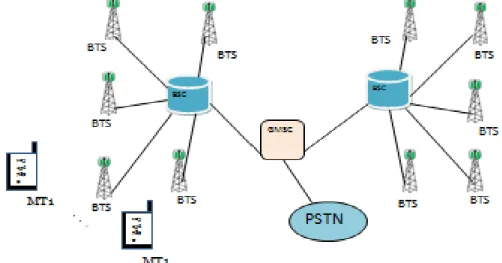
In the GSM system, the Mobile Stations (MS) communicates with the Base Station System (BSS) via the RF air interface. The Base Station System (BSS) consists of a Base Transceiver Station (BTS), and a Base Station Controller (BSC). In most cases, several BTS are located at the same site, this gives rise to two (2) to four (4) sectored cells around a shared antenna tower. BSCs are often connected to BTS via microwave links. The BSC to BTS link is called the Abis interface. Usually about 20 to 30 BTS are controlled by a single BSC. Several BSS will be reporting to the same Mobile Switching Center (MSC) which controls the traffic among many different cells. Each (MSC) is assigned a Visitors Location Register (VLR) where mobile stations which are outside their home cell are listed, so as to enable the network to be aware where to find them. The MSC will also be connected to the Home Location Register (HLR), the Authentication Center (AUC), and the Equipment Identity Register (EIR) . These connections of the MSC are to ensure that the system can verify that the users and equipment are legal subscribers. This helps avoid the use of stolen or fraud mobiles. Within the system there are also facilities for Operations and Maintenance (OMC) as well as Network Management (NMC) organizations. The MSC also has the interface to other networks such as Private Land Mobile Networks (PLMN) and Public Switched Telecommunication Network (PSTN) and Integrated Service Digital Network (ISDN). Figure 1 shows all the components of a standard wireless communication network.
51
In this paper, the system consists of homogenous cells with a finite number of channels (C). Also, in this study, attention is on a single cell, called the marked cell and the base station with two types of traffic: new call and handoff call. The system reserves C-K out of the C channels to the handoff calls while the remaining K channels are for both handoff and originating calls. It is also assumed that both new and handoff call attempts are generated according to Poisson process with mean rates o and ℎ, respectively. The effective incoming call traffic rate up to K channel is ( o+ ℎ), since any poor signal quality handoff call is immediately dropped. An incoming call traffic rate from K to C channel capacity is ( ℎ). If the handoff requests find the entire channels occupied, it is then put on the handoff queue pending the release of a channel. It is also assume that the channel holding time TH has an exponential distribution with a mean of (1/ ).
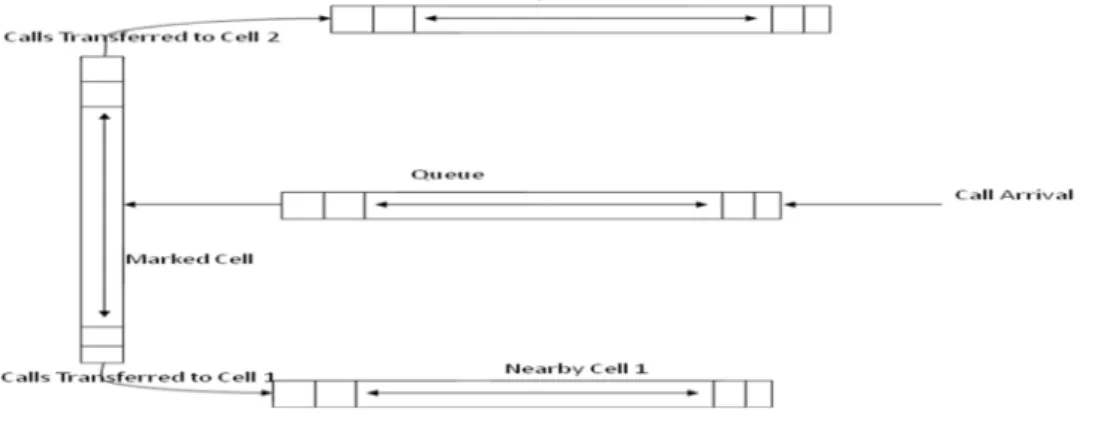
Figure 2 shows the details of overall system model for the proposed scheme which is designed to provide improved calls handling. This scheme ensures efficient utilization of base transceiver station (BTS) which must be a talking BTS.
Figure 2: Overall System Model for the Proposed Scheme
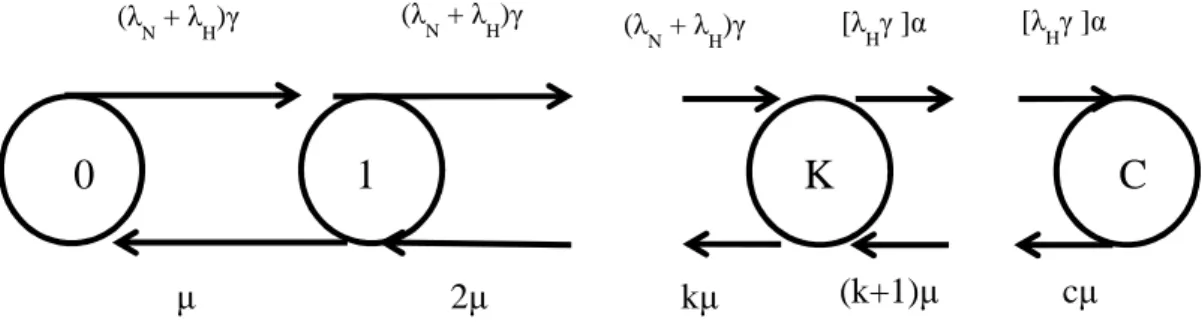
Meanwhile, the queuing model for any marked cell in the proposed model is as shown in Figure 3. Figure 3 describes how calls arrive at the cell, queued if need be, and allocate a channel within the cell. The state transition diagram is as shown in Figure 4.
52
Figure 4: State transition diagram of the proposed model
The state of a call as the number of calls in progress for the base station containing that call can be denoted as S , where
i = 0, 1,2,3, ….. k, (k+1)…. (C-1), C. (1) The probability that the BS is in state i is given as P(i) can be solved as usual using the birth-death process. The state balance equations derived from the states transition diagram (Figure 4) are:
= + − 1 0 ≤ ≤ (2)
= − k ≤ ≤ (3)
Then, the probability that the call is in any state within the cell is given as
iμP i = λ
! P 0 ≤ i ≤ C (4)
The normalization condition is given as:
∑" ! = 1
#$ (5)
Using equations (2) and (3) recursively, along with the normalization condition of equation (5), the steady-state probability P(i) is as follows:
P i = %
&' ()* (+ ,
! P 0 0 ≤ i ≤ K
&' ()* (+ ,./()(+ -.
! P 0 K ≤ i ≤ C
(6)
Where P(0) is given as
0 = 1∑ &2 34* 35 ,6
7!86 + ∑ &2 34* 35 ,
9:3 435 6;9
7!86
" 7$<*= <
7$ >
?=
(7)
The next analysis is to consider when the channels are busy and the queue has more than the maximum set value of acceptable calls in a queue. When this occurs, the proposed scheme decongests the channels by transferring some of the existing calls to nearby free cells. Considering Figure 2, let PD1, PD2 - - - PDN represent
the probabilities of decongesting the marked cell when it is full to nearby cells 1, 2, - - - - N. Therefore, total probability is given as
PDT = PD1 + PD2 + ………. +PDN (8)
Assuming the marked cell can decongest (transfer) calls to nearby cells at equal probabilities, making
PD1 = PD2 = ………. PDN (9)
(λN + λH)γ (λ
N + λH)γ (λN + λH)γ [λHγ ]α [λHγ ]α
µ 2µ kµ (k+1)µ cµ
53 Then
PDT = NPDN (10)
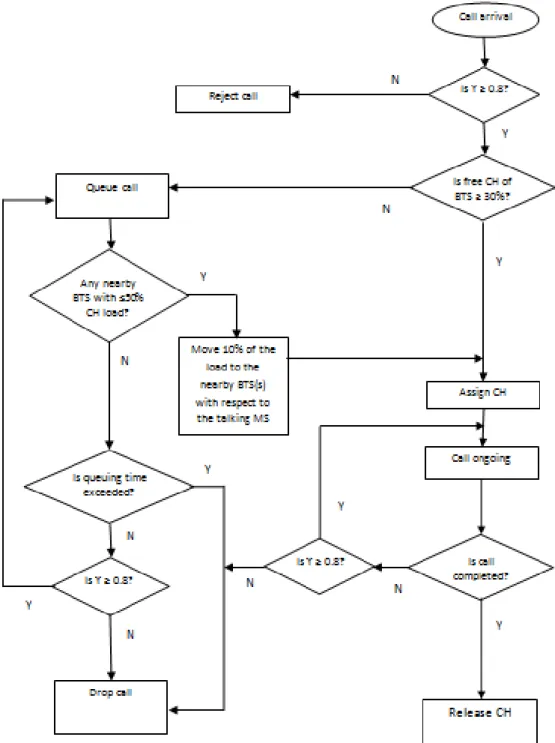
The flowchart of the proposed call management scheme is given in Figure 5 represents. It contains the sequential activities of the proposed scheme.
Figure 5: Flowchart Of The Proposed Scheme The factors that influence decongestion of the cell are:
i. Distance of the MT to the nearby cell (d) ii. Signal Strength γ
iii. Availability of free channel in the nearby cell (CF)
54
availability of free channels (CF) and inversely to the distance of the MT (d):
PD=∝ '.CED (11)
PF = K'.CED (12)
∴ PFH= NK'.CED (13)
3 Results and Discussion
The following parameters and their values were used for the computation of some results of the proposed scheme. The number of channels was fixed at 34, New call arrival (λN) was fixed at 1.2/s and the Handoff arrival (λH) was fixed at 2/s. The
signal strength factor (γ) was fixed at 0.8. Details of the data are as presented in Table 1.
Table 1: Parameters and Values Used For The Proposed Scheme
S/N Parameter Values
1 No of Channels (C) 34
2 New call arrival (λN ) 1.2/s
3 Handoff arrival (λH ) 2.0/s
4 Signal strength factor (γ) 0.8
5 Mobility Factor (α) 0.6
6 Mean call duration 180(s)
7 Offered traffic (ρ) 50
8 Number of nearby cells Varied between 5 and 100
9 Cell utilization (%) Varied between 1 and 100
The numerical results are presented in the following figures. The simulation was done using MATLAB.The Numerical results of the effect of number of nearby cells on calls acceptance probability are shown in Figure 6.
Figure 6: Call Rejection Probability against Number of nearby Cells of 10 to 20 10 11 12 13 14 15 16 17 18 19 20 0.0497 0.0497 0.0497 0.0497 0.0497 0.0497 0.0497 0.0497 0.0497 0.0497
Number of Nearby Cells
C a ll R e je c ti o n P ro b a b ili ty [email protected]
55
4 Conclusion
In the proposed Cluster-Based Call Acceptance scheme, quality of service guarantee is provided to both the handoff calls and new calls by maximizing the utility of the BTS resources to accommodate handoff and new calls in order to improve the performance of the network. In this research, it has been shown that by BTS resources, the call dropping probability has been considerably reduced. The performance of this new scheme in terms of dropping or blocking probabilities was carried out using MATLAB. The results from the observed data and the simulation of the various handoff schemes under study with the proposed scheme were compared. The performance of this new scheme was evaluated and compared with some existing schemes, and it has been demonstrated through analytical computations that this proposed scheme performs better than the other schemes.
References
[1] Q. Zeng, D. Agrawal, Handoff in Wireless Mobile Networks: Handbook of Wireless Networks and Mobile Computing, Edited by Ivan Stojmenovic. John
Wiley and Sons Inc, (2002). 1-25.
[2] U. Akpan, C. Kalu, S. Ozuomba, A. Obot, Development of Improved Scheme for Minimising Handoff Failure due to Poor Signal Quality, International
Journal of Engineering Research and Technology, Oct. 2013.
[3] N. Ekiz, T. Salih, S. Küçüköner, K. Fidanboylu, An Overview of Handoff Techniques in Cellular Networks: International Journal of Information And
Communication Engineering, 2 (6). 2006.
[4] Y. Fang, Performance Evaluation of Wireless Cellular Networks Under More Realistic Assumptions: Wireless Communications And Mobile Computing, 5(8) (2005), 867–885.
[5] D. Liu, Y. Zhang, S. Hu, Call Admission Policies On Calculated Power Control Set points in SIR- Based Power-Controlled DS-CDMA Cellular Networks: Wireless Networks, 10 (2004), 473-483.
[6] S. A. El-Dolil, A. Y. Al-Nahari, M. I. Desouky, F. E. El-Samie, Uplink Power Based Admission Control in Multi-Cell Wcdma Networks With Heterogeneous Traffic: Progress in Electromagnetics Research B, 1, (2008), 115–134.
[7] G. Boggia, P. Camarda, A. D’Alconzo, A. De Biasi, M. Siviero, Drop Call Probability in Established Cellular Networks: from Data Analysis to Modeling: DEE – Politecnico di Bari, Via E.Orabona, 4 – 70125 Bari (Italy), Proc. IEEE VTC Spring, 5 (2005), 2775- 2779.
[8] D. D. Dajab, N. Parfait, Consideration Of Propagation Loss Models for GSM during Harmattan in N’djamena (Chad). International Journal of Computing
and ICT Research, 4, (1). 2010.
[9] F. Hagglund, Improved Power Control For Gsm/Edge: Masters Thesis. Lulea University of Technology, Luluea. 2005.
56
[11] M. J. Nawrocki, M. Dohler, A. H. Aghvami, Modern Approaches to Radio Network Modeling and Planning –Understanding UMTS Radio Network, Modeling, Planning and Automated Optimisation: England: John Wiley & Sons
Ltd, 2006.
[12] A. Zreikat, K. Al-Begain, Simulation of 3G Networks in Realistic Propagation Environments. Mobile Computing and Networking Research Group, I.J. of Simulation, 4 (2003), 21-30.
[13] El-Dolil, S. A., Al-nahari, A. Y., Desouky, M. I., & El-samie, F. A. (2008, March). Uplink multi-cell admission control for WCDMA networks with heterogeneous traffic. In Radio Science Conference, 2008. NRSC 2008. National (pp. 1-11). IEEE.
[14] M. Balaji, R. D. Balaji and R. Lakshminarayanan, A Contemporary Methodology for Bandwidth Reservation in Wireless Cellular Networks, The
SIJ Transactions on Computer Networks & Communication Engineering (CNCE), Vol. 1, No. 1, March-April 2013.
[15] Nuaymi, L., Godlewski, P., & Mihailescu, C. (2000). Call admission control algorithm for cellular CDMA systems based on best achievable performance. In
Vehicular Technology Conference Proceedings, 2000. VTC 2000-Spring Tokyo. 2000 IEEE 51st (Vol. 1, pp. 375-379). IEEE.