Transdermal Delivery of a DTPA Penta-ethyl Ester Prodrug for Continuous Decorporation of Transuranic Elements
Yong Zhang
A dissertation submitted to the faculty of the University of North Carolina at Chapel Hill in partial fulfillment of the requirements for the degree of Doctor of Philosophy in the UNC Eshelman School of Pharmacy.
Chapel Hill 2013
Approved By:
Michael Jay, Ph.D.
Richard J. Kowalsky, Pharm.D.
Zhi Liu, Ph.D.
Russell J. Mumper, Ph.D.
iii
ABSTRACTYONG ZHANG: Transdermal Delivery of a DTPA Penta-ethyl Ester Prodrug for Continuous Decorporation of Transuranic Elements
(Under the direction of Prof. Michael Jay, Ph.D.)
The penta-ethyl ester of diethylenetriamine pentaacetic acid (DTPA), a DTPA prodrug
designated as C2E5, was designed for transdermal delivery for radionuclide decorporation.
The C2E5 was first screened with a prototype cream formulation and a hydrocarbon base
ointment. C2E5 experienced rapid degradation in the cream matrix and C2E5 ointment
formulations underwent phase separation due to components incompatibility. Non-aqueous
gel matrix comprised of ethyl cellulose/Miglyol 840® was utilized to formulate C2E5.
The C2E5 non-aqueous gel prepared by direct mixing method failed to yield a uniform
and pharmaceutically acceptable gel. Solvent evaporation method was conceived and
applied to prepare the C2E5 non-aqueous gels. The thermal, rheological and in vitro release
studies of a formulation containing 40% C2E5, 20% ethyl cellulose and 40% Miglyol 840
prepared using the solvent evaporation method demonstrated that the gel had acceptable
content uniformity, flow properties and C2E5 release profile suitable for transdermal
delivery. Topical application of the gel at a 200 mg C2E5/kg dose level in rats achieved
higher plasma exposures of several active metabolites compared with neat C2E5 oil at the
same dose level.
The C2E5 non-aqueous gels comprised of 40% C2E5, 40-45% Miglyol 840 and
15-20% ethyl cellulose prepared by solvent evaporation method were further evaluated by
mass balance study and in vivo decorporation study in rodents. When the aforementioned
iv
C2E5/kg, over 60% of the applied dose was absorbed within a 24 h period. Radioactivity
was observed in urinary and fecal excretions for over three days after removal of the gel.
Using an 241Am wound contamination model, transdermal C2E5 gels were able to enhance
total body elimination and reduce the liver and skeletal burden of 241Am in a dose-dependent
manner. The efficacy achieved by a single 1000 mg/kg dose to contaminated rats was
statistically comparable to the intravenous Ca-DTPA treatment.
In conclusion, transdermal delivery of the DTPA penta-ethyl ester prodrug achieved
enhanced decorporation of 241Am in contaminated rats. The effectiveness of this treatment,
favorable sustained release profile and ease of administration support its use following
v DEDICATION
To my wife, Hui Li, for her love, understanding, support and encouragement.
vi
ACKNOWLEDGEMENTS
For the past five years, many people have helped me during my PhD study at UNC
Eshelman School of Pharmacy. First of all, I would like to thank my advisor, Dr. Michael Jay,
for giving me the opportunity to join his lab and trusting me to work on this research project.
His work ethics, teachings, and encouragement have inspired me and carried me through
my PhD study. I will remember what I have learned from him throughout my personal and
professional life.
I would like to thank my committee members, Dr. Richard J. Kowalsky, Dr. Zhi Liu,
Dr. Russell J. Mumper, and Dr. William C. Zamboni for their time and effort in guiding me
through my study. I gratefully acknowledge the help and insightful discussions with Jay lab
members, especially Dr. Matthew P. Sadgrove and Dr. Yu-Tsai Yang, as well as the faculty
and students, past and present, of the Division of Molecular Pharmaceutics. I would also like
to thank Dr. Richard Superfine, Dr. Joseph DeSimone, Dr. Nancy Monteiro, Dr. Jeremy
Cribb, Ms. Nadira Williams, Ms. Sarah White who helped me with instrument access and
training. In addition, I would like to thank the administration staff of MOPH and ESOP for
their help during my study at UNC.
Last but not least, I would like to thank my wife, Hui Li, for her love, understanding and
endless support. I also want to thank my two boys, Leon and Roger, for bringing joy and
happiness to my life. I’m grateful to my parents-in law and family members for their constant
vii
TABLE OF CONTENTS
LIST OF TABLES ... xii
LIST OF FIGURES ... xiii
LIST OF ABBREVATIONS AND SYMBOLS ... xvi
CHAPTER 1 INTRODUCTION 1.1 General Introduction ... 1
1.2 Decorporation of Internalized Transuranic Elements... 3
1.2.1 Mechanism of Radiation Induced Damage ... 3
1.2.2 Transuranic Elements ... 4
1.2.3 Treatment for Internalized Transuranic Elements ... 5
1.3 Transdermal Drug Delivery ... 9
1.4 Transdermal Delivery of DTPA Prodrug by Matching Biokinetics of Internalized Transuranic Elements ...11
1.5 Hypothesis and Specific Aims ...17
1.5.1 Hypothesis ...17
1.5.2 Specific Aims ...17
viii
CHAPTER 2 FORMULATION DEVELOPMENT OF PENTA-ETHYL ESTER OF DTPA FOR TRANSDERMAL DELIVERY
2.1 Introduction ...30
2.2 Materials and Method ...32
2.2.1 Materials ... ...32
2.2.2 Preparation of C2E5 Cream Formulations ...33
2.2.3 Preparation of C2E5 Ointment Formulations ...34
2.2.4 Preparation of C2E5 Non-aqueous Gels ...34
2.2.5 High Pressure Liquid Chromatography (HPLC) Assay for C2E5... ...….35
2.2.6 Viscosity Measurement of C2E5 Non-aqueous Gels ...36
2.2.7 Thermal Analysis by Differential Scanning Calorimetry (DSC) ... ... ...….36
2.2.8 Scanning Electron Microscope (SEM) Imaging...36
2.2.9 Americium Decorporation in a Rodent Wound Model of Contamination ...37
2.2.10 Statistical Analysis ...38
2.3 Results ...39
2.3.1 Stability of C2E5 Cream and Ointment Formulations...39
2.3.2 Stability of C2E5 Non-aqueous Gels ...40
2.3.3 Viscosity of C2E5 Non-aqueous Gels ...40
2.3.4 Thermal Analysis by Differential Scanning Calorimetry (DSC) ...41
ix
2.3.6 Radionuclide Decorporation ...42
2.4 Discussion ...43
2.5 Conclusion ...47
CHAPTER 3 NON-AQUEOUS GEL FOR TRANSDERMAL DELIVERY OF PENTA-ETHYL ESTER OF DTPA 3.1 Introduction ...56
3.2 Materials and Method ...60
3.2.1 Materials ...60
3.2.2 Preparation of C2E5 Non-aqueous Gels ...60
3.2.3 Differential Scanning Calorimetry (DSC) ...61
3.2.4 Scanning Electron Microscope (SEM) Imaging...62
3.2.5 Rheological Measurements ...62
3.2.6 In Vitro Release of C2E5 Non-aqueous Gel ...63
3.2.7 Absorption of C2E5 Administered as a Neat Oil or as a Non-aqueous Gel ...65
3.2.8 Statistical Analyses ...68
3.3 Results ...69
3.3.1 Preparation of C2E5 Non-aqueous Gels ...69
3.3.2 Thermal Analysis by DSC ...69
3.3.3 Scanning Electron Microscope (SEM) Imaging...70
3.3.4 Rheological Measurements Results ...70
x
3.3.6 Absorption of C2E5 Administered as a Neat Oil or as
a Non-aqueous Gel ...71
3.4 Discussion ...73
3.5 Conclusion ...77
CHAPTER 4 RADIONUCLIDE DECORPORATION: MATCHING THE BIOKINETICS OF ACTINIDES BY TRANSDERMAL DELIVERY OF PRO-CHELATORS 4.1 Introduction ...89
4.2 Materials and Method ...92
4.2.1 Materials ...92
4.2.2 Preparation of C2E5 Non-aqueous Gels ...92
4.2.3 In Vivo Studies ...93
4.2.4 Statistical Analysis ...97
4.3 Results ... 98
4.3.1 Preparation of C2E5 Non-aqueous Gels ...98
4.3.2 Absorption & Mass Balance of [14C]-Labeled C2E5 Non-aqueous Gels ...98
4.3.3 In Vivo Radionuclide Decorporation ...99
4.4 Discussion ... 100
4.5 Conclusion ... 105
xi
4.2 Future Work ... 115
APPENDICES ... 116
APPENDIX A DTPA Derivatives Synthesized for the Dissertation
Research ...117
APPENDIX B Non-aqueous Gel for the Transdermal Delivery of
a DTPA Penta-ethyl Ester Prodrug ...118
APPENDIX C Transdermal Prodrug Delivery for Radionuclide Decorporation: Non-aqueous Gel Formulation
Development and In Vitro and In Vivo Assessment...129
xii
LIST OF TABLES
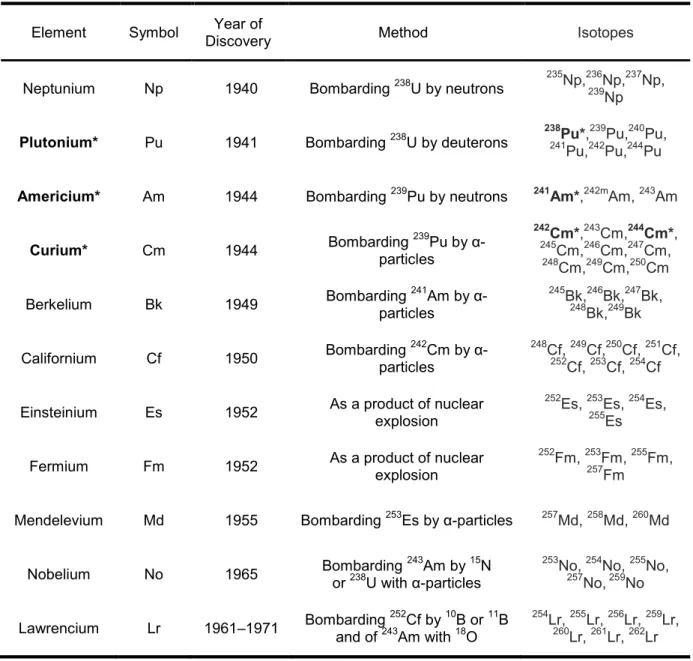
Table 1.1 Transuranic elements, their synthesis and isotopes
.
...20Table 1.2 Relevant physicochemical properties of C2E5 and
its metabolites...21
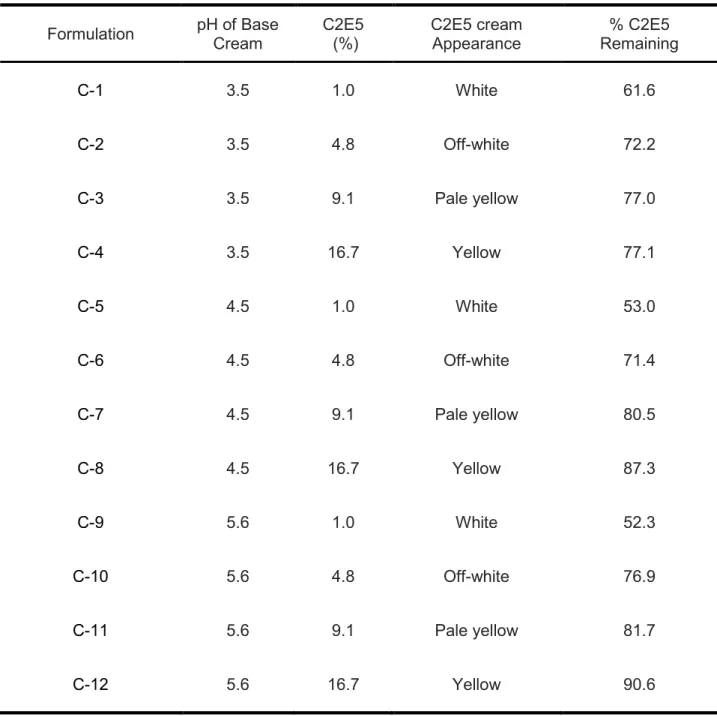
Table 2.1 C2E5 cream formulation composition, physical appearance and stability results after storage at 25 ± 2°C and 60 ± 5%
relative humidity for 2 months....………...……..……….……...48
Table 2.2 Ethyl cellulose-containing C2E5 non-aqueous gel formulation composition, related physical characterization data and stability results after storage at 25 ± 2°C and 60 ± 5% relative humidity
for 3 months.………….……...………...…...……..….……….……...49
Table 2.3 Distribution of Americium-241 in excreta 7 days after different treatments immediate post contamination at a dose of 200 mg
C2E5/kg...50
Table 3.1 Rheological properties of a 40% C2E5 non-aqueous gel at
different temperatures………...79
Table 3.2 Pharmacokinetic parameters of C2E3 and C2E2 after application of neat C2E5 oil or 40% C2E5 non-aqueous gel at a C2E5 dose of 200 mg/kg (n=4) and the enhancement ratio of C2E3 and C2E2 based on the formula
AUC0-24h (C2E5 gel) /AUC0-24h (Neat C2E5). ...80
Table 4.1 Percent of administered dose in various tissues 6 days after administration of [14C]-labeled C2E5 non-aqueous
gels at a dose of 200 mg C2E5/kg (n=6).. ... 107
Table 4.2 241Am recovered in samples seven days following single dose treatments 24 h post i.m. contamination of rats with
xiii LIST OF FIGURES
Figure 1.1 Structures of DTPA, the prodrug C2E5 and its metabolites ...22
Figure 1.2 Clearance of 14C-DTPA following intravenous administration ... 23
Figure 1.3 Estimated blood levels (from Fig 1.2) following a 1 g i.v. dose
of DTPA to a 70 kg man ... 24
Figure 1.4 Simulated Blood Concentration Profiles Following Daily i.v. Administration of DTPA vs. Biokinetics of Initially Insoluble Radionuclides (A) and Biokinetics of Highly Soluble
Radionuclides (B) ...25
Figure 1.5 Anticipated Blood Concentration Profiles Following Transdermal Administration of DTPA Penta-ethyl Prodrug vs. Biokinetics of Initially Insoluble Radionuclides (A) and Biokinetics of Highly Soluble Radionuclides (B).DA standard calibration curve in
deionized water………. ...26
Figure 1.6 Estimated DTPA/241Am ratio in the circulation as a function of infusion rate at steady state assuming [241Am] = 2 x 10⁻¹⁰ M,
k = 0.693 h-1 and Vd = 6 L ………. ...27
Figure 1.7 A graphic description for decorporation of [241Am]-americium
nitrate contaminated rats with C2E5 transdermal formulations. ...28
Figure 2.1 Structures of DTPA (A) and its prodrug C2E5 (B) ...51
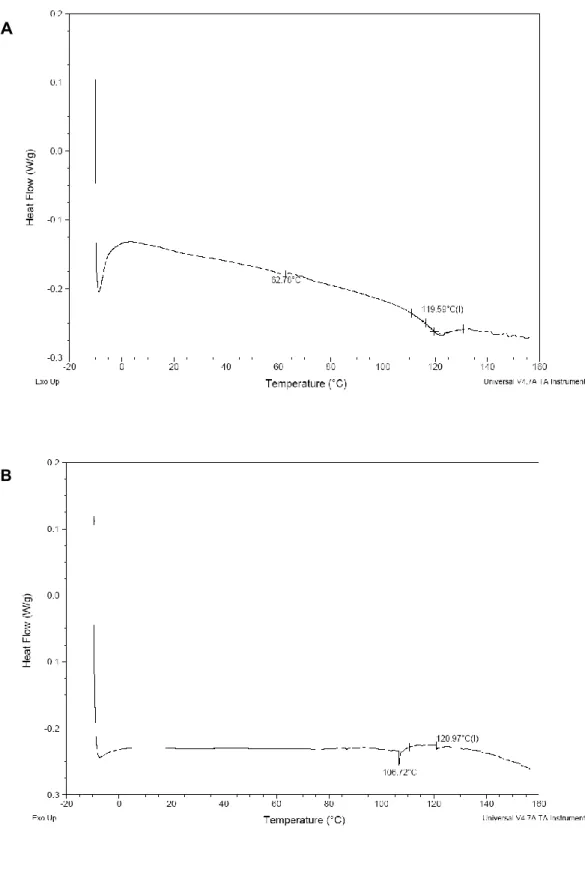
Figure 2.2 DSC traces of pre-dried EC10 (A) and a C2E5 non-aqueous gel formulation consisting of 10% EC10, 30% C2E5 and 60% Miglyol
840 (B) from -10°C to 160°C at a scanning rate of 10°C min-1 ...52
Figure 2.3 SEM images of EC10 particles (A and B) and a C2E5 non-aqueous gel formulation consisting of 10% EC10, 30% C2E5 and 60% Miglyol 840 (C and D) at
xiv
Figure 2.4 Daily excretion of 241Am in excreta after a single dose of topical application of 40% C2E5 non-aqueous gels (n=6) versus untreated control (n=4) (Data are means ± S.D.). (C2E5 gel group, ● ;
untreated control, ■ )………. ...55
Figure 3.1 Structures of DTPA, the prodrug C2E5 and its metabolites ...81
Figure 3.2 DSC spectrum of C2E5 non-aqueous gel comprised of 20% EC10, 40% C2E5 and 40% Miglyol 840 by solvent evaporation
method from -10°C to 160°C at a scanning rate of 10°C min-1………. 82
Figure 3.3 SEM images of (A–B) C2E5 non-aqueous gel comprised of 20% EC10, 40% C2E5 and 40% Miglyol 840 by solvent
evaporation method at three magnifications (~500 X and 3,000 X)………. 83
Figure 3.4 Continuous shear rheogram showing shear rate vs. shear stress at 25 °C and 32 °C of C2E5 non-aqueous gel comprised of 20% EC10, 40% C2E5 and 40% Miglyol 840 prepared
using the solvent evaporation method ………. ...84
Figure 3.5 Relationship between square root of time and cumulative amount of C2E5 released through a cellulose membrane into 0.1 M phosphate buffer after application of C2E5
non-aqueous gel (n=5) ………. ...85
Figure 3.6 Plot showing the concentration of C2E3 detected in rat plasma versus time for the neat C2E5 oil and the 40% C2E5
non-aqueous gel (Data are means ± S.D.) (n=4) ...86
Figure 3.7 Plot showing the concentration of C2E2 detected in rat plasma versus time for the neat C2E5 oil and the 40% C2E5
non-aqueous gel (Data are means ± S.D.) (n=4) ...87
Figure 4.1 Release-time profile of soluble, colloidal and particulate radionuclides (including actinides such as 238Pu, 239Pu, 241Am
and 242,244Cm) following i.m. injected in rats ... 109
xv
Figure 4.3 Daily excretion of radioactivity in urine and feces after topical application of [14C]-labeled 40% C2E5 non-aqueous gels (Data are means ± SD) (n=6). (Urinary excretion, -■-;
fecal excretion, -●-)………. ... 111
Figure 4.4 Daily excretion of 241Am in urine (A) or in feces (B) after a single dose of the decorporation agents at different dose levels and application areas 24 h post contamination. Significant (*p < 0.05, **p < 0.01, and ***p < 0.001) by Dunnett’s test. (Untreated control, -■-; 200 mg/kg applied to 6 cm2, -●-; 600 mg/kg applied to 6 cm2, -♦-; 1,000 mg/kg
to 6 cm2, -▲-; 600 mg/kg to 18 cm2, -■-)………. ... 112
Figure 4.5 Daily 14C excretion and 241Am decorporation via urine (A) and feces (B) by C2E5 gel formulations at 200 mg/kg dose applied 24 h post contamination. (Urinary excretion of 14C, -■-; fecal excretion of 14C, -●-; Urinary excretion of 241Am, -■-; fecal
xvi
LIST OF ABBREVIATIONS AND SYMBOLS
ANOVA analysis of variance
AUC area under the curve
Brij 58 polyoxyl 20-cetyl ether
Cmax maximum concentration
CAT catalase
DNA deoxyribonucleic acid
DTPA diethylenetriaminepentaacetic acid
DSC Differential Scanning Calorimetry
EC7 ETHOCEL® Std 7 FP Premium
EC10 ETHOCEL® Std 10 FP Premium
EC100 ETHOCEL® Std 100 FP Premium
EDTA ethylenediaminetetraacetic acid
GSH glutathione
h hour
HOPO hydroxypyridinonate
HPLC high-pressure liquid chromatography
IACUC Institutional Animal Care and Use Committee
ICP-MS inductively coupled plasma mass spectrometry
ICRP International Commission on Radiological Protection
IDA Iminodiacetic acid
i.p. intraperitoneal
IPA isopropyl alcohol
i.v. intravenous
xvii
LC-MS liquid chromatography–mass spectrometry
LC-MS/MS liquid chromatography–tandem mass spectrometry/mass spectrometry
LSC liquid scintillation counting
mg milligram
min minute
mL milliliter
Mr molecular mass
MS mass spectrum
NCRP National Council on Radiation Protection and Measurements
NDA new drug application
ng nanogram
NMR nuclear magnetic resonance
NTA nitrilotriacetic acid
PBS phosphate buffered saline
RBE relative biological effectiveness
RNS reactive nitrogen species
ROS reactive oxygen species
SAMMS self-assembled monolayer on mesoporous supports
s.c. subcutaneous
SD Sprague-Dawley
S.D. standard deviation
SEM scanning electron microscope
SNS Strategic National Stockpile
SOD superoxide dismutase
t1/2 half-life
xviii
vs. versus
WMD weapons of mass destruction
α alpha
β beta
γ gamma
µg microgram
CHAPTER 1: INTRODUCTION
1.1 GENERAL INTRODUCTION
The United States and many other countries face increasing threats from terrorist
groups with respect to the use of weapons of mass destruction (WMD) against civilian
populations. Of particular concern is that some of these groups are intensifying their efforts
to acquire and develop nuclear and radiological weapons. The Nuclear Trafficking Abstracts
Database reports an increasing number of incidents in the diversion of nuclear and
radioactive materials (1). These materials can be used to make Radiation Dispersal Devices
(RDD) which when spread by means of conventional explosives constitutes what is referred
to as a “dirty bomb”. Among the radionuclides of greatest concern that may be incorporated
in an RDD are isotopes of Americium (Am), Plutonium (Pu) and Curium (Cm). Furthermore,
the accidents of nuclear power plants and radionuclides such as Chernobyl in April 1986 (2)
and Goiânia accident in September 1987 (3), as well as Fukushima Daiichi in March 2011
(4), which all involved the release of a substantial amount of radioactive materials into the
environment, have heightened the awareness that many nations need to be prepared for
such cataclysmic events.
Since radioactivity was discovered by the French scientist Henri Becquerel in 1896
(5), great progress has been made to harness the power of this phenomenon. Radioactivity,
also known as radioactive decay or nuclear decay, is the process by which an unstable
atomic nucleus undergoes spontaneous decay or disintegration accompanied by the
2
alpha decay, beta decay, and gamma decay. Alpha decay, or α-decay, is a type of
radioactive decay in which an atomic nucleus emits a helium nucleus (He2+, also known as
an alpha particle, α particle). Beta decay, or β-decay, is a type of radioactive decay in which
an atomic nucleus emits a beta particle (an electron or a positron, β particle). Gamma
decay, γ-decay, is a type of radioactive decay in which an unstable daughter nucleus, which
is produced from the original atomic nucleus as a result of alpha or beta decay, emits
photons (γ ray) when it moves from an excited state to a lower energy state. Gamma decay
from excited states may also be produced as a result of nuclear reactions such as neutron
capture, nuclear fission, or nuclear fusion. High-energy β particles and γ rays are high in
penetration depth but low in ionizing power on their travelling path, whereas α particles are
low in penetration depth but high in ionizing power on their travelling path. Alpha particles
can cause substantial injury and subsequent health effects only when they are internalized
because the helium nuclei are not highly penetrating as a result of their relative large size
and charge. When a human is exposed to a large dose of radiation, be it in the form of direct
contact in close range or internalized as a result of inhalation, ingestion, injection or
absorption through intact skin or wound, it could result in the acute radiation syndrome
(ARS), as well as delayed health effects of radiation exposure. The International
Commission on Radiological Protection (ICRP) and the National Council on Radiation
Protection and Measurements (NCRP) have published a series of publications and reports
on topics such as radiation risk evaluation, recommendations on the limit of radiation
3
1.2 DECORPORATION OF INTERNALIZED TRANSURANIC ELEMENTS
1.2.1 Mechanism of Radiation-induced Damage
The radiation-induced damage to biological systems can be classified into two
mechanisms by which radiation ultimately affect cells, direct and indirect effects (8). Direct
effects of radiation refer to the fact that radiation interacts with the atoms of the
deoxyribonucleic acid (DNA) molecule, or some other cellular component critical to the
survival of the cell, which can lead to cell death and apoptosis in the short term, and
mutations and cancer in the long term (9-13). Indirect effects of radiation refer to the fact
that radiation can cause the radiolytic decomposition of water molecules in the cell and form
reactive oxygen species (ROS) and reactive nitrogen species (RNS), which can interact with
DNA and other important cellular components and result in cell death, apoptosis, mutations
and cancer (9-13).
Radiation-protective agents, which include prophylactic agents that are administered
before potential radiation exposure, and mitigating agents (mitigators) that are administered
during or after radiation exposure, have been developed to prevent or reduce
radiation-related damage (14). Because the major damage at the cellular level caused by radiation is
related to the ROS and RNS generated by ionizing radiation (9, 11), a substance that could
manage or help to reduce the oxidative stress would alleviate the detrimental effect of the
radiation (15, 16). This class of substance includes endogenous glutathione (GSH),
glutamine, catalase (CAT), superoxide dismutase (SOD) and antioxidant nutrients such as
vitamin C and E, phytochemicals and herbal preparation (17). The history, development,
and recent progress on radiation-protective agents have been reviewed in detail by Weiss
and Landauer (17), Seed (18), Xiao and Whitnall (19), Hosseinimehr (20), Mönig and
4
Because alpha particles are low in penetration depth but high in ionizing power on
their travelling path, they are very dangerous to living cells due to the high relative biological
effectiveness (RBE) of alpha radiation to cause biological damage only when they are
internalized. It is estimated that chromosome damage caused by alpha particle emitters
(such as transuranics or actinides) is an average of about 20 times more detrimental, and in
some experiments up to 1000 times more damaging, than an equivalent amount of gamma
or beta radiation (12). Russian dissident and ex-Federal Security Service officer Alexander
V. Litvinenko was believed to be killed by the powerful alpha emitter polonium-210 in 2006
(a milligram of 210Po emits as many alpha particles per second as 4.215 grams of 226Ra)
(22). Internalized transuranic radionuclides impose even greater damage to nearby living
cells because not only do alphas themselves cause damage, but alpha recoil (the
phenomenon that the parent nucleus needs to recoil after alpha emission due to the
conservation of momentum) cause approximately equal ionization along the path. This alpha
recoil process may in turn be especially damaging to genetic material, since many soluble
transuranic elements that emit alphas carry positive charge and these positive cations are
chemically attracted to the net negative charge of DNA, causing the recoiling transuranic
nucleus to be in close proximation to the DNA (23).
1.2.2 Transuranic Elements
The transuranic elements (also known as transuranium elements) are the chemical
elements with atomic numbers greater than 92 (the atomic number of uranium). All of these
elements are unstable and decay radioactively into other elements. The first several
transuranic elements were discovered at the Radiation Laboratory (now Lawrence Berkeley
National Laboratory) by Edwin McMillan, Glenn Seaborg, Albert Ghiorso and their
5
elements of the actinides family, their synthesis and isotopes are presented in Table 1-1 (24,
25). Due to cost and production difficulties, none of the elements beyond californium (Cf)
has industrial applications (26). In comparison, isotopes of transuranic elements of Am, Pu
and Cm have wide applications in nuclear power plants and other fields, such as in smoke
detectors. As a result of their abundant availability, it makes the isotopes of transuranic
elements of Am, Pu and Cm among the radionuclides of great concern for incorporation in
RDD.
1.2.3 Treatment for Internalized Transuranic Elements
After the terrorist attacks on September 11, 2001 in the U.S., a renewed effort has
been undertaken for the development of medical countermeasures for radiological/nuclear,
biological, and chemical threats. There is an interest in developing and procuring therapeutic
agents for national stockpiles. For this purpose, a U.S. research focus has primarily been
initiated and led by the U.S. Department of Health and Human Services through the National
Institute of Allergy and Infectious Diseases (NIAID) and the Biomedical Advanced Research
and Development Authority (BARDA). In 2005, NIH published a Strategic Plan and
Research Agenda for Medical Countermeasures against Radiological and Nuclear Threats
that provided the research and development objectives of radionuclide decorporation
agents. This was followed by the 2007 publication of the “Implementation Plan for Chemical,
Biological, Radiological and Nuclear Threats” by the Public Health Emergency Medical
Countermeasures Enterprise (27). The US Food and Drug Administration (FDA) has issued
several guidance documents to facilitate this effort, including guidelines for a new drug
application (NDA) for calcium and zinc DTPA products (28), guidelines for the development
6
efficacy under the animal rule (30). These coordinated efforts have resulted in a number of
reports, books and new drug candidates in the pipeline (31-33).
1.2.3.1 Diethylenetriaminepentaacetic Acid (DTPA)
DTPA (Figure 1.1) is a synthetic polyamino carboxylic acid with eight coordinate bond
forming sites that can sequester metal ions and form highly stable DTPA-metal ion
complexes. DTPA has wide industrial and medical applications including control of water
hardness, medical imaging and decorporation of internally deposited radionuclides (34). In
August 2004, FDA approved the calcium and zinc salts of DTPA manufactured by Hameln
Pharmaceuticals GmbH, of Hameln, Germany for treatment of internal contamination with
americium, curium and plutonium (35), which was based on the extensive experience in the
treatment of nuclear workers who were contaminated with plutonium or americium and
treated with Ca-DTPA and Zn-DTPA documented at the Radiation Emergency Assistance
Center/Training Site (REAC/TS) and other studies (36-38). Ca-DTPA and Zn-DTPA
treatment has established the usefulness of DTPA treatment in effectively reducing the body
burden of internalized Pu, Am and Cm isotopes. These drugs are known to form very stable
chelates with metal ions by exchanging calcium or zinc for a metal with greater binding
affinity, radioactive actinides in particular. These chelates are then excreted by glomerular
filtration into the urine. The approved Ca-DTPA and Zn-DTPA products are supplied as
sterile solutions (dose = 1 g/5 mL). Akorn Pharmaceutical Inc. provides the FDA approved
DTPA product in the US via an exclusively licensed and supply agreement with Hameln
Pharmaceuticals GmbH. These products may be obtained from the REAC/TS in the event of
a nuclear emergency. Over 4,600 doses these drugs have been administered for
investigational use over the past 45 years. The Medical Preparedness and Response
7
Device (RDD) Preparedness recommends that these drugs be administered in 1 g daily
unfractionated doses either by slow intravenous push, intravenous infusion, or inhalation in
a nebulizer (1:1 dilution with water or saline). The package insert states that following
intravenous administration, these agents are rapidly distributed with almost no accumulation
in specific organs (39). No significant amounts of Ca- or Zn-DTPA penetrate into
erythrocytes or other cells and there is little or no binding by the renal parenchyma. The oral
bioavailability of these compounds is low. The low permeability of DTPA and Ca-DTPA
classifies them as Class III compounds (high solubility, low permeability) in the
Biopharmaceutical Classification System (BCS).
1.2.3.2 Improved DTPA formulations and Other Decorporation Agents under
Development
NCRP Report No. 65 summarized the treatment options for internalized
radionuclides (40). Due to the fact that effective treatments for internal radionuclide
contamination exist for only a few radionuclides, the Public Health Emergency Medical
Countermeasures Enterprise has prioritized development of broad-spectrum, and novel or
improved radionuclide decorporation agents (27). Because DTPA treatment is
contraindicated for decorporating uranium, as well as unsuitable for a mass casualty
scenario (31, 41), a pharmaceutical approach to improved DTPA formulations and a
chemical approach to new classes of decorporation agents have been pursued to solve
these challenges (31).
The pharmaceutical approach to improved DTPA formulations focuses on
development of DTPA formulations suitable for delivery routes other than i.v. or inhalation,
namely oral or other routes that are convenient to administer, suitable for mass casualty
8
DTPA prodrugs for enhanced delivery of DTPA via the oral route (31, 43-46), and the
transdermal route (47, 48). The latter is the focus of this dissertation. The enhanced
decorporation of transuranic elements by this prodrug approach has been demonstrated in
an i.v. contamination model (44, 45), simulated wound model (45, 48), and inhalation
models on rodents (unpublished results). Dr. Gita Shankar and colleagues at SRI
International (Menlo Park, CA) are developing an orally bioavailable formulation of DTPA
using gastrointestinal absorption enhancers (49), and demonstrated the enhanced
decorporation over untreated control in i.v. contamination model on rodents (50). Dr. James
Talton and colleagues at Nanotherapeutics Incorporated (Alachua, FL) have developed an
enteric-coated NanoDTPA® formulation for oral delivery and demonstrated enhanced
decorporation of transuranic elements over untreated control in i.v. contamination model on
rodents (51, 52).
The chemical approach to new classes of decorporation agents of transuranic
elements focuses on the development of new chemical entities (NCE) and currently
available biomaterials (31). Dr. Scott Miller and his colleagues at University of Utah have
developed triethylenetetramine-hexaacetic acid based decorporation agents, which are
structurally similar to DTPA and belong to the class of amphipathic polyaminocarboxylic acid
compound family, and enhanced decorporation was achieved for the removal of plutonium
and americium in rodents (53, 54). Siderophore-based actinide-sequestering agents are one
major class of NCEs under investigation, which siderophore stands for “iron carrier” in Greek
(55). Dr. Raymond Bergeron and colleagues at University of Florida have developed
desferrithiocin and its derivatives, which are siderophore analogs, for decorporation of
uranium isotopes (56, 57). Dr. Kenneth Raymond’s group at University of California at
Berkeley, along with Patricia Durbin’s group at Lawrence Berkeley National Laboratory, has
done extensive research in synthesizing novel siderophore-based actinide decorporation
9
octadentate 3,4,3-LI-1,2-HOPO and tetradentate 5-LIO-Me-3,2-HOPO, as effective and safe
decorporating agents for actinides in rodents (61-71). In terms of applying biomaterials for
radionuclide decorporation, chitosan and its derivatives are currently being developed for
the decorporation of ingested radionuclides by Dr. Tatiana Levitskaia at the Pacific
Northwest National Laboratory (31). Dr. Charles Timchalk and colleagues of the Pacific
Northwest Laboratory have designed a self-assembled monolayer on mesoporous supports
(SAMMS), which are hybrid materials of mesoporous silica (SiO2), for decorporation
evaluation of ingested radionuclides and the radionuclides in the systemic circulation (31).
1.3 TRANSDERMAL DRUG DELIVERY
Transdermal drug delivery possesses many advantages over the parenteral and oral
routes. These include the delivery of a steady-state profile that reduces side effects related
to fluctuations in plasma drug concentration, reduced dosing frequency, avoidance of
first-pass metabolism, and improved patient compliance due to its convenient and non-invasive
means of self-administration (72-74). It may also offer benefits to special populations such
as patients with needle phobia, those who are unconscious or too nauseated to take oral
medications, pediatric patients and the elderly. The latter two populations are specific areas
of concern to the FDA related to the development of radionuclide decorporation agents (29).
The factors that affect transdermal absorption of drugs may include physiological and
pharmaceutical factors such as the degree of hydration and thickness of the skin, the
exposure time, skin immunology, the concentration of drug applied and the surface area
over which the drug is applied (72-76). Also of critical importance are the physicochemical
properties of drugs such as molecular weight and solubility, and the partition coefficient (log
P) where the affinity of the drug for the skin must be greater than its affinity for the vehicle in
10
solubility > 1 mg/mL, molecular weight < 500 Da and a log P value of 2-4 (depending on
molecular weight) (72-76). Passive diffusion of a drug across the stratum corneum can
determined from Fick’s Law (Eq. 1-1). According to the following equation:
where Jss = steady-state flux (mg/h); D = drug diffusivity (cm2/h); h= membrane thickness
(cm); Kp = drug’s membrane-vehicle partition coefficient; Cveh = initial drug concentration
(mg/cm3) in the vehicle; and A = surface area (cm2). According to Fick’s Law, transdermal
fluxes can be improved by increasing drug diffusivity, partitioning into the stratum corneum,
the surface area of application and the drug concentration in the formulation. It has been
demonstrated that for relatively small molecules, e.g., a series of non-steroidal
anti-inflammatory agents, the log P values correlate well with the area under the plasma-time
curve (AUC) values (77).
Previous research reports have shown that to be a successful transdermal drug
delivery candidate, a balance of lipophilicity and hydrophilicity is highly desirable because
the drug needs to be reabsorbed into an aqueous environment after it penetrates through
the stratum corneum (75, 76). A recent paper by Mark Prausnitz’s group at Georgia Institute
of Technology demonstrated that transdermal delivery of molecules is limited by the full
11
1.4 TRANSDERMAL DELIVERY OF DTPA PRODRUG BY MATCHING BIOKINETICS OF
INTERNALIZED TRANSURANIC ELEMENTS
Mass contamination scenarios call for effective and prompt medical countermeasures
for the affected populations. Current DTPA treatment options do not meet the challenge
imposed by a mass casualty setting in that skilled medical professionals are required to
administer Ca/Zn-DTPA by i.v. injection and multiple injections may be required due to the
short plasma half-life of DTPA. Crawley and Haines studied the clearance of 14C-labeled
DTPA in rats after intravenous administration and observed that the amount of radioactivity
retained in tissues 24 hours after administration was <1% of the administered radioactivity,
and that over 99% was excreted up to 9 days after administration (79). Chromatographic
analysis of the excreted radioactivity demonstrated that 14C-DTPA was intact and had not
been metabolically degraded. A separate study was conducted in which plasma and urine
were analyzed for 14C content following the i.v. administration of 14C-DTPA to human
subjects. The results showed that DTPA was rapidly distributed in the extracellular fluid
volume and was cleared through the kidneys by glomerular filtration. Greater than 99% of
the administered dose was collected in the urine within 24 hours of administration (see
Figure 1.1 which was obtained from Akorn Inc’s package insert for Pentetate Calcium
Trisodium Injection) (39). Based on a dose of 1 g/70 kg, we can project the plasma
concentration of DTPA (Figure 1.2). From these data, we can calculate that the elimination
half-life is tri-phasic with a mean of 60 min and that there is very little tissue distribution of
DTPA after i.v. injection. Thus, a 1 g dose in 70 kg subject is expected to yield a Cmax of ~
142 µg/mL and a blood concentration of 34 ng/mL 12 hours after administration.
In contrast, the release rates of internalized Am, Pu and Cm contaminants from
wound sites to the systemic circulation in various animal species range from 0.052 to 6.3%
12
The release profiles of inhaled transuranic material based on ICRP Publication 66
respiratory tract model and the biokinetic data from the contamination cases are highly
dependent on the physical and chemical forms of the inhaled transuranic radionuclides,
varying from highly soluble forms to insoluble forms (81-87). Simulated blood concentration
profiles following daily i.v. administration of DTPA versus biokinetics of internalized
transuranic radionuclides could be scenarios as depicted in Figure 1.4 as initially insoluble
radionuclides (A) and highly soluble radionuclides (B). Furthermore, it has been suggested
that a chelating agent must be maintained at a concentration of at least 10 to 25 µM in both
extracellular and intercellular fluids for a sustained duration to ensure an optimal chelation
effect of transuranic radionuclides (88). In comparing the short half-life and rapid clearance
of DTPA after i.v. administration to the slow and sustained introduction of radio-actinides
into the systemic circulation (80), there is a mismatch between the pharmacokinetic profile of
intravenously administered DTPA and the biokinetic profile of transuranic radionuclides. This
mismatch leads to a period where DTPA plasma concentrations are below the effective
concentration required to chelate radionuclides in the systemic circulation and, thus, may
limit the effectiveness of the current parenteral DTPA treatments. Previous efforts have
addressed this mismatch and produced encouraging results.
There are a number of reports in which DTPA salts have been used for the
decorporation of 241Am in animal models in which the Am is in various chemical forms (89).
Several studies have demonstrated that if the 241Am can be chelated before it accumulates
in liver and bone, its decorporation can be greatly enhanced (90). Once in these tissues,
241Am becomes firmly bound and clears very slowly. The clearance of 241Am from rat liver
has been approximated using bi-exponential functions with half-lives of 5.8 and 150 days
(91), which is also a slow and sustained release process. Based on this observation,
Guilmette and Muggenburg conducted a study in which they used an osmotic pump for the
13 soluble 241AmO
2 by inhalation. They compared this treatment to controls as well as to dogs that received i.v. daily doses of Ca-DTPA (bi-weekly after the first 4 days) and assessed the
decorporation efficiency by measuring the % initial pulmonary burden remaining as a
function of time. The results of this study clearly demonstrated that continuous infusion of
DTPA was significantly more effective in preventing the translocation of inhaled 241AmO2
from lung to extra-pulmonary tissues such as liver and bone compared to bi-weekly
intravenously administered DTPA. The infusion therapy approach led to 60- and 200-fold
reductions in the absorbed radiation doses to the bone and liver, respectively, and blocked
over 98% the 241Am that otherwise would have deposited in liver and bone (92). From a
pharmacokinetic perspective, this is logical as the dissolution rate of 241AmO
2 which is necessary for its absorption into the circulation, is much less than the clearance of DTPA
from the circulation (93). DTPA has been entrapped in various liposome formulations for
prolonged circulation after i.v. administration, and improved decorporation of 238Pu was
achieved (94, 95). However, these approaches involve parenteral administration, thus
making them unsuitable for mass casualty scenarios after a major nuclear/radiological
emergency. As a result, a non-parenteral delivery system which can provide sustained
levels of chelators in the circulation that match the biokinetic profile of actinides after
inhalation or wound contamination is an attractive approach to address this problem.
It is highly desirable to deliver DTPA to the circulation at a zero-order rate to better
match actinide biokinetic profiles and thus achieve optimal radionuclide decorporation over
an extended duration, as the results from the previous studies have shown. Due to its low
partition coefficient (log P = -4.90) and high melting point (219-220ºC), DTPA is not a good
candidate for transdermal delivery (73, 96). Prodrug strategies have been widely applied to
drug candidates and compounds with undesirable physicochemical properties and
absorption permeability, by converting certain functional groups into pro-moieties and thus
14
delivery (97-102). Applying the prodrug strategy to the DTPA molecule, the five highly
ionizable carboxylic groups were converted into 5 ethyl ester groups via Fischer
esterification reaction (43, 44). The penta-ethyl ester of DTPA, designated as C2E5, was
designed and synthesized as a new radionuclide decorporation prodrug to overcome the
limitations of the current DTPA treatments (31, 43, 44). C2E5 possesses physicochemical
properties suitable for transdermal delivery. It has a molecular weight of 533.6, water
solubility of 3.0 mg/mL at pH 7.1 and 20.3 mg/mL at pH 5.7, and a log P value of 3.3, and a
log D value of 2.2 at pH 6.0., and it is a Newtonian liquid with a viscosity of 175 cP at 25ºC
(44). The structures of C2E5 as well as its potential degradation products and metabolites
including DTPA tetra-ethyl ester (C2E4), DTPA tri-ethyl ester (C2E3), DTPA di-ethyl ester
(C2E2), DTPA mono-ethyl ester (C2E1), and the fully de-esterified DTPA are shown in
Figure 1.1. Simulated blood concentration profiles following daily i.v. administration of DTPA
versus biokinetics of internalized transuranic radionuclides are depicted in Figure 1.4 as
initially insoluble radionuclides (A) and highly soluble radionuclides (B).
Many prodrugs tested for topical and transdermal delivery were ester prodrugs
(102-107). After permeation through the stratum corneum, the ester prodrugs were metabolized
by the enzymes in the epidermis and dermis, including mainly esterases and cytochrome
P450 (108-113). Studies on the esterase distribution of skin have shown that the stratum
corneum has little or no activity, the epidermis has the highest esterase activity, and the
dermis has reduced activity relative to the epidermis (114). Selected niacin ester prodrugs
were able to achieve high blood levels of niacin sufficient to reduce serum cholesterol and
improve blood lipid profiles and it was evident that esterases in the skin were capable of
rapidly converting the prodrug to the pharmacologically active niacin (104). The action of
skin esterases was also exploited in the development of testosterone esters where it was
demonstrated that testosterone propionate was rapidly converted to testosterone during the
15
epidermis, not just the stratum corneum (78), it’s highly desirable that a lipophilic ester
prodrug first penetrates through the stratum corneum and then is converted by esterases in
the epidermis into more hydrophilic metabolites and/or parent drug which need to be
reabsorbed into an aqueous environment before entering into systemic circulation.
Preliminary data on C2E5 metabolism suggest that C2E5 molecules undergo step wise
de-esterification in vivo (116, 117), and it’s anticipated that many of the partially hydrolyzed
C2E5 metabolites could bind internalized transuranic radionuclides (118-122). Relevant
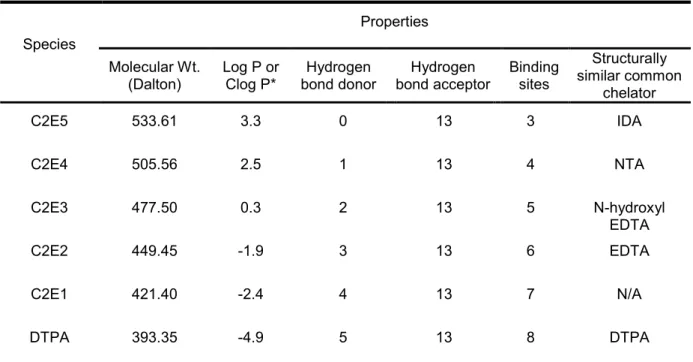
physicochemical properties of C2E5 and its metabolites are shown in Table 1.2. Anticipated
blood concentration profiles following transdermal administration of DTPA penta-ethyl
prodrug versus biokinetics of internalized transuranic radionuclides could be two scenarios
as depicted in Figure 1.5 as initially insoluble radionuclides (A) and highly soluble
radionuclides (B).
If a victim of nuclear terrorism inhaled 241AmO
2 and/or was contaminated with 241Am particles via wound and the amount of 241Am that diffused into the circulation resulted in an
average of 1 µCi in the bloodstream, then the concentration of Am in the bloodstream would
be approximately 2 x 10⁻¹⁰ M. Thus, if we made the over-simplified assumption that the
circulation was a well-stirred reactor and knowing the stability constant for DTPA binding
with Am (1022 M), we can calculate the steady-state concentration of DTPA required to
chelate the Am in the circulation to prevent its uptake into liver and bone. Figure 1.6 shows
the DTPA/241Am ratio in the circulation as a function of infusion rate of DTPA at steady state,
where the steady state concentration (Css) is defined as Css = R/Vdk, where R = infusion
rate, Vd is the volume of distribution and k is the elimination rate constant. The red data point
on this figure represents the infusion rate Guilmette used in rat studies (30 µmole/kg/day)
extrapolated to a 70 kg man, i.e., 2.1 mmole/day (~800 mg/day). This figure shows that even
at infusion rates of 0.1 µmole/hour/70 kg, the DTPA/241Am ratio would be >100 at steady
16
take into account the physiological complexities of the circulatory system, local pH effects or
the presence of biomacromolecules (proteins, indirect acids and bases) and other metals.
Our group has studied the transmetallation between DTPA-lanthanide chelates, which have
stability constants similar to actinides, and the two most physiologically relevant divalent
ions, Cu2+ and Zn2+ (Ca2+ and Fe2+ do not compete with Am3+ for DTPA because the K Am-DTPA
>> KCa-DTPA and KFe-DTPA) (93). Based on these studies, we expect the exchange between
Am-DTPA and Cu2+ and Zn2+ at physiological concentrations to be ~1% (123). Thus, this
model can provide initial guidance in the development of formulations for the continuous
delivery of DTPA and related chelators. The intravenous doses of Ca- and Zn-DTPA are
large (14.3 mg/kg), however, calculations based on known kinetic parameters indicate that
delivery rates of the DTPA prodrug required to maintain effective steady state
concentrations of DTPA may be achieved by much lower daily doses. It is not uncommon for
10 g of a topical formulation to be applied to the skin for systemic delivery of a therapeutic
agent, as in the case of AndroGel® (testosterone gel) (105). In addition, there are examples
where ester prodrugs have been administered topically in relatively large doses for systemic
delivery of therapeutic agents. Jacobson et al described the topical administration of niacin
esters in which the dose of the prodrugs, applied as a 1-10% lotion, ranged from 34 to 340
mg/kg (103). Because DTPA penta-ethyl ester is a liquid oil, formulations containing up to
50% of the DTPA penta-ethyl prodrug can be prepared and 10-20 g of this semisolid
formulation can be applied to the skin of an individual that has been contaminated with
17 1.5 HYPOTHESIS AND SPECIFIC AIMS
1.5.1 Hypothesis
Transdermal administration of DTPA penta-ethyl ester prodrug, designated as C2E5,
achieves comparable enhanced decorporation of 241Am to i.v. administration of DTPA in rats
contaminated with intramuscularly injected [241Am]-americium nitrate.
1.5.2 Specific Aims
Aim I: Develop C2E5 Transdermal Formulations with Suitable Stability Profile.
The objective of Specific Aim I is to 1) develop viable transdermal C2E5
formulations by screening non-proprietary oil-in-water emulsion-based cream and
hydrocarbon base ointment formulation prototypes, and exploring other semisolid
formulations; and 2) evaluate the physical and chemical stability of prepared C2E5
formulations for at least 6 month under storage stability conditions at 25 ± 2°C and 60 ± 5%
relative humidity and at 4 ± 2°C.
Aim II: Characterize and Evaluate the Candidate C2E5 Transdermal Formulations.
The objective of Specific Aim II is to 1) characterize the candidate C2E5 formulations
with Differential Scanning Calorimetry (DSC) and Scanning Electron Microscopy (SEC); 2)
evaluate the rheological properties of the candidate C2E5 formulations; and 3) perform in
vitro release testing of the selected C2E5 transdermal formulations with Franz diffusion cell.
18
Aim III: Evaluate C2E5 Transdermal Formulations by Pharmacokinetic, Absorption and
Mass Balance Studies in Rats.
The objective of Specific Aim III is to 1) perform a pharmacokinetic study using the
selected C2E5 transdermal formulations to determine the pharmacokinetic parameters in
rats; and 2) perform absorption and mass balance studies with [14C]-labeled C2E5
transdermal formulation in rats.
Aim IV: Determine Efficacy of C2E5 Transdermal Formulations with Animal Model.
The objective of Specific Aim IV is to determine the efficacies of the selected C2E5
transdermal formulations using a wound contamination model with [241Am]-americium nitrate
in rats at different C2E5 dose levels after 241Am contamination.
1.6 SUMMARY
In this dissertation, various C2E5 transdermal formulation prototypes were prepared
and tested for C2E5 stability under normal storage stability conditions. The non-aqueous gel
matrix comprised of ethyl cellulose and Miglyol 840® proved to stabilize C2E5 in the matrix.
In addition, C2E5 non-aqueous gel was characterized by DSC and SEC, and in vitro release
profile of the formulation was evaluated with Franz diffusion cell. The pharmacokinetic study,
and absorption and mass balance study, as well as efficacy studies using a simulated
wound contamination model in rats, were conducted in rats. A graphic description of
decorporation of [241Am]-americium nitrate contaminated rats with C2E5 transdermal
19
applied to the clipped dorsal skin of rats which have been contaminated with intramuscularly
injected [241Am]-americium nitrate on the thigh. The C2E5 molecules penetrate through the
stratum corneum and are converted to its metabolites by esterases in the skin. The C2E5
metabolites chelate with 241Am to form stable complexes for enhanced elimination from the
20
Table 1.1 Transuranic elements, their synthesis and isotopes.
Element Symbol Discovery Year of Method Isotopes
Neptunium Np 1940 Bombarding 238U by neutrons 235Np,236239Np,Np 237Np,
Plutonium* Pu 1941 Bombarding 238U by deuterons
238Pu*,239Pu,240Pu, 241Pu,242Pu,244Pu
Americium* Am 1944 Bombarding 239Pu by neutrons 241Am*,242mAm, 243Am
Curium* Cm 1944 Bombarding particles 239Pu by
α-242Cm*,243Cm,244Cm*,
245Cm,246Cm,247Cm, 248Cm,249Cm,250Cm
Berkelium Bk 1949 Bombarding particles 241Am by α- 245Bk,248246Bk,Bk,249247Bk Bk,
Californium Cf 1950 Bombarding particles 242Cm by α- 248Cf, 252Cf, 249Cf,253250Cf, Cf, 254251Cf Cf,
Einsteinium Es 1952 As a product of nuclear explosion 252Es, 253255Es, Es 254Es,
Fermium Fm 1952 As a product of nuclear explosion 252Fm, 253257Fm, Fm 255Fm,
Mendelevium Md 1955 Bombarding 253Es by α-particles 257Md, 258Md, 260Md
Nobelium No 1965 Bombarding or 238U with α-particles 243Am by 15N
253No, 254No, 255No, 257No, 259No
Lawrencium Lr 1961–1971 Bombarding and of 243252Am with Cf by 1018B or O 11B
254Lr, 255Lr, 256Lr, 259Lr, 260Lr, 261Lr, 262Lr
21
Table 1.2 Relevant physicochemical properties of C2E5 and its metabolites.
Species
Properties
Molecular Wt.
(Dalton) Log P or Clog P* bond donor Hydrogen bond acceptor Hydrogen Binding sites
Structurally similar common
chelator
C2E5 533.61 3.3 0 13 3 IDA
C2E4 505.56 2.5 1 13 4 NTA
C2E3 477.50 0.3 2 13 5 N-hydroxyl
EDTA
C2E2 449.45 -1.9 3 13 6 EDTA
C2E1 421.40 -2.4 4 13 7 N/A
DTPA 393.35 -4.9 5 13 8 DTPA
* The Clog P values for the C2E5 metabolites were obtained from ChemBioDraw Ultra 12.0; IDA: Iminodiacetic acid; NTA: nitrilotriacetic acid; EDTA: ethylenediaminetetraacetic acid; DTPA: diethylenetriaminepentaacetic acid, N/A: Not available.
22
23
24
25
Figure 1.4 Simulated Blood Concentration Profiles Following Daily i.v. Administration of DTPA vs. Biokinetics of Initially Insoluble Radionuclides (A) and Biokinetics of Highly Soluble Radionuclides (B).
Time
B
lo
o
d
C
o
n
ce
n
tr
at
io
n
---
DTPA
---
Radionuclide
A
Time
B
lo
o
d
C
o
n
ce
n
tr
at
io
n
---
DTPA
26
Figure 1.5 Anticipated Blood Concentration Profiles Following Transdermal Administration of DTPA Penta-ethyl Prodrug vs. Biokinetics of Initially Insoluble Radionuclides (A) and Biokinetics of Highly Soluble Radionuclides (B).
Time
B
lo
o
d
C
o
n
ce
n
tr
at
io
n
---
DTPA
---
Radionuclide
A
Time
B
lo
o
d
C
o
n
ce
n
tr
at
io
n
---
DTPA
27
Figure 1.6 Estimated DTPA/241Am ratio in the circulation as a function of infusion rate of DTPA at steady state assuming [241Am] = 2 x 10⁻¹⁰ M, k = 0.693 h-1 and V
28
CHAPTER 2: FORMULATION DEVELOPMENT OF PENTA-ETHYL ESTER OF DTPA FOR TRANSDERMAL DELIVERY
The penta-ethyl ester of diethylenetriamine pentaacetic acid (DTPA), a DTPA prodrug
designated as C2E5 intended for transdermal delivery for radionuclide decorporation, was
first screened with a prototype cream formulation and a hydrocarbon base ointment with
C2E5 concentration ranging from 1% to 20%. C2E5 experienced rapid degradation in the
cream matrix and C2E5 ointment formulation underwent phase separation due to
components incompatibility. Non-aqueous gel matrix comprised of ethyl cellulose/Miglyol
840® was utilized to formulate C2E5 at different ethyl cellulose and C2E5 content levels.
Differential Scanning Calorimetry (DSC) and Scanning Electron Microscope (SEM) imaging
were applied for analysis of the prepared C2E5 gel formulation. C2E5 was stabilized in the
non-aqueous gel matrix and ethyl cellulose solubilization by dispersion media was confirmed
by DSC and SEM results. Selected C2E5 non-aqueous gel formulations were evaluated in a
rodent 241Am wound contamination model at a dose level of 200 mg C2E5/kg. The
enhanced decorporation over no treatment control on total decorporation, decorporation by
urine, and decorporation by feces was 142%, 181% and 86%, respectively. The
non-aqueous gel matrix comprised of ethyl cellulose/Miglyol 840 was successfully employed to
stabilize the hydrolysis prone C2E5. C2E5 was delivered transdermally and achieved
30 2.1 INTRODUCTION
The United States and many other countries face increasing threats from terrorist
groups with respect to the use of weapons of mass destruction against civilian populations.
Of particular concern is that some of these groups are intensifying their efforts to acquire
and develop nuclear and radiological weapons, such as Radiological Dispersal Devices
(RDD) which, when spread by means of conventional explosives, constitutes what is
referred to as a “dirty bomb”. Among the radionuclides of greatest concern that may be
incorporated in an RDD are isotopes of americium (Am), curium (Cm) and plutonium (Pu).
Internalization of these radioactive materials may result in acute radiation sickness or
chronic injuries including an increased risk of developing tumors.
The calcium (Ca) and zinc (Zn) trisodium salts of diethylenetriamine pentaacetic acid
(DTPA) are the only agents that have been approved by the US Food and Drug
Administration (FDA) as chelating agents for internal contamination by Am, Cm and Pu
radionuclides. The primary goal of these agents is to chelate those radionuclides before they
become fixed in tissues such as liver and bone while enhancing their elimination. Due to the
fact that Ca-DTPA and Zn-DTPA are highly hydrophilic and have a low oral bioavailability of
2-3% (124), these products must be prepared as sterile injectable solutions. Most sterile
injectable products are expensive to manufacture and require administration by a skilled
professional, which render current Ca/Zn-DTPA treatment unsuitable for facile use in a mass
casualty situation. Furthermore, there is a mismatch between the pharmacokinetic profile of
intravenously (i.v.) administered DTPA and the biokinetic profile of transuranic radionuclides
(90, 92, 94). Stevens and colleagues studied the clearance of 14C-labeled DTPA in man
after i.v. administration and observed that the intravenously administered 14C-labeled DTPA
was quantitatively excreted intact in urine within 24 hours (125). The total body clearance of
31
100% with half-lives from 0.28 to 0.53 h with no metabolic degradation (79, 94). In contrast,
the release rates of internalized Am, Pu and Cm contaminants from wounds sites to the
systemic circulation in various animal species range from 0.052 to 6.3% of the injected dose
per day, a relatively slow and steady transfer process (80). It has been suggested that a
chelating agent must be maintained at a concentration of at least 10 to 25 µM for a
sustained duration to ensure an optimal chelation effect of transuranic radionuclides, both in
extracellular and intercellular fluids (88). A sustained DTPA plasma concentration cannot be
achieved by i.v. Ca/Zn-DTPA and is not readily achievable by conventional
sustained-release oral dosage forms. In addition, there are some patient populations that cannot take
drugs orally, e.g., patients experiencing severe nausea following radiation exposure and
very young pediatric patients.
A zero-order release profile can be achieved via transdermal drug delivery (72, 73).
Topical and transdermal drug delivery provides many clinical advantages over the oral
route, such as avoidance of first path metabolism, sustained release of drug with more
uniform plasma concentration, and improved patient acceptance and compliance (72, 73).
To be a good topical and transdermal drug delivery candidate, the compound needs to
possess suitable physicochemical properties, such as a molecular weight generally less
than 500 Dalton, a partition coefficient (log P) between 1 and 3, and a melting point below
200ºC (72, 73). DTPA is highly hydrophilic (log P = -4.90) with high melting point (219 -
220ºC), thus making it unsuitable for transdermal delivery (96). We have reported on the
preparation of a lipophilic DTPA prodrug, designated as C2E5, in which the 5 carboxylic
groups on DTPA were esterified with ethanol. C2E5 is a clear, light yellow, slightly viscous
Newtonian liquid with a viscosity of ~175 cP (175 mPa s) and possesses desirable
physicochemical properties for transdermal delivery (43, 44). The structures of C2E5 and
the parent compound (DTPA) are depicted in Figure 1. Transdermal delivery of C2E5 may
32
by esterases present in the skin and plasma. The semisolid dosage forms for topical and
transdermal drug delivery include creams, ointments, gels, and lotions. Unlike transdermal
patches which require highly specialized expertise on patch design and sophisticated
manufacturing systems, semisolid dosage forms can easily be screened in a lab setting.
Previous reports showed that approximately 68% of C2E5 remained intact for the neat C2E5
oil containing 0.6% α-tocopherol stored at 25°C/80% relative humidity for three months (46),
indicating that C2E5 is prone to degradation. The aims of these studies were to screen
candidate cream, ointment and gel dosage forms to identify a semisolid matrix to stabilize
and be compatible with C2E5, investigate the relevant physical properties of a lead C2E5
formulation, and evaluate the decorporation efficiency of the lead C2E5 formulation in a
simulated 241Am wound contamination model.
2.2 MATERIALS AND METHODS
2.2.1 Materials
Miglyol 812® and Miglyol 840® were gifts from Sasol (Witten, Germany). The
Capmul MCM® was a gift from Abitec Corp (Columbus, Ohio). Ethylcellulose polymers of
increasing chain length with ethoxyl content of 48.0-49.5% [ETHOCEL® Std 7 FP Premium
(EC7), ETHOCEL® Std 10 FP Premium (EC10), and ETHOCEL® Std 100 FP Premium
(EC100)] were gifts from Dow Chemical (Midland, MI, USA). C2E5 was prepared based on
the Fischer esterification method by reacting DTPA with ethanol under reflux in the presence
of a hydrochloric acid catalyst delivery (44). Propylene glycol (USP), sorbitol, 70% solution
(USP), sorbic acid (NF), butylated hydroxytoluene (NF), simethicone (USP), white
petrolatum (USP), cetostearyl alcohol (NF), polyoxyethylene (20) cetyl ether (Brij 58®),


![Figure 1.6 Estimated DTPA/ 241 Am ratio in the circulation as a function of infusion rate of DTPA at steady state assuming [ 241 Am] = 2 x 10 -10 M, k = 0.693 h -1 and V d = 6 L](https://thumb-us.123doks.com/thumbv2/123dok_us/8246040.2185164/45.918.191.799.186.564/figure-estimated-circulation-function-infusion-dtpa-steady-assuming.webp)
![Figure 1.7 A graphic description for decorporation of [ 241 Am]-americium nitrate contaminated rats with C2E5 transdermal formulations](https://thumb-us.123doks.com/thumbv2/123dok_us/8246040.2185164/46.918.181.802.187.655/figure-graphic-description-decorporation-americium-contaminated-transdermal-formulations.webp)