
Review Article
MOBILE APPLICATION - CROSS DOMAIN
DEVELOPMENT AND STUDY OF PHONEGAP
Mathangi Krishnamurthi
Information Technology Department, Pune Institute of Computer Technologies, Pune, MS, India.
ABSTRACT
There has been a significant development in the market for smart devices and its computational power in the last decade. The combination of computational power, easy portability, inherent features and the ease with which it reaches the common man has propelled this development. The need for mobile solutions has increased exponentially due to the easy and prevalent access to these smart devices. The dilemma met by those wanting to target these consumers was mainly as to which methodology to adopt. Given the fragmented Smartphone market, native development of application was found resource wise and financially not lucrative. There came a need for a “Develop One Time, Deploy anywhere anytime” solution. So this has been solved by the cross-platform mobile application development tool. Phonegap is one such popular framework which embeds HTML5 and CSS3 to provide the needed functionality. Given its generic nature, there is still some need for consideration of its performance as op-posed to a native application.
Key Words: Smart devices, Cross-platform development, Phonegap
Corresponding Author:
Mathangi Krishnamurthi, 503 Atria, Zircon Apartments, Viman Nagar, Pune – 411014, MS, India. E-mail: [email protected]
Received:21.10.2015 Revised: 11.11.2015 Accepted:30.11.2015
INTRODUCTION
There has been an immense development in the domain of mobile devices. Recent data claims 95.5% of the world pop-ulation have a mobile service subscription [1].The reason for this may include, Smartphones rival the traditional resources in terms of computational power, mobility, availability, flex-ibility, low weight, small size and inherent features such as sensors, Global Positioning System (GPS), camera and other such features [2]. The rapid increase may be attributed to the ease of availability. In today’s fast-paced world, people are definitely inclined towards a mobile approach, therefore, the need for effective mobile solutions.
Although mobile application development and traditional software development are similar in functionality, there are some major differences in these two approaches. There are some additional considerations for mobile software engineer-ing like the battery backup, security, user experience expect-ed, testing strategy, native and web application and context awareness. Battery consumption is a concern with applica-tions that require continuous running and heavy graphical or computational load. Furthermore, there are different hard-ware configurations. For example, the smaller size severely altered the user interface and the design guidelines consid-ered for design and development of an application.
CHALLENGES IN MOBILE APPLICATION DEVEL-OPMENT
Universal user interface
Each platform that is device specific has some guidelines to follow for the development of the user interface [3]. Al-though these are predominantly similar there are some dif-ferences due to dependence on a device such as a screen size, resolution, and computational power. There are no standards to follow as with traditional software development like the Shneiderman’s “8 Golden Rules of Interface Design” [4]. Although some of them may be applicable, they cannot be standardized without some revision. In addition to the differ-ence in screen sizes even the input methods may differ, e.g., touch interface replaced keypads.
Designing Context-Aware Mobile Application
Context awareness is defined as being able to sense chang-es in the environment and adapting as per requirement [5]. Context sensors like location, geothermal, etc. can be uti-lized to provide real-time hyper-speciauti-lized context specific environment for the user. In some situations, non-functional requirements are necessary to satisfy the user. In such a sce-nario, a decision is made whether to deliver no functionality at all or reduced functionality.
IJCRR
Section: Healthcare Sci. Journal Impact Factor
Privacy
Given the amount of user-centric and personal data being transmitted for maintaining a context sensitive environment due consideration must be provided for protection of this transmitted data.
Balancing agile and uncertainty in requirement
While developing mobile applications many developers adopt an ad-hoc or agile approach. Considering the scenario, where the application is incapable of providing full or par-tial functionality, provisions need to be provided in the ag-ile model of development for such situations. Requirement specification approaches like RELAX may be adopted for the self-adaption of the application [6].
Enabling Software Reuse across Mobile Plat-forms
The code base is varied depending on the device specifica-tion and availability and cost involved in acquiring the requi-site skilled resources. A myriad and duplicate code base are a nightmare for maintenance and performance, therefore there is a need for code reuse. With several different platforms be-ing produced by various hardware producers, it becomes a difficult choice as to which methodology to follow to service a wider audience.
DIFFERENT APPROACHES TO MOBILE APPLICA-TION DEVELOPMENT
With the fragmentation of the smartphone market, it be-comes a dilemma as to what to choose, cost over functional-ity or vice versa. There are several options available and the choice depends on the application and its intended audience. These methods mainly comprise of native applications, web applications and hybrid application development.
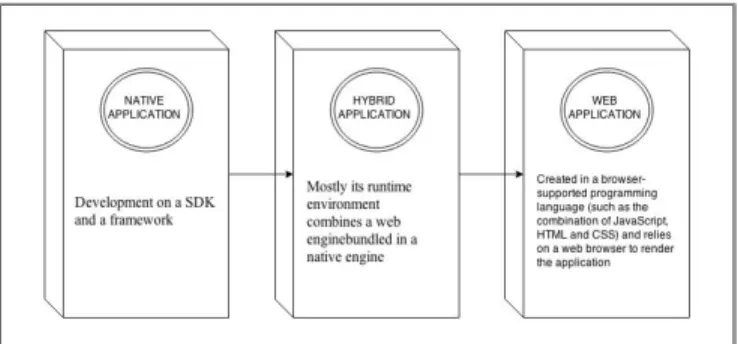
Figure 1: Mobile Application Development Approaches
Native application development targets a specific platform and is usually developed using Software development kit (SDK) and framework. The technology differs significantly from one platform to another. IPhone uses Objective-C /C / HTML5, Android- Java /C / C++ /HTML5, Symbian- C /
C++ /Java / HTML5 and Windows Phone- C#/C++/Silver-light/ HTML5 [7] [8] [9].
Given the sheer number of languages and the fragmentation of the mobile market makes native applications cost inten-sive. It is human resource intensive in terms of people with the specific skill set. The platform design specifics are not unique and support and maintenance become difficult [10]. Therefore, there is a need for a solution which emulates the “Develop One Time, Deploy anywhere anytime” principle. Next methodology adopted was a web application developed on the mobile termed as ‘web apps’. With recent technolo-gies like HyperText Markup Language (HTML5)and Cas-cading Style Sheets (CSS3) providing a great way to develop a simple application, this method uses the browser as their runtime environment and thereby capitalizes on the good browser support of mobile platforms. But even this has some drawbacks. The device-specific hardware features such as a camera or GPS sensor cannot be accessed [11]. There is no provision for large data processing or authentication. Fur-thermore, it is difficult to create a native app like feel on a web application.
To access the hardware feature with the benefit of code re-use of web technology a new methodology was coined, the hybrid application. Its runtime environment combines a web engine bundled in a native engine.
This can further be divided into more subparts. One such popular approach is the one followed by Titanium Mobile [12]. It uses a self-contained runtime environment and does not use the web environment already present. They are bun-dled with the framework’s engine and deployed as native apps.
Another popular method followed by PhoneGap framework is a web rendering engine with the platform specific calls diverted to the native engine.
HYBRID APPLICATIONS
ADVANTAGES OF HYBRID APPLICATION Reduces application development cost
Enables developers with less skill set to develop a single app for all the devices that are to be supported as per the business need.
Simplifies application management
With businesses leaning towards offering mobile apps and it becoming a norm rather than a rare scenario, a deliver-able product is no more the only goal. Continued support and maintenance of the code base with additional new features become necessary. This is simplified by having a single code
base.
They are easier to update
Once an update or a patch is ready it can be pushed to all the users and their devices across the business enterprise.
DISADVANTAGESOF HYBRID APPLICATION User Experience
The look and feel of the application cannot mimic the user interface features of a native interface many times. The smoothness of a native application may not be reproducible.
The web views implementation
They require distinct web view implementation per platform [13].
Performance
Performance is a major consideration while contemplating adoption of hybrid application development. Depending on the usage of the application, performance is affected ranging from slightly to adversely [14]. For example, resource inten-sive applications such as gaming application may be better implemented using native methodology.
Market barriers
The major market barrier for Cross-Platform Tool (CPT) vendors are low awareness of their tools and services among the global app developer community as well as among com-panies which have a vested interest in cross-platform app development. Only 16 CP Tools are known to 20% of the global app developer community. The rest of the 150+ tools is hardly known or unknown.
Figure 2: Market Barriers [30]
CP Tools have made some progress in raising awareness among the global app developer community. Adobe Air, PhoneGap, and Unity are some of the tools that have man-aged to attain visibility in the market since last year. The vast majority are still relatively unknown (not shown in the graph below).
Figure 3: Awareness of Cross-Platform Tools
One another major consideration are the constant updates of the mobile platforms and its ramification on the cross do-main development.
DIFFERENT FRAMEWORK FOR CROSS PLAT-FORM APPLICATION DEVELOPMENT
To develop cross-platform application some tools and frame-works are utilized like Rhodes, PhoneGap, DragonRad, MoSync, Appcelerator Titanium, Sencha Touch 2, jQuery Mobile, Xamarine, Unity3D and Corona SDK. From this limited list, we will be considering a few.
Rhodes
RhoMobile Rhodes is an open source framework for cross-platform Smartphone applications, developed by RhoMobile [15]. It attempts to manage application and data to provide high productivity and portability. It provides many products like Rhodes (Develop), RhoConnect (Integrate), Rhohub (Deploy) and RhoGallery (Manage). It also provides an IDE called RhoStudio.
It uses web development languages such as HTML, CSS, JavaScript and Ruby skills to build native apps for all popu-lar operating systems: iOS, Android, Windows Phone, Win-dows CE and WinWin-dows 8.
Appcelerator Titanium Studio 2.0
As a self-contained runtime environment, Appcelerator Ti-tanium Mobile follows a different approach. It provides a rich API and low-level process calls. UI manipulation oc-curs through JavaScript API’s. It does not utilize the web languages such as HTML and CSS.
The environment for development is provided in the form of IDE Titanium Studio. It contains an SDK and the tools required for development. Inside the packaging, the conver-sion to native code is done by using scripting e.g. python scripts are used for android. It is a stable framework where the data can be stored either in the cloud or on the device.
Some advantages are, the native code is rendered smoothly. The development environment setup is simple and rich docu-mentation is available. Further, it supports tablet develop-ment.
Its functionalities are restricted by the API offered and the device supported count is less as compared to its peers [16].
Sencha Touch 2.0
Sencha Touch 2.0 [17] is a powerful and complex framework which can either be used as the self-contained development platform providing an access to the hardware features of the device or can be used as an add-on to a framework like Phon-eGap aiding the UI development. It also offers an option to build native packages deployable on iOS and Android ap-plication market [18]. The supported platforms are iOS, An-droid, BlackBerry, Kindle, and Bada, with a free commercial license for application development, and a paid commercial license for OEM uses. It is overall a mature framework.
jQuery Mobile
jQuery is a unified system for all popular mobile device plat-forms that comprises of an HTML5based user interface. It does not create native applications. It has a broad support for the vast majority of mobile devices, feature phones, and old-er browsold-ers. The application is written in HTML5 and CSS [19]. It is used in fusion with a framework like Phonegap to provide an enriched user interface. It is a mature framework.
Phonegap
PhoneGap is an open-source framework for mobile applica-tion development [20].It uses standards-based web technolo-gies to bridge the gap between web applications and mobile devices [21].
PhoneGap makes it easy to work within a short span of time, without maintenance considerations that are part of native software development kit (SDK). The developer may use na-tive SDK as well or use the Phonegap Build feature [22].
PHONEGAP- AN OPEN SOURCE FRAMEWORK
PhoneGap was originally created by Nitobi Software, which has since been acquired by Adobe [23]. The development now takes place in the Apache Cordova project of the Apache Foundation, of which PhoneGap is a distribution [24]. Developers implement their application using HTML and CSS for front-end development and use Javascript for con-structing the business logic. The runtime environment pro-vides access to the native hardware features through applica-tion interface (API) calls.
Figure 4: Phonegap Architecture [31]
It can be used through an eclipse plugin or specific Software Development Kits. A new feature offered by Phonegap is the PhoneGap Build which is a cloud-based development environment. As far as deployment is concerned the binary file generated during the build cannot be published on any mobile application market. The developer obtains the final release through the pricing PhoneGap Build service. It is a mature framework [25].
ADVANTAGES
• It is an open source software. Therefore, all native wrapper source code is available facilitating customi-zation. Broad ranges of platforms are supported. Sup-ports seven mobile platforms (iOS, Android, Black-Berry OS, Windows Phone, HP WebOS, Symbian, Bada.)
• Apps are built predominantly using HTML, CSS and JavaScript thus leading to easy adaptation.
• Phonegap provides easy access to platform-specific features. Complex functionalities can be implemented using plug-ins.
• Launching a PhoneGap app is fast and the user inter-action is smooth.
• PhoneGap Build is a service that compiles an app for different platforms on the cloud, removing the need for developers to install the platform SDKs.
• Documentation is clearly structured and comprehen-sive [26].
• Though Apple may reject a Web app, this does not ap-ply to Phonegap Apps. These are distributed through usual app stores and likes.
KNOWN ISSUES AND SOLUTIONS
• It does not provide UI components, design patterns, and dev tools. This can, however, be overcome by us-ing a support framework like jQuery Mobile or Sencha Touch 2.0 to help develop the UI [27].
• No support of multithreading, since not all of the mo-bile Web-Views have the implemented Web-Workers. This can be resolved through native PhoneGap plugins [28].
• All the features of the phone may not be available, fur-thermore accessing some of this feature is time-con-suming and lead to performance issues. We can utilize plugins in some cases.
• Though the code base is same for all the platforms, there often arises a need to tweak functionality for a certain platform. This presents a problem for debug-ging and finding a workaround. The lag around 300ms is noted during touch events. During selection of the external library, due care should be taken for perfor-mance and click events should be avoided [29]. • Building and deploying on Phonegap may be
time-consuming as compared to a native application. • Use CSS transition and hardware acceleration to speed
up the application.
• Do not wait for the data to display the UI. Employ deferred load to improve performance.
Therefore, PhoneGap can be used in scenarios where the application is not expected to do resource extensive opera-tions and when highly rich UI graphics is not needed to be rendered.
PERFORMANCE CONSIDERATION
Performance can be measured by considering a number of factors such as execution time, memory usage or battery con-sumption. The criteria considered here is of execution time as this directly affects the user experience.
To have a comprehensive understanding of the framework and its limitations we look into different resource categories:
• Hardware access: access to the accelerometer, launch a sound notification, trigger vibrator.
• Network access: request data from GPS, request net-work information
• Data access: write data into a file, read data from a file, retrieve data from a content provider.
Research shows that a PhoneGap application is seldom faster in execution as compared to a native application. In most scenarios, performance decay progresses from slight to very significant. For example, resource intensive operations like accessing the GPS positioning had huge lag.
The root cause of this difference may be attributed to the in-ner structure of the resource call to the resource or code level whereas a native method directly accesses the resource, the hybrid environment utilizes JavaScript accesses through an execution path that has at least one call-back method sub-stantially increasing the execution time. This execution time is directly proportional to the amount of complexity in ac-cessing the specific resource.
Though web-based implementation is usually slower than the native the performance penalty may be discounted in most scenarios.
DISCUSSION
There seems to be a myriad of discussion on the effective-ness of hybrid application development and different con-cerns while considering the deciding criteria for selection of one technology. Taking into consideration the nascent nature of the some technologies under consideration as compared to the some more mature frameworks PhoneGap seems to be most beneficial for relatively small size application which is akin to a web application with a few phone capabilities in-cluded. It also has a less steep learning curve as compared to some of its peer technologies. Standardization of criteria for technology selection could prove to be beneficial for a wider audience mainly including developers, stakeholders and de-cision makers while choosing a technology.
CONCLUSION
We are at the pinnacle of a mobile revolution and mobile applications are becoming a norm for businesses to capture a ready audience. But it is important to understand the finer points of difference between mobile application develop-ments as compared to traditional software development. Challenges that are unique to mobile application develop-ment need be addressed. Further different approaches to mobile development based on the underlying need are to be explored. For example, if the business target is to concen-trate only on the iPhone client base then a native application makes more sense than a hybrid application.
The hybrid application may seem like the answer to all the developer woes of developing on the heavily fragmented mobile market with its varied platforms and hardware con-figurations. It comes with its own let of limitations and is-sues. There a number of options available for hybrid applica-tion development.
Developing using a multi-platform framework is a decision to be made based on the availability of resources and the business implication.
User experience is critical in determining the success of an application. A trade-off must be made between a native look and feel and a standard user interface.
Phonegap as a cross-platform framework is considered and its advantages and disadvantages discussed. Performance considerations of the hybrid application are discussed on the basis of execution time.
Thus, this provides a brief overview of the points to remem-ber before developing a mobile application.
ACKNOWLEDGEMENTS
I would like to take this opportunity to thank our project guide and Head of the
Department Dr. Emmanuel M. for his valuable guidance and for providing all the necessary facilities, which were indis-pensable in the completion of this paper. I would like to ex-tend a special thanks to my external guide Abhijeet Gadgil for the stellar infrastructure and motivation and Amol Kulkarni, for histireless efforts and expert guidance.Iwould like to acknowledge the immense help received from the scholars whose articles are cited and included in references of this manuscript. I am also grateful to authors / editors / publish-ers of all those articles, journals and books from where the literature for this article has been reviewed and discussed.
REFRENCES
1. Global mobile statistics 2014 Part A: Mobile subscribers; handset market share; mobile operators, http://mobiforge. com/research-analysis/global-mobile-statistics-2014-part- a-mobile-subscribers-handset-market-share-mobile-operators?mT (accessed 2-11-2014)
2. Ramzi N. Sansour, Nidal Kafri, Muath N. Sabha, “A Survey On Mobile Multimedia Application Development Frame-works”.
3. J. Dehlinger and J. Dixon, “Mobile Application Software
Engineering: Challenges and Research Directions”,
Depart-ment of Computer and Information Sciences, Towson Uni-versity.
4. B. Shneiderman, “Designing the user interface,” 1987. 5. A. Battestini, C. Del Rosso, A Flanagan, M. Miettinen,
“Cre-ating Next Generation Applications and Services for Mobile
Devices: Challenges and Opportunities”, The 18th Annual
IEEE International Symposium on Personal, Indoor and Mobile Radio Communications (PIMRC’07).
6. J. Whittle, P. Sawyer, N. Bencomo, B. H.C. Chengand J. Bruel, “RELAX: Incorporating Uncertainty into the
Specifi-cation of Self-Adaptive Systems”, 2009 17th IEEE
Interna-tional Requirements Engineering Conference.
7. V.C. Kulloli , A. Pohare#2, S. Raskar#2, T. Bhattacharyya , S. Bhure, “Cross Platform Mobile Application
Develop-ment”. International Journal of Computer Trends and
Tech-nology (IJCTT) - volume4 Issue5–May 2013.
8. To program for which smartphones? http://www.scriptol. com/programming/mobile.php(accessed 5-12-2014) 9. 5 Key Programming Languages for Mobile Developers,
http://www.appia.com/blog/key-programming-languages-for-mobile-developers(accessed 2-11-2014)
10. G. Vitols, I. Smits And A. Zacepins, “Issues of Hybrid Mo-bile Application Development with PhoneGap: a Case Study
of Insurance Mobile Application”, Databases And
Informa-tion Systems H.-M. Haav, A. Kalja and T. Robal (Eds.) Proc.
of the 11th International Baltic Conference, Baltic DBandIS 2014.
11. H. Heitk¨otter, S. Hanschke, and T.A. Majchrzak, “Evalu-ating Cross-Platform Development Approaches for Mobile
Applications”, Department of Information Systems
Univer-sity of M¨unster, M¨unster, Germany.
12. Seven Cross-Platform Mobile Development Tools, https:// www.udemy.com/blog/cross-platform-mobile-develop-ment/(accessed 1-11-2014)
13. Native Versus Hybrid Mobile App Development, http://app- scend.com/blog/native-versus-hybrid-mobile-app-develop-ment/(accessed 20-11-2014)
14. L. Corral, A. Sillitti, G. Succi, “Mobile multiplatform
de-velopment: An experiment for performance analysis”, The
9th International Conference on Mobile Web Information Systems (MobiWIS).
15. RhoMobile, http://rhomobile.com/rhoelements.html (ac-cessed 23-11-2014)
16. Appcelerator, http://www.appcelerator.com/(accessed 23-11-2014)
17. I. Dalmasso, S. K. Datta, C. Bonnet, N. Nikaein , “Survey, Comparison and Evaluation of Cross Platform Mobile
Ap-plication Development Tools”, Mobile Communication
De-partment, EURECOM Sophia Antipolis, France
18. Sencha Products, http://www.sencha.com/products/(ac-cessed 24-11-2014)
19. Touch 2.0.2 Sencha Docs,http://docs.sencha.com/
touch/2.0.2/#!/guide/getting_started(accessed 25-11-2014) 20. JQuery mobile, http://jquerymobile.com/(accessed
28-11-2014)
21. J. M. Wargo, “PhoneGap Essentials-Building
Cross-Plat-form Mobile Apps”, ISBN 978-0-321-81429-6 (pbk.:alk.
paper)
22. Phonegap ,http://phonegap.com/(accessed 10-12-2014) 23. Adobe® PhoneGap™ Build, Package mobile apps in the
cloud. https://build.phonegap.com/(accessed 12-12-2014) 24. Adobe: “Adobe Announces Agreement to Acquire Nitobi”
(2011), http://www.adobe.com/aboutadobe/pressroom/ pressreleases/201110/AdobeAcquiresNitobi.html(accessed 12-12-2014)
25. Apache Cordova, http://incubator.apache.org/cordova/(ac-cessed 20-12-2014)
26. PhoneGap: API reference, http://docs.phonegap.com/ en/1.8.0/index.html(accessed 10-12-2014)
27. Using PhoneGap for Hybrid App Development, http://www. sitepoint.com/using-phonegap-for-hybrid-app-develop-ment/ (accessed 5-1-2015)
28. PhoneGap: How to Create One App for All Platforms, http:// mobidev.biz/blog/phonegap_how_to_create_one_app_for_ all_platforms (accessed 5-1-2015)
29. Top 10 Performance Techniques for Phonegap Application, http://coenraets.org/keypoint/phonegap-performance/(ac-cessed 13-2-2015)
30. Cross-Platform-Tool-Benchmarking-Report-2014, research-2guidance, researchresearch-2guidance, OranienburgerStrasse 27, 10117 Berlin, Germany
31. Phonegap Architecture http://www.mammoth.com.au/blog/ cross-platform-mobile-development-phonegap-vs-xamarin (accessed 13-2-2015)
![Figure 2: Market Barriers [30]](https://thumb-us.123doks.com/thumbv2/123dok_us/9096897.2402607/3.918.492.829.87.282/figure-market-barriers.webp)
![Figure 4: Phonegap Architecture [31]](https://thumb-us.123doks.com/thumbv2/123dok_us/9096897.2402607/4.918.470.832.108.353/figure-phonegap-architecture.webp)
