R E S E A R C H A R T I C L E
Open Access
Comparison of registered and published
outcomes in randomized controlled trials:
a systematic review
Christopher W. Jones
1*, Lukas G. Keil
2, Wesley C. Holland
3, Melissa C. Caughey
4and Timothy F. Platts-Mills
5Abstract
Background:Clinical trial registries can improve the validity of trial results by facilitating comparisons between prospectively planned and reported outcomes. Previous reports on the frequency of planned and reported outcome inconsistencies have reported widely discrepant results. It is unknown whether these discrepancies are due to differences between the included trials, or to methodological differences between studies. We aimed to systematically review the prevalence and nature of discrepancies between registered and published outcomes among clinical trials.
Methods:We searched MEDLINE via PubMed, EMBASE, and CINAHL, and checked references of included publications
to identify studies that compared trial outcomes as documented in a publicly accessible clinical trials registry with published trial outcomes. Two authors independently selected eligible studies and performed data extraction. We present summary data rather than pooled analyses owing to methodological heterogeneity among the included studies.
Results:Twenty-seven studies were eligible for inclusion. The overall risk of bias among included studies was moderate to high. These studies assessed outcome agreement for a median of 65 individual trials (interquartile range [IQR] 25–110). The median proportion of trials with an identified discrepancy between the registered and published primary outcome was 31 %; substantial variability in the prevalence of these primary outcome discrepancies was observed among the included studies (range 0 % (0/66) to 100 % (1/1), IQR 17–45 %). We found less variability within the subset of studies that assessed the agreement between prospectively registered outcomes and published outcomes, among which the median observed discrepancy rate was 41 % (range 30 % (13/43) to 100 % (1/1), IQR 33–48 %). The nature of observed primary outcome discrepancies also varied substantially between included studies. Among the studies providing detailed descriptions of these outcome discrepancies, a median of 13 % of trials introduced a new, unregistered outcome in the published manuscript (IQR 5–16 %).
Conclusions:Discrepancies between registered and published outcomes of clinical trials are common regardless of funding mechanism or the journals in which they are published. Consistent reporting of prospectively defined outcomes and consistent utilization of registry data during the peer review process may improve the validity of clinical trial publications.
Keywords:Clinicaltrials.gov, Primary outcome, Publication bias, Reporting bias, Selection bias, Trial registration
* Correspondence:[email protected] 1
Department of Emergency Medicine, Cooper Medical School of Rowan University, One Cooper Plaza, Suite 152, Camden, NJ 08103, USA Full list of author information is available at the end of the article
© 2015 Jones et al.Open AccessThis article is distributed under the terms of the Creative Commons Attribution 4.0 International License (http://creativecommons.org/licenses/by/4.0/), which permits unrestricted use, distribution, and reproduction in any medium, provided you give appropriate credit to the original author(s) and the source, provide a link to the Creative Commons license, and indicate if changes were made. The Creative Commons Public Domain Dedication waiver (http://creativecommons.org/publicdomain/zero/1.0/) applies to the data made available in this article, unless otherwise stated. Joneset al. BMC Medicine (2015) 13:282
Background
The designation of a clearly defined, pre-specified primary outcome is a critically important component of a clinical trial [1]. Inconsistencies between planned and reported outcomes threaten the validity of trials by increasing the likelihood that chance or selective reporting, rather than true differences between treatment and control groups, account for primary outcome differences as reported at the time of publication. These inconsistencies can have direct consequences for physician decision-making and policies that influence patient care [2].
ClinicalTrials.gov was established in 2000, in large part to encourage consistency and transparency in the report-ing of clinical trial outcomes. Since 2005 the International Committee of Medical Journal Editors (ICMJE) has expli-citly supported this goal by mandating the registration of clinical trials in a publicly available registry prior to begin-ning trial enrollment as a condition of publication in member journals [3]. Additionally, both the United States and the European Union have passed legislation requiring the prospective registration of most clinical trials involving drugs or devices [4, 5]. As a result of these policies, trial registration has dramatically increased [6], and registries are now important tools for assessing consistency between planned and published primary outcomes.
Reported discrepancy rates between registered clinical trial outcomes and published outcomes range from less than 10 % of trials to greater than 60 % [7–9]. It is un-known whether this wide range in results stems from differences in characteristics of the included trials or from differences in how investigators assessed outcome consistency. It is also unclear which estimates are most representative of clinical trials in general. A better under-standing of the problem of outcome inconsistencies may help define the frequency and impact of inappropriate changes to trial outcomes and identify subgroups of clin-ical trials that warrant further attention. Additionally, this knowledge may help inform future regulations aimed at improving trial transparency. We conducted a systematic review of published comparisons of registered and pub-lished primary trial outcomes in order to provide a com-prehensive assessment of the observed prevalence and nature of outcome inconsistencies.
Methods
Search strategy and study selection
We performed a search for studies that evaluated the agree-ment between primary trial outcomes as docuagree-mented in clinical trials registries and as described in published manu-scripts. Studies were eligible if they included data from clin-ical trials, utilized either Clinclin-icalTrials.gov or any registry meeting World Health Organization (WHO) Registry Cri-teria (Version 2.1), and included comparisons to outcomes as defined in published manuscripts. We excluded studies
published prior to 2005, because our objective was to characterize inconsistencies between trial registries and publications, and registries were used infrequently prior to the 2005 ICMJE statement requiring trial registration. Man-uscripts were also excluded if they were secondary reports of studies for which the relevant findings had previously been published, or if they were published in a language other than English. Reports of individual trials, case reports, and editorials were excluded. We searched MEDLINE via PubMed and CINAHL in August 2014, and EMBASE in September 2014. Full details from each search are available in Additional file 1: Appendix A. Additionally, we reviewed the citation lists from each included manuscript for add-itional eligible studies.
Two investigators (LGK, WCH) independently screened the titles and abstracts of manuscripts identified through the database searches to identify potentially eligible studies for further assessment. Discrepancies were resolved by a third investigator (CWJ). Following this step, two inves-tigators then independently assessed each remaining full-length manuscript for inclusion in the study. A third investigator again reviewed all discrepancies, and the final list of included studies was determined by group consensus.
The primary outcome of interest for this systematic re-view was the proportion of trials in which the registered and published primary outcomes were different. Second-ary outcomes were differences between registered and published secondary outcomes and the relationship be-tween registered and published outcomes on the statis-tical significance of published outcomes.
Data extraction
Two investigators independently performed data extraction for each eligible study using a standardized data form. For each study, investigators recorded the total number of tri-als examined and the number of tritri-als for which a discrep-ancy was present between the registered and published primary outcome. WHO-approved trial registries must save a history of changes made to registry records, and we also recorded whether study authors reported reviewing these changes. When included studies utilized this feature to report registered outcomes at various time points, we used the primary outcome registered at the time enroll-ment started as the registered outcome [3]. Additional data fields included the nature of primary outcome discrepan-cies, categorized according to a modified version of the ap-proach developed by Chan et al. [10] These categories are: a registered primary outcome was omitted in the manu-script; an unregistered primary outcome was introduced in the manuscript; a registered primary outcome was de-scribed as a secondary outcome in the manuscript; a pub-lished primary outcome was described as a secondary outcome in the registry; and the time of primary outcome
assessment differed between the registry and manuscript. When possible, the data abstractors also recorded informa-tion about the publishing journals or clinical specialties for trials included in each study, publication year of included trials, registry databases utilized for each study, the timing of trial registration with respect to participant enrollment, and the proportion of outcome discrepancies favoring stat-istical significance in a published manuscript.
Data synthesis
Data were analyzed in accordance with the methodology recommended in the Cochrane Handbook for Systematic Reviews of Interventions, where relevant, and results are re-ported in accordance with the Preferred Reporting Items for Systematic Reviews and Meta-Analyses (PRISMA) state-ment (Additional file 2: Appendix B) [11, 12]. For each in-cluded study we calculated the proportion of trials with primary outcome discrepancies, along with 95 % confidence intervals. Significant heterogeneity with respect to the methods of the included studies and substantial statistical heterogeneity prevented us from performing pooled ana-lyses. Pre-specified analyses included the assessment of primary outcome discrepancies among prospectively registered trials, secondary outcome discrepancies, and the proportion of outcome discrepancies favoring stat-istical significance in a published manuscript. Following our initial data analysis, we decided to compare primary outcome discrepancy rates between studies in which au-thors generated a list of published trials and searched for corresponding registry entries with studies in which a list of registered trials was used as the basis for a publication
search, because both strategies were common among the included studies.
We assessed the risk of bias of included studies using a modified version of the Newcastle-Ottawa Scale for asses-sing the quality of cohort studies, in which the included studies were assessed based on the following factors: rep-resentativeness of the included cohort; ascertainment of the link between trial registry and manuscript; method of assessing primary outcome agreement; enrollment win-dow of included trials; and the analysis of prospectively registered outcomes (Additional file 3: Appendix C) [13]. We used the Wilson score method with continuity correction to calculate 95 % confidence intervals [14]. Analyses were conducted using Stata 14 (College Sta-tion, TX, USA).
Results
Description of included studies
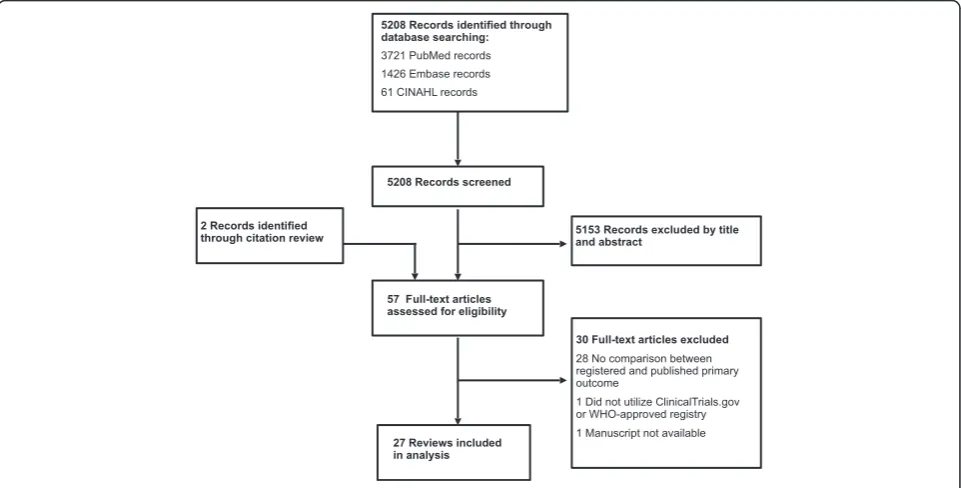
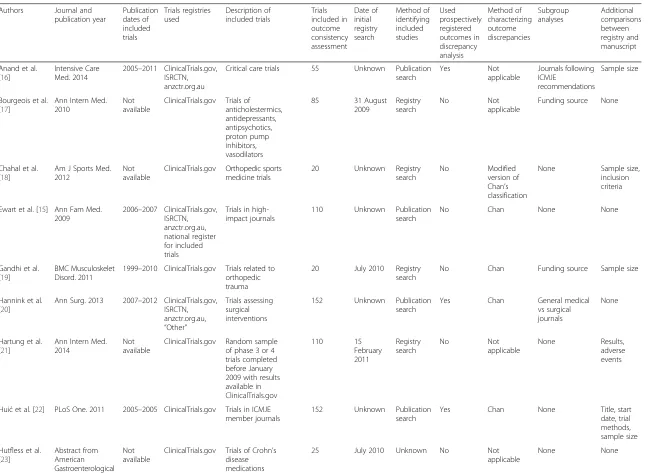
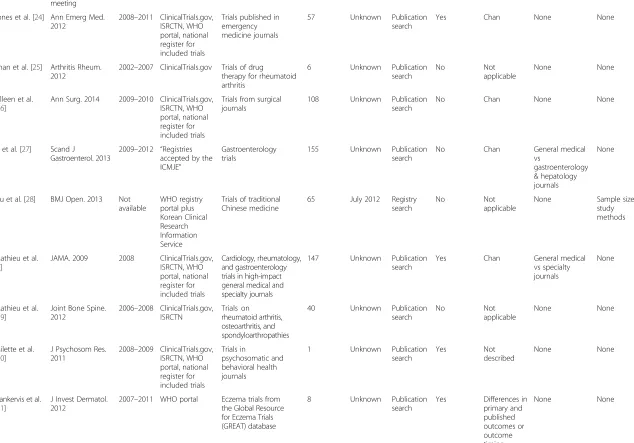
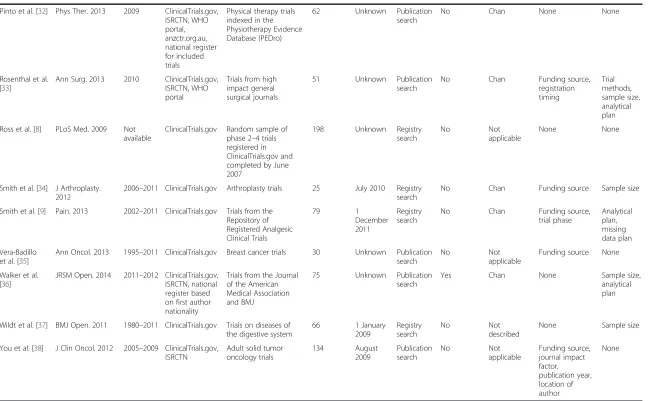
Database searches identified 5208 records. Following ex-clusions based on title and abstract review, we assessed 57 full manuscripts for eligibility. Twenty-five studies fied by the database search and another two studies identi-fied through the citation review met inclusion criteria for a total of 27 eligible studies that compared registered and published primary outcomes (Fig. 1) [7–9, 15–38]. Char-acteristics of these studies, including publication dates, a description of included trials, and search methods, are re-ported in Table 1. Detailed ratings regarding risk of bias for the included studies are provided in Additional file 3: Appendix C. Risk of bias was moderate to high for most
Fig. 1Flowchart of study selection process
Table 1Characteristics of included studies
Authors Journal and publication year Publication dates of included trials Trials registries used Description of included trials Trials included in outcome consistency assessment Date of initial registry search Method of identifying included studies Used prospectively registered outcomes in discrepancy analysis Method of characterizing outcome discrepancies Subgroup analyses Additional comparisons between registry and manuscript
Anand et al. [16]
Intensive Care Med. 2014
2005–2011 ClinicalTrials.gov, ISRCTN, anzctr.org.au
Critical care trials 55 Unknown Publication search Yes Not applicable Journals following ICMJE recommendations Sample size
Bourgeois et al. [17]
Ann Intern Med. 2010
Not available
ClinicalTrials.gov Trials of anticholestermics, antidepressants, antipsychotics, proton pump inhibitors, vasodilators
85 31 August 2009
Registry search
No Not
applicable
Funding source None
Chahal et al. [18]
Am J Sports Med. 2012
Not available
ClinicalTrials.gov Orthopedic sports medicine trials
20 Unknown Registry search
No Modified version of Chan’s classification
None Sample size, inclusion criteria
Ewart et al. [15] Ann Fam Med. 2009
2006–2007 ClinicalTrials.gov, ISRCTN, anzctr.org.au, national register for included trials
Trials in high-impact journals
110 Unknown Publication search
No Chan None None
Gandhi et al. [19]
BMC Musculoskelet Disord. 2011
1999–2010 ClinicalTrials.gov Trials related to orthopedic trauma
20 July 2010 Registry search
No Chan Funding source Sample size
Hannink et al. [20]
Ann Surg. 2013 2007–2012 ClinicalTrials.gov, ISRCTN, anzctr.org.au,
“Other”
Trials assessing surgical interventions
152 Unknown Publication search
Yes Chan General medical vs surgical journals
None
Hartung et al. [21]
Ann Intern Med. 2014
Not available
ClinicalTrials.gov Random sample of phase 3 or 4 trials completed before January 2009 with results available in ClinicalTrials.gov 110 15 February 2011 Registry search No Not applicable None Results, adverse events
Huićet al. [22] PLoS One. 2011 2005–2005 ClinicalTrials.gov Trials in ICMJE member journals
152 Unknown Publication search
Yes Chan None Title, start date, trial methods, sample size Hutfless et al.
[23]
Abstract from American Gastroenterological
Not available
ClinicalTrials.gov Trials of Crohn’s disease medications
Table 1Characteristics of included studies(Continued)
Association 2013 meeting Jones et al. [24] Ann Emerg Med.
2012
2008–2011 ClinicalTrials.gov, ISRCTN, WHO portal, national register for included trials
Trials published in emergency medicine journals
57 Unknown Publication search
Yes Chan None None
Khan et al. [25] Arthritis Rheum. 2012
2002–2007 ClinicalTrials.gov Trials of drug therapy for rheumatoid arthritis
6 Unknown Publication search
No Not
applicable
None None
Killeen et al. [26]
Ann Surg. 2014 2009–2010 ClinicalTrials.gov, ISRCTN, WHO portal, national register for included trials
Trials from surgical journals
108 Unknown Publication search
No Chan None None
Li et al. [27] Scand J
Gastroenterol. 2013
2009–2012 “Registries accepted by the ICMJE”
Gastroenterology trials
155 Unknown Publication search
No Chan General medical vs
gastroenterology & hepatology journals
None
Liu et al. [28] BMJ Open. 2013 Not available
WHO registry portal plus Korean Clinical Research Information Service
Trials of traditional Chinese medicine
65 July 2012 Registry search
No Not
applicable
None Sample size, study methods
Mathieu et al. [7]
JAMA. 2009 2008 ClinicalTrials.gov, ISRCTN, WHO portal, national register for included trials
Cardiology, rheumatology, and gastroenterology trials in high-impact general medical and specialty journals
147 Unknown Publication search
Yes Chan General medical vs specialty journals
None
Mathieu et al. [29]
Joint Bone Spine. 2012
2006–2008 ClinicalTrials.gov, ISRCTN
Trials on rheumatoid arthritis, osteoarthritis, and spondyloarthropathies
40 Unknown Publication search
No Not
applicable
None None
Milette et al. [30]
J Psychosom Res. 2011
2008–2009 ClinicalTrials.gov, ISRCTN, WHO portal, national register for included trials
Trials in
psychosomatic and behavioral health journals
1 Unknown Publication search
Yes Not
described
None None
Nankervis et al. [31]
J Invest Dermatol. 2012
2007–2011 WHO portal Eczema trials from the Global Resource for Eczema Trials (GREAT) database
8 Unknown Publication search
Yes Differences in primary and published outcomes or outcome timing
None None
Jones
et
al.
BMC
Medicine
(2015) 13:282
Page
5
o
f
1
Table 1Characteristics of included studies(Continued)
Pinto et al. [32] Phys Ther. 2013 2009 ClinicalTrials.gov, ISRCTN, WHO portal, anzctr.org.au, national register for included trials
Physical therapy trials indexed in the Physiotherapy Evidence Database (PEDro)
62 Unknown Publication search
No Chan None None
Rosenthal et al. [33]
Ann Surg. 2013 2010 ClinicalTrials.gov, ISRCTN, WHO portal
Trials from high impact general surgical journals
51 Unknown Publication search
No Chan Funding source, registration timing
Trial methods, sample size, analytical plan Ross et al. [8] PLoS Med. 2009 Not
available
ClinicalTrials.gov Random sample of phase 2–4 trials registered in ClinicalTrials.gov and completed by June 2007
198 Unknown Registry search
No Not
applicable
None None
Smith et al. [34] J Arthroplasty. 2012
2006–2011 ClinicalTrials.gov Arthroplasty trials 25 July 2010 Registry search
No Chan Funding source Sample size
Smith et al. [9] Pain. 2013 2002–2011 ClinicalTrials.gov Trials from the Repository of Registered Analgesic Clinical Trials
79 1
December 2011
Registry search
No Chan Funding source, trial phase
Analytical plan, missing data plan Vera-Badillo
et al. [35]
Ann Oncol. 2013 1995–2011 ClinicalTrials.gov Breast cancer trials 30 Unknown Publication search
No Not
applicable
Funding source None
Walker et al. [36]
JRSM Open. 2014 2011–2012 ClinicalTrials.gov, ISRCTN, national register based on first author nationality
Trials from the Journal of the American Medical Association and BMJ
75 Unknown Publication search
Yes Chan None Sample size, analytical plan
Wildt et al. [37] BMJ Open. 2011 1980–2011 ClinicalTrials.gov Trials on diseases of the digestive system
66 1 January 2009
Registry search
No Not
described
None Sample size
You et al. [38] J Clin Oncol. 2012 2005–2009 ClinicalTrials.gov, ISRCTN
Adult solid tumor oncology trials
134 August 2009
Publication search
No Not
applicable
Funding source, journal impact factor, publication year, location of author
None
ISRCTNInternational Standard Randomised Controlled Trial Number registry,ICMJEInternational Committee of Medical Journal Editors,WHOWorld Health Organization
Jones
et
al.
BMC
Medicine
(2015) 13:282
Page
6
o
f
1
studies; five studies were judged to be at low risk of bias [7, 16, 20, 24, 30].
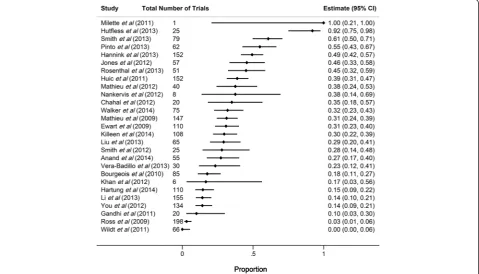
Among the included studies, the median number of tri-als assessed for outcome discrepancies was 65 (interquar-tile range [IQR] 25–110), and the median proportion of studies for which a discrepancy was identified between the registered and published primary outcome was 31 %, though this varied substantially across the included studies (range 0 % [0/66] to 100 % [1/1], IQR 17–45 %; Fig. 2).
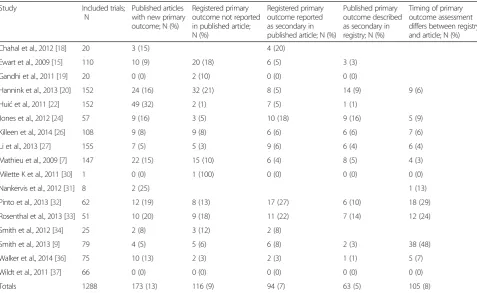
Sixteen studies provided detailed information about the nature of observed outcome discrepancies (Table 2). Among these studies, discrepancies fitting each of the five categories described by Chan et al. were common [10]: for five studies the most common discrepancy was omission of a registered primary outcome [15, 19, 20, 30, 34]; for four studies the most common discrepancy was publication of an unregistered primary outcome [7, 22, 31, 36]; one study reported equal numbers of these two types of discrepancies [26]; for three studies the most commonly observed dis-crepancy was reporting the registered primary outcome as a secondary outcome [18, 24, 27]; and for three studies the most common discrepancy was a change in the tim-ing of primary outcome assessment [9, 32, 33].
Subgroup analyses within included studies
Nine studies compared registered and published primary outcomes for trials that received industry funding and those
that did not. One study observed that industry sponsored trials were significantly less likely to have outcome incon-sistencies than were trials with other funding sources [17]. The remaining eight studies observed no significant rela-tionship between funding source and outcome consistency [9, 15, 16, 24, 33–35, 38].
The authors of three studies compared primary outcome consistency between general medical journals and specialty journals. Of these, one study compared trials published in general medical journals to those published in specialty surgical journals, finding a higher rate of outcome incon-sistencies among trials published in the surgical journals [20]. Another study compared trials published in general medical journals to those in gastroenterology journals, and the remaining study compared trials from general medical journals with those published in cardiology, rheumatology, or gastroenterology specialty journals. Neither of the latter two studies observed a difference in discrepancy rate ac-cording to journal type [7, 27].
Eight studies analyzed the impact that changes to regis-tered primary outcomes had on the statistical significance of published primary outcomes for included trials (Fig. 3); an additional study reported the impact of an outcome change for a single trial, finding this change to favor statis-tical significance of the published outcome [30]. When it could be assessed, outcome changes frequently favored the publication of statistically favorable results (median 50 %,
Fig. 2Forest plot showing the proportion of registered and published primary outcome discrepancies among included studies. Horizontal bars
indicate 95 % confidence intervals (CI) for proportions
IQR 28–64 %). However, in as many as half of the in-cluded trials, the impact of outcome changes on the fa-vorability of the published results could not be assessed [7]. Consequently, these data likely underestimate the true impact of outcome changes on the reported favor-ability of published results.
Heterogeneity among studies
We performed several additional analyses in order to ex-plore the substantial variability in reported outcome agree-ment between included studies. Of the five studies judged to be at low risk of bias, one included an outcome com-parison from just a single trial, finding the registered and Table 2Nature of reported primary outcome discrepancies
Study Included trials; N
Published articles with new primary outcome; N (%)
Registered primary outcome not reported in published article; N (%)
Registered primary outcome reported as secondary in published article; N (%)
Published primary outcome described as secondary in registry; N (%)
Timing of primary outcome assessment differs between registry and article; N (%)
Chahal et al., 2012 [18] 20 3 (15) 4 (20)
Ewart et al., 2009 [15] 110 10 (9) 20 (18) 6 (5) 3 (3)
Gandhi et al., 2011 [19] 20 0 (0) 2 (10) 0 (0) 0 (0)
Hannink et al., 2013 [20] 152 24 (16) 32 (21) 8 (5) 14 (9) 9 (6)
Huićet al., 2011 [22] 152 49 (32) 2 (1) 7 (5) 1 (1)
Jones et al., 2012 [24] 57 9 (16) 3 (5) 10 (18) 9 (16) 5 (9)
Killeen et al., 2014 [26] 108 9 (8) 9 (8) 6 (6) 6 (6) 7 (6)
Li et al., 2013 [27] 155 7 (5) 5 (3) 9 (6) 6 (4) 6 (4)
Mathieu et al., 2009 [7] 147 22 (15) 15 (10) 6 (4) 8 (5) 4 (3)
Milette K et al., 2011 [30] 1 0 (0) 1 (100) 0 (0) 0 (0) 0 (0)
Nankervis et al., 2012 [31] 8 2 (25) 1 (13)
Pinto et al., 2013 [32] 62 12 (19) 8 (13) 17 (27) 6 (10) 18 (29)
Rosenthal et al., 2013 [33] 51 10 (20) 9 (18) 11 (22) 7 (14) 12 (24)
Smith et al., 2012 [34] 25 2 (8) 3 (12) 2 (8)
Smith et al., 2013 [9] 79 4 (5) 5 (6) 6 (8) 2 (3) 38 (48)
Walker et al., 2014 [36] 75 10 (13) 2 (3) 2 (3) 1 (1) 5 (7)
Wildt et al., 2011 [37] 66 0 (0) 0 (0) 0 (0) 0 (0) 0 (0)
Totals 1288 173 (13) 116 (9) 94 (7) 63 (5) 105 (8)
Not all studies provided data for each possible category
Fig. 3Forest plot showing the proportion of trials with primary outcome changes favoring statistically significant published outcomes. Horizontal
bars indicate 95 % confidence intervals (CI) for proportions
published outcomes to be discrepant [30]. The other four studies identified outcome discrepancies in between 27 % (15/55) and 49 % (75/152) of trials [7, 16, 20, 24]. The 22 studies determined to be at moderate to high risk of bias showed less consistency in their reported outcome discrep-ancies, ranging from 0 % (0/66) to 92 % (23/25), with a me-dian discrepancy rate of 29 % (IQR 14–38 %).
Only one study explicitly limited inclusion to trials com-pleted after the 2005 deadline for registration established by the ICMJE [16], and none limited inclusion to trials completed after the 2007 U.S. Food and Drug Administra-tion Amendment Act expanded registraAdministra-tion requirements and authorized civil fines for unregistered trials. However, eight studies limited inclusion to trials published after 2007 [7, 24, 26, 27, 30, 32, 33, 36]. Among these eight studies, the incidence of primary outcome changes be-tween registry entries and manuscripts was similar to the findings observed among all included studies, with a me-dian discrepancy rate of 38 % (IQR 30–50 %).
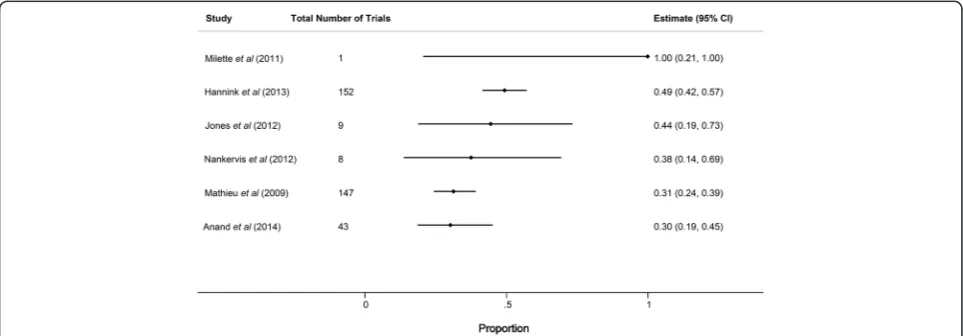
Eight of the included studies examined the history of changes made to each registry record in order to compare published outcomes with the primary outcome as stated in the registry at either the time of study initiation or prior to completion of enrollment [7, 16, 20, 22, 24, 30, 31, 36]. In six of these cases, outcome discrepancy data were available specifically for trials that had been prospectively registered. Among these studies, the median proportion of prospect-ively registered studies with discrepancies between the registry and published manuscript was 41 % (range 30 % [13/43] to 100 % [1/1], IQR 33–48 %), and the lowest re-ported discrepancy rate was 30 % (Fig. 4). One study, pub-lished only in abstract form, used the ClinicalTrials.gov history of changes feature to identify trials with consistent outcomes at each of three time points (registry entry at time of initial registration, publication, current registry entry as of July 2010) and found discrepancies in 23 of 25
randomized controlled trials (92 %) [23]. The remaining 18 studies compared the current registry entry with the pub-lished outcome and did not take into account registry changes over time; among these the median primary out-come discrepancy rate was 26 % (IQR 14–34 %). The higher observed discrepancy rate among studies that exclu-sively utilized prospectively defined outcomes suggests that registered outcomes are often retrospectively changed to match published outcomes. This observation also likely contributes to heterogeneity in the reported results among the studies included in this analysis.
In order to match registry data with published manu-scripts, 17 studies began with a cohort of published trials and searched trial registries to identify registry entries cor-responding to these published manuscripts. Among these studies, the rate of unregistered trials ranged from 1 % to 94 % (median 38 %, IQR 20–71 %). Among the six studies that reported detailed results on the timing of randomized controlled trial registration, compliance with the ICMJE policy requiring prospective trial registration was poor [16, 22, 24, 27, 32, 33]. The median observed rate of pro-spective registration in these six studies was 15 % (range 9–31 %). Nine studies began with a group of registered tri-als and searched for corresponding publications [8, 9, 17– 19, 21, 28, 34, 37], and one study did not specify which method was used [23]. The median percentage of primary outcome discrepancies among the 17 studies in which au-thors generated a list of published trials and searched for corresponding registry entries was 32 % (IQR 25–45 %), as compared to 18 % (IQR 6–32 %) among the nine stud-ies in which a list of registered trials was used as the basis for a publication search.
Additional analyses
The authors of the included studies observed high rates of ambiguity in the way primary outcomes were defined in
Fig. 4Forest plot showing the proportion of primary outcome discrepancies among prospectively registered trials. Horizontal bars indicate 95 %
confidence intervals (CI) for proportions
registry entries. Eighteen of the 27 studies reported the number of included registry entries in which primary out-comes were undefined or unclear, with rates of ambigu-ously defined outcomes ranging from 4 % to 48 % (median 15 %, IQR 7–27 %) [7–9, 15, 17, 20, 22, 24, 26, 28–32, 34, 36–38]. In many cases this ambiguity was noted to limit assessments of outcome consistency. In-consistencies between registered and published second-ary outcomes were also common. Ten studies evaluated the consistency of secondary outcomes; the median rate of observed secondary outcome discrepancies among these studies was 54 % (IQR 33–68 %) [15, 18, 19, 21, 22, 28, 32–34, 37].
Discussion
We identified 27 studies that compared registered and published trial outcomes. Among these studies, the proportion of discrepant primary outcomes between registration and publication was highly variable, with four studies observing outcome changes in more than 50 % of trials, and eight studies observing outcomes changes in fewer than 20 %. The frequency with which discrepancies were identified did not appear to vary based on funding source, journal type, or when trials were published, though our ability to detect potential differences was limited by relatively small sample sizes and unstandardized methods across the included stud-ies. Most of the studies identified were similar in regard to the time frame analyzed and the journals and clinical topics studied. Additionally, nearly all of the included studies used a consistent method of categorizing out-come differences, based on the scheme established by Chan et al. [10]. One important source of the variability in reported results is that most studies compared pub-lished outcomes to the outcome listed in the registry at the time of the search, without attempting to identify the outcome registered at the inception of the study. For the six studies that compared published outcomes with the outcomes registered prior to the initiation of patient enrollment, the frequency of discrepancies were more similar to one another and higher than for the remaining 21 studies. Because the comparison with the outcome prior to patient enrollment is the most rele-vant for those attempting to understand the impact of outcome switching on the validity of results of clinical trials, the median value from these six studies (41 %, IQR 33–48 %) provides an informative estimate for characterizing the extent of this problem.
This finding supports previous observations that registry entries are often either initiated or modified after trial com-pletion [7, 22]. Additionally, it suggests that for surveillance studies of registry practices to be meaningful and reprodu-cible, authors should utilize best practices to improve study validity. These include assessing changes to registry entries
over time, establishing clear definitions for discrepant out-comes, and utilizing multiple independent raters to com-pare registered and published outcomes.
While clinical trial registries and recent legislative efforts mandating their use have the potential to improve registry utilization by trial sponsors and investigators, these mea-sures do little good unless reviewers, journal editors, and educators utilize them. Recent evidence suggests that re-viewers do not routinely use trials registries when assessing trial manuscripts [39]. In some cases there are good rea-sons to change study outcomes or other methodological details while a trial is ongoing, though it is critical that published manuscripts disclose and explain these changes. Other times, outcome changes may represent efforts by in-vestigators to spin favorable conclusions from their data. In either case, reviewers and editors can and should use regis-try data to ensure that appropriate outcome changes are transparent and that inappropriate changes are prevented.
All but one of the studies included clinical trials that were initiated before 2005, which was when the ICMJE policy mandating prospective trial registration as a condi-tion of publicacondi-tion in member journals went into effect. Registry utilization has increased dramatically since that time, but the quality of registry data remains inconsistent [22, 24]. The single study we examined that was limited to trials initiated after the ICMJE statement still found pri-mary outcome inconsistencies in 15 of 55 (27 %) included trials [16]. Importantly, we did not find evidence of a con-sistent difference in registered and published outcomes ac-cording to trial funding source. As a result, any measures taken to improve the consistency of outcome reporting should target both industry-funded and non-industry-funded trials. As registry utilization continues to evolve, it is unclear whether outcome consistency will improve or whether inconsistencies will remain common. It is likely that this depends in part on the willingness of both jour-nal editors and reviewers to demand that authors are held accountable to registered protocols when publishing re-sults. Unfortunately, very few journals currently prioritize the assessment of registry entries during the peer review process [40].
Since 2008, in addition to facilitating the assessment of methodological consistency, Clinicaltrials.gov has included a results database that allows the registry to serves as a publicly available source of trial outcome data. While utilization of the results database on the part of investiga-tors has been mixed, improved compliance with this fea-ture has the potential to streamline comparisons between planned and completed outcome analyses [41]. Future surveillance studies will be needed to assess improvements in outcome consistency that might result from new pol-icies, greater familiarity of investigators and sponsors with the registry process, and greater scrutiny of registries by editors and reviewers.
Our findings are consistent with those reported in a 2011 Cochrane Review of studies comparing trial proto-cols with published trial manuscripts [42]. This Cochrane Review identified three studies, all also included in our analysis, that compared registered primary outcomes to published outcomes, with observed primary outcome dis-crepancy rates between 18 % and 31 %. Additionally, the Cochrane Review identified three studies that compared the consistency between outcomes identified in study protocols and those in published reports, finding dis-crepancies in 33–67 % of included trials. As with our review, the presence of heterogeneous trial populations and methods prevented the Cochrane authors from performing a meta-analysis, though they observed that discrepancies between study protocols and published manuscripts commonly involved other important as-pects of trial design in addition to outcome definitions, including eligibility criteria, sample size goals, planned subgroup analyses, and methods of analysis.
This systematic review has several limitations that should be considered when interpreting these results. First, studies involving outcome discrepancies are challenging to capture via a database search, because relevant studies are not lim-ited to a single disease process or intervention, and many of the key words relevant to this topic are commonly in-cluded in unrelated abstracts (e.g., “bias,” “primary out-come,” “clinicaltrials.gov,” “randomized controlled trial”). We addressed this issue by using an intentionally broad search strategy, and by reviewing the reference lists of all included studies. Despite this, we may have missed some relevant publications. Second, the studies identified were heterogeneous with respect to both the characteristics of their included trials and the approaches they used to assess outcome consistency. This limits our ability to pool the data to provide a summary description of discrepancies in registered and published outcomes for trials across these studies. This heterogeneity results partly from the variable time points relative to trial initiation used by authors in de-fining the registered outcome, and is indicative of possible bias in these results at the level of individual studies. Third, we separately analyzed the subgroup of studies that re-ported reviewing the history of changes within each registry record in order to identify prospectively defined outcomes; this subgroup analysis may have been incomplete because it is possible that additional studies performed this task without reporting it. Further, several of the included studies had overlapping inclusion criteria, and as a result in some cases individual studies may have been included in more than one study. Additionally, the impact of publication bias on these results is unknown. Finally, many of the included studies noted that ambiguously defined out-comes among trial registries and manuscripts made it difficult to make judgments about whether outcome differences were present.
Conclusions
Published randomized controlled trials commonly report primary outcomes that differ from the primary outcomes specified in clinical trials registries. These inconsistencies in published and reported outcomes are observed among trials across a broad range of clinical topics and a variety of funding sources. When assessing a trial’s methodo-logical quality, editors, reviewers, and readers should rou-tinely compare the published primary outcome to the primary outcome registered at the time of trial initiation. Further study, with attention to the outcome registered at the time of trial initiation, is needed to determine whether inconsistencies between registered and published out-comes remain common among recently initiated trials.
Additional files
Additional file 1:Appendix A.Electronic search strategies. (DOCX 495 kb)
Additional file 2:Appendix B.PRISMA 2009 checklist. (DOC 61 kb)
Additional file 3:Appendix C.Assessment of risk of study bias. (DOCX 24 kb)
Abbreviations
ICMJE:International Committee of Medical Journal Editors; IQR: interquartile range; PRISMA: Preferred Reporting Items for Systematic Reviews and Meta-Analyses; WHO: World Health Organization.
Competing interests
CWJ has received research grants from Roche Diagnostics, Inc. and AstraZeneca. The remaining authors declare that they have no competing interests.
Authors’contributors
CWJ designed the study, designed the data collection tool, collected the data, analyzed the data, and drafted and revised the manuscript. LGK and WCH both assisted with study design, design of the data collection tool, data collection, and manuscript revision. MCC performed data analyses and assisted with manuscript revision. TPM designed the study, analyzed the data, and drafted and revised the manuscript. All authors read and approved the final manuscript.
Acknowledgements
TPM is supported by the National Institute on Aging through Grant K23 AG038548. This sponsor had no role in the study design, data collection, data analysis, data interpretation, or manuscript preparation.
Author details
1Department of Emergency Medicine, Cooper Medical School of Rowan
University, One Cooper Plaza, Suite 152, Camden, NJ 08103, USA.2School of
Medicine, University of North Carolina Chapel Hill, 321 S Columbia St, Chapel Hill, NC 27516, USA.3Department of Biology, University of North Carolina
Chapel Hill, Coker Hall, 120 South Rd, Chapel Hill, NC 27599, USA.
4Department of Medicine, University of North Carolina Chapel Hill, 125
MacNider Hall, CB 7005, Chapel Hill, NC 27599, USA.5Department of Emergency Medicine, University of North Carolina Chapel Hill, 170 Manning Dr. CB#7594, Chapel Hill, NC 27599, USA.
Received: 11 August 2015 Accepted: 3 November 2015
References
1. Moher D, Hopewell S, Schulz KF, Montori V, Gotzsche PC, Devereaux PJ,
et al. CONSORT 2010 explanation and elaboration: updated guidelines for reporting parallel group randomised trials. BMJ. 2010;340:c869. doi:10.1136/ bmj.c869.
2. Newman DH, Shreves AE. Treatment of acute otitis media in children. N Engl J
Med. 2011;364(18):1775. doi:10.1056/NEJMc1102207#SA1. author reply 7–8.
3. DeAngelis CD, Drazen JM, Frizelle FA, Haug C, Hoey J, Horton R, et al. Clinical
trial registration: a statement from the International Committee of Medical
Journal Editors. JAMA. 2004;292(11):1363–4. doi:10.1001/jama.292.11.1363.
4. Food and Drug Administration Act of 2007, Stat. 2007: 110–85.
5. Regulation (EU) No 536/2014 of the European Parliament and of the
Council of 16 April 2014 on clinical trials on medicinal products for human use, and repealing Directive 2001/20/ED, Stat. 536/2014. 2014.
6. Califf RM, Zarin DA, Kramer JM, Sherman RE, Aberle LH, Tasneem A.
Characteristics of clinical trials registered in ClinicalTrials.gov, 2007–2010.
JAMA. 2012;307(17):1838–47. doi:10.1001/jama.2012.3424.
7. Mathieu S, Boutron I, Moher D, Altman DG, Ravaud P. Comparison of
registered and published primary outcomes in randomized controlled trials.
JAMA. 2009;302(9):977–84. doi:10.1001/jama.2009.1242.
8. Ross JS, Mulvey GK, Hines EM, Nissen SE, Krumholz HM. Trial publication
after registration in ClinicalTrials.Gov: a cross-sectional analysis. PLoS Med. 2009;6(9):e1000144. doi:10.1371/journal.pmed.1000144.
9. Smith SM, Wang AT, Pereira A, Chang RD, McKeown A, Greene K, et al.
Discrepancies between registered and published primary outcome specifications in analgesic trials: ACTTION systematic review and
recommendations. Pain. 2013;154(12):2769–74. doi:10.1016/j.pain.2013.08.011.
10. Chan AW, Hrobjartsson A, Haahr MT, Gotzsche PC, Altman DG. Empirical
evidence for selective reporting of outcomes in randomized trials:
comparison of protocols to published articles. JAMA. 2004;291(20):2457–65.
doi:10.1001/jama.291.20.2457.
11. Moher D, Liberati A, Tetzlaff J, Altman DG, PRISMA Group. Preferred
reporting items for systematic reviews and meta-analyses: the PRISMA statement. BMJ. 2009;339:b2535. doi:10.1136/bmj.b2535.
12. Higgins J, Green S, (editors). Cochrane Handbook for Systematic Reviews of
Interventions Version 5.1.0 [updated March 2011]. London, UK: The Cochrane Collaboration; 2011.
13. Wells GA, Shea B, O’Connell D, Peterson J, Welch V, Losos M, et al. The
Newcastle-Ottawa Scale (NOS) for assessing the quality of nonrandomised studies in meta-analyses. Ottawa Hospital Research Institute. 2014. http:// www.ohri.ca/programs/clinical_epidemiology/oxford.asp. Accessed 24 September 2015.
14. Newcombe RG. Two-sided confidence intervals for the single proportion:
comparison of seven methods. Stat Med. 1998;17(8):857–72.
15. Ewart R, Lausen H, Millian N. Undisclosed changes in outcomes in
randomized controlled trials: an observational study. Ann Fam Med. 2009;
7(6):542–6. doi:10.1370/afm.1017.
16. Anand V, Scales DC, Parshuram CS, Kavanagh BP. Registration and design
alterations of clinical trials in critical care: a cross-sectional observational study.
Intensive Care Med. 2014;40(5):700–22. doi:10.1007/s00134-014-3250-7.
17. Bourgeois FT, Murthy S, Mandl KD. Outcome reporting among drug trials
registered in ClinicalTrials.gov. Ann Intern Med. 2010;153(3):158–66. doi:10.
7326/0003-4819-153-3-201008030-00006.
18. Chahal J, Tomescu SS, Ravi B, Bach Jr BR, Ogilvie-Harris D, Mohamed NN, et
al. Publication of sports medicine-related randomized controlled trials
registered in ClinicalTrials.gov. Am J Sports Med. 2012;40(9):1970–7. doi:10.
1177/0363546512448363.
19. Gandhi R, Jan M, Smith HN, Mahomed NN, Bhandari M. Comparison of
published orthopaedic trauma trials following registration in Clinicaltrials. gov. BMC Musculoskelet Disord. 2011;12:278. doi:10.1186/1471-2474-12-278.
20. Hannink G, Gooszen HG, Rovers MM. Comparison of registered and published
primary outcomes in randomized clinical trials of surgical interventions. Ann
Surg. 2013;257(5):818–23. doi:10.1097/SLA.0b013e3182864fa3.
21. Hartung DM, Zarin DA, Guise JM, McDonagh M, Paynter R, Helfand M.
Reporting discrepancies between the ClinicalTrials.gov results database and
peer-reviewed publications. Ann Intern Med. 2014;160(7):477–83. doi:10.
7326/M13-0480.
22. Huic M, Marusic M, Marusic A. Completeness and changes in registered data and
reporting bias of randomized controlled trials in ICMJE journals after trial registration policy. PLoS One. 2011;6(9):e25258. doi:10.1371/journal.pone.0025258.
23. Hutfless S, Blair R, Berger Z, Wilson L, Bass EB, Lazarev M. Poor reporting of
Crohn’s disease trials in ClinicalTrials.gov. Gastroenterology. 2013;144(5):
SUPPL. 1(S232).
24. Jones CW, Platts-Mills TF. Quality of registration for clinical trials published in
emergency medicine journals. Ann Emerg Med. 2012;60(4):458–64. doi:10.
1016/j.annemergmed.2012.02.005.
25. Khan NA, Lombeida JI, Singh M, Spencer HJ, Torralba KD. Association of
industry funding with the outcome and quality of randomized controlled trials of drug therapy for rheumatoid arthritis. Arthritis Rheum. 2012;64(7):
2059–67. doi:10.1002/art.34393.
26. Killeen S, Sourallous P, Hunter IA, Hartley JE, Grady HL. Registration rates,
adequacy of registration, and a comparison of registered and published primary outcomes in randomized controlled trials published in surgery
journals. Ann Surg. 2014;259(1):193–6. doi:10.1097/SLA.0b013e318299d00b.
27. Li XQ, Yang GL, Tao KM, Zhang HQ, Zhou QH, Ling CQ. Comparison of
registered and published primary outcomes in randomized controlled trials of gastroenterology and hepatology. Scand J Gastroenterol. 2013;48(12):
1474–83. doi:10.3109/00365521.2013.845909.
28. Liu JP, Han M, Li XX, Mu YJ, Lewith G, Wang YY, et al. Prospective
registration, bias risk and outcome-reporting bias in randomised clinical trials of traditional Chinese medicine: an empirical methodological study. BMJ Open. 2013;3(7):pii: e002968. doi:10.1136/bmjopen-2013-002968.
29. Mathieu S, Giraudeau B, Soubrier M, Ravaud P. Misleading abstract
conclusions in randomized controlled trials in rheumatology: comparison of the abstract conclusions and the results section. Joint Bone Spine. 2012;
79(3):262–7. doi:10.1016/j.jbspin.2011.05.008.
30. Milette K, Roseman M, Thombs BD. Transparency of outcome reporting and
trial registration of randomized controlled trials in top psychosomatic and behavioral health journals: a systematic review. J Psychosom Res. 2011;70(3):
205–17. doi:10.1016/j.jpsychores.2010.09.015.
31. Nankervis H, Baibergenova A, Williams HC, Thomas KS. Prospective
registration and outcome-reporting bias in randomized controlled trials of eczema treatments: a systematic review. J Invest Dermatol. 2012;132(12):
2727–34. doi:10.1038/jid.2012.231.
32. Pinto RZ, Elkins MR, Moseley AM, Sherrington C, Herbert RD, Maher CG, et
al. Many randomized trials of physical therapy interventions are not adequately registered: a survey of 200 published trials. Phys Ther. 2013;93(3):
299–309. doi:10.2522/ptj.20120206.
33. Rosenthal R, Dwan K. Comparison of randomized controlled trial registry
entries and content of reports in surgery journals. Ann Surg. 2013;257(6):
1007–15. doi:10.1097/SLA.0b013e318283cf7f.
34. Smith HN, Bhandari M, Mahomed NN, Jan M, Gandhi R. Comparison of
arthroplasty trial publications after registration in ClinicalTrials.gov. J
Arthroplasty. 2012;27(7):1283–8. doi:10.1016/j.arth.2011.11.005.
35. Vera-Badillo FE, Shapiro R, Ocana A, Amir E, Tannock IF. Bias in reporting of end
points of efficacy and toxicity in randomized, clinical trials for women with
breast cancer. Ann Oncol. 2013;24(5):1238–44. doi:10.1093/annonc/mds636.
36. Walker KF, Stevenson G, Thornton JG. Discrepancies between registration
and publication of randomised controlled trials: an observational study. JRSM Open. 2014;5(5):2042533313517688.
37. Wildt S, Krag A, Gluud L. Characteristics of randomised trials on diseases in
the digestive system registered in ClinicalTrials.gov: a retrospective analysis. BMJ Open. 2011;1(2):e000309. doi:10.1136/bmjopen-2011-000309.
38. You B, Gan HK, Pond G, Chen EX. Consistency in the analysis and reporting of
primary end points in oncology randomized controlled trials from registration
to publication: a systematic review. J Clin Oncol. 2012;30(2):210–6. doi:10.1200/
JCO.2011.37.0890.
39. Mathieu S, Chan AW, Ravaud P. Use of trial register information during the
peer review process. PLoS One. 2013;8(4):e59910. doi:10.1371/journal.pone. 0059910.
40. Chauvin A, Ravaud P, Baron G, Barnes C, Boutron I. The most important
tasks for peer reviewers evaluating a randomized controlled trial are not congruent with the tasks most often requested by journal editors. BMC Med. 2015;13:158. doi:10.1186/s12916-015-0395-3.
41. Zarin DA, Tse T, Williams RJ, Califf RM, Ide NC. The ClinicalTrials.gov results
database–update and key issues. N Engl J Med. 2011;364(9):852–60. doi:10.
1056/NEJMsa1012065.
42. Dwan K, Altman DG, Cresswell L, Blundell M, Gamble CL, Williamson PR.
Comparison of protocols and registry entries to published reports for randomised controlled trials. Cochrane Database Syst Rev. 2011;1:MR000031. doi:10.1002/14651858.MR000031.pub2.