IJETMR
International Journal of Engineering
Technologies and Management Research
A knowledge RepositoryHttp://www.ijetmr.com©International Journal of Engineering Technologies and Management Research [30-41]
FUTURE FOR SCIENTIFIC COMPUTING USING PYTHON
Rakesh Kumar*1 *1
Software Engineer at DigiCollect GIS, Bangalore, INDIA Abstract:
Computational science (scientific computing or scientific computation) is concerned with constructing mathematical models as well as quantitative analysis techniques and using computers to analyze as well as solve scientific problems. In practical use, it is basically the application of computer simulation as well as other forms of computation from numerical analysis and theoretical computer science to problems in different scientific disciplines. The scientific computing approach is to gain understanding, basically through the analysis of mathematical models implemented on computers. Python is frequently used for high-performance scientific applications and widely used in academia as well as scientific projects because it is easy to write and performs well. Due to its high performance nature, scientific computing in Python often utilizes external libraries like NumPy, SciPy and Matplotlib etc.
Keywords:
IPython, Matplotlib, NumPy, Python, Pandas, Scientific Computing, Sympy, SciPy.
Cite This Article: Rakesh Kumar, “FUTURE FOR SCIENTIFIC COMPUTING USING
PYTHON.” International Journal of Engineering Technologies and Management Research, Vol. 2, No. 1(2015): 30-41. DOI: https://doi.org/10.29121/ijetmr.v2.i1.2015.28.
1. INTRODUCTION
Http://www.ijetmr.com©International Journal of Engineering Technologies and Management Research [30-41]
computational sciences. Some journals, including Science, have even started to demand of authors to provide the source code for simulation software used in publications to readers upon request.
Replication (An author of a scientific paper that involves numerical calculations should be able to rerun the simulations as well as replicate the results upon request and other scientist should also be able to perform the same calculations as well as obtain the same results, given the information about the methods used in a publication.) and reproducibility (The results obtained from numerical simulations should be reproducible with an independent implementation of the method.) are two of the cornerstones in the scientific method. In short summary, a sound scientific result should be reproducible, as well as a sound scientific study should be replicable.
Ensuring replicability as well as reproducibility of scientific simulations is a complicated problem, but there are some good tools to help with this such as Revision Control System (RCS) software (git, mercurial (hg) and subversion (svn)) as well as online repositories for source code, that available as both public and private repositories (GitHub, Bit bucket and Privately hosted repositories).
Python is a modern, general-purpose, object-oriented, high-level programming language that includes some general characteristics like clean and simple language, expressive language, dynamically typed, automatic memory management and interpreted. The main advantage is ease of programming, minimizing the time required to develop, debug, maintain the code, modular, object-oriented programming, good system for packaging, re-use of code, documentation tightly integrated with the code, large standard library, and a large collection of add-on packages.
Python has a strong position in scientific computing because it contains extensive ecosystem of scientific libraries as well as environments like numpy, scipy, matplotlib etc. Python supports for parallel processing with processes and threads, Interprocess communication as well as GPU computing and suitable for use on high-performance computing clusters.
Reason for using python in scientific computing:
Clear, readable syntax through whitespace indentation Interactive python console
Strong introspection capabilities
Full modularity, supporting hierarchical packages Exception-based error handling
Dynamic data types & automatic memory management
Reason for using python over matlab:
Python packages can do similarly everything Matlab can do for signal processing Python is free and open source but Matlab is a closed-source commercial product
(algorithms are proprietary)
Http://www.ijetmr.com©International Journal of Engineering Technologies and Management Research [30-41]
The demand for Python programmers is increasing
Matlab is quite expensive, that means that code that is written in Matlab can only be used by people with sufficient funds to buy a license
Python contains great libraries, and yet more external libraries are being developed by Python programmers, scientists, mathematicians, and engineers
Similar every programming language other than Matlab, Python uses zero-based indexing
Python code tends to be more compact as well as more readable than Matlab code
OOP in Python is simple and elegant, that offers flexibility but Matlab's OOP scheme is complex and confusing
Python offers a wider set of choices in graphics packages and toolsets as well as easily integrates better with other languages
2. METHODOLOGY
SciPy (pronounced “Sigh Pie”) Stack is an open source Python library that contains modules for optimization, integration, interpolation, FFT, special functions, linear algebra, signal and image processing and used by scientists, analysts, and engineers doing scientific computing. SciPy library is distributed under the BSD license, and its development is sponsored as well as supported by an open community of developers, it is also supported by Numfocus that is a community foundation for supporting reproducible as well as accessible science.
The SciPy Stack:
a. Core packages
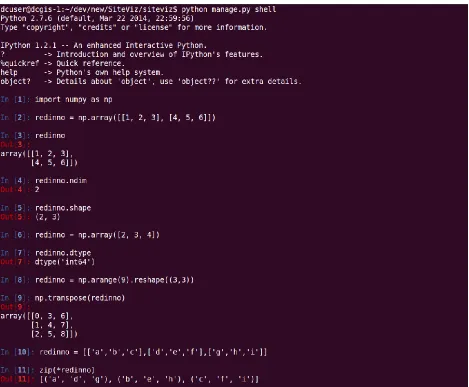
NumPy : NumPy is the basic package for scientific computing in Python that provides multi-dimensional arrays and matrices, broadcasting functions, tools for integrating C/C++, Fortran code, mathematical, logical, shape manipulation, sorting, selecting, I/O, useful linear algebra, Fourier transform, random number capabilities, basic statistical operations and much more. NumPy can be used as an efficient multi-dimensional container of generic data and it is licensed under the BSD license.
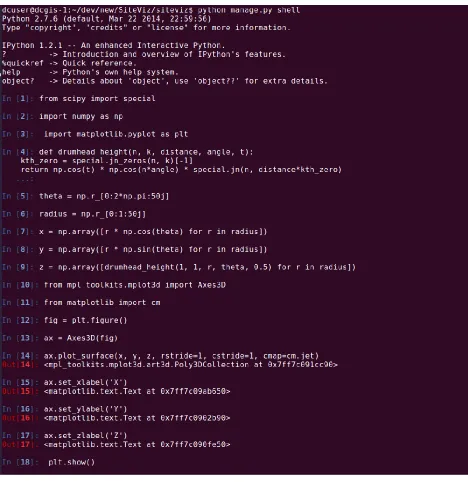
SciPy library : SciPy library is one of the core packages used by scientists, analysts, and engineers that provides many user-friendly and efficient numerical routines such as routines for numerical integration, optimization, linear algebra, integration, interpolation, special functions, FFT, signal and image processing. SciPy builds on the NumPy array object as well as is part of the NumPy stack that includes tools like Matplotlib, pandas and SymPy. The SciPy library is currently distributed under the BSD license, as well as its development is supported and sponsored by an open community of developers. It is also supported by Numfocus that is a community foundation for supporting reproducible and accessible science.
Http://www.ijetmr.com©International Journal of Engineering Technologies and Management Research [30-41]
interactive environments across platforms. Matplotlib tries to make easy things easy as well as hard things possible and provides an object-oriented API for embedding plots into applications using general-purpose GUI toolkits such as wxPython, Qt, or GTK+. Matplotlib was mainly written by John D. Hunter, has an active development community, and is distributed under a BSD-style license.
Pandas : Pandas is a software library written for the Python programming language that providing high-performance, data manipulation, easy-to-use data structures and data analysis tools for the Python programming language as well as it is free software released under the three-clause BSD license.
SymPy : SymPy is an important Python library for symbolic computation that provides computer algebra system (CAS) while keeping the code as simple as possible in order to be comprehensible as well as easily extensible. SymPy is written fully in Python and does not require any external libraries. SymPy contains features ranging from basic symbolic arithmetic to algebra, calculus, discrete mathematics and quantum physics and it is capable of formatting the result of the computations as LaTeX code. SymPy is free software as well as is licensed under New BSD license.
IPython : IPython is a command shell for interactive computing in many programming languages, mainly developed for the Python programming language that offers enhanced introspection, rich media, more shell syntax, tab completion, as well as rich history. IPython provides an important features such as Powerful interactive shells, browser-based notebook, inline plots, Support for interactive data visualization, use of GUI toolkits, embeddable interpreters, high performance tools for parallel computing.
Nose : Nose is a unit test frameworks in Python that developed by Jason Pellerin. It is fairly stable, fantastic plug-in architecture, integrates with distutils, adapted to mimic any other unit test discovery framework.
b. Other packages
Chaco : Chaco (Python plotting application toolkit) facilitates writing plotting applications at all levels of complexity, from simple scripts with hard-coded data to large plotting programs with complex data interrelationships as well as a multitude of interactive tools. Chaco generates attractive static plots for publication as well as presentation, it works well for interactive data visualization as well as exploration.
Http://www.ijetmr.com©International Journal of Engineering Technologies and Management Research [30-41]
Cython : The Cython language is a superset of the Python language that supports calling C functions as well as declaring C types on variables and class attributes. PyPy support is work in progress as well as is considered mostly usable since Cython 0.17. All of this makes Cython the ideal language for wrapping external C libraries, embedding CPython into existing applications, as well as for fast C modules that speed up the execution of Python code.
Scikits : SciKits (SciPy Toolkits), are add-on packages for SciPy, hosted as well as developed separately from the main SciPy distribution. All SciKits are available under the 'scikits' namespace as well as are licensed under OSI-approved licenses.
h5py : The h5py package is a Pythonic interface to the HDF5 binary data format that uses straightforward NumPy as well as Python metaphors, such as dictionary and NumPy array syntax. In addition to the easy-to-use high level interface, h5py rests on an object-oriented Cython wrapping of the HDF5 C API and almost anything you can do from C in HDF5, you can do from h5py.
PyTables : PyTables is a package for managing hierarchical datasets as well as designed to efficiently and easily cope with extremely large amounts of data. PyTables is built on top of the HDF5 library, that using Python language and the NumPy package. It features an object-oriented interface that, combined with C extensions for the performance-critical parts of the code, makes it a fast, so extremely easy to use tool for interactively browse, process as well as search large amounts of data. PyTables optimizes memory as well as disk resources so that data takes much less space than other solutions like relational or object oriented databases.
3. RESULTS
Http://www.ijetmr.com©International Journal of Engineering Technologies and Management Research [30-41]
Figure 1: Example of Using NumPy Package
SciPy is a set of open source (BSD licensed) scientific as well as numerical tools for Python that supports special functions, integration, ordinary differential equation solvers, gradient optimization, parallel programming tools, an expression-to-C++ compiler for fast execution, etc.
Http://www.ijetmr.com©International Journal of Engineering Technologies and Management Research [30-41]
Figure 2: Example of Using SciPy Library Package
Http://www.ijetmr.com©International Journal of Engineering Technologies and Management Research [30-41]
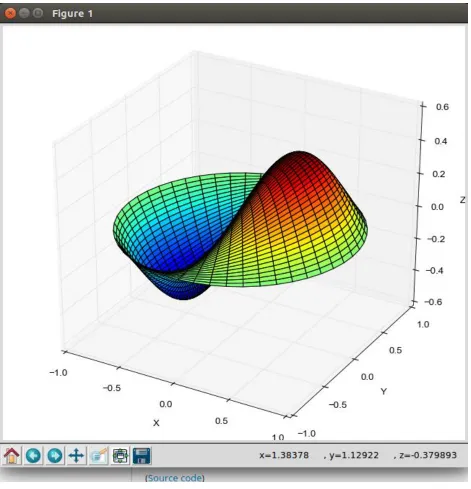
Figure 3: Result of Using SciPy Library Package
Http://www.ijetmr.com©International Journal of Engineering Technologies and Management Research [30-41]
Figure 4: Example of Using Matplotlib Package
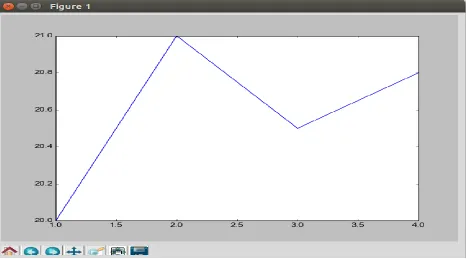
Matplotlib provides an object-oriented API for embedding plots into applications using general-purpose GUI toolkits such as wxPython, Qt, orGTK+.
Figure 5: Result of Using Matplotlib Package
Http://www.ijetmr.com©International Journal of Engineering Technologies and Management Research [30-41]
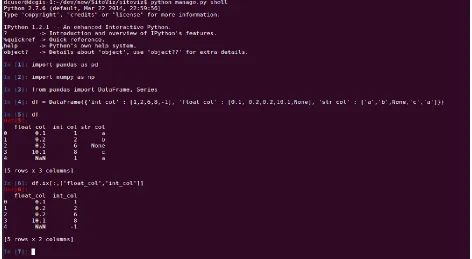
Figure 6: Example of Using Pandas Package
SymPy is an important Python library for symbolic mathematics that aims to become a full-featured computer algebra system (CAS) while keeping the code as simple as possible in order to be comprehensible as well as extensible. SymPy is written in Python that does not require any external libraries, except optionally for plotting support.
Http://www.ijetmr.com©International Journal of Engineering Technologies and Management Research [30-41]
IPython is a command shell for interactive computing in multiple programming languages, mainly developed for the Python programming language which offers enhanced introspection, rich media, additional shell syntax, tab completion, as well as rich history.
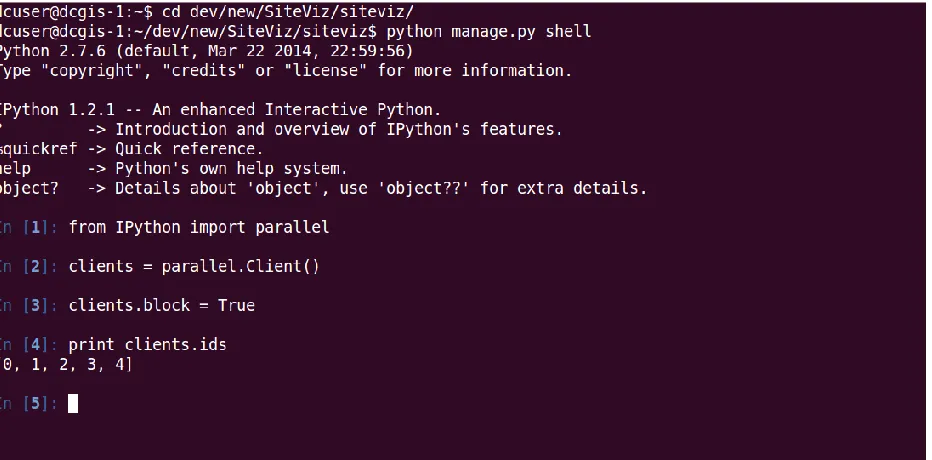
Figure 8: Example of Using IPython Package
IPython has a sophisticated architecture for parallel as well as distributed computing that enables parallel applications to be developed, executed, debugged and monitored interactively.
Figure 9: Result of Using IPython Package
4. CONCLUSION
Http://www.ijetmr.com©International Journal of Engineering Technologies and Management Research [30-41]
community. Yet, I am pretty sure that Python will eventually become the platform of reference for scientific computing.
5. ACKNOWLEDGEMENTS
I wish to thank to Dr. Prof. K. K. Agrawal (Professor of JECRC, Jaipur), Ms. Neha Gupta (Assistant Professor of JECRC, Jaipur), Mr. Sunil Kumar Jangir (Assistant Professor of JECRC, Jaipur), Ms. Shilpi Charu (Senior Lecturer of JECRC, Jaipur), and all Faculty Member of JECRC Foundation, Jaipur for their time to time suggestions, guidelines, relevant data and technical support.
6. REFERENCES
[1] Python Scientific Lecture Notes: https://scipy-lectures.github.io/
[2] Scientific computing tools for python: http://www.scipy.org/
[3] NumPy: http://www.numpy.org/
[4] SciPy library: http://www.scipy.org/scipylib/
[5] Matplotlib: http://matplotlib.org/
[6] Pandas: http://pandas.pydata.org/ [7] SymPy: http://www.sympy.org/en/ [8] IPython: http://ipython.org/
[9] Nose: https://nose.readthedocs.org/en/latest/
[10] Chaco: http://code.enthought.com/projects/chaco/ [11] Mayavi: http://code.enthought.com/projects/mayavi/ [12] Cython: http://cython.org/
[13] Scikits: http://scikits.appspot.com/scikits [14] h5py: http://www.h5py.org/