3345 *Address for correspondence
Christina Das
*Department of Pharmaceutics,
Nazareth College of Pharmacy,
Othera -689546, Kerala, India
E-mail: [email protected]
FORMULATION DEVELOPMENT AND EVALUATION
OF DOXOPHYLLINE
HYDROCHLORIDE FLOATING
TABLETS
Shajan Abraham
1, Juby Philip
2, Christina Das
3*, Susan Raju
4, Vidya Peter
5.
1,3,4,5 Department of Pharmaceutics, Nazareth College of Pharmacy, Othera -689546, Kerala.
2Department of Pharmaceutics, Shreedevi College of Pharmacy, Mangalore - 574142, Karnataka, India.
ARTICLE INFO
ABSTRACT
Key words:
Floating Tablet,
Doxophylline,
Wet granulation method,
HPMC,
Carbopol 934P
Sustained release gastro retentive dosage forms enable prolonged and continuous input of the drug to the upper parts of the gastrointestinal tract and improve the bioavailability of medication. The study was carried out with an objective to achieve a potential sustained release oral drug de-livery system of an antiasthmatic drug, Doxophylline which is a bronchodi-lator xanthine drug which has the therapeutic properties similar to theophyl-line with lower incidence of side-effects & having half life of 6 hours. As the Doxophylline is water soluble drug, can control or delay the release rate of drug by using release-retarding polymers. This may also decrease the toxic side effects by preventing the high initial concentration in the blood. Floating tablets were prepared by wet granulation method using various release retarding polymers like HPMCK100M, HPMC K4M, carbopol 934P, PVPK30, Sodiumbicarbonate, citricacid magnesium stearate and talc in combination were tried and optimized to get the release of 14 hr. Pre-pared floating tablets were prePre-pared for floating properties, swelling charac-teristics and In vitro release studies.. Infrared spectroscopy (IR) study and differential scanning calorimetry (DSC) study show that drug and other ex-cipients are compatible with each other. The floating tablets were stored at temperature of 40°C ± 2°C/75% ± 5% RH were unchanged during 2 months of storage condition. Hence from the result we can conclude that Doxophylline floating tablets can be successfully designed to develop sus-tained drug delivery, that reduces the dosing frequency and their by one can increase the patient compliance.
INTRODUCTION
Floating drug delivery systems (FDDS) have bulk density lesser than gastric fluids, so they remain buoyant in the stomach.
Without affecting the gastric emptying rate for a prolonged period. The FDDS can be retained in the stomach and assists in improv-ing the oral sustained delivery of drugs that have an absorption window in a particular re-gion of the GIT. These systems help in contin-uously releasing the drug before it reaches the absorption window, thus ensuring optimal bio-availability. Gastro retentive systems can re-main in the gastric region for several hours and hence significantly prolong the gastric resi-dence time of drugs. Prolonged gastric reten-tion improves bioavailability, reduces drug
Journal of Global Trends in Pharmaceutical Sciences
3346 are less soluble in a high pH environment. It
has applications also for local drug delivery to the stomach and proximal small intestines. Gas-tro retention helps to provide better availability of new products with new therapeutic possibili-ties and substantial benefits for patients.7.A minimal level of floating force (F) is also re-quired to keep the dosage form reliably buoyant on the surface of the meal. To measure the floating force kinetics, a novel apparatus for determination of resultant weight has been re-ported in the literature.
MATERIALS AND METHODS
Doxofylline is gifted from Burgeon Pharmaceuticals, chennai, carbopol is pur-chased from Yarrow Chem Products, Mumbai. Sodium bicarbonate is from Nice Chemicals Pvt Ltd , Kerala. HPMC K100M and HPMC K15M was purchased from Yarrow Chem Products. Magnesium Stearate procured from Loba Chemicals.
Preparation of Doxofylline hydrochloride floating tablet by wet granulation method.
All the materials were weighed accu-rately according to formula. Shift the material through 80 no. mesh except magnesium stea-rate and talc. Mix the drug polymer and citric acid by geometrical mixing in a double polybag for 10 min. Above mixed material add sodium bicarbonate as a gas generating agent.
Again mixed for 5 min. The mixture was granulated using) PVP K30 (polyvinyl pyr-rolidon ) dissolved in sufficient isopropyl alco-hol by passing through sieve no.12. Granules were dried at 45°C for 4 h. The dried granules were passed through sieve no 20. To the dried granules magnesium stearate and talc were added and it is further mixed in a double cone blender . Tablets were compressed on a 10 sta-tion mini tablet press using 16/32 sized punch with flat surface and round shape.
Evaluation of blend: Angle of Repose:
Angle of repose has been defined as the maximum angle possible between the surface of pile of powder and horizontal plane. The angle of repose for the granules of each formu-lation was determined by the funnel method. The angle of repose was calculated by substi-tuting the values of the base radius ‘R’ and pile
Tan Ø = h/r Flow Rate:
Flow rate of a powder has been defined as the rate at which the particular mass emerges through the orifice of funnel of a suitable di-ameter. The flow rate for granules of each for-mulation was determined by pouring accurately weighed quantities of granules in funnel with an orifice of 8 mm diameter. The time required for the complete granule mass to emerge out of the orifice was recorded using a stopwatch. The flow rate was calculated from following equa-tion:
Flow Rate = Weight of granules/ Time in seconds
Polymer Swelling or Water Uptake Studies:
The individual tablet were weighed ac-curately and kept in 50 ml water. Tablets were taken out carefully after 60 min blotted with filter paper to remove the water present on the surface and weighed accurately. Percentage swelling index (SI) was calculated by using the formula,
SI=Wet weight –Dry weight/ Dry weight X 100
Floating Behavior:
The In-vitro buoyancy was determined by floating lag time. As per the method de-scribed by Rosa et.al the tablets were placed in a 100 ml beaker containing 0.1 N HCl. The time required for the tablet to rise to the surface & float was determined as floating lag time. Dissolution Studies
The In vitro dissolution studies of FDDS of Doxofylline were carried out in USPXXIII type 2 dissolution test apparatus, employing a paddle stirrer at 50 rpm using 900 ml of 0.1 N Hcl as dissolution medium. At pre-determined time intervals, 10 ml of the samples were withdrawn by means of a syringe fitted with a pre filter. The volume withdrawn at each interval was replaced with same quantity of fresh dissolution medium maintained at 37± 0.50C. The samples are analyzed for drug re-lease by measuring the absorbance at 274 nm using UV/Visible double beam spectrophotom-eter after suitable dilutions.
Stability study:
3347
Table No: 1 Dosage form of FDDS with Examples of Various Drugs
Table: 2 Formula for doxofylline floating tablet
FC DRUG HPMC
K100M HPMC K4M CARBOPOL 934P PVP Citric acid NaHO3 Talc Magnesium stearate
F1 400 - 100 - 30 50 90 5 5
F2 400 - 85 20 30 50 85 5 5
F3 400 - - 100 30 50 90 5 5
F4 400 60 40 40 30 50 85 5 5
F5 400 60 - 50 30 50 80 5 5
F6 400 50 50 - 30 60 80 5 5
F7 400 100 - - 30 55 85 5 5
Table: 3 Stability Protocol
Stability conditions300±20C/65±5%RH & 400±20C/75±5%RH 1Month 2 Month 3 Month
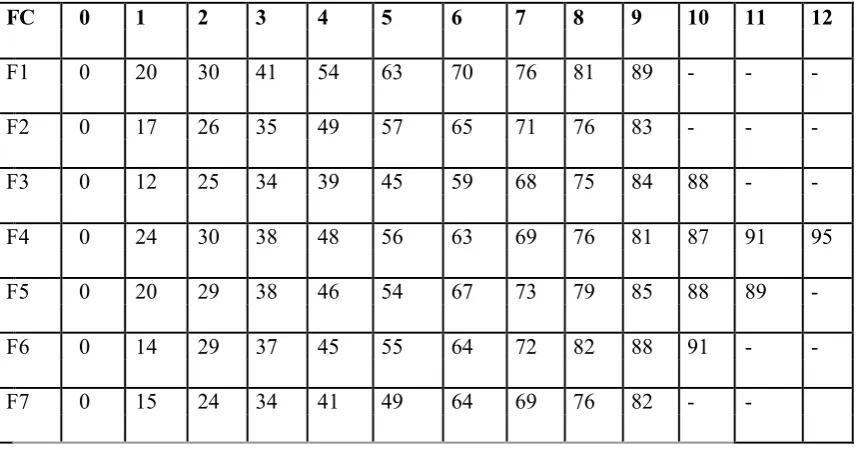
Table: 4-Results of Swelling Index Studies of Doxofylline Floating Tablets
FC 0 1 2 3 4 5 6 7 8 9 10 11 12
F1 0 20 30 41 54 63 70 76 81 89 - - -
F2 0 17 26 35 49 57 65 71 76 83 - - -
F3 0 12 25 34 39 45 59 68 75 84 88 - -
F4 0 24 30 38 48 56 63 69 76 81 87 91 95
F5 0 20 29 38 46 54 67 73 79 85 88 89 -
F6 0 14 29 37 45 55 64 72 82 88 91 - -
F7 0 15 24 34 41 49 64 69 76 82 - -
S.no Dosage Form Drugs
1 Floating tablets Acetaminophen, Acetylsalicylic acid, Ampicillin, Amoxicillin 2 Floating capsules Furosemide, L-DOPA, Benserazide, Nicardipine 3 Floating microspheres Aspirin, Griseofulvin, p-nitro aniline
3348
Table 6: In vitro dissolution studies
Table 7: Stability study parameters of formulation F4
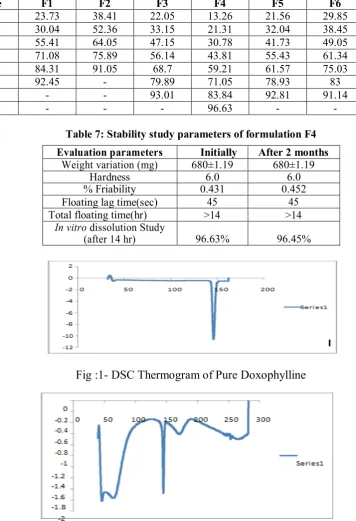
Fig :1- DSC Thermogram of Pure Doxophylline
Fig 2: DSC Thermogram of Doxofylline +Polymeres
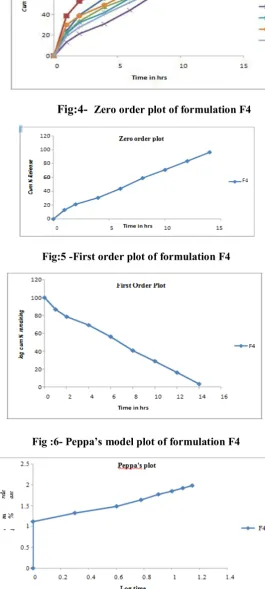
FC Zero order plot
R2
First order plot R2
Higuchi’s plot R2
Kozmeyer pep-pa’s plot R2
F4 0.974 0.982 0.591 0.99
Time F1 F2 F3 F4 F5 F6 F7
1 23.73 38.41 22.05 13.26 21.56 29.85 19.07
2 30.04 52.36 33.15 21.31 32.04 38.45 27.52
3 55.41 64.05 47.15 30.78 41.73 49.05 39.44
6 71.08 75.89 56.14 43.81 55.43 61.34 51.41
8 84.31 91.05 68.7 59.21 61.57 75.03 63.05
10 92.45 - 79.89 71.05 78.93 83 82.07
12 - - 93.01 83.84 92.81 91.14 94.12
14 - - - 96.63 - - -
Evaluation parameters Initially After 2 months
Weight variation (mg) 680±1.19 680±1.19
Hardness 6.0 6.0
% Friability 0.431 0.452
Floating lag time(sec) 45 45 Total floating time(hr) >14 >14
In vitro dissolution Study
3349
Fig:4-
Zero order plot of formulation F4Fig:5 -First order plot of formulation F4
3350
Fig:6- FTIR Spectra of Pure Doxophylline
Fig:7- FTIR Spectra of HPMC K100M
Fig: 8- FTIR Spectra of Doxophylline Mixtures
3351 If significant change occurs at these stress
condition, then the formulation should be tested at an intermediate condition i.e 300C/75% RH. Table 5.6.1 shows different temperatures and period of stability testing. If 30°c±2°c/65% RH±5% RH is a long term condition there is no intermediate condition. In the present work, stability study was carried out for the optimized formulation F4 for following condition and time period.
RESULTS:
Assay of Doxophylline
Assay of Doxophylline was done by UV spectrophotometry method. The % purity of the drug was found to be 97.5%.
Differential Scanning Calorimetry (DSC): Differential Scanning Calorimeter (DSC) allows the fast Evaluation of possible incompatibilities, because it shows changes in the appearance, Shift of melting endotherms and exotherms and/or variations in the corre-sponding enthalpies of reaction. The DSC thermograms of pure drug Doxophylline, other excipients and mixture were recorded.(Fig.) The thermal analysis was performed in a nitro-gen atmosphere at a heating rate of 10°C/min over a temperature range of 50°C to 300°C. Stability study of formulation (F4):
The optimized floating tablets (F4) were selected for stability study based on in vitro buoyancy and in vitro drug dissolution studies. The tablets were investigated at 40°C/75% RH for 2 months. From the data, the formulation is found to be stable under the con-ditions mentioned above since there was no significant change in the percentage amount of drug content (Table). Thus, it was found that the floating tablets of Doxofylline (F4) were stable under these storage conditions for at least 2 months.
DISCUSSION:
The purpose of the present study was to formulate floating tablets of Doxophylline Hy-drochloride..Doxophylline is the antiasthmatic drug with half life of 6 hours. Therefore the study was done to combat the shorter half life of Doxophylline. The floating tablet was pre-pared by wet granulation method containing gas-forming agents, like sodium bicarbonate, citric acid and hydrocolloids. Method was de-veloped for estimation of Doxophylline which showed maximum absorption at wavelength 274 nm and sodium phosphate buffer (pH 7.0). Beer’s law was obeyed at concentration range of 1 μg/ml to 10 μg/ml and when subjected to
regression analysis, the value of regression co-efficient was found to be 0.9934, which showed linear relationship between concentration and absorbance. FTIR studies were carried out. IR spectrum for pure drug and physical mixture of drug- polymers were obtained and analyzed for principle peaks at 1693.7 cm-1 ( C=O stretch-ing), 1547 cm-1 (C=C ), 778cm-1 (C-X ), 1079cm-1 (C-N Vibration), 1652cm-1 ( C=N ), 2956.52 cm-1 (C-H stretching) .Spectra are shown in figures. DSC curves obtained for pure
Doxophylline, HPMCK110M,
HPMCK4M,Carbopol 934P,PVPK30, magne-sium stearate and Talc and their physical mix-tures are shown in the Fig.3 and 4. To obtain floating, the balance between swelling and wa-ter acceptance must be restored. The swelling index of floating tablets of F1 to F7 is shown in Table (4). Tablets containing Carbopol 934P (F3) showed less swelling index at the begin-ning but higher swelling index was observed at the end of 12 h. While HPMC K4M and HPMC K100M (F6,F7) swelled rapidly at the begin-ning in 0.1 N HCl. The combination of sodium bicarbonate and citric acid provided desired floating ability and therefore this combination was selected for the formulation of the floating tablets. The cumulative percentage of drug re-lease as a function square root of time (Higuchi plot) was linear and it suggested that the release of Doxofylline, Carbopol 934P, HPMC K100M and HPMC K4M was diffusion controlled. The ‘n’ values obtained from the peppas-korsemeyer equation suggested that, all the formulation showed drug release by non-fickian diffusion mechanism.
ACKNOWLEDGEMENT
No research is ever the outcome of sin-gle individual’s talent or efforts. I offer flowers of gratitude to the almighty GOD who has been the source of strength in my life. It is with great pleasure and profound sense of reverence that I express my gratitude and thanks to my esteemed guide Mr. Ubaidulla U, Assistant Professor, Department of Pharmaceutics, Shree Devi College of Pharmacy.
REFERENCES:
3352 VJ. Trends in floating drug delivery
systems. J Sci Ind Res 2006;65 :1‐21. 3. Gupta S.K,Gupta udit,Omray L.k,
Yadav Reelesh.Preparation and charac-terization of floating drug delivery sys-tem of Acyclovir.IJAP ;2010 2(3):7-10.
4. Arora S, Ali J, Ahuja A, Khar RK, Ba-boota S. Floating drug delivery sys-tems: a review. AAPS PharmSciTech 2005;6 :E372‐ E390.
5. Chavanpatil MD, Jain P, Chaudhari S, Shear R, Vavia PR. Novel sustained re-lease, swellable and bioadhesive gas-troretentive drug delivery system for ofloxacin. Int J Pharm 2006;316 :86‐92.
6. Chien YW. Rate‐control drug delivery systems: controlled release vs sus-tained release. Med Prog Technol 1989;15 :21‐46.
7. A.V Mayavanshi, S S Gajjar.Floating drug delivery system to increase gastric retension of drugs.A Review. RJPT;2008 1(4):345-347.
8. Brahmankar DM, Jaiswal SB. Bio-pharmaceutics & Pharmacokinetics a Treatise. Delhi: Vallabha Prakashan; 1998
9. Anne Waugh,Allison Grant. Anatomy And Physiology in Health and illness. 9th ed. London: Elesevier churchil Liv-ingstone ; 2001.
10. Ramesh k Goyal,Anitha M Me-hta.Human Anatomy and Physiolo-gy.17th ed.B.S.Shah : 2007-2008. 11. Jayaveera K.N,Vrushabendra
B.M.Human Anatomy Physiology and Health sciences.S.Chand.77-93. 12. Halder A, Muklerjee S, Saha B.
Devel-opment and evaluation of polyethylene-imine-treated calcium alginate beads for sustained release of difflazenn. J Microencapsul. 2005; 22:67- 80. 13. Desai S & Bolton S. A floating
con-trolled release drug delivery system: in vitro- in vivo evaluation. Pharm Res. 1993; 10:1321-1325
14. Davis SS, Stockwell AF, Taylor MJ. The effect of density on the gastric emptying of single‐ and multiple‐ unit dosage forms.Pharm Res 1986; 3: 208‐
213.
man: a review of current concepts and methods of investigation. Br J Clin Pharmacol. 1985; 19:77S-83S.
16. Ponchel G, Irache JM. Specific and non-specific bioadhesive particulate system for oral drug delivery to the gastrointestinal tract. Adv drug Del Rev. 1998; 34:191-219.
17. Deshpande AA, Shah NH, Rhodes CT, Malick W. Development of a novel controlled-release system for gastric re-tention. Pharm Res.1997; 14:815-819. 18. Davis SS, Stockwell AF, Taylor MJ,et .
The effect of density on the gastric emptying of single and multiple unit dosage forms. Pharm Res.1986: 3:208-213.
19. B. M. Singh, K. H. Kim. Floating drug delivery systems: an approach to con-trolled drug delivery via gastric reten-tion. J. Control. Release, 2000, 63: 235-259.