_____________________________________________________________________________ * Corresponding author: E-mail: [email protected];
European Journal of Food Research & Review
1(2): 71-93, 2011
SCIENCEDOMAIN international
www.sciencedomain.orgPulsed Electric Fields, Processing and
Application in Food Industry
Ranjeet Singh
1*and Ashok Kumar
11
Department of Processing & Food Engineering, Punjab Agricultural University, Ludhiana, Punjab, India -141004.
Received 6th April 2011 Accepted 12th April 2011 Online Ready 27th June 2011
ABSTRACT
Interest in non-thermal food processing technologies like pulsed electric fields processing (PFE) has increased appreciably in the past decade. This technology promise to maintain the critical balance between safety and marketability of a new generation of foods. The technology has been optimized for the cold-pasteurization of foods and a limited number of such products are now commercially available. The PEF process holds promise as a more efficient way of getting useful products out of cell membranes. PEF is particularly well suited to processing fruit and vegetable juices because the enlargement of the cell pores makes juice extraction easier. PEF may be useful in extracting sugar from sugar beets and oils from oil bearing plants. PEF may have a use in the developing field of extraction of oil and other products from microorganisms such as algae. Current limitations of emerging non-thermal technologies can be overcome when they are combined with conventional preservation methods. This paper presents wide-ranging research and the latest developments in this emerging technology.
Keywords: Pulsed electric fields, electroporation of cells, non-thermal technologies;
72
1. INTRODUCTION
The ever-increasing trend toward nutritionally qualified foods has challenged food technology to produce fresh-like foods by replacing thermal treatments with alternative methods of preservation. Thermal processing is a major technology that has been commonly used in the food industry to increase shelf life and maintain food safety with low processing costs (Knorr et al., 1994). To qualify as an alternative method, a new technology should have significant impact on quality while at the same time maintain the cost of technology within feasibility limits. In recent years, several technologies have been investigated that have the capability of inactivating microorganisms at lower temperatures than typically used in conventional heat treatments (Lado and Yousef, 2002). Therefore, non-thermal methods correspond to the expectations for minimally processed foods of fresh quality, which have higher nutritional value because of color and flavor retention. Among all emerging non-thermal technologies, high intensity pulsed electric fields (PEF) is one of the most appealing technologies due to its short treatment times and reduced heating effects with respect to other technologies. High intensity pulse electric field is highly appreciated as a non-thermal food preservation technology that involves the discharge of high voltage electric short pulses through the food product. With the use of electric fields, PEF technology enables inactivation of vegetative cells of bacteria and yeasts in various foods. As bacterial spores are resistant to pulsed electric fields, applications of this technology mainly focus on food-borne pathogens and spoilage microorganisms, especially for acidic food products. In addition to the volumetric effect of PEF technology in controlling the microbiological safety of foods in a fast and homogenous manner, successful application provides extended shelf life without the use of heat to preserve the sensory and nutritional value of foods. PEF technology has the potential to economically and efficiently improve energy usage, besides the advantage of providing microbiologically safe and minimally processed foods. Successful application of PEF technology suggests an alternative substitute for conventional thermal processing of liquid food products such as fruit juices, milk, and liquid egg (Mertens and Knorr, 1992; Bendicho et al., 2002a).
Pulsed electric field (PEF) processing is a method for processing cells by means of brief pulses of a strong electric field. PEF holds potential as a type of low temperature alternative pasteurization process for sterilizing food products. In PEF processing, a substance is placed between two electrodes, then the pulsed electric field is applied. The electric field enlarges the pores of the cell membranes which kills the cells and releases their contents. PEF for food processing is a developing technology still being researched. There have been limited industrial applications of PEF processing for the pasteurization of fruit juices. Nearly all cells have pores which control the flow of nutrients and wastes into and out of the cell. Once the pores are sufficiently enlarged, the contents of the cell are released into the surrounding medium and foreign matter may enter the cell membrane.
73 The PEF process holds promise as a more efficient way of getting useful products out of cell membranes. PEF is particularly well suited to processing fruit and vegetable juices because the enlargement of the cell pores makes juice extraction easier. PEF may be useful in extracting sugar from sugar beets and oils from oil bearing plants. PEF may have a use in the developing field of extraction of oil and other products from microorganisms such as algae.
Part of the potential utility of PEF is that the properties of the electric field can be modified to have differing effects on cells. Most plant cells can survive weak electric fields, but over around 15,000 volts per centimeter most plant cells are killed. At over 30,000 volts per centimeter, most other cells such as bacteria and fungi are also killed.
Issues with PEF include the potential for electrical arcs and a temperature increase on the order of 30 degrees Celsius (54 °F). In liquid PEF processing gas bubbles tend to allow for electric arcing between the electrodes which will burn the substance being processed and potentially generate unwanted materials, such as carcinogens, in the processed material. One solution to gas bubble formation is to pressurize the liquid. In static PEF for non-liquids there is a greater limitation on the maximum voltage possible without electric arcing through the air. This necessitates transferring the solid to an oil filled chamber before a high voltage PEF is applied.
It has been shown that exposing biological cells to an electric field provides a potential to influence permeability of cell membranes and to induce structural changes and a local membrane breakdown. Based on this phenomenon called electroporation a broad variety of applications in food processing and bio-processing have been studied since the 1960s (Sale and Hamilton, 1967; Flaumenbaum, 1968). In plant or microbial genetics an electroporation is used to induce foreign material such as DNA into cells. The process of reversible pore formation has to be perfectly controlled to maintain viability of the organisms during the application of the PEE This principle can also be utilized to induce stress reactions and secondary metabolites biosynthesis, which can be desirable food constituents.
Increasing treatment intensity an irreversible membrane breakdown of plant, animal, or microbial cell membranes can be achieved. Disintegration of biological cells and break of permeability barrier often is a crucial pretreatment step to improve mass transfer rates. A PEF treatment can be utilized to substitute conventional disintegration techniques such as grinding, thermal, or enzymatic treatments prior to processes such as drying, extraction, or pressing. Pore induction by PEF can, dependent on treatment intensity, also cause a loss of vitality and be utilized to achieve an inactivation of microorganisms in liquid media. Several attempts to achieve an industrial exploitation have been made (Toepfl et al., 2005a), in 2006 the first commercial application of the technique has been reported (Clark, 2006).
above-74 mentioned issues, and also discusses engineering, biological, and regulatory aspects that should be considered for optimization and commercial implementation of PEF as a food preservation technology.
PEF imposes a strong electric field on a flowing fluid for a very short time. Above critical field strength of about 15,000 V/cm, vegetative cells are killed. In practice, higher field strengths are used, up to about 35,000 V/cm for disinfection (destruction of bacteria, fungi, and other microbes). Lower-strength fields are used for static PEF.
2. WORKING OF PULSES ELECTRICAL FIELD
When exposed to high electrical field pulses, cell membranes develop pores either by enlargement of existing pores or by creation of new ones. These pores may be permanent or temporary, depending on the condition of treatment. The pores increase membrane permeability, allowing loss of cell contents or intrusion of surrounding media, either of which can cause cell death. PEF has limited effects on spores and only appears to affect a few enzymes. Enzymes are important in juice processing because surviving enzymes can reduce pectin, which then can be less effective in keeping fruit particles suspended. Some sedimentation is common in fruit juices, but too much is unattractive. Some surviving enzymes may also enable discoloration and production of off-flavors. PEF offers a 5-log reduction of most pathogens and is considered a pasteurization process, so products must be refrigerated. An important process consideration is prevention of post-process contamination, so filling is in an aseptic or clean room environment and containers must be cleaned and possibly sterilized.
The perforation of cell membranes caused by PEF also applies to fruit and vegetable cell walls, so a potentially beneficial side-effect of the process is improved extraction of juice from cells. This phenomenon is also applied in another promising use, concentration of sewage sludge, a suspension of live and dead cells and organic matter which can be very hard to filter and concentrate. PEF, by killing live cells and reducing their ability to retain water, greatly improves filtration. Extraction of sugar from beets and starches from potatoes may also be improved by PEF.
3. PROCESS VARIABLES
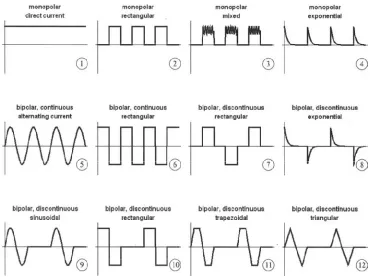
Important process variables include the electric field, which can have various wave forms, strengths, and distribution in the treatment chamber; temperature; pressure; and time of exposure and high power sources.
3.1 ELECTRIC FIELD
75
Fig. 1. Typical voltage waveforms for PEF technology
3.2TEMPERATURE
There is some temperature rise across the PEF treatment chambers due to the delivery of electrical energy, but the preservative effect is primarily non-thermal. A typical temperature change is about 30°C for orange juice and less for apple juice Processes typically operate at 35–50°C because it has been found that microorganisms are more tolerant at low temperatures.
3.3PRESSURE
Pressure is applied to inhibit the formation of air bubbles in which electrical arcing could occur with fields above 20,000 V/cm.
3.4TIME OF EXPOSURE
76
3.5 HIGH-POWER SOURCES
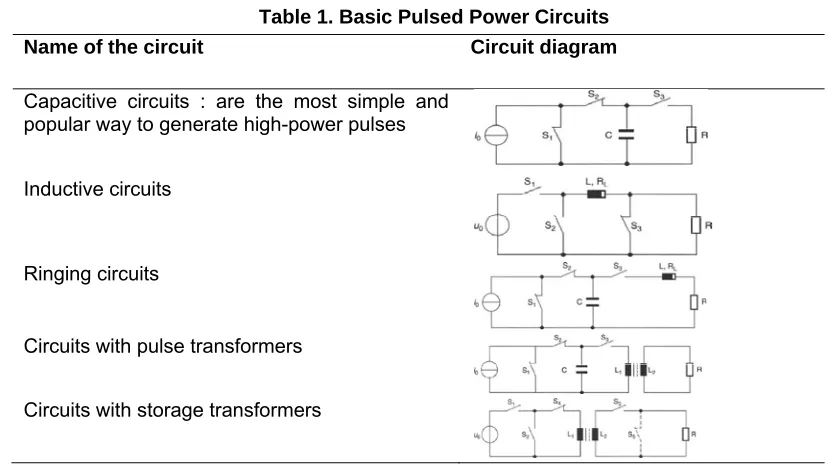
Several methods exist for generating pulsed electric fields. Depending on the specified type of voltage wave form, as well as on the available elements (capacitors, inductors, transformers, switches), the possibilities vary between simple circuits and very sophisticated networks. Basically, these circuits can be distinguished as being
• basic pulsed power circuits (Table 1) • circuits with voltage multipliers • pulse forming circuits or
• networks with pulse forming switches.
Table 1. Basic Pulsed Power Circuits
4. PRESENT STATUS OF PULSED ELECTRIC FIELD TECHNOLOGY
The extent of improvement in a food processing company achieved by an emerging technology generally reflects the interest in that technology by the food industry. The method of high intensity pulse electric fields used to inactivate microorganisms has been under research for nearly 45 years. During this time span the technology has proved to be most effective in the inactivation of vegetative bacteria, yeasts, and molds, while bacterial spores are much more tolerant (Qin et al., 1996). Many successful steps have been taken in the design of system components and inactivation mechanism for different species. Inactivation kinetics and the effect of PEF on spores are some of the most discussed issues in recent studies. Methods applied to thermal processing technologies have been used to explain inactivation kinetics neglecting the deviations from linearity for these plots (Zhang et al., 1995a).
The lethal effects of PEF processing on spores are still being explored (Hamilton and Sale, 1967). Additionally, the synergistic effect of PEF technology in combination with other mild preservation methods is one of the research interests popular in recent years. Considering the effectiveness of PEF treatment on liquid products, such as milk, fruit juices, liquid egg,
Name of the circuit Circuit diagram
Capacitive circuits : are the most simple and popular way to generate high-power pulses
Inductive circuits
Ringing circuits
Circuits with pulse transformers
77 and any other pumpable food products, extensive research has been done to implement the process at an industrial level. Flavor freshness, economic feasibility, improvements in functional and textural attributes and extended shelf life are some of the main points of interest besides achievement of microbiological safety of food products (Dunn, 2001). Among all liquid products, PEF technology has been most widely applied to apple juice, orange juice, milk, liquid egg, and brine solutions (Qin et al., 1995).
The rapid increase in the market segment of fruit juices has led manufacturers to seek ways to overcome the thermal effects of processing while increasing the shelf life of juices (Sadler et al., 1992; Hodgins et al., 2002). Application of PEF is especially promising for the citrus industry (Hendrix and Red, 1995). PEF processing has been successful in a variety of fruit juices with low viscosity and electrical conductivity such as orange, apple, and cranberry juice. Additionally, the color change in fruit juices was reportedly less in juices treated by PEF (Yeom et al., 2000). Studies conducted on the effects of PEF on dairy products such as skim milk, whole milk, and yogurt compromise a major section of PEF applications (Alvarez and Ji, 2003). Chronological developments in pulsed electric field processing were appended in Table 2.
In addition to inactivation of microorganisms and enzymatic treatments, the application of PEF provides highly effective pretreatment of foods and food ingredients in an ecological and gentle way (Guderjan et al., 2005). The ability of pulsed electric fields to destroy cell membranes has been used in several applications (Lebovka et al., 2003). The effect of combined pressure-PEF treatment enhances the solid-liquid expression of different biological tissues and increases the juice yield (Wang and Sastry, 2002; Vorobiev et al.,2004).
PEF technology has recently been used in alternative applications including drying enhancement, enzyme activity modification, preservation of solid and semisolid food products, and waste water treatment, besides pretreatment applications for improvement of metabolite extraction. The ability of PEF can be successfully used to enhance mass and heat transfer to assist drying of plant tissues. Studies conducted on different plant tissues such as potato tissue (Angersbach and Knorr, 1997), coconut (Ade-Omowaye et al., 2000), carrots (Rastogi et al., 1999), mango (Tedjo et al., 2002), and apple slices (Ade-Omowaye et al., 2002) reported increased yield of water removal by 20-30% when exposed to low intensity electric fields.
Pre-treating red peppers at the PEF-enhanced initial drying rate significantly indicated that combining PEF and partial osmotic dehydration in solutions before air drying may offer good potential in satisfactorily enhancing mass transfer rates and preserving the color quality of red peppers (Ade-Omowaye et al., 2003).
78
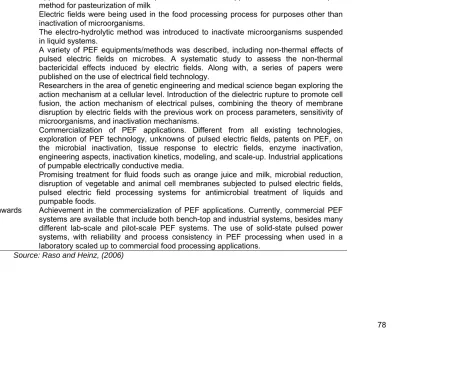
Table 2. Chronological developments in pulsed electric field processing
Years Development
1935 Application of electric fields to preserve foods first appeared with the Electro-pure
method for pasteurization of milk
1940 Electric fields were being used in the food processing process for purposes other than
inactivation of microorganisms.
1950 The electro-hydrolytic method was introduced to inactivate microorganisms suspended
in liquid systems.
1960 A variety of PEF equipments/methods was described, including non-thermal effects of
pulsed electric fields on microbes. A systematic study to assess the non-thermal bactericidal effects induced by electric fields. Along with, a series of papers were published on the use of electrical field technology.
1970 Researchers in the area of genetic engineering and medical science began exploring the
action mechanism at a cellular level. Introduction of the dielectric rupture to promote cell fusion, the action mechanism of electrical pulses, combining the theory of membrane disruption by electric fields with the previous work on process parameters, sensitivity of microorganisms, and inactivation mechanisms.
1980 Commercialization of PEF applications. Different from all existing technologies,
exploration of PEF technology, unknowns of pulsed electric fields, patents on PEF, on the microbial inactivation, tissue response to electric fields, enzyme inactivation, engineering aspects, inactivation kinetics, modeling, and scale-up. Industrial applications of pumpable electrically conductive media.
1990 Promising treatment for fluid foods such as orange juice and milk, microbial reduction, disruption of vegetable and animal cell membranes subjected to pulsed electric fields, pulsed electric field processing systems for antimicrobial treatment of liquids and pumpable foods.
2000 onwards Achievement in the commercialization of PEF applications. Currently, commercial PEF systems are available that include both bench-top and industrial systems, besides many different lab-scale and pilot-scale PEF systems. The use of solid-state pulsed power systems, with reliability and process consistency in PEF processing when used in a laboratory scaled up to commercial food processing applications.
79
Table 3. Patents on pulsed electric field technology (Sepulveda and Barbosa-Canovas, 2005)
5. SYSTEM COMPONENTS
The high intensity pulsed electric field processing system is a simple electrical system consisting of a high voltage source, capacitor bank, switch, and treatment chamber (Fig 2). Generation of pulsed electric fields requires a fast discharge of electrical energy within a short period of time. This is accomplished by the pulse-forming network (PFN), an electrical circuit consisting of one or more power supplies with the ability to charge voltages (up to 60 kV), switches (ignitron, thyratron , tetrode, spark gap, semiconductors), capacitors (0.1-10 µF), inductors (30 µH), resistors (2 Ω-10 MΩ), and treatment chambers (Gongora-Nieto et al., 2002). Typical values of industrial power modulators for the treatment of liquid foods and other biological liquids or aqueous materials were given in Table 4 below.
References Patents
Held and Chauhan(2002) Destruction of waste-activated sludge
Morshuiset al. (2002) Device and method for pumpable food products De long and Van -Heesch (2002) Pulse electric field treatment system
Lelieveldand Volanschi (200I) Method and apparatus for preserving food Zhang and Qiu (2001) High voltage pulse generator
Mastwijkand Bartels(2001) Integrated modular design for treatment chamber Bushnell(2000) A serial electrode treatment cell for pumpable food Mittal et al. (2000) Method and apparatus for electrically treating foodstuff Addeo (2000) Use of PEF coupled with rotational retorting
Bushnell et al. (2000) Uniform product flow in a PEF treatment chamber Qin et al. (1998) Continuous flow electrical treatment chamber Hayden(1998) Method of inactivation in liquids
Yinet al. (1997) High voltage PEF chambers for liquid products Qin et al. (1997) Continuous flow electrical treatment chamber Zhang et al. (1996) Batch mode food treatment using PEF
Bushnellet al. (1996) Process for inactivation of microorganisms with PEF Bushnellet al. (I 995a,b) Prevention of electrode fouling, and electrochemical
effects in PEF systems
Bushnellet al. (1993) PEF systems for extension of shelf life Bushnellet al. (1991) PEF systems for extension of shelf life Dunn et al. (1991) Methods for preservation by PEF
Doevenspeck (199I) Electric impulse method and device for treatment Dunn et al. (1989) Methods for preservation with PEF
80
Fig. 2. Flow chart of a PEF food processing system with basic components
Treatment Chamber High energy
pulse generator
Treated Product Raw
Product
Pump
Temperature control
Cooling coil Controlling and
Monitoring System
81
Table 4. Industrial power modulators for the treatment of liquid foods and other biological liquids or aqueous materials should have the following typical values
(Raso and Heinz, 2006)
*For each specific application, these values have to be confirmed by experiments.
6. EFFECTIVENESS OF PULSED ELECTRIC FIELD TREATMENT
Sufficient microbial reduction by PEF has already been confirmed, however, the degree of inactivation strongly depends on several constraints. The lethality factors contributing to the effectiveness of pulsed electric field technology can be grouped as technical, biological, and media factors. Each group of determinant factors is related to type of equipment, processing parameters, target microorganism, and type and condition of media used.
7. FUTURE ASPECTS AND ECONOMIC ANALYSIS OF PEF PROCESSING
Today's consumers' expectations that food products provide convenience, variety, adequate shelf life and caloric content, reasonable cost, and environmental soundness make the modifications of existing technologies and the adoption of novel processing technologies essential. Industrial food producers in competitive markets increasingly have to consider novel processing technologies in order to increase food safety and the ability to offer better products to consumers. As stated earlier in this chapter, the potential of PEF technology to replace traditional processing methods has further inspired researchers from both academia and industry to explore the unknowns of pulsed electric fields, while achieving improvements in current techniques. Possible factors related to the effectiveness of PEF technology have already been scanned and further research is being conducted to reach a complete understanding and to minimize drawbacks. At this point, in order to prove the applicability of PEF technology for practical use, laboratory outcomes must achieve a certain level of optimization for the process to gain importance.
Specific electrical data for medium treatment
Specific data for facilities
Specific conductivity of the medium
• range: 10-2-10 S/m • typical value: 0.3 S/m
Electric field strength in the medium
• range: 1-100 kV/cm • typical value: 30 kV/cm
Power density
• range: 2 MW/L-30 GW/L • typical value: 3 GW/L
Specific energy consumed in the medium
• range: 0.5-5000 MJ/t • typical value: 50 MJ/t
Mass flow
• range: 5-300 t/h • typical value: 20 t/h
Average power
• range: >20 kW • typical value: 300 kW
Treatment time
• range of single pulse durations: 1-1000 µs • range of pulse rates: 1-3000
• typical value of treatment time (rectangular pulses): 10 µs
Pulse repetition rate
• range: 1-2000 pps
82
8. DRAWBACKS/LIMITATIONS
A lot of research in the field of food engineering has focused on new preservation technologies, but very few of these methods have been implemented by the food industry until now due to their limitations and drawbacks. Besides numerous possibilities and the advantages of PEF technology there are some shortcomings that future research should address. The main limitations of this technology are scaling up of the system; bubble formation leading to electrical breakdown of the treated product concerning safety issues; particulate foods; availability of commercial units; and resistance of some microbial species including bacterial spores.
9. EFFECT OF PEF ON ENZYMES AND FOOD CONSTITUENTS
There are some inconsistencies regarding the effect of PEF on food constituents, mainly on enzymatic inactivation, probably related to different experimental conditions among laboratories. Further research effort is required to clarify the degree and mechanisms of inactivation of enzymes by PEF before this technology can be implemented for food preservation purposes. With regards to the effect of PEF treatments on quality parameters of liquid foods, and despite a wider range of experimental conditions and proper comparison with heat-treated and untreated foods would be desirable, it can be concluded that PEF, applied at treatment intensities to obtain pasteurized-like products, exerts a small impact, if any, on protein stability, fat globules distribution, vitamin content, color, flavor, general appearance, and most of the quality parameters of milk, juices, egg products, and some other foods. Juices and other particularly sensitive liquid food seem most adequate for PEF processing.
9.1 ELECTROPORATION OF CELL MEMBRANES
Application of pulsed electric fields of high intensity and duration from microseconds to milliseconds may cause temporary or permanent permeabilization of cell membranes. The generally accepted term describing this phenomenon is "electroporation" or "electropermeabilization," Permeabilization of cell membranes is the basis of different applications of PEF for the food industry such as food pasteurization or extraction of intracellular components. Basically, electroporation is a consequence of a significantly increased transmembrane potential resulting in structural changes in the membranes and formation of aqueous pathways or electropores (Fig 3).
9.1.1 Electroporation of microorganism of interest in food preservation
Both moulds, yeast, and bacteria are microorganisms of interest in food preservation. Most act as spoilage organisms or pathogens, so prevention of their growth or even better their destruction are the major concerns of food preservation technologies. Many attempts have been made in order to discover whether membrane electroporation is the cause of microbial inactivation by PEF.
83 microorganisms and may allow achieving the desired level of microbial inactivation while retaining the essential organoleptic properties and nutritive value of the food.
Fig. 3. Electroporation of cell membrane when exposed to PEF treatments. E: electric field strength; Ec : critical electric field strength.
10. APPLICATIONS OF PEF TECHNOLOGY FOR THE FOOD INDUSTRY
The application of PEF in food processing gained considerable attention within the last decades, utilizing its impact on cell membranes. Apart from preservation the disintegration of biological tissue is often a key step in food processing prior to winning of intracellular compounds. It is noteworthy that an electro-permeabilization can be performed continuously and in a time-scale of seconds, the treatment therefore can easily be implemented into existing processing lines.
10.1 JUICE PROCESSING
84 beneficial impact of a PEF treatment for wine production was also reported by Sigler et al. (2004).
It was shown that the press ability of juices from soft vegetables such as potato, after a PEF treatment was improved. Application of PEF for juice processing provides a potential to replace or enhance conventional cell disintegration techniques
In the context of consumer demand for functional food with a composition close to fresh products and a high content of physiologically valuable compounds an increased extractability of intracellular compounds such as pigments or phenolic substances could provide an enormous potential for product development. A system with a peak voltage of 20 kV, an average power of 7 kW and a production capacity of 2 ton/h has been developed for the treatment of fruit mashes. This provides a potential to extract high quality pectin from the pomace after juice winning and therefore a step toward a more economic and sustainable processing.
10.2 PEF TREATMENT OF MICROALGAE, SEAWEED, AND OTHER AQUATIC SPECIES
The winning of bioactive substances for cosmetic or biotechnological use gained considerable interest recently. Different varieties of macro- and microalgae are sources of vitamins, pigments, proteins as well as antixodative and bioactive substances (Stolz and Obermayer, 2005). Chiarella vulgaris, a protozoic green algae was shown to possess a high content of proteins and minerals and to have a positive influence on collagen synthesis. Spirulina platensis contains a high amount of proteins as well as the Vitamins E, Bl, B2, B3, B6, B12, and H as well as carotenoids. Algae extracts applying PEF treatment could provide a potential toward a gentler downstream processing. The extractability of proteins, chlorophyll, and carotenoids as well as protease activity of extracts from Spirulina and Chlorella after a PEF treatment has been investigated Koehler et at. (2005). The extractability of growth hormone formulations from Kelp after a PEF treatment indicating an improved yield after pressing.
10.3 PLANT OIL EXTRACTION
85
10.4 MEAT AND FISH TREATMENT
Disintegration of animal cellular tissue might also be utilized to enhance processes where an uptake of substances is required, such as marination or curing of fish or meat products. Salt or a combination of salt and antimicrobial agents such as nitrite is often applied for preservation; spices are added to develop product-specific taste and aroma profiles. In case of raw ham a long-term curing and air drying is applied. During such procedures a PEF treatment can be applied to improve mass transfer processes and to accelerate curing, reducing the time requirements. Not many research works is available in this field of PEF application, but recently the interest in the potential of PEF application for meat and fish products increased. In contest to plant material or liquid food the effect of a PEF treatment on protein-based, solid food structures such as meat and fish tissue or protein gels has been studied. (Sitzmann and Munch, 1988; Hafsteinsson et al., 2000; Barsotti et al., 2001; Gudmundsson and Hafsteinsson, 2001). Research work on feasibility of a PEF treatment in meat processing shown that the fermentation of raw sausages (Salami type) can be accelerated by improving the availability of intracellular liquid for fermenting cultures. During meat processing salt as well as sodium nitrate are applied for preservation, reduction of water activity as well as meat curing. The impact of a PEF treatment on pork muscle is was investigated by electron micrographs, showing the formation of a swollen, sponge-like tissue structure (Fig. 4).
Fig. 4. Electron micrographs of pork meat untreated (left column), after cooking (center column) and after PEF-treatment and cooking (right column). To all samples an injection of 20 % brine containing 10 % of pickling salt was applied, cooking was
86 Removal of water to preserve food products such as fruits or vegetable accounts for a significant amount of energy costs in food processing. The electro-permeabilization of cell membranes, leading to a drastic increase in mass transfer rates, can be utilized to enhance drying rates of cellular tissue. The drying rates of osmotic drying and the diffusion coefficients of carrots were investigated by Rastogi et al. (1999). After a PEF treatment at field strength of 1-2 kV/cm the time required for fluidized bed drying of potato cubes was reduced. For apple slices an increased osmotic drying rate and improved rehydration capacity as well as shorter rehydration times were reported (Taiwo et al., 2002). Ade-Omowaye et al. (2001) investigated the relationship between a PEF treatment and drying rates of plant-based foods during osmotic dehydration and air drying. As mass transport across the cell membrane is influenced by a PEF treatment, it can be utilized to significantly increase mass transfer rates by 10-30% when applying 5-20 pulses at field strength of 1.0 kV/cm. An increase in mass transfer rates, resulting in faster water transport to the product surface and therefore reduction of drying time after a pretreatment will lead to drastic saving of energy and better utilization of production capacities during convective air drying. Taking into account the low energy input required for a PEF treatment of plant or animal tissue (2-20 kJ/kg), it is evident that there is a potential to reduce the total energy input for product drying.
10.6 SUGAR PROCESSING
87
10.7 ENERGY REQUIREMENTS FOR TISSUE DISINTEGRATION
The tissue softening effect of PEF, based on cell membrane electropermeabilization and loss of turgor to induce structural changes in fruit or vegetable tissue. With a continuous, short time and low energy (~10 kJ/kg) PEF treatment of vegetable tissue, tissue disintegration and a reduction of tissue toughness similar to that after a thermal or enzymatic treatment can be achieved. For sugar beet a 50 % reduction of cutting force required has been reported (Kraus, 2003). For vegetable tissue almost total cell disintegration was found after a treatment at 1.8 kV/cm and 40 pulses (Knorr et al., 2005). The results indicate that in addition to improvement of extraction and mass transport processes cell disintegration by PEF can be achieved with lower energy usage and shorter timescale than using other treatments.
88
10.8 MICROBIAL DECONTAMINATION
The applicability of PEF for microbial inactivation of liquid food has been proven by a high number of studies investigating the impact of PEF on vegetative organisms in model as well as real food material.
10.9 WASTEWATER TREATMENT
During biological wastewater treatment the minimization of excess sludge production due to strengthened ecological and legislative measures became an issue of high importance. A disintegration of excess sludge and destruction of cells, organic matter consisting of a broad variety of different organisms, and subsequent release of intracellular material can be utilized to initiate biodegradation and autolysis of cells (Kopplow et al., 2004). The main advantages of a PEF application in contrast to conventional disintegration techniques such as mechanical rupture, ozone application, thermal, or ultrasound treatment are short processing times and a direct and efficient permeabilization of cell membranes (Fig. 5).
11. PROBLEMS AND CHALLENGES
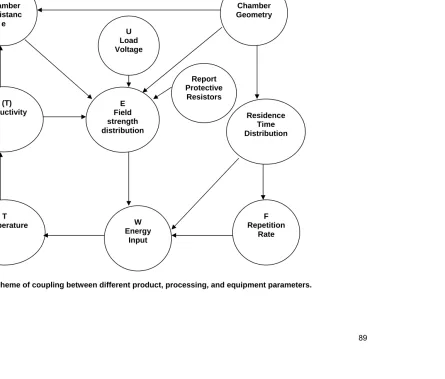
The application of PEF in food and bio-processing has potential for different applications, in particular for permeabilization of cellular tissue. Nevertheless some technological as well as economical pitfalls and challenges still remain and have to be overcome prior to an industrial exploitation. An overview of the coupling between different processing parameters can be seen in Fig. 6. It has been reported that presence of air bubbles can cause a drop in electric field strength in particular in boundary regions of bubbles the microorganisms might not be exposed to sufficient electric field strength. Presence of bubbles, in case of sparkling products, dissolution of gas, or after electrolysis of water may therefore cause product safety problems.
89
Fig. 6. Scheme of coupling between different product, processing, and equipment parameters. Treatment
Chamber Resistanc
e
F Repetition
Rate k (T)
Conductivity
T Temperature
Residence Time Distribution Treatment
Chamber Geometry
E Field strength distribution
W Energy
Input U Load Voltage
Report Protective
90
12. RESEARCH NEEDS, CONCLUSIONS AND OUTLOOK
Though in lab and pilot scale the applicability and efficiency of pulsed electric field treatment as cell permeabilization technique has been proven up to present only one commercial exploitation (Clark, 2006) has been achieved. From an engineering point of view its feasibility in industrial scale remains to be proven, the development of pulse modulators and turn-key systems with high average power as well as reliability will be a challenging task. There is a clear need for user-friendly PEF systems, but in particular the investment costs need to be reduced to allow their utilization in food industry. The development of modular and scalable power supply and switching modules based on standard components as used in motor drives or other pulsed power applications could help to reduce the costs and allow to easily setup modulators with different specifications. To find an industrial application the costs for investment and operation should either be significantly reduced or a clear consumer benefit and added value needs to be created to surrogate conventional processing techniques. For beverage pasteurization, the costs for investment as well as operation will be drastically increased by PEF application. Thermal preservation has been improved by application of short time-high temperature processing, the thermal load, and product deterioration have been reduced, and the technique is well established and accepted by the customer. In fruit juice industry the margins appear too small to justify replacing thermal preservation by PEF, in particular against the disadvantages and pitfalls still remaining. When operating at low electric field strength and energy input, as reported for permeabilization of plant or animal tissue, the cost balance as well as availability of respective pulse modulator s are significantly improved. As energy transfer across electrode-media interface is comparably low at the same time the occurrence of electrochemical reactions and undesired impact on the product will be reduced. From this point of view the application as cell disintegration technique provides the highest potential in terms of technical feasibility as well as economical relevance. Extraction of highly valuable substances to be used as health ingredients or for cosmetic formulations or disintegration of cellular tissue with comparable high value and production rates in a range of a few tons per hour such as meat products appear to promising to promote the development of this technique, an industrial exploitation could be obtained within short-term in contrast to large-scale beverage preservation. A successful, first industrial application for an appropriate product and in sound production scale will be necessary to show the feasibility, to produce interest of food and electrical engineering companies and to convince potential end-users of the feasibility of these techniques.
REFERENCES
Ade-Omowaye, B. I. O., Angersbach, A., Taiwo, K. A., Knorr, D. (2001). Use of pulsed electric field treatment to improve dehydration characteristics of plant based foods. Trends Food Sci. Technol., 12, 285- 295.
Ade-Omowaye, B. I. O., Taiwo, K., Knorr, D. (2002). Use of pulsed electric field pretreatment to improve dehydration characteristics of plant based foods. Trends Food Sci. Technol., 12, 285-295.
91 Alvarez, V. B. and Ji, T. (2003). Emerging technologies and processing and preservation technologies for milk and dairy products, In: Food Science and Food Biotechnology., 1(2), 23-42.
Angersbach, A., Knorr, D. (1997). High intensity electric field pulses as pretreatment for affecting dehydration characteristics and rehydration properties of potato cubes. Nahrung., 55, 143-146.
Bendicho, S., Barbosa-Canovas, G. V., Martin, O. (2002a). Milk processing by high intensity pulsed electric fields. Trends Food Sci. Technol., 13(617), 195-204.
Bliesener, K. M., Miehe, D., Buchholz, K. (1991). Verfahrensentwicklungen zur Schnitzelentwasserung. Zuckerindustriel., 16, 978-986.
Bouzrara, H., Vorobiev, E. (2000). Beet juice extraction by pressing and pulsed electric fields. Int. Sugar., 102(1216), 194-200.
Clark, J. P. (2006). Pulsed electric field processing. Food. Technol., 60(1), 60-67.
Dunn, J. (2001). Pulsed electric field processing: An overview, In: Pulsed Electric Fields in Food Processing, Fundamental Aspects and Applications (G. Barbosa-Canovas and Q. H. Zhang, eds.), Technomic Press, Lancaster, PA, 1-30.
Dutreux, N., Notermans, S., Wijtzes, T., Gongora-Nieto, M., Barbosa-Canovas G., Swanson, B. (2000). Pulsed electric field inactivation of attached and free living E.coli and Listeria innocua under several conditions. Int. J. Food. Microbiol., 54, 91-98.
Eshtiaghi, M. N., Knorr, D. (1999). Process for treatment of sugar beet. European Patent. Patent-Nr.: EP 99923708.
Flaumenbaum, B. L. (1968). Anwendung der Elektroplasmolyse bei der Herstellung von Fruchtsaften. Fliissiges Obst., 35, 19-22.
Gongora-Nieto, M. M., Sepulveda, D., Pedrow, P., Barbosa-Canovas, G., Swanson, B. (2002). Food processing by pulsed electric fields: Treatment delivery inactivation level and regulatory aspects. Lebensm. Wiss. Technol., 35(5), 375-388.
Guderjan, M., Topfl, S., Angersbach, A., Knorr, D. (2005). Impact of pulsed electric field treatment on the recovery and quality of plant oils. J. Food. Eng., 67, 281-287. Gudmundsson, M., Hafsteinsson, H. (2001). Effect of electric field pulses on microstructure
of muscle foods and roes. Food Sci. Technol., 12, 122-128.
Hafsteinsson, H., Gudmundsson, M., Arnarson, G. O., Jonsson, A., Siguroardottir, M. S. (2000). High Electric Field Pulses: Food Safety; Quality and Critical Parameters, Technological Institute of Iceland (IceTec), Iceland.
Hamilton, W., Sale, J. (1967). Effects of high electric fields on microorganisms, Biochem. Biophys. Acta., 148, 789-800.
Hendrix, C. M., Red, J. B. (1995). Chemistry and technology of citrus juices and byproducts, In: Production and Packaging of Non-carbonated Fruit Juices and FruitBeverages (P.R. Ashurst, ed.), Blackie Academic and Professional, Glasgow, UK, 53-87. Hodgins, A., Mittal, G., Griffiths, M. (2002). Pasteurization of fresh orange juice using
low-energy pulsed electrical field. J. Food. Sci. 67(6), 2294-2299.
Knorr, D., Angersbach, A., Eshtiaghi, M., Heinz, V., Lee, D. V. (2001). Processing concepts based on high intensity electric field pulses. Trends. Food. Sci. Technol., 12, 129-135.
Knorr, D., Geulen, M., Grahl, T., Sitzmann, W. (1994). Food application of high electric field pulses. Trends Food Sci. Technol., 5, 71-75.
Koehler, E., Toepfl, S., Knorr, D., Pulz, O. (2005). Unconventional procedures for the production and stabilization of extracts with active agents, In: 6th EuropeanWorkshop Microalgal Biotechnology, Potsdam, Germany.
92 Kraus, W. (2003). The 2002 beet campaign-VDZ Zweigverein Slid. Zuckerindustrie., 128 (5),
344-354.
Lado, B. H., Yousef, A. E. (2002). Alternative food preservation technologies: Efficacy and mechanism. Microbes. Infect., 4, 433-440.
Lebovka, N. I., Praporscic, I., Vrobiev, E. (2003). Estimation of characteristic damage time of food materials in pulsed electric fields. J. Food. Eng., 54, 337-346.
Lin, C. S., Wu, C., Yeh, I. Y., Saalia, F. K. (2005). The evaluation of electrolyzed water as an agent for reducing microorganisms on vegetables. Int. J. Food. Sci. Technol., 40, 495-500.
Mertens, B., Knorr, D. (1992). Developments of non-thermal processes for food preservation. Food Technol., 5, 124-133.
Morren, J., Roodenburg, B., de, Haan, S. W. H. (2003). Electro-chemical reactions and electrode corrosion in pulsed electric field (PEF) treatment chambers. Innov. Food. Sci. Emerg. Technol., 4 (3), 285-295.
Qin, B. L., Pothakamury, U. R., Barbosa-Canovas, G. V., Swanson, B. (1996). Non-thermal pasteurization of liquid foods using high intensity pulsed electric fields. Crit. Rev. Food. Sci. Nutr., 36(6), 603-627.
Qin, B. L., Zhang, Q., Barbosa-Canovas, G., Swanson, B., Pedrow, P. D. (1995). Pulsed electric field treatment chamber design for liquid food pasteurization using finite element method. Trans. ASAE., 38(2), 557-565.
Raso, J., Heinz, V. (2006). Pulsed electric fields processing for the food industry, Fundamentals and application. Springer Science-Business Media, LLC, 233 Spring Street, New York, NY 10013, USA.
Rastogi, N., Eshtiaghi, M., Knorr, D. (1999). Accelerated mass transfer during osmotic dehydration of high intensity electric field pulse pre-treated carrots. J. Food. Sci., 64, 1020-1023.
Ratanatriwong, P., Jin, Z., Evrendilek, G., Yeom, H., Zhang, Q. (2001). Shelf life evaluation of rice pudding treated by pulsed electric field processing, In: Institute of food Technologists, Annual Meeting: Abstracts, Paper: 59H, 19.
Sadler, G. D., Parish, M. D., Wicker, I. (1992). Microbial enzymatic, and chemical changes during storage of fresh and processed orange juice. J. of Food. Sci., 57, 1187-1197. Sale, A. J., Hamilton, W. A. (1967). Effect of high electric fields on micro-organisms. I. Killing
of bacteria and yeast. II. Mechanism of action of the lethal effect. Biochem. Biophys. Acta., 148, 781-800.
Schultheiss, C., Bluhm, H. J., Mayer, H. G., Kern, M., Michelberger, T., Witte, G. (2002). Processing of sugar beets with pulsed electric fields. Plasma. Sci., 30 (4), 1547-1551.
Schultheiss, C., Bluhm, H. J., Sack, M., Kern, M. (2004). Principle of electroporation and development of industrial devices, Zuckerindustrie., 129 (1), 40-44.
Sepulveda, D., Barbosa-Canovas, G. V. (2005). Present status and the future of PEF technology, In: Novel Food Process Technologies (G. V. Barbosa-Canovas, M S Tapia, and M P Cano, eds.), CRC Press, Boca Raton.
Sigler, L., Schultheiss, C., Mayer, H. G., Kern, M. (2004). Zellporation in der Weinbereitung. In: 7th International Symposium in Enology. Stuttgart. Germany.
Sitzmann, W., Munch, E. W. (1988). Das ELCRACK Verfahren: Ein neues Verfahren zur Verarbeitung tierischer Rohstoffe. Die. Fleischmehl. Industrie., 40 (2), 22-28.
Stolz, P., Obermayer, B. (2005). Manufacturing microalgae for skin care. Cosmet. Toiletries., 120(3), 99-106.
93 Tedjo, W., Taiwo, K., Eshtiaghi, M., Knorr, D. (2002). Comparison of pre-treatment methods on water and solid diffusion kinetics of osmotically dehydrated mangos. J. Food. Eng., 53, 133-142.
Toepfl, S., Heinz, V., Knorr, D. (2005a) Overview of pulsed electric field processing for food, In: Emerging Technologies for Food Processing (D-W Sun, ed.), Elsevier, Oxford. Vorobiev, E., Jemai, A. B., Bouzrara, H., Lebovka, N. I., Bazhal, M. I. (2004). Pulsed electric
field assisted extraction of juice and food plants, In: Novel Food Processing Technologies (G. Barbosa-Canovas and M. P. Cano, eds.), Marcel Dekker. New York.
Wang, W. C., Sastry, S. K. (2002). Effects of moderate electro-thermal treatments on juice yield from cellular tissue. Innov. Food. Sci. Emerg. Technol., 3(4), 371-377.
Yeorn, H., Streaker, C., Zhang, Q., Min, D. (2000). Effects of pulsed electric fields on the quality of orange juice and comparison with heat pasteurization. J. Agric. Food. Chem., 48, 4597-4605.
Zhang, Q. H., Barbosa-Canovas, G. V., Swanson, B. G. (1995a). Engineering aspects of pulsed electric field pasteurization. J. Food. Eng., 25(2), 261-281
Zhang, Q. H., Chang, E. J., Barbosa-Canovas, G. V. (1994a). Inactivation of microorganisms in a semisolid model food using high voltage pulsed electric fields. Lebensm. Wiss. Technol., 27(6), 538-543.