Modern Journal of Language Teaching Methods ISSN: 2251-6204
Vol. 8, Issue 9, September
2018
Page 1
Modern Journal of Language Teaching Methods ISSN: 2251-6204
Vol. 8, Issue 9, September
2018
Page 2
Modern Journal of Language Teaching Methods (MJLTM)
ISSN: 2251 - 6204
www.mjltm.com
[email protected]
Editorial Board:
1.
Hamed Ghaemi,Assistant Professor in TEFL,Islamic Azad University (IAU),Iran
2.
Domingo Docampo Amoedo,Full Professor,Department: Signal Theory and
Communications, Vigo University,spain
3.
Barbara Sicherl Kafol,Full Professor of Music Education University of
Ljubljana,slovenia
4.
Agüero-Calvo Evelyn,Professor of Mathematics,Technological Institute of Costa
Rica
5.
Tito Anamuro John Albert,Assistant professor Universidad del Norte,Colombia
6.
Dlayedwa Ntombizodwa,Lecturer,University of the Western Cape,South Africa
7.
Doro Katalin,PhD in Applied Linguistics,Department of English Language
Teacher Education and Applied Linguistics,University of Szeged,Hungary
8.
Dutta Hemanga,Assistant Professor of Linguistics,The English and Foreign
Languages University (EFLU),India
9.
Fernández Miguel,PhD,Chicago State University,USA
10.
Grim Frédérique M. A.,Associate Professor of French,Colorado State
University,USA
11.
Izadi Dariush,PhD in Applied Linguistics,Macquarie
University,Sydney,Australia
Modern Journal of Language Teaching Methods ISSN: 2251-6204
Vol. 8, Issue 9, September
2018
Page 3
12.
Kaviani Amir,Assistant Professor at Zayed University,UAE
13.
Kirkpatrick Robert,Assistant Professor of Applied Linguistics,Shinawatra
International University,Thailand
14.
Mouton Nelda,PhD in Education Management,North-West University
(NWU),South Africa
15.
Naicker Suren,Department of Linguistics and Translation,University of South
Africa
16.
Ndhlovu Finex,PhD,Linguistics Programme,University of New
England,Australia
17.
Raddaoui Ali Hechemi,PhD,Associate Professor of Applied
Linguistics,University of Wyoming in Laramie,USA
18.
Rolstad Kellie,PhD,Associate Professor of Education,University of
Maryland,USA
19.
Shahbazirad Mohammad,PhD candidate in English language and
Literature,Yerevan State University,Armenia
20.
Stobart Simon,PhD,Dean of Computing,Teesside University,UK
21.
Suszczynska Malgorzata,Senior Assistant Professor,University of
Szeged,Hungary
22.
Weir George R. S.,PhD in Philosophy of Psychology,University of
Strathclyde,Glasgow,UK
23.
Zegarac Vladimir,PhD,University of Bedfordshire,UK
Modern Journal of Language Teaching Methods ISSN: 2251-6204
Vol. 8, Issue 9, September
2018
Page 4
Abstracting/Indexing
Index
Copernicus 2011
Modern Journal of Language Teaching Methods ISSN: 2251-6204
Vol. 8, Issue 9, September
2018
Page 5
Linguistics Abstract
EBSCO Publication
Lulu Publication
Modern Journal of Language Teaching Methods ISSN: 2251-6204
Vol. 8, Issue 9, September
2018
Page 6
Directory of Open Access Journals
ProQuest
Modern Language Association
Cabell's Directories
Modern Journal of Language Teaching Methods ISSN: 2251-6204
Vol. 8, Issue 9, September
2018
Page 7
COPE
Directory of Research Journal Indexing (DRJI)
Indian Citation Index
Modern Journal of Language Teaching Methods ISSN: 2251-6204
Vol. 8, Issue 9, September
2018
Page 8
International Society of Universal Research in Sciences
Ulrich's
Modern Journal of Language Teaching Methods ISSN: 2251-6204
Vol. 8, Issue 9, September
2018
Page 9
Table of Contents
Analysis of the State of Teaching the Chinese Language in KFU and Methodological Recommendations on Some of its Aspects
Leisan Mirzieva, Elvira Daminova, Veronika Tarasova
Ethnic Stereotypes Of Communicative Behavior In Paroemiological Fund Of The Tatar And Turkish Languages
Gulshat N. Galimova 1, Alfiya Sh. Yusupova 1, Guzel A. Nabiullina 1, Mustafa Oner 2
Need for a Differentiated Approach to Teaching English in Higher School: A Sociological Study Tatiana Igorevna Monastyrskaya 1, Tatiana Borisovna Ganicheva, Gleb Vyacheslavovich Toropchin, Aleksandr Vladimirovich Katsura
Trends In The Development Of Chinese Internet Language Svetlana Yu. Glushkova, Militsa K. Voronina
Fidenae: Between Rome And Veii
Liudmila M. Shmeleva, Kseniya A. Utkina, Anna V. Zorina
Grammatical Patterns Of Idiomatic Expressions Related To Semantic Field Of Family Relations Kamilya R. Ziganshina1, Zulfiia Kh. Fazlyeva1, Nadezhda O. Samarkina1, Mr. Charles Carlson2
Modeling of the lexico-semantic field «intellect» in the Russian translation of Herman Hesse’s novel “Steppenwolf”
Irina V. Erofeeva1, Luiza I. Gimatova1, Ekaterina V. Sergeeva2 Pecularities of detective fiction in korean literature
Julia J. Valieva, Leyla A. Gaynullina, Alina I. Khuzina The Emigration Theme In Tatar Literature
Landysh R. Faezova1, Milyausha М. Khabutdinova1, Gulfia R. Gaynyllina1, Ainur Mashakova 2 The Lexicon Of Tatar Language: Names Of Food For The Future And Utensils For Storage
Gulgena N. Khusnullina, Raushaniya S. Nurmukhametova, Radif R. Zamaletdinov, Madina R. Sattarova Perceptions’ of Working Secondary School Teachers about Professional Knowledge and Its Practices Nawab Gul 1, Rabia Tabassum 2, R.A. Farooq 3
Using L1 to Encourage More Complex and Fluent Production in L2 Tasks Hywel Evans 1 and Vahid Rafieyan 2&3
Axiological Dimension of the Higher School Innovative Potential
Elena N. Shutenko1*, Andrey I. Shutenko 2, Andrey M. Sergeev 3, Inna V. Ryzhkova 4, Anastasia V. Koreneva 5 and Tatiana D. Tegaleva 6
Socio-Psychological Features Of Mobbing In Organizations
Larisa E. Zotova1, Natalia S. Geraskina2, Valentina N. Petrova3, Olga I. Shcherbakova4, Ludmila N. Gridyaeva5, Tatiana V. Pushkareva6, Darya B. Belinskaya7
Personal Determinant Features Of Contemporary Students Asocial Behavior
Aida V. Kiryakova 1, Evgeniya I. Tikhomirova 2, Svetlana I. Glukhikh 3, Svetlana V. Saltseva 4, Vadim V. Kolga 5, Maria A. Bezborodova 6, Olga V. Popova 7,8, Irina V. Afanaseva 9
Problems Of Formation Of Active Bilinguism In Polycultural Russian Society
Elena V. Susimenko1, Marianna V. Slizkova2, Galina V. Shevtsova3, Irina Iu. Dzhulai4, Larisa Iu. Fedorova5, Anastasia A. Popova6
Patriotism In Local Communities Of The South Russia
Yuriy G. Volkov 1, Anna V. Vereshchagina 2, Anatoly V. Lubsky 3
Students-Leaders And Students-Outsiders: Cognitive Style And Personal Constructs Of Students With Different Sociometric Status
Modern Journal of Language Teaching Methods ISSN: 2251-6204
Vol. 8, Issue 9, September
2018
Page 10
Irina V. Mikhailova1, Larisa V. Orlova2, Maria A. Erofeeva3, Lyudmila A. Stanovova4, Tatyana L. Khudyakova5, Elena V. Fomina6, Victoria A Baranova7
Learning Style Preferences of Students Studying in Foreign Language
Mehmet Ugural, Ph.D.1, Salim Akyürek, Assit. Prof. 2, Ecem Tezel,M.Sc.3Professor Doctor Heyecan Giritli4 Mastering Of Student Valeological Socio-Cultural Etalons In Pedagogically Organized Environment Of College And University
Roza Sh. Akhmadieva1, Irina P. Yakusheva2, Maxim S. Fabrikov3, Nina I. Kryukova4, Ekaterina P. Perkova5, Gulnara R. Ibraeva6, Elena V. Platonova7, Olga N. Gallyamova8
Formation Of The Regional Economic Security System As An Important Direction Of Socio-Oriented Indicative Planning
Ivan P. Danilov1, Ekaterina A. Ilyina2, Tatiana I. Ladykova3, Nataliia V. Morozova4, Alena I. Trukova5 Modern Trends In Educational Institutions Education Quality Assessment
Olga V. Stukalova1, Roza Sh. Akhmadieva2, Oleg R. Khasyanov3, Liya V. Faleeva4, Gulnaz Sh. Ashrafullina5, Lyubov K. Fortova6, Lyubov V. Kochneva7, Nina I. Kryukova8
Case-Method Use To Train Management Masters
Olga V. Rogach1, Elena V. Frolova2, Tatyana M. Ryabova3, Maxim S. KOZYREV4
Effect of Peer Tutoring on the Academic Achievement of Tutors and Tutees in the Subject of Biology at Secondary Level
* Irfanullah1, Prof. Dr. Rabia Tabassum2, Ayaz Ahmad3 and Najeebullah4
Linguistic Analysis of Students' Opinions about their Self-realization and Psychological Well-being in University Education
Elena N. Shutenko*, Andrey I. Shutenko, Marina A. Kanishcheva, Julia J. Kovtun, Anna V. Lokteva, Julia P. Derevyanko
The Use of National Language in International Standard Schools in Indonesia: A Phenomenological Approach
Yulianto1, Baby Poernomo2
Teaching and Learning Business English: Challenges and Development Potential Elena B. Grishaeva
Developing Attitude Scale and Determining Its Psychometric Qualities in Learning Grammar Prof.Dr. Ahmet Pehlivan1, ssoc.Prof.Dr. İbrahim Seçkin Aydın2, Dr. Gizem Uyumaz3
Evaluation Of Music Faculty Members’ Teaching Efficacy Perception Aleskerli Kamala Vais
Language contact phenomenon and lexical ambiguities Hamzeh Moradi
Linguistic Modeling as a Reflection of Language Consciousness Activity
Alfira F. Saghitova1, Almira K. Suleymanova2, Raysa H. Khayrullina3, Halisa N. Ismagilova4, Elvira F. Rakhimova5
The Concept of "Laughter" as a Form of Humorous Discourse (Using the Example of the Novel "12 Chairs" by I. Ilf and E. Petrov)
Galina G. Fefelova1, Flyuza G. Fatkullina2, Almira K. Suleymanova3, Amina Sh. Abdullina4, Zemfira S. Akhmatyanova5
Intrapersonal Conflict Potential in Tolerance-Oriented Education of Higher School Ekaterina O. Akvazba1, Nataliya P. Gavrilyuk2, Pavel S. Medvedev3, Miroslava S. Gusarova4 Organizer of Youth Activity and Deontological Foundations of Organizer’s Professional Work Lev V. Mardakhaev1, Aleksander M. Egorychev2, Anna G. Akhtyan3, Elena Yu. Varlamova4 , Alla V. Ivoeva5
Modern Journal of Language Teaching Methods ISSN: 2251-6204
Vol. 8, Issue 9, September
2018
Page 11
Technology of Forming Students’ Emotional Intelligence in Language Communicative Environment Nadezhda A. Dmitrienko1, Svetlana I. Ershova2
Semantic Synergy of the Noun and the Verb
Flyuza G. Fatkullina1, Elena A. Kazantseva2, Elvira K. Valiakhmetova3, Al`mira K. Sulejmanova4, Svetlana Z. Anokhina5
Education Modular Design Portal for Assessment, Contest and Reporting Procedures , 4 , Elena G. Doroshenko 3
. Oganyan , Arthur V
2 , Kirill N. Narchuganov 1
Nikolay I. Pak
5 Tatyana A. Yakovleva
Diagnostics of Socio-Role Family Directives in Children with Intellectual Disability Andrej E. Simanovskij1, Svetlana N. Voronina2, Marina I. Klimycheva3, Nadezhda S. Sirotina4 Russian Ballet of the Silver Age in the Context of Studying the Synthesis of Arts
1 Тatiana V. Portnova
Developmental Peculiarities of Value and Life-Purpose Orientations in the Structure of Psychological Culture in Adolescence
Tatyana A. Belova1, Yulia V. Vardanyan2, Raisa D. Chumanina3, Natalia P. Kondratyeva4, Olga V. Kudashkina5, Tatyana V. Savinova6
Methodological and Theoretical Framework of Young Athletes’ Anti-Doping Education Zoya S. Varfolomeeva1, Dariya A. Kozyreva2
Verbal Confrontation in the Legal Sphere
, 4 , Andrey V. Seregin 3
, Anton A. Vasiliev 2
, Irina V. Rekhtina 1
Doronina Svetlana V.
6 , Natalya A. Sterlyadeva 5
Liudmila G. Konovalova
Language Games in the Scientific Discourse
4 , Galina I. Mogilevskaya 3
, Marina M. Shubina 2
, Elena Yu. Polozhenkova 1
Victoria V. Kotlyarova
Terminology Creation as a Cognitive Problem of Linguocultural Studies (Using the Example of
Chinese “术语学”)
1 Klavdiya K. Vasilyeva
Specific Features of Information Technology Use by Music Teacher in the Context of Continuous Education
, Albina A. 4
, Galina A. Kazantseva 3
, Rimma A. Ulyanova 2
Tatyana Yu. Medvedeva ,
1 Olga A. Sizova
6 , Olga Yu. Yakovleva 5
Karpukova
Philosophical Aspects of Modern Engineering Education
Tatyana V. Dyagileva1, Vladimir N. Baksheev2, Valery F. Dyagilev3, Inna S. Kalva4, Nicolay K. Lazutin5 Task-Based Study Guides for Shaping Civic, Regional and Ethnic Identity
1 Gavriil Mikhailovich Fedorov
Multiculturality of Education as a Factor of Students’ Cultural Identity Preservation , 4 , Tatyana P. Bugaeva 3
Bogdanova , Alla I.
2 , Nataliya V. Gafurova 1
Svetlana I. Osipova
6 , Olga Yu. Shubkina 5
Julia A. Tereshchenko
“Global” and “Local” Issues of Buddhist Communities in Russia Oyuna Dorzhigushaeva1, Bato Dondukov2, Galina Dondukova3
“Invented Traditions” of Ethnic and Religious Identity in Post-Soviet Buryatia Galina Dondukova1, Bato Dondukov2, Oyuna Dorzhigushaeva3
Modern Journal of Language Teaching Methods ISSN: 2251-6204
Vol. 8, Issue 9, September
2018
Page 12
Analysis of the State of Teaching the Chinese Language in KFU and
Methodological Recommendations on Some of its Aspects
Leisan Mirzieva, Elvira Daminova, Veronika Tarasova 1 Instructor
2 Senior Instructor 3 Senior Instructor
Kazan Federal University, Kazan, Russia
Abstract
The paper addresses the theoretical and practical aspects of Chinese language teaching in Kazan Volga Region Federal University. The Chinese Studies have been occupying an important place in the history of Oriental science in the University of Kazan. The authors give a detailed overview of the previously published articles on teaching Chinese as a foreign language in Russia, Asia and in European countries. It has been observed that these studies mostly relate to a scientific potential and history of the Chinese Studies while there are very few articles devoted to the current state of teaching the Chinese language, including those, which pay special attention to such issues as educational materials, methodology and teaching system, etc. This article gives some reflections on the strategies of training students, whose major is Chinese, based on one-month questionnaire survey and interviews of 70 students of the second, third and fourth years of study. After analyzing all the aspects of Chinese teaching in Kazan Federal University, this paper draws the following conclusions and recommendations regarding all four aspects mentioned above: First, it is clear that both native Chinese teachers and the Russian teachers of Chinese language should be very selective in distributing teaching contents in order to achieve complementary teaching. Secondly, Chinese teachers need to develop and personalize the teaching plans according to the specific language skills of students, teaching students according to their aptitudes, and incorporate multimedia teaching methods. Finally, it is clear that the secondary school should unify the Chinese textbooks; set up extensive reading teachings, listening and pronunciation courses which will help to improve students’ listening and pronunciation skills.
Keywords: University of Kazan, Chinese studies, Textbooks, Questionnaire, student, educational materials
Introduction
Our research is devoted to the study of the state of teaching the Chinese language in Kazan (Privolzhsky) Federal University (KFU) https://kpfu.ru/
KFU is one of the largest centres for studying and teaching Chinese in the Volga Region, having a great potential for development.
The year 2007 saw opening of the Confucius Institute at KFU parallel to the existing program “Philology. Chinese Language and Literature”, and, as a result, over the past ten years the Institute for International Relations, History and Oriental Studies has been successfully conducting educational and research work.
On April 24, 2017 a solemn celebration in honour of the 10th anniversary of the Confucius Institute was held within the walls of KFU which was attended by the Chinese Ambassador to Russia, Li Hui.
From the very beginning, KFU has been adhering to the following main principles in teaching the Chinese language: development of education with focus on the research base, stimulation of the development of friendly relations between China and Russia [19].
Modern Journal of Language Teaching Methods ISSN: 2251-6204
Vol. 8, Issue 9, September
2018
Page 13
The KFU Administration also signed a number of agreements concerning implementation of the plan for developing active cooperation with the Chinese side. However, teaching Chinese in KFU faces quite a few problems related to such aspects as teaching staff, students, teaching materials, and the teaching system.
Thus, it is necessary, in our opinion, to conduct research on these particular aspects, and, based on the results obtained, to offer the best ways and strategies for solving these problems.
These recommendations are expected to have a practical value and significance not only for KFU, but also for other Russian educational institutions teaching the Chinese language as the main foreign language. There are a number of studies on the current state of teaching Chinese as a foreign language. Among others, there are the works of Xia Chin, Si Shilan, Zhang Yingguang, and others, whose attention was mainly focused on development of teaching Chinese language, educational strategies, training of pedagogical personnel, etc. [1,2,3,4]
In recent years, the range of research data has gradually expanded up to the analysis of the effectiveness of distance education (which has become increasingly popular in recent years) [5], seeking to obtain more innovative results. In addition, some Chinese researchers who teach Chinese as a foreign language also conducted an overview of teaching Chinese as a foreign language and its characteristics in various countries such as Thailand, Korea, Slovakia [6,7,8,9]. Some of them studied teaching the Chinese language in Russia [10,11,12,13,14], mainly in the Far Eastern Region [15,16,17], while there are still just a few papers devoted to teaching the Chinese language in KFU. We also found that these studies mostly relate to a scientific potential and history of the Chinese Studies in Kazan [18,19,20], and there are very few articles devoted to the current state of teaching the Chinese language, including those that pay special attention to such issues as educational materials, teachers and students, the teaching system, etc. Thus, there is a necessity to study teaching the Chinese language not only in a practical way, but also in a theoretical one.
The subject of our study was students of years 2, 3 and 4 of the Chinese Philology program; there were 70 students interviewed (due to the fact that first-year students have not been yet sufficiently aware of the situation of teaching the Chinese language in KFU, we focused our attention on the senior students). Then, a detailed analysis of the questionnaires was carried out.
The core of our study was a questionnaire, so we approached it very thoroughly. We divided the questions into two groups: open type and semi-open type, 34 questions in total.
The main objectives of the questionnaire were as follows:
1. The best ways to study teaching the Chinese language in KFU (the state of students, teachers, educational materials, the teaching system, etc.).
2. To summarize advantages and achievements of teaching Chinese in KFU.
3. To put forward proposals and recommendations on solution of the existing problems and issues related to teaching the Chinese language in KFU.
To obtain more accurate results corresponding to the actual state, we also conducted an oral field survey - interviewed some students and teachers in addition to the written survey. Based on the analysis of the survey results, we came to the following conclusions:
As for the issue related to teachers of the Chinese language: Russian-speaking teachers of the Chinese language and the native speakers both have their strengths and advantages in teaching Chinese. More than a half of the surveyed people pointed out that the disadvantage of Russian-speaking teachers of the Chinese language was a partial violation of pronunciation and hieroglyphic norms (the average index is 51%); while as the advantage they noted a clear and simple explanation of grammar rules (the average index is 62%). The situation with native speakers teachers is completely different due to the language barrier: they find it difficult to express their thoughts, which causes some difficulties in explaining the
Modern Journal of Language Teaching Methods ISSN: 2251-6204
Vol. 8, Issue 9, September
2018
Page 14
material on the grammar of the Chinese language (the average result for all students is 59%). The strengths of native speakers of Chinese are the ability to identify and indicate pronunciation mistakes and the rich teaching experience.
As for the students, in the process of learning the Chinese language, they face problems in a) pronunciation; b) listening (they can hardly distinguish between separate sounds and syntagmas); c) speaking (lack of readiness for statements). Facing these difficulties, students lose their motivation and interest in the object of study, in our case, the Chinese language, which gives rise to frustration in learning the Chinese language. The results of the survey show that students of years 2-4 consider the lack of a language environment to be the main disadvantage in KFU: this is the most noticeable, key and significant disadvantage (the average result is 61%).
As for the educational materials, the students expect that the textbook would contain typical assignments similar in structure to the HSK exam1 (the average result is 57%), as well as modern vocabulary and
language expressions (the average result is 46%).
The results of the survey concerning the volume of the Extensive Reading were striking: 50% of respondents were not aware of that such kind of learning activity, as Extensive Reading had not been included into their course of studies.
We would like to draw attention to the fact that the majority of the respondents, answering the question what language subjects they would like to add to the existing educational program, chose the answer “phonetics and pronunciation” (59%) and “listening comprehension ” (chosen by about a half of the respondents - 45%).
As for the organization of the educational process, it should be noted that, despite that the Department of Altaic and Chinese Studies of the Institute of International Relations, History and Oriental Studies (IIRHaO) and the Confucius Institute conduct a variety of cultural and educational activities, students are mostly not interested in them and have no desire to actively participate in such activities.
In addition, the analysis of the results of the survey demonstrated that students assess as “medium” the opportunities for an internship in China.
Based on the foregoing, we are proposing the following strategies and ideas to improve the quality of teaching Chinese in KFU.
Firstly, based on the analysis of the results of the survey, we believe the Russian teachers of the Chinese language and the teachers from China should complement each other in both professional and teaching terms, and, using their strengths, distribute aspects of teaching. To achieve this goal, we consider it necessary to take the following measures:
- To hold regular seminars or pedagogical conferences where teachers of the Chinese language of the Department of Altaic and Chinese Studies could share the personal experience with colleagues, discuss how it is possible to present the grammatical, linguistic and cultural material in the simplest way. In the future, these seminars can be conducted in the form of distance learning by video or online conferences with other branches of KFU, which practice teaching the Chinese language.
- To create upgrade training courses. The results of the questionnaire showed that the students of the Department of Altaic and Chinese Studies demanded a high level and the high quality of teaching the Chinese language, most of all they value the practical experience in the field of teaching, an effective planning of study time and process, and an individual approach to students. These goals cannot be achieved without certain knowledge in the field of teaching the Chinese language, without continual development of the personal and professional qualities of the teacher. The upgrade training courses may
1 HSK translated as the Chinese Proficiency Test or the Chinese Standard Exam for non-native speakers
such as foreign students and overseas Chinese.
Modern Journal of Language Teaching Methods ISSN: 2251-6204
Vol. 8, Issue 9, September
2018
Page 15
be of various formats: round tables, workshops, master classes, creative and problem groups of teachers, work, practice sessions, internships, open lessons, professional competitions, etc.; the main thing is that they pursue the goal of improving the quality of the educational process and qualifications of the teacher. It should be noted that the Department of Chinese Studies has already taken active steps in this way. For example, in 2014 a professional competition was held among Russian-speaking teachers of the Chinese language and native speakers. In addition, since 2015 teachers of the Department of Altaic and Chinese Studies have been taking summer upgrade training courses in China. Thus, the Department of Chinese Studies of the Institute for International Relations, History and Oriental Studies of KFU has already taken a course to improve the quality of specialist training.
In addition, since December 2016, in cooperation with the Confucius Institute, the Altaic and Chinese Studies Department organizes monthly upgrade training courses for teachers of the Chinese language working in the schools of Kazan. On the one hand, such increased attention paid to teaching the Chinese language in the sphere of secondary education can be explained by the current policy of the Ministry of Education and Science of the Republic of Tatarstan and Russia, which prescribes to introduce teaching the Chinese language along with English and other foreign languages in the compulsory curriculum. Thus, R.N. Minnekhanov, President of the Republic of Tatarstan, noted in one of his public speeches that young specialists of Tatarstan should know two foreign languages – English and Chinese. On the other hand, thanks to highly qualified teachers of the Chinese language who will provide high-quality education to pupils, KFU and other universities of Russia will have students with good, fundamental knowledge of Chinese, which will allow them to meet increasing demands of rapidly changing time. Here we suggest training of the teaching staff in two directions: the school and the university.
Secondly, we believe teachers should adhere to an individual approach to students, use multimedia teaching methods that could facilitate understanding of the language material, especially the lack of a language environment; and the class planning should focus on development of the specific language competences and skills.
We believe, after analysing traditional and modern methods of teaching a foreign language, that the most effective way to compensate for the lack of a language environment and live communication in the classroom is using of audio-visual learning tools [21]. The audio-visual learning tools are an effective source of improving the quality of education due to the brightness, expressiveness and information richness of visual-auditory images, recreating situations of communication and acquainting with the country of the language being studied. The motivation is increased. A systematic use of the audio-visual learning tools can fill the absence of a language environment at all stages of learning.
Finally, after a thorough analysis of the survey results, we believe the Department of Altaic and Chinese Studies of KFU should come to a single list of teaching materials for students of all years, which the teachers should strictly adhere to in the future. Teaching materials, in their turn, must correspond to a certain complexity level of knowledge, skills and abilities.
It is necessary to introduce the Extensive Reading to encourage students to master and deeply understand the characteristic features of modern literary Chinese through reading.
Another important thing to do is to include in the curriculum as additional material such disciplines as phonetics and pronunciation norms; additional material for listening comprehension, providing students with the opportunity to increase their level in acquiring pronunciation and listening skills. Summarizing all of the above, the serious work should be performed to develop the academic literacy. Creating a system of integrated development of academic literacy is a matter of great urgency. We believe that academic literacy is an interdisciplinary competence, a certain complex structural formation, which integrates traditional knowledge and intellectual, communicative, ideological skills as well. [23]
Modern Journal of Language Teaching Methods ISSN: 2251-6204
Vol. 8, Issue 9, September
2018
Page 16
Another format of effective development of linguistic and cultural competences among students is participation in cultural extracurricular activities. Alikberova A.R. emphasizes the importance of using cultural diplomacy that includes promotion of the national culture and the positive image of the country.[22] According to the results of the questioning, despite the fact that the Department of Altaic and Chinese Studies regularly organizes events dedicated to the Chinese culture, as well as various contests for knowledge of the Chinese language and the basics of Chinese traditional arts (calligraphy, tai chi, folk dances, the recitation of poems by prominent Chinese poets, etc.), a strikingly small number of students actively participates in them.
In this regard, in order for students to increase their interest and to involve them in active participation in extracurricular activities of the department, we consider it necessary to charge additional semester points in the Chinese language course, as well as expand the range of fields and areas within which the activities related to China and the Chinese culture would be conducted. For example, it can be a Cup of the Confucius Institute of the KFU for table tennis. We believe it to be a very attractive idea, which, undoubtedly, would be met with great enthusiasm by the Board of the Department of Chinese Studies of the Institute for International Relations, History and Oriental Studies of KFU, and by the students themselves, since there is a very special attitude to sports in Kazan. Kazan is one of the big sports centres of Russia, the capital of the Universiade 2013; besides many other European and world championships have been held here.
Other reasons for students’ losing interest to extracurricular programmes could be explained by the fact that every year brings more and more people who enroll in programs related to the Chinese language, which in its turn leads to the lack of vacancies or quotes for KFU students in Chinese universities.
Furthermore, the low level of satisfaction with the provision of foreign internships is also related to the fact that students applying for grants have quite limited information about scholarship programs, not to mention information related to the process of applying for a grant, what documents are required, etc. In order to solve these issues, we believe it is necessary to organize a group of teachers and senior students who would hold regular meetings, during which students, including those who are travelling for the first time, could receive all the answers to their questions about studying in China.
We hope that in the near future all recommendations set forth in our work will find a response and support from the teachers of the Department of Altaic and Chinese Studies, including the administration and will be actively used in the work and the pedagogical practice.
Acknowledgements
The work is performed according to the Russian Government Program of Competitive Growth of Kazan Federal University.
Refrences
夏青(2005)我国外国留学生教育与对外汉语教学的现状,《浙江树人大学学报》,第4期,59-62页。
刁世兰(2010)对外汉语教学现状与趋势,《辽宁行政学院学报》,第8期,84-85页。
张映光(2006)论国内对外汉语教学专业师资型人才的培养,《云南师范大学学报》,第3期,86-91 页。
李培元(1989)中国对外汉语教学的40年,《世界汉语教学》第3期,129-136页。
郑玉惠(2014)对外汉语远程教学现状研究与需求分析,广东外语外贸大学硕士论文。
Modern Journal of Language Teaching Methods ISSN: 2251-6204
Vol. 8, Issue 9, September
2018
Page 17
金天一(2001)韩国学习汉学的历史概况及当前韩国高校汉语现状教学态势的研究,第五届全国语言文字
应用学术研讨会论文集,312-323页。
方雪(2008)泰国汉语教学与汉语推广研究,山东大学硕士论文。
方瑜(2011)斯洛伐克汉语教学现状调查,南京师范大学硕士论文。
刘慧清(2006)部分国外大学汉语教学情况简介,《云南师范大学学报》第4期,90-92页。
乔莹莹(2011)俄罗斯本土汉语教师专业发展现状、问题及对策研究,上海师范大学硕士论文。
石传良(2006)俄罗斯学生汉语学习现状的调查分析,《世界汉语教学》,第2期,138- 142 页。
赵莉(2011)“汉语热”背景下俄罗斯汉语师资的现状与对策分析,《海外视野》,11期, 35-38页。
张静贤(1993)俄罗斯圣彼得堡大学东方系,《世界汉语教学》第3期,238-239页。
Arefyev A.L. (2011) . Chinese Language in Russian Higher Education Institutions: History and Contemporaneity (俄罗斯高等汉语教学概述) , Foreign Languages in Higher Education Institutions, No. 1, 94-106
王瑞君(2014)俄罗斯远东联邦大学东方学院汉语教学现状调查与分析,黑龙江师范大学硕士研究生学位
论文。
雅兰(2013)俄罗斯布里亚特国立大学孔子学院现状调查与分析,山东师范大学硕士学位论文。
张欣(2011)俄罗斯太平洋国立大学汉语教学案例分析,黑龙江大学硕士论文。
Valeev R.M., Fedorchenko R.G. (2014). Development of Chinese Studies in Kazan University and Teaching the Chinese Language in First Kazan Gymnasium (first half of the 19th century), Journal of Kazan State University of Culture and Arts. No.2, 1-3
A.R. Kasimova (2010) 喀山大学十九世纪汉语传统概述,《中国和俄罗斯:历史与发展》第3期,224-226
页。
李兰宜(2010)振兴喀山汉语学研究的可行性方案,《中国和俄罗斯:历史与发展》第3期, 92-95页。
Nalliveettil George Mathew & Ali Odeh Hammoud Alidmat (2013). A Study on the Usefulness of Audio-Visual Aids in EFL Classroom: Implications for Effective Instruction, International Journal of Higher Education, 2013 , Vol. 2, No. 2
URL: http://dx.doi.org/10.5430/ijhe.v2n2p86
Alikberova A.R. (2016). Influence of Modern Russian-Chinese Relations
on Shaping of V.V. Putin’s Public Image in China ,Man in India, 2016, ISSN: 00251569, Vol. 96, Iss.3, 747-753
Daminova E. R. , Tarasova V. V., Kirpichnikova A. A. Academic Writing as a Key Component of Academic Literacy, Turkish Online Journal of Design , Art and Communication , April , 2017, Vol.7,
Modern Journal of Language Teaching Methods ISSN: 2251-6204
Vol. 8, Issue 9, September
2018
Page 18
Ethnic Stereotypes Of Communicative Behavior In Paroemiological Fund
Of The Tatar And Turkish Languages
Gulshat N. Galimova 1, Alfiya Sh. Yusupova 1, Guzel A. Nabiullina 1, Mustafa Oner 2 1 Kazan Federal University
2 Ege University (Izmir,Turkey)
Abstract
Nowadays, despite the availability of actual material and scientific publications dealing with certain aspects of communicative culture, a complex and comparative- contrastive linguistic study considering the issues of ethnocultural stereotypes of communicative behavior of the Turkic peoples is relevant in modern linguistics. Within the framework of this article, the research was carried out on the basis of the paroemiological units of the Tatar and Turkish languages. The study used descriptive, stylistic and comparative-contrastive methods. The methodological basis of the study is also the linguoculturological, cognitive-linguistic aspects of the study of paroemiological units. In the course of the study, typical and specific characteristics of ethnocultural stereotypes expressing the uniqueness of the Tatar and Turkish cultures were revealed. The most important typical categories of the communicative culture of the Tatars and the Turks are communicability, a culture of communication, courtesy, verbiage and silence, effective communication and conflict communication. Paremiae read to the effect that one leans toward truth over lies, pauciloquence over garrulity, deeds over words, silence over speaking, listening over speaking. The analysis of the stereotypes of communicative behavior shows that, in spite of belonging to different ethno-cultures, the Tatars and Turks remain faithful to observing folk customs and specific speech cultures.
Keywords: ethnocultural stereotype, communicative behavior, speech culture, Tatar ethno-culture, Turkish ethno-culture paroemiological fund
Introduction
Communicative culture is an important element of the intellectual culture of the people. Communicative culture is based on the generally accepted moral requirements for the ethnos communicative behavior. Communicative behavior is determined by the values, national rules of behavior inherent in each ethno-culture [1]. The problems of studying communicative behavior, communicative ethno-culture comprehend many issues related to intercultural communication and language competence of the people [2-4].
The interest in the study of national peculiarities of linguistic ways of expressing communicative norms and behavior has recently increased in modern linguistics. In Turkic studies in recent decades, a number of monographic studies in sociolinguistics, ethnolinguistics and cultural linguistics have resulted in the linguistic learning of stereotypes of speech culture [5-8]. Of particular interest are comparative studies of stereotypes of speech communication of the Turkic peoples, because ethnocultural stereotypes have not been studied in science from this perspective before. The aim of our study is the study of ethnocultural stereotypes of communicative behavior of the Tatar and Turkish linguistic cultures represented in the paroemiological fund. The subject of investigation is the ethnocultural features of stereotypes of speech behavior of the Tatars and the Turks. The material of the study is the Tatar and Turkish proverbs [9-11]. The relevance of the study is determined by the fact that the ethnoculturological study of the communicative behavior of the Tatar and Turkish peoples makes it possible to re-analyze the communicative culture of the ethnos in the contemporary context and to reveal the typical and specific characteristics of the communicative culture of the Tatar and Turkish peoples. The study of
Modern Journal of Language Teaching Methods ISSN: 2251-6204
Vol. 8, Issue 9, September
2018
Page 19
communicative behavior on the material of the paremiae provides means for revealing the general rules of communicative behavior of the ethnos which turn out to be much richer, more diverse and more precise than many modern basic concepts of effective information translation [12, 13]. Proverbs are the means that express a stereotype, reflect the culture of the people in their semantics, convey the national character, the historical and cultural flavor [14].
Methods
The study used descriptive, stylistic and comparative-contrastive methods. A descriptive method is represented by the techniques, such as the method of continuous sampling, the method of processing, interpretation, as well as lexico-semantic analysis. The stylistic method is based, first of all, on the semantic and contextual analysis of linguomental stereotypes and the national-cultural connotation. In comparative-contrastive analysis of ethnocultural stereotypes of communicative behavior of the Tatars and the Turks, one reveals a number of similar features and distinctive features determined by the national originality of mentality, language and culture.
The methodological basis of the study is also the linguoculturological and cognitive aspects of the study of paroemiological units. The linguistic and cultural analysis of proverbs makes it possible to identify cultural and specific markers of the peculiar features of speech behavior of the Tatars and the Turks presented in them. The cognitive approach allows for the national in communication to be defined and national-cultural distinctiveness to be revealed. The methods and approaches used in the work are determined by the complex nature of the study.
Results And Discussion
Ethnocultural stereotypes of communicative behavior of the Tatars and the Turks are closely connected with their mental and cultural values. The Tatars, regardless of faith, nationality and social status, deal towards the interlocutor amiably, respectfully and friendly. Leniency and tolerance are also among the basic mental qualities of the Tatars. And the Turks are very polite and courteous. On meeting, they are always friendly and hospitable, etiquette is given great importance. All these basic features of ethnos are reflected in conversation.
1. In both linguistic cultures typical category of communicative behavior is sociability, i.e. ability to establish, maintain contacts, ability to communicate. In order to establish a good relationship, one needs to be able to listen, analyze, understand the interlocutor’s speech, convince. The analysis of the paremiae shows that the Tatars and the Turks in communication are open, friendly, sincere, competent and sociable.
The Tatar and Turkish linguistic cultures comprehend many proverbs about the power and value of the word. For example:Тел - байлык (Language – richness); Тел күрке - сүз (literally: The value of a word - language); Dilin cirmi küçük, cürmü büyük (The tongue itself is small, but the mistakes are big); Baş dille tartılır (Голова языком измеряется / The head is measured by the tongue).
The proverbs say that the art of speaking helps to develop and maintain relationships. A person should be able to master the skills of the culture of speech. For example, Сүз сөйлəү – һөнəр, сөйли белмəгəн үлəр (Говорение – это профессия, кто не умеет говорить, тот умрет / Speaking is a profession, those who cannot speak will die); Yerinde söz söylemesini bilen özür dilemek zorunda kalmaz (Кто умеет сказать слово к месту, тот не будет вынужден просить прощения/Those who can say a word in season will not have to make an apology), etc.
A sociable person enjoys authority and makes a bid for sympathy, commands respect in society: Суны
таяк белəн, кешене тел белəн үлчилəр (Воду палкой измеряют, а человека языком / Water is measured with a
stick, man – by his speech); Ат кешнəшеп белешə, адəм сөйлəшеп таныша (Лошадь узнается по ржанию,
Modern Journal of Language Teaching Methods ISSN: 2251-6204
Vol. 8, Issue 9, September
2018
Page 20
человек узнается по разговору / Horse is known by neighing, man is known in conversation); Hayvan koklaşa koklaşa, insan konuşa konuşa (Животные принюхиваясь (общаются), люди – разговаривая / Animals communicate by sniffing, men – by talking); Bir lisan bir insan, iki lisan iki insan (Один язык – один человек, два языка – два человека / One language – one man, two languages – two men). It is noteworthy that in the Tatar linguistic culture the ability to keep one’s word, promise is highly valued:Сүзне əйтмə, əйтсəң – кайтма (Слово не говори, сказал – не отступай/ Don’t say a word, if you have said – don’t backtrack).
Importance is attributed to such communicative qualities as wit, eloquence: Һөнəр алды – кызыл тел (Начало профессии – красноречие / The beginning of a profession is eloquence); Deveci ile konuşan kapısını büyük açar (Кто говорит с погонщиком верблюдов, тот широко открывает дверь/ Who can talk to cameleer gets the door wide open ), etc.
As our studies show, one needs to be restrained and judicious in the Tatar and Turkish communicative culture. Before speaking, one needs to think, analyze one’s speech: Әүвəл уйла, аннары сөйлə (Сначала
думай, прежде чем говорить/ Think before speaking); Бар белгəнеңне сөйлəргə ашыкма (Не спеши говорить,
все что знаешь/Don’t haste to tell everything you know); Телеңне тезгендə тот, этеңне чылбырда тот (Язык
придержи на уздечке, собаку на привязи / Keep a still tongue in your head, the dog on the porch); Önce düşün sonra söyle (Сначала подумай, потом говори / First think, then speak); Boğaz dokuz (kırık) boğumdur (В горле девять (сорок) узлов / There are nine (forty) lumps in the throat); Sözünü bil, pişir; ağzını der, devşir ( Слово перевари, прежде чем сказать / Digest a word before saying it), etc.
2. The culture of communication and etiquette plays an important role in the communicative behavior of the Tatars and the Turks. Upbringing, human mind, respect for the interlocutor is manifested in the culture of communication.
The ability to carry on a conversation has been considered to be the highest art at all times. The ability to talk, listen to, hear and understand the interlocutor’s speech is the basis of a communication culture. It should be noted that one has highest regard for the ability to listen to the interlocutor in Tatar and Turkish linguocultures, it is forbidden to interrupt the speaker: Белмичə сөйлəгəнче, белгəннең сүзен
тыңлау яхшы (literally: Лучше слушать речь того кто знает, чем говорить не зная / It is better to listen to
the speech of a cognizant, than to speak on something you are ignorant of); Үзең ишетəсе килмəгəн сүзне кешегə
сөйлəмə (Тот, кто говорит всё, что хочет, услышит то, чего не хочет/ Who says everything he wants will
hear what he doesn’t want to know); Sözü söyle alana, kulağında kalana (Слово говори тому, кто слушать будет); İstediğini söyleyen istemediğini işitir (Тот, кто говорит всё, что хочет, услышит то, чего не хочет/ Who says everything he wants will hear what he doesn’t want to know), etc.
In the Tatar linguistic culture, the ability to engage one in talk correctly, ask questions is a valuable quality of verbal communication culture: Ничек эндəшсəң, шундый җавап (Какой привет, таков ответ /
As you give, you receive); Соравына күрəҗавабы (Какой вопрос, такой ответ / Don’t ask a stupid question,
and you won’t get a stupid answer); Җеп турында сөйлəгəч, энəсеннəн башлау хəерле (literally: Если разговор о нити, нужно начать с иголки / If a conversation about the thread, start with the needle), etc.
It should be noted that humor in Tatar linguistics should suit the occasion, and in Turkish linguistic culture preference is given to a serious conversation. If the interlocutor decides to joke, then his joke should be appropriate and tactful: Уен сүзгə мəгънə кирəк (Шутка должна быть со смыслом / A joke should be meaninful); Уйнап əйтсəң дə уйлап əйт (literally: Если говоришь в шутку, говори обдуманно / If you speak in game, speak deliberately); Gülme komşuna gelir başına (Не смейся над соседом, с тобой такое же может случиться / Don’t laugh at your neighbor, anything may happen to you); Şakanın sonu kaka (Последствия шутки могут быть плохи / The repercussion of the joke may be painful), etc.
3. The category of politeness is one of the main categories of communication of the Tatars and the Turks. Politeness is treated as the ability to respectfully and tactfully communicate with people, reach compromises. The stereotype of politeness is associated with such qualities as decency, tact, courtesy and
Modern Journal of Language Teaching Methods ISSN: 2251-6204
Vol. 8, Issue 9, September
2018
Page 21
wisdom: Акыллы кеше сүз əйткəндə, əйтер сүзен чамалар (Умный человек знает что говорить / A man of sense knows what to say); Әдəп башы – тел (Воспитанный умеет разговоривать / Well-mannered man can speak); Инсафлының теле саф (Воспитанный человек всегда вежливо говорит / A well-mannered is always polite in conversation); Açtırma kutuyu, söyletme kötüyü (Не вынуждай открывать коробку, не заставляй говорить (припоминать) плохое / Don’t compel to open up a box, don’t compel to say (remind)bad things); Tatsız çorbaya tuz, akılsız kafaya söz kâr etmez (Бесполезны соль в невкусный суп и слово для глупого человека / It is useful to add salt into the soup with no flavor and it is useful to talk to a stupid person), etc.
A kind, good, sweet, meaningful word is highly valued in Tatar lingvoculture: Яхшы сүз балдан татлы (Доброе слово слаще меда / A kind word is as sweet as honey); Татлы тел тимер капканы да ачар (Сладкие слова откроют и железные ворота/ A sweet word goes a long way); Җайлы сүз җан эретə (Толковое слово
душу греет/ A sensible word makes the soul warm); Җылы сүз – җан азыгы (Теплое слово – духовная пища / A
kind word – soul food). As far as the Tatar culture of communication is concerned, a man is to speak “tastefully and sweetly”: Tatlı dil yılanı deliğinden çıkarır (Literally: Сладкое слово змею из норы выманит / A sweet word will bring a snake into the open); Tatlı ye, tatlı söyle (Ешь сладкое, говори сладко / Eat sweets, say suger-coated words); Tatlı söz dinletir, tatsız söz esnetir (Сладкое слово заставит слушать, несладкое – зевать / A sugar coating word will make listen, sugarless - yawn), etc.
In conversation the Tatars and the Turks try to show respect, not to hurt the interlocutor’s feelings:
Сыйларга сыең булмаса, сыйпарга телең булсын (Если нет чем угостить, угощай приятными словами / If
you don’t have anything to treat to, entertain with smooth words); Buğday ekmeğin yoksa buğday dilin de mi yok (Если у тебя нет ржаного хлеба, приятного слова тоже нет что-ли? / If you don’t have rye bread, do you have a pleasing word?); Cebinde para bulunmayanın, hiç değilse dilinde bal bulunmalı (Если нет денег, то хотя-бы на языке мед должен быть / If one has no money, should have a honey tongue), etc.
Thus, tactful behavior, complaisance, respect, courtesy and benevolence are the main qualities in the communicative behavior of the Tatars and the Turks.
4. As the analysis of paremiae shows, garrulity is a communicative category opposed to restraint in both linguistic cultures: Теленə салынган эшендə абынган (Кто много разговаривает, тот дело не сделает / He that talks much fails to do much); Dilden gelen elden gelse, her fukara padişah olur (Если все что можно сказать языком, можно было бы сделать руками, то каждый был бы королем / If everything said were done, evebody would become a king). These paremiae mean that those who chatter incessantly, boast, you cannot believe in and rely on them. Briefness, the ability to weigh every word characterize the communicative culture of both the Tatars and the Turks: Аз сөйлəгəн аз ялгышыр (Кто мало говорит, тот мало ошибается / He that
talks much errs much); Аз сүз – алтын, күп сүз – бакыр (Мало слов – золото, много слов – медь / Not many
words - golden, many words - copper); Бер сүз аз, ике сүз күп (Одного слова мало, два слова много /One word is not enough, two words – too much); Аz söyle çok dinle (Мало говори, много слушай / Keep your mouth shut and your ears open); İki dinle bir söyle (Два раза послушай, один раз скажи); Adam olana bir söz yeter (Настоящему человеку одного слова достаточно / One word is enough for a true character), etc. Brief speech, silence in communication are evidence of the fact that a person is clever and serious in his deeds. Silence in both cultures is highly appreciated: Сөйлəвең көмеш булса да, дəшмəвең алтын (Говорение серебро, молчание золото / Talk is silver, silence is golden); Söz gümüş sükut altın (Слово серебро, молчание золото / Speech is silver but silence is gold), etc.
The Turkish language illustrates a large number of proverbs associated with the consequences of inappropriate verbosity: Dil söyler saklanır, baş belaya katlanır (Язык скажет и спрячется, беда с головой приключается); Derdin yoksa söylen, borcun yoksa evlen (Если нет проблем, говори, если нет долгов, женись). Thus, in a communicative culture a person should be able to express his thoughts concisely, without being carried away by idle talk.
Modern Journal of Language Teaching Methods ISSN: 2251-6204
Vol. 8, Issue 9, September
2018
Page 22
5. Effective and conflictual communication are significant categories of communicative behavior in the Tatar and Turkish paremiae. The qualities such as openness, sincerity, heartfulness are the main criteria for effective communication in Tatar and Turkish speech behavior: Тел - күңел көзгесе (Язык – зеркало души); Йөрəктəн чыкмаган йөрəккə җитмəс (Слово, которое не идет от сердца, не доходит к сердцу); Yürekten çıkmayan söz insanı yarı yolda bırakır (Слово, которое не идет от сердца, оставит человека на пол-пути) и т.д.
Frankness and truthfulness are important enough for speech culture: Телнең зиннəте – тугры сүз (Правдивое слово – украшение языка); Туры сүзгə ант кирəкми (Literally: Правдивому слову клятва не нужна ); Doğru söyleyenin bir ayağı üzengide gerek (У того, кто говорит правду, одна нога должна быть в стремени); Dost acı söyler (Друг скажет горькую правду) и т.д.
Paremiae expose conflictual communication through lies, quarrels and resentments: Ызгыш - дошманлыкның башы (Ссора начало вражды); Kavgada kılıç ödünç verilmez (В ссоре меч не дают взаймы). Tatar and Turkish paremiae call not to quarrel, but to avoid them: Гафу үтенгəнче, ызгышмау яхшы
(Лучше не ругаться чем потом извиняться); Ачулансаң да, соңгысын əйтмə (Если даже злишься, не говори
последнее); Biri yer biri bakar, kıyamet ondan kopar (Кто-то ест, кто-то смотрит, ссора отсюда появляется); Ağzından hayır çıkmazsa bari şer söyleme (Если не можешь сказать доброе слово, то хотя-бы плохого не говори).
In Tatar speech behavior, silence is a way to cease quarrel: Дəшми торсаң, талаш бетə (Промолчишь и ссоры нет). A way of ceasing a quarrel in Turkish linguistic culture is its cause: Yorgan gitti, kavga bitti (Причина ссоры исчезла, ссора прекратилась).
Both the Tatars and the Turks condemn lies and gossip: Гайбəт чəйнəгəнче, сагыз чəйнə (Лучше жевать,
чем сплетничать); Гайбəтченең теле - мең колач (Язык сплетника – тысячи километров); Adam adamı bir
kere aldatır (Человек человека один раз обманет (больше уже не сможет обмануть)); Şüyuu vukuundan beter (Слухи о чем-либо хуже, чем его происшествие), etc.
Thus, in both linguistic cultures, conflict, contention, quarrel, and lies are negative categories of communicative behavior for both the speaker and the listener and always cause negative emotions and feelings.
Summary
The analysis of paremiae makes it possible to draw a conclusion that ethnocultural stereotypes of communicative behavior are equally represented in proverbial systems of both cultures. The most significant categories of communicative culture of the Tatars and the Turks are modesty, restraint, courtesy, openness, sincerity and respect. Preference is given to truth over lies, to silence over talkativeness, to action over words, to silence over speaking. Nevertheless, the communication culture of each ethnos is diverse, distinct and unique. The Tatar communicative culture is distinguished by its simplicity, informality, emotionality, to keep up the conversation, the ability to respect the interlocutor are peculiar to the Tatars. The Turks in communicative behavior are very polite and courteous, always friendly and cordial, great importance is attached to etiquette.
Conclusions
The communicative culture of the Tatars and the Turks reflects centuries-old traditions, customs, habits, beliefs of the people, rich experience of language culture. In our opinion, systematic study and description of ethnocultural stereotypes of communicative behavior of the Tatar and Turkish peoples in synchrony and diachrony would be promising in the sphere of interests of linguistics, cultural linguistics, ethics and culturology.
Modern Journal of Language Teaching Methods ISSN: 2251-6204
Vol. 8, Issue 9, September
2018
Page 23
Acknowledgements
The work is performed according to the Russian Government Program of Competitive Growth of Kazan Federal University.
Refrences:
Gilazetdinova, G.Kh., Edikhanov, I.Zh., Aminova, A.A. Problems of ethnocultural identity and crosslanguage communication // Journal of Language and Literature, volume 5(3), pp. 29-42.
Dunbar, R. J. M. The origin and subsequent evolution of language / R. J. M. Dunbar // Language evolution / ed. by Christiansen M. H., Kirby S. Oxford, 2003. рр. 219–234
Wierzbicka, A. Semantics, culture and cognition: Universal human concepts in culture-specific configurations. New York: Oxford University Press, 1992.
Quasthoff U. M. The uses of stereotype in everyday argument / U. M. Quasthoff // JPr. 1978. V. 2. P. 1– 48.
Abdullin, А. А. Ethical Expressions in Modern Literary Tatar: the author’s thesis for candidate of philological sciences. – Kazan, 2006. – 25 p.
Isina, G. I. The Stereotypes and National Linguistic Picture of the World: author’s dessertation for Doctor of Philology. Almaty, 2008. 55 p.
Kuznetsov, А. V. Verbal Means of Etiquette Communication in the Chuvash language: the case ofcomparative, contrastive and ethnolingvoculturological study: the author’s thesis for candidate of philological sciences. Cheboksary, 2004. — 25 p.
Saifullina, E.R. Cognitive Sphere of Russian and Russian Paremiae: “The Image of Language” and the Norms of Speech Behavior: Author’s Thesis for Candidate of Philological Sciences. Ufa, 2009.
Татар халык иҗаты. Мәкальләр һәм әйтемнәр. Казан: Татгосиздат, 1987. 590 б. Akdağ, F. А. Açıklamalı Atasözleri Sözlüğü. İstanbul: Nurdan Yayınları, 1989. 453 s.
Aksoy, Ö. A. Atasözleri ve deyimler sözlüğü. Atasözleri sözlüğü. C. I İstanbul: İnkılâp Kitabevi Yayın Sanayi ve Ticaret AŞ, 2014. 486 s.
Sibgaeva F.R., Zamaletdinova G.F., Nurmukhametova R.S. linguoculturological specific features of phraseological units of the Tatar language // Modern Journal of Language Teaching Methods, December 2016, pp. 116-119.
Sibgaeva, Firuza R.; Nurmukhametova, Raushaniya S.; Sattarova, Madina R.; Smagulova, Guldarkhan N. Man as an object of evaluation in the phraseological picture of the world (on the material of Tatar language). AD ALTA – Journal of Interdisciplinary Research. 2017. V. 7. Special Issue 2. pp. 267-269. Mugtasimova, G.R., Nabiullina, G.A., Denmukhametova, E.N. Paremiological fund of the Tatar people in the ethno-linguistic aspect // Life Science Journal, 2014, Volume 11, Issue: 11, pp. 409-412.
Modern Journal of Language Teaching Methods ISSN: 2251-6204
Vol. 8, Issue 9, September
2018
Page 24
Need for a Differentiated Approach to Teaching English in Higher
School: A Sociological Study
Tatiana Igorevna Monastyrskaya 1, Tatiana Borisovna Ganicheva, Gleb Vyacheslavovich Toropchin, Aleksandr Vladimirovich Katsura
Siberian State University of Telecommunications and Information Sciences Novosibirsk State Technical University
Siberian State Aerospace University
1 Corresponding author
Abstract
The ability of a graduate to communicate in oral and written forms in a foreign language for solving the problems of interpersonal and intercultural interaction is one of the basic general cultural competencies formed in the process of tertiary education. As a rule, students have a high motivation for studying special subjects directly connected to their profession. A foreign language serves as a sort of auxiliary discipline, allowing one to optimise the process of communication among representatives of various cultures, therefore the indicator of motivation for learning another language and the indicator showing acquisition of this competency have a significant dispersion. In the process of teaching, instructors encounter a number of problems connected with the need for a differentiated approach for teaching. At the same time, assessment criteria for foreign language learning have to be similar for students with different initial levels of command of another language.
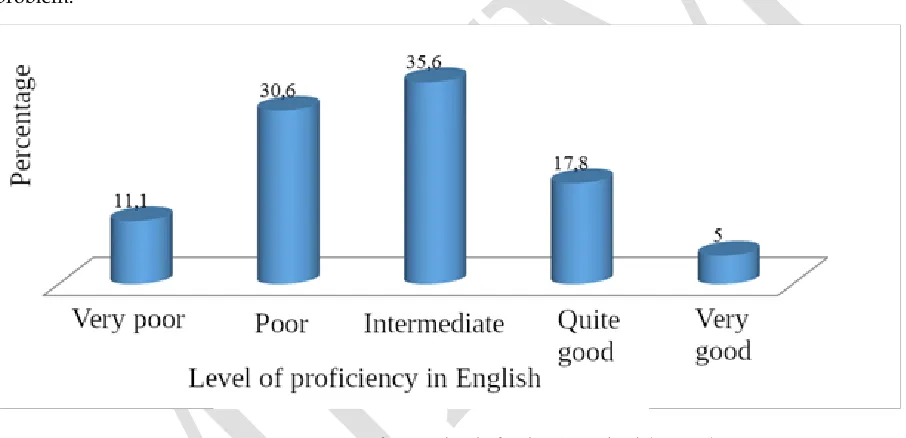
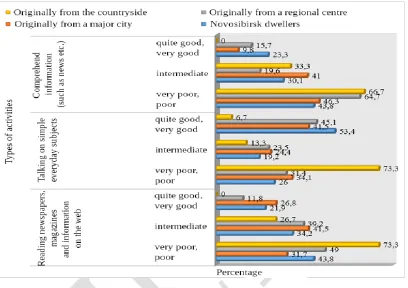
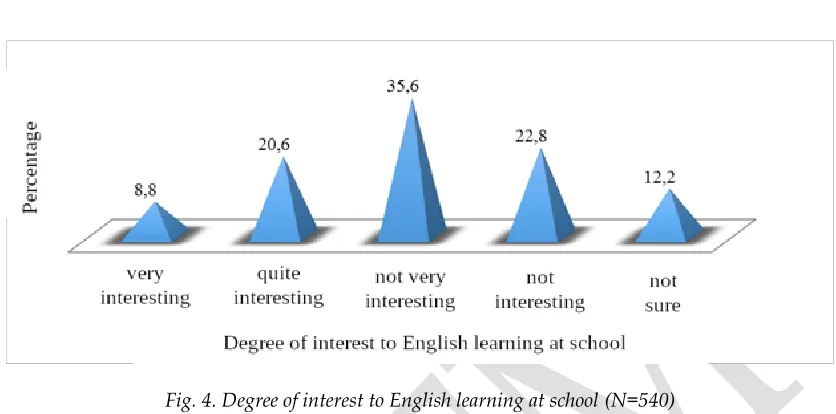
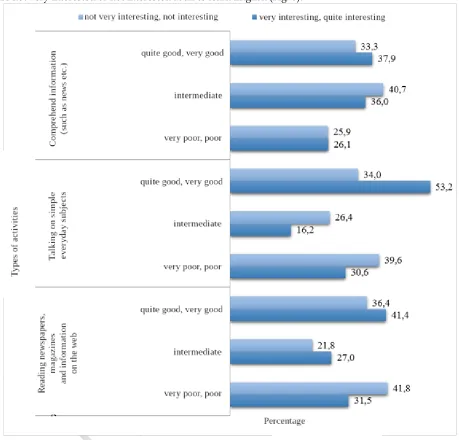
Within a sociological study, authors made an attempt to single out a dependency of the initial level of command of the English language among students from their place of residence and school education, dependency of their academic record from the degree of their interest to learning the foreign language both at school and at university, defining self-assessment of students with various majors of their command of specific skills in different types of academic activities in English.
Authors have made a conclusion that it is necessary to introduce a flexible differentiated approach to teaching English at a university, as it would allow not only to account for the initial level of command of a foreign language, but also to provide for correction and balance of development among specific competencies. Simultaneously the article underlines the intricacy of the given complex approach, as it requires a larger amount of physical and technical resources as well as timing budgets. Authors emphasise the necessity to coordinate teaching of the English language at both school and university levels with the international system of certifying command of the English language.
© 2018 The Authors. Published by EBSCO.
Keywords: motivation for learning English, differentiated approach to teaching, competencies self-assessment, international certification
Introduction/Literature Review
A shift in the role of education and science in the process of globalisation set new tasks for the universities, namely, organising lifelong learning, integration of national education systems in an international network of university communities. One of the tasks universities have to perform is language training of students in non-linguistic universities which is there to help every student to absorb “knowledge packages” offered by leading world’s universities of the world at the educational services market, including those in foreign languages.