www.adv-radio-sci.net/14/63/2016/ doi:10.5194/ars-14-63-2016
© Author(s) 2016. CC Attribution 3.0 License.
Data preprocessing for a vehicle-based localization system used in
road traffic applications
Timo Patelczyk, Andreas Löffler, and Erwin Biebl
Fachgebiet Höchstfrequenztechnik, Technische Universität München, Arcisstraße 21, 80333 München, Germany
Correspondence to:Timo Patelczyk ([email protected])
Received: 31 December 2015 – Revised: 8 April 2016 – Accepted: 20 July 2016 – Published: 28 September 2016
Abstract.This paper presents a fixed-point implementation of the preprocessing using a field programmable gate array (FPGA), which is required for a multipath joint angle and de-lay estimation (JADE) used in road traffic applications. This paper lays the foundation for many model-based parameter estimation methods. Here, a simulation of a vehicle-based lo-calization system application for protecting vulnerable road users, which were equipped with appropriate transponders, is considered. For such safety critical applications, the ro-bustness and real-time capability of the localization is par-ticularly important. Additionally, a motivation to use a fixed-point implementation for the data preprocessing is a limited computing power of the head unit of a vehicle. This study aims to process the raw data provided by the localization sys-tem used in this paper.
The data preprocessing applied includes a wideband cal-ibration of the physical localization system, separation of relevant information from the received sampled signal, and preparation of the incoming data via further processing. Fur-ther, a channel matrix estimation was implemented to com-plete the data preprocessing, which contains information on channel parameters, e.g., the positions of the objects to be located.
In the presented case of a vehicle-based localization sys-tem application we assume an urban environment, in which multipath propagation occurs. Since most methods for local-ization are based on uncorrelated signals, this fact must be addressed. Hence, a decorrelation of incoming data stream in terms of a further localization is required. This decorre-lation was accomplished by considering several snapshots in different time slots. As a final aspect of the use of fixed-point arithmetic, quantization errors are considered. In addition, the resources and runtime of the presented implementation
are discussed; these factors are strongly linked to a practical implementation.
1 Introduction
an-tenna elements have a negative impact on the angle estima-tion within the joint angle and delay estimaestima-tion (JADE); thus, it is advisable to consider coupling in the model (Friedlander and Weiss, 1991). In addition to the aforementioned effects, other challenges, including detection of the desired signal from the continuously sampled received data, must also be addressed efficiently. Furthermore, it is necessary to estimate the channel from the incoming data; numerous approaches have been proposed for this purpose. In Cozzo and Hughes (2003), expectation maximization-based channel estimation is considered; other approaches for channel estimation can be found in Pal (1992), Yang et al. (2001), Van der Veen et al. (1995) and Biguesh and Gershman (2006). The channel information lays the foundation for JADE, and thus, for the localization of an object such as a vulnerable road user.
The aforementioned challenges must be effectively imple-mented. In contrast to previous studies, this study focuses on a practical implementation of data preprocessing required for JADE, focusing on a safety critical vehicle-based localization system used in road traffic applications.
The paper is organized as follows: first, a transponder-based localization system for protecting vulnerable road users is presented. Here, the boundary conditions are fined, such as the required throughput of the localization de-fined by the application. Next, we study the localization unit. System errors, which occur in a practical application in con-trast to theoretical considerations, are identified. These er-rors can be taken into account within the signal processing. For this purpose, a preprocessing step will be introduced to account for the chosen identified non-idealities. This prepro-cessing step is the focus of this paper. Subsequent localiza-tion methods can build on this step. A hardware architecture for compensating these non-idealities is presented. A field programmable gate array (FPGA) is used as the hardware platform. We discuss the key components as well as resource requirement and run time of the architecture. The architec-ture are assessed in terms of the safety critical application. Finally, a localization method is applied which is based on the presented fixed-point preprocessing. Thus it is possible to make a statement on the impact of fixed-point implemen-tation on the subsequent localization result.
2 Problem formulation
The urban environment is described by a multipath propaga-tion channel, as shown in Fig. 1. The channel model is de-rived from van der Veen et al. (1997) and Jaafar et al. (2005), and is represented by a complex channel matrix H, which contains informations about the position of objects. For con-venience, we consider a single-user mode here; however, this case is without loss of generality because each user is placed in its own time slot. The access time is denoted byta. One
user is equipped with a transponder, which responds to a lo-calization request via the lolo-calization unit. The transponder
Reflector
D
T L
Figure 1.Multipath propagation channel for location applications in the urban environment.
unit transmits a digital modulated sequences[n]ofn sym-bols over the wireless channel. The received baseband signal xm(t )at anmth element antenna array at timet is given by
the convolution of the transmitted digital sequences[n]with the channel impulse responseh(t ). The channel impulse re-sponse includesrdiscrete paths. Each path is parameterized by a path attenuationβ, a path delay τ and a direction of arrival2.
The sampled received signal is represented in a compact form by
X=H·S+N, (1)
whereX∈CM·P×N, H∈CM·P×L, and S∈RL×N contain the transmitted sequence in the form of a Toeplitz matrix. P denotes an oversampling factor andLdenotes the physi-cal channel length. Additive white Gaussian noise (AWGN) is modeled byN. A direct estimate of the channel matrix is given by
ˆ
H=X·S†, (2)
where(·)†denotes the pseudo-inverse of the signal matrix. This approach ignores noise, but is still chosen because it can be implemented easily in hardware. Furthermore the effect of the noise termes is reduced by averaging several snapshots. The pseudo-inverse of the signal matrix is required because, in general,L6=N. Equation (2) lays the foundation for fur-ther considerations.
Finally, the system requirements are considered. The sys-tem should be designed for at least 20 users, as such a number reflects the urban environment. In addition, an up-date of 50 Hz is assumed, which results in an access time ofta=1 ms. The data preprocessing must be performed at
least at this time slot. The subsequent localization can be per-formed in the background while other users are queried.
3 System design
cDSP
Onc
bo
ard
c
un
it
FPGA
sin(ω0)
B B
B
2
MAXc2851 LNA
ADc9249 D
A
fs
1 M
cos(ω0)
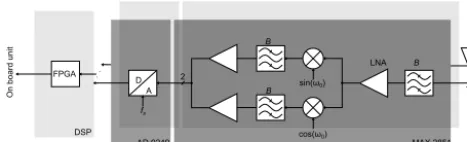
Figure 2.Block diagram of a localization unit as a part of a coop-erative sensor system for protection of vulnerable road users.
The function of each component is summarized, and differ-ences with respect to a theoretical consideration are iden-tified. Finally, an efficient preprocessing implementation is presented. Figure 2 shows a block diagram of the localiza-tion unit of the localizalocaliza-tion system, operating at a center fre-quency of f0=5.8 GHz. The application follows the IEEE
802.11pstandard, which is intended for traffic applications. On a localization request, the transponder unit responds with a digital modulated transmission sequences[k]. This is received by an uniform linear antenna array. The elements are arranged at a distance λ0
2. The radio frequency signal is
converted to the baseband. In this case, a complex demodula-tion approach is used. The sampling frequencyfsis reduced
in contrast to the sample rate, which is required at an inter-mediate frequency (IF) demodulation. The baseband signals are sampled synchronously. Finally, the sampled signals are passed to a digital signal processing unit, which is realized by an FPGA of the Virtex-6 family (Xilinx, 2012b).
In contrast to the theoretical considerations, the localiza-tion unit consists of non-ideal components. Generally, an-tenna elements do not have omnidirectional characteristics. In addition, coupling exists between individual antenna el-ements (Weiss and Friedlander, 1989). The radio frequency front end results in frequency-selective phase and amplitude errors due to individual delays and attenuation of individual receiving channels. The ADC discretizes the baseband signal in amplitude and time (12 bit, 65 MSps). Due to a finite word length, quantization errors occur. The DSP operates with a finite word length as well (processing word width of 12 bit). The fixed-point arithmetic is more efficient than the floating-point arithmetic in terms of resources. These non-idealities impact the quality of a further localization result, and thus, must be considered in a preprocessing approach.
Next, an implementation of data preprocessing for a model-based parameter estimation is presented, which lays the foundation for further model-based estimation methods.
Figure 3 shows an implementation of the detector unit. The objective is the separation of the relevant information from the sampled data streamxref; this process is denoted by
step 1. The concept is taken from Schaffer (2014).
The detection is based on a sample-wise comparison of a received input sequence xref[k] with a copy of the
digi-tal modulated transmission sequences[k]. First, the samples are evaluated according to their signs:xref[k]> 0→1 and
Figure 3.Block diagram of an implementation of a detector for sequence separation for a localization system.
xref[k] ≤ 0→0. The comparator COMP compares the rated
input sequence with the copy of the digital modulated trans-mission sequence. The number of matches is accumulated in the accumulator ACC. When this sum exceeds a threshold T, the relevant information is detected, which is indicated by the output RDY. The transmit sequence is assumed to be known. This step is performed in real time. The implemen-tation effort is limited to simple logic elements. One AND-logic is necessary to detect the sign based on the first bit of the sampled data stream (sign bit), and the other is used as a comparator COMP. The accumulator is a simple full adder composed of basic logic elements. The comparison of the sum with the threshold valueT is also implemented using the AND-logic blocks.
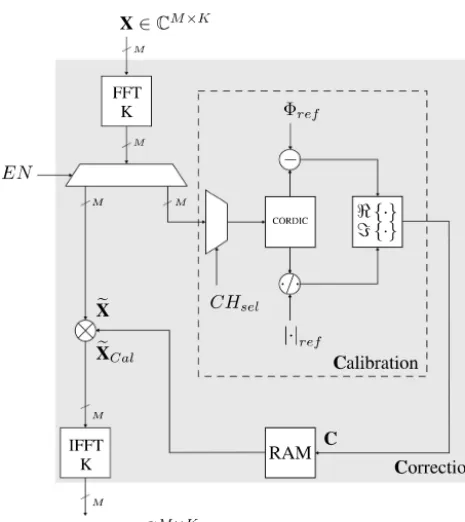
Next, the calibration of the physical system is considered, denoted by step 2. Figure 4 presents an implementation of such a calibration in the case of wideband signals. The objec-tive is the consideration of frequency-selecobjec-tive phase and am-plitude errors, that result from the nature of a real receiving channel compared to the theoretical one. Generally, a distinc-tion between computing calibradistinc-tion weights (EN=0) and the actual calibration process (EN=1) is made; this selection is provided by a multiplexer. Both parts are marked. First, the focus is on computing calibration weights denoted by step 2.1; these weights are summarized in a calibration ma-trixC∈CM×K. In terms of the application, this calibration matrix is not critical during run time. We assume that thermal fluctuations can be neglected during run time. The localiza-tion system is in thermal equilibrium. In addilocaliza-tion, it is as-sumed that the drift of the local oscillator can be neglected as well. Therefore, a resource-saving approach, instead of a run time saving approach is chosen. For this purpose, a second multiplexer is used. The control input CHselis used to select
a single channel. Thus, it is possible to calculate the weights sequentially, channel by channel. Sampled values are avail-able in the frequency domain. Frequency-selective amplitude and phase values are determined using the Coordinate Rota-tion Digital Computer(CORDIC)algorithm (Volder, 1959). This algorithm is an efficient implementation of an iterative algorithm for computing trigonometric functions and enables the formation of the magnitude of a complex number. The calculated calibration weights refer to a reference channel, which is initially set arbitrarily (herexref=CH1). Finally,
repre-Figure 4.Block diagram of an implementation of a wideband cali-bration for a localization system.
sentation of complex numbers; this conversion facilitates fur-ther processing.
The calibration matrix is stored in the random-access memory (RAM). Next, the actual calibration process is con-sidered, denoted by step 2.2. Applying calibration weights Con an input data stream is critical in run time. A parallel processing is proposed. First, the uncalibrated valuesXare transformed (FFT) (Xilinx, 2012a). The weighted frequency bins can be transformed back simultaneously. Different ap-proaches exist for an efficient implementation. The Cooley– Tukey algorithm (Amirfattahi, 2013), also called the radix-2 algorithm, is the most common FFT algorithm. A further optimization is the use of a radix-p algorithm; an implemen-tation of this algorithm is presented in Uzun (2003). Next, two architectures are compared: radix-2 and radix-4. The frequency-selective weighting is performed simultaneously with the output of the FFT-Block. An inverse FFT transforms the corrected data stream back into the time domain. It is ad-visable to use the same hardware resources for the FFT and its inverse. These parameters differ in the argument of the ex-ponential by a sign. Thus, the real-time capability is ensured. Finally, the channel matrix is estimated, denoted by step 3. The starting point forms Eq. (2). A channel matrix estimation by a single complex multiplier requires at least 2·M·P·L= 448 DSP48E1 – blocks (cf. Virtex-6 (XC6VLX75T) 288 DSP48E1 available, for parameter see Sect. 4). The factor of 2 takes into account a semi-complex multiplier (XCal.∈C,
S†∈R) consisting of two real multiplier blocks (DSP48E1).
Figure 5.Block diagram of the implementation of an efficient chan-nel matrix estimation approach for a localization system. (1) Com-plex hardware multiplier. (2) Line selection pointer.
At this point, a compromise is proposed. Figure 5 illustrates the block diagram of a semi-parallel implementation of the channel matrix estimation approach. The rearranged signal matrixS˙∈RP·L×P·Nis assumed to be known. This exists in the form of a Toeplitz matrix. During run time, no calculation is necessary.
The required pseudo-inverse signal matrixS˙† is initially stored in the RAM (for clarity, the control logic and RAM are not illustrated).
A multiplexer selects themth row ofXCal.by ENsel. At
the inputs of the complex multiplier block bank, themth row ˙
S†(m,:)is available. The multiplication result is written to themth row of the buffered variableH˙temp. The pointer
(de-noted by 2) specifies the location of the current calculation; this points to themth row. The calculation result of each sam-ple is accumulated inH˙temp. According to this principle, the
channel matrix is calculated sample-wise for one snapshot. There are different approaches for the implementation of a matrix multiplication on a parallel operating hardware plat-form (Mahendra Vucha, 2011; Qasim et al., 2010; Kumar and Tsai, 1991).
It is assumed that the complex fading amplitudes are con-stant during one snapshot, and that they vary from one snap-shot to the next. This is valid for the assumed scenario. Thus, decorrelation is performed by averaging multiple channel matrices from different snapshots, which are uncorrelated in terms of complex fading. Alternatively, additional techniques must be applied, e.g., spatial – and temporal smoothing (Pil-lai and Kwon, 1989). These techniques require no additional hardware (except for a counter logic, which controls the in-put RESETav for resetting H˙temp.). After an initial set, the
number of desired snapshots, H˙temp is reset by RESETav
re-Table 1.Performance evaluation for the presented implementation of a real-time capable data preprocessing for model-based parameter estimation.
Step 1 Step 2.1 Step 2.2 Step 3
Resource1,2 Slices Register 384 7887 1067 18 917
Slices LUT 64 6703 40 8449
Block RAM 16 8 8 11
DSP48E1 0 26 24 56
Runtime3,2 0.8 µs 2.7 µs 5.1 µs 3.3 µs
1Virtex-6 (XC6VLX75T);2Radix-2 architecture;3f
max=310MHz.
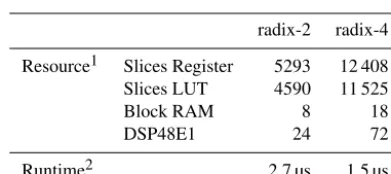
Table 2. Comparison of different FFT architectures in terms of a performance evaluation of the presented implementation of a real-time capable data preprocessing for model-based parameter estima-tion.
radix-2 radix-4
Resource1 Slices Register 5293 12 408
Slices LUT 4590 11 525
Block RAM 8 18
DSP48E1 24 72
Runtime2 2.7 µs 1.5 µs
1Virtex-6 (XC6VLX75T);2f
max=310MHz.
sult forms the starting point for model-based algorithms for JADE.
4 System performance
In this section, the system performance is discussed. The re-sults are summarized in Table 1. As an implementation plat-form, aVirtex-6FPGA (Xilinx, 2012b) is assumed. The in-put data stream is quantized by 12 bit in amplitude (ADC), and the internal processing word width is also assumed to be 12 bit. The results are specified for an operating frequency offmax =310 MHz; this frequency is defined by the design.
Furthermore a 64-bit training sequence is assumed. Gener-ally, a linear relationship exists between the resource require-ments and the input parameters M,P andLas well as la-tency. In the following the input parameters are assumed to beM =8,P = 4 andL= 7, and the FFT is designed using a radix-2 architecture(K =P·N ).
In terms of the application, the system design is real time-capable. The FFT, which is used in step 2, determines the latency and the run time of the presented data preprocessing. If required, a part of the fast hardware multiplier DSP48E1 can be replaced by using look-up tables (LUTs). However, this approach has a decreased clock frequencyfmax.
In Table 2, different architectures of FFT are compared, focusing on the impact on resources and run time.
The speed advantage of using a radix-4 FFT architecture, compared to a radix-2, architecture results in an increased resource requirement, which increases disproportionately. In this case, the application cost and benefits are out of pro-portion, since the runtime requirement is complied with both architectures(tradix1 ms).
5 Application
This section focuses on the application of the presented data preprocessing for the case of model-based parameter estima-tion. For this purpose, the incoming dataXare applied by frequency-selective phase and amplitude errors; these data are discrete in time and amplitude. One approach for source localization in a multipath environment is JADE-multiple signal classification (MUSIC). Similar to MUSIC, which was published by Schmidt in 1986 (Schmidt, 1986), the orthog-onality between the noise subspaceEn and the signal
sub-spaceEsof the correlation matrixRˆhh =h·hHis exploited,
whereHdenotes the Hermitian operator. By the formation of the correlation matrix, there is an association between spatial samples in different times of the estimated channel matrix re-sponse vectorhˆ =vec(H). Assuming a space-time manifoldˆ
u(2, τ ), the two-dimensional spectral function results in
ˆ
P (2, τ )= u
H·u
uH·E
n·EHn ·u
. (3)
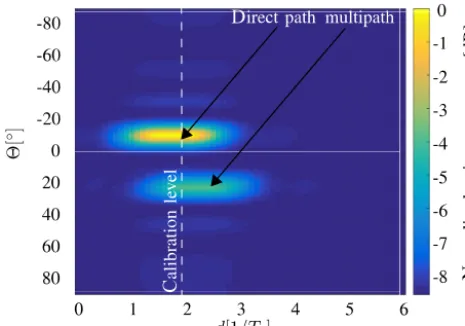
The local maxima provide information regarding the posi-tion2,ˆ τˆof the object to be located. Figure 6 shows the two-dimensional spectral function of the JADE-MUSIC al-gorithm.
Data preprocessing is performed as described above. In this case, a direct path and an additional multipath are as-sumed. The object is located at−
10◦,2·Tsand the
mul-tipath is located at
20◦,2.5·T
D
C N
Figure 6. Spectral Function of JADE-MUSIC in the case of the presented data preprocessing approach.
the multipath component, i.e., an additional benefit of joint parameter estimation, is not possible. Thus, the paths can be resolved by using the additional angle information. The quantization by the presented design can be neglected. These results are obtained via a Monte Carlo simulation (500 runs) for the presented scenario above. In one case, the spectrum was computed using the presented fixed-point preprocess-ing; alternatively, a 64 bit floating-point implementation was used. The mean square errors (MSE) between these imple-mentation variants are MSE2ˆfixed-point,2ˆfloating-point
≈0 and MSEdˆfixed-point,dˆfloating-point
≈0. For the spectrum a computation grid of 12=1.0◦ and 12=1.0 m was as-sumed. Generally the impact of the modulation bandwidth of the sequences[n]or the impact of the number of antenna elements in terms of the resolution of the multipaths is much larger than the quantization errors obtained using the pre-sented preprocessing step.
6 Conclusions
In this study, a real time-capable system design of the data preprocessing for a vehicle-based localization system used in road traffic applications was presented. As an implemen-tation platform, an FPGA was used. The objective was the compensation of hardware imperfections compared to the theoretical consideration of a localization system. This pre-processing approach includes a separation of relevant infor-mation from the incoming data stream, a wideband calibra-tion of the physical system and a channel estimacalibra-tion, as well as a decorrelation of the correlated signal components, which are contained in the incoming data stream because of a mul-tipath assumption of the wireless channel. In this paper, the implementation aspects, including resources and run time as-pects, were discussed. It was demonstrated that FFT, which is
used for a frequency-selective calibration, is computationally intensive. For this purpose, two architectures (radix-2 and radix-4) were compared. Depending on the requirements, a balance between the resources and run time was found to be required. Using the presented architecture real-time capabil-ity was achieved. Each snapshot incurred a processing time of approximately 9.2 µs, which was well below the require-ments.
Due to the digital signal processing in fixed-point arith-metic (processing word width of 12 bit), quantization errors occurred. The used word width was found to be sufficient for a subsequent localization. The proposed implementation was demonstrated to be well-suited for the application of protect-ing vulnerable road users. As a next step, it will be useful to account for the errors originating from the antenna array, for example, the consideration of mutual coupling. This will also impact the channel matrix estimation and localization results.
7 Data availability
Data used in this paper is available upon request to Timo Patelczyk ([email protected]).
This work was supported by the German Research Foundation (DFG) and the Technische Universität München within the funding programme Open Access Publishing.
Edited by: J. Anders
Reviewed by: two anonymous referees
References
Amirfattahi, R.: Calculation of Computational Complexity for Radix-2p Fast Fourier Transform Algorithms for Medical Sig-nals, J. Med. Signal. Sens., 3, 217–224, 2013.
Biguesh, M. and Gershman, A. B.: Training-based MIMO chan-nel estimation: a study of estimator tradeoffs and opti-mal training signals, IEEE T. Signal. Proces., 54, 884–893, doi:10.1109/TSP.2005.863008, 2006.
Cozzo, C. and Hughes, B. L.: Joint channel estimation and data de-tection in space-time communications, IEEE T. Commun., 51, 1266–1270, 2003.
Friedlander, B. and Weiss, A. J.: Direction finding in the pres-ence of mutual coupling, IEEE T. Antenn. Propag., 39, 273–284, doi:10.1109/8.76322, 1991.
Jaafar, I., Amara, R., Boujemaa, H., and Siala, M.: Joint an-gle and delay estimation of point sources, ICECS 2005, 12th IEEE International Conference on Electronics, Circuits and Systems, Gammarth, Tunisia, 11–14 December 2005, 1–5, doi:10.1109/ICECS.2005.4633421, 2005.
Mahendra Vucha, A. R.: Design and FPGA Implementation of Sys-tolic Array Architecture for Matrix Multiplication, Int. J. Com-put. Appl., 26, 18–22, 2011.
Pal, D.: Fractionally spaced semi-blind equalization of wire-less channels, Conference Record of The Twenty-Sixth Asilomar Conference on Signals, Systems and Computers, 1992, Pacific Grove, CA, 26–28 October 1992, 642–645, doi:10.1109/ACSSC.1992.269117, 1992.
Pillai, S. U. and Kwon, B. H.: Forward/backward spatial smooth-ing techniques for coherent signal identification, IEEE T. Acoust. Speech., 37, 8–15, 1989.
Schaffer, B.: Transponderbasierte Abstandsmessung für
Straßen-verkehrsanwendungen, Dissertation Technische Universität
München, Reihe Elektrotechnik, Verlag Dr. Hut, 140 pp., ISBN 978-3-8439-2040-7, 2014.
Schmidt, R. O.: Multiple emitter location and signal parameter es-timation, IEEE T. Antenn. Propag., 34, 276–280, 1986. Qasim, S. M., Telba, A. A., and AlMazroo, A. Y.: FPGA Design
and Implementation of Matrix Multiplier Architectures for Im-age and Signal Processing Applications, IJCSNS Int. J. Comput. Sci. Network Security, 10, 168–176, 2010.
Uzun, I.: FPGA implementations of fast fourier transforms for real-time signal and image processing, 2003 IEEE In-ternational Conference on Field-Programmable Technology (FPT), Tokyo, Japan, 15–17 December 2003, 102–109, doi:10.1109/FPT.2003.1275737, 2003.
Van der Veen, A.-J., Talwar, S., and Paulraj, A.: Blind estimation of multiple digital signals transmitted over FIR channels, IEEE Signal Proc. Let., 2, 99–102, 1995.
van der Veen, A.-J., Vanderveen, M., and Paulraj, A.: SI-JADE: an algorithm for joint angle and delay estimation using shift-invariance properties, First IEEE Signal Process-ing Workshop on Signal ProcessProcess-ing Advances in Wireless Communications, Paris, France, 16–18 April 1997, 161–164, doi:10.1109/SPAWC.1997.630193, 1997.
Volder, J. E.: The CORDIC trigonometric computing technique, IRE T. Electron. Comput., 330–334, 1959.
Weiss, A. and Friedlander, B.: Array shape calibration using sources in unknown locations-a maximum likelihood approach, IEEE T. Acoust. Speech., 37, 1958–1966, doi:10.1109/29.45542, 1989. Xilinx: LogiCORE IP Fast Fourier Transform, Xilinx, 8.0 Edn.,
Application note DS808, available at: http://www.xilinx. com/support/documentation/ip_documentation/ds808_xfft.pdf, 2012a.
Xilinx: Virtex-6 Family Overview, Xilinx, 2.4 Edn., Appli-cation note DS150, available at: www.xilinx.com/support/ documentation/data_sheets/ds150.pdf, 2012b.