CLUSTERING TECHNIQUES FOR DNA COMPUTING
READOUT METHOD BASED ON REAL-TIME
POLYMERASE CHAIN REACTION
CLUSTERING TECHNIQUES FOR DNA COMPUTING READOUT METHOD BASED ON REAL-TIME POLYMERASE CHAIN REACTION
MUHAMMAD FAIZ MOHAMED SAAID
A thesis submitted in fulfilment of the requirements for the award of the degree of
Master of Engineering (Electrical)
Faculty of Electrical Engineering Universiti Teknologi Malaysia
iii
Especially for:
Haji Mohamed Saaid bin Abdul Manap
Dr. Hajah Zurinah binti Hassan
Ainul Fadzilah
Siti Raihani binti Mohamed Saaid
Ainul Huda binti Mohamed Saaid
Muhammad Taufiq bin Mohamed Saaid
Aina Mastura binti Mohamed Saaid
iv
ACKNOWLEDGEMENT
I would like to take this opportunity to thank especially my supervisor DR ZUWAIRIE IBRAHIM that guides me to fully understand the project title and some basic concept that very new to me. I would also like to express my gratitude to my co-supervisor DR AZLI YAHYA for guidance and supports.
Secondly, I would like to thank Associate Professor Nor Haniza Sarmin, Professor Marzuki Khalid for their discussions to complete the whole thesis. Also, special thanks go to Associate Professor John Anthony Rose and Professor Junzo Watada for their guidance’s during the writing of this thesis.
Special indebtedness goes to all my friends in Universiti Teknologi Malaysia (UTM) especially in the robotics lab, and robotics lab technicians for their assistance and understanding. Not forgetting also their moral support that knowing this project is very difficult for me to understand.
I wish to thank Ministry of Science, Technology and Enviroment (MOSTI), Ministry of Higher Education (MOHE), Research Management Centre (RMC) and UTM for financial supports and facilities.
v
ABSTRACT
vi
ABSTRAK
vii
TABLE OF CONTENTS
CHAPTER TITLE PAGE
DECLARATION ii
DEDICATION iii
ACKNOLEDGEMENTS iv
ABSTRACT v
ABSTRAK vi
TABLE OF CONTENTS vii
LIST OF TABLES xi
LIST OF FIGURES xvi
LIST OF SYMBOLS xviii
LIST OF ABBREVIATIONS xx
LIST OF APPENDICES xxii
1 INTRODUCTION 1
1.1 Deoxyribonucleic Acid (DNA) 1
1.2 Basic Biotechnology 4
1.2.1 Syhthesizing DNA 4
1.2.2 Hybridization and Denaturation 4
1.2.3 Ligation 6
1.2.4 Polymerization 6
viii
1.2.7 DNA Extraction 10
1.3 DNA Computing Paradigm 11
1.3.1 Hamiltonian Path Problem 11 1.3.2 From Turing Machine to DNA Computing 12 1.4 Emergence of DNA Computing 14 1.5 Reviewes of Output Visualization Technologies in 17
DNA Computing
1.5.1 Polymerase Chain Reaction 17
1.5.2 DNA Sequencing 18
1.5.3 Biochip 19
1.5.4 Fluorescence Detection 20 1.5.5 Atomic Force Microscope 20
1.6 Problem Statement 21
1.7 Objective 22
1.8 Scope of Work 23
1.9 Contribution 25
1.10 Publication List 26
1.11 Thesis Organization 27
2 DNA COMPUTING READOUT METHOD BASED ON 29
REAL-TIME POLYMERASE CHAIN REACTION
2.1 Introduction 29
2.2 Real-Time PCR 31
2.3 Basic Notation 34
2.4 Readout Approach 36
2.5 Experiment 39
2.5.1 Preparation of Input Molecules 39 2.5.2 Real-Time PCR Experiments 44
2.6 Results 49
2.7 Discussion 53
ix
3 CLUSTERING IMPLEMENTATION ON DNA 56
COMPUTING READOUT METHOD BASED ON LIGHTCYCLER SYSTEM
3.1 Introduction 56
3.2 Data Clustering 58
3.3 K-Means Algorithm 60
3.4 Fuzzy C-Means 62
3.5 Classification of TaqMan reactions Using FCM 63 Clustering Algorithm
3.6 Results 68
3.7 Discussion 71
3.8 Chapter Summary 74
4 CLUSTERING IMPLEMENTATION ON DNA 75
COMPUTING READOUT METHOD BASED ON DNA ENGINE OPTICON 2 SYSTEM
4.1 Introduction 75
4.2 Fuzzy C-Means Implementations 77
4.2.1 Methodology 77
4.2.2 Results 78
4.2.3 Discussion 82
4.3 Alternative Fuzzy C-Means Implementation 83
4.3.1 Methodology 83
4.3.2 Results 85
4.3.3 Discussion 88
4.4 Chapter Summary 89
5 CONCLUSIONS 90
5.1 Thesis Summary 90
5.2 Conclusions 91
x
REFERENCES 93
xi
LIST OF TABLES
TABLE NO. TITLE PAGE
2.1 11 ssDNAs used for generation of input molecules 40 readout of V0→V2→V4→V1→V3→V5
2.2 Transformation index from 41
V0→V2→V4→V1→V3→V5 to V0→V4→V1→V2→V3→V5
2.3 The required 13 ssDNAs for readout of 42 Hamiltonian Path V0→V1→V4→V2→V5→V3→V6
2.4 Transformation index for another seven nodes HPP 43 2.5 Sequences for forward and reverse 44
primers for V0→V2→V4→V1→V3→V5.
2.6 Sequences for TaqMan dual-labeled 45 probes for V0→V2→V4→V1→V3→V5.
2.7 Sequences for forward and reverse primers for 45
V0→V4→V1→V2→V3→V5.
2.8 Sequences for TaqMan dual-labeled probes for 45
V0→V4→V1→V2→V3→V5.
2.9 Sequences for forward and reverse primers for 47
V0→V1→V4→V2→V5→V3→V6.
2.10 Sequences for TaqMan dual-labeled probes for 47
V0→V1→V4→V2→V5→V3→V6.
2.11 Sequences for forward and reverse primers for 47
xii
2.12 Sequences for TaqMan dual-labeled probes for 48 V0→V1→V3→V5→V4→V2→V6.
2.13 Sequences for forward and reverse primers for 48 V0→V1→V5→V3→V4→V2→V6
2.14 Sequences for TaqMan dual-labeled probes for 48
V0→V1→V5→V3→V4→V2→V6
2.15 Summary of the results obtained from both LightCycler 52 and DNA Engine Opticon 2 System.
2.16 Comparison of two different outputs by using standard 53 and modified in silico algorithm
3.1 Partition matrix values for each real-time PCR reaction 65 calculated based on FCM clustering algorithm for test data. 3.2 Partition matrix values for each real-time PCR reaction 66
calculated based on FCM clustering algorithm for test data. 3.3 Partition matrix values for each TaqMan reaction based on 69
K-means clustering algorithm for data1
3.4 Partition matrix values for each TaqMan reaction based on 69 K-means clustering algorithm for data2.
3.5 Partition matrix values for each TaqMan reaction based on 70 FCM clustering algorithm for data1
3.6 Partition matrix values for each TaqMan reaction based 71 on FCM clustering algorithm for data2.
3.7 Comparison of K-means and FCM for data1 73 (100 iteration runs).
3.8 Comparison of K-means and FCM for data2 73 (100 iteration runs).
4.1 Partition matrix value for each TaqMan reaction 79 based on FCM clustering algorithm for data3.
4.2 Partition matrix value for each TaqMan reaction 80 based on FCM clustering algorithm for data5.
4.3 Partition matrix value for each TaqMan reaction 81 based on FCM clustering algorithm for data5.
xiii
4.5 Partition matrix value for each TaqMan reaction 86 based on AFCM clustering algorithm for data3.
4.6 Partition matrix value for each TaqMan reaction 87 based on AFCM clustering algorithm for data4.
4.7 Partition matrix value for each TaqMan reaction 88 based on AFCM clustering algorithm for data5.
xiv
LIST OF FIGURES
FIGURE NO. TITLE PAGE
1.1 A nucleotide 1
1.2 A single-stranded DNA 2
1.3 Double helix structure of DNA 3
1.4 Bi-molecular hybridization and denaturation of DNA 5 1.5 An example of hairpin formation of DNA 5
1.6 Ligation 6
1.7 DNA polymerization 7
1.8 Polymerase chain reaction 8
1.9 Gel electrophoresis 9
1.10 Example of a gel image 9
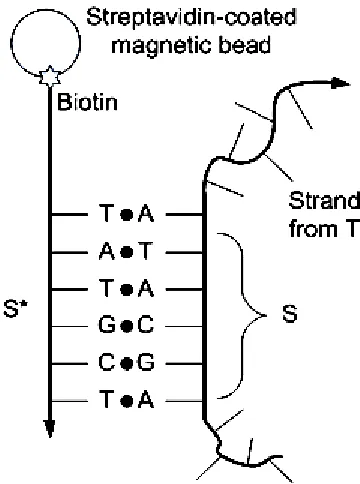
1.11 An example of DNA extraction by using 10 streptavidin-coated magnetic bead.
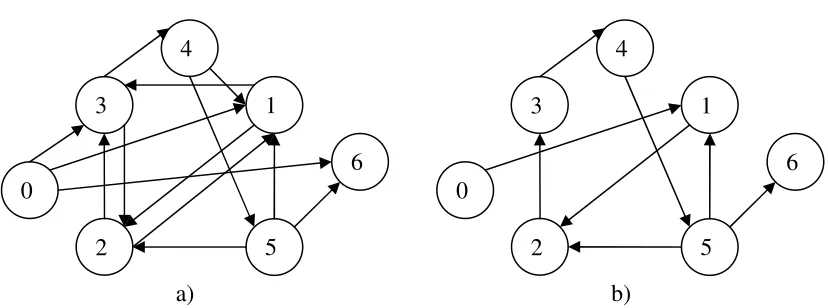
1.12(a) A directed graph for Hamiltonian path problem 11 1.12(b) The answer of Hamiltonian path problem. 11 1.13 The overall procedure of Adleman HPP base 14
DNA computing.
1.14 Scope of work and contribution 24
1.15 The whole process of readout method based on 24 real-time PCR
2.1 Overview of the research. The in vitro part is highlighted 30 as the main work in this chapter. The improvement
xv
2.2 Illustration of the structure of a TaqMan DNA probe. 32 Here, R and Q denote the reporter and quencher
fluorophores, respectively
2.3 Mechanism of real-time PCR based on TaqMan probe 33 2.4 An example of amplification plots corresponding to 35
TaqMan(v0,vk,vl) = YES (first condition) and
TaqMan(v0,vk,vl) = NO (second condition) implemented
on LightCycler System.
2.5 An example of amplification plots corresponding to 35 TaqMan(v0,vk,vl) = YES (first condition) and
TaqMan(v0,vk,vl) = NO (second condition) implemented
on DNA Engine Opticon 2 System.
2.6 Gel image for the preparation of 120-bp input molecules. 42 Lane M denotes a 20-bp molecular marker, lane 1 is the product of initial pool generation based on parallel
overlap assembly, and lane 2 is the amplified PCR product. 2.7 Gel image for the preparation of 140-bp input molecules. 43 2.8 Output of real-time PCR for readout of 49
V0→V2→V4→V1→V3→V5 implemented on
LightCycler System. Reaction 1 to 6 indicate the TaqMan(v0,vk,vl) reactions.
2.9 Output of real-time PCR for readout of 50
V0→V4→V1→V2→V3→V5 implemented on
LightCycler System. Reaction 1 to 6 indicate the TaqMan(v0,vk,vl) reactions.
2.10 Output of real-time PCR for 50
readout of V0→V1→V4→V2→V5→V3→V6
implemented on DNA Engine Opticon 2 System. Reaction 1 to 10 indicate the TaqMan(v0,vk,vl) reactions.
2.11 Output of real-time PCR for 51
readout of V0→V1→V3→V5→V4→V2→V6 implemented
xvi
2.12 Output of real-time PCR for 51
readout of V0→V1→V5→V3→V4→V2→V6 implemented
on DNA Engine Opticon 2 System. Reaction 1 to 10 indicate the TaqMan(v0,vk,vl) reactions.
3.1 Scope of work and contribution of this thesis. The 57 implementation of clustering on LightCycler System
is highlighted as the main contribution in this chapter.
3.2 A simple example of cluster. 59
3.3 Graphical representation of hard and soft 60 partitioning cluster.
3.4 The K-means algorithm. 61
3.5 The FCM algorithm. 63
3.6 Test data obtained from LightCycler System. 64 3.7 Output of real-time PCR with y1 and y2 centers, 64
calculated using FCM clustering algorithm.
3.8 Output of real-time PCR with y1 and y2 centers, 66
calculated using FCM clustering algorithm.
3.9 Classification procedure of TaqMan reactions 67 using K-means algorithm
3.10 Classification procedure of TaqMans reaction using 68 FCM algorithm
3.11 Output of real-time PCR with “YES” and “NO” centers, 68 implemented based on K-means clustering algorithm
for data1.
3.12 Output of real-time PCR with “YES” and “NO” centers 69 implemented based on K-means clustering algorithm
for data2.
3.13 Output of real-time PCR with “YES” and “NO” centers 70 implemented based on FCM clustering algorithm for
data1 with ࢟ଵ(ସହ)> ࢟ଶ(ସହ).
3.14 Output of real-time PCR with “YES” and “NO” centers 71 implemented based on FCM clustering algorithm
for data2.
xvii
K-means and FCM clustering algorithms implemented on data1.
3.16 The comparison of convergence behaviors for the 72 K-means and FCM clustering algorithms implemented
on data2.
4.1 Scope of work and contribution of this thesis. The 76 implementation of clustering on DNA Engine
Opticon 2 System is highlighted as the main contribution in this chapter.
4.2 Classification of TaqMan reaction using FCM algorithm 78 4.3 Output of real-time PCR with “YES” and “NO” centers, 79
implemented by FCM clustering algorithm for data3 with ݕଵ(ସ)> ݕଶ(ସ).
4.4 Output of real-time PCR with “YES” and “NO” centers, 80 implemented by FCM clustering algorithm for
data4 with ݕଵ(ସ)> ݕଶ(ସ).
4.5 Output of real-time PCR with “YES” and “NO” centers, 81 implemented by FCM clustering algorithm for
data5 with ݕଵ(ସ)> ݕଶ(ସ).
4.6 Classification of TaqMan reaction using AFCM 84 algorithm
4.7 Output of real-time PCR with “YES” and “NO” centers 85 implemented by AFCM clustering algorithm for
data3 with ݕଵ(ସ)> ݕଶ(ସ).
4.8 Output of real-time PCR with “YES” and “NO” centers 86 implemented by AFCM clustering algorithm for
data4 with ݕଵ(ସ)> ݕଶ(ସ).
4.9 Output of real-time PCR with “YES” and “NO” centers 87 implemented by AFCM clustering algorithm for
data5 with ݕଵ(ସ)> ݕଶ(ସ).
xviii
LIST OF SYMBOLS
°C - degree celcius
Ts - DNA strand S - DNA strand
S* - DNA complement of S F - DNA strand
G - directed graph
V - set of vertices
eij - edges
Vin - start node Vout - end node
nm - nanometer kg - kilogram
vi - double stranded DNA
Vi - node
|V| - number of nodes
L - array of location of nodes A - array of aggregation values N - array of Hamiltonian path node µl - microliter
v
̅
i- reverse primer µM - micro Molar
rpm - revolution per minute
s - second
J - cost function
xix
Y - set of cluster centers
X - set of data
C - number of clusters
N - number of data
m - fuzziness value index
x - data point
y - cluster center
µ - membership value
d (x,y) - distance ߝ - error
xx
LIST OF ABBREVIATIONS
DNA - Deoxyribonucleic acid PCR - Polymerase Chain Reaction HPP - Hamiltonian Path Problem
A - Adenine
C - Cytosine
G - Guanine
T - Thymine
ssDNA - single-stranded DNA dsDNA - double stranded DNA ATP - Adenosine-5'-triphosphate
NAD+ - Nicotinamide adenine dinucleotide
PO−
4 - phosphate
dNTP - deoxynucleotide triphosphate NP - Nondeterministic polynomial RNA - Ribonucleic acid
PAGE - Polyacrylamide Gel Electrophoresis UV - ultra violet
xxi
AFCM - Alternative Fuzzy C-Means EtBr - ethidium bromide.
FAM - 6-carboxyfluorescein TAMRA - tetramethylrhodamine
FRET - fluorescence resonance energy transfer R - reporter dye and
Q - quencher dye
Taq - Thermus aquaticus bp - base pairs
POA - Parallel Overlap Assembly ddH2O - double distilled water MgCl2 - magnesium chloride
dUTP-2' - deoxyuridine 5'-triphosphate dTTP - deoxythymidine triphosphate EM - Expectation Maximization PCA - Principal Component Analysis PCM - Possibilistic C-Means
xxii
LIST OF APPENDICES
APPENDIX TITLE PAGE
CHAPTER 1
INTRODUCTION
1.1 Deoxyribonucleic Acid (DNA)
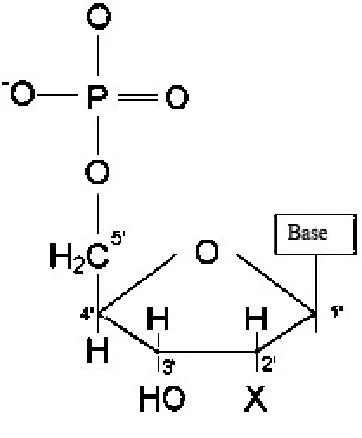
DNA is a polymer, which is linked together from a series of monomers. Monomers, which form the structure of nucleic acids, are called nucleotides. Each nucleotide contains a sugar (deoxyribose), a phosphate group, and one of four bases: Adenine (A), Thymine (T), Guanine (G), or Cytosine (C), as shown in Figure 1.1 [1].
2
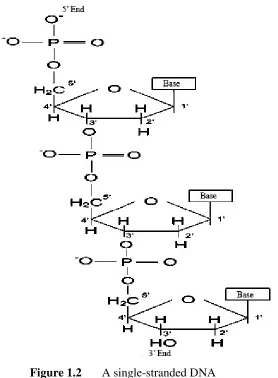
Single-stranded DNA (ssDNA) is a sequence of nucleotides. This sequence, which forms a negatively charged backbone, is linked by 5’-phosphate with 3’-hydroxyl to form a phosphodiester bond, which is a strong covalent bond. Hence, each end of a single strand is easily identified by a 5’ and 3’. Figure 1.2 shows three different nucleotides that are linked to form a single-stranded DNA [1].
Figure 1.2 A single-stranded DNA
3
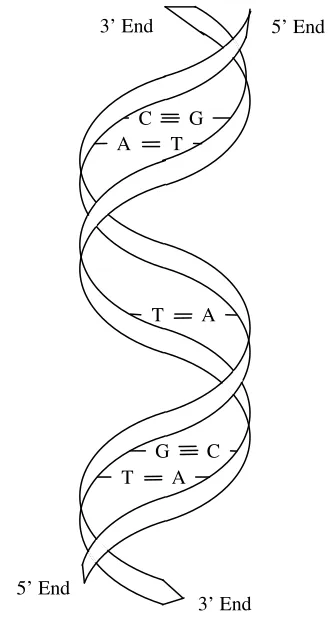
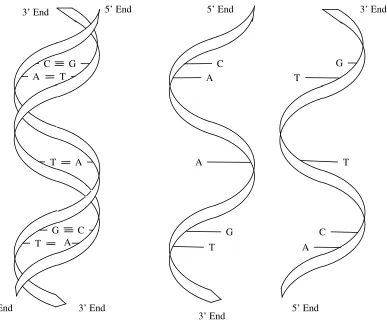
sequences are tied together in a helical structure notably known as the double helix structure [2]. The nucleotides only form stable bonds in certain combinations: A hydrogen-bonds to T, and G hydrogen-bonds to C. Thus, A is the Watson-Crick complement of T, and G is the Watson-Crick complement of C. A single-stranded of DNA sequence that contains n bases has length of n-mer.
Figure 1.3 Double helix structure of DNA
C G
T A
A T
G C
A T
3’ End 5’ End
4
1.2 Basic Biotechnology
1.2.1 Synthesizing DNA
A short single-stranded DNA is called oligonucleotide or oligo in simple term. Usually, 70-80 sequences can be chemically synthesized based on current technology, which produce less error. Lately, it is possible to get a test tube containing approximately 1018 DNA molecules with a desired sequence.
1.2.2 Hybridization and Denaturation
Hybridization is defined as a sequence-specific annealing of two or more single stranded DNAs, forming a double-stranded DNA (dsDNA) product. From DNA computing point of view, hybridization performs computation. Thus, the specific recognition property is very useful for the computation at molecular level. Hybridization can be done by cooling down the test tube reaction solution [3].
Figure 1.4
Figure 1.5
In denaturation, dsDNAs can be separated b
85-95°C. As shown in Figure 1.4, two strands can be separated without breaking the single strands dsDNAs as
are much weaker than the covalent bonds between nucleotides adjacent in the two strands [5]. G T C A A T
T A
C G
3’ End 5’ End
3’ End
Bi-molecular hybridization and denaturation of DNA
Figure 1.5 An example of hairpin formation of DNA
In denaturation, dsDNAs can be separated by heating up the solution to abo As shown in Figure 1.4, two strands can be separated without breaking the single strands dsDNAs as the hydrogen bonds between complementary nucleotides are much weaker than the covalent bonds between nucleotides adjacent in the two
C
5’ End
3’ End
5’ End
3’ End 5’ End
C
A T
A
G
T
5
molecular hybridization and denaturation of DNA
An example of hairpin formation of DNA
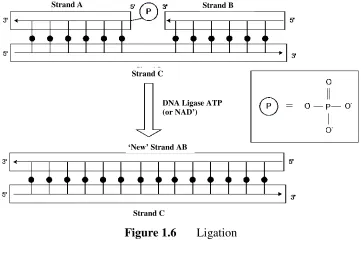
1.2.3 Ligation
Ligation is a process of connecting two single enzyme called where
covalent bonds between the adjacent fragments [ shown in Figure 1.6.
adjacently with each other without gap
final product of ligation is a ‘new’ strand AB. PO4. Usually, either
dinucleotide (NAD+)
1.2.4 Polymerization
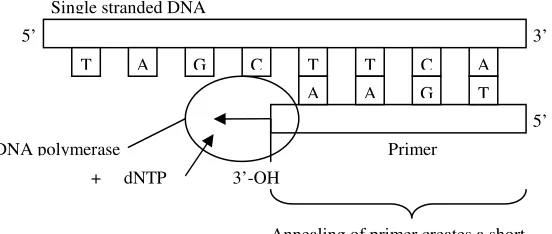
Polymerization involves
3’-extended, and incoming deoxynucleotide triphosphate (dNTP)
Strand A
Ligation is a process of connecting two single-strand fragments where ligase, such as T4 DNA ligase, is used as ‘glue’ to
een the adjacent fragments [6]. The basic concept of ligation is . During the ligation process, strand A and strand B
tly with each other without gap and hybridized partially with strand C. The product of ligation is a ‘new’ strand AB. In addition, strand A must have a 5’ Usually, either Adenosine-5'-triphosphate (ATP) or Nicotinamide adenine
) can be used to supply the energy in ligation.
Figure 1.6 Ligation
Polymerization
Polymerization involves a template strand to be copied, a primer strand to be incoming deoxynucleotide triphosphate (dNTP)
Strand A Strand B
Strand C Strand C
‘New’ Strand AB
DNA Ligase ATP (or NAD’)
6
strand fragments in series. A is used as ‘glue’ to stick the The basic concept of ligation is trand A and strand B are placed and hybridized partially with strand C. The strand A must have a 5’ Nicotinamide adenine
7
act as both base and energy sources, and DNA polymerase. The polymerization process is depicted in Figure 1.7. Firstly, a primer hybridizes at a specific location on the template and initiate DNA polymerase at the particular location. After that, DNA polymerase copies the nucleotides one by one, by moving along the template DNA strand. DNA polymerase can only synthesize in the 5’ to 3’ direction. Note that there is no 3’ to 5’ copying operation ever observed [7].
Figure 1.7 DNA polymerization
1.2.5 Polymerase Chain Reaction (PCR)
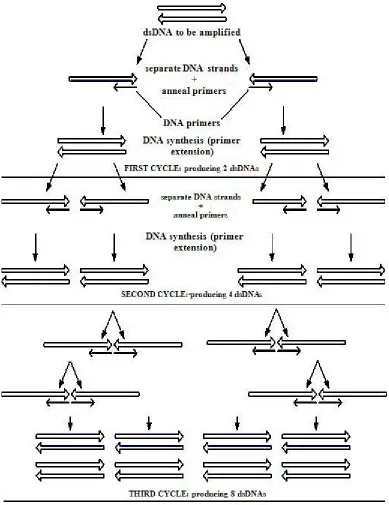
PCR is a sensitive copying machine for DNA. It also can be applied for DNA detection. A million or even billion of similar molecules can be produced by PCR process. It can produce 2n copies of the same molecules in n steps. ‘Primers’, which are usually about 20 bases long are attached on the specific start and end site of the template for replication. PCR usually runs for 30-40 cycles of 3 phases: denaturation of DNA at about 95°C, annealing at 55°C, and extension at 74°C [8]. It takes about two to three hours normally in order to complete the cycles. Figure 1.8 shows the process of PCR up to third cycles.
T A G C T T C A
A A G T
5’
5’ 3’ Single stranded DNA
Primer
3’-OH DNA polymerase
8
9
1.2.6 Gel Electrophoresis
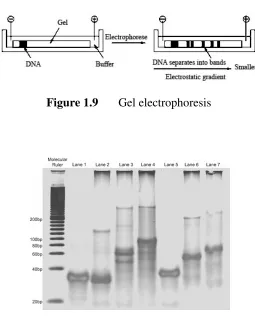
DNA strands can be separated in terms of its length by means of gel electrophoresis. In fact, the molecules are separated according to their weight, which is almost proportional to their length [5]. This technique is based on the characteristic of DNA molecules, which are negatively charged [9]. DNA molecules move towards the positive electrode at different speed in the electric field. In this case, longer molecules will remain behind the shorter ones, as shown in Figure 1.9 [10]. The speed of DNA mixture in a gel depends heavily on the gel porosity and the magnitude of the electrical field. Polyacrylamide gel is used for separation of shorter dsDNAs, which range from 10 bps until 500 bps. Meanwhile, agarose gel is frequently used for longer dsDNAs, which is more than 500-bps. An example of the output of gel electrophoresis is depicted in Figure 1.10 [11]. In DNA computing, this technique is used to visualize the results of computation. Normally, at the end of this process, the gel is photographed for convenience.
Figure 1.9 Gel electrophoresis
1.2.7 DNA Extraction
A ssDNA can also be isola hybridization. Figure 1.11
mixture T, the objective of this operation containing the subsequence
F with S*, where * denotes Watson streptavidin-coated magnet
allowingstrands F to hybridize to strands in the strands F can be separat
time, the subset of T
DNA mixture T. Final strand F [11].
Figure 1.11 An example of DNA extraction by using streptavidin bead.
DNA Extraction
A ssDNA can also be isolated by sequence based on specificity of Figure 1.11 shows an example of DNA extraction
the objective of this operation is to remove the subset
containing the subsequence S = AGCATA. Before the extraction, biotinylized strand, *, where * denotes Watson-Crick complementation, is attached
coated magnetic beads. Then, strand F is mixed with the mixture to hybridize to strands in T containing S. After the hybridization, be separated magnetically, from the DNA mixture
T, which is hybridized with S*, will also be removed from the Finally, the strand TS can be recovered by melting or washing the
An example of DNA extraction by using streptavidin
10
based on specificity of shows an example of DNA extraction [11]. In a DNA is to remove the subset TS of strands in T
= AGCATA. Before the extraction, biotinylized strand, k complementation, is attached to is mixed with the mixture T,
. After the hybridization, ed magnetically, from the DNA mixture T. At the same *, will also be removed from the can be recovered by melting or washing the
11
1.3 DNA Computing Paradigm
1.3.1 Hamiltonian Path Problem (HPP)
Hamiltonian Path Problem (HPP) is a famous NP-complete problem, in computer science. HPP is an NP-complete problem; where there is no such efficient algorithm exist in order to solve this problem. It is a problem of directed graphs, G =
(V, E), which has a set of vertices, V = {Vi} and a set of 1-way directed edges, eij,
connecting two vertices, from Vi to Vj, denoted as (Vi,Vj) ∈V. Furthermore, two
vertices, which are start vertex, Vin, and finished vertex, Vout, are distinguished.
Figure 1.12 (a) shows a simple example of directed graph for HPP, which has been selected by Adleman. This graph consists of 7 vertices, 12 edges, Vin = 0, and Vout =
6. The problem is to find a path between Vin and Vout through G, which passes
through each vertex in V exactly once. Figure 1.12(b) shows the satisfying path, which is 0→1→2→3→4→5→6.
Figure 1.12 a) A directed graph for Hamiltonian path problem, b) The answer of Hamiltonian path problem.
4
0
1
2 3
5
6
a)
4
0
1
2 3
5
6
12
1.3.2 From Turing Machine to DNA Computing
In 1936, Alan Turing designed the Turing Machine [12], a rule-based device that moves over a limitless tape with symbols written on it and can read, write, and rewrite these symbols. The Turing machine marks the beginning of modern computer science and represents as a universal model of computation. A decade later, John von Neumann described the architecture of the first practical programmable computer [13]. It made use of electrical implementation of Boolean logic circuits by using “0” and “1” as the absence and presence of electrical signals. Transistor stands as a basic component in modern integrated circuit, which integrated circuit is widely used in many practical programmable computers. However, in 1965, Moore [14] observed an exponential growth in the number of transistors per integrated circuit against time. This is the definition of Moore’s Law, meaning that more and more transistors can be crammed into a single chip until the silicon itself reaches its limitation. From the observation, researchers have been searching for alternative medium for computation.
13
(PAGE).
In the first experimental of DNA computing, Adleman implement the non-deterministic algorithm for solving directed HPP shown in Figure 1.13. The algorithm consists of five steps as follows:
Step 1: Generate all paths randomly in large quantity.
Step 2: Eliminate all paths that do not begin with vin and end in vout.
Step 3: Eliminate all paths that do not involve exactly n vertices.
Step 4: For each of the n vertices v, eliminate all paths that do not involve v. Step 5: The answer is ‘YES’ if any path remains, otherwise ‘NO’.
Adleman proved that this algorithm can be implemented in molecular level. Adleman used a set of 20-mer oligonucleotides, or oligos, to encode each vertex and edge, which is randomly designed in advance. To implement the Step 1 in molecular level, all the oligos representing the edges and vertices are poured in a single test tube. Then, hybridization and ligation reaction are applied to the mixture, resulting formation of DNA molecules encoding a lot of random paths of the graph. Step 2 is implemented whereby the product of Step 1 is amplified by using PCR using the oligos that encode start node and end node, respectively. As a result, all formations that begin with from V0 and end with V6 will be exponentially amplified. Then, gel
electrophoresis is implemented to separate the amplified products in term of length. The double-stranded DNAs (dsDNAs) of 140 base-pair (bp) representing the formation of path, which starts with V0 and ends with V6, are excised and extracted
14
Figure 1.13 The overall procedure of Adleman HPP base DNA computing.
1.4 Emergence of DNA Computing
DNA computing emerged as an attractive research, which contains the element of computer science, molecular biology, nanotechnology, and chemical engineering. The main benefit of using DNA computing to solve complex problems is the use of massive parallelism, where DNA computing is capable to solve such problems through a single parallel process. Meanwhile, silicon machines compute a problem by executing single task at once [20].
The extreme compactness of DNA as a data storage medium can be an alternative for today’s memory. A mole contains 6.02 x 10²³ DNA base monomers, and the mean molecular weight of a monomer is approximately 350 grams/mole. Hence, 1 gram of DNA comprises 2.1 x 10²¹ DNA based. In addition, 4 DNA bases can encode 2 bits, which give approximately 4.2 x 1021 bits in 1 gram DNA compare to conventional memory technologies capacity, which roughly 109 bits per gram.
Input-encoding and synthesize
Step
1-hybridization and ligation (generate random path)
Step 2-PCR ( amplify strand that start with V0
and V6 only )
Step 3-gel
electrophoresis ( separate amplified product in term of length) Step 4- magnetic
bead separation
Step 5 –UV detection
15
Indeed, DNA has the capability of data storage which in 1012 times more compact than current storage technologies [21].
From the energy consumption point of view, DNA computation is expected to use very little energy [22], as DNA molecules release energy when they anneal together. Adleman noted that enzyme-based DNA computing use very low energy; where one ATP pyrophosphate cleavage per ligation provides an efficiency of roughly 2 x 10¹⁹ operations per joule. However, supercomputers of that time performed approximately 109 operations per joule [19, 23].
Subsequent to Adleman’s experiment, various models of computation have also been carried out via bio-molecular experiments. Lipton extended the Adleman DNA algorithm and proposed a mix-and-split model of DNA computing for solving satisfiability problem (SAT) for propositional formulas [24]. Later, Liu et al.
designed and implemented a surface-based DNA computation also for SAT [25]. In addition, DNA memory as reported by Baum [26], exploits the capability of DNA effectively to perform associative search.
From the biotechnology aspect, the first practical DNA computer for gene expression has been developed by Akira Suyama [27]. Furthermore, biochemical sensing, genetic engineering, and medical diagnosis and treatment are claimed to be the future of DNA computing, based on the works carried out by Benenson et al on the DNA-based automata [28].
Apart from wet-lab experiments, where real DNAs is used to perform the computation, simulation of DNA computing is useful to support DNA computing algorithm design and to decrease the costs and efforts of laboratory experiments. Reliability, performance benchmarks, user interfaces, and accessibility are to be the most important criteria for the development of DNA computing simulator [29].
16
works initiated from Adleman DNA computer is a membrane computing by Gheorge Paun. Membrane computing is developed extensively from mathematical point of view, to establish a model called P systems, which is inspired from the cell biochemistry [31].
DNA computing also requires good sequences for input molecules, as errors usually occur in hybridization and annealing. Various kinds of strategies for DNA sequence design has been proposed to date. Hartemink et al. [32] designed sequences for the programmed mutagenesis, using exhaustive search method “SCAN”. Furthermore, Tanaka et al. [33] generated the DNA sequence using simulated annealing (SA) based on some fitness criteria. Marathe et al. implemented a dynamic programming approach to design a set of DNA sequences based on Hamming distance [34]. Feldkemp et al. [35] used a directed graph to design DNA sequences. Evolutionary algorithm (EA) also has been implemented for optimizing DNA sequences [36-38]. Recently, swarm intelligence approaches such as ant colony optimization (ACO) and particle swarm optimization (PSO) were employed to optimize a set of DNA sequences [39-40].
Existing models of DNA computation are based on various combinations of bio-operations, which are synthesizing, mixing, annealing (hybridization), melting
(denaturation), amplifying (copying), separating, extracting, cutting, ligating,
substituting, detecting, and reading [41]. Based on this model, the DNA computation implementation can be classified by three important aspects: nucleic acid design, DNA algorithms, and readout method. The first step for wet-lab experiment of DNA computation is to find a good set of DNA sequences. After that, the desired sequences are synthesized based on the specific problem. Then, the computational part of the DNA algorithms is performed, where mixing, annealing (hybridization),
melting (denaturation), amplifying (copying), separating, extracting, cutting,
17
the limitation imposed by existing readout methods. However, readout problem receive less attention from researchers, instead of computational part of DNA computing.
There are several papers dealing with readout method for DNA computation. Wang et al [43] described the DESTROY and READOUT operation in surface based DNA computing. In the READOUT operation, two methods were proposed for visualization of surface based DNA computing. The first method is to implement the conventional electrophoresis-based DNA sequencing. Another method proposed by Wang is the hybridization to word-specific addressed arrays. In [44], Wang et al,
proposed a structure-specific cleavage-based readout strategy for surface-based DNA computing. The proposed method was implemented to display the solution of a 4-variable/3-satisfiability (SAT) problem. Recently, Lee et al. [45] implemented a gold nanoparticle aggregation for logic-based biomolecular detection and DNA computing, where the results of DNA computing process were displayed based on a color changing process induced by gold nanoparticle aggregation. For specific problem of HPP based DNA computation, Woods et al. [46] proposed a universal biochip for readout of multiple solutions of HPP. Meanwhile, Ibrahim et al. [47] implemented a TaqMan-based real-time PCR for visualizing the Hamiltonian path which encoded in double-stranded DNA sequences.
1.5 Reviews of Output Visualization Technologies in DNA Computing
1.5.1 Polymerase Chain Reaction
18
computing [48-50]. Moreover, PCR and gel electrophoresis have been used for screening the output of RNA solution of chess problem [51]. In the DNA computing playing poker by Woods [52], different lengths that indicate payoffs of each player is separated via denaturing gel electrophoresis, where the readout can be done by quantifying the amount of DNA in each band of the gel.
Adleman performed the technique so called graduated PCR, where different PCR reactions are performed that encode the ordering of the HPP [19]. Since that, graduated PCR technique for readout method in DNA computing is reported in literatures. Yoshida et al. [48] reported that graduated PCR was used to perform the readout operation for 3-SAT problem. Meanwhile, Braich et al. [49] performed several PCR amplification methods (similar to graduated PCR) to extract the strands representing the answer to the 20-variable 3-SAT problem. Graduated PCR also has been utilized in automated DNA computer for solving n-variable 3-SAT problem [50]. Ibrahim et al. used graduated PCR for visualizing output of DNA computation for the shortest path problems [53-55]. Morimoto et al. used graduated PCR to readout answer for solid phase method DNA computation, where the Hamiltonian paths was determined by comparing the elution time of each of the PCR reaction. The fluorescence level was then visualized on the electropherograms [56].
1.5.2 DNA Sequencing
DNA sequencing is the most straight forward method for readout computation of molecular computing. The basic of sequencing is to use PCR and gel electrophoresis, to return the sequence of a particular strand. As a result, the location of each base in the DNA strand can be directly read. Considering the advantage of DNA sequencing, it has been widely used in many implementation of DNA computing. For instance, Lee et al. used DNA sequencing method for readout operation for temperature gradient-based DNA computing, where cloning and
19
DNA sequencing also has been used to readout the answer for maximal clique problem [59]. Furthermore, the issue on using DNA sequencing for readout method for DNA computing application has been addressed by Mir in 1996 [60]. In another implementation of HPP based on DNA computing perform on microfluidic device, Ledesma et al. utilized a DNA sequencing microchip to readout the final solution obtained from the computation [61].
The basic idea of the most widely used sequencing method is to use PCR and gel electrophoresis. Assume there is a homogeneous solution, that is, a solution containing mainly copies of the strand to be sequenced with very few contaminants (other strands). To detect the positions of A’s in the target strand, a blocking agent is used to prevent the templates from being extended beyond A’s during PCR. As a result of this modified PCR, a population of subsequences is obtained, each corresponding to a different occurrence of A in the original strand. By separating the resultant solution using gel electrophoresis, the positions where the bases A occurs in the strand will be known. The process can then be repeated for each of C, G, and T, to yield the sequence of the strand [62].
1.5.3 Biochip
20
1.5.4 Fluorescence Detection
Fluorescence detection is widely used in biotechnology application. Fluorescent dyes have been used together with PCR to visualize the amplification process. In addition, fluorescence is extensively used to detect the hybridization of DNA. In advanced application of DNA sequencing, four different fluorescent dyes are used, one for each base, which allows all four bases to be processed simultaneously. As the fluorescent molecules pass a detector near the bottom of the gel, signals from the detector can be sent directly to an electronic computer [62]. Moreover, fluorescent detection can also be integrated with biochip technology for better output visualization.
Fluorescence technologies have also been used in many applications of DNA computing readout method. For example, Stojanovic et al. exploited two different colors of fluorescence dyes that represent the output of half-adder made from DNA based logic gates [66]. In [67], the readout process for 3 bit 4 clause SAT problem based DNA computing performed on microfludic processor was done by comparing the relative flourescence of the two chambers of the microfludic processor. Ibrahim
et al. proposed a readout method of Hamiltonian Path Problem based on real-time PCR. In this method, TaqMan fluorescence probe have been utilized for visualizing the amplification of PCR [47, 68].
1.5.5 Atomic Force Microscope
21
DNA computing by self-assembly [70]. In another work by Rothemund et al. [71], a DNA Sierpinski Triangle, which performs the XOR computation, was visualized by AFM.
1.6 Problem Statement
In general, given a double-stranded DNA sequence which contains a several subsequences, with the start and end sequences are already known, the problem is to determine the ordering of the intermediate sequences.
In the first DNA computing experiment by Adleman [19], graduated PCR have been employed to readout the answer of final DNA computation. In this case, one only knows that a Hamiltonian path begins from node 0 and ends at node 6. However, the information of the nodes that passed through is unknown.Hence, graduated PCR is used to allow one to “print” the result of the computation. Graduated PCR was performed by running six different PCR operations to the solution of seven nodes HPP. However, this method is very time consuming. As such, Ibrahim et al. [47,68] claimed that graduated PCR was very time consuming method.
22
Ibrahim et al [47,68] implemented a TaqMan based real-time PCR for reading out DNA solution that encodes the Hamiltonian path. The readout method consists of in vitro computation and in silico information processing. Several TaqMan reactions were performed to investigate the order of the Hamiltonian path in the in vitro computation part. The output of the real-time PCR can be distinguished as either “YES” or “NO” reaction. After that, the output from the in vitro
computation was subjected into in silico algorithm to produce the Hamiltonian path. However, the TaqMan “YES” and “NO” reactions are identified manually. Based on this problem, an automatic classification procedure could be employed to improve the in silico part of the readout procedure. In addition, the in silico algorithm in [47] and [68] can be further improved. The final result of the previous algorithm shows only the location of each node for Hamiltonian path, where additional steps are required to show the actual Hamiltonian path.
1.7 Objective
The objective of this research is to improve the in silico information processing of the readout method of DNA computer based on real-time PCR. In this research, clustering algorithms are implemented to automatically classify the “YES” and “NO” reactions.
23
1.8 Scope of Work
Figure 1.14 provides an overview of scope of work and contribution in this thesis. In this figure, DNA computing can be viewed as the main field in this research, however, the readout method based on real-time PCR is only applied on HPP. Particularly, the real-time PCR readout method are performed on LightCycler System and DNA Engine Opticon 2 System. Implementation based on the LightCycler System includes two different six nodes of Hamiltonian path. Meanwhile, experiments of three different seven nodes of Hamiltonian path are conducted on DNA Engine Opticon 2 System. Only five different paths of HPP are carried out in this thesis, as those paths are taken from the previous research conducted in [47] and [68]. Clustering algorithms are then implemented to both output of real-time PCR for automatic classification of TaqMan reactions. For the LightCycler System-based implementation, K-means [72] and Fuzzy C-Means (FCM) [73] clustering algorithm are employed to group the TaqMan reactions into “YES” and “NO” groups. Subsequently, FCM and Alternative FCM (AFCM) [74] are applied to the output of DNA Engine Opticon 2 System.
24
Figure 1.14 Scope of work and contributions
Figure 1.15 The whole process of readout method based on real-time PCR Preparation of
input molecules
In vitro computation: -LightCycler System -DNA Engine Opticon 2 System
In silico information processing:
- clustering implementation -in silico algorithm DNA Computing
HPP
SAT
Self-Assembly DNA-based memory others Computation DNA sequence
design Readout method
Graduated PCR Real-time PCR Biochip
IN VITRO IN SILICO
LightCycler DNA Engine Opticon 2 Automatic classification (clustering) Improved silico algorithm
LightCycler DNA
Engine Opticon 2
K-Means FCM
FCM AFCM
scope of work
25
1.9 Contribution
From Figure 1.14, contributions in this thesis are highlighted in rounded box. In this research, the improvement of in silico information processing of the readout method is the major contribution, which can be divided into three parts. The first contribution of this thesis is the clustering implementation on real-time PCR output generated by LightCycler System. K-means and FCM are employed to classify the TaqMan reactions. The performance of two different methods are analyzed in term of consistency. Based on the consistency criteria, FCM shows better performance than the K-means algorithm.
The second contribution of this thesis is the FCM clustering, implemented to the output of the DNA Engine Opticon 2 System. However, misclassification could occurr, due to the nature of the data produced from the DNA Engine Opticon 2 System. Noise or an outlier is figured out as the main problem of the clustering process. AFCM, which the improve version of FCM, is implemented to the same data to overcome the noise or outlier problems.
26
1.10 Publication List
This thesis contains materials from several conference publications and a journal article. Some of the text and figures in this thesis come directly from those articles, although most of it has undergone revision, and occasionally correction, for incorporation into this thesis.
Chapter 1 is based on
Saaid, M. F. M., Ibrahim, Z., Khalid, M. and Sarmin, N. H. DNA Computing Readout Approaches: A Review. The Second International Conference on Control, Instrumentation and Mechatronic Engineering (CIM09). June 2-3, 2009. Malacca, Malaysia: 2009. (accepted)
Chapter 2 is based on:
Ibrahim Z., Rose, J. A., Tsuboi, Y., Ono, O. and Khalid, M. A New Readout Approach in DNA Computing Based on Real-Time PCR with TaqMan Probes. In: Mao, C. and Yokomori, T. ed. Lecture Notes in Computer Science (LNCS). Springer-Verlag. 4287: 350-359; 2006.
Ibrahim, Z., Rose, J. A., Suyama, A. and Khalid, M. Experimental Implementation and Analysis of a DNA Computing Readout Method Based on Real-Time PCR with TaqMan Probes. Natural Computing Journal,
Springer, 2008. 7(2): 277-286.
Saaid, M. F. M., Ibrahim, Z. and Sarmin, N. H. An Improved In Silico
27
In this chapter, the explanations of readout method based on real-time PCR are takes solely from those materials above.
Chapter 3 is based on:
Saaid, M. F. M., Ibrahim, Z., Khalid, M., Sarmin, N. H. and Rose, J. A. K-Means Clustering for DNA Computing Readout Method Implemented on LightCycler System. 3rd Southeast Asia Technical University Consortium (SEATUC). February 25-26, 2009. Universiti Teknologi Malaysia, Malaysia. 2009. (accepted)
Saaid, M. F. M., Ibrahim, Z., Khalid, M., Sarmin, N. H. and Rose., J. A. Fuzzy C-Means Clustering for DNA Computing Readout Method Implemented on LightCycler System. International Conference on Instrumentation, Control and Technology, SICE 2008. August 20-22, 2008. University of Electro-Communications, Chofu City, Tokyo, Japan: IEEE. 2008. 676-681.
Chapter 4 is based on:
Saaid, M. F. M., Ibrahim, Z., Khalid, M. and Yahya, A. Alternative Fuzzy C-Means Clustering for DNA Computing Readout Method Implemented on DNA Engine Opticon 2 System. The Fourth International Conference on Signal-Image Technology & Internet–based Systems (SITIS 2008). November 30-4, 2008. Bali, Indonesia: IEEE. 2008. 498-503.
1.11 Thesis Organization
28
REFERENCES
1. Hames, L. and Hooper, N. M. Biochemistry. 3rd. ed. Taylor and Francis. 2005 2. Reece, R. J. Analysis of Genes and Genomes. Wiley. 2004
3. Ausubel, F. andStruhl, K. Short Protocol in Molecular Biology: A Compendium of Methods from Current Protocols in Molecular Biology. 3rd. ed. Wiley & Sons. 1995
4. Passarge, E. Color Atlas of Genetics. 3rd. ed. Thieme. 2007
5. Calude, C. S. and Paun, G. Computing with cells and atoms - An introduction to quantum, DNA, and membrane computing. New York: Taylor & Francis Inc. 2001
6. Zucca, M. DNA based Computational Models, Ph.D. Thesis. Politecnico Di Torino, Italy; 2000
7. Velden, F. H. P. V. Biomolecular Computing and Their Simulations. Master Thesis. University of Amsterdam, The Netherlands; 2005
8. Fitch, J. P. An Engineering Introduction to Biotechnology. SPIE. 2002
9. Paun, G., Rozenberg, G. and Salooma, A. DNA Computing: New Computing Paradigms. New York ;Springer. 1998
10. Amos, M. DNA computation. Ph.D. Thesis. The University of Warwick, UK; 1997
11. Ibrahim, Z. Concentration-Controlled Length-based DNA computing for Weighted Graph Problems with Novel Readout Approach using Real-Time
PCR. Ph.D. Thesis. Meiji University; 2006
12. Turing, L. M. On Computable Numbers, With An Application to the Entcheidungs Problem. Proc. Lond. Math. Soc, 1936. 42: 230-265.
94
14. Moore, G. E. Craming More Components onto Integrated Circuits.
Electronics, 1965. 38(8).
15. R. P. Feynman, R. P. There’s Plenty of Room at the Bottom. In: Gilbert, D. H. ed. Minaturization. New York: Reinhold Publishing Corporation. 282-296; 1961
16. C. H. Bennet, C. H. The Thermodynamics of Computation- Review. Int. J. Theoret. Phys. 1982. 21: 905-940.
17. Head, T. Formal Language Theory and DNA: An Analysis of the Generative Capacity of Special Recombinant Behaviors. Bull. Math. Biol. 1987. 49; 737-759.
18. Head, T. Splicing Systems and DNA. In: Handbook of Formal Language.
Berlin: Springer-Verlag. 371-383; 1992.
19. Adleman, L. Molecular Computation of Solutions to Combinatorial Problems.
Science. 1994. 266: 1021-1024.
20. Ito, Y and Fukusaki, E. DNA as a Nanomaterial. J. Mol. Catal. B: Enzymatic. 2004. 28: 155-166.
21. Reif, J. H., LaBean, T. H., Pirrung, M., Rana, V. S., Guo, B., Kingsford, C. and Wickham, G. S. Experimental Construction of Very Large Scale DNA Databases with Associative Search Capability. Proc. a DIMACS Workshop: DNA Based Computers. 2001. 231-247.
22. Maley, C. C. DNA Computation: Theory, Practice and Prospects. Eval. Comput. 1998.6(3): 201-230.
23. Fu, P. Biomolecular Computing; Is it ready to take off?. Biotechnology Journal. 2007. 2(1): 91-101.
24. Lipton, R. J. DNA Solution of Hard Computational Problems. Science. 1995. 268: 1021-1023.
25. Liu, Q., Frutos, A. G., Wang, L., Condon, A. E., Corn, R. M. and Smith, L. M. DNA Computing on Surfaces. Nature. 2000. 403: 175-179.
26. Baum, E. B. Building an Associative Memory Vastly Larger Than the Brain.
Science. 1995. 268: 583-585.
95
28. Benenson, Y., Gil, Y. B., Ben-Dor, U., Adar, R. and Shapiro, E. An Autonomous Molecular Computer for Logical Control of Gene Expression.
Nature. 2004. 429: 423-429.
29. Blain, D., Garzon, M., Shin, S. Y., Zhang, B. T., Kashiwamura, S., Yamamoto, M., Kameda, A. and Ohuchi, A. Development, Evaluation and Benchmarking of Simulation Software for Biomolecule-based Computing. Natural Computing, Kluware Academic Publishers. 2004. 3: 427-442.
30. Balan, M. S. and Jurgensen, H. On the Universality of Peptide Computing.
Natural Computing, Springer Netherlands.2008. 7(1):71-94.
31. Paun, G. From Cells to Computers: Membrane Computing- A Quick Overview. Lecture Notes in Computer Science, Springer Berlin/ Heidelberg. 2005. 3384: 268-280.
32. Hartemink, A. J., Gifford, D. K. and Khodor, J. Automated Constraint Based Nucleotide Sequence Selection for DNA Computation. Proc. 4th DIMACS Workshop DNA Based Comput. 1998. 227-235.
33. Tanaka, F., Nakatsugawa, M., Yamamoto, M., Shiba, T. and Ohuchi, A. Developing Support System for Sequence Design in DNA Computing. Proc. 7th Int. Workshop DNA Based Comput. 2001. 340-349.
34. Marathe, A., Condon, A. E. and Corn, R. M. On Combinatorial DNA Word Design. Proceedigs of the 5th International Meeteing on DNA Based Computers. 1999.
35. Feldkamp, U., Saghafi, S., Banzhaf, W. and Rauhe, H. DNA Sequence Generator-A Program for the Construction of DNA Sequences. Proc. 7th Int. workshop DNA Based Comput.. 2001. 179-188.
36. Deaton, R., Murphy, R. C., Rose, J. A., Garzon, M., Franceschetti, D. T. and Stevens Jr., S. E. Genetic Search for Reliable Encodings for DNA-based Computation. First Conference on Genetic Programming. 1996.
37. Arita, M., Nishikawa, A., Hagiya, M., Komiya, K., Gouzu, H. and Sakamoto, K. Improving Sequence Design for DNA Computing. Proc. Genetic Evol. Comput. Conf. (GECCO). 2000. 875-882.
96
39. Kurniawan, T. B., Khalid, N. K., Ibrahim, Z., Khalid, M. and Middendorf, M. Evaluation of Ordering Methods for DNA Sequence Design Based on Ant Colony System. Second International Second Asia International Conference on Modelling & Simulation, AMS 2008. May 13-15, 2008. Kuala Lumpur, Malaysia: 2008. 905-910.
40. Khalid, N. K., Kurniawan, T. B., Ibrahim, Z., Yusof, Z. M., Khalid, M. and Engelbrecht, A. P. A Model to Optimize DNA Sequences Based on Particle Swarm Optimization. Second International Second Asia International Conference on Modelling & Simulation, AMS 2008. May 13-15, 2008. Kuala Lumpur, Malaysia. 2008. 534-539.
41. Kari, L. DNA computing in vitro and in vivo. Future Generation Computer System. 2001. 17: 823-834.
42. Henkel, C.V. Experimental DNA computing. Ph.D. Thesis, Leiden University; 2005
43. Wang, L., Liu, Q., Frutos, A. G., Gillmor, S. D., Theil, A. J., Strother, T. C., Condon, A. E., Corn, R. M., Lagally, M. G. and Smith, L. M. Surface-based DNA Computing Operations: DESTROY and READOUT. BioSystems. 1999. 52: 181-191.
44. Wang, L. M., Hall, J. G., Lu, M. C., Liu, Q. H. and Smith, L. M. A DNA Computing Readout Operation based on Structure-specific Cleavage. Nat. Biotechnol. 2001. 19: 1053-1059.
45. Lee, I. H., Yang, K. A., Lee, J. H., Park, J. Y., Lee, J. H. and Zhang, B. T. The use of Gold Nanoparticle Aggregation for DNA Computing and Logic-based Biomolecular Detection. Nanotechnology. 2008. 19.
46. Wood, D. H., Clelland, C. L. T. and Bancroft, C. Universal Biochip Readout of Directed Hamiltonian Path Problems. Lecture Notes in Computer Science. 1999. 2568: 168-181.
47. Ibrahim, Z., Rose, J. A., Suyama, A. and Khalid, M. Experimental Implementation and Analysis of a DNA Computing Readout Method Based on Real-Time PCR with TaqMan Probes. Natural Computing Journal, Springer, 2008. 7(2): 277-286.
97
49. Braich, R. S., Chelyapov, Johnson, N. C., Rothermund, P. W. K. and Adleman, L. Solution to a 20-Variable 3-SAT problem on a DNA Computer. Science.
2002. 296: 499-502.
50. Johnson, C. R. Automating the DNA Computer: solving n-Variable 3-SAT Problems. Natural Computing, Springer Netherlands. 2002. 239-253.
51. Faulhammer, D., Cukras, A. R., Lipton, R. J. and Landweber, L. F. Molecular Computation: RNA Solutions to Chess Problems. Proc. Natl. Acad. Sci. USA. 2000. 91: 1385–1389.
52. Wood, D. H., Bi, H., Kimbrough, S. O., Wu, D. and Chen, J. DNA Starts to Learn Poker. In: Jonoska and Seeman. Springer. 92–103; 2002
53. Ibrahim, Z., Tsuboi, Y., Ono, O. and Khalid, M. Molecular Computation Approach to Compete Dijkstra’s Algorithm. The 5th Asian Control Conference (ASCC2004). July 20-23, 2004. Melbourne, Australia: 2004. 634-641.
54. Ibrahim, Z. Tsuboi, Y., Ono, O. and Khalid, M. Direct-Proportional Length-Based DNA Computing for Shortest Path Problem. International Journal of Computer Science and applications (IJCSA). Technomathematics Research Foundation. 2004. 1(1): 46-40.
55. Ibrahim, Z., Tsuboi, Y., Ono, O. and Khalid, M. In vitro Implemntation of k -Shortest Paths Computation with Graduated PCR. International Journal of Computational Intelligence Research. 2005. 1(2): 127-137.
56. Morimoto, N., Arita, M. and Suyama, A. Solid Phase DNA Solution to the Hamiltonian Path Problem. Proceedings of the 3rd DIMACS Workshop on DNA Based Computers. June 1997. University of Pennsylvania: 83–92.
57. Lee, J. Y., Shin, S. Y., Augh, S. J., Park, T. H. and Zhang, B. T. Temperature Gradient based DNA Computing for Graph Problems with Weighted Edges,
Lecture Notes in Computer Science. 2003. 2568: 73-84.
58. Lee, J. Y. Shin, S. Y., Park, T. H.and Zhang, B. T. Solving Traveling Salesman Problems with DNA Molecules Encoding Numerical Values. BioSystems. 2004. 78(1-3): pp. 39-47.
59. Ouyang, Q., Kaplan, P. D., Liu, S.M. and Lichaber, A. DNA Solution of the Maximal Clique Problem. Science. 1997. 278: 446-449.
98
61. Ledesma, L., Pazos, J. and Rodrıguez-Paton, A. A DNA Algorithm for the Hamiltonian Path Problem Using Microfluidic Systems. In: Jonoska, N. Paun, G. and Rozenberg, G. ed. Aspects of Molecular Computing - Essays dedicated to Tom Head on the occasion of his 70th birthday. LNCS Springer-Verlag. 2950. 289–296; 2004
62. Kari, L. DNA Computing: Arrival of Biological Mathematics. In: The Mathematical Intelligencer. Berlin, Springer. 19(2). 9–22; 1997
63. Rose, J. A., Deaton, R., Garzon, M., Murphy, R. C., Franceschetti, D. R. and Stevens, Jr. S.E. The Effect of Uniform Melting Temperatures on The Efficiency of DNA Computing. DNA Based Computers II:DIMACS Workshop, June 23-25, 1997. 35-42.
64. Wood, D. H. A DNA Computing Algorithm for Directed Hamiltonian Paths.
Proceedings of the Third Annual Conference on Genetic Programming. 1998. 731-734.
65. Wood, D. H. DNA Computing Capabilities for Game Theory. Natural Computing.Springer Netherlands. 2003. 2(1): 85-108.
66. Stojanovic, M. N. and Stefanovic, D. Deoxyribozyme-based Half-Adder. J. Am. Chem. Soc. 2003. 125(22). 6673–6676.
67. Grover, W. H. and Mathies, R. A. An Integrated Microfluidic Processor for Single Nucleotide Polymorphism-based DNA Computing. Lab on a Chip. 2005. 5.
68. Ibrahim Z., Rose, J. A., Tsuboi, Y., Ono, O. and Khalid, M. A New Readout Approach in DNA Computing Based on Real-Time PCR with TaqMan Probes. In: Mao, C. and Yokomori, T. ed. Lecture Notes in Computer Science (LNCS).
Springer-Verlag. 4287: 350-359; 2006.
69. Binnig, G., Quate, C. F. and Gerber, C. Atomic Force Microscope. Physical Review Letters. 1986. 56(9): 930–933.
70. Winfree, E., Liu, F., Wenzler, L. A. and Seeman, N. C. Design and Self-Assembly of Two-Diemsional DNA Crystals. Nature. 1998. 394. 539-544. 71. Rothemund, P. W. K., Papadakis, N. and Winfree, E. Algorithmic
Self-Assembly of DNA Sierpinski Triangles. PLoS Biol. 2004. 2(12) e424: 2041-2053.
99
Statistics and Probability. Berkeley, University of California: Press, 1. 1967. 281-297.
73. Bezdek, J. Pattern Recognition with Fuzzy Objective Function Algorithms.
New York: Plenum Press. 1981.
74. Wu, K. L. and Yang, M. S. Alternative C-Means Clustering Algorithm.
Pattern Recognition, 2000. 35: 2267-2278.
75. Mullis, K., Faloona, F., Scharf, S., Saiki, R., Horn, G. and Erlich, H. Specific Enzymatic Amplification of DNA In Vitro: The Polymerase Chain Reaction.
Cold Spring Harbor Symposium on Quantitative Biology. 1986. 51: 263-273. 76. Higuchi R, Fockler C, Dollinger G, and Watson R. Kinetic PCR Analysis:
Real-Time Monitoring of DNA Amplification Reactions. Biotechnology. 1993. 11: 1026–1030.
77. Monis, P. T., Giglio, S. and Saint, C. P. Comparison of SYTO9 and SYBR Green I for Real-Time Polymerase Chain Reaction and Investigation of The Effect of Dye Concentration on Amplification and DNA Melting Curve Analysis. Analytical Biochemistry. 2004. 340: 24-34.
78. Espy, M. J., Uhl, J. R., Sloan, L. M.; Buckwalter, S. P., Jones, M. F., Vetter, E. A., Yao, J. D. C., Wengenack, N. L., Rosenblatt, J. E., Cockerill, F. R., and Smith, T. F.. Real-Time PCR in Clinical Microbiology: Applications for Routine Laboratory Testing. Clinical Microbiology Reviews. 2006. 19(1): 165-256.
79. Walker, N. J. A Technique Whose Time Has Come. Science. 2002. 296: 557-559.
80. Wittwer, C. T., Herrman, M. G., Moss, A. A. and Rasmussen, R. P. Continuous Fluorescence Monitoring of Rapid Cycle DNA Amplification.
BioTechniques. 1997. 22(1): 130-139.
81. Eckert, C., Landt, O., Taube, T., Seeger, K., Beyermann, B., Proba, J. and Henze, G. Potential of LightCycler Technology for Quantification of Minimal Residual Disease in Childhood Acute Lymphoblastic Leukemia. Leukemia. 2000. 14: 316-323.
82. Tyagi, S. and Kramer, E. R. Molecular Beacons: Probes that Fluoresce Upon Hybridization. Nat. Biotechnol.. 1996. 14: 303-308.
100
84. Lakowicz, J. R. Principles of fluorescence spectroscopy, 2nd. ed. Kluwer Academic/Plenum Publishers: New York. 1999.
85. Heid, C. A. Real-Time Quantitative PCR. Genome Research. 1996. 6: 986-994.
86. Holland, P. M. Detection of Specific Polymerase Chain Reaction Product by Utilizing the 5’→3’ Exonuclease Activity of Termus Aquaticus DNA Polymerase. Proceedings of the National Academy of Sciences of the United States of America. 1991.88: 7276-7280.
87. Overbergh, L., Giulietti, A., Valckx, D., Decallonne, B., Bouillon, R. and Mathieu, C. The Use of Real-Time Reverse Transcriptase PCR for the Quantification of Cytokine Gene Expression. Journal of Biomolecular Techniques. 2003. 14: 33-43.
88. Li, A., Forestier, E., Rosenquist, R. and Roos, G. Minimal Residual Disease Quantification in Childhood Acute Lymphoblastic Leukemia by Real-Time Polymerase Chain Reaction using the SYBR Green Dye. Experimental Hematolology. 2002, 30: 1170-1177.
89. Bernard, P. S. and Wittwer, C. T. Real-Time PCR technology for cancer diagnostics, Clinical Chemistry, Vol. 48, 2002, pp. 1178-1185
90. Norton, D. M. Polymerase Chain Reaction-based Methods for Detection of Listeria Monocytogenes: Toward Real-Time Screening for Food and Environmental Samples. Journal of AOAC International, 2002. 85: 505-515. 91. Niesters, H. G. Quantitation of Viral Load Using Real-Time Amplification
Techniques. Methods. 2001. 25: 419-429.
92. Ahmed, F. E. Detection of Genetically Modified Organisms in Foods. Trends in Biotechnology. 2002. 20: 215-223.
93. Sevall, J. S. Rapid Allelic Discrimination from Real-Time DNA Amplification. Methods. 2001. 25: 452-455.
94. Jain, K., Murty, M. N. and Flynn, P. J. Data Clustering: A review. ACM Computing Surveys, 1999. 31(3): 265-323.
95. Everitt, B. S., Landau, S. and Leese, M. Cluster Analysis. London: Arnold. 2001.
96. Aldridge, M. Clustering: An Overview. In: Berry, M. W. and Browne, M.