Review
Methodology of Drought Stress Research:
Experimental Setup and Physiological
Characterization
Natalia Osmolovskaya 1,§, Julia Shumilina 2,3,§, Ahyoung Kim 3, Anna Didio 2,3,
Tatiana Grishina 2, Tatiana Bilova 1,3, Olga A. Keltsieva 4, Vladimir Zhukov 5, Igor Tikhonovich 5,6, Elena Tarakhovskaya 1,7, Andrej Frolov 2,3,*and Ludger A. Wessjohann 3,*
1Department of Plant Physiology and Biochemistry, St. Petersburg State University 2Department of Biochemistry, St. Petersburg State University
3Department of Bioorganic Chemistry, Leibniz Institute of Plant Biochemistry 4Institute of Analytical Instrumentation, Russian Academy of Science 5All-Russia Research Institute for Agricultural Microbiology
6Department of Genetics and Biotechnology, St. Petersburg State University 7Department of Scientific Information, Russian Academy of Sciences Library
§These authors contributed equally on the manuscript
* Correspondence: [email protected], Tel.: +49 (0) 345 55821350 (A.F.); [email protected], Tel.: +49(0)34555821301 (L.A.W.)
Abstract: Drought is one of the major stress factors affecting growth and development of plants. In this context, drought-related losses of crop plant productivity impede sustainable agriculture all over the world. In general, plants response to water deficit by multiple physiological and metabolic adaptations at the molecular, cellular and organism levels. To understand the underlying mechanisms of drought tolerance, adequate stress models and arrays of reliable stress markers are required. Therefore, in this review we comprehensively address currently available models of drought stress, based on culturing plants in soil, hydroponic or agar culture. Thereby, we critically discuss advantages and limitations of each design. We also address the methodology of drought stress characterization and discuss it in the context of real experimental approaches. Further, we highlight the trends of the methodological development in the drought stress research, i.e. complementation of conventional tests with quantification of phytohormones and reactive oxygen species (ROS), measurement of antioxidant enzyme activities, as well as comprehensive profiling of transcriptome, proteome and metabolome.
Keywords: drought stress; drought models; drought tolerance; oxidative stress; phytohormones; polyethylene glycol (PEG); stress markers
1. Introduction
Being a natural climate feature, drought occurs in almost all climate zones with varying frequency, severity and duration, being one of the most deleterious factors of environmental stress [1,2]. Indeed, even a short-term water deficit results in essential annual losses of crop yields [3,4], impeding thereby sustainable agriculture all over the world [5,6,7]. Due to the oncoming climate changes, frequency and durations of drought periods increase, making this factor one of the most important threats of the current century [8,9].
In the context of agriculture, drought is defined as a period of below-average level of precipitation [10], when the amounts of available water in the plant rhizosphere drop below the limits required for efficient growth and biomass production [11]. Such soil water deficit can be persistent in climate zones characterized by low water availability, or intermittent and unpredictable water supply during the vegetative period [12]. Because of this, drought is the major environmental
stressor, affecting plant growth and development by disruption of its water status [13]. This dramatically affects all key physiological processes, like photosynthesis, respiration and uptake of mineral nutrients [14,15]. First, drought compromises stomata function, impairs gas exchange, and leads to over-production of reactive oxygen species (ROS) and development of oxidative stress [16]. Secondly, water deficit inhibits cell division, expansion of leaf surface, growth of stem and proliferation of root cells [7]. In concert, all these factors dramatically reduce plant productivity, and might lead to death of drought-sensitive plants upon prolonged exposure to drought [17].
At the quantitative level, water deficit in the environment can be characterized by a decrease of soil water potential (Ψw) [18]. According to the Van't Hoff equation, it indicates a decrease in free energy of substrate water that makes water uptake from the medium under these conditions thermodynamically unfavorable and loss of water by the plant more probable. Ψw of 0 to -0.3 MPa are characteristic for well-watered plants, whereas the values below -0.4 MPa correspond to moderate water stress, and potentials of -1.5 to -2.0 MPa represent severe stress and permanent loss of turgor [19]. However, these values vary among species and drought model used. They are based on experience with seeds and seedlings, which are commonly more drought tolerant. Thus, in our experience, Ψw of -0,3 to -0,8 is more typical for an experimentally useful, i.e. recoverable, moderate drought stress in plants beyond seedling stage (v.i.). In general, leaf Ψw can be determined by several approaches. In the easiest, but reliable way, Ψw can be addressed by gravimetric method [20]. It can be also accomplished with Scholander pressure chamber and thermocouple psychrometer [21], or tensitometer [22]. Termocouple psyhrometry is one of the most popular method, which is usually accomplished with press saps or freeze-thawed leaf disks [23]. Recently, a new method for determination of Ψw in leaf cell apoplast, relying on the measurement of photosynthetic CO2/H2O gas exchange, was proposed [24].
It is important to mention, that not only the degree of Ψw decrease, but also its duration can affect the plant organism [25]. Therefore, water stress often develops upon minimal reduction of soil Ψw. To avoid this scenario, plants adopt various strategies to prevent water loss, to preserve water supply even under reduced Ψw, and to sustain periods of unfavorable water regimen accompanied with low water contents in tissues [10]. These drought-induced alterations can affect plant morphology, physiology and biochemistry in the degree, depending on plant species, developmental stage, as well as duration and severity of drought [4,6,7,26,27].
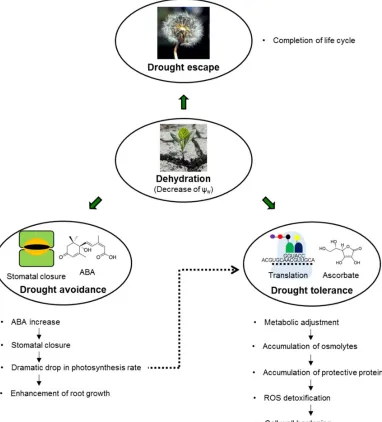
The main strategies, employed by plants to sustain water deficit are (i) drought escape, (ii) drought avoidance, and (iii) drought tolerance [28]. Generally, all these three strategies impact on the development of the state, known as drought resistance, which can be defined as ability to maintain favorable water balance and turgidity under drought conditions. In the escape strategy plants complete their life or growth cycle before the impact of drought causes harm, i.e. a seasonal response is used [4]. The strategy of drought avoidance relies on enhanced water uptake and reduced water loss, whereas drought tolerance is mediated by osmotic adjustment, extension of antioxidant capacity and development of desiccation tolerance [28]. On one hand, these strategies represent different steps of drought response (Figure 1). On another, they might indicate different climatic and ecological specializations of plant species [29]. This concept of stress avoidance and stress tolerance, proposed by Levitt [30], provides insight into plant responses to a relevant decrease of Ψw at the cell and organism levels [10].
during a long time, and adaptive capacities of the avoidance strategy are not sufficient for sustaining of plant growth and productivity, other mechanisms might be involved. At this step, such mechanisms, as accumulation of compatible solutes and protective proteins (i.e. so-called metabolic adjustment), cell wall hardening, ROS detoxification and metabolic changes are involved in establishment of drought tolerance [10].
Figure 1. The main drought resistance strategies employed by plants to counter water deficit periods (drought escape, drought avoidance, and drought tolerance) and the main steps of the plant response to dehydration
changes in the patterns of metabolites and proteins [10,15,35]. Hence, analysis of the changes in plant metabolome and proteome, associated with the onset of drought, might be an important step in breeding and engineering of plants with increased drought resistance [15,35], or for the development of plant protectants against drought stress [39]
Recently, Wang et al. [15] comprehensively reviewed drought-related effects on the plant proteome, including changes in signal reception and transduction, ROS scavenging, osmotic regulation, protein synthesis/turnover, modulation of cell structure, as well as carbohydrate and energy metabolism. These functional patterns of plant response to drought gave access to understanding of fine mechanisms underlying the phenomenon of stress tolerance. Apparently, for successful study of plant responses to drought stress under experimental conditions, reliable and adequate stress models are required. Accordingly, various drought model setups are established to date (Table 1). However, the available information is often complex, incomplete and inconsistent. A comprehensive literature search for drought tolerance research shows a great variability and inconsistencies in the experimental designs and methods for stress characterization [15]. Therefore, here we systematically address different experimental setups for establishment of drought stress models and consider physiological and biochemical methods for their characterization.
2. Experimental models of drought stress
Despite a large variety of available drought models, according to their basic setup, all these techniques can be classified in soil-, aqueous culture- and agar-based setups. The common feature of all drought stress models is reduction of the water potential in the substrate or medium, surrounding plant roots. However, individual methods have different applicability limitations and vary essentially in the scientific questions, which can be addressed. Therefore, all advantages and disadvantages of each individual model need to be carefully considered already at the step of experiment planning.
2.1. Soil-based drought models
The obvious advantage of this model strategy is close similarity of experimental conditions to drought, really occurring in nature and agriculture. In this case, the decrease of soil Ψwis established by gradual decline or immediate interruption of plant watering [40]. Such models adequately simulate a short-term drought, which represents the most frequent case in the European agricultural practice due to varying weather conditions [41,42]. However, difficulties in control of the substrate Ψw represent an essential limitation of this approach. Indeed, in this experimental setup, the severity of drought stress is determined by the rates of water evaporation from the soil surface and consumption by the plant [43]. As the rates of this processes cannot be defined by the researcher, and depend from multiple factors, reproducibility and predictability of such experiments are always questionable. Moreover, as the rates of water consumption and evaporation are relatively high, this model does not allow probing long-term drought responses, like accumulation of osmoprotective metabolites or proteins and cell wall modifications [10]. Therefore, many important aspects of plant drought tolerance and adaptation to low Ψw, like, for example, accumulation of osmoprotective proteins and hardening of cell walls, can be overlooked in this experimental setup, although using large and deep pots might improve this situation [10].
Recently, Todaka et al [40] introduced an automatic irrigation system, relaying on monitoring of actual water content in soil. Using this approach, the authors proposed a drought model, able to ensure the desired values of Ψw (–9.8, –31.0, and –309.9 KPa). This system failed, however, to reproduce the conditions of severe dehydration. Although the optimized method described above is reliable and reproducible enough, repeated measurements of leaf and soil Ψw are laborious and require high amounts of plant material, which are hardly available in long-term experiments under reproducible laboratory conditions. For example, such a restriction can be critical, when mutants or transgenic plants are dealt with, in particular those, having reduced stomata density or small leaf area [45].
An elegant way to avoid this complication is culturing of mutant or transgenic plants in the same pot with the reference plants, e.g. the wild type (wt) counterparts [10]. In this case, leaf Ψwdetermination can be limited to the reference (or wt) plants, which are commonly more suitable for the assessment of stress markers. The obtained result can be extrapolated to the mutants. In this case, both reference or wild type and experimental or mutant plants would grow in the same medium and, therefore, exposed to the same soil Ψw if they are planted in a suitable scheme and position. The best way to provide a quantitative characteristic of drought stress by this approach is to complementit with a measurement of the soil Ψw at the end of the dehydration period.Analogously, this method can be applied to untreated and treated plants in assays for chemical drought tolerance enhancers or other phytoeffectors (v.i.) to be tested.
It is important to mention the setups, relying on inert substrate, such as vermiculite or perlite, as soil substitutes. The advantages of this approach is that the roots of experimental plants can be pulled out easily and without damage to investigate drought-related changes in water potential [46 ] or oxidative and metabolic responses [47] at the root level. Inert substrates are suitable for
studying the effects of drought in legume-rhizobial nodule symbiosis [48]. On the other hand, their
certain disadvantage is that watering unlike soil culture, is carried out not with water, but with a nutrient solution, so the impact of drought by cessation of watering plants is accompanied by the appearance of another stress factor, namely, the deficiency of mineral elements.
2.2. Drought models based on hydroponic aqueous culture
Despite of the high relevance of soil-based drought models because of their similarity to natural conditions they all have a common intrinsic limitation: the difficulty to adequately control of Ψw in the root microenvironment. However, this is critical when a precise definition of substrate Ψw is required, as in multiple or long-term experiments-comparable over months (and seasons). Therefore, the models, based on aqueous hydroponic culture with predictably decreased Ψw of nutritional solution, might be advantageous for such applications. The easiest way to reduce the Ψw of growth medium assumes decreasing its level in pots and partial exposure of roots to air, as was shown for lettuce by Koyama et al [49]. To simulate severe dehydration, plant roots can be left under air for up to eight hours [50]. Thereby, the severity of simulated drought can be defined by the duration and repetitions of such dehydration procedure. This approach is based on the fact, that Ψw of leaves, at least to some extent, corresponds to the index of water availability for plants, which in turn depends on water potentials of soil and plant roots [51]. Thus, affecting experimentally the Ψw of roots influences the Ψw of leaves as well. When using this approach, however, one needs to keep in mind, that dehydration degree and kinetics would strongly depend on air humidity. Further, it is necessary to remember, that in this case the plant response is dependent on root distribution (e.g. long vs. short roots).
resulting in increase of the osmotic component of the water potential [53]. Thus, the described setup corresponds well to natural drought. This strategy allows precise adjustment of Ψw and efficient monitoring of its magnitude, resulting, therefore, in high accuracy, reproducibility and inter-experimental comparability of acquired data [54]. However, when working with this kind of drought models, selection of an appropriate osmolyte requires a special attention. Thus, low molecular weight osmolytes (e.g. sugar alcohols and sodium chloride) routinely used in early studies [55] demonstrate strong negative side effects, when applied in experimental drought. Indeed, these compounds easily penetrate cell wall and plasma membrane, increasing thereby intracellular osmotic pressure and leading to plasmolysis [56]. Any salts also change ion titers and distribution in plants, affect ionic strength and trigger metabolic processes like ion transport. On the other hand, non-ionic carbohydrate-related osmolytes (e.g., sorbitol and mannitol) are readily involved in cellular metabolism themselves, and thus might directly affect results of the experiment [56], often being toxic for plants [57]. They can also increase mold growth under commonly non-sterile conditions. Because of this, the use of biologically inert polymeric osmolytes is preferable and advantageous [58]. Therefore, currently, drought stress models rely on (presumably) non-permeable high molecular weight osmolyte polyethylene glycol (PEG) with an average molecular weight of 6,000 Da or more [55,59].
It is well-documented, that PEG effectively decreases medium Ψw, and disrupts thereby absorption of water by plant roots [60]. In terms of this approach, 5 – 20% (w/v) [61] or even 40% (w/v) [62] PEG in growth medium enables a stabile decrease of Ψw during any desired period of time [63]. Importantly, PEG-based aqueous models allow the setup of recovery experiments by transfer of stressed plants to PEG-free nutrient solution or exchange of the PEG solution [10]. Therefore, PEG-based models of drought stress represent the method of choice in molecular biology and plant protectant studies and screening experiments [64]. One issue yet underexplored in the PEG model is the complexing ability of PEGs on metal ion species and thus the altered availability of the various ions for the plant. However, also under drought conditions, ion availability is changing and decreasing eventually.
One of the most promising applications of aqueous PEG-based models of osmotic stress is screening for potential drought-protective compounds. Substances that influence plant performance (without being plant protectants against biotic stress, e.g. from pathogens) in agrochemistry are defined as phytoeffectors-and include drought stress tolerance enhancers. Phytoeffectors are able to prime crop plants against a short-term drought and ensure sustaining their productivity under drought conditions with spatiotemporal control and largely independent of the crop species or variety used. Such effects were described for salicylic acid and its derivatives [65], as well as for various fungicides of the triazole [66] and imidacloprid family [67,68]. The drought-protective effects of small molecules on a plant organism are usually mediated by inhibition of enzymes, involved in plant response to stress, as it was described for poly(ADP-ribose) polymerase (PARP) in the beginning of this decade [68], although later at least direct involvement of PARP appeared doubtful [69]. If a molecular target for drought stress effects is known, and ideally the active site too, methods of computational chemistry like virtual screening and molecular docking approaches [70], allow to virtually screen thousands of structures with millions of conformers. The most promising candidates for wet lab testing can thus be identified.
For a rapid screening of such compounds, a reliable model, based on a Lemna minor culture, was recently developed in our group [68]. This technique (Figure 2A) relies on a microtiter plate format and assumes treatment of plants with PEG6000 or PEG8000 supplemented to the growth medium in presence and absence of potential phytoeffectors. After a 24 h of a stress period, plants are transferred to a PEG-free medium, and stress recovery is monitored for further 48 h, before the protective effect is assessed by attenuation of growth inhibition via measurement of leaf peak area increase by means of a 2D-photodocumentation visualization system.
screening with small amounts of compounds. Most importantly these can be applied in a concentration dependent manner to the multi-well plate well (while spraying or dumping delivers only uncertain amounts to plants), and both root and leaf uptake is ensured. The leaves are flat and 2D phenotyping is easily done with the respective software [68]. For better reproducibility, initial root length should be unified and until termination of the experiments, plant growth should not be limited by the wells size.
Figure 2.Experimental drought models based on osmotic stress, and established by supplementation of polyethylene glycol (PEG) to growth medium: Lemna minor model, established with PEG6000 supplemented to aqueous growth medium (A, [68]), Brassica napus model, established with aerated aqueous culture, supplemented with PEG8000 (B), and agar-based PEG infusion Arabidopsis thaliana model, established by overlaying solidified agar medium with PEG8000 solutions for five days(C).
to the roots and can cause hypoxia [10]. To prevent the development of hypoxia, additional aeration needs to be provided for the plants, grown in PEG-containing medium. For this, air is continuously supplied by pumps through silicone tubes connected to the culture vessels [71]. Although this approach can be easily established for larger plants (like it was done in our lab with B. napus, Figure 2B [72]), small model plants, like Arabidopsis, typically grown in small vessels on large scale for highly replicated biological experiments cannot be provided with air supply individually and are typically grown under hypoxic conditions [73]. Small and flat vessels like the wells used in the Lemna system [68] are not prone to such problems, usually.
Another possible issue is absorption and accumulation of PEG with molecular weight of 4000 – 8000 Da in plant roots, which might result in their damage [74]. The accompanied partial root dysfunction might impact leaf dehydration in a hardly predictable way. Thus, stress responses observed in plant shoots are only partly related to osmotic stress, applied by PEG solution. The impact of PEG-related root damage on these responses is difficult to estimate, but obviously increased, when plant transfer on PEG-containing medium is accompanied with wounding of roots, which should be avoided [75].
2.3. Agar-based drought models
In general, growth of plants in agar allows avoiding or reducing the development of hypoxic state. As this is especially relevant for Arabidopsis, agar-based models are widely used in plant biology, and specifically in drought stress experiments with Arabidopsis thaliana seedlings [76]. Thus, van der Weele et al proposed an agar-based PEG infusion model, relying on saturation of solidified agar (filled in Petri plates) with Murashige and Skoog medium supplemented with PEG8000 during two days [77]. Unfortunately, PEG affects the solidification of agar, and therefore the direct addition to the agar medium under preparation is not advisable [73]. Because of this, generation of a desired Ψw of agar medium is achieved by diffusing PEG from a concentrated overlay solution into pre-formed, solidified agar. Adjusting the concentration of the overlay solution, the equilibrium in Ψw between aqueous overlay medium and agar is achieved after 24 h of diffusion [76]. After decantation of the PEG solution, seedlings can be transferred to the now PEG-containing agar medium (stress application), and eventually plants can be replanted to a PEG-free one after a defined treatment period (recovery).
Due to a constant character of Ψw, the agar-based PEG infusion model is advantageous in comparison to those based on soil or (non-aerated) aqueous culture. Thus, the Ψw of seedlings can achieve equilibrium with the agar medium during treatment time. Under soil drying conditions, this is impossible as soil Ψw changes continuously along with water evaporation and consumption by a plant. On the other hand, due to interference of PEG with root integrity [78], this equilibrium is also hardly achievable in aqueous PEG solutions (especially when PEG concentration is high). Thus, the agar-based model system currently is an ideal choice to address dehydration avoidance and mechanisms of dehydration tolerance [10]. Most commonly, PEG concentrations in the agar medium do not exceed the value needed for medium to medium-high drought stress , i.e. values of Ψw<-1.2 MPa [57]. However, based on the solubility of PEG8000 in water, the agar-based infusion model can be established in a broad range of overlay medium Ψw values from -0.47 MPa to -3.02 MPa [79].
The agar-based PEG infusion model was successfully applied to different plants and fungi [75]. Further, a similar setup (10% w/v PEG 6000 in the overlay medium) was used to probe the effect of water stress on the germination of rape oilseed (Brassica napus) and development of seedlings [80,81]. An essential limitation of the setup, originally proposed by Verslues and co-workers [10], was its applicability exclusively to the early steps of plant ontogenesis – seed germination and seedling development. Thus, this method was inapplicable to mature plants, and corresponding stress responses, characteristic for later stages of ontogenesis, could not be addressed in this system.
transfer to agar medium, pre-infused with PEG8000 solutions with a polymer concentration corresponding to the targeted substrate Ψw (Figure 2C).
In general, our observations confirmed earlier data, indicating higher sensitivity of mature plants to drought in comparison to seedlings [10], although stress tolerance varies essentially between species. Thus, in contrast to seedlings, application of Ψw below -0.6 MPa led to reduced survival of plants over a period of seven days, whereas the drop of the Ψw to -0.4 MPa was accompanied with significant alterations in plant metabolome and proteome, indicating metabolic adjustment and changes in redox metabolism [35]. Soybean turned to be more resistant to osmotic stress, applied in an agar-based model, and successfully survived osmotic stress, applied by 8 and 16 (w/v) PEG for two weeks for both pre- and post-flowering treatments [82].
To summarize, in comparison to other setups, the agar-based PEG infusion model has two fundamental advantages. First, it provides a stable and reproducible decrease of substrate Ψw that cannot be achieved with the soil-based model. On the other hand, in comparison to the models based on aqueous culture, it has a higher relevance for the conditions of a real field, as it relies on a solid substrate. Secondly, the agar-based model allows precise Ψw setting in plant rhizosphere without accompanying hypoxia and PEG-related root toxicity. It is necessary to keep in mind, however, that this setup doesn’t allow a direct extrapolation of drought effects to the field or ecosystem due to high simplicity of the model, which doesn’t consider water gradient in soil and heterogeneity in terms of water holding capacity.For fast (pre-)screening of phytoeffectors, especially if only small amounts of test compounds are available, the Lemna minor aqueous system bears advantages [68], but must be complemented later by the solid medium methods for validation[35].
3. Physiological and biochemical characterization of drought stress
Adequate and correct application of experimental drought stress models requires their comprehensive characterization at the levels of physiology, biochemistry and molecular biology. These experiments deliver objective information on the actual functional state of the plant organism and its metabolic response to stress. This block of data is necessary to confirm the stressed state of experimental plants (i.e. development of stress response), and to estimate severity of stress-related alterations. Accordingly, a panel of physiological and biochemical markers of drought stress ideally accompanies any study, relying on modeling setups. Importantly, these markers can be used for the dynamic characterization of plant adaptive responses throughout the whole experiment, i.e. acquisition of stress kinetics. Thus, ideally, selection of the markers needs to consider all steps of drought response, starting from drought perception. It is assumed, that the drought is recognized by roots, which send a chemical message to the shoot [83]. Abscisic acid (ABA) plays the key role in this signaling [84]. This effector is synthesized in response to hydraulic signal in vascular tissues and further transported to leaf epidermis cells. Resulting stomata closure results in suppression of xylem transport, decrease of turgor and root growth arrest [37].
3.1. Water status and photosynthetic parameters as markers of drought stress
approach relies on a long-term phytomonitoring, i.e. continuous measurement of leaf transpiration, turgor, and xylem flow by means of non-damaging sensors that are attached to the plant [89].
One of the primary plant responses to dehydration is stomata closure, which aims at preventing transpiration-related water loss, and is principally essential for success of the drought avoidance strategy [90]. Similarly to dehydration itself, this parameter can be quantitatively characterized [91]. Experimentally, it can be done by the rate of gas flow through a leaf surface, or by the measuring the electrical conductivity of the water film (of constant ionic strength) on the leaf surface [92]. Therefore, stomata conductance is usually expressed in mmol/m2/s [92]. Technically, such experiments are based on porometric measurements, i.e. determination of times required for the increase of air humidity in an isolated chamber with a leaf inside [93].
Since stomata closure disrupts the supply of parenchyma cells with carbon dioxide, drought ultimately negatively affects efficiency of photosynthesis via inhibition of carbon assimilation and light reactions of photosynthesis [5]. In the simplest way, photosynthetic activity can be addressed by quantitative determination of pigments – chlorophylls (at least chlorophyll a) and carotenoids [94]. Thereby, a decrease of chlorophyll levels is considered as a symptom of oxidative stress and may be the result of pigment photo-oxidation and chlorophyll degradation [95]. Accordingly, as was shown in a comparative screening of barley genotypes, higher chlorophyll contents were generally associated with higher drought tolerance [94,96]. This fact allows considering this indicator as an important marker of plant functional state under drought conditions.
Besides degradation of photosynthetic pigments, dehydration negatively affects the whole photosynthetic apparatus [97]. One of the most reliable markers of this phenomenon is a decrease in the activity of photosystem II (PS II) [98]. Both, relative chlorophyll contents and PS II efficiency can be easily quantified with pulse amplitude modulation (PAM) fluorometry [99,100]. Thereby, the ratio of minimum (background) and potentially maximum chlorophyll fluorescence (Fv/Fm)is interpreted as the maximum of PS II photochemical activity, and might be considered as a reliable marker of PS II photoinhibition and as one of the most important indicators of drought stress [101]. Importantly, the chlorophyll fluorescence is registered in vivo. Thus it does not require sampling of plant material [102]. Interestingly, in some cases, drought does not cause any alterations of PS II activity. This result, observed with potato leaves, can be explained by the impact of photochemical quenching of excess light energy by increased photorespiration [103]. It needs to be taken into account, that besides drought stress, the decrease of Fv/Fm ratio can be underlied by the onset of senescence [104].
In agreement with the described mechanisms, the features, protecting the chloroplast photosynthetic machinery from oxidative damage, might increase stress tolerance. This was illustrated in a comparative study of two B. napus cultivars, grown for 3 weeks in aerated aqueous nutrient medium with Ψw of -0.6 MPa (18% w/v PEG 8000) [105]. The developing stress could be recognized in both cultivars by a pronounced decrease in growth and photosynthetic parameters, including PS II activity and chlorophyll a contents. However, the cultivar with higher leaf contents of chlorophyll a and carotenoids, as well as with higher Fv/Fm ratios, demonstrated a clearly higher drought tolerance. Thus, it could be concluded, that the quantum yield of photosynthesis and the contents of chlorophyll a could be an effective selection criteria in screening for cultivars of crop plants with drought tolerance [105].
3.2 Changes in phytohormone patterns as the markers of drought stress
and molecular biology methods [12]. Therefore, increased levels of ABA in leaf cells represent a reliable marker of drought stress in model experiments [35].
Besides ABA, several other hormones and their interaction networks show impact on the control of stomata conductance during water deficit. Thus, auxins, cytokinins, and ethylene are prone to inhibit the ABA-mediated stomata closure mechanism, whereas brassinosteroids, isoleucinyl jasmonates, jasmonicand salicylic acids support the effects of ABA [109]. Jasmonic acid and its derivatives play a significant role in the plant responses to drought in terms of opening and closing of stomata [110], acting in an interplay with ABA and starting ABA signaling transduction [111]. In contrast to jasmonates and ABA, ethylene is involved in the stimulation of stomata opening via inhibition of NADPH oxidase in the leaves of plants, responsible for the launch of ROS-dependent stomata closure pathways [112], but ethylene also conveys senescence induction. Thus, despite their essential impact on drought response, the mentioned phytohormones have complex patterns of effects [107]. Therefore, their use as drought stress markers is hardly possible. Similarly,their potential to apply them as phytoeffectors in the field is limited. Apart from cost, bioavailabilty and stability issues, it wouldrequire an extremely balanced mixture of suitable hormones, adapted in each case to the plant species, developmental stage and status.
3.3. Metabolites as the markers of drought stress
Various abiotic stressors are known to affect profiles of plant metabolites [113]. Indeed, the phenomenon of metabolic adjustment, i.e. accumulation of osmotically active and metabolically neutral solutes, such as different sugars, amino acids (predominantly proline and glycine), betaine, polyamines, and organic acids, under drought conditions is well-documented [20]. Metabolic adjustment represents the second step of plant adaptation to drought (after stomata closure) and is critical in maintaining the water status and physiological activity of plant cells, especially during relatively short-term drought [5,114]. To address the tissue contents of drought-protective metabolites, different methodological approaches can be employed. On one hand, each group of metabolites can be analyzed individually (for example - analysis of betaine [115] and inositol [116] levels). On another hand, the whole profiles of primary metabolites can be addressed by comprehensive gas chromatography-mass spectrometry (GC-MS)-based hyphenated techniques, giving access to relative [117,118] and absolute [119] amounts of individual analytes. For the complete understanding of plant responses to drought, analysis of plant hormones and secondary metabolites can be equally essential. Thus, Ahmed et al. reported up-regulation of phenolic metabolites in the leaves of Gossypium barbadense L. under water deficit conditions [120]. Accordingly, Ma et al. demonstrated a drought-related increase of the expression levels of flavonoid genes and up-regulation of leaf flavonoids in Triticum aestivum [121].
It is important to mention, that accumulation of sugars at the background of reactive oxygen species (ROS) overproduction (usually accompanying plant response to drought) might result in enhanced formation of reactive carbonyl compounds (RCCs) and glycation of plant proteins [122,123], similar to the mechanism recently reported to occur under plant ageing [124]. Additional in vitro experiments with peptide and protein models showed formation of various glycoxidative modifications of lysyl and arginyl residues [125,126,127,128], prospectively with an impact on pro-inflammatory properties of glycated proteins [129]. Hence, these modifications might affect nutritional properties of plant-derived foods. Moreover, the processes of DNA damage and reparation (associated also with the PARP/PARG system [69] can impact protein glycation as well [130,131].
intensive for the plant. In cases of severe stress, when soil water content is largely depleted,metabolic adjustment may have only a small effect on water uptake, or even be detrimental by taking to many resources from the plants[18,134].
3.4. Protective proteins as the markers of drought stress
The long-term adaptation of plant organisms to drought is underlied by a pronounced increase in the expression of drought-specific genes, such as Solanum tuberosum DS2 (StDS2) [135], late embryogenesis abundant (LEA) [136]. Accordingly, biosynthesis of a broad pattern of drought-protective proteins, pre-dominantly chaperones, LEA proteins, and enzymes of anti-oxidant defense (which are referred to below in detail), is up-regulated. Chaperones form the group of proteins involved in the formation and maintenance of the native protein structure [137], and mostly represented by so-called heat shock proteins – the ubiquitous polypeptides, originally described with respect to a heat shock response, but actually involved in a broad array of stress adaptation responses [138]. Currently, special attention is paid to the role of heat shock proteins in drought tolerance [139]. Thus, Xiang et al found, that the over-expression of the heat shock protein Osnsp50.2 in rice leaf reduced water loss and increased resistance of plants to drought-related osmotic stress [140]. It was also shown, that increased expression of chaperone-like proteins ERD10 and ERD14 in A. thaliana cells impacted on prevention of luciferase, alcohol dehydrogenase, and citrate synthase inactivation in firefly [141].
LEA proteins represent another class of polypeptides involved in adaptation to water deficiency. These proteins were discovered more than 35 years ago in the study of embryogenesis and germination of cotton seeds [142]. The key feature of the LEA proteins, underlying their drought-protective properties, is their high hydrophylicity[143]. These molecules are known to prevent mechanical damage of mitochondria, chloroplasts and other cellular structures by forming a membrane-protecting shield, thereby preventing peroxidation of membrane lipids [111,144]. The constitutive expression level of LEA proteins can be considered as markers of drought resistance. Thus, it was shown that more LEA genes are over-expressed in drought-resistant Gossypiumtomentosum cultivars, in contrast to drought-sensitive ones [145].
3.5. Oxidative stress associated with drought
Water deficiency results in a disturbance of the balance between ROS (and RNS) generation and detoxification, triggering, thereby, oxidative stress, and up-regulation of ROS production under drought conditions is well-documented (comprehensively reviewed by de Carvalho et al) [146]. Due to their high reactivity, ROS are extremely toxic and are able to damage proteins, lipids, and nucleic acids [147]. Under the conditions of persisting oxidative stress, this damage can become irreversible and, finally, might lead to cell death. Indeed, excessive ROS production is a central process in response to infections too (killing the intruder cells or tissues surrounding it).
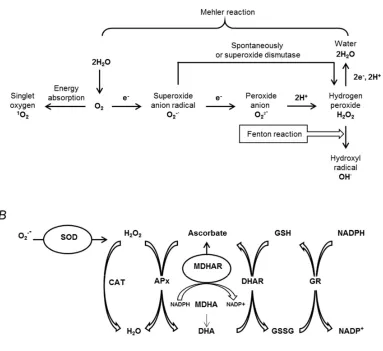
Another important source of ROS in chloroplasts is the Mehler reaction (Figure 3A), i.e. the partial reduction of O2 to O2- (with sub-sequent formation of H2O2) by components of the PS I – Fe-S centers and reduced ferredoxin and thioredoxin. Under stress conditions, reactions of the Calvin cycle are inhibited by lack of CO2 due to the stomata closure. This situation provokes an over-reduction of the chloroplastic electron transport chain, which results in a higher leakage of electrons to O2 in the Mehler reaction [146]. Importantly, the deficit of CO2 might result in enhancement of H2O2 production in peroxisomes. Thereby, photorespiration is contributing over 70% of the total H2O2 production in C3 plants subjected to drought stress [154].
Mitochondria also can represent an important source of stress-related excess ROS. While normally approximately 1–2% of the oxygen consumed by plant mitochondria is converted to O2-· and H2O2. This increase in ROS production is mostly underlied by the complexes I and III of the mitochondrial electron transport chain, which can act as the electron donors for molecular oxygen and enhance generation of O2-· and H2O2[149]. It is assumed, that excess of NADH, produced during glycine oxidation in the photorespiratory pathway, results in an overload of the mitochondrial electron transport chain [155]. Interestingly, the activities of alternative oxidase and, probably, rotenone-insensitive NAD(P)H-dehydrogenase are involved in detoxification of ROS under these conditions and contribute, thereby, to plant drought tolerance [149].
In general, ROS production correlates well with the severity of drought stress [146]. This allows using some compounds associated with oxidative stress as the biochemical markers of drought. Thus, ROS readily attack double bonds in polyunsaturated fatty acids resulting in the formation of lipid hydroperoxides [156]. Consequently, shorter and reactive carbonyl products result from their breakdown, like e.g. malondialdehyde, known as a reliable marker of lipid oxidative damage [157,158]. The content of these compounds is increased in plant leaves under stress conditions and canbe used as drought stress markers. Similarly, H2O2 tissue contents are often used for an estimation of drought stress severity in plants, as this molecule represents the most stableand easily measurable form of ROS [159].
The mechanisms of plant drought tolerance necessarily include the pathways reducing ROS contents in the stressed cells. The most efficient antioxidant defense relies on the activities of specific antioxidant enzymes (Figure 3B). Thus, the enzymes of the ascorbate-glutathione cycle play a central role in detoxification of H2O2 under drought stress conditions [5,160]. Ascorbate peroxidase is the key antioxidant enzyme neutralizing H2O2 in plant cells which relies on ascorbic acid as donor of electrons [161]. The resulting dehydroascorbate can be regenerated (i.e. reduced to monodehydroascorbate) by the reaction with NADPH catalyzed by monodehydroascorbate reductase [162]. The formed toxic monodehydroascorbate is rapidly reduced to ascorbic acid by dehydroascorbate reductase, in parallel to the oxidation of glutathione to glutathione disulfide (GSSG). The subsequent regeneration of glutathione (GSH) is catalyzed by glutathione reductase, which plays a key role in maintaining the pool of reduced glutathione, required for survival under stress conditions [162,163].
Figure 3. The main pathways of reactive oxygen species (ROS) generation in plants (A) and the major pathways of plant enzymatic antioxidant defense (B). SOD, superoxide dismutase; CAT, catalase; APx, ascorbate peroxidase; MDHA, monodehydroascorbate; MDHAR, monodehydroascorbate reductase; DHA, dehydroascorbate; DHAR, dehydroascorbate reductase; GSH, reduced glutathione; GSSG, oxidized glutathione; GR, glutathione reductase
4. Conclusions
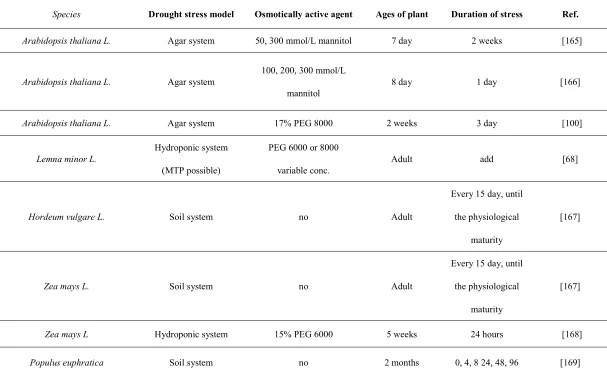
Table 1. Overview of drought stress model setups
Species Drought stress model Osmotically active agent Ages of plant Duration of stress Ref.
Arabidopsis thaliana L. Agar system 50, 300 mmol/L mannitol 7 day 2 weeks [165]
Arabidopsis thaliana L. Agar system
100, 200, 300 mmol/L
mannitol
8 day 1 day [166]
Arabidopsis thaliana L. Agar system 17% PEG 8000 2 weeks 3 day [100]
Lemna minor L.
Hydroponic system
(MTP possible)
PEG 6000 or 8000
variable conc.
Adult add [68]
Hordeum vulgare L. Soil system no Adult
Every 15 day, until
the physiological
maturity
[167]
Zea mays L. Soil system no Adult
Every 15 day, until
the physiological
maturity
[167]
Zea mays L Hydroponic system 15% PEG 6000 5 weeks 24 hours [168]
16 of 28
hours
Solanum tuberosum L. Agar system
Sorbitol (0.1, 0.2, 0.3 and 0.4
m) and PEG 8000 (0 %, 4.8
% and 9.6 %)
2 weeks 3 weeks [170]
Lolium perenne L Hydroponic system 10, 20% PEG 6000 1 weeks 4 weeks [171]
Solanum lycopersicum L Hydroponic system 15% PEG 8000 25 days 0, 3, 6, 24, 48 hours [172]
Medicago sativa Hydroponic system 15% PEG 6000 28 days 24 hours [173]
Pistacia lentiscus Soil system
5, 10,15, 20,
25 % PEG 6000
1,5 month 20 and 23 days [174]
Brachypodium distachyon Soil system no vegetative stage 4, 8, 12 days [175]
Transgenic plum "Claudia verde" Soil system no 8 weeks 7, 15 days [176]
Stipa purpurea Soil system no
trefoil stage
(about 3 week
growth)
7, 15 days [177]
17 of 28
Hordeum vulgare L. Hydroponic system 20 % PEG 6000 31 days 9 days [179]
Brassica campestris ssp Hydroponic system
60, 120 %
PEG 6000
34 days 7 days
[180]
Oryza sativa L. Soil system no
reproductive
stage
- [181]
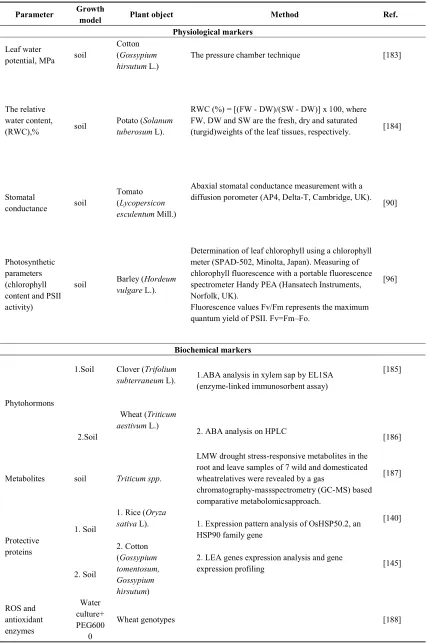
Table 2. Markers of drought stress in plants
Parameter Growth
model Plant object Method Ref.
Physiological markers
Leaf water
potential, MPa soil
Cotton (Gossypium hirsutum L.)
The pressure chamber technique [183]
The relative water content, (RWC),% soil
Potato (Solanum tuberosum L).
RWC (%) = [(FW - DW)/(SW - DW)] x 100, where FW, DW and SW are the fresh, dry and saturated
(turgid)weights of the leaf tissues, respectively. [184]
Stomatal
conductance soil
Tomato (Lycopersicon esculentum Mill.)
Abaxial stomatal conductance measurement with a diffusion porometer (AP4, Delta-T, Cambridge, UK).
[90]
Photosynthetic parameters (chlorophyll content and PSII activity)
soil Barley (Hordeum
vulgare L.).
Determination of leaf chlorophyll using a chlorophyll meter (SPAD-502, Minolta, Japan). Measuring of chlorophyll fluorescence with a portable fluorescence spectrometer Handy PEA (Hansatech Instruments, Norfolk, UK).
Fluorescence values Fv/Fm represents the maximum quantum yield of PSII. Fv=Fm–Fo.
[96]
Biochemical markers
Phytohormons
1.Soil
2.Soil
Clover (Trifolium subterraneum L).
Wheat (Triticum aestivum L.)
1.ABA analysis in xylem sap by EL1SA (enzyme-linked immunosorbent assay)
2. ABA analysis on HPLC
[185]
[186]
Metabolites soil Triticum spp.
LMW drought stress-responsive metabolites in the root and leave samples of 7 wild and domesticated wheatrelatives were revealed by a gas
chromatography-massspectrometry (GC-MS) based comparative metabolomicsapproach. [187] Protective proteins 1. Soil 2. Soil
1. Rice (Oryza sativa L). 2. Cotton (Gossypium tomentosum, Gossypium hirsutum)
1. Expression pattern analysis of OsHSP50.2, an HSP90 family gene
2. LEA genes expression analysis and gene expression profiling [140] [145] ROS and antioxidant enzymes Water culture+ PEG600 0
Author Contributions: NO, JS, AD and ET wrote the draft, OAK and AK prepared table and figures and contributed to the manuscript, TG and TB supervised the work of AD, AOK and JS, VZ and IT contributed to writing the manuscript and critical reading, AF and LAW initiated and supervised the whole work and wrote the final version of the manuscript.
Funding: This research was funded by the Russian Science Foundation (project number 17-16-01042).
Abbreviations
2D two-dimensional ABA abscisic acid APx ascorbate peroxidase CAT catalase
DHA dehydroascorbate
DHAR dehydroascorbate reductase
GC-MS gas chromatography-mass spectrometry GR glutathione reductase
GSH reduced glutathione GSSG oxidized glutathione
LEA late embryogenesis abundant LRWC leaf relative water content MDHA monodehydroascorbate
MDHAR monodehydroascorbate reductase
NADPH nicotinamide adenine dinucleotide phosphate PAM pulse amplitude modulation
PARP Poly (ADP-ribose) polymerase PEG polyethylene glycol
PS II photosystem II
RCCs reactive carbonyl compounds
ROS reactive oxygen species reactive oxygen species SOD superoxide dismutase
St Solanum tuberosum
References
1. Drought Assessment, Management, and Planning: Theory and Case Studies; Wilhite, D.A., Ed.; Springer US: Boston, MA, 1993; ISBN 978-1-4613-6416-0.
2. Zhang, X.; Lu, G.; Long, W.; Zou, X.; Li, F.; Nishio, T. Recent progress in drought and salt tolerance studies in Brassica crops. Breed. Sci.2014, 64, 60–73, doi:10.1270/jsbbs.64.60.
3. Shao, H.B.; Chu, L.-Y.; Jaleel, C.A.; Manivannan, P.; Panneerselvam, R.; Shao, M.-A. Understanding water deficit stress-induced changes in the basic metabolism of higher plants – biotechnologically and sustainably improving agriculture and the ecoenvironment in arid regions of the globe. Critical Reviews in Biotechnology2009, 29, 131–151, doi:10.1080/07388550902869792.
4. Basu, S.; Ramegowda, V.; Kumar, A.; Pereira, A. Plant adaptation to drought stress. F1000Res2016, 5, doi:10.12688/f1000research.7678.1.
5. Farooq, M.; Wahid, A.; Kobayashi, N.; Fujita, D.; Basra, S.M.A. Plant drought stress: effects, mechanisms and management. Agronomy for Sustainable Development2009, 29, 185–212, doi:10.1051/agro:2008021. 6. Jaleel, C.A.; Manivannan, P.; Wahid, A.; Farooq, M.; Al-Juburi, J.; Somasundaram, R.; Panneerselvam, R.
Drought Stress in Plants: A Review on Morphological Characteristics and Pigments Composition. Int. J. Agric. Biol.2009, 11, 7, SSN Online: 1814–959608–305/IGC-DYT/2009/11–1–100–105, http://www.fspublishers.org.
8. Trenberth, K.E.; Dai, A.; van der Schrier, G.; Jones, P.D.; Barichivich, J.; Briffa, K.R.; Sheffield, J. Global warming and changes in drought. Nature Climate Change2014, 4, 17–22, doi:10.1038/nclimate2067.
9. Zhao, T.; Dai, A. The Magnitude and Causes of Global Drought Changes in the Twenty-First Century under a Low–Moderate Emissions Scenario. Journal of Climate2015, 28, 4490–4512, doi:10.1175/JCLI-D-14-00363.1.
10. Verslues, P.E.; Agarwal, M.; Katiyar-Agarwal, S.; Zhu, J.; Zhu, J.-K. Methods and concepts in quantifying resistance to drought, salt and freezing, abiotic stresses that affect plant water status. The Plant Journal2006, 45, 523–539, doi:10.1111/j.1365-313X.2005.02593.x.
11. Deikman, J.; Petracek, M.; Heard, J.E. Drought tolerance through biotechnology: improving translation from the laboratory to farmers’ fields. Current Opinion in Biotechnology2012, 23, 243–250, doi:10.1016/j.copbio.2011.11.003.
12. Harb, A.; Krishnan, A.; Ambavaram, M.M.R.; Pereira, A. Molecular and Physiological Analysis of Drought Stress in Arabidopsis Reveals Early Responses Leading to Acclimation in Plant Growth. Plant Physiology2010, 154, 1254–1271.
13. Sun, W.; Zhao, X.; Ling, Q.; Li, H.; Gao, X. Exotic shrub species (Caragana korshinskii) is more resistant to extreme natural drought than native species (Artemisia gmelinii) in a semiarid revegetated ecosystem. Agricultural and Forest Meteorology 2018, 263, 207–216, doi:10.1016/j.agrformet.2018.08.029.
14. Chirkova T.V. Physiologicheskiie osnovy ustojchivosti rastenii. Izd-vo S.-Peterb. Univ.: SPb.2002, 1–244. 15. Wang, X.; Cai, X.; Xu, C.; Wang, Q.; Dai, S. Drought-Responsive Mechanisms in Plant Leaves Revealed by
Proteomics. International Journal of Molecular Sciences2016, 17, 1706, doi:10.3390/ijms17101706.
16. Kar, R.K. Plant responses to water stress: role of reactive oxygen species. Plant Signal Behav2011, 6, 1741–1745, doi:10.4161/psb.6.11.17729.
17. Gill, S.S.; Tuteja, N. Reactive oxygen species and antioxidant machinery in abiotic stress tolerance in crop plants. Plant Physiol. Biochem.2010, 48, 909–930, doi:10.1016/j.plaphy.2010.08.016.
18. Boyer, J.S.; Kramer, P.J. Water relations of plants and soils. Academic Press, Inc., 1995, ISBN 978-0-12-425060-4.
19. Haswell, E.S.; Verslues, P.E. The ongoing search for the molecular basis of plant osmosensing. The Journal of General Physiology2015, 145, 389–394, doi:10.1085/jgp.201411295.
20. Paudel G, Bilova T, Schmidt R, Greifenhagen U, Berger R, Tarakhovskaya E, Stöckhardt S, Balcke GU, Humbeck K, Brandt W, Sinz A, Vogt T, Birkemeyer C,Wessjohann L, FrolovA. Changes in Arabidopsis thaliana advanced glycated proteome induced by the polyethylene glycol-related osmotic stress. J. Exp. Bot. 2016, 67(22):6283-6295.
21. DOS SANTOS, Caio, et al. Determination of the Water Potential Threshold at Which Rice Growth Is Impacted. Plants, 2018, 7.3: 48.
22. Btittelli M. Measuring Soil Water Potential for Water Management in Agriculture: A Review. Sustainability2010, 2(5), 1226-1251; https://doi.org/10.3390/su205122
23. KIKUTA, SILVIA B.; RICHTER, HANNO. Leaf discs or press saps? A comparison of techniques for the determination of osmotic potentials in freeze-thawed leaf material. Journal of Experimental Botany, 1992, 43.8: 1039-1044.
24. VORONIN, P. Yu, et al. New method for quantitative determination of water potential of mesophyll cells’ apoplast in substomatal cavity of the leaf. Russian journal of plant physiology, 2017, 64.3: 452-456.
25. Razmkhah, H. Comparing Threshold Level Methods in Development of Stream Flow Drought Severity-Duration-Frequency Curves. Water Resources Managemen, 2017, 31(13), 4045-4061, doi:10.1007/s11269-017-1587-8.
26. Grover, A.; Kapoor, A.; Lakshmi, O.S.; Agarwal, S.; Sahi, C.; Katiyar-Agarwal, S.; Agarwal, M.; Dubey, H. Understanding molecular alphabets of the plant abiotic stress responses. Plant Molecular Biology, 2001, 80, 206-216.
27. Duque, A.S.; Almeida, A.M. de; Silva, A.B. da; Silva, J.M. da; Farinha, A.P.; Santos, D.; Fevereiro, P.; Araujo, S.S. Abiotic Stress Responses in Plants: Unraveling the Complexity of Genes and Networks to Survive. Abiotic Stress - Plant Responses and Applications in Agriculture,2013, 49–101, doi:10.5772/52779. 28. Zhang, Q. Strategies for developing Green Super Rice. Proc. Natl. Acad. Sci. U.S.A.2007, 104, 16402–16409,
29. Carboni, M.; Zeleny, D.; Acosta, A.T.R. Measuring ecological specialization along a natural stress gradient using a set of complementary niche breadth indices. Journal of Vegetation Science2016, 27, 892–903, doi:10.1111/jvs.12413.
30. Levitt J. Responses of Plants to Environmental Stresses. J. Levitt. Academic Press, New York, 1972, doi: 10.2307/3899731.
31. Joao Z., Ziany B., Silva I., Josiane R., Valdinei S. Cotton response to water deficits at different growth stages. Revista Caatinga. 2017, 30, 980-990. 10.1590/1983-21252017v30n419rc.
32. Antunes, C.; Pereira, A.J.; Fernandes, P.; Ramos, M.; Ascensão, L.; Correia, O.; Maguas, C. Understanding plant drought resistance in a Mediterranean coastal sand dune ecosystem: differences between native and exotic invasive species. J Plant Ecol2018, 11, 26–38, doi:10.1093/jpe/rtx014.
33. MULLER, Bertrand, et al. Water deficits uncouple growth from photosynthesis, increase C content, and modify the relationships between C and growth in sink organs. Journal of experimental botany, 2011, 62.6: 1715-1729.
34. Li, L.J.; Gu, W.R.; Meng, Y.; Wang, Y.L.; Mu, J.Y.; Li, J.; Wei, S. Physiological and biochemical mechanism of spermidine improving drought resistance in maize seedlings under drought stress. Ying Yong Sheng Tai Xue Bao2018, 29, 554–564, doi:10.13287/j.1001-9332.201802.021.
35. Frolov, A.; Bilova, T.; Paudel, G.; Berger, R.,; Balcke, G.U.; Birkemeyer, C.; Wessjohann, L.A. Early responses of mature Arabidopsis thaliana plants to reduced water potential in the agar-based polyethylene glycol infusion drought model. Journal of Plant Physiology2017, 208, 70–83, doi:10.1016/j.jplph.2016.09.013.
36. Lipiec, J.; Doussan, C.; Nosalewicz, A.; Kondracka, K. Effect of drought and heat stresses on plant growth and yield: a review. International Agrophysics2013, 27, 463–477, doi:10.2478/intag-2013-0017.
37. Bhargava S., Sawant K. Drought stress adaptation: metabolic adjustment and regulation of gene expression. Plant Breeding, 2013,132(1), 21-32, doi.org/10.1111/pbr.12004.
38. Tatrai, Z.A.; Sanoubar, R.; Pluhar, Z.; Mancarella, S.; Orsini, F.; Gianquinto, G. Morphological and Physiological Plant Responses to Drought Stress in Thymus citriodorus. International Journal of Agronomy2016, 10, 1-8, http://dx.doi.org/10.1155/2016/4165750
39. LAMAOUI, Mouna, et al. Heat and drought stresses in crops and approaches for their mitigation. Frontiers in Chemistry, 2018, 6: 26.
40. Todaka, D.; Zhao, Y.; Yoshida, T.; Kudo, M.; Kidokoro, S.; Mizoi, J.; Kodaira, K.-S.; Takebayashi, Y.; Kojima, M.; Sakakibara, H. Temporal and spatial changes in gene expression, metabolite accumulation and phytohormone content in rice seedlings grown under drought stress conditions. Plant J.2017, 90, 61–78, doi:10.1111/tpj.13468.
41. Vinocur, B.; Altman, A. Recent advances in engineering plant tolerance to abiotic stress: achievements and limitations. Current Opinion in Biotechnology2005, 16, 123–132, doi:10.1016/j.copbio.2005.02.001.
42. Ford, K.L.; Cassin, A.; Bacic, A. Quantitative proteomic analysis of wheat cultivars with differing drought stress tolerance. Front Plant Sci2011, 2, 44, doi:10.3389/fpls.2011.00044.
43. Gernot, B.; Alireza, A. Kaul, H-P. Management of crop water under drought: a review. Agronomy for Sustainable Development2015, 35. doi:10.1007/s13593-015-0283-4.
44. Thompson, A.J.; Thorne, E.T.; Burbidge, A.; Jackson, A.C.; Sharp, R.E.; Taylor, I.B. Complementation of notabilis, an abscisic acid-deficient mutant of tomato: importance of sequence context and utility of partial complementation. Plant, Cell & Environment2004, 27, 459–471, doi:10.1111/j.1365-3040.2003.01164.x. 45. Vrablova, M.; Vrabl, D.; Hronkova, M.; Kubasek, J.; Santrucek, J. Stomatal function, density and pattern,
and CO2 assimilation in Arabidopsis thaliana tmm1 and sdd1-1 mutants. Plant Biology2017, 19, 689–701, doi:10.1111/plb.12577.
46. Seminario A, Song L, Zulet A, Nguyen HT, González EM, Larrainzar E. Drought stress causes a reduction in the biosynthesis of ascorbic acid in soybean plants. Frontiers in plant science.2017 Jun 15;8:1042.
47. Ahmad N, Malagoli M, Wirtz M, Hell R. Drought stress in maize causes differential acclimation responses of glutathione and sulfur metabolism in leaves and roots. BMC plant biology. 2016 Dec;16(1):247.
48. Staudinger C, Mehmeti-Tershani V, Gil-Quintana E, Gonzalez EM, Hofhansl F, Bachmann G, Wienkoop S. Evidence for a rhizobia-induced drought stress response strategy in Medicago truncatula. Journal of proteomics.2016 Mar 16;136:202-13
50. Ito, Y.; Katsura, K.; Maruyama, K.; Taji, T.; Kobayashi, M.; Seki, M.; Shinozaki, K.; Yamaguchi-Shinozaki, K. Functional analysis of rice DREB1/CBF-type transcription factors involved in cold-responsive gene expression in transgenic rice. Plant Cell Physiol.2006, 47, 141–153, doi:10.1093/pcp/pci230.
51. Zhou, S.; Duursma, R.A.; Medlyn, B.E.; Kelly, J.W.G.; Prentice, I.C. How should we model plant responses to drought? An analysis of stomatal and non-stomatal responses to water stress. Agricultural and Forest Meteorology2013, 182, 204–214, doi:10.1016/j.agrformet.2013.05.009.
52. Ji, H.; Liu, L.; Li, K.; Xie, Q.; Wang, Z.; Zhao, X.; Li, X. PEG-mediated osmotic stress induces premature differentiation of the root apical meristem and outgrowth of lateral roots in wheat. J. Exp. Bot.2014, 65, 4863–4872, doi:10.1093/jxb/eru255.
53. Hellal, F.A.; El-Shabrawi, H.M.; Abd El-Hady, M.; Khatab, I.A.; El-Sayed, S.A.A.; Abdelly, C. Influence of PEG induced drought stress on molecular and biochemical constituents and seedling growth of Egyptian barley cultivars. Journal of Genetic Engineering and Biotechnology2018, 16, 203–212, doi:10.1016/j.jgeb.2017.10.009.
54. Amist, N.; Singh, N.B. PEG imposed water deficit and physiological alterations in hydroponic cabbage. Iranian Journal of Plant Physiology, 2016, 8,1653-1658,
55. Hohl, M.; Schopfer, P. Water Relations of Growing Maize Coleoptiles : Comparison between Mannitol and Polyethylene Glycol 6000 as External Osmotica for Adjusting Turgor Pressure. Plant Physiol.1991, 95, 716–722.
56. Munns, R. Comparative physiology of salt and water stress. Plant, Cell & Environment2002, 25, 239–250, doi:10.1046/j.0016-8025.2001.00808.x.
57. Verslues, P.E., Ober, E.S., Sharp, R.E. Root growth and oxygen relations at low water potentials. Impact of oxygen availability in polyethylene glycol solutions. Plant Physiol.,1998, 116(4), 1403–1412. doi: https://doi.org/10.1104/pp.116.4.1403.
58. Hassan, N.S., Shaaban, L.D., Hashem, E.S.A., Seleem, E.E. In vitro selection for water stress tolerant callus line of Helianthus annus L. cv. Myak. Int. J. Agric. Biol.,2004, 6, 13–18. DOI: 1560–8530/2004/06–1–13–18. 59. Zhong, Y.-P.; Li, Z.; Bai, D.-F.; Qi, X.-J.; Chen, J.-Y.; Wei, C.-G.; Lin, M.-M.; Fang, J.-B. In Vitro Variation of
Drought Tolerance in Five Actinidia Species. J. Amer. Soc. Hort. Sci.2018, 143, 226–234, doi:10.21273/JASHS04399-18.
60. Chutia, J.; Borah, S.P. Water Stress Effects on Leaf Growth and Chlorophyll Content but Not the Grain Yield in Traditional Rice (Oryza sativa Linn.) Genotypes of Assam, India II. Protein and Proline Status in Seedlings under PEG Induced Water Stress. American Journal of Plant Sciences2012, 3, 971, doi:10.4236/ajps.2012.37115.
61. Meher; Shivakrishna, P.; Reddy, K.A.; Rao, D.M. Effect of PEG-6000 imposed drought sress on RNA content, relative water content (RWC), and chlorophyll content in peanut leaves and roots. Saudi Journal of Biological Sciences2018, 25(2), 285-289. https://doi.org/10.1016/j.sjbs.2017.04.008.
62. Liu, J.; Yang, H.; Gosling, S.N.; Kummu, M.; Flörke, M.; Pfister, S.; Hanasaki, N.; Wada, Y.; Zhang, X.; Zheng, C.; et al. Water scarcity assessments in the past, present, and future: REVIEW ON WATER SCARCITY ASSESSMENT. Earth’s Future2017, 5, 545–559, doi:10.1002/2016EF000518.
63. Bressan, R.A.; Hasegawa, P.M.; Handa, A.K. Resistance of cultured higher plant cells to polyethylene glycol-induced water stress. Plant Sci. Lett. 1981, 21, 23–30. DOI: 10.1016/0304-4211(81)90065-1.
64. Rao, S.; Ftz, J. In vitro selection and characterization of polyethylene glycol (PEG) tolerant callus lines and regeneration of plantlets from the selected callus lines in sugarcane (Saccharum officinarum L.). Physiol Mol Biol Plants2013, 19, 261–268, doi:10.1007/s12298-013-0162-x.
65. Senaratna, T.; Touchell, D.; Bunn, E.; Dixon, K. Acetyl salicylic acid (Aspirin) and salicylic acid induce multiple stress tolerance in bean and tomato plants. Plant Growth Regulation2000, 30, 157–161, doi:10.1023/A:1006386800974.
66. International, C.A.B. Sterol biosynthesis inhibitors. Pharmaceutical and agrochemical aspects. Sterol biosynthesis inhibitors. Pharmaceutical and agrochemical aspects.1988.
67. THIELERT, Wolfgang. A unique product: the story of the imidacloprid stress shield. PFLANZENSCHUTZ NACHRICHTEN-BAYER-ENGLISH EDITION, 2007, 59.1: 73.
69. RISSEL, Dagmar, et al. No silver bullet-Canonical Poly (ADP-Ribose) Polymerases (PARPs) are no universal factors of abiotic and biotic stress resistance of Arabidopsis thaliana. Frontiers in plant science, 2017, 8: 59.
70. Funar-Timofei, S.; Borota, A.; Crisan, L. Combined molecular docking and QSAR study of fused heterocyclic herbicide inhibitors of D1 protein in photosystem II of plants. Molecular Diversity, 2018, 21(2), 437- 454, doi: 10.1007/s11030-017-9735-x.
71. Sardare, M.D.; Admane, S.V. A review on plant without soil. Intern. J. of Research in Eng. and Tech.2013, 2(3), 299-304. doi: 10.15623/ijret.2013.0203013.
72. Bilova, T.; Lukasheva, E.; Brauch, D.; Greifenhagen, U.; Paudel, G.; Tarakhovskaya, E.; Frolova, N.; Mittasch, J.; Balcke, G.U.; Tissier, A.; et al. A Snapshot of the Plant Glycated Proteome: STRUCTURAL, FUNCTIONAL, AND MECHANISTIC ASPECTS. J. Biol. Chem.2016, 291, 7621–7636, doi:10.1074/jbc.M115.678581.
73. Simon, C.; Brad, H.; Maclin, D.; Bo, X.; Asmini, A.; Sam, H.; Lucy, A.; Vanessa, C.; Monique, S.; Sigfredo, F.; Stephen, T.; Matthew, G.. Protocol: Optimising hydroponic growth systems for nutritional and physiological analysis of Arabidopsis thaliana and other plants. Plant methods 2013, 9, 4, doi:10.1186/1746-4811-9-4.
74. Jacomini, E.; Bertani, A.; Mapelli, S. Accumulation of polyethylene glycol 6000 and its effects on water content and carbohydrate level in water-stressed tomato plants. Canadian Journal of Botany1988, 66, 970–973, doi:10.1139/b88-140.
75. Blum, A. Osmotic adjustment is a prime drought stress adaptive engine in support of plant production: Osmotic adjustment and plant production. Plant, Cell & Environment2017, 40, 4–10, doi:10.1111/pce.12800. 76. Van der Weele, C.M.; Spollen, W.G.; Sharp, R.E.; Baskin, T.I. Growth of Arabidopsis thaliana seedlings
under water deficit studied by control of water potential in nutrient‐agar media. Journal of Experimental Botany2000, 51, 1555–1562, doi:10.1093/jexbot/51.350.1555.
77. Smith, R.H., Bhaskaran, S.; Miller, F.R. Screening for drought tolerance in Sorghum using cell culture. In Vitro Cell Dev. Biol. 1985, 21, 541. https://doi.org/10.1007/BF02620883.
78. Chen, T.; Fluhr, R. Singlet Oxygen Plays an Essential Role in the Root’s Response to Osmotic Stress. Plant Physiology2018, 177, 1717–1727, doi:10.1104/pp.18.00634.
79. He, Y.; Wu, J.; Lv, B.; Li, J.; Gao, Z.; Xu, W.; Baluška, F.; Shi, W.; Shaw, P.C.; Zhang, J. Involvement of 14-3-3 protein GRF9 in root growth and response under polyethylene glycol-induced water stress. Journal of Experimental Botany2015, 66, 2271–2281, doi:10.1093/jxb/erv149.
80. Yang, C.J.; Zhang, X.K.; Zou, C.S.; Cheng. Y.; Zhen, P.Y.; Li, G.Y. Effects of drought simulated by PEG-6000 on germination and seedling growth of rapeseed (Brassica napus L.). Chinese J. Oil Crop Sci. 1998, 29, 425–430. DOI: 10.22161/ijeab/2.1.61.
81. Channaoui, S.; Kahkahi, R.E.; Charafi, J.; Mazouz, H.; Fechtali, M.E.; Nabloussi, A. Germination and Seedling Growth of a Set of Rapeseed (Brassica napus) Varieties under Drought Stress Conditions. International Journal of Environment, Agriculture and Biotechnology2017, 2.
82. Hamayun, M.; Khan, S.A.; Shinwari, Z.K.; Khan, A.L.; Ahmad, N.; Lee, I.-J. Effect of polyethylene glycol induced drought stress on physio-hormonal attributes of soybean. Abstractsofpapers2010, 42. 977-986. 83. TARDIEU, François. Drought perception by plants do cells of droughted plants experience water
stress?. Plant growth regulation, 1996, 20.2: 93-104.
84. RAGHAVENDRA, Agepati S., et al. ABA perception and signalling. Trends in plant science, 2010, 15.7: 395-401.
85. Govender, M.; Govender, P.; Weiersbye, I.; Witkowski, E.; Ahmed, F. Review of commonly used remote sensing and ground-based technologies to measure plant water stress. Water SA2009, 35, doi:10.4314/wsa.v35i5.49201.
86. Donovan, L.; Linton, M.; Richards, J. Predawn plant water potential does not necessarily equilibrate with soil water potential under well-watered conditions. Oecologia2001, 129, 328–335, doi:10.1007/s004420100738.
![Figure 2.Experimental drought models based on osmotic stress, and established by supplementation of polyethylene glycol (PEG) to growth medium: Lemna minor model, established with PEG6000 supplemented to aqueous growth medium (A, [68]), Brassica napus mode](https://thumb-us.123doks.com/thumbv2/123dok_us/7883281.1308004/7.612.127.476.155.604/figure-experimental-established-supplementation-polyethylene-established-supplemented-brassica.webp)