ISSN (Print) : 2320 – 3765 ISSN (Online): 2278 – 8875
I
nternational
J
ournal of
A
dvanced
R
esearch in
E
lectrical,
E
lectronics and
I
nstrumentation
E
ngineering
(An ISO 3297: 2007 Certified Organization) Website: www.ijareeie.com
Vol. 6, Issue 5, May 2017
Local Directional Mask Maximum Edge
Pattern for Image Retrieval
Rashi Saxena1, Er. Mansi Singh2
M.Tech [ECE], Dept. of ECE, RBS Engg Tech Campus, Bichpuri, Agra, U.P, India1
Asst. Professor, RBS Engg Tech Campus, Bichpuri, Agra, U.P, India2
ABSTRACT: The main objective of this project is to get the desired images easily. Irrespective of checking multiple images from million coordinates this project will try to get the particular images of particular areas. The method can also be used in biomedical image retrieval for the proper detection of diseases. It can also be used for the security purpose for the proper face recognition. Initially Local binary pattern (LBP) and LBP variants collect the relationship between the centre pixel and its surrounding neighbours in an image. Thus, LBP based features are very sensitive to the noise variations in an image. Therefore the proposed method is to collect the maximum edge patterns (MEP) and maximum edge position patterns (MEPP) from the magnitude directional edges of face/image. Further, the robustness of the proposed method will be increased by integrating it with the multiresolution Gaussian filters. Some new algorithm based on 8 or 10 directional mask will be used to increase the efficiency.
KEYWORDS: Image Retrieval, Gaussian Filter, MEPP, LDMaMEP
I.INTRODUCTION
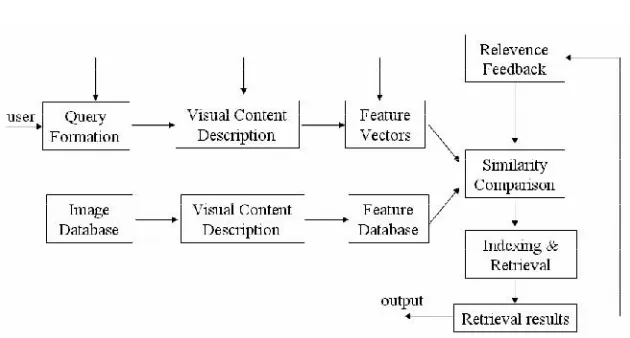
Figure 1 Diagram for content-based image retrieval system
II. LITERATURE SURVEY
ISSN (Print) : 2320 – 3765 ISSN (Online): 2278 – 8875
I
nternational
J
ournal of
A
dvanced
R
esearch in
E
lectrical,
E
lectronics and
I
nstrumentation
E
ngineering
(An ISO 3297: 2007 Certified Organization) Website: www.ijareeie.com
Vol. 6, Issue 5, May 2017
considered LBP as non-directional first-order local patterns collected from the first-order derivatives and extended the same approach for nth order LDP . Xie et al. have proposed the local Gabor XOR patterns operator for face recognition. The versions of LBP in the open literature cannot adequately deal with the range of appearance variations that commonly occur in unconstrained natural images due to illumination, pose, facial expression, aging, partial occlusions, etc. To address this problem, we propose a novel descriptor, local directional mask maximum edge patterns (LDMaMEP) for image retrieval and face recognition applications. The LDMaMEP encodes the structure of local region based on its directional information which is computed with the aid of eight directional mask windows. Further, the robustness of the proposed method is increased by integrating it with the Gaussian filters. The robustness of the proposed method is analysed with the help of sample image and experiments on four benchmark databases. The organisation of the paper is as follows: In Section 1, a brief review of image retrieval and related work is given. Section 2, presents a concise review of local patterns (LBP, LTP and LDP). Section 3, presents the concept of proposed feature extraction method, proposed system framework, analysis and query matching.
Fig. 2 Calculation of LBP
III. PROPOSED METHODOLOGY
3 Local directional mask maximum edge patterns Existing LBP based features collect the relationship between the centre pixel and its surrounding neighbours (based on the sign of edges) in an image. Thus, these features are largely sensitive to lighting changes and noise conditions. In literature, it’s already proved that the edge magnitudes are more robust to the noise and lighting changes. In this paper, we propose theLDMaMEP based on the magnitude of directional information (edges) which are collected from directional mask windows (see in Fig.2) for image retrieval and face recognition applications. The detailed description about LDMaMEP is given as follows.
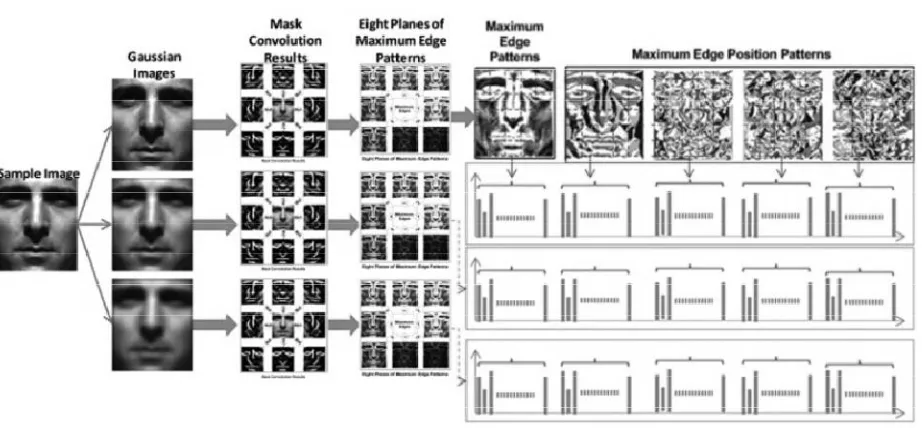
Fig. 4 Proposed feature extraction framework
Fig. 5 Sample images from OASIS database (one image per category)
Maximum edge patterns (MEP)
The MEP is coded based on the magnitude of directional information. Given an image I, the directional information is collected with the aid of eight directional masks (see in Fig. 2)
ISSN (Print) : 2320 – 3765 ISSN (Online): 2278 – 8875
I
nternational
J
ournal of
A
dvanced
R
esearch in
E
lectrical,
E
lectronics and
I
nstrumentation
E
ngineering
(An ISO 3297: 2007 Certified Organization) Website: www.ijareeie.com
Vol. 6, Issue 5, May 2017
IV. EXPERIMENTAL RESULTS
L1 METRIC
Given a collection of n points in the plane, we exhibit an algorithm that computes the nearest neighbor in the north-east (first quadrant) of each point, in the L1 metric. By applying a suitable transformation to the input points, the same procedure can be used to compute the L1 nearest neighbor in any given octant of each point. This is the basis of an algorithm for computing the minimum spanning tree of the n points in the L1 metric. All three algorithms run in O(n lg n) total time and O(n) space
Result Of L2 Matric
Comparison between L1 and L2
When you are dealing with error measures (such as residuals in a regression model), L2 tends to produce worse overall fit (greater average error) than L1 in exchange for mitigating the worst errors. Which is better depends on how sensitive you are to occasional large screw-ups v. generally mediocre estimates. L1 can allow sparse solutions (solution vectors with many zeroed values) as an optimum and if you have a suitable method like gradient or quadratic linear approx methods you might get to those solutions. These are useful properties when looking for PCA feature selection problems or other matrix decomposition problems.
ISSN (Print) : 2320 – 3765 ISSN (Online): 2278 – 8875
I
nternational
J
ournal of
A
dvanced
R
esearch in
E
lectrical,
E
lectronics and
I
nstrumentation
E
ngineering
(An ISO 3297: 2007 Certified Organization) Website: www.ijareeie.com
Vol. 6, Issue 5, May 2017
V. CONCLUSION
Here we have presented a novel approach referred as LDMaMEP for image retrieval and face recognition. LDMaMEP encodes the structure of local region based on its directional information which is computed with the aid of eight directionalmask windows. Further, the robustness of the proposed method will be increased by integrating it with the Gaussian filters. The performance of the proposed method will be tested by conducting different experiments and different algorithms which will further help in better efficiency and extraction of accurate data easily. With the above results, we can say that the city block filter and relative deviation filter response are better when an image is searched form the local database or we can say that with the help of different filters the efficiency to find accurate image can be increased. Some filters show some images and some show different images. And when the result of all the images are compared we can reach to the conclusion image easily. The efficiency of these filters is increased to almost 90%. Gaussian filter’s efficiency was 60% and these images resulted in 90% efficiency.
REFERENCES
1. Liu, G.-H., Zhang, L., Hou, Y.-K., et al.: ‘Image retrieval based on multi-textonhistogram’, Pattern Recogn., 2010, 43, pp. 2380–2389 2. Liu, G.-H., Li, Z.-Y., Zhang, L., et al.: ‘Image retrieval based on micro-structure descriptor’, Pattern Recogn., 2011, 44, pp. 2123–2133
3.Chen, H., Belhumeur, P., Jacobs, D.: ‘In search of illumination invariants’. Proc. IEEE Conf. Computer Vision Pattern Recognition, 2000, vol. 1, pp. 254–261
4.Ling, H., Soatto, S., Ramanathan, N., et al.: ‘A study of face recognition as people age’. Proc. IEEE 11th Int. Conf. Computer Vision, 2007, pp. 1–8 5.Ojala, T., Pietikainen, M., Harwood, D.: ‘A comparative study of texture measures with classification based on feature distributions’, Pattern Recogn., 1996, 29, pp. 51–59
6.Nanni, L., Brahnam, S., Lumini, A.: ‘A simple method for improving local binary patterns by considering non-uniform patterns’, Pattern Recogn., 2012, 45, pp. 3844–3852
7.Qian, X., Hua, X.-S., Chen, P., et al.: ‘PLBP: An effective local binary patterns texture descriptor with pyramid representation’, Pattern Recogn., 2011, 44,
pp. 2502–2515
8.Guo, Z., Zhang, L., Zhang, D.: ‘Rotation invariant texture classification using LBP variance with global matchning’, Pattern Recogn., 2010, 43, pp. 706–716
9.Guo, Z., Zhang, L., Zhang, D.: ‘A completed modeling of local binary pattern operator for texture classification’, IEEE Tans. Image Proc., 2010, 19, (6),pp. 1657–1663
10.Guo, Y., Zhao, G., Pietikainen, M.: ‘Discriminative features for texture description’, Pattern Recogn., 2012, 45, pp. 3834–3843
11. Zhang, B., Gao, Y., Zhao, S., et al.: ‘Local derivative pattern versus local binary pattern: Face recognition with higher-order local pattern descriptor’, IEEE Trans. Image Process., 2010, 19, (2), pp. 533–544
12.Xie, S., Shan, S., Chen, X., et al.: ‘Fusing local patterns of gabor magnitude and phase for face recognition’, IEEE Trans. Image Process., 2010, 19, (5), pp. 1349–1361
13. Tan, X., Triggs, B.: ‘Enhanced local texture feature sets for face recognition underdifficult lighting conditions’, IEEE Trans. Image Process., 2010, 19, (6), pp. 1635–1650
14. Murala, S., Maheshwari, R.P., Balasubramanian, R.: ‘Local maximum edge binary patterns: a new descriptor for image retrieval and object tracking’, Signal Process., 2012, 92, pp. 1467–1479