Scholarship@Western
Scholarship@Western
Electronic Thesis and Dissertation Repository
9-9-2016 12:00 AM
ABE Fermentation From Low Cost Substrates
ABE Fermentation From Low Cost Substrates
Kai Gao
The University of Western Ontario
Supervisor Lars Rehmann
The University of Western Ontario
Graduate Program in Chemical and Biochemical Engineering
A thesis submitted in partial fulfillment of the requirements for the degree in Doctor of Philosophy
© Kai Gao 2016
Follow this and additional works at: https://ir.lib.uwo.ca/etd
Part of the Biochemical and Biomolecular Engineering Commons, Bioresource and Agricultural Engineering Commons, and the Biotechnology Commons
Recommended Citation Recommended Citation
Gao, Kai, "ABE Fermentation From Low Cost Substrates" (2016). Electronic Thesis and Dissertation Repository. 4087.
https://ir.lib.uwo.ca/etd/4087
This Dissertation/Thesis is brought to you for free and open access by Scholarship@Western. It has been accepted for inclusion in Electronic Thesis and Dissertation Repository by an authorized administrator of
The high cost of substrate and product inhibition in the fermentation broth remain two
major problems associated with bio-butanol production. This thesis aims to solve these
problems by examining abundant lignocellulosic biomass as potential feedstocks and
exploring novel substrates such as carbohydrates derived from microalgae for ABE
(Acetone-butanol-ethanol) fermentation. The commonly observed toxic effect after
pretreatment of lignocelluslosic biomass was removed by resin adsorption, where the
resin could also serve as an in-situ butanol recovery device.
Corn cobs (an agricultural waste), switchgrass (an energy crop) and phragmites (an
invasive plant in North America) were investigated as substrates for ABE fermentation by
Clostridium saccharobutylicum DSM 13864. NaOH pretreatment followed by a washing step was used to reduce the biomass recalcitrance and facilitate the subsequent enzymatic
hydrolysis. Total sugar yields for corn cobs, switchgrass and phragmites were 475, 365,
and 385 g/kg of raw biomass, respectively. After the subsequent fermentation, an ABE
yield of 166, 146, and 150 g/kg raw biomass was obtained.
Although biofuel production from lignocellulosic biomass is considered more sustainable
than biofuel from food crops, it still faces many challenges. In order to demonstrate a
possible biofuel production strategy using microalgal biomass, lipid extracted microalgae
(LEA) was also used as substrates for ABE fermentation. To convert the carbohydrate
fraction into solvents (ABE), LEA was either acid hydrolysed into glucose or directly
fermented. The highest butanol titers (8.05 g/L) was obtained with the fermentation of
acid hydrolysates. However fermenting the hydrolysate required detoxification via a resin,
while direct fermentation did not, significantly simplifying the LEA to butanol process.
The resin that was used to detoxify acid hydrolysates of LEA was further investigated for
detoxification of lignocellulosic hydrolysates and in-situ butanol recovery. Detoxifcation
of acid hydrolyzed phragmites by resin L-493, improved the fermentability signficantly.
Resin L-493 was efficient in removing phenolic comopunds present in the phragmites
Keywords
lignocellulosic biomass, NaOH pretreatment, ABE fermentation, resin, pervaporation,
Co-Authorship Statement
Contents of Section 2 were published to refereed journals and were co-authored by Dr.
Lars Rehmann, who provided editorial and technical advice.
Simone Boiano provided experimental assistance to portions of the work performed in
section 2.4 and is listed as an co-author; Dr. Antonio Marzocchela provided advice on the
draft of manuscript and is listed as a co-author.
In section 2.5, Valerie Orr contributed to cultivation and lipid extractions of microalgae,
and revision of the first draft of manuscript, and is listed as a co-author; Kai Gao designed
and conducted all fermentation experiments, composition analysis and collected data; Kai
Acknowledgments
First and foremost I would like to thank Prof. Lars Rehmann for taking me as a PhD
student four years ago. It was a great adventure for me to come over to Canada and I did
not expect to be where I am today. For the last several years, Prof. Lars has inspired me
both academically and mentally. Without his contribution, I would not have such a great
journey and fruitful results during my PhD. I would like to thank him for providing many
opportunities to go to conferences to present my research; these great experiences
substanially improved my presentation and networking skills.
Thanks to Dr. Erin Johnson, Dr. Luis Luque, Valerie Orr, Sascha Kießlich, Dr. Ethan Su,
and Dr. Jeff Wood. It was a great pleasure to work with them and they have made the lab
such a great place.
I have to thank the Department of Chemical and Biochemical Engineering, the Natural
Science and Engineering Research Council of Canada, and China Scholarship Council for
funding.
I would like to thank Biqiong Wang for sharing all the moments with me for the last
several years. Her helps in all aspects of my life is greatly appreciated.
Finally, many thanks to my mom (Ying Lin) and dad (Yinxiang Gao) in China, for their
Table of Contents
Abstract ... i
Co-Authorship Statement ... iii
Acknowledgments ... iv
Table of Contents ... v
List of Tables ... vi
List of Figures ... viii
Section 1 - Introduction and Literature Review ... 1
1.1. Introduction ... 1
1.2. Literature review ... 4
Section 2 - Experimental data and interpretation ... 40
2.1 Structure of the thesis ... 40
2.2 General Objective ... 41
2.3 Specific Objectives ... 41
2.4 ABE fermentation from enzymatic hydrolysate of NaOH-pretreated corncobs ... 43
2.5 Cellulosic butanol production from alkali-pretreated switchgrass (Panicum virgatum) and phragmites (Phragmites australis) ... 57
2.6 Butanol fermentation from microalgae-derived carbohydrates after ionic liquid extraction ... 72
2.7 Combined Detoxification and In-situ Product Removal by a Single Resin During Lignocellulosic Butanol Production ... 94
Section 3 - Summary and Conclusions ... 114
3.1 Summary ... 114
3.2 Conclusions ... 116
3.3 Future work and recommendation ... 116
List of Tables
Table 1.1 Butanol fermentation from starch-based substrates ... 16
Table 1.2 Percentage of major components of common lignocellulosic biomass ... 20
Table 1.3 Effect of various pretreatment methods ... 26
Table 1.4 Comparison of major inhibitor concentrations obtained after different
pretreatment methods ... 27
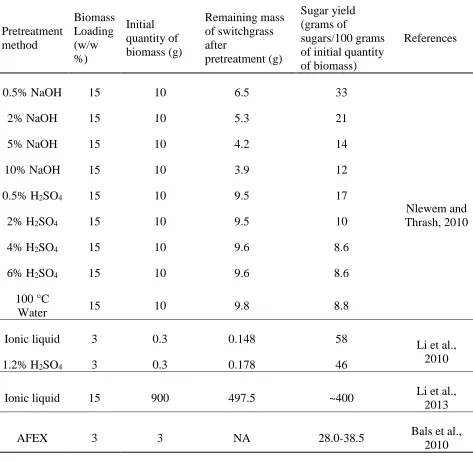
Table 1.5 Sugar yields from switchgrass pretreated by various pretreatment methods ... 32
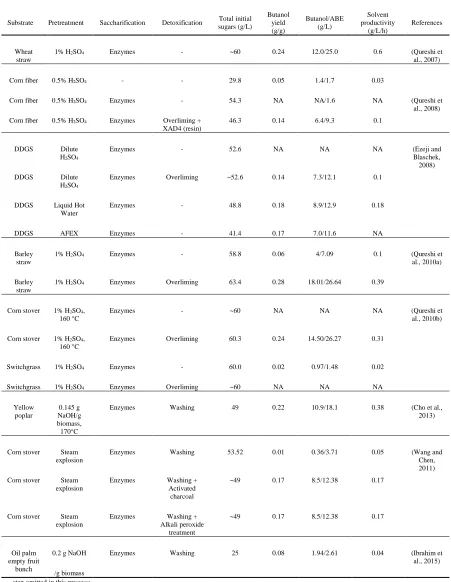
Table 1.6 Comparisons of ABE fermentation from lignocellulosic materials ... 34
Table 2.1 Comparison of enzymatic hydrolysis of corncobs and corn stover pretreated
with alkali and wet disk milling ... 50
Table 2.2 Comparison of ABE production from alkali-pretreated corncobs and reported
ABE production from lignocellulosic materials pretreated with other method ... 55
Table 2.3 Chemical compositions of raw and pretreated biomass ... 64
Table 2.4 Carbon mass balance for ABE fermentation from NaOH pretreated switchgrass
(first value) and phragmites (second value). ... 71
Table 2.5 Gross chemical composition of untreated and lipid extracted C. vulgaris ... 81
Table 2.6 End point fermentation results from glucose or acid hydrolysate of HEA with
and without YEP (yeast extract and peptone) ... 90
Table 2.7 Summary of ABE fermentation from algae-based substrates ... 92
Table 2.8 Profiles of sugars and inhibitors after pretreatment at different acid
concentrations (SAH) and subsequent enzymatic hydrolysis (SAEH). ... 103
Table 2.9 Composition analysis of phragmites hydrolysate (pretreated with 0.5% H2SO4)
Table 2.10 Concentrations of selective phenolic compounds present in the acid
hydrolysates of phragmites ... 107
Table 2.11 Sorption and desorption of butanol by resin L-493. ... 109
Table 2.12 Profiles of fermentation of detoxified SAEH with in-situ butanol removal ... 111
Table 2.13 Performance of different types of resin used as inhibitor and butanol
List of Figures
Figure 1.1 An overview of glycolysis of solventogenic clostridia. ... 9
Figure 1.2 Solventogenic pathways of clostridia ... 11
Figure 1.3 Xylose metabolism in solventogenic clostridia ... 12
Figure 1.4 Compositions of starch ... 15
Figure 1.5 Molecular structure of cellulose ... 18
Figure 1.6 Lignin structure and three building blocks of lignin ... 19
Figure 1.7 Inhibitors generated and their origins during pretreatment ... 28
Figure 1.8 Pervaporation of butanol using a membrane module ... 37
Figure 2.1 Overview of the research and major tasks ... 40
Figure 2.2 Enzymatic hydrolysis of washed and unwashed NaOH-pretreated corncobs ... 48
Figure 2.3 Fermentation of mixed sugar medium by C. saccharobutylicum DSM 13864 ... 52
Figure 2.4 Fermentation of enzymatic hydrolysates of washed pretreated corn cobs with sediments removal ... 52
Figure 2.5 Fermentation of enzymatic hydrolysate of washed pretreated corn cobs without sediments removal ... 54
Figure 2.6 Simplified metabolic pathways from biomass to ABE by solventogenic clostridia...60
Figure 2.7 Comparison of suar production and yield from pretreated and untreated switchgrass ... 65
Figure 2.9 ABE fermentation from enzymatic hydrolysate of alkali pretreated switchgrass . 68
Figure 2.10 ABE fermentation from enzymatic hydrolysates of alkali pretreated
phragmites ... 699
Figure 2.11 Schematic diagram of the experimental design used in this study ... 76
Figure 2.12 Control fermentations with (A) 50 g/L soluble starch or (B) 50 g/L glucose ... 82
Figure 2.13 Direct fermentation of lipid-extracted algae ... 83
Figure 2.14 Fed-batch ABE fermentation of HEA and ILEA ... 84
Figure 2.15 Fermentation of acid hydrolysates of lipid extracted algae ... 87
Figure 2.16 ABE fermentation of detoxified acid hydrolysates of LEA at 12% solid loading...88
Figure 2.17 The effect of supplementation of yeast extract and peptone on fermentation ... 89
Figure 2.18 Schematic of the experimental procedures. ... 102
Figure 2.19 Profiles of ABE fermentation from (a) un-detoxified or (b) detoxified phragmites hydrolysates ... 105
Figure 2.20 Butanol adsorbed to resin as a function of the equilibrium butanol concentrations ... 108
Figure 2.21 Profiles of ABE fermentation from (a) mixed sugar and (b) phragmites hydrolysate with in-situ butanol removal ... 110
Section 1 - Introduction and Literature Review
1.1. Introduction
Today's transportation infrastructure (freight and passanger) is almost entirely dependent
on petroleum-based fuels such as gasoline, diesel fuel, LPG (liquefied petroleum gas),
and (CNG) compressed natural gas (Fulton et al., 2015). Electric vehicles are increasingly
available and might become mainstream with the coming decades, while solar and wind
energy installations are increasingly providing renewable electricity. However, in the
intermediate future internal combustion engines will be dominant means to propel
personal vehicles, and the entire aviation sector will require liquid transporataion fules
with high energy density in the foreseeable future. In order to decrease the dependence on
fossile fuels, the need for alternative technologies to produce liquid fuels from renewable
resources increased for the past two decades, which were characterized by political
instability in many oil producing regions and highly volatile prices.
For both developing and industrialized countries, development of biofuels can help
reduce reliance on imported fossil fuels, improve the socioeconomics in rural areas, and
bring many environmental benefits such as green house gas (GHG) reductions and less air
pollution (Demirbas, 2009). Ethanol from corn, wheat, sugar beet, and sugar cane is the
most commonly produced biofuel, of which the two major producing countries are Brazil
and the USA (Jonker et al., 2015). In Brazil, sugarcane is used as the major feedstock,
and about 20.7 million m3 ethanol (corresponding to 30% of domestic consumption of gasoline energy-vise) was produced in 2011 by fermentation of sugars extracted from
sugarcane; whereas in the US, 54.2 million m3 corn ethanol were produced,
corresponding to 7% of the domestic consumption of gasoline energy-vise; the two
countries combined contribute to 87% of the world's total ethanol production, which
however only accounts for 5% by energy of the world's total gasoline consumption
(Chum et al., 2012). In the US, ethanol is mostly blended with gasoline at a ratio of 10%
by volume, whereas in Brazil it is blended at a higher ratio from 18-25%, and this
blending ratio can only be achieved with flexible-fuel vehicles in both countries (Chum et
A large demand on dense liquid fuel is still expected in this century (80% of
transportation in 2050 and 50% in 2075), and this assumption is made based on
significant fuel efficiency improvement and deep market penetration of vehicles running
on electricity and hydrogen; the demand will mainly come from aviation, ocean shipping,
and long-haul trucking (Fulton et al., 2015). To limit the global temperature increase
within 2 degrees, a full transition to near-zero emissions carbon fuels is difficult to
achieve without the widespread use of biofuels (Fulton et al., 2015).
While biofuels have attracted a lot of attention from the public, renewable chemicals
produced through biological pathways is considered as another opportunity for
commercialization of industrial biotechnology in today's markets, at lower costs and with
potentially higher returns (Erickson et al., 2012). Butanol is one of the platform chemicals
that can be produced through microbial processes by conversion of sugars; it is a building
block that has many applications in solvents, rubber and transportation fuels (Erickson et
al., 2012). As a superior biofuel, it can be blended with gasoline at any ratio, or even
completely substitute gasoline without the need for engine modification; it contains more
energy compared to ethanol, which provides a similar performance to gasoline; it can be
transported through existing pipelines, significantly decreasing the potential
transportation cost of fuels, etc (Dürre, 2007). Furthermore, butene (easily obtained from
butanol) can be catalytically converted into jet fuels at high efficiency (Wright et al.,
2008). Used as a solvent, butanol often appears in paints and cosmetics such as nail
polish. The solvent, rubber, and fuel industries each worth several billion dollars.
However, large areas of high-quality arable land has been used to produce food crops for
biofuel production, thus causing concerns over increasing food prices, reducing food
production as well as competition of resources such as land and water with food-oriented
crops (Rajagopal et al., 2009). To avoid this so-called food versus fuel dilemma,
cellulosic biomass which include perennial plants grown on degraded lands, wastes
abandoned from agricultural use, crop residues, and sustainably harvested wood and
forest residues are suggested to be used as non-food feedstocks for biofuel production
(Tilman et al., 2009). However, extraction of sugars from cellulosic biomass is much
which is mainly due to the recalcitrant nature of lignocellulosic biomass (Naik et al.,
2010). To breakdown the structural barrier and facilitate the hydrolysis of sugar polymers
into fermentable simple sugars, different types of pretreatment methods have been
developed in order to improve the sugar yields (Alvira et al., 2010). A number of studies
have reported bio-butanol production from lignocellulosic biomass including wheat straw,
barley straw, corn stover, corn cobs, switchgrass and dried distilled grains and solubles
(DDGS). However, the biomass was mainly pretreated by similar pretreatment method
(dilute sulfuric acid) and fermentation results varied significantly depending on the
biomass species (Ezeji and Blaschek, 2008; Qureshi et al., 2010a, 2010b, 2007). The
variation in fermentation results is likely due to the formation of fermentation inhibitors
during pretreatment of certain biomass species at harsh conditions. Different strategies
have been employed to alleviate the toxic effect of lignocellulosic hydrolysates, which
include the use of different pretreatment method with milder operating conditions and less
strong chemicals, or an extra detoxification step is integrated after pretreatment to remove
potential fermentation inhibitors (Martinez et al., 2001; Millati et al., 2002; Parekh et al.,
1988). Having said that, to make an impact at industrial level, a biorefinery plant can not
rely on single feedstocks and should possess the ability to process a wide range of
biomass species. Therefore, it is necessary to look for a pretreatment method that is
universally applicable to different types of lignocellulosic biomass, which facilitate high
sugar yields in the subsequent enzymatic hydrolysis while it does not require complicated
processes to remove fermentation inhibitors.
Biofuel production from cellulosic biomass also has its own limitations in terms of
competition of resources such as land and water with food crops, long harvesting period,
and requirement of both energy and chemical intensive pretreatment. As an alternative to
terrestirial biomass, algae may become a promising feedstock for biofuels. High biomass
yields can be obtained without requiring any arable land; algae cells grow well in saline,
brackish and waste water, whereas terrestrial plants require fresh water to grow (Daroch
et al., 2013). So far, biofuels produced from algal biomass are mainly separated into two
categories, fermentative biofuel production from algal carbohydrates and biodiesel
produced from algal oil (Daroch et al., 2013). Biomass recalcitrance is one of the major
saccharification of algal biomass is much easier due to absence of lignin, and some algae
species are able to accumulate significant amount of starch (40-60% dry weight), which
can be hydrolysed either by dilute acid or enzymes into fermentable sugars at high
efficiency (Brányiková et al., 2011). In recent years, bio-ethanol production has been
reported in a number of researches (Choi et al., 2010; Lee et al., 2011; Nguyen et al.,
2009); however, limited research has been reported on butanol production from algal
feedstocks, and butanol titer are relatively low compared to fermentation with glucose as
substrate (Ellis et al., 2012a; Potts et al., 2012).
In addition to the problem of substrate cost, another major limitation of bio-butanol
production is the low solvent titer in the product stream, which is mainly due to butanol
toxicity on cell growth and nutrient uptake (Ezeji et al., 2010). In a normal batch
fermentation, butanol titer rarely exceed 12-13 g/L (Papoutsakis, 2008); resuting in high
distillation costs. In recent years, a number of butanol removal technologies have been
developed including adsorption, gas stripping, liquid-liquid extraction, and pervaporation
to relieve butanol toxicity and reduce the energy cost in downstream processing (Lin et al.,
2012; Qureshi et al., 2001; Xue et al., 2012a; Yen and Wang, 2013). Though each of
these technologies has its own limitations, in-situ butanol removal through adsorption
seems to have extra advantages in the context of cellulosic bio-butanol production
compared to other technologies, mainly due to the fact that adsorption has also been
studied as an effective method for removal of fermentation inhibitors generated during
pretreatment (Ranjan et al., 2009; Weil et al., 2002). Therefore, it is theoretically possible
to employ adsorption to solve two problems at one time, namely alleviate butanol toxicity
and removal of fermentation inhibitors, and as a result of that, the process of cellulosic
bio-butanol production could be significantly simplified.
1.2. Literature review
1.2.1. Butanol: Platform chemical and superior biofuel
Butanol (n-butanol) is a four carbon alcohol with a formula of C4H9OH. It is considered
as a superior fuel compared to ethanol and a valuable chemical feedstock with major
closer to gasoline, which means a smaller effect on the vehical’s milage and no need to
adjust the engines at high blend ratios (e.g. fuel volume to be pumped to reach similar
torque, etc); it is safer to handle as it is less volatile; last but not least, it can be
transported through existing pipelines (the more hygroscopic ethanol has to be
transported by trucks and blended at gas stations (Dürre, 2007).
When sold into the bulk chemical market, n-butanol's value is three times higher than the
value as a fuel (Lee, 2015). Butanol has an immediate market value at more than USD 6
billion and is projected to reach USD 9.9 billion by 2020 (Marketsandmarkets.com,
2015). The most dominant application of butanol is manufacturing of butyl acrylate,
which is mainly used as a component of water-based latex paints and pressure sensitive
adhesives (Lee, 2015). The second most important application is the production of butyl
acetate, which is an active solvent for film-formers such as nitrocellulose and polyesters
and is widely used in automotive coatings (Eastman, 2016).
1.2.2. History of butanol production
Currently, n-butanol is industrially produced from petrochemical feedstock propylene
(also known as propene). A process called the oxo process or more formally known as
hydroformylation was used to produce butanol from propylene. Briefly, this process
involves the reaction of propylene with syngas (CO and H2) in the presence of a catalyst
(rhodium); the product of this reaction is aldehyde, which can be further hydrogenated to
butanol (Georgios, 2012). In the industry of oil refining, propylene is obtained by
cracking larger hydrocarbon molecules and separated by distillation.
However, prior to 1950s, butanol was mainly produced through fermentative pathways, or
also known as ABE fermentation. As early as 1910, Chaim Weizmann and coworkers
successfully separated butanol producing microorganisms for synthetic rubber
production. The strain, later renamed as Clostridium acetobutylicum, showed strong ability to utilize starch substrates for production of acetone and butanol (Jones and
Woods, 1986). During the first World War, the demand of cordite (smokeless
gunpowder), mainly produced from acetone, drastically increased, which accelerated the
whereas butanol became a useless byproduct stored in tanks. It should be noted that maize
was the most popular substrate for the Weizmann process compared to other substrates
tested including potatoes or chestnuts (Jones and Woods, 1986). As the WWI came to the
end (1918), the demand for acetone dropped significantly, however, butanol became the
focus of the booming auto industry as butanol and its derivative such as butyl acetate
turned out to be excellent solvents for nitrocellulose lacquers (Jones and Woods, 1986).
With the outbreak of the Second World War, interests in acetone started to rise again, and
many alcohol distilleries have been repurposed to produce more acetone. New clostridial
strains were isolated to ferment different substrates such as molasses with higher solvent
titers.
The ending of the Second World War marked the beginning of the decay of ABE
fermentation. In fact, solvent production through ABE process almost stopped in Western
Countries as the fast-developing butanol production through petrochemical pathways
were shown to be more economic (substrates for ABE fermentation such as maize and
molasses became unaffordable) and less labour intensive. However, in the 21st century,
ABE fermentation has attracted tremendous interests again due to the price fluctuation
and limited supply of fossil fuels, environmental concerns over petrochemical industry,
global governments' determination to lower the carbon footprint and green house gas
(GHG) emission, and the renewable nature of ABE process (Ueda et al., 2011).
1.2.3. Fermentative Solvent Production
Solvents (acetone, butanol, ethanol, isopropanol, and 1,3-propanediol) can be produced
by a number of clostridia, including C. acetobutylicum, C. beijerinckii, C.
saccharobutylicum, and C. saccharoperbutylacetonicum. Among these species, C. acetobutylicum is one of the earliest strains isolated for the production of acetone and butanol from starchy substrates. Other similar strains that are isolated later focused on
utilization of substrates such as molasses. In general, clostridia are spore-forming Gram
positive anaerobic bacteria. It has the ability to use a wide range of substrates from
monosaccharides including many pentose (five-carbon sugars) and hexose (six-carbon
A typical ABE fermentation can be separated into two phases: the exponential growth
phase also known as "acidogenesis" and the stationary phase also known as
"solventogensis". In acidogenesis, the fast-growing clostridium cells started to convert
carbohydrates into organic acids including acetic and butyric acids, thus lowering the
external pH (<5). In response to this, the clostridium cells enter into the second phase,
"solventogensis" or stationary phase, where the cells started to reassimilate the acids
previously produced (mainly acetate and butyrate) and convert them into neutral solvents
such as acetone, butanol and ethanol.
Accompanying with the production of solvents, the clostridial cells also exhibit
significant morphology change as the rod-shaped cells at acidogenesis stage became
swollen and look like a cigar, as carbohydrates are accumulated inside the cells in the
form of granulose, which is mainly composed of α-1,4-linked polyglucan (Shaheen et al.,
2000). Being able to convert acids into solvents helps clostridial cells to maintain a proton
gradient along the cell membrane. In the ending stage of acidogenesis (low pH),
significant amount of acetic and butyric acids present in undissociated form, which are
lipophilic and can easily diffuse across the cell membrane (Skrivanová and Marounek,
2007). Once they are inside the cytoplasm, they can dissociate again and thus causing the
proton gradient along cell membrane to collapse. Such H+ gradient are essential to many
important cellular activities such as synthesis of ATP and transport of various solutes
(Mitchell, 2011). Meanwhile, when solvents (especially butanol) are accumulated to a
certain amount, it tends to increase the fluidity of membrane and disrupt the function of
membrane-related proteins (Bowles and Ellefson, 1985). In the meantime, the cells start
synthesizing endospores by consuming the previously stored granulose to guarantee
long-term survival. The spores can tolerate various stress conditions such as UV light, heat,
drought, or frost. Hence, when provided with a better condition, the spores will germinate
and start the cell cycle again (Wang et al., 2014).
1.2.4. Metabolism of monosaccharides
Glucose metabolism
As mentioned above, solventogenic clostridia can utilize a wide variety of
common hexose and was preferred by the bacteria compared to other monosaccharides
such as xylose. At the beginning stage of fermentation, the cells employ EMP
(Embden-Meyerhof-Parnas Pathway) or glycolysis to convert 1 molecule of glucose into 2
molecules of pyruvate, with net generation of 2 molecules of ATP and 2 molecules of
NADP (as shown in Fig 1.1). Glycolysis occurs nearly in all organisms, both aerobic and
anaerobic; its ubiquitous existence suggest that it is one of the most ancient metabolic
pathways (Romano and Conway, 1996).
The glycolysis pathway can be separated into two phases, the first phase (reactions 1 to 5)
is referred to as energy investment phase, where 2 ATPs are consumed to phosphorylate 1
molecule of glucose; the second phase is energy generation phase (reactions 6-10), where
2 NADHs and 4 ATPs are generated for generations of 2 pyruvate. It is interesting to note
that some reactions are not favourable at standard conditions due to a positive Gibbs
energy, such as reaction 4, however, the concentrations of product (in the case of reaction
4, Dihydroxyacetone phosphate and D-Glyceraldehyde-3-Phosphate) are kept low enough
in the cells to favour the forward reaction.
The product of glycolysis (pyruvate) was further used as substrates for production of
acids and solvents (as shown in Fig 1.2). Although many clostridia contain lactate
dehydrogenase which catalyzes the conversion of pyruvate to lactic acid, however, lactate
is not a major fermentation product, except under stress conditions (such as iron or
sulphur limitation) where the pyruvate to acetyl-CoA pathway is partially blocked (Bahl
and Gottschalk, 1984; Bahl et al., 1986).
In reaction 1, pyruvate-ferredoxin oxidoreductase (PFOR) cleaved the pyruvate that
resulted from glycolysis in the presence of CoA to produce carbon dioxide and
acetyl-CoA, meanwhile, the ferredoxin in oxidized-form was reduced and two electrons was
transferred (Uyeda and Rabinowitz, 1971). The PFOR of clostridia is very unstable in the
presence of oxygen, upon exposure to pure oxygen, the enzyme lost 50% of its activity
within one hour, however, the inactivation was not observed under nitrogen within 24 h
Figure 1.1 An overview of glycolysis of solventogenic clostridia (Romano and Conway,
1996).Solid arrow represent intracellular reactions which are numbered. The enzymes for
each reaction are provided as follow: 1. Hexokinase; 2. Phosphoglucoisomerase; 3.
Phosphofrctokinase; 4. Fructose-1,6-Bisphosphate Aldolase; 5. Triose Phosphate
Isomerase; 6. Glyceradehyde-3-Phosphate Dehydrogenase; 7. Phosphoglycerate Kinase; 8.
Phosphoglycerate Mutase; 9. Enolase; 10. Pyruvate Kinase.
In the next reaction (reaction #2), under the catalyst of thiolase, two molecules of
acetyl-CoA were condensed into 1 molecule of acetoacetyl-acetyl-CoA, which is the precursor of
butyric acid and butanol (Bennett and Rudolph, 1995). Thiolase compete with phosphate
acetyltransferase in reaction #10 during acidogenesis and acetylaldehyde dehydrogenase
during solventogensis in reaction #12 for the available acetyl-CoA from last step.
Production of acetic acid through reaction #10 can generate twice the amount of ATP
compared to the formation of butyric acid following reaction #2 from one molecule of
acetyl-CoA. Thus, the regulation of ATP is highly dependent on thiolase. On the other
hand, the ratio of butanol to ethanol and acetone could also be influenced by thiolase.
NADH
H2O
From this point, acetoacetyl-CoA was sequentially catalysed to become butyryl-CoA by
β-hydroxybutyryl-CoA dehydrogenase (reaction #3), enoyl-CoA hydratase (crotonase in
reaction #4) and butyryl-CoA dehydrogenase (in reaction #5) before branched into
butyric acid and butanol.
Meanwhile, acetoacetyl-CoA is also the precursor for acetone. In reaction #14 and #15
(Figure 1.2), CoA transferase transfers CoA from acetoacetyl-CoA to either acetate or
butyrate, respectively (Andersch et al., 1983). The product, acetoacetate, is subsequently
decarboxylated by acetoacetate decarboxylase (reaction #16) to produce acetone and
carbon dioxide. These two steps was found to be solely responsible for the uptake of
acetate and butyrate and the latter step was implied to provide the driving force due to its
large equilibrium constant (Hartmanis et al., 1984).
The formation of acetyl-P (butyryl-P) from acetyl-CoA (butyryl-CoA) was catalyzed by
phosphate acetyltransferase (phosphate butyryltransferase) as shown in reaction #10 or
#17, and was subsequently catalyzed by acetate kinase or butyrate kinase to form ATP
and acetate or butyrate in reaction #11 or #18. The activity of acetate kinase was found to
decrease as the acetate concentration increased, however, the activity of butyrate kinase
remain constant throughout the fermentation and was not inhibited by elevated butyrate
concentration (Ballongue et al., 1986).
During the solvent production phase, acetaldehyde/butylaldehyde dehydrogenase
catalyzes the conversion of acetyl-CoA/butyryl-CoA to acetaldehyde/butyraldehyde with
the formation of CoA. In fact, a single enzyme protein was considered to carry both the
activities of acetaldehyde dehydrogenase and butyraldehyde dehydrogenase (Palosaari
and Rogers, 1988). In the end, butanol is produced from reduction of butyraldehyde by
butanol dehydrogenase at the expense of a reduced NAD(P). In a typical ABE
fermentation, multiple products are produced at different phases, thus making it difficult
to have a simple equation to summarize the complicated biochemical reactions associated
with ABE fermentations; however, the reactions during acidogenesis and solventogenesis
1 Glucose = 0.6 Acetate + 0.7 Butyrate + 2CO2+ 2.7H2---(1)
1 Glucose = 0.3 Acetone + 0.6 Butanol + 0.2 Ethanol + 2.3 CO2+ 1.2 H2---(2)
Figure 1.2 Solventogenic pathways of clostridia (modified from Gheshlaghi et al.,
2009).The names of enzymes for each numbered reaction are provided as follow: 1.
pyruvate-ferredoxin oxidoreductase; 2. thiolase; 3. β-hydroxybutyryl-CoA dehydrogenase
(BHBD); 4. enoyl-CoA hydratase (crotonase); 5. butyryl-CoA dehydrogenase; 6. lactate
dehydrogenase; 7. Ferredoxin-NADP reductase/NADPH-ferredoxin oxidoreductase; 8.
Ferredoxin-NAD reductase/NADH-ferredoxin oxidoreductase; 9. Ferredoxin
hydrogenase;10. Phosphotransacetylase (phosphate acetyltransferase); 11. Acetate
kinase; 12. Acetaldehyde dehydrogenase; 13. Ethanol dehydrogenase (NADH or NADPH
linkded); 14. Acetoacetyl-CoA: acetate: transferase; 15. Acetoacetyl-CoA: butyrate:
CoA-transferase; 16. Acetoacetate decarboxylase; 17. Phosphotransbutyrylase; 18. Butyrate
kinase; 19. Butyraldehyde dehydrogenase; 20. Butanol dehydrogenase.
(1) CoA CO2 Ox-Fd Rd-Fd NADPH NADP NAD NADH H2 NADH NAD NAD(P)H NAD(P) CoA NAD(P)H NAD(P) P CoA ADP CO2 CoA NAD(P)
H2O
NADH NAD
P
CoA
ADP NAD(P)H NAD(P)
CoA NAD(P)H NAD(P) (2) (3) (4) (5)
(7) (8) (9)
(6)
(10)
(11) (12) (13)
(14)
(15) (16)
(17)
(18) (19) (20)
Xylose metabolism
Figure 1.3 Xylose metabolism in solventogenic clostridia (modified from Liu et al.,
2012). Double-headed arrows represent reactions assumed to be reversible. The
enzyme-catalyzed reactions are numbered and the names of enzymes are listed below: (1),
Ribulose 5-Phosphate 3-Epimerase; (2), Ribulose 5-Phosphate Isomerase; (3),
Transketolase; (4), Transaldolase; (5), Transketolase; (6), Phosphoketolase.
Xylose, as the major product of hemicellulose degradation, can be fermented by clostridia
for solvent production. Solvent yield of 28% (g/g) from xylose was obtained with C. acetobutylicum close to the solvent yield of 32% from glucose (Ounine et al., 1983). However, when a mixture of both glucose and xylose was fermented with C.
acetobutylicum, xylose uptake was repressed until glucose was almost exhausted (Ounine et al., 1985).
Xylose Metabolism
Xylose isomerase
Xylulokinase
Glycolysis
Glycolysis
(1)
(2)
(3)
(4)
(5) Phosphoketolase
Pathway
Pentose Phosphate Pathway
In general, there are two major xylose metabolic pathways: xylose isomerase pathway
used by bacteria and oxidoreductase pathway used by fungi. The xylose metabolic
pathways for clostridia has been summarized in Fig 1.3. In this pathway, xylose is first
converted into xylulose catalyzed by xylose isomerase, however, the reverse reaction is
actually more thermodynamically favourable; to promote the equilibrium moving toward
the formation of xylulose, xylulose was phosphorylated by xylulokinase to form
xylulose-5-phosphate in the next reaction with the consumption of ATP. When xylose is used as
the only carbon source, xylulose-5-phosphate is generated as mentioned above and enter
into the non-oxidative metabolic steps of the Pentose Phosphate Pathway (PPP), where
xylulose-5-phosphate are converted back to fructose-6-phosphates and glyceraldehyde
-3-phosphate, both of which are intermediates of the glycolysis pathway. The reactions are
highly reversible and at equilibrium, which result in a pool of 3- to 7-carbon sugar
phosphates (Jeffries, 1983).
Another possible xylose pathway is the phosphoketolase pathway, where
xylulose-5-phosphate is converted into glyceraldehyde-3-xylulose-5-phosphate and acetyl xylulose-5-phosphate catalyzed
by phosphoketolase (Fig 1.3). The acetyl-phosphate generated can be further linked to the
production of acetate and ATP by acetate kinase (Fig 1.2) (Jeffries, 1983). In a recent
study, the activity of phosphoketolase was revealed: at low xylose concentration (10 g/L),
85% xylose was metabolized through the pentose phosphate pathway and 15% entered
the phosphoketolase pathway; however, at high xylose concentration (20 g/L), the
phosphoketolase pathway contributed up to 40% of the xylose catabolic flux in C. acetobutylicum with an elevated xylose uptake rate (Liu et al., 2012).
1.2.5. Starch degradation by solventogenic clostridium
Starch is a cheap and widely available sugar polymer, and it has been used as a substrate
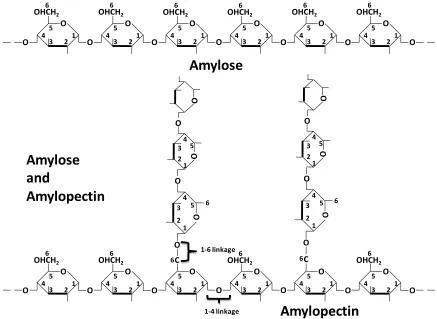
for industrial productions of bio-ethanol and ABE. As shown in Fig 1.4, starch is
composed by two components: amylose, which is linear chains of glucose connected by
1,4-glycosidic bonds; and amylopectin, where glucose units are linked linearly by
α-1,4-glycosidic bonds, however, branching also take place with α-1,6-glycosidic bonds.
enzymes to attach, therefore it can be degraded faster; the amylose, in contrast, is more
compact, less amorphous and slower to hydrolyze (Byrnes et al., 1995).
For bio-ethanol production from starch substrates, a separate saccharification stage that
converts starch to simple sugars has to be included before the subsequent fermentation.
However, solvent-producing clostridia have been shown to synthesize different
amylolytic enzymes that contribute to the breakdown of starch. The enzymes that are
responsible of hydrolysing α-1,4-glycosidic bonds include the endo-acting α-amylase (act in the middle of the polysaccharide chain), β-amylase and glucoamylase (which remove
maltose and glucose units from the non-reducing end of the polymer chain, respectively).
On the other hand, the α-1,6-glycosidic bonds in amylopectin is hydrolysed by
pullulanase, which is widespread among saccharolytic clostridia (Mitchell, 1998).
Starch is insoluble in cold water or alcohol. The molecules of starch arrange themselves
in semi-crystalline structure that are resistant to enzymatic hydrolysis; however, with the
presence of heat, starch can become soluble in water. This process is called starch
gelatinization (Eliasson, 1986). When heated, water are absorbed and causes the granules
to swell. The crystalline structure of starch is lost and opened up for enzyme actions.
Meanwhile, the viscosity of the mixture is increased significantly (Uthumporn et al.,
2010). When gelatinized starch is cooled or left at lower temperature for long period of
time, the viscosity of the mixture further increases to form a gel, this process is called
starch retrogradation. This is mainly because amylose and the linear parts of amylopectin
will rearrange themselves to form a crystalline structure again through the formation of
hydrogen bonds between parallel linear chains. During retrogradation, a small amount of
Figure 1.4 Compositions of starch: Amylose and amylopectin (adapted from Generalic,
2015).
In recent years, novel starchy substrates has been utilized for the production of
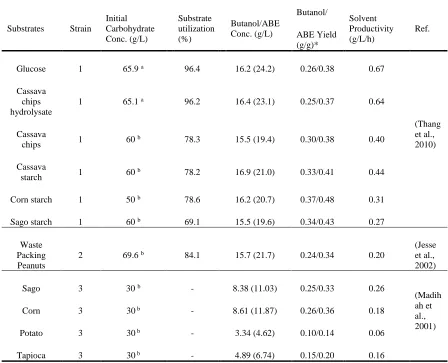
bio-butanol in aims of lowering the substrate cost. As summarized in Table 1.1, bio-butanol
fermentation from cassava starch, corn starch, sago starch and waste packing peanuts
were compared with glucose fermentation. Similar butanol productions (15-16 g/L) was
obtained from both starch-based and glucose-based substrates. However, the utilization
rate of glucose-based substrate is much higher (>95% of the initial substrate
concentration) compared to those with starch-based substrate (69.1 to 84.1%). From an
economic point of view, the un-utilized starch substrate at the end of fermentation will
result in a waste of carbohydrate resource. On the other hand, solvent productivity is also
much slower with starch substrate compared to glucose, this is probably due to an extra
phase of starch hydrolysis by the action of amylolytic enzymes from the strain.
1 2 3 45 OHCH2 6
O 3 21 5 OHCH2
6
O 43 21 5 OHCH6 2 1
2 3 4 5 OHCH6 2
O O 1 2 3 45 OHCH6 2
1 2 3 4 5 OHCH6 2
O O O
Amylose
C 6 1-4 linkage O 1 2 3 4 5O O O O O O
1 2 3 45
O 3 21 5 OHCH2
6
O 43 21 5 6 1 2 3 4 5 OHCH2 6 O O 1 2 3 45 OHCH2 6 1 2 3 4 5 OHCH2 6 O O O
O O O O O O
Table 1.1 Butanol fermentation from starch-based substrates
Substrates Strain
Initial Carbohydrate Conc. (g/L) Substrate utilization (%) Butanol/ABE Conc. (g/L) Butanol/ ABE Yield (g/g)* Solvent Productivity (g/L/h) Ref.
Glucose 1 65.9 a 96.4 16.2 (24.2) 0.26/0.38 0.67
(Thang et al., 2010) Cassava chips hydrolysate
1 65.1 a 96.2 16.4 (23.1) 0.25/0.37 0.64
Cassava
chips 1 60
b 78.3 15.5 (19.4) 0.30/0.38 0.40
Cassava
starch 1 60
b 78.2 16.9 (21.0) 0.33/0.41 0.44
Corn starch 1 50 b 78.6 16.2 (20.7) 0.37/0.48 0.31
Sago starch 1 60 b 69.1 15.5 (19.6) 0.34/0.43 0.27
Waste Packing Peanuts
2 69.6 b 84.1 15.7 (21.7) 0.24/0.34 0.20
(Jesse et al., 2002)
Sago 3 30 b - 8.38 (11.03) 0.25/0.33 0.26
(Madih ah et al., 2001)
Corn 3 30 b - 8.61 (11.87) 0.26/0.36 0.18
Potato 3 30 b - 3.34 (4.62) 0.10/0.14 0.06
Tapioca 3 30 b - 4.89 (6.74) 0.15/0.20 0.16
1. C. saccharoperbutylaceonicum; 2. C. beijerinckii BA101; 3. C. acetobutylicum P262;
a Glucose; b Starch;
*. Yield was calculated as the concentrations of butanol (ABE) divided by glucose concentrations consumed by the strain, starch substrates was converted into potential glucose by multiplying a factor of 1.1.
1.2.6. Bio-butanol Production from Lignocellulosic Biomass
One of the factors that severely affect the economics of ABE fermentations is high cost of
substrate (Qureshi and Blaschek, 2001). As mentioned earlier, the once commercialized
ABE fermentation was ceased due to the rising prices of conventional substrates such as
corn and molasses and the competition with the more economically favourable chemical
synthesis of butanol from cheaper fossil fuel resources. According to an economic
10,000 tons butanol production/year (M. Kumar et al., 2012). Therefore, the revival of
bio-butanol production is mostly dependent on search of cheap and widely available
carbohydrate source.
In recent years, successful utilization of low-cost lignocellulosic raw materials has
motivated the development of bio-butanol production. Lignocellulosic biomass represent
the most abundant renewable energy source on the planet (Qureshi et al., 2013). The
annual production of lignocellulosic biomass is predicted at 1.3 billion dry tons in US,
enough to generate biofuels to meet the current domestic demand for one-third of
transportation fuels. Agricultural residues and wastes are common examples of
lignocellulosic biomass. These materials are normally the non-edible parts of food-crops,
such as corn stover, corn cobs, wheat straw, barley straw, sugarcane bagasse, which are
readily available in agricultural-based countries. The other example is dedicated energy
crops including woody crops such as willow and poplar and perennial grasses such as
switchgrass and miscanthus. Recently, the cost of raw lignocellulosic biomass is in the
range of $33 to 61/ton compared to $1110/ton for glucose, $190/ton for corn, and
$740/ton for sago (M. Kumar et al., 2012). It is obvious that non-cellulosic biomass are
much more expensive compared to cellulosic biomass, however, with the exception of
sugarcane (market price at $47/ton). Although the growth of dedicated energy crops may
still result in competition of land and water with food crops, the maintenance and harvest
cost for these materials are much lower compared to food crops.
What is lignocellulose?
In general, lignocellulose biomass are mainly composed by three different types of
polymers, namely cellulose, hemicellulose and lignin.
Cellulose, as depicted in Fig 1.5, is a long linear chain of glucose units. Due to the
β-1,4-linkages, every other glucose are flipped over, thus promoting the formation of hydrogen
bonds between parallel chains and contributing to the resistance of crystalline to
Figure 1.5 Molecular structure of cellulose (adapted from O’sullivan, 1997)
Hemicelluloses, in comparison, are polysaccharides that contains many different types of
sugar monomers, such as xylose, mannose, galactose, rhamnose, and arabinose. In most
cases, xylose is present in the biggest amount (Karimi et al., 2006). Structures and
compositions of these polysaccharides including xyloglucan, glucuronoxylan,
glucuronoarabinoxylan, (gluco) mannan, galactoglucomannan, and β-(1-3, 1-4)-glucan
have been well discussed in a recent review paper (Scheller and Ulvskov, 2010). The
suffix of these polysaccharides such as -glucan, -xylan and -mannan indicates the
composition of the backbone of each polysaccharide, respectively. For example,
xyloglucan has a backbone of glucose units connected by β-1,4 linkages, with xylose as
the major component in the side chains (Scheller and Ulvskov, 2010). Compared to the
cellulose, the polysaccharides of hemicelluloses have shorter chain length with branched
structure, and are more vulnerable to reactions and easier to hydrolyze (Chen, 2014).
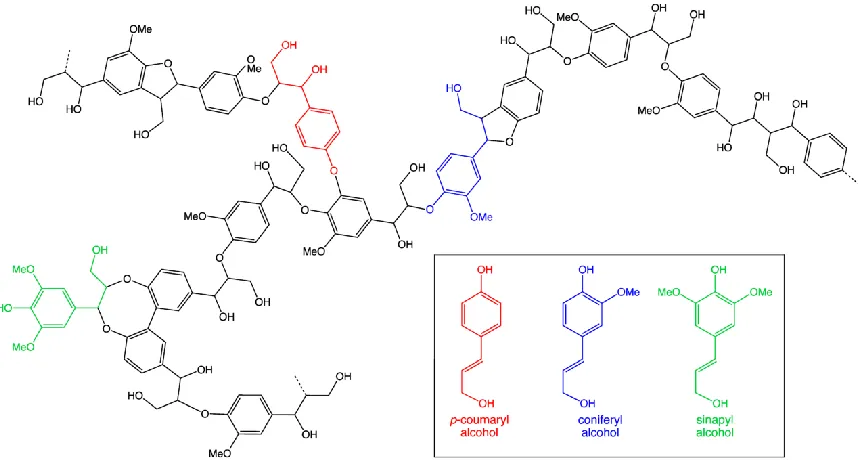
Lignin is an aromatic polymer composed by three basic phenolic compounds, which are
p-coumaryl alcohol (H), coniferyl-alcohol (G), and sinapyl alcohol (S) as shown in Fig
1.6 (Rubin, 2008). The ratio between the building blocks within the polymer may vary
between plants species, for example, coniferyl-alcohol (G) accounts for 90-95% of the
lignin components in softwoods (Chen, 2014). The basic units of lignin are linked to each
other through ether (C-O) or carbon-carbon (C-C) bonds, with β-O-4 as the dominant
ether bonds, and β-5 linkage as the major C-C bonds (Chen, 2014). Generally, lignin has
two major biological functions. First, it increases the strength and rigidity of the
lignocellulosic matrix by cross-linking with carbohydrate polymers, thus providing
resistances to pathogens and insects (K. Ritter, 2008). Second, lignin plays a crucial part O 3 21
5 OHCH2 6 O 1 2 3 4 5 OHCH6 2
O
O 4 3 2 1
5 OHCH6 2
O
O O O
4 1 2 3 4 5 OHCH2 6 O O 1 2 3 4 5 OHCH2 6 O 1 2 3 4 5 OHCH2 6 O O
Cellulose
in conducting water through plant stems. Lignin is hydrophobic whereas cellulose and
hemicellulose are hydrophlic, by cross-linking with the above carbohydrate polymers, it
stops water from permeating through cell walls, thus making the cell wall more efficient
in conducting water (Iiyama et al., 1994).
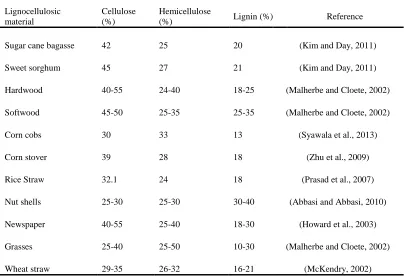
Table 1.2 summarized the percentage of the major components in common lignocellulosic
biomass. The ratio of each components varies from one plant species to another, however,
for most lignocellulosic biomass, cellulose is normally the dominant polysaccharides in
plant cell walls, followed by hemicellulose and lignin (Mussatto and Teixeira, 2010).
Figure 1.6 Lignin structure and three building blocks of lignin(Retrieved April 20,
Table 1.2 Percentage of major components of common lignocellulosic
biomass (Adopted from Iqbal et al., 2013)
Lignocellulosic material
Cellulose (%)
Hemicellulose
(%) Lignin (%) Reference
Sugar cane bagasse 42 25 20 (Kim and Day, 2011)
Sweet sorghum 45 27 21 (Kim and Day, 2011)
Hardwood 40-55 24-40 18-25 (Malherbe and Cloete, 2002)
Softwood 45-50 25-35 25-35 (Malherbe and Cloete, 2002)
Corn cobs 30 33 13 (Syawala et al., 2013)
Corn stover 39 28 18 (Zhu et al., 2009)
Rice Straw 32.1 24 18 (Prasad et al., 2007)
Nut shells 25-30 25-30 30-40 (Abbasi and Abbasi, 2010)
Newspaper 40-55 25-40 18-30 (Howard et al., 2003)
Grasses 25-40 25-50 10-30 (Malherbe and Cloete, 2002)
Wheat straw 29-35 26-32 16-21 (McKendry, 2002)
Factors limit the accessibility of lignocellulosic sugars
The utilization of the carbohydrates in lignocellulosic biomass is not an easy task.
Solventogenic clostridia cannot directly utilize cellulose or hemicellulose as substrate,
therefore, these polysaccharides need to be hydrolysed into simple sugars either
chemically or enzymatically prior to fermentation (Dong et al., 2014). The enzymatic
approach is preferred by biofuel industry due to many reasons including milder
conditions, lower energy costs, and potential for high yields and selectivity (Yang et al.,
2011). However, both chemical and enzymatic hydrolysis is limited by the recalcitrant
structure of lignocellulosic biomass.
Lignin is considered as a physical barrier that prevents the enzymes from accessing the
polysaccharides of lignocellulose (Hu and Ragauskas, 2012). On the other hand, enzymes
tend to irreversibly bind to lignin through hydrophobic interactions, which resulted in
2012). In fact, positive relations have been found between sugar yield and lignin removal
in a number of different types of lignceollulose materials (Han et al., 2012; Nlewem and
Thrash, 2010; Yan et al., 2014; Zhang et al., 2016).
Hemicelluloses, as a family of polysaccharides, also serves as another protective coat to
cellulose. On one hand, hydrogen bonds can be formed between the unbranched part of
hemicellulose and the surface of cellulose fibrils; on the other hand, hemicellulose can be
covalently bonded to lignin to form cross-links which makes the enzymes difficult to
penetrate (Chundawat et al., 2011). Since enzymes need to bind to the surface of cellulose
before the hydrolysis takes place, lignin and hemicellulose need to be removed or
hydrolysed without losing hemicellulose sugars (Ӧhgren et al., 2007).
Other factors that may be influential to the deconstruction of lignocellulose include
cellulose crystallinity, DP (degree of polymerization), particle size, pore volume and
specific surface area of cellulose (Hu and Ragauskas, 2012). The crystallinity of cellulose
is the result of the intra- and inter-molecular hydrogen bonds. Although generally
cellulose with higher amorphous content tend to be digested by enzymes more easily, it is
not recommended to use CrI (crystallinity index) as the only indicator for cellulose
digestibility (Park et al., 2010). Degree of polymerization is also considered to play a role
in the extent of enzymatic hydrolysis. A decrease in the degree of polymerization (DP)
will produce more reactive ends available to the exo-cellulases (Kleman-Leyer et al.,
1994). It is a common practice to grind lignocellulose into smaller particle size for higher
conversion efficiency. However, the concept of "the smaller, the better" has not
necessarily been the case. Many studies showed that further reduction in particle size
(already at the level of millimetres) does not result in any significant change in the sugar
yield (B. Rivers and H. Emert, 1987; Ballesteros et al., 2002).
The surface area of cellulose has been considered as a critical factor for enzymatic
hydrolysis yield and rate since the contact between substrate and enzymes is necessary for
hydrolysis to occur. Surface area of substrate can be divided into interior and exterior
surface area (Wang et al., 2012). Exterior surface area is mainly determined by particles
size, which has been discussed briefly earlier; however, interior surface area, which is
the enzymatic digestibility (Wang et al., 2012). It has been found that the lower
enzymatic digestibility of corn stover at bigger range of particles size (425–710 μm) was
compensated to the similar level of corn stover at smaller particle size (53–75 μm) after
both types of particles were pretreated with liquid hot water. The authors attribute this
phenomena to the disruption of inner structure of corn stover particles due to
pretreatment, thus potentially increasing the pore volume and the accessible surface area
of the substrates (Zeng et al., 2007); however, the effect of lignin removal was not
evaluated in the research, which could have contributed to the digestibility increase.
Pretreatment of lignocellulose for ABE Fermentation
Due to the recalcitrant nature of lignocellulosic biomass, pretreatment is required to break
the restriction imposed by lignin and hemicellulose structure. In the past decade, a
number of pretreatment methods was developed and studied, including dilute sulfuric acid
(DAP), liquid hot water (LHW), steam explosion, alkali pretreatment, and ammonia fiber
explosion (AFEX), etc (Hendriks and Zeeman, 2009; Hu and Ragauskas, 2012).
Dilute sulfuric acid pretreatment
Dilute sulfuric acid pretreatment (DAP) has been applied to a wide range of biomass
including hardwood, softwood and agricultural residues (Jensen et al., 2010; Nlewem and
Thrash, 2010). It is normally performed at a temperature range of 120 to 210 °C, with
acid concentration less than 4% (w/v), and residence time from seconds to hours, in
different types of reactors (Hu and Ragauskas, 2012). During DAP, most xylan is
hydrolyzed to xylose and accumulated in the liquor, and the resulted xylose may be
further converted into furfural at elevated pretreatment severity (Hendriks and Zeeman,
2009). However, the cellulose component will not be hydrolyzed unless the conditions are
too severe, but an increase in crystallinity may be observed due to solubilisation of the
amorphous portion of celluose (Foston and Ragauskas, 2010). Interestingly, DAP does
not lead to significant delignification. Although the employment of DAP can improve
enzymatic digestibility of lignocellulosic biomass, undesired by-products such as furfural,
5-hydroxymethylfurfural (HMF), levulinic acid and formic acid may be generated. These
compounds have been shown to be toxic in the subsequent enzymatic hydrolysis and
Liquid hot water pretreatment
Liquid hot water (LHW) and un-catalyzed steam explosion are the two major
hydrothermal pretreatment technologies, where water in liquid or vapour state is used to
pretreat lignocellulosic biomass. Compared to DAP and other pretreatment methods, no
chemical catalyst is required, which resulted in significant reduction in both chemicals
and the materials for construction cost (Hu and Ragauskas, 2012). In LHW, water is
pressurized to maintain liquid state at elevated temperatures (160-240 °C) (Alvira et al.,
2010). At this temperature, water acts as a weak acid and hydrolyze hemicellulose by
selectively breaking down the glycosidic linkages, with the formation of acetic acid and
uronic acid (Allen et al., 2001). Since pH is maintained at a much milder range (4-7),
much less sugar degradation product (furfural and HMF) is produced during LHW
compared to DAP. Similar to DAP, most cellulose and lignin is preserved in solid form
during LHW, and due to solubilisation of hemicellulose, significant increases in lignin
content are observed among many substrates after pretreatment (Hu and Ragauskas, 2011;
Kristensen et al., 2008; Kumar et al., 2009; Lee et al., 2010; Xiao et al., 2011).
Steam explosion
In steam-explosion, lignocellulosic materials is treated with high-pressure saturated steam
from several seconds to a couple of minutes at a temperature range of 160-260 °C, and
then the pressure is suddenly released, which causes the materials to explode and fibers to
separate (Sun and Cheng, 2002). Addition of chemical catalyst such as SO2 and H2SO4
can significantly increase the hemicellulose yield (Wyman et al., 2005). Similar to LHW,
the hemicelluloses are dissolved as oligosaccharides due to water at high temperature,
and partially hydrolyzed into monosaccharides. An increase in lignin content
(acid-insoluble) has been observed after steam-explosion pretreatment, which is mainly due to
the solubilisation of the hemicellulose and the very little solubilised lignin; when more
severe conditions are employed, cellulose begin to degrade and pseudo-lignin are formed,
which results in further increase in lignin content (Sergey M. Shevchenko and Saddler,
1999). Another risk with steam explosion pretreatment is the production of fermentation
inhibitors such as furfural, HMF and phenolic compounds (Hendriks and Zeeman, 2009).
however, more toxic compounds could be generated (Hu and Ragauskas, 2012).
Alkali pretreatment
Alkali pretreatment is one of the major chemical pretreatment technologies that received
extensive studies. It was found to be more effective on hardwoods, herbaceous crops and
agricultural wastes with relatively low lignin contents compared to softwood. Alkali
pretreatment is basically a delignification process, it utilizes various bases including
NaOH, Ca(OH)2, and ammonia (Zheng et al., 2009). Alkali pretreatment efficiencies are
mainly affected by three parameters, reaction temperature, pretreatment time and alkali
loading (Hu and Ragauskas, 2012). The mechanism of alkali pretreatment is mainly
involved with cleavage of the ester bonds (saponification) that crosslink lignin and
hemicelluloses under base catalyst (Zheng et al., 2009). On the other hand, hemicellulose
solubilisation, although normally at a degree lower than that of LHW, in combination
with substantial lignin removal, contribute to the increase in enzymatic digestibility of
cellulose (Silverstein et al., 2007). Acetyl and the various uronic acid substitutions on
hemicellulose that lowers the accessibility of enzymes to the surface of cellulose and
hemicelluloses are also removed during alkali pretreatment (Mosier et al., 2005). Other
effects include the decrease of DP of cellulose, swelling of cellulose, and thus leading to
an increase in the internal surface area (Rojo et al., 2013).
Ammonia fiber explosion pretreatment
Ammonia is a desirable chemical agent for pretreatment of lignocellulosic biomass due to
the following reasons: a) it effectively causes the lignocellulosic materials to swell; b) it
selectively reacts with lignin over carbohydrates and cleaves the linkages in the
lignocellulose complex (LCCs); c) it is a non-corrosive and easy to recover and reuse
(Kim et al., 2003). During ammonia pretreatment, lignocellulosic materials is treated with
liquid ammonia at temperatures between 60 to 100 °C at high pressure for a period of
time (such as 30 min), and then the pressure is swiftly released (Hu and Ragauskas,
2012). The effect of ammonia treatment or ammonia fiber explosion pretreatment
(AFEX) can be considered as a combination of steam explosion and alkali pretreatment,
which leads to disruption of complex cell wall structure and partial solubilisation of
to cleave the linkages between lignin and hemicellulose, thus facilitating the
solubilisation and removal of lignin and hemicellulose, which makes the embedded
cellulose microfibrils more accessible to enzymes (Bals et al., 2010). Furthermore, the
sudden pressure release may lead to the formation of large pores at the middle lamella,
which makes the cellulose much more accessible to enzymes (Chundawat et al., 2010).
Ionic liquid pretreatment
During the past two decades, Ionic liquids (ILs) have received increasing popularity in
many fields of research (Hallett and Welton, 2011). Ionic liquids are families of salts that
are liquid at room temperature or melt at slightly elevated temperatures, with negligible
vapour pressure and high thermal stability (Blokhin et al., 2006; Brandt et al., 2011;
Domańska and Bogel-Łukasik, 2005). One of its applications is as a pretreatment solvent
to solubilise the lignocellulosic biomass, of which the solubilised cellulose can be
precipitated by adding an anti-solvent such as water or alcohols with reduced crytallinity,
thus making the cellulose more accessible compared to those without pretreatment by
ionic liquids (Brandt et al., 2011). Another factor that could contribute to the enhanced
glucose release from the precipitated cellulose has a correlation with lignin and
hemicellulose removal (Doherty et al., 2010; Lee et al., 2009). The major disadvantage of
ILs as pretreatment solvents are their relatively high cost, compared to conventional
molecular solvents, the prices of ILs are normally 5-20 times higher (Lee et al., 2009;
Plechkova and Seddon, 2008), and most of ILs are developed only at lab scale (Li et al.,
2013). Although many processes have been developed to lower the production cost,
typical ILs remain expensive.
Effects of different pretreatment methods
As summerized in the Table 1.3, the major effects of most pretreatment methods include
increase in accessible surface area, cellulose decrystalization, removal of lignin and/or
hemicellulose, and alteration in lignin structure, which contribute to the increased
enzymatic digestibility of lignocellulosic biomass (Mosier et al., 2005). As mentioned
provides solventogenic clostridia the potential to fully convert lignocellulosic
carbohydrates into desired products compared to glucose-restricted ethanol-producing
yeast. Therefore, pretreatment methods that resulted in significant removal of
hemicellulose are not optimal for ABE fermentation due to possible loss of five-carbon
sugar stream.
Table 1.3 Effect of various pretreatment methods (Modified from Mosier et al., 2005)
Increases
accessible surface area
Decrystalizes cellulose
Removes hemicellulose
Removes lignin
Alters lignin structure
Uncatalyzed
steam explosion █ █ █
Liquid hot water █ ND █ █
pH controlled
hot water █ ND █ ND
Flow-through
liquid hot water █ ND █ █ █
Dilute acid █ █ █
Flow-through
acid █ █ █ █
AFEX █ █ █ █ █
ARP █ █ █ █ █
Lime █ ND █ █ █
Ionic liquid █ █ █ █ █
█: major effect;
Inhibitors generated during pretreatment
Table 1.4 Comparison of major inhibitor concentrations obtained after different
pretreatment methods (adapted from Du et al., 2010)
Compounds
Concentration (mg/L)
0.7 % H2SO4
0.07 %
H2SO4 LHW
Wet
oxidation Buffer NH3 Lime
Oxidative lime
Levulinic acid 41 1.5 0.48 1.9 1.5 1.7 1.1 1.6
Formic acid 120 76 55 79 110 250 43 92
Syringic acid 2 1.5 1.8 2.17 2.3 1.54 1.7 1.4
Benzoic acid 1.5 1.3 0.16 0.31 0.36 1.3 1.7 1.3
4-Hydroxycoumaric acid
5.6 14 11 11 14 11 17 8.1
Ferulic acid 6.6 2.6 2.2 1 5.1 4.2 6.6 0.76
5-HMF 44 11 2.3 2.8 4.3 0.89 2.3 3.8
Furfural 220 26 8 6.5 3.8 0.4 1.5 3.2
Syringaldehyde 1.8 0.6 1 2 1.7 0.31 1 0.084
The other factor that cannot be ignored during evaluation of pretreament methods is the
generation of fermentation inhibitors as shown in Table 1.4. Treatment of lignocellulose
at high termperature and acidic conditions often results in formation and release of a
range of inhibitors, which can be separated into two categories based on their origins,
namely furan aldehydes and aliphatic acids from the degradation of carbohydrates, and
phenolic compounds from lignin (Jönsson et al., 2013). As shown in Fig 1.7, xylose, one
of the major components of hemicellulose, can be further degraded into furfural;
similarly, HMF is formed from hexose (such as mannose, galactose and glucose)
degradation. Further degradation of furfural or HMF will result in the formation of formic
acid. Another degradation product of HMF is levulinic acid (Palmqvist and
Figure 1.7 Inhibitors generated and their origins during pretreatment (Adapted from
Palmqvist and Hahn-Hägerdal, 2000).
Mechanisms of inhibitors
The mechanism of inhibition by different degradation products has been previously
reviewed in detail (Palmqvist and Hahn-Hägerdal, 2000). Briefly, weak acids have been
shown to inhibit the growth of microorganisms and are used widely as food preservatives
(Lambert and Stratford, 1999). Two theories have been proposed to explain the
mechanisms of inhibition induced by weak acids. In undissociated form, acids are
liposoluble and can cross the plasma membrane into cytosol; dissociation of the weak
acids takes place under neutral intracellular pH, thus decreasing the cytosolic pH
(Pampulha and Loureiro-Dias, 1989). According to the uncoupling theory, the decrease in
intracellular pH is compensated by the action of plasma membrane ATPase, which pumps
protons outside of the cell at the expense of ATP (Verduyn et al., 1992). To maintain the
intracellular pH, additional ATP must be generated, and in the case of yeast, this is
achieved by increased ethanol production under anaerobic condition at the expense of
Spruce wood
Hemicellulose Cellulose Lignin
CH3COOH
Acetic acid
Mannose
Xylose Galactose Glucose
Phenolic compouds
Fufural HCOOH
Formic acid
Hydroxymethylfurfural