R E S E A R C H
Open Access
Comparison of efficacy of robotic surgery,
laparoscopy, and laparotomy in the
treatment of ovarian cancer: a meta-analysis
Can Shi, Yingchun Gao, Yijun Yang, Lei Zhang, Juanpeng Yu and Ting Zhang
*Abstract
Background:We intended to compare the clinical effect of robotic surgery with laparoscopy and laparotomy in
ovarian cancer treatment.
Methods:The included studies were retrieved from PubMed, Embase, and the Cochrane Library databases. The
Methodological Index for Nonrandomized Studies (MINORS) was used to evaluate the study quality. Effect measures were presented with weighted mean difference (WMD)/odds ratio (OR) and 95% confidence interval (CI), and heterogeneity test was assessed usingQtest andI2statistics to determine the use of the random effects model or fixed effects model. Egger’s test was used to assess the publication bias.
Results:A total of eight studies was included in this meta-analysis with a MINORS score of 16–18. In the random effects model, estimated blood loss (EBL) of robotic surgery was significantly less compared with laparotomy (WMD =−521.7027, 95% CI−809.7816;−233.6238). In the fixed effects model, length of hospital stay (LHS) (WMD =−5.2225, 95% CI−6.1485;−4.2965) and postoperative complication (PC) (OR = 0.4710, 95% CI 0.2537; 0.8747) of robotic surgery were significantly less, and overall survival (OS) rate (OR = 6.4355, 95% CI 1.6722; 24.7678, P= 0.0070) of robotic surgery was significantly higher compared with laparotomy. There was no difference in the effect size of all variables between robotic surgery and laparoscopy. Meanwhile, a publication bias (t= 6.8290, P= 0.002405) was only identified for PC in robotic surgery and laparotomy groups; no publication bias was identified for the other variables.
Conclusions:Despite the above results, it failed to show oncological safety and recurrence by pathological stages or histologic types in this analysis, and those confounding factors might affect the clinical outcome. Future meta-analyses with a larger number of eligible randomized controlled trial studies were needed to determine the most suitable treatment method for patients with different stages and types of ovarian cancer.
Keywords:Ovarian cancer, Robotic surgery, Laparotomy, Laparoscopy, Minimally invasive surgery
Background
Ovarian cancer is one of the most common gynecological carcinomas with high fatality and recurrence rate [1]. The early diagnosis of ovarian cancer is extremely difficult due to locating deep in the pelvic cavity and lacking of typical symptoms, and most patients are preliminarily diagnosed as advanced stage with a bad prognosis and 5-year survival rate [2]. The basic treatment of ovarian cancer is still the
traditional radical surgery combined with adjuvant chemotherapy. The surgery is performed to obtain a pathological diagnosis and to resect tumor tissue [3,4].
With the development of minimally invasive surgery, the reports for laparoscopic surgery in ovarian cancer present an increasing trend. Laparoscopy provides an in-tuitive examination into the pelvic and abdominal or-gans, which is as effective as traditional laparotomy for the diagnosis of ovarian cancer with avoiding unneces-sary laparotomy [5, 6]. The laparoscopy staging is an exact staging method of ovarian cancer with lesser com-plications and shorter hospital stay compared with
© The Author(s). 2019Open AccessThis article is distributed under the terms of the Creative Commons Attribution 4.0 International License (http://creativecommons.org/licenses/by/4.0/), which permits unrestricted use, distribution, and reproduction in any medium, provided you give appropriate credit to the original author(s) and the source, provide a link to the Creative Commons license, and indicate if changes were made. The Creative Commons Public Domain Dedication waiver (http://creativecommons.org/publicdomain/zero/1.0/) applies to the data made available in this article, unless otherwise stated.
* Correspondence:[email protected]
laparotomy [7]. Laparoscopy provides multiple advan-tages in the treatment of early ovarian cancer, such as minimal abdominal incision and a decrease of recovery time. Meanwhile, there remain some disadvantages for laparoscopy in the treatment of early ovarian cancer, in-cluding preventing palpation of lymph nodes and exist-ing a possible risk of trocar site metastasis [8].
Robotic surgery is an emerging technology in minimally invasive surgery, which overcomes some barriers of trad-itional laparotomy and laparoscopy. Such as, it provides three-dimensional (3-D) visualization instead of two-di-mensional (2-D) visualization in laparoscopy; it remains stable and tireless which avoids the doctor’s physiologic tremor and fatigue in laparotomy; in addition, it enhances dexterity, degree of freedom, and instrument motion [9]. Based on the multiple advantages, robotic surgery presents an ever-increasing trend in gynecological oncology. Re-portedly, compared with traditional laparotomy and lapar-oscopy, the robot surgery is viable and secure in cervical cancer therapy with less bleeding and complication as well as shorter recovery time [10]. Robotic system is secure and effective in gynecology and gynecological oncology, and it may be more fit for operating in confined spaces with difficult access, like pelvic cavity [11]. A previous re-view has reported that robotic surgery is expected to turn into the preferred surgical method in gynecological oncol-ogy, but it still needs to be confirmed by the results of comparing with traditional laparotomy and laparoscopy [12]. In the current study, a meta-analysis was performed to compare the effect of robotic surgery, laparoscopy, and laparotomy in the treatment of ovarian cancer, which was expected to confirm the clinical value of robotic surgery.
Methods
This meta-analysis was carried out in accordance with the Preferred Reporting Items for Systematic Review and Meta-analysis (PRISMA) guidelines [13].
Search strategy
The relevant clinical studies were retrieved from the PubMed (http://www.ncbi.nlm.nih.gov/pubmed), Embase (http://www.embase.com), and the Cochrane Library (http://www.cochranelibrary.com) databases with search terms as“Robot*”OR“Da Vinci” OR“Leonardo's”AND
“ovarian cancer” OR “oophoroma” OR “carcinoma of ovary” OR“ovarian carcinoma” OR“ovary cancer”AND
“Laparoscopy” OR “laparoscopic” OR “laparotomy” OR
“Open surgery” (up to November 15, 2018). The de-tailed retrieval strategies from PubMed are shown in Additional file1: Table S1.
Inclusion and exclusion criteria
The literature screening was performed by two investiga-tors, and the disagreements were settled by discussing
with the third investigator. The literatures were selected with the following criteria: all the patients were women with ovarian cancer; the studies contained the robotic surgery group (patients with robotic surgery treatment) and the control group (patients with laparoscopy or laparotomy treatment), and the outcomes included over-all survival (OS) rate, disease-free survival (DFS) rate, es-timated blood loss (EBL)/ml, length of hospital stay (LHS)/days, operating time (OT)/min, postoperative complication (PC), pelvic nodes (PN), and postoperative recurrence (PR) or included at least one of them; the pa-tients with or without neoadjuvant chemotherapy were all included; the types and language for the studies had no restriction. Meanwhile, the literatures with the fol-lowing criteria were excluded: (1) data were incomplete and could not be used for statistical analysis; (2) studies were reviews, letters, and comments, etc.; (3) among re-peated studies or multiple studies involving the same data, only the latest or the one with the most detailed in-formation was selected; (4) there were less than five pa-tients in each group.
Data extraction and quality evaluation
The data extraction and quality evaluation were also car-ried out by two investigators, and the disagreements were settled by discussing with the third investigator. The ex-tracted information in each study included first author’s name, year of publication, study time, area and type, fol-low-up time, stage of ovarian cancer, the number of pa-tients, age, body mass index (BMI), and the outcomes (including EBL, LHS, OT, PC, PN, and PR). The Meth-odological Index for Nonrandomized Studies (MINORS) [14] was used to conduct the quality evaluation for the studies, and the MINORS contained 12 items, such as a clearly stated aim, inclusion of consecutive patients, pro-spective collection of data, and endpoints appropriate to the aim of the study. Each item was scored from 0 to 2, and the total score was 24. The items with score = 0 repre-sented that the study was not reported, and the items with score = 1 indicated that the study was reported with insuf-ficient information, and the items with score = 2 indicted that the study was reported with sufficient information.
Statistical analysis
fixed effects model was selected. The Egger’s test [18] was utilized to evaluate the publication bias. In addition, the sensitivity analysis was performed by comparing the pooled WMD/OR values and their 95% CI in random effects model and the fixed effects model, and the consistent esti-mates in the two models indicated the stable conclusions.
Results Study retrieval
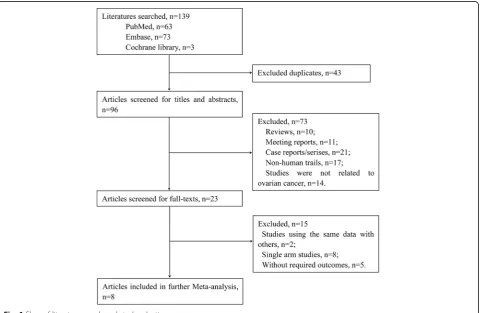
In all, 139 studies were retrieved from the PubMed, Embase, and Cochrane library databases based on the pre-defined search strategy, and 23 studies were retained after removal of 43 repeated studies, 10 reviews, 11 conference reports, 21 case reports/series, 17 non-human studies, and 14 irrelevant studies. Then, 15 studies were excluded ac-cording to full-text reading, including 8 studies about sin-gle-arm, 2 studies involving the same data, and 5 studies without available statistical data. Finally, 8 studies [19–26] were selected and performed the following meta-analysis. The detailed filtering process is shown in Fig.1.
Characteristics of studies
A total of 647 patients with ovarian cancer were registered in the eight included studies, including 207 patients with robotic surgery treatment and 166 patients and 274 pa-tients with laparoscopy and laparotomy treatment,
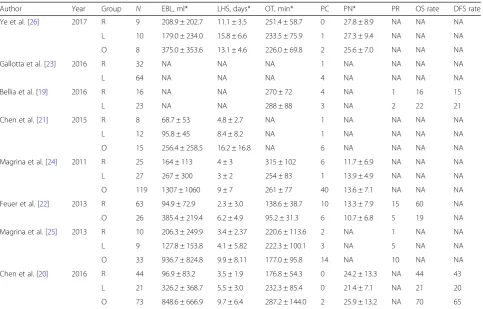
respectively. The detailed characteristics of the 8 included studies are shown in Table1. All the studies were carried out in Italy, China, the USA, or Taiwan from 2005 to 2016 and published during a period from 2011 to 2017. The study type was non-randomized clinical study, and the duration of follow-up was 12–54 months. Most patients were middle-aged and elderly with an average age among 43–67 years and suffered an early stage of ovarian cancer. In the study of Feuer et al., there are 52% and 15% patients in the R group and O group accepting neoadjuvant chemotherapy, respectively. In the study of Ye et al., there are 2 patients accepting neoadjuvant chemotherapy, and there is no relevant information in other studies. The average BMI value was between 22.3 and 28.2, and there was no difference between groups in each study. The out-come variables (EBL, LHS, OT, PC, PN, and PR) in the eight studies are shown in Table2.
Quality evaluation
The methodological quality of the eight studies was assessed by MINORS, and the scores are presented in Table3. It could be seen that the MINORS scores of the eight studies were among 16 to 18. Items such as pro-spective collection of data, unbiased assessment of the study endpoint, and prospective calculation of the study size were not involved in all the eight studies, and other
items involving most of the eight studies were scored 2, which indicated a good quality.
Meta-analysis
Comparison of robotic surgery and laparoscopy
Five studies reported the variable EBL of the robotic sur-gery group and laparoscopy group, and there was a signifi-cant heterogeneity between studies (P= 0.07, I2= 54.7%). Similarly, there was a remarkable heterogeneity between studies for the variables LHS (P= 0.01,I2= 69.4%) and OT (P< 0.01, I2= 70.2%). Hence, the random effects model was selected to assess the effect size of EBL, LHS, and OT. Meanwhile, there was no obvious heterogeneity between studies for the variables OS rate, DFS rate, PC, PN and PR, and the fixed effects model was selected.
The results of the pooled estimate for each variable are shown in Table 4. It could be seen that there was no significant difference among the robotic surgery and lapar-oscopy groups for all variables EBL (WMD =−55.0871, 95% CI −139.0087; 28.8345, P= 0.1983), LHS (WMD =−1.4296, 95% CI−3.5326, 0.6734,P= 0.1827), OT (WMD =−0.856, 95% CI −46.3735; 44.6612, P= 0.9706), PC (OR = 1.454, 95% CI 0.6502;
3.2516, P= 0.3619), PN (WMD =−0.5664, 95% CI − 3.1615; 2.0288, P= 0.6688), PR (OR = 0.2387, 95% CI 0.0445; 1.2792,P= 0.0944), OS rate (OR = 2.2000, 95% CI 0.0842; 57.4835, P= 0.6360), and DFS rate (OR = 1.6909, 95% CI 0.2572; 11.1175,P= 0.5850). The results indicated the same effect of robotic surgery and laparoscopy in the treatment of ovarian cancer (Fig.2).
Comparison of robotic surgery and laparotomy
Six studies reported the variable EBL of the robotic sur-gery and laparotomy groups, and there was a significant heterogeneity between studies (P< 0.01, I2= 93.9%). Similarly, there was a remarkable heterogeneity between studies for the variable OT (P< 0.01,I2= 93.3%). There-fore, the random effects model was selected to assess the effect of EBL and OT. Meanwhile, no obvious hetero-geneity was identified between studies for the variables OS rate, LHS, PC, PN, and PR, and the fixed effects model was selected.
The results of the pooled estimate for each variable are shown in Table 4, and it revealed that there was no statistical difference among the robotic surgery and Table 1Characteristics of included literature
Author Public
year
Study year Location Stage Type of
tumor
Residual
disease# Group N Age, years* BMI(kg/m2)* Follow-up,months
Ye et al. [26] 2017 2014.11– 2015.11
China I NA NA R 9 45.7 ± 13.8 24.4 ± 4.4 12–24
L 10 NA NA 12–24
O 8 NA NA 12–24
Gallotta et al. [23] 2016 2014.10–2016.4 Italy IA–IIIB NA NA R 32 49 (32–76) 24 (17–54) Median
38
L 64 49 (27–73) 24 (19–41) Median
38
Bellia et al. [19] 2016 2006–2014 France, Italy IA–IIIC Epithelial NA R 16 47.3 ± 12.3 22.3 ± 2.9 21.2 ± 12.7
L 23 49.4 ± 15.9 25.8 ± 6.5 18.5 ± 8.6
Chen et al. [21] 2015 2007.9–2015.2 Taiwan Recurrent NA NA R 8 56.3 ± 12.4 25.9 ± 5.6 NA
L 12 NA
O 15 NA
Magrina et al. [24] 2011 2004.3–2008.12 USA I–IV Epithelial 21 R 25 65 (23–82) 25.1 (18.7–35.8) 30
25 L 27 59 (3–85) 23.7 (17.6–37.7) 54
67 O 119 67 (19–90) 24.9 (16.6–38.5) 42
Feuer et al. [22] 2013 2008–2012 USA I–IV Epithelial 46 R 63 59.8 ± 11.8 27.1 ± 7.3 15.5 ± 12.3
13 O 26 55.7 ± 11.7 28.2 ± 6.1 23.5 ± 14.0
Magrina et al. [25] 2013 2006.1–2010.12 USA Recurrent NA 7 R 10 66.0 (45.0–83.0) 22.6 (19.7–25.5) NA
8 L 9 57.0 (45.0–74.0) 24.5 (19.9–2.7) NA
24 O 33 62.0 (39.0–80.0) 25.9 (18.5–41.2) NA
Chen et al. [20] 2016 2005–2014. Taiwan IA–IIIC Epithelial 44 R 44 44.3 ± 12.3 22.3 ± 2.7 13.1 ± 5.3
21 L 21 43.8 ± 10.3 24.1 ± 4.9 29.6 ± 19.0
72 O 73 49.2 ± 12.8 22.9 ± 4.2 26.7 ± 17.7
Rrobot,Llaparoscopic,Olaparotomy,BMIbody mass index,NOSNewcastle-Ottawa Scale,NAdata are not available
#
laparotomy groups for the variables OT (WMD = 9.8527, 95% CI−57.0904; 76.7958,P= 0.7730), PN (WMD = 0.0048, 95% CI−1.9418; 1.9514,P= 0.9962), and PR (OR = 0.8506, 95% CI 0.3356; 2.1562, P= 0.7332), indicating that the robotic surgery and laparotomy in the treatment of ovarian cancer had similar effect on OT, PN, and PR. Only one study reported the variable DFS rate of the robotic surgery and laparotomy groups, and no statis-tical difference was found (data not shown). Meanwhile,
there was a significant difference among the robotic surgery and laparotomy groups for the variables EBL (WMD =−521.7027, 95% CI −809.7816; −233.6238, P= 0.0004), LHS (WMD =−5.2225, 95% CI−6.1485;− 4.2965, P< 0.0001), PC (OR = 0.4710, 95% CI 0.2537; 0.8747, P= 0.0171), and OS rate (OR = 6.4355, 95% CI 1.6722; 24.7678, P= 0.0070), presenting lesser EBL, shorter LHS, lower PC, and higher OS rate with robotic surgery treatment (Fig.3).
Table 2Distribution of extracted data
Author Year Group N EBL, ml* LHS, days* OT, min* PC PN* PR OS rate DFS rate
Ye et al. [26] 2017 R 9 208.9 ± 202.7 11.1 ± 3.5 251.4 ± 58.7 0 27.8 ± 8.9 NA NA NA
L 10 179.0 ± 234.0 15.8 ± 6.6 233.5 ± 75.9 1 27.3 ± 9.4 NA NA NA
O 8 375.0 ± 353.6 13.1 ± 4.6 226.0 ± 69.8 2 25.6 ± 7.0 NA NA NA
Gallotta et al. [23] 2016 R 32 NA NA NA 1 NA NA NA NA
L 64 NA NA NA 4 NA NA NA NA
Bellia et al. [19] 2016 R 16 NA NA 270 ± 72 4 NA 1 16 15
L 23 NA NA 288 ± 88 3 NA 2 22 21
Chen et al. [21] 2015 R 8 68.7 ± 53 4.8 ± 2.7 NA 1 NA NA NA NA
L 12 95.8 ± 45 8.4 ± 8.2 NA 1 NA NA NA NA
O 15 256.4 ± 258.5 16.2 ± 16.8 NA 6 NA NA NA NA
Magrina et al. [24] 2011 R 25 164 ± 113 4 ± 3 315 ± 102 6 11.7 ± 6.9 NA NA NA
L 27 267 ± 300 3 ± 2 254 ± 83 1 13.9 ± 4.9 NA NA NA
O 119 1307 ± 1060 9 ± 7 261 ± 77 40 13.6 ± 7.1 NA NA NA
Feuer et al. [22] 2013 R 63 94.9 ± 72.9 2.3 ± 3.0 138.6 ± 38.7 10 13.3 ± 7.9 15 60 NA
O 26 385.4 ± 219.4 6.2 ± 4.9 95.2 ± 31.3 6 10.7 ± 6.8 5 19 NA
Magrina et al. [25] 2013 R 10 206.3 ± 249.9 3.4 ± 2.37 220.6 ± 113.6 2 NA 1 NA NA
L 9 127.8 ± 153.8 4.1 ± 5.82 222.3 ± 100.1 3 NA 5 NA NA
O 33 936.7 ± 824.8 9.9 ± 8.11 177.0 ± 95.8 14 NA 10 NA NA
Chen et al. [20] 2016 R 44 96.9 ± 83.2 3.5 ± 1.9 176.8 ± 54.3 0 24.2 ± 13.3 NA 44 43
L 21 326.2 ± 368.7 5.5 ± 3.0 232.3 ± 85.4 0 21.4 ± 7.1 NA 21 20
O 73 848.6 ± 666.9 9.7 ± 6.4 287.2 ± 144.0 2 25.9 ± 13.2 NA 70 65
Rrobot,Llaparoscopic,Olaparotomy,EBLestimated blood loss,LHSlength of hospital stay,OToperating time,PCpostoperative complication,PNpelvic nodes, PRpostoperative recurrence,OSoverall survival,DFSdisease-free survival,NAdata are not available
*Mean ± SD
Table 3Results of quality evaluation using Methodological Index for Nonrandomized Studies (MINORS)
Author Public year A B C D E F G H I J K L Total scores
Ye et al. [26] 2017 2 2 0 2 0 2 2 0 2 2 2 2 18
Gallotta et al. [23] 2016 2 2 0 2 0 2 2 0 2 2 2 2 18
Bellia et al. [19] 2016 2 2 0 2 0 2 2 0 2 2 0 2 16
Chen et al. [21] 2015 2 2 0 2 0 1 2 0 2 2 2 2 17
Magrina et al. [24] 2011 2 2 0 2 0 2 2 0 2 2 2 2 18
Feuer et al. [22] 2013 2 2 0 2 0 2 2 0 2 2 1 2 17
Magrina et al. [25] 2013 2 2 0 2 0 1 2 0 2 2 2 2 17
Chen et al. [20] 2016 2 2 0 2 0 2 2 0 2 2 1 2 17
Table 4Results of the meta-analysis
Variable Sample size Test of association Model Test of heterogeneitya,b Egger’s testc
N1 N2 WMD/OR (95% CI) Z P Q P I2(%) t P
R vs. L
EBL 96 79 −55.0871 [−139.0087; 28.8345] 1.29 0.1983 R 8.83 0.07 54.7 0.3887 0.7234
LHS 96 79 −1.4296[−3.5326; 0.6734] 1.33 0.1827 R 13.06 0.01 69.4 0.9334 0.4195
OT 104 90 −0.8561[−46.3735; 44.6612] 0.04 0.9706 R 13.4 < 0.01 70.2 0.7602 0.5024
PC 144 166 1.4541 [0.6502; 3.2516] 0.91 0.3619 F 5.34 0.38 6.3 1.5330 0.2001
PN 78 58 −0.5664 [−3.1615; 2.0288] 0.43 0.6688 F 2.78 0.25 28.2 0.7882 0.5751
PR 26 32 0.2387 [0.0445; 1.2792] 1.67 0.0944 F 1.34 0.25 25.5 NA NA
OS rate 60 44 2.2000 [0.0842; 57.4835] 0.47 0.6360 NA NA NA NA NA NA
DFS rate 60 44 1.6909 [0.2572; 11.1175] 0.55 0.5850 F 0.05 0.83 0.0 NA NA
R vs. O
EBL 125 274 −521.7027 [−809.7816;−233.6238] 3.55 0.0004 R 82.54 < 0.01 93.9 1.1403 0.3178
LHS 159 274 −5.2225 [−6.1485;−4.2965] 11.05 < 0.0001 F 8.36 0.14 40.2 0.1786 0.8669
OT 151 259 9.8527 [−57.0904; 76.7958] 0.29 0.7730 R 59.75 < 0.01 93.3 0.5645 0.6119
PC 159 274 0.4710 [0.2537; 0.8747] 2.38 0.0171 F 1.77 0.88 0.0 6.8290 0.0024
PN 141 226 0.0048 [−1.9418; 1.9514] <0.01 0.9962 F 4.77 0.19 37.1 0.2131 0.8510
PR 73 59 0.8506 [0.3356; 2.1562] 0.34 0.7332 F 1.71 0.19 41.7 NA NA
OS rate 107 99 6.4355 [1.6722; 24.7678] 2.71 0.0070 F 0.09 0.76 0.0 NA NA
WMDweighted mean difference,ORodds ratio,CIconfidence interval,EBLestimated blood loss,LHSlength of hospital stay,OToperating time,PCpostoperative complication,PNpelvic nodes,PRpostoperative recurrence,OSoverall survival,DFSdisease-free survival,NAdata are not available
a
Random effects model was used when thePfor heterogeneity test < 0.05; otherwise, the fixed effect model was used
b
P< 0.05 is considered statistically significant forQtest
c
Egger’s test to evaluate publication bias,P< 0.05 is considered statistically significant
Fig. 2The comparisons of six variables between the robotic surgery group and laparoscopy group presented by forest plot.aEstimated blood loss.bLength of hospital stay.cOperating time.dPelvic nodes.ePostoperative complication.fPostoperative recurrence.gOverall survival rate.
Publication bias and sensitivity analysis
A significant publication bias (t= 6.8290, P= 0.002405) was identified for the variable PC in the robotic surgery and laparotomy groups, but no publication bias was identified for the other variables not only in the robotic surgery and laparotomy groups, but also in the robotic surgery and laparoscopy groups, suggesting the results of these indicators were reliable (Table4).
Sensitivity analysis revealed that there was a difference between random effects model (P> 0.05) and fixed effects model (P< 0.05) for the pooled effect values of variables EBL and OT in the robotic surgery and laparoscopy groups. The pooled effect values of other variables based on random effects model and fixed effects model were consistent with each other, indicating that the results of those variables were stable (Table5).
Discussion
In the current study, the effect of robotic surgery in ovarian cancer therapy was compared with laparoscopy and laparotomy based on 647 patients recorded in eight studies. The results of the meta-analysis revealed that the robotic surgery and laparoscopy had the same effect in ovarian cancer therapy, while the robotic surgery had lesser EBL, shorter LHS, lower PC, and higher OR rate compared with laparotomy in ovarian cancer therapy.
Robotic system provided some merits, including 3-D visualization, ergonomic position, and eliminating hand
tremor, promising a more accurate operation in various complex tumor surgery [9]. Reportedly, robotic surgery was viable in the staging for early ovarian cancer and had no obvious difference with laparoscopy in clinical outcomes including EBL, PC, and PN [23,27]. Zapardiel et al. demonstrated that the robotic surgery presented similar outcomes of blood loss, PC, and LHS with lapar-oscopy in ovarian remnant syndrome therapy [28]. Moreover, a previous study had showed that the robotic surgery and laparoscopy were all safe and feasible for hepatectomies with no significant difference in surgical outcomes, except for the minimal incision of robotic surgery [29]. In accord with those views, our study re-vealed that robotic surgery provided a similar effect with laparoscopy in ovarian cancer therapy.
Compared with laparotomy, robotic surgery provided some advantages in the treatment of primary or recur-rent ovarian cancer, including lesser EBL and shorter length of stay [30]. A previous study had reported it was advisable to select robotic surgery for the endometrial cancer staging than laparotomy surgical, with a decrease of hospital stay and EBL as well as PC rates and an in-crease of BMI [31]. Previous study had revealed that ro-botic surgery and laparoscopy presented a similar effect in radical hysterectomy and ovarian remnant syndrome and were more advisable versus laparotomy with a de-crease of blood loss and hospital stay and PC [28,32]. In addition, Subramaniam et al. proved that robotic surgery
provided an improvement of surgical outcomes and might be a more advisable approach for obese women with endo-metrial cancer [33]. Those findings were all consistent with the results of our meta-analysis; hence, we indicated that robotic surgery was secure and feasible in ovarian cancer treatment and provided several merits than laparotomy.
Robotic surgery was considered as a promising new technique which could be used to optimize clinical man-agement of patients with gynecological carcinoma. Never-theless, concerns had been expressed focusing on the cost of robotic surgery compared to laparoscopy or laparotomy [34], and different opinions were proposed. Lindfors et al. suggested that there was no statistically significant differ-ence in costs between robotic surgery and laparotomy in the treatment of elderly patients with endometrial cancer
[35]. Novellis et al. indicated that the hospital could make a profit in spite of the high cost of robotic surgery [36]. A study reported that comparable outcomes were observed between robotic surgery and laparoscopy in the treatment for colon cancer, but robotic surgery showed higher treat-ment cost [37]. Besides, it was reported in two reviews that the high cost was mainly reflected in the acquisition, maintenance of instruments, and training of medical personnel using the robotic system [34,38]. Further stud-ies were recommended in the future to reduce the cost of robotic operations.
The heterogeneity test showed an obvious heterogen-eity among studies for few variables, and we selected the random effect model to assess the pooled effect. Several reasons were considered as follows: (1) differences Table 5Results of sensitivity analysis
Variable Group Effect model K WMD/OR [95% CI] Z P
Estimated blood loss R vs. L Fixed 5 −39.9247 [−78.7622;−1.0871] 2.01 0.0439
R vs. L Random 5 −55.0871 [−139.0087; 28.8345] 1.29 0.1983
R vs. O Fixed 6 −394.2279 [−456.4271;−332.0286] 12.42 < 0.0001
R vs. O Random 6 −521.7027 [−809.7816;−233.6238] 3.55 0.0004
Length of hospital stay R vs. L Fixed 5 −0.7770 [−1.7023; 0.1484] 1.65 0.0998
R vs. L Random 5 −1.4296 [−3.5326; 0.6734] 1.33 0.1827
R vs. O Fixed 6 −5.2225 [−6.1485;−4.2965] 11.05 < 0.0001
R vs. O Random 6 −5.1505 [−6.4793;−3.8216] 7.60 < 0.0001
Operating time R vs. L Fixed 5 −7.6177 [−31.2545; 16.0192] 0.63 0.5276
R vs. L Random 5 −0.8561 [−46.3735; 44.6612] 0.04 0.9706
R vs. O Fixed 5 24.4862 [11.5380; 37.4344] 3.71 0.0002
R vs. O Random 5 9.8527 [−57.0904; 76.7958] 0.29 0.7730
Postoperative complication R vs. L Fixed 6 1.4541 [0.6502; 3.2516] 0.91 0.3619
R vs. L Random 6 1.3484 [0.5235; 3.4731] 0.62 0.5357
R vs. O Fixed 6 0.4710 [0.2537; 0.8747] 2.38 0.0171
R vs. O Random 6 0.4878 [0.2600; 0.9154] 2.24 0.0254
Pelvic nodes R vs. L Fixed 3 −0.5664 [−3.1615; 2.0288] 0.43 0.6688
R vs. L Random 3 −0.2074 [−3.5497; 3.1349] 0.12 0.9032
R vs. O Fixed 4 0.0048 [−1.9418; 1.9514] <0.01 0.9962
R vs. O Random 4 0.0640 [−2.5658; 2.6937] 0.05 0.9620
Postoperative recurrence R vs. L Fixed 2 0.2387 [0.0445; 1.2792] 1.67 0.0944
R vs. L Random 2 0.2463 [0.0326; 1.8617] 1.36 0.1745
R vs. O Fixed 2 0.8506 [0.3356; 2.1562] 0.34 0.7332
R vs. O Randomed 2 0.7633 [0.1665; 3.4995] 0.35 0.7281
Overall survival rate R vs. L Fixed 2 2.2000 [0.0842;5 7.4835] 0.47 0.6360
R vs. L Random 2 2.2000 [0.0842; 57.4835] 0.47 0.6360
R vs. O Fixed 2 6.4355 [1.6722; 24.7678] 2.71 0.0070
R vs. O Randomed 2 6.6854 [1.8172; 24.5959] 2.86 0.0040
Disease-free survival rate R vs. L Fixed 2 1.6909 [0.2572; 11.1175] 0.55 0.5850
R vs. L Randomed 2 1.7085 [0.2641; 11.0547] 0.56 0.5740
between different countries, race, and regions, such as China, Italy, and the USA; (2) differences among ovarian cancer with different types and stages, such as early stage of ovarian cancer, stage IA–IIIC epithelial ovarian cancer, recurrent ovarian cancer, and epithelial ovarian cancer; (3) influences from confounding factors such as gender, age, and other demographic data; (4) the same result might be interpreted differently by different au-thors, which might lead to a misleading result.
In this study, the meta-analysis was used to comprehen-sively compare the effect of robotic surgery in the treat-ment of ovarian cancer with laparotomy and laparoscopy, and we found that robotic surgery presented several merits in ovarian cancer therapy compared with laparot-omy. But there still retained some limitations: (1) Sub-group analysis and meta-regression analysis for tumor stages, time of follow-up, age, and race were not per-formed due to the incomplete demographic data and less included studies. (2) There was a significant publication bias for the variable PC in the robotic surgery and laparot-omy groups which might affect the result. In addition, the publication bias for the variable PR was not detected due to less included studies. (3) The result of sensitivity ana-lysis showed that the pooled effect of the variables EBL (robotic surgery and laparoscopy groups) and OT (robotic surgery and laparotomy groups) was inconsistent under random or fixed effects models, which indicated the com-parison results of the two variables were unstable. (4) Last but not the least, the related data were incomplete in the included studies, and only one study contained the related data of all the six variables, such as EBL, LHS, and OT were not mentioned in two studies; PN was not tioned in four studies; PR and OS rate were not men-tioned in five studies; and DFS rate was not menmen-tioned in six studies. Besides, some of the data in several literatures were skewed, but these literatures also provide mean ± SD data which met the requirements of a meta-analysis, and they were included in this meta-analysis. Hence, an ana-lysis based on more studies with high quality was needed to confirm the clinical effect of robotic surgery in ovarian cancer treatment.
Conclusions
In the current meta-analysis, the robotic surgery and lapar-oscopy presented the same effect in the treatment of ovar-ian cancer, while the robotic surgery provided lesser EBL, LHS, and PC and higher OS rate versus laparotomy. How-ever, it failed to show oncological safety and recurrence by pathological stages or histologic types in this meta-analysis, and those confounding factors might affect the clinical out-come. Future meta-analyses with a larger number of eligible randomized controlled trial studies were needed to deter-mine the most suitable treatment method for patients with different types and stages of ovarian cancer.
Additional file
Additional file 1:Table S1.The detailed retrieval strategy in PubMed
database. (DOCX 12 kb)
Abbreviations
BMI:Body mass index; CI: Confidence interval; DFS: Disease-free survival; EBL: Estimated blood loss; LHS: Length of hospital stay;
MINORS: Methodological Index for Nonrandomized Studies; OR: Odds ratio; OS: Overall survival; OT: Operating time; PC: Postoperative complication; PN: Pelvic nodes; PR: Postoperative recurrence; WMD: Weighted mean difference
Acknowledgements
None.
Authors’contributions
CS contributed to the conception and design of the research; YG and YY contributed to the acquisition of the data; LZ contributed to the analysis and interpretation of the data; JY contributed to the statistical analysis; CS contributed to the drafting of the manuscript; TZ and YG contributed to the revision of manuscript for important intellectual content. All authors read and approved the final manuscript.
Funding
This work was supported by Huai’an Science and Technology Development Fund (grant number HAb201725).
Availability of data and materials
All data generated or analyzed during this study are included in this published article.
Ethics approval and consent to participate
Not applicable.
Consent for publication
Not applicable.
Competing interests
The authors declare that they have no competing interests.
Received: 17 May 2019 Accepted: 29 August 2019
References
1. Holschneider CH, Berek JS. Ovarian cancer: epidemiology, biology, and prognostic factors. Semin Surg Oncol. 2015, 19:3–10.
2. Slotman BJ, Rao BR. Ovarian cancer (review). Etiology, diagnosis, prognosis, surgery, radiotherapy, chemotherapy and endocrine therapy. Anticancer Res. 1988;8:417–34.
3. Liu Y, Du C, Liu W. New progress in ovarian cancer treatment. Modern Oncol. 2015;23:553–6.
4. Jelovac D, Armstrong DK. Recent progress in the diagnosis and treatment of ovarian cancer. Ca A Cancer J Clin. 2011;61:183–203.
5. Wagner GR. Laparoscopic surgery. Lancet. 1997;349:1323.
6. Ghezzi F, Cromi A. S, Bergamini V, Tomera S, Franchi M, Bolis P. Laparoscopy versus laparotomy for the surgical management of apparent early stage ovarian cancer. Gynecol Oncol. 2007;105:409–13.
7. Childers JM, Lang J, Surwit EA, Hatch KD. Laparoscopic surgical staging of ovarian cancer. Gynecol Oncol. 1995;59:25–33.
8. Chyi-Long L, Nari K, Hsiu-Lin C, Chih-Feng Y, Kuan-Gen H. The roles of laparoscopy in treating ovarian cancer. Taiwan J Obstet Gynecol. 2009;48:9–14. 9. Anthony RL, Andres EC, Jaydev PD, William CM. Robotic surgery: a current
perspective. Annals Surg. 2004;239:14–21.
10. Ding X, Zhang T, Hou Q, Feng L, Chen L. A contrast analysis of robotic-assisted gynecological surgery, laparoscopy and open abdomen operation in the treatment of cervical cancer. Chin Clin Oncol. 2014;19:608–12. 11. Marchal F, Rauch P, Vandromme J, Laurent I, Lobontiu A, Ahcel B, LV J,
hysterectomy for benign and oncologic pathologies: initial clinical experience with 30 patients. Surg Endosc Other Interv Tech. 2005;19:826–31. 12. Mettler L, Schollmeyer T, Boggess J, Magrina JF, Oleszczuk A. Robotic
assistance in gynecological oncology. Curr Opin Oncol. 2008;20:581. 13. Moher D. Corrigendum to: Preferred Reporting Items For Systematic
Reviews And Meta-Analyses: The PRISMA Statement International Journal of Surgery 2010; 8: 336-341. Int J Surg. 2010;8:658.
14. Slim K, Nini ED, Kwiatkowski F, Panis Y, Chipponi J. Methodological index for non-randomized studies (MINORS): development and validation of a new instrument. Anz J Surg. 2015;73:712–6.
15. Liu T, Xu QE, Zhang CH, Zhang P. Occupational exposure to methylene chloride and risk of cancer: a meta-analysis. Cancer Causes Control. 2013;24: 2037–49.
16. Lau J, Ioannidis J, Schmid C. Quantitative synthesis in systematic reviews. Annals Intern Med. 1997;127:820–6.
17. Huedo-Medina TB, Julio SM, Fulgencio MM, Juan B. Assessing heterogeneity in meta-analysis: Q statistic or I2 index? Psychol Methods. 2006;11:193. 18. Egger M, Smith GD, Schneider M, Minder C. Bias in meta-analysis detected
by a simple, graphical test. Bmj Bri Med J. 1997;315:629.
19. Bellia A, Vitale SG, Laganà AS, Cannone F, Houvenaeghel G, Rua S, Ladaique A, Jauffret C, Ettore G, Lambaudie E. Feasibility and surgical outcomes of conventional and robot-assisted laparoscopy for early-stage ovarian cancer: a retrospective, multicenter analysis. Arch Gynecol Obstet. 2016;294:1–8. 20. Chen CH, Chiu LH, Chen HH, Chan C, Liu WM. Comparison of robotic
approach, laparoscopic approach and laparotomy in treating epithelial ovarian cancer. Int J Med Rob Comput Assisted Surg. 2016;12:268–75. 21. Chen HH, Chen CH, Liu WM. Comparison of robotics, laparoscopy and
laparotomy in the management of recurrent ovarian cancer. J Minim Invasive Gynecol. 2015;22:S239–S39.
22. Feuer GA, Lakhi N, Barker J, Salmieri S, Burrell M. Perioperative and clinical outcomes in the management of epithelial ovarian cancer using a robotic or abdominal approach. Gynecol Oncol. 2013;131:520–4.
23. Gallotta V, Cicero C, Conte C, Vizzielli G, Petrillo M, Fagotti A, Chiantera V, Costantini B, Scambia G, Ferrandina G. Robotic versus laparoscopic staging for early ovarian cancer: a case-matched control study. J Minim Invasive Gynecol. 2017;24:293–8.
24. Magrina JF, Zanagnolo V, Noble BN, Kho RM, Magtibay P. Robotic approach for ovarian cancer: perioperative and survival results and comparison with laparoscopy and laparotomy. Gynecol Oncol. 2011;121:100–5.
25. Magrina JF, Cetta RL, Chang YH, Guevara G, Magtibay PM. Analysis of secondary cytoreduction for recurrent ovarian cancer by robotics, laparoscopy and laparotomy. Gynecol Oncol. 2013;129:336–40. 26. Ye MX, Yu L, Fan WS, Wang M, Bian LH, Gu CL, Zhao LY, Li LA, Meng YG.
Clinical application of robotic plat form in the treatment of early ovarian cancer. Zhonghua Yi Xue Za Zhi. 2017;97:982.
27. Brown JV, Mendivil AA, Abaid LN, Rettenmaier MA, Micha JP, Wabe MA, Goldstein BH. The safety and feasibility of robotic-assisted lymph node staging in early-stage ovarian cancer. Int J Gynecol Cancer. 2014;24:1493–8. 28. Zapardiel I, Zanagnolo V, Kho RM, Magrina JF, Magtibay PM. Ovarian
remnant syndrome: comparison of laparotomy, laparoscopy and robotic surgery. Acta Obstetricia Et Gynecologica Scandinavica. 2012;91:965–9. 29. Allan T, Geller DA, Sukato DC, Shirin S, Samer T, Jennifer S, Wallis M, Reddy
SK, Bartlett DL. Robotic versus laparoscopic hepatectomy: a matched comparison. Annals Surg. 2014;259:549–55.
30. Lambrou N, Diaz R, Gatcliffe T, Gil L, Eisermann A. Robotic-assisted laparoscopy for primary or recurrent ovarian cancer: a comparison with laparotomy. Gynecol Oncol. 2012;125:S122–S22.
31. Boggess JF, Gehrig PA, Cantrell L, Shafer A, Ridgway M, Skinner EN, Fowler WC. A comparative study of 3 surgical methods for hysterectomy with staging for endometrial cancer: robotic assistance, laparoscopy, laparotomy. Am J Obstet Gynecol. 2008;199:360.e1–9.
32. Magrina JF, Kho RM, Weaver AL, Montero RP, Magtibay PM. Robotic radical hysterectomy: comparison with laparoscopy and laparotomy. Gynecol Oncol. 2008;109:86–91.
33. Subramaniam A, Kim KH, Bryant SA, Zhang B, Sikes C, Kimball KJ, Kilgore LC, Huh WK Jr. JMS, Alvarez RD. A cohort study evaluating robotic versus laparotomy surgical outcomes of obese women with endometrial carcinoma. Gynecol Oncol. 2011;122:604–7.
34. Iavazzo C, Gkegkes ID. Cost-benefit analysis of robotic surgery in
gynaecological oncology. Best Pract Res Clin Obstet Gynaecol. 2017;45:7–18.
35. Lindfors A, Ãk Ã, Staf C, Sjã¶Li P, Sundfeldt K, Dahm-Kã¤Hler P. Robotic vs open surgery for endometrial cancer in elderly patients: surgical outcome, survival, and cost analysis. Int J Gynecol Cancer. 2018;28:692–9.
36. Novellis P, Bottoni E, Voulaz E, Cariboni U, Testori A, Bertolaccini L, Giordano L, Dieci E, Granato L, Vanni E, et al. Robotic surgery, video-assisted thoracic surgery, and open surgery for early stage lung cancer: comparison of costs and outcomes at a single institute. J Thorac Dis. 2018;10:790–8.
37. Chiu CC, Hsu WT, Choi JJ, Galm B, Lee MTG, Chang CN, Liu CYC, Lee CC. Comparison of outcome and cost between the open, laparoscopic, and robotic surgical treatments for colon cancer: a propensity score-matched analysis using nationwide hospital record database. Surg Endosc. 2019. https://doi.org/10.1007/s00464-019-06672-7.
38. Patel HRH, Ana L, Joseph JV. Robotic and laparoscopic surgery: cost and training. Surg Oncol. 2009;18:242–6.
Publisher’s Note