University of Windsor University of Windsor
Scholarship at UWindsor
Scholarship at UWindsor
Electronic Theses and Dissertations Theses, Dissertations, and Major Papers
1-28-2016
Semantic Segmentation and Object Detection Based On Active
Semantic Segmentation and Object Detection Based On Active
Contour Model and Fuzzy Clustering
Contour Model and Fuzzy Clustering
Sara Memar Kouchehbagh University of Windsor
Follow this and additional works at: https://scholar.uwindsor.ca/etd
Recommended Citation Recommended Citation
Memar Kouchehbagh, Sara, "Semantic Segmentation and Object Detection Based On Active Contour Model and Fuzzy Clustering" (2016). Electronic Theses and Dissertations. 5653.
https://scholar.uwindsor.ca/etd/5653
This online database contains the full-text of PhD dissertations and Masters’ theses of University of Windsor students from 1954 forward. These documents are made available for personal study and research purposes only, in accordance with the Canadian Copyright Act and the Creative Commons license—CC BY-NC-ND (Attribution, Non-Commercial, No Derivative Works). Under this license, works must always be attributed to the copyright holder (original author), cannot be used for any commercial purposes, and may not be altered. Any other use would require the permission of the copyright holder. Students may inquire about withdrawing their dissertation and/or thesis from this database. For additional inquiries, please contact the repository administrator via email
Semantic Segmentation and Object Detection Based On Active Contour Model and Fuzzy Clustering
By
Sara Memar Kouchehbagh
A Dissertation
Submitted to the Faculty of Graduate Studies through the School of Computer Science in Partial Fulfillment of the Requirements for
the Degree of Doctor of Philosophy at the University of Windsor
Windsor, Ontario, Canada
2016
Semantic Segmentation and Object Detection Based On Active Contour Model and Fuzzy Clustering
By
Sara Memar Kouchehbagh
APPROVED BY:
______________________________________________ Maria A. Amer, External Examiner
Department of Electrical and Computer Engineering, Concordia University
______________________________________________ A. Y. Alfakih,
Department of Mathematics and Statistics
_____________________________________________ Imran Ahmad
School of Computer Science
______________________________________________ Robin Gras
School of Computer Science
______________________________________________ Riadh Ksantini, Co-Advisor
School of Computer Science
______________________________________________ Boubakeur Boufama, Advisor
School of Computer Science
iii
DECLARATION OF CO-AUTHORSHIP AND PREVIOUS PUBLICATION
I. Co-Authorship Declaration:
I hereby declare that this Dissertation incorporates the outcome of a joint research undertaken in
collaboration with Dr. Boufama, Dr. Ksantini, and Dr. Jin. The collaboration is covered in
Chapter 3, Chapter 4, and Chapter 5 of the Dissertation.
I am aware of the University of Windsor Senate Policy on Authorship and I certify that I have
properly acknowledged the contribution of other researchers to my Dissertation, and have
obtained written permission from each of the co-author(s) to include the materials in my
Dissertation. I certify that, with the above qualification, this Dissertation, and the research to
which it refers, is the product of my own work.
II. Declaration of Previous Publications:
This Dissertation includes 3 original papers that have been previously published/submitted for
publication in conferences and peer reviewed journals, as follows:
Sara Memar, Karen Jin, Boubakeur Boufama: Object Detection Using Active Contour
Model with Depth Clue. ICIAR 2013: 640-647.
Sara Memar, Riadh Ksantini, Boubakeur Boufama: Feature-based Active Contour Model
for Object detection. Submitted to Journal of the Optical Society of America. Date of
submission: Sept. 16, 2015.
Sara Memar, Riadh Ksantini, Boubakeur Boufama: Multiple Object Detection with
iv
I certify that I have obtained a written permission from the copyright owners to include the above
published materials in my Dissertation. I certify that the above materials describe work completed
during my registration as graduate student at the University of Windsor.
I declare that, to the best of my knowledge, my Dissertation does not infringe upon anyone
copyright nor violate any proprietary rights and that any ideas, techniques, quotations, or any
other material from the work of other people included in my Dissertation, published or otherwise,
are fully acknowledged in accordance with the standard referencing practices. Furthermore, to the
extent that I have included copyrighted material that surpasses the bounds of fair dealing within
the meaning of the Canada Copyright Act, I certify that I have obtained a written permission from
the copyright owner(s) to include the above materials in my Dissertation.
I declare that this is a true copy of my thesis, including any final revisions, as approved by my
thesis committee and the Graduate Studies office, and that this thesis has not been submitted for a
v ABSTRACT
We propose a novel method for image segmentation and object detection. The proposed
strategy is based on two major steps. The first step corresponds to image segmentation
which is based on Active Contour Model (ACM) algorithm. The gradient stopping
function has been widely used in most ACMs as an edge indicator. Because of the
gradient high sensitivity to texture and noise, other stopping functions, such as polarity,
have been proposed with some limited success. Unfortunately, most of these proposed
stopping functions, including gradient and polarity, fail to detect objects effectively in
many circumstances. On the other hand, depth information, if available, could provide the
better clue for object detection. The proposed method takes the advantage of the existing
contour models by using the depth clue, from either Kinect sensor or stereo vision
algorithm, instead of two-dimensional clues, in the model stopping function. However,
even with depth clue, it is still difficult to accurately detect a salient object when it is
located at similar depths of others. Indeed, based on specific image data or genre of the
image, the best candidate for a stopping term could be either a single feature such as
gradient, polarity or depth, or a combination of them. So the proposed ACM is based an
automatic selection of best candidate features among gradient, polarity and depth,
coupled with a combination of them by Kernel Support Vector Machine (KSVM).
Although existing techniques, such as the ones based on ACM perform quite well in the
single-object case and non-noisy environment, these techniques fail when the scene
consists of multiple occluding objects, with possibly similar colors. Thus, the next step
vi
(FCM) algorithm. In this latter step, the depth is included as an important clue that allows
us to estimate the cluster number and to make the clustering process more robust. In
particular, occlusions are easily handled this way, and the objects are properly segmented
and identified. The experiments, carried out on real images, have shown the success and
vii
DEDICATION
viii
ACKNOWLEDGEMENTS
I would like to thank my supervisor, Dr. Boubakeur Boufama, who shared with me his
expertise and research insight. I also want to express my gratitude to my co-advisor, Dr.
Riadh Ksantini, who gave me many useful suggestions during my research.
I also wish to express my appreciation to Dr. Maria A. Amer, Concordia University, Dr.
Alfakih, Department of Mathematics and Statistics, Dr. Imran Ahmad and Dr. Robin
Gras, School of Computer Science for being in the committee and spending their valuable
ix
TABLE OF CONTENTS
DECLARATION OF CO-AUTHORSHIP AND PREVIOUS PUBLICATION ... iii
ABSTRACT ...v
DEDICATION... vii
ACKNOWLEDGEMENTS ... viii
LIST OF TABLES ... xi
LIST OF FIGURES ... xii
LIST OF ABBREVIATIONS ... xiii
CHAPTER 1: INTRODUCTION ...1
1.1. Background ... 1
1.2. Motivation and Objectives ... 5
1.3. Research Scope ... 7
1.4. Research Contributions ... 9
1.5. Thesis Organization ... 10
CHAPTER 2: LITERATURE REVIEW ...13
2.1. Segmentation... 13
2.2. Active Contour Model ... 16
2.2.1. Parametric Active Contour Model ... 17
2.2.2. Geometric Active Contour Model ... 20
2.3. Types of Active Contour Model ... 22
2.3.1. Region-based (C-V model) ... 22
2.3.2. Edge-based (GAC Model) ... 23
2.3.3. Shape-based ... 24
2.4. Review of Baseline Active Contour Models ... 25
2.5. Image Features ... 27
CHAPTER 3: OBJECT DETECTION USING ACTIVE CONTOUR MODEL WITH DEPTH CLUE ...34
x
3.2 Method: Active Contour Model Based on Depth Information ... 35
3.3 Results & Discussion ... 40
3.4 Conclusion ... 44
CHAPTER 4: FEATURE BASED ACTIVE CONTOUR MODEL FOR OBJECT DETECTION ...45
4.1 Background ... 45
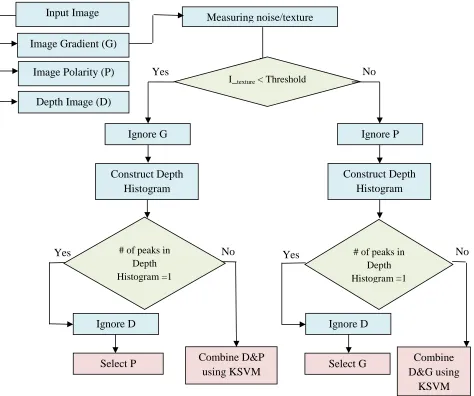
4.2 Method: The Proposed ACM based on Feature Selection and Feature Combination ... 47
4.2.1 Feature Selection ... 48
4.2.2 Feature Combination based on KSVM ... 50
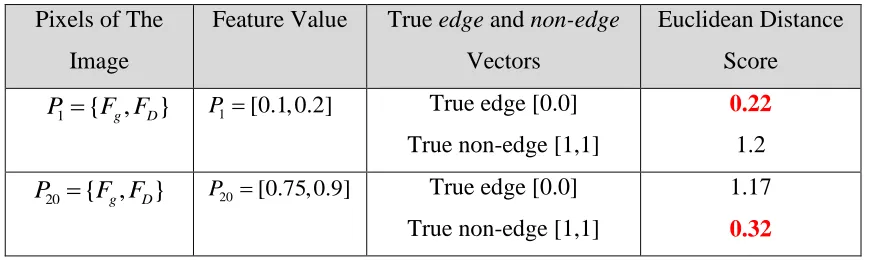
4.2.3 Providing Training Samples for KSVM ... 53
4.3 Result and Discussion ... 55
4.3.1 Experiment with RGB-D Datasets ... 58
4.3.2 Experiment with Stereo Indoor and Outdoor Images ... 71
4.4 Conclusion ... 77
CHAPTER 5: MULTIPLE OBJECT DETECTION WITH OCCLUSION USING ACTIVE CONTOUR MODEL AND FUZZY C-MEAN ...79
5.1 Background ... 79
5.2 Method: Salient Object Identification Using ACM and FCM ... 82
5.2.1 Determining Cluster Number ... 83
5.2.2 Occluding Object Detection ... 85
5.2.3 FCM Algorithm ... 87
5.3 Result and Discussion ... 88
5.4 Conclusion ... 96
CHAPTER 6: CONCLUSION AND FUTURE WORK ...97
6.1. Conclusion ... 97
6.2. Future Work ... 99
REFERENCES/BIBLIOGRAPHY...101
xi
LIST OF TABLES
Table 4-1: An Example of Providing Training Samples. ... 55
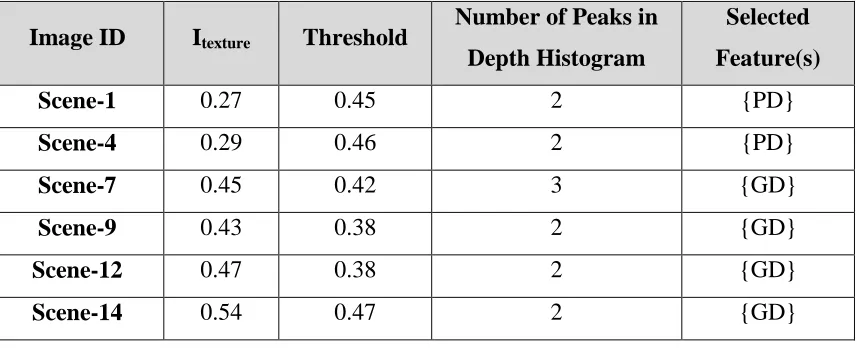
Table 4-2: Feature Selection Process Based on Image Data for Berkeley Dataset. ... 59
Table 4-3: Feature Selection Process Based on Image Data for Washington Dataset. ... 59
Table 4-4: Comparing the Proposed Method with Baseline Methods Using Dice Similarity Score
in Berkeley Dataset. ... 68
Table 4-5: Comparing the Proposed Method with Baseline Methods Using Dice Similarity Score
in Washington Dataset. ... 68
Table 4-6: Parameter Values for Each Image in Implementing the Proposed ACM and Other
Baseline Methods in Berkeley Dataset. ... 70
Table 4-7: Parameter Values for Each Image in Implementing the Proposed ACM and Other
Baseline Methods in Washington Dataset. ... 70
Table 4-8: Feature Selection Process Based on Image Data for Stereo Dataset. ... 72
Table 4-9: Comparing the Proposed Method with Baseline Methods Using Dice Similarity Score
in Stereo Dataset. ... 76
Table 4-10: Parameter Values for Each Image in Implementing the Proposed ACM and Other
xii
LIST OF FIGURES
Figure 2-1: Over Segmentation and Under Segmentation (Yuan et al., 2005). ... 13
Figure 2-2: The Effect of Elastic Term on Contour (Poonawala & Milanfar, 2002). ... 18
Figure 2-3: The Effect of Bending Term on the Contour (Poonawala & Milanfar, 2002). ... 19
Figure 3-1: Salient Object Detection Using ACM Based on Gradient, Polarity, and Depth Clue on Our Own Images. ... 42
Figure 3-2: Salient Object Detection Using ACM Based on Gradient, Polarity, and Depth Clue on Images of Several Standard Datasets. ... 43
Figure 4-1: The Overview Diagram of The Proposed Feature-based ACM. ... 47
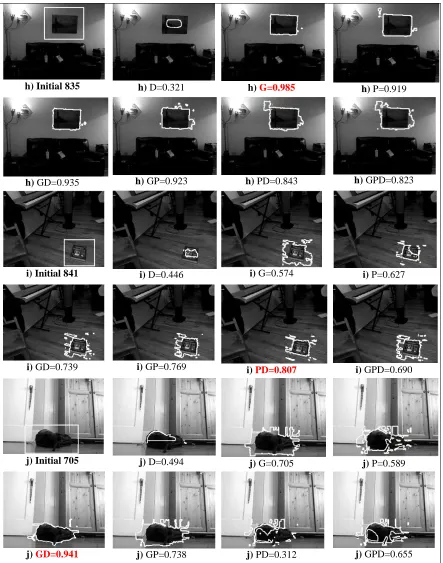
Figure 4-2: Applying Different Feature Subset as a Stopping Term in Berkeley Dataset. ... 63
Figure 4-3: Applying Different Feature Subset as a Stopping Term in Washington Dataset. ... 65
Figure 4-4: Applying Different Feature Subset as a Stopping Term in Stereo Images. ... 75
Figure 5-1: Overview Diagram of Proposed Method for Occluding Object Detection. ... 83
Figure 5-2: The Process of Determining the Cluster Number. ... 85
Figure 5-3: Results of Applying FCM-based Method on Real RGB-D Images. ... 91
Figure 5-4: Results of Applying FCM-based Method on Berkeley Dataset. ... 92
Figure 5-5: Results of Applying FCM-based Method on Stereo Images. ... 94
xiii
LIST OF ABBREVIATIONS
ACM Active Contour Model
SVM Support Vector Machine
KSVM Kernel Support Vector Machine
FCM Fuzzy C-Mean
PDE Partial Differential Equation
FAB Forward-And-Backward
RGB Red-Green-Blue
GAC Geodesic Active Contour
CV Chan-Vase
SDK Software Development Kit
RD Reaction Diffusion
LSF Level Set Function
SPF Signed Pressure Function
LIF Local Image Fitting
SBGFRLS Selective Binary and Gaussian Filtering Regularized Level Set
DRLSE Distance Regularized Level Set Evolution
FMLE Fuzzy Maximum Likelihood Estimation
B3DO Berkley 3-D Object
1 CHAPTER 1
INTRODUCTION
1.1.Background
Computer vision is a discipline aiming to automatically extract, analyze and understand
meaningful information from visual data such as images and videos. It has a variety of
applications in our modern world. To mention a few, autonomous vehicles, medical
image analysis, robotics and face recognition are some famous applications of computer
vision. Image processing and pattern recognition are two fundamental techniques
computer vision utilizes to reach its goals. The main objective in image processing is to
pre-process the image and convert it to a suitable form for further analysis, while pattern
recognition employs machine learning and statistical techniques to classify various
patterns. Image segmentation is a central goal in computer vision, and it pertains to
extracting the salient and coherent regions that semantically belong to different objects.
The more accurate the segmentation is accomplished, the more effectively semantic
objects can be detected. Segmentation and object detection play the essential role toward
the image understanding, and they are still considered as the open challenges due to the
complexity of images and object classes.
In segmentation methods, region is considered as the most significant feature, and based
pixel-2
based, area-based, edge-based and physics-based. In the edge-based method, which is our
main concern in this study, region is defined as a connected group of pixels surrounded
by edge pixels creating a contour (Skarbek & Koschan, 1994). In the last two decades,
active contour model (ACM) has attracted great attention from the computer vision
research community. It has been widely applied as a framework for extracting the contour
of salient objects from images (Ge et al., 2015; Wang et al., 2014; Zhang et al., 2013).
Current ACMs can be grouped into parametric ACMs and geometric ACMs, w.r.t. (with
respect to) their implementation and representation (Li et al., 2005). Parametric active
contours (Xu & Prince, 1998) are presented as parameterized curves in a Lagrangian
framework, while geometric active contours are represented via level set functions in an
Eulerian framework (Malladi et al., 1995). The important advantage of geometric active
contours is that they can break or split automatically in the evolution process, thanks to
the level set function (LSF). The fundamental concept is to evolve the LSF w.r.t. a partial
differential equation (PDE). Therefore, a new evolution of PDE for a LSF can be derived
by minimizing a particular energy function defined on a LSF. These methods (Osher &
Fedkiw, 2002; Zhao et al., 1996), known as variational level set methods, have shown
more robust results than the methods using PDE for parameterized curves.
Geometric active contours (snakes) are implemented via the level set methods w.r.t.
minimizing an energy function. Snake is presented by the zero LSF 0 which is the result
3
in terms of the internal energy and external energy. While internal energy controls the
shape and size of the snake, the external energy acts as forces that aim at moving the
curve toward the object boundaries, based on some image features. The zero LSF evolves
w.r.t. time using an evolution equation, allowing it to be re-initialized and to keep the
LSF close to an approximation of the signed distance function. However, in traditional
level set methods, when the zero LSF is very steep, it may move away from its main pose
or LSF. This issue causes the LSF to be far away from a signed distance function. Hence,
the re-initialization of the LSF to the signed distance function becomes impossible.
Furthermore, this re-initialization is usually expensive and complicated (Li et al., 2005).
To address the above problems, a variational LSF was proposed by (Li et al., 2005)
where the distance regularization term was defined with a potential function as a penalty
term in the internal energy function. Such a penalty term makes the LSF have a unique
forward-and-backward (FAB) diffusion effect, which retains the LSF to the signed
distance function. However, the FAB diffusion with the defined penalty term for energy
minimization is a backward diffusion with a large rate. Thus, such a strong backward
diffusion leads to the periodic “peaks” and “valleys” in. Although such fluctuations
happen at a specific distance to, they may deform the zero LSF a little. To overcome
this problem, (Li et al., 2010) proposed a new potential function, called double-well,
which shows a different diffusion rate and diffusion behavior. We follow the approach in
(Li et al., 2010) for the variational level set method to avoid doing the expensive process
4
Object detection is a challenging vision task that is an important step in numerous
applications such as scene understanding, video surveillance, image search and medical
applications. This task aims to find and locate the salient regions of the image which
semantically belong to objects, assuming that the type of the object is unknown. In object
detection, promising results have been recently obtained for various object classes
including pedestrian (Liu et al., 2014; Negri et al., 2014), car (Zheng & Liang, 2009;
Hota et al., 2010), and face (Ban et al., 2014; Jun & Kim, 2012). Such detection methods
typically learn from object classifiers using a labelled training set. Given a testing set, the
classifier is used on the sub-windows with different sizes at all positions.
Although some studies (Cheng et al., 2014; Rafiee et al., 2013) addressed the problem of
segmentation and object detection without relying on object class, only one salient object
has been the main concern. However, the presence of multiple occluding objects makes
the detection even harder. The problem of partially occluded objects was tackled in the
work of (Wu et al., 2008; Shet et al., 2007) using part-based representations and joint
analysis of multiple objects. However, such techniques were employed on some specific
5 1.2.Motivation and Objectives
In this study, we followed the level set method in (Li et al., 2010) as it is free of the
costly re-initialization process in level set evolution. However, in the external energy
function of (Li et al., 2010), only image gradient was applied as an edge indicator
function. Hence, only objects whose edges are well defined by gradient can be correctly
detected. Moreover, as the gradient is sensitive to textured or noisy regions, the curve
may stop before reaching the actual edge of the salient object. In some cases, it may pass
through the edge if the gradient has small local maxima on the edges of the object. To
overcome such difficulties, image polarity was applied in the external energy function as
a stopping term in (Allili et al., 2007; Ksantini et al., 2009; Ksantini et al., 2013), and it
was indicated that polarity can detect region or boundaries of the object of interest better
in the presence of texture. However, both gradient and polarity are sensitive to noise
whether texture is present or not, and their results are not always optimal, especially
when the initial contour is set inside of the objects contour.
Besides these two features, depth information, if available, could provide the better clue
for object detection as the pixels of the depth image correspond to a depth or a distance.
Disparity map, obtained from two images, can be used as a depth clue and is a good
alternative feature in an ACM stopping term. Depth information does not have to be
actual depth. In our case, we have used disparities as depth clue since they are easier to
6
depth sensors that can be used to obtain depth clue. Depth disparity does not suffer from
ambiguities that are inherent to two-dimensional images. So one of our objectives in this
study is to detect the salient object more effectively by applying depth clue as a stopping
term in ACM (Memar et al., 2013).
However, it is still challenging to clearly detect or differentiate objects using depth clue
when they are located at similar depths. For example, the depth clue might not be useful
for detecting a dish plate (flat object) located on a table, as both the table and the plate
have very similar depth information. Furthermore, depth sensors have some limitations;
for example, estimated depth for small and/or distant objects is not accurate. Indeed,
based on specific image data or genre of the image, the best feature candidate for a
stopping term could be either a single feature such as gradient, polarity or depth, or any
combinations of them. So another main objective followed in this study is to
automatically and correctly select and combine the best candidate feature(s) as a stopping
term w.r.t. image data.
When a 3D scene is projected to a 2D image, some information will be lost. For example,
parallel lines will intersect, and separate objects may become connected and occluded.
Therefore, occluding objects are segmented within the same contour using ACM-based
segmentation techniques. So a fuzzy clustering approach (FCM) might be employed to
help in better segmenting the occluding objects in still images. However, the C-value in
7
proposed to determine the best number of clusters (Bouguessa et al., 2006; Mishra et al.,
2012) with mixed results. In particular, different validity indices yield different cluster
numbers, depending on the image data. This is because these methods rely on image
statistics, and they are affected by pixel noise, which is always present in real images.
Finally, we aim to properly segment and identify the salient objects particularly in the
challenging case of occluded multi-object scenes by automatically choosing the cluster
number in fuzzy clustering algorithm.
1.3.Research Scope
This section presents the summary of the direction followed in this thesis to achieve the
objectives w.r.t. problem statements in segmentation and object detection.
Computer vision has numerous applications like scene reconstruction, video tracking,
object recognition, object detection, motion estimation, and image restoration. Detecting
the object of interest in the complex image is our main concern in this study. Image
segmentation, a prerequisite for many computer vision applications, can be used to help
with object detection.
Generally, segmentation techniques were categorized into five groups, namely
8
matching (Lucchese & Mitra, 2001). In particular, ACM, an edge-based segmentation
technique and FCM, a clustering technique, are our main focus in this study that aim at
segmenting and detecting objects in still images. Note that both ACM and FCM have
been used in a variety of applications.
ACMs are categorized into three main groups, namely, edge-based, region-based, and
shape-based models. Since region-based models are sensitive to intensity homogeneity,
and shape-based ACM needs a large amount of training samples, we focus on edge-based
models. As mentioned earlier, ACM is presented by internal and external energy
functions. Many outstanding techniques have been proposed to address the costly
re-initialization problem in the internal energy function of ACMs (Li et al., 2010; Zhang et
al., 2013). However, the external energy function in most studies (Li et al., 2010; Tian et
al., 2011; Zhang et al., 2013; Mumford et al., 1989) is based on image gradient which is
so sensitive to texture. So we aim to address this main problem of the edge-based ACM.
Among clustering techniques, FCM is utilized for better segmentation and object
detection in this study. FCM algorithm has shown promising results in segmentation by
improving the compactness of the regions. It is a pixel clustering technique where,
similar pixels should be in the same group while, the dissimilar ones are assigned to
different clusters. Although FCM algorithm benefits from simplicity of its
9
manually and known in advance. Thus, we aim to improve object detection by
automatically determining C-value or the number of the objects in the still images.
1.4.Research Contributions
To address the problem of segmentation and object detection in occluded multi-object
scenes using ACM and fuzzy clustering algorithm, we proposed different methods w.r.t.
research motivation and research objectives. The main contributions of this thesis are
summarized as follow:
Proposing a new method which takes the advantage of the existing contour
models by using the depth clue, from Kinect sensor or stereo vision algorithm,
instead of two-dimensional clues, in the model stopping function. The depth
disparity is applied in the external energy function of the ACM for detecting the
object of interest in the image (Chapter 3).
We proposed a new segmentation method that automatically selects the best
candidate feature(s) among gradient, polarity, and depth to be used in the
stopping function of the well-known ACM. The proposed method has full
flexibility w.r.t. the above-mentioned features, as the latter can be employed
either individually or collectively in a coherent framework, depending on each
10
features in a semi-supervised manner using the kernel-based Support Vector
Machine (KSVM) that will be the most effective stopping term in the ACM
(Chapter 4).
The final contribution of this thesis corresponds to the identification of salient and
occluded objects based on Fuzzy C-Mean algorithm. In this step, the depth is
included as an important clue that allows us to estimate the cluster number and to
make the clustering process more robust. In particular, occlusions are easily
handled, and the objects are properly segmented and identified (Chapter 5).
1.5.Thesis Organization
This thesis is outlined in 6 chapters.
Chapter 2: This chapter consists of the literature review on the segmentation and object
detection approaches; different ACMs and in particular state-of-the-art techniques based
on ACM are also highlighted.
Chapter 3: Sara Memar, Karen Jin, Boubakeur Boufama: Object Detection Using Active
11
This chapter presents the details of the proposed method in which depth clue is employed
and incorporated in the external energy function of the ACM for segmenting and
detecting the salient object in the image. The experiments carried out on real images,
comparison and discussion are also provided.
Chapter 4: Sara Memar, Riadh Ksantini, Boubakeur Boufama: Feature-based Active
Contour Model for Object detection. Submitted to Journal of the Optical Society of
America A.
It describes different steps of the proposed feature-based ACM. The details of an
automatic selection of best candidate features among gradient, polarity and depth,
coupled with a combination of them by KSVM will be discussed. This chapter also
includes the results, discussion and comparison.
Chapter 5: Sara Memar, Riadh Ksantini, Boubakeur Boufama: Multiple Object
Detection with Occlusion Using Active Contour Model and Fuzzy C-Mean. ICIAR (1)
2014: 224-233.
This chapter corresponds to detecting multiple occluded objects in images with complex
background based on FCM algorithm which is followed by experimental results and
12
Finally, chapter 6 concludes and summarizes the most important aspects of the research.
13 CHAPTER 2
LITERATURE REVIEW
2.1. Segmentation
Image segmentation can be defined as the process of dividing an image into
homogeneous and meaningful regions (Lucchese & Mitra, 2001) which is an important
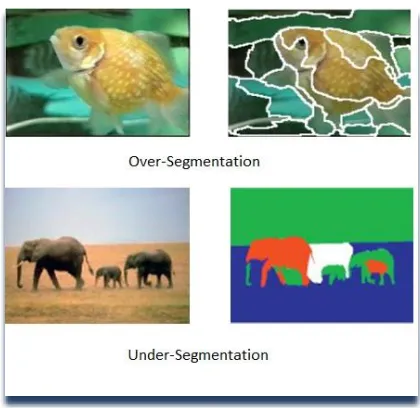
step in image analysis and image understanding. Over-segmentation and
under-segmentation are two major problems with image under-segmentation. As Figure 2.1 indicates,
in over-segmentation, the pixels of the same object are segmented into different regions,
while pixels of the different objects are identified as the same object in
under-segmentation. Many segmentation techniques have been proposed, and they are
commonly divided into the following categories:
14
Threshold-based: This technique is commonly used for segmenting the
image. It is useful when there is a bright object on a dark background or vice
versa. The threshold is often tuned interactively until a suitable segmentation
result has been achieved. Histogram is a useful tool for setting the threshold
value. For example, in (Siang Tan & Mat Isa, 2011), the histogram
thresholding method was proposed to tackle the problem of image
segmentation. Threshold techniques are usually utilized in combination to
other segmentation techniques.
Region-based: Region-based techniques are usually based on region
growing which aims at grouping pixels or sub-regions into larger regions
considering pre-defined criteria. Split and merge and texture analysis are also
common strategies in region-based image segmentation (Shih and Cheng,
2005; Preetha, 2012). Unlike region-growing, the image is split into four
sub-images so that P(Ri) = False. Then, any adjacent regions are merged if P(Ri ᴜ
Rj) = True. This process will terminate when no more merge and split is
feasible w.r.t. a specific criterion. The main drawback with this technique is
that it is not possible to merge two segments belonging to two different levels
of pyramid (Gonzalez & Woods, 2006).
Edge-based: The object is identified by its boundaries, and the main goal
of this segmentation technique is to find the edges of the object. Edge
15
segmentation models. Hough transform (Hart, 2009; Duda and Hart,
1972) has been commonly used as an edge linking technique aiming to
find the ideal edges presenting a certain class of parametric shapes like
line, circles, or ellipses. Hough transform is time-consuming for finding
objects with complex shapes. It also demands post-processing to connect
the correct line segments, and it is required to know the nature of the
shape we are looking for in the image. Watershed segmentation (Beare,
2006; Vincent & Soille, 1991) is based on image gradient, and some
barriers (dams) are built on image gradient. Then the built dams are
formed to identify the semantic region. However, it may lead to
over-segmentation when the gradient effect is high.
Clustering techniques: The main goal of clustering techniques is to group the
patterns which are similar to each other in a set of features. K-mean algorithm
(Hartigan & Wong, 1979; Bishop, 2006), FCM (Bezdek, 1981), and Fuzzy
Maximum Likelihood Estimation (FMLE) (Gath & Geva, 1989) are some
common clustering algorithms that have been used in image segmentation.
FMLE is the extension of the FCM by considering the covariance for each
cluster rather than the mean value. The main disadvantages of such techniques
16
Matching: This technique is based on this assumption that the object we wish
to locate and identify in the image should be known in advance (Dey et al.,
2003). But, it is not always feasible to have this knowledge. So its application
is useful when the object of interest is known such as detecting the hand
contour (Park et al., 2012).
Edge-based and clustering techniques are taken into account among the
above-mentioned techniques. The main problem with the edge-based techniques could be the
presence of noise and artifacts which could diminish the performance of segmentation
result. There are some classical edge detection techniques like Canny (Canny, 1986),
Sobel (Pujar and Shambhavi, 2010), Ridge (Lindeberg, 1996), and Gabor (Lee, 1996)
which perform by getting the convolution of the image with filters. However, such
techniques fail to detect non-rectilinear objects, i.e. objects with the curved boundaries,
and only rectilinear objects can be detected. This drawback has been addressed by some
techniques like Hough transform and matching, but they demand the prior knowledge
about the shape of the object. So we focus on edge-based active contour technique for
image segmentation in this study.
2.2. Active Contour Model
Active Contour Model (ACM) was initially identified in 1988 by Kass et al. It is also
17
segmentation based on ACMs is useful as the shape of the object is not required to be
known, making this technique applicable in many applications. It is also robust to weak
and incomplete edges. The main motivation for ACM is that it is able to effectively detect
the object with the curved boundaries. In classical ACMs, the object boundary is
presented by a parametric curve aiming to deform an ideal initial shape towards the shape
of the salient object. This goal is accomplished by minimizing an energy function.
2.2.1. Parametric Active Contour Model
The contour is defined as a two-dimensional parametric curve (v(s)), where v(s) = (x(s),
y(s)). Total energy of snake (ESnake) is expressed in terms of internal energy (Eint ),
external energy (Eext), and constraint energy (Econ) as follows:
E
Snake
E
int
E
ext
E
con.
(2.1)1. Internal Energy Function: This function controls the length and smoothness
of the curve. So this function consists of two terms, namely, Elastic energy
and Bending energy (Eint EelasticEbending). Elastic energy (Eelastic) is the first
order derivative of the contour that aims at adjusting the length of the curve by
applying tension, and it is defined as below:
1 ( ) 2 , 2
elastic s s
18
where s ( )
dv s v
ds
, and the coefficient ( )s helps to adjust the elastic term
along contours’ points. Thus, as Figure 2.2 illustrates, this term tries to
remove the curve concavity and shrink the curve. However, in the absence of
any forcing term, the initial contours collapse to a point.
Figure 2-2: The Effect of Elastic Term on Contour (Poonawala & Milanfar, 2002).
The second term is bending force (Ebending) that aims at eliminating very
sharp corners and making the final contour to be a smooth curve. This term is
the second derivative of the contour and defined as follow:
2
1
( ) ,
2
bending s ss
E
s v ds (2.3)Initial Curve
19 where
2 2
( ) ss
d v s v
ds
, and( )s is its coefficient which controls the level of the
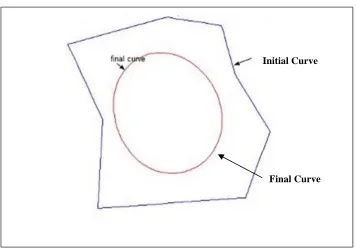
smoothness. As Figure 2.3 demonstrates, using bending force, the initial
curve with high bending energy and sharp corners are smoothed and
deformed to a final curve with a lower bending energy. Bending term can
deform the initial curve to a circle if it is applied on the contour for the
infinite number of iteration as a circle has the minimum bending energy.
Figure 2-3: The Effect of Bending Term on the Contour (Poonawala & Milanfar, 2002).
2. External Energy Function: This function is defined based on image features.
Its definition is formulated as below:
( ( )) .
ext image
s
20
An image can be presented by some features like line or edge, and Eimage
should be minimized and get small values on such features. In many
edge-based ACMs, the external energy function is defined edge-based on image gradient
which is commonly used for the edge detection. Some of these models will be
discussed in details, later.
3. Constraint Energy Function: This energy allows the user to interactively
manipulate the snake in the evolution process. The constraint term is optional,
and it can be set by the user on the contour.
The parametric ACMs are very sensitive to parameters like( )s , ( )s and standard
deviation of Gaussian function ( ) which is normally used in the external energy
function. Moreover, external force is not able to execute on points which are far away
from the boundary. It also fails to extract the objects with boundary concavities.
2.2.2. Geometric Active Contour Model
Geometric ACMs were introduced by Caselles et al. (1993) and Malladi et al. (1995).
The geometric models are implemented via LSF by minimizing an energy function. The
initial curve in geometric ACM is presented by a zero LSF (0) which is the result of the
21
LSF can split or merge during the evolution, and the topological changes are
automatically controlled (Li et al., 2005).
The active contour ( ) is presented by the zero LSF as follow:
( )t ( , ) | ( , , )x y
t x y 0}, (2.5)where
( , , )
t x y
is the LSF which is evolved w.r.t. time using the following evolutionequation:
0, F
t
(2.6)
where Fis the speed function, and it is defined based on LSF () and image data.
LSF ( ) can develop very sharp and move away from its origin during the curve
evolution. So a numerical scheme was used in traditional level set methods (Caselles et
al., 1993; Malladi et al., 1995; Osher & Fedkiw, 2002) to keep the LSF close to the sign
distance function using the following re-initialization equation:
0
( )(1 ),
sign t
(2.7)
where0is the re-initialized function, and Sign( ) is the sign function. Various
re-initialization techniques have been proposed (Peng et al., 1995; Sussman & Fatemi,
22
to find out how and when the LSF should be re-initialized to a signed distance function.
Thus, a variety of studies have addressed this problem by proposing reinitializing free
LSF. More details about such techniques will be provided, later.
2.3. Types of Active Contour Model
The various types of existing ACMs include region-based, edge-based, shape-based, and
any combination of them. More details for each category is provided as follows:
2.3.1. Region-based (C-V model)
Region-based ACMs have been recently proposed and employed for image segmentation.
The main goal of such region-based models is to incorporate the statistical information of
the inside and outside the initial contour for the curve evolution and identifying the
region of interest. Thus, they have performed more effectively for images with weak
object boundaries (Tian et al., 2011; Wang et al., 2010). The main advantage with such
models is that they are not very sensitive to the location of the initial contour. A review of
literature has shown that the main application of such models is in medical image
analysis where the images are presented with non-uniform daylight and artificial
23
Chan-Vase (C-V) is the well-known geometric region-based model (Chan & Vase, 2001).
The C-V model is the generalization of the Mumford-Shad model where the optimal
image decomposition into several regions is accomplished by minimizing a smooth
function proposed by Mumford and Shad (1989). The C-V model solved this
minimization problem by incorporating LSF where the global statistical information was
used for evolving the curve. In spite of getting larger convergence range and effectively
handling topological changes using C-V model, it fails to perform well for images with
intensity inhomogeneity. The main reason is that C-V algorithm is based on this
assumption that image intensities in each region kept constant, and thus, this issue leads
to the incorrect movement of the contour. Another limitation of this famous model is its
dependence to numerical scheme like the re-initialization process, making this technique
so costly and time-consuming. Some studies aimed to address the limitations of C-V
model; however, their performance is still very expensive (Vese & Chan, 2002; Solem et
al., 2006; Pi et al., 2007).
2.3.2. Edge-based (GAC Model)
In edge-based ACMs, the external energy function is defined based on an edge-based
stopping term or an edge indicator. Such models mainly use image gradient to identify
the desired object boundaries. Geodesics Active Contour (GAC) model is one of the most
24
The GAC model is defined based on geodesic or minimal path computation for
identifying the boundaries. It also takes into account the relation between the classical
active contours and geometric models. So the geometric GAC is based on the
gradient-based stopping term for identifying the object boundaries and a balloon force term aiming
to adjust the motion of the curve such as shrinking or expanding the contour during the
evolution. However, most edge-based approaches including GAC model depend on
image gradient for stopping the curve evolution. Hence, only objects whose edges are
well defined by gradient can be correctly detected. Furthermore, gradient is sensitive to
texture, and the curve may stop before capturing the desired boundaries. The curve may
also pass the actual edge as gradient is prone to small local maxima on the edges of the
object. The initial contour should be set properly in such edge-based models, and
inappropriate location of the initial contour may lead to poor segmentation result.
2.3.3. Shape-based
The shape-based models demand the prior knowledge about the shape of the object we
aim to detect in the target image. Although such approaches have shown good
performance in case of texture and occlusion, they need a substantial amount of training
samples (Malladi et al., 1995; Chen et al., 2002). Besides, since a shape-based model is
based on this assumption that the prior shape knowledge should be known, its application
25
There are also some ACMs based on the combination of region, edge, and shape
information. For example, the model in (Bresson et al., 2006) is the combination of
edge-based GAC model, Mumford-Shah region edge-based model and shape information. Tian (et
al., 2011) proposed an ACM based on both region and edge information. However,
several parameters should be tuned for their models when tested on different images.
Moreover, some of these techniques fail to perform effectively with images presented
with local intensity inhomogeneity.
2.4. Review of Baseline Active Contour Models
The details of some baseline ACMs are discussed in this section. Such models are either
region-based or edge-based, and have demonstrated good performance in segmenting the
image.
Li et al. (2010) proposed an edge-based ACM called distance regularized level set
evolution (DRLSE) where the regularity of the LSF is kept during the curve evolution,
making this model free from expensive re-initialization procedure. The proposed
regularization term is based on a Forward-and-Backward (FAB) diffusion effect which is
able to effectively control the desired shape of the LSF during the evolution. The external
energy function in this model is based on gradient information aiming to move the LSF
toward the desired object boundaries. The proposed DRLSE method allows the use of
26
time and number of iterations. So we follow this model for the variational LSF which is
re-initialization free and efficient in practice.
The proposed ACM in (Allili & Ziou, 2007) is based on region and edge information.
This unsupervised color/texture segmentation approach relies on polarity-based stopping
function. This model is able to segment images with high texture due to the use of
polarity information. However, homogeneous seeds are initialized at different regions of
the image, and its ACM does not avoid the costly re-initialization procedure. Ksantini et
al. (2013) also utilized polarity information as an edge indicator in their proposed ACM
for salient object detection in grey-level images and color images. Hence, images with
high level of texture can be effectively segmented. This model is also practically efficient
by following the re-initialization free LSF proposed in (Li et al. 2010).
In (Zhang et al., 2010a), a region-based ACM method using local image fitting (LIF)
energy was proposed. It extracts the local image information, w.r.t. intensity
inhomogeneity for segmenting the target image. It also applies a Gaussian Filter to
regularize LSF and to avoid the costly re-initialization process. It achieved satisfying
segmentation results when applied on the synthesis images.
The method proposed in (Zhang et al., 2010b) is another region-based ACM that is based
27
model considers the advantages of the edge-based GAC model (Caselles et al., 1997) and
C-V region-based ACM (Chan & Vase, 2001). A new region-based signed pressure
function (SPF) was introduced using statistical information inside and outside the
contour. The SPF behaves like the edge stopping function in GAC model for stopping the
contour evolution on the object boundaries, and it does the global segmentation like C-V
model for detecting all objects, regardless of where the initial contour is set in the image.
When using the model in (Zhang et al., 2010b), the initial contour can be set anywhere.
More recently, Zhang et al. (2013) proposed the new method called RD-LSF where a
reaction-diffusion (RD) term is identified, making the level set evolution absolutely free
from the costly re-initialization procedure. The main advantages of the RD-LSF method
include its satisfying performance on weak boundary, and simple implementation of the
RD equation without the requirement of initialization scheme. The proposed RD-LSF
method has been tested on the famous region-based C-V model and edge-based GAC
model, and it outperforms other classical region-based and edge-based ACMs, especially
on noisy/textured images.
2.5. Image Features
In this section, image features such as gradient, polarity and depth will be discussed in
more details. Gradient has been widely applied in many ACMs. However, it fails to work
28
recently employed, and has shown promising results when there are a lot of textures. On
the other hand, depth provides structure information of the scene and can be also used as
a stopping function to detect the salient object. Overall, each feature has its own pros and
cons, and one may outperform the others in a particular condition. Here, more details for
each feature are provided as follow:
Gradient:
Generally, the image gradient measures the intensity changes for each pixel. It has
been applied in many applications, especially in edge detection. In most previous
works (Zhang et al., 2013; Li et al., 2010; Tian et al., 2011; Caselles et al., 1997),
stopping function (Fg) in ACM is defined based on the gradient information as
follows: 2 1 , 1 * g F
G I
(2.8)
where 2 2 2 2 2 1 exp 2 x y
G
is the Gaussian kernel with 2standard deviation. The
value of Fg is in the range of 0 to 1, where on main edges, this value is close to 0
while on non-edge regions, it tends to be close to 1. The main drawback with the
gradient is its poor performance when the salient object is located on a textured
background. This is because some areas, not belonging to the boundaries of the
object, will be identified as edges and hence, making the curve stop before reaching
30
Polarity:
Polarity was introduced as an alternative edge stopping function in ACMs (Allili &
Ziou, 2007; Ksantini et al., 2013) with some limited success when the image
background is clouted with texture. Polarity is considered to be a local image feature
that shows a measurement of the extent to which the gradient vectors, in a specific
pixel neighborhood, are oriented in a dominant direction. Polarity is defined as:
( , ) E E . P x y
E E
(2.9)
,
( , ) * . .
x y
E G x y I n
(2.10)
,
( , ) * . . x y
E G x y I n
(2.11)In the above equations,I is the gradient of image intensity which can be calculated
using the convolution of the image with the first derivative of a Gaussian filter.
G
isa smoothing function with variance 2. The rectified positive and negative are
denoted as
and
, respectively. nis the unit vector which is perpendicular tothe dominant vector () in a neighborhood of a pixel (x, y). While Eindicates how
many gradient vectors in the window G( , )x y are in the positive side of the dominant
31
The dominant vector is identified as the principal eigenvector of the matrix that is
defined by the following expression:
, ( , ) *( ) ( ) .
T x y
M
G x y I I (2.12)The values of polarity for the image (I) are between 0 and 1. The polarity P I( ) gets
very close to 1 on edges of the object of interest and gets very close to 0 when it falls
inside a region. So polarity information as a stopping term in the external energy
function of ACM can be formulated as:
1 ( ).
p
F P I (2.13)
Depth:
Disparity map (depth) in stereo images introduces additional information for
improving the performance of the segmentation. Depth clue, obtained from disparity
map, is not sensitive to texture as it reflects the depth information of the objects in the
scene. There are several well-known stereo matching algorithms that effectively
estimate the position of the objects (Yang, 2012; Heo et al., 2013; Banks et al., 1999).
Besides stereo-vision techniques, there are other ways to obtain this information. In
particular, recent hardware using time-of-flight (sonic, infrared, laser) is capable to
produce good quality depth information. For example, Microsoft Kinect is available
for a low cost and allows the estimation of depth in addition to an RGB image.
32
scientific communities. It has been employed in many computer vision applications
ranging from skeletal tracking to speech recognition and 3D reconstruction
(Barnachon et al., 2013; Shotton et al., 2011; Henry et al., 2012; Burgin et al., 2011).
However, the main drawback with these techniques is that depth is only accurate for a
predefined distance range and indoor scenes.
In this study, in addition to stereo-vision technique (Yang, 2012), we have used
Microsoft Kinect sensor for obtaining the depth information of the scene. Kinect
sensor consists of three devices, the center one is an RGB camera which takes about
30 frames per second. On the left side of the RGB camera, an infrared device projects
the infrared rays towards the scene. On the right side of the RGB camera, an infrared
sensor measures the time-of-flight of the returning infrared ray for each pixel, and
hence getting the point-sensor distance. Kinect generates a 640x480 RGB image and
a matching depth image as outputs. Due to different positions of the RGB and depth
sensors in the Microsoft Kinect, depth image is not aligned with the RGB image.
Hence, an RGB-to-depth calibration should be performed to ensure that the depth
matrix is aligned with the RGB matrix. This was achieved using library functions
from OpenNI. While pixels in the RGB image represent a measure of color or
intensity, pixels of the depth image correspond to a depth or a distance.
In order to incorporate the depth clue in our method, the gradient of the disparity map
33
Note that when the actual depth is available, for example when using a Microsoft
Kinect sensor, we will be using the gradient of the depth image itself.
More details about the use of disparity map and 3D information in ACM for the
34 CHAPTER 3
OBJECT DETECTION USING ACTIVE CONTOUR MODEL WITH DEPTH CLUE
3.1Background
Active contour models (ACM) have been widely employed for delineating an object of
interest in images. In an edge-based ACM, the external energy function makes zero LSF
move toward the edge of the objects. In other words, curve moves toward the object
boundaries dynamically to produce the shape of the salient object. Therefore, stopping
function should be defined in an external energy in order to make the curve stop on object
boundaries. Although the gradient, as a stopping term, has shown promising results in
ACMs (Zhang et al., 2013; Li et al., 2010; Tian et al., 2011; Caselles et al., 1997), its
sensitivity to local minima makes it susceptible to stop before reaching the actual edge.
Polarity is another feature used as a stopping function with some limited success,
particularly, when the image background is clouted with texture (Allili & Ziou, 2007;
Ksantini et al., 2013). In particular, the stopping functions defined in terms of gradient
and polarity failed to detect salient objects effectively in many cases.
On the other hand, depth information, if available, could provide the better clue for
object detection. Disparity map in stereo images introduces additional information for
improving the performance of the segmentation. In particular, depth disparity does not
35
typically calculated from two images through the pixel matching process. The disparity is
usually used to get the depth information of the entire object regardless of noise or
texture inside or outside of that object. Thanks to the newly available low cost depth
sensors, such as Microsoft Kinect, the use of depth disparity for solving object detection
becomes reality. So we proposed a new method that uses depth clue with the classical
contour models for detecting salient objects in noisy images.
The proposed method takes the advantage of the existing contour models by using the
depth disparity clue, from Kinect sensor, instead of two-dimensional clues, in the model
stopping function. The depth disparity is applied in the external energy function of the
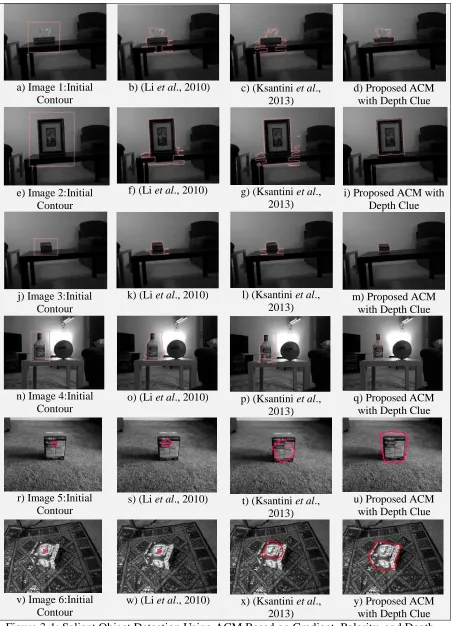
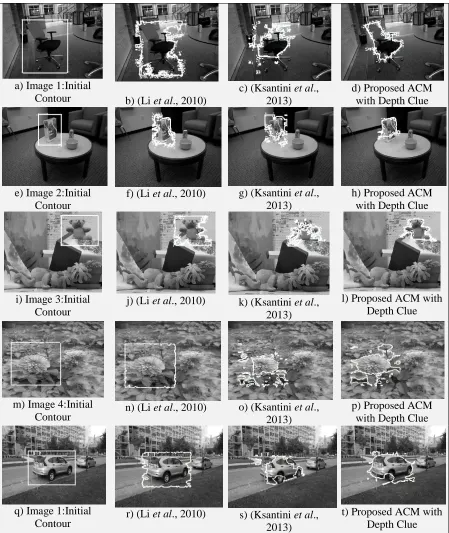
ACM for detecting the object of interest in the image. Experiments on several images
collected by Microsoft Kinect indicated the superiority of depth clue over the polarity and
gradient in detecting the object of interest using the ACM.
3.2Method: Active Contour Model Based on Depth Information
In our study, depth disparity is defined as the stopping function in the external energy
function. While pixels in the RGB image represent a measure of color or intensity, pixels
of the depth image correspond to the calibrated depth of the scene. There are several
well-known stereo matching algorithms that effectively estimate the position of the
objects (Yang, 2013; Heo et al., 2013; Banks et al., 1999). Steps of stereo algorithms
36
computation/optimization, and disparity refinement. Traditional matching cost
aggregation techniques were accomplished by summing/averaging matching cost over
windows with constant disparity. Thus, such techniques are based on the local nature of
traditional window-based cost aggregation algorithms and are vulnerable to the lack
of texture. Yang (2012) addressed the issue of cost aggregation in stereo algorithm by
proposing a non-local solution.
In (Yang, 2012), the matching cost values are aggregated adaptively based on pixel
similarity on a tree structure derived from the stereo image pair to preserve depth
edges. The nodes of this tree are all the image pixels, and the edges are all the edges
between the nearest neighboring pixels. The similarity between any two pixels is
decided by their shortest distance on the tree. The proposed method is non-local as
every node receives supports from all other nodes on the tree. As can be expected, the
proposed non-local solution outperformed all local cost aggregation methods. So in
this study, we follow the method in (Yang, 2012) to get the disparity map.
In order to incorporate the depth clue in our method, the gradient of the disparity map,
called hereafterFD, is calculated and used the same way as the classical image gradient in
the ACM. Note that when the actual depth is available, for example when using a
37
gradient of depth information is defined and utilized in an external energy function of the
ACM as follow:
2 1 , 1 * D D F
G I
(3.1)
where G is the Gaussian kernel with standard deviation, and IDis the depth image
can be computed using either Kinect or stereo vision algorithm. The values for gradient
of disparity are between 0 and 1, where this value is very close to 0 on edges of the
salient object, and it is close to 1 on non-edge areas. So the stopping function is defined
in terms of disparity information orFD, and it is combined in the external energy function
of the variational level set formulation proposed by Li et al. (2010). The reasons of
employing this efficient and re-initialization free technique was discussed in chapter 2.
So the proposed ACM based on the depth clue is defined as below:
, , ( ) ( ) ( ),
D D D
F v LF vAF
(3.2)where
( ) ( ) .
D
F D
L F dxdy
(3.3)( ) ( ) .
D
F D
A F H dxdy
(3.4)In equation (3.3) and equation (3.4), and H are the Dirac delta and Heaviside
functions, respectively. So in the external energy function (equation (3.2)),
D
F
38
the line integral of the function FDin equation (3.1) along the zero LSF, and the energy
of
D
F
L
minimizes in a case that zero LSF of reaches the boundaries of the salientobject. Besides that,
D
F
A
is applied on the energy function as well in order to control themotion of the zero LSF during the evolution, and its coefficient v can get either positive
or negative values, where the positive value makes the initial curve shrink and the
negative one makes it expand.
As mentioned before, we follow the approach of (Li et al., 2010). The total energy
function in this study is defined as below:
, ,
( ) ( ) ,
D
P F v
R
(3.5)where , ,
D
F v
is the external energy function which was previously discussed andmodified based on our needs, and it was defined in the equation (3.2). RP( )
is theinternal energy function with the constant 0 which is considered as the level set
regularization term in order to control the deviation of the LSF from the signed distance
function, and it is described as below:
( ) ( ) ,
p
R p dx
(3.6)wherePis regarded as a potential or energy density function P: [0, ) and it is
39
2 1
( ) ( 1) .
2
P dx
(3.7)In (Li et al., 2005), the internal energy function was described only overP( ) , as a
penalty term to retain the LSF close to the signed distance function and panelizes the
deviation of the LSF from the signed distance function. However, due to unpleasant side
effects of P( ) on the LSF in some circumstances, a new potential function (Rp( ) ) was
added in the distance regularization term to remedy the situation (Li et al., 2010). In
overall, the total energy function should be minimized using the following equation:
.
t
(3.8)
In equation (3.8) which is also known as gradient flow,
is the Gateaux derivative (first
derivative) (Evans, 1998). Therefore, the Gateaux derivative of the total energy function
which is expressed in terms of the function ( ) can be extended as:
div d( p( ) ) ( )div F( D ) vFD ( ).
(3.9)
In equation (3.9), denotes the Laplacian operator, and dp is a function which is
described as below:
( ) ( ) . ( ) p P S d s S
(3.10)
Then, the gradient flow or the proposed evolution equation of the LSF in (Li et al., 2010)