University of South Carolina
Scholar Commons
Theses and Dissertations
2016
Elementary Special Education Resource Teachers’
Practices And Perceptions Of Curriculum-Based
Measurement
Susan Brooks Seymour University of South Carolina
Follow this and additional works at:https://scholarcommons.sc.edu/etd Part of theSpecial Education and Teaching Commons
This Open Access Dissertation is brought to you by Scholar Commons. It has been accepted for inclusion in Theses and Dissertations by an authorized administrator of Scholar Commons. For more information, please [email protected].
Recommended Citation
ELEMENTARY SPECIAL EDUCATION RESOURCE TEACHERS’ PRACTICES AND PERCEPTIONS OF
CURRICULUM-BASED MEASUREMENT
By
Susan Brooks Seymour
Bachelor of Arts Converse College, 1992
Master of Arts in Teaching University of South Carolina, 1995
Master of Education
University of South Carolina, 1997
Submitted in Partial Fulfillment of the Requirements
For the Degree of Doctor of Philosophy in
Special Education
College of Education
University of South Carolina
2016
Accepted by:
Kathleen J. Marshall Major Professor
Mitchell Yell, Committee Member
Anthony Plotner, Committee Member
Dianne Harwell, Committee Member
ii
© Copyright by Susan Brooks Seymour, 2016
iii
DEDICATION
This work is dedicated to my daughters, Sarah Grace and Lily, to my husband,
Clayton, and my parents whose love, patience, encouragement and support inspired me to
iv
ACKNOWLEDGEMENTS
I would like to express my deepest appreciation to my professors during this
doctoral program, Dr. Kathleen Marshall, Dr. Mitchell Yell, and Dr. Erik Drasgow,
whose vast knowledge and passion for special education and teacher preparation has
provided me the knowledge, skills and inspiration to become a professor too. I also want
to thank my advisor and dissertation chair, Dr. Kathleen Marshall, for her guidance,
support, and expertise without which this dissertation would not be possible. Besides my
advisor, I would like to thank the rest of my dissertation committee, Dr. Mitchell Yell,
Dr. Anthony Plotner, and Dr. Diane Harwell, for their guidance, encouragement, and time
v
ABSTRACT
This study examined elementary special education resource teachers’ practices
and perceptions of curriculum-based measurement (CBM). A significant body of
research since the 1970’s has shown that CBM is a reliable and valid predictor of
subsequent performance on a variety of outcome measures, and thus useful for a wide
range of instructional decisions (Deno, 2003; Busch & Reschley, 2007). Numerous studies have shown that when teachers use CBM, as originally intended, to write
data-based IEP goals, monitor the effects of their instructional programs, and adjust their
interventions according to data-based decision rules, student achievement improves
(Fuchs, Fuchs, Hamlett, 1989b; Jenkins, Graff & Miglioretti, 2009). Additionally, CBM
is a valuable assessment tool for meeting the progress monitoring requirements of the
IEP, as set forth in the IDEA. Barriers to implementation include, time constraints, lack
of confidence and knowledge in using CBM, and doubt in the validity of some of the
measures (Yell, et al., 1992; Foegen, 2001). Despite a very solid research base, CBM is
not being used as originally intended and is not being used consistently and accurately by
special education teachers to monitor student progress to meet the federal mandate
(Estcheidt, 2006; Shinn, 2010). To update the literature and bridge the gap between the
earlier studies on CBM and current practices and perceptions of elementary special
education teachers a survey questionnaire was used to collect data from 84 elementary
special education resource teachers from 15 public schools in the southeast. Results
vi
using CBM to fulfill the federal requirements of the IEP in regards to progress
monitoring; however, many special education teachers are not using CBM as originally
intended. Time and lack of confidence and knowledge in using some of the components
of CBM are still barriers. The results, implications for special education leaders, and
vii
TABLE OF CONTENTS
DEDICATION………..………..iii
ACKNOWLEDGEMENTS……….…..….iv
ABSTRACT………...…..v
LIST OF TABLES………..…………....ix
CHAPTER 1 INTRODUCTION……….……….….……..1
CURRICULUM-BASED MEASUREMENT………....….……3
PURPOSE OF STUDY……….……..9
DEFINITION OF TERMS………..……….….11
CHAPTER 2 REVIEW OF THE LITERATURE...……….….……13
PROGRESS MONITORING……….…...13
HISTORY AND OVERVIEW OF CBM……….…..…...15
RESEARCH ON CBM………..……....28
PURPOSE OF THE PRESENT STUDY……….……...……..71
CHAPTER 3 METHODOLOGY………..…75
METHODS………....76
INSTRUMENTATION……….78
PROCEDURE………....81
DATA ANALYSIS………..……..…82
viii
PARTICIPANTS……….………...…….…..86
RESEARCH QUESTION 1………...………....88
RESEARCH QUESTION 2………...……....94
RESEARCH QUESTION 3………...……96
RESEARCH QUESTION 4……….………..98
RESEARCH QUESTION 5………...………99
SUMMARY………...…………..102
CHAPTER 5 DISCUSSION………104
USES AND IMPLEMENTATION OF CBM ………....105
ACCEPTABILITY OF CBM………..109
TRAINING……….….111
LIMITATIONS………..…..112
IMPLICATIONS FOR PRACTICE...……….…112
RECOMMENDATIONS FOR FUTURE RESEARCH………..114
CONCLUSIONS……….115
REFERENCES………117
APPENDIX A RESEARCH QUESTION/SURVEY ITEM ALIGNMENT …………...…..134
APPENDIX B SURVEY QUESTIONNAIRE…..………..135
APPENDIX C TEACHER COVER LETTER/CONSENT ……..………..…145
APPENDIX D SURVEY ITEM #6 OPEN-ENDED COMMENTS …………..…………..147
APPENDIX E SURVEY ITEM #30 OPEN-ENDED COMMENTS ……….……….149
ix
LIST
OF
TABLES
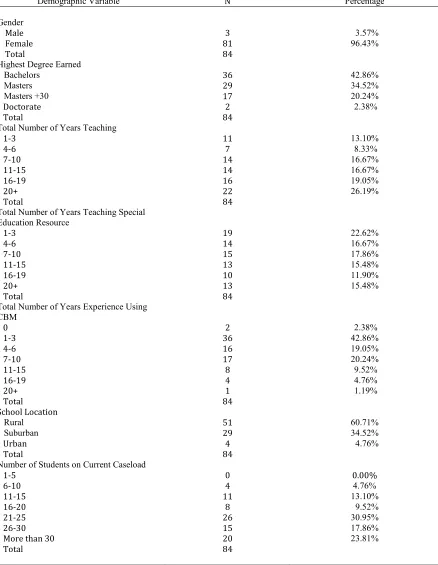
Table 4.1. Demographic Data………87
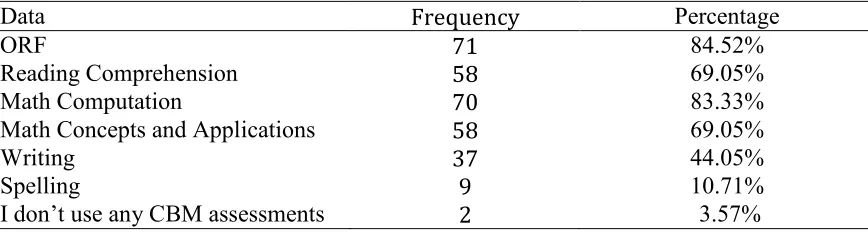
Table 4.2. Purposes of Using CBM………...………90
Table 4.3. CBM Assessments Used………...90
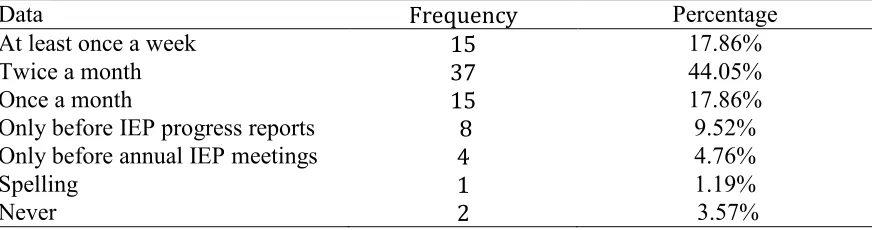
Table 4.4. How Often Teachers Use CBM.………...91
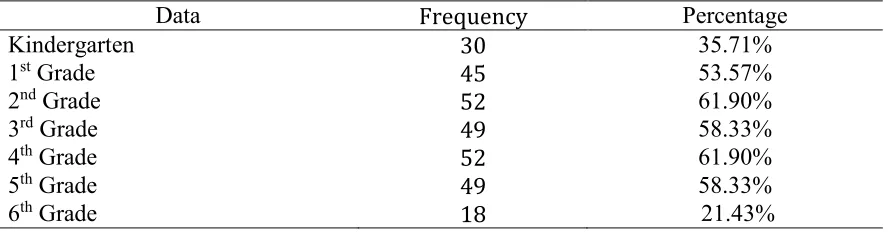
Table 4.5. Grade Levels Used for CBM………92
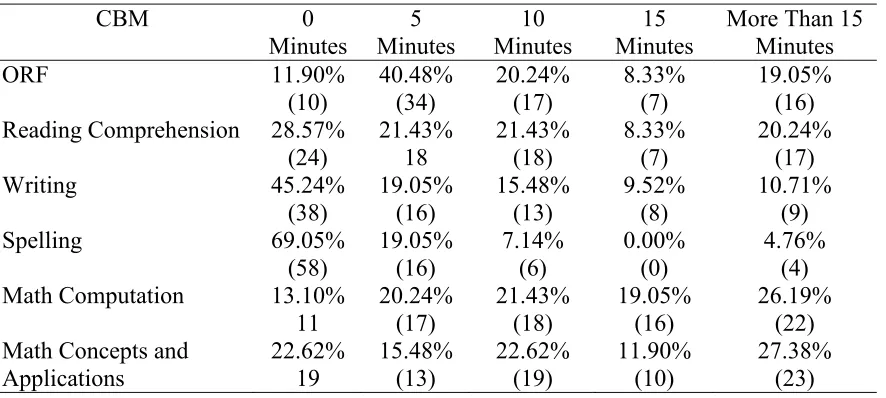
Table 4.6. Minutes per Week Spent on Administering and Analyzing CBM…………...94
1
CHAPTER
1
INTRODUCTION
Recent reforms in education have emphasized the importance of setting high
standards for all learners and increasing the level of accountability expected of educators
in meeting those high standards for student achievement (Stecker, Lembke, & Foegen,
2008). The expectations set forth in the No Child Left Behind Act (NCLB), the Every
Student Succeeds Act (ESSA), and the Individuals with Disabilities Education Act
(IDEA) established standards to improve the performance of all students, regardless of
their race, ethnic background, language, or disability status.
Students who have been identified as having a disability and receive special
education services have an Individualized Education Program (IEP), which is an
educational document that must follow the legal requirements laid out in IDEA. The
IDEA requires that eight components must be included in student’s IEPs. Three of these
requirements are (a) a statement of the child’s present level of academic achievement and
functional performance; (b) a statement of measurable annual goals; and (c) a statement
of how the child’s progress toward the annual goals will be measured (20 U.S.C §
1414(d) (1) (A)). The progress monitoring provision also requires that the IEP specify
2
goals and the extent to which progress is considered sufficient (20 U.S.C. § 1414 (d0
(1)(A) (i) (III).
Progress monitoring is a direct measurement and formative assessment practice
that teachers use to assess a student’s academic performance on a regular basis (Deno,
1985). Progress monitoring has two primary purposes: (a) to determine whether a child
is profiting appropriately from the instructional program, and (b) to build a more effective
program for the child who is not benefitting adequately from the instructional program
(Fuchs & Fuchs, 2002). Progress monitoring helps IEP teams address any lack of
progress toward a student’s annual goals and helps IEP teams make decisions concerning
the effectiveness of interventions (Peck & Scarpati, 2005).
To be in accordance with the law, the IEP team must select an appropriate
progress monitoring approach for each of a student’s annual goals. According to Fuchs
and Fuchs (1999), the requirements for these acceptable assessment approaches are: (1)
the need to have reliability and validity, (2) the capacity to model growth, (3) treatment
sensitivity, (4) independence from specific instructional techniques, (5) capacity to
inform teachers, and (5) feasibility. One well-established form of progress monitoring
that meets these conditions is Curriculum-Based Measurement (CBM: Deno, 1985).
CBM uses brief assessments that serve as indicators of overall proficiency in an academic
area, such as reading, writing, spelling, and mathematics. A benefit of CBM in regard to
accountability is that it is less susceptible to possible bias associated with gender, race,
ethnicity, or disability status than some other types of assessment, because the measures
3
Curriculum-Based Measurement
CBM originated at the University of Minnesota’s Institute for Research on
Learning Disabilities (IRLD) in the mid-to late 1970’s, during the time of the original
passage and implementation of IDEA, then known as Public Law 94-142. Stan Deno and
his colleagues sought to develop a simple and efficient and technically adequate
measurement system for assisting special education teachers in tracking student growth in
basic skills. The initial purpose for developing CBM was to assist special educators in
using progress monitoring data to make meaningful decisions about student progress and
to improve the quality of instructional programs for assessing and monitoring students’
progress in reading, math, spelling, and writing (Fuchs & Deno, 1991; Shinn & Shinn,
2001). With CBM, a student’s academic performance is assessed frequently on
standardized tasks representing the yearlong curriculum, and scores on these reliable and
valid tests can be displayed on easy-to-understand graphs. Teachers apply data
utilization rules to interpret the graphed data and to determine when instructional
adjustments are warranted throughout the school year (Deno, 2003). Over the past 35
years, evidence has accumulated to indicate that the students of teachers who use CBM to
determine when and how to revise their students’ instructional programs show greater
achievement than the students of teachers who do not use CBM (Stecker, Fuchs, &
Fuchs, 2005).
CBM was initially developed to provide timely instructional feedback to teachers
4
evaluate the quality of instruction in reading and math for all students. After the
reauthorization of IDEA in 2004, Response to Intervention (RTI)/multi-tiered systems of
support (MTSS) became a process often used to identify a student as failing to make
acceptable progress in the general curriculum and to indicate a need for intervention of
increased intensity including consideration of the possibility of a specific learning
disability (Fuchs & Fuchs, 2005).
Within RTI/MTSS models, evidence-based interventions are implemented and
CBM data with decision rules are used to determine whether a student’s rate of progress
is indicative of a student responding to interventions (Jenkins, Hudson, & Lee, 2007).
Students are considered for special education eligibility if, after exposure to multiple
interventions, they continue to show a lack of adequate progress or response to
evidence-based interventions (Ardoin, Christ, Morena, Cormier, & Klingbeil, 2013). RTI/MTSS
is a framework that includes (a) universal screening, (b) tiered levels of high-quality
interventions, (c) progress monitoring, and (d) data-based instructional decisions (Fuchs
& Fuchs, 2005). The RTI /MTSS framework, when implemented with fidelity, can serve
the dual purposes of improving all students’ academic and behavioral outcomes and
identify those students with specific learning disabilities (SLD) (Shinn, 2008). Whether
used in special education classes or within the RTI/MTSS model to place students in
special education, the requirements for acceptable progress monitoring assessments are
the same: the need for simple, quick, objective, reliable, and valid assessment procedures.
CBM meets these requirements.
A significant body of research conducted since the 1970’s has shown that CBM is
5
measures, and thus useful for a wide range of instructional decisions (Deno, 2003; Busch
& Reschley, 2007). Also, numerous studies have shown that when teachers use CBM to
write data-based goals, monitor the effects of their instructional programs, and adjust
their interventions according to data-based decision rules, student achievement improves
(Fuchs, Fuchs, Hamlett, 1989b; Jenkins, Graff & Miglioretti, 2009). Additionally,
research has demonstrated that when teachers use CBM, their decision-making improves
and students become more aware of their own performance (Safer & Fleischman, 2005).
The results of almost 40 years of research and development on the reliability, validity,
and effective use of CBM have been widely disseminated and applied in public school
programs – both in regular and special education with positive results (Adroin, Christ,
Morena, Cormier, & Klingbeil, 2013).
In spite of a large body of empirical research attesting to the effectiveness of
CBM, a large gap exists between research and practice (Foegen et al, 2001). Some of the
reasons for this research to practice gap are: a) extensive time commitments (Yell et al.,
1992); b) resistance to change(Swain & Allinder, 1997); c) insufficient mastery of the
skills needed to implement CBM (Foegen et al., 2001); and d) lack of face validity (Yell
et al., 1992, Foegen et al., 2001) particularly as a measure of reading comprehension
(Deno, 2003). Additionally, progress monitoring, using CBM, is essential for evaluating
the appropriateness of a student’s special education program, yet, historically, there is
less compliance with the progress monitoring component of the IEP than any other
component (Etscheidt, 2006). Several administrative and judicial decisions have focused
on the absence of adequate progress monitoring for students with an IEP (Yell & Stecker,
6
primary areas of concern regarding progress monitoring: 1) the IEP team fails to develop
or implement progress monitoring plans; 2) the IEP team uses inappropriate measures to
determine student progress; and 3) progress monitoring is not conducted frequently
enough to meet the requirements of IDEA or to provide meaningful data to IEP teams
(Estcheidt, 2006). What follows is a review of the research on CBM utilization,
implementation and acceptability.
Based on a study by Yell, et al, (1992) to identify the most problematic barriers to
effective implementation of CBM in special education programs as perceived by
administrators and special education teachers, six major barriers were identified in all.
According to administrators, the barriers are (1) teachers’ data collection practices and
lack of making instructional decisions based on the data, (2) logistics (time and lack of
adequate resources to properly train staff and monitor teachers’ implementation of CBM),
(3) initiating change into the educational system. According to the special education
teachers, the three major barriers that were rated as the most important to overcome in
implementing CBM in the classroom are: (a) time (CBM data collection and data analysis
took away from instructional time), (b) lack of training in strategies for managing the
CBM process, and (c) face validity of the measurements. Results from this study imply
that teachers are concerned about the amount of time CBM takes away from instruction,
and they lack confidence in data collection and determining instructional modifications.
In a study on teachers’ use of CBM, Swain and Allinder (1997) found that out of
191 special education teachers, only 45% expressed they used CBM, while 55% claimed
they did not use CBM. Among the teachers who did not use CBM, lack of time was the
7
expressed that time was not an issue. They also expressed that CBM data provide useful
information and are important for IEPs. However, some of the teachers who reported
using CBM commented that they did not use CBM as described in the survey, especially
in regard to graphing and utilizing information gained through CBM to make changes in
students’ instructional programs. This study suggests what changes are necessary to
encourage the use of these assessments and to make it more feasible for educators, such
as ongoing CBM professional development for seasoned teachers or adding CBM
training for pre-service teachers to help them implement CBM with fidelity.
Foegen et al. (2001) conducted a study to explore practitioners’ beliefs regarding
the validity and utility of the CBM Oral Reading Fluency (ORF) measure. Results
indicated that, in general, participants expressed stronger belief in the utility of CBM
ORF than in its validity, especially as it is related to reading comprehension (effect size
.80). They also indicated a stronger belief in the use of CBM to evaluate and modify
instruction, than its validity related to reading comprehension with effect sizes ranging
between .92 and 1.17. These data suggest that convincing teachers of the validity of
CBM is more difficult than convincing them of the utility of the measures. Results of
this study are in agreement with the Yell, et. al. (1992) study that showed that perception
of validity was a barrier for teacher’s implementation of CBM and has implications for
professional development programs on CBM and teacher preparation programs.
Wayman, Espin, Deno, McMaster, Mahlke, and Du (2011) conducted a study on
special education teachers’ understanding and interpretation of CBM data. Teachers were
divided into two groups based on their understanding and interpretation of graphed CBM
8
and interpretation of goal attainment, function of the goal line, and set up of the graph.
Teachers received the lowest ratings for understanding and interpretation of the slope,
baseline data, and the meaning of the ORF measure. Higher rated teachers’ discussions
about the CBM graphs were more accurate, clear, and coherent while lower rated
teachers’ discussions about the CBM graphs were more inaccurate, disorganized, and
unclear. Results also showed that, overall, higher rated teachers exhibit a generally
coherent and organized body of knowledge regarding CBM, while lower rated teachers
have a general state of confusion about CBM data collection and interpretation. The
meaning of the oral reading fluency measure, changing interventions, and using and
interpreting slope are areas that appear to be particularly difficult for lowest rated
teachers. Results from this study imply that the understanding of CBM progress
monitoring data is more complex than it may first appear and is something that may need
to be developed through careful training and experience.
Most of the research on special education teacher utilization and acceptability of
CBM was conducted during the 1990’s, with only a few studies conducted over the past
15 years. Based on the above research, it appears that many teachers use and accept
CBM as a progress-monitoring tool; however, there are still many teachers who are not
using CBM. Some of the barriers to implementation are: time, acceptability of CBM’s
validity, and lack of understanding in implementing certain components of CBM, such as
graphing and using the data to make instructional decisions. Because IDEA requires that
a student’s IEP include a progress monitoring provision, it is important that all special
education teachers accept, utilize and implement a progress monitoring procedure, such
9
Purpose of Study
Despite the accountability requirements of IDEA and a very solid research base
for CBM, it is not being used consistently and accurately by special education teachers to
monitor student progress and to make data-based decisions to improve instructional
programs (Shinn, 2010). It has been well established that implementing CBM is an area
of weakness in special education instructional practices and if CBM data are collected,
often times instructional modifications are not implemented based on the data (Shinn,
2010). Further, the gap between the federal requirements of scientifically based IEP
progress monitoring and what typically occurs in schools remains wide, despite
educators’ familiarity with CBM (Shapiro, Angello, & Eckert, 2004). Although the
literature emphasizes the importance of using CBM data in special education practices in
order to meet instructional requirements and obligations of accountability as emphasized
in NCLB and IDEA, there have not been any recent studies conducted on special
education teachers’ acceptability, utilization, and implementation of CBM. Because most
of the studies were conducted in the 1990’s regarding special education teachers’
acceptability and utilization of CBM, there is a significant gap within the literature, as
well as between research and current practices. The purpose of my study is to bridge the
gap between the earlier studies on CBM and current practices of elementary special
education teachers to determine whether or not CBM is being used consistently in their
classrooms, how the data is used to make instructional changes or modifications to the
students’ instructional program, and what changes or modifications are being used to
improve instructional delivery and student achievement. Results will be used to describe:
10
plan effective instruction and write IEPs; and b) teachers’ perceptions of their CBM
practices in terms of experience, knowledge, training, support, and effect on student
learning outcomes. Understanding how special education teachers are using CBM for
planning effective instruction to meet the individual needs of their students will
contribute to an area that has received little attention in recent literature. The implications
of this study can help special education leaders determine ways to improve the areas of
progress monitoring and data-based decision making using CBM and inform future
research efforts to design and implement ongoing supports of CBM for special education
teachers. In this study, I conducted a survey of elementary school special education
resource teachers, in which I asked them to answer the following research questions:
1. How do elementary special education teachers report using CBM in their
practices?
2. What are elementary special education teachers’ views on the value of CBM as a
progress-monitoring tool?
3. What are elementary special education teachers’ perceptions of their ability to
implement CBM?
4. What do elementary special education teachers perceive as barriers to
implementing CBM?
5. What types of CBM training do elementary special education teachers report they
11
Definition of Terms
Progress Monitoring – a practice that helps teachers use student performance data to
continually evaluate the effectiveness of their teaching and make more informed
instructional decisions (Safer & Fleishman, 2005).
Individualized Education Program (IEP) – an individualized and legal document for
each public school child who receives special education and related services. The IEP
creates an opportunity for teachers, parents, school administrators, related services
personnel, and students (when appropriate) to work together to improve educational
results for children disabilities. The IEP is the cornerstone of a quality education for each
child with a disability (OSERS, 2000).
Curriculum-Based measurement (CBM) – a set of standardized procedures used to
assess student performance on long-term goals in reading, spelling, written expression,
and math curriculum. CBM is designed to be an objective, ongoing measurement system
of student outcomes, which facilitates enhanced instructional planning (Hosp & Hosp,
2003).
General Outcome Measurement – the use of standardized procedures and long-term
goals, in which the testing procedures remain constant over a long period of time
(typically a year) (Fuchs & Deno, 1991).
Oral Reading Fluency (ORF) – the oral translation of text with speed and accuracy
(Fuchs, Fuchs, Hosp, & Jenkins, 2001).
Formative Assessment – the use of observational protocols or diagnostic measures to
provide educators with detailed information about a student’s progress assimilating and
12
Response to Intervention (RTI): the practice of providing high-quality instruction and
intervention matched to student need, monitoring progress frequently to make decisions
about changes in instruction or goals and applying response data to important education
13
CHAPTER 2
REVIEW OF THE LITERATURE
This chapter provides a review of the literature that explains the evolution of
progress monitoring in the educational process. The first section defines progress
monitoring and the development of CBM as a form of progress monitoring created for
special education teachers to assess their students on a frequent and systematic basis
during the course in instruction. The second section provides a history and overview of
CBM, including the characteristics of CBM, and a description of the most commonly
used CBM reading assessment, Oral Reading Fluency (ORF). Section three explains the
application of CBM in schools and highlights the significance of CBM in a MTSS or RTI
framework. The next section examines the impressive amount of research on CBM over
the past 35 years, supporting its technical adequacy, effects on student achievement, uses
and applications, and acceptability and implementation of CBM. The chapter concludes
with a final section that describes the purpose of my study.
Progress Monitoring
Progress monitoring is a set of techniques for assessing student performance on a
regular basis, the data collected from these assessments helps teachers evaluate the
effectiveness of their teaching and make informed instructional decisions (Safer &
14
can be broken into two categories: mastery measurement (MM) and general outcome
measurement (GOM) (Fuchs & Deno, 1991). With MM, teachers test for mastery of a
single skill and after mastery is demonstrated, they go on to assess mastery of the next
skill in the sequence (Fuchs & Fuchs, 2006). So at different times of the academic year,
different skills are assessed. MM is a traditional assessment method most often used in
general education classrooms. However, because the nature and difficulty of the tests
keep changing with successive mastery of skills, test scores from different times of the
year cannot be compared, which makes it impossible to determine whether the student is
learning or progressing at a pace that will allow him or her to meet annual learning goals
(Safer & Fleischman, 2005). Furthermore, MM has unknown reliability and validity and
it fails to provide information about whether students are maintaining the previously
mastered skill (Fuchs & Fuchs, 2006).
In contrast, GOM, the second type of progress monitoring, uses standardized
procedures and long term goals, in which the testing procedures remain constant over a
long period of time. Based on these distinctions, CBM falls under GOM. CBM is a form
of classroom assessment conducted on a regular basis in which all skills in the
instructional curriculum are assessed by each test (probe) across the year (Fuchs & Fuchs,
2006). It is an approach that measures the academic growth of individual students. The
original purpose of CBM was to aid special education teachers in collecting data and
evaluating the effectiveness of the instruction they are providing to individual students
with disabilities (Deno, 2003). Having individual data for each student allows the teacher
to make specific instructional decisions regarding whether or not an educational program
15
(Deno, 1992). Some of these instructional decisions may include determining whether or
not to make a program change, the development and placement of students into
instructional groups, and identifying specific difficulties the student may be
demonstrating (Hosp & Hosp, 2003).
CBM was designed to provide special education teachers an assessment tool that
uses data to formatively evaluate their instruction and improve their effectiveness. Since
the development of CBM, there have been a plethora of articles written describing how to
implement CBM and how to use it to inform instruction (Hosp & Hosp, 2003). Next, I
will discuss the history of CBM, give an overview of the characteristics, and address the
uses of CBM in schools today.
History and Overview of CBM
In 1975, The Education for All Handicapped Children Act (EAHCA) was
enacted. The purpose of the law was to require that states provide a free, appropriate,
public education (FAPE) in the least restrictive environment (LRE) to all eligible students
with disabilities. The foundation of the FAPE requirement was that all eligible students
with disabilities receive special education services provided in agreement with his or her
IEP (Yell & Busch, 2013). The law’s requirement of specifying annual goals and
short-term objectives would prove to be an important landmark on the road to the development
of CBM (Jenkins & Fuchs, 2012).
At the University of Minnesota, Stanley Deno and his graduate student, Phyllis
Mirkin, began working to design a model to guide special education teachers in planning
and delivering educational programs that were amenable with the newly mandated IEP
16
measurement, fell short on measuring student performance, and that better assessment
techniques were necessary for making accurate judgments about students’ needs and
progress (Deno & Gross, 1973).
In the 1970’s, the main assessment tools available to educators were standardized,
norm-referenced measures that were developed for a different purpose than evaluating
ongoing student performance – they were designed to compare an individual’s
performance to a normative group. These assessment tools, therefore, were not designed
to be measurements of progress as they only provided information on a student’s relative
standing compared to his or her peers (Jenkins & Fuchs, 2012). Deno had an innovative
idea: simple indicators of academic performance could be used to capture the overall
strength of an individual student at a given point of time, and such data could be used to
track the course of development (Jenkins & Fuchs, 2012). Assessment measures had to
be easy and time efficient to conduct, so that educators might collect the data without
much training, and so the assessment did not compete for valuable instructional time
(Jenkins & Fuchs, 2012).
Deno’s vision was that educators would use these data as the dependent variable
to assess the effects of their instructional practices (Jenkins & Fuchs, 2012). Further, that
teachers would evaluate the effects of their instruction on individual students, building
stronger academic programs student by student, and that schools and districts would
differentiate generally effective from ineffective practices, thereby supplying the basis for
data-based education reform (Jenkins & Fuchs, 2012).
An extension of Deno’s research on data-based decision making (and progress
17
Modification: A Manual (Deno & Mirkin, 1977), which had significant impact on special
education practices and received national attention (Marston, 2012). Deno and Mirkin
(1977) outlined a framework for decision-making and providing services to low
performing students based on data. Data Based Program Modification (DBPM) described
how to analyze student growth and use the data to examine the effectiveness of
instruction (Marston, 2012). Within a DBPM model, the purpose of assessment is not to
measure student shortcomings, but rather to measure instructional effectiveness
(Germann, 2012).
The purposes of the IEP, outlined in EAHCA, were remarkably similar to Deno
and Mirkin’s (1977) purposes for developing DBPM. Specifically, an individualized
assessment of the student was conducted to determine his or her educational needs.
Based on this assessment, a program consisting of measurable goals and special
education services was developed to address the student’s individual needs. The progress
of the student in the special education program was then monitored, and teachers used the
data to make important educational decisions regarding the student’s individualized
program (Yell & Busch, 2013). Eventually, CBM became an assessment methodology
that could be used to fulfill the requirements of the IEP based on the requirements of
IDEA. CBM could provide information that can be used for the statement of the student’s
present level of academic achievement, the statement of measurable annual goals, and the
statement of how the child’s progress toward the annual goals will be measured
(Etscheidt, 2006; Yell & Stecker, 2003).
To test teacher use of DBPM empirically, a research and development program
18
Disabilities (IRLD) (Deno, 2003). One result of the IRLD formative evaluation research
was the development of a generic set of CBM progress monitoring procedures in reading,
spelling, and written expression. These procedures include specification of (1) the core
outcomes on which performance should be measured; (2) the stimulus items, the
measurement activities, and the scoring performance to produce technically adequate
data; and (3) the decision rules used to improve educational programs (Deno, 2003).
Ultimately, a set of criteria was specified that was used to establish the technical
adequacy of the measures, the treatment validity of the measures, and the logistical
feasibility of the measures (Deno & Fuchs, 1987). The following section examines
characteristics of CBM that sets it apart from other types of assessments.
Characteristics of CBM: While working on the intervention process of DBPM, Deno and
Mirkin (1977) realized they needed an assessment system built on a set of common
principles composed of standardized procedures and rules. They developed CBM to fill
that need. CBM is characterized by six distinguishing characteristics (Deno, 2003; Hosp,
Hosp, & Howell, 2007; Fuchs, 1993):
1. CBM is aligned to the curriculum. With CBM, students are tested on the
curriculum they are being taught. The stimulus material the student is given looks the
same and the responses the student is expected to make are the same type as in the
curriculum (Fuchs, 1993). Further, the assessment of proficiency on skills represents the
entire yearlong curriculum (Hosp, Hosp, & Howell, 2007). CBM maintains a constant
measurement focus across the entire year with test difficulty remaining constant across
19
2. CBM is technically adequate. More than 200 empirical studies provide
evidence of CBM’s reliability, validity, and treatment utility for assessing the
development of competence in basic skills (Fuchs & Fuchs, 2005). The reliability and
validity of CBM have been achieved through the use of standardized, observational
procedures for repeated sampling on core reading, writing, and mathematics skills (Deno,
2003).
3. CBM is standardized. CBMs are standardized in two ways: a) CBM
procedures include standardized instructions for administration, student directions, timing
and scoring; and b) standardized tasks are used for each content area measurement (Deno,
2003). Standardization makes possible meaningful comparisons across time and across
groups (Shinn, 1995).
4. CBM has decision rules to help inform instruction. Decision rules are put into
place to provide those who use the data with information about what it means when
students score at different levels of performance or demonstrate different rates of
progress on the measure over time (Hosp, Hosp, & Howell, 2007). The teacher uses the
decision rules to determine instruction in two ways: a) When the student’s actual rate of
progress falls below the rate of expected goal attainment for four consecutive scores, a
modification needs to be made to instruction; b) When the student’s rate of performance
is greater than the rate of expected goal attainment for four consecutive scores, the goal
needs to be raised (Fuchs, 1993). Using decision rules in this way allows the teacher to
determine if the student is making appropriate progress or if a change in instruction is
20
5. CBM emphasizes repeated measurement over time. The measurement
procedures used in CBM are based on collecting repeated samples of student
performance on equivalent forms of the same task over time (Fuchs, 1993). Changes in
performance are then interpreted to reflect change in a student’s proficiency with that
task. This means that CBM data can be used for progress monitoring to illustrate the rate
of learning as it is occurring, allowing immediate modifications in a student’s educational
program as needed, and illustrates the degree to which an instructional intervention is
producing the desired outcome (Fuchs, 1993). Therefore, CBM data helps teachers decide
what to teach and how to teach (Hosp, Hosp, & Howell, 2007).
6. CBM is efficient. CBM is efficient because individuals can be trained to give
the measures in a short period of time and quickly (between 1 and 3 minutes) (Deno,
2003). CBM also communicates efficiently. It produces performance data that allows
teachers to draw conclusions directly from what the student actually did on the test.
There is no need to convert the raw scores into percentile scores because the CBM scores
are the only data that is needed to make decisions (Hosp, Hosp, & Howell, 2007).
Additionally, the CBM data can be summarized efficiently by using a variety of
techniques such as paper and pencil graphs or web-based data management systems.
This efficiency makes the data immediately accessible to any level of the educational
system and in an easy-to-understand format for students and parents.
In summary, the original intent of CBM was to develop and validate a technology
that was useful to monitor progress in basic skills (reading, writing, and spelling) for
students with disabilities. The purpose was to develop a standardized technology that
21
the data to make judgments of student progress toward annual IEP goals. After 5 years
of research by Deno and colleagues, the following measures examined met conventional
psychometric standards for reliability and validity and met the 6 characteristics for use in
frequent progress monitoring (Shinn, 2010): Reading, oral reading fluency (ORF) was
determined by counting the number of words read correctly from a reading passage in 1
minute (Deno, Mirkin, Chiang, & Lowry, 1980), math, counting the number of correct
digits in student responses to math computation problems performed in 3 minutes,
spelling, counting the number of correct letter sequences from an orally presented list of
spelling words in 2 minutes (Deno, Mirkin, Lowry, & Kuehnle, 1980), and in written
expression, counting the number of total words written or correct writing sequences
written in 3 minutes from an orally presented story starter (Deno, Mirkin & Marston,
1980).
Subsequent research has identified additional CBM assessments. A CBM test for
mathematics concepts and applications was later developed by Fuchs & Fuchs (1992),
which involved counting the number of correct answers to applied math problems in 5
minutes was find to a reliable and valid method for assessing general math skills (Fuchs,
Hamlett, Fuchs, 1998). Additionally, in reading, research was conducted using a 3-5
minute silent reading test called a maze procedure could also serve as a measure of
general reading ability (Fuchs & Fuchs, 1992). The CBM Maze procedure requires
students to read a passage in which every 7th word has been deleted. When students
come to a deleted word, they must select the correct word from multiple-choice items
(containing the correct answer and two distractors). The Maze serves as a good indicator
22
Oral Reading Fluency: Whereas, all of the CBM tests mentioned above are utilized, the
most commonly used CBM procedures are to assess students’ reading proficiency. For
CBM in reading, the most commonly used general outcome measurement is ORF.
(Stecker, Fuchs, & Fuchs, 2005). Although researchers at the IRLD studied several
measures, the number of correct words (read) per minute (CWPM) in a one-minute oral
reading sample of curricular material generated a reliable and valid indicator of overall
reading proficiency (Marston, 1989). Additionally, studies repeatedly showed that ORF
was also a valid measure of reading comprehension (Deno, Mirkin & Chiang, 1982;
Fuchs, Fuchs & Maxwell, 1988). The criterion validity of CBM oral reading scores has
also been established for the predictive validity of pre-reading measures and the
effectiveness of early literacy interventions (Deno, 2003). According to Good, Simmons,
& Kame’enui (2001), evidence shows that CBM oral reading performance at the end of
first grade is a significant indication of future reading success. Research in this area has
established important linkages with measures of phonological skills in kindergarten and
success in state assessments. CBM of reading has been used for a variety of purposes
such as screening, progress monitoring, and instructional decision making and has
increased in popularity as an alternative to standardized test of reading (Madelaine &
Wheldall, 2004).
WhenDeno and Mirkin developed CBM in the late 1970’s, they created a set of
procedures that special education teachers could use to plan and monitor instruction. The
results of almost 40 years of research and development of CBM have been widely
disseminated and applied in public school programs – both in regular and special
23
of CBM procedures with all students (Adroin, Christ, Morena, Cormier, & Klingbeil,
2013). What follows are descriptions of additional efforts to use CBM school-wide and
to address a variety of educational problems.
Application of CBM in Schools
Originally, CBM procedures were developed for special education teachers and
were applied to basic academic areas such as reading, spelling, written expression, and
later mathematics. However, more recent work has expanded to the use of CBM in the
RTI process. This section will address the application of CBM within the RTI
framework in today’s schools.
CBM Application in a Response to Intervention/MTSS Framework: RTI or MTSS
involves a process for evaluating whether students respond successfully to
evidence-based instruction (Stecker, Fuchs, & Fuchs, 2008). Considered a multi-tiered and
prevention-intervention system, successive levels of instructional support are provided
when a student’s response to the academic program is measurably poor, particularly
compared to his or her peers’ responses (Stecker, Fuchs, & Fuchs, 2008). Within
RTI/MTSS models, empirically based interventions are implemented and decision rules
are used to determine whether a student’s rate of progress is indicative of a student
responding or not responding to interventions (Jenkins, Hudson, & Lee, 2007). Students
are considered for special education eligibility if, after exposure to multiple interventions,
they continue to show a lack of adequate progress (response) to targeted evidence-based
interventions. The primary data used to determine a student’s special education
eligibility within an RTI/MTSS model are those indicative of whether; (a) after multiple
24
student’s rate of progress when provided with empirically-based interventions is
discrepant from what is expected (Fuchs & Fuchs, 2006).
Although robust instruction is paramount to successful implementation of
RTI/MTSS, assessment data should drive decision-making (Kashima, Schleich, &
Spradlin, 2009). Therefore, CBM comprises one of the most critical features of a
successful RTI/MTSS implementation. CBM helps teachers make instructional decisions
throughout the levels of the RTI/MTSS system and provides data to validate Specific
Learning Disability identification (Stecker, Fuchs, & Fuchs, 2008). CBM has been used
within a RTI/MTSS framework to accomplish three purposes. First, CBM measures are
used to screen all students regularly to identify achievement difficulties, typically three
times a year (Fuchs & Fuchs, 2006). This practice has been referred to as benchmark
assessment. Second, students who are identified as below target or at-risk are progress
monitored more frequently to assist teachers in determining whether supplemental
interventions are successful (Busch & Reschly, 2007). Finally, schools use CBM as a
way to evaluate educational programs at different levels (individual, class, grade) to
verify whether the core, supplemental, and intensive instructional supports and services
are effective (Shapiro & Clemens, 2009).
Following is a sample framework for RTI/MTSS implementation within the
context of elementary-level instruction in reading. Within this multi-tiered framework, I
will describe how CBM data can be used to provide relevant information regarding data
based decision-making.
The first tier, Primary Prevention, occurs as general education instruction.
25
SLD must show lack of adequate response to scientifically validated instruction, Tier 1
must involve implementation of instructional practices that have been tested empirically.
Schools must be able to defend that core programs and instructional procedures have
been generally effective in promoting student achievement (Stecker, Fuchs, & Fuchs,
2008).
At Tier 1, CBM reading measures are collected on all students in the general
education setting. Collecting these data serves two functions. First, it allows
examination of whether the instruction provided is adequate for students to progress, as
expected, as readers. Second, it allows classes, schools, or districts to collect normative
data on all students’ level and rates of reading growth (Fuchs & Fuchs, 1998). From
these data, students could be identified as being at risk for reading problems by
examining their performance and rate of growth. Students who are discrepant from their
peers in both current performance and rate of growth would be candidates for more
intensive remediation at Tier 2 (Stecker, Fuchs, & Fuchs, 2008).
When students do not respond adequately to otherwise effective Tier 1
instruction, then supplemental support should be provided. At Tier 2, Secondary
Prevention, small-group, intensive instruction is provided in an attempt to affect both
student performance and rate of growth. At this tier, progress monitoring with CBM
reading measures is done frequently (typically once or twice a week). Decisions based
on effectiveness of the instruction for affecting student performance and growth is
accomplished by, examining a student’s CBM data and comparing it to his or her
classmates. After 10 to 12 weeks, students whose performances improved are returned to
26
considered for special education placement at Tier 3 (Busch & Reschly, 2007). Thus
progress-monitoring data from both Tier 1 and Tier 2 are critical for determining overall
student unresponsiveness to instruction and for eliminating the lack of effective
instruction as a contributing factor to the student’s learning problems (Stecker, Fuchs, &
Fuchs, 2008).
When a student has participated in several rounds of preventive assistance,
including more targeted assistance with Tier 2, and still progresses poorly academically,
he or she should be considered for special education. In many models, special education
services are found in Tier 3, Tertiary Intervention (Busch & Reschly, 2007). Progress
monitoring data collected throughout the multi-tiered system can be used to help
document the presence of a learning disability. However, other assessments may be
conducted to confirm the presence of a learning disability and to eliminate other potential
disabilities as the probable cause for difficulties in learning (Fletcher, 2006). If it is
determined that a student does have a learning disability, he or she enters Tier 3
intervention and receives special education instruction (Stecker, Fuchs, & Fuchs, 2008).
At this tier, CBM measures are used to (a) set performance goals, (b) develop
appropriate IEP goals, and (c) monitor ongoing student performance in relation to the
instruction being provided (Busch & Reschly, 2007). On going revisions, or
modifications in the instructional program, may be required during Tier 3 special
education intervention, as teachers must use CBM data to judge the adequacy of student
improvement (Busch & Reschly, 2007). When students fail to progress as anticipated,
then special educators should revise or modify features of their instructional programs,
27
student performance (Stecker, Fuchs, & Fuchs, 2008). Use of CBM data for students at
this tier also help teachers meet several of the IEP regulations required by IDEIA.
Specifically, the use of CBM measures allows teachers to describe the student’s present
level of performance and set annual measurable goals. Furthermore, special education
teachers are required to inform the parents of a student’s progress toward meeting the
annual goal as often as parents of students without disabilities receive feedback on their
child’s performance (Yell & Stecker, 2003). Therefore, the ability to monitor student
progress and provide timely feedback to parents is paramount in order for special
education teachers to comply with IDEA. Additionally, research confirms significant
effects on student achievement when teachers use progress monitoring data to devise
instructional programs best suited to the individual needs of students with disabilities
(Stecker, Fuchs, & Fuchs, 2005). Presently, RTI/MTSS is implemented in various ways
in different states, districts, and even schools within a district. While most have adopted
the 3 Tier model, some have implemented 4 Tiers, with special education services
provided at Tier 4. The RTI/MTSS systems differ in terms of the number of levels in the
process, who delivers the intervention, and whether the process is viewed as precursor to
a formal evaluation for special education eligibility or if RTI itself is the eligibility
evaluation (Fuchs, Mock, Morgan & Young, 2003). In these models, Tier 3 is another
iteration of a specialized, more individualized intervention, whereas Tier 4 represents
special education. Regardless of the type of model used, the key feature of a
well-designed RTI/MTSS model is the use of CBM for decision-making. Of course,
successful learning outcomes are not possible without high-quality instruction
28
CBM becomes a critical tool for decision-making purposes at all tiers within the
RTI/MTSS framework.
While CBM was initially developed for special education teachers, it has evolved
to support general educators to accommodate the increase diversity in their classrooms.
CBM data is successfully being used for a wide range of assessment activities within a
RTI/MTSS framework including: (a) targeting students in need of additional assistance,
(b) judging student responsiveness to interventions, and (c) developing individualized
programs for unresponsive students (Fuchs & Fuchs, 2006). In addition to it’s use in
RTI/MTSS models, CBM is also currently used for decisions regarding special education
student’s reintegration into general education classrooms (Powell-Smith & Stewart,
1998), predicting success on high stakes test (Deno, 2003), as well as measuring growth
in secondary school programs and content areas (Espin & Tindal, 1998), and assessing
ELL students (Baker & Good, 1995). The following section will address, in depth, the
expansive amount of research conducted on CBM to support its effectiveness and
importance in education.
Research on CBM
Over the past 40 years, an impressive body of research has accumulated focusing
on CBM. In 1989, Marston reviewed the existing research on CBM. At that time, CBM
was viewed primarily as a progress- monitoring tool in basic skills for special education
students at the elementary-school level. Since Marston’s (1989) review, the research on
CBM has expanded considerably. In 2007, Wayman and colleagues from the University
of Minnesota conducted a literature synthesis on CBM, centered on research published
29
dissertations, and reports related to CBM. Among the 578 publications, 160 were
empirical studies addressing questions of technical adequacy, instructional utility, and the
logistics of implementation in reading, writing, spelling, and math. This literature
documented how CBM had expanded its initial focus on special education progress
monitoring to include universal screening, general education progress monitoring,
predicting achievement on high stakes tests, and learning disability classification within a
RTI eligibility framework. Over the past four decades, CBM screening and
progress-monitoring has become a widely used tool with important benefits.
What follows is a review of research on CBM based on early studies from the
Research Institute of Progress Monitoring at the University of Minnesota conducted by
Stanley Deno and colleagues to the most recent research found in published journals. My
review is organized in 4 sections: Technical Adequacy of CBM, Impact of Teacher
Planning and Achievement Effects of CBM, Uses and Applications of CBM, and
Acceptability and Implementation of CBM. I begin my review by examining evidence
related to the technical adequacy of various measures of CBM with particular emphasis
on CBM-ORF, followed with evidence of how CBM can assist teachers with planning
better instruction and effecting superior achievement.
Technical Adequacy of CBM: Research on CBM began in the late 1970’s and early
1980’s at the University of Minnesota Institute for Research on Learning Disabilities.
Early research concentrated on finding a valid measure of overall reading proficiency. As
already indicated, ORF emerged as the most valid indicator of overall reading
performance (Marston, 1989) and has the most empirical research support of any form of
30
technical adequacy of CBM in reading (Baker & Good, 1995; Deno, 1985; Deno, Mirkin,
& Chiang, 1982; Fuchs, Deno, & Mirkin, 1984).
To be considered technically adequate, CBM needs to be meaningful and useful
for decision-making. In other words, the CBM measures must have adequate reliability
and validity. If either of these technical characteristics is lacking, educators cannot
conclude that changes in the scores on the CBM measures actually reflect changes in
student performance. Reliability refers to the relationship between scores on alternate
forms of CBM measures and that the scores truly reflect a change in the student’s
performance. Research on the reliability of the ORF measure has shown that the measure
has strong reliability, with correlation coefficients ranging from .82 to .97 (Marston
1989). Examining the validity of CBM measures entails examining the extent to which
CBM measures act as indicators of general (reading) proficiency (Fuchs, Fuchs, Hosp &
Jenkins, 2001). Essentially to serve as general outcome measures, the CBM reading
measures must correlate in expected ways with other measures of reading proficiency.
The criterion-related validity of the ORF measure with other reading proficiency
measures, such as standardized test scores and teacher ratings of reading performance,
has coefficients ranging from .63 to .90 (Marston, 1989). Studies have also shown that
CBM measures are appropriate for modeling student growth over time and can
differentiate student growth patterns for students with high, average, and low levels of
achievement (Shinn, Deno, & Espin, 2000). These results support the utility of CBM
reading measures as reliable and valid indicators of student performance and progress.
When measures have sound technical features, teachers can be more confident in
31
CBM is just as valid and reliable as published assessments, such as the following study
conducted by Deno, et al. (1982)
Deno, Mirkin, and Chiang (1982) compared 5 different CBM reading probes:
Words in Isolation, Words in Context, Oral Reading, Comprehension, and Word
Meaning. Measures were examined for their correlation with norm-referenced,
standardized measures, including parts of the Stanford Diagnostic Reading Test (Karlsen,
Madden, Gardner, 1976) and The Woodcock Reading Mastery Test (Woodcock, 1987).
Results of the research provided evidence that the number of words read aloud correctly
in 1-minute had the highest correlation with the various standardized reading subtests,
providing high reliability and validity coefficients from .73 to .91, with most coefficients
above .80. Similarly, internal consistency, test-retest reliability and inter-scorer
agreement ranged from .89 to .99, therefore, these quick and easy formative assessments
were determined to be just as valid and reliable as the published reading measures.
Another study examined the validity of ORF CBM. Marston and Magnusson
(1985) researched the benefits of implementing CBM measures in both general and
special education settings. To determine the validity of CBM, student reading
performance on ORF measures were compared to several published reading measures
including parts of The Stanford Achievement Test, The SRA Achievement Series, and
the Ginn720 Reading Series. Results indicated that the validity coefficients ranged from
.80 to .90. Teachers also ranked their students’ reading achievement level on a scale of
one to five. The teacher’s judgment of their students’ performance was then correlated
with performance on both CBM and standardized reading measures. Results of the
32
with teacher judgment that any of the standardized reading measures. Due to the high
reliability and validity of CBM, educators within the study were able to use the data
derived from CBM to make decisions involving student placement, as well as progress
and effectiveness of implemented interventions within their school.
Shinn, Good, Knutson, and Tilly (1992) conducted a study to examine the
relationship of CBM ORF to the reading process from a theoretical perspective. To prove
that CBM ORF is an effective indicator of reading proficiency, and not just decoding,
reading models were tested using confirmatory factor analysis procedures with 114 third-
and 124 fifth-grade students. Confirmatory factor analysis was used to examine whether
ORF constituted a significant role in a single factor model of reading or whether it should
be defined as a decoding construct, a comprehension construct, or a separate construct.
Subjects were tested on tasks requiring decoding of phonetically regular words and
regular nonsense words, literal comprehension, inferential comprehension, cloze items,
written retell, and CBM ORF. For third graders, a one-factor model for reading was
validated with all measures contributing significantly. Each of the specific measures
tested in the study contributed significantly to the Reading Competence model. Two
CBM reading measures where students read aloud from third-grade basal readers
correlated the highest with the model (r = .88 and .90). For fifth graders, a two-factor
model was validated paralleling current conceptions of reading measurement. Reading
proficiency was best portrayed as being composed of two constructs fitting the common
conception of reading: decoding, and comprehension. In the most defensible model,
CBM ORF best fit with the construct of decoding. However, even though decoding and
33
correlated highly (r = .83). Additionally, the CBM ORF measures correlated as high or
higher with Reading Comprehension (r = .74 and .76) as did the Stanford Diagnostic
Reading Test (SDRT) measures (r = .73 and .76). This study confirms that CBM ORF
fits theoretical models of reading competence and can be validated as a measure of
general reading achievement, including comprehension.
CBM reading scores are sensitive to student growth, and they correlate well with
and predict student performance on state-mandated, high stakes assessments.
McGlinchey and Hixon (2004) found a significant positive and predictive relationship
between CBM ORF and scores on their state’s high stakes reading assessment for a
sample of 1, 362 fourth graders over an 8-year period. Such information enables teachers
to intervene early with students whose progress is inadequate in an effort to enhance their
academic growth, which in turn is likely to result in better scores on high-stakes
achievement tests. Similar findings were found in Florida (Buck & Torgenson, 2003).
Colorado (Shaw & Shaw, 2003), Illinois (Sibler, Biwer, & Hesch, 2001), Michigan
(McGlinchey & Hixon, 2004), Minnesota (Hintz & Silberglitt, 2005), North Carolina
(Barger, 2003), Oregon (Good, Simmons, & Kame’enui, 2001), Washington (Stage &
Jacobsen, 2001), and Ohio (VanderMeeres, Lentz, & Stoller, 2005). On average, most
studies reported correlations between .60 and .75 range. The data suggests that CBM can
be one source of data that could be used to potentially identify those students likely to be
successful or fail the statewide assessment measure.
As the above studies demonstrate, CBM research on reading measures supports
the technical adequacy of CBM. Research has shown that CBM ORF is a reliable
34
measure to serve as a general outcome measure of reading proficiency, including
comprehension, when compared to other standardized test and teacher ratings of reading
performance. Additionally, CBM reading scores are sensitive to student growth, and they
can predict student performance on state-mandated, high stakes assessments. Not only
was CBM developed to be a reliable and valid measure of overall reading proficiency,
another intent of CBM was for teachers to use technically sound data to document student
growth and determine the need for modifying instructional programs. The hope was that
by responding instructionally to a student’s poor patterns of performance, teachers should
be able to enhance student achievement (Stecker, Fuchs, & Fuchs, 2005). The following
section focuses on studies directed to the effects of CBM on student achievement.
Impact of Teacher Planning and Achievement Effects of CBM: In addition to the
research on the technical adequacy of CBM, a well-established, long-standing research
program documents how CBM can help teachers plan better instruction and effect
superior achievement (Deno, 2005). Teachers who use CBM data to inform their
practices develop more specific and realistic goals for their students and modify their
instructional approaches more frequently in response to data obtained than do teachers
utilizing alternate avenues for monitoring student performance (Fuchs, Fuchs, Hamlett,
Phillips, & Bentz, 1994). Investigators have examined the effects of CBM data utilization
strategies, as well as CBM’s overall contribution to instructional planning and student
learning, not only in special education, but also general education.
Fuchs et al., (1984) conducted a study that identified significant achievement
effects in reading for students whose teachers’ used CBM to monitor progress.
35
progress monitoring condition called data-based program modification in which teachers
measured ORF at least twice weekly, scored and graphed these performances, and used
prescriptive CBM decision rules for planning the students’ reading programs, or (b) a
conventional special education evaluation condition in which teachers used their typical
procedure for monitoring student’s progress and adjusting programs. Students whose
teachers used CBM to develop reading programs achieved better than students whose
teachers used conventional monitoring methods on the Passage Reading Test and on the
decoding and comprehension subtests of the Stanford Diagnostic Reading Test.
Respective effect sizes were 1.18, .94, and .99. The results showed the use of systematic
procedures by CBM appear to affect student achievement positively and powerfully.
In addition to providing evidence of systematic procedures of CBM affecting
student achievement, studies have also illustrated how teachers may use CBM to help
them establish ambitious goals resulting in enhanced student learning and achievement.
Fuchs, Fuchs, and Hamlett (1989a) examined the contribution of goal-raising guidelines
within CBM decision-making rules. Teachers were assigned randomly to and
participated in one of three treatments for 15 weeks in mathematics: no CBM, CBM
without a goal-raising rule, and CBM with a goal-raising rule. The goal-raising rule
required teachers to increase goals whenever the student’s actual rate of growth was
greater than the growth anticipated by the teacher. Teachers in the CBM goal-raising
condition raised goals more frequently than did teachers in the non-goal-raising
conditions. Additionally, concurrent with teachers’ goal rising was differential student
achievement on pre and post standardized achievement tests, specifically the Math