THE RELATIONSHIP BETWEEN SELF-EFFICACY AND TEACHERS’ ABILITY TO INTEGRATE
TECHNOLOGY by
Robert Stephen Hickson Liberty University
A Prospectus in Partial Fulfillment Of the Requirements for the Degree
Doctor of Education
THE RELATIONSHIP BETWEEN SELF-EFFICACY AND TEACHERS’ ABILITY TO INTEGRATE
TECHNOLOGY by Robert Stephen Hickson
A Dissertation Presented in Partial Fulfillment Of the Requirements for the Degree
Doctor of Education
Liberty University, Lynchburg, VA 2016
APPROVED BY:
Amanda Dunnagan, Ed.D., Committee Chair
Sarah J. Pannone Ed.D., Committee Member
ABSTRACT
This study sought to evaluate the self-efficacy of teachers with regard to the integration of technology within the curriculum. The purpose of this study was to determine if there is a relationship between teachers’ self-efficacy within the classroom and their ability to integrate the technology available in the classroom. A quantitative, correlational study was performed. The sample was a convenience sample of 64 instructors at the middle grade level of a South Georgia school district. Middle school teachers were surveyed at one point in time, using Media and Technology Usage Attitude Scale (MTUAS) and the Teachers’ Sense of Self- Efficacy Scale. Once the data was attained, the data was analyzed using Pearson’s Product Moment Correlation Coefficient. The study determined that there is not a statistically significant relationship between teacher self-efficacy and the ability to integrate technology within the classroom. There was also no significant relationship between teacher self-efficacy and smartphone usage, internet usage, social media usage, text messaging, and email. It was suggested that a study be conducted with a larger sample.
Acknowledgement
I sincerely thank my committee chair, Dr. Amanda Dunnagan, for her dedicated assistance, guidance, encouragement, and prayers. She was a true God send. She modeled servant leadership, and there is no doubt that I could have never accomplished this goal without her. I am also very grateful for Dr. Sarah Pannone. Her guidance and support definitely made this process so much better. Dr. James Kelly Sigman, thank you for you continued support and encouragement. Many times, he acted as my sounding board, and I am thankful for his patience with me. Dr. Michael, during this process you provided me with some much needed guidance, and your advice was invaluable. Also, Alicia Rosenbaum provided me with much needed
editorial assistance. I could have never written this document correctly without her guidance and assistance.
I could never have completed the coursework and writing that is required for my degree without the support and encouragement of my family. My children, Morgan, Katie, and Brett, have sacrificed a great deal to allow me the time that I have needed to devote to this endeavor. Also, they have always been there to encourage and support me when I needed it the most. Perhaps the person that has sacrificed the most, my devoted and loving wife, Krissy, I want to thank her for being my encouragement and support network. I know that this process has required a lot, but she has been supportive and never complained. I also want to thank my Lord and Savior. Not only has he provided for my family’s every need, but during the many times in which I was not sure what I was supposed to do next, He always provided a way. He led me to Liberty University, where I have not only grown and matured academically, but also spiritually.
Table of Contents ABSTRACT ... 3 Acknowledgement ... 4 List of Tables ... 9 List of Figures ... 10 List of Abbreviations ... 11
CHAPTER ONE: INTRODUCTION ... 12
Overview ... 12
Background ... 12
Problem Statement ... 19
Purpose Statement ... 21
Significance of the Study ... 21
Research Questions ... 23
Null Hypotheses ... 24
Definitions ... 24
CHAPTER TWO: REVIEW OF THE LITERATURE ... 26
Overview ... 26
Types of Technology Available in the Classroom ... 26
Type of Technology ... 30
Constructivism in Education ... 57
Summary ... 59
CHAPTER THREE: METHODS ... 60
Overview ... 60
Design... 60
Research Questions ... 61
Null Hypotheses ... 61
Participants and Setting ... 62
Instrumentation... 63
Teachers’ Sense of Self Efficacy Scale (TSES) ... 63
Media Technology Usage Attitude Scale (MTUAS) ... 64
Procedures ... 64
Analysis ... 66
CHAPTER FOUR: FINDINGS ... 67
Research Questions ... 67 Null Hypotheses ... 67 Descriptive Statistics ... 68 Results ... 71 Data Screening ... 71 Statistical Analysis ... 71
Null Hypothesis One ... 71
Null Hypothesis Two ... 73
Null Hypothesis Three ... 74
Null Hypothesis Four... 76
Null Hypothesis Five ... 77
Null Hypothesis Six ... 79
Summary ... 80
CHAPTER FIVE: DISCUSSION, CONCLUSIONS, AND RECOMMENDATIONS ... 81
Overview ... 81
Discussion ... 81
Null Hypothesis One ... 82
Null Hypothesis Two ... 85
Null Hypothesis Three ... 87
Null Hypothesis Four... 89
Null Hypothesis Five ... 91
Null Hypothesis Six ... 92
Conclusions ... 93
Implications ... 96
Limitations ... 98
REFERENCES ... 101
APPENDICES ... 124
Appendix A: Consent Form ... 124
Appendix B: Teachers’ Sense of Efficacy Scale1 (long form) ... 127
Appendix C: Media and Technology Usage and Attitudes Scale (60 items) ... 132
Appendix D: Permission to use Survey... 137
Appendix E: Permission to use Survey ... 138
Appendix F: Permission to Survey Staff ... 139
List of Tables
Table 1 Teacher Self-Efficacy ………..69
Table 2 Teachers Ability to Integrate Technology………69
Table 3 Descriptive Statistics………70
Table 4 Teacher’s Self-Efficacy and Technology Integration 73
Table 5 Teacher’s Self-Efficacy and Use of Smart Phones………...74
Table 6 Teacher’s Self-Efficacy and use of Internet………..76
Table 7 Teacher’s Self-Efficacy and Texting……….77
Table 8 Teacher’s Self-Efficacy and Social Media………79
Table 9 Teacher’s Self-Efficacy and Email………80
List of Figures
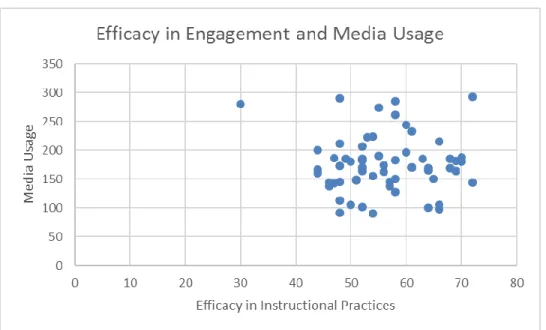
Figure 1 Scatter Plot for Teacher Efficacy and Media Usage……….……72
Figure 2 Scatter Plot of Efficacy and Smart Phone Usage……….……….73
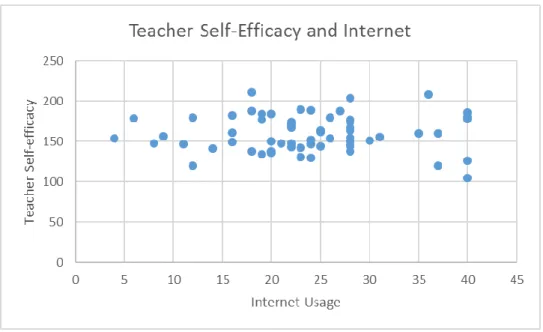
Figure 3 Scatter Plot of Efficacy and Internet Usage……….……….75
Figure 4 Scatter Plot of Efficacy and Text Messaging..……….76
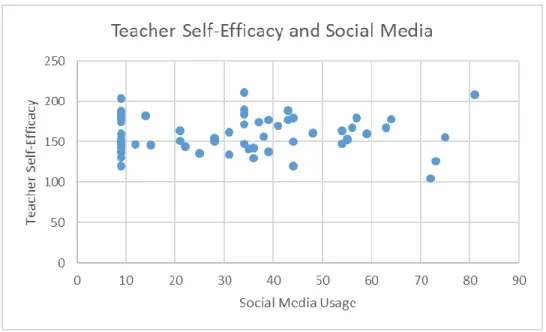
Figure 5 Scatter Plot of Efficacy and Social Media……..……….78
List of Abbreviations
Department of Education and Early Childhood Development (DEECD) Media Technology Usage Attitude Scale (MTUAS)
Teachers Sense of Efficacy Scale (TSES) Technology Acceptance Model (TAM)
CHAPTER ONE: INTRODUCTION Overview
The classroom has changed in many ways over the past twenty years. Technology has become commonplace within the 21st century classroom. These technologies were provided for teachers in an attempt to reach the many different students that could be in the classroom. Unfortunately, many teachers have expressed concern that they do not know how to integrate the technology within the classroom.
Background
A survey by the National Center for Educational Statistics found fewer than half of the 3,000 K-12 teachers that were surveyed reported using technology during instruction (Snyder & Dillow, 2012). If this study is indicative of the general population of educators within the United States, then the use of instructional technology in the classroom is in a precarious situation. Instructional technology includes educational tools that are used to improve the delivery of curriculum standards within the classroom. These technologies include, but are not limited to, computers, cell phones, interactive white boards, and document cameras. These instructional technologies are available in most classrooms, and some are used on a daily basis by students. It should be noted that because of the availability of these technologies, these technologies provide the most familiar format for many students. However, if the findings above are correct, many teachers are not using the best available format to reach students. It suggests that teacher use of technology in education is actually regressing. Today the American public has integrated technology into daily life to a degree that has never been attained in history: “Electronic communications and digital networks are transforming the way we work and are reshaping personal communication and entertainment” (Garrison, Anderson, & Archer, 1999, p. 88).
Despite the growing reliance on technology in public life, teachers in the K-12 arena are failing to integrate technology in a manner that benefits both students and teachers to its fullest
potential.
When teachers are using technology, often their use of this tool is not in a manner that was originally intended. For example, interactive whiteboards offer educators many tools to involve the students. However, most teachers use interactive whiteboards as they once used their chalk boards. Many teachers admit that they are not familiar with the best practices with regard to integrating technology in their classrooms. According to a study conducted by Butler and Sellborn (2002), knowing how to use a technology is the second most important factor in determining faculty adoption. This is an important factor with regard to technology integration, however it is not the only factor. Two other factors were also rated as important in terms of adoption: difficulty in using the technology and difficulty in learning to use technology. School systems seek an answer to this issue through the many professional development opportunities afforded educators. Despite the budget that has been devoted to both technology and training, teachers are still concerned about their ability to understand how to use the technology that is being made available to them. Shoepp (2005) introduced a study that sought to define the barriers to technology integration. In this study, he observed, “Faculty or teachers in all of the studies did not feel as they were being provided with enough support to become effective technology integrators” (Shoepp, 2005, p. 16). In fact, another study found that, “… even faculty with high levels of proficiency generally identified the same barriers as faculty with low levels of proficiency” (Butler & Selbourn, 2002, p. 23). The issue remains: how can teachers better equip themselves to be more confident with the integration of technology in the
Technology affords teachers and students different types of learning opportunities. Nontraditional students have seized the opportunity to return to school. In fact, a study conducted by Allen and Seaman (2010) verified that one of greatest gains in higher education trends over the last decade has been a strong growth in distance education through online course work. Outside of the education field, many have turned to the availability of information on the internet to learn new skills or crafts. YouTube has become a great source for the do-it
yourselfers, providing short informative how-to videos for a plethora of different situations once reserved for highly trained individuals. Pinterest is yet another social media that has experienced a pronounced growth in the previous two years. In 2011, this social media experienced a 4000% growth (Gilbert, Bakhshi, Chang, & Terveen, 2013). These social media provide individuals with the opportunity to learn specific skills using a brief list of directions or a video. The previous study suggests that perhaps this individualized, constructivist approach may better equip teachers for use of the technology within their classrooms.
While technology enhances the learning environment, the technological advancements of the late twentieth and early twenty-first centuries have created an environment in which
technology has become increasingly intertwined with curriculum and pedagogy. Today’s teachers are in the midst of a pedagogical revolution: “Teachers need to be explicitly [taught] how the unique affordances of technology can be used to enrich subject domains for specific learners and … about interactions among pedagogy, content, and technology to develop their technological pedagogical content knowledge” (Clark, 2013, p. 43). Professional development is made available to teachers in an attempt to address these new concerns. Again, some
communities have been very successful with regard to professional development, while others have struggled. It is essential that each community succeed in preparing teachers, as educational
reform is continually placing higher demands on the teachers In a prior study, it was determined that many of the new expectations in education have had a large impact on both teacher and student expectations, “The central elements of systemic reform - high standards, curriculum frameworks, and new approaches to assessment aligned to those standards-generate new expectations for teachers’ classroom behaviors, as well as for student performance” (Garet, Porter, Desimore, Birman, & Yoon, 2001, p. 916). Despite the perceived successes or failures, technology integration is only as successful as the day-to-day use of technology. Many teachers leave professional learning for technology within the classroom feeling empowered to use the technology that they have been trained on, only to become frustrated when confronted with the daunting task of creating interactive, relevant lessons using the technology. It is essential that training be provided for educators that allows them to reach students. In 2012, Cooke concluded, “Education for the contemporary professional no longer ends with diploma, if it ever did. It has been recognized that continuing education strengthens not only knowledge and skills necessary for competent performance but also values and attitudes necessary for the service orientation of a profession” (Cooke, 2012, p.2). Successful professional development should equip the teachers for future success as well as provide tools that will allow them to address future obstacles. It is the belief of the author that a constructivist approach to professional development would best equip learners with the necessary tools to address these future obstacles. This approach would allow the user to construct their own understanding. A person can attain his/her own
understanding of the technologies that he/she uses through actually using the technology he/she will gain knowledge and familiarity at the same time.
Constructivism is an approach to learning that is based on the belief that learning is an active process of meaning making gained through a person’s interaction with the world. Previous
studies have found that Constructivism is very conducive with technology integration. “There is a close relationship between technology and constructivism, the implementation of each one benefiting the other” (Gilakjani, Leong, & Ismail, 2013, p. 49). Those who espouse
Constructivism believe that learning occurs best when people experience and address conflict. They also believe that an essential component of learning comes from reflection and feedback. A constructivist approach to technology integration requires that the learner be allowed to practice and fail or succeed based on their own experiences. Other approaches do not offer this opportunity to learners. “Constructivist teaching is often contrasted with ‘the lecture approach’ (less charitably referred to as “knowledge dumping”), which involves students “passively receiving content presented in lectures and textbooks” (Wilson, 2012, p. 46). Most professional learning opportunities involve one expert and passive learners. A true constructivist approach to professional development would allow the learner to experiment and learn as he or she goes. However, while this approach makes sense, few professional learning opportunities offer anything similar, as evidenced in the study by Nanjappa and Grant (2003) in which they determined that, “many teachers do not use constructivist practices, and those who do are not judicious in their selection of technology use” (p. 53). One of the barriers may have to deal with the amount of time that it takes to incorporate constructivism. However, despite the amount of time that Constructivism requires, many studies have concluded that education should be remodeled to allow the time for students to invest in their education. “There is a greater sense that, with learner access to the burgeoning resources on the web, and with their increasing digital skills, we should remodel education so that learners can take control of their own learning” (Beetham & Sharpe, 2013, p. xvi). The abundance of sources available to the learner today via
the internet and applications fosters an environment that encourages exploration. This exploration is the foundation of the Constructivist theory.
While there have been various approaches studied with regards to assisting teachers with better understanding technology and its effects, most training is provided in the teacher-training courses at college and teacher education institutions. These trainings usually fail to offer guidance in which there is faculty who are modeling various instructional methods that allows for the integration of the technology (Chuang, Thompson, & Schmidt, 2003; Smith, 2000). Prior studies have shown that one-shot workshops usually fail to provide the modeling and guidance that is needed to effectively integrate technology within the curriculum (Barron, Kemker, Harmes, & Kalaydjian, 2002; Bradshaw, 2002; Mouza, 2002). Teachers need more than an introduction and a few great ideas. Technologies offered today are too complex to incorporate without some advanced training. Other studies have sought to research the effectiveness of pairing teachers with others who have technology backgrounds. These studies provide expert training in the form of a mentor or trainer (Margerum-Leys & Marx, 2002). In some of these studies, graduate students were used to mentor faculty members for a period of one hour a week on the use of technology. Another study used graduate students as mentors while also providing faculty with group training (Leh, 2005). Still other mentoring programs have used
undergraduate students as technology mentors. At North Texas, undergraduate students were paired with faculty so that they might mentor them in technology, while learning classroom management and curriculum (Henson, 2001). While these studies did show signs of promise, programs like these are not conducive within the school system. Teachers need a means of training that provides more flexible and convenient opportunities to share ideas and express
concerns regarding technology integration. Despite the type of training offered, many teachers still have difficulty assimilating their new-found tools in to their curriculum.
Studies involving staff training for technology have also been performed in the K-12 environment. The University of Maryland performed a study in which teachers experienced in technology mentored other teachers in their school (Davis & Roblyer, 2005). This program did allow more flexibility, but seeking proficient teachers in education could provide some barriers. The university/K-6 partnership pairs technology graduate students with elementary teachers, which would assist with the understanding of what the technology does, but there are issues regarding convenience and communication that would have to be resolved such as: availability of both the teachers and the technology students and how they can communicate when issues occur during the day. In Washington, Generation www.Y seeks to train 8th through 12th grade students to mentor teachers in technology use (Chaung, Thompson, & Schmidt, 2003). This use of student mentors assists teachers with regards to better understanding technology, but it could provide for some issues regarding teacher student relationships, as well as communication issues. Each of these studies, as well as a handful of others, has sought to better equip teachers with the skills necessary to successfully implement technology in the classroom.
There is still one other model which must be considered with regards to training faculty in implementation of technology and collaborative training: the peer mentoring model. Glazer, Hannifan, and Song (2005) suggest,
Teachers often learn technology skills and integration strategies in intensive seminars, ineffective means for professional learning because experiences are seldom transferred to instructional practices. Thus, effective technology integration requires teachers to obtain
learning experiences within the context of their teaching so they can practice, reflect, and modify their practices. (p.57)
Even earlier than Glazer’s study, Windschitl and Sahl (2002) determined that while classroom technology use is affected by teachers’ beliefs on learning, much of the learning takes place in the context of social interactions with their peers. Teachers relate to one another. They speak the same language. They understand one another’s concerns and fears with regards to student issues and technology integration. Teachers would be most suited to communicate the best means of implementing technology. Teachers who teach the same subject better understand the rigors and requirements that peers are required to attain in the classroom. They have a better ability to communicate the relevance or lack thereof with regards to different types of learning activities or technologies.
Another possible means of better equipping teachers to handle the rigors of implementing technology in their classroom has been introduced with the proliferation of social media during the past five years. Web-sites such as You-Tube, Pinterest, and Teacher Tube offer teachers ideas and training for implementing new planning and curricular ideas into their classrooms. These media provide short and concise directions regarding how to better prepare lessons, as well as implement those same lessons. The simplicity associated with many of these sites has offered a new possibility associated with training and curricular planning for teachers.
Problem Statement
Schools are faced with federally mandated levels of proficiency that students must attain. Failure to meet these standards could result in minimized funding, as well as the loss of
accreditation. In an attempt to attain these heightened standards, educators are constantly
teachers, this answer comes in the form of new technology. Using technology makes sense, because today’s students are digital natives (Margaran, Littlejohn, &Vojt, 2011), and the majority of these students are well adept at using technology. However, technology is only as effective as the implementation of said technology. A teacher’s effective use of technology that has been made available to him or her in the classroom has a substantial impact on the
effectiveness of the curriculum. Despite their growing dependence on technology, many teachers still report that they lack the necessary confidence to integrate the available technology into their curriculum (Bingimlas, 2009). Schools have responded by providing teachers with additional professional development. However, “any professional development program needs to be multi-faceted in order to meet the needs of the very diverse population,” (Shoepp, 2005, p. 19). Previous studies have determined that most teachers felt that the professional development they receive is fragmented and not directly related to the issues that they are facing in the
classroom (Liberman & Mace, 2010). In a study conducted in 2006, Zhao and Bryant concluded that while technology integration training can be effective, it is only effective at the most basic levels, and it must be supplemented if higher technology integration is to occur. Therefore, it is imperative for schools to determine an approach that offers teachers more relevant and useful training, so that they might improve their self-efficacy with regard to the technology within their classrooms.
As a general construct, self-efficacy is a perception about one’s abilities within a given domain. “With regard to technology in teaching and learning, multiple domains of self-efficacy beliefs may play a role in a teacher’s thoughts and actions regarding technology in the
classroom” (Abbitt, 2011, p. 134). Despite studies regarding technology and teacher self-efficacy, few studies address any relationship between the two variables. In order to better
prepare teachers to successfully integrate technology within the classroom, there needs to be a better understanding of the relationship between self-efficacy and integration of technology in the classroom. The problem is that teachers are struggling to integrate the technology they have available to them within the classroom.
Purpose Statement
The purpose of this quantitative correlational study was to determine if there is a
relationship between teachers’ self-efficacy within the classroom and their ability to integrate the technology for the purpose of enhancing the curriculum. Two surveys were used in this study. One survey assessed the teachers’ levels of self-efficacy within the classroom and the other survey addressed teachers’ aptitude for using technology within the classroom. Participants in the study included middle grades teachers in a South Georgia school district. For the purposes of this study, a convenience sample was used that comprised 64 middle-school teachers.
The predictor variables were generally defined as teacher self-efficacy and knowledge and consistency of the subject taught. The criterion variable were generally defined as teacher self-efficacy with regard to technology, as evidenced by a survey relating to self-efficacy with regards to the technology available within the classroom. Self-efficacy is the beliefs in one’s own capabilities of succeeding in specific situations (Ashton & Webb, 1986).
Significance of the Study
Georgia’s governor, Governor Deal, proposed an education budget that totals 8.49 billion dollars for 2016 (Suggs, 2015). This is a great investment into the futures of the students of Georgia. A portion of this budget is invested in technology for the classrooms. Despite this level of commitment to technology, teachers are not integrating technology to its fullest potential in the classroom. “Even institutions that are eager to adopt new technologies may be critically
constrained by the lack of necessary human resources and the financial wherewithal to realize their ideas” (Johnson, Adams, & Cummings, 2012, p. 9). There have been many studies that have suggested the need for better staff development and training with technology. “If teachers do not have sufficient equipment, time, training, or support, meaningful integration will be difficult, if not impossible, to achieve” (Schoepp, 2005, p. 3). This discovery was further supported by a later study that concluded that there is a link between faculty proficiency, regard for technology, and increasing the likelihood of participating in distance education. This link emphasizes the need for providing faculty with opportunities for training and development (Tabata & Johnson, 2008). Based on the preceding studies, it can be ascertained that success is dependent on all of these elements being met. A training program that provides insufficient access to equipment will be no more successful than a training program that has all of the essential equipment but lacks support. It is imperative that teachers have both access to the equipment, as well as available support for implementing the equipment if technology is to be integrated effectively within the classroom.
Despite the consensus that training is needed, there is little evidence of what is effective. There have been studies that suggest specific approaches, and many studies have suggested further research regarding specific strategies; however, little research has sought to actually quantify what approaches actually influence teacher efficacy. Unless researchers can identify what works, school systems will continue to waste funds in an attempt to fix the problem. “Funding that is inappropriately allocated (e.g., that is used only for hardware purchases and not for personnel or training) is wasted. Such waste contributes to negative attitudes toward
technology, which ultimately is represented as the first major barrier to technology adoption” (Rogers, 2000, p. 470). These negative attitudes towards the use of technology within the
classroom make it very difficult for well-intentioned teachers to proactively create lessons that engage the student with relevant technology activities. “In addition to the lack of technology knowledge and skills, some teachers are unfamiliar with the pedagogy of using technology,” (Hew & Brush, 2007, p. 227). However, in today’s society the internet is determined by students as being, “the first realistic means for students to connect with civilization-wide knowledge building and to make their classroom work a part of it” (Scardamaila & Bereiter, 2006, p. 98). This is evidenced in the students’ reliance on the internet for research assignments, as opposed to traditional means of using media and media center resources.
The goal of this study was to provide evidence for educators as to what the formula may be for success with implementation of technology within the classroom. Teachers are well intentioned, and it is very frustrating to not provide students with what they need. Students’ lives would also benefit greatly from this study, as they might have an opportunity to implement those technologies that they have used for the majority of their lives.
Research Questions The research questions for this study were as follows:
RQ1: What is the relationship between teacher self-efficacy and a teacher’s ability to integrate instructional technology available within the classroom?
RQ2: What is the relationship between teacher self-efficacy and a teacher’s ability to use smartphones?
RQ3: What is the relationship between teacher self-efficacy and a teacher’s ability to use the internet?
RQ4: What is the relationship between teacher self-efficacy and a teacher’s ability to use text messaging?
RQ5: What is the relationship between teacher self-efficacy and a teacher’s ability to use general social media?
RQ6: What is the relationship between teacher self-efficacy and a teacher’s ability to use email?
Null Hypotheses The null hypotheses for this study were:
H01: There is no relationship between teachers’ sense of self-efficacy and technology integration within the classroom.
H02: There is no relationship between a teacher’s sense of self-efficacy and the teacher’s ability to use smartphones.
H03 There is no relationship between a teacher’s sense of self-efficacy and the teacher’s ability to use the internet.
H04: There is no relationship between a teacher’s sense of self-efficacy and the teacher’s ability to use text messaging.
H05: There is no relationship between a teacher’s sense of self-efficacy and a teacher’s ability to use social media.
H06: There is no relationship between a teacher’s sense of self-efficacy and a teacher’s ability to use email.
Definitions
1. Collaborative training – a system of training in which a group of people learn together as a group (Dias, 1999).
2. Constructivism – an approach to learning that is based on the assumption that people construct their own understanding and knowledge of the world, through experiencing things and reflecting on those experiences (Schulte, 1996).
3. Document cameras – real time image capture devices (Doermann, Liang, &Li, 2003). 4. Laptop – a computer that is portable (Bayless, 2013).
5. Mobile devices – small, handheld computing device (Windshitl & Sahl, 2002). 6. Self-efficacy – beliefs in one’s own capabilities of succeeding in specific situations
(Ashton & Webb, 1986).
7. Student Response Systems – technological way to assess students (Kaleta & Joosten, 2007).
8. Social media – virtual communities in which people exchange ideas, such as Pinterest and You Tube (Dabbagh & Kitsantas, 2012).
9. Tablets – general purpose computer contained in a single panel. Uses touch screen as input device (Johnson et al., 2012).
10.Teacher self-efficacy – the teacher’s belief in his or her capability to organize and execute courses of action required to successfully accomplish a specific teaching task in a particular context” (Tschannen-Moran, Woolfork, Hoy, & Hoy, 1998).
11.Technology – computers, handheld devices, and multimedia equipment such as cameras, video projectors, graphic calculators, and voice recorders (Plair, 2008).
CHAPTER TWO: REVIEW OF THE LITERATURE Overview
Albert Bandura stated that one of the major ways in which self-efficacy contributes to academic development is through a teacher’s belief in their “personal efficacy to motivate and promote learning” (Bandura, 1993, p. 117). This perceived sense of self-efficacy influences a teacher’s effectiveness in many ways. However, there are few studies that investigate the relationship between this self-efficacy and a teacher’s ability to integrate technology in the classroom. Teachers have so many different instructional technologies available to them, and yet they still have to master their curriculum standards as well. After reviewing studies centered on technology integration and teacher self-efficacy, the literature connecting these two elements is unclear on whether they affect one another. Chapter two is organized as follows (a) types of technology available in the classroom, (b) integration of technology in the classroom, and (c) constructivism.
Types of Technology Available in the Classroom
Interactive whiteboards. As the technology becomes more integral in society, the world continues to shrink as a result. “Students and teachers both are finding it necessary to be
technologically adept, to be able to collaborate on a global scale and to understand content and media design” (Johnson, Levine, & Smyth, 2009, p. 10). Interactive whiteboards have become an integral tool in both teachers’ and students’ aspirations to achieve the necessary
understandings. Interactive whiteboard technology refers to twenty-first century technology created to replace the traditional white boards of flip charts. The basic functions of these
text. These whiteboards allow teachers to present anything that they can save on their desktop to their class as well as record and present or post their materials for review by students.
The number of interactive whiteboards purchased in a year increased from 22,463 in 2001 to 267, 136 in 2008 (Levy, 2002). During that same time span, over 757,000 whiteboards were purchased for use in America’s public schools (Alsopp, Colucci, Doone, Perez, Bryant, & Hohlfield, 2012). Whiteboards have been become an integral part of most classrooms. “Most IWB (Interactive White Board) studies in school settings highlight the potential of this tool for stimulating interaction among learners” (Schmid & Whyte, 2012, p. 69). Many of those who have integrated the interactive whiteboard into their curriculum have, as a result, shifted form a teacher-centered approach towards a more student-centered approach. In one study with
interactive whiteboards it was determined that, as teachers gained more confidence implementing the affordances of the technology, they better understood the potential for broader technology use, in which are part of a seamless learning environment (Schmid & Whyte, 2012, p. 81). However, not all studies support the interactive whiteboard as a great influence on student success. A recent study conducted in Egypt concluded, although early literature is enthusiastic about the potential of interactive whiteboards, and attitudes towards the use of interactive whiteboards have improved, the technology is still not receiving the enthusiasm that was originally thought, based on the data (Albaaly & Higgins, 2012). Therefore, the interactive whiteboard does present some obstacles to the learning environment. Many of these obstacles could be overcome with a firm, productive basis of professional learning.
Student Response Systems. Student response systems refer to the technology that allows educators to assess students, by providing immediate feedback. They promise to provide a voice for each child.
Prior research suggests that when combined with effective questioning,
discussion, and feedback, classroom network technology constitutes a powerful catalyst for conceptual change, heightened student engagement in class, and because involvement and feedback for all students is equal, greater equity in science instruction. (Penuel, Boscardin, Masyn, & Crawford, 2007, p. 316)
These systems, often referred to as clickers, provide a means for educators to assess student knowledge throughout a lesson. In fact, Kaleta and Joosten (2007) determined, “Faculty enjoy the opportunity to assess student mastery of course content and concepts during class, and students appreciate being able to determine their level of comprehension” (p. 341). Not only does evidence suggest that the student response systems provide an excellent source of assessment, but studies also show that these systems provide an incentive for student
participation; “overall, the data showed that both faculty and students liked using clickers and perceived the clickers as having a strong impact upon class engagement and learning. The assessment data showed that clickers had an impact upon student grades” (Kaleta & Joosten, 2007, p. 4). In fact, in the same study, faculty:
Agreed or strongly agreed that there was greater student engagement (94%). Agreed or strongly agreed that there was greater student participation (87%). Agreed or strongly agreed that there was greater student interaction (68%). (Kaleta & Joosten, 2007, p. 5)
One of the keys to successful integration of the student response systems coincides with the teacher’s preparation prior to the actual lesson. A common principle as a result of findings across varying disciplines is that teachers need a broad array of questions mapped to their curriculum to make effective use of response systems (Penuel et al., 2006). Kaleta and Joosten’s
study supported this finding as they found that faculty appreciated that clickers help to identify times when it was necessary to re-teach concepts and material. As one faculty member
mentioned, “By getting immediate feedback, I could judge whether students understood the basic concepts. If a vast majority answered the multiple-choice questions correctly, then I could
confidently proceed onto the next topic of lecture” (Kaleta & Joosten, 2007, p. 5). Immediate feedback allows teachers to better address those areas in which the students have struggled. This, in return, allows for a better understanding by the students. This is a positive effect that clickers have offered the education field.
The majority of the research on student response systems is positive, although there are some concerns. Heaslip, Donovan, and Cullen (2014) suggested that the student response systems provided some difficulty, as there was a steep learning curve with the technology. The time required to prepare for a lesson was also provided as a means of concern. Kaleta and Joosten (2008) were concerned with “integration of clickers into the design of the class required a greater amount of time than many instructors had anticipated. Also, clicker activities
consumed a considerable amount of class time, especially if discussions were linked to questions posed” (Kaleta & Joosten, 2007, p. 8). Other studies reiterate that the use of student response systems alone cannot be looked to as means for improving student learning.
Researchers who have studied student response systems in higher education share a belief that the technology alone cannot bring about improvements to student participation in class and achievement; rather the technology must be used in conjunction with particular kinds of teaching strategies. (Penuel et al., 2006, p. 318)
Based on the research, despite the many perceived advantages allotted through the use of student response systems, there are still some causes for concern.
Type of Technology
Laptops and tablets. Laptops have become increasingly popular over the past two decades. In fact, a recent survey indicated that 90 percent of the college students that were polled reported to own a laptop (Baker, 2012). “As educators, we should be modeling
technology in the classroom and occasionally have our students use their technology” (Bayless, 2013, p. 132). The availability of technology has provided many opportunities for the classroom teacher that was not available in years past. However, the technology also provides new
challenges for the teacher as well. According to a study conducted by Bayless (2013), several law professors have, “banned laptops in the classroom based on three general arguments 1) note-taking is not improved with laptops, 2) students are less engaged in class and less interested in participating when laptops are allowed, and 3) students using laptops and those sitting near them are easily distracted by the laptops (Bayless, 2013, p. 124). Regardless of whether or not the effects are positive or negative, the availability of this technology has definitely changed the landscape of education in a way that is unparalleled in recent history.
One of the areas teachers must address is the effective integration of technology. The widespread use of laptops could lead to potential problems in the classroom if teachers are not properly trained in their use. These problems could affect teacher effectiveness. “Teacher effectiveness contributes to an array of areas that are essential to maintaining a professional environment to facilitate teaching and learning,” (Battle, 2008, p. 105). “There are many
influences that affect the effectiveness of a curriculum, one of which is the ability of the educator to effectively use the resources that are made available to him” (Carlson & Reidy, 2004, p. 65). When teachers effectively integrate tablets and laptops into the classroom, the possibilities increase exponentially. “Once seen as an isolating influence, technology is now recognized as a
primary way to stay in touch and take control of one’s own learning” (Johnson et al., 2009, p. 9). In fact, many school systems now view laptops and tablets as an integral piece of the curriculum: “Local, state, and federal funding sources have demonstrated a strong commitment to computer technology use in the classroom by increased investment in hardware and software in schools” (Bayless, 2013, p. 51). Some studies have suggested that these technologies have had a
tremendous effect on student learning. Bayless (2013) suggested, “Laptops increased student engagement in wireless classrooms as students participated in more diverse writing activities, analysis of reading, and use of media-production software” (p. 51). Tablets have also received some very favorable reviews in recent studies. Tablets provide the benefits of a laptop in addition to the many apps that are available.
Even without extending their functionality via the full range of mobile apps, tablets serve as nicely sized video players with instant access to an enormous library of content; digital readers for books, magazines, and newspapers; real-time two-way video phones; easily sharable photo viewers and even cameras; fast, easy email and web browsers; and rich, full-featured game platforms — all in a slim, lightweight, portable package that fits in a purse or briefcase — but which significantly omits a traditional keyboard. (Johnson et al., 2012, p. 18)
Laptops and tablets have become so prevalent in today’s society that students have integrated these technologies into their everyday lives. In fact, as people tend to use tablets to supplement and not replace smartphones, they are viewed as less disruptive tools (no phone ringing and no incoming text messages), suggesting they are better compatible for the learning environment (Johnson et al., 2012). With this prevalence and integration of laptops and tablets into the daily lives of students, it would be wise for teacher candidates to be adequately trained for
implementing these technologies within their classroom instruction. However, “Research on learning to teach consistently documents the disjuncture between the practices that beginning teachers encounter in their university teacher preparation courses and those they reencounter in the K-12 classrooms in which they learn to teach” (Anagnostopoulos, Smith, & Basmdjian, 2007, p. 138). Clearly, there is a disparity between what is being taught in the college classroom and what today’s teacher is encountering in the field. Failure to properly prepare pre-service teachers unfairly places even more stress and frustration on the job at hand.
Technology integration is a subject area that many teachers find difficult to transfer from the classroom to actual practice. This is evidenced in the findings of Clark (2013) in which it was concluded that although students’ grades were high, indicating competence in using technologies, students ‘confidence to do initially use the technology was unusually low. Also, when student teaching portfolios were investigated, there was very little evidence of technology integration. The various distractions that technology offers in the classroom often creates a barrier to its integration. It is very difficult to address all of the distractions that these
technologies create for the classroom. Some of the barriers that leads to this disconnect between learning and implementing the use of laptops and tablets are associated with the many
distractions to the learning environment that these technologies create. According to the study by Bayless (2013), “checking and sending email, checking and posting on Facebook, checking sports scores, shopping, playing games, and reading the news. All of these uses may occur while the instructor is trying to conduct a class at the front of the room” (p. 121). Technology upkeep and repair is another impediment to the successful integration of laptops into the classroom. “In some cases, public schools have invested more time on repairing laptops than on training
faculty rather than on existing computer resources,” (Bayless, 2013, p. 52). Properly working technology is only as effective as the operator.
Mobile devices. Smartphones have become a personal mobile computer, camera, game system, etc. all rolled into one product. “Multi-touch interfaces, GPS capability, and the ability to run third-party applications make today’s mobile device an increasingly flexible tool that is readily adapted to a wide range of tasks for social networking, learning, and productivity” (Windshitl & Sahl, 2002, p. 166). These devices have become an integral piece of daily life. Society depends upon this ever changing technology to supplement their transportation,
communication, research, as well as entertainment needs. “The rapid pace of innovation in this arena continues to increase the potential of these little devices, challenging our ideas of how they should be used and presenting additional options with each new generation of mobiles” (Johnson et al., 2009, p. 20).
Educational technology, such as tablets and smartphones offer a great deal of applications that many professors are beginning to leverage as learning tools in the classroom. This allows students to connect the curriculum with real life issues (Johnson et al., 2012). In 2009, 84% of high school students and 60% of middle school students owned a cell phone (Engel & Green, 2011, p. 39). Since nearly all students in higher learning, as well as the majority of students in K-12 education, have these mobile devices, it only makes sense to integrate these readily
available forms of technology into the curriculum. While mobile devices have been adopted for general use in society, mobile devices used to support learning in schools is a fairly new concept (Kissko, 2011). However, mobile devices are being utilized within the classroom more and more often. In one study that observed student mobile device use, “There was an observable rise in class participation when cell phones were used in the class. Students felt they were able to make
a contribution to the class using their phones either to comment on the lesson, to answer questions, or to do research to help the lesson continue” (Engel & Green, 2011, p. 44).
One reason often suggested for the increased classroom participation is the familiarity that students have with smart phones. Students depend on these devices on a daily basis; therefore, they know the ins and outs of this technology and make it a point to understand how this technology works because it interests them. Marzano (2003) suggested that when students find activities interesting, they are more likely to participate for longer periods of time.
Therefore, the most motivating activities would be projects that students enjoy and find personally meaningful (Marzano, 2003). Integrating smart phones and other mobile devises within the lessons could indeed make the subject matter more meaningful to the students.
Document cameras. For many years, teachers relied upon overhead projectors to share graphs and notes with their students. The document camera is seen by many as a new, improved version of that technology. However, the document camera is much more than a projector. Document cameras can be used as overhead projectors. Also, when used in conjunction with specific software, document cameras can be used as a means to grade and record test results. This technology also has the ability to design and create lessons, as evidenced by a previous study in 2013, “Document cameras can record lessons and then play that lesson to help students who were absent and to enable other students get a deeper understanding of the concept”
(William, 2011, p. 3).
Integration of Technology in the Classroom
Teachers’ Self Efficacy – Attitude. Teachers’ attitudes towards technology plays a significant role in the integration of technology. A study conducted by Jhurree (2005) determined that, teachers must have a positive attitude towards computer based learning
environments, because they are at the forefront when it comes to influencing the teaching-learning process inside the classroom. Among the many variables that determine teacher success, teacher self-efficacy has been determined to be one of the most directly related variables. In studies that date back as far as 1986, it was determined that teacher self-efficacy predicts teachers’ teaching philosophy and practice, as well as student achievement (Ashton & Webb, 1986; Midgley, Feldlaufer, & Eccles, 1989; Moore & Essalman, 1992; Ross, 1992). This perceived self-efficacy, along with the stressors that all teachers face, bears a direct impact on what many refer to as teacher burnout. Teacher burnout refers to the emotional exhaustion and fatigue as well as reduced personal accomplishment achieved by many teachers as a result of day-to- day stressors. Stressors include, “behavior issues, parent teacher conflicts, conflict with colleagues, as well as having to organize in new ways as a consequence of working in teams because of school reforms” (Skaalvik & Skaalvik, 2007, p. 613). Teachers with high sense of self-efficacy “create a dynamic, student-centered learning environment in which students take ownership of their learning” (Swan, Wolf, & Cano. 2011, p. 130). This constructivist approach to teaching allows for more involvement by the students. As the students begin to better
understand the relevance of their learning, teachers are able to see them achieve more and this achievement breeds confidence within both the students and the teachers.
Self-efficacy has been referred to as teachers’ beliefs that they can influence students’ behavior and academic achievement. However, teachers’ roles are much more complex with regard to the success of their classrooms. Efficacy is also related to teachers’ ability to maintain classroom discipline, use resources, and support parents in their quest to teach children
(Friedman & Kass, 2001). Therefore, a teacher’s self-efficacy is directly related to each of these elements, and if one element is perceived to be weak, by the teachers or their administrators, then
self-efficacy can be adversely affected. This lower self-efficacy can in turn directly impact both teachers’ satisfaction, as well as student achievement (Skaalvik & Skaalvik, 2014). Many times, lower self-efficacy can be attributed to stressors such as: teacher apprehension and lack of motivation, lack of appropriate software and technical support, and lack of training (Jhurree, 2005).
Factors Affecting Technology Integration. It is the goal of educators to ensure that all students learn. The Federal Government created a policy that seeks to assist educators with this goal. No Child Left Behind (NCLB) has created a system in which teachers are constantly looking for new ways to reach their children, as their jobs as well as their school’s funding, depends on the success of the students. Failure to meet nationally mandated levels of proficiency can lead to a loss of federal funding, as well as a school’s autonomy. In response to this
heightened sense of accountability, teachers are constantly looking for new ways in which they can differentiate their lessons and reach the students that are historically low-achieving.
However, integrating technology is a complex process of educational change, and the use of technology in schools is still extremely varied (Tondeur, Kershaw, Vanderlinde, & Brak, 2013). Programs have abounded promising to help teachers differentiate their lessons. Many have turned to technology as a means of providing the differentiation that is needed to reach their students.
Faculty who perceive that using technology has a positive effect on their work are more likely to use it. Moreover, once faculties start to use technology and become more knowledgeable, they tend to use it more often. Furthermore, faculty who become knowledgeable and skillful in using one technology may then be more willing to try a different technology. (Tabata & Johnson, 2008, p. 638)
This approach makes sense because today’s students are digital natives, and many are
comfortable using newer technology. However, history has proven that technology is only as successful as its implementation. There are many influences that impact the effectiveness of a curriculum, one of which is the ability of the educator to effectively use the resources that are made available to him/her (Carlson & Reidy, 2004). A teacher’s successful use of technology in the classroom has a substantial impact on the effectiveness of the curriculum.
Despite the growing dependence on technology, many teachers still report that they lack the necessary confidence to integrate technology into their classrooms (Buabeng-Andoh, 2012). Schools have responded to this dilemma by devoting a large portion of their budget to
technology. As new technology is introduced, teachers are provided with a brief training. However, as Schoepp suggested that professional development programs need to be multi-faceted in order to meet the needs of every member in the population (Schoepp, 2005). Many teachers do not feel that the training provided is adequate to prepare them to successfully implement technology with their lesson plans. A recent study showed that most teachers perceive professional development to be fragmented and not related to the issues faced in the classroom (Liberman & Mace, 2010). The problem is that although teachers are receiving some professional development, most still feel unprepared to use the technology that is available to them. Teachers’ own learning experiences are affecting the quality of their practices, and the training received in technology does not appear to be adequate, (Tondeur et al., 2013). It is imperative that professional development be redesigned to address these issues.
Studies have determined that teachers’ effective use of technology is directly related to their pedagogical beliefs. For example, Ertmer, Gopalakrishnan, and Ross (2000) state that teachers who are determined to be exemplary in terms of integrating technology use a
constructivist approach to technology use within the classroom. Constructivist approaches to learning with respect to technology include: designing activities around student interests, having students engage in collaborative group projects, focusing on student understanding of complex issues rather than facts, and having the teacher engage in learning with the students as opposed to being the expert. The learning is usually considered to be both student centered and student directed. It requires that teachers give up some of their perceived control of the classroom and often these changes are very difficult for traditional teachers to make and accept. However, teachers who effectively use technology within their classroom have proven to more easily adapt this style of teaching. The assumption is that, “technology use actually prompts teachers to change their practices in the direction of more student-centered approaches” (Ertmer et al., 2000, p. 7). Therefore, better technology integration actually improves a teacher’s direction and focus. Many researchers attribute the poor use of technology and the internet in the classroom to lack of teacher training, lack of knowledge, and poor practices, (Riasati, Allahyar, & Tan, 2012).
Therefore, better training or a better supplement to the current training must be established. Today students across the United States have access to the internet at a ratio of one computer for every four students (ISTE, 2004). Such access would seem to lead to the proliferation of technology integration in the classroom, and as a result improved teaching. However, access does not always lead to improved teaching within the classroom. There are many variables that have been identified as barriers to successful integration of technology within the classroom. Teachers’ use of technology within the classroom can be divided into three different categories: technology for instructional preparation, technology for instructional delivery, and technology as a learning tool. Technology for instructional preparation refers to the way in which a teacher used technology to plan lessons and communicate with peers and
parents. Technology for instructional delivery defines how a teacher and his students use the technology during instruction. Technology as a learning tool describes how the students use various technologies and software to communicate and solve various problems.
Teachers are at the forefront when it comes to influencing the teaching-learning process inside the classroom. It is therefore important to change their attitude towards a computer-based learning environment (Jhurree, 2005). In order for teachers to have a greater sense of self-efficacy with regard to technology, they must be able to confidently navigate all three categories of technology within the classroom. Studies have been conducted in an attempt to determine just what variables have the greatest effect on teacher self-efficacy with regards to technology. In one such study, it was determined that teacher beliefs, teacher computer proficiency, and teacher readiness greatly influenced the successful integration of technology (Inan & Lowther, 2010). Ertmer and Ottenbreit-Leftwich support this finding in their study (2010) but they add that “teachers’ mindsets must change to include the idea that teaching is not effective without the appropriate use of information and communication technologies” (p. 255). All of these elements must be reinforced through training that will allow teachers to develop their own sense of self-efficacy.
Most teacher education programs have established the goal of training the pre-service teacher to be proficient in the use of technology. The majority of teacher preparation programs require an Introduction to Technology course as a prerequisite for entry in the education
program. However, this single, separate course is in no way indicative of the familiarity that is needed by teachers with the technology that they have in their classrooms. Several studies have shown that, although a technology-specific course develops basic computer skills, it does not prepare educators to use technology in a variety of instructional settings (Vannatta & Beyerbach,
2000). In fact, many suggest that having a separate course for technology suggests that
computers and technology are a non- integral part of instruction (Tutty, Klein, & Sullivan, 2005). Teachers are coming out of school with an inflated sense of self-efficacy towards technology, and this self-efficacy is being dismantled within the first three years of teaching in a classroom (Lee & Lee, 2014). If this is the case, then it is up to the professional development of the school systems to provide the necessary supports for the teachers. Failure to correct this dilemma leads to a lower self-efficacy for teachers, which has been associated with teacher burnout. In a study conducted in 2006, Zhao and Bryant concluded that while technology integration training can be effective, it is only effective at the most basic levels, and it must be supplemented if higher technology integration is to occur. Based on a community of practice approach, collaborative apprenticeships have become an option when addressing the needed technology training. Collaborative apprenticeships are defined as, “a professional development model designed to support teacher learning in their professional teaching community during the school day” (Glazer et al., 2005, p. 59). This model uses interactions between peer teachers and teacher leaders. It has four progressive phases that are intended to move the peer teachers to teacher leaders. In this model, teachers are able to learn from each other and respond to the needs of one another
through opportunities that include shared planning. This relationship requires that teachers commit time towards developing a shared set of goals in both instruction and technology integration. These goals can then be communicated and implemented in the shared planning sessions.
Another study (Plair, 2008) suggested mentoring teachers using a knowledge-brokering approach. In this professional development approach, schools train a member of the staff to be a knowledge broker of technology. Essentially, this person would have the sole responsibility of
training others within the building with regards to technology. This specialist would receive training so that they could perform all of the following duties: provide the latest information for teachers on current technologies, prepare and fine tune technology experiences, assist others with assimilating technology within the classroom, provide on-the-spot problem solving, and
coordinate learning opportunities for teachers with regards to technology (Plair, 2008). The major weakness this model presents is that the knowledge broker is just one person. It is very difficult for one person to meet the needs of large faculties and staff.
Technology Integration by Subject. For some time, the argument has existed that students have different learning styles, and teachers, like their students, have different methods of teaching (Entwhistle, 2013). Some use the lecture method, a demonstration, or discussion method. There are teachers who focus on principles, and others who focus on application of the principles. There are also teachers who emphasize understanding, and others encourage
memorization (Felder & Silverman, 1988). Many believe that different teaching styles are more effective in certain content areas. For example, mathematics seeks to use technology by creating a visual representation in place of words and symbols as descriptions (Rubin, 1999). The
technology is viewed as offering tools for exploring complexity and is a hands-on approach to learning. Within socials studies classes, many teachers tend to lean towards the lecture or story-telling method. There is a movement towards providing active learning strategies such as role playing and debating to better help students understand the information being taught (McCarthy & Anderson, 2000). This method encourages the student to engage with the material in an interactive role, and thereby spend more time studying the material. Technology is essential for this type of learning to occur, but unlike math, the technology is more for research rather than practical applications. In science, studies suggest that an inquiry approach is best (Friedl &
Koontz, 2004; Mintzes, Wandersee, & Novak, 2005). Again, technology offers many different approaches and interactive sites that allow the student to develop a deeper understanding through activities and experiments. Lastly, English and language arts are subjects that have embraced technology for teaching. There have been studies that have determined that ELA is a subject that can infuse technology in a way that supports pedagogy and involves students in a learning-centered classroom (Pope & Golub, 2000). Still other studies have observed what effects subject matter have on the use of technology. The results reveal that the type of technology used was related to the grade level, the specific subject content, and the school context, such as the availability of whiteboards (Tondeur et al., 2013). It makes sense that availability determines what type of technology is used, but how does the subject taught affect use?
Professional development. Faculty must ensure that students not only understand how to use these technologies (those technologies available in the classroom) to their fullest but also recognize the value of technology as a vehicle for enhancing learning” (McCabe & Meuter, 2011, p. 157). In order for teachers to convey this message to students, they must also learn this lesson. An important characteristic of a technologically-progressive educator is a dynamic, constructivist vision of technology integration (Vannatta & Beyerbach, 2000). Teachers must have enough confidence in the technology, as well as the students to allow the students to exert some independence in their studies. However, even among teachers that do feel that they have are proficient in the use of technology, most use technology for preparation and communication, as opposed to delivering instruction or assigning inquiry-based learning activities (Russell & Bradley, 1997). Teachers need to feel the same comfort level when they are planning lessons that incorporate technology as they feel when using technology for communication. User satisfaction, comfort, and perceived usability of technologies are essential to the successful
diffusion of these technologies within the curriculum. Some studies have suggested that professional development that supported collaboration could have enhanced effects on the integration of technology. “Little’s seminal work showed that teachers who planned and worked together over time not only built commitment to each other, but to further learning” (Lieberman & Mace, 2010, p. 1). This collaboration needs to be across the board and encompass both teachers and administrators. “Principals, together with teachers must create ongoing professional development. This will support the technology integration initiatives” (Mancieri, 2008, p. 111).
Technology training models. As school systems become more dependent upon technology to communicate and differentiate learning to the student population, there is a growing need to develop training models that effectively assist the teacher with creating and implementing relevant lessons. A previous study looked at programs that incorporate technology students as mentors for education students (Kopcha, 2010). These have their advantages, such as having a mentor with a grasp of the intricacies of today’s technology, however, there are some barriers to their success. Technology majors and education majors may have a difficult time communicating and understanding the goals of one another. Other programs look at the benefits of training a teacher to be an expert in the field of technology and allowing him/her to train and assist the other members of the staff with technology needs. This model requires that one person fill many different roles for many different people.
A few models that do offer some promise for teachers wary of remaining inefficient in technology use involve teacher mentoring and/or collaborative planning. These models seem to offer better communication with regards to vision, support, and mutually benefitting the
faculty modeling and computer skills instruction. These strategies have been successfully used to foster teachers’ attitudes and abilities for technology integration (Koh & Divaharan, 2011).
Social media and training. In the twenty-first century, social media sites are a growing influence within our society. Whether it is for entertainment, training, or networking, people today are turning to social media to meet their needs. Studies have shown that college students are integrating social media into their academic experience, both formally and informally (Dabbagh, & Kitsantas, 2012). Integration of social media is not only affecting a specific demographic, it has also increased among students at all age levels. This trend has impacted students and instructors, as well, and “virtually all higher education teaching faculty are aware of the major social media sites; more than three-quarters visited a social media site within the past month for their personal use; and nearly one-half posted content” (Moran, Seaman, & Tinti-Kane, 2011, p. 3). This trend has also impacted instruction. Of the members of faculty that have used social media, a significant portion has used this medium to enhance instruction. Despite some concerns regarding privacy, the majority of faculty believes that the use of social media offers great benefits to teaching.
This trend to turn to social media is not just an educational focus. People of all ages are relying on the internet to meet many of their needs that were traditionally addressed in more interpersonal ways. In fact, dependency on the internet has grown in all age groups. All age groups interviewed (teens, young adults, adults 30-49, adults 50-64, and adults 65 and older) have a significant portion of their demographic using these social media sites (Lenhart, Purcell, Smith, & Zickuhr, 2010). In fact, in each group under the age of 65, over 90 % of those