University of Massachusetts Amherst University of Massachusetts Amherst
ScholarWorks@UMass Amherst
ScholarWorks@UMass Amherst
Doctoral Dissertations Dissertations and Theses
November 2016
Design, Implementation, and Evaluation of a User Training
Design, Implementation, and Evaluation of a User Training
Program for Integrating Health Information Technology into
Program for Integrating Health Information Technology into
Clinical Processes
Clinical Processes
Ze HeUniversity of Massachusetts - Amherst
Follow this and additional works at: https://scholarworks.umass.edu/dissertations_2
Part of the Health Information Technology Commons, Industrial Engineering Commons, Nursing Commons, Systems Engineering Commons, and the Technology and Innovation Commons
Recommended Citation Recommended Citation
He, Ze, "Design, Implementation, and Evaluation of a User Training Program for Integrating Health Information Technology into Clinical Processes" (2016). Doctoral Dissertations. 715.
https://scholarworks.umass.edu/dissertations_2/715
This Open Access Dissertation is brought to you for free and open access by the Dissertations and Theses at ScholarWorks@UMass Amherst. It has been accepted for inclusion in Doctoral Dissertations by an authorized administrator of ScholarWorks@UMass Amherst. For more information, please contact
DESIGN, IMPLEMENTATION, AND EVALUATION OF A USER TRAINING PROGRAM FOR INTEGRATING HEALTH INFORMATION TECHNOLOGY
INTO CLINICAL PROCESSES
A Dissertation Presented by
ZE HE
Submitted to the Graduate School of the
University of Massachusetts Amherst in partial fulfillment of the requirements for the degree of
DOCTOR OF PHILOSOPHY September 2016
© Copyright by Ze He 2016 All Rights Reserved
DESIGN, IMPLEMENTATION, AND EVALUATION OF A USER TRAINING PROGRAM FOR INTEGRATING HEALTH INFORMATION TECHNOLOGY
INTO CLINICAL PROCESSES
A Dissertation Presented by
ZE HE
Approved as to style and content by:
_________________________________________________ Jenna Marquard, Chair
_________________________________________________ Donald Fisher, Member
_________________________________________________ Elizabeth Henneman, Member
__________________________________________ Sundar Krishnamurty, Department Head
DEDICATION
v
ACKNOWLEDGMENTS
First and foremost, I would like to sincerely thank my advisor, Prof. Jenna L. Marquard, for her patient and persistent trust, guidance, advice, encouragement, and support throughout my graduate school years. I would also like to express my deep appreciation to Prof. Elizabeth Henneman for her insightful advice and tremendous help for my dissertation work, and for selflessly sharing her broad clinical knowledge and experience. I would also like to extend my gratitude to Prof. Donald Fisher for being part of my committee; it was Professor Fisher who first introduced me to human factors engineering in his challenging and intriguing course, one of my first courses taken at UMass, and inspired me with his knowledge, wisdom, and support. I would also like to thank Prof. Matthew Romoser for providing me guidance in studies about scientific training theories, one of the core themes in this dissertation. I also appreciate all the help and support from the faculty members and students from the College of Nursing.
I owe a debt of gratitude to Dr. Michael and Mrs. Theresa Hluchyj for their fellowship award to start my academic life. I learned an invaluable lesson of philanthropy from their kindness and generosity.
I want to thank my grandparents for their lifelong wisdom, and my parents for their patience, support, understanding and caring. I also want to thank Zhongyun Huang for all the growth, love and joy she has brought to my life, and making it a wonderful journey since.
I wish to express my gratitude to all my friends I have met in Amherst, who have shared happiness and sorrow with me.
vi
ABSTRACT
DESIGN, IMPLEMENTATION, AND EVALUATION OF A USER TRAINING PROGRAM FOR INTEGRATING HEALTH INFORMATION TECHNOLOGY INTO
CLINICAL PROCESSES SEPTEMBER 2016
ZE HE, B.E., ZHEJIANG UNIVERSITY
M.S., UNIVERSITY OF MASSACHUSETTS AMHERST Ph.D., UNIVERSITY OF MASSACHUSETTS AMHERST
Directed by: Professor Jenna L. Marquard
Health information technology (IT) implementation can be costly, and remains a challenging problem with mixed outcomes on patient safety and quality of care. Systems engineering and IT management experts have advocated the use of sociotechnical models to understand the impact of health IT on user and organizational factors.
Sociotechnical models suggest the need for user-centered implementation approaches, such as user training and support, and focus on processes to mitigate the negative impact and facilitate optimal IT use during training. The training design and development should also follow systematic processes guided by instructional development models. It should take into account of users’ characteristics of learning, and employ scientific training theories to adopt validated methods that facilitate learning and health IT integration.
My study aimed to develop and evaluate a scientific model-guided and systematically developed health IT user training program that explicitly mitigate IT negative impact and facilitate optimal use. I used an electronic health record (EHR) as the health IT, and used medication reconciliation as the clinical task. I developed a
vii
sociotechnical model to guide analysis of users’ clinical tasks and their IT interaction, and utilized this model to analyze technical aspects of an EHR, and explicitly integrate the EHR into the workflow of a medication reconciliation task. I designed and developed the training program following existing models, and designed cognitive mapping based interventions to facilitate learning and health IT integration.
I implemented and evaluated the training program using a controlled experiment with nursing senior baccalaureate students. Evaluation of participants’ training performance showed that the developed training program was effective. The training program improved trainees’ system use competency by comparing trainees’ pre- and post- training performance, i.e., trainees were able to conduct clinical tasks using the EHR correctly and efficiently, and transfer the competency to use another EHR after training. The training also improved trainees’ clinical outcomes by comparing clinical outcomes between the two training conditions, i.e., trainees who learned cognitive mapping were more competent to identify medication discrepancies. This result implied the proposed methodology could be used as an approach to health IT training, and may be generalizable to other clinical tasks, environments, or role-types.
viii TABLE OF CONTENTS Page ACKNOWLEDGMENTS ... v ABSTRACT ... vi LIST OF TABLES ... xi
LIST OF FIGURES ... xii
CHAPTER 1 HEALTH INFORMATION TECHNOLOGY TRAINING ... 1
1.1 Introduction ... 1
1.2 Research Goals and Outlines ... 5
2 BACKGROUND ... 8
2.1 Sociotechnical Models ... 9
2.1.1 Unintended consequences of health IT ... 9
2.1.2 User technology interaction model ... 10
2.1.3 Sociotechnical system models for technology evaluation ... 12
2.1.4 Introduction to medication reconciliation ... 16
2.2 Science of Training ... 20
2.2.1 Generalized training design process ... 22
2.2.2 Knowledge types, acquisitions and transfer ... 24
2.2.3 Training methods ... 29
2.3 Summary ... 34
3 METHODS ... 35
3.1 A Sociotechnical Model for Integrating Health IT into Clinical Processes .... 35
3.1.1 Primary domains involved in health IT training ... 36
3.1.2 Cognitive-level factors ... 36
3.1.3 Training components ... 36
3.2 Model guided health IT training needs analysis ... 37
3.2.1 Analysis of EHR functionality ... 38
ix
3.3 Training Design and Development Process ... 39
3.4 Health IT Training Program Implementation ... 43
3.4.1 Participants ... 44
3.4.2 Session assignments ... 45
3.4.3 Settings ... 45
3.4.4 Apparatus ... 46
3.4.5 Procedures ... 46
3.5 Training Evaluation and Performance Measurements ... 51
4 RESULTS ... 54
4.1 Standardized Surveys ... 54
4.1.1 Academic and EHR experience ... 55
4.1.2 Competency ratings ... 55
4.1.3 Usability ratings ... 56
4.2 System Use Competency Measures ... 57
4.3 Accuracy Measures ... 57
4.4 Duration of Clinical Tasks ... 58
4.5 Speed-Accuracy Trade-off ... 60
5 DISCUSSION ... 62
5.1 Training Program Effectiveness ... 62
5.2 Health System and System Models ... 63
5.3 Health IT Unexpected Consequences on Cognition ... 65
5.4 Science of Training ... 66
5.5 Limitations and Future Work ... 69
5.6 Conclusions ... 70
A INSTRUCTIONS AND PROTOCOLS FOR EACH SECTIONS ... 72
B PROGRESS CHECKLIST ... 74
C CLINICAL REVIEW MATERIALS ... 76
D PATIENT CASE 1 MATERIAL (PRE-TRAINING) ... 78
E SURVEY MONKEY QUESTIONS ... 81
F KAREO SYSTEM USE TUTORIAL- HAND OUT ... 82
G SAMPLE SCREENSHOTS OF VIDEO TUTORIAL FOR SYSTEM USE ... 84
x
I MEDICATION HISTORY AND ELECTRONIC HEALTH RECORDS TUTORIAL FOR TREATMENT GROUP USING COGNITIVE MAPPING
TECHNIQUE ... 89
J SAMPLE SCREENSHOTS OF VIDEO TUTORIAL FOR TREATMENT GROUP ... 95
K MEDICATION HISTORY AND ELECTRONIC HEALTH RECORDS TUTORIAL FOR CONTROL GROUP ... 98
L PATIENT CASE 2 MATERIAL (POST-TRAINING) ... 102
M USABILITY SURVEYS ... 104
N DEMOGRAPHICS ... 106
O INFORMATICS COMPETENCY SELF RATING QUESTIONNAIRE ... 107
P SAMPLE SCREENSHOTS OF EHRS ... 109
xi
LIST OF TABLES
Table Page
1. Factors that facilitate knowledge transfer ... 29
2. Program development iterations (1-3 content-oriented, 4-6 process-oriented) ... 42
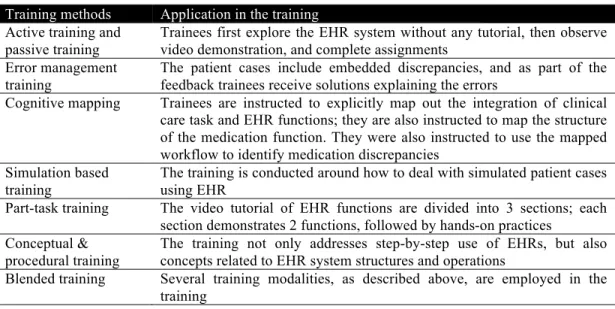
3. Training methods used in the training program ... 43
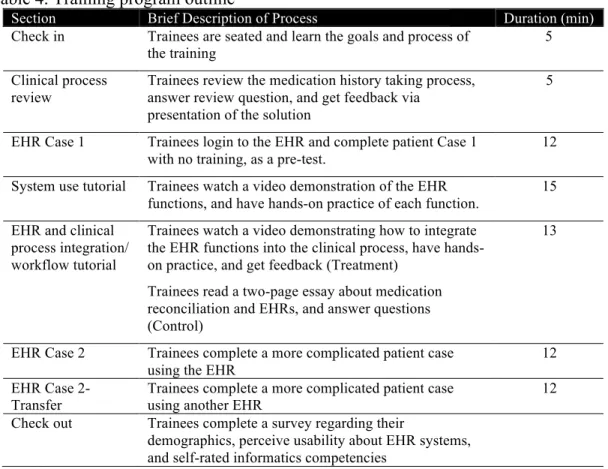
4. Training program outline ... 44
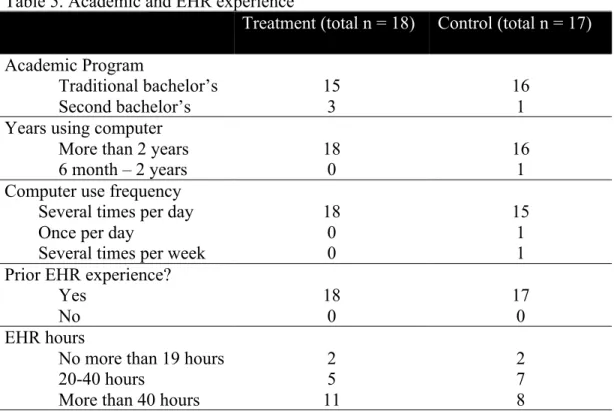
5. Academic and EHR experience ... 55
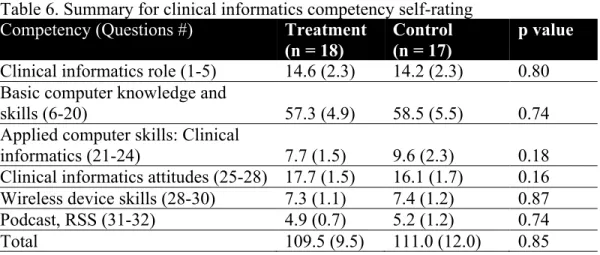
6. Summary for clinical informatics competency self-rating ... 56
7. Usability rating for two EHRs ... 57
8. Number of trainees who correctly documented medication(s) ... 57
9. Number of trainees who identified intended discrepancies ... 58
10. Durations (in seconds) of each patient case assignment, Mean (95% CI) ... 59
11. Durations (in seconds) of each patient case assignment by training conditions and Case 1 completion, Mean (95% CI) ... 60
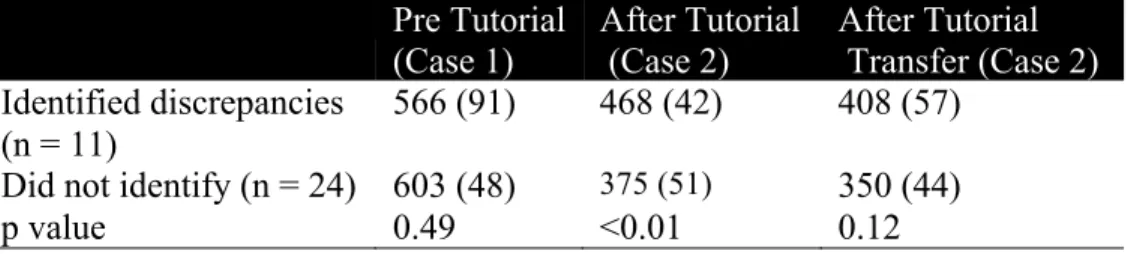
12. Durations of each patient case for groups categorized by whether they identified discrepancies in Case 2… ... 61
xii
LIST OF FIGURES
Figure Page
1. Six Step Medication Reconciliation Tool (Henneman et al., 2014) ... 20
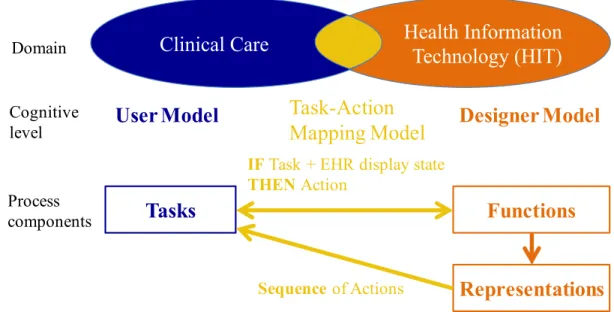
2. Integrative model of EHR user-centered implementation ... 35
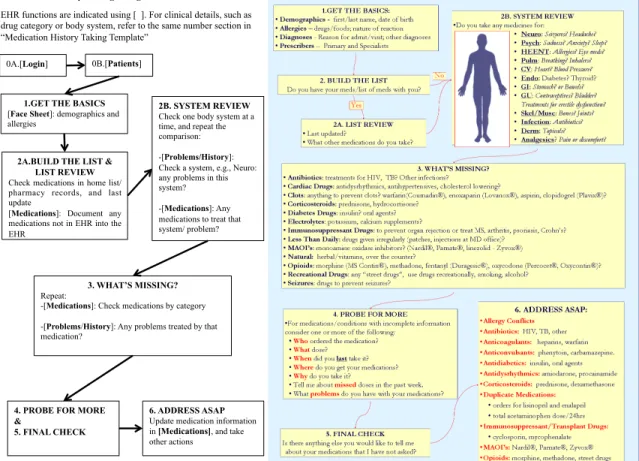
3. Workflow analysis with EHR implementation (Medication History Taking Template
from (Henneman et al., 2014)). ... 39
1
CHAPTER 1
HEALTH INFORMATION TECHNOLOGY TRAINING 1.1 Introduction
Health information technology (IT) has attracted wide attention over the last decade from government agencies, healthcare organizations, and academia, partly because a US national mandate requires that healthcare organizations implement electronic health records (EHRs) (Redhead, Library of Congress, & Congressional Research Service, 2009). This mandate originated in part due to expectations that health IT may streamline healthcare workflows, reduce medical errors, and improve patient safety and quality of care. In addition, health IT projects typically require significant investments from both public and private sectors. For example, Partners Healthcare in Boston spent 1.2 billion dollars on a new EHR system in 2015, making it the single biggest investment Partners has ever made (McCluskey, 2015).
Unfortunately, health IT implementation success rates remain relatively low (Kaplan & Harris-Salamone, 2009), and studies have reported mixed outcomes after the implementation of health IT. Some studies have shown reductions in medical errors, and improved communication and documentation patterns after health IT implementation (Poon et al., 2010). Conversely, other studies have reported instances where health IT may have contributed to increased medical errors or mortality rates (Han et al., 2005, Koppel, 2005).
These undesired outcomes are termed “unintended consequences” of IT in a healthcare system, and researchers have advocated the use of sociotechnical models to understand the mechanisms for these outcomes (Carayon et al., 2006). These
2
sociotechnical models differ in their details, but most emphasize the interactive dynamics between varied components in a system, including technology, human, and organizational factors (Sittig & Singh, 2010). The unintended consequences of health IT are depicted as a product of health IT’s impact on and interactions with other social factors. Some models particularly emphasize the IT’s impact on clinicians’ workflows; they conceptualize clinical outcomes, such as patient safety, as the product of how and how well clinicians perform work processes, and consider the processes as a mediator “between work system design on the one hand, and patient, employee, and organizational outcomes, on the other” (Holden, 2011).
One means to improve the health IT success rate therefore is to explicitly analyze and mitigate health IT negative impact in user-centered implementation tasks, such as training and user support, to ensure individuals in the healthcare system can use the technology successfully and effectively, and make optimal use of the capabilities and characteristics that the technology has to offer (Carayon, Alyousef, & Xie, 2012). The importance of examining and addressing health IT use is also emphasized in the sociotechnical model literature (Harrison, Koppel, & Bar-Lev, 2007).
Training as a user-centered implementation task, has been identified as one of the key success factors involved in technology implementation (Carayon et al., 2012), and it is the theme of this dissertation. The importance of training in health IT implementation also lies in the fact that health IT training is typically the first time clinicians get exposure to the technology, and the knowledge they gain from training will likely shape their long-term practice in the real clinical setting. Therefore, health IT training should help users mitigate the negative impact of health IT on their clinical tasks, and facilitate optimal IT
3
use and acceptance. In particular, training should address the impact of health IT on care processes and workflows in order to improve clinical outcomes. Similar approaches have shown to effectively support health IT implementations (Novak, Anders, Gadd, & Lorenzi, 2012), but it remains to be studied how to systematically address and mitigate health IT negative impact on care processes and workflows in a training program.
Health IT training, similar to training in other domains, should also follow theoretical guidance from the science of training. However, healthcare organizations lack industry-wide best practices driven by scientific training theories. Though there are best practice principles of training in literature, healthcare organizations still often have to learn from their organization’s own training experiences, which can be costly and inefficient (Laramee, Bosek, Kasprisin, & Powers-Phaneuf, 2011). Part of the reason is that translating principles to real training practices during training development is not a simple task, and the processes are often underreported and underemphasized in literature. The literature often includes lessons from costly “do-overs” after the training program go-lives (Leviss & Gugerty, 2010). Ideally, by following the science of training, those issues might be detected before the go-live, which could save money and time for clinicians and healthcare organizations. There are two main areas in the science of training directly instrumental to health IT training: a) instructional development models, i.e., the systematic process of developing a training program, and b) training methods that align with trainees’ cognitive characteristics.
The need for model-guided health IT user training has been recognized. American Medical Informatics Association (AMIA) board members have called for “models of user training and support processes that can meet clinician needs” (Gardner et al., 2009).
4
Instructional development is a well-established domain focused on the training development processes, with over 100 validated instructional development models, such as the Instructional Systems Development (ISD) model (Chen, 2007), R2D2 model (Recursive, Reflective, Design and Development) (Willis & Wright, 2000), and rapid prototyping model (Tripp & Bichelmeyer, 1990). These models can help meet the call from AMIA, and improve user training and implementation process.
Determining appropriate training methods and techniques are also instrumental for an effective training program. Clinical educators have called for using foundational learning theory to guide the design and evaluation of training methods that account for learners’ cognitive characteristics, and they identified significant gaps in current training design (Kaakinen & Arwood, 2009). These characteristics of learning can be structured in many ways, some of which may be particularly relevant for health IT training: knowledge types and acquisition.
Cognitive psychologists have distinguished between two knowledge types (i.e., procedural knowledge and declarative knowledge) (Anderson, 1983), and suggested using different training methods for different knowledge types (Koedinger, Corbett, & Perfetti, 2012). They have also studied the process of knowledge acquisition, and identified practice, feedback, and transfer as important factors of learning (Woolfolk, 2006).
There are many validated methods that facilitate knowledge acquisition from the training literature. By understanding how those methods align with users’ cognitive characteristics, training developers and educators can make better-informed decisions on how to adopt appropriate methods in user training.
5
One training method that may be particularly useful for health IT training is called cognitive mapping, which represents and connects related concepts/knowledge (All & Havens, 1997). Because health IT training should help users mitigate the negative impact of health IT on clinical tasks, cognitive mapping can serve as a promising training technique to achieve this goal. First, this method can explicitly integrate health IT with clinical tasks into workflow by mapping health IT functions onto these existing clinical processes. Second, this method may also effectively aligns with learners’ characteristics, because learning is more efficient if learners can acquire new skills with connections to previously learned skills (All & Havens, 1997). In addition, information retrieval and system navigation are a significant part of EHR use, and could impose more cognitive burden to clinicians. Cognitive mapping technique can also be used to represent and understand the structure of an EHR system, and therefore may facilitate EHR use. However, no studies have explicitly tested the effectiveness of this technique for health IT training.
1.2 Research Goals and Outlines
My dissertation aims to explore a systematic and generalizable way to develop health IT training and improve health IT implementation success. Specifically, the training program developed with this approach should explicitly mitigate health IT’s negative impact on clinical processes and workflow to produce more ideal clinical outcomes, thus facilitating optimal use and higher technology acceptance.
I conducted my study with senior baccalaureate nursing students at a large public university. I used the EHR as the type of health IT. I used the clinical task of obtaining a medication history because it is an error-prone process involving comprehensive
EHR-6
related competencies (e.g., information retrieval, documentation, decision-making). It has also been used in comprehensive practice sessions in previous EHR implementation training sessions in health organizations (Laramee et al., 2011).
This study is built on scientific models and theories from sociotechnical systems engineering, the science of training, and clinical practice. In this section, I will briefly outline the subsequent sections of my dissertation.
In Chapter 2, I review two areas of previous studies related to my work: a) sociotechnical models, and b) scientific training theories. First, the aim of user-centered implementation is to mitigate health IT’s negative impact, and facilitate optimal use. Training should therefore utilize sociotechnical models to analyze IT’s impact on users’ clinical tasks, and identify strategies to integrate health IT into users’ clinical processes and workflow. Second, current health IT training development processes are often empirically based and underemphasized. Scientific training theories, including instructional development models and training methods, can guide better training design. I describe the implications for my work.
In Chapter 3, I detail the methods of developing and implementing my training program. I first present a model developed to guide analysis of health IT’s impact on clinical care at cognitive level. I utilize this model to analyze EHR impact on the medication reconciliation task, and identify mitigation strategies of integrating the EHR into the clinical workflow. I then detail the systematic process of training program development, the program details and implementation process, and my evaluation measures.
7
In Chapter 4, I evaluate the results of a study measuring the effectiveness of the training program.
In Chapter 5, I discuss findings, lessons, and experience learned from this project, and generalizable implications for health IT training.
8
CHAPTER 2 BACKGROUND
Effective user training has been recognized as an important factor to improve health information technology (IT) implementation success, but development of a successful training program remains a challenging task. Part of the reason is that healthcare organizations lack industry-wide best practices in electronic health record (EHR) training, so often have to learn from their organization’s own training experiences, with can be costly and inefficient.
Developing an effective training program for health IT implementation is a systems engineering project. First, a training program should address not only technical issues with health IT, but other social factors as well. This will ideally mitigate unintended consequences and negative impact prior to or during training. It requires a comprehensive sociotechnical interactive analysis, and for user-centered implementation tasks, such as training, we need to focus on how to support optimal use. Second, we need a systematic and scientific way to guide the design and development process. Instructional development models should be used to systematically guide training design. In addition, understanding trainees’ human factors, especially their cognitive characteristics, are particularly helpful for deciding appropriate training methods during the development phase.
In this chapter, I review two major areas related to health IT training: sociotechnical models and the science of training. I describe how previous work is related to my work.
9
2.1 Sociotechnical Models
In this section, I first introduce undesired outcomes of health IT, a key motivator for sociotechnical models to address health IT implementation problems. Then I review two types of sociotechnical models related to health IT. The first type of model focuses on the interactions between user and technology, while second type of model investigates user technology interaction in a broader social context. Finally I provide an in depth review of an important social factor related to my health IT training: the clinical task of medication reconciliation.
2.1.1 Unintended consequences of health IT
Although health IT can produce benefits, such as improved quality of care (McCullough, Casey, Moscovice, & Prasad, 2010) and reductions of medical errors (Poon et al., 2010), health IT implementation projects are often not successful (Kaplan & Harris-Salamone, 2009). Health IT failure rates can be as high as 70%, and as few as one in eight implementations is considered truly successful (Kaplan & Harris-Salamone, 2009). DesRoches et al. (2010) also found limited successful EHR implementations, showing the relationship between EHR adoption in U.S. hospitals and quality and efficiency were “modest at best and generally lacked statistical or clinical significance”. In December 2008, the United States Joint Commission on Accreditation of Healthcare Organizations warned of technology-related adverse events in a Sentinel Alert, stating that “users must be mindful of the safety risks and preventable adverse events that these implementations can create or perpetuate” (Joint Commission, 2008). Other studies also report potential technology-related adverse outcomes, such as unexpected increases in
10
mortality rate (Han et al., 2005), and prescribing errors (Koppel & Metlay, 2005). These undesired outcomes are termed “unintended consequences” of health IT.
Several review papers have attempted to define what factors influence the success and failure of health IT implementations (Brender, Ammenwerth, Nykänen, & Talmon, 2006, van der Meijden, Tange, Troost, & Hasman, 2003, United States Government Accountability Office, 2009). Many factors are non-technical, and AMIA has identified unintended consequences from four domains: technical, human/cognitive, organizational, and fiscal/policy and regulation (Bloomrosen et al., 2011).
Systems engineering experts have advocated the use of sociotechnical models to understand the mechanisms for these outcomes (Carayon et al., 2006). Though sociotechnical models differ in details, they characterized the unintended consequences a product of health IT’s impact on and interactions with other social factors.
2.1.2 User technology interaction model
Human and technology interaction is at the center of health IT implementation, and understanding and mitigating the impact of health IT on users can facilitate user-centered implementation plan, including training design and technical support. Scientific models at the cognitive level are often used to study the interactive mechanisms between users and technologies.
A well-known way of understanding cognition is through the concept of mental models. First introduced by (Johnson-Laird, 1983), mental models represent underlying knowledge structures that allow an individual to construct their perception of a system or content domain. Mental models can also be considered as an internalized, mental representation of a device or idea. Norman (1983) was one of the first to attempt to create
11
a terminology for a human-computer interaction theory of mental models, where he introduced different models of a system based on role-types. He introduced a user model and a design model, which are both conceptual models, and a system image, which is implementation of the system (Norman, 2013). The designer creates a design model that is communicated through the system image and a user develops the user model through interactions with the system image. These two models ideally align but often do not, resulting in a disconnect between the way users and designers understand how a system works. This mismatch in designer and user mental models also occurs within the health IT domain. Zhang et al extended this terminology into the health IT domain for EHRs, and add an Activity Model, which is the user’s mental model of how the functions of a system are used in practice (Zhang & Walji, 2011). As Zhang et al (2011) pointed out, “…for an ideal design with perfect functionality, these three models should be identical.” (Zhang & Walji, 2011) An ideal product or training program should align these three mental models. Unfortunately, “discrepancies of functions across the three models are almost always present” (Zhang & Walji, 2011), and user training should address these discrepancies.
There are two basic mental models corresponding to two aspects of an interactive system, termed structural and functional models (Preece, 1994, Young, 1983). A structural model is used to describe the internal workings of a device, which is then used to make predictions about the operation of the device. Its basic advantage is that the knowledge of how a device or system works can predict the effect of any possible sequence of actions. The accuracy of a person's mental model will affect how the user interacts with the system. According to Zhang’s model of designing and evaluating
12
general information systems, an information system, (e.g., an EHR), consists of functions, meaning the technical capabilities of the system, and representations, meaning the way these functions are visually represented and structurally organized into hierarchies within the information system (Zhang & Butler, 2007). On the other hand, functional models, better known as task-action mapping models (Young, 1983), describe the procedural aspects of a system: the procedural knowledge about how to use system functions, where a procedural rule is described as “IF task + display state, THEN action”(Howes & Young, 1996). Mental model-based training research has shown that providing information about a system’s structural model can help users build a correct mental model of the system, which may facilitate knowledge generalization and skill transfer (Santhanam & Sein, 1994).
2.1.3 Sociotechnical system models for technology evaluation
Sociotechnical models investigate human and technology interactions in a social context. Depending on the purpose of a model, they may adopt different scopes, structures and granularities to represent the interactions between different domains and factors. For example, some models may treat technology as one whole element, while
others break it down into its individual components(Sittig & Singh, 2010). In this section,
I present sociotechnical models that have been particularly influential in providing the foundation of my proposed model. For each model, I first review the model structure and elements, and then describe implications relevant to my work.
13
2.1.3.1 Interactive Sociotechnical Analysis (Harrison et al., 2007)
The Interactive Sociotechnical Analysis model was developed to mitigate unintended consequences of IT in healthcare. The model contains four components and five interaction relationships.
The four components with definitions or example of each are:
a) New health information technology (IT to be implemented in the healthcare
organization)
b) Social system (e.g., people, tasks, relationships)
c) Health information technology in use (IT currently used in the healthcare
organization)
d) Technical and physical infrastructure (e.g., computer networks, physical
environment)
The five interactions are:
a) New health IT changes the organization’s social system
b) Technical & physical infrastructure mediates health IT use
c) The organization’s social system mediates health IT use
d) Health IT use changes the organization’s social system
e) Health IT-social system interactions engender health IT redesign
This model explicitly depicts unintended consequences as a product from interactive processes between health IT and the healthcare organization’s sociotechnical system, including its workflows, culture, social interactions, and technologies. This implies that in order to address unintended consequences, implementation should explicitly address health IT interaction with and impact on social factors. This model also
14
emphasizes health IT use in four of its identified interactions, as well as the change to social systems. User-centered implementation tasks, such as training and technical support, therefore are important to mitigate these impacts and facilitate optimal use. However, the Interactive Sociotechnical Analysis model does not have details about the social system, and how those interactions affect clinical outcomes, which have been addressed by models such as the systems engineering initiative for patient safety model (SEIPS) (Carayon et al., 2006).
2.1.3.2 Systems Engineering Initiative for Patient Safety (SEIPS) Model (Carayon et al., 2006)
The SEIPS model adopts a work system-process-outcome structure, and conceptualizes healthcare structures as five-element work systems, including:
• Person(s), such as care providers, other employees of a healthcare institution such as
a biomedical engineer, or patients
• Tasks, such as a clinical task, or informatics related tasks, e.g., documentation • Tools and technologies, such as an EHR
• Physical environment, such as physical locations of rooms • Organizational conditions, such as hospital culture or policy
The five elements of the work system interact with each other, and the element of
person (also referred to as individual) is at the center of the work system. The model particularly emphasizes the need to “enhance and facilitate performance by the individual and to reduce and minimize the negative consequences on the individual and therefore the organization” (Carayon et al., 2006); the aim for user-centered implementation is consistent with this view.
15
According to the authors, a care process can be considered as “a series of steps or
tasks performed by an individual or a team of individuals using various technologies and
tools” (Carayon et al., 2006). For example, a medication administration process can be divided to four steps or subtasks, typically ordered by: a) retrieving medications from an electronic medication dispenser, b) verifying a patient’s identity, c) giving medications to a patient, and d) documenting the task. A nurse can use a Workstation on Wheels or a tablet to perform the process (He, Marquard, & Henneman, 2014). For the same task and technology, processes may vary between clinicians (Doberne et al., 2015).
The structure of the SEIPS model is similar to that of human factors paradigm for
patient safety (Karsh, Holden, Alper, & Or, 2006), which suggests processes serve as the
mediator between a work system and clinical outcomes: the work system affects
processes, and processes influence the patient, employee, and organizational outcomes of care. This view is consistent with evidence from previous studies. For example, in a study of medication administration, researchers were able to explicitly link nurses’ visual scanning patterns (processes) to their abilities of identifying medication errors (outcomes) (Marquard et al., 2011).
In summary, the implication of this model is, in order to mitigate negative impact of health IT and reduce unintended consequences, health IT training should adopt a user-centered view, and focus on the users’ clinical processes and workflow.
2.1.3.3 Extended Technology Acceptance Model (Venkatesh & Davis, 2000)
The extended technology acceptance model is an extension of a classic Technology Acceptance Model (TAM) that addresses the impact of individuals’ cognitive factors and social influences on technology adoption and use, an important
16
predictor of technology (and therefore health IT) success. The original TAM theorized that an individual's behavioral intention to use a system is determined by two beliefs: 1) the perceived usefulness of the system, defined as the extent to which a person believes that using the system will enhance his or her job performance, and 2) the perceived ease of use of the system, defined as the extent to which a person believes that using the system will be free of effort (Venkatesh & Davis, 2000). In the extended model, the researchers include a variety of sociotechnical factors that significantly influence user acceptance of a system, including social influence processes and cognitive instrumental processes, such as job relevance.
This model offers insights about what kind of support can be provided to users to increase the likelihood of technology acceptance. From a training or support perspective, adult learning theory confirms that in order to be used, a system should be relevant to the user’s needs (job relevance) (Knowles, Holton, & Swanson, 2011), implying that training should incorporate job-specific materials. This model also implies that user-centered implementation should adopt strategies of mitigating the technology impact on users’ cognitive processes, increasing their perceived ease of use of the technology.
2.1.4 Introduction to medication reconciliation
Clinical tasks are one key sociotechnical factor. In my developed training program, I used the clinical task of obtaining a medication history. This task is designed specifically to reduce medication errors. Errors can serve as both feedback mechanisms in training and a clinical outcome measure (King, Holder, & Ahmed, 2013, Holden, 2011). Therefore I can use errors an indicator to evaluate whether explicitly teaching clinical processes using health IT can produce better clinical outcomes. Medication
17
reconciliation has also been used in comprehensive practice sessions in previous EHR implementation training in other health organizations (Laramee et al., 2011).
Medication errors in medication records are prevalent (Caglar, Henneman, Blank, Smithline, & Henneman, 2011). The most common medication discrepancies include the following:
a) Omissions: an medication was on the home medication list but not on the
medication list obtained during the admission process (Caglar, Henneman, Blank, Smithline, & Henneman, 2011)
b) Commissions: medications are in the medical record that are no longer being
taken by the patient (Kaboli, McClimon, Hoth, & Barnett, 2004)
c) Unspecified medication: the use of a medication at home without a corresponding
disease or condition in the patient’s records (Gizzi et al., 2010)
d) Duplication: the same medication is listed twice using a different name (e.g., lasix
and furosemide) (Caglar et al., 2011)
e) Dosing error: an incorrect dose or frequency of a medication (Caglar et al., 2011)
In order to address the above error-types, systematic medication reconciliation tools and procedures have been proposed and tested in many studies. The tools or procedures support the medication reconciliation process by building relationships between symptoms and therapies (Truitt, Longe, & Taylor, 1982), reviewing a patient’s medication history based on medication categories (Hocking, Kalyanaraman, & deMello, 1998), or by combining the two approaches (Tessier, Henneman, Nathanson, Plotkin, & Heelon, 2010). There are many benefits to these methods as they are systematically
18
organized based on pharmaceutical knowledge, and may relieve some cognitive load for health professionals.
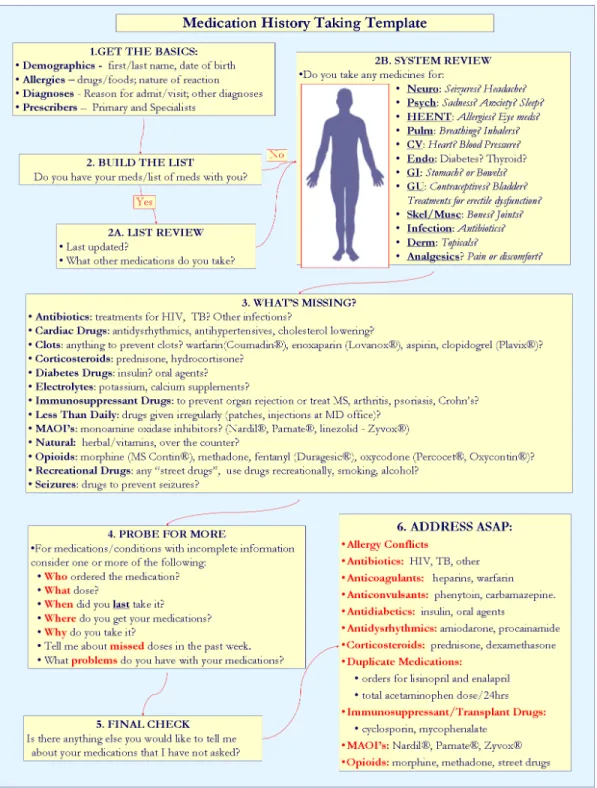
In my study, I adopted the Six Step Medication Reconciliation Tool (Henneman, Tessier, Nathanson, & Plotkin, 2014). This method adopted structures and processes by building relationships between symptoms and therapies, and by reviewing a patient’s medication history based on medication categories, with a focus on high risk factors. The step details are summarized as follows:
• Step 1: Assemble demographic information, and inquiry any allergies, other
adverse drug events, and the nature of these events.
• Step 2A: Review the existing medication list. A nurse must obtain the current
medication list (or medications themselves) from the patient or family, and assess the reliability of the information, the nature of the list or prescription bottles, how current the information is, and whether there are other sources of medication information available.
• Step 2B: Conduct a systems review. This step maps problems of each body
system to medications.
• Step 3: Conduct a “what’s missing” check. This step identifies frequently missing
medications.
• Step 4: Probe for more. This step intends to obtain details about drugs, doses,
dosage forms, adherence, and any problems with therapy.
• Step 5: Conduct a final check. The final check investigates issues not previously
19
• Step 6: Reconcile certain issues immediately. This step prompts nurse to prioritize
which medications need immediate reconciliation.
A diagram that illustrates the six steps is shown in Figure 1.
This clinical task developed to improve medication history accuracy is not simple, and becomes even more complicated when we introduce health IT as part of the workflow, because sociotechnical models and previous literatures suggest health IT may introduce or facilitate more errors (Koppel & Metlay, 2005). Health IT training is therefore important to mitigate this impact and explicitly address potential errors by focusing on process change.
20
Figure 1. Six Step Medication Reconciliation Tool (Henneman et al., 2014)
2.2 Science of Training
21
implementation (Carayon et al., 2012). The current accounts of successes or failures in EHR training often focus on the final format of training, and it is rare to see detailed descriptions of the training development processes. In addition, very few studies address training methods by explicitly accounting for learners’ cognitive characteristics (Kaakinen & Arwood, 2009, Leviss & Gugerty, 2010, Kushinka, 2011).
While current literature does introduce some training design principles (McAlearney, Robbins, Kowalczyk, Chisolm, & Song, 2012), there is still a gap in guidance on how to translate those principles into varied clinical practices or settings. For example, EHR Communication guidelines provided by healthIT.gov, which aims to aid providers and health IT implementers with the implementation of an EHR system, recommends implementation strategies developed by Kushinka (2011) as part of the California Networks for Electronic Health Record Adoption (CNEA) initiative. Those strategies include super users, process-based training, role-based training, and mock-clinic training (Kushinka, 2011). While these strategies as training methods are useful, they are only one facet of training. An effective training program also requires knowledge of sociotechnical interactive analysis to mitigate health IT negative impact, systematic training development process, as well as training methods that align with learners’ characteristics. Training outcomes may still be undesirable without explicitly addressing these factors appropriately.
A case study from the book “H.I.T. or Miss: Lessons Learned from Health Information Technology Implementations” (Leviss & Gugerty, 2010), demonstrates that using super users training methods would still fail if training implementation and evaluation are not appropriately planned. In another study, a large medical center had to
22
learn from their unsuccessful training outcomes to redesign their training processes (Laramee et al., 2011). They provided comprehensive training on the technical features of a new EHR during the first round of training, but ignored other social factors that influence health IT use and training, such as job relevance, trainees’ abilities to learn, and integration with current workflows. Had they followed systematic processes to guide their training design, these issues would have been addressed before the training go-live.
In this section, I review two main areas in the science of training directly instrumental to health IT training: a) instructional development models, i.e., the systematic process of developing a training program, and b) training methods that align with trainees’ cognitive characteristics of learning. I also describe how these studies influence my work.
2.2.1 Generalized training design process
American Medical Informatics Association (AMIA) board members published a white paper entitled “Core Content for the Subspecialty of Clinical Informatics”, which identifies core educational content for clinical informatics. Among the numerous knowledge and skill content areas addressed by the AMIA board members, knowledge under "clinical information system implementation" includes “models of user training and support processes that can meet clinician needs” as one of three sub-topics (Gardner et al., 2009). Instructional development is a well-established domain, with over 100 validated instructional development models, such as the Instructional Systems Development (ISD) model (Chen, 2007), R2D2 model (Recursive, Reflective, Design and Development) (Willis & Wright, 2000), and rapid prototyping model (Tripp &
23
The Instructional Systems Development (ISD) model is one of the most widely used (Chen, 2007). The ISD model is a generic model developed in the 1950s to meet military and commercial aviation training needs (Chen, 2007). In this model, training consists of five basic stages: analysis (A), design (D), development (D), implementation (I), and evaluation (E), so also referred to as ADDIE model. The details of each stage are presented in the following:
• Analysis: assessing training needs, specifying objectives, guiding training design
and delivery, and developing success criterion.
• Design: developing learning objectives, performance measures, and the
progression of the training program.
• Development: revising the training plan formulated in the design phase, and
removing weaknesses.
• Implementation: final preparation and actual training.
• Evaluation: assessing the effectiveness of the training.
The ISD model is comprehensive in content and systematic in procedures, and covers almost all necessary components needed to carry out an effective training program.
To meet a variety of specific training needs, other models build on the ISD model stages. For example, the development stage may take a long period of time, so may fail to meet the pace of technology updates. The rapid prototyping model tries to facilitate training development by performing several stages simultaneously, condensing the generic ADDIE model into a four-level process, including: a) performing a needs
24
analysis, b) constructing a prototype, c) utilizing the prototype to perform research, and d) implementing the final system (Tripp & Bichelmeyer, 1990).
The ISD model also does not embrace the fact that reality can be different from what was planned, and may change over time. Therefore, the R2D2 model (Recursive, reflective, design and development) provides the ability to update the training plan over time (Willis & Wright, 2000). Reflection involves critically considering work to date, and revising training plans and materials based on observation and other feedback. The recursive nature of the process means making the same decisions many times throughout the design and development process, so initial decisions are not necessarily the “final ones”(Willis & Wright, 2000).
There are several implications from these models to guide health IT training. First, training development should follow a systematic process to explicitly address specific training decisions in each stage. For example, training needs should be defined in an early stage of development. Second, a training design team should actively reflect on and revise current training to meet ever-changing situations. It is difficult to develop an ideal program in just one round of design and development, and prototypes should be vigorously tested in real training situations with real trainees.
2.2.2 Knowledge types, acquisitions and transfer
Human cognition is significant part of IT use, healthcare performance and training, so training development should take into account human cognitive characteristics and limitations, and adopt training methods that align with these characteristics.
25
2.2.2.1Knowledge Types
Training methods should account for knowledge type. A well-known model of human cognition is ACT (Adaptive Control of Thought) developed by Anderson (1983). The most important assumption of this model is that human knowledge can be divided into two types: declarative and procedural. Declarative knowledge consists of facts, while procedural knowledge is made of production rules, meaning knowledge about how we do things. A similar distinction exists in the clinical domain as described by the Knowledge-Skill-Attitude (KSA) model, in which knowledge represents declarative knowledge, and skill is similar to procedural knowledge (Cronenwett et al., 2007). EHR use requires both declarative and procedural knowledge and optimal training strategies differ between knowledge types (Koedinger et al., 2012), so training should explicitly account for both knowledge types.
Though how to use a system is primarily procedural knowledge, the declarative knowledge about a system structure can also aid in training. For example, Borgman (1986) performed a study where novice users were trained to use an online catalog. The control group was given a set of procedures for retrieving literature from the catalog, while the experimental group was given the procedures and had the system explained through an analogy with the card catalog. Completion times and number of tasks completed for simple tasks were not different between the groups, but for complicated tasks the group that was trained on the system structure performed significantly better. This may imply that having a more accurate knowledge about a system structure will help users complete complicated tasks. The declarative / procedural knowledge enhances in
26
both ways: studies also found that more procedural knowledge also contributed to more accurate declarative knowledge about a system (Gray, 1990).
2.2.2.2 Knowledge acquisition
The goal of training is often to help novices develop skills that experts have, and one of the most notable differences between novices and experts is a phenomenon called chunking (Chase & Simon, 1973). While working memory is limited, and information retrieval time is similar among individuals (Anderson, 1983), experts can retrieve larger chunks of information in working memory, therefore they can recognize key features of a problem more rapidly, memorize briefly presented material better than novices, exhibit better depth of forward planning or better anticipations of invisible situations, and solve routine problems without exploring many alternatives (Gobet, 2005). Expertise is gained over time primarily through practice, which has been vigorously studied among chess players and IT users (Campitelli & Gobet, 2007, Gray, 1990). The implication for health IT training is that training methods should be designed to facilitate chunking, by teaching experts’ chunking patterns and engaging learners in active practice. Chunking phenomenon can also account for the fact that super users of health IT typically have lower cognitive load than novice users.
Training methods should be designed to explicitly facilitate the process of knowledge acquisition. Several different models of the architectures of cognition have been established to explain the processes and phenomena of human learning, particularly the effects of practice and chunking mechanisms (Gobet, 2005, Anderson, 1983).
There are several implications from those models. First, in order to facilitate acquisition of skill (procedural knowledge), a training program should help trainees
27
interpret declarative knowledge. Second, breaking training contents into smaller parts can reduce working memory burden. Third, errors can serve as an important mechanism to refine skills. Fourth, via practice, students can better compile knowledge, refining and reinforcing the learned skills. When a higher level of generalization is reached, knowledge transfer will more likely occur. Fifth, teachers should facilitate the development of perceptual chunks by directing learners’ attention to key features of the material, and providing feedback, which highlights the important features of a problem.
2.2.2.3 Knowledge transfer
Training methods should also be designed to facilitate knowledge transfer. According to (Salas, Wilson, Priest, & Guthrie, 2006), trainees must be able to transfer what they have learned in the training environment and apply it to work within the organizational setting. In educational psychology, researchers have defined transfer as “influence of previously learned material on new material” (Woolfolk, 2006). Knowledge transfer is important because one of the fundamental goals of training is the productive use of knowledge, skills, and motivations across a lifetime, creating something new instead of just reproducing a previous application of the tools (Corte, 2003). Transfer is important to health IT training because an ultimate goal of training is to see positive clinical outcome in actual healthcare setting, where the trained skills may be applied to clinical tasks and technologies different from the training.
There are two types of knowledge transfer, near and far transfer. The definition of near transfer, also called low road transfer (Woolfolk, 2006), or analogical transfer (Keith & Frese, 2008), is the spontaneous automatic transfer of highly practiced skills, with little need for reflective thinking (Woolfolk, 2006). Far transfer, also called high-road transfer
28
(Woolfolk, 2006) or adaptive transfer (Keith & Frese, 2008), is consciously applying abstract knowledge or strategies learned in one situation to a different situation (Woolfolk, 2006). For example, applying trained skills to a similar patient case can be considered as near transfer; but clinicians often have to deal with situations or tools more complicated than what has been trained, which is far transfer. Ideally a training program can facilitate both transfer types.
It is important to know what factors can facilitate transfer. Many factors have been identified in the classic transfer model developed by (Thayer & Teachout, 1995), and I summarize these factors with factors identified by (Salas et al., 2006) in Table 1.
After categorizing these factors into three groups, we find that these factors are also commonly used to predict general training outcomes and technology acceptance, which have been discussed in previous sections. Literature also claims that some training strategies may contribute to positive knowledge transfer, such as exposure to different situations (Anderson, 1983), error guided training (Keith & Frese, 2008), and mindful abstraction (i.e., the deliberate identification of a principle or main idea that is not situation specific) (Woolfolk, 2006). However, chunk-based theories indicate that negative transfer may occur when one reaches high levels of expertise; studies have suggested supplementing the teaching of specific knowledge with the teaching of meta-heuristics that are transferable, in order to reduce the phenomenon of negative transfer
29 Table 1. Factors that facilitate knowledge transfer
Individual Differences:
• Reactions to previous training • Education
• Pre-training self efficacy • Ability
• Career/job attitudes
• Trainee’s reactions to the training/task at hand regarding overall likability • Perceived instrumentality of training
Contextual Factors: • Organizational climate • Job involvement • Training Strategies • Locus of control Transfer-enhancing activities • Goal setting • Relapse prevention • Self-management • Job aids
The implication of transfer studies for health IT training is that, in order to
facilitate knowledge transfer, training should utilize strategies proven to facilitate positive knowledge transfer. In addition, health IT training should not only teach specifics of health IT use, but should also include generalizable and transferable knowledge and principles. For example, the knowledge of a health IT structure may be this type of knowledge.
2.2.3 Training methods
Determining appropriate training methods and techniques are instrumental in designing an effective training program. There are many validated methods from the training literature, such as cognitive mapping (All & Havens, 1997), conceptual vs. procedural training (Santhanam & Sein, 1994), active training (Romoser, 2013), error management training (Keith & Frese, 2008), super user training (Poe, Abbott, & Pronovost, 2011), simulation-based training (Kaakinen & Arwood, 2009), part-task training (So, Proctor, Dunston, & Wang, 2013), and the combination of several training
30
modalities, such as instructor-led lecture and demonstration, practice, and computer interaction (Martin, 2011). Some previous studies have examined the benefits of a subset of these methods for EHR training (Poe et al., 2011) (Martin, 2011). For example, at a large academic medical center, nurses experienced higher satisfaction with training and increased self-confidence in the EHR use after super-user peer coach training (Poe et al., 2011). The study of a blended learning method at another large academic medical center found that clinicians were open to new training methods, and desired more hands-on practice (Martin, 2011).
These training methods are most effective when they are aligned with learners’ cognitive characteristics during the design process. In clinical education, nursing educators have called for using foundational learning theory to guide the design and evaluation of training methods. Unfortunately, they have identified significant gaps in current training design. In reviewing simulation-based training literature, one study found only 16 out of 120 simulation-based training articles referenced learning theory to support their simulation design (Kaakinen & Arwood, 2009). A recent qualitative study used social cognitive theory and adult learning theory to identify best practices for EHR training across six exemplary healthcare organizations (McAlearney et al., 2012). Based on their analysis, they propose that “observation and active learning activities”, “positive role models, including clinical leaders, persuasive champions, super-users”, allowing participants to “reflect on past experiences”, and taking into account “the characteristics and assumptions of a particular community of practice” would contribute to better learning outcomes, and they were able to identify some supporting evidence for these propositions (McAlearney et al., 2012).
31
Because expertise is gained through practice, many training methods emphasize the importance of learners’ engagement during training. Active learning, also referred to as enactive learning, is an instructional strategy with emphasis on learning by doing and experiencing the consequences of trainees’ actions (Woolfolk, 2006). The opposite training method is called passive learning, also referred to as vicarious learning, is the learning strategy that trainees learn by observing others (Woolfolk, 2006). According to the ACT model (Anderson, 1983), trainees go through several stages during practice to acquire skills, i.e., interpreting the declarative representation of knowledge, compiling the procedures, and refining the skills. The training method of active training emphasizes the trainees’ active engagement in the practice process to develop skills, and aligns with the skill acquisition process. Active learning may facilitate knowledge transfer (Woolfolk, 2006), and convert knowledge or skills from short term memory to long term memory (Romoser, 2013).
There are numerous studies comparing active training and passive training, and the results consistently show that active training produces better outcomes in terms of academic program completion time, long term effects, etc (Romoser, 2013, Armbruster, Patel, Johnson, & Weiss, 2009). The reason that active training often produce superior outcomes than passive training may be that people who learn by observing must go through more cognitive processes, and thus the cognitive load is higher before performance and reinforcement (i.e., use of consequences to strengthen behavior) can take place (Woolfolk, 2006). However, passive training or observation training is common and often necessary, because trainers’ demonstration guides trainees to develop optimal or required behavior model, and will be particularly useful when potential
32
behavioral alternatives are too many or risky, such as medical procedures and flight operations.
Part task training method is used specifically to reduce novice trainees’ cognitive load. Because trainees have to interpret declarative, factual knowledge about the system before the knowledge becomes procedural and rule-based, it can be a heavy burden in their working memory (Anderson, 1983). Thus, novice users typically are slow in executing processes and have more working memory errors; part-task training emphasized the need to break a large training into smaller session to fit trainees’ cognitive capacity (So et al., 2013).
Feedback is an important part of practice to help trainees compile the correct procedures, and some training methods, such as super users, can provide timely feedback mechanisms. Errors can also serves as an important feedback mechanism. Error management training (EMT) is defined as a training strategy that involves active exploration as well as explicit encouragement to make errors during training and to learn from them (Keith & Frese, 2008). Keith & Frese (2008) also demonstrated in their work that active exploration, error encouragement, error management instruction and clear feedback are effective elements in EMT. They pointed out that in essence, errors serve as an important feedback function to modify or improve one’s mental model. In order to produce positive outcomes, timely corrections are needed to the error occurred. Therefore, error guided training shares some similar features with active training: active engagement and exploration, and timely feedback, but error guided training is more specific about how feedback loops are constructed: by correcting an error and modifying one’s decisions or behaviors.
33
There are four ways of approaching error occurrence: (1) avoid (2) allow (3) induce (4) guide (Salas et al., 2006). Because EMT involves explicit encouragement of errors, strategies that allow, induce and guide errors into training are all considered as EMT. However, guided error training involves intentionally guiding trainees into a particular error, then providing strategies for avoiding that error. Keith & Frese (2008) suggested that EMT may be better than error-avoidant training methods to promote transfer to novel tasks. This approach has also been used in clinical education (King et al., 2013).
Some training methods emphasize the need to consider trainees’ existing knowledge and experiences, and promote training by extending or building on their current knowledge. Simulation based training emphasizes training in context, which aligns with trainees’ job relevance and experiences (Kaakinen & Arwood, 2009). It can embed the new skills, e.g., health IT skills, into the context of actual use scenarios, e.g., the healthcare environment and the clinical tasks, therefore facilitating the skill in their actual work. The design of a scenario or patient case may be more effective if it reflects the key features of users’ mental model about clinical work during the simulation.
Another training method that facilitates learning new skills from previous ones is called cognitive mapping, and it may be particularly useful for health IT training (All & Havens, 1997). Because health IT training should help users mitigate the negative impact of health IT on clinical tasks, cognitive mapping can serve as a promising training technique to achieve this goal. In particular, the impact of health IT on care processes and workflows can be addressed by flowchart mapping, which explicitly maps health IT functions onto these existing clinical processes (All & Havens, 1997). Previous studies
34
have also shown that training that includes conceptual models of an information system can help build accurate mental models of the system, and produce better training outcomes (Borgman, 1986). Another type of mapping called hierarchy mapping can be used to represent the structure of an EHR system, and may facilitate EHR use. However, no studies have explicitly tested the effectiveness of this technique for health IT training.
2.3 Summary
In this chapter, I reviewed two areas of previous work related to health IT training: sociotechnical models and the science of training.
Sociotechnical models are used to guide analysis of sociotechnical interactions to reduce unintended consequences. Those models emphasize the center role of users, and the need to focus on technology use and clinicians’ process change for user-center implementation. A training program that is designed to integrate technology with users’ tasks may mitigate negative impact of health IT, and improve technology acceptance. Clinical tasks are an important social factor, and medication reconciliation is a task designed to reduce medication errors.
A training program development should follow systematic processes, and should be vigorously tested and updated before implementation. Training methods should be designed to facilitate knowledge acquisition and transfer, by providing practice and feedback, and relating new knowledge to previously learned ones. Cognitive mapping may be an effective method to improve health IT training. Flowchart mapping can be used for integrating health IT into workflows, and hierarchy mapping can be used to represent a system structure.