INSTITUTIONAL BARRIERS AFFECTING THE ACADEMIC AND SOCIAL DEVELOPMENT OF UNDERREPRESENTED COLLEGE STUDENTS:
PERSPECTIVES OF ADMINISTRATORS
by
Lynnette A. Redd
Bachelor of Science, Mercy College, 1986 Master of Arts, Marshall University, 1997
Submitted to the Graduate Faculty of the School of Education in partial fulfillment
of the requirements for the degree of Doctor of Education
University of Pittsburgh 2018
UNIVERSITY OF PITTSBURGH SCHOOL OF EDUCATION
This dissertation was presented
by
Lynnette A. Redd
It was defended on June 29, 2018 and approved by
Dr. Alaine Allen, Director, Swanson School of Engineering
Dr. Linda DeAngelo, Associate Professor, Administrative and Policy Studies
Advisor and Dissertation Chair: Dr. Michael Gunzenhauser, Associate Dean and Associate Professor, Administrative and Policy Studies
iii
Copyright © by Lynnette A. Redd 2018
INSTITUTIONAL BARRIERS AFFECTING THE ACADEMIC AND SOCIAL DEVELOPMENT OF UNDERREPRESENTED COLLEGE STUDENTS:
PERSPECTIVES OF ADMINISTRATORS Lynnette A. Redd, EdD
University of Pittsburgh, 2018
This dissertation examines the perspectives of middle- and senior-level higher education administrators at a predominantly white institution (PWI) who provide minority-based programs and services that support underrepresented college students. This research aims to identify the key institutional systemic barriers that create challenges for the administrators in their effort to support underrepresented college students. Often underrepresented college students face academic and social challenges in their pursuit of obtaining an education; their experiences often differ from their white peers. Underrepresented college students attending PWIs are at greater risk of academic failure and adapting to their learning environment when institutional barriers are present and diversity and inclusion are not institutional priorities to promote an inclusive campus climate. Subsequently, administrators who support these students through their programs also encounter systemic barriers that create challenges. This task can be daunting for administrators at PWIs, often characterized by concerns induced by racism and the senior institutional leadership practices which influence systemic practices and policies. Using a qualitative semi-structured interview method, this study seeks to analyze the data gathered from 10 middle- and senior-level administrators interviewed at the
v
Pittsburgh, a public research and PWI. The inquiry focused on the perspectives in narrative form. A qualitative analysis of interview results and pertinent literature review support identifying the key findings, themes, and interpretation. The data gathered in the study is analyzed using critical race theory (CRT), a theoretical framework and tenets of counter-storytelling and the permanence of racism. The qualitative study revealed the following emerging themes: institutional financial challenges; implications of existing silos; equitable resources and treatment are not always equal; social challenges create systemic discrimination and implicit bias; checking boxes and formality are common practices; administrators’ perspectives regarding racism as a factor; and senior institutional leadership and support they provide. The seven emerging themes from the data analysis reveal that racism and the influence of senior institutional leadership were tied closely to each of the themes. The seven themes also answer the three research questions. The data gathered is not intended to generalize all PWIs, underrepresented college students, and administrators.
TABLE OF CONTENTS 1.0 INTRODUCTION ... 1 1.1 PROBLEM OF PRACTICE ... 4 1.2 PROBLEM AREA ... 7 1.3 PURPOSE OF STUDY... 9 1.4 INQUIRY QUESTIONS ... 9
1.5 MY ROLE IN THE PROBLEM OF PRACTICE ... 10
1.6 SIGNIFICANCE OF THE INQUIRY ... 11
1.7 METHODS/APPROACH ... 12
1.8 BRIEF OVERVIEW OF RESEARCH SETTING ... 12
1.9 LIMITATIONS AND DELIMITATIONS OF THE STUDY ... 13
1.10 CONCLUSION ... 13
2.0 BACKGROUND LITERATURE ... 15
2.1 INTRODUCTION TO LITERATURE REVIEW ... 16
2.1.1 Implication of stigmatization and labeling ... 17
2.1.2 Social adjustment and acclimation ... 19
2.1.3 Academic preparedness and retention ... 21
2.1.4 Institutional support ... 22
vii 2.2 THEORETICAL FRAMEWORK ... 27 2.3 CONCEPTUAL FRAMEWORK... 30 2.4 CONCLUSION ... 32 3.0 METHODS ... 34 3.1 EPISTEMOLOGY ... 34 3.2 RESEARCHER’S REFLEXIVITY ... 37
3.3 INQUIRY APPROACH AND METHODS ... 38
3.4 SAMPLE POPULATION ... 39
3.5 RESEARCH SETTING ... 40
3.6 DATA SOURCE ... 41
3.7 DATA ANALYSIS ... 42
3.8 LIMITATIONS OF THE METHODS AND APPROACHES ... 43
3.9 CONCLUSION ... 44
4.0 SUMMARY OF FINDINGS ... 46
4.1.1 African American female administrator’s story ... 49
4.1.2 White male administrator’s story ... 50
4.2 EMERGING THEMES... 51
4.2.1 Financial challenges experienced by administrators leading minority-based programs ... 52
4.2.2 Implications of existing silos ... 56
4.2.3 Equitable resources and treatment are not always equal ... 58
4.2.4 Social challenges create institutional discrimination and implicit bias .... 60
4.2.6 Administrators' perspectives regarding race and racism... 72
4.2.7 Senior institutional leadership and the support they provide ... 77
5.0 SUMMARIES, CONCLUSIONS, AND IMPLICATIONS ... 80
5.1 INTERPRETIVE SUMMARY... 80
5.1.1 What are the perceptions of administrators about the work they do to support underrepresented undergraduate college students? ... 81
5.1.2 What institutional systems, services, and programs are supporting the success of underrepresented college students? ... 82
5.1.3 What creates institutional challenges for administrators as they work to support underrepresented college students? ... 85
5.2 SUMMARY OF KEY FINDINGS ... 87
5.2.1 Financial challenges experienced by administrators leading minority-based programs ... 88
5.2.2 Implications of existing silos ... 90
5.2.3 Equitable resources and treatment are not always equal ... 91
5.2.4 Social challenges create institutional discrimination and implicit bias .... 93
5.2.5 Checking the boxes and formality are standard practices ... 95
5.2.6 Administrators' perspectives regarding race and racism ... 96
5.2.7 Senior institutional leadership and the support they provide ... 97
5.3 SUMMARY OF FINDINGS ... 99
5.4 IMPLICATION FOR RESEARCH ... 101
5.5 IMPLICATIONS FOR PRACTICE ... 105
ix APPENDIX B ... 109 APPENDIX C ... 111 APPENDIX D ... 113 APPENDIX E ... 116 APPENDIX F ... 117 APPENDIX G ... 119 APPENDIX H ... 121 APPENDIX I ... 123 APPENDIX J ... 124 BIBLIOGRAPHY ... 126
PREFACE
In memory of my late father, Charles Edward Redd, and my late mother, Mamie Redd, a phenomenal woman - thank you for instilling in me the value of education and the importance of striving for personal success. Without the foundation you instilled in me, obtaining my educational goals could not have been possible. Despite the past three years that presented many challenges, life changing events, and self-doubt, because of your love, affirmation, guidance, and nurturing spirit you provided throughout my life, I prevailed and persevered – thank you! Although you could not witness this milestone physically, I know in spirit you celebrate with me.
To my dissertation committee, thank you for your support, guidance, and interest in my study. I will always be grateful to each of you for allowing me to engage, explore, and develop as a learner and practitioner.
A special thank you to Dr. Michael Gunzenhauser, my advisor and dissertation chair, for your commitment to stand by me and directed guidance throughout the dissertation process. Dr. Gunzenhauser, I will always be grateful to you for challenging me to push beyond the boundaries of learning and discover my interest in a dissertation topic I am passionate about.
To my classmates, specifically Vernon Franklin, Cheryl McAbee, Karen Pflugh, and Yvette Wisher, thank you for your friendship and the strong support system we formed as we each approached our individual journeys. Because of you I stayed the course from beginning to completion. I will forever be grateful and blessed that our paths crossed.
xi
To my husband, Darnell Perry, thank you for standing by my side when it was most difficult. Because of your shared wisdom, you helped me to believe that I could not only achieve but conquer. You spoke into existence my achievement when I could not see the end– BELIEVE. Most important, I thank my Lord and Savior for He is mighty! God’s grace, mercy, and provision allowed me to pursue and accomplish a lifelong goal. Without my strong faith and belief in God this would not have been possible, nor could I have triumph through the challenges and obstacles I faced – Psalm 46:10 and Philippians 4:6-7.
1.0 INTRODUCTION
Waren (2016) wrote:
For the second year in a row, no people of color were nominated for the top honors in America's entertainment industry. In a country that is 37% people of color, we have no nominees. In an industry where 46% of moviegoers are people of color, we have no nominees. In an industry where we have recognized superstars giving top-notch performances, we have no nominees. . . . The problem in this instance is not who is starring or who is watching. The Academy of Motion Picture Arts and Sciences, the voting body of the Oscars, is 94% white. The voting body is not representative of the audience nor the performers. Leadership at universities look a lot like the leadership at the Oscars. Both institutions are 90% to 95% white. Both are largely invitation-only affairs (make no mistake, social networks matter for every faculty appointment). Both are prone to recreating their own biases. Both are self-regulating and quite insulated from external challenges. Do we expect either of these institutions to change without a challenge? (paras. 1, 2, 3, 6)
As racism is apparent in our society from Warren Waren’s assertions about the 2016 Academy Awards, it is equally apparent within higher education, specifically PWIs. At PWIs today, we find levels of hierarchy within the institutional systems where racial ethnic minority administrators and staff are not in key positions of authority or power to influence decisions or change. I further assert that race and racism are the common threads entrenched within our
2
educational systems made up of policies, practices and procedures (Milner, 2008). As higher education administrators work to provide programs and services for underrepresented college students, specifically students of color, creating a culturally diverse and inclusive academic environment can be daunting as administrators encounter systemic barriers that produce challenges. Creating a culturally diverse and inclusive academic environment often requires the implementation of institutional change. However, change can be not only complex but often creates challenges (Brown, 2012). It can also be difficult to build positive relationships and interaction between racially and ethnically diverse student groups (Bollinger, 2012).
Further, racially and ethnic minority students often find it difficult to assimilate at PWIs because of cultural differences, values, and learning styles (Love, Trammell, & Cartner, 2010). Within higher education, PWIs are defined as institutions with a White student enrollment of 50% or higher (Brown & Dancy, 2010). Historically, underrepresented college students attending four-year public colleges and universities, specifically PWIs, have had difficulty achieving academic and social success within their college environment when the necessary resources and support systems are not available to remove barriers. For PWIs, to best serve underrepresented college students, it is most important to understand this population to determine the most effective way to support their academic and social development.
Although many studies have been conducted to examine the experiences of underrepresented college students at PWIs and the institutional barriers that create challenges affecting their academic and social development, unfortunately, there are limited studies or current literature examining the personal or professional perspectives of higher education administrators, specifically at PWIs, providing minority-based programs and services to support
underrepresented college students. This research study investigated and examined the perspectives of administrators, specifically at PWIs, who provide resources and services through minority-based programs designed to support underrepresented college students.
To conduct this study, the critical race theory (CRT) framework was used to guide and analyze the data, making use of the two tenets of counter-storytelling and the permanence of racism. Solórzano and Yosso (2002) state the following regarding counter-stories:
Counter-stories serve at least four functions as follows: (a) They can build community among those at the margins of society by putting a human and familiar face to educational theory and practices, (b) they can challenge the perceived wisdom of those at society's center by providing a context to understand and transform established belief systems, (c) they can open new windows into the reality of those at the margins of society by showing possibilities beyond the ones they live and demonstrating that they are not alone in their position, and (d) they can teach others that by combining elements from both the story and the current reality, one can construct another world that is richer than either the story or the reality alone. (p. 36)
In this study, two counter-stories are used to capture the experiences of two administrators and to draw upon some of the key emerging themes from the study. Second, I seek to examine race and racism within the PWI environment using the permanence of racism as a lens. In this study race and racism are often referenced together because of the association that issues of racism generally occur based on one’s race. Paluzzi (2016) states race is a social concept differentiating people by their cultural, physical, and social identities. Racism is defined as a system that creates discriminatory acts that perpetuate inequity and unfair treatment based on race. In higher education, the permanence of racism may be used as a lens that examines the
4
structural impact. Using the permanence of racism as a lens, "it is important to consider how well intended institutional processes and procedures can potentially promote racism when working toward improving an institution's plan for diversity and inclusion" (Hiraldo, 2010, p.55). The permanence of racism, a guiding concept, is used to further uncover, identify, and analyze the existence of institutional racism and the underpinning issues, which otherwise may not be disclosed. While the data from this study cannot be used to generalize, my intent as a researcher is to help close the gap in the current research studies and literature and to begin a new dialogue of investigation regarding the administrators' perceptions about the systemic barriers they have encountered that affect their efforts to support underrepresented college students.
1.1 PROBLEM OF PRACTICE
The problem of practice which I investigated focused on middle- and senior-level administrators and institutional barriers affecting the academic performance and social adjustment of underrepresented college students. Underrepresented college students, specifically African American and Latinos, continue to encounter difficulty gaining admission into PWIs and graduating. Subsequently, PWIs often fail in meeting the needs of these students. Kezar and Eckel (2003) state “a central tenet of higher education is to serve as the pathway for personal and professional advancement, yet colleges and universities continue to disproportionately provide that opportunity to some groups of students over others” (p.1). Some higher education senior leaders are attempting to create a more inclusive campus climate to promote the academic and social development of underrepresented college students. Unfortunately, institutional racism,
implicit biases, and inequitable treatment perhaps reflected in institutional policies and structure create challenges in removing barriers to create a positive experience for this student population.
Particularly, relevant to African American and Latino college students attending PWIs, there are multiple barriers, both individual and institutional, which hinder students from acclimating within their academic environment and graduating. Systemic barriers identified in the literature include factors such as socioeconomics, racism, inequalities, academic preparedness, microaggression, stigmatization, and labeling. However, other institutional barriers include policies, procedures, or situations which can cause a more significant disadvantage for underrepresented populations (Ashcraft, 2009). The issues are further compounded when students are unable to establish connections with institutional communities, administrators, and faculty of color (Cardiel, 2012). This is to suggest that barriers are manifested when institutions are unable to identify the importance of inclusiveness and provide the resources, services, and support to meet the needs of others to promote success and excellence. It is crucial to understand how barriers may cause one not to advance academically or prevent access to resources such as career development and potential employment opportunities (Tate, et al., 2015). Such considerations are important precisely for those student populations faced with barriers. If barriers create roadblocks to access and resources, it is not advantageous for the students to matriculate at the institution due to the propensity for failure (Kezar & Eckel, 2003).
Barriers impact underrepresented college students as this population adjusts to the learning environment to achieve positive academic, social, and socio-economic outcomes. Underrepresented college students experience pressure to succeed when they do not feel a sense of belonging and are without the support and resources needed to thrive within the academic setting. Without an institutional support system, these students risk permanent
6
disenfranchisement. Ultimately, as students face their challenges, higher education administrators and staff also face adaptive challenges to create a culturally rich environment conducive to inclusiveness and learning. As we consider the engagement of faculty and the students’ development, nonetheless, “the overall professorate plays an important role in the academic achievement of underprepared students and the college students of color—a pivotal and crucial role in both their social and academic success” (Marbley, Bonner, Williams, Morris, & Ross, 2013, p. 91).
Despite the efforts of some PWIs to remove institutional barriers, underrepresented college students continue to persist at a lower rate. When barriers are not adequately addressed, it is difficult for these students to accomplish successful outcomes relating to academic achievement and social development. As administrators better understand the key risk factors which create barriers, they can develop effective interventions to enrich the learning and social experiences of these students. Marbley et al. (2013) found the following:
The disconnection for most African American students is not the lack of diagnostic assessment and placement or academic preparedness, but PWIs lacking sensitivity and responsiveness to individual differences, special needs among diverse learners, culturally responsive learning strategies, and addressing the barriers to learning set forth by the tenets of developmental education. (p. 108)
1.2 PROBLEM AREA
It is predicted that based on the type of school an underrepresented college student attends during their K-12 academic years, it is an indication of the challenges a student may encounter in college (Milner, 2015). Facing such challenges makes it difficult to navigate in college, which can cause achievement gaps. For students with experiences differing from most others around them, unfortunately, acclimating in the environment and graduating can be even more difficult. Although the graduation rates across all colleges and universities are increasing, unfortunately, many institutions are not closing the graduation gap between White students and underrepresented racial ethnic minority students (Camera, 2015). The National Center of Education Statistics states that by 2022, student enrollment will increase by 7% among Whites and Asians, 26% among African Americans, and 27% among Hispanics. It is noted that African American and Hispanics are at a higher poverty level than the other student groups (Morales, 2014).
As demographics and student populations become more diverse on college campuses, understanding cultural competency will become vital for educators in the areas of learning, effective teaching, and greater preparation to address the achievement gap among student populations (Roekel, 2008). For instance, White and Asian students achieve college degrees at a higher rate of 20 percentage points above Latino and African American students (Tate, 2017). Schneider, Martinez, and Owens (2006) noted:
For Hispanics in the United States, the educational experience is one of accumulated disadvantage. Many Latino students begin formalized schooling without the economic and social resources that many other students receive, and schools are often ill-equipped to compensate for these initial disparities. . . . Initial disadvantages continue to
8
accumulate and result in Latinos having the lowest rates of high school and college degree attainment which hinders their chances for stable employment. The situation of Hispanic educational attainment is cause for national concern. (p.179)
African American and Latino undergraduate college students historically have struggled socially and academically in ways that other racial and ethnic student populations have not. These student populations also face countless challenges coping with psychological distress (Jones, Castellanos, & Cole, 2002). Love et al. (2010) believe that racial ethnic minority college students find it difficult to assimilate at PWIs because of cultural differences, values, and learning styles. As confirmed by researchers, underrepresented college students attending PWIs historically have not been afforded the same privileges to fully benefit from learning opportunities (Kinzie, Gonyea, Shoup, & Kuh, 2008). Hurtado and Carter (1996) deem that racial consciousness and retention constructs (including a sense of belonging) are factors also associated with underrepresented students' persistence. In a study conducted by Jones et al. (2002), the experiences of racial ethnic minority students to include African American, Asian-Pacific American, Chicano/Latino, and Native Americans attending a PWI were documented. Jones et al. also found that many of students interviewed, particularly, African Americans felt that diversity and inclusion were not an institutional priority. The Chicano/Latino and Native American students experienced overt racism and reported feeling unsafe. The Asian-Pacific American students, however, identified tension between White students and students of color.
1.3 PURPOSE OF STUDY
This study examines middle- and senior-level administrators regarding their perceptions, role, and institutional mechanisms that affect their work relevant to removing barriers to support the underrepresented students of color. The research uncovers systemic institutional barriers affecting the academic and social development of underrepresented college students attending a PWI, and what administrative leaders are doing to create systems to promote the academic and social development of these students.
1.4 INQUIRY QUESTIONS
These inquiry questions guide the research of this study:
1. What are the perceptions of administrators about the work they do to support underrepresented college students?
2. What institutional systems, services, and programs are supporting the success of underrepresented undergraduate college students?
3. What creates challenges for administrators as they work to support underrepresented undergraduate college students?
10
1.5 MY ROLE IN THE PROBLEM OF PRACTICE
As an African American female, it is difficult to pretend that race, racism, inequality, privilege, and prejudice do not exist in higher education. My interest in the problem of practice stems from my personal experiences as a student of color and middle-level administrator working at PWIs. I have experienced how race, racism, power, and privilege influences systems, policies, and behaviors of dominant groups while ignoring and disregarding underrepresented populations and those not having privilege. By engaging in the research, this study is an opportunity to explore further not only how barriers affect underrepresented students of color, but also the perceptions, practices, and mechanisms that affect administrators' work to support these students. As student demographics continue to change, the trend will affect how PWIs support underrepresented populations. The shift in student populations is an opportunity for PWIs to address the underlying issues relevant to race, diversity, and equity to create a more culturally rich and responsive learning environment. It is my interest to become a change agent to transform institutional systems, practices, and policies to foster greater inclusiveness and engagement for underrepresented college students, administrators, staff, and faculty of color. My advocacy will not transform an entire system; however, giving a voice to systemic institutional complexities can aid in establishing new systems and policies to help senior leaders identify new opportunities to improve campus-wide inclusiveness by breaking down barriers allowing administrators opportunities to help underrepresented college students gain greater access, persistence leading to a holistic academic experience.
1.6 SIGNIFICANCE OF THE INQUIRY
As the research study seeks to understand and examine how systemic institutional barriers affect the efforts and perception of administrative leadership to serve underrepresented African Americans and Latino undergraduate college students, I intend to gain a greater insight through counter-storytelling to better identify how the permanence of race influence systems and policies of PWIs. Also, the intent is to give a voice to administrators to learn about their experiences as they address the barriers they encounter in order to implement institutional changes relevant to the social engagement and academic support of underrepresented students.
There is a gap in the literature referencing the experiences of middle- and senior- level administrators in their efforts to serve and support underrepresented student populations at PWIs. Further, the review of literature did not identify specific institutional policies or mandates holding institutions accountable for supporting and serving underrepresented college students. The research findings and final analysis provide the evidence for institutions to consider evaluating their current organizational structure, institutional policies, and practices to determine new practices to create a more inclusive environment. Based on the findings and analysis, my goal is to present recommendations to improve further the effectiveness of how administrative leadership at PWIs address barriers to foster a more inclusive climate to promote better academic performance and social adjustment for these students.
12
1.7 METHODS/APPROACH
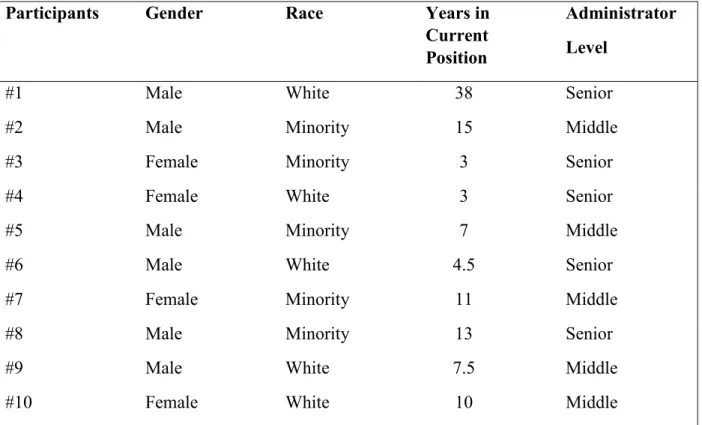
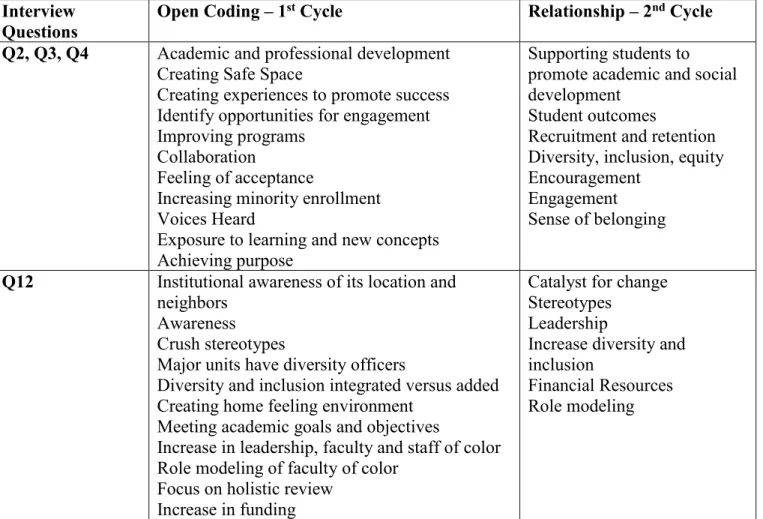
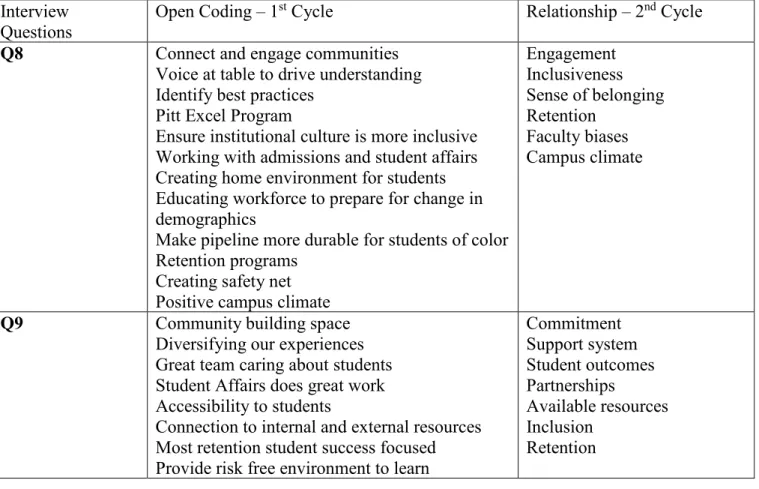
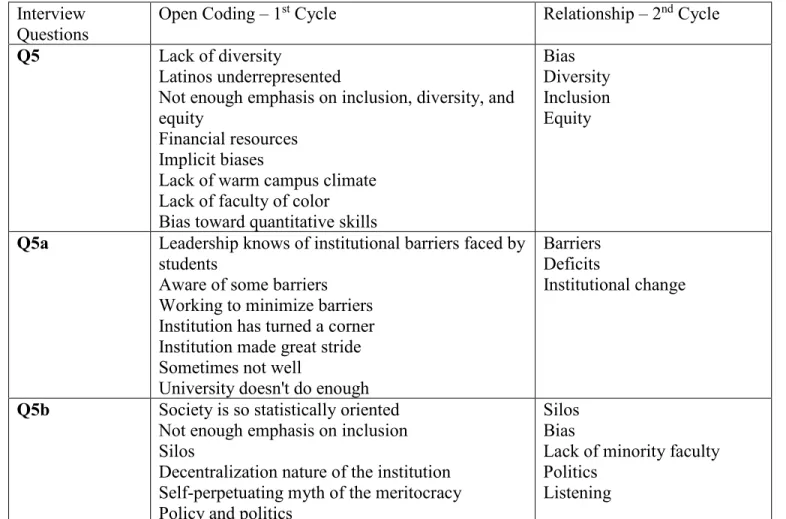
A qualitative method such as interviews is the primary instrument to collect data for the entire study. The protocol consists of semi-structured open-ended questions to drive the interviews. Interviews were conducted in-person and by telephone with 10 middle- and senior-level administrators at one PWI. The feedback gathered from the interviews was coded and categorized to generate the final analysis based on the findings.
According to Patton (1980), the interview is often used to discover those things we cannot observe, and the data gathered allows for capturing the perspectives of those being interviewed. The primary purpose of conducting interviews is to capture a precise meaning, experience, and perspective of the participants from their points of view. For this study, using interviews was preferred over questionnaires because of the opportunity to gain greater insight from the participants' perceptions. Interviews are powerful because of the ability to gain greater in-depth information from the interviewees' voices thoughts, feeling and perceptions gathered (Alshenqeeti, 2014).
1.8 BRIEF OVERVIEW OF RESEARCH SETTING
The University of Pittsburgh established in 1787 is a state-related research university. The University is in Western Pennsylvania, with its main campus in Pittsburgh, and four other campuses located regionally throughout western Pennsylvania. The University has a predominantly White administrative leadership, faculty, staff, and student population.
1.9 LIMITATIONS AND DELIMITATIONS OF THE STUDY
The focus of the study was to examine the perspectives of administrators at PWI who support underrepresented college students. The emphasis of this study was to understand the phenomena of the problems as outlined. This study did not focus on the perception of underrepresented college students or seek to interview this population. By selecting only one PWI to participate, this limited the sample size and participation in the study. Further study is needed with other administrators and perhaps other PWIs to gain different perspectives and insight. However, the study design provided the opportunity to gain an in-depth understanding of the phenomenon rather than gaining a general and global perspective.
1.10 CONCLUSION
The objective of this chapter is to explain the problem of practice focused on the examination of institutional barriers that affect the academic and social development of underrepresented college students. This population is central to the problem and can experience having limited access to the predominant social culture and exposure to elite environments potentially resulting in academic failure of college students attending PWIs.
This research study is grounded in a qualitative methodology to research the inquiry and gather data by using a semi-structured open-ended interview to interview middle- and senior -level administrators at the University of Pittsburgh, which is the primary setting for conducting the study. Although this study examines the barriers and its implications, this
14
ences, and work of middle- and senior-level administrators and how they address systemic institutional barriers.
2.0 BACKGROUND LITERATURE
“Not everything that is faced can be changed at once, but nothing can be changed until it is faced” (James Baldwin, as cited by Wilson, 2004, p. 24). The literature review examines systemic institutional barriers. In examining institutional supports to benefit underrepresented college students, no consensus theory exists. However, the notion that institutional support and organizational structures can influence both negative and positive outcomes associated with barriers to academic preparedness and social adjustment is evident in the literature. Although more racial ethnic minority students are attending college today, persistence and success remain a challenge for this population of underrepresented college students. For this study, underrepresented is defined as minority groups, to include African Americans and Latinos identified by race, ethnicity, and socioeconomic status (Ocampo, 2017). Baker and Robert (2012) confirm that academic success for students of color must begin before starting college through preparedness. Therefore, developing better systems will improve access to resources and increase student success among first-generation college students of color from low socio-economic backgrounds (Brachman, 2012). This is an opportunity to understand further the imbalance caused by barriers and identify recommendations to improve institutional systems and campus climate.
16
2.1 INTRODUCTION TO LITERATURE REVIEW
Historically, social stratification has defined not only socioeconomic status in society but also the types of schools students attend and the quality of education they receive (Milner, 2015).
Altbach, Gumport, and Berdahl (2011) noted:
From 1890s until the 1960s, many states operated dual systems of higher education – one for Black students and another for White students. Although desegregation of these systems was implied by the Brown v. Board of Education decision by the Supreme Court (1954), meaningful steps toward that end did not take place until after the enactment of the Civil Rights Act of 1965. (p.131)
According to Vivian (2017), 16% of the undergraduate population is representative of racially ethnic minorities, to include African Americans and Latinos. This population is specifically sought out by institutions purposely to increase diversity (Barron, 2010). John and Stage (2014) report that according to the 2013 National Center for Education Statistics (NCES) report, it is expected that the number of racially ethnic minority student populations attending higher education institutions will continue to increase significantly. However, "despite improvements in the pipeline, there is evidence that higher education is not prepared to educate the diverse students who come to its institutions" (Altbach et al., 2011, p. 476). When diversity is deemed as an institutional priority, there is significant opportunity to promote inclusion and student success (Altbach et al., 2011).
Historically underrepresented college students attending four-year public colleges and universities have had difficulty achieving academic and social success when barriers are present. For the context of this study, barriers can be defined as impediments preventing access. Barriers are manifested when institutions fail to provide the resources, services, and support to meet the
needs of others to promote success and excellence in the areas of academic achievement, social mobility, and economic progress. Underrepresented college students historically have struggled socially and academically in ways that other racial-ethnic college student populations have not. Ashkenas, et al. (2017) confirm that according to the United States Department of Education's Office for Civil Rights, students coming from elementary and secondary institutions with large percentages of minority student populations face equity issues associated with not having experienced teachers, advanced courses, high-quality materials, and adequate facilities prior to entering college. Such circumstances place underrepresented students at a disadvantage.
Underrepresented college students are often faced with the persistence of disparities because of institutional barriers. Because of such factors, it is essential to identify some of the specific systemic institutional barriers affecting underrepresented college students and assess the organizational structure, types of support services, resources, and programs being utilized to promote academic excellence and the social adjustment increasing retention and attainment. Caplan and Ford (2014) build upon the concept that institutions evaluate policies and initiatives to change the perception that underrepresented students of color often have about the institutions they attend and their self-value.
2.1.1 Implication of stigmatization and labeling
According to Vivian (2005), "students having an inability to achieve academically and socially are often labeled as 'at-risk.' At-risk college students are defined as those who are socially, financially, or academically underprepared or under-supported and particularly need mentoring in college" (p. 336). These students are less likely to transition successfully into adulthood and achieve economic self-sufficiency. It is unfortunate that "at-risk" college students are also
18
stereotyped. Steele (1997) mentioned that negative stereotypes could affect any group, especially African Americans who often are hindered and perceived as not having the ability to excel academically in many scholastic domains. Hartwick and Kubisiak (2014) believe that when a student is aware that they are stereotyped or labeled, this additionally creates negative stereotypical performance and behaviors among these students. Furthermore, Steele and Aronson (1995) note that based on stereotype threat theory, people associated with a group that has been stereotyped have a tendency to act out in ways which define them by such stereotypes.
Often within the academic environment, labels are also placed on individuals perceived as having less value than others (Becker, 1963). Unfortunately, labeling influences one’s perception of race, color, and how we view others (Alter, 2010). Although labeling may appear to be trivial, labeling can have adverse implications and can be harmful, causing issues with self-esteem, motivation, and demeaning opportunity of rising above expectations (Dilea, 2010). Alter (2010) also maintains that labels not only influence our perception based on race but how we perceive others. Because labels influence how we perceive others, there is a tendency to form negative stereotypes affecting one’s self-esteem. Nadal, Wong, Griffin, Davidoff, and Sriken (2014) confirm that there is also an association between self-esteem and racial microaggression. More specifically, those encountering racial microaggression within their academic environments experience a greater decline in self-esteem and self-worth. Milner (2015) defines “racial microaggression as brief and commonplace daily verbal, behavioral, or environmental indignities, whether intentional or unintentional, that communicate hostile, derogatory, or negative racial slights and insults toward people of color” (p.158).
To elaborate further, the consequences of labeling and stigmatization create a negative cycle which diminishes the opportunity for engagement (Crinson, 2007). Students of color more
often are labeled as academically underprepared and require remediation at a significantly higher rate in comparison to White and other student populations at PWIs (Marbley et al. 2013). Love et al. (2010) support the idea that PWIs find it challenging to build a supportive community to support the learning of racial ethnic minority students. On the other hand, underrepresented students often lose interest when they are misunderstood, or their interest is not captured by the institution to include administrators, faculty, other students (Milner, 2015).
2.1.2 Social adjustment and acclimation
Higher education has made significant progress in admitting African American students; however, it has failed to institute the concept of engagement or inclusion for all students (Soto, 1999). Because of an expected increase in diverse racial ethnic populations by 2025, institutions must develop new initiatives to welcome diverse students and cultures. The lack of social engagement and acceptance at some universities and colleges resulted in isolation and mistreatment of some students of color (Minikel-Lacocque, 2013).
Further, "the response of underrepresented college students to the social, cultural, financial, and intellectual stressors they face in college often are perceived as passivity and apathy by faculty members having little understanding the circumstances confronting these students" (Vivian, 2005, p. 337). Communication regarding self-identify is a critical factor for African American and other minority students; it helps to establish a sense of understanding and belonging. In a study by Minikel-Lacocque (2013), six female and male Latino students were interviewed at a PWI over a 10-month period; students reported experiencing racism, discrimination, and mistreatment from other students on campus. The study provided insight in exposing that social adjustment associated with racism is not isolated to any one group of people.
20
Such disengagement places underrepresented students of color at higher risk for academic failure. Q. Allen (2010) explains that overt racism exists and is blatant. However, covert racism is a form of a microaggression that usually goes unnoticed and students of color cannot distinguish or identify true racism.
When diversity and equity (which overarch cultural competence) are not practiced or are not part of the institution’s mission statement and strategic plan, the impact can be devastating, causing students to experience deliberate mistreatment, discrimination, low self-esteem, and isolation at their respective institutions, inside and outside of the classroom. Hope, Chavous, Jagers, and Sellers (2013) studied 324 male and female African American students at large universities in the Midwest region. The results showed how disengagement causes low self-esteem hindering one’s ability to learn and reach academic success, which can put students at-risk psychologically. It is evident that disengagement increases the difficulty of acclimating (Baker & Robert, 2012).
In a study conducted by Caplan and Ford (2014), the researchers interviewed 57 first-year college students of color to examine the progress of diversity and inclusion at four higher education institutions based on the perception of how the students were accepted, supported, and encouraged by administrators and White students. The study also assessed benefits and identified key problems to establish solutions to optimize inclusion. The findings confirmed that institutions should evaluate existing institutional policies to implement new initiatives to develop enhanced programs and services to foster greater diversity and inclusion to change discriminatory perceptions and minimize the feelings of exclusion first-year college students of color experience which affects their self-esteem. There is a valid reason to inquire about what institutions are doing to educate White students about racism and discriminatory views.
As social adjustment is a perceived barrier, Park (2014) also studied interracial friendships and racial climate within student organizations. The data analysis showed that of the 28 selected institutions studied in the research, 80.5% of White, 26.4% of Black, 14.8% of Asian-American, and 7.9% of Latino students were involved in student organizations that were dominated by their own racial/ethnic groups. This study suggests that participation in organizations and clubs encourage interracial student and transactional engagement which may stimulate academic performance, retention, and increase graduation rates.
As engagement is deemed essential for promoting academic and social development, theorists associated with Vincent Tinto's work validate that a student's departure from college is associated with their inability to connect with the institution. Critics of Tinto's theories agree that it is vital to assess the students’ connectedness and engagement with the institutions they attend (Braxton, Doyle, Hartley, Hirschy, & Jones, 2013). In a study by DeAngelo (2013):
the results indicate that in terms of retention to the second year, it is not so much where a student lives during the first year but the fact that students who live on campus are more likely to be engaged in outside of the classroom activities such as discussing course content that has a relationship with retention (p. 63).
The interaction and engagement that underrepresented college students have on campus with other individuals is vital to their academic and social development. When students are able to engage, it is an opportunity for them to further build upon their sense of belonging.
2.1.3 Academic preparedness and retention
Underrepresented college students who attend PWIs frequently have problems not only acclimating socially but also academically. Marbley et al. (2013) state "In fact, research even
22
further suggests that regardless of levels of academic preparedness, a disproportionate number of students of color who manage to get through the doors of PWIs often find themselves ill prepared to thrive on these campuses" p. 92). Subsequently, when this population is admitted to selective colleges and universities and begin their academic experience, without proper guidance and direction, they make inappropriate choices resulting in a mismatch. According to Calleros (2006), mismatch occurs when students do not have access to information to determine their ability to do well in assigned classes or academic programs. As a result, the ability to sustain academic success can become overwhelming. Therefore, "it is imperative for colleges and universities concerned about the academic success of students of color to recognize that academic success or failure is part directly related to unmet cultural and development needs" (Marbley et al., 2013, p.92).
Many institutions are facing challenges to identify best practices to retain and graduate underrepresented students at a higher rate considering the ever-changing demographics (Morales, 2014). For an institution to further advance the academic success among underrepresented students, it is suggested that emphasis is placed on developing self-efficacy, evaluation of performance, and identifying support (Morales, 2014). Helping students to develop their ethnic identities is also a desirable characteristic to support their ability of achievement (Pizzolato, Chaudhari, Murrell, Podobnik, & Schaeffer, 2008).
2.1.4 Institutional support
Love et al. (2010) reference that because minority students included as underrepresented students tend to learn differently from the majority student populations, without considering inclusive learning approaches associated with pedagogies and methodologies, this may hinder the delivery
of instruction and teaching methods to teach underrepresented students. The teaching approach that takes place in the classroom helps these students make gains in developing their academic and intellectual skills. The educational methods used by instructors to impart information are also necessary for teaching underrepresented students of color. It is believed that student involvement and engagement in campus life can lead to students transitioning with greater ease into the institution and excelling academically and socially.
Laskey and Hetzel (2011) support the notion that underrepresented college students with the right motivation and soft skills to pursue a college degree can succeed. Based on their research to identify factors influencing the success of underrepresented college students, the analysis showed: students who scored higher in conscientiousness and agreeableness were likely to utilize tutoring services and achieve a higher GPA. To help underrepresented, at-risk, and first-generation undergraduate college students advance in college-level work and acclimate to the academic environment, the utilization of academic support services such as developmental courses, tutoring, and developing relationships are vital. Liu (2011) likewise supports the importance of developing policies and strategies that focus on improving access as it relates to retention and academic performance for underrepresented and first-generational college students. Equally, as retention and intervention are put in place to support students, the utilization of new strategies and approaches that connect academic and career pathways are crucial. According to Ayala and Striplen (2002), the use of a career introduction model as an early intervention and interactive approach supports students, specifically first-generation students in their academic development and career preparation.
When such retention and intervention strategies and models are created that align with curricular and co-curricular programs and services, underrepresented African American and
24
Latino college students have a higher propensity to become more involved in social and civic engagement, earn college degrees, and gain economic advantages. Because some underrepresented students of color lack the necessary skillsets, it is imperative for administrators and faculty to identify and understand the needs of these students and to teach them and foster success.
Minikel-Lacocque (2013) advocates that to support underrepresented struggling college students, institutions develop new initiatives through retention and wrap-around programs to welcome underrepresented college students. The utilization of retention-based programs and strategies are very valuable in the learning experience for these students. Such initiatives for increasing retention include institutionalizing mentoring programs geared to assist students with acclimating to their academic environment.
Because it is challenging to reach underrepresented and at-risk college students, mentoring programs can lead to improved outcomes for these students. In agreement with Straw (2014), mentoring is vital to help underrepresented college students excel academically and socially. To support this claim, President Barack Obama's 2014 report, Increasing College Opportunity for Low-Income Students, indicated there was a 4% increase in the college graduation rate for those with a one-on-one mentor. Also, it should be noted that mentoring provides a lifetime opportunity for self-reflection and decision-making for students (Vivian, 2005). Vivian confirms: “Mentoring also is acknowledged to be of particular benefit to college students at-risk for failure or withdrawal" (p. 336). Hope et al. (2013) conclude that there is a correlation and repeat patterns between self-esteem and academic achievement.
2.1.5 Institutional leadership
Hurtado, Alvarado, and Guillermo-Wann (2012) note that "as the student population of higher education becomes increasingly diverse, understanding the different processes that can help students succeed becomes more critical" (p. 3). Numerous other factors contribute to the likelihood of retaining underrepresented college students such as institutional characteristics and perceptions affecting the chances of retention (Chang, Cerna, Han, & Saenz, 2008). Helping to understand the different processes to help students succeed requires more significant support from institutional leadership. To foster greater support for students requires the visible observation of transformational change and collaborative engagement from senior higher education leaders (Kezar & Eckel, 2002). As senior leaders seek to embrace diversity and inclusion to address racism, CRT is critical in this process (Hiraldo, 2010). If racism is addressed to promote diversity and inclusion, the tenets of CRT can be utilized to expose further how privilege and oppression create many disparities within the institutional systems (Hiraldo, 2010).
Looking at racial climates and implications for institutional transformation, Harper and Hurtado (2007) conducted a multi-institutional qualitative study utilizing focus groups at PWIs over a 15-year period across five campuses. After an audit at one of the PWIs, it was revealed that racial issues did exist. Further, after interviewing staff of which 88% were of racial ethnic minorities, they indicated they were aware that minority students were at a disadvantage and racial segregation existed. However, staff and administrators were apprehensive to disclose what they observed for fear of harsh repercussions they could face. Harper and Hurtado (2007) concluded that based on the study, it was revealed that more transparency was needed within the academic environment to identify the existence of race-related issues further. Also, problems of exclusion, formality, and marginalization were reoccurring issues of concern as well.
26
Hurtado et al. (2012) emphasize that educators having direct contact with students have a responsibility to ensure students feel a sense of belonging. Students often have discernment about feeling welcomed and included. Harper and Hurtado (2007) note, “likewise, faculty and staff in academic affairs, student affairs, multicultural affairs, and other units on campus should be challenged to consider their roles as accomplices in the cyclical reproduction of racism and institutional negligence” (p. 21).
Because institutional leaders tend to normalize and have an invested interest among the majority student population, this often place students of color at a more significant disadvantage. Until professionals are cognizant of the impact of their deliberate actions affecting the campus climate, the ability to achieve social justice is impossible (Patton, McEwen, Rendon, & Howard-Hamilton, 2007). Therefore, it is vital that the actions of the administrators be reflective of institutional needs to address the challenges faced by underrepresented college students rather than based on their personal intentions, which may not be consistent with the primary focus of the institution to support these students (Kezar & Eckel, 2003).
Kezar and Eckel also make the following recommendation:
Leaders at institutions with more developed diversity agendas might focus on assessing campus efforts to date; refining their strategic plans; developing supportive off-campus networks; creating a culture that continually examines data to challenge prevailing beliefs and set new directions; and evaluating the curriculum. (p. 6)
Further, when institutional leaders decide to make diversity initiatives one of the
competing priorities and implement appropriate systems to support such initiative, then they can advance their efforts for greater inclusion (Kezar & Eckel, 2003).
2.2 THEORETICAL FRAMEWORK
As the United States continues to strive to reclaim its position in leading the nation in higher education serving a large diverse student population, to include underrepresented students, there is an urgency to increase degree attainment and diversity (Hurtado & Guillermo-Wann, 2013). For institutions to best retain underrepresented college students, promote an academic environment of inclusion and diversity, and advance learning opportunities for all student populations, it requires the collaborative efforts and commitment from administrators, staff, and faculty to assess the institutional climate, learning environments, educational practices, and student outcomes. The results of an assessment will further inform policies and practices to enforce the necessary changes to further the efforts of institutional advancement. It should be noted that at many PWIs, assessments have focused primarily on students rather than the administrators and institution. (Hurtado & Guillermo-Wann, 2013). Also, “Very little research has been conducted on two and four-year institutions that offer broad access to students in their regions, particularly in features of their climate for diversity and the experiences of their student populations” (Hurtado & Guillermo-Wann, 2013, p. i).
As institutions have tried to even the playing field for marginalized students, unfortunately, the attempts have not been successful. Marginalized students continue to encounter negative experiences at a higher percentage in comparison to White students (Allen, Q., 2010). Kozol and Lewis’ research (as cited by Yosso, Parker, Solórzano, & Lynn, 2004) confirmed that, because of race, institutions in the United States continue to implement discriminatory practices by not granting equal access to education and other opportunities to all students.
28
Furthermore, Yasso et al. (2004), citing several studies (Lawrence and Matsuda; Smith, Altbach, and Lomotey; and Solórzano, Ceja, and Yosso), argue that “students of color remain severely under-presented in historically White colleges and universities, and the few granted access to these institutions often suffer racial discrimination on and around campus” (p. 1).
Based on the literature, several systemic institutional barriers have been identified which relate to the study. For this research I used a qualitative research to conduct semi-structured open-ended interviews with middle- and senior-level administrators at a PWI to address concerns and perceptions of administrators on how systemic institutional barriers affect their work and practices to support the academic and social development of underrepresented African American and Latino college students as the subgroup and gain greater insight into the current organizational structure supporting these students.
For this study, the transformative paradigm guided my research and provided the prototypical lens based on my beliefs about in equitability, equity, and cultural competence which historically have created levels of stagnation upon people of color in the United States relevant to educational attainment. My interest in the research topic and selected transformative paradigm stems from my consciousness as an African American female educated and having served as a middle-level administrator working at PWIs. According to Mertens (2007), "the transformative paradigm provides such a framework for examining assumptions that explicitly address power issues, social justice, and cultural complexity throughout the research process." (p. 212).
To direct the research, as a component of the conceptual framework, I chose critical
race theory (CRT) to help focus the study. Solórzano and Yosso (2002) define "critical race methodology as a theoretically grounded approach to research that (a) foregrounds race and
racism and (b) challenges the traditional research paradigms, texts, and theories used to explain the experiences of students of color" (p. 24). It is noted that CRT emerged from the work of Derrick Bell and Alan Freeman in the 1970s because of their discontentment with the advancement of racial reform in the United States (Hiraldo, 2010). However, CRT introduced in higher education in 1994, is a framework that has been utilized by scholars to analyze and critique research and practice (Ladson-Billings, 2005). Solórzano and Yosso (2001) agree that CRT in education begin from the belief that race and racism are endemic. Therefore, CRT helps to gain greater insight into the experiences of the students in the literature and examine how higher education administrators address systemic institutional barriers to promote academic and social development for underrepresented African American and Latino college students attending PWIs. The significance of CRT is that it provides the lens to examine and uncover how race, racism, and inequities influence institutional systems and practices regarding inclusivity and a sense of belonging among underrepresented students. The utilization of CRT serves as a practical analysis to further study how PWIs can become more inclusive rather than superficially diverse.
Yosso and Solórzano (2007) reference that CRT initially focused on civil rights legislation regarding Black vs. White. CRT, utilizing a transdisciplinary knowledge base, guides the research in a better understanding of the effects of racism, sexism, and classism on people of color. Yosso and Solórzano reference that in identifying and exploring social inequalities at higher education institutions, CRT is an appropriate lens to properly explore the following three areas: research questions, teaching approaches, and policy recommendations. M. E. Allen (2015) documents that according to Ledesma and Calderón (2015), CRT in education includes the following two academic areas: K-12 and higher education. However, in higher education, there are three common themes: colorblindness, selective admissions policy, and campus race climate.
30
Although CRT does not consist of a set of theoretical ideas, there are identified themes referred to as tenets (Taylor, 1998). According to Hiraldo (2010), the following five tenets of CRT can be used to uncover and scrutinize the existing social inequities that have impact on institutional efforts of diversity and inclusion in higher education: counter-storytelling; the permanence of racism; Whiteness as property; interest conversion; and the critique of liberalism. For the research study, I have selected the first two tenets, counter-storytelling and the permanence of racism in exploring institutional barriers and the campus climate at PWIs through the CRT framework. In agreement with Hiraldo, the use of counter-stories in analyzing PWIs climate provide administrators of different racial-ethnic backgrounds and at various institutional levels a voice to tell their narratives involving marginalized experiences. On the other hand, Hiraldo states the following regarding the permanence of racism:
The permanence of racism suggests that racism controls the political, social, and economic realms of U.S., In CRT, racism is seen as an inherent part of American civilization, privileging White individuals over people of color in most areas of life, including education. (pp. 54-55)
2.3 CONCEPTUAL FRAMEWORK
CRT is utilized in the field of education to examine the various educational systems and the traditional claims made concerning the following: objectivity, meritocracy, color-blindness, race neutrality, and equal opportunity. Critical race theorists believe that these traditional claims set forth serve as an opportunity for the privileged, dominant groups to perpetuate their self-interest and power (Solórzano, 2001). Stovall (2005) also confirms that CRT examines many groups and
individuals at various levels to discover the effect of racism, institutional, and systemic phenomenon. As CRT is used as a lens to examination race and racism, it also allows for further assessment to study how race and racism affect people of color directly and indirectly (Yosso, 2005).
The conceptual framework for this study involved CRT as the framework to understand how race and racism are embedded within the institutional system and influence actions and behaviors.CRT guides the analysis and interpretation of this study. Parker and Lynn (2002) outline the following three goals of CRT:
CRT has three main goals: 1) to present storytelling and narratives as valid approaches through which to examine race and racism 2) to argue for the eradication of racial subjugation while simultaneously recognizing that race is a social construct; and 3) to draw important relationships between race and other axes of domination. (p. 10)
Through the CRT lens and the two tenets of counter-storytelling and the permanence of racism, this study focused on the concepts of racism and institutional leadership, which are the underlying influencers of financial resources, institutional silos, equity, discrimination, implicit bias, diversity and inclusion that create systemic barriers ultimately affecting administrators who provide services and support to underrepresented college students through minority-based programs at a PWI. To overcome such barriers, leaders should reassess how institutional cultures, policies, current practices, procedures, and infrastructure affect administrators and seek to make positive changes.
32
2.4 CONCLUSION
Social forecasters predict that ethnic, racial, and cultural minorities will continue to be the majority in the United States. Because of this demographic phenomenon, institutions should be more deliberate about implementing methods of retention to aid with attrition often associated with the lack of cultural competence, academic preparedness, and social adjustment. For institutions unable to recognize the importance of removing barriers, the consequences may cause student failure both academically and socially.
Administrators face the challenge of not only understanding the barriers but how such barriers may influence their work and best practices relevant to student success and a favorable campus climate fostering inclusiveness. Scanning both their internal and external environments to assess the complex dynamics in which institutions are facing is essential to institutional transformation. This is an attempt for institutions to create a paradigm shift reshaping how they embrace and support underrepresented students by developing missions, strategies, policies, and support programs which focus more on student-centered educational outcomes being the ultimate objective to support and create a sense of belonging for underrepresented African American and Latino college students.
Further, this chapter focuses on how systemic institutional barriers not only affect underrepresented college students but the impact on higher education administrators at PWIs. It is suggested that institutional support and better systems can influence the academic and social development of underrepresented students. A qualitative study was utilized to conduct semi-structured open-ended interviews with middle- and senior-level administrators at a PWI to address concerns and perceptions of administrators on how systemic institutional barriers impede their work and practices to support the academic and social development of underrepresented
undergraduate African American and Latino college students as the subgroup and gain greater insight into the current organizational structure supporting these students.
Because CRT framework contributes to inclusivity and diversity in higher education, to direct the research CRT is the lens and part of the study to examine how higher education administrators address institutional barriers impeding their work and practices to support underrepresented students. Counter-storytelling and the permanence of racism are the two tenets selected from CRT to obtain narratives from diverse administrators and explore underlying issues relevant to race, racism, and inequalities. CRT serves as the lens to also view racism and analyze the University of Pittsburgh to identify underlying issues which otherwise may not be uncovered.
The review of literature addresses systemic institutional barriers such as race, racism, microaggression, stigmatization, labeling, academic preparedness, and sense of belonging, and the implications affecting underrepresented students of color. The literature review also provides insight regarding the role of administrators and the importance of institutional support for this population to ensure students excel academically and socially within their learning environment, specifically at PWIs. An extensive search specifically on the perceptions and experiences of administrators who serve underrepresented college students was conducted; unfortunately, limited literature was found. This suggests that there are gaps in the literature regarding the perspectives of middle- and senior-level administrators who are responsible for supporting and serving underrepresented college students at PWIs. Literature was found relating PWIs and the overall college experience and services and programs to support these students.
34
3.0 METHODS
3.1 EPISTEMOLOGY
In chapter 2, the transformative paradigm guides my research and provides the prototypical lens based on my beliefs about inequality, equity, and cultural competence which historically have created levels of stagnation upon ethnic minority people of color in the United States relevant to educational attainment. Although my research does not directly capture the experiences or stories of underrepresented college students which Mertens (2015) references as important regarding engaging the voices of concealed communities traditionally unrecognized or excluded, some of the literature review cited in this study by other researchers captures the students’ experiences and tells their stories through the studies conducted and noted in the research. The experiences and perception of these students further my desire, as a researcher, to interview higher education administrators as the participants of this study to seek insight into the phenomenon of their experience at PWIs and learn how these institutions are addressing barriers and the campus climate.
In agreement with Mertens (2015), by conducting interviews with administrators, this is an opportunity to identify some of the critical insights from administrators about what contributes to the social oppression of students within the institutional system. Also, the interviews will lend to the engagement of counter-storytelling to amplify the voices of
administrators whom we may otherwise not hear from and to add significant meaning and context. Solórzano and Yosso (2002) state that counter-storytelling can further expose and analyze a difference in views and experiences. Williams (2004) also indicates that to create new narratives requires the view and experiences of individuals outside of the dominant group or population.
Mertens (2012) indicates that the transformative paradigm, a metaphysical framework, examines how underlying issues and barriers simultaneously can create privileges and disparities for individuals or groups based on economic status, immigrant status, and race/ethnicity. While a study that focused directly on students’ experiences from their points of view would be valuable, this study is taking a different approach, mindful that although the voices of the students are not represented, it is important to study the administrators doing the work at PWIs. As the study was conducted, the transformative paradigm also helped to address the inequalities and injustices. Mertens (2012) reiterates that “the transformative paradigm focuses on the strengths that reside in communities that experience discrimination and oppression on the bases of their cultural values and experiences” (p. 804).
As this research also examines cultural competency and its implications, Mertens (2012) confirms that cultural competency often used to foster positive outcomes, is vital for those working within the transformative paradigm. Cultural competency is defined as “a set of congruent behaviors, attitudes, and policies that come together in a system, agency, or amongst professionals, and enables that system, agency, or those professionals to work effectively in cross-cultural situations" (Cross, Bazron, Dennis, & Isaacs, 1989, p. 49). Furthermore, cultural competency viewed as a critical disposition allows the researcher to provide an accurate account of the realities existing within the culturally complex communities (Mertens, 2012). Also, it is