The development of a British assessment
of inferential and idiom comprehension
for 5:00 to 9:11 year-old
typically-developing children
Anne Hewitt
A thesis submitted in partial fulfilment of the
requirements of Manchester Metropolitan University
for the degree of Doctor of Philosophy
Department of Health Professions
2017
ACKNOWLEDGEMENTS
I would like to express my gratitude to the following people who have
helped me complete this PhD thesis.
My supervisors Jois Stansfield, Juliet Goldbart and Kevin Rowley.
The MMU students who helped me with some of the data collection.
Julie Wright for agreeing to fund this PhD from her departmental budget.
The schools and pupils who allowed me to work with them and who
gave many amusing responses to my test questions.
TABLE OF CONTENTS
ABSTRACT……… ………p1
CHAPTER ONE: INTRODUCTION AND LITERATURE
REVIEW……… ...p3
Section 1: 1.1 Definitions of the terminology used in this study………p4
1.1.1 Definitions of verbal comprehension and its sub-components………..p4 1.1.2 Definition of comprehension………...p4 1.1.3 Definition of pragmatics………...p5 1.1.4 Definition of metapragmatics………...p5 1.1.5 Definition of verbal reasoning………p5 1.1.6 Definition of high level
language………...p6 1.1.7 Definition of idioms………...p6 1.1.8 Sub-types of idioms………p7 1.1.9 Definition of inferential comprehension………p7 1.1.10 Sub-types of inferencing………...p8 1.1.11 Inferential comprehension in reading………...p9
1.1.12 Definition of Autism Spectrum Disorder (ASD)………...p10
1.1.13 Definitions of social (pragmatic) communication disorder………p10
1.1.14 Definitions of language
disorders………...p12 1.1.15 Definitions of other communication impairments………..p13
1.1.16 Definition of Attention Deficit Hyperactivity Disorder (ADHD)………..p13
Section 2: 1.2 Clinical Rationale for developing an assessment of inferential and idiom comprehension – justification from the
literature………..p15
Section 3: 1.3 Inferential comprehension in typically developing children and children with communication
impairments………..p19 1.3.1 Developmental stages of Analogical (or Inductive)
Reasoning…………...p20
1.3.2 Developmental stages of verbal inferential comprehension in typically
developing
children………..p21
1.3.3 Developmental stages of reading inferential comprehension in typically developing
children……….p23
1.3.4 Verbal inferential comprehension difficulties in children with communication
impairments………...p25
1.3.5 Inferencing difficulties in children with Specific Language Impairment (SLI) and Pragmatic Language Impairment (PLI)………p28
(ASD)………...p35 1.3.7 Reading inferential comprehension difficulties in adolescents with
ASD………..p35
1.3.8 Reading inferential comprehension in children with autism spectrum disorder and language
impairment………...p36 1.3.9 Critical evaluation of the above studies………...p37
Section 4: 1.4 Idiom comprehension in typically developing children and children with communication
impairments………..p40 1.4.1 Typical development of idiom
comprehension………..p40
1.4.2 Studies of idiom comprehension in children with communication impairments
……….p43 1.4.3 Critical evaluation of the above
studies……….p48
1.4.4 Other disorders: inferential and idiom comprehension difficulties…………p49
1.4.4.1 Attention Deficit Hyperactivity Disorder (ADHD)………p50
1.4.4.2 Brain
injury………p50
Section 5: 1.5 Social inferencing in typically developing children and children with communication
impairments………...p53 1.5.1 Recognition of
emotions………p54 1.5.2 Social inferencing and Theory of
1.5.3 The Strange Stories Test………p56 1.5.4 Mental state words……….p58 1.5.5 Faux pas……….p60
1.5.6 Understanding sarcasm and theory of mind in children with head
injury………..p62 Section 6: 1.6 Creating a language
test………...p64 1.6.1 Formal test
development………p64 1.6.2 Current psychological
tests………p66 1.6.3 Developing language assessments for children………...p66
Section 7: 1.7 Current formal and informal assessments that include inferential and idiom
comprehension……… …..p74
1.7.1 Assessments of inferential
comprehension………...p77
1.7.2 Assessments of idioms and other non-literal understanding………p109
Section 8: 1.8 Chapter summary and the study aims and hypotheses……….p119
1.8.1 Chapter
summary……….p119 1.8.2 Study aims and
CHAPTER TWO:
METHODOLOGY………...p122 2.1Qualitative and quantitative
methodologies………...p123 2.2Research
epistemology………...p124 2.3Principles of quantitative test
design………..p127 2.3.1 Standardisation……… ….p127 2.3.2 Sample size………...p12 9 2.3.3 Validity and reliability……….p129 2.4 The methodology for this
study………p136 2.4.1 Test
development……….p136 2.4.2 Converting the pilot assessment to the final HICIT……… p142
2.4.3 Development of the test marking criteria……….p145
2.4.4 Methodological procedures used in both the pilot and final
study………..p152 2.4.5 Carrying out the pilot
study………p155 2.4.6 Carrying out the final
2.5 Chapter summary………..p161 CHAPTER THREE: RESULTS………...p162 3.1 Pilot study results………..p163
3.1.1 Mean overall section scores by age group for 4:06 to 10:06
year-olds………p164 3.1.2 Range of scores for each section for 4:06 to 10:06
year-olds………p 164
3.1.3 Mean total test scores by year group (ages 5:06 to
9:06)………... ...p164
3.2 Converting the pilot HICIT to the final HICIT………p165 3.2.1 Justification for item or section
removal………....p165 3.2.2 Validity tests: exploratory and confirmatory factor analysis………... p166 3.2.3 Test reliability………...p17 5 3.3 Final study results……… p184 3.3.1 Summary of final participants………..p184 3.3.2 Descriptive statistics………p186
3.3.3 Inferential
statistics………..p195 3.4 Qualitative analysis of the test
results………..p202 3.5 Four exploratory case
studies...p209 3.6 Chapter
summary……….p215 CHAPTER FOUR: DISCUSSION AND
CONCLUSIONS………...p216 4.1Primary study aim
1………..p218 4.1.1 Validity of the
HICIT………...p218 4.1.2 Reliability of the
HICIT………...p223 4.2Primary study aim 2 and related
hypothesis………. p229 4.3Secondary study
hypotheses………..p233 4.3.1 Secondary hypothesis 1: Gender
effects………..p233
4.3.2. Secondary hypothesis 2: Socio-economic effects………...p235
4.4Qualitative analysis of the HICIT
data………..p236 4.5Discussion of the exploratory case studies
findings...…………p238 4.6Overall evaluation of the
4.7Further amendments to, analysis of and tests to carry out with the HICIT………...p240
4.8Future tests and research studies
needed………...p242 4.9Feedback obtained on the potential clinical usefulness of the
HICIT………...p243 4.10 Getting the HICIT
published………...p243 4.11 Concluding statements………p244 REFERENCES……… …...p245 APPENDICES Appendix i………p260 Appendix ii………...p264 Appendix iii………..p270 Appendix iv………..p281 Appendix v………...p288 Appendix vi………...p291 Appendix vii……….p294 Appendix viii………p295
Appendix ix………..p296 Appendix x………...p313 Appendix xi………...p327 Appendix xii……….p335 Appendix xiii………p336 Appendix xiv………p339 Appendix xv……….p341 Appendix xvi………p344 Appendix xvii………...p334 Appendix xviii………..p347 Appendix xix………p370 Appendix xx……….p371
LIST OF TABLES
PAGE
Table 1.1 Summary of the literature reviewed for inferential comprehension in typically-developing (TD)
children...19
Table 1.2 Summary of the literature reviewed for reading inferential comprehension in
TD-children... ...23
Table 1.3 Summary of the literature reviewed for inferential comprehension in children with communication impairments
(CwCI)...26
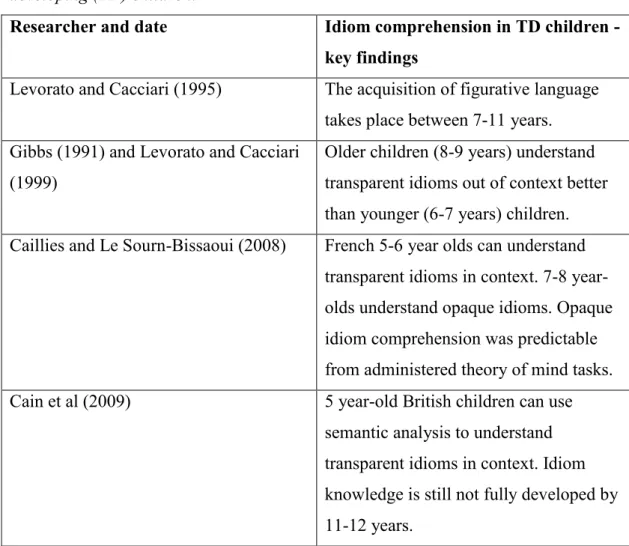
Table 1.4 Summary of the literature reviewed for idiom comprehension in TD children...40
Table 1.5 Summary of the literature reviewed for idiom comprehension in CwCI... ...43
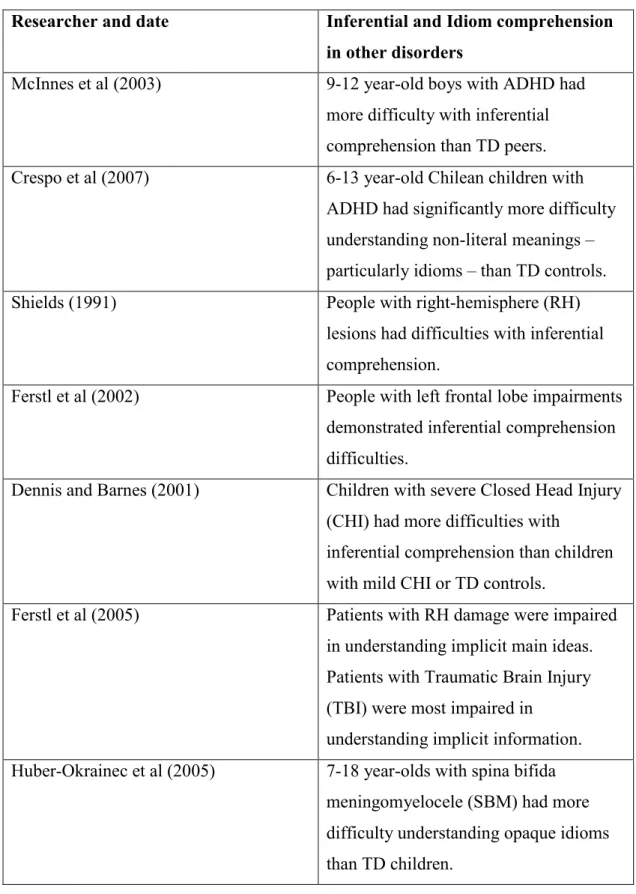
Table 1.6 Summary of the literature reviewed for inferential and idiom comprehension in children and adults with other
disorders... ...49
Table 1.7 Summary of the literature reviewed for social inferencing in TD children and
CwCI... ...53
Table 1.8 Mean total test scores for the Liverpool Language Screen………..85
Table 1.9 The advantages and disadvantages of current inferential comprehension assessments……… …….106
Table 1.10 Idioms defined by idioms in the Test of Language Competence………...111
Table 1.11 The advantages and disadvantages of existing idiom comprehension assessments……… …….117
Table 2.1 A summary of the test question selection process………. 143
Table 2.2 Summary of the types of answers required in the HICIT……… ..146
Table 3.1 Mean overall pilot HICIT section scores for 4:06 – 10:06 year-olds………… …164
Table 3.2 Range of pilot HICIT section scores for 4:06–10:06 year-olds……….164
Table 3.3 Mean total test scores by year group (ages 5:06 to 9:06)………..164
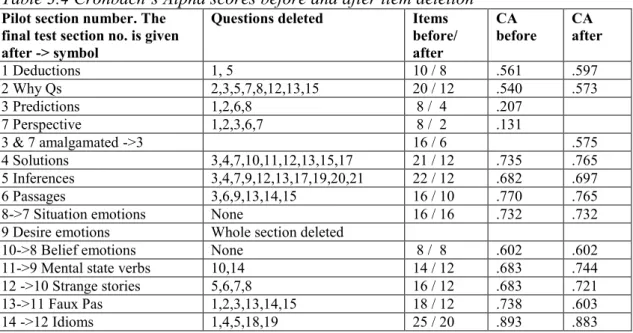
Table 3.4 Cronbach’s Alpha scores before and after item deletion………...165
Table 3.5 Exploratory factor analysis results (6:00-9:11 year-olds).Total variance ……… ……166
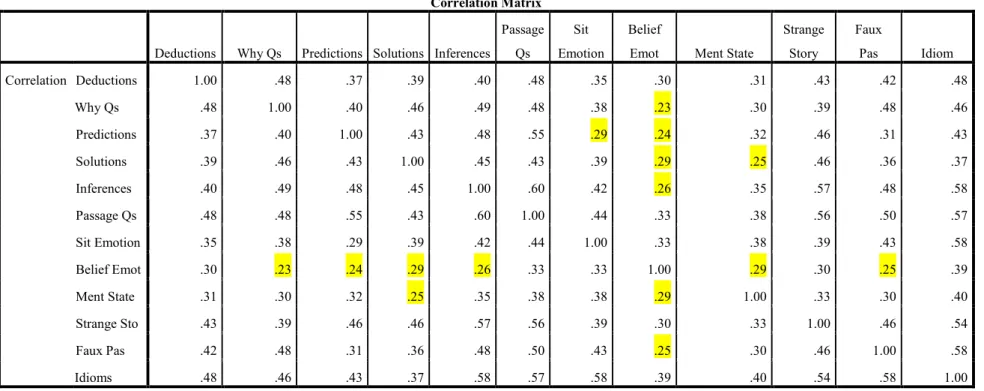
Table 3.6 Exploratory factor results (6:00-9:11 year-olds). Correlation matrix………167
Table 3.7 Exploratory factor analysis component matrix……….168
Table 3.8 CFA standardised estimates and comparative EFA component matrix values
for all 12
sub-tests………171 Table 3.9 CFA standardised estimates values for 11 sub-tests (8
excluded)………172
Table 3.10 CFA modification index
co-variances……….172
Table 3.11 CFA standardised estimates values for 11 sub-tests (8 excluded) and with e7 and e12
co-varying………173 Table 3.12 The HICIT model fit
measurements………174 Table 3.13 Cronbach’s Alpha for sub-section 1
Deductions……….175 Table 3.14 Cronbach’s Alpha for sub-section 2 Why questions………...175
Table 3.15 Cronbach’s Alpha for sub-section 3 Predictions……….176
Table 3.16 Cronbach’s Alpha for sub-section 4 Formulating solutions ………...176
Table 3.17 Cronbach’s Alpha for sub-section 5 Explaining inferences………176
Table 3.18 Cronbach’s Alpha for sub-section 6 Inferences from passages………...177
Table 3.19 Cronbach’s Alpha for sub-section 7 Situation-based emotions………...177
Table 3.20 Cronbach’s Alpha for sub-section 8 Belief-based emotions………177
Table 3.21 Cronbach’s Alpha for sub-section 9 Mental states………..178
Table 3.22 Cronbach’s Alpha for sub-section 10 Strange Stories……….178
Table 3.23 Cronbach’s Alpha for sub-section 11 Faux pas………...178
Table 3.24 Cronbach’s Alpha for sub-section 12 Idioms………..179
Table 3.25 Researcher to supervisor inter-rater reliability scores for HICIT marking…….182
Table 3.26 Researcher to student inter-rater reliability scores for HICIT marking………...183
Table 3.27 Summary of the final HICIT study participants………...185 Table 3.28 Total HICIT scores for 5:00-5:11 year-olds………...186
Table 3.29 Total HICIT scores for 6:00-9:11 year-olds separate genders……….186
Table 3.30 Total HICIT scores for 6:00-9:11 year-olds genders combined………..186
Table 3.31 Descriptive statistics for sub-section 1……….191 Table 3.32 Descriptive statistics for sub-section 2……….191 Table 3.33 Descriptive statistics for sub-section 3……….192 Table 3.34 Descriptive statistics for sub-section 4……….192 Table 3.35 Descriptive statistics for sub-section 5……….192 Table 3.36 Descriptive statistics for sub-section 6……….193 Table 3.37 Descriptive statistics for sub-section 7……….193 Table 3.38 Descriptive statistics for sub-section 8……….193 Table 3.39 Descriptive statistics for sub-section 9……….194 Table 3.40 Descriptive statistics for sub-section 10………...194 Table 3.41 Descriptive statistics for sub-section 11………...194 Table 3.42 Descriptive statistics for sub-section 12………...195
Table 3.43 One-way ANOVA results. The effect of socio-economic status on test Scores……… …….195
Table 3.44 Test of homogeneity of
variances………196 Table 3.45 Robust tests of equality of
means……….196
Table 3.46 Cohort 1. The 2 groups that are comparable for socio-economic
status……… ……...197
Table 3.47 Breakdown of number of children of different ages in each group……….197
Table 3.48 Cohort 1 group
statistics………..197 Table 3.49 Cohort 1 Independent samples T
test………..197
Table 3.50 Cohort 2. The groups that are comparable for socio-economic status…………198
Table 3.51 Cohort 2 group
statistics………..198 Table 3.52 Cohort 2 Independent samples T
test………..198
Table 3.53 Two-way ANOVA results showing the effect of gender and age group on total test
score……….199 Table 3.54 Levene’s test of equality of
variances………..201
Table 4.1 Comparison of CA scores for the ACE non-literal comprehension sub-test and the HICIT idioms
sub-test………..226 Table 4.2 Faux pas mean scores in the
HICIT………...231
Table 4.3 Faux pas mean scores in Baron-Cohen et al’s (1999) study………..231
Table 4.4 Results for the HICIT Idioms sub-section by age and gender ……….232
Table 4.5 Baron-Cohen et al’s (1999) Faux Pas study results………...234
LIST OF FIGURES
PAGE
Figure 2.1 Creswell’s (2014) stages in quantitative research………125
Figure 3.1 Scree plot (6:00-9:11
year-olds)………...168 Figure 3.2 Confirmatory factor analysis with all 12 sub-tests included……….120
Figure 3.3 Confirmatory factor analysis with sub-test 8 excluded……….171
Figure 3.4 CFA with sub-test e8 omitted and with e7 and e12 co-varying………173
Figure 3.5 Histogram of difficulties across all 12 sections (ages 6:00-9:11) including outliers Situational Emotions questions 4 (happy), 5 (happy), 14
(happy)………180
Figure 3.6 Histogram of difficulties across all 12 sections (ages 6:00-9:11) excluding outliers……… ……180
Figure 3.7 Rasch Analysis histogram of total test scores (6:00-9:11 year-olds)………181
Figure 3.8 SPSS histogram of total test scores (6:00-9:11 year-olds)………...181
Figure 3.9 Total test scores histogram for 6:00-6:11 year-olds……….178
Figure 3.10 Scattergram of total scores for 6:00-6:11 year-olds………187
Figure 3.11 Total test scores histogram for 7:00-7:11 year-olds………...188
Figure 3.12 Scattergram of total scores for 7:00-7:11 year-olds………..188
Figure 3.13 Total test scores histogram for 8:00-8:11 year-olds……….. 189
Figure 3.14 Scattergram of total scores for 8:00-8:11 year-olds……… 189
Figure 3.15 Total test scores histogram for 9:00-9:11 year-olds………... 190
Figure 3.16 Scattergram of total scores for 9:00-9:11 year-olds………...190
Figure 3.17 Marginal means diagram demonstrating no gender interaction effects……….200
Figure 3.18 Bar chart summarising total test scores by age group and gender……….201
Abstract Background
Understanding of inferences and non-literal language, such as idioms, is critical for successful communication and academic learning. Assessment of inferential and idiom comprehension is essential for children who are showing difficulties in these areas so that appropriate intervention and support can be provided. There is very little information on the typical development of these specific areas of verbal comprehension in the literature and there are very few current assessments of inferential and idiom comprehension for British school-aged children. While many assessments that do exist have face validity, very few are standardised. Some children with comprehension difficulties do well on existing picture-based
assessments of verbal comprehension but they demonstrate significant difficulties with more abstract language comprehension. There is a gap in the current battery of assessments available to paediatric speech and language therapists for assessing inferential and idiom comprehension in detail.
Aims
The primary aims of this thesis were to develop a robust standardised British assessment of inferential and idiom comprehension for 5:00 to 9:11 year-old children, to provide supporting validity and reliability data for the newly devised assessment, to provide normative and statistically significant data for inferential and idiom comprehension in typically developing children aged 5:00 to 9:11, to provide qualitative information on the typical development of these areas of verbal
comprehension and to carry out exploratory studies using the new assessment with children with communication impairments. Secondary aims of the study were to examine if there was any relationship between gender and test performance and between socio-economic status and test performance.
Methods & Procedures
A new assessment, the Hewitt Inferential Comprehension and Idioms Test (HICIT) was created following a review of the literature and of the existing assessments in these areas of verbal comprehension. A pilot study was carried out with sixty-two 4:06 to 10:06 year-old children in two primary schools in the North West of
England. The fourteen section, 210 item pilot test was reduced to the twelve section, 140 item final version of the HICIT. This was then trialled with a further 200
children, aged 5:00 to 9:11, making an overall standardisation sample of 250 children.
Normative data were provided from the application of descriptive and inferential statistics to the results. A two-way ANOVA examined the effects of age group and gender on test scores and a one-way ANOVA and post-hoc independent T tests looked at the relationship between socio-economic status and test performance. Outcomes & Results
The construct validity of the test was examined with exploratory and confirmatory factor analyses. These demonstrated a single factor loading and good model fit measurements. The reliability of the test, as assessed by Cronbach’s Alpha was moderate, similar to an existing published British standardised verbal language assessment. Rasch analysis indicated that the internal consistency of the test was good. The inter-rater reliability of 98.6% was excellent.
The descriptive and inferential statistics demonstrated that there was a developmental progression between the age groups for inferential and idiom comprehension but that there was no effect for gender. The idioms sub-section was the only section not to reach ceiling scores by 9:11.
The results for the relationship between socio-economic status and test scores were inconclusive.
Conclusions & Implications
Quantitative analysis of the HICIT data demonstrated that the test is a robust assessment of inferential and idiom comprehension. Some sub-tests of the test are more robust with different age groups so different versions of the test could be used with different age groups.
Qualitative analysis of the test responses, exploratory case studies using the HICIT to assess four children with communication impairments and feedback from practising speech and language therapists produced useful information on the
possible applications of the test and suggested that it could be very useful to assist in differential diagnosis of different types of communication impairments.
CHAPTER ONE: INTRODUCTION AND LITERATURE REVIEW This chapter begins with a brief justification for the development of a test of inferential and idiom comprehension and is then is divided into the following eight sections:
1. Definitions of the terminology used in this study.
2. The clinical rationale for developing an assessment of inferential and idiom comprehension.
3. Inferential comprehension in typically developing children and children with communication impairments.
4. Idiom comprehension in typically developing children and children with communication impairments.
5. Social inferencing in typically developing children and children with communication impairments.
6. Creating a language test.
7. Current formal and informal assessments of inferential and idiom comprehension.
8. The chapter summary containing the study aims and hypotheses.
Justification for the development of a test of inferential and idiom comprehension The current researcher is one of those clinicians “for whom research functions not as a distraction from practice but as a development of it.” (Schon, 1983, pii).
Inferential and idiom comprehension are areas of language that come under the umbrella of verbal comprehension and pragmatics (the understanding and use of language in social contexts). The need to develop a British assessment of inferential and idiom comprehension evolved during the current researcher’s twenty five years’ experience as a paediatric Speech and Language Therapist (SLT) working with children with a range of communication impairments. Her first NHS SLT job was working in a language unit attached to a mainstream school. This included children who were described as having a ‘semantic pragmatic language disorder’ (SPD). She later developed a specialism in children with Autism Spectrum Disorders (ASD) and noticed that there was a large overlap of features between the children with SPD and
those with high functioning ASD. These children were able to perform within normal limits or were mildly delayed on tests of comprehension of grammatical structures and receptive vocabulary, but they demonstrated severe difficulties in other areas of verbal comprehension, particularly inferential and idiom
comprehension. Her SLT colleagues have also frequently encountered this pattern of difficulties and have expressed their frustration that there is currently no
comprehensive standardised assessment of inferential and idiom comprehension on the market. The development of such a tool is therefore crucial for accurate
assessment and intervention planning for children with comprehension impairments. Before moving on to the rationale from the literature for developing this assessment, definitions of comprehension and communication impairments will be given. CHAPTER ONE SECTION ONE: 1.1 Definitions of the terminology used in this study
1.1.1 Definitions of verbal comprehension and its sub-components
A variety of terms are used in the literature to describe verbal comprehension skills, some of which are interchangeable. Speech and Language Therapists use the terms ‘verbal reasoning’ and ‘high-level comprehension’ to refer to abstract language comprehension. ‘Inferential comprehension’ and ‘inductive reasoning’ are also interchangeable terms. The existence of multiple definitions in this area
demonstrates the complexity and interconnectivity of the sub-components of verbal communication. Verbal reasoning, the understanding of figurative expressions, the use of language in social settings, lexical skills (word knowledge, word-finding and word definition), the production of complex syntax, and discourse proficiency are all intricately related aspects of later language development (Nippold, 1998). The definitions given below will be the ones adopted in this thesis.
1.1.2 Definition of comprehension
Comprehension refers to understanding. Verbal comprehension is the understanding of spoken language. It is also called receptive language.
Leinonen and Letts (1997) distinguish between linguistic comprehension (understanding of syntax and semantics) and pragmatic comprehension (where meaning has to be worked out from linguistic and contextual cues).
1.1.3 Definition of pragmatics
Dennis et al (2001) define pragmatics as the domain of language concerned with how speakers use language to effect successful communication. They also emphasize that inferencing is a key component of pragmatics.
Letts and Leinonen (2001) describe pragmatics as the use and understanding of language in context and they state that it is the interface between language and cognition. They suggest that cognitive rather than linguistic deficits could be the cause of pragmatic impairments. They highlight that most studies of pragmatic impairments mention verbal comprehension problems and state that pragmatic comprehension difficulties include problems with verbal reasoning, making inferences about actions, and an inflexible style of making inferences.
1.1.4 Definition of metapragmatics
This is an awareness in the speaker of the intention and effects of their pragmatic skills in communication.
1.1.5 Definition of verbal reasoning
Verbal reasoning is understanding and reasoning using spoken and written language.
It involves listening, reading and the ability to think constructively. It includes the ability to interpret meaning from given and implied information and complex thinking tasks, such as analysis, synthesis and evaluation of text (Deary et al, 2007, in Spencer et al, 2016). Verbal reasoning is a component of cognitive ability, and it encompasses almost all learning in education. However, it cannot be defined by a single coherent cognitive theory as it involves many different thought processes. Reasoning is a form of thinking in which conclusions are drawn from a set of facts. Inductive reasoning is where general conclusions are drawn from particular facts or scenarios which might or might not be true. Nippold (1998) describes inductive problems as those where the given information supports the solution but is not sufficient evidence for it on its own. Inductive problems include: analogies (eg bear
is to cub as cow is to ____); proportions (eg 1 package is to 2 cans as 3 packages is to_____ cans); series completions (eg June, August, October ______); classifications (eg odd one out from: aunt, cousin, sister, friend); understanding figurative language such as metaphors (‘She is a walking dictionary’) and proverbs (‘Two wrongs don’t make a right’).
1.1.6 Definition of high level language
Rhea and Norbury (2012)define high level language as language that goes beyond grammar and vocabulary which includes inferencing, reasoning and non-literal language comprehension. This is the definition of high level language that will be adopted in this thesis.
1.1.7 Definition of idioms
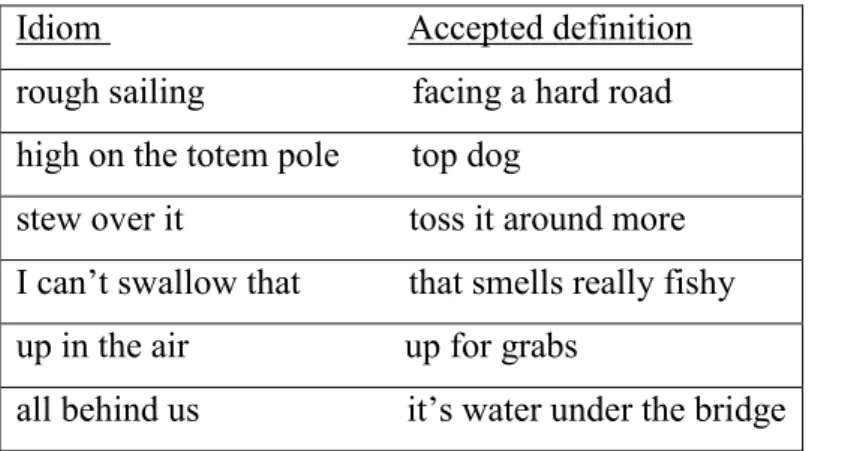
Crystal (2008) defines idiom as a term used in grammar and lexicology to refer to a sequence of words which is semantically and syntactically restricted so that it functions as a single unit. The meaning of the overall utterance cannot be deduced from the individual words (eg ‘it’s raining cats and dogs’).
Cain et al (2009)define idioms as a form of figurative language that usually have both a literal and a figurative meaning, depending on the context. For example, the sentence ‘someone spilled the beans’ can describe someone tipping out beans from a tin (literal) or someone giving away a secret (figurative).
Both the literality and the compositionality (the way in which the literal meanings of the word constituents contribute to the overall figurative meaning)of idioms
contribute to how easy or hard they are to understand (Caillies and Le Sourn-Bissaoui, 2008).
Metalinguistic (in particular metasemantic) competence is required to work out the meaning of unfamiliar figurative expressions such as metaphors, proverbs and idioms (Nippold, 1998). Theory of mind skills are also required to make the literal-figurative link with idioms and other literal-figurative language. Norbury (2004) points out that theory of mind ability enables one to understand speaker intention, thus helping to signal some non-literal meanings. However, she emphasizes that the role of theory of mind in idiom comprehension has not yet been fully investigated.
1.1.8 Sub-types of idioms
Cain et al (2009) and most other researchers sub-categorise idioms into transparent (or decomposable, or semantically analyzable) idioms and opaque (or
non-decomposable or semantically nonanalyzable) idioms.
Transparent idioms have a clear overlap between the literal and figurative meanings of the phrase (eg ‘to speak your mind’).
Opaque idioms cannot be broken down word by word and their meanings cannot be derived successfully by semantic analysis (eg ‘to bite the dust’).
1.1.9 Definition of inferential comprehension
Inferential comprehension is the ability to understand language in context and to fill in information that is not explicitly stated. In other words, the ability to ‘read
between the lines’. To be able to do this successfully requires drawing on world knowledge, previous contextual experience and social scripts. Leinonen and Letts (1997) include inferential understanding under the umbrella of pragmatic
comprehension as it involves going beyond linguistic comprehension to the integration of internal world knowledge, previous experiences and ‘social scripts’ (what is said in certain situations) to be able to work out the possible intended meanings of the speaker.
Trabasso and Magliano (1996) state that the function of verbal inferences is to 'fill in' information that is not explicitly provided and to form connections amongst events in a text or conversation in order to enable comprehension of the overall meaning of the scenario. Adams et al (2001) describe inferential understanding as an ‘above-sentence level’ comprehension ability. This includes understanding of
suprasegmental features of spoken language.
Ryder et al (2008) define inferencing as the integration of contextual information (via a reasoning process) and pragmatic demands in language comprehension to work out an intended meaning. They call this ability ‘implicature’.
Filiatrault-Veilleux et al (2015) state that inferential comprehension requires the ability to understand each word, morpheme and sentence; have a knowledge of the world; take into account others’ knowledge, motivations and intentions; understand expected social behaviour; and to ‘read between the lines.’
1.1.10 Sub-types of inferencing
Cain and Oakhill (1999) and Harley (1995, in Botting and Adams, 2005) define three major types of inference involved in verbal comprehension. The first is logical or text-connecting inferences, where the relationships between words or referents can be deduced or where the child needs to integrate information explicitly mentioned in the text to link ideas in two sentences. Cain and Oakhill’s (1999) example of a text-connecting inference is: ‘Michael got the drink out of his bag. The orange juice was very refreshing.’ The inference is that Michael got the orange juice out of his bag. The second is elaborative inferences, where information from world knowledge helps in script building. The third is bridging or gap-filling inferences, where new information is related to old orthe children need to integrate their own general knowledge with information in the text to fill in details that are not explicitly stated. Cain and Oakhill’s (1999) example of a gap filling inference is: ‘The girl put on her swimming costume, but the water was too cold to paddle in so she built sandcastles instead.’ The inference is that the girl is at the seaside.
Saladana and Frith (2007) give the following example of a bridging inference. John had left his umbrella at home…… He got very wet. The bridging inference is that it rained. They further defined bridging inferences as ‘off-line’ if the inferences were made retrospectively (eg multiple choice questions after a text had been read) or ‘on-line’ if inferencing ability was assessed during reading (by measuring response times). Response times for primed inference questions are typically quicker than response times for non-primed questions.
Dennis et al (2001) describe four different kinds of pragmatic inferences: those connecting words to real world knowledge or to grammatical form; those that maintain text coherence, those that elaborate a text through the use of figurative language, and those that invoke inferences about the mental state of others.
Puche-Navarro and Millan (2007) define ‘inductive inferences’ as the establishment of a relation based on two elements that lead to a new understanding and ‘relational inferences’ as the establishment of two relationships in order to establish a third relationship, which leads to a new understanding.
1.1.11 Inferential comprehension in reading
Van Kleeck (2008) defines inferencing in reading as when a reader goes beyond information that is directly provided in a text to fill in information needed to understand the scenario or to elaborate on the information given. There is evidence that it is difficulty with inferencing that causes problems with reading
comprehension and not vice versa (Cain and Oakhill, 1999).
Definitions of Different Communication Disorders and other developmental Disorders that include communication impairments
Over two decades ago Bishop and Adams (1992) emphasized that children with communication impairments were a heterogeneous population. There was no general agreement at that time as to how communication disorders should be sub-classified. Nowadays there is more consensus but there are still some disagreements about overlapping conditions.
The main internationally accepted diagnostic classification systems currently used to identify childhood developmental disorders are the Diagnostic and Statistical Manual of Mental Disorders, fifth edition (DSM-5) (APA, 2013)and its European
equivalent, the International Statistical Classification of Diseases and Related Health Problems (ICD-10, second edition) (WHO, 2004). The communication disorders identified come in section three of the DSM-5 (entitled neurodevelopmental disorders) and in section five of the ICD-10 (entitled mental and behavioural disorders).
The DSM-5 includes definitions of Autism Spectrum Disorder (ASD), social communication (pragmatic) disorder and language disorder.
The process of updating the DSM-4 (APA, 1994)to the DSM-5 (APA, 2013) involved a comprehensive review and discussion of the scientific literature by a working party; a review by the DSM-5 task force, scientific review and clinical and public health committees; and evaluation by the APA’s board of trustees. The latest version of the ICD (ICD-11) was due to be available in 2015 but has been delayed until 2017.
1.1.12 Definition of Autism Spectrum Disorder (ASD)
The most recent label for this condition is Autism Spectrum Condition (ASC) which is interchangeable with the term ASD. The current researcher uses the term ASD as this is the term that is used in the DSM-5 and in many research studies.
DSM-5 (APA, 2013) defines ASD as persistent social interaction and
communication impairments in multiple situations along with restricted, repetitive behaviour and interests. The difficulties have to manifest in the early developmental period and have to cause significant impairment. The very detailed DSM-5 and ICD-10 criteria for diagnosing ASD are given in Appendix i.
1.1.13 Definitions of social (pragmatic) communication disorder
The DSM-5 (APA, 2013) defines social (pragmatic) communication disorder (315.39) as persistent difficulties in the social use of verbal and nonverbal communication as manifested by the following:
1. Deficits in using communication for social purposes.
2. Impairment of the ability to change communication to match context or the needs of the listener.
3. Difficulties following the rules for conversation and storytelling.
4. Difficulties understanding what is not explicitly stated (inferences, idioms, metaphor, humour, etc).
These children should have no restricted interests and repetitive behaviours; the difficulties should not be attributable to hearing or other sensory impairment, motor dysfunction, any other neurological condition or developmental delay; and the symptoms should not be better explained by ASD.
The DSM-5 team report that previous editions of the DSM did not provide an appropriate diagnosis for people with the above symptoms. They were labelled as having ‘Pervasive Developmental Disorder Not Otherwise Specified (PDDNOS) which led to inconsistent treatment and services. They point out that research demonstrates that communication disorders respond to treatment, so identifying distinct communication problems are an important first step in getting people appropriate intervention.
However, this statement appears to suggest that the DSM 5 considers social
responds more effectively to treatment than ASD. The clinical experience of the current researcher leads her to disagree with this assumption. As can be seen from the above criteria for ASD and social communication disorder (SCD) there is much more overlap in symptoms than there are differences between the two sub-groups. The main difference is that the children with SCD should not show any restricted interests or repetitive behaviours. However, these are behaviours that can emerge and disappear throughout a child’s development and this makes any clear cut long-term diagnosis of SCD problematic.
In fact this sub-group of communication disorder has been a controversial one since communication disorders were first labelled and it continues to be so. Rapin (1987, in Bishop and Adams, 1992) identified a sub-group of children with specific language impairment (SLI) as having primary problems with language content and use (semantic and pragmatic difficulties), in contrast to the main difficulty of the children with SLI being with language form. Bishop and Rosenbloom (1987, in Bishop and Adams, 1992) labelled the impairment Semantic Pragmatic Disorder (SPD). Children with SPD had good literal understanding of language but very impaired non-literal comprehension. Bishop and Adams (1992) did acknowledge that most of the literature on SPD at that time was based on clinical impression, and the validity of a distinctive subgroup within the SLI population was open to question. Leinonen and Letts (1997) used the term Pragmatic Impairment to describe the same group of children and they proposed a further sub-group of children within this who had a primary ‘pragmatic-inferential’ impairment. Bishop (2000, in Adams et al, 2009) re-labelled the sub-group as children with pragmatic language impairment (CwPLI). She reported that difficulty with making verbal inferences in the presence of relatively strong expressive language was a key defining clinical feature of these children. They either failed to make inferences at all or made bizarre inferences. They also interpreted non-literal language literally, were not able to take account of the listener’s perspective and they produced socially inappropriate or stereotyped responses in conversations. She acknowledged that many of these pragmatic language impairments were also observed in children with high functioning autism (HFA). When Norbury carried out her idiom comprehension study in 2004 she stated that PLI was not part of the conventional diagnostic framework at that time and she reported that it was still not clear if these children were a distinct group or not. Many
researchers still consider PLI to be a separate category from HFA but many view them as one and the same (Shields et al, 1996, Boucher, 1998). Norbury (2004) described the difficulties of maintaining the diagnostic boundaries between PLI, High Functioning Autism and Asperger’s syndrome. Instead she based her classification on levels of language and used the sub-categories: language impairment (LI), pragmatic impairment (PI), ASD plus LI (ASL), and ASD only (ASO).
Norbury and Bishop (2002) conclude that the differential diagnosis of PLI and HFA is problematic and remains controversial. They point out that Rapin’s (1987)
identification of semantic and pragmatic difficulties was intended as a descriptive rather than a categorical label, that could apply to children with PLI and children with HFA and those who fall somewhere between the two
1.1.14 Definitions of language disorders
The DSM-5 (APA, 2013) defines language disorder (315.39) as a persistent
difficulty in the acquisition and use of language across modalities (spoken, written, sign) due to deficits in comprehension or production. These include
reduced vocabulary (word knowledge and use), limited sentence structure (grammar), and impairments in discourse (use of language to describe a topic or series of events or have a conversation).
The exclusion criteria are that the difficulties are not attributable to hearing or other sensory impairment, motor dysfunction, any other neurological condition or
developmental delay.
The ICD-10 (WHO, 2004) includes 2 mutually exclusive language disorders: F80.1: Expressive language disorder
F80.2: Receptive language disorder
The term specific language impairment (SLI) is often used for any of the above sub-categories of language impairment.
It can be seen from these definitions that there is also some overlap with the features of language impairment and the features of PLI and ASD, in particular the deficits in comprehension and discourse. Bishop (1987, in Bishop and Adams, 1992) points out that the term comprehension problems can cover impairments in many underlying
processes ranging from auditory perception, attention, vocabulary, grammatical processing, memory, inferential skills, and understanding of non-literal language. More recent developments in the language disorders terminological debate are summarised by Bishop et al (2016) as part of the CATALISE consortium. They conducted an international Delphi poll to reach an agreed consensus on terms for language impairments from a wide range of professionals who specialised in this area. The conclusion was that, henceforth, the term ‘language disorder’ should be used for children with severe and persistent problems and the term ‘developmental language disorder’ (DLD) should be used for children formerly labelled as having specific language impairment (SLI). The Royal College of Speech and Language Therapists (RCSLT) will be endorsing these changes in terminology sometime in 2017. However, at the time of writing, the term SLI was still being used in the literature, so that is the term that has been adopted in this thesis.
1.1.15 Definitions of other communication impairments
The DSM-5 (APA, 2013) includes ‘speech sound disorder’ (315.39) and the ICD-10 (WHO, 2004) ‘specific speech articulation disorder’ (F80.0). These occur when speech difficulties are persistent and substantially below developmental
expectations. They often co-occur with language impairment.
The DSM-5 (APA, 2013) also includes ‘childhood-onset fluency disorder’ (315.35) and the ICD-10 (WHO, 2004) ‘stuttering/stammering)’ (F98.5) which is another common childhood communication impairment. Stammering is not commonly associated with language impairment.
The ICD-10 (WHO, 2004) includes all communication disorders except stammering in the sub-group of mental and behavioural disorders entitled ‘disorders of
psychological development’. Stammering comes under the sub-group of
‘behavioural and emotional disorders with onset usually occurring in childhood and adolescence’.
1.1.16 Definition of Attention Deficit Hyperactivity Disorder (ADHD)
The DSM-5 (APA, 2013) defines ADHD as a specific pattern of behaviour exhibited in multiple settings (eg, school and home), that causes difficulties in social,
(or both) the inattention group of criteria and the hyperactivity and impulsivity criteria, while older adolescents and adults (over age 17 years) must present with five. These features include the failure to pay close attention to details; difficulty organising tasks and activities; excessive talking, fidgeting, or an inability to remain seated in appropriate situations. The symptoms must not occur exclusively during the course of schizophrenia or another psychotic disorder and must not be better explained by another mental disorder, such as a depressive or bipolar disorder, anxiety disorder, dissociative disorder, personality disorder, or substance
intoxication or withdrawal The authors acknowledge that ADHD often co-occurs with ASD.
The previous sections have outlined the key terms to be used throughout this thesis; defined the many sub-types of communication impairment that exist; and highlighted some differences and overlaps in some of the diagnostic categories. This chapter now proceeds to critique the literature on inferential and idiom comprehension acquisition in typically developing children and the difficulties with inferential and idiom comprehension in children with communication impairments.
CHAPTER ONE SECTION 2: 1.2 Clinical Rationale for developing an assessment of inferential and idiom comprehension – justification from the literature
Bishop and Adams (1992) describe a sub-group of children with semantic and pragmatic language difficulties who do much better on multiple-choice
comprehension tests than on non-literal language comprehension assessments. They warn that the former assessments alone do not give a comprehensive picture of a child’s functional verbal understanding. Dennis et al (2001) point out that many children with high functioning autism (HFA)master many language skills to an age-appropriate level but still exhibit inferential comprehension problems.
Adams et al (2001) also describe children who show good sentence comprehension but fail to draw inferences at story or text level, leading to an impaired understanding of cause and effect, sequences of events, and character motivation. These children are also reported to give tangential or bizarre answers to some questions. Botting and Adams (2005) highlight that, as children with language impairments develop, they can learn to perform reasonably well on standardised semantic and comprehension tests whilst still having significant inferential comprehension, conversational and social interactional difficulties, areas that are very difficult to assess objectively. This therefore weakens the face validity of some formal language assessments over time. The profile of relatively good comprehension of grammatical structures and weak inferential comprehension predominates in high functioning children with Autism Spectrum Disorders (HFA) but is also evident in children with specific language impairment (SLI) and children with pragmatic language impairments (PLI) (Bishop and Adams 1992, Conti-Ramsden and Gunn, 1986, Leinonen and Letts,1997, McTear 1985, all in Adams et al, 2001). Adams et al (2001) emphasize that the difficulties of children with language impairments in processing stories are not solely due to poor memory or difficulties understanding individual sentences, but to the inability to integrate information across the story to get the ‘big picture’. This is largely an inferencing skill. Norbury and Bishop (2002) and Adams et al (2009) highlight that although disproportionate difficulty with verbal inferencing is often cited as a specific difficulty for children with PLI and HFA, there is still little empirical support for this view. Ryder et al (2008) state that the comprehension difficulties underlying children’s expressive pragmatic difficulties have been
under-researched. Inferential comprehension is crucial not only for successful social communication but also for educational achievement, as it is a skill that is essential for understanding the school curriculum. Bottings and Adams (2005) report that inferential comprehension skills are closely linked to educational attainment.
There are no existing assessments that assess these areas of language in detail and there are no British norms available for the development of these skills. Letts and Leinonen (2001) emphasize that inferential comprehension is linguistically and cognitively very demanding so is better developed in older children but point out that a clear developmental progression in the ability to manipulate inferential meaning has not yet been established. Adams et al (2009) state that research studies have shown clear developmental trends in inferencing ability from early childhood up to fifteen years of age in children with typical language development, but no clinical norms are available in this area. They also highlight that there are no existing methods for analysing the types of errors that children tend to make in inferential tasks.
Adams (2002) explains that it is very difficult to establish norms for pragmatic development in children due to the complex interaction of social, linguistic, cognitive and cultural influences. She also recommends that further research is required to establish clearer norms for the development of pragmatic ability, particularly for understanding of inference. Adams et al (2009) state that although clinicians have observed specific difficulty with verbal inference amongst children with language impairments, there is no empirical support for this. They emphasize that verbal inference is a very elusive behaviour to control in experiments and that many language impaired children may score at ceiling on simple inference tasks but present with substantial problems of inference comprehension in the classroom. They report that, so far, systematic studies of verbal inference in children with pragmatic language impairment have failed to confirm the clinical observation that they have specific difficulties in this area. This is not surprising, as the assessment of inference is very complex, particularly when it is assessed auditorily. Inferences can be assessed in different ways: online, offline and with or without nonverbal support. It is virtually impossible to control for all variables that could contribute towards
inferential comprehension. For example: the child’s world knowledge, cultural experience and social-emotional knowledge (to be able to judge characters’ motives); the child’s understanding of grammatical structures; the abstractness of vocabulary used in the test; working memory demands; the sub-type of inference tested; and the distance of the implied inference from the initial context (Adams et al, 2009). Many research studies use sentence comprehension matched controls rather than age controls so language impaired children are being compared to children with a similar language level to get around the problem of inferential comprehension being assessed verbally.
Law (in Parsons and Branagan, 2005) states that there are many studies showing that SLT assessment and intervention are effective in developing the communication skills of pre-school children but more studies of the effectiveness of assessment and therapy for older children are urgently needed. Nippold (1998) highlights the fact that there is much more research into early language development than later language development. This is partly because most of the basic language
development is complete by school age. However, Filiatrault-Veilleux et al (2015) state that more research is needed into inferential comprehension even in this age group as there is no detailed information on the way in which inferential
comprehension develops in pre-school children (up to 6 years). More complex language continues to develop into adulthood but differs from early language development in terms of speed, salience, and substance.
Consequently, there are many more language assessments for younger than older children. In addition, many of the standardised tests that assess the language of school-age children and adolescents are based on clinical intuition and guess-work as there are no solid normative data for later language development (Nippold, 1998). The solution to this problem is further research into language development in the school-age and adolescent years and the design of good quality standardised and non-standardised measures that assess important aspects of later language
development. There is a considerable body of evidence to show the link between the continued growth in language and the academic and social success of school-age children and adolescents. This means that reliable assessments of language skills in these age groups are essential in order to lead to appropriate intervention.
The majority of standardised assessments of the language of older children are American. The only published British assessments are the British Picture Vocabulary Scales (Dunn et al, 1998) which is a test of receptive vocabulary; the Test for
Reception of Grammar (TROG-2) (Bishop, 2003); and the Assessment of
Comprehension and Expression (ACE) 6-11 (Adams et al, 2001). Some American assessments such as the Clinical Evaluation of Language Fundamentals (CELF-4) (Semel et al, 2006) have had their vocabulary anglicised and been standardised on a British population. The TROG-2 is a test of understanding of grammatical structures only. The ACE includes a core test sub-section assessing inferential comprehension from a picture scenario and an extension sub-test testing non-literal language comprehension (idioms). It is therefore, only the ACE that includes normative data on the inferential and idiom comprehension of British children. Consequently, there is a need for a more detailed British assessment in these areas, which is the aim of this PhD thesis.
Adams et al (2009) conclude that we have not yet found a comprehensive clinical method of assessing verbal inference. They suggest that an assessment incorporating empathic and motivation-based inferences (including mental state verb type stimuli) could provide more useful results as these types of difficulties are well documented in children with ASD and PLI. They also recommend including an analysis of inferential comprehension error types for different sub-groups of children with communication impairments.
Inferential comprehension is being increasingly targeted in Speech and Language Therapy but, until we have more information on the typical development in this area and an effective assessment, we cannot properly target intervention or measure its efficacy (Bishop et al, 2009, Filiatrault-Veilleux, 2015). Ryder et al (2008) also state that the assessment of inferential comprehension is vital for providing appropriate educational support.
CHAPTER ONE SECTION THREE: 1.3 Inferential comprehension in typically-developing children and children with communication impairments Each sub-section begins with a chart summarising the research studies in the particular area covered. Each study is then described in detail below its
corresponding chart. The studies are critically evaluated together at the end of the whole section.
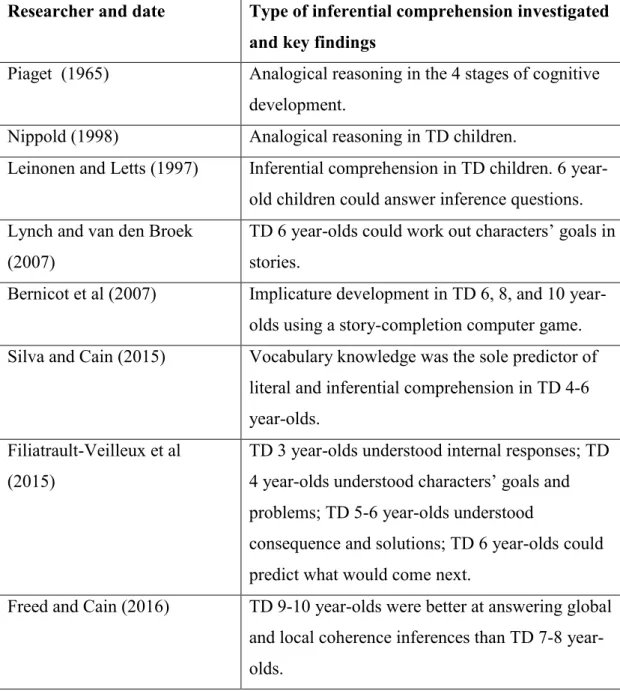
Table 1.1 Summary of the literature reviewed for inferential comprehension in typically-developing (TD) children
Researcher and date Type of inferential comprehension investigated and key findings
Piaget (1965) Analogical reasoning in the 4 stages of cognitive development.
Nippold (1998) Analogical reasoning in TD children.
Leinonen and Letts (1997) Inferential comprehension in TD children. 6 year-old children could answer inference questions. Lynch and van den Broek
(2007)
TD 6 year-olds could work out characters’ goals in stories.
Bernicot et al (2007) Implicature development in TD 6, 8, and 10 year-olds using a story-completion computer game. Silva and Cain (2015) Vocabulary knowledge was the sole predictor of
literal and inferential comprehension in TD 4-6 year-olds.
Filiatrault-Veilleux et al (2015)
TD 3 year-olds understood internal responses; TD 4 year-olds understood characters’ goals and problems; TD 5-6 year-olds understood
consequence and solutions; TD 6 year-olds could predict what would come next.
Freed and Cain (2016) TD 9-10 year-olds were better at answering global and local coherence inferences than TD 7-8 year-olds.
1.3.1 Developmental stages of analogical (or inductive) reasoning
Nippold (1998, p59) states that: “analogical reasoning occurs when an individual perceives similarities and differences between objects or events and uses that information to solve problems or to learn about the world.” It is a basic human language and cognitive ability that begins in infancy, improves most in the school age and adolescent years, and continues to develop into old age. Verbal analogical reasoning is a mental construct where cognition and language converge. A child requires competence in both areas to be able to solve analogical reasoning problems. Both word knowledge and world knowledge are crucial for the development of verbal analogical reasoning.
Jean Piaget (1965), a French psychologist working at the Binet institute, was the first researcher to make a systematic study of children’s cognitive development starting in the 1920s. From detailed observations of children’s behaviour whilst learning and from the implementation of a series of ingenious cognitive tests he was able to produce a comprehensive theory of children’s cognitive development. The three basic components to this theory are: schemas (which are the building blocks of knowledge), adaptation processes that enable the transition from one stage to another (these are equilibrium, assimilation and accommodation), and the identification of four specific stages of development (sensorimotor, preoperational, concrete operational and formal operational). In terms of analogical reasoning he
demonstrated that ‘pre-operational’ children (aged 5-6) could sort pictures into pairs of things that go together. ‘Concrete operational’ children (aged 7-10) could sort two by two matrices where all four pictures go together, but sometimes needed to use trial and error strategies. ‘Formal operational’ children (aged 11-12) could do the two by two matrices without using trial and error strategies and they also gave superior explanations for their matching reasons than the younger children. Nippold (1998) reports on a series of studies in the development of analogical reasoning. Overall findings are performance on analogical reasoning tests steadily increases with age; abstract analogies are more difficult to solve than concrete analogies; younger children are more easily deceived by plausible foils; and higher
cognitive, general language and reading ability and a more reflective problem-solving style correlate to higher analogous reasoning ability.
A series of studies that test inferential and idiom comprehension in typically
developing and communication impaired children will now be outlined. They will be critically evaluated at the end of each section, as there are recurring methodological issues in many of the studies.
1.3.2 Developmental stages of verbal inferential comprehension in typically- developing children
Botting and Adams (2005) define inferencing as the abstraction of information that is not explicitly presented. They propose that good inferencing skills require: good comprehension of presented material, the ability to meta-represent (grasp more than one concept at the same time) and the ability to take someone else’s perspective (including understanding their moods and behaviours). They also state that
inferential comprehension begins as young as 2 years of age and continues up until the age of 15.
Letts and Leinonen (2001) propose that the ability to answer linguistically and cognitively complex questions (such as inference) develops as children get older. However, they stress that a clear developmental progression in inferential
comprehension has yet to be established and that comprehension of language in real communicative contexts is a complex process that continues to develop into
adolescence. They highlight that different question types pose different demands on comprehension. For example, developmentally, ‘What’s that?’ questions are easier to understand than ‘Why?’ and ‘How?’ questions as the latter require understanding of cause and effect (a cognitive skill). In addition, inferential comprehension questions vary in terms of how much non-linguistic context and general knowledge is needed to answer them correctly.
Milosky (1992, in Leinonen and Letts 1997) describe how children’s comprehension develops by increasingly sophisticated use of context and acquired knowledge. Leinonen and Letts (1997) outline how children’s ability to combine information to work out meaning (ie to make inferences) develops as they become more able to make connections on the basis of more subtle clues (both grammatical and pragmatic) and beyond the immediate context. They found that most 6 year-old
children in their study were already able to answer many questions involving inference.
Lynch and van den Broek (2007) found that children as young as 6 were able to perform on-line ‘think-aloud’ inferencing tasks that involved working out the characters’ goals in stories.
Bernicot et al (2007) assessed the developmental order of nonliteral comprehension (including implicatures) of 6, 8 and 10 year-old children in a story-completion task computer game. The results demonstrated that nonliteral language comprehension and metapragmatic knowledge were acquired in different orders. For comprehension, the developmental order of acquisition was: semantic-inference implicatures, indirect requests, idioms, sarcastic-inference implicatures. For metapragmatic knowledge, the order was: idioms, implicatures with a sarcastic or semantic inference, indirect requests. Researchers have established that difficulties making inferences in typically developing children are not solely due to limited verbal memory or world
knowledge. Their inability to select the information relevant to making the inference was identified as the most likely source of difficulty (Oakhill and Cain, 2012). Pike et al (2013) found that working memory was a significant factor in the
development of inferential comprehension in school-aged children as it helped them to link relevant prior information with newly presented information.
Silva and Cain (2015) tested 82 typically developing 4-6 year-old children on literal and inferential questions linked to a picture book. The children’s performance on both types of questions correlated with grammatical and receptive vocabulary knowledge. The inferential questions also correlated with verbal working memory. However, further statistical analysis demonstrated that, once age and cognitive level were taken into account, vocabulary knowledge was the sole predictor of both literal and inferential comprehension.
Filiatrault-Veilleux et al (2015) did a scoping review of the literature on the development of inferential comprehension, specifically causal inferences in story grammar in 3-6 year-old children.
They outline the structure of a story and corresponding inferential questions as: 1. A setting
2. A triggering event: What is X’s problem?
4. A goal that motivates the character’s actions during the narrative: What does X want?
5. Attempts to solve the problems as well as their consequences: What could X do? What do you think will happen next?
6. A resolution to the story: Did X get what he wanted?
They summarized 16 peer-reviewed journal articles published from 1985-2012 looking at inferential comprehension in stories and produced a milestones chart of development in this area: At 3 years children are able to understand internal
responses, for example they understand the link between situations and emotions; at 4 years children understand the purpose or goal of the characters and some problems experienced by them; at 5-6 children understand consequences of actions and simple solutions to problems; at 6 years children are able to predict what will come next. However, they concluded that more studies were needed for all of the age groups apart from the 3 year-olds.
Freed and Cain (2016) found a developmental progression in verbal inferential comprehension in a story format in year 3 (aged 7 to 8) and year 5 (aged 9 to 10) children. All of the children performed better when the questions were asked after segments of the story rather than at the end of the complete story. The older children were better at answering questions that involved global and local coherence
inferences than the younger children.
1.3.3 Developmental stages of reading inferential comprehension in typically developing children
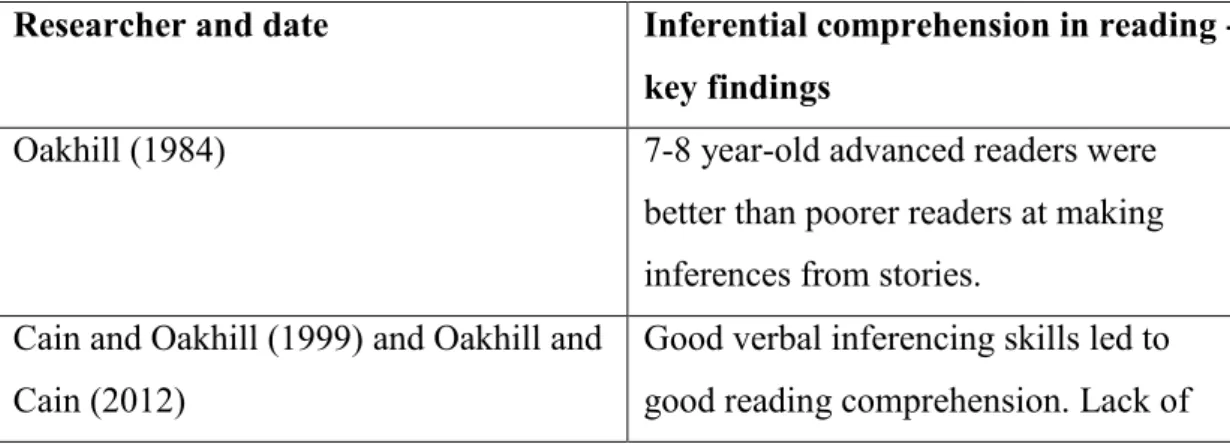
Table 1.2 Summary of the literature reviewed for reading inferential comprehension in typically-developing (TD) children
Researcher and date Inferential comprehension in reading -key findings
Oakhill (1984) 7-8 year-old advanced readers were
better than poorer readers at making inferences from stories.
Cain and Oakhill (1999) and Oakhill and Cain (2012)
Good verbal inferencing skills led to good reading comprehension. Lack of
general knowledge, poor vocabulary and cognitive delays did not cause
inferencing difficulties.
Hudson and Slackman (1990) Younger children made contextual inferences better than text-based inferences.
Botting and Adams (2005) state that inferencing ability is closely related to educational progress. Verbal inferential comprehension is crucially important for later reading comprehension. Text comprehension is more difficult than verbal comprehension as the decoding of written language places additional cognitive demands on the processing system (Lucas and Norbury, 2015). There is a wealth of literature on the development of inferential comprehension in reading. Norbury and Bishop (2002) point out that research into inferential comprehension in children with reading comprehension has developed in parallel with the research into verbal
inferential comprehension. These children are typically developing and are identified by screening of mainstream school populations. The assessment is usually a type of dialogic reading, where the adult asks the child questions whilst reading a classical narrative-structured story (Filiatrault-Veilleux et al, 2015). Many children identified as poor reading comprehenders have age appropriate word-reading and decoding skills, but are significantly impaired in reading comprehension compared with their peers. Verbal and written language are closely inter-related but there is disagreement amongst researchers as to which is the primary cause of difficulty in impaired
reading comprehension.
‘The Simple View of Reading’ (Gough and Tunmer, 1986) states that both decoding skill and verbal language abilities such as vocabulary and grammar predict reading comprehension skills for typically developing children.
Oakhill (1984) reported that 7-8 year-old advanced readers were very good at
making inferences. Conversely, children with poor reading comprehension skills had difficulty making inferences from a story they had heard or read. They still had difficulty when the text was available to them during the questions, indicating that their difficulty with inferences could not be attributed simply to working memory difficulties. She suggested that the poor comprehenders’ inferential comprehension
difficulties reduced their ability to form an integrated and coherent mental model of what they had read or heard.
Cain and Oakhill (1999) tested three groups of children (matched-age skilled and less skilled reading comprehenders, and a verbal comprehension-age matched group) on text-connecting and gap filling inferences. The less skilled reading
comprehenders were impaired in making both types of inferences when answering questions from memory compared with peers matched for age and reading accuracy, and significantly worse than younger children matched for reading comprehension ability on text-connecting inferences. When the text was available (so not involving verbal memory), they continued to have difficulty with gap-filling inferences. The results indicated that good verbal inferencing skills were a plausible cause of good reading comprehension ability rather than vice versa. In addition, failure to make inferences was not attributable to lack of relevant general knowledge.
Oakhill and Cain (2012) demonstrated that inferential comprehension predicted reading comprehension ability even after word reading, vocabulary and cognitive ability were taken into account.
Hudson and Slackman (1990, in Adams et al, 2001) discovered that younger children made contextual inferences (requiring integration of existing world knowledge into the text) better than text-based inferences (only recoverable from information in the text) but that text-based inferencing improves with age.
1.3.4 Verbal inferential comprehension difficulties in children with communication impairments.
It has been recognised for over two decades that children with communication impairments have difficulty in making verbal inferences (Adams et al, 2009). Some studies link inferential comprehension difficulties to impaired grammatical
understanding, receptive vocabulary and working memory. These are key difficulties for children with specific language impairment, so it is not surprising that these children have inferential comprehension problems (Lucas and Norbury, 2015).