DATA COACHING: MEASURING THE EFFECTS OF FEEDBACK ON LOW-STAKES TEST MOTIVATION
A Thesis
Submitted to the Faculty of
Drexel University by
Nancy Snyder in partial fulfillment of the requirements for the degree
of
Doctor of Education June 2012
Copyright 2012
Abstract
Data Coaching: Measuring the Effects of Feedback on Low-Stake Test Motivation Nancy Snyder, Ed.D.
Drexel University, June 2012 Michel Miller, Ph.D.
This study examines the relationships between students’ academic motivation, evidence of achievement as measured by assessments and the effects of feedback in mediating effort. Policy makers currently view student achievement is as synonymous with proficiency on standardized tests. Testing students as a means of determining educational productivity is a standard educational practice that has become more significant since the establishment of NCLB. Increasingly, assessments have become accountability measures for schools, a trend that will become even more personal to teachers in Pennsylvania as the state embarks on a new teacher evaluation tool, which uses student achievement data as a “significant factor” in performance ratings. While these assessments then become high-stakes for schools, such measures may carry little meaning for the students themselves. Research has indicated that learning motivation and ability beliefs decline as students reach middle school. Studies have also shown that student test effort impacts achievement scores. Valid interpretation of test scores is dependent on students’ giving full effort.
According to expectancy-value theory, examinee effort is a construct of value and expectancies. This mixed-method, quasi-experimental study tested the effectiveness of a feedback protocol centered on coaching conversations with 36 urban middle school students. The intervention sought to increase task importance and therefore student effort. In a pretest-posttest design using the Student Opinion Scale, students rated their
examinee effort and the importance they ascribed to a low-stakes test. Results indicated that this feedback had little impact on student reported importance or effort. Comparison with a control group, subject effort showed greater decrease
Analysis of field notes indicated that confounding variables may have influenced these results. Students who reported positive test effort gave several reasons. In addition to ability beliefs that increased their expectancy for success, students named parents and peers as influencing their perceptions of test importance. Most often, however, students attributed positive test effort to their teacher. Cost of time and energy was most often cited as a reason for failing to give full effort, but negative effort was also attributed to teachers. Here students described adversarial relationships and ineffective classroom practices as negatively affecting effort in class and during tests. Confirming studies of classroom goal structure, students reported that classrooms that focused on performance, rather than mastery goals, negatively influenced their academic achievement and ensuing test effort.
The findings of this study are instructive to school personnel who wish to maximize student effort in testing situations. Using the Student Opinion Scale to assess student effort and importance on tests would enhance instructional practices as well as assist in valid interpretation of test scores, particularly in non-consequential test
situations. As students most frequently cited cost as the reason for their failure to give full effort, schools should carefully consider what assessments are necessary to give and ensure that curricula are aligned to assessment material. Because much about current testing practices is mandated, schools should carefully consider the frequency and use of non-mandated tests, particularly those that are low-stakes. Finally, qualitative data endorses the use of mastery goals in promoting full student effort through classroom instruction that minimizes energy costs and improves ability beliefs, task value, and expectancies for success.
The Dissertation Committee for Drexel University
certifies that this is the approved version of the following dissertation:
DATA COACHING: INCREASING STUDENT MOTIVATION ON LOW-STAKES TESTS
Committee:
______________________________ Michel Miller, Supervisor
______________________________ Joyce Pittman
______________________________ Mary Jo Grdina
Dedication
This dissertation is dedicated to students who spend their childhoods being measured and to the school personnel who encourage and support them.
Acknowledgements
I would like to acknowledge the students, teachers, and administrators who participated in and supported this dissertation study. I also wish to thank the chair of my committee, Dr. Michel Miller for her advice and support in completing this project. Finally, I am indebted to my husband, David, my daughters Mallory and Haley, and many friends; all who listened and at least feigned interest as I droned on about this topic.
Table of Contents Abstract ... ii List of Tables ...x List of Figures ... xi 1. INTRODUCTION ...1 1.1 Problem Statement ...2
1.2 Purpose and Significance of the Study ...4
1.3 Research Questions ...5
1.4 Conceptual Framework ...5
1.5 Definition of Terms...7
1.6 Assumptions, Limitations, and Delimitations ...9
1.7 Summary ...10 2. LITERATURE REVIEW ...11 2.1 Introduction ...11 2.2 Conceptual Framework ...12 2.3 Adolescent Motivation ...15 2.4 Test Motivation ...30 2.5 Assessment Feedback ...41 2.6 Synthesis of Literature ...46
3. ACTION-ORIENTED RESEARCH METHODOLOGY ...50
3.1 Introduction ...50
3.3 Population Description...51
3.4 Site Description ...54
3.5 Site Access ...57
3.6 Research Design and Rationale ...57
3.7 Research Methods ...58
3.8 Stages of Data Collection...58
3.9 Description of Instruments ...63
3.10 Procedures ...69
3.11 Quantitative Data ...69
3.12 Qualitative Data ...72
3.13 Ethical Considerations ...73
4. FINDINGS AND RESULTS ...75
4.1 Participant Demographics ...75
4.2 Findings...76
4.3 Student Opinion Scale...76
4.4 Field Notes ...89
4.5 Exit Questionnaires ...99
4.6 Results ...103
4.7 Reliability and Validity ...10
4.8 Summary ...106
5. INTERPRETATION, CONCLUSIONS AND RECOMMENDED ACTIONALBE SOLUTIONS ...108
5.1 Interpretation of Findings and Results ...108
5.3 Research Question 1 ...122 5.4 Research Question 2 ...123 5.5 Research Question 3 ...124 5.6 Recommendations ...125 5.7 Summary ...127 LIST OF REFERENCES ...128
APPENDIX A: THE STUDENT OPINION SCALE ...135
APPENDIX B: EXIT QUESTIONNAIRE ...137
APPENDIX C: WHOLE GROUP PRESENTATION SLIDES ...139
APPENDIX D: FIELD NOTES: DATA COACHING FORM ...142
List of Tables
1. Percentage of Students in Schools Eligible for Free or Reduced-Price Lunch ... 54
2 . Summary Statistics for Pretest and Posttest Student Opinion Scale ... 77
3. Repeated Measures ANOVA for the Importance Subscale ... 79
4. Repeated Measures ANOVA for the Effort Subscale... 81
5. Means of Difference Scores ... 83
6. Average Change in Importance Scores (Pretest – Posttest) ... 86
7. t-tests of Mean Differences in Importance Change Scores ... 87
8. Average Change in Effort Scores (Pretest – Posttest) ... 88
9. T-tests of Mean Differences in Effort Change Scores ... 88
10. Student Feelings Regarding Assessment Profile by Achievement Pattern ... 90
11. Student Comments for Importance by Assessment Profile ... 92
12. Positive Student Comments for Effort by Assessment Profile & Coaching Session . 95 13. Attributions for Positive Effort Disaggregated by Assessment Profile and Session .. 96
14. Attributions for Negative Effort Disaggregated by Assessment Profile and Session . 98 15. Responses to Exit Questionnaire Regarding Importance, Effort and Change ... 101
16. Responses to Exit Questionnaire Regarding Helpfulness ... 102
17. Summary Statistics for Posttest Importance scores by Assessment Profile ... 116
List of Figures
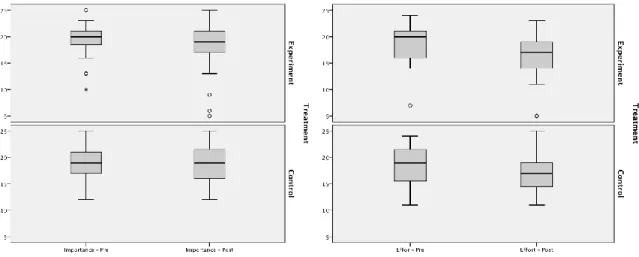
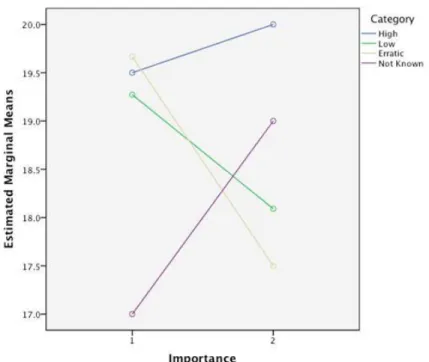
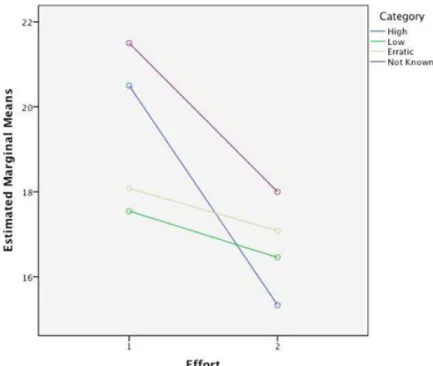
Figure 1. Conceptual Framework ... 7 Figure 2. Framework for the Literature Review ... 14 Figure 3. Competency beliefs for males and females in math, language arts and sports from grades one through twelve. ... 22 Figure 4. Timeline for the research study ... 63 Figure 5. Box plots of normality for the importance and effort subscale, pretest and posttest by group ... 78 Figure 6: Estimated marginal means of importance ... 80 Figure 7. Estimated marginal means of effort. ... 82 Figure 8. Estimated marginal means of importance within experimental subgroups by assessment profile ... 84 Figure 9. Estimated marginal means of effort within experimental subgroups by
assessment profile ... 85 Figure 10. Attributions for positive test importance disaggregated by assessment profile type ... 93 Figure 11. Attributions for negative test importance disaggregated by assessment profile type ... 94
Chapter 1: Introduction Introduction
As the policy debate continues regarding the impact of the landmark legislation known as No Child Left Behind (NCLB), schools struggle to meet the rigid demands of testing and accountability. The intention of the law, to increase student achievement levels across the country, is commendable, but unrealistic goals have created unintended consequences for teachers and students (Amrein-Beardsley, 2009; Eckes & Swando, 2009). Teachers are faced with ethical dilemmas of whether to narrow the scope of their teaching in favor of improving test scores, or to broaden their instruction to include untested, but critical, skills (Cochran-Smith & Lytle, 2006; Crocco & Costigan, 2007). Some have also questioned the reasonableness universal proficiency expectations since assessment theory describes large-scale achievement patterns as predictably falling on a “bell-shaped curve” and years of testing has reinforced this notion (Davies, 2008).
The threats of accountability measures significantly affect schools. In some cases, teachers make decisions based not on what they feel is best for their students, but what will bring about necessary assessment scores (Cochran-Smith & Lytle, 2006, p. 683). The pressure of accountability as measured by assessments is so strong that cheating and “gaming” practices are often employed to increase test score sometimes at the expense of actual learning (Amrein-Beardsley, 2009). According to the National Center for Education Statistics, in 2008 more than 32% of teachers reported that they felt concern about their job security because of their students test scores, an increase from 28% in 2000 (United States Department of Education, 2008).
This concern is more pressing in schools that serve high poverty populations. Here, students are more likely to attend schools labeled as “failing”(Murnane, 2007). These are schools that work desperately to meet achievement standards that will keep them from suffering the most punitive measures of school reform: take over or closure. These issues become enmeshed with debate regarding racial equity and access,
particularly among minority students. Much discussion has centered on this “achievement gap” (Braun, Chapman, & Vezzu, 2010; Johnson & Kritsonis, 2010), the significant and somewhat stable differences in achievement scores between white and non-white students across the country. NCLB seeks to redress this gap by investing considerable resources and attention to improving teacher quality (Darling-Hammond, 2009), but fails to consider improving student behaviors that impact high-stakes assessments. Problem Statement
School and student improvement based on rigid, mandated testing is at the foundation of NCLB. Yet after nearly two decades of implementation, testing alone has not been successful in achieving school reform. Far from improving educational
opportunities, “low-income students of color have been the primary victims of high-stakes testing policies that determine promotion, placements, graduation, and base school ranking and sanctions on student test scores” (Darling-Hammond, 2010, p. 74). Schools, school districts, and states are mandated to increase school effectiveness; unfortunately some of the unintended consequences of this high-stakes environment have created the opposite.
The reliance on student achievement data to determine school successfulness is predicated on the assumption that student test scores are reliable, yet research has
indicated that as test-taking motivation decreases, so do both test performance and test score validity (Wise & DeMars, 2005). Given the impact that achievement scores have for students and schools, it is important to know that results are an accurate reflection of student knowledge.
Whether a test is considered high or low stakes is largely dependent upon the subject of consequence. A test may be high stakes for one student and low for another. The Scholastic Aptitude Test (SAT) is generally considered high stakes for students as these scores are used by institutions of higher learning to sort them for admission. The same tests are considered low stakes for teachers since they are generally not used in determining specific teacher effectiveness. Similarly, accountability tests typically are of greater consequence for teachers and schools than they are for students. For some
students, these tests may carry a personal consequence, but not the formal consequence of a grade. Students are not always aware of the high-stakes nature of these assessments, or how test data is used to determine student education decisions—including course
selection, school application processes, and retentions. Without this knowledge, they become disengaged from assessments, resulting in score deflation. Brown and Walberg (1993) noted that high volume of testing causes students to care little about assessments that don’t have a direct effect on their grades or other systems of accountability. They postulated that this might also explain poor performance of U.S. students on international assessments as compared to students of other developed countries. Systems of
accountability use summative test scores to measure school effectiveness, but students may give minimal effort if they do not value assessment results.
Purpose and Significance of the Study
The purpose of the study was to determine the extent that a coaching intervention would improve student engagement on low-stakes tests. Schools designated as low performing constantly seek solutions that will address the achievement problem, and often rely on remediation classes that are intended to provide students with test
preparation strategies or remedial skills as a means of addressing achievement concerns. This approach has the unintended consequence of assigning students to less academically rigorous instruction, potentially contributing to the achievement and engagement
problems. Wise (2009) found that despite validity concerns caused by student disengagement from testing, data from these tests is used to determine instructional programming, systems accountability, and accreditation. Wise further contended that threats to assessment validity increased commensurately with the number and percentage of students who do not give their best effort. This variable is hard to determine and has rarely been considered.
Little research is available that describes to what extend student understanding of high stakes assessments and data are related to intrinsic motivation and goal setting. While much research exists on student motivation both in terms of theoretical models and practical application, few studies have considered how schools might use this knowledge to leverage validity of high stakes tests. This study aimed to determine the extent that student motivation on tests could be manipulated by informing students about the uses of assessment data, and by giving them feedback on their progress toward proficiency. The findings may inform school leaders about the effectiveness of coaching as an intervention strategy for improving student engagement on assessments.
Research Questions
This study addressed three central questions:
1. What effect does a data coaching intervention have on student test engagement?
2. What aspects of data coaching do students report as most helpful in increasing task value?
3. In what ways do students report that data coaching affects their attitudes toward low-stakes assessments?
Conceptual Framework
The conceptual framework for this study was based on research of learning motivation, the use of feedback in learning situations, and relatively recent studies regarding examinee effort during low-stakes tests. Of these research areas, learning motivation was the broadest, encompassing both educational and psychological studies. While several theories of motivation are considered in the literature review, this study is best understood through expectancy value theory. Eccles et al. (1983) explained
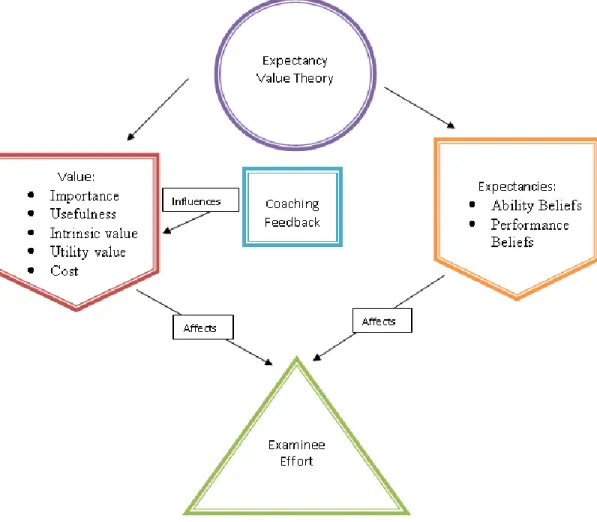
achievement choices as constructs of both the expectancy of success and relative value of the task. Expectancy and value “also influence performance, effort, and persistence” (Wigfield & Eccles, 2000, p. 69). The term “expectancies” describe students’ perceptions regarding how well they will perform on tasks and is related to ability beliefs. “Value” is defined by the perceived importance and usefulness of a task, the intrinsic and utility values, and the cost of time and effort (Eccles, et al., 1983). Wise and DeMars (2005) used this theoretical framework to explain the results of their study on examinee effort during low-stakes tests. On such assessments students have little direct consequence for
their performance, diminishing the value they place on the test. The researcher hypothesized that weak value beliefs may explain why some students report low engagement on these types of exams.
This study was based, in part, on the researcher’s experience as an educator, literacy coach, and school administrator in an urban school setting. Using data to determine student interventions and to monitor overall school effectiveness has been challenging due to the unreliability of results. While ample assessment points and data management systems provide easy access to a large body of information on groups and subgroups of students, the daily interactions with students often challenges the
conclusions that the data suggests. A significant number of students’ formative and summative assessments show high and low scores within similarly designed tests and within short time spans.
Informal, anecdotal data collected from students, particularly those whose data show erratic patterns, have revealed that lack of student effort is given as one reason for low scores, particularly when they are accompanied by higher data points. This evidence has brought into question the reliability of the measures. Conversations with students have subsequently revealed that they lack understanding regarding the importance of valid data, how tests are constructed, and how their own data impacts both their current and future school experiences.
The goal of this study was to explore the effectiveness that coaching
conversations had on students within a particular setting, and whether student-reported engagement increased on assessments following the intervention The protocols for discussing data with students included informing students about the nature of the
assessments they will be taking, how the data will be used, and how data can be interpreted. Counseling on individual achievement was focused on goal setting, motivation, and accessing supports to increase achievement. Figure 1 shows the
conceptual framework used in this study. Coaching feedback was used to mediate student value as a means of increasing examinee effort.
Figure 1. Conceptual Framework Definition of Terms
Achievement gap: The achievement gap is a term used to describe the disparity in achievement levels, as determined by standardized test scored, between demographic
groups of students. Traditionally, these groups have focused on racial differences; however Ramirez and Carpenter (2005) have found that multiple gaps exist both within and between subgroups, indicating that the gap cannot be correlated with race alone. For the purposes of this study, the achievement gap was defined as the average difference in achievement between students who attend high poverty schools and those who do not.
Data coaching: This is the practice of teaching students about the culture and norms of standardized testing and the accompanying accountability systems. The procedures are both informative and reflective as students review their own data and set goals.
High poverty schools: These schools are identified as such when more than 75% of students qualify for free or reduced lunch programs. A student qualifies for subsidized lunch programs if they come from a household with an income at or below 130% of the poverty threshold for free lunch, or between 130% and 185% of the poverty threshold for reduced-price lunch (United States Department of Agriculture, 2009).
High stakes tests: High stakes tests are those that have serious consequences for students or educators (American Educational Research Association, 2000, p. 24). In public schools many standardized achievement tests are inconsequential to students while educators bear total accountability. Some tests, particularly at the high school level are becoming high-stakes for students. Pennsylvania’s Keystone Exams are an example of high stakes assessments for students while the Pennsylvania System of School
Assessment (PSSA) would be considered high stakes for educators.
Low stakes tests: In the high-stakes, low-stakes dichotomy, low stakes tests are those that have little consequence to students. In U.S. public schools NCLB has expanded
the emphasis on low-stakes tests as a means of holding schools accountable for the quality of education they provide students (Wise & DeMars, 2005).
Test-taking effort: Brown and Walberg select a more common definition as, “students’ propensity to engage in full, serious, and sustained effort on academic tests” (1993, p. 133). Test-taking effort has also been defined by Wise and DeMars (2005) as “a student’s engagement and expenditure of energy toward the goal of attaining the highest possible score on the test” (p.2). For the purposes of this study, test motivation was self-reported as “engagement and effort.”
Assumptions, Limitations, and Delimitations
While the framework for developmental assets is based on building social and emotional capital in students who have traditionally been described as “at risk”, it is assumed that all students can benefit from these strategies. The relationships that students developed with the data coach as a result of this study may have had some influence on student motivation, but were not measured; therefore, they are considered unintended benefits of the study construct.
Due to concerns about test stress, the subjects of this study were limited by age. Data was not collected on students below fifth grade. Modified coaching conversations were conducted, however, with students in fourth grade. Similarly, students beyond eighth grade were also excluded. Results from this study do not reveal whether data knowledge is sustained after a year of implementation and to what extent students will be able to internalize test motivation if they do not have access to their own data in the future.
This study was confined to students who attended high poverty, urban
elementary/middle schools. More research is needed to determine if this improvement strategy is equally successful in schools with different demographic characteristics. Summary
As schools become increasingly accountable for student achievement, strategies for capturing the best scores that students can attain have become imperative. This study determined whether and to what extent informing students about testing and data
collection combined with examining student individual data and setting learning goals helped students to become motivated and engaged in what is otherwise low-stakes testing situations. The ensuing review of the literature considered various theories of motivation as they related to both learning and testing environments, the impact of low examinee motivation, and the use of feedback as part of a data coaching intervention.
Chapter 2: Literature Review Introduction
This study investigated the relationships between students’ academic motivation, evidence of achievement as measured by summative assessments, and the effects of feedback in mediating effort. Policy makers currently view student achievement as synonymous with proficiency on standardized tests. While these assessments then become high-stakes measures for schools, Wise and DeMars (2005) found that such measures carry little meaning for the students themselves. The authors claimed that when test-takers were not engaged in the assessment process, both test performance and test validity decreased.
The concern about proficiency is greater at the transition to middle school or junior high. During these critical years, motivation, interest in learning, and effort decline across subject areas. Some studies indicated that these changes are more concerning for African American and Hispanic students (Steinberg, Dornbusch, & Brown, 1992; Warner & Phelps, 2008). While African American students showed similar levels of engagement and enthusiasm for learning in elementary school, by adolescence, they became much less committed to their school experience, seeing “less of a connection between academic performance, their self-worth, and career success than other students”(Warner & Phelps, p. 72). While all schools can benefit from a deeper understanding of student motivation as it relates to achievement, the case is more imperative for schools serving high populations of minority students.
Conceptual Framework
The conceptual framework for this study was based on literature regarding learning motivation, assessment motivation, and the use of feedback with students. For some number of students, test results conflict with expectations. Many students show enough effort that their scores merely confirm what their parents and teachers already know. This is particularly true in younger grades where students are eager to please adults. With some adolescents, however, scores are disappointingly low. With a wide array of data now available through data warehousing, a significant number of students’ formative and summative assessments show fluctuation within similarly designed tests and within short time spans leading to questions about the validity of results.
Students have reported lack of effort as one reason for low scores, particularly when these scores are higher at other points. Conversations with students have
subsequently revealed a lack of understanding about the importance of valid data, how tests are constructed, and how their own data impacts both their current and future school experiences. This fact is concerning given the importance of test scores as accountability tools. Whereas school staff must focus on achievement and take seriously the tools used to measure progress, students do not all share these concerns. If student motivation impacts test results, what can schools do to ensure that all students give their best effort?
An expectancy-value model of motivation helps explain why students may not give their best effort on assessments. According to this model, expectancies and values are influenced by a student’s ability beliefs, their perceptions of the difficulty of the task, their goals, self concept, and affective memory (Eccles, et al., 1983). These expectancies and values then affect effort, achievement, performance, and persistence. Students who
have low competency beliefs may predict that they cannot do well, and therefore will not try. Weak value beliefs would account for students who may have the ability, but either do not see the purpose in doing well or view the cost of time and effort as being too high.
The question is not whether schools can affect student effort, but rather how. Some students, because of low ability beliefs, will require intensive support and encouragement beyond school staff. These students were not the focus of this
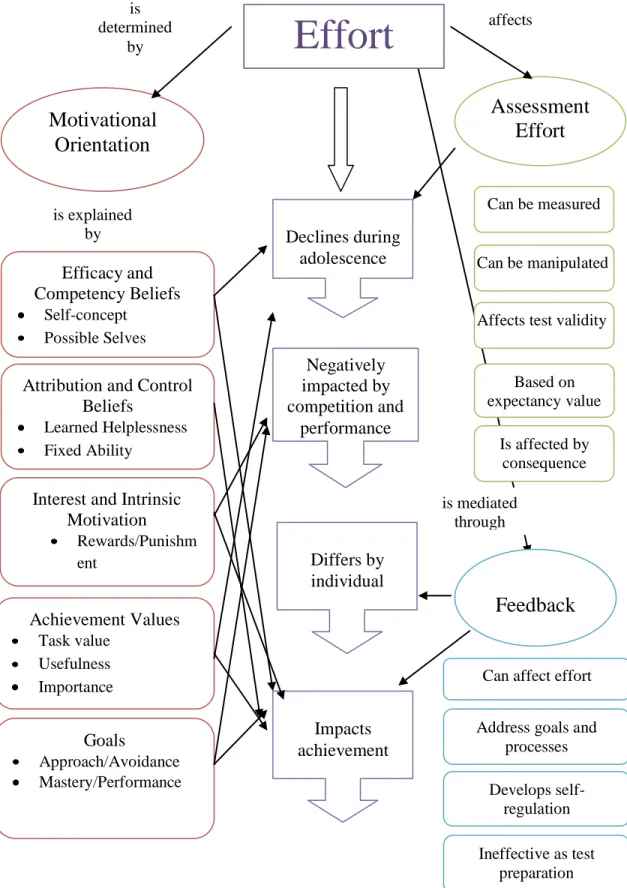
intervention. This study aimed to address low task beliefs among students who have the ability to perform well but don’t, either because they see little use in these assessments, or because they are unwilling to expend the time and concentration. To what extent will coaching students on the purpose and personal value of accountability tests be sufficient in prompting best effort? Figure 2 offers a graphical representation of the ensuing review of literature.
is mediated through
Can be measured
Can be manipulated
Affects test validity
Based on expectancy value Is affected by consequence
Assessment
Effort
is explained byMotivational
Orientation
Achievement Values Task value Usefulness Importance Goals Approach/Avoidance Mastery/Performance Efficacy and Competency Beliefs Self-concept Possible Selves Attribution and ControlBeliefs
Learned Helplessness Fixed Ability
Interest and Intrinsic Motivation
Rewards/Punishm ent
Self-regulation
Can affect effort
Address goals and processes Develops self-regulation Ineffective as test preparation Differs by individual Impacts achievement Declines during adolescence Negatively impacted by competition and performance is determined by affects
Effort
Feedback
Literature Review
In order to better understand how effort translates into demonstrated achievement, this literature review examined current research regarding motivation theories, the
relationship between effort and test taking, and the effects of feedback on motivation. Literature on motivation and feedback is instructive in the formation of the data coaching protocol since the intention of this intervention is to improve student motivation and engagement. Literature on assessment motivation highlighted the concern, which is the foundation for the study.
Although student motivation has been studied at all age levels, concern about the decline in motivation in middle school students bears examination. The studies have tested motivational theories with a specific age group and offered insight regarding ways that educators could influence learning motivation during this critical period. Assessment motivation is a subcategory of motivational research that requires separate investigation. This body examined how lack of motivation and test engagement has statistical effects on achievement scores. Findings challenge the assumption that high-stakes accountability testing is valid and reliable. Finally, research studies that examined the effectiveness of feedback are considered as possible ways to address low examinee motivation. This research informed the later development of an intervention protocol that is the subject of this dissertation study.
Adolescent motivation. Social cognitive and organismic models of motivation have attempted to describe the forces behind action including beliefs, values, goals, and interests. Social cognitive models have described processes and activities that explain students’ choice, engagement, persistence, help seeking, and school performance
(Pintrich & Schunk, 2002). Organismic models examined how individuals internalize values and regulate their behavior as they interact with their environment (Deci & Ryan, 1996). Between these two models, a wide array of theories regarding motivation and academic achievement exist. The research surrounding these theories is voluminous, and the discussion in this literature review is not intended to be exhaustive. In creating a motivational intervention, the sum of this knowledge is instructive in framing motivation variables and is critical in avoiding actions that might ultimately be antithetical to the desired outcome.
Pintrich (2003) organized the concepts of motivational theories into five
constructs: efficacy and competency beliefs, attributions and control beliefs, interest and intrinsic motivation, achievement values, and goals. Efficacy and competency beliefs center on self-concept and a student’s ability beliefs (Markus & Nurius, 1986).
Attribution theory describes subjects’ perceptions of the reason that an event occurred either by ability, effort, or luck. In the context of achievement, failure is attributed to low ability or lack of effort, while success is considered the result of ability or effort (Weiner, 1985). Intrinsic motivation considers whether the impetus for action is located within a person (intrinsic) or is in response to external factors (extrinsic). This motivational orientation in turn has an effect on an individual’s self-regulation ability (Deci & Ryan, 1996). While interest describes what children like, students ascribe value to what is useful. Expectancy-value theorists describe motivation as a construct of students’ ability beliefs and their perceptions of a task’s usefulness, importance, or interest value.
(Wigfield & Eccles, 2000). In motivational literature, goals were described as either performance oriented or mastery oriented. In the case of the former, goals are focused on
demonstrating high ability as compared with others and using these comparisons to make judgments of ability and performance. Students derive a sense of accomplishment from doing better than others and exceeding normative expectations. Conversely, mastery orientation describes a focus on self. Students are oriented toward self-improvement and in mastering a difficult task. Satisfaction is derived from interest and in challenge (Meece, Anderman, & Anderman, 2006; Wigfield & Cambria, 2010).
Studies regarding middle school students and early adolescents are critical in explaining the phenomenon of motivational decreases and shifts in orientation at this age. Additional work examining the relationships between gender and ethnicity are important considerations for the sample of this study. Testing motivational theories provides guidance in constructing interventions to engage students in academic achievement striving and assessment motivation.
Competency beliefs and the transition to middle school. Several researchers have studied the effects of changes in student perception and classroom orientation in the transition from elementary to junior high school or middle school. Harter, Whitesell and Kowalski (1992) conducted two studies that contribute to the understanding of this idea. The first considered the effect of transition on students’ academic self-concept and motivation. This study surveyed 463 students from across two school districts using several tested tools and found many student perceptions shifted during the transitional year. Half the students maintained similar competency beliefs from the year prior, but half were likely to change their perceptions nearly equally to the positive or negative. Changes in competency beliefs were accompanied by changes in motivational
orientation. Students who felt more competent showed greater intrinsic motivation while those whose beliefs declined were less intrinsically inclined.
The second study in this report considered whether perceived changes in the school environment were related to competency beliefs. The sample for this study consisted of 338 sixth, seventh, and eighth graders in a single middle school. Findings suggest that students who perceive the school as emphasizing performance and
competition showed higher extrinsic motivation and higher anxiety than those who did not. Together these studies show that student perceptions of middle school environments as well as competency beliefs have an impact on student motivation.
Competency beliefs and goal orientation. Similarly, Anderman and Midgley (1997) considered the changes in achievement goals, classroom goal structure, and academic competency perceptions of students following a transition from elementary school. A multivariate analysis was conducted on students grouped into high and low ability groups based on a standardized measure of cognitive ability. This analysis considered personal task goal orientation, personal performance goal orientation, perceived classroom performance goal structure, perceived academic competence, and grades.
The findings demonstrate a dramatic decline in student perceived confidence in middle school compared to ability perceptions in elementary school. Classrooms were also reported as more focused on ability rather than mastery and improvement.
Interestingly, ability scores remained stable, but grades decreased for most subgroups. This study was one of the first to indicate that learning environments for middle school students were less supportive toward mastery than those in elementary schools: It added
to a significant body of research that tied increased focus on performance with a decrease in motivation.
Concept of possible selves. In their work to link self-concept with motivation, Markus and Nurius (1986) examined student’s possible selves, which are
conceptualizations of themselves in the past, present, and future. Through quantitative analysis of survey data, this study found that self-image functions as an incentive for future behavior and that while past images have a bearing on possible selves, these images are not static. Building on this work, Anderman, Anderman, and Grieslinger (1999a) examined the relationship between possible selves and goal orientation in early adolescence. They found that images of possible selves were related to achievement, motivation, and grade point average. They also found that performance goal orientation is endorsed for future selves. While this was encouraging given Markus and Nurius’s finding that self-concept is malleable, it is also concerning that adolescents perceive that “good students” need to perform well in class rather than master material. This study supported Anderman and Midgley’s (1999b) earlier finding that middle school
classrooms are more often performance-oriented and strengthens Harter’s (1992) claim that middle school environments impact motivation.
Attribution. Attribution theorists consider a subjects’ perception of the reason that an event occurred. In the context of achievement, failure is attributed to low ability or lack of effort, while success is considered the result of ability or effort. These
dichotomies affect both teacher and student perceptions and may contribute to
Learner attribution contributes to “achievement striving”, a behavior characterized by working with intensity, selecting challenging activities, initiating learning tasks, and persisting even with the risk of failure. High-needs achievers more readily assign success to personal factors of ability and effort, resulting in feelings of pride and increased likelihood for continued motivation (Weiner, 1972).
Conversely, Maier, Seligman, and Solomon (1968) described the corollary to achievement striving as “learned helplessness.” Research conducted with dogs revealed that when subjects receive negative stimulus for a primary learning task, they become conditioned against self-reliance in future tasks. Weiner (1972) applied this term to low achievement learners, since they do not perceive that effort influences outcome.
Subsequent studies found that students see ability as a fixed characteristic that they could not control. This view further affects motivation in that ability attribution positively reinforces task success while failure has negative motivational consequences (Weiner, 1985).
Declining value in early adolescence. More recent expectancy-value models have examined task value: the importance, value, usefulness, and perceived cost of an activity. In their study of over 1,800 junior high school students, Wigfield, Eccles, Mac Iver, Rueman, and Midgley (1991) showed that students’ value of math, reading, and sports declined as they transitioned to seventh grade. Girls showed a greater value for reading, whereas boys demonstrated higher value for sports. Research based on expectancy-value models also considered how children’s ability beliefs affected motivation. In their decade-long longitudinal study, Jacobs, Lanza, Osgood, Eccles, and Wigfield (2002) studied competency beliefs and task values of three subject domains: math, language arts,
and sports. Figure 3 summarizes findings on growth curves for competency belief in males and females in these subject areas across twelve grade spans.
It is notable that confidence declines across years for both genders in all three domains. These findings also indicated gender differences across years and domains. While boys are more confident in their abilities in math in first grade, by twelfth grade no gender discrepancy is apparent. Conversely, boys and girls begin school with similar views in language arts, but this domain becomes stronger for females. Predictably, gender differences are greatest in the area of sports ability. Wigfield and Eccles (2000) asserted three explanations for this decline: (a) as students develop cognitively, they are better able to assess their abilities and become more realistic than they were in early childhood; (b) they become better at interpreting feedback and engage in more social comparisons with others; and (c) school climates often foster a competitive environment between students causing some to lower their achievement beliefs.
Figure 3. Competency beliefs for males and females in math, language arts and sports from grades one through twelve. From “Changes in children’s self-competence and values: Gender and domain differences across grades one through twelve,” by J.E. Jacobs, S. Lanza, D.W. Osgood, J.S. Eccles and A. Wigfield, 2002, Child
Development,73, p.516. Copyright 2010 by Blackwell Publishing. Reprinted with permission
Jacobs et al. (2002) and Wigfield et al. (1991) showed that task value and competency beliefs declined as students transition from elementary to middle school. Ability beliefs and their expectancies for success have been found to be the strongest predictors for academic success; stronger than grades or achievement levels (Wigfield & Eccles, 2000). Efforts to improve student motivation in adolescents must therefore address both student ability beliefs as well as value for academic subjects.
The effect of rewards on motivation. Studies of self determination theory (Deci, Vallerand, Pelletier, & Ryan, 1991) considered human motivation and personality, and showed how motivation and learning is associated to psychological need. Much of the educational application for this theory deemed regulatory process as either one of choice or of external control. In a 1971 study, Deci, (citing White, 1959), noted that motivation could be characterized as innate or learned. This early work considered to what extent external rewards affect intrinsic motivation. In three research trials, Deci tested this question using money as the reward variable in two studies and verbal reinforcement as the variable in the third. His findings suggested that when monetary incentives were given for task completion and then removed, completion motivation decreased. However, when positive feedback and verbal reinforcement was offered as the external variable, motivation increased. This study clarified earlier discrepant findings to assert that when praise and verbal reinforcement are used, the desired behavior persists indicating an internalization of regulation. This finding has become a seminal work in the discussion of intrinsic and extrinsic controls.
Motivational orientation, gender, and ethnicity. In a further study of
between intrinsic and extrinsic motivation and whether differences in orientation could be determined by gender or ethnicity (European American and Asian American). The
researchers tested a modification of Harter’s (1981) scale of intrinsic versus extrinsic orientation. The questions on the scale were changed from dichotomous ratings to those that would assess intrinsic and extrinsic tendencies on two independent scales.
The findings indicated that rather than being at opposite ends of one continuum, intrinsic and extrinsic motivation orientations can coexist and should be considered orthogonally rather than linearly. Despite this paradigm shift, the researchers confirmed Harter’s findings that intrinsic motivation was highest among the youngest children studied (grade 3) and lowest among the older children (grade 8). Ethnic differences were also found in that Caucasian students tended to show a stronger affinity for either
intrinsic or extrinsic motivators while Asian students who were intrinsically motivated also showed a strong desire to please the teacher—an external orientation. The authors hypothesized that Asian cultural beliefs regarding authority may not conflict with their otherwise strong internal motivation, but this idea was not explained fully by the results.
Reading motivation, gender, and ethnicity. In their study of motivational orientation and its effect on reading achievement, Unrau and Schlackman (2006)
considered the relationship among reading achievement, gender, ethnicity (Hispanic and Asian), grade, and motivational orientation. Analyzing survey results, the researchers found a significant decline in intrinsic motivation across the middle school years for boys and girls. They also found that students with lower reading achievement showed the sharpest decline.
While this study did not reveal significant differences in reading attitudes by culture, differences were noted in motivation and achievement. Intrinsic motivation was positively related to reading achievement for Asian students at a statistically significant level; neither motivational orientation had a direct effect on reading achievement for Hispanics. Unlike Lepper et al. (2005), researchers in this study offered several possible explanations for these ethnic differences. Of interest is Ogbu’s cultural-ecological theory (1998), which hypothesized that there are substantial differences between voluntary and involuntary minorities in American society. Fitting with self-determination theory, Ogbu explained that those who are minorities by choice may feel more optimistic about
institutions like school and see them as holding promise. Conversely, involuntary
minorities view institutions more ambivalently or even with hostility. These views would have a direct impact motivation orientation.
While the results of this research merely confirm what other studies have shown about decreases in student motivation and achievement across the middle school years, Ogbu’s cultural-ecological theory and its application in the discussion of these findings is worthy of further consideration. This theory provides a possible explanation for the achievement gap in urban schools across the country. While offering no specific remedy or intervention, the information is critical in understanding how achievement deficits might be explained.
Ethnicity and achievement. During the 1987-1988 school year, Steinberg, Dornbusch, and Brown(1992) studied ethnic differences in school achievement among 15,000 high school students representing wide ranging cultural and socioeconomic conditions. Using an extensive survey that measured several psychosocial constructs and
social influences like peer associations, parenting, and school environment, the
researchers hoped to explain achievement differences among White, Asian, Hispanic, and African American youth. Their findings illustrated the complexity of factors that
contribute to motivation and subsequent achievement. Acknowledging that a small study was trying to address a large and complex phenomenon, the results bear discussion.
Speaking in general terms, authoritative rather than authoritarian parenting styles and strong peer support for academics were correlated with higher achievement.
Caucasian students most frequently reported authoritative parenting and strong peer support. Hispanic students suffered a combination of authoritarian parenting and low peer support while high peer support among Asian students seemed to mitigate their parents’ authoritarian style. The benefit that African American students derived from parental warmth was countered by low peer support for achievement.
A second important finding was the motivational effects of fear and optimism about the future. Among all four ethnicities, the researchers found little difference in student perceptions that getting a good education increased future good job prospects. But when they analyzed for fear about the future without a good education, Asian students were far more skeptical in thinking that a good job could result from a poor education. Hispanic and African American students showed the most optimism in this regard. The authors noted that “unwarranted optimism, rather than excessive pessimism, may be limiting African American and Hispanic students’ school performance”(p. 726).
Although this study is more than a decade old, it offers important considerations for contemporary students. Whether or not they are attributed to ethnic differences, the findings regarding the perceived link between education and job attainment, the support
of authoritative parenting styles, and positive achievement views by peers are applicable to all students today.
Motivational orientation and educational aspirations. Warner and Phelps (2008) studied the relationship between motivational orientation and educational aspirations of African American middle school students. Researchers conducted a correlation analysis on a relatively small sample (n = 198) using Harter’s Motivational Orientation Subscales (Harter, 1981) and a researcher-developed survey of educational aspiration. The results showed a significantly positive correlation between motivation domain and educational aspiration, particularly on the curiosity/interest and independent mastery subscales. No correlation was found between competency belief and educational aspiration. Female students and those high on the independent mastery subscale showed the greatest aspirations for achievement.
In contrast to the abundance of literature documenting a decline in motivation among middle school students and the negative characterization of African American students as “at-risk,” this study showed that even students who have relatively low
competency beliefs maintain relatively high aspirations. The authors consider whether the relative malleability of student motivation is positive or whether this indicated undue optimism as discussed in Steinberg et al.(1992).
Motivational giftedness. While intellectual giftedness has been an educational construct for decades, a more recent consideration is the construct of motivational giftedness. Students who are motivationally gifted rate high on intrinsic and low on extrinsic motivation scales: They have high competency beliefs, lower anxiety, and greater academic achievement.
Results of a longitudinal study of the development of motivational giftedness indicated that while giftedness may shift in childhood, by early adolescence, students’ motivational patterns tend to be stable (Marcoulides, Gottfried, Gottfried, & Oliver, 2008). Using a latent Markov Chain analysis model, researchers analyzed a
comprehensive battery of standardized measures of achievement including the Children’s Academic Intrinsic Motivation Inventory (CAIMI) collected on 100 children every six months from age 5 to 17. Data analysis revealed that students fell into three categories of motivation: at-risk, intermediate and gifted. Findings indicated that at ages nine and ten, student motivation fluctuates significantly with 57% of nine year olds described as gifted. However, by age 13 motivation declines and becomes more stable.
These findings support earlier work by the same authors that indicated the compounding problem of motivational decline and stability among adolescents. They suggested that interventions to alter motivation should address the concern earlier rather than later.
Synthesis of research on motivation. The decrease in student motivation through the middle school years has been well documented (Harter, et al., 1992; Jacobs, et al., 2002; Marcoulides, et al., 2008; Unrau & Schlackman, 2006; Wigfield & Eccles, 2000; Wigfield & Wentzel, 2007), and studies across several theoretical models reveal the significance of the problem. Early studies that considered self-concept indicated that the way students view themselves both now and in the future can provide motivational intervention. However, attempts to alter self-perception may be better addressed through the field of psychology. In addressing attribution, educators can help students see the connection between effort and ability. Low achievers tend to ascribe learning to ability
(Weiner, 1972), so to the extent that teachers can assist students in developing a sense of efficacy, they can also affect achievement striving.
More instructive may be the findings from studies of goal structure. In addition to personal goal orientation, Anderman and Midgley (1999b) found that classroom cultures have goal orientation as well. Schools or classrooms that value competition and
comparisons of ability are more apt to orient students toward performance goals. It is this sense of competition that may explain, in part, why gender differences exist for some domains; particularly in math and sports (Wigfield & Eccles, 2000). Conversely, schools that foster a sense of support, focusing on understanding and effort, are more likely to encourage mastery orientation in students. Mastery goals have been found to have a greater, positive impact on student achievement, particularly among students who lack skill or knowledge (Meece, et al., 2006).
A surprising, but significant concern among African American and Hispanic youth is the finding in Steinberg et al. (1992) that students may be more optimistic about their futures than is warranted based on their achievement. It is curious that students would see a connection between a good education and a good job, but not confirm the corollary that a good job is predicated on a good education. One explanation might be in students’ views of their possible selves. Possible selves are “the cognitive manifestation of enduring goals, aspirations, motives, fears, and threats” (Markus & Nurius, 1986, p. 954). These possible selves influence student motivation and goal setting. If students envision futures for themselves that are optimistic, but are not dependent on academic success, then their optimism and motivation may not leverage achievement in school.
Martin and Dowson (2009) showed that students’ goals, whether oriented toward approach or avoidance, are influenced by others, including adults and peers. Peer
relationships are essential in supporting achievement (Steinberg, et al., 1992), but school personnel can only influence, not control peer support and parenting style. There is, however, a significant association between the relationships that students have with their teachers and the goal orientation they endorse. In this way, positive relationships and a supportive school climate can increase engagement and achievement (Martin & Dowson, 2009). Teachers who value mastery over performance and assist students in the
development of self-regulation may be able to help students avoid the decline in motivation and achievement that is pervasive among adolescents today.
In his research on high-low achievement motivation, Weiner (1972) had subjects evaluate their performance on a given task as successful or unsuccessful and attribute the cause of this outcome to luck, effort, ability or task difficulty. He found that individuals high in achievement motivation more frequently ascribed success to high effort and high ability. Meyer (as cited in Weiner, 1972) also found that persons who were identified as low on a motivation scale attributed failure to lack of ability. Meyer further demonstrated that even when high motivators failed, if they attributed the outcome to lack of effort, their future expectancies of success were not impacted. This was in contrast to those who attributed their failure to lack of ability.
Test motivation. A more recent construct in studying motivation is the effect it has on test results. Interest in this field has expanded in past decade, perhaps due to extensive testing required by NCLB. This research applied motivational theories in the context of assessments. Through the lens of task value, assessments can be viewed as
high or low stakes. High stakes tests are those that have personal consequence for students. An example is the Scholastic Aptitude Test (SAT) that determines, in part, admission into college. Even classroom tests can be considered high stakes if they contribute to a student’s grade. Task value is highly personal, and students who are intrinsically motivated may give their best effort on assessments regardless of
consequence. In contrast, low-stakes assessments are those that have no personal value for students either because scores are not reported, they receive no personal consequence, or because they do not value the measurement or results. Studies in this review
considered student effort on low-stakes assessments, its impact on test validity, and whether it could be manipulated.
Increasing effort through test directions. One of the earliest studies of
motivation on math scores was conducted by Brown and Walberg (1993). Students (N = 214) from three schools in grades three through eight were given different directions prior to the administration of the Iowa Test of Basic Skills. Experimental and control groups were established at grade level. The control group received standard instructions while the experimental group was read the following script prior to hearing the
standardized instructions:
It is really important that you do as WELL as you can on this test. The test score you receive will let others see just how well I am doing in teaching you math this year. Your scores will be compared to students in other grades here at this school, as well as to those in other schools in Chicago. That is why it is extremely important to do the VERY BEST
that you can. Do it for YOURSELF, YOUR PARENTS and ME (Brown & Walberg, 1993, p. 134).
An analysis of variance showed significant effect for the experimental group (F = 10.59, p < .01) and for school, (F = 3.35, p < .05) but not for grade or gender. The main effect for “school” led the authors to investigate the varying cultures and reach the conclusion that preexisting and pervasive test pressure mitigated the effect of the experimental group at one school.
The results of this study indicated that student motivation has had an effect on test performance, and that motivation can be manipulated. The experimental group showed an increase in achievement scores of .303 SD, representing a 12-percentile point gain. Brown and Walberg showed validity concerns are possible in individual scores and in school comparisons. What is unknown is whether pressure from teachers in the form of test instructions or other means is able to sustain student motivation across years, and what unintended consequences may ensue if students develop text anxiety as a result of this pressure. The design of this study also created uncertainty in the results in that the directions read appealed to both intrinsic and extrinsic motivation (O'Neil, Sugrue, & Baker, 1995).
Increasing effort through monetary rewards. O’Neil, Sugrue, and Baker(1995) compared the effects of monetary awards, task orientation, and goal orientation on a released sample of National Assessment of Educational Progress (NAEP) math scores. Three ethnically diverse experimental groups formed from eighth graders and four groups from twelfth graders (N = 749) were given different test directions. Each of the
each correct answer while the task oriented directions appealed to the students’ sense of personal accomplishment and challenge. Terms on the task directions included words like challenging, personal accomplishment, effort, perform, concentrate, and mastering. The goal-oriented directions described the test as a measure of ability and told students that they would be compared with others, and the results distributed to parents and teachers. Words from these directions included ability, compare, and perform. All students were given a companion questionnaire and asked to rate themselves on metacognitive skills to indicate test engagement and effort.
By performing an analysis of variance on the data for eighth grade students, the researchers found a treatment effect for scores (F = 2.7, p = .043). A post hoc analysis showed that students in the monetary and goal groups scored significantly higher than the task or control groups whose scores were comparable. Additionally, when data from the metacognitive questionnaire was considered, students in the monetary group reported investing more effort than students in any of the experimental groups or the control group. No differences were found among the twelfth grade groups in test scores although the monetary group reported higher metacognitive activity. It is also noteworthy that ethnic differences were not found in metacognitive variables, but were significant in effort and worry. And while mathematical performance was significantly correlated with cognitive strategies and effort, there was a stronger, negative correlation with worry.
The findings of this study support self-regulation theory that effort has an impact on achievement. The relative significance of the intervention in grade eight as compared to grade twelve also supports motivational literature that shows significant decreases in motivation at middle school. The authors report in a pilot study that senior students
suggested a letter of commendation for the highest achieving students would be motivational. This incentive was included in the main study and showed that students who are transitioning to college may be more highly motivated on all assessment
measures. Concerning is the high, negative correlation between worry and performance. Test anxiety and the validity concerns demonstrated in performance variance by this study are also cautioned in Brown and Walberg (1993).
Examinee motivation, consequence and item type. Sundre (1999) studied college students to learn about the effects of motivation on two testing conditions: tests that count toward course grades, and test that do not; and also on two test item types: multiple choice and essay. Ninety students were given a test with 30 multiple-choice items and one essay that was described as either “consequential” (graded) or “non-consequential” (non-graded). Upon completion, subjects were immediately given a second test of the same design but of the alternate consequence. A ten-item Likert scale that measured students’ effort and task value accompanied each test.
A t-test of motivation and effort ratings for graded and non-graded tests showed significant effect (F = .79, p = .000) proving that students showed greater motivation and put forth greater effort when they perceived that their scores held consequence. More importantly, a correlation analysis showed that in non-consequential tests situations, motivation accounted for 14% of the variance in test scores. Discrepancies in mean test scores also confirm that students who believed their scores “counted” had higher performance (F = .62, p < .001). This is especially significant given that the tests were taken by the same examinees. In considering the effect of motivation on essay questions,
findings showed considerable discrepancies between reported motivation during graded and non-graded tests (F = 1.59. p < .001).
The results of this study quantified several important understandings related to testing and motivation: (1) students are more motivated to perform when the results have a consequence for them, (2) motivation enhances test performance, (3) consequential testing conditions cause higher test performance, and (4) performance on test designs that require more effort, like constructed response and essay questions, is reduced in low-consequence situations.
It is important to note that unlike the other previous studies, this experiment was designed to test examinees under two different conditions eliminating variance according to ability. Despite this construction, significant improvement in test performance was found merely by telling students that their work mattered. By increasing the task value of the consequential test, students reported higher motivation and effort, and these
constructs translated into performance. Because this study was conducted on college students, one might conclude that the grade consequence for tuition-paying students might be greater than for 12 students. However, these results support findings with K-12 populations in both Brown and Walberg (1993) and O’Neil et al.(1995) that
motivation affects test performance, and that under specific conditions test effort can be increased.
The effects of incentives on performance in Germany. In a study that examined the effects of student effort on low-stakes assessment performance, Baumert and
Demmrich (2001) tested the effects of three motivation variables: (1) promise of feedback, (2) consequence to grade, and (3) payment for higher than mean scores on
student test motivation. The Programme for International Student Assessment (PISA) is a low-stakes test that is voluntary and anonymous. The results, however, have policy and political ramifications much like those associated with NCLB. Therefore, best effort is important to securing valid results.
Ninth grade students (N = 467) were chosen from a single city. In Germany, students are assigned to one of three tracked programs based on achievement after grade 6 (p. 459). Students in this sample represented the highest and lowest tracks. Motivational appeals differed and were presented through the reading of directions as in the Brown and Walberg (1993) study. In the feedback group, students were promised that their teachers would get information about their performance to share with them. As was the design in other studies (O'Neil, et al., 1995; Sundre, 1999; Wise & DeMars, 2005) a motivational survey using a Likert scale measured student effort, task value, and goal orientation among other variables and was collected immediately following the test session.
In an analysis of both motivational survey and student achievement scores, results showed no significant effect for type of motivational appeal. Although higher track students performed better than lower track students, this was expected. More importantly, all students showed statistically similar performance when compared to within track peers. In terms of utility value, girls and higher track students showed significantly higher value for the test. Monetary motivation showed higher utility value for low-track
students, while variables that appealed to intrinsic factors was stronger for high-track students. Goal orientation also differed by school in that high-track students indicated greater mastery desire, although this did not have a motivational effect in the feedback group.
In a discussion of the results, the researchers stated that little new learning emerged from the study, merely confirming the findings of other studies. Test directions were not able to have a measureable effect on student performance or effort. The study did reveal some interesting differences among higher and lower track
students information made possible by Germany’s unique high school organization. A analysis of motivational effects on test performance. In their meta-analysis of studies that examined motivational effects on test performance, Wise and DeMars (2005) examined the effect size of 12 studies. Each was designed with a
“motivated” or experimental group and a “less motivated” or control group. These labels were constructed for ease in comparing studies and were not intended to indicate that no one in the control group was motivated. Rather, the motivated group was labeled as such to describe the intervention.
Early studies dating to the 1940s and 1950s were conducted on workers, not students, and are less significant than the other ten studies conducted on students. It is interesting to note that among the educationally related tests, one was conducted in 1981; the remaining studies were all published between 1992 and 1999. Effect sizes for the ten studies ranged from 0.07 to 1.49. The largest effect size was derived from an experiment to pay second graders for performance on standardized achievement tests while the lowest effect size tested the monetary effect on high school seniors (O'Neil, et al., 1995). Increased motivation was tested through appealing to student performance goal
orientation, increasing consequence, and offering extrinsic rewards. More than half the studies considered the effects of motivation on math scores.