Distribution Restriction: Approved for public release; distribution is unlimited.
Field Manual
No. 7-0
Headquarters Department of the Army Washington, DC, 22 October 2002
Training the Force
Contents
Preface ... iv
CHAPTER 1
How the Army Trains ... 1-1 The Training Imperative ... 1-1 The Strategic Environment... 1-2 Joint, Interagency, Multinational (JIM) Training... 1-4 How the Army Trains the Army... 1-4 Leader Training and Development ... 1-6 The Institutional Domain ... 1-7 Initial Military Training (IMT) ...1-8 Professional Military Education (PME) ...1-8 The Operational Domain ... 1-9 Commander's Responsibility ...1-9 NCO Responsibility ...1-9 Unit Responsibility ...1-10 Relationship Between Institution and Unit ...1-10 Operational Training and Major Exercises...1-10 The Self-Development Domain ... 1-11 The Role of MACOMS, Corps, Divisions, USAR Regional Commands
and ARNG Area Commands in Training... 1-12 Reserve Component Training ... 1-13 Summary ... 1-14
CHAPTER 2
Develop and Communicate a Clear Vision ... 2-10 Train One Echelon Below and Evaluate Two Echelons Below ... 2-10 Require Subordinates to Understand and Perform Their Roles in Training ... 2-11 Train All Elements to be Proficient on Their Mission Essential Tasks ... 2-11 Develop Subordinates ... 2-12 Involve Themselves Personally in Planning, Preparing, Executing, and Assessing
Training ... 2-12 Demand Training Standards are Achieved ... 2-12 Ensure Proper Task and Event Discipline ... 2-12 Foster a Command Climate That is Conducive to Good Training... 2-12 Eliminate Training Distractions ... 2-13 Top-Down/Bottom-Up Approach to Training ...2-13 Battle Focus...2-13 Army Training Management Cycle ...2-14
CHAPTER 3
Mission Essential Task List Development... 3-1 METL ... 3-2 METL Development Process... 3-2 Inputs to METL Development ... 3-3
Wartime Operational Plans ... 3-3 Enduring Combat Capabilities ... 3-3 Operational Environment ... 3-3 Directed Missions... 3-4 External Guidance ... 3-4 Commander’s Analysis ... 3-5 Reserve Component METL Development ... 3-5 Echelon Above Division/Echelon Above Corps (EAD/EAC) METL
Development ... 3-6 TDA METL Development ... 3-6 METL Development for Directed Missions... 3-7 Joint METL (JMETL) Development... 3-8 METL Development Fundamentals ... 3-8 METL Linked Training Strategy ...3-10 Training Objectives...3-11 Battle Tasks ...3-13
CHAPTER 4
Train the Trainers ...4-28 Short-range Training Briefings...4-28 Near-term Planning ... 4-30 Training Meetings ...4-31 Training Schedules...4-31 CS and CSS Training... 4-32 Garrison Training ... 4-34
CHAPTER 5
Execution ...5-1 Execution of Training... 5-1 Preparation for Training ... 5-2 Conduct of Training ... 5-3 Recovery from Training ... 5-6 Role of Commanders and Senior Leaders... 5-7 Role of Noncommissioned Officers ... 5-7
CHAPTER 6
Preface
The U. S. Army exists for one reason—to serve the Nation. From the earliest days of its crea-tion, the Army has embodied and defended the American way of life and its constitutional sys-tem of government. It will continue to answer the call to fight and win our Nation’s wars, when-ever and wherwhen-ever they may occur. That is the Army’s non-negotiable contract with the Ameri-can people.
The Army will do whatever the Nation asks it to do, from decisively winning warsto promoting and keeping the peace. To this end, the Army must be strategically responsive and ready to be dominant at every point across the full spectrum of military operations.
Today, the Army must meet the challenge of a wider range of threats and a more complex set of operating environments while incorporating new and diverse technology. The Army meets these challenges through its core competencies: Shape the Security Environment, Prompt Response, Mobilize the Army, Forcible Entry Operations, Sustained Land Dominance and Support Civil Authorities. We must maintain combat readiness as our primary focus while transitioning to a more agile, versatile, lethal, and survivable Army.
Doctrine represents a professional army’s collective thinking about how it intends to fight, train, equip, and modernize. When the first edition of FM 25-100, Training the Force, was published in 1988, it represented a revolution in the way the Army trains. The doctrine articulated by FMs 25-100, Training the Force, and 25-101, Battle Focused Training, has served the Army well. These enduring principles of training remain sound; much of the content of these manuals re-mains valid for both today and well into the future. FM 7-0 updates FM 25-100 to our current operational environment and will soon be followed by FM 7-1, which will update FM 25-101. FM 7-0 is the Army’s capstone training doctrine and is applicable to all units, at all levels, and in all components. While the examples in this manual are principally focused at division and below, FM 7-0 provides the essential fundamentals for all individual, leader, and unit training.
Training for warfighting is our number one priority in peace and in war. Warfighting readiness is derived from tactical and technical competence and confidence. Competence relates to the ability to fight our doctrine through tactical and technical execution. Confidence is the individ-ual and collective belief that we can do all things better than the adversary and the unit pos-sesses the trust and will to accomplish the mission.
FM 7-0 provides the training and leader development methodology that forms the foundation for developing competent and confident soldiers and units that will win decisively in any environ-ment. Training is the means to achieve tactical and technical competence for specific tasks, con-ditions, and standards. Leader Development is the deliberate, continuous, sequential, and pro-gressive process, based on Army values, that develops soldiers and civilians into competent and confident leaders capable of decisive action.
FM 7-0 provides the Training Management Cycle and the necessary guidelines on how to plan, execute, and assess training and leader development. Understanding “How the Army Trains the Army” to fight is key to successful joint, interagency, multinational (JIM), and combined arms operations. Effective training leads to units that execute the Army’s core competencies and ca-pabilities.
All leaders are trainers! This manual is designed for leaders at every level and in every type of organization in the Army.
The proponent for this publication is U.S. Army Training and Doctrine Command (TRADOC). Send comments and recommendations on DA Form 2028 to Commander, HQ TRADOC, ATTN: ATTG-ZA, Fort Monroe, Virginia 23651-5000.
Direct e-mail questions to the following address: [email protected].
Chapter 1
How the Army Trains
Develop trust soldier-to-soldier, leader to led, unit-to-unit in the Army and grow the warfighting confidence of the force.
Train for decisive warfighting.
Train soldiers now, and grow leaders for the next conflict.
Ensure that our soldiers are physically and mentally prepared to dominate the next battlefield—no soldier goes into harm’s way untrained.
Our soldiers must be comfortable and confident in the elements—fieldcraft, field-craft, fieldcraft.
General Eric Shinseki
THE TRAINING IMPERATIVE
helped the Continental soldiers understand and endure the rigorous and de-manding training he put them through. After Valley Forge, Continentals would fight on equal terms with British Regulars. Von Steuben began the tradition of effective unit level training that today still develops leaders and forges battle-ready units for the Army.
1-3. Over two centuries later, the correlation between tough, realistic train-ing and success on the battlefield remains the same. Durtrain-ing Operation En-during Freedom, and Operation Anaconda in Afghanistan, the U.S. Army de-ployed a trained and ready force on short notice to a contemporary battlefield fighting against a coalition of rebel forces on difficult terrain.
1-4. These units trained to their wartime mission, and developed company grade officers, NCOs, and soldiers who knew their jobs and were confident they could act boldly and decisively. Their confidence, and technical and tac-tical competence gave them the ability to adapt to the mission and harsh en-vironment with resounding success. Airmobile infantry quickly perfected methods of routing rebel forces from heavily fortified caves. Special forces teams rode horses with their host nation counterparts—learning to call in tactical air support with devastating accuracy while on the move. Staffs quickly learned how to integrate Special Operations Forces (SOF) and con-ventional force operations. Engineer units cleared mine fields that were as old as many of their soldiers involved in the clearing process. Again, Ameri-can soldiers had met the enemy and decisively defeated them.
1-5. The Army’s battle-focused training was validated. These soldiers trained as they planned to fight and won. Their success was due to the Army’s emphasis on battle focused training which emphasized training es-sential warfighting tasks to standard and building cohesive combined arms teams able to adapt to the mission. Army units today train, alert, and deploy prepared for combat. Their battle focused training experience gives them the flexibility to continue training and adapting to the mission as it evolves.
THE STRATEGIC ENVIRONMENT
sequentially to accomplish missions in war and MOOTW. Throughout this document, we will emphasize the primary function of the Army—to fight and win our Nation's wars. Implicit in the emphasis is the mounting importance of MOOTW. These missions also require training; future conflict will likely involve a mix of combat and MOOTW, often concurrently. The range of sible missions complicates training. Army forces cannot train for every pos-sible mission; they train for war and prepare for specific missions as time and circumstances permit. The nature of world crises requires Army forces to si-multaneously train, deploy, and execute. Therefore, at Army level, warfight-ing will encompass the full spectrum of operations that the Army may be called upon to execute. Warfighting in units is refined and focused on as-signed wartime missions or directed change of missions.
1-8. Contingency operations in the 1990s normally followed a sequence of alert, train, deployment, extended build-up, and shaping operations followed by a period of decisive operations. To be truly responsive and meet our com-mitments, Army forces must be deployable and capable of rapidly concentrat-ing combat power in an operational area with minimal additional trainconcentrat-ing. Our forces today use a train, alert, deploy sequence. We cannot count on the time or opportunity to correct or make up training deficiencies after deploy-ment. Maintaining forces that are ready now, places increased emphasis on training and the priority of training. This concept is a key link between op-erational and training doctrine.
1-9. Units train to be ready for war based on the requirements of a precise and specific mission; in the process, they develop a foundation of combat skills, which can be refined based on the requirements of the assigned mis-sion. Upon alert, commanders assess and refine from this foundation of skills. In the train, alert, deploy process commanders use whatever time the alert cycle provides to continue to refine mission-focused training. Training continues during time available between alert notification and deployment, between deployment and employment, and even during employment as units adapt to the specific battlefield environment and assimilate combat replace-ments.
1-10. Resources for training are not unconstrained and compete with other missions and activities. Time is the inelastic resource, there is not enough and it cannot be increased. We cannot do everything; we must forge and sus-tain trained and ready forces. Training for the warfight, training to mainsus-tain near-term readiness is the priority; compliance training and non-mission ac-tivities are of lower priority. If training cannot be conducted, readiness re-ports are the vehicle to inform the Army’s leadership of the risks being as-sumed.
1-12. Responsibility for success on the future battlefield rests on the shoul-ders of today's Army leashoul-ders at all levels. To ensure this success, all leashoul-ders must focus training on warfighting skills, and make that training the prior-ity.
JOINT, INTERAGENCY, MULTINATIONAL (JIM) TRAINING
1-13. The purpose of joint training is to prepare the Army to execute mis-sions as a part of a joint force in the conduct of joint military operations and across the full spectrum of conflict. Employing Army forces at the right place and time allows combatant commanders to conduct decisive land operations along with air, sea, and space-based operations. The Army provides to a joint force commander (JFC) trained and ready forces that expand the com-mander’s range of military options. Army commanders tailor and train forces to react quickly to any crisis.
1-14. Commanders of major Army headquarters may serve as the joint force land component commander (JFLCC), a combined forces commander (CFC), or as the joint task force commander (JTFC). To perform these assignments organizations conduct joint training.
1-15. Joint training uses joint doctrine, tactics, techniques, and procedures, and the training involves more than one Service component. However, two or more Services training together using their respective service doctrine, tac-tics, techniques, and procedures are Service-sponsored interoperability train-ing. Although, not classified as joint training, Service sponsored interopera-bility is a vital component of joint proficiency and readiness.
1-16. Multinational training is based on applicable multinational, joint and/or service doctrine and is designed to prepare organizations for combined operations with allied nations.
1-17. Interagency training is based on applicable standard operating proce-dures; and, is designed to prepare the Army to operate in conjunction with government agencies.
1-18. The Army training doctrine contained in this manual provides Army commanders the tools to develop experienced leaders and adaptive organiza-tions prepared to exercise command and control of joint and multinational forces, and to provide interagency unity of effort.
HOW THE ARMY TRAINS THE ARMY
team. Operational deployments, and major training opportunities such as major training exercises, CTCs, CTC-like training, and external evaluations (EXEVAL) provide rigorous, realistic, and stressful training and operational experience under actual or simulated combat and operational conditions to enhance unit readiness and produce bold, innovative leaders. Simultane-ously, individual soldiers, NCOs, warrant officers, officers, and the civilian work force are responsible for training themselves through personal self-development. Training is a continuous, lifelong endeavor that produces com-petent, confident, disciplined, and adaptive soldiers and leaders with the warrior ethos in our Army. Commanders have the ultimate responsibility to train soldiers and develop leaders who can adjust to change with confidence and exploit new situations, technology, and developments to their advantage. The result of this Army-wide team effort is a training and leader develop-ment system that is unrivaled in the world. Effective training produces the force—soldiers, leaders, and units—that can successfully execute any as-signed mission.
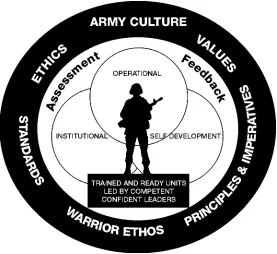
Figure 1-1. Army Training and Leader Development Model
1-21. The importance of training the technical skills to develop competent soldiers and leaders must be directly linked to creating confident soldiers, leaders, and units with the will and warrior spirit to dominate in any envi-ronment. The operational, institutional, and self-development domains are influenced by and adapted based on the overall strategic context of the Army. Joint, interagency, and multinational training, education, and individual as-signment experiences shape the competence and confidence of leaders and units.
1-22. All of these interrelated activities take place within the Army’s culture or shared set of beliefs, values, and assumptions that define for us what is most important. Our culture is ingrained in our new soldiers and reinforced daily to all of us in order to provide a positive framework for everything we do. A detailed discussion of Army culture will be addressed in FM 6-22, Leadership, and the updated version of DA PAM 350-58, Leader Develop-ment for America’s Army.
LEADER TRAINING AND DEVELOPMENT
emphasis on not only what is to be accomplished, but how it is accomplished and with the full realization that the profession of arms may require of its members, the supreme sacrifice. Professional development extends to incul-cating the Army values of Loyalty, Duty, Respect, Selfless Service, Integrity, Honor, and Personal Courage in every soldier to create a warrior ethos based on camaraderie and service to our Nation. Professional education provides the foundation involving a variety of training domains ranging from institu-tional schooling, self-study, and operainstitu-tional experience to personal interac-tion with superiors, peers, and subordinates. All of these interacinterac-tions are es-sential in developing and understanding training and leader development for warfighting.
1-24. Competent and confident leaders are a prerequisite to the successful training of ready units. It is important to understand that leader training and leader development are integral parts of unit readiness. Leaders are in-herently soldiers first and should be technically and tactically proficient in basic soldier skills. They are also adaptive, capable of sensing their envi-ronment, adjusting the plan when appropriate, and properly applying the proficiency acquired through training.
1-25. Leader training is an expansion of these skills that qualifies them to lead other soldiers. As such, the doctrine and principles of training leader tasks is the same as that for any other task set forth in FM 7-0 and requires the same level of attention of senior commanders. Leader training occurs in the institutional Army, the unit, the combat training centers, and through self-development. Leader training is just one portion of leader development. 1-26. Leader development is the deliberate, continuous, sequential, and pro-gressive process, grounded in Army values, that grows soldiers and civilians into competent and confident leaders capable of decisive action. Leader de-velopment is achieved through the lifelong synthesis of the knowledge, skills, and experiences gained through institutional training and education, organ-izational training, operational experience, and self-development. Command-ers play the key role in leader development that ideally produces tactically and technically competent, confident, and adaptive leaders who act with boldness and initiative in dynamic, complex situations to execute mission-type orders achieving the commander’s intent.
THE INSTITUTIONAL DOMAIN
uncer-tainty and be creative and innovative problem solvers as members of lethal units and battle staffs in combined arms, and JIM operations. Institutions provide training on common tasks and a selected portion of occupation-related critical tasks, and continue to provide lifelong, through mutual reach, access to training materials for individual soldier or unit use. The elements of institutional training and education include—
INITIAL MILITARY TRAINING (IMT)
1-28. This training provides the basic skills, knowledge, and task proficiency to become a soldier and subsequently to succeed as members of a small Army unit, contribute to unit mission accomplishment, and survive on the battle-field. IMT is the foundation training given to all personnel upon entering the Army. It provides an ordered transition from being a civilian to becoming a soldier, motivation to become a dedicated and productive member of the Army, and qualification on basic critical soldier skills and knowledge. IMT instills an appreciation for the Army in a democratic society, inspires the Army warrior ethos, and establishes Army values of loyalty, duty, respect, selfless service, honor, integrity, and personal courage. Newly commissioned officers will be competent and confident small unit leaders trained in field-craft. Warrant officers will be technically proficient in the systems associ-ated with their functional specialty. Enlisted soldiers will be qualified in the critical military occupational specialty tasks and standards defined by their branch proponent. The soldierization and professional development process continues under the leadership of NCOs when these new soldiers arrive in their first unit.
PROFESSIONAL MILITARY EDUCATION (PME)
1-29. PME develops Army leaders. Officer, warrant officer, and NCO train-ing and education is a continuous, career-long, learntrain-ing process that inte-grates structured programs of instruction—resident at the institution and non-resident via distributed learning at home station. PME is progressive and sequential, provides a doctrinal foundation, and builds on previous train-ing, education and operational experiences. PME provides hands-on techni-cal, tactitechni-cal, and leader training focused to ensure leaders are prepared for success in their next assignment and higher-level responsibility.
• Officer Education System (OES). Army officers must lead and fight; be tactically and technically competent; possess leader skills; understand how the Army operates as a service, as well as a component of a joint, multinational, or interagency organization; demonstrate confidence, in-tegrity, critical judgment, and responsibility; operate in a complex, uncer-tain, and rapidly changing environment; build effective teams amid con-tinuous organizational and technological change; and solve problems creatively. OES develops officers who are self-aware and adaptive to lead Army units to mission success.
• NCO Education System (NCOES). NCOES trains NCOs to lead and train soldiers, crews, and subordinate leaders who work and fight under their leadership. NCOES provides hands-on technical, tactical, and leader training focused to ensure that NCOs are prepared for success in their next assignment and higher-level responsibility.
• Functional Training. In addition to the preceding PME courses, there are functional courses available in both resident and non-resident dis-tributed learning modes that enhance functional skills for specific duty positions. Examples are Battalion S2, Battalion Motor Officer, First Ser-geant, Battle Staff NCO, and Airborne courses.
THE OPERATIONAL DOMAIN
1-30. Soldier and leader training and development continue in the unit. Us-ing the institutional foundation, trainUs-ing in organizations and units focuses and hones individual and team skills and knowledge.
COMMANDER'S RESPONSIBILITY
1-31. The unit commander is responsible for the wartime readiness of all elements in the formation. The commander is, therefore, the primary trainer of the organization, responsible for ensuring that all training is conducted in accordance with the unit’s mission essential task list (METL) to the Army standard. This is the commander's number one priority. The command cli-mate must reflect this priority. The commander analyzes the unit's wartime mission and develops the unit's METL. Using appropriate doctrine and mis-sion training plans (MTPs), the commander plans training and briefs the training plan to the senior commander. The senior commander is responsible for resourcing, ensuring stability and predictability, protecting training from interference, and executing and assessing training. Commanders ensure MTP standards are met during all training. If they are not, the unit must re-train until the tasks are performed to standard. Train to standard, not to time.
1-32. Key to effective unit training is the commander’s involvement and presence in planning, preparing, executing, and assessing unit training to standard. Commanders ensure MTP standards are met during all training. If a squad, platoon, or company fails to meet established standards for identi-fied METL tasks, the unit must retrain until the tasks are performed to standard. Training to standard on METL tasks is more important than com-pletion of an event such as an EXEVAL. Focus on sustaining METL profi-ciency—this is the critical factor commanders must adhere to when training small units.
NCO RESPONSIBILITY
sergeant major (CSM) to first sergeant and then to other NCOs and enlisted personnel. In addition, NCOs train soldiers to the non-negotiable standards published in MTPs and soldiers training publications (STP). Commanders will define responsibilities and authority of their NCOs to their staffs and subordinates.
UNIT RESPONSIBILITY
1-34. Unit training consists of three components: collective training that is derived directly from METL and MTPs, leader development that is embedded in the collective training tasks and in discrete individual leader focused training, and individual training that establishes, improves, and sustains individual soldier proficiency in tasks directly related to the unit METL. Commanders conduct unit training to prepare soldiers and leaders for unit missions. All units concentrate on improving and sustaining unit task profi-ciency.
RELATIONSHIP BETWEEN INSTITUTION AND UNIT
1-35. The goal of unit training is to develop and sustain the capability to de-ploy rapidly, and to fight and win as part of a combined arms team in a vari-ety of operational and organizational environments. Training in both the in-stitution and the unit works together toward achieving this goal. Institu-tions provide foundational training and education and, when combined with individual unit experience, provide soldiers and leaders what they need to succeed in each subsequent level of service throughout their careers, appro-priate to new and increasing levels of responsibility. The institutions also provide reach-back capability for functional and duty position-related train-ing or reference materials throughout a soldier’s service. Unit commanders, through subordinate leaders, build on the foundation provided by Army schools to continue developing the skills and knowledge required for mission success, as articulated in the unit’s METL. Unit commanders are responsible for sustaining small unit leader and individual soldier skills to support the unit's mission. Institutions are responsible to stay abreast of requirements and developments in the field to ensure the foundations they set prepare sol-diers for duty in their units.
OPERATIONAL TRAINING AND MAJOR EXERCISES
1-36. Leader, individual soldier, and unit training and development continue during operational missions and major training events. These events en-hance leader development and combat readiness. They improve leader skills and judgment while increasing unit collective proficiency through realistic and challenging training and real-time operational missions.
that the frictions of the battlefield have on their decisions. Adaptive leaders are tactically and technically competent, confident in their abilities, and rou-tinely demonstrate initiative within the framework of their commander’s in-tent. Major training events provide experiences that contribute to developing leader, soldier, and unit adaptiveness.
1-38. The CTC Program, consisting of the National Training Center (NTC), Joint Readiness Training Center (JRTC), Combat Maneuver Training Center (CMTC), Battle Command Training Program (BCTP), and other CTC-like training provides highly realistic and stressful joint and combined arms training based on current doctrine. Commanders fight with the equipment they would expect to take to war, arrayed against a free-thinking, opportun-istic opposing force (OPFOR) with an equal chance to win, monitored by a dedicated, well-trained, and experienced observer/controller team. Conse-quences of tactical decisions are fully played out in scenarios where the out-come is not assured. Doctrine-based after action reviews (AAR) identify strengths and shortcomings in unit planning, preparation, and execution, and guide leaders to accept responsibility for shortcomings and produce a fix. The CTC Program is the Army's premier training and leader development experience. It provides the following tangible benefits to the Army:
• Produces bold, innovative leaders through stressful tactical and opera-tional exercises.
• Embeds doctrine throughout the Army.
• Provides feedback to assist the commander in assessing unit readiness. • Provides feedback to Army, JIM participants.
• Provides a deployable capability to export observer/controllers, instru-mentation, and the AAR process to units at locations other than a CTC. • Provides a data source for lessons learned and trends to improve
doctrine, training, leader development, organization, materiel, and soldier considerations.
1-39. Operational missions—whether they are combat operations, such as in Afghanistan, or stability operations, such as in Bosnia—continue training and leader development. Operational missions validate the fundamentals of leadership, planning, and training. Unit and individual proficiency is evalu-ated, and leaders are trained and developed. AARs are conducted, strengths are maintained, and weaknesses are corrected. These missions provide sig-nificant experience for our leaders, soldiers, and units. The experiences from these missions feed back to the institution to support doctrine development, and other leader, soldier, and unit training.
THE SELF-DEVELOPMENT DOMAIN
subordi-nates to establish personal and professional development goals. Further re-finement of those interests should occur through personal mentoring by com-manders and first line leaders. Application of battle-focused officer and NCO professional development programs are essential to leader development. Ex-ploiting reach-back, distributed learning, and continuing education technolo-gies support these programs.
1-41. Self-development is continuous and should be emphasized in both in-stitutional and operational assignments. Successful self-development re-quires a team effort. Self-development starts with an assessment of individ-ual strengths, weaknesses, potential, and developmental needs. Command-ers and leadCommand-ers provide feedback to enable subordinates to determine the reasons for their strengths and weaknesses. Together, they prioritize self-development goals and determine courses of action to improve performance. Self-development is—
• A planned process involving the leader and the subordinate being devel-oped. It enhances previously acquired skills, knowledge, behaviors, and experience; contributes to personal development; and highlights the po-tential for progressively more complex and higher-level assignments. Self-development focuses on maximizing individual strengths, minimiz-ing weaknesses, and achievminimiz-ing individual development goals.
• Initial self-development is very structured and generally narrow in focus. The focus broadens as individuals understand their strengths and weak-nesses, determine their individual needs, and become more experienced. Each soldier's knowledge and perspective increases with experience, in-stitutional training, and operational assignments. It is accelerated and broadened by specific, goal-oriented self-development actions.
THE ROLE OF MACOMS, CORPS, DIVISIONS, USAR REGIONAL
COMMANDS AND ARNG AREA COMMANDS IN TRAINING
1-42. These commands, whether oriented along operational, functional, or specialty missions, have unique responsibilities for managing and supporting training. Their most important contribution to training is to establish stabil-ity in the training environment by maintaining focus on warfighting tasks, identifying and providing resources, protecting planned training, and provid-ing feedback that produces good trainprovid-ing and develops good trainers and leaders.
1-43. The corps’ and divisions’ fundamental basis for organization and op-erations is combined arms opop-erations. They conduct these opop-erations in-creasingly in JIM environments. Corps commanders’ training focus is on warfighting, to include joint operations, and training division commanders and corps separate commands and brigades.
1-44. Corps and division commanders must integrate SOF into their training plans. This provides opportunities to explore new combinations of concepts, people, organizations, and technology that expand their capabilities and en-hance interoperability and leverage other service capabilities.
as the guidance and decisions they provide brigade and battalion command-ers directly affect the planning and execution of training at the company level.
1-46. The MACOMs, corps, and divisions ensure that competencies are trained to standard. When commanders do this they make their greatest contribution to leader development and unit readiness.
RESERVE COMPONENT TRAINING
1-47. The Army consists of the active component (AC) and the Reserve Com-ponents (RC). The AC is a federal force of full-time soldiers and Department of the Army civilians. The RC consists of the ARNG, the USAR, and their ci-vilian support personnel. Each component is established under different statutes and has unique and discrete characteristics, but all share the same doctrine and training process, and train to the same standard. Availability of training support system (TSS) capabilities, however, varies between compo-nents. All train to the same standard; however, the RC trains at lower eche-lons. The number of tasks trained will usually differ as a result of the train-ing time available; the conditions may vary based on the RC unique envi-ronment.
1-48. The RC represent a large portion of the Army’s deterrence and war-fighting power. They are an integral part of the force. However, available training time has a significant impact on RC training. RC units have a lim-ited number of available training days. Geographic dispersion of units also impacts RC training. An average reserve battalion is spread over a 150- to 300-mile radius. Additionally, most reserve units travel an average of 150 miles to the nearest training area. Individual soldiers often travel an aver-age of 40 miles to their training sites.
1-49. RC units recruit many of their own soldiers. Since these new recruits may be assigned to the RC unit prior to completion of IMT, the RC may have fewer military occupational specialty (MOS) qualified personnel assigned than their AC counterparts. Additionally, even though doctrine requires trained leaders to train units and soldiers, RC leaders may be unable to at-tend professional military education until after assigned to their units. Pri-ority of training for RC units will go to individual duty military occupational specialty qualification (DMOSQ) and professional development to produce qualified soldiers and leaders.
SUMMARY
Chapter 2
Battle Focused Training
The key to fighting and winning is an understanding of “how we train to fight” at every echelon. Training programs must result in demonstrated tactical and technical compe-tence, confidence, and initiative in our soldiers and their leaders. Training will remain the Army’s top priority because it is the cornerstone of combat readiness!
General Carl E. Vuono
Commanders train their units to be combat ready. Training is their number one priority. Commanders achieve this using tough, realistic, and challenging train-ing. At every echelon, commanders must train their unit to the Army standard. Battle focus enables the commander to train units for success on the battlefield. Using the Army Training Management Cycle, the commander continuously plans, executes, and assesses the state of training in the unit. This cycle pro-vides the framework for commanders to develop their unit’s METL, establish training priorities, and allocate resources.
Commanders and leaders at all echelons use the Principles of Training discussed in this chapter to develop and execute effective training. As commanders train their units on METL tasks, senior commanders reinforce training by approving and protecting training priorities and providing resources.
PRINCIPLE OF TRAINING
2-1. There are 10 Principles of Training.
Commanders are responsible for training. NCOs train individuals, crews, and small teams. Train as a combined arms and joint team.
Train for combat proficiency. Realistic conditions. Performance-oriented.
Train to standard using appropriate doctrine. Train to adapt.
Train to maintain and sustain.
Train using multiechelon techniques. Train to sustain proficiency.
Train and develop leaders.
COMMANDERS ARE RESPONSIBLE FOR TRAINING
2-2. Commanders are responsible for the training and performance of their soldiers and units. They are the primary training managers and trainers for their organization, are actively engaged in the training process, and adhere to the 10 principles of trainingin figure 2-1. To accomplish their training re-sponsibility, commanders must—
• Be present at training to maximum extent possible. • Base training on mission requirements.
• Train to applicable Army standards. • Assess current levels of proficiency. • Provide the required resources.
• Develop and execute training plans that result in proficient individuals, leaders, and units.
2-3. Commanders delegate authority to NCOs in the support channel as the primary trainers of individuals, crews, and small teams. Commanders hold NCOs responsible for conducting standards-based, performance-oriented, battle-focused training and provide feedback on individual, crew, and team proficiency.
NCOS TRAIN INDIVIDUALS, CREWS, AND SMALL TEAMS
2-4. NCOs continue the soldierization process of newly assigned enlisted sol-diers, and begin their professional development. NCOs are responsible for conducting standards-based, performance-oriented, battle-focused training. They–
• Identify specific individual, crew, and small team tasks that support the unit’s collective mission essential tasks.
• Plan, prepare, rehearse, and execute training.
• Evaluate training and conduct AARs to provide feedback to the com-mander on individual, crew, and small team proficiency.
2-5. Senior NCOs coach junior NCOs to master a wide range of individual tasks.
TRAIN AS A COMBINED ARMS AND JOINT TEAM
2-6. The Army provides a JFC with trained and ready forces that expand the command’s range of military options in full spectrum operations. Army com-manders tailor and train forces to react quickly to any crisis. Army forces provide a JFC the capability to—
• Seize areas previously denied by the enemy. • Dominate land operations.
• Provide support to civil authorities.
2-8. The fundamental basis for the organization and operation of Army forces is combined arms. Combined arms is the integrated application of several arms to achieve an effect on the enemy that is greater than if each arm was used against the enemy separately or in sequence. Integration involves ar-rangement of battlefield actions in time, space, and purpose to produce maxi-mum relative effects of combat power at a decisive place and time. Through force tailored organizations, commanders and their staffs integrate and syn-chronize the battlefield operating systems (BOS) to achieve combined arms effects and accomplish the mission.
2-9. Today's Army doctrine requires teamwork at all echelons. Well-trained Army combined arms teams can readily perform in JIM environments. When committed to battle, each unit must be prepared to execute operations with-out additional training or lengthy adjustment periods. Leaders must regu-larly practice of habitually associated combat arms, combat support, and combat service support capabilities. Teams can only achieve combined arms proficiency and cohesiveness when they train together. Similarly, peacetime relationships must mirror wartime task organization to the greatest extent possible.
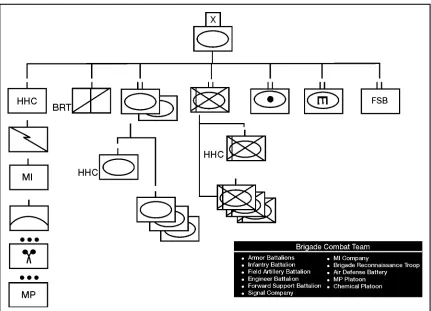
Figure 2-2. Brigade Combat Team
2-11. The commander of the task-organized force must develop a training plan that addresses two complementary challenges. The commander's train-ing plan must achieve combined arms proficiency and ensure functional training proficiency of the combat arms, combat support, and combat service support units of the task force. Combined arms proficiency requires effective integration of BOS functions. Effective integration of BOS results in syn-chronization. Functional BOS proficiency is fundamental for effective BOS integration. The commander's training plan must integrate combined arms and functional training events.
2-12. Combined arms training is standards based. The independent training of functional tasks and combined arms tasks to standard will not guarantee the desired effects of applying combat power at a decisive place and time. The standard for effective combined arms training requires a sequenced and continuous execution of functional tasks and combined arms tasks to stan-dard in order to achieve “…integrated relative combat power at a decisive place and time.”
arms task proficiency. Likewise, NCOs have similar training responsibilities to ensure BOS related individual and crew functional task proficiency, as well as, individual and staff section related combined arms task proficiency. Combined arms training requires commanders’ and NCOs’ active involve-ment in all phases of training.
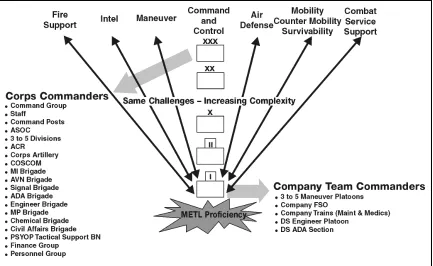
[image:27.612.91.524.365.631.2]2-14. Functional proficiency requires expertise in a particular BOS function, its capabilities, and its requirements. Organizations that provide elements of a specific BOS function, such as corps support command and divisional air defense artillery battalion, must train to maintain their functional profi-ciency. Integration involves expertise in coordination among functional troop unit commanders and staffs, and other functional commanders and staffs. 2-15. The combined arms training challenge is the same for all echelons of command. The complexity, however, increases at each higher echelon of command. The tempo, scope, and scale of operations at higher command echelons increase coordination requirements for planning and executing staff, joint, multinational, and interagency training. Commanders, at every echelon, focus combined arms training on specific integration and synchroni-zation tasks based on their METL. Figure 2-3 illustrates the scope and scale of the combined arms training challenge.
TRAIN FOR COMBAT PROFICIENCY
2-16. The goal of all training is to achieve the standard. This develops and sustains combat capable warfighting organizations. To achieve this, units must train to standard under realistic conditions. Achieving standards re-quires hard work by commanders, staff officers, unit leaders, and soldiers. Within the confines of safety and common sense, commanders and leaders must be willing to accept less than perfect results initially and demand real-ism in training. They must integrate such realistic conditions as imperfect intelligence; reduced communications; smoke; noise; rules of engagement; simulated nuclear, biological, and chemical environments; battlefield debris; loss of key leaders; civilians on the battlefield; JIM requirements; and varying extremes in weather. They must seize every opportunity to move soldiers out of the classroom into the field; fire weapons; maneuver as a combined arms team; and incorporate protective measures against enemy actions. Although CTCs provide the most realistic and challenging training experience in the Army, they must not be viewed as an "end point" in the unit-training life cycle. Rather, they provide a "go to war experience" by which commanders can assess their METL proficiency and determine the effectiveness of their training program.
• Realistic. Tough, realistic, and intellectually and physically challenging training excites and motivates soldiers and leaders. Realistic training builds competence and confidence by developing and honing skills, and inspires excellence by fostering initiative, enthusiasm, and eagerness to learn. Successful completion of each training phase increases the capa-bility and motivation of individuals and units for more sophisticated and challenging achievement. This is the commanders' continuous quest. • Performance-Oriented.Units become proficient in the performance of
critical tasks and missions by practicing the tasks and missions. Soldiers learn best by doing, using an experiential, hands-on approach. Com-manders and subordinate leaders plan training that will provide these opportunities. All training assets and resources, to include training aids, devices, simulators, and simulations (TADSS), must be included in the unit's training strategy.
TRAIN TO STANDARD USING APPROPRIATE DOCTRINE
opera-tions and provides guidance on how best to employ joint forces. This linkage between operational and training doctrine is critical to successful training.
TRAIN TO ADAPT
2-18. Commanders train and develop adaptive leaders and units, and pre-pare their subordinates to operate in positions of increased responsibility. Repetitive, standards-based training provides relevant experience. Com-manders intensify training experiences by varying training conditions. Training experiences coupled with timely feedback builds competence. Lead-ers build unit, staff and soldier confidence when they consistently demon-strate competence. Competence, confidence, and discipline promote initiative and enable leaders to adapt to changing situations and conditions. They im-provise with the resources at hand, exploit opportunities and accomplish their assigned mission in the absence of orders. Commanders at every eche-lon integrate training events in their training plans to develop and train imaginative, adaptive leaders and units.
TRAIN TO MAINTAIN AND SUSTAIN
2-19. Soldier and equipment maintenance is a vital part of every training program. Soldiers and leaders are responsible for maintaining all assigned equipment and supplies in a high state of readiness to support training or operational missions. Units must be capable of fighting for sustained periods of time with the equipment they are issued. Soldiers must become experts in both the operation and maintenance of their equipment. This link between training and sustainment is vital to mission success.
TRAIN USING MULTIECHELON TECHNIQUES
2-20. Multiechelon training is the most effective and efficient way of sustain-ing proficiency on mission essential tasks with limited time and resources. Commanders use multiechelon training to—
• Train leaders, battle staffs, units, and individuals at each echelon of the organization simultaneously.
• Maximize use of allocated resources and available time. • Reduce the effects of personnel turbulence.
2-21. Large-scale training events provide an excellent opportunity for valu-able individual, leader, crew, and small unit training. Multiechelon training can occur when an entire organization is training on one single METL task or when different echelons of an organization conduct training on related METL tasks simultaneously. (See chapter 4 for detailed discussion on multiechelon training.) All multiechelon training techniques—
• Require detailed planning and coordination by commanders and leaders at each echelon.
• Maintain battle focus by linking individual and collective battle tasks with unit METL tasks, within large-scale training event METL tasks. • Habitually train at least two echelons simultaneously on selected METL
TRAIN TO SUSTAIN PROFICIENCY
2-22. Once individuals and units have trained to a required level of profi-ciency, leaders must structure individual and collective training plans to re-train critical tasks at the minimum frequency necessary to sustain profi-ciency. Sustainment training is the key to maintaining unit proficiency through personnel turbulence and operational deployments. MTP and indi-vidual training plans are tools to help achieve and sustain collective and in-dividual proficiency. Sustainment training must occur often enough to train new soldiers and minimize skill decay. Army units train to accomplish their missions by frequent sustainment training on critical tasks. Infrequent "peaking" of training for an event (CTC rotation, for example) does not sus-tain wartime proficiency. Battle focused training is training on wartime tasks. Many of the METL tasks that a unit trains on for its wartime mission are the same as required for a stability operation or support operation that they might execute.
Figure 2-4. Band of Excellence
2-24. The Army provides combat ready forces on short notice to combatant commanders. Units transition from training locations to operational theaters using the train-alert-deploy sequence. Commanders recognize that crises rarely allow sufficient time to correct training deficiencies between alert and deployment. They strive to ensure their units are prepared to accomplish their METL tasks before alert and refine mission specific training in the time available afterwards. Accordingly, applying the principles of training, a commander conducts training to sustain proficiency on METL tasks within the Band of Excellence to ensure mission readiness. Mission specific training can be conducted as organizations are alerted and deployed based on time available.
2-25. RC units require postmobilization training to achieve proficiency at level organized. Postmobilization training time can be minimized by focusing on MOS qualification, and crew, squad, section and platoon proficiency for combat arms, and company, battery, and troop proficiency for CS/CSS units during premobilization training.
TRAIN AND DEVELOP LEADERS
embedded component of every training event. Nothing is more important to the Army than building confident, competent, adaptive leaders for tomorrow.
COMMANDERS AND TRAINING
2-27. Effective training is the number one priority of commanders. The commander is the primary trainer and responsible for the wartime readiness of their formation. In wartime, training continues with a priority second only to combat or to the support of combat operations. Commanders and senior leaders must extract the greatest training value from every training oppor-tunity. Effective training requires the commander's continuous personal time and energy to accomplish the following—
DEVELOP AND COMMUNICATE A CLEAR VISION
2-28. The senior leader's training vision provides the direction, purpose, and motivation necessary to prepare individuals and organizations to win in bat-tle. It is based on a comprehensive understanding of—
• Mission, doctrine, and history. • Enemy/threat capabilities. • Operational environment.
• Organizational and personnel strengths and weaknesses. • Training environment.
TRAIN ONE ECHELON BELOW AND EVALUATE TWO ECHELONS BELOW
REQUIRE SUBORDINATES TO UNDERSTAND AND PERFORM THEIR ROLES IN TRAINING
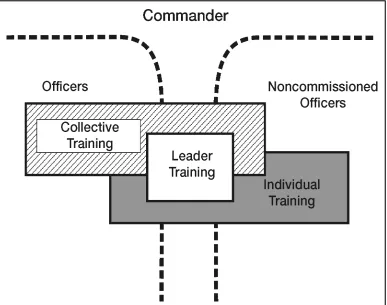
[image:33.612.123.510.288.593.2]2-30. Since good training results from leader involvement, one of the com-mander's principal roles in training is to teach subordinate trainers how to train and how to fight. The commander provides the continuing leadership that focuses on the organization's wartime mission. The commander assigns officers the primary responsibility for collective training and NCOs the pri-mary responsibility for individual, crew, and small team training. The com-mander, as the primary trainer, uses multiechelon techniques to meld leader, battle staff, and individual training requirements into collective training events, while recognizing the overlap in training responsibilities (figure 2-5). Commanders teach, coach, and mentor subordinates throughout.
Figure 2-5. Overlapping Training Responsibilities
TRAIN ALL ELEMENTS TO BE PROFICIENT ON THEIR MISSION ESSENTIAL TASKS
far enough into the future and to coordinate resources with sufficient lead time.
DEVELOP SUBORDINATES
2-32. Competent and confident leaders build cohesive organizations with a strong chain of command, high morale, and good discipline. Therefore, com-manders create leader development programs that develop warfighter pro-fessionalism—skills and knowledge. They develop their subordinates' confi-dence and empower them to make independent, situational-based decisions on the battlefield. Commanders assist subordinates with a self-development program and share experienced insights that encourage subordinates to study and learn their profession. They train leaders to plan training in de-tail, prepare for training thoroughly, execute aggressively, and evaluate short-term training proficiency in terms of desired long-term results. Effec-tive leader development programs will continuously influence the Army as junior leaders progress to higher levels of responsibility.
INVOLVE THEMSELVES PERSONALLY IN PLANNING, PREPARING, EXECUTING, AND ASSESSING TRAINING
2-33. The senior commander resources training and protects subordinate commanders' training time. They are actively involved in planning for future training. They create a sense of stability throughout the organization by pro-tecting approved training plans from training distracters. Senior command-ers protect the time of subordinate commandcommand-ers allowing them to be present at training as much as possible. Subordinate commanders are responsible for executing the approved training to standard. Senior commanders are pre-sent during the conduct of training as much as possible and provide experi-enced feedback to all participants.
DEMAND TRAINING STANDARDS ARE ACHIEVED
2-34. Leaders anticipate that some tasks will not be performed to standard. Therefore, they design time into training events to allow additional training on tasks not performed to standard. It is more important to train to standard on a limited number of critical tasks, rather than attempting and failing to achieve the standard on too many tasks, rationalizing that corrective action will occur during some later training period. Soldiers will remember the en-forced standard, not the one that was discussed.
ENSURE PROPER TASK AND EVENT DISCIPLINE
2-35. Senior leaders ensure junior leaders plan the correct task-to-time ratio. Too many tasks guarantee nothing will get trained to standard and no time is allocated for retraining. Too many events result in improper preparation and recovery.
FOSTER A COMMAND CLIMATE THAT IS CONDUCIVE TO GOOD TRAINING
individ-ual to train to full potential. Patience and coaching are essential ingredients to ultimate achievement of the Army standard.
ELIMINATE TRAINING DISTRACTIONS
2-37. The commander who has planned and resourced a training event is re-sponsible to ensure participation by the maximum number of soldiers. Ad-ministrative support burdens cannot be ignored, however, they can be man-aged using an effective time management system. Senior commanders must support subordinate commanders' efforts to train effectively by eliminating training distracters and reinforcing the requirement for all assigned person-nel to be present during training.
TOP-DOWN/BOTTOM-UP APPROACH TO TRAINING
2-38. The top-down/bottom-up approach to training is a team effort in which senior leaders provide training focus, direction and resources, and junior leaders provide feedback on unit training proficiency, identify specific unit training needs, and execute training to standard in accordance with the ap-proved plan. It is a team effort that maintains training focus, establishes training priorities, and enables effective communication between command echelons.
2-39. Guidance, based on wartime mission and priorities, flows from the top-down and results in subordinate units’ identification of specific collective and individual tasks that support the higher unit’s mission. Input from the bot-tom up is essential because it identifies training needs to achieve task profi-ciency on identified collective and individual tasks. Leaders at all echelons communicate with each other about requirements, and planning, preparing, executing, and evaluating training.
2-40. Senior leaders centralize planning to provide a consistent training fo-cus from the top to the bottom of the organization. However, they decentral-ize execution to ensure that the conduct of mission related training sustains strengths and overcomes the weaknesses unique to each unit. Decentralized execution promotes subordinate leaders’ initiative to train their units, but does not mean senior leaders give up their responsibilities to supervise train-ing, develop leaders, and provide feedback.
BATTLE FOCUS
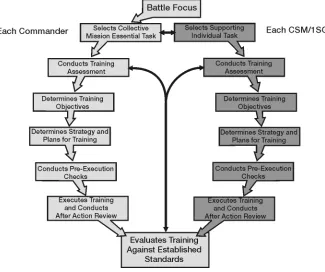
whether due to time or other resource constraints. However, commanders can achieve a successful training program by consciously focusing on a re-duced number of critical tasks that are essential to mission accomplishment. 2-42. A critical aspect of the battle focus concept is to understand the re-sponsibility for, and the linkage between, the collective mission essential tasks and the individual tasks that support them. The diagram at figure 2-6 depicts the relationships and the proper sequence to derive optimum training benefit from each training opportunity.
Figure 2-6. Integration of Collective and Individual Training
2-43. The commander and the CSM or 1SG must jointly coordinate the col-lective mission essential tasks and individual training tasks on which the unit will concentrate its efforts during a given period. The CSM or 1SG must select the specific individual tasks that support each collective task to be trained. Although NCOs have the primary role in training and sustaining in-dividual soldier skills, officers at every echelon remain responsible for train-ing to established standards durtrain-ing both individual and collective traintrain-ing. Battle focus is applied to all missions across the full spectrum of operations.
ARMY TRAINING MANAGEMENT CYCLE
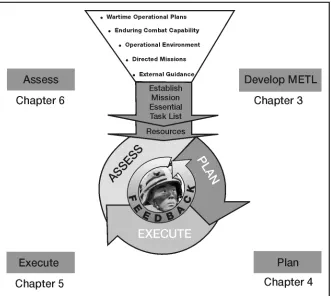
on METL tasks. The availability of resources does not affect METL devel-opment. The METL is an unconstrained statement of the tasks required to accomplish wartime missions. Resources for training, however, are con-strained and compete with other missions and requirements. Leaders develop the long-range, short-range, and near-term training plans (chapter 4) to util-ize effectively available resources to train for proficiency on METL tasks. Af-ter training plans are developed, units execute training by preparing, con-ducting, and recovering from training (chapter 5). The process continues with training evaluations that provide bottom-up input to organizational as-sessment. Organizational assessments provide necessary feedback to the sen-ior commander that assist in preparing the training assessment (chapter 6).
Chapter 3
Mission Essential Task List Development
Army Mission Essential Tasks
Shape the security environment
Respond promptly to crisis
Mobilize the Army
Conduct forcible entry operations
Dominate land operations
Provide support to civil authorities
METL
3-1. A mission essential task is a collective task in which an organization has to be proficient to accomplish an appropriate portion of its wartime opera-tional mission. Army organizations, whether they are AC or RC, Modifica-tion Table of OrganizaModifica-tion and Equipment (MTOE) or Table of DistribuModifica-tion and Allowances (TDA), cannot achieve and sustain proficiency on every pos-sible training task. The commander must identify those tasks that are es-sential to accomplishing the organization's wartime operational mission. Battle-focused METL identifies those tasks that are essential to the accom-plishment of the unit’s wartime operational mission and provides the founda-tion for the unit’s training program.
3-2. All company level and above units develop a METL that is approved by its designated wartime commander. Detachments, organized with a com-mander and under a distinct MTOE or TDA, also develop a METL. Explosive ordnance detachments, transportation port operation cargo detachments and preventive medicine medical detachments are examples of these type units.
METL DEVELOPMENT PROCESS
3-3. The METL development process reduces the number of tasks the organi-zation must train and focuses the organiorgani-zation's training efforts on the most important collective training tasks required to accomplish the mission. 3-4. METL development is the catalyst that keeps Army training focused on wartime operational missions. Applying the METL development—
• Focuses the unit’s training on essential tasks.
• Provides a forum for professional discussion and leader development among senior, subordinate and adjacent (peer) commanders concerning the linkage between mission and training.
• Enables subordinate commanders and key NCOs to crosswalk collective, leader and individual tasks to the mission.
• Leads to “buy-in” and commitment of unit leaders to the organization’s training plan.
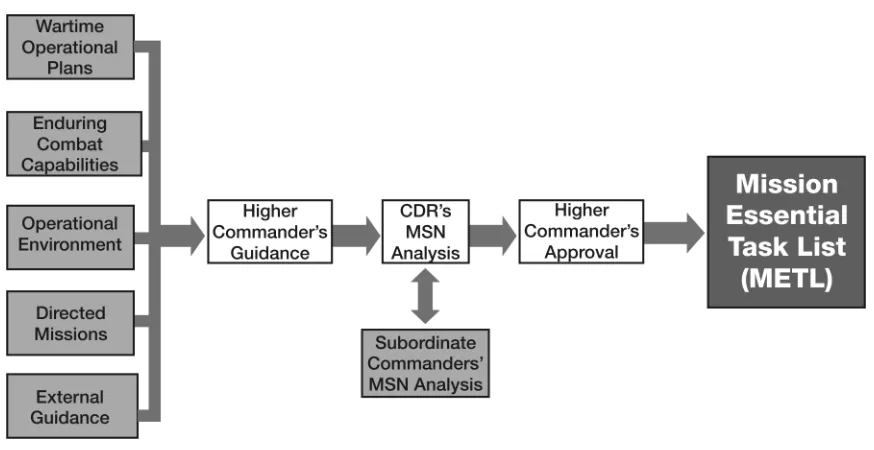
Figure 3-1. METL Development Process
INPUTS TO METL DEVELOPMENT
3-6. There are five primary inputs to METL development.
Wartime Operational Plans
3-7. The most critical inputs to METL development are the organization's wartime operational and contingency plans. The missions and related infor-mation provided in these plans are key to determining essential training tasks.
Enduring Combat Capabilities
3-8. The fundamental reason for the organization and operation of Army forces is to generate effects of combined arms in order to contribute to suc-cessful execution of wartime operational missions. To do this, Army com-manders form combat, CS, and CSS forces into cohesive teams through train-ing for combat proficiency. Endurtrain-ing combat capabilities are the unique con-tribution each unit makes to ensure the Army successfully accomplishes any mission anytime anywhere.
Operational Environment
Directed Missions
3-10. Army organizations are frequently directed to conduct a mission other than its assigned wartime operational mission. These missions range from major combat operations to providing humanitarian assistance or other types of stability and support operations.
External Guidance
3-11. External guidance serves as an additional source of training tasks that relate to an organization's wartime operational mission. Some examples are—
• Higher headquarters directives. • MTP.
• Force integration plans.
• Army Universal Task List (AUTL). • Universal Joint Task List (UJTL).
3-12. In some cases, external guidance identifies tasks that make up the mission (for example, MTPs). In others, they specify additional tasks that re-late to the mission (for example, mobilization plans, directed stability opera-tions or support operaopera-tions). Figure 3-2 is an example of brigade tasks de-rived from the five primary inputs to the unit’s METL.
Alert and Deploy the Brigade • Draw and Upload Basic/Operational Loads
• Conduct Soldier Readiness/Administrative / Logistic Preparation for Overseas Movement • Deploy Advance Parties Or Liaison Officers
• Move by Road or Rail to Aerial Port of Embarkation (APOE) or Seaport of Embarkation (SPOE)
• Upload Equipment at APOE or SPOE
Conduct Attack Conduct Defense
• Attack a Moving Enemy • Attack a Stationary Enemy • Movement to Contact
• Conduct a Mobile Defense • Conduct an Area Defense
Conduct Support Operations Conduct Stability Operations • Domestic Support Operations
• Foreign Humanitarian Assistance
• Peacekeeping Operations • Combat Terrorism
• Support Counter-Drug Operations Conduct Sustainment Operations
• Provide Medical Treatment and Evacuation (air and ground)
• Move by Air/Surface Transportation • Manage Terrain
[image:42.612.115.530.387.599.2]• Recover and Evacuate Disabled Equipment • Control Reconstitution of Subordinate Units • Conduct Mortuary Affairs Operations
Figure 3-2. Example of Brigade Tasks Derived from Wartime Operational Plans and External Guidance
as critical deployment tasks. Geography may also influence the selection of different mission essential tasks for units with missions in tropical, cold, or desert environments.
COMMANDER’S ANALYSIS
3-14. The commander’s analysis of wartime operational plans, and others primary input to the METL, identify those tasks critical for wartime mission accomplishment. Higher commanders provide guidance to help their subor-dinate commanders focus this analysis. Commanders coorsubor-dinate the results of their analysis with subordinate and adjacent commanders. The higher commander approves the METL. This process provides the means to coordi-nate, link, and integrate a wartime operational mission focused METL throughout the organization.
3-15. To illustrate the METL development process, the following brigade wartime mission statement forms the start point for determining the most important training tasks:
At C-day, H-hour, Brigade deploys: On order, conducts combat operations as-signed by higher headquarters.
3-16. The commander reviews the wartime operational mission statement and other primary input to the METL, and identifies all of the training tasks. Together, these five sources provide the total list of possible training tasks. This analysis results in the list at figure 3-2. The commander then narrows down the list of all derived tasks to those tasks critical for mission accom-plishment. These tasks become the brigade’s METL. Figure 3-3 shows an example of a brigade METL.
Alert and Deploy the Brigade Conduct Attack
Movement to Contact Conduct Area Defense
Conduct Sustainment Operations
Command and Control Tactical Operations
Figure 3-3. Example of Brigade METL
RESERVE COMPONENT METL DEVELOPMENT
support groups review and coordinate RC METLs. They resource training and ensure that mission training tasks are executed and evaluated. Conti-nental U.S. Armies (CONUSAs) approve the METL for selected RC units (ARNG divisions, enhanced separate brigades, roundout units, reinforcing aviation units, and force support package units with latest arrival dates less than D+30). The peacetime chain of command approves the remainder of RC unit METLs.
ECHELON ABOVE DIVISION/ECHELON ABOVE CORPS (EAD/EAC)
METL DEVELOPMENT
3-18. In a similar manner, commanders of EAD/EAC organizations must use the battle focus concept and METL development process to focus their train-ing. Figure 3-4 shows an example of a corps support battalion METL.
Deploy/Relocate the Battalion Plan CSS Operations
Establish and Sustain Area of Operations Provide CSS
[image:44.612.177.432.534.640.2]Protect the Force
Figure 3-4. Example of Corps Support Battalion (EAD) METL
TDA METL DEVELOPMENT
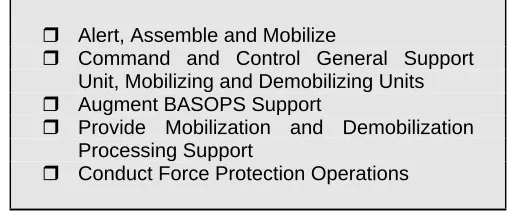
3-19. Battle focus is equally applicable to TDA organizations. Senior leaders of TDA organizations derive METL from critical peacetime or wartime mis-sions. Mission essential tasks may be either critical training tasks or opera-tional activities. In short, they represent the tasks required to accomplish the TDA organization's mission. Figure 3-5 shows an example of a garrison support unit METL.
Alert, Assemble and Mobilize
Command and Control General Support Unit, Mobilizing and Demobilizing Units Augment BASOPS Support
Provide Mobilization and Demobilization Processing Support
Conduct Force Protection Operations
METL DEVELOPMENT FOR DIRECTED MISSIONS
3-20. When an organization is directed to conduct a mission other than its assigned wartime operational mission (such as a stability operation or sup-port operation), the training management cycle still applies. Directed mis-sions can span the full spectrum of operations. For MTOE organizations, di-rected missions could range from major combat operations to providing hu-manitarian assistance or other types of stability operations and support op-erations. For TDA organizations, directed missions can range from mobiliza-tion to installamobiliza-tion force protecmobiliza-tion operamobiliza-tions.
3-21. Using their wartime METL as the foundation, commanders who are di-rected to change their mission conduct a mission analysis, identify METL tasks, and assess training proficiency for the directed mission. The mission analysis of the newly assigned mission could change the unit's METL, train-ing focus, and the strategy to achieve proficiency for METL tasks. Figure 3-6 shows an example of tasks supporting a directed mission involving a stability operation.
Collective Training • Convoy Operations
• Route Security
• Rail/Air Movement Training
• Area Security • Patrolling Operations
• Establish/Operate Checkpoints Leader Training
• Fire Control Exercise (FCX) • Casualty Evacuation (CAS EVAC) • Deployment Exercise
• Risk Management
• Rules Of Engagement (ROE) Proficiency • Petroleum, Oils and Lubricants/Military
(POL/MIL) Seminar • Media Interaction Individual Training
• Mine Awareness • ROE Proficiency • Media Interaction
• Medical Awareness • Country Orientation • Force Protection
Figure 3-6. Examples of METL Tasks to Support a Directed Mission to Conduct Stability Operation
3-22. In cases where mission tasks involve emerging doctrine or non-standard tasks, commanders establish tasks, conditions, and non-standards using mission orders and guidance, lessons learned from similar operations, and their professional judgment. Senior commanders approve the established standards for these tasks as part of the normal METL approval process. If time permits prior to deployment, units should execute a mission rehearsal exercise (MRE) with all participating units.
JOINT METL (JMETL) DEVELOPMENT
3-24. Army organizations often provide Army forces within joint force forma-tions. The missions and JMETL of such formations are derived from the Uni-versal Joint Task List by the joint force commander and service component commanders, and are approved by the combatant commander.
3-25. A selected Army headquarters may be designated as a JTF headquar-ters, joint forces land component headquarters (JFLC) or Army Forces (ARFOR) headquarters. This requires the designated Army headquarters to devel