Arboreal Eloquence: Trees and
Commemoration
A thesis
submitted in fulfilment
of the requirements for the Degree
of
Doctor of Philosophy in Geography
at the
University of Canterbury
by
J. Morgan
Department of Geography
University of Canterbury
Abstract
This thesis is about the use of trees for commemoration and the memory that they have anchored in the landscape. There has been little written on the use of trees for commemorative purposes despite its symbolic resonance over the last 150 years. To determine the extent to which commemorative trees have been employed, the social practice and context in which the trees were planted, field and archival work was undertaken in New Zealand and Australia. This has been supported with some comparative work using examples from Britain and the United States of America. The research also utilizes the new availabilities of records on-line and the community interests that placed historical and contemporary material on-line.
Acknowledgements
The journey has been long. With gratitude I would like to thank my supervisor, Professor Eric Pawson, for his encouragement, forbearance and understanding. My thanks also go to my second supervisor who has done a sterling job.
From the field I would like to thanks the assistance of Susan Baker and Simon Daly for their time, vehicles, food and accommodation.
The staff at various archives, museums and libraries have been helpful. Special thanks goes to the staff of the South Canterbury Museum, North Otago Museum, Sumner Museum and the Ballarat Mechanics Institute for contributing knowledge of their local place and assistance in finding information
To the support crew, thanks to Maree Hemmingsen, Vaughan Wood, Jill Young, Gill Blackler, Kerry McCarthy, John Schischka, and Dawn and Derek Bisdee for their support, listening skills and advice. In addition, a heart felt thanks to the Rea family for living with the ups and downs of the journey.
Table of Contents
Title i
Abstract ii Acknowledgements iii
Table of Contents iv
List of Figures vii
List of Tables viii
Chapter 1 Introduction
1Tree Memorialisation 6
Research Questions 7
Thesis Outline 8
Chapter 2 Memory
Introduction 11
Memory 13
Remembering 13
Forgetting 15
Silences 16
Commemoration: memorials and monuments in practice 16
Forgetting and silences 19
Counter monuments 22
Summary 24
Chapter 3 Landscapes of Memory
Representing Landscape 26
Education of the Eye: the historical development of the concept of
landscape 27
Colonial Visions 32
Idea of Landscape: a way of seeing 38
Intertextuality: a way of seeing 39
Iconography 40
Landscape as Theatre 41
Summary: Landscape and Memory 43
Chapter 4 Charting Memories
Introduction 46
Research Area 47
Locating Trees 50
Resources and Information 53
Newspapers 57
Electronic Newspapers 59
Council and Organisation Documents 60
War diaries, letters and memoirs 61
Books 61
Internet 62 Evaluation 63
Chapter 5 Landscapes of Empire and Identity
Introduction 65
Royal Associations 67
“Catch[ing] the Echoes” (ODT, 1/7/1863: Celebrating the 1863 royal
wedding 68
Royal Tours 76
The 1901 royal tour of the Duke and Duchess of Cornwall and York
78 The 1920 royal tour of Edward Albert, Prince of Wales 82 Multiple events, multiple plantings – coronations and jubilees 83
Shifting power relations 88
Landscapes of royal memory 90
Summary 92
Chapter 6 The Ma(r)king of Place
Introduction 93 Place 95
Commemoration and Place 96
Arbor Day 99
Origins 99
Arbor Day in New Zealand 101
Trees in Place – analysis 109
Significant Developments 111
Gendered Memory 112
Case Studies: The male domain and the women planters 114
The women planters 114
Inside and outside the Christchurch Botanic Gardens 116
Ashburton Domain 119
Anniversaries 120
The commemorative surge of the 1970s 122
The changing face of place 123
Chapter 7 Landscapes of Sorrow: To Honour Their Name
Introduction 125 Democratisation of memory and the naming of the dead 126The Winds of change 126
The winds of change on the Military Front 127
The winds of change on the Memory Front 130
War Trees 139
Trees as war memorials 139
Avenues 141
Constructing a database 147
Analysing memorial avenues 151
Avenues 151
Time of planting 153
Location 154
In memory of whom 155
Planted by whom 158
Signs 158
Choice of species 159
Organisation and preparation 160
Summary 162
Chapter 8 Competing Memories: official and personal
Introduction 163
Rhetoric of war 164
The language of memory 166
The official ceremonies 166
The commemorative stone 168
The individual plaques 168
Case Studies 169
Avenue of Honour, Ballarat, Victoria, Australia 170
Memorial Oaks, Oamaru, New Zealand 176
Personal memories 181
Whose trees? – Trees in war and peace 184
Summary 190
Chapter 9 Arboreal Eloquence
Recalling the Research Questions 192
What of the Future? 205
Contributing to Memory 207
References
Primary Resources 209
Archives 209
Newspapers 210
Secondary Sources 211
Personal Communications 235
Electronic Resources 235
Appendices
List of Figures
2.1 Statue of Queen Victoria relocated from Dublin, Ireland, to Sydney,
Australia. 21
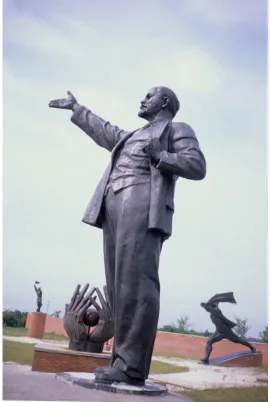
2.2 Lenin, Statue Park, Budapest, Hungry. 22
3.1 Mr and Mrs Andrews, by Thomas Gainsborough, 1748-1750. 32 4.1 Map of the South Island, New Zealand, research sites 48
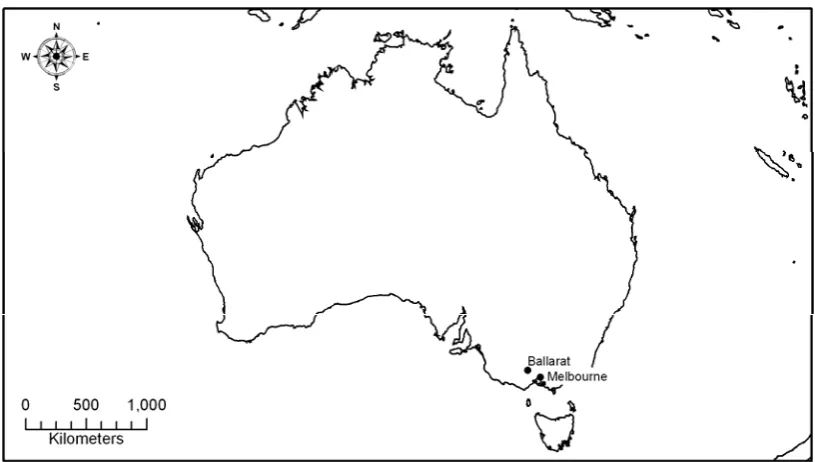
4.2 Map of the Australian research sites 50
5.1 The location of the trees planted in Christchurch on 9 July 1863 to
celebrate the royal wedding. 73
5.2 The Albert Edward Oak in the Christchurch Botanic Gardens. 74 5.3 The “Record Reign Circle” in the St Andrews’ Domain 86 6.1 Arbor Day at Rata School, Manawatu 1 August 1894 107 6.2 Tree planting at Toko School, Taranaki, July 1900 108 6.3 Map of the Christchurch Botanic Gardens and the reserves along the
banks of the Avon River 117
6.4 The beech tree planted to the memory of Florence Nightingale in
the Ashburton Domain 120
7.1 Lion monument to the Swiss Guard killed in France. Lucerne,
Switzerland. 132 7.2 9th Queens Royal Lancers Memorial, Exeter Cathedral, Britain 134
8.1 The Ballarat Avenue of Honour 172
8.2 The North Otago Memorial Oaks. 180
8.3 Chateau Wood, Ypres, November 1917 186
List of Tables
2.1 Dualisms around memorial conventions. 23
4.1 Archives visited or contacted in the course of this study 57
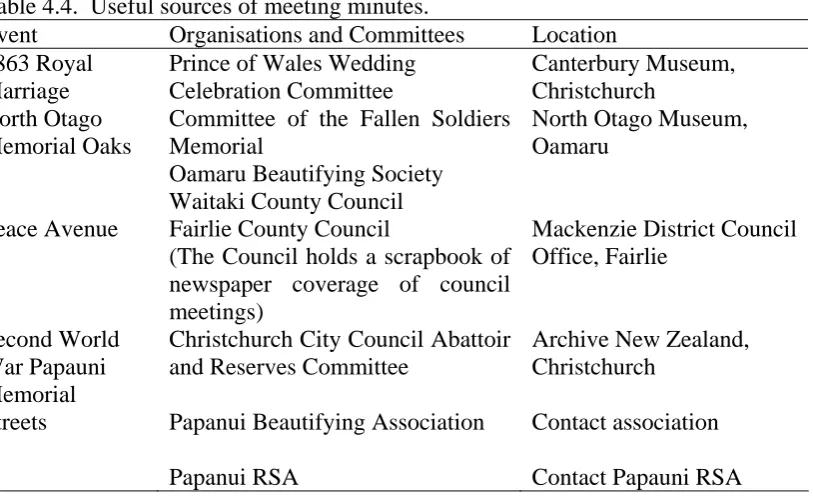
4.2 Useful sources of meeting minutes 61
5.1 Trees planted in Canterbury for the 1935 Silver Jubilee of George V’s reign and the 1937 coronation of George VI as reported in The Press
newspaper. 87 6.1 Purposes for the planting of commemorative trees established from
the database. 110
6.2 Temporal and spatial variations in the appearance of commemorative
tree purposes established in Table 6.1 for given cities and towns 111 7.1 Location of British troops during the nineteenth century. 135 7.2 A sample of Organisations promoting and circulating information
about memorial avenues.
146 7.3 Figures for memorial avenues in each country. 148 7.4 Figures for memorial avenues for each state in Australia 148 7.5 Conflicts for which memorial avenues were planted 150
7.6 Possible choices made by avenue committees 151
8.1 Woods mentioned in the diaries, letters and memoirs of First World
Chapter 1
Introduction
he Trees.When we plant here let us think that we plant forever, let it not be for present delight nor for present use alone. Let it be such work as our descendents will thank us for and let us think that a time is to come when these trees will be held sacred because our hands have planted them and that men will say as they look upon the wonder and substance of them “See! this our fathers did for us.”” Adapted from John Ruskin Cornwall Park Trustees 1935 (Cornwall Park, Auckland, New Zealand).
Memorials and monuments of stone and bronze dominate the literature of commemoration and the commemorative landscape, whilst the use of trees for these purposes lies very much at the periphery of academic scholarship. The limited writing available suggests that the use of commemorative trees has been extensive, although more popular at certain times than at others. Memorial trees represent a prolific form of commemoration, as ubiquitous as any other private and civic form in the landscape. Yet little attention has been paid to their contribution to memory and to the unique properties that trees bring to Western commemorative practices.
The expression of memory is a cultural battlefield. The writing of history by the victors, the colonisation of other cultures and the silencing of alternative memories has left a contestable landscape, in which strata of memory are unevenly deposited one on top of another, intersecting with other layers of memory. Only occasionally do the underlayers break through. As such the memorial landscape is at one and the same time a landscape of power, a landscape of forgetting and a landscape of silences. At particular times these landscapes become sites of contestation where power and dominance are challenged, as in the attacks on an iconic lone pine tree on One Tree
Hill/Maungakiekie, in central Auckland. This once important pre-European Maori site was sold, and then planted with exotic pine trees of which one mature lone tree remained from the 1960s onward. This symbol of Auckland’s colonial past/present became one of a number of focal points of Māori resistance contesting asymmetric race relations, suppressed indigenous rights and government policy, during the 1990s. In protest the tree was attacked twice with chainsaws, the second of which effectively killed it. The tree was finally removed in October 2000. These attacks gave attention to the politics of the Māori protest but also to the debates over which potential replacement tree was sufficiently iconic and spoke of shared ideas of nation and identity (Kearns and Collins, 2000). A grove of pohutukawa and totara trees was finally selected (www.aucklandcity.govt.nz) but has yet to be planted (C. Smith, pers. com.). As can be seen from this example those who have control of the landscape, also control meaning and representation.
The memories conveyed and our interpretations of them are not static or inert. Although memorials and monuments outwardly anchor memories in time and space, the memorial landscape is not fixed. Memory and meaning continues to be reworked (Bender, 1993). Dwyer (2004:425) argues that memorials and monuments can themselves be seen as dynamic sites of meaning production and reproduction. In this way they have ongoing potential, allowing “monuments to be conceived as in the process of becoming”, continuing to evolve through the changing intersections of social relations. These changes generally occur over long timeframes. Commemorative trees as living memorials exemplify another variation of the process of becoming in an organic sense. Unlike stone and bronze, trees are not physically static. They are living organisms which traverse through yearly cycles of leaf production and loss, and the life cycle of growth into maturity, procreation and aging. Physically, trees change every aspect of their appearance over the course of their existence. They interact with and adapt to their environment and become in the sense of producing that environment: they are agents of its creation (Jones and Cloke, 2002). The fulfilment of a tree’s cycle of life is death, the end of one of the processes of becoming. From this point some have trajectories of being beyond death: through their offspring, particularly heritage trees, and through the use of their wood as objects of use and adornment. Trees, then, bring a different range of symbols and meanings not necessarily available to more conventional forms of memorialisation.
cosmologies, religions and religious rituals (MacCulloch, 1948; Davidson, 1964; Green, 1992; Leeming and Leeming, 1994; Charalampidis, 1995). The spread of Christianity supplanted the living trees of polytheistic religions with abstract symbolic and metaphoric Christian trees - the tree of life, the tree of knowledge of good and evil and the cross of Christ (Davidson, 1964; Charalampidis, 1995; Cusack, 1998: Ferber, 1999) - turning living trees from the sacred to the secular. It was not until the nineteenth century that the tree once again became well represented in popular and civic commemorations.
Nineteenth century British tree symbolism drew from a wide range of classical, religious and literary references and understandings. (A thorough examination of tree symbolism can be found in dictionaries and encyclopaedias of traditional symbols. See Cooper, 1978; Cirlot, 1982; Chevalier and Gheerbrant, 1996; Tresidder, 1998; Ferber, 1999.) A number of trees have retained their associations. The yew and the weeping willow are still associated with funerary landscapes. The most complex and enduring symbolism has been the oak. As early as the sixteenth century the oak was a symbol of strength (Thomas, 1987), ultimately to be described as “venerable, patriarchal, stately, guardian and quintessentially English” (Daniels, 1988:48). At the national level the oak was the supreme emblem and national symbol of Great Britain as a country and Great Britain as a people. The tree embodied characteristics of “masculinity, vigour, strength and reliability” (Thomas, 1987:220). The oak has retained its honoured place throughout the last five hundred years. Its cultural capital is evident in the transference and enduring legacy seen in Britain’s former colonies as both landscape and commemorative trees.
There has been a sharp decline in the use and knowledge of traditional British tree symbolism during the twentieth century. Haddow (1988b) argues that in Australia by 1918 it was difficult to determine the level to which communities were drawing on traditional symbolism of trees and their understanding of it. Trees appeared to have become a blank canvas upon which memory and meaning could be ascribed. In Australia, new tree species, such as the native wattle and eucalyptus, were incorporated into the growing lexicon of local and national meanings (Robin, 2002; Richards, 2003), adding value to native species and “nationalising” nature (Robin, 2002). Ceremonial speeches and rhetoric became the platform for the articulation and education of the intended symbolism and significance. Speechmakers ascribed symbolic meaning, either by looking back to traditional symbols or by assigning new ones, and in doing so shaped and controlled meaning (Shand, 1994). As a result the symbolic meaning of commemorative trees cannot be taken for granted nor determined through academic theorizing, it can only be understood though the study of rhetoric and statements at the time of planting.
landscape. On important civic occasions, such as the celebrating of royal events, trees have been planted with pomp and ritual and at the time of planting were in the foreground of public commemoration and memory making. However, how a community understands itself and what is important to it is not static. It changes over time as each new generation defines what is important to it (Schama, 1995). The importance of the memory and associations represented by trees planted by previous generations fades from collective consciousness. These trees slip from the forefront of community memory into the background. With their mnemonic function compromised and no longer acknowledged or understood, the trees blend into the aesthetic landscape. For Cloke and Pawson (2008) this background landscape offers a new treescape of memories. As part of the treescape the hollowed out markers accrue alternative meanings and associations in relation to the continually evolving landscape of the tree and its environment, in addition to remaining a pointer to past times and events. This can be viewed as part of the continuum along Dwyer’s (2004) path to becoming.
Tree Memorialisation
Tree memorialisation has been popular in the landscapes of recent Anglo-European settlement. Walk through almost any park and there will be a tree of special significance, be it of local, regional or national importance or representing an overseas connection. Yet few people would necessarily ‘see’ them. The Archbishop of Canterbury, speaking recently at the dedication service of the Armed Forces Memorial at the National Memorial Arboretum in Britain, said that “[h]uman beings are specialists in not seeing things. Most of the time, we screen out a vast amount of our world, a vast amount of what comes to us through our senses, especially through our eyes” (12/10/2007, www.archbishopofcanterbury.org). It is easy then to understand how commemorative trees become naturalised into the domestic landscape of every day life.
with the successful crossing of the Blue Mountains in Australia in 1813, and discusses how past and place have been constructed around an old decaying tree whose authenticity has been questioned. In New Zealand, Kearns & Collins (2000) focussed on the construction of place, nation and identity around the Auckland icon of the pine tree on One Tree Hill /Maungakiekei. Wilcox and Spencer (2007) discuss commemorative use in their search for true representatives of the Anzac Lone Pine of Gallipoli as defined by species. The trees which dominate this limited literature are memorial avenues planted as First World War memorials commemorating the service and sacrifice of local men and women. This literature is predominantly Australian in origin, where authors have mainly focussed on avenues of honour in Western Australia and Victoria (Haddow, 1987, 1988a, 1988b; Wycherley, 1994; Dargavel, 1999, 2000; Richards, 2003; Stephens, 2008). In New Zealand First World War memorial avenues are far less common. McLean and Phillips (1990), Ross (1994) and Pawson (2004) have all written on the North Otago memorial oaks. From this literature there is no overall sense of the range of uses and examples.
The purpose of this thesis is to fill this gap in the literature. Accordingly, this research is based on field and archival work undertaken in New Zealand and Australia. Field research required engaging with landscapes of memory, both physical and archival. Information was gained from dedicated archives, libraries, museums, art galleries, and from informal conversations throughout this journey. This has been supported with some comparative work using examples from Britain and the United States of America. The research also utilizes the new availabilities of records on-line and the community interests that placed historical and contemporary material on-line. On-line resources provided opportunities to network and make links and correspondence with overseas archives, libraries and royal houses in search of information.
Research Questions
The aim of this present study is:
To determine the significance of trees as memorials in the landscapes of countries of
In doing so the following questions will be addressed throughout the course of this thesis:
What is the range of commemorative purposes for which trees have been used?
What are the relationships between memory, commemoration and landscape, specifically in the context of memorial trees?
What role do commemorative trees play in social history and community building in specific places and nationally?
To what extent have memorial tree practices been shared between places or to what extent are they particular to place?
How are tree memories re-made over time: do they persist or drain away?
Thesis outline
The first thesis question is explored in chapters 2 to 4. Chapter 2, Memory, discusses the nature of memory and its inherent instability within which all knowledge and representations of the past are framed. The processes of remembering and forgetting are both natural and political. As representations of the past, memorials and monuments, including commemorative trees, have inherited the vagaries of memory; as such these are themselves, unstable. Once unveiled, there is no control over meaning and interpretation. Official rhetoric which frames intended meanings is but one layer of meaning. This official meaning is contested or undermined by individual interpretation based on personal knowledge and experience.
in the context of this study. Field sites are described and the rationale for their inclusion given. The remainder of the chapter is given over to describing the methods and resources used to identify, locate commemorative trees and the social practice and context of their planting trees and uncover selected narratives.
The middle four chapters are the empirical heart of the thesis. They explore thesis questions two to five and look respectively at the themes of empire and identity; marking place; war and naming the dead; and finally, the paradox of official memory and war experience in the construction and understanding of war and the war dead. Chapter 5, Landscapes of Empire and Identity, examines the role planting trees for royal events and visits in the representation of empire and identity at the colonial edge. Royal tours and celebrations were relatively rare historic events in the history of British settler colonies. The planting of commemorative trees, particularly oaks, articulated meaning on two levels, one of empire and power through symbolic associations and the second of identity and popular sentiment, both expressed through the tree-planting ceremony. This rhetoric has changed over time and the meaning of the trees has faded. However, tree-planting remains a component of royal tours while the practice of planting for royal events, once widespread, survives as a more limited form.
Chapter 7, Landscapes of Sorrow, follows the changes and developments in military, social and memorial practices which facilitated the development of a memorial landscape through the deployment of memorial avenues and their variants as First World War memorials. It is argued that without the movement towards and adoption of the naming of the war dead, memorial avenues, which acknowledged individualised duty and sacrifice, would not have developed. Analysis of the various choices made by committees in the decision making processes associated with memorial avenues further reinforced naming and individualisation.
Chapter 8, Competing Memories: official and personal, examines the construction of memory of war, death and loss during and after the First World War through the memorial avenues. Official rhetoric, articulated through speeches at planting and dedication ceremonies, informed audiences and the broader community how those who served and died were to be remembered and how war was to be understood. Symbolic meanings of the trees were drawn upon to reinforce this rhetoric but seldom drew on traditional symbolic understandings. Yet, official memory was undermined by personal experience and memories of the war. Different and opposing experiences and memories were had by various groups, especially between those on the home front and those on the military front. The choice of trees as war memorials is challenged in light of soldiers’ war experience of trees.
Chapter 2
Memory
ny recalling or recording of the past involves selection, both deliberate and unintended. Choosing what to remember must entail also the choice of what to forget, what to pass over in silence, and what to obscure” (Flower, 2006:1).
“… we must remember in order to know who we are, and forget in order to become what we may be.” (Bishai, 2000:7)
Introduction
Memory is at the core of all representations of the past. Yet, memory in its many forms is unstable and malleable. Despite this memorials and monuments, including thousands of commemorative trees, are ubiquitous in landscapes of developed countries. They act as agents conveying memory of the past to present and future generations and anchor notions of power, hegemony, ideology and identity in the landscape. Charged with such an important, almost impossible, task, memorials and monuments have had variable success. This variability in success demonstrates the unstable nature of memory, exposing its power and weakness, and the problematic approach of presenting memory as monolithic and as a single authoritative interpretation of the past. As a result memory and memorials and monuments have been contested. This has been an age old feature.
Contests over memory and its resilience are not new. Oblivion was a major fear of the aristocracy, especially the political elite, of ancient Rome. The loss to future generations of the personal memory, deeds, power, wealth and status, would condemn the elite to the same fate as the nameless, faceless, masses that existed socially below
them. Without the knowledge and proof of existence and identity the aristocracy became part of the anonymous void beyond the extent of living memory. Evasion of the void was expensive. Much time, energy and money was expended on a range of visual, textual and monumental commemorative artefacts to facilitate the perpetuation of an aristocrat’s memory. A similar amount of effort was expended by those in positions of power in the modification or erasure of the memory of others, whether they were rival, associate, colleague or family (Flower, 2006). My own experiences and views of memory work differ from the Roman concern with oblivion. Personal fears include the loss of photographs and negatives through fire or burglary, particularly since experiences of family deaths have highlighted personal memory responses to loss. For me my photographs are an important mnemonic trigger or link to much of the detail of my life. The loss of this link would be tragic for me but my identity would not be diminished. Conversely, a person fighting their own personal battles with the void through illness, such as dementia or Alzheimer’s, risks the obliteration of their memory, the person they are, thus their identity, exemplifying at once both the power and fragility of memory. These examples tell that memory is complex, multifaceted and tightly bound with the past, around which narratives of belonging and identity are constructed.
Memory
Memory, as described by Benjamin (1986) (in Misztal, 2003), is essentially a conversation with the past. Since memory is not a singular entity but manifold, there are multiple conversations with the past. These conversations or narratives are then at the core of all memory work. Whilst these conversations are simultaneously generated, experienced, recalled and recorded on a range of scales, memory is inherently problematic. The plurality and instability of memory leaves it “provisional, subjective, concerned with representation and the present rather than fact and the past” (Hodgkin and Radstone, 2003:2). At the same time its malleability allows memory to be manipulated in various conventional and variable ways and open to contestation. The academic study of memory has become increasingly popular (Kidd and Murdoch, 2004), though some (Confino, 1997) question the usefulness of the term. Although the theoretical concept of memory linking “representation and social experience” has been criticized (Confino, 1997:1402), memory remains a significant and communicable concept (Middleton and Edwards, 1990a). At the same time it is socially imperative for the maintenance of identity (Gillis, 1994).
Remembering
possible individual influence, commonly held memories form the basis of the group’s collective/social memory.
The social context of collective memory was articulated in the 1920s by Maurice Halbwachs. Halbwachs (1992) viewed collective memory as a social construct in which the past was not preserved but reconstructed as an image of the past, configured on the understandings of the present. The idea of a shared image of the past is one fraught with issues (Bender, 1993; Hodgkin & Radstone, 2003). The claims made may be found to be unacceptable to many, for example, the imposition of new collective memories by hegemonic power and ideological control of new regimes as demonstrated by the new French Republic and the Third Reich. Contesting of memory and the past challenges the shared image, its representation and also the entitlement to articulate that past in the present (Hodgkin & Radstone, 2003). Even so it remains the centre of current conceptualisations of collective memory. Misztal (2003:7) links the past, present and future in defining collective memory as the “representation of the past, both shared by a group and that which is collectively commemorated, that enacts and gives substance to the group’s identity, its present conditions and its visions of the future.” As representation, collective memory thus incorporates more than the pooling of multiple single lifetimes of memory or single pasts. It also includes institutional continuity, through such institutions as monarchy, government and politics, which operate outside the framework of a single lifetime or generation. This amalgamation of historical knowledge and experience is part of collective memory (Misztal, 2003).
commensurate with the collective memory (Hodgkin & Radstone, 2003; Ugolini, 2004; Jordan, 2005).
Forgetting
In the construction of this “collective memory” remembering entails forgetting (Flower, 2006). Forgetting is a natural process of memory. Very little of what an individual experiences in a conscious state is remembered, with much being involuntarily forgotten soon after the experience (Lowenthal, 1999). Similarly, no collective group remembers all shared remembrances and experiences, concentrating on what is deemed important for identity and social cohesion (Lowenthal, 1999; Legg, 2007). Separation from collective groups or social frameworks can also facilitate forgetting (Kattago, 2000; Bender, 2001). For Curtis (2001), a writer and filmmaker, forgetting is a strategy whereby that which is forgotten is deemed excess and beyond the needs of the narrative, a strategy that implies a degree of deliberation in the process of inclusion and exclusion. Choices are made consciously or unconsciously in every collective memory. Excess information then becomes invisible background layers within the construction of various collective memories, unexposed within current interpretations.
Jordan (2005:61) suggests that
[a]cts of [remembering] are necessarily coupled with processes of forgetting, and any landscape of memory also exists with a shadow of forgetting. This pairing is not in itself an indictment of the acts of forgetting, but rather recognition of the necessarily selective and incomplete foundations of memory.
Silences
Within any act of remembering and forgetting there are silences whose potency remains latent. Silence, then, is a conversation or part of a narrative waiting for its opportunity. It differs from forgetting (not remembering) by remembering but not speaking of the past (Cohen, 1999). While silence may be seen as intangible, Passerini (2003:249) describes it as being bounded, having “limits, contexts and reference”, framing characteristics similar to remembering and forgetting. Silence can be voluntarily self-imposed by those who hold the memories for the greater good of the community, allowing time for the creation of a new and better future. The memories can be too private, painful or dangerous to articulate or the time for listening has not come about. In the case of World War II, the experiences of some groups across Europe have yet to be fully articulated to a wider audience, for instance the Roma people or Gypsies (Passerini, 2003). Silence can also be imposed by those who hold power over others, including individuals, institutions, officials, and governments. For example, the East German government institutionalised silence of Jewish and minority deaths of the holocaust in favour of a more recent collective memory constructed around antifascist socialist and communist resistance narratives (Passerini, 2003; Jordan 2005). Whether silences are placed or imposed on public or private memories, Passerini (2003) argues that some form of complicity is necessary for the restrictions to succeed, prolonging the voicing of the silence. Silences, then, present the darker side of social memory, the unarticulated traumas of the past which impact on group identity and influence, but remain unstated within publicly expressed collective memory.
Commemoration: memorials and monuments in practice
same problems and deficiencies inherent in that memory, that of “forgetting, suggestibility, censorship, hindsight, conflicting recollections, [and] the force of interests that frame whatever we remember” (Davis & Starn, 1989:4). The need for such devices reinforces Nora’s (1989) contention that memory of the past is no longer a part of everyday life and has been abandoned. Only through sites where memory has crystallized, what Nora has called lieux de mémoires, has the remains of the consciousness of memory survived and been maintained through “commemorative vigilance” (Nora, 1989:12). This commemorative vigilance can be found in memorials and monuments and their associated rituals and ceremonies. As unstable memory devices, they have become important anchors of individual and collective memory, around which identity, individual and collective, is partially constituted.
behaviours and moral standards, as determined by the elite, for their intended audience, the lower classes.
Memorials and monuments are created within hegemonic and ideological frameworks with particular agendas. The act of raising a public memorial or monument emphasised social processes by “making power evident in the landscape” and mapping “history onto territory” (Whelan, 2003: 19, 15). Identity was created or reinforced and one dominant interpretation of events and societal values was inscribed and promoted (Gillis, 1994; Yea, 1999; Johnson, 2003; Whelan, 2003). Memorials and monuments have proved potent tools in the construction of a vision and articulation of national identities. Personal identity was linked with the nation state through national foundation myths that offered a sense of continuity and unity, while legitimising state power (Whelan, 2002). This is evident in the proliferation of statues of monarchs throughout the British Empire, from Queen Victoria to George VI, which exemplified the power and reach of the British Empire and could be found in almost every large urban centre within its boundaries (Cannadine, 2001). The face of imperial power, as a symbol of a ‘people’ or nation (Forest, Johnson, & Till, 2004), linked disparate populations and provided a sense of unity and belonging through membership over vast distances. It also provided a rallying point for both social and political support, and inevitably contestation (Whelan, 2003). The British Monarchy and its images were supported by a calendar of commemorative rituals, which allowed the general public personal participation in the maintenance of national identity (Kattago, 2001). The creation of images of “an official state narrative” and a shared history articulated around memorials endeavoured to cultivate a collective memory amongst a diverse and dispersed population (Osborne, 2001:51). Monuments to power, then, attempted to encapsulate a consciousness of a shared past and suggested a shared present and future (Cooke, 2000).
memorial in London (Cooke, 2000), and the Vietnam War Memorial, Washington DC (Lewis, 2001). As Cooke (2000) found, the siting of memorials can be contentious, due to the privileging of sites predicated on cause and message. The erection of a memorial or monument transforms neutral public spaces into “ideologically charged sites” (Whelan, 2002:508) with implied political support through the allocation of public space (Johnson, 1995; Whelan, 2002). The processes of commemoration privilege one interpretation of the past, attempting to control the current and future perception and understanding of that past. At the same time these processes create contestable spaces through which temporal and spatial variations in memory and ideological understandings challenge privileged representations, revealing the tensions between remembering and forgetting (Forty, 1999).
Forgetting and silences
Figure 2.1. Statue of Queen Victoria relocated from Dublin, Ireland, to Sydney Australia. Unveiled on 20th December 1987 outside the Queen Victoria Building. (Source: author)
rendering of their meaning and memory as impotent are potent weapons of forgetting in the process of nation building (Whelan, 2003).
Figure 2.2. Lenin, Statue Park, Budapest, Hungary. This is one of more than twenty statues moved to the Park. (www.szoborpark.hu accessed 28/4/08)
Counter monuments
highlights the difficulty faced by young German artists and sculptors in designing meaningful monuments for German commemoration of aspects and the aftermath of World War II. Concerned that “meaning of events so grave might be reduced to exhibitions of public craftsmanship and cheap pathos”, the artists produced monuments/installations that were unusual, provocative and controversial, some inscribing forgotten memories of events and places back onto the landscape. The artists were calling upon people to look inward for memory so that memory no longer required the visual and physical presence of monuments (Young, 1992:272).
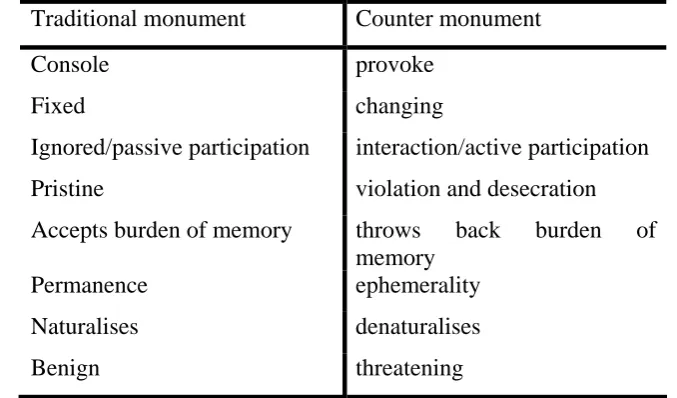
Table 2.1. Dualisms around memorial conventions. (Adapted from Young 1992; 2000)
Traditional monument Counter monument
Console provoke Fixed changing Ignored/passive participation interaction/active participation Pristine violation and desecration
Accepts burden of memory throws back burden of memory
Permanence ephemerality Naturalises denaturalises Benign threatening
Commemorative and memorial trees, then, are situated within both columns of the table and how they are viewed is predicated on each generation’s understanding of their past and the events and people that the trees represent.
Summary
Chapter 3
Landscapes of
Memory
ll landscapes embody memories, and through mnemonics the past is continuously drawn into the present as identities are crafted” (Wilson and David, 2002:6).
“transformation of ideas from one medium to another” (Duncan, 1990:4).
Representing Landscape
Landscape in the Western tradition is an invention of the Renaissance. The concept embodies the material construction of nature by culture and its pictorial representation as a scene. Both are multifarious and multilayered constructions of meaning and memory (Cosgrove, 1989; Whyte, 2002), “built from a rich deposit of myths, memories and obsessions” (Schama, 1995:14). As a result, landscape, as noted by Duncan (2000), is a polysemic term. Numerous meanings and multiple readings underlie the contested nature of the study and interpretation of landscape, not only in the discipline of Geography (Bender, 1993; Seymour, 2000). Landscape is now commonly studied by a diverse range of disciplines, each having defined landscape specifically to suit its field, or speciality (Tress and Tress, 2001). Owing to the extensive discourse offered on landscape, the first part of the chapter identifies the essential visual origins of the term and analyses its historical development under the title of “Education of the Eye”. Nationalistic traditions discussed by Schama (1995) in Landscape and Memory are translated very clearly into colonial contexts. This comprises the theme of the second section. The later part of this chapter focuses on
four theoretical aspects of the cultural landscape expressed as metaphors: landscape as a way of seeing, as a way of reading, as iconography and as having performative features. These in turn provide a framework for the study of memorial landscapes. Further, these metaphors highlight the social constructedness of landscape in both its material and pictorial form.
Education of the Eye: the historical development of the concept of
landscape
The notion of education of the eye has been at the heart of the development of the idea of landscape since the inception of the concept during the fifteenth century (de Bolla, 2003). Whether it has been as a genre of painting, an aesthetic and response, a social construction or as a way of seeing, landscape has been the ‘canvas’ on which many aspects of social change and understandings have been represented. Landscape production has responded to wealth, power, whim and fancy. In doing so it has privileged the view, given prominence to wealth and power, and romanticised, idealised, marginalised or excluded the people who were the very means of production of those landscapes (Barrell, 1980). In the modern era, landscapes, whether material or representational, are illustrative of social relations with land and have been at the forefront of social discourse on such themes as class, wealth and power. These have included land ownership, park and agricultural improvement and customary rights. At other times they have been relegated into the background as landscape’s moral and social narratives waned. Today, landscape, in its various forms, remains a robust and useful, albeit elastic, concept through which to investigate a range of social, economic and political relations as “it is free from fixed positions, elusive in meaning yet all embracing in scope” (Whyte, 2002:13).
in the dissemination of landscape as a style of painting across Western Europe from Flanders and Italy to England, from the fifteenth to the nineteenth century. Cosgrove (1984) argues that the first recognition of landscape art was by fifteenth century wealthy Italian merchants visiting Flanders, attracted by the exotic style of landscape backgrounds used for classical or religious subjects painted by Flemish artists. Not until the sixteenth century was landscape established as an autonomous subject for painting (Hussey, 1967). This nexus of travel, wealth and aesthetic appreciation, in the form of the ‘peregrination’ or the ‘Grand Tour’, brought the new landscape genre to England.
For centuries there has been a tradition of travel from England to the continent for “a wide variety of religious, diplomatic, military and mercantile reasons” (Brennan, 2004:9). However, it was from the middle of the sixteenth century that travel for educational and cultural purposes became prominent, peaking during the eighteenth century. The grand tour was seen as a finishing school for young gentlemen of wealthy aristocratic families and increasingly for gentry families. As an extended period of travel it was generally undertaken between finishing university and undertaking a career, and it exposed these gentlemen to a broad range of new innovations, including landscape paintings (Withey, 1997; Brennan, 2004). These gentlemen, along with other “wealthy and sophisticated” travellers, brought back to England large numbers of paintings, both commissioned and purchased. Some individuals returned with extensive collections, such as the Second Marquess of Annandale with more than three hundred pictures (Ingamells, 1996:27). These paintings in turn exposed local artists to new forms of representation.
local landscapes was possible only after familiarisation with the works of such seventeenth century landscape painters. Participation in the analysis of landscape required a moneyed public possessing an appropriate education, leisure time for the appreciation of art and later the participation in travel within England for the aesthetic pleasure of local natural scenery (Copley and Garside, 1994; Pfau, 1997).
Such a public could then be further educated in the methods for understanding and appreciating landscape. These methods were predicated on contemporary ideas of spectatorship and the eye being directly linked to the emotional core. Thus, the viewing of a landscape had a psychological effect (Kroeber, 1975; Cosgrove, 1985; Bermingham, 2005). The development of an aesthetic approach to landscape through distinguishable and distinctive categories of the picturesque, the sublime and the beautiful provided the educated English class with a means of interpretation. This offered a distinct perspective for viewing, assigning and critiquing landscape painting and natural landscapes (Withey, 1997; Conron, 2000). Continental artists defined the repertoire of images for the beautiful and the sublime until the middle of the nineteenth century. But it was the English painters, in particular, that defined the picturesque, occupying the middle ground between the beautiful and the sublime. The picturesque brought together human sensibilities, culture, art and nature, through the provocation of the eye and the mind (Conron, 2000).
This approach enabled the educated observer to knowledgeably view and experience the visual sensation of the pictorial or natural landscape and provided a language for its articulation (Watson, 1970; Conron, 2000), thus giving the “practitioner” the “visual and descriptive competence” (Pfau, 1997:28) to identify, visualise and recollect appropriately (Ballantyne, 2002). Hundreds of guidebooks and sketchbooks by reputable writers, such as Gilpin, Thomas Gray and later, Wordsworth, and those lesser known, were produced to assist practitioners in the appreciation of natural landscapes. These books helped shape the development of the aesthetic by guiding people in their choices of what places to visit, what to observe, and how to appreciate what they saw (Withey, 1997; Bramen, 2002). The picturesque fulfilled the growing demand for interactions with landscapes which engaged more than visual satisfaction. Through active continuation of the notion of the ideal landscape, the picturesque maintained the former’s ‘improving’ mentality as both intellectual and technical practices (Watson, 1970).
harmonious, highly constructed, ideal ‘natural’ landscape, offering scenes worthy of a painter. These gardens were long term commitments as young trees planted took years to attain their full effect. Aesthetic enhancements to an estate were expensive and time consuming, and took up a considerable amount of land, for example, some clients were willing to lose sixty to eighty acres of fertile land to one of Brown’s lakes (Turner, 1985). In a number of cases the dedication of this amount of land to non-productive activities was only possible because of the parallel revolution in agricultural practice.
The enclosure of the open fields, commons and waste lands was one way of gaining additional land for estate enlargement, aesthetic and agricultural improvement. As noted by Williamson (1995), enclosure had been a progressive practice since the fifteenth century. The pace of enclosure accelerated during the late eighteenth century and early nineteenth century, when acts of parliament were required to enclose particular areas, making available land deemed to be necessary for agricultural expansion. Williamson (1995) also points to the role of the tree as a potent symbol of enclosed land. Thousands of trees were planted in gardens, deer, forest and landscape parks, something that was not possible in the open fields system, where trees were used for firewood or as animal fodder (Daniels, 1988). More emblematic of the practicalities of enclosure were fences, stone walls, hedges and gates which over time became ubiquitous markers in the landscape.
implements, prize stock and agricultural events, while Prince (1988) argues that agricultural innovation was not a popular subject amongst artists or landowners.
Figure 3.1. Mr and Mrs Andrews, by Thomas Gainsborough, 1748-1750. © National Gallery London. Source: Asfour and Williamson (1999:50)
Not all painters of the period, including Constable, were comfortable with the impacts of the new agricultural and social changes. They drew on more traditional agricultural practices, capturing instead bucolic, harmonious scenes of productivity, imagined of the older, more traditional social relations that were disappearing. This memory was being forgotten in the face of the new agricultural improvements (Barrell, 1980); a backward gaze tinged with regret. Despite cultivated landscapes being considered vulgar and low order subject matter by the theorists of the picturesque, commercially these paintings had a considerable following, with a buoyant market found among those of popular taste (Payne, 1993).
Colonial Visions
visitors) portrayed both the potentiality of new sites for development, generally depicting examples of expansive, attractive views devoid of native inhabitants, which awaited the brave immigrant, and the civilising progress which had already been achieved. These paintings reinforced the view that New Zealand and Australia had few impediments to settlement; the land being unused and under-populated. While topographically representative, many images were manipulated to varying degrees to fulfil the conventions of the picturesque and/or the requirements of sponsors. As an ‘improving’ convention landscapes and settlements were represented as enhanced versions of themselves (Hansen, 2007). Hamlets and towns were depicted as tidier, more secure and prosperous, without the problems that usually accompanied frontier or colonial settlement (Dunn, 2003).
via the conventions of the picturesque. These conventions in turned belied much of the realities of colonisation. As the artists witnessed, participated in and perpetuated the transformation of the colonies through their pictorial constructions of landscape, an ever increasing number of settlers and colonists were engaged in large scale ideologically-driven transformations of the material landscapes.
The physical transformation of the landscapes of New Zealand and Australia was forged by the very processes of colonisation and premised on understandings of landscape in Britain. Migrants were accompanied by a plethora of plants, animals, diseases, cultural processes and understandings, and European technologies that were integral in the success of the colonies. The New Zealand Company stated that their objective was the wholesale transplantation everything of England but the soil to the colony (Moppett, 1998). This cultural capital acted as a fluid frontier before which the indigenous landscapes of the southern colonies were transformed into settlements and farms of the agricultural and pastoral ideal. Crosby (1986), in his book called Ecological Imperialism, called this transformation “Europeanization”, which was
brought to bear on the indigenous landscape to bring about environmental revolution.
Much of the achievement of the transformation of the landscape was due to the success of the European species in their new environments. Many plants grew exceeding well, in numerous cases outperforming their counterparts in the northern hemisphere (Clark, 2002; 2003). Popular belief, based on observation, held that European plants were outcompeting indigenous species for space and resources and would at some point in the near future become extinct (Star, 2005). These observations were in line with the scientific idea of ‘displacement’, propounding by a number of eminent scientists of the age. In turn, these reinforced the superiority of European species over indigenous ones in the minds of the settlers and colonists. This was further supported by the commonly held belief that indigenous tree species were difficult to propagate and much slower in growth habit (Beattie & Star, 2005). By the 1890s the extensive indigenous forests, thought to be inexhaustible, were under threat. Wasteful practices saw the best forest trees milled for timber and the remainder destroyed. With greater cultural and economic value placed on pastoral and agricultural landscapes, the pressures to remove the forests completely were intense. Any attempts at reforestation used only exotic species illustrating the power of these popular beliefs (Beattie & Star, 2005).From the British cultural viewpoint, indigenous trees were foreign, holding neither cultural reference points nor any symbolic attachment. In the politics of tree planting, northern hemisphere trees, whose form, growth habits, utility, beauty and in some instances, cultural significance, were familiar and understood, making them an obvious choice for use.
“responsible citizens” who would “not repeat the mistakes of the past” (Ross, 2008:21). The benefits of these initiatives merged with a growing identification of the European population with New Zealand and, by the early 1900s, the uniqueness of its flora. The prominent use of native flora during the Royal Tour of 1901 emphasised the distinct identity New Zealanders as people and New Zealand as a country was beginning to cultivate, in doing so identifying with and drawing upon nature for national distinctiveness (Bennett, 1987; Kaufmann, 1998). New Zealand was one of a number of settler societies who, during the nineteenth century and early twentieth century, re-imagined their identity by aligning themselves with indigenous flora and/or prominent landscapes (Kaufmann, 1998; Zimmer, 1998; Osborne, 2003). These nationalistic alignments were a continuation of processes that have been active for centuries, in which flora, fauna and entire landscapes have been used in the construction of group and national identity. New colonies required time to experience their own landscapes to, in turn, create new associations and sentiments (Schama, 1995). The evolution of attitudes and associations with nature helped assisted the government in legislating for the conservation of land and forests for scenic values (Beattie & Star, 2005).
progress”, effectively dividing the past from the future (cited in Ross, 2008:110). The same trees also highlighted the environmental concerns of the day that were a direct result of that progress, namely soil erosion. To ensure uptake of the tree planting idea, the Centennial Branch of Internal Affairs Centennial Committee targeted three groups: District centennial committees, schools and Young Farmers’ Clubs. In schools native plants were propagated in school gardens and nurseries for planting out during l940. The children were taught about native flora and the importance in protecting it, particularly in relation to their role in the conservation of soil fertility (Ross, 2008). During that year Christchurch East School planted a kauri tree as part of their celebrations, which today still stands in the grounds of the school.
The following year Mr Parry made a similar call highlighting the suitability of trees as memorials to the dead of the Second World War. He emphasized that such undertakings would contribute to the betterment of the country as a whole by continuing to “help to strengthen a necessary tree-mindedness in New Zealand”, assist in the combating of soil erosion and provide habitats for native birds (Nelson Mail, 19/7/1941). As early as July 1941 a number of memorial tree planting schemes had been proposed or undertaken, several of which included the planting of large numbers of native trees (Nelson Mail, 19/7/1941).
with the scale of the streets. The larger native species have remained popular for commemorative purposes.
The landscape of New Zealand has undergone dramatic changes in the last almost one hundred and seventy years of official history. New ideological understandings defining different relations between nature and culture were applied to the indigenous landscape. Within this ideology attitudes to nature and landscape have changed in relation to social and economic pressures throughout this period. The next section offers a theoretical framework through which these changes can be understood.
Idea of Landscape: a way of seeing
One of the first major works on landscape within the new cultural framework of social sciences in the 1980s was Social Formation and Symbolic Landscape by Denis Cosgrove (1984). This work brought together a number of ideas into a theorized unit under the rubric of the idea of landscape. Cosgrove (1984) emphasised the production of landscapes, examining landscapes, both material and pictorial, as social constructions. These landscapes were products of particular junctures of history, time, and location, social, economic and political relations. The portrayal of the representations, understandings and relationships between power, social relations, nature and land were ideologically framed. The projection of these components on to the land has been regulated by the “way in which some Europeans have represented to themselves and to others the world about them and their relationships with it, and through which they have commented on social relations”, thus, constituting “a way of seeing” (Cosgrove, 1984:1).
movement from the pictorial to the material landscape was facilitated by the flow of excess capital wealth from the city to the country which contributed to the commodification of rural land and the emergence of highly valued rural land/scape. The rural countryside became the literal canvas upon which cultural, social, political and economic relations were physically expressed: “a way of seeing projected on to land and having its own techniques and compositional forms” (Cosgrove, 1984:269). The rendering of such relations was so dominant as to severely weaken alternative ways of experiencing nature (Cosgrove, 1984).
Thus Cosgrove’s approach provided a dynamic means of interpretation. Landscapes were no longer passive images or objects, but forceful social and cultural expressions of the ideology of the time. Cosgrove’s idea of landscape established a means for broadening the field of landscape(s) studies, positing different terms of reference for the interpretation of landscape. Hence, ideological shifts and periods of major social change produced new social processes and understandings that created, interpreted and transformed the representation of landscape (Cosgrove, 1984). This connects directly to the ideologically charged nature of the expression of collective memory through commemorative landscapes.
Intertextuality: a way of reading
can be seen in Eagleton’s (1983) almost geographic description of the subtleties within text, through the “‘backgrounds’ and ‘foregrounds’, different narrative viewpoints, alternative layers of meaning between which we are constantly moving” (Duncan and Duncan 1988:120). The intertexualtiy of landscape therefore lies within the context of its production and readings, where texts used may come from a variety of media, including other cultural productions implying a multiplicity of authors named and anonymous (Duncan and Duncan 1988; Barnes and Duncan, 1992)
Incorporating intertexuality into the historical and cultural contexts and social processes which have inscribed texts into landscape has been a valuable analytical tool, as the framework has enabled it to be applied to historical and contemporary landscapes of any culture and at a range of geographical scales (Duncan and Duncan, 1988; Duncan 1990; Duncan 1995). The resulting landscape interpretation was one of a number of possibilities, reflecting the unstable and pluralistic nature of the meaning of landscape and the subjectivity of the interpretation (Duncan and Duncan, 1988). No two interpretations are the same as individual readers of the landscape bring their own experiences, knowledge and texts of influence to their interpretation (Barnes and Duncan, 1992). Trees in turn can be ‘read’. They have been potent ideological markers in the conveying of particular social or political philosophies. The British oak, with its imperial associations, has been deployed across the British Empire to convey particular notions of power and identity and naturalise these notions within the landscape as an unquestioned part of social practice.
Iconography
identification and interpretation of the symbolic representations of social, economic, political and cultural relations expressed in the landscape is dependent on the level of clarity of the referents used (Cosgrove, 1989).
The contributors to the Daniels and Cosgrove’s publication The Iconography of Landscape (1988) opened up the study of landscape with the breadth of possibilities
that their examples presented. The new study of distinct cultural elements was similar in intent to the way that the study of landscape morphology broke “the observed unity into constituent parts and subjects each to detailed examination” (Cosgrove, 1984:16). The legitimisation of the study of material components of the cultural landscape broadened the scope of what a landscape was and could possibly be, and made way for the proliferation of the study of discrete symbolic landscapes. Elements or assemblages of micro landscapes based on a single theme could be aggregated across time and space to be studied and interpreted individually and collectively as constituent parts of larger symbolic landscapes. An illustration of this is the Oamaru memorial oaks commemorating North Otago men who died in the First World War. The oaks can be studied as a discrete war memorial landscape; as part of First World War memorials; all war memorials; and at a range of geographical scales. The memorial oaks are at once a discrete memorial landscape and part of a larger memorial landscape.
Landscape as Theatre
stage” (Lukinbeal, 2005:3-4). Theatre (in the broadest sense a platform for presenting information for public understanding (Daniels and Cosgrove, 1993)) was the consummate ‘stage’ for the presentation of the expanding knowledge of the sciences, the arts and the world, “all the chorographical, esthetic and philosophical theories redefining men [sic] and the world” (Jackson, 1979:4). Dominating in the sixteenth century, theatre as spectacle informed and entertained through defined space, place and time and “coherent action” (Jackson, 1979:4), such as the grand scale pageant, and appealed to the senses (Daniels and Cosgrove, 1993). Seventeenth century theatre as drama was on a more intimate scale, where broad political and social themes were embedded within the frozen action on the canvas, appealing to the intellect and best conveyed the concerns of the age: specifically place, visibility and identity (Jackson, 1979; Daniels and Cosgrove, 1993). Theatre as a metaphor drew from the pool of social, economic and political relations, and advanced in all disciplines of the age and articulated them through landscape to the observer. Underlying the shift from spectacle to drama were changes in the authority of text over image and wider social changes in response to Jackson’s concerns of the age (Daniels and Cosgrove, 1993).
to bring social control back to the elite and maintain traditional relationships with the land (Daniels and Cosgrove, 1993; Sullivan, 1998; Conron, 2000).
Once again landscape as theatre has gained popularity as the stage on which the dramas of large social and commemorative events are played out. Commemorative ritual and pageantry has been framed and analyzed as performance and spectacle (see Driver and Gilbert, 1998; Johnson, 1999). Victorian commemorative spaces became the stages upon which royal pageantry and ‘statumania’ were executed (Canadine, 1983). This engages with the choreographed nature of commemoration and contestation of memory, place and space. City spaces can be understood in this way. For example, the landscape of O’Connell Street in Dublin became the stage and setting for highly choreographed commemoration and contestation over power, identity and representation (Whelan, 2001). The invention of Anzac Day in New Zealand and Australia created both ephemeral and permanent masculine performative spaces, dominated by militaristic rituals. These spaces were multifunctional, allowing for the remembrance of fallen comrades and provided a platform for invited speakers to comment on the state of society and appeal for social improvement (Henry, 2002). Although the permanent sites have taken on almost sacred overtones, they have been the focal point of contest and protest over the very things that were to be remembered: war, memory and the state of society. The meanings attached to such vistas (such as those for Anzac Day and Dublin’s O’Connell Street) are not static. They are culturally and historically variable (Barnes and Duncan, 1992). Meanings are re-inscribed, reconfigured or ignored by subsequent generations looking for continuity, relevancy and new meaning within their own set of social, economic and political relations, which in turn reinforces or undermines the performative and symbolic power of the landscape.
Summary: Landscape and Memory
It is within this complex construction that memory, as a different expression of similar social forces, is produced and reproduced. The frameworks for interpretations of landscape offered by Cosgrove, Daniels, Duncan and Duncan, and others have provided numerous avenues for the interpretation of the memorial landscape. Their modes of interpretation have reinvigorated the intellectualized approach to landscape interpretation of the eighteenth and nineteenth century. The education of the eye and psychological response valued in this period are reflected in the intentions of the roles and functions of memorials and monuments.
Chapter 4
Charting Memories
ne might say that he [the historical geographer] needs the ability to see the land with the eyes of its former occupants, from the standpoint of their needs and capacities” (Sauer, 1941: 10).Introduction
This chapter mobilises ideas from chapters 2 and 3 in the particular context of a landscape of memory, in this instance, constructed around trees. Much of the research for this thesis has been undertaken in New Zealand with a focus on memorial practises which have been transferred from Europe. It is acknowledged that prior to European contact Aoteoroa/New Zealand was not terra nullius; memory enveloped the land. A Māori holistic world view and experiences developed with several hundred years of Māori settlement, spreading across the landscape and establishing a memory landscape (Yoon, 1986). As a New Zealander of colonial descent this is not a narrative I am qualified to tell nor do I possess the sensitivity to tell it. New Zealand has multifaceted landscapes of memory which have developed at different points in time while sharing similar physical spaces. Within these shared spaces memory and meaning have shifted in the telling and remembering and their significances shift over time (Rubin, 1995).
At this point it is helpful to define the terms ‘memorial landscape’ and ‘commemorative tree’ in terms of the colonial and post-colonial context of this study. A landscape of memory or memorial landscape is one constructed around the physical manifestation of memory in the form of commemorative markers, that being memorials and monuments in their diverse forms. This landscape can be studied as discrete micro elements focussing on single installations or aggregated by form,
theme, space or time, or a combination of these. In this instance commemorative trees represent a specific memorial landscape in which individuals or groups of people have planted trees on particular occasions to celebrate or memorialise an event or person. The planting is normally part of a ritualised ceremony at which speeches are made and the tree is planted in a pre-dug hole. However, in some instances the trees are planted prior to the ceremony which itself becomes one of dedication. The ceremony in turn may be part of a larger choreographed event of which tree-planting is one aspect. In order to identify such landscapes field and archival work was undertaken to locate commemorative trees and uncover their narratives. The geographic focus of this study is the South Island of New Zealand. For comparison other locations were investigated to help identify the similarities and differences between diverse places.
Research area.
To obtain the broadest range of trees two scales of location were chosen, cities and towns. Research site decisions were based on variation of commemorative purposes, availability of archival resources and ease of access. The main research area was located on the east coast of the South Island of New Zealand, as seen in Figure 4.1. The two main cities of Christchurch and Dunedin were chosen as they both share histories as provincial capitals and offered the most potential for exhibiting the broadest diversity of commemorative purposes. For an international comparison Melbourne and Ballarat, in Victoria, Australia were selected (Figure 4.2) for field and archival exploration. Melbourne became state capital of Victoria in the early 1850s and thus the centre of much state based memorialisation. Ballarat took off as a town with the discovery of gold in 1851. As a result it has a very rich memorial landscape. These four cities share a number of similarities:
All four were established within a similar time period, between 1835 and 1850
They share similar settler origins
There is a commonality of colonial influences and experiences
Each city possesses a significant memorial landscape
There are known social and economic connections during the colonial era
Each city has an extensive urban forest, mainly planted in exotics – English and American trees