CASE FATALITY IN A NEONATAL INTENSIVE CARE UNIT: A HOSPITAL BASED PROSPECTIVE
*1,2
Yudhvir Singh Kotwal,
1Farooq Ahmed Jan,
1
Department of Hospital Administr
2
Sub District Hospital Bhaderwah, Doda (Jammu and Kashmir), India
ARTICLE INFO ABSTRACT
Background:
fourth of global neonatal deaths occur in India. The common cause of neonatal mortality in India are asphyxia, prematurity and low birth weight, infections like pneumonia
variety of surgical problems. It has been observed that improved level of newborn care can bring down the mortality rates. A study of Neonatal Intensive Care Unit (NICU) was undertaken at SKIMS Srinagar to determine the case fatal
Jammu & Kashmir Material and Methods:
over a period of one year from with effect from 1
SKIMS Srinagar by administering a predesigned standardized questionnaire proforma to one or both parents of admitted neonates in a NICU of Sher
Srinagar, Jammu and Kashmir Results:
to NICU followed by Septicemia (19.1%) Distress Syndrome (RDS) (5.7%).
discharged (90.07%) whereas as 9.73% expired and only 0.2% left against medical advice (LAMA). Being insignificant in numbers the two neonates that left against medical advice (LAMA) excluded from further analysis for the case fatalit
maximum in MAS (33.3%) followed by Congenital Anomalies (23.1%), Prematurity (18.9%), Birth Asphyxia (15.5%), RDS (15.5%), & Septicemia (9.3%). TheChi
89.49585 and
associated (p<0.0001) with the case fatality of a neonate. Conclusions:
Anomalies (23.1%), Prematurity
(9.3%) and thetype ofdisease is very strongly associated (p<0.0001) with the case fatality of a neonate.
Copyright © 2018, Yudhvir Singh Kotwal et al. This unrestricted use, distribution, and reproduction in any medium,
INTRODUCTION
World over, four million newborn babies die in the first month of life (Lawn, 2005). In India, 26 million babies are born every year, and 1.2 million die in the first four weeks of life, which accounts for a quarter of global neonatal deaths. India thus faces the biggest newborn health challenge of any country in the world (National Neonatology Forum, 2012). India carries the single largest share (around 25-30%) of neonatal deaths in the world. Neonatal deaths constitute two
deaths in India; 45% of the deaths occur within the first two days of life (United Nations Children's Fund, 2008). common cause of neonatal mortality in India are asphyxia,
ISSN: 0975-833X
Article History:
Received 19th February, 2018
Received in revised form 04th March, 2018
Accepted 09th April, 2018
Published online 23rd May, 2018
Citation: Yudhvir Singh Kotwal, Farooq Ahmed Jan,
and invitro micropropagation in navara (oryzasativa L.) Key words:
Fatality, Neonate, NICU.
*Corresponding author
RESEARCH ARTICLE
CASE FATALITY IN A NEONATAL INTENSIVE CARE UNIT: A HOSPITAL BASED PROSPECTIVE
STUDY IN JAMMU & KASHMIR
Farooq Ahmed Jan,
1Ghulam Hassan Yatoo and
Department of Hospital Administration, SKIMS Soura, Srinagar (J&K), India
Sub District Hospital Bhaderwah, Doda (Jammu and Kashmir), India
ABSTRACT
Background: India faces the biggest newborn health challenge of any country in the world as one fourth of global neonatal deaths occur in India. The common cause of neonatal mortality in India are asphyxia, prematurity and low birth weight, infections like pneumonia
variety of surgical problems. It has been observed that improved level of newborn care can bring down the mortality rates. A study of Neonatal Intensive Care Unit (NICU) was undertaken at SKIMS Srinagar to determine the case fatality among the neonates at a Tertiary Care
Jammu & Kashmir.
Material and Methods: A descriptive case series hospital based prospective study was conducted over a period of one year from with effect from 1st January 2013 to 31
SKIMS Srinagar by administering a predesigned standardized questionnaire proforma to one or both parents of admitted neonates in a NICU of Sher-i-Kashmir Institute of Medical Sciences (SKIMS) Srinagar, Jammu and Kashmir-India.
Results: Neonatal Jaundice (NNJ) (26.7%) was the most common cause of morbidity and admission to NICU followed by Septicemia (19.1%) Prematurity (12.5%), Birth Asphyxia (7%) and Respiratory Distress Syndrome (RDS) (5.7%). It was observed that out of 1017 neonates ad
discharged (90.07%) whereas as 9.73% expired and only 0.2% left against medical advice (LAMA). Being insignificant in numbers the two neonates that left against medical advice (LAMA) excluded from further analysis for the case fatality rate. It was observed that the case fatality rate was maximum in MAS (33.3%) followed by Congenital Anomalies (23.1%), Prematurity (18.9%), Birth Asphyxia (15.5%), RDS (15.5%), & Septicemia (9.3%). TheChi
89.49585 and the p-value was less than 0.0001 indicating that type of disease is very strongly associated (p<0.0001) with the case fatality of a neonate.
Conclusions: The case fatality rate was maximum in MAS (33.3%) followed by Congenital Anomalies (23.1%), Prematurity (18.9%), Birth Asphyxia (15.5%), RDS (15.5%), & Septicemia (9.3%) and thetype ofdisease is very strongly associated (p<0.0001) with the case fatality of a neonate.
This is an open access article distributed under the Creative Commons medium, provided the original work is properly cited.
World over, four million newborn babies die in the first month In India, 26 million babies are born every year, and 1.2 million die in the first four weeks of life, which accounts for a quarter of global neonatal deaths. India thus ces the biggest newborn health challenge of any country in the world (National Neonatology Forum, 2012). India carries 30%) of neonatal deaths in Neonatal deaths constitute two-thirds of infant ; 45% of the deaths occur within the first two days of life (United Nations Children's Fund, 2008). The common cause of neonatal mortality in India are asphyxia,
prematurity and low birth weight, infections like pneumoniaand gastroenteritis and a variet
problems. It has been observed that improved level of newborn care can bring down the mortality rates (Jain, 1990). high infant mortality rates were recognized by the British medical community at least as early as the 1860s, modern neonatal intensive care is a relatively recent advance (Baines, 1862). The neonatal intensive care units have a role in developing countries like India; although neonatal intensive care is among the more expensive services that any health care systems can provide (Blackman, 1991). The cost of establishing a neonatal intensive care unit runs into crores of rupees in India in which equipment cost formed two
the establishment cost and ancillary personnel salary International Journal of Current Research
Vol. 10, Issue, 05, pp.69029-69034, May, 2018
Farooq Ahmed Jan, Ghulam Hassan Yatoo and Sangita Kotwal, 2018. “Nutrientevaluation, phytochemical analysis
and invitro micropropagation in navara (oryzasativa L.)”, International Journal of Current Research, 10, (05), 69029-69034
CASE FATALITY IN A NEONATAL INTENSIVE CARE UNIT: A HOSPITAL BASED PROSPECTIVE
Ghulam Hassan Yatoo and
2Sangita Kotwal
ation, SKIMS Soura, Srinagar (J&K), India- 190011
Sub District Hospital Bhaderwah, Doda (Jammu and Kashmir), India- 182221
India faces the biggest newborn health challenge of any country in the world as one fourth of global neonatal deaths occur in India. The common cause of neonatal mortality in India are asphyxia, prematurity and low birth weight, infections like pneumonia and gastroenteritis and a variety of surgical problems. It has been observed that improved level of newborn care can bring down the mortality rates. A study of Neonatal Intensive Care Unit (NICU) was undertaken at SKIMS ity among the neonates at a Tertiary Care Teaching Hospital in
A descriptive case series hospital based prospective study was conducted January 2013 to 31st December 2013 in NICU of SKIMS Srinagar by administering a predesigned standardized questionnaire proforma to one or both Kashmir Institute of Medical Sciences (SKIMS)
eonatal Jaundice (NNJ) (26.7%) was the most common cause of morbidity and admission Prematurity (12.5%), Birth Asphyxia (7%) and Respiratory It was observed that out of 1017 neonates admitted most were discharged (90.07%) whereas as 9.73% expired and only 0.2% left against medical advice (LAMA). Being insignificant in numbers the two neonates that left against medical advice (LAMA) were It was observed that the case fatality rate was maximum in MAS (33.3%) followed by Congenital Anomalies (23.1%), Prematurity (18.9%), Birth Asphyxia (15.5%), RDS (15.5%), & Septicemia (9.3%). TheChi-squared test (χ2) static value was
value was less than 0.0001 indicating that type of disease is very strongly
The case fatality rate was maximum in MAS (33.3%) followed by Congenital (18.9%), Birth Asphyxia (15.5%), RDS (15.5%), & Septicemia (9.3%) and thetype ofdisease is very strongly associated (p<0.0001) with the case fatality of a
Commons Attribution License, which permits
prematurity and low birth weight, infections like pneumoniaand gastroenteritis and a variety of surgical problems. It has been observed that improved level of newborn care can bring down the mortality rates (Jain, 1990).While high infant mortality rates were recognized by the British medical community at least as early as the 1860s, modern atal intensive care is a relatively recent advance (Baines, The neonatal intensive care units have a role in developing countries like India; although neonatal intensive care is among the more expensive services that any health care ide (Blackman, 1991). The cost of establishing a neonatal intensive care unit runs into crores of rupees in India in which equipment cost formed two-thirds of the establishment cost and ancillary personnel salary
OF CURRENT RESEARCH
comprised the largest proportion of the running costs (Narang, 2005).Neonatal intensive care is cost intensive and rational use of neonatal unit services by targeting its utilization for the very low birth weight neonates and maintenance of community based home-based newborn care is required (Prinja, 2013). High neonatal mortality rate in a country reflects the poor availability of quality and quantity of infrastructure and utilization of neonatal care of that country. Improved neonatal care can lead to increased infant survival. In developing countries where budgetary constraints limit technological advances, the judicious implementation of neonatal intensive care measures can result in reduction of morbidity and mortality. To determine the burden of neonatal disease, understand patient needs, planning and organization the present study was under taken at SKIMS Srinagar to determine the morbidity and mortality pattern of among the neonates admitted to a NICU. The present study will help us to find out gaps if any in the required infrastructure for NICU of SKIMS Srinagar. The study was under taken with the objective to determine the morbidity and mortality pattern of among the neonates admitted to a NICU.
MATERIALS AND METHODS
This descriptive case series, hospital based prospective study was conducted over a period of one year from with effect from 1st January 2013 to 31st December 2013 in NICU of SKIMS Srinagar. The information/ data was collected in a predesigned proforma and the information like the date & time of admission, date & time of birth, age at admission, gender, gestational age, place of delivery, weight at admission, residential address, dwelling place and diagnosis. All the treatment, including supportive treatment was recorded. The progress of the patient and eventual outcome following the management of the child were also recorded. On arrival in neonatal unit, baby was examined by PG Resident/ Senior Resident and then by neonatologist/pediatrician. The neonates were followed from the time of admission up to the time of discharge or death or LAMA. Neonatal information was collected at time of admission and finalized after discharge/death. Diagnosis was made primarily on the basis of clinical findings and the diagnostic support from laboratory and radiology was taken to confirm the clinical diagnosis and the diagnosis was modified based if necessary based on the result of the patient’s laboratory and radiology findings or clinical response to instituted therapy. The WHO criteria and Modified Wigglesworth classification was used to find single cause for admission/ death and each neonate was labeled with at least one diagnosis according to modified Wigglesworth classification. Primary disease was considered as final diagnosis even the baby developed complications of primary disease or having more than one disease. WHO definitions were used for prematurity, low birth weight (LBW), very low birth weight (VLBW), extreme low birth weight (ELBW) and congenital malformation. Meconium aspiration syndrome was diagnosed on basis of history, clinical and radiological findings. Birth asphyxia syndrome was diagnosed clinically plus APGAR score. Sepsis evaluation was based on clinical and laboratory indices like complete blood counts (CBC), erythrocyte sedimentation rate (ESR), C- reactive protein (CRP) and Cultures collectively. Neonatal jaundice was diagnosed by assessing Serum Bilirubin level along with G6PD estimation in case of males. Pneumonia was diagnosed mainly on examination and radiological findings. Neonatal
period was defined as from birth to 28 days in term neonates and 44 weeks of gestation in preterm. Diagnosis of Pre-maturity was clinical or based on WHO definition for pre-maturity (live born neonates delivered before 37 weeks from 1st day of last menstrual period) and low birth weight with birth weight less than 2500 grams. Weight of neonates are measured using electronic weighing machines having gram as smallest division. Gestational age was calculated from last menstrual period (LMP) and clinical assessment was made by modified Ballard scoring. NICU at SKIMS is a level-III NICU, where most of the babies referred are high-risk babies. The NICU has facilities of intensive care, ventilation, and exchange transfusion. Facilities available in the NICU include 10 incubators, 2 resuscitators, and 5 locally constructed phototherapy units. The NICU has 18 cots/ beds, with a nurse: Patient ratio which varies from 1:7 in the morning shift to 1: 15 during the afternoon and night shifts. In addition, there are usually, 2 consultants, 1 or 2 senior residents, 2 junior residents, and 3 or 4 interns covering the neonatal unit depending on the rotations. The inclusion criteria was all the sick neonates brought alive to neonatal unit with definitive symptomatology and diagnosis. Neonates brought dead to the neonatal unit were excluded from the study. Approval for the study was obtained from the hospital’s ethical committee. The data thus collected was analyzed by SPSS version 20 and the frequency and percentages of various parameters of morbidity and mortality were calculated.
RESULTS AND OBSERVATION
Table 1. Showing socio-demographic distribution of neonates
Characteristic Variable Frequency (N) Percentage (%)
Age of the neonate on admission 0-7 days 808 79.4
8-14 days 124 12.2
15-21 days 64 6.3
22-28 days 21 2.1
Neonatal Period Early (0-7 days) 808 79.4 Late (8-28days) 209 20.6
Gender Male 590 58.0
Female 427 42.0
Gestational Age at birth Pre-term (<37 weeks) 392 38.5 Full Term (37-42 weeks) 616 60.6 Post-term (>42 weeks) 9 0.9 Weight on admission High Weight (>4000g) 17 1.7 Normal Weight (2500-4000g) 593 58.3 Low Weight (1500-2499g) 335 32.9 Very Low Weight (1000-1499g) 68 6.7 Extremely Low Weight (<1000g) 4 0.4 Place of delivery Health Institution 915 90
Home 102 10
Type of family Joint Family 730 71.8
Nuclear Family 287 28.2
Dwelling Place Rural 695 68.3
Urban 322 31.7
[image:3.595.166.430.330.492.2]Grand Total 1017 100
Table 2. Showing morbidity pattern among neonates admitted to NICU
Disease Frequency (N) Percentage (%)
Neonatal Jaundice (NNJ) 272 26.7
Septicemia 194 19.1
Prematurity 127 12.5
Birth Asphyxia 71 7.0
Respiratory Distress Syndrome (RDS) 58 5.7 Hypernatremic Dehydration 43 4.2
Hypoglycemia 40 3.9
Seizure Disorder 35 3.4
Transient Tachypnoea of Neonates (TTN) 33 3.2 Meconium Aspiration Syndrome (MAS) 30 2.9
Congenital Anomalies 26 2.6
Pneumonia 24 2.4
Polycythemia 19 1.9
Meningitis 14 1.4
Diarrhea 8 0.8
Others 23 2.3
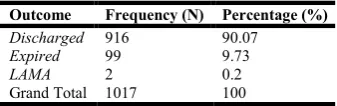
Table 3. Outcome of the neonates who were admitted to NICU
Outcome Frequency (N) Percentage (%)
Discharged 916 90.07
Expired 99 9.73
LAMA 2 0.2
Grand Total 1017 100
Table 4. Showing case fatality rate of the admitted neonates
Disease
Outcome
Total Discharged Expired
N % N % N %
NNJ 269 99.3 2 0.7 271 100 Septicemia 176 90.7 18 9.3 194 100 Prematurity 103 81.1 24 18.9 127 100 Birth Asphyxia 60 84.5 11 15.5 71 100 RDS 49 84.5 9 15.5 58 100 Hypernatremic Dehydration 40 95.2 2 4.8 42 100 Hypoglycemia 39 97.5 1 2.5 40 100 Seizure Disorder 34 97.1 1 2.9 35 100
TTN 30 90.9 3 9.1 33 100
MAS 20 66.7 10 33.3 30 100 Congenital Anomalies 20 76.9 6 23.1 26 100 Pneumonia 22 91.7 2 8.3 24 100 Polycythemia 18 94.7 1 5.3 19 100 Meningitis 13 92.9 1 7.1 14 100
Diarrhea 8 100 0 0.0 8 100
[image:3.595.214.383.522.575.2] [image:3.595.180.414.605.799.2]It was observed that out of 1017 neonates admitted most were discharged (90.07%) whereas as 9.73% expired and only 0.2% left against medical advice (LAMA) (Table 3). There were 1017 neonates admitted out of which the two (2) neonates that left against medical advice (LAMA). Being insignificant in numbers these two neonates were excluded from further analysis for the case fatality rate. It was observed that the case fatality rate was maximum in MAS (33.3%) followed by Congenital Anomalies (23.1%), Prematurity (18.9%), Birth Asphyxia (15.5%), RDS (15.5%), & Septicemia (9.3%). TheChi-squared test (χ2) static value was 89.49585 (df =15) and the p-value was less than 0.0001 indicating that disease type is very strongly associated (p<0.0001) with the outcome of a neonate (Table 4).
DISCUSSION
Accurate data on the neonatal disease volume and pattern are useful for many reasons. It is important for the providers of care, investigators, local and national health administrators, and for decision makers to design interventions for prevention and treatment and to implement and evaluate health care programs. The data from NICUs of hospitals in India is very limited and there are very few published reports from these hospitals. Perhaps this is the first published data concerning Neonatal Intensive Care Unit issue in Jammu & Kashmir. This is a hospital-based study and may not present what is going on in the community. So, the results of this study should be compared cautiously with other similar studies, because NICU of SKIMS Srinagar doesn’t have a birthing site and only out-born neonates are admitted here. It was found that a total of 1017 neonates were admitted in the NICU during the period of study i.e. 1St Jan-31st Dec 2013. Only outborn neonates are admitted in SKIMS Srinagar. The volume of patients admitted were similar to various national and international studies. A study conducted by Aijaz N, et al. (2012)at Karachi found that the average length of stay (ALS) was 6.5 days whereas the average length of stay (ALS) of the neonates admitted to NICU in our study was 5.7 days which is lesser. The age wise distribution of admitted neonates in our study revealed that most the neonates were in the age group of 0-7 days (79.4%) group followed by 12.2% in 8-14 days age group similar to the study by Anjum, Z.M. and Shamoon, M. (2009). These findings are logical and expected as neonates in early neonatal period are at risk of contracting diseases and at risk neonates are identified by healthcare workers immediately if they are born in hospitals. Our study also showed that males (58%) outnumber their female (42%) counterparts which is consistent with local literature reported by Kumar MK, et al. (2012), (60 % male versus 40 % female) and international studies from Pakistan by Seyal, T, et al. (2011) (59.55 % male versus 40.5% female) and by UgwuGi, M.G. (2012) of Nigeria (54.3% male versus 45.7 % female). The average age of gestation of neonates was 36.15 week which was similar to a study conducted by Nahar, J. et al. (2007) in which it was35.6 ± 3.4 weeks. In this study about two-third of the neonates were of full term (60.6%) gestation and one-third were preterm (38.5%) which was similar to another study conducted by Gauchan, E. et al. (2011) in which there were 67.5 % term babies and 31.3% preterm babies. Our findings are understandable because probably Janani Suraksha Yojana (JSY) & Janani Shishi Sawasthaya Karyakram (JSSK) Scheme of National Rural Health Mission (NRHM) has enhanced the Ante-natal check up, hospital deliveries and neonatal care
among the general population. The average weight of the neonates on admission in our study was 2525.7 grams which was similar to a study conducted by Nahar J, et al. (2007) [14]in which it was 2420 ±808 gm. The weight parameter analysis revealed that the number of neonates having weight Extremely Low Weight (<1000 grams), Very Low Weight (1000-1499 grams) and Low Weight (1500-2499 grams), Normal Weight (2500-4000 grams) and High Weight (>4000grams) was 0.4%, 6.7% and 32.9%, 58.3% and 1.7% respectively.The results of our study are comparable to a similar study done by Hussain S. (2014) which revealed that 2.25% were <1000 grams, 12.2% were between 1000-1499 gram, 39.35% were between 1500-2499 grams, 42.25% between 2500-4000 grams, and 3.95% were more than 4000gram. Our study also revealed that most of the admitted neonates were delivered in health institutions (90%) and only small number were delivered at home (10%). The findings of our study are comparable the findings of Rahim, F, et al. (2007) whereas Jan AZ, et al. (2013) found that 66% were delivered at hospital, 28% were delivered in home and 6% were delivered at other place. The findings of more number of health institution deliveries in our study are probably due to Janani Suraksha Yojana & Janani Shishu Sawasthaya Karyakram Scheme of National Rural Health Mission. It is reasonable to accept that the disease pattern in neonates can change with time and geographical location. Reporting of neonatal disease pattern from time to time contributes to identify deficiencies and assists health planners and workers to pay their due attention. In our study it was observed that most common indication for admission was Neonatal Jaundice (26.7%) similar to other studies by Gauchan et al. (2011) and Narayan, (2012). This may probably be due to location of the population at higher altitude in all these studies. In contrast to our study Respiratory Distress Syndrome was the most common cause of admission in Aijaz et al. (2012) study. Prematurity was the most common cause of admission in Nahar et al. (2007) and Seyal et al. (2011) studies. Birth asphyxia was the most common cause of admission in Anjum and Shamoon, (2009), Quddusi, et al. (2012)and Tabassum et
al. (2013) studies. In our study it was also revealed that
Neonatal Jaundice (26.7%), Septicemia (19.1%), and Prematurity (12.5%), Birth Asphyxia (7%), Respiratory Distress Syndrome (5.7%) were the top five most common indications for admission to NICU which constitutes about three-fourth of the total admissions.
mortality statistics between NICUs from different parts of the world. This variation probably reflects the difference in the attending population, antenatal care, admission criteria, specific exclusion & inclusion criteria and level of neonatal care. In our study it was observed that out of 1017 neonates admitted, 916 (90.07%) of the neonates were discharged, 99 (9.73%) died and 2 (0.2%) left against medical advice (LAMA). However, there were only 63 (6.19%) were institutional deaths. The neonatal mortality (9.73%) in NICU of SKIMS Srinagar is similar to a study conducted by Sarkar
S, et al (2010) (9.7%), and Tariq P, and Kundi, (1999)(9%).
Unlike observations in our study higher rates have been reported by Arafa and Alshehri, (2003) (22.4%), Kasirye-Bainda and Musoke, (1992) (24.6%), Agbere et al (1998) (27%), Aijaz et al. (2012)(13.8%), Islam et al. (2000) (20.6%), Kumar et al. (2012) (13.6 %), Hoque et al. (2011) (13.8%), Rahim et al. (2007) (14.87%) Parkash and Das (2005)(25.5%), Seyal et al. (2011) (30.9%) and Prasad and Singh (2011) (18.69%). Low neonatal mortality rates were found by Sankaran et al (2002), (4%) & Zullini et al (1997) (6%) respectively. The case fatality rate of a disease indicates the killing power of that disease and demands breakthrough technology and drugs to reduce the case fatality rate which provides us an indication for the area of neglect and the need to take corrective measures in this regard. It also provides us the indication of prognosis of the case. Our study showed that Meconium Aspiration Syndrome (MAS) (33.3%) followed by Congenital Anomalies (23.1%), Prematurity (18.9%), Birth Asphyxia (15.5%) and Respiratory Distress Syndrome (RDS) (15.5%) were the top five most common conditions having high case fatality rate.
Limitations of study
Hospital based study and does not represent community data
We were unable to diagnose inborn errors of metabolism due to lack of diagnostic facilities
CONCLUSION
The case fatality rate was maximum in MAS (33.3%) followed by Congenital Anomalies (23.1%), Prematurity (18.9%), Birth Asphyxia (15.5%), RDS (15.5%), & Septicemia (9.3%).
Recommendations
Public enlightenment on the need to patronize quality health care delivery systems.
Improving facilities for neonatal care especially care of the preterm neonate.
Further studies to evaluate the risk factors and causes of neonatal infections in our environment will assist in appropriate interventions to bring about a reduction in these cases.
There is a need for timely referral to a tertiary care hospital from peripheral and non-tertiary setups to prevent and control neonatal mortality and morbidity.
REFERENCES
Agbere, A.D., Baeta, S., Balaka, B., Douti, Y., Atakouma, D.Y., Kessie, K., Assimadi, K. 1998. Neonatal mortality in the Tantigou
pediatric hospital, Dapaong (north Togo) in 1984-1985 and 1994-1995.Bull Soc Pathol Exot., 91: 315-317.
Aijaz, N., N. Huda and S. Kausar. 2012. Disease Burden of NICU, at a Tertiary Care Hospital, Karachi. J. Dow Univ. Health Sci. Karachi., 6: 32-35.
Anjum, Z.M., Shamoon, M. 2009. Pattern of Neonatal unit of Allied Hospital Faisalabad Pakistan. Annals Punjab Med Col., 3: 129-31.
Arafa, M.A., Alshehri, M.A. 2003. Predictors of neonatal mortality in the intensive care unit in Abha, Saudi Arabia. Saudi Med J., 24: 1374-1376
Baines, M.A. 1862. Excessive Infant-Mortality: How Can It Be
Stayed? (www.neonatology.org/classics/baines.html Retrieved
October 26, 2012.)
Blackman, J.A. 1991. Neonatal intensive care. Is it worth it? PedClin North Am., 38:1497-1511.
Elhassan, M., Elhassan, Ahmed A. Hassanb, Omer A. Mirghani, Ishag Adam. 2010. Morbidity and Mortality Pattern of Neonates Admitted into Nursery Unit in Wad Medani Hospital, Sudan.
Sudan JMS., 5(1) :13-15
Gauchan, E., Basnet, S., Koirala, D. P., Rao, K. S. 2011. Clinical profile and outcome of babies admitted to Neonatal Intensive Care Unit. Journal of Institute of Medicine, August; 33(2):1-8 Hoque, M., Haaq, S., Islam, R. 2011. Causes of neonatal admissions
and deaths at a rural hospital in KwaZulu-Natal, South Africa.
South Afri J Epidemiol Infect., 26 (1):26-9.
Hussain, S. 2014. Neonatal Morbidity and Mortality Pattern in a Tertiary Care Neonatal Unit of a Teaching Hospital. Ann. Pak.
Inst. Med. Sci., 10(1):7-11.
Islam, M.N. 2000. Situation of neonatal health in Bangladesh. The
Orion Medical Journal., 6:3-6.
Jain, S., Bhakoo, O.N., Singh, M. 1990. Neonatal Monitoring, Recommendations and Proceedings of the Seminar 1990. Indore:
Chathram Hospital & Research Centre, pp 6-17.
Jan, A.Z., Ahmad, S., Zahid, S.B. 2013. Clinical audit of admission pattern and its outcome in a Neonatal ICU. Gomal J Med Sci., 11: 31-6.
Kasirye-Bainda, E., Musoke, F.N. 1992. Neonatal morbidity and mortality at Kenyatta National Hospital newborn unit. East Afr Med J., 69: 360-365.
Lawn, J.E, Cousens, S., Zupan, J. 2005. Lancet Neonatal Survival Steering Team; 4 million neonatal deaths: when? Where? Why?
Lancet, 365:891–900.
Mani Kant Kumar, SachidaNand Thakur, BrishBhanu Singh. 2012. Study of the Morbidity and the Mortality Patterns in the Neonatal Intensive Care Unit. Journal of Clinical and Diagnostic Research, 6(2): 282-285.
McGilUgwu, G. I. 2012. Pattern of morbidity and mortality in the newborn special care unit in a tertiary institution in the Niger Delta region of Nigeria: A two year prospective study. Global Advanced Research Journal of Medicine and Medical Sciences., 1(6):133-138.
Nahar, J., Zabeen, B., Akhter, S., Azad, K., Nahar, N. 2007. Neonatal morbidity and mortality pattern in the special care baby unit of Birdem.Ibrahim Med. Coll. J., 1(2): 1-4.
Narang, A., Kiran, P.S., and Kumar, P. 2005. Cost of Neonatal Intensive Care in a Tertiary Care Center. Indian Pediatrics, 42: 989-997.
Narayan, R. 2012. A study of pattern of admission and outcome in a neonatal intensive care unit at high altitude. Sri Lanka Journal of Child Health., 41: 79-81.
National Neonatology Forum. 2012. Washington (D. C.): National Neonatology Forum and Save the Children US; 2004. The state of India's newborns. (www. savethechildren.org/publications/india_ pdf/SOIN_Document.pdf.pdf Accessed 20 October 2012.) Parkash, J., Das, N. 2005. Pattern of admission to neonatal unit. JColl
Physician Surg Pak., 15:341-44.
Prasad, V. and Nutan Singh, N. 2011. Causes of morbidity and mortality in neonates admitted in Government Medical College Haldwaniin Kumaon Region ((Uttarakhand) India. Journal of Pharmaceutical and Biomedical Sciences., 8(8): 1-4.
Care Delivered through District Level Public Hospitals in India.
Indian Pediatr., 50: 839-846.
Quddusi, I.A., Razzaq, A., Hussain, S., Hussain, A. 2012. Pattern of Neonatal Admission at the Children’s Hospital and the Institute of Child Health, Multan. J Ayub Med Coll Abbottabad., 24(2): 108-110.
Rahim, F., Mohammad, A.J., Iqbal, H. 2007. Patterns and outcome of admissions to neonatal unit of Khyber Teaching Hospital, Peshawar. Pak J Med Sci., 23: 249-53.
Sana Tabassum, Muhammad Amin, Muhammad Akram and Muhammad AmanUllah. Prevalence of Neonatal Diseases in Multan Region, Pakistan. Pakistan Journal of Nutrition., 12 (6): 544-548.
Sankaran, K., Chien, L.Y., Walker, R., Seshia, M., Ohlsson, A. 2002. Canadian Neonatal Network. Variations in mortality rates among Canadian neonatal intensive care units. CMAJ. 166: 173-178.
Sarkar, S., Sarkar, D., Longia, S., Sibi, D. 2010. NICU Outcome in a Low Resource Teaching Hospital Setting. Pediatric Oncall.
[serial online] 2010 [cited 2010 July 1];7.Art#38.
Available from http://www.pediatriconcall.com/fordoctor/ Medical_original_ articles/ nicu_outcome.asp
Seyal, T., Husnain, F., Anwar, A. 2011. Audit of Neonatal Morbidity and Mortality at Neonatal unit of Sir Gangaram Hospital Lahore.
Annals King Edward Med Coll., 1: 9-13.
Syed, R. Ali, Shakeel Ahmed and Heeramani Lohana. 2013. Disease Patterns and Outcomes of Neonatal Admissions at a Secondary Care Hospital in Pakistan. Sultan Qaboos University Med J., 13 (3): 424-428.
Tariq, P., Kundi, Z. 1999. Determinants of neonatal mortality.J Pak Med Assoc., 49: 56-60.
United Nations Children's Fund. 2012. Toolkit for setting up of special care newborn units, stabilization units and newborn
corners. New Delhi, India. 2008: p. 9. (www.unicef.org/
india/SCNU_book1_April_6.pdf, accessed on 20.
Zullini, M.T., Bonati, M., Sanvito, E. 1997. Paulista Collaborative Group on Neonatal Care. Survival at nine neonatal intensive care units in Sao Paulo, Brazil. Rev Panam Salud Publica. 2: 303-309.