TESTING THE MIRRORING HYPOTHESIS IN THE NPD CONTEXT: AN
ANALYSIS OF THE RELATIONSHIPS BETWEEN PRODUCT
ARCHITECTURE, NPD TEAM STRUCTURE, TEAM KNOWLEDGE
CREATION AND NPD PROJECT PERFORMANCE
Author: Auke van Rijkom
University of Twente P.O. Box 217, 7500AE Enschede
The Netherlands
ABSTRACT
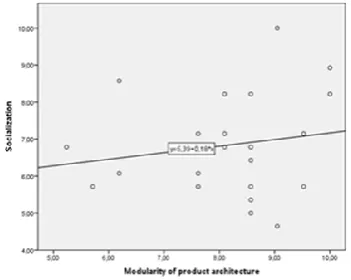
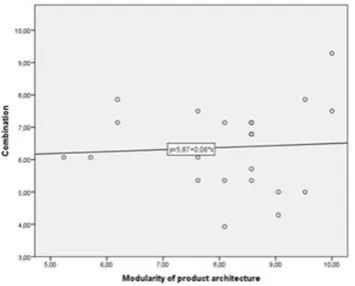
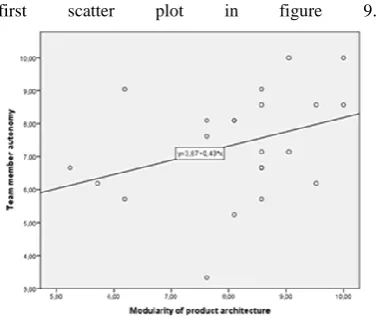
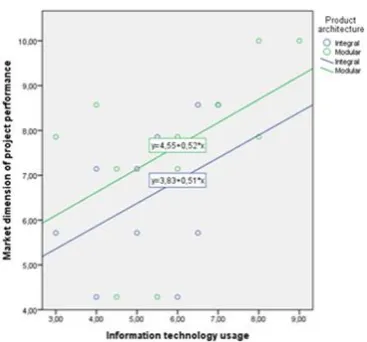
Although prior studies increased our understanding of the performance implications of the intra-organizational mirroring effect, they remained confined to certain methodologies. These confined methodologies limits, in essence, any opportunity to involve more variables and observations from a diverse sample of organizations into the analysis of the mirroring effect and to increase the external validity of any results derived from this research. Furthermore, the use of the knowledge creation model in the new product development (NPD) context is also limited. This study therefore broke with the predominant methodology used in this type of research and made use of the knowledge creation model to gain additional insights in the mirroring effect and more importantly, its effects on project performance. Confirming the mirroring hypothesis based on a wide scale of team structural and knowledge creation variables, while examining its effect on project performance formed the primary goal of this research. Based on survey data derived from twenty two managers involved in NPD projects gathered over an equal amount of Dutch manufacturing organizations, hypotheses about whether the mirroring effect was apparent and its effects on NPD project performance were tested. The analysis of scatter plots suggest that teams involved in the development of modular products will display more externalization, combination activities while displaying less socialization and internalization activities than teams developing integral products. For the team structure dimensions it was found that teams developing modular products can be characterized as displaying more team stability, more team member autonomy and make more use of Information Technology (IT) systems when compared to teams developing integral products. The data showed that the effect on project performance changed for separate subgroups based on the modularity of product architecture. This indicates that effects of the knowledge creation variables and team structure variables on NPD project performance are contingent on the modularity of product architecture. This moderating effect of product architecture can have significant impacts on NPD project performance. These findings contribute to the academic discussion of the mirroring hypothesis and NPD team knowledge creation by showing that a change in methodology opens up opportunities to test more diverse variables over a larger sample of organizations. Furthermore the use of the knowledge creation model in the NPD context has shown to yield interesting results in this research and is a promising measure for future research. Practical implications of this research suggests that managers could benefit from monitoring the product architecture of a product under development and facilitate or hinder certain knowledge creation modes and team structure dimensions to improve NPD project performance.
Supervisors:
First Supervisor: Dr. Matthias de Visser
Second Supervisor: Dr. Ir. Erwin Hofman
Keywords
mirroring hypothesis, knowledge creation model, NPD teams, product development, project performance, product architecture, team structure.
Permission to make digital or hard copies of all or part of this work for personal or classroom use is granted without fee provided that copies are not made or distributed for profit or commercial advantage and that copies bear this notice and the full citation on the first page. To copy otherwise, or republish, to post on servers or to redistribute to lists, requires prior specific permission and/or a fee.
BA Master Thesis, August 31st, 2017, Enschede, The Netherlands.
1.
INTRODUCTION
New products form the basis for organizational survival as one-third of the organizations revenue is generated from products which are developed in the last five years (C.-J. Chen, 2007). Organizations thus invest vast resources in order to outperform their competitors through the delivery of qualitative new products. Previous research has highlighted the importance of product architecture in successfully completing New Product Development (NPD) projects as architecture influences product design which in turn affects quality and costs (Eppinger, Whitney, Smith, & Gebala, 1994)(Sanchez & Mahoney, 1996). Here product architecture dictates how separate components are linked together and how they function (Ulrich, 1995).
Scholars have recognized the relationship between product architecture and organizational characteristics of the organization that undertakes the development of the product (Henderson & Clark, 1990)(Sosa, Eppinger, & Rowles, 2004). This essentially is the basis of ‘the mirroring hypothesis’ which suggests that product architecture will mirror organizational structure (MacCormack, Baldwin, & Rusnak, 2012). In this context organizational structure is defined as the scheme by which the function of an organization is allocated in distinct entities (Colfer, 2007). The reasoning behind the idea that organizational structures will mirror technical dependencies of a product under development is threefold. Firstly, the product architecture dictates where certain technical interdependencies arise in product design. Product architecture can differ in terms of modularity. Here integral product architectures are characterized by the absence of standardized interfaces and high technical interdependence between components. In modular product architecture a standardized interface can be observed without unnecessary technical dependence between components (Ulrich, 1995). Secondly, division of labor dictates whether personnel can work independently from one another and lastly, division of knowledge dictates where knowledge resides in organizational entities and how it is distributed (Colfer & Baldwin, 2010). Intuitively it is clear that these three aspects are differently influenced when dealing with the described different types of product architectures. The direction of this mirroring is unclear and evidence is scattered among studies (Colfer, 2007). Some researchers suggest that organizational structure should follow product architecture (Colfer, 2007) or that organizational structure influences product architecture (Henderson & Clark, 1990). Whichever way the direction of causality may be, meta-analysis has shown that studies find significant support for the hypothesis indicating there is a link between product architecture and organizational ties of 68% at the intra-organizational studies and 47% in the inter-organizational studies sample (Colfer & Baldwin, 2010).
Research examining the mirroring hypothesis considering intra-organizational context tend to focus on the need to align team communication with the technical dependencies of a single New Product Development (NPD) project (MacCormack et al.,
2012). Technical communication patterns are compared to the technical dependencies of components of a product under development (Sosa et al., 2004). However in this intra-organizational study, the mirroring hypothesis will be taken outside of this context and subjected to a wider scope. By examining the mirroring hypothesis on project level and taking knowledge creation modes and NPD team structure dimensions as the organizational entity, this study will increase our understanding on the dynamics governing the mirroring hypothesis as more factors than just technical communications od teams are examined. Additionally the empirical research across a variety of NPD teams from development organizations in diverse industries will lead to an increase in external validity of the results and conclusions drawn from them.
mirroring hypothesis and solving the apparent gap in literature. Furthermore the use of data from several organizations increases the external validity of this research’s outcomes and conclusions. Additionally the use of the knowledge creation model in the context of NPD teams is also relatively new. The effect of the separate knowledge creation modes have never been examined in combination with product architecture and could better portray team members’ interaction during a development project.
2.
THEORETICAL
FRAMEWORK
2.1
Mirroring Hypothesis
Most prominent in the observation that organizations will structure their developing processes in a way that resembles their organizational architecture, Henderson and Clark (1990) started a stream of literature which linked product architecture and organizational structure together. This formed the basis for what became later known as the ‘mirroring hypothesis’.
The mirroring hypothesis states that organizational patterns will correspond to the technical patterns of dependency in a system or product under development (Colfer & Baldwin, 2010). In short, an organization’s structure will duplicate the product architecture where teams developing integral products will be also structured in a way which can be deemed integral. Alternatively modular products will lead to a modular structuring of teams (Colfer, 2007). The reasoning for following the technical architecture of the product under development is the nature of task interdependencies. In complex NPD projects the design interface is the most important reason for team interdependence (Mihm, Loch, & Huchzermeier, 2003). This leads to the creation of teams whom are concerned with specific components. The two mayor inputs of the mirroring hypothesis are thus technical dependency and team structure.
In the NPD context, the mirroring hypothesis suggests that communication patterns between individuals or teams should line up with dependencies between components in order to share or create knowledge (Colfer & Baldwin, 2010). Management of knowledge associated with architecture of products is an important challenge. It is embedded in the structure of the organization and it is especially difficult to manage in complex product development due to the large number of components and employees involved (Sosa et al., 2004).
Many scholars have focused on the relationship between technology and organizations in various fields such as strategy, innovation management and economics. Results suggest that technical interdependencies and thus task interdependencies, require changes from the organization concerning its structure and communication channels (Hao, Feng, & Frigant, 2015). The organization thus has the option to adapt team structure to product architecture or to adapt product architecture to team
structure. As NPD projects are primarily executed by cross-functional NPD teams facing the need to solve design problems and thus simultaneously create knowledge , this research will therefore focus on the relationship between product architecture, NPD team structure and the knowledge creation model, where other studies only examined the technical design and the explicit coordination relationship of product architecture and technical communication (Hao et al., 2015).
As said the direction of causation of the mirroring effect is not unanimously accepted as it was believed that when the product architecture was clear from the beginning of the development project, product architecture would dictate organizational structure. This is however a rarity in most cases so an organization would design the product around its own structure where product architecture is thus likely a result of organizational structure (Colfer & Baldwin, 2010). Recent studies however favor the direction of causality where product architecture will dictate organizational structure. The reasoning focuses on the fact that problem solving and knowledge exchange relies on the potential solutions for the product under development which does not consider organizational boundaries (Sorkun & Furlan, 2016).
Typically the mirroring hypothesis is tested by examining the overlap of communication patterns of organizational forms and technical dependencies of a product under development (MacCormack et al., 2012). The reasoning behind the importance of communication is the interdependence of components. When dealing with complex integral development projects a change in one component is almost certain to incur an adjustment of components who are connect with the changed component (Ulrich, 1995). These interdependencies need to be addressed between contributors of a development project by means of communication. Only few researchers deviate from this methodological setup when examining the mirroring hypothesis within an organization. For example a study researched the difference in product architecture of software products developed by different organizational forms (commercial organizations versus open-source communities) (MacCormack et al., 2012). Another inter-organizational study examined the relationship between technical modularity and tacit inter-firm coordination (Hao et al., 2015).
interaction between team members as their information exchanges result in the creation and exchange of knowledge.
Evidence of the positive effect of mirroring on project performance, is scattered and limited across studies in diverse fields (Colfer & Baldwin, 2010). Previous research has shown that misalignment of product architecture and organizational structure during NPD projects lead to more warranty claims, indicating product quality problems (Gokpinar, Hopp, & Iravani, 2010). Additionally unmatched product architecture and organizational communication leads to unforeseen design iterations and even disassembly of assembled products. This increased project duration and costs (Sosa et al., 2004).
There are also some exceptions when mirroring of the product architecture and organizational structure does not occur. In some cases richly communicating NPD team developed a product with a highly independent architecture. The explanation for this contradiction lies in the fact that this team did adhere other aspects of modular architecture such as information hiding and design rules that further cement independence between components (Colfer & Baldwin, 2010). Another exception was found where independent and geographically dispersed contributors to a development project delivered a product with highly integral product architecture. Here it was found that active effort was made to create a shared understanding of the project, there was a protective atmosphere and there were no conflicts of interests. Furthermore the project was transparent and all members of the NPD team could contribute to the project at any time from any location due to sophisticated IT-systems. This reduces the need for traditional face-to-face communication and could thus mirror the artificial integral organizational structure, resulting in a integral product structure (Colfer & Baldwin, 2010).
2.2
Product Architecture
An important aspect of the mirroring hypothesis is naturally product architecture as it is portrayed as one side of the mirror. Product architecture can be defined as the schematics of a product which dictates how functions are generated by the different components (Ulrich, 1995). Product architecture provides the basis for partitioning the development tasks needed to be executed. It is therefore used as a tool to determine the optimal partitioning of structure of the organization that develops it (Sanchez & Mahoney, 1996)(Henderson & Clark, 1990).
Modularity is a special form of product architecture which seeks to partition a product in completely functionally specialized units which operate as independently as possible. This in turn creates the possibility to easily remove or replace these units or modules. An important aspect is the standardized interface to which modules connect (Colfer, 2007). This standardized interface creates an one-to-one mapping of modules (Meyer & Utterback, 1992). This standardized interface is not permitted to change over a period of time. This control of output of design activities provides a form of information
structure encouraging separation of organizational structure allowing component developers to complete their tasks without explicit managerial control (Sanchez & Mahoney, 1996).
Modular product designs offer significant advantages. The easily separation of modules allows organizations to quickly introduce new products and adjust product qualities to specific markets tastes. This type of interface allows for fast and easily upgrade of products. All of these improvements can be made with shorter lead times and at a significantly lower costs (K. M. Chen & Liu, 2005). Considering innovation, modularly designed products are usually developed faster. This can be explained as modular product architecture allows for concurrent development of components and learning. In this process separate components are developed at the same time, where in comparison the traditional sequential process requires some components to be developed before development of the other components can start (Sanchez & Mahoney, 1996). Furthermore the mirroring hypothesis states that organizational entities are highly independent, narrowly specialized, and like the components in the modular product architecture, easily replaced (Schilling & Steensma, 2001). Products can also feature an integral architecture, which sharply contrasts the properties of the modular product design. Typical integral product designs feature multi-functional components which subsequently have many ties with other components. The one-to- one mapping in modular product architecture is therefore not applicable. These products require a NPD team to communicate more frequently and work in co-located situations to ensure adequate performance of the developed products (Ulrich, 1995). In light of the mirroring hypothesis it is stated that these kinds of integral products require an integral organizational structure (Colfer, 2007).
Product modularity is applicable on three levels. On component level, where the modularity of a single component is assessed. on sub-system level where modularity of a sub-system is analyzed and on final product level where the technical dependencies of the final product is described (Sorkun & Furlan, 2016). This research focuses on product modularity on final product level as this is the output of NPD projects. To call a product modular in its architecture it must adhere two key characteristics. The components are coordinated through standardized interfaces and each component performs purely one function (Ulrich, 1995). In practice it is seen that truly modular or truly integral product architectures are rare and are positioned on a continuum where modular and integral architectures form the extremes on opposite ends of the continuum (Colfer, 2007). Such a measure is ultimately used in this research, to measure modularity of product architecture.
2.3
Development Process
split among NPD team members as the architecture emphasizes minimal dependency. The dividing of development tasks in turn fosters parallelism. Several components can be developed concurrently or in parallel as contributors do not depend on knowledge from other contributors which makes them highly independent (Parnas, 1972). When dealing with the development of products with a modular architecture the concept of information hiding becomes important (C. Baldwin, 2007). This design rule states that separate developers should avoid sharing assumptions. As each component is developed separately and performs a different specialized function, sharing of knowledge is not needed and could even be detrimental to product performance (C. Baldwin, 2007). Guiding the interaction between components is the standardized interface which characterizes the modular product architecture (Colfer, 2007). In short the modular product architecture reduces complexity of the development of the product by creating smaller sub-problems. Furthermore it makes portioning and coordination of these sub-problems over a NPD team easier. Partitioning design tasks is needed, as individuals are limited in their ability to fully comprehend large design decisions and the potential outcome of these decisions (Simon, 1973).
Interdependencies between components need to be addressed and effectively communicated across the NPD team. This explains why researchers concerned with the mirroring hypothesis tend to focus on communication patterns in the within-firm study sample. By reducing the need of communication through standardization, the problem of frequent component change is solved. Alternatively organizational structures can change by improving communication through co-location (Colfer & Baldwin, 2010). Alternatively formulated the knowledge and information processing structure of the organizational entity should mirror the internal structure of the product underdevelopment (Henderson & Clark, 1990).
Products with an integral product architecture thus require face-to-face communication, physical co-location and formal authority to coordinate interdependencies of such architecture and complex design problems associated with it (Colfer & Baldwin, 2010)(Sanchez & Mahoney, 1996). The lack of the opportunity to partition the development project in smaller sub-problems in the development of products with an integral product architecture means that the concurrent and overlapping design process of modular product designs is not an option. This further reinforces the need for co-location and frequent communication as design tasks are interdependent (Sanchez & Mahoney, 1996).
2.4
Organizational Structure
The other side of the mirror is the organizational structure. Organizational structure reflects how organizational entities are located and if a clear distinction can be made between them. This research takes cross-functional NPD teams as the organizational entity as NPD projects are primarily executed by such teams.
Organizations can be viewed as complex systems comprised of various elements with different degrees of coupling between them (Orton & Weick, 1990). Organizational coupling can be analyzed on many facets, which fall in three broad categories; goals, structure and behavior. Where organizational structure can be further divided in membership, autonomy and location (Orton & Weick, 1990). These separate dimensions represent a continuum measuring the degree of coupling between participants. On one end of the continuum lies tightly coupled organizational forms with shared and explicit goals, closed membership, formal authority, co-located members and planned behavior. On the other end of the continuum loosely-coupled organizational forms can be uncovered characterized by diverse goals, open membership, informal authority, decentralized located members and emergent or independent behavior of participants (MacCormack et al., 2012). This distinction between tightly coupled and loosely coupled organizational forms reflects the distinction between integral and modular organizational forms (Colfer & Baldwin, 2010).
The degree of organizational coupling is easily translated to NPD teams and shows some similarities with established theories concerning NPD team structures. The research on team structures is relatively refined, where the research of Clark and Wheelright is most renowned (Clark & Wheelright, 1992). This paper describes four dominant team structures executing development projects. These structures can be described as functional, lightweight, heavyweight and autonomous teams. These teams differ in their location, degree of autonomy and degree of specialization. Here a one-dimensional scale is suggested with functional team structures at one end of the continuum and autonomous teams at the other end of the scale. Lightweight and heavyweight teams are situated in between these extremes (Clark & Wheelright, 1992).
This research however suggests that in reality different innovation types might be performed by teams that display some elements of typical heavyweight or autonomous teams and some elements might be taken from lightweight or functional teams. The fit between a one-dimensional approach of structure and product architecture might therefore not yield significant statistical results. This multidimensional approach will focus on the structural characteristics of organizational coupling; team membership, autonomy, location (MacCormack et al., 2012).
2.5.1
Team Member Proximity
Team member proximity might differ among NPD teams as the product architecture of the product under development differs. In increased complexity and uncertainty situations in certain innovation projects might require in-depth knowledge transfer and refinement which only physically co-location might provide (Nonaka, 1994). On the other hand, in situations where development activities can be divided in separate tasks without a high degree of interdependence, co-location might not be as important in influencing development projects success. Research is divided in the effect of team member proximity on project performance and no real link has been found between the type of innovation and the effect of team member proximity on NPD project performance (Kim & Kim, 2009).
2.5.2
Team Stability
Team stability’s importance has been proven in several studies, as team member turnover disrupts the functioning of a team due to a reducing knowledge pool from which members can draw (Akgun, Byrne, Keskin, Lynn, & Imamoglu, 2005). Team member stability therefore influences NPD project success. This is however only the case when dealing with the development of products with a integral product architecture. This research suggests that team member stability would depend on knowledge needs of the project at hand. More fluid participation is expected when dealing with NPD projects which are characterized by low task interdependence and concurrent development process.
2.5.3
Team Member Autonomy
Autonomy can be defined as the degree of freedom and independence a NPD team member is given in setting their tasks, rules and even budgets (Carbonell & Escudero, 2011). Team member autonomy is considered to be positively related to NPD project performance. Outcomes and procedures cannot be clearly set by management and a NPD team member requires the autonomy to coordinate activities, tasks and resources to complete independent design tasks based on decentralized decision making to improve project efficiency and flexibility (Carbonell & Escudero, 2011). Greater autonomy also signals a sense of importance to the development project (Nakata & Im, 2010).
2.6
Knowledge Creation Model
2.6.1
The SECI Model
Knowledge embedded in cross-functional New Product Development (NPD) teams needs to be leveraged in order to achieve its project goals (Slotegraaf & Atuahene-Gima, 2011). It is widely accepted that product development is a highly knowledge intensive process where knowledge is created, stored and reshaped (Söderquist, 2006). This forms the basis to deviate from traditional mirroring hypothesis methodology and focus on the mirroring effect of product architecture on team structure dimensions and knowledge creation modes rather than just technical communication.
This research relies on the knowledge creation model in order to explain how the division of knowledge influencing the mirroring hypothesis. The reasoning for this is that division of knowledge takes up an important place influencing the mirroring hypothesis as NPD is a knowledge intensive process (Colfer & Baldwin, 2010). The knowledge creation model or SECI model was first developed in Japan and featured a framework explaining knowledge creation (Nonaka, 1991). The model dictates that knowledge can be composed of two dimensions tacit and explicit. The tacit knowledge is based on experience, thinking and feeling and is highly context specific. The explicit dimension is knowledge which is codified in tangible objects or procedures (Nonaka, 1994) (Popadiuk & Choo, 2006). The knowledge creation model describes the transition of tacit knowledge to tacit or explicit knowledge and the transition of explicit knowledge to explicit or tacit knowledge as can be seen in figure 1 (Nonaka, 1994). The transition between the knowledge dimensions were defined as Socialization, Externalization, Combination and Internalization (SECI). Completing these knowledge transitions would allow for knowledge creation to occur in an
organization (Nonaka, 1991).
Figure 1: The knowledge creation model (Nonaka, 1994, p.19)
in individuals mental models (Nonaka, 1994). Internalization allows explicit knowledge to be used in specific situations. Internalization is also seen as learning as explicit knowledge is assimilated in a individuals knowledge base, creating tacit knowledge (Karim et al., 2012).
The SECI processes of knowledge creation are seen as the mechanisms not only for knowledge creation but also for knowledge sharing. SECI model encompasses thus not only knowledge creation but also knowledge sharing dimensions (Becerra-Fernandez & Sabherwal, 2001). The study of Darroch (2003) in fact uses the SECI model to explain knowledge dissemination or sharing in organizations (Darroch, 2003).
2.6.2
The SECI Model in NPD Context
As product innovation is a collective effort relying on a NPD team, knowledge creation and sharing is quite important. Especially since the NPD process draws from existing knowledge basis and simultaneously creates new knowledge as the NPD project continues. Existing knowledge needs to be retrieved while new knowledge needs to be validated (Söderquist, 2006). In this context the socialization dimension of the SECI model fulfills the creating and validating roles needed. The knowledge creation model is gaining momentum in research concerning NPD context and is validated as a reliable measure for team level of knowledge creation (Schulze, 2006). Knowledge ambiguity comprehends uncertainty on specification of the underlying knowledge components and sources, and their interaction. It is closely related to tacitness. Knowledge ambiguity therefore hampers knowledge transfer (Van Wijk, Jansen, & Lyles, 2008).
Knowledge dissemination includes knowledge transfer and sharing. The distinction between tacit and explicit knowledge becomes again important as in knowledge transfer explicit knowledge is transferred through formal communication channels (IT-systems). Knowledge transfer is quite fast due to its low ambiguity (Söderquist, 2006). The combination and internalization processes allow explicit knowledge to be extended and allows for transfer of this knowledge to individual team members. The rules are clear to all participants which is not the case with tacit knowledge sharing. Knowledge sharing however is a social process where explicit en tacit knowledge dissemination through inter-personal interaction, cognitive models can be shared. An important influence to organizational knowledge transfer is knowledge ambiguity.
This means the sharing of tacit knowledge is only facilitated by socialization and that it is highly context specific. Tacit knowledge is shared and created when participants come together and when people learn by doing. This indicates that tacit knowledge is only created when people perform non-routine tasks (Söderquist, 2006). Creating a shared mental model and using metaphors allows for the externalization process to take place which makes tacit knowledge explicit.
When viewing the NPD process in separate stages, it becomes clear that all knowledge creation modes are addressed. In the planning stage knowledge will reside in the functional groups and this tacit knowledge is only shared when team members work together. This socialization mode enables refinement, sharing and creation of tacit knowledge. Formalization of the product idea is however still necessary (Chang, Tsai, & Tsai, 2011). Socialization furthermore embodies the people component which is important for each knowledge creation mode (Esterhuizen, Schutte, & Du Toit, 2012). In the development stage formalized concepts are turned into prototypes. Tacit knowledge is made explicit following the externalization mechanism (Chang et al., 2011). The shared cognitive model of the team has now become explicit and can be transferred. The marketing stage marks the beginning of the combination mode where knowledge from the different departments is brought together through formal mechanisms (Chang et al., 2011).In the commercial stage internalization takes place as team members learn from explicit sources turning explicit knowledge into tacit knowledge (Chang et al., 2011). This again creates knowledge at the individual level by transferring explicit knowledge. Through internalization an organization can provide access to institutionalized knowledge (Esterhuizen et al., 2012).
2.7
IT-systems and Knowledge
Creation
The fact that widely distributed team members could develop a project with an integral product architecture due to the ability to have an overview of the development project, access to all information and the ability to communicate frequently through digital communication channels, suggest that IT-systems usage is an important factor in knowledge creation and sharing. The internet, e-mails and teleconferencing are a few tools available to NPD team members to store information or communicate. These tools help to acquire and share information throughout the NPD team (Akgün, Dayan, & Di Benedetto, 2008). The ability to quickly access all knowledge and information concerning the development project naturally improves NPD project performance.
2.8
NPD Project Performance
3.
HYPOTHESES
3.1
The Effect of Product
architecture on Team Structure
Based on the properties of modular and integral product architectures it is clear that some structural differences will occur within comparing teams developing these products as is the basis for the mirroring hypothesis. Based on technical interdependencies between components and the size of the development problems these teams encounter it is expected that task interdependencies and uncertainty differ.Task interdependence entails the degree organizational members depend on each other to complete their tasks (Savelsbergh, Storm, & Kuipers, 2008). Here task interdependency degree affects employee dependencies, which subsequently influences the coordination requirements needed to achieve organizational performance outcomes. Studies have shown that task interdependence increases communication and information sharing among employees (Savelsbergh et al., 2008). A fundamental aspect of the mirroring hypothesis, technical dependencies will lead to task dependencies between team members developing different components (Colfer & Baldwin, 2010). Task interdependence can even be seen as the driving force that promotes shared responsibility and lead to team learning (Piet Van den, Wim H., Segers, & Kirschner, 2006)(Wageman, 2016). Next to task interdependence, uncertainty is an important predictor of communication intensity. Large complex tasks generally are typically characterized by high uncertainty concerning performance outcome and tasks needed to be executed. This requires increased interpersonal contact to resolve these uncertainties (Albano & Suh, 1994).Furthermore the design process of the two product architecture types, integral and modular architecture, is also expected the differ as the first relies on the more sequential design process where the latter offers an opportunity for a more concurrent design process (Sanchez & Mahoney, 1996).
3.1.1
Integral Product Architecture
Integral product architecture is characterized by its high connections between components due to lack of standardized interface. In this case there are no clear design rules which dictate how a product should look like and to which specifications the design should adhere (Ulrich, 1995). The lack of separation of the large design task in smaller sub- problems results in a design task with high uncertainty and high technical interdependence between components typically designed in a sequential design process (Colfer & Baldwin, 2010). To cope with these high uncertainties and task dependencies team structures move to a tightly coupled structure for their teams featuring high team stability, close team member proximity and low team member autonomy. High uncertainty in architectural innovation requires a lot of direct communication, fostering socialization (Magnusson, Lindström, & Berggren, 2003). As interface specifications form the output of products with a
integral product architecture intensive managerial coordination is needed reducing team member autonomy (Sanchez & Mahoney, 1996). The product architecture is effectively evolving as the project moves along (Sanchez & Mahoney, 1996). The high uncertainty connected to scope of the design task leads to high task interdependencies eliminating the chance for division of tasks. NPD teams are traditionally chosen to tackle complex design tasks as they require on face-to-face communication, physical co-location and low team member autonomy and information technology usage to coordinate highly interdependent tasks (Colfer & Baldwin, 2010). Research has shown that when task interdependencies are strong the knowledge needs and information requirements increase. This will in turn lead to greater team interaction, again fostering socialization (Loch, Christoph ; Tierwiesch, 1998).The high task interdependence and uncertainty indicates that such teams will most likely depend on a sequential development process rather than a concurrent one, increasing the importance of team stability (Sanchez & Mahoney, 1996).
As earlier indicated it is believed that NPD teams complete the whole knowledge creation cycle during the course of the NPD project. However this research assumes some knowledge creation modes may be more important than others given product architecture in NPD projects. In terms of the knowledge creation model the high knowledge needs and tacit nature of this knowledge makes it most likely that NPD teams concerned with development of products with an integral architecture will rely on socialization and externalization. Socialization is needed to form common ground, share mental models and generate new knowledge which is subsequently refined (Nonaka, 1994).Communication is very important in the context of NPD projects. Communication drives knowledge from diverse sources through the team. This knowledge is subsequently transformed in a product strategy or product design (Leenders, Van Engelen, & Kratzer, 2003). This reduces uncertainty. These new parts of tacit knowledge can be shared throughout the NPD team by making them explicit using the externalization creation mode. This crystallizes the new information further (Nonaka, 1994).
3.1.2
Modular Product Architecture
higher quality knowledge creation and shorter development times (Valle & Vázquez-Bustelo, 2009). This concurrent design process has an impact on team structure as these teams will depict lower levels of team member proximity, team stability and higher levels of team member autonomy and information technology usage, due to technical interdependence of components, task dependence and knowledge dependence.
Research has suggested that with increased uncertainty en complexity, concurrent engineering will not lead to reduced development time and product quality in highly uncertain innovation projects and this could explain why this development process is not beneficial when developing integral products. It is thought that complexity and uncertainty causes problems concerning communication, integration and rework. These problems will lead to inefficiencies decreasing project performance (Valle & Vázquez-Bustelo, 2009).
Modular product architectures create furthermore information structures that do not require excessive coordination. The parts are most likely loosely coupled where product interfaces dictate how components should come together. These standardized component interfaces provide the embedded coordination needed to ensure project success. The lack of need for authority allows for independent development of components and increases team members autonomy (Sanchez & Mahoney, 1996).
The increased distance and independent nature of design tasks of teams dealing with the development of modular products suggests they rely on the creation and sharing of explicit knowledge. This suggests that these teams will rely more heavily on combination and internalization knowledge creation activities. The effect of using standardized components reduces the need for face-to-face communication and thus socialization activities. Scholars have argued that due to the technical modularity a self sustained coordination mechanism is created, making explicit and ongoing communication unnecessary (Sanchez & Mahoney, 1996). It is expected that these teams will rely more on IT-systems to overcome the distance between team members.
The premise of this research is that team structure and knowledge creation dimensions will differ for teams completing different types of NPD projects given the product architecture, as the division of knowledge, division of labor and development process differ in each type of innovation project. The mirroring hypothesis relies heavily on the division of knowledge and division of labor to explain why structural dimensions follow project characteristics (Colfer & Baldwin, 2010). For modular product architectures the low task interdependencies allow for decentralized decision-making in this type of innovation (Sanchez & Mahoney, 1996). This reduces the need for communication and co-location of team members. The way modular products are developed suggests that team membership is more fluent in these kinds
of teams, reducing team stability. When design tasks are completed for separate components, team membership within the NPD team is no longer needed as design tasks are more independent. In terms of the knowledge creation model, it is expected that product development with this kind of product architecture relies more on explicit knowledge sources. This indicates that internalization can play an important role. The separation and concurrent engineering of development tasks requires a form of integration when the project is finalized. This could be done with the combination creation mode where explicit knowledge sources are combined. The lack of co-location and face to face communication due to low technical interdependence will lead to a decrease for the need of socialization and externalization knowledge creation modes.
Thus to provide evidence for the presence of the mirroring effect stated by the mirroring hypothesis, the first hypothesis is stated as follows;
Hypothesis 1: NPD teams completing a NPD project with a modular product architecture feature higher degrees of combination and internalization, team member autonomy, IT-systems usage and lower degrees of socialization and externalization, team stability and team member proximity than NPD teams completing a NPD project featuring an integral product architecture.
3.2
The Impact of the Mirroring
Hypothesis on NPD Project
Performance
The knowledge creation model is important in the context of the mirroring hypothesis, given the prominent place division of knowledge has in generating mirroring effect. The independent knowledge creation modes should thus be included to complete the analysis of the mirroring hypothesis.
3.2.1.1
Knowledge Creation Modes and
NPD Project Performance.
Socialization, externalization, combination and internalization can be seen as beneficial to project performance as this process is needed to create and disseminate new knowledge through the team (Chang et al., 2011). However based on the characteristics of each innovation type we can hypothesize that given product architecture of a product under development, certain knowledge creation modes become more important.
which could lead to sharing of assumptions, increasing redundant technical dependencies between components (Ulrich, 1995). In the development of products with integral product architecture, this relationship is reversed as the need for information sharing about components changes reduces the reliance on explicit knowledge sources and active socialization is needed to uncover technical dependencies. Once uncovered these technical dependencies steer interactions between team members by utilizing socialization and externalization, to guide design iterations between components and modules. When dealing with products with an integral architecture, we would expect a heavy reliance on socialization and externalization as there is a high degree of uncertainty when developing interface specifications for different modules. Extensive socialization is expected to deal with these uncertainties. Once these interfaces are clear these need to be communicated effectively throughout the team using externalization processes. In modular innovation it is the fact that the high division of labor and active information hiding which would suggest that there is no reliance on socialization and externalization.
These differences between the development of products with the two distinct product architectures would indicate that product type moderates the influence of socialization, externalization, combination and internalization on project performance which leads to following hypotheses; Hypothesis 2a: The positive impact on project performance from socialization will be greater for NPD projects regarding the development of products featuring integral product architecture than for NPD projects regarding the development of products displaying modular product architecture. Hypothesis 2b: The positive impact on project performance from externalization will be greater for NPD projects regarding the development of products featuring integral product architecture than for NPD projects regarding the development of products displaying modular product architecture. Hypothesis 2c: The positive impact on project performance from combination will be smaller for NPD projects regarding the development of products featuring integral product architecture than for NPD projects regarding the development of products displaying modular product architecture.
Hypothesis 2d: The positive impact on project performance from internalization will be smaller for NPD projects regarding the development of products featuring integral product architecture than for NPD projects regarding the development of products displaying modular product architecture.
3.2.1.2
Team Stability and NPD Project
Performance
Team stability is positively associated with project performance as team members are seen as units which contain information (Akgün & Lynn, 2002). When team members are removed from the team, knowledge available to the team is lost. Intuitively this suggests that product development projects
where there is little reliance in tacit knowledge sources, this relationship is not as important for NPD project performance. This would indicate that development projects dealing with products displaying modular product architecture are less affected by this relationship than NPD projects developing products with an integral architecture. This leads to the following hypothesis;
Hypothesis 3: The positive impact on project performance from team stability will be greater for NPD projects regarding the development of products featuring integral product architecture than for NPD projects regarding the development of products displaying modular product architecture.
3.2.1.3
Team Member Proximity and
NPD Project Performance
Team member proximity has also been the focus of mirroring hypothesis research in examining overlap with technical patterns of dependency (Colfer & Baldwin, 2010). Close team member proximity is known to have a positive impact on communication within a team which in turn increases NPD project performance. Research has shown that the tendency to communicate tends to increase when the distance between individuals is reduced (Bulte & Moenaert, 1998). This in turn increases trust and cohesion within a team (Bulte & Moenaert, 1998). Innovation projects which deal with high uncertainty will rely on explorative processes and will thus benefit from close team member proximity. Also the nature of task interdependence plays an important role. When tasks are highly interdependent they most likely will require a collocated team, due to the ambiguity associated with task interdependence (Söderquist, 2006). In situations tasks are easily divided and team members can operate concurrently, the effect of this relationship will be less important. Close team member proximity could also hamper with design rules such as knowledge hiding and the avoidance of assumption sharing. This could be detrimental to NPD project performance where products with a modular architecture are being developed. The situations portrayed resemble the challenges of NPD teams dealing with the development of either integral or modular products. This leads to hypothesis four;
Hypothesis 4: The positive impact on project performance from team member proximity will be greater for NPD projects regarding the development of products featuring integral product architecture than for NPD projects regarding the development of products displaying modular product architecture.
3.2.1.4
Team Member Autonomy and
NPD Project Performance
product architectures there is no clear independence between components which reduces the autonomy of team members. This calls for the need for active managerial control as the product architecture does not offer a substitution (Sanchez & Mahoney, 1996). In the development of products with a modular product architecture contributors are relatively free to complete their design tasks associated with their components as there is a low technical dependence between components created by the standardized interface (Ulrich, 1995)(Sanchez & Mahoney, 1996). This leads to hypothesis five:
Hypothesis 5: The positive impact on project performance from team member autonomy will be smaller for NPD projects regarding the development of products featuring integral product architecture than for NPD projects regarding the development of products displaying modular product architecture.
3.2.1.5
IT-system Usage and NPD
Project Performance
Information technology systems play an important role as they facilitate supporting and reinforcing knowledge management practices. It allows for the retrieval of information from every location and facilitates communication. For this reason the intensity of IT-usage positively influences NPD project performance (Akgün et al., 2008).
Product architecture is likely to have a moderating effect on this relationship as in integral product architectures the tacit nature of the knowledge needed to be exchanged between team members, does not allow this knowledge to be exchanged through the use of IT-systems. IT-systems are primarily used to exchange more explicit knowledge. In terms of NPD performance, IT systems play an important role as with modular project architectures the result of separate design tasks need to be integrated into one product. IT-systems play an important role in this process. Furthermore distributed teams rely on IT-systems for communication as this is likely to be the only viable option for swift and frequent communication. This is likely to positively influence NPD project performance. This leads to hypothesis six;
Hypothesis 6: The positive impact on project performance from IT-system usage will be greater for NPD projects regarding the development of products featuring modular product architecture than for NPD projects regarding the development of products displaying integral product architecture.
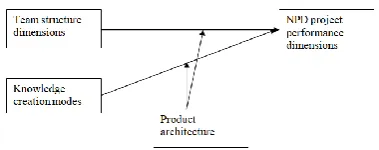
[image:11.595.316.506.70.145.2]The research model concerning the hypotheses dealing with NPD project performance and the moderating effect of product architecture, consists thus of the variables relating to team structure dimensions, knowledge creation modes, NPD project performance dimensions and product architecture. A visual representation can be found in figure 2.
Figure 2: Research model
4.
METHODOLOGY
The research design can be classified as cross-sectional, where data is collected using questionnaires at a specific point of time. Prior to data collection, organizations were informed of the goal of the research and confidentiality and anonymity was stressed.
Data was collected among organizations situated in technology-intensive manufacturing industries where product design activities were undertaken in the Netherlands.
The generation of the sample followed a similar approach to the Community Innovation Survey performed by the governmental organization CBS. This research included all organizations registered by the chamber of commerce with two hundred employees or more. Research has shown that organizations with a large amount of employees are most likely to generate new products relative to smaller organizations and in the same industry. Furthermore these organizations are most likely to perform these innovative activities within the company rather than outsourcing these design tasks (Meinen, 1998). This is most likely due to the fact that these organizations have more resources available to invest in their innovative activities. This research took a 150 personnel cutoff point as this ensures that startups are excluded which usually do not possess a formalized innovation process (van de Vrande, de Jong, Vanhaverbeke, & de Rochemont, 2009). To include only innovations suitable to this research (innovations generating physical products which are composed of several parts to indicate modularity of product architecture) this research focused on organizations operating in industries defined by the Standard Industry Classification (SIC) code in divisions A, B, C, D and E. This yielded a sample of 2044 organizations. Further scrutiny where only organizations were selected that were still in business and who manage their product development projects from the Netherlands produced a sample of 184 organizations. These organizations were contacted and asked to fill out the questionnaire keeping in mind a development project completed within the past five years. Prior to data collection, organizations were informed of the goal of the research and confidentiality and anonymity was stressed (Schulze, 2006). Respondents were explained that there was no wrong or right answer to avoid satisfaction bias (Hao et al., 2015).
the interactive version of the questionnaire, generated by the survey program Qualtrics. This program documented the answers of the respondents and was used to extract the SPSS file for further analysis.
Ultimately data collection yielded a sample of 22 respondents, this is a response rate of 11,96%. The mean age of respondents in this sample was 44 years, average tenure was 10 years. This sample consisted predominantly of males, where most of the respondents were associated with the R&D department. Occupation of the respondents varied between directors of R&D, vice presidents of engineering, R&D managers, project managers and product managers. Questions concerning the NPD projects answered by the respondents showed that average project duration was 24 months and mean team tenure was 20 months. Average team size of this sample was determined to be 13.
In order to test for any response bias, in particular non-response bias, the time trends extrapolation method was used. This method assumes that late respondents are the same as non-respondents (Armstrong, 1977). We can conclude that there is no non-response bias when the results of various variables do not significantly differ between the subgroups early and late responders (Armstrong, 1977). This analysis showed that only for the variable Socialization of the knowledge creation modes and product dimension and market dimension of project performance, there was a significant difference. So there are some reliability issues when dealing with these variables. Furthermore the low response rate of 11,96% could further hamper the external validity of the results of all variables.
Analysis of outliers using the Inter Quartile Range (IQR) rule showed no outliers were present in all the variables(Hoaglin, Iglewicz, & Tukey, 1986).
4.1
Dependent Variables
4.1.1
NPD Project Performance
This study focuses on the examination of the effect of team structure and knowledge creation on project performance. In order to measure project performance a measure was adopted from Salomo, Weise and Gemünden (2007), which analyses NPD project performance on three dimensions. These dimensions are product dimension, market dimension and project efficiency, each construct containing three items measured on a seven-point likerts scale (Salomo et al., 2007). A principal component factor analysis showed some where all items were included showed that three factors were present, the items however did not load as expected. The last product dimension performance measure showed a higher factor loading on project efficiency dimension for example. Subsequent reliability analysis showed that product dimension would benefit from including only the first two items in the construct and yielded a Cronbach’s alpha of 0.630, this suggests that this measure is not as reliable as desired. For the market dimension, again the first two items were included and yielded significant reliability of 0.939. For the dimension of project efficiency all measures were included. The
reliability analysis of this three item construct generated a Cronbach’s alpha of 0.830, well above the 0.7 cutoff point.
4.2
Independent variables:
4.2.1
Knowledge Creation Modes
The measure for the knowledge creation modes were adapted from Schulz & Hoegl (2006). In their study knowledge creation was measured for the very first time on NPD project level (Schulze, 2006). This measure showed sufficient reliability and validity to be seen as a suitable measure for the knowledge creation model. Again all the modes are again scored on a seven point likert scale ranging from ‘strongly agree to ‘strongly disagree’ and were constructed out of four items each. Socialization comprised of the items focusing on informal interaction and discussions of employees as this enables sharing of mental models and refines knowledge (Schulze, 2006). Factor analysis and reliability analysis indicated that all items should be included for this measure and yielded a Cronbach’s alpha of 0.739. The items designed to measure externalization focused on how tacit knowledge is transferred to explicit knowledge through dialogue (Schulze, 2006). Factor analysis and reliability analysis suggested that this construct could benefit from excluding the last item. This generated a Crobach’s alpha of 0.847. Combination featured items measuring to what extent explicit knowledge was combined and structured (Schulze, 2006). All items were included in generating this construct as factor analysis and reliability analysis did not lead to indications to do otherwise. This constructs reliability was determined to be a Cronbach’s alpha of 0.658. Internalization was based on the degree of experimentation as this is the primary vehicle to convert explicit knowledge in tacit knowledge as individuals are ‘learning by doing’ (Schulze, 2006). Factor analysis and reliability analysis indicated that this measure could benefit from excluding the first variable, leading to a Cronbach’s alpha of 0.882.
4.2.2
Modularity of Product Architecture
would benefit from deleting the first item of this construct as α would increase from 0.79 to 0.856.
4.2.3
Team Structure
To measure team structure, several dimensions were considered and measures examined. Eventually team stability, team member autonomy, team member proximity were chosen to represent team structures, based on the structural components of organizational coupling.
Team stability was adopted from the study of Akgün & Lynn (2012) and consisted of three items. Again, this measure was scored on the seven-point likert scale. Factor analysis and subsequent reliability analysis showed that the construct could benefit from excluding the first item. This construct generated a Cronbach’s alpha of 0.832. Team member autonomy was measured using four items which was adopted from the study of Amabile et al, (1996). Again factor analysis and reliability analysis indicated that this measure would benefit from deleting the second item, yielding a cronbach’s alpha of 0.782. Team member proximity was measured on a one to seven scale which indicated increasing distance between team members. This ordinal scale was created after reviewing the study of Cabigiosu & Camuffo (2012) which displayed a similar ordinal scale measuring distance between an organization and its supplier(Cabigiosu & Camuffo, 2012).
4.2.4
Supportive IT-systems
As stated earlier, the mirroring effect of product architecture is not always true. There are exceptions. One of these exceptions revolved around a highly dispersed team which in contrary to the effect of the mirroring hypothesis, created a highly integral product. This was partly contributed to the fact that all aspects of the project were made transparent for all contributors and the team members could contribute to the project from every location. This transparency and ability to have access to all information of the project was due to the fact a highly sophisticated IT-system was in place which enabled these project characteristics (Colfer & Baldwin, 2010).
This suggests that support from IT-systems can influence the effect of the mirroring hypothesis and should be included in this research. The reasoning behind this is that IT-systems provide an infrastructure to acquire and diffuse information needed by contributors of a development project (Hunter, 2002). The usage of IT-systems was measured using six items (Akgün et al., 2008).The measures were adopted form the study of Akgün et al(2008). Factor analysis and reliability analysis indicated that the first and last item should be excluded as this yielded the highest reliability for this construct, a Cronbach’s alpha of 0.707.
4.3
Control variables
It is important to include control variables, which have a known effect on the dependent variables to ensure that the effect measured in subsequent analysis is attributed to the independent variables. The selected control variables were deemed important in predicting team performance on
effectiveness, efficiency and speed-to-market (Sivasubramaniam, Liebowitz, & Lackman, 2012).
4.3.1
Team Tenure
Team tenure is typically defined as the duration in months which team members have worked together. Typically it takes some time to for a team to become a high performing one (Gibson & Gibbs, 2006).
4.3.2
Team Leadership
Team leadership encompasses the extent to which team leaders can be seen as transformational leaders which are charismatic and empowers the development team. Research has shown that these types of leaders are more likely to motivate people who work towards completing the teams objective (Burke et al., 2006). This measure contained six items (Wang, Law, Hackett, Wang, & Chen, 2005).
4.3.3
Team Cohesiveness
Team cohesiveness can be seen as the level of trust among members of the NPD team. Team cohesiveness play especially an important role when dealing with more independent workflow patterns (Beal, Cohen, Burke, & McLendon, 2003). Team cohesiveness was measured using five items (Lee, 2007).
4.3.4
Goal Clarity
Goal clarity can be defined as the level of consensus concerning the development goals. There is a strong link between clarity of goals and employee motivation. This is in particular the case when dealing with challenging goals. Research has shown that teams with specific goals outperformed teams with more ambiguous goals (Locke & Latham, 2002). Goal clarity was measured using six items (Lynn, Skov, & Abel, 1999).
4.3.5
Team size
Team size is an important control variable as most studies tend to find a positive effect of team size and knowledge creation and transfer. Team size can influence knowledge creation and sharing as network characteristics influence the availability of knowledge (Van Wijk et al., 2008). Organizations industry might relate to current state of technology and the rate of technology development which might emphasize the need for knowledge creation.