Intercultural Sensitivity as a Result of Educational
Design: A Continued Panel Study
Author: Julia K. L. Bönte
University of Twente P.O. Box 217, 7500AE EnschedeThe Netherlands
[email protected]
Abstract
Until now, the concept of intercultural sensitivity (ICS) has been ill-defined and its antecedents and origins have been neglected. Researchers have developed several measures for ICS in general, but little data has been collected in the higher education setting. Based on the results of Chen and Starosta (2000), this project distinguishes 5 dimensions of ICS and the study of this year introduces actual behavior as an additional aspect. The antecedents of ICS are classified as teaching style, group work and the environment. The analyzed data is taken from samples of higher education students in 2013 (N=423) and 2014 (N=196). Evidence for positive relationships between the environment and all five dimensions of ICS as well as between the teaching style and four dimensions of ICS is presented. Group work is only found to have a positive influence on interaction attentiveness and negative influences on respect for cultural differences and interaction confidence. The reliability of the scale interaction attentiveness is improved through the rephrasing of items and actual behavior is found to be strongly related to the five dimensions of ICS. Limitations of this study include a comparatively smaller sample size and the focus on the specific educational context. The added value of this paper is the clarification of terminology regarding ICS and the identification of actual behavior as a related concept.
Supervisors:
Prof. Dr. Tanya Bondarouk
Dr. Harry van der Kaap
Keywords
Intercultural sensitivity, intercultural competence, educational design, cultural differences, cross-cultural interaction
Permission to make digital or hard copies of all or part of this work for personal or classroom use is granted without fee provided that copies are not made or distributed for profit or commercial advantage and that copies bear this notice and the full citation on the first page. To copy otherwise, or republish, to post on servers or to redistribute to lists, requires prior specific permission and/or a fee. 3rdIBA Bachelor Thesis Conference, July 3rd, 2014, Enschede, The Netherlands.
2
1.
INTRODUCTION
In recent years, there has been an increased demand for globally oriented managers. In today’s more and more globalized world, globally oriented managers are needed to coordinate the activities of multinational companies (MNCs) on a global as well as local level. While many people call themselves open-minded and even more people think that international experience can further their career, organizations are often faced with failed expatriate assignments (Antal, 2001). Companies send employees abroad to gain valuable experience and to become culturally sensitive, but do not make use of the changes after the employee’s return. Similarly, managers being sent abroad find themselves ill-prepared in terms of cultural training, linguistic ability and more generally their global mind-set (Kefalas, 1998). Companies that see the concept of a global mind-set as crucial for their company’s strategic successes also admit that the cultivation of such an attitude in their firms is basically not present. Studies researching how to improve cross-cultural assignment performance via transformational leadership have identified cultural empathy, open-mindedness and social initiative as the most important factors for cross-cultural success (cf. van Woerkom & de Reuver, 2009). Opposite to the findings of Mol et al. (2005), van Woerkom & de Reuver (2009) argue that there is no direct relationship between personality and cross-cultural performance (either expatriate assignment or working with subordinates from different cultural backgrounds). The findings of Mol et al. (2005) demonstrate that while there are excellent leverage points in daily business life, the sheer number of scientifically developed criteria for determining expatriate success make it very difficult if not impossible to choose a universally “right” candidate for an expatriate assignment.
Now, one could argue that the idea to nurture intercultural sensitivity in the business context is good, but too far down the career path: true, but there is even less knowledge about the origins of this concept and also very little about possible influencing factors. Until now, studies have mostly only covered which personal characteristics are helpful for expatriates, how intercultural sensitivity can support cultural learning and how expatriate assignments affect organizations. Comparatively little research has been done on the antecedents of intercultural sensitivity and how it can be stimulated. Regarding the concept itself, some authors (cf. Bhawuk & Brislin, 1992; Chen & Starosta, 2000; Hammer, Bennett & Wiseman, 2003) have developed scales to measure intercultural sensitivity and/or cultural competences like the intercultural sensitivity inventory (ISI), the intercultural sensitivity scale (ISS) and the intercultural development inventory (IDI). The research underlying these scales was partly done with samples from the business context and partly with graduate and undergraduate students, allowing us to assume that the educational environment may have an impact on intercultural sensitivity. Scholars that specifically researched the relationship between educational design and cultural competences have found that on-campus intercultural interaction influences future educational and career decisions and that semester(s) abroad/short-term stays abroad increase cross-cultural communication skills and cross-cultural sensitivity (cf. Jon, 2013; Williams, 2005; Anderson et al., 2006). On the other hand, Hunter, White & Godbey (2006), in their attempt to develop a working definition of global citizenship and global competency, found evidence that global competence can also be achieved without travelling abroad, simply by taking part in culturally diverse activities. Furthermore, Otten (2003) demonstrated that diversity plans at universities have increased and will even further increase in importance for educating
culturally sensitive graduates in the future. But what can be said about the essence of the university experience, the study program itself? Very little is known about how the design of a study program can contribute to creating a valuable cultural experience for students. For example, the UNESCO report on inclusive education worldwide from 20111 stated that while many European countries already focus on including handicapped students, they are only beginning to improve the integration of other minorities like migrants, religious minorities and even highly intelligent students. Similarly, it is discussed how the introduction of inclusion policies needs to be controlled statistically and that there is a lack of measures to assess a student’s needs separate from his environment. Hence, the questions that still need to be addressed are what different actors (teachers, students, etc.) should do, how cross-cultural student interaction can be facilitated and what kind of learning/experience opportunities should be offered to generate the most stimulating environment for students. Examples of this include the teacher’s attitude towards cultural learning, international events like foreign cuisine buffets and cultural information meetings. Moreover, it is necessary to develop a reliable procedure to measure intercultural sensitivity especially in the educational environment. Thirdly, the data collected in 2014 will, together with the data from 2013, be used in following years to continue the research regarding intercultural sensitivity.
This paper was motivated by the questions above and is engaged in the goal to answer the research question whether education and more specifically the international orientation of a university program can increase intercultural sensitivity of students and whether intercultural sensitivity of students changes significantly over the period of one year. Furthermore, it aims to improve the tools to measure intercultural sensitivity and provide future researchers with good data. In order to answer the research question the empirical research project started in 2013 was continued with slight adaptations. This year used a similar questionnaire, a similar sample population and a similar model of relationships. Consequently, this year’s study was done with a cross-section of second year students that had already participated in the data collection in 2013.
The following paragraphs of this paper are organized as follows: at first, relevant literature is reviewed to establish the context of this research. Next, methods and study design for this research are explained. After that, results and findings are presented and discussed. Finally, further research is mentioned, limitations and implications are deducted and conclusions are drawn.
2.
THE CONCEPT OF INTERCULTURAL
SENSITIVITY AND ITS ANTECEDENTS
2.1
Varying Definitions
Until now, research about intercultural sensitivity has always faced two challenges: on the one hand, there is no broadly accepted definition and on the other, there is a large amount of synonyms used to describe the overlapping concepts (cf. Hammer, Bennett & Wiseman, 2003; Chen, 1997; Bhawuk & Brislin, 1992).
While some authors focus their definitions only on the communication with people from different cultural backgrounds (cf. Dodd, 2007), others aim to describe the concept in more detail. Thus, Chen & Starosta (2000) described intercultural
3 communication as an “umbrella concept” (p. 4) and conceptualized intercultural communication competence as the combination of intercultural awareness, intercultural sensitivity ability and intercultural adroitness (thus referring to cognitive, affective and behavioral ability). The definition developed by Van der Zee, Van Oudenhoven & De Grijs (2004) also attributed intercultural communication an affective aspect, but focused more on how affective aspects of a personality can influence intercultural encounters. Even though there is little evidence that general personality has an effect on behavior in intercultural situations (cf. Van der Zee, Van Oudenhoven & De Grijs, 2004), other scholars have included personality traits at the core of their definitions of intercultural sensitivity. For example, Bhawuk & Brislin (1992) could find evidence that certain personality traits that led to trying foreign food frequently had a positive effect on intercultural sensitivity. Moreover, Rhinesmith (1992) found the correlation between a global mind-set, a certain cultural behavior and the preceding or resulting personal characteristics. In his view, the global mind-set consists of six characteristics of which flexibility, sensitivity and reflection are also frequently mentioned by other scholars in the context of intercultural sensitivity (cf. Chen, 1997; Van der Zee & Van Oudenhoven, 2000; Antal, 2001). Hunter’s study (2004), on the other hand, showed that in the professional world, the term “global competence” is defined as “having an open mind while actively seeking to understand cultural norms and expectations of others, leveraging this gained knowledge to interact, communicate and work effectively outside one’s environment” (p. 1). Derived from a panel of internationally operating managers, this definition is more practice-oriented and result-oriented. Opposed to this approach with cognitive and interaction parts, Anderson et al. (2006) focus their research only on the recognition of cultural differences. In their study, a positive impact of short-term study abroad programs on cross-cultural sensitivity was found.
It is striking that while now numerous scales exist to measure cultural competences/intercultural sensitivity, very few scholars have addressed the issue of clear terminology in their research. Chen (1997) was one of the most thorough analysts with regard to the differences between intercultural sensitivity, intercultural awareness, cultural recognition and global competence. Consequently, his research will be used as the main source of clarification in this study.
2.2
Curriculum Design in Higher Education
as a Source of Intercultural Sensitivity
Some researchers have focused on intercultural sensitivity as being influenced by educational effort. Such assumed relationships between education and ICS are built on the assumption that increased globalization calls for better teaching concepts and methods geared towards cross-cultural competences (cf. Stone, 2006).
Studies that research the relationships between education and cultural competence concepts have covered areas like the effects of semesters abroad, on-campus intercultural diversity activities and co-curricular teaching units (cf. Williams, 2005; Otten, 2003; Deardoff, 2006). Several studies have identified possible causes for failed internationalization efforts in education. For example, in her study, Williams (2005) compared the development of a group of students that studied abroad to a control group that stayed at home during the course of one semester. Her findings revealed the problem that students who would benefit the most from a semester abroad are less likely to go on one, because their intercultural communication competence was rather low. Vice-versa, students who decided for the semester abroad already had a
higher intercultural communication competence because they had already been exposed to other cultures beforehand. Another problem that needs solving was addressed by Otten (2003) who analyzed the reasons why culturally distinct students on the same campus do not mingle as much as planned. His findings showed that there were psychological barriers such as higher comfort with classmates that were in a culturally similar position than with native students. Knowing that knowledge about the development of intercultural competence is necessary to facilitate teaching it, the author argues that internationalization plans were not as useful as hoped for and should thus be critically reviewed. Similarly, Deardoff (2006) found that administrators in higher education often use similar but distinct terms to define cultural competence. The most common elements of these definitions were cultural differences, experience and self-awareness which make them actionable and generally applicable but very broad and unspecific. Moreover, the study observed that most higher education institutions use the same four methods to measure their students’ intercultural competence, namely observation by others/host culture, case studies, judgment by self and others, and student interviews. The evidence collected in this study led to the conclusion that a long-term study consisting of qualitative and quantitative methods and modeling the concept as a set of variables is promising to assess intercultural competence effectively.
2.3
Impact of Curriculum Design in Higher
Education on Intercultural Sensitivity:
Research Model
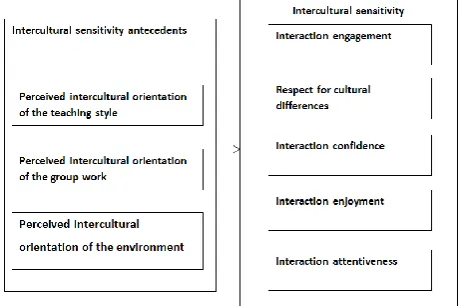
[image:3.595.310.542.427.580.2]Since this project aims to research the phenomenon of intercultural sensitivity and its antecedents in the context of higher education, the following model is proposed:
Figure 1. Influence of intercultural elements in higher education on intercultural sensitivity
4 As such, they cover the understanding for, interaction with and recognition of cultures. Originally only identified after the data was collected, the dependent variables were not explicitly defined in the study of Chen & Starosta (2000). Due to the lack of further research on relationships between these specific factors, this study will only test for direct relationships. Hence, the following direct influences can be hypothesized:
H1: There is a positive relationship between perceived intercultural orientation of the teaching style and (a) interaction engagement, (b) respect for cultural differences, (c) interaction confidence, (d) interaction enjoyment and (e) interaction attentiveness.
H2: There is a positive relationship between perceived intercultural orientation of the group work and (a) interaction engagement, (b) respect for cultural differences, (c) interaction confidence, (d) interaction enjoyment and (e) interaction attentiveness.
H3: There is a positive relationship between perceived intercultural orientation of the environment and (a) interaction engagement, (b) respect for cultural differences, (c) interaction confidence, (d) interaction enjoyment and (e) interaction attentiveness.
Until now, evidence found for the above mentioned relationships has always been implicit, incomplete or inconsistent (cf. for teaching style: Stone, 2006; Whitsed & Volet, 2010. For group work: Jokinen 2004; Jon, 2013; Otten, 2003. For environment: Bhawuk & Brislin, 1992; Hunter, 2004.). Consequently, it is sensible to strive for a more comprehensive model that synthesizes existing knowledge with new hypothesized relationships.
3.
METHODOLOGY
3.1
Study Design
This project is part of a larger research program that aims to explore the relationship of antecedents of ICS and the development of ICS over the course of several years. The data collected in the first round (2012-2013) was expanded in a second round (2013-2014) of data collection with the additional variable “actual behavior”. This variable of actual behavior was added to the research to determine if there is a difference between the attitude and the actions of the respondents in culturally challenging situations. As a result, for the study described in this paper, the independent variables are perceived intercultural orientation of teaching style, perceived intercultural orientation of group work and perceived intercultural orientation of the environment. The dependent variables are interaction engagement, respect for cultural differences, interaction confidence, interaction enjoyment and interaction attentiveness. Furthermore, these five dependent variables act as the independent variables for the new dependent variable actual behavior. Since this study is cross-sectional, we aimed to enrich its results by engaging in a longitudinal exploration. Therefore it started with the first part in 2013 and now continued with the second part in 2014, assumingly to be continued in 2014-2015. In both years, the data was collected with the aid of a questionnaire that is continuously adapted and improved according to each year’s results. With the help of IBM SPSS 21 the quantitative data was analyzed to answer the research question whether the international orientation of a university program can increase intercultural sensitivity of students and whether intercultural sensitivity of students can change significantly over the course of one year. The statistical means used are reliability, independent t-tests as well as factor, correlation and regression analyses.
3.1.1
Measures
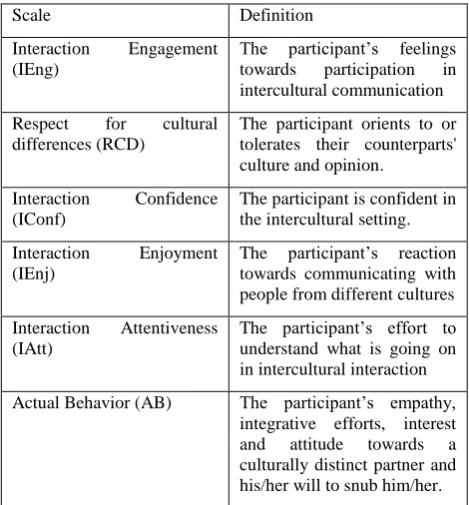
[image:4.595.309.544.300.553.2]This study used eight measures to explore the relationship between ICS and its antecedents. The three independent measures were defined as follows: Perceived intercultural orientation of the teaching style (PITS) was defined as the perceived openness of a teacher to other cultures, encouragement of cross-cultural sensitivity and activities during lessons and the invitation to learn from different cultures. Secondly, the perceived intercultural orientation of group work (PIGW) was defined as the perceived student group composition of different cultural backgrounds and students’ cross-cultural approach to group work processes. Thirdly, the perceived intercultural orientation of the environment (PIE) was defined as the perceived excellence of the university facilities and support for students from different cultural backgrounds. The definitions for the dependent measures can be found in Table 1 and are based on the implicit definitions given by Chen & Starosta (2000). Originally, Chen & Starosta collected the data first and then defined the grouped items after factor analysis.
Table 1. Definitions of dependent scales of 2013 and 2014
Scale Definition
Interaction Engagement (IEng)
The participant’s feelings towards participation in intercultural communication
Respect for cultural differences (RCD)
The participant orients to or tolerates their counterparts' culture and opinion.
Interaction Confidence (IConf)
The participant is confident in the intercultural setting.
Interaction Enjoyment (IEnj)
The participant’s reaction towards communicating with people from different cultures
Interaction Attentiveness (IAtt)
The participant’s effort to understand what is going on in intercultural interaction
Actual Behavior (AB) The participant’s empathy, integrative efforts, interest and attitude towards a culturally distinct partner and his/her will to snub him/her.
3.1.2
The Questionnaire Development
[image:4.595.305.545.664.772.2]The questionnaire, which was completely in English, consisted of nine demographic items and 33 items relating to intercultural communication. Instructions for respondents were given in textboxes in the questionnaire for both parts. In comparison to 2013, the questionnaire was slightly adapted (see Table 2 and 3).
Table 2. Changes in questionnaire for demographics
Variable 2013, initial items 2014, changed items
Demographics Your student number: ----
Your study program: BK or IBA
In what study program did you start your studies in UT?
5 start with this study
program?
you been
studying in UT?
---- How long have
you lived in the Netherlands?
If you have lived abroad, where?
[image:5.595.308.545.71.346.2]----
Table 3. Changes in questionnaire for dependent variables
Variable 2013, initial items 2014, changed items
interaction confidence
I find it very hard to talk in front of people from different cultures, because of cultural differences.
I find it very hard to talk in front of people from different cultures.
I always know how to talk when interacting with people from different cultures.
I always know what to say when interacting with people from different cultures.
interaction enjoyment
I often feel helpless when interacting with people from different cultures.
I often feel useless when interacting with people from different cultures.
interaction attentiveness
I am sensitive to my cultural-distinct counterpart’s subtle meanings during our interaction.
During
interactions with people from other cultures I recognize the presence of a potential double meaning behind verbal
expressions.
---- During
interactions with people from other cultures I try to check that the other person understands what I mean.
[image:5.595.309.544.493.699.2]In the demographics section, we rephrased an item to distinguish between the student groups whose study programs were formally joined in 2013. In the second section, nine items were added to measure the actual behavior of students engaging in cross-cultural study activities (see Table 4). In addition, item 19 of the original questionnaire was completely rephrased because the reliability analysis of the data from 2013 indicated that the statement was unclear and mistakable (see appendix D).
Table 4. The added items of the questionnaire 2014
Variable Item number
Item
actual behavior
26 I am sensitive to how people from other cultures can interpret my words.
27 I actively try to mingle with people
from other cultures.
28 I base my opinion about other cultures only on my personal experience with them.
29 When I work in a group with people with a different mother tongue, I propose to communicate in my own mother tongue/native language.
30 When working with people with cultural backgrounds different from my own, I ask them questions about problem solving approaches in their cultures.
31 I talk to other group members about recent developments in their home countries (like the conflicts in Syria).
32 When working with people from other cultures, I avoid sensitive topics (like 9/11 with Americans or gay rights with Russians).
33 I have friends with a different cultural background than my own.
The 33 items of the second section of the questionnaire of 2014 were coded into the five dependent variables presented under 2.3 and the additional variable “actual behavior”. To fill in the second section of the questionnaire, the respondents had to give a number between 1 (strong disagreement) and 5 (strong agreement) for each item. The independent variables were measured by self-administered scales based on a 5-point Likert scale. To determine the reliability of the scales used, a reliability analysis with the data of 2013 and 2014 was performed. The results can be seen in Table 5.
Table 5. Reliability of scales in 2013 and 2014 (N=422 for 2013 and N=196 for 2014)
Scales Number of items and
Cronbach’s Alpha
2013 2014
Perceived intercultural orientation of teaching style
6 items (0.70) 0
Perceived intercultural orientation of group work
3 items (0.73) 0
Perceived intercultural orientation of the environment
4 items (0.65) 0
Interaction Engagement 7 items (0.62) 7 items (0.73) Respect for cultural
differences
6 items (0.74) 6 items (0.80)
Interaction confidence 5 items (0.77) 5 items (0.77) Interaction enjoyment 3 items (0.69) 3 items (0.69) Interaction attentiveness 3 items (0.41) 4 items (0.55)
Actual behavior 0 8 items (0.47)
6 items (0.61)
[image:5.595.55.289.688.762.2]6 IAtt_03 (items 11, 23 and 19 in the questionnaire). While the first item decreases the reliability minimally, the second item increases Alpha by 0.015 and the last item is reason for concern because it increases Alpha by 0.073 if left out. Together with the distribution of responses for this variable, it led to the above mentioned reformulation of item 19. With regard to the underlying reasons, it can be assumed that the formulation “culturally distinct counterpart” is somewhat mistakable or difficult to understand for non-native speakers of English (the majority of the test sample).
3.1.3
The Procedure
We distributed the adapted questionnaire both on paper and online due to the scheduled internship in the International Business Administration (IBA) program. The online version was distributed to the target group of IBA students via facebook as well as reminder emails to student mail accounts. The email addresses were taken from the course “IBA Project 2013” and the link was posted in the Facebook group “BSc International Business Administration 2012/2013”. For students of Bedrijfskunde (BK), Bestuurskunde (BSK)/European Public Administration (EPA) and Gezondheidswetenschappen (GZW), the paper version was distributed during the break of a joint lecture. The filled in questionnaires were collected at the end of the lecture. To reach students of the English speaking Electrical Engineering program (EE), the questionnaire was distributed in a tutorial and collected during the break. Students of Industrieel Ontwerpen (IO), European Studies (ES) and Civiele Techniek (CIT) were reached through a similar procedure.
3.2
Sample
3.2.1
Sampling in 2013
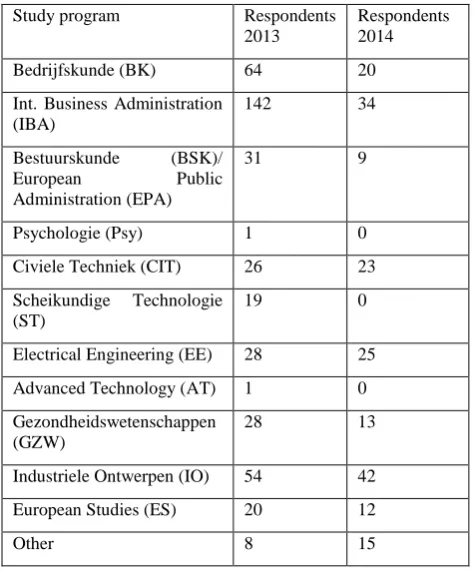
[image:6.595.308.543.150.383.2]The sample of 2013 consisted of 423 respondents from 11 different study programs (see Table 6).
Table 6. Respondents per study program 2013 (N = 422) and 2014 (N=193)
Study program Respondents 2013
Respondents 2014
Bedrijfskunde (BK) 64 20
Int. Business Administration (IBA)
142 34
Bestuurskunde (BSK)/ European Public Administration (EPA)
31 9
Psychologie (Psy) 1 0
Civiele Techniek (CIT) 26 23
Scheikundige Technologie (ST)
19 0
Electrical Engineering (EE) 28 25
Advanced Technology (AT) 1 0
Gezondheidswetenschappen (GZW)
28 13
Industriele Ontwerpen (IO) 54 42
European Studies (ES) 20 12
Other 8 15
[image:6.595.53.291.456.742.2]The age of the respondents ranged from 16 to 28 (N=423) and 58.6% were male. Almost two thirds (64.5%) were originally from the Netherlands with a further 26.7% from Germany and 3.3% from China. Moreover, other nationalities were present in some study programs (see Table 7).
Table 7. Nationalities other than Dutch, German or Chinese per study program (N = 23)
Study program
Respondents without Dutch, German or Chinese origin
BK 2
IBA 12
BSK/EPA 0
CIT 3
Psy 0
ST 0
EE 1
AT 0
GZW 0
IO 1
ES 1
Other 3
3.2.2
Sampling in 2014
The sample reached through the above described procedure in 2014 consisted of 196 respondents enrolled in eight different study programs (see Table 6). The age of the respondents ranged from 18 to 29 and they were predominantly male (64.3%). More than three quarters of the sample (75.5%) gave the Netherlands as their home country followed by Germany with 14.5%. The remaining nationalities were mainly represented in English-speaking study programs (see Table 8).
Table 8. Nationalities other than German or Dutch in study programs (N=17, English-speaking programs in grey)
Study program
Respondents without German or Dutch origin
BK 0
IBA 6
BSK/EPA 0
CIT 0
EE 6
GZW 0
IO 2
ES 1
Other 2
[image:6.595.310.544.526.708.2]7 initially 9.9% (after one reminder 15.4%). That gives a total average of 8.8% online response rate.
4.
FINDINGS
4.1
The Concept of ICS
4.1.1
Demographic influences on ICS
To perform a thorough analysis of ICS, the data were first compared with regard to the demographic items of the questionnaire. The significance level is set at 0.05. The independent t-test was chosen as the proper means of analysis because the aim was to detect differences between two distinct groups (cf. De Veaux, Velleman & Bock, 2012). The samples were also from two different points in time with negligible overlap and adequate sample size for comparison. In the following, N refers to sample size, M refers to the mean and SD refers to the standard deviation.
In 2013, no significant differences in female (N=167, M=4.06, SD=0.67) and male (N=245, M=3.97, SD=0.71) scores could be found for IEnj (t(368.652)=1.394, p=0.164). All other dependent scales as well as ICS in total showed significant differences between female and male students. In 2014, females (N=68, M=3.25, SD=0.66) and males (N=126, M=3.49, SD=0.63) only had significantly different scores for IConf (t(192)=-2.508, p=0.013). All other dependent scales as well as ICS in total showed no significant differences in mean scores. For Dutch and English study programs in 2013, all dependent scales and ICS in total had differences that were significant at p<0.001 except for IAtt (p=0.002). In 2014, none of the dependent scales had significant differences. Similarly, in 2013 the differences between Dutch and German students were significant for all five scales with p<0.001 except for IEnj (p=0.001) and in 2014, only IAtt is significant for Dutch (N=148, M=3.36, SD=0.56) and German students (N=29, M=3.59, SD=0.59); conditions: t(175)=-2.066, p=0.04. Furthermore, in 2013 the differences in mean scores for students who had lived abroad or not were significant across all five dependent scales and ICS in total. In 2014, this significant difference could not be confirmed for RCD (t(194)=0.836, p=0.404) for students who have lived abroad (N=55, M=4.17, SD=0.68) and never lived abroad (N=141, M=4.09, SD=0.62). Neither could the difference in IEnj be confirmed (t(194)=0.411, p=0.681) for students who have lived abroad (N=55, M=4.1, SD=0.69) and never lived abroad (N=141, M=4.06, SD=0.65). In both 2013 and 2014, all five dependent scales as well as ICS in total showed significant differences between students who had the intention to study abroad soon and students who did not plan to study abroad soon. Finally, in 2013 students with and without foreign friends showed significant differences in mean scores for all five dependent scales and ICS in total. In 2014, the difference between students with (N=133, M=4.16, SD=0.62) and without (N=63, M=4, SD=0.65) for RCD was not significant anymore; conditions: t(194)=1.534, p=0.127. For full detail, see appendix E.
4.1.2
ICS and its antecedents: correlations and
regressions
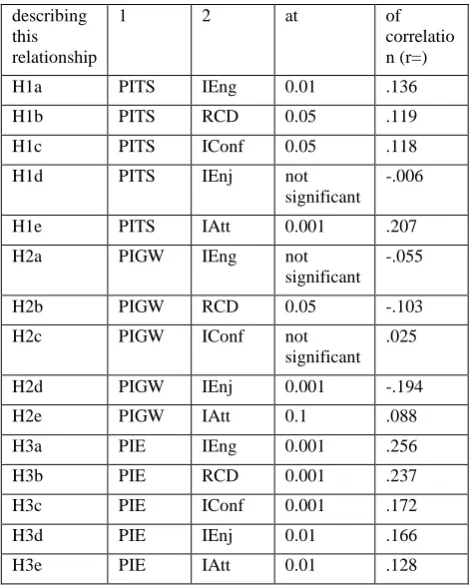
[image:7.595.309.545.70.363.2]To examine the hypothesized relationships between ICS and its antecedents, a Pearson correlation analysis was conducted with the three independent variables (PITS, PIGW, PIE) and the five dependent variables (IEng, RCD, IConf, IEnj, IAtt). The results can be seen in Table 9 below.
Table 9. Correlation analysis results regarding H1, H2 and H3
Hypothesis Variable Variable Significant Strength
describing this relationship
1 2 at of
correlatio n (r=)
H1a PITS IEng 0.01 .136
H1b PITS RCD 0.05 .119
H1c PITS IConf 0.05 .118
H1d PITS IEnj not
significant -.006
H1e PITS IAtt 0.001 .207
H2a PIGW IEng not
significant -.055
H2b PIGW RCD 0.05 -.103
H2c PIGW IConf not
significant .025
H2d PIGW IEnj 0.001 -.194
H2e PIGW IAtt 0.1 .088
H3a PIE IEng 0.001 .256
H3b PIE RCD 0.001 .237
H3c PIE IConf 0.001 .172
H3d PIE IEnj 0.01 .166
H3e PIE IAtt 0.01 .128
Even though the data showed no significant relationship between OTS and IEnj, OGW and Eng as well as OGW and IConf, a multiple regression analysis was performed with all independent and dependent variables. It showed that the independent variables are significant predictors of all five dependent variables individually as well as ICS in total. The multiple linear regression that was used to further explore the relationship between PITS, PIGW, PIE and ICS in total indicated that PITS, PIGW and PIE together explain 9.4% of the variance in ICS (R²=0.094, F(2.728,0.176)=15.478, p<0.001). Having controlled for multi-collinearity (all correlation values below 0.5), it was found that PITS significantly predicts ICS (ß=0.164, p<0.001), as do PIGW (ß=-0.19, p<0.001) and PIE (ß=0.237, p<0.001). Among the predictions between the three independent and five dependent variables, the strongest relationships were found between PIE and IEng (ß=0.236, p<0.001), PIGW and RCD (ß=-0.207, p<0.001), PIE and RCD (ß=0.221, p<0.001), PIGW and IEnj (ß=-0.261, p<0.001).
4.2
Developments since last year
In order to analyze the development of ICS between last year and this year, the means for both samples were computed and compared (see Table 10).
Table 10. ICS scores per study program
2013 2014
Mean N SD Mean N SD
BK 3.54 64 .40 3.73 20 .43
IBA 3.88 141 .37 3.77 34 .52
BSK 3.50 31 .31 3.53 9 .19
CIT 3.52 25 .52 3.65 23 .40
EE 3.55 28 .59 3.63 25 .65
[image:7.595.306.545.642.769.2]8
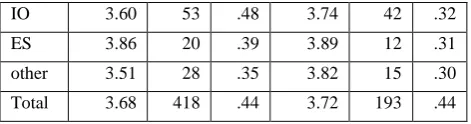
IO 3.60 53 .48 3.74 42 .32
ES 3.86 20 .39 3.89 12 .31
other 3.51 28 .35 3.82 15 .30
Total 3.68 418 .44 3.72 193 .44
The table shows that there is little change in the mean score of most programs. The biggest changes can be found for students of BK (+0.19), IBA (-0.11) and IO (+0.14) as well as other programs (+0.31). An independent sample t-test showed that none of these differences are significant (see appendix H). Based on the regression analysis of the eight model scales with the data from 2013, one can still reasonably well assume that there was a change in either one or more of the predicting variables (PITS, PIGW, PIE) for the study programs whose mean scores have changed.
4.3
Possible Consequences and Influences of
ICS: Actual Behavior
[image:8.595.54.290.71.133.2]As mentioned above, we added the variable actual behavior to the questionnaire in 2014 with the goal to determine whether there is a difference between students’ thinking and actions. Because the items for the questionnaire were not based on one theory but rather on random observations, a factor analysis of the eight items showed several dimensions (see Table 11).
Table 11. Dimensions of actual behavior items (dimensions marked similarly belong together)
Item # Components
1 2 3
26 ,673 ,037 ,018
27 ,625 ,434 -,077
28 ,147 -,059 -,584
29 ,354 -,088 ,788
30 ,105 ,786 -,163
31 ,114 ,761 ,266
32 ,515 -,364 -,375
33 ,583 ,256 ,342
Extraction Method: Principal Component Analysis. Rotation Method: Varimax with Kaiser Normalization.a a. Rotation converged in 6 iterations.
Based on the content of these items in the questionnaire, the following distinctions could be made: item 26 and 32 deal with empathy, item 27 and 33 deal with integration, item 30 and 31 discuss the student’s active interest in a foreign cultural background, item 28 asks for attitude and item 29 assesses the student’s will to snub/argue with the partner. Because this study looks for any relationship between ICS and actual behavior, all these items were combined into one scale. To increase the reliability of this scale, item 28 (“I base my opinion about other cultures only on my personal experience with them.”) and item 32 (“When working with people from other cultures, I avoid sensitive topics (like 9/11 with Americans or gay rights with Russians).”) were removed and not included in the scale for further analysis (see appendix I reliability analysis results).
To see if there is a relationship between students’ ICS and their actual intercultural behavior, we conducted a Pearson
correlation analysis (N=193). The data showed significant (p<0.001) strong positive correlations (r>0.5) between IEng, IAtt, ICS and AB where r is the Pearson coefficient that describes the strength of the relation. The positive relationship between RCD and AB was slightly weaker (r=0.402,p<0.001)), as was it for IConf (r=0.308, p<0.001) and IEnj (r=0.328, p<0.001).
5.
DISCUSSION
5.1
Improved Measurement of ICS
5.1.1
Improved reliability of scales
One of the research goals of this paper was to help with the development of a tool to measure ICS in the educational context. Based on the results of 2013, the questionnaire was improved to enhance the understanding of ICS and its antecedents. As mentioned in 3.1.1 Measures, the reliability of IAtt was increased through the rephrasing of one item and the addition of another. The questionnaire provides the researcher now with a more comprehensive and more reliable dataset with regard to ICS. Nonetheless, further research is necessary to confirm the reliability results, to identify strengths and weaknesses of the scales used and possibly improve them further through, for example, rephrasing.
5.1.2
Addition of actual behavior
To make the rather abstract concept of ICS more practical and to set it in a wider context, the variable actual behavior was added to the study. This resulted in interesting findings regarding the implications of ICS and the link between a mostly cognitive concept (ICS) and a behavioral concept (AB). Next year, special attention should also be given to actual behavior as a result of ICS since this year’s analysis only addressed the relation and not the direction of it. The analyses showed that there was a significant correlation between IEng, RCD, IConf, IEnj, IAtt and AB as a six item scale, but further analysis, that would exceed the scope of this study, is needed to adjust the scale so that it better fits the concept of actual behavior (which was ill-defined in this study) and improve the reliability of measurement to the standard of at least the scales of ICS.
5.2
Hypotheses
9 mix. The correlation and regression results also indicate that all the hypothesized relationships in H3a-e were found to exist in the sample population.
5.3
Enhancements to the Concept of ICS
As far as this study is concerned, the general understanding of the concept of ICS was for one thing improved through the explorative analysis regarding demographic aspects. The analyses have resulted in several surprising findings for the higher education context. Firstly, there was evidence for changes in mean scores caused by demographic influences. For ICS, this means that some part of the concept is based on demographic characteristics, which makes it more difficult to actively influence it. The fact that some of the observed differences were just enough smaller to make them not significant can be explained by the smaller sample size. In 2015, this tendency should be taken into account for the study design. This could then, for example, verify whether students in English-speaking study programs are more used to interacting with foreign cultures than students enrolled in a Dutch-speaking study program. On the other hand, the study program was found to have no direct influence on ICS scores, which might seem contradictory to the promotion efforts of universities that market their study programs with the help of internationalization plans. Similarly, the strong correlation between PIE and ICS together with the fact that PIE is the strongest predictor of ICS suggests that efforts to attract prospective students through an international touch should be focused on designing the environment rather than the study program. Furthermore, the evidence found for the explanation of ICS through PITS, PIGW and PIE allows to conclude that while these three are acceptable predictors of ICS, there are also a number of other influences. Of course this study was limited to the university context, so other, potentially more powerful, predictors of ICS may be found only in other contexts.Secondly, the understanding of the concept of ICS was enhanced through identifying actual behavior as a related concept. Understandably, the research presented here was only a first step in that direction and the applied analyses did not dive deeply into the matter. Nonetheless, first results indicate a relation of medium strength between ICS and AB that might add to the body of knowledge substantially when it is further analyzed. Further research should pay special attention to the different kinds of behavior that can be distinguished and to developing a functional but comprehensive definition of actual behavior for the intercultural context. Also, this study was limited to introducing this concept and further studies should verify the direction of the observed relations with ICS.
Thirdly, this study showed that while intercultural sensitivity is mostly researched in the business context, its early beginnings can be easily observed in the higher education setting. Research regarding the origins of ICS is by no means looking in the wrong place when its focus lies on students and their study experience. The results presented in this study also show research in this specific area of education should always consider time as an important factor in study design. As one can see from the analyses with the demographic influences, ICS is not just a set of characteristics that can be trained or influenced, but it is a complex construct consisting of a mix of observable, fixed, constantly changing and formable aspects.
5.4
Contributions to Theory
This paper adds to the literature by clarifying that the concept of
ICS is far from being fully understood in all its aspects. The data collected provide ample evidence that there are several important dimensions to the concept of ICS and its antecedents and that the level of ICS depends on numerous factors rather than just the five modeled ones. The introduction of actual behavior as a variable to compare thinking with actions has proven to be a valuable extension that certainly needs extensive further research to be fully understood. Furthermore, the regression results that identify PIE as the strongest predictor of ICS supports the claims made by Otten (2003) that diversity and internationalization efforts should focus more on teaching/ curriculum and the general environment. Also, the findings of Williams (2005) regarding the difference in intercultural competence between students who decide for and against studying abroad could be confirmed. Finally, the findings of 2013 were confirmed and extended to include the relevance of time and personal development.
5.5
Contributions to Practice
This study has shown that the emphasis that is currently put on stimulating international groups through requirements like one German and one Dutchman per group is almost irrelevant to the development of intercultural sensitivity or competence. Much stronger is the influence of the environment and also the teaching style. Consequently, teachers should incorporate these results into their lecture design and the university should try to provide an attractive and culturally diverse environment for students, e.g. through more student exchange opportunities on campus or offering more language support for international students.
6.
CONCLUSIONS
A sound comprehension of the concept of ICS is nowadays essential due to the changed needs of companies through globalization. Graduates that offer international competences are highly sought after in the job market. Many of their intercultural competences can and should be influenced in the higher education setting because aspiring managers will be confronted with assignments abroad sooner or later and good preparation is crucial to personal and organizational success.
With regard to the research question it can be stated that some parts of the international orientation of a university can increase ICS, other do not have any or even negative effects on that. Moreover, the analyses showed that while there were significant changes between 2013 and 2014, all of them were related to demographic factors, thus making them impossible to influence. Having analyzed ICS, its antecedents and actual behavior as a connected concept, it has become clear that ICS is still sparsely researched and that a better understanding of this concept will benefit students and universities alike.
7.
ACKNOWLEDGMENTS
8.
REFERENCES
1. Anderson, P.H.; Lawton, L.; Rexeisen, R.J.; Hubbard, A.C. (2006). Short-term study abroad and intercultural sensitivity: A pilot study. International Journal of Intercultural Relations, 30, 457–469 2. Antal, A.B. (2001). Expatriates’ Contributions to
Organizational Learning. Journal of General Management, 26, 4, 62-84
3. Bhawuk, D.P.S.; Brislin, R. (1992). The Measurement of Intercultural Sensitivity Using the Concepts of Individualism and Collectivism. International Journal of Intercultural Relations, 16, 413-436
4. Chen, G.-M. (1997, January). A Review of the Concept of Intercultural Sensitivity. Paper presented at Biennial Convention of the Pacific and Asian Communication Association, Honolulu, HI
5. Chen, G.-M.; Starosta, W.J. (2000). The Development and Validation of the Intercultural Sensitivity Scale. Paper presented at Annual Meeting of the National Communication Association, Seattle, WA
6. Deardoff, D.K. (2006). Identification and Assessment of Intercultural Competence as a Student Outcome of Internationalization. Journal of Studies in International Education, 10, 241-266. DOI: 10.1177/1028315306287002
7. De Veaux, R.D.; Velleman, P.F.; Bock, D.E. (2012).
Stats: Data and Models (3rd Ed.). Boston, MA: Pearson
8. Dodd, C.H. (2007). Intercultural Readiness Assessment for Pre-departure Candidates.
Intercultural Communication Studies, XVI, 2
9. Hammer, M.R.; Bennett, M.J.; Wiseman, R. (2003). Measuring intercultural sensitivity: The intercultural development inventory. International Journal of Intercultural Relations, 27, 421–443. DOI:10.1016/S0147-1767(03)00032-4
10. Hunter, W.D. (2004). Knowledge, Skills, Attitudes, and Experiences Necessary to Become Globally Competent. Unpublished doctoral dissertation, Lehigh University, Bethlehem, PA
11. Hunter, B.; White, G.P.; Godbey, G. (2006). What Does it Mean to Be Globally Competent?. Journal of Studies in International Education, 10, 3, 267-285. DOI: 10.1177/1028315306286930
12. Jokinen, T. (2004). Global leadership competencies: a review and discussion. Journal of European Industrial Training, 29, 3, 199-216. DOI 10.1108/03090590510591085
13. Jon, J.-E. (2013). Realizing Internationalization at Home in Korean Higher Education: Promoting Domestic Students' Interaction with International Students and Intercultural Competence. Journal of Studies in International Education, 17, 4, 455–470. DOI: 10.1177/1028315312468329
14. Kefalas, A.G. (1998). Think Globally, Act Locally.
Thunderbird International Business Review, 40, 6,
547–562
15. Mol, S.T.; Born, M.P.; Willemsen, M.E.; Van der Molen, H.T. (2005). Predicting Expatriate Job Performance for Selection Purposes: A Quantitative Review. Journal of Cross-Cultural Psychology, 36, 590-620. DOI: 10.1177/0022022105278544
16. Otten, M. (2003). Intercultural Learning and Diversity in Higher Education. Journal of Studies in International Education, 7, 12-26. DOI: 10.1177/1028315302250177
17. Rhinesmith, S.H. (1992). Global Mindsets for Global Managers. Training & Development, October 1992, 63-68
18. Stone, N. (2006). Conceptualising Intercultural Effectiveness for University Teaching. Journal of Studies in International Education, 10, 4, 334-356. DOI: 10.1177/1028315306287634
19. United Nations Educational, Scientific and Cultural Organization (2011). Interregional and Regional Perspectives on Inclusive Education: Follow-up of the 48th session of the International Conference on Education. Paris, France: UNESCO
20. Van der Zee, K.I.; Van Oudenhoven, J.P. (2000). The Multicultural Personality Questionnaire: A Multidimensional Instrument of Multicultural Effectiveness. European Journal of Personality, 14,
291-309
21. Van der Zee, K.I.; Van Oudenhoven, J.P.; De Grijs, E. (2004). Personality, Threat, and Cognitive and Emotional Reactions to Stressful Intercultural Situations. Journal of Personality, 72, 5
22. Van Woerkom, M.; De Reuver, R.S.M. (2009). Predicting excellent management performance in an intercultural context: a study of the influence of multicultural personality on transformational leadership and performance. The International Journal of Human Resource Management, 20, 10, 2013–2029. DOI: 10.1080/09585190903175589 23. Whitsed, C.; Volet, S. (2011). Fostering the
Intercultural Dimensions of Internationalisation in Higher Education: Metaphors and Challenges in the Japanese Context. Journal of Studies in International Education, 15, 2, 146-170. DOI: 10.1177/1028315309357941
9.
APPENDIX
A.
Initial Questionnaire by Chen and Starosta (2000)
Items for Intercultural Sensitivity Measure
1. I am pretty sure of myself in interacting with people from different cultures. 2. I find it very hard to talk in front of people from different cultures.
3. I always know what to say when interacting with people from different cultures. 4. I can be as sociable as I want to be when interacting with people from different cultures. 5. I often feel happy about interacting with people from different cultures.
6. I don't like to be with people from different cultures. 7. I feel shy when being with people from different cultures.
8. I get upset easily when interacting with people from different cultures.
9. I know my culturally-distinct counterpart is interested in my point of view during our interaction. 10. I often get discouraged when I am with people from different cultures.
11. I am aware of when I have hurt my culturally-distinct counterpart's feelings during our interaction. 12. I often feel useless when interacting with people from different cultures.
13. I can tell when I have upset my culturally-distinct counterpart during our interaction. 14. I think my culture is better than other cultures.
15. I can tell when my culturally-distinct counterpart is paying attention to what I am saying. 16. I feel discouraged when people from different cultures disagree with me.
17. I think people from other cultures are narrow-minded. 18. I respect the values of people from different cultures. 19. I respect the ways people from different cultures behave. 20. I would not accept the opinions of people from different cultures. 21. I act naturally in a culturally different group.
22. I find it is difficult to disclose myself to people from different cultures. 23. I get embarrassed easily when interacting with people from different cultures. 24. I find it is easy to talk to people from different cultures.
25. I have a problem knowing my culturally-distinct counterpart's motives during our interaction. 26. I try to obtain as much information as I can when interacting with people from different cultures. 27. I often deny the existence of cultural differences among people.
28. I am sensitive to my culturally-distinct counterpart's subtle meanings during our interaction. 29. I am very observant when interacting with people from different cultures.
30. I find it is not easy for me to make friends with people from different cultures.
31. I am keenly aware of how my culturally-distinct counterpart perceives me during our interaction. 32. I am not willing to join a group discussion with people from different cultures.
33. I often give positive responses to my culturally different counterpart during our interaction. 34. I feel confident when interacting with people from different cultures.
35. I am open-minded to people from different cultures.
36. I have a problem sensing what is inside my culturally-distinct counterpart's mind during our interaction. 37. I often appreciate different views raised by people from different cultures.
38. I find it is difficult to reach mutual understanding with people from different cultures.
39. I often show my culturally-distinct counterpart my understanding through verbal or nonverbal cues. 40. I often sincerely listen to my culturally-distinct counterpart during our interaction.
41. I have a feeling of enjoyment towards differences between my culturally-distinct counterpart and me. 42. I enjoy interacting with people from different cultures.
43. I avoid those situations where I will have to deal with culturally-distinct persons. 44. I tend to wait before forming an impression of culturally-distinct counterparts.
B.
Questionnaire Used in 2013
Intercultural Sensitivity Survey
Dear student,
Thank you for your cooperation.
Part I
Indicate your choice by marking an ‘x’ in the blank before your choice.
1. Your Age: _____ [Age]
2. Your gender: __ Female __ Male __ I prefer not to answer [Gender]
3. Your student number: s_______ (Your student number will not be used for analyzing results and will be treated confidentially.) [Student_number]
4. Your study programme: __ BK __ IBA (Hereafter we use the word “programme”.) [Study_programme]
5. Which year did you start with this study programme? _____ [Start_programme]
6. Which country are you from? ____________________________ [Country]
7. Have you ever lived abroad? __ No __ Yes [Live_abroad], Where? _______________________
[Live_abroad_where]
8. Do you plan to study abroad in the near future? (E.g. for your minor or master) __ Yes __ No
[Study_abroad]
9. Do you have friend(s) from countries other than your home country? __ Yes __ No
[International_friends]
Part II
Below is a series of statements, which do not imply right or wrong answers. Please work quickly and record your first impression by indicating the degree to which you agree or disagree with the statement. Put the number corresponding to your answer in the blank before the statement.
5 = strongly agree; 4 = agree; 3 = uncertain; 2 = disagree; 1 = strongly disagree
__ 1. Overall, teachers are aware of the culturally-diverse groups in the programme. [OTS_01]
__ 2. I feel that teachers usually prepare the lectures taking in consideration the cultural diversity of the students. [OTS_02]
__ 3. In my view, teachers try to make students aware of the cultural differences within the classroom.
[OTS_03]
__ 4. Teachers encourage foreign students to express and present examples from their home cultures, and cases modeled by their cultural settings. [OTS_04]
__ 5. Teachers usually use examples from different cultural and educational settings for exposing the theories during the lectures. [OTS_05]
__ 6. I feel that the courses encourage an atmosphere of respect towards cultural differences. [OTS_06]
__ 7. The programme stimulates the integration of diverse cultural backgrounds when creating group assignments. [OGW_01]
__ 8 It is usually required to form project groups with a mixture of people with different countries of origin. [OGW_02]
__ 9. The group assignments require an application of diverse cultural backgrounds. [OGW_03]
__ 10. The university campus is well-equipped for foreign students. [OEnv_01]
__ 12. Documents, necessary for the study progress, are available in English. [OEnv_03]
__ 13. Accommodation on the UT campus is friendly for an international audience. [OEnv_04]
Part III
Below is a series of statements concerning intercultural communication. There are no right or wrong answers. Please work quickly and record your first impression by indicating the degree to which you agree or disagree with the statement. Put the number corresponding to your answer in the blank before the statement.
5 = strongly agree; 4 = agree; 3 = uncertain; 2 = disagree; 1 = strongly disagree
__ 1. I enjoy interacting with people from different cultures. [IEng_01]
__ 2. I think people from other cultures are narrow-minded. [RCD_01]
__ 3. I am pretty sure of myself in interacting with people from different cultures. [IConf_01]
__ 4. I find it very hard to talk in front of people from different cultures, because of cultural differences.
[IConf_02]
__ 5. I always know how to talk when interacting with people from different cultures. [IConf_03]
__ 6. I can be as sociable as I want to be when interacting with people from different cultures.
[IConf_04]
__ 7. I don’t like to be with people from different cultures. [RCD_02]
__ 8. I respect the values of people from different cultures. [RCD_03]
__ 9. I get upset easily when interacting with people from different cultures. [IEnj_01]
__ 10. I feel confident when interacting with people from different cultures. [IConf_05]
__ 11. I tend to wait before forming an impression of culturally-distinct counterparts. [IEng_02]
__ 12. I often get discouraged when I am with people from different cultures. [IEnj_02]
__ 13. I am open-minded to people from different cultures. [IEng_03]
__ 14. I am very observant when interacting with people from different cultures. [IAtt_01]
__ 15. I often feel helpless when interacting with people from different cultures. [IEnj_03]
__ 16. I respect the ways people from different cultures behave. [RCD_04]
__ 17. I try to obtain as much information as I can when interacting with people from different cultures.
[IAtt_02]
__ 18. I would not accept the opinions of people from different cultures. [RCD_05]
__ 19. I am sensitive to my cultural-distinct counterpart’s subtle meanings during our interaction.
[IAtt_03]
__ 20. I think my culture is better than other cultures. [RCD_06]
__ 21. I often give positive responses to my culturally different counterpart during our interaction.
[IEng_04]
__ 22. I avoid those situations where I will have to deal with culturally-distinct persons. [IEng_05]
__ 23. I often show my culturally-distinct counterpart my understanding through (non-)verbal cues.
[IEng_06]
C.
Questionnaire Used in 2014
Intercultural Sensitivity Survey
Dear student,
This questionnaire is meant to help with understanding students’ cross-cultural sensitivity. Please answer each question with your personal views in mind.
Thank you for your cooperation.
Part I: Questions about your demographic background and past exposure
to multicultural environments
1. Your Age: _____
2. Your gender: __Female __Male
3. How long have you been studying in UT: (Express your answer in years. E.g. 1.5 years) _________
4. In what study programme did you start your studies in UT? _________________
5. How long have you lived in the Netherlands? _________
6. Which country are you from: ____________________________
7. Have you ever lived abroad: __Yes __No
8. Do you plan to study abroad in the near future? __Yes __No
9. Do you have foreign friend(s): __Yes __No
Part II: S
tatements concerning intercultural communication___ 1. I enjoy interacting with people from different cultures.
___ 2. I think people from other cultures are narrow- minded.
___ 3. I am pretty sure of myself in interacting with people from different cultures.
___ 4. I find it very hard to talk in front of people from different cultures.
___ 5. I always know what to say when interacting with people from different cultures.
___ 6. I can be as sociable as I want to be when interacting with people from different cultures.
___ 7. I do not like to be with people from different cultures.
___ 8. I respect the values of people from different cultures.
___ 9. I get upset easily when interacting with people from different cultures.
___ 10. I feel confident when interacting with people from different cultures.
___ 11. I tend to wait before forming an impression of culturally-distinct counterparts.
___ 12. I often get discouraged when I am with people from different cultures.
___ 13. I am open-minded to people from different cultures.
___ 14. I am very observant when interacting with people from different cultures.
___ 15. I often feel useless when interacting with people from different cultures.
___ 16. I respect the ways people from different cultures behave.
___ 17. I try to obtain as much information as I can when interacting with people from different cultures.
There are no right or wrong answers. Please work quickly and record your first impression by indicating the degree to which you agree or disagree with the statement. Put the number corresponding to your answer in the blank before the statement.
___ 18. I would not accept the opinions of people from different cultures.
___ 19. During interactions with people from other cultures I recognize the presence of a potential double meaning behind verbal expressions.
___ 20. I think my culture is better than other cultures.
___ 21. I often give positive responses to my culturally different counterpart during our interaction.
___ 22. I avoid those situations where I will have to deal with culturally-distinct persons.
___ 23. I often show my culturally-distinct counterpart my understanding through verbal or nonverbal cues.
___ 24. I have a feeling of enjoyment towards differences between my culturally-distinct counterpart and me.
___ 25. During interactions with people from other cultures I try to check that the other person understands what I mean.
___ 26. I am sensitive to how people from other cultures can interpret my words.
___ 27. I actively try to mingle with people from other cultures.
___ 28. I base my opinion about other cultures only on my personal experience with them.
___ 29. When I work in a group with people with a different mother tongue, I propose to communicate in my own mother tongue/native language
___ 30. When working with people with cultural backgrounds different from my own, I ask them questions about problem solving approaches in their cultures.
___ 31. I talk to other group members about recent developments in their home countries (like the conflicts in Syria).
___ 32. When working with people from other cultures, I avoid sensitive topics (like 9/11 with Americans or gay rights with Russians).
___ 33. I have friends with a different cultural background than my own.
D.
Reliability of Interaction Attentive with Item 19: “I am sensitive to my
cultural-distinct counterpart’s subtle meanings during our interaction.”
N=406
Cronbach's Alpha
Cronbach's Alpha Based on
Standardized Items N of Items
.408 .404 3
N=406
Mean Std. Deviation N
Item 14 3.31 .844 406
Item 17 3.32 .961 406
Item 19 2.97 .847 406
N=406
Scale Mean if
Item Deleted
Scale Variance if
Item Deleted
Corrected
Item-Total Correlation
Squared Multiple
Correlation
Cronbach's Alpha
if Item Deleted
Item 14 6.29 1.875 .280 .104 .248
Item 17 6.28 1.558 .313 .115 .165
E.
Overview of all ICS results
Gender 2013 2014
Your
gender: N Mean
Std.
Deviation N Mean
Std. Deviation
ICS Female 168 3.7387 .42494 68 3.7157 .44555
2 Male 246 3.6433 .44315 126 3.7342 .44186
IEng 1 Female 168 3.5974 .46408 68 3.6828 .48104
2 Male 246 3.4795 .48598 126 3.5624 .51926
RCD 1 Female 168 4.2665 .49759 68 4.1397 .66891
2 Male 246 3.9268 .65747 126 4.0966 .62374
IConf 1 Female 168 3.4830 .65354 68 3.2522 .66194
2 Male 246 3.6793 .61327 126 3.4940 .62921
IEnj 1 Female 167 4.0649 .67263 68 4.0662 .68576
2 Male 245 3.9687 .70866 126 4.0794 .64969
IAtt 1 Female 165 3.2747 .57964 68 3.4375 .58331
2 Male 244 3.1612 .62009 68 3.7157 .44555
Study Language
2013 2014
English or Dutch N Mean
Std.
Deviation N Mean
Std.
Deviation
ICS Dutch 221 3.5542 .42204 107 3.6827 .37660
English 190 3.8313 .42171 71 3.7438 .54145
IEng Dutch 221 3.3879 .48580 107 3.5421 .46838
English 190 3.6850 .43757 71 3.6579 .55301
RCD Dutch 221 3.8876 .61777 107 4.0857 .57021
English 190 4.2663 .56913 71 4.0892 .76937
IConf Dutch 221 3.4916 .64430 107 3.3645 .61479
English 190 3.7389 .60232 71 3.4085 .70346
IEnj Dutch 221 3.8778 .70829 107 4.0312 .57468
English 188 4.1534 .67219 71 4.0775 .78822
IAtt Dutch 220 3.1227 .56522 107 3.3902 .53551
English 186 3.3118 .64129 71 3.4859 .60339
Country of Origin
2013 2014
Country N Mean
Std.
Deviation N Mean
Std.
Deviation