Inter-Weighted Alignment Network for Sentence Pair Modeling
Gehui Shen Yunlun Yang Zhi-Hong Deng∗
Key Laboratory of Machine Perception (Ministry of Education), School of Electronics Engineering and Computer Science, Peking University,
Beijing 100871, China
{jueliangguke, incomparable-lun, zhdeng}@pku.edu.cn
Abstract
Sentence pair modeling is a crucial prob-lem in the field of natural language pro-cessing. In this paper, we propose a model to measure the similarity of a sentence pair focusing on the interaction informa-tion. We utilize the word level similarity matrix to discover fine-grained alignment of two sentences. It should be emphasized that each word in a sentence has a different importance from the perspective of seman-tic composition, so we exploit two novel and efficient strategies to explicitly calcu-late a weight for each word. Although the proposed model only use a sequen-tial LSTM for sentence modeling with-out any external resource such as syntactic parser tree and additional lexicon features, experimental results show that our model achieves state-of-the-art performance on three datasets of two tasks.
1 Introduction
Given two pieces of sentencesSandT, sentence pair modeling (SPM) is a fundamental task whose applications include question answering (Lin,
2007), natural language inference (Bowman et al.,
2015), paraphrase identification (Socher et al.,
2011a) and sentence completion (Wan et al.,2016) and so on. In general, each of the two sentences are firstly mapped to a representation, and then a model is designed to determine the relation be-tween them. Traditional methods use lexicon fea-tures such as Bag-of-Words(BOW) to map sen-tences. As we know, features design and selection are time-consuming and high dimensional features may suffer from sparsity because of the varia-tion of linguistic. Recently, deep learning
tech-∗Corresponding author
niques have been applied to develop end-to-end models for NLP tasks, such as sentence model-ing (Socher et al., 2011b; Kim, 2014), relation classification (Socher et al., 2012) and machine translation (Sutskever et al., 2014). These works show that deep learning models can be compara-ble with hand-crafted features based models and often outperform them.
Existing DNN models are based on pre-trained word embeddings which map each word to one low dimensional vector and compose word em-beddings to represent sentence. Some models are developed directly from the sentence models. They obtain single vector representation for each sentence separately and then determine the rela-tion based on two vectors (Huang et al.,2013;Qiu and Huang,2015;Palangi et al., 2016). Because of the absence of interaction, these models can not achieve state-of-the-art performance.
Inspired by attention mechanism in computer vision and machine translation, some elaborate models have been proposed (Rockt¨aschel et al.,
2016;Zhou et al., 2016; Wang and Jiang, 2016) which take interaction information into consid-eration. Meanwhile, to grasp the fine-grained information for semantic similarity, some prior works (Pang et al.,2016;He and Lin,2016) firstly compute a word level similarity matrix according to word representation, and utilize multiple convo-lution layers and extract features from the similar-ity matrix in a perspective of image recognition.
In this paper, we focus on solving SPM problem by measuring semantic similarity between two sentences. We propose a new deep learning model based on two facts that previous works always ne-glected. As we know, in the aspect of semantic, each word in the sentence is of different impor-tance. When calculating a sentence representation we should endow each word with a weight indi-cating its importance. Taking following sentences
as an example:
A: a man with a red helmet is riding a motorbike along a roadway.
B: a man is riding a motorbike along a roadway.
C: a man with a red helmet is riding a bicycle along a roadway.
We can see that sentence A is more similar with sentenceB than with sentenceCwhile a conven-tional model probably makes an opposite conclu-sion because the phrase ”with a red helmet” will bias the meaning of A to C meanwhile the dif-ference between ”motorbike” and ”bicycle” is not large enough. If the model can realize that the phrase ”with a red helmet” has little effect on se-mantic composition, the mistake will be avoided. Since we have to analyse a pair of sentences, the weights should be related to not only the sentence itself, but also its partner. From this point, we pro-pose a novel inter-weighted layer to measure the importance of each word.
On the other hand, the more similar two sen-tences are, the more probably we can align each word of sentenceSwith several words of sentence
T, and vice versa. On account of the variety of ex-pression, the position and length of two aligned parts are very likely different, so we apply soft-alignment mechanism and build an effective align-ment layer.
In summary, our contributions are as follows:
1. We propose an Inter-Weighted Alignment Network (IWAN) for SPM, which builds an alignment layer to compute similarity score according to the degree of alignment.
2. Considering the importance of each word in a sentence is different, we argue that an inter-weighted layer for evaluating the weight of each word is crucial to semantic composi-tion. We propose two strategies for calcu-lating weights. Experimental results demon-strate their effectiveness.
3. Experimental results on semantic relatedness benchmark dataset SICK and two answer se-lection datasets show that proposed model achieves state-of-the-art performances with-out any external information.
2 Related Work
2.1 Sentence Models
For sentence modeling, RNN (Elman, 1990;
Mikolov et al., 2010) and CNN (Kim, 2014) are both powerful and widely used. RNN models a sentence sequentially by updating the hidden state which represents context recurrently. As sentence length grows, RNN will suffer from gradient van-ishing problem. However, gated mechanism, such as Long Short Term Memory(LSTM) ( Hochre-iter and Schmidhuber, 1997) is introduced to ad-dress it. RecNN exploits syntatic information and models sentences under a tree structure. Gated mechanism can also improve the performance of RecNN (Tai et al., 2015). CNN can extract and combine important local context meanwhile model sentences in a hierarchical way (Kim,2014;
Kalchbrenner et al.,2014). All of the above mod-els can be adapted to SPM by modeling two sen-tences separately.
2.2 Attentive Models
Hermann et al. (2015) firstly introduces atten-tion mechanism into quesatten-tion answering under an RNN architecture. Rockt¨aschel et al. (2016) ap-plies a similar model to natural language inference which attends over the premise conditioned on the hypothesis. Zhou et al.(2016) combines attention mechanism with tree-structured RecNN encoder. Some prior works (Wang et al., 2016b; Parikh et al., 2016; Wang et al., 2017) compute soft-alignment representation for each word in sen-tences attentively with word level similarity and then compose the alignment representations to de-termine the relation. Our model is also under this framework however we focus on explicitly calcu-lating weights for each word to get more reason-able semantic composition.
2.3 Similarity Matrix Based Models
Pang et al.(2016) adopts CNN on word level sim-ilarity matrix to extract fine-grained matching pat-terns from different text granularity. He and Lin
S
Word Embedding BiLSTM
Similarity Matrix & Alignment
Layer
T
Word Embedding BiLSTM
Self-Attention Layer Inter-Weighted Layer Self-Attention Layer Full Connection Layer
[image:3.595.131.466.61.239.2]SOFTMAX
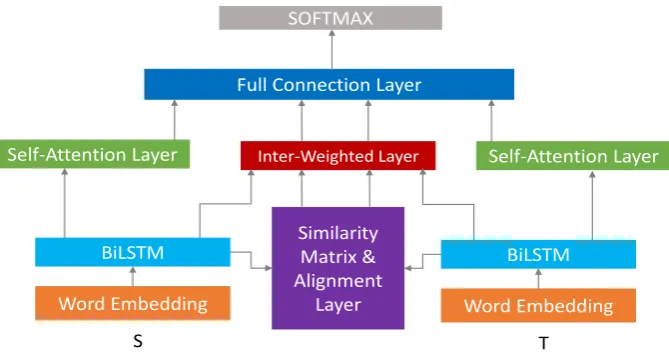
Figure 1: The architecture of IWAN. The blocks with same color have shared parameters.
3 Proposed Model
Given two sentences S and T, we aim to cal-culate a score to measure their similarity. Fig-ure 1 shows the architectFig-ure of IWAN model. To learn representations with context information, we firstly use a bi-direction LSTM sentence model which takes word embeddings as inputs to obtain a context-aware representation for each position (Sec. 3.1). The context-aware representations are used to compute the word level similarity matrix (Sec. 3.2). Inspired by attention mechanism, we exploit soft-alignment to find semantic counter-part in one sentence for each position in the other and compute a weighted sum vector of one sen-tence as the alignment representation of each po-sition of the other with an alignment layer (Sec. 3.3). Meanwhile, taking the context-aware repre-sentation ofSandT as inputs, we apply an inter-weighted layer to compute a weight for each posi-tion inSandT. We argue that this weight can in-dicate the importance in semantic interaction and a weighted summation of the representations at each position is more interpretable than other compo-sition method including max or average pooling and LSTM layer. We propose two strategies for computing those weights (Sec. 3.4). The weighted vectors are fed to full connection layers and a soft-max layer is used to give the final prediction(Sec. 3.5).
As Figure 1 illustrates, our model is symmetric aboutSandT. So for simplicity, we only describe the left part of IWAN model which is mainly about modelingS from here. Right part is exactly same except the roles ofSandT exchange.
3.1 BiLSTM Layer
With pre-trained d dimension word embed-ding, we can obtain sentence matrices Se =
[s1
e, . . . , sme ]andTe= [te1, . . . , tne]wheresie∈Rd
is embedding of the i-th word in sentence S. m
andnare the length ofS andT respectively. In order to capture contextual information, we run a bi-direction LSTM (Hochreiter and Schmidhuber,
1997) on two matrices. Let hidden layer dimen-sion of LSTM beu. Given the word embedding
xtat time stept, previous hidden vectorht−1 and
cell statect−1, LSTM recurrently computeshtand
ctas follows:
gt = ϕ(Wgxt+Vght−1+bg),
it = σ(Wixt+Wiht−1+bi),
ft = σ(Wfxt+Wfht−1+bf),
ot = σ(Woxt+Woht−1+bo),
ct = gt⊙it+ct−1⊙ft,
ht = ct⊙ot.
where allW ∈ Ru×d,V ∈ Ru×u andb ∈Ru. σ
issigmoidfunction andϕistanhfunction.⊙ indi-cates the element-wise multiplication of two vec-tors. The input gatesi, forget gatesf and output gates o control information flow self-adaptively, moreover cell statectcan memorize long-distance
information. ht is regarded as the representation
of time stept.
We feed Se and Te separately into a
parame-ter shared LSTM sentence model. If we run an LSTM model on the sequence of Se from left to
right, we can get the forward hidden vectorSfh=
[s1
fh, . . . , smfh]. For applying bi-direction LSTM,
Sbh = [s1bh, . . . , smbh]. Then we concatenate them
to one vector representation. So after bi-direction LSTM layer, we obtain Sh = [s1h, . . . , smh] and
Th= [t1h, . . . , tnh]wheresih =
[
si fh
si bh
]
.
3.2 Word Level Similarity Matrix
As mentioned above, the word level similarity ma-trix is crucial to making use of the interaction in-formation. Pang et al. (2016) and Wang et al.
(2016b) compute the similarity matrix between two word embeddings. We have argued that word embedding can not express the word meaning in context. From the view of RNN,si
fhcontains the
most semantic information about i-th word in S
and less about the leftmost words, whilesi bh also
contains the most semantic information about i-th word inS and less about the rightmost words. Therefore, the hidden vector of BiLSTM keeps the most information of corresponding word as well as integrated with the context information. Com-puting similarity matrix between BiLSTM hidden vectors is expected to improve the interaction re-sults. We regard the inner dot of two vectors as their similarity. For the similarity matrix M, its element Mij indicates the similarity between sih
andtjh:
Mij =siTh ·tjh.
3.3 Alignment Layer
We design the alignment layer for an intuitive idea: more similarS andT are, more probably we can find semantic counterpart in T for each part in
S, and vice versa. To some degree, people are likely to find semantic correspondences between two sentences and evaluate their similarity.He and Lin (2016) are also inspired by similar intuition, but they use deep CNN to recognize the alignment patterns implicitly. However, for each sentence, we explicitly calculate the alignment representa-tion and alignment residual which we believe are good indicators of sentence pair similarity.
For calculating the alignment representation, we apply attention mechanism (Bahdanau et al.,
2014) to conduct a soft-alignment. The original at-tention mechanism outputs the alignment weights from an extra full connection layer while we think the inner dot can represent the semantic related-ness adequately. Therefore, we consider the i-th row ofM as the similarity between the i-th posi-tion ofS and each position inT and normalize it
as follows:
αij = ∑nexp(Mij)
k=1exp(Mik), i= 1, . . . , m
while we also normalize each column of M for
T counterpart. αij always belongs to [0,1] and
can be regarded as weight. Then the alignment representationSa= [s1a, . . . , sma]is computed as a
weighted sum of{tjh}:
sia=∑n
k=1
αiktkh, i= 1, . . . , m
ForT counterpart, the alignment representation is
Ta = [t1a, . . . , tna].
In order to measure the gap between the align-ment representation and original representation, a directstrategy is to compute the absolute value of their difference: si
r = |sih −sia|. We call Sr =
[s1
r, . . . , smr ] alignment residual which is
consid-ered as alignment feature for subsequent process-ing.
We also utilize an orthogonal decomposition strategy which is first proposed by Wang et al.
(2016b): the componentsi
pofsihparallel tosia
rep-resents the alignment component and component
si
oorthogonal tosiarepresents alignment residual.
We compute these two component as follows:
si p= s
i h·sia
si a·sias
i
a, parallel component
si
o=sih−sip, orthogonal component
Then we can replaceSrwithSpandSoto measure
the degree of alignment whereSp = [s1p, . . . , smp ]
andSo= [s1o, . . . , smo ].
3.4 Inter-Weighted Layer 3.4.1 Inter-Attention Layer
concatenate
Element-wise subtraction
Element-wise multiplication
[image:5.595.95.272.64.237.2]sf
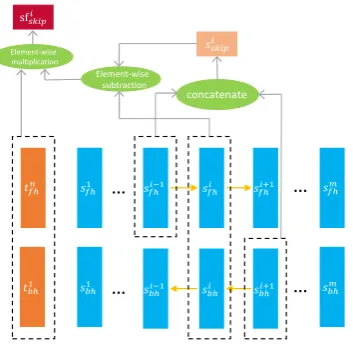
Figure 2: The illustration of computingsfi skip.
name suggests, these weights ofSare not only de-pendent onSbut alsoT and the parameters of the inter-attention layer are shared forSandT.
Formally, we take Sh andTh as inputs and the
inter-attention layer outputs a vectorwswith size
mforS:
ws=softmax(w2tanh(W1
[
Sh
(tavg⊗em)
]
)),
wheretavg = 1n∑nk=1tkh andSh ∈ R2u×m. We
calculate the average of{tk
h}as the representation
ofT. We also try to replace average operator with a self-attention layer (Lin et al., 2017) but get a worse performance. em is a vector of 1s with size
m and ⊗ represents outer product operator. We feed the concatenated matrix containing pairwise information into a 2-layer neural network. The pa-rameterW1 ∈Rs×4uprojects inputs into a hidden
layer withsunits. The output layer is parameter-ized by a vector w2 with sizes and a softmax
operator ensures all the element of output sum up to 1. Then we can usewsto sum upSr,SpandSo
weightedly across the position dimension:
swr=Sr∗(ws)T,
swp=Sp∗(ws)T,
swo=So∗(ws)T.
We can get twr, twp and two in the same way.
We call these inter-features for final prediction.
3.4.2 Inter-Skip Layer
We also explore another novel strategy to com-pute ws from the intuition that if the i-th word
inShas a low contribution to semantic composi-tion, we will obtain a similar representationsi
skip
if we feed all word embeddings sequentially ex-cept si
e into BiLSTM. Unfortunately, the O(m2)
complexity of running BiLSTM modelmtimes is too high so we exploit an approximate method to compute{si
skip}:
siskip=
[
sifh−1 si+1 bh
]
Then we compute a skip feature as following:
sfskipi = (siskip−Shi)⊙th,
where th =
[
tn fh
t1 bh
]
is the BiLSTM hidden repre-sentation of T. Figure 2 illustrates how to com-putesfi
skip. We think the difference betweensiskip
andsi
happroximately reflects the contribution the
i-th word makes to semantic composition. On the one hand, if the difference is small or even close to zero, the importance of correspond word should be small. On the other hand, if the difference (a vector) is not similar to the representation of T, correspond word is probably of less importance in measuring semantic similarity. From these two points, we think sfskip = [sfskip1 , . . . , sfskipm ]is
a good feature to measure word importance. The process of computingwsis similar:
ws=softmax(w2tanh(W1sfskip)),
We can usewsoutputted by inter-skip layer to
ob-tain inter-features in the same way.
3.5 Output Layer
For more rich information, we combine alignment information with sentence embeddings ofSandT
for final prediction. We run the simple but effec-tive self-attention (Lin et al.,2017) model onSh
to obtain its embeddingswh:
swh=Sh∗(softmax(w2′tanh(W1′ ∗Sh)))T,
whereW′
1 andw2′ are trainable. We computeswh
andtwhwith parameter shared self-attention layer
which is similar with the inter-attention layer ex-cept inputs.
Following Tai et al. (2015), we compute their element-wise producth× = swh⊙twh and their
absolute difference h+ = |swh −twh| as
self-features. If we use direct strategy, we combine the features as follows:
Strategy r SICKρ MSE MAPTrecQAMRR MAPWikiQAMRR DI 0.8774 0.8229 0.2374 0.815 0.882 0.724 0.739 OD 0.8810 0.8261 0.2289 0.822 0.889 0.730 0.744
Table 1: Performances of our model with differ-ent strategies in alignmdiffer-ent layer on three datasets.
If we useorthogonal decomposition strategy, we combine the features as follows:
hod= [hT×;hT+;sTwp;tTwp;sTwo;tTwo]T.
Following previous works, the sentence pair mod-eling problem can always be considered as a clas-sification task, so we finally calculate a probability distribution with a 2-layer neural network:
ˆ
pθ =softmax(V2ReLU(V1h+b1) +b2),
wherehcan behdiorhodand the hidden size isl.
We use rectified linear units (ReLU) as activation function.
4 Experimental Setup
4.1 Dataset and Evaluation Metric
To evaluate the proposed model, we conduct ex-periments on two tasks: semantic relatedness and answer selection.
For semantic relatedness task, we use the Sentences Involving Compositional Knowledge (SICK) dataset (Marelli et al.,2014), which con-sists of 9927 sentence pairs in a 4500/500/4927 train/dev/test split. The sentences are derived from existing image and video description and each sen-tence pair has a relatedness scorey∈[1,5], where the larger score indicates more similarity between two sentences. As the goal of this task is to cal-culate sentence pair similarity, we can directly evaluate our model on SICK. Following previ-ous works, we use Pearson’s Correlationr, Spear-man’s Correlationρand mean square error (MSE) as evaluation metrics.
For answer selection task, we experiment on two datasets: TrecQA and WikiQA. The TrecQA dataset (Wang et al.,2007) from the Text Retrieval Conferences has been widely used for the answer selection task during the past decade. The origi-nal TrecQA train dataset consists of 1,229 tions with 53,417 question-answer pairs, 82 ques-tions with 1,148 pairs in development set, and 100 questions with 1,517 pairs in test set. Recent works (dos Santos et al., 2016;Rao et al., 2016;
Wang et al.,2016b) removed questions in develop-ment and test set with no answers or with only pos-itive/negative answers, thus there are 65 questions with 1,117 pairs inClean versiondevelopment set and 68 questions with 1,442 pairs in Clean ver-siontest set.Rao et al.(2016) has showed the per-formances on Original TrecQA andClean version TrecQA are not comparable. Therefore, for a fair comparison, we only display the results onClean versionTrecQA which are posted on the website of Wiki of the Association for Computational Lin-guistics1. The open domain question-answering
WikiQA (Yang et al., 2015) is constructed from real queries of Bing and Wikipedia. We follow
Yang et al.(2015) to remove all questions with no correct candidate answers. The excluded WikiQA has 873/126/243 questions and 8627/1130/2351 question-answer pairs for train/dev/test split. To adapt our model to this task, we use semantic sim-ilarity to measure the probability of matching be-tween a question and a candidate answer. We eval-uate models by mean average precision (MAP) and mean reciprocal rank (MRR).
4.2 Training Details
For experiments on SICK, we follows Tai et al.
(2015) to transform the relatedness score y to a sparse target distributionp:
pi=
y− ⌊y⌋, i=⌊y⌋+ 1
⌊y⌋+ 1−y, i=⌊y⌋
0, otherwise
for1 ≤ i ≤ 5. The training objective is to mini-mize the KL-divergence loss betweenpandpˆθ:
loss= |D1|
|D|
∑
k=1
KL(p(k)∥pˆθ(k))
where|D|is the number of training examples. We regard the answer selection problem as “yes” or “no” binary classification and the train-ing objective is to minimize the negative log-likelihood in training stage:
loss=−|D1|
|D|
∑
k=1
logpˆθ(k)(y(k)|x(k))
wherex(k) represents a question-answer pair and
[image:6.595.72.294.61.95.2]rect to the question. In test stage, we sort condi-date answers for same question in descending or-der by probability of “yes” category and calculate MAP and MRR.
In all experiments, we use 300-dimension GloVe word embeddings2 (Pennington et al., 2014) and fix the embeddings during training. The LSTM hidden sizeuis set to 150. The hidden size of inter-attention and self-attention layersand full connection networkl are both set to 50. The L2 regularization strength is set to3×10−5. We train
the model with Adagrad (Duchi et al., 2011) op-timization algorithm with a learning rate of 0.05. The minibatch size is always 25. We exploit early stopping strategy according to MSE on develop-ment set for SICK and MAP on developdevelop-ment set for TrecQA and WikiQA.
Model r ρ MSE
Meaning Factory (Jim´enez et al.,
2014) 0.8268 0.7721 0.3224
ECNU (Zhao et al.,2014) 0.8414 - -BiLSTM (Tai et al.,2015) 0.8567 0.7966 0.2736 Tree-LSTM (Tai et al.,2015) 0.8676 0.8083 0.2532 MPCNN (He et al.,2015) 0.8686 0.8047 0.2606 PWIM (He and Lin,2016) 0.8784 0.8199 0.2329 Att Tree-LSTM (Zhou et al.,2016) 0.8730 0.8117 0.2426 Skip-thought+COCO∗(Kiros et al.,
2015) 0.8655 0.7995 0.2561
MaLSTM∗◦(Mueller and
[image:7.595.309.530.62.175.2]Thyagarajan,2016) 0.8822 0.8345 0.2286 IWAN-att (Proposed) 0.8810 0.8261 0.2289 IWAN-skip (Proposed) 0.8833 0.8263 0.2236
Table 2: Test results on SICK. The symbol∗
indi-cates the models with pre-training. The symbol◦
indicates the models with data augmentation strat-egy.
Model MAP MRR
Wang and Ittycheriah(2015) 0.746 0.820
QA-LSTM (Tan et al.,2015) 0.728 0.832 Att-pooling (dos Santos et al.,2016) 0.753 0.851 LDC (Wang et al.,2016b) 0.771 0.845 MPCNN (He et al.,2015) 0.777 0.836 PWIM (He and Lin,2016) 0.738 0.827 NCE-CNN (Rao et al.,2016) 0.801 0.877 BiMPM (Wang et al.,2017) 0.802 0.875 IWAN-att (Proposed) 0.822 0.889
IWAN-skip (Proposed) 0.801 0.861
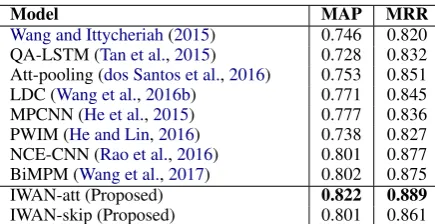
Table 3: Test results onClean versionTrecQA.
4.3 Results
Firstly, we evaluate the effectiveness of two strate-gies in alignment layer. We use inter-attention model in inter-weighted layer and we find
or-2http://nlp.stanford.edu/projects/glove/
Model MAP MRR
NASM (Miao et al.,2016) 0.689 0.707 Att-pooling (dos Santos et al.,2016) 0.689 0.696 LDC (Wang et al.,2016b) 0.706 0.723 MPCNN (He et al.,2015) 0.693 0.709 PWIM (He and Lin,2016) 0.709 0.723 NCE-CNN (Rao et al.,2016) 0.701 0.718 IARNN◦(Wang et al.,2016a) 0.734 0.742 BiMPM (Wang et al.,2017) 0.718 0.731 IWAN-att (Proposed) 0.730 0.744 IWAN-skip (Proposed) 0.733 0.750
Table 4: Test results on WikiQA. The symbol◦
indicates the models with data augmentation strat-egy.
thogonal decomposition (OD) strategy has a su-perior performance to direct (DI) strategy on all datasets. The comparison results are posted in Ta-ble 1. In following experiments, we always choose OD strategy in alignment layer.
Semantic RelatednessTable 3 shows the
perfor-mances of our model and compared models on SICK dataset. IWAN-att and IWAN-skip repre-sents our models using inter-attention layer and inter-skip layer respectively. IWAN-skip outper-forms IWAN-att in all metrics by a small margin. The traditional feature engineering based mod-els in first group have much poorer performances than deep learning models. MaLSTM (Mueller and Thyagarajan, 2016) benefits from the data argumentation strategy with Wordnet informa-tion and pre-training process. Ablainforma-tion experi-ments (Mueller and Thyagarajan,2016) illustrates a 0.04 degradation of Pearson’s r without data argumentation strategy. Therefore it is unfair to compare with this model directly, but our models achieve a comparable performance with it. Our models both outperform all other deep learning models. IWAN-skip outperforms Attentive Tree-LSTM (Zhou et al., 2016) by 0.01 in Pearson’s
[image:7.595.78.287.305.436.2] [image:7.595.73.291.525.637.2]the animal with big eyes is sleeping the animal with big eyes is eating words
0.00 0.05 0.10 0.15 0.20 0.25 0.30 0.35
inter-attention weights
[image:8.595.130.467.63.237.2]sentence S sentence T
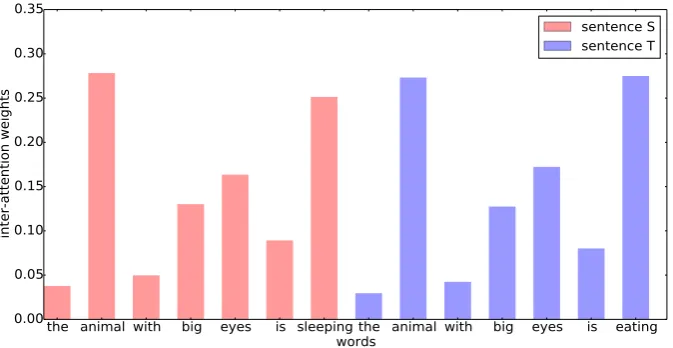
Figure 3: Visualization of weights outputted by inter-weighted layer of words in a sentence pair in SICK test set.
Lin,2016)).
Answer Selection We compare our model with
several state-of-the-art models on Clean version TrecQA and WikiQA in Table 3 and Table 4 re-spectively. Our two models both have a state-of-the-art performance on two datasets. IWAN-att outperform all previous works on TrecQA and make a significant improvement of state-of-the-art. IWAN-skip and IARNN (Wang et al.,2016a) which solves bias problem of attention mecha-nism beat all other models on WikiQA, while the latter is trained on an argumented dataset with negative sampling. Wang et al. (2016b) first proposes the orthogonal decomposition but their LDC model compute the similarity matrix be-tween word embeddings which are lack of con-text information and IWAN-att outperforms it dra-matically by 0.02-0.05 in MAP and MRR on both datasets. The PWIM (He and Lin, 2016) is still competitive on WikiQA but gets an inferior performance on TrecQA. However, our models both have state-of-the-art performances on three datasets which demonstrates our models have ex-cellent generalization ability in different datasets.
4.4 Ablation Tests
Table 5 show the results of ablations tests on SICK dataset inr metric. From IWAN-att, we remove or replace one component at a time and evalu-ate performance of partial models. If removing inter-features, therdegrades with a 0.013 decline which proves the interaction information is cru-cial for sentence pair modeling. Whereas, the degradation from removing self-features is much
Ablation setting Pearson’sr
Full Model (IWAN-att) 0.8810 •w/o inter-features -0.0130
•w/o self-features -0.0070
•w/o BiLSTM layer -0.0387
•w/o inter-attention layer -0.0075 •Replace inter-attention weights with
[image:8.595.314.525.294.395.2]self-attention weights -0.0063 •w/o parallel component -0.0037 •w/o orthogonal component -0.0046
Table 5: Ablation test on SICK dataset, removing each component separately.
smaller. We found a large decline when remov-ing BiLSTM layer, which confirms our conjecture that context information is useful. It is worth men-tioning that He and Lin (2016) posts the degra-dation of their model from removing BiLSTM is 0.1225 in r which is much larger than 0.0387 of us. Removing inter-attention layer means we per-form a mean-pooling on inter-features instead of a weighted summation. A 0.0075 r degradation proves importance weighting can result in a signif-icant improvement. If the weights are only about single sentence information, the performance still gets worse. The last two settings show both com-ponents from orthogonal decomposition are infor-mative. More or less unexpected, parallel compo-nent is almost as useful as orthogonal compocompo-nent.
4.5 Visualization of Inter-Weighted Layer
3.2 and the prediction given by IWAN-att model is 3.507 which is much more accurate than 4.356 given by the model without inter-attention layer. We can find the inter-attention layer gives very high weights over 0.25 (while the average weight is about 0.14) to “sleeping” and “eating” which are the only difference between two sentences. There-fore, the difference will be attended in following processing. Meanwhile, the weights of the arti-cle “the” and the preposition “with” which are not as important as other real words in semantic com-position are much lower. These prove the inter-weighted mechanism is reasonable and effective. 5 Conclusion
This work proposes a weighted alignment model for sentence pair modeling. We utilize an align-ment layer to measure the similarity of sen-tence pairs according to their degree of alignment. Moreover, we propose an inter-weighted layer to measure the importance of different parts in sen-tences. Two strategies for this layer have been ex-plored which are both effective. The composition of alignment features can benefit from the inter-weighted weights. Experiment results shows that proposed models achieve the state-of-the-art per-formance on three datasets. In the future work, we will improve the inter-weighted layer with more sophisticated module and evaluate our model on other large scale datasets.
Acknowledgments
This work is partially supported by the National High Technology Research and Development Pro-gram of China (Grant No. 2015AA015403) and the National Natural Science Foundation of China (Grant No. 61170091). We would also like to thank the anonymous reviewers for their helpful comments.
References
Dzmitry Bahdanau, Kyunghyun Cho, and Yoshua Bengio. 2014. Neural machine translation by jointly learning to align and translate. CoRR, abs/1409.0473.
Samuel R. Bowman, Gabor Angeli, Christopher Potts, and Christopher D. Manning. 2015. A large an-notated corpus for learning natural language infer-ence. In Proceedings of the 2015 Conference on Empirical Methods in Natural Language Process-ing, EMNLP 2015, Lisbon, Portugal, September 17-21, 2015, pages 632–642.
John C. Duchi, Elad Hazan, and Yoram Singer. 2011. Adaptive subgradient methods for online learning and stochastic optimization. Journal of Machine Learning Research, 12:2121–2159.
Jeffrey L. Elman. 1990. Finding structure in time.
Cognitive Science, 14(2):179–211.
Hua He, Kevin Gimpel, and Jimmy J. Lin. 2015. Multi-perspective sentence similarity modeling with con-volutional neural networks. InProceedings of the 2015 Conference on Empirical Methods in Natural Language Processing, EMNLP 2015, Lisbon, Portu-gal, September 17-21, 2015, pages 1576–1586. Hua He and Jimmy J. Lin. 2016. Pairwise word
in-teraction modeling with deep neural networks for semantic similarity measurement. InNAACL HLT 2016, The 2016 Conference of the North American Chapter of the Association for Computational Lin-guistics: Human Language Technologies, San Diego California, USA, June 12-17, 2016, pages 937–948. Karl Moritz Hermann, Tom´as Kocisk´y, Edward Grefenstette, Lasse Espeholt, Will Kay, Mustafa Su-leyman, and Phil Blunsom. 2015. Teaching ma-chines to read and comprehend. In Advances in Neural Information Processing Systems 28: Annual Conference on Neural Information Processing Sys-tems 2015, December 7-12, 2015, Montreal, Que-bec, Canada, pages 1693–1701.
Sepp Hochreiter and J¨urgen Schmidhuber. 1997. Long short-term memory. Neural Computation, 9(8):1735–1780.
Po-Sen Huang, Xiaodong He, Jianfeng Gao, Li Deng, Alex Acero, and Larry P. Heck. 2013. Learning deep structured semantic models for web search us-ing clickthrough data. In22nd ACM International Conference on Information and Knowledge Man-agement, CIKM’13, San Francisco, CA, USA, Oc-tober 27 - November 1, 2013, pages 2333–2338. Sergio Jim´enez, George Due˜nas, Julia Baquero, and
Alexander F. Gelbukh. 2014. UNAL-NLP: com-bining soft cardinality features for semantic textual similarity, relatedness and entailment. In Proceed-ings of the 8th International Workshop on Semantic Evaluation, SemEval@COLING 2014, Dublin, Ire-land, August 23-24, 2014., pages 732–742.
Nal Kalchbrenner, Edward Grefenstette, and Phil Blun-som. 2014. A convolutional neural network for modelling sentences. In Proceedings of the 52nd Annual Meeting of the Association for Computa-tional Linguistics, ACL 2014, June 22-27, 2014, Baltimore, MD, USA, Volume 1: Long Papers, pages 655–665.
Ryan Kiros, Yukun Zhu, Ruslan Salakhutdinov, Richard S. Zemel, Raquel Urtasun, Antonio Tor-ralba, and Sanja Fidler. 2015. Skip-thought vec-tors. In Advances in Neural Information Process-ing Systems 28: Annual Conference on Neural In-formation Processing Systems 2015, December 7-12, 2015, Montreal, Quebec, Canada, pages 3294– 3302.
Jimmy J. Lin. 2007. An exploration of the principles underlying redundancy-based factoid question an-swering.ACM Trans. Inf. Syst., 25(2).
Zhouhan Lin, Minwei Feng, Cicero Nogueira dos Santos, Mo Yu, Bing Xiang, Bowen Zhou, and Yoshua Bengio. 2017. A structured self-attentive sentence embedding. InProceedings of the Inter-national Conference on Learning Representations, ICLR 2017.
Marco Marelli, Luisa Bentivogli, Marco Baroni, Raf-faella Bernardi, Stefano Menini, and Roberto Zam-parelli. 2014. Semeval-2014 task 1: Evaluation of compositional distributional semantic models on full sentences through semantic relatedness and tex-tual entailment. In Proceedings of the 8th In-ternational Workshop on Semantic Evaluation, Se-mEval@COLING 2014, Dublin, Ireland, August 23-24, 2014., pages 1–8.
Yishu Miao, Lei Yu, and Phil Blunsom. 2016. Neu-ral variational inference for text processing. In Pro-ceedings of the 33nd International Conference on Machine Learning, ICML 2016, New York City, NY, USA, June 19-24, 2016, pages 1727–1736.
Tomas Mikolov, Martin Karafi´at, Luk´as Burget, Jan Cernock´y, and Sanjeev Khudanpur. 2010. Recur-rent neural network based language model. In IN-TERSPEECH 2010, 11th Annual Conference of the International Speech Communication Association, Makuhari, Chiba, Japan, September 26-30, 2010, pages 1045–1048.
Jonas Mueller and Aditya Thyagarajan. 2016. Siamese recurrent architectures for learning sentence simi-larity. In Proceedings of the Thirtieth AAAI Con-ference on Artificial Intelligence, February 12-17, 2016, Phoenix, Arizona, USA., pages 2786–2792.
Hamid Palangi, Li Deng, Yelong Shen, Jianfeng Gao, Xiaodong He, Jianshu Chen, Xinying Song, and Rabab K. Ward. 2016. Deep sentence em-bedding using long short-term memory networks: Analysis and application to information retrieval.
IEEE/ACM Trans. Audio, Speech & Language Pro-cessing, 24(4):694–707.
Liang Pang, Yanyan Lan, Jiafeng Guo, Jun Xu, Shengxian Wan, and Xueqi Cheng. 2016. Text matching as image recognition. InProceedings of the Thirtieth AAAI Conference on Artificial Intel-ligence, February 12-17, 2016, Phoenix, Arizona, USA., pages 2793–2799.
Ankur P. Parikh, Oscar T¨ackstr¨om, Dipanjan Das, and Jakob Uszkoreit. 2016. A decomposable attention model for natural language inference. In Proceed-ings of the 2016 Conference on Empirical Meth-ods in Natural Language Processing, EMNLP 2016, Austin, Texas, USA, November 1-4, 2016, pages 2249–2255.
Jeffrey Pennington, Richard Socher, and Christo-pher D. Manning. 2014. Glove: Global vectors for word representation. InEmpirical Methods in Nat-ural Language Processing (EMNLP), pages 1532– 1543.
Xipeng Qiu and Xuanjing Huang. 2015. Convolutional neural tensor network architecture for community-based question answering. In Proceedings of the Twenty-Fourth International Joint Conference on Artificial Intelligence, IJCAI 2015, Buenos Aires, Argentina, July 25-31, 2015, pages 1305–1311. Jinfeng Rao, Hua He, and Jimmy J. Lin. 2016.
Noise-contrastive estimation for answer selection with deep neural networks. InProceedings of the 25th ACM International on Conference on Information and Knowledge Management, CIKM 2016, Indi-anapolis, IN, USA, October 24-28, 2016, pages 1913–1916.
Tim Rockt¨aschel, Edward Grefenstette, Karl Moritz Hermann, Tom´as Kocisk´y, and Phil Blunsom. 2016. Reasoning about entailment with neural attention. In Proceedings of the International Conference on Learning Representations, ICLR 2016.
C´ıcero Nogueira dos Santos, Ming Tan, Bing Xiang, and Bowen Zhou. 2016. Attentive pooling net-works.CoRR, abs/1602.03609.
Richard Socher, Eric H. Huang, Jeffrey Pennington, Andrew Y. Ng, and Christopher D. Manning. 2011a. Dynamic pooling and unfolding recursive autoen-coders for paraphrase detection. In Advances in Neural Information Processing Systems 24: 25th Annual Conference on Neural Information Process-ing Systems 2011. ProceedProcess-ings of a meetProcess-ing held 12-14 December 2011, Granada, Spain., pages 801– 809.
Richard Socher, Brody Huval, Christopher D. Man-ning, and Andrew Y. Ng. 2012. Semantic compo-sitionality through recursive matrix-vector spaces. In Proceedings of the 2012 Joint Conference on Empirical Methods in Natural Language Process-ing and Computational Natural Language Learn-ing, EMNLP-CoNLL 2012, July 12-14, 2012, Jeju Island, Korea, pages 1201–1211.
UK, A meeting of SIGDAT, a Special Interest Group of the ACL, pages 151–161.
Ilya Sutskever, Oriol Vinyals, and Quoc V. Le. 2014. Sequence to sequence learning with neural net-works. InAdvances in Neural Information Process-ing Systems 27: Annual Conference on Neural In-formation Processing Systems 2014, December 8-13 2014, Montreal, Quebec, Canada, pages 3104– 3112.
Kai Sheng Tai, Richard Socher, and Christopher D. Manning. 2015. Improved semantic representations from tree-structured long short-term memory net-works. In Proceedings of the 53rd Annual Meet-ing of the Association for Computational LMeet-inguistics and the 7th International Joint Conference on Natu-ral Language Processing of the Asian Federation of Natural Language Processing, ACL 2015, July 26-31, 2015, Beijing, China, Volume 1: Long Papers, pages 1556–1566.
Ming Tan, Bing Xiang, and Bowen Zhou. 2015. Lstm-based deep learning models for non-factoid answer selection. CoRR, abs/1511.04108.
Shengxian Wan, Yanyan Lan, Jiafeng Guo, Jun Xu, Liang Pang, and Xueqi Cheng. 2016. A deep ar-chitecture for semantic matching with multiple po-sitional sentence representations. InProceedings of the Thirtieth AAAI Conference on Artificial Intel-ligence, February 12-17, 2016, Phoenix, Arizona, USA., pages 2835–2841.
Bingning Wang, Kang Liu, and Jun Zhao. 2016a. In-ner attention based recurrent neural networks for an-swer selection. InProceedings of the 54th Annual Meeting of the Association for Computational Lin-guistics, ACL 2016, August 7-12, 2016, Berlin, Ger-many, Volume 1: Long Papers.
Mengqiu Wang, Noah A. Smith, and Teruko Mita-mura. 2007. What is the jeopardy model? A quasi-synchronous grammar for QA. InEMNLP-CoNLL 2007, Proceedings of the 2007 Joint Conference on Empirical Methods in Natural Language Process-ing and Computational Natural Language LearnProcess-ing, June 28-30, 2007, Prague, Czech Republic, pages 22–32.
Shuohang Wang and Jing Jiang. 2016. Learning natu-ral language inference with LSTM. InNAACL HLT 2016, The 2016 Conference of the North American Chapter of the Association for Computational Lin-guistics: Human Language Technologies, San Diego California, USA, June 12-17, 2016, pages 1442– 1451.
Zhiguo Wang, Wael Hamza, and Radu Florian. 2017. Bilateral multi-perspective matching for natural lan-guage sentences.CoRR, abs/1702.03814.
Zhiguo Wang and Abraham Ittycheriah. 2015. Faq-based question answering via word alignment.
CoRR, abs/1507.02628.
Zhiguo Wang, Haitao Mi, and Abraham Ittycheriah. 2016b. Sentence similarity learning by lexical de-composition and de-composition. In COLING 2016, 26th International Conference on Computational Linguistics, Proceedings of the Conference: Tech-nical Papers, December 11-16, 2016, Osaka, Japan, pages 1340–1349.
Yi Yang, Wen-tau Yih, and Christopher Meek. 2015. Wikiqa: A challenge dataset for open-domain ques-tion answering. In Proceedings of the 2015 Con-ference on Empirical Methods in Natural Lan-guage Processing, EMNLP 2015, Lisbon, Portugal, September 17-21, 2015, pages 2013–2018.
Wenpeng Yin and Hinrich Sch¨utze. 2015. Multi-grancnn: An architecture for general matching of text chunks on multiple levels of granularity. In Pro-ceedings of the 53rd Annual Meeting of the Associ-ation for ComputAssoci-ational Linguistics and the 7th In-ternational Joint Conference on Natural Language Processing of the Asian Federation of Natural Lan-guage Processing, ACL 2015, July 26-31, 2015, Bei-jing, China, Volume 1: Long Papers, pages 63–73. Jiang Zhao, Tiantian Zhu, and Man Lan. 2014.ECNU:
one stone two birds: Ensemble of heterogenous measures for semantic relatedness and textual entail-ment. InProceedings of the 8th International Work-shop on Semantic Evaluation, SemEval@COLING 2014, Dublin, Ireland, August 23-24, 2014., pages 271–277.