Georgia State University Georgia State University
ScholarWorks @ Georgia State University
ScholarWorks @ Georgia State University
Business Administration Dissertations Programs in Business Administration
Spring 5-11-2013
Diagnosing Social Support and Performance Management: A
Diagnosing Social Support and Performance Management: A
Case Study of Contextual Ambidexterity in a Manufacturing
Case Study of Contextual Ambidexterity in a Manufacturing
Company
Company
Darren K. Allen
Georgia State University
Follow this and additional works at: https://scholarworks.gsu.edu/bus_admin_diss
Recommended Citation Recommended Citation
Allen, Darren K., "Diagnosing Social Support and Performance Management: A Case Study of Contextual Ambidexterity in a Manufacturing Company." Dissertation, Georgia State University, 2013.
https://scholarworks.gsu.edu/bus_admin_diss/20
1
PERMISSION TO BORROW
In presenting this dissertation as a partial fulfillment of the requirements for an advanced degree from Georgia State University, I agree that the Library of the University shall make it available for inspection and circulation in accordance with its regulations governing materials of this type. I agree that permission to quote from, to copy from, or publish this dissertation may be granted by the author or, in his/her absence, the professor under whose direction it was written or, in his absence, by the Dean of the Robinson College of Business. Such quoting, copying, or publishing must be solely for the scholarly purposes and does not involve potential financial gain. It is understood that any copying from or publication of this dissertation which involves potential gain will not be allowed without written permission of the author.
2
NOTICE TO BORROWERS
All dissertations deposited in the Georgia State University Library must be used only in accordance with the stipulations prescribed by the author in the preceding statement.
The author of this dissertation is:
Darren Kerr Allen PO Box 5611
Vernon Hills, IL 60061 [email protected]
The director of this dissertation is:
Dr. Wesley James Johnston Department of Marketing
J. Mack Robinson College of Business Georgia State University
Room: 422, RCB Building 35 Broad Street
3
Diagnosing Social Support and Performance Management: A Case Study of Contextual Ambidexterity in a Manufacturing Company
By
Darren Kerr Allen
A Dissertation Submitted in Partial Fulfillment of the Requirements for the Degree
Of
Executive Doctorate in Business
In the Robinson College of Business
Of
Georgia State University
GEORGIA STATE UNIVERSITY
ROBINSON COLLEGE OF BUSINESS
4
Copyright by
Darren Kerr Allen
5
ACCEPTANCE
This dissertation was prepared under the direction of the Darren Kerr Allen’s Dissertation Committee. It has been approved and accepted by all members of that committee, and it has been accepted in partial fulfillment of the requirements for the degree of Executive Doctorate in Business in the J. Mack Robinson College of Business of Georgia State University.
H. Fenwick Huss, Dean
DISSERTATION COMMITTEE
Dr. Wesley Johnston - Chair
Dr. Lars Mathiassen
6
Contents
Figures ... 7
Tables ... 8
Acknowledgements ... 9
Abstract ... 10
1.0 Introduction and Problem Statement... 11
2.0 Literature Review ... 15
2.1 Contextual Ambidexterity ... 16
2.2 Social Support ... 23
2.3 Performance Management ... 27
2.4 Burnout ... 31
2.5 Organizational Trust ... 34
3.0 Conceptual Model ... 39
4.0 Research Methodology ... 43
4.1 Case Research... 44
4.2 Abduction as the Research Philosophy ... 49
4.3 The Researcher-Client Agreement ... 53
4.4 Case Background ... 53
4.5 Research Process and Results ... 60
5.0 Findings ... 77
5.1 Survey Results ... 78
5.2 Interview Results ... 83
5.3 Performance Management ... 89
5.4 Social Support ... 103
5.5 Moderating Factors ... 128
5.6 Unit of Analysis ... 129
6.0 Conclusions ... 130
6.1 Contributions ... 131
6.2 Limitations ... 136
6.3 Implications for Future Research ... 136
Appendix ... 141
Works Cited ... 163
7
Figures
Figure Title Page
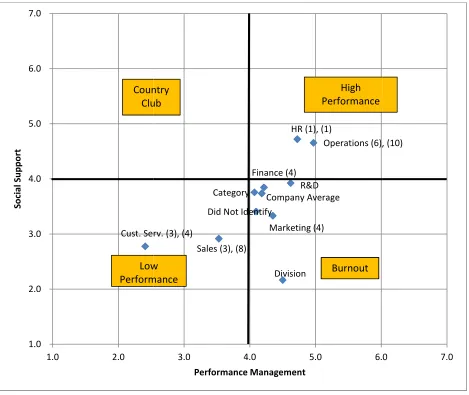
1 Birkinshaw and Gibson’s High Performance Matrix 41
2 Birkinshaw and Gibson’s Contextual Ambidexterity Antecedents 42
3 Global Parent Co’s Global Organization 54
4 Diagnostic Survey Results by Department 80
5 Organizational Context by Department 82
6 High Performance Context Antecedents 86
7 Performance Management Antecedents 87
8
Tables
Table Title Page
1 Survey Responses by Department 64
2 Summary of Final Measures 65
3 Summary of Trust Measures 66
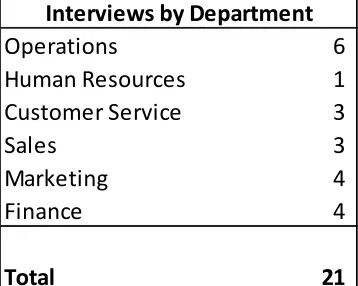
4 Interviews by Department 68
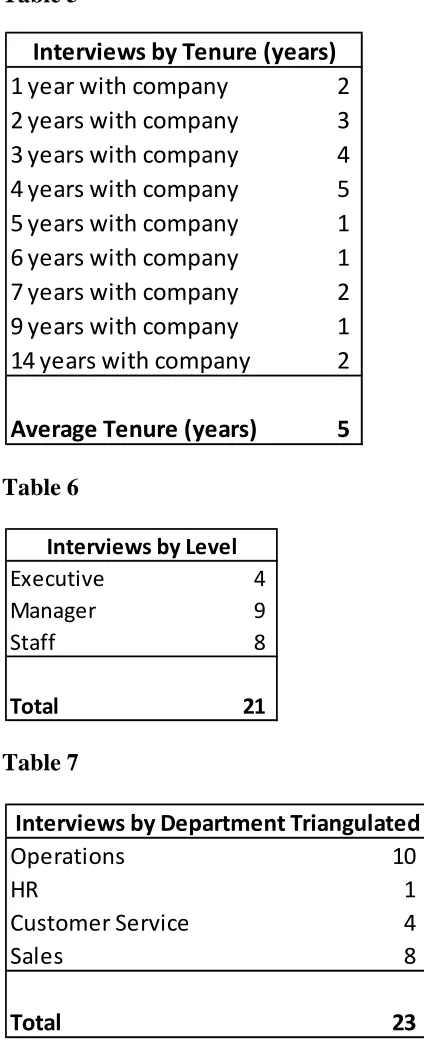
5 Interviews by Tenure 69
6 Interviews by Level 69
7 Interviews by Department Triangulated 69
8 Data Collection Summary 72
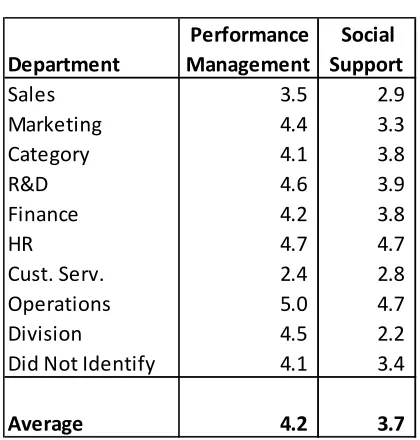
9 Measurements by Department 79
10 Organizational Context by Department 82
9
Acknowledgements
Above all, I would like to acknowledge that God has given me this opportunity and has allowed me to grow through what proved to be an arduous, but rewarding, process. Next, I am compelled to thank my parents who have been supportive and reassuring not only in words, but also in actions; with each unfolding day their impact on my life only becomes more apparent.
Specifically, I need to recognize my Mother, who is both nurturing and inspiring, and my Father who provides one line pep talks such as “no one rises to low expectations.” Even as I write the words, I can hear his voice echoing in my head, an echo anchored by truth. I would also like to acknowledge my children, Channing, Addison, and Griffith, who patiently completed their schoolwork while I did mine, while never once complaining. I also need to thank my brothers, Wes and Charlton, who provided encouragement throughout the process.
This list would be incomplete without recognizing my dissertation committee members. First, I must thank Dr. Wesley Johnston who provided constant encouragement and knew how to ignite my competitive spirit. Next, I thank Dr. Lars Mathiassen who provided both insight beyond measure and guidance in navigating the long research process. The last committee member was certainly not the least. Dr. Minna Rollins was a true godsend who I could not have completed the process without. She was willing to discuss the nuances of the research and reviewed far too many ‘final’ drafts than I care to admit to. In addition, she mandated bi-weekly discussions whether she was in Finland or I was in Mexico, pushed me to organize my thoughts, and kept me from getting lost in too much detail. Without her, the research would be of much lower quality and would have taken significantly longer to complete.
In addition, I need to thank my friends and classmates Steven and Ted for motivation and encouragement. We began the EDB program together and worked as a team to complete our group research project. While it would have been easy to disband after submitting the project, we instead stuck together and helped each other progress in our individual dissertations. This research would have been much more difficult to complete without their support. I must also recognize the other members of the 2013 EDB cohort, as well as the instructors from whom we have all benefited throughout the program. In addition, the EDB staff has provided immeasurable assistance in the minutia of making the dissertation happen.
I also need to thank the BC Monday night men’s group for their constant words of encouragement and prayers.
This list would be incomplete without thanking my research sponsor, as well as the leaders, at ‘ManufacturingCo’ including Stephanie, Peter, Rhonda, and Cheryl who gave me access to the company and therefore made the research possible. They also provided constant encouragement and listened patiently while I droned about the complexity and application of contextual
ambidexterity. Further, the employees at ‘ManufacturingCo’ must be recognized. They completed the survey and tolerated the interviews, a taxing process where several commented ‘these questions are really difficult’ but despite the challenge, kept answering.
10
Abstract
Diagnosing Social Support and Performance Management: A Case Study of Contextual Ambidexterity in a Manufacturing Company
By
Darren Kerr Allen
Committee Chair: Dr. Wesley Johnston
Major Academic Unit: Marketing Department
This study diagnoses performance in a mature manufacturing company based on an inquiry into
contextual ambidexterity. Previous research has shown that creating a high performance context
is founded upon the constructs of performance management and social support; however, this
research has been conducted in fast evolving, relatively young companies such as software
design firms. To date, no research has shown if a well established manufacturing firm can create
a context with high levels of performance management and social support establishing a high
performance environment and therefore be contextually ambidextrous. The presented contextual
ambidexterity inquiry considers social support based upon four specific types of support, namely
emotional, appraisal, informational, and instrumental support. Within social support, the
concepts of trust and burnout are also vital in establishing the proper culture to achieve high
performance. Further, performance management is founded upon human capital management
established in a suitable corporate culture. In this study, this approach to a contextual
ambidexterity inquiry is applied within the context of a U.S. based division of a global
manufacturing company based on a survey, participant observation, and individual interviews.
11
understanding of the antecedents of high performance in an environment outside that of a young,
fast evolving software firms. Further, it is shown that a high performance context may exist
within organizations that are vastly different from those previously studied. In addition, this
study offers an approach to a contextual ambidexterity inquiry with refined definitions and
measures based on established constructs as well as new constructs. The implications of these
additions to our understanding of contextual ambidexterity to both academia and practice are
discussed and several avenues of future research are proposed.
1.0 Introduction and Problem Statement
As previous research has succinctly shown (Gibson and Birkinshaw 2004), organizations that are
successful in changing market environments are ambidextrous. Ambidexterity, in a very general
sense, encompasses the ability to do two different things equally well. For an organization it is
defined as the capability of being aligned and efficient in the addressing current business
situations, while also adaptive enough to adjust for developments in their environments that will
allow them to thrive in the future business situations (Duncan 1976, Tushman 1996). The
overriding concept that engenders the importance of ambidexterity is that the stress on an
organization in its market environment is in perpetual conflict, so there are constant exchanges
that must occur.
In contrast, the concept of contextual ambidexterity has been similarly developed (Gibson and
Birkinshaw 2004); it is deemed to be contextual because it develops from the characteristics,
specifically the processes and systems, of the specific organizational context. Gibson and
Birkinshaw (2004) defined contextual ambidexterity as “the behavioral capacity to
12
went on to define alignment as the “coherence among all the patterns of activities in the business
unit; they are working together toward the same goals”. Further, they stated that “adaptability
refers to the capacity to reconfigure activities in the business unit quickly to meet changing
demands in the task environment”. Almost by definition, these concepts are complicated to
manage, inefficient to create, and causally indefinite (Amit and Schoemaker 1983, Prahalad
1990, Barney 1991, Gibson and Birkinshaw 2004). In essence, structural ambidexterity focuses
on the organization as the unit of analysis, while contextual ambidexterity has been defined as
focusing on the individual within the organization as the unit of analysis. While the anticipated
advantages of contextual ambidexterity are significant, realizing ambidexterity in a complex
business environment is by no means uncomplicated. Each contradictory capability requires
dissimilar and often incongruent systems, environments, processes, and beliefs, thereby creating
conflicts and dilemmas that demand to be resolved (Tushman 1996, Floyd and Lane 2000,
Gibson and Birkinshaw 2004).
Currently, no research has been conducted on the antecedents to the high performance context
that leads to contextual ambidexterity within the context of a mature manufacturing company;
this is regarded as a considerable inadequacy in the literature, especially in light of the strategic
role that flexibility to adjust to changing market conditions plays in the overall health of an
organization. Similar research has been conducted in other industries, specifically in the area of
information systems, where it was found that successful teams were ambidextrous, using coping
strategies that exhibited both flexibility and rigor. In these situations, it was found that increasing
both performance management and social support led to great contextual ambidexterity (Lee,
13
possible to explore the antecedents of contextual ambidexterity within the identified
environment.
Therefore, the intent of this research is an in-depth study of the antecedents of the high
performance context that leads to contextual ambidexterity within the context of a single mature
manufacturing company. A U.S. based mature manufacturing company agreed to allow the
researcher to conduct an in-depth analysis of their current state of performance and to explore the
antecedents that are contributing to such.
This research will build on the organization-context literature, in particular Ghoshal and
Bartlett’s (1994) framework for organizational effectiveness, as well as, Gibson and
Birkinshaw’s (2004) argument for contextual ambidexterity to develop an approach to contextual
ambidexterity inquiries in mature manufacturing companies. In doing so, this research will
define and build upon the concepts of performance management, social support, trust, and
burnout culture. Specifically, this study asks the question: What are the antecedents of a high
performance context that leads to contextual ambidexterity within a mature manufacturing company? An
answer to this question can be found in the Findings chapter. Accordingly, this research examines the
dualities as well as the antecedents of ambidexterity. Hence, the following research objectives are
investigated within a mature manufacturing company:
1. Identify the dualities involved in social support and performance management, as well as
the contributing effects of burnout and trust.
2. Explore the levels, effects, and hindrances to performance management, social support,
burnout, and trust.
To meet these research objectives, a research project was initiated with a manufacturing
14
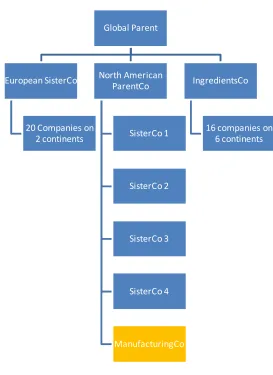
referred to as ManufacturingCo. This company is a mid-sized U.S. based manufacturer of food
products; the specifics of the case will be addressed in a subsequent section. Organizations such
as this represent an excellent environment for studying dualities involved in achieving contextual
ambidexterity, especially when utilizing a case based research approach.
The paper proceeds as follows: first, a background of the specific case regarding the target
company will be described. Next, the literature on contextual ambidexterity, social support,
performance management, burnout, and organizational trust will be reviewed in a format that
integrates all of the concepts into the research. Then, the conceptual model will be presented
demonstrating the relationships between the concepts explored in the literature review. This is
followed by a method section that describes the single case study methodology in general, the
criteria by which it should be evaluated, and the details for this specific research project.
Following that, the findings of the study, specifically the antecedents to a high performance
context that leads to contextual ambidexterity and the related approach to the contextual
ambidexterity inquiry, will be discussed. Next, the contributions of this research to the literature
as well as to practitioners will be explored. Finally, both the limitation and implications of the
research will be presented.
This study employs a case framework that allows it to accomplish the outlined objectives.
Specifically, it utilizes an overall style that is a practical, inductive, field study consisting of a
single case explored in great depth. By adhering to a single case study methodology, a high level
of immersion into the context and environment of the target organization was possible and as
such, permitted a full understanding of the influences on the phenomenon of interest. However, it
is also recognized that in spite of its strengths, a single case study methodology is not without its
15
research method, with its in-depth contextual exploration, is exceptionally appropriate for this
study (Yin 2009).
As previously mentioned, this study is situated in a manufacturing environment. Within the
context of contextual ambidexterity, a reoccurring theme is the interplay between the
organization’s strategy and its market; the manufacturing environment is no different. A
significant portion of the extant research focuses on manufacturing adaptability as a vital element
of an organization’s response to environmental uncertainty (Upton 1994, Upton 1995, Upton
1995, Upton 1997). Within adaptability, which some literature streams refer to as flexibility,
initiatives differ greatly, depending on how organizations interpret, inspect, and learn from their
environments (Daft and Weick 1984, de Treville, Bendahan et al. 2007). Researchers have
highlighted the need for increased study of the operational practices and learning processes
related to manufacturing adaptability that could clarify how some firms respond to the
environment more successfully than others (Sawhney 2006, Patel 2011). However, especially
within the context of manufacturing companies, very little research has been published
concerning ambidexterity and what has been published focuses exclusively on structural
ambidexterity. The overriding purpose of this study is to show that contextual ambidexterity is
applicable to a mature manufacturing organization and then to determine the antecedents to that
ambidexterity.
2.0 Literature Review
In order to study the antecedents to a high performance context that leads to contextual
ambidexterity, it is first necessary to define the key components, namely contextual
16
Until Birkinshaw and Gibson’s (2004) seminal work, ambidexterity was typically viewed as
being related to the structure of the organization. It was Duncan (1976), who first utilized the
term, arguing that organizations must navigate the tension between alignment and adaptability,
and do so by creating “dual structures”. These dual structures were typically accomplished
through different business units within the same organization. Usually one business unit focused
on alignment while another focused on adaptability. Such an organizational configuration has
become known as structural ambidexterity.
Birkinshaw and Gibson (2004) took a different approach and recognized the role of the processes
and systems present in a given context in achieving the desired balance between opposing
demands. In other words, dual organizational structures are not necessary, but instead a context
that allows individual employees to possess the traits necessary to navigate the tension between
alignment and adaptability is required. Through their arguments, they created the concept of
contextual ambidexterity and defined it as the “behavioral capacity to simultaneously
demonstrate alignment and adaptability across an entire business unit.” It is this concept that is
the focus of this study.
2.1 Contextual Ambidexterity
In organizational literature, ambidexterity refers generally to an organization’s ability to pursue
two different objectives simultaneously; examples abound, such as differentiation and low-cost
strategic positioning (Porter 1980, Porter 1996), manufacturing efficiency and flexibility
(Carlsson 1989, Adler, Goldoftas et al. 1999), or global integration and local responsiveness
(Bartlett and Ghoshal 1989). However, the literature has traditionally approached ambidexterity
as that of an organization’s structure (Gibson and Birkinshaw 2004). It was Duncan (1976) who
17
ambidexterity by creating “dual structures,” so that certain departments within businesses, or
smaller groups within departments, concentrate on alignment, while others concentrate on
adaptation; this concept is formally referred to as structural ambidexterity (Gibson and
Birkinshaw 2004).
Overall, the ambidextrous organization accomplishes alignment in its current operations while
also adapting effectively to changing market demands. Tushman and O’Reilly (1996) specified
ambidexterity as the “ability to simultaneously pursue both incremental and discontinuous
innovation and change”; and March and Simon (1958) discussed the balance between the
conflicting demands for exploitation and exploration. On the other side of the equation, there has
been discussion as to whether these organizational tensions, such as those between alignment and
adaptability, can be effectively resolved (Ford and Ford 1994, Lewis 2000). Also, embedded in
the extant research on manufacturing, the trade-off between efficiency and flexibility has been
viewed as integral to the manufacturing process (Hart 1942, Klein 1984, Carlsson 1989,
Ghemawat and Costa 1993). Supporters of this argument have suggested that tradeoffs are best
managed through structural separation, such as creating autonomous business units (Tushman
1996), as an example. Structural separation, such as this, ensures that each organizational unit is
organized towards the specific needs of its environment (Burns and Stalker 1961, Lawrence
1967), but such structure is not without costs.
Recently, and more frequently, organizational literature has recognized the significance of
concurrently balancing these seemingly contradictory tensions, and thus have begun to shift their
focus from trade-off (either/or) to paradoxical (both/and) approaches that organizations may
employ (Koot, Sabelis et al. 1996, Gresov and Drazin 1997, Bouchikhi 1998, Morgeson and
18
focused on the impact the processes and systems present in a given environment have on
achieving the requisite balance between the conflicting demands (Gibson and Birkinshaw 2004).
These processes and systems are significant since they are the foundation for the structures that
are intended to create an environment that balances the conflicting demands of ambidexterity
(Brown and Eisenhardt 1998, Marks 2001).
As previously mentioned, ambidexterity has been defined as the ability to pursue simultaneously
contradictory capabilities concurrently such as exploration-exploitation (Tushman 1996),
flexibility-efficiency (Adler, Goldoftas et al. 1999), alignment-adaptability (Gibson and
Birkinshaw 2004), and flexibility-rigor (Lee, DeLone et al. 2006). Ambidextrous organizations
succeed in the marketplace by simultaneously increasing efficiency, decreasing cost, and
implementing evolutionary innovation (exploitation), while at the same time increasing
flexibility, speed to market, and revolutionary innovation (exploration)(Tushman 1996). As an
example, a company must choose to invest its limited capital in making current production
processes more efficient (exploitation) or developing new products to take to market
(exploration). It is understood that while the conflicts can never be entirely eliminated,
successful organization do manage to balance the two competing interests, and in doing so make
possible their long-term market viability.
Traditional organizational research in manufacturing organizations has focused on achieving
structural ambidexterity, with no mention made of contextual ambidexterity. This is somewhat
expected since manufacturing companies are traditionally thought of as being highly structured
due to the inherent need to organize around highly fixed equipment and processes. Further, such
organizations make significant capital investments, that once made are difficult to reposition in a
19
to achieve ambidexterity. In addition, such organizations tend to have highly rigid structures due
to the nature of their work environment. Therefore, researchers have primarily adopted the
theory of structural ambidexterity in designing ambidextrous solutions for such businesses. The
theory of structural ambidexterity was therefore the expected first step in evolutionary process
for such organizations; contextual ambidexterity is the natural next step. However,
organizational researchers have only briefly touched on contextual ambidexterity within
manufacturing firms. This factor demonstrates the need for the literature to increase its
appreciation for the dualities of flexibility and rigor associated with ambidextrous manufacturing
organizations and to broaden its understanding of the ways in which achieving ambidexterity can
be accomplished.
In addition, it has been argued in the literature is the idea that organizations can create structures
to reconcile these conflicts. In a very broad sense, within structural ambidexterity, managers
create separate business units within the organization which specialize in one required capability,
and the top management team assumes the responsibility for coordinating contributions of the
two units to achieve ambidexterity at the organizational level (Gibson and Birkinshaw 2004).
Ambidexterity is a constant theme in organizational literature (Raisch 2008); however, the
significance of ambidexterity is only recently recognized in the supply chain and operations
management literatures (Adler, Benner et al. 2009, Kristal, Huang et al. 2010). Organizations
with ambidextrous capabilities are more capable to balance competing tasks and interact with
diverse knowledge sets (Mom 2009), and realize high performance manufacturing flexibility
capabilities. In the manufacturing environment, as an example, flexibility and cost-efficiency are
no longer perceived as contradictory (De Meyer, Nakane et al. 1989, MacDuffie 1995). Patel, et
20
quality, reduce costs, and contribute to positive firm performance outcomes”. In addition,
ambidextrous firms were able to explore new technologies while improving existing
technologies; when operating in an environment characterized by high uncertainty, ambidexterity
can improve a firm’s ability to respond efficiently and effectively with flexible manufacturing
processes, leading to better performance. However, it is recognized that to achieve both may
involve the separation of tasks within a single business unit, where, for example, one group
adopts an “organic” structure while another takes on a “mechanistic” structure (McDonough
1983, Hedlund and Ridderstrale 1997, Adler, Goldoftas et al. 1999). It has also been suggested in
the literature that an organization should structure itself around the concept of temporal
separation, where an entire unit focuses on one set of tasks one day, then on a different set of
tasks the next (Duncan 1976, McDonough 1983, Adler, Goldoftas et al. 1999). These approaches
permit the competing demands of adaptability and alignment to be met within a single business
unit, but still rely on organizational architecture and management to decide how to meet those
different needs. Thus, academics have paid more attention on structural ambidexterity,
developing structural mechanisms to cope with the competing demands faced by the organization
for alignment and adaptability.
Gibson and Birkinshaw (2004) took the concept further and developed what has become known
as contextual ambidexterity. In their argument, they maintained the concept that ambidexterity is
an organization’s ability to concurrently achieve alignment and adaptability within a single
business unit, but went on to suggest that it is achieved not through structural, task, or temporal
separation, but by building a business unit framework, in essence a context or environment, that
incentivizes individuals to make their own judgments as to how best separate their time and
21
ambidexterity is a concept that pervades all functions and hierarchies in a unit, instead of a “dual
structure” (Duncan 1976) in which the two demands are kept separate. Within contextual
ambidexterity, the accountability for achieving ambidexterity is shared by members within the
organization. To create a high performing business unit, the top management team is advised to
create an organizational context which facilitates both alignment and adaptability through
appropriate performance management and social support (Gibson and Birkinshaw 2004).
Essentially, every member of an organization can perform within his or her own functional area,
while simultaneously perceiving changes in the task environment, and acting accordingly.
Gibson and Birkinshaw (2004) argue that this is perhaps a more sustainable model than structural
separation since it facilitates the adaptation of an entire business unit.
The theory of contextual ambidexterity differs dramatically from the older theory of structural
ambidexterity in that the former is best accomplished not through the establishment of dual
structures, but by assembling a set of processes, procedures, environments, cultures, or systems
that permit and support individuals within the organization to rely on their own reasoning about
how to divide their efforts between alignment and adaptability.
Gibson and Birkinshaw (2004) also identify that while contextual ambidexterity is a
characteristic of an organization as a whole, it presents itself in the specific actions of individuals
throughout the organization. They present the example of an employee who must, on a daily
basis, face a choice as to how they should spend their time—should they continue to focus on an
existing customer account to meet quota, or should they nurture a new customer who has a
slightly different need than what the company has historically provided? In organizations that are
either aligned or adaptive, individuals are given clear instructions and receive incentives only for
22
contextually ambidextrous organization, the context is dynamic and adaptable enough to allow
individuals to utilize their perception as how to divide their time between alignment-oriented and
adaptation-oriented activities, and both are incentivized.
Adler, et al., (1999) referred to two mechanisms for reconciling the tension between efficiency
and flexibility that rely on individual employees to make their own choices: (1) meta-routines for
systematizing the creative process and (2) job enrichment schemes that enable workers to
become more innovative and flexible. Adler, et al., along with Gibson, pointed to the need for a
behavioral orientation toward dual capacities, rather than a higher-level separation of those
capacities. They both also stated that organizations must build systems and processes that
reward and motivate these behaviors within individuals.
Key characteristics of such firms have been shown include a dependence on multiple projects
servicing known customers and manufacturing processes, overburdened employees performing
multiple roles, and a tendency to rely on a hierarchical decision making process over the
empowerment of employee judgment (Horvat, Rozman et al. 2000). Furthermore, the culture in
these companies tends to frustrate staff and lends itself to the creation of a burnout climate. To be
successful, especially in today’s fluid marketplace, these organizations must become agile and
adapt quickly to environmental changes and frequent customer requests (Ramesh, Pries-Heje et
al. 2002, Mathiassen and Vainio 2007). Concurrently, such organizations can gain a competitive
advantage from increasing adaptability and alignment across all employees. Therefore, the
leadership of mature manufacturing organizations must be capable of effectively balancing
adaptability and agility while making modifications for the specific context in which they
operate (Boehm and Turner 2004). If these managers do not currently possess the skills to create
23
adjusted so that the factors that precede contextual ambidexterity are present, such as social
support, performance management, and trust.
Given the existent literature, the researcher defines contextual ambidexterity as an interaction of
organization traits of both alignment and adaptability; traits that concurrently pervade throughout
the organization. These organization traits allow a culture that promotes the ability of an
individual within the organization to be both aligned and adaptable.
2.2 Social Support
Gibson and Birkinshaw (2004) identified social support as being a necessary antecedent to
increasing the contextual ambidexterity within an organization. House (1981) identified four
separate types of social support: emotional, appraisal, informational, and instrumental support;
these types of support may be demonstrated in several ways. For instance, emotional support
may be care giving or affective concern; appraisal support may be evaluative feedback or
affirmation; informational support may present as directives or suggestions; and instrumental
support may be in the form of environmental modification or aid in kind (House 1981). As they
relate to the organization, these types of social support may have direct effects such as reducing
the stressors which the individual faces or reducing the effects of symptoms which the individual
may experience. The forms of social support may also have a buffering effect by moderating the
relationship between stressors and health-related outcomes (Payne 1987).
House (1981), however, did not discuss the mechanisms where social support relationships
develop or fail to develop in the case of an individual. A potential explanation of the mechanism
comes from Bowlby (1973, 1982) who formulated a theory of attachment behavior. According
24
observation is supported by three main facts from research with several species of mammals,
birds, and human infants (Bowlby 1982). First, the solitary member is more likely to be attacked
by predators than a member attached to a group. Second, those who are most vulnerable because
of size, age, or condition, such as young offspring, more readily exhibit attachment behavior.
Third, attachment behavior is more often displayed in high intensity in stressful or alarm
situations, such as when a predator is nearby. Expanding the theory, Bowlby argues that those
who form healthy attachments to other members of the group are more secure and self-reliant
than those who do not.
Quick, Nelson, and Quick (1987, 1990) have expanded on Bowlby's theory by studying the
behavior of corporate executives. At a psychological level, they argue, these executives form
attachments which provide them with essential social support functions during stressful
situations. Bowlby (1982) argues that a self-reliant person seems very independent due to the
variety of supportive attachments the individual has created. When the ability to form healthy
attachments is restricted, the individual becomes susceptible to a variety of environmental risks
due to their isolation. Therefore, attachment theory forms the underlying theory for explaining
the process whereby an individual uses the available social supports structures to forestall
distress. Consequently, a portion of the direct, stressor-reduction effect of social support may
also be understood theoretically through attachment theory. Vaillant's (1977) research study
involving the men of the Harvard class of 1942 over a 35-year post graduation span shows that
those who successfully adapted to their post-graduate lives, as opposed to those who were
unsuccessful from a mental health perspective, used what were determined to be highly
developed defense mechanisms, such as sublimation and humor. These mechanisms were
25
Therefore, it was theorized that psychological attachments and social support afforded a basis for
modeling behavior and provide information about managing stressors in life, thus reducing the
impact of the stressors. Therefore, while the early life attachments afford defense for the
individual, they also educate the individual about the need for social support later in life.
Many research studies have examined the influence of social support on various adjustment
indicators in both work and non-work environments. In a study of over 2,000 bank employees,
Beehr and Drexler (1986) found social support to have a direct effect upon job satisfaction and
job search intent, while also having a moderating effect between role stress and these two
outcomes. In addition to effects on satisfaction, the connections between social support,
commitment, and employee turnover have been studied among nurses. Fisher's (1985)
longitudinal study demonstrated main effects of social support from peers and supervisors taking
the form of increased satisfaction and commitment and decreased turnover and stress. However,
Kaufmann and Beehr's (1986) showed stressors to be related to strains when subjects reported
high social support. These authors theorized several explanations for this counterintuitive
finding, which conflicts directly with Fisher's (1985) results. Kaufmann and Beehr (1986)
suggested that nurses experiencing high levels of stress seek out more social support than those
experiencing less stress, but did not investigate the temporal relationship between the stressor
and social support.
Seers, McGee, Serey, and Graen (1993) researched the effects of social support from four
sources in a banking environment on several facets of job satisfaction. Their results indicated a
direct effect of unit manager (immediate supervisor) support on satisfaction with supervision
within the banking branch. Also, co-worker support was related to satisfaction with work and
26
need to specify sources of support in conducting this type of research and also begin to point
towards the difference between managerial support and organizational support. Their research
also begins to point towards the moderating effect that the differences between managers and
leaders can have on the evaluation of social support.
Ford (1985) took a different approach and found that emotional support, contrasted with
informational and structural support, had positive effects on the reduction of job stress, an
increase in job satisfaction, and a decrease in role stress in a sample of employees of a sales and
manufacturing firm. Ganter, Fusilier and Mayes (1986) studied employees of a contracting
business regarding the support from their supervisors, co-workers, families, and friends.
Supervisory support was strongly related to workplace strain, while support from co-workers
was moderately related to workplace strain. This proves similar to the findings of Kaufmann and
Beehr and fails to take into account the temporal relationship between support and stress.
Alignment between employee expectations and the organizational culture will better enable the
firm to obtain sustainable health and growth. Dessler (1994) argues for increased skill training
and personnel development programs that are set up with consideration for alignment with
business mission, should improve the efficacy of such programs and, therefore, their business
impact. In addition, employee communication and participation programs, especially in
companies with a strong sense of purpose. Further, incentive programs that are intended to
incentivize long-term business interest among employees should enhance the positive outcomes
of such programs.
Overall, there are conflicting findings within the literature concerning the beneficial effects of
27
social support within the organization is characterized by personnel development, access to the
proper information to make informed decisions, the replication of best practices, treating failure
as a learning opportunity, the establishment of incentives to promote a long-term commitment to
the organization, an establishment of trust from the employees towards the firm, the proper
on-boarding of new employees, and the willingness and ability of employees to take prudent risks.
While some studies provide evidence for the benefits of social support in achieving satisfaction
and adjustment at work, other studies have found high levels of support among strained
employees. However, much of the conflict can be resolved once the temporal relationship
between the social support and the job stressors are understood. In addition, it is necessary to
understand what factors of social support aid in increasing worker performance and therefore the
ability to achieve contextually ambidexterity.
2.3 Performance Management
Contextual ambidexterity is directly linked to an organization’s ability to maintain sustainable
performance. Employees performing alignment activities directly or indirectly focused on
improving performance in the short term, while those engaged in adaptability activities are
focused on improving performance in the long term. Thus, if an organization focuses on one of
these at the expense of the other, conflicts will necessarily occur. Argyris (1993) argued that
these conflicts originate from the construction of ambiguous messages that divide the
organization at the firm level. Lewis (2000) went further to state that restraining one side of the
issue within a given business unit intensifies pressure from the other. Therefore, employees
necessarily work to decrease the frustrations and discomfort that arise from the tensions.
28
effects, but eventually foster opposite, unintended consequences that increase the pervading
tension, creating what he referred to as a “strange loop”.
Chan, et al. (2004), argued that organizational culture and High Performance Human Resource
(HPHR) practices are potential resources that serve the need for dynamic capabilities. They point
out that while human capital is vital, the primary driver for sustainable performance is a
combination of human capital management and a suitable organization culture. Moreover, when
combined, these two competencies give firms the desired renewable capabilities to invest,
reallocate, rejuvenate, and upgrade their resources. As expected, it takes time and resources to
develop such capabilities, which may explain the inability of organizations to realize sustained
competitive advantage by businesses focusing primarily on short-term profits.
Barney (1997) considers each of these two capabilities to be a resource in terms of value,
rareness, and inability for firms to imitate. Overall, researchers conclude that a supportive
organizational culture is necessary for human resource practices to result in strategic advantage
creating capabilities. This support can be manifested through routines, managerial values, rituals,
and organizational culture which then directly and indirectly influence resource allocation
decisions (Merron 1995, Deal and Kennedy 2000). Chan Shaffer, et al. (2004) then argued that
without the support of a necessary culture, HPHR practices will not function to their fullest
performance potential.
Hamel and Prahalad (1994) state that an organization with a culture that maintains clear direction
for employees to develop their skills and learn new innovations, guidance for assignment of firm
resources, a desire for creativity, harbors positive inclinations toward changes, and commitment
29
1995) will perform better over the long term. Similarly, Sheridan (1992) states that a culture that
enhances a firm’s ability to retain a well-developed and inspired employee base is equally
important in sustained performance. In addition, Powell (1995) emphasized the need for a culture
to concentrate on more than just the defined business practices, hinting at the ability to be both
aligned and adaptive. Chan, et al. (2004) continued by stating, “The dynamic nature of these
co-specialized resources is also evident in the ability of HPHR practices to reinforce the effect of the
necessary culture.” As Huselid (1995) argued, high performance practices such as these serve to
increase employees’ skills, knowledge, and abilities which then provide an instrument by which
employees can use those traits in performing their specific roles. By utilizing these
organizational characteristics, firms develop employees’ competencies as well demonstrating
their commitment towards their employees (Campbell and Tawadey 1990, Dessler 1993). Thus,
the relationship between organizational culture and HPHR practices is a positive self-reinforcing
cycle that sustains, and even increases, a firm’s competitive advantage.
Chan, et al. (2004) maintain that each of the four primary organizational cultural traits,
specifically involvement, consistency, adaptability and mission, interacts with the others to
influence overall firm performance. Additionally, Dessler (1994) argued that an organizational
culture that encourages employee involvement necessarily complements an organization’s efforts
to promote Human Resources practices of bilateral communication with employees. In addition,
performance appraisals that are supported by a culture that encourages individual involvement
enhance employee organizational commitment and therefore increase the likelihood of creating a
context that fosters contextual ambidexterity. Dessler (1994) maintains that performance
appraisals that are openly discussed between managers and subordinates will create a sense of
30
Huselid (1995) maintains that high-performance work practices need to be maintained over an
extended period of time with a sensible degree of consistency before they are embedded enough
to affect business results. He goes on to state that the firm must maintain consistent practices of
employee communication and involvement, skill development, and internal career opportunity,
before the employer and employee can benefit from an environment that is conducive to
sustainable high performance. According to Dessler (1994) it is this consistency is often proves
to be the crucial foundation of appraisal systems. When effectively implemented, therefore,
performance reviews positively support relationship between the supervisors and subordinates
and consequently further the organization’s commitment to performance management.
Denison and Mishra (1995) argued that firms that are adaptable are also responsive to varying
environmental situations and adjust internally to maximize benefits from environmental changes.
These firms need to detect environmental signals quickly and accurately and then translate the
signals effectively into organizational modifications to best exploit opportunities and reduce the
negative effect of threats. As such, performance management practices that emphasize company
practice sharing, participative management, and formal grievance procedures will aid in the
facilitation and lead to the necessary change initiatives (French and Bell 1990, Robbins 1998).
Although appraisal systems have to be applied consistently to achieve high levels of business
performance, the context of appraisals needs to be adapted to the fluctuating business
environment. Conversely, appraisal systems that dictate inflexible performance expectations can
morph into a barrier preventing the alignment of expectations and delivery of performance.
Therefore, if performance management systems are perceived as flexible and fair, they will result
in better-motivated employees and also business outcomes aligned with changing market
31
Arthur (1994), as well as Schuler and Jackson (1987) argue that the traditional performance
management system is characterized by practices of negligible employee training, little employee
development, rigidly written job descriptions, highly structured jobs, and is therefore short-term
results oriented. Chan, et al. (2004), argue that a performance management system built upon the
principals of commitment to the organization will better match the competitive needs of firms
employing a differentiation strategy. Commitment performance management systems regularly
are exemplified in terms of increased employee involvement and involvement, instruction in
group problem solving, and socializing activities (Arthur 1994).
Therefore, in order to increase the likelihood of a high performance of an organization, and
therefore the likelihood of achieving contextual ambidexterity, it is important for the
organization to have a properly developed performance management system that emphasizes
firm commitment and flexibility within the organization. Such performance management
systems would naturally present through frequent and constructive employee performance
feedback, the use of incentives to modify employee behavior, an environment where employees
are held accountable for their performance, and the use of creative challenges to both allow the
organization to address fluid marketplace challenges and allow employees to expand their
specific skill set.
2.4 Burnout
According to Maslach and Jackson (1986), burnout is a work-related stress disorder that was
initially observed in employees who do "people work". More recent research has shown that the
core dimensions of burnout, namely exhaustion, cynicism, or disengagement from work, is
32
al. 2001, Bakker, Demerouti et al. 2003). Demerouti and Baker (2003) defined exhaustion as an
extreme form of fatigue as a consequence of intense and prolonged physical, affective, or
cognitive stress caused by protracted exposure to specific working conditions or stressors.
Freudenberger (1974) defined disengagement as the intentional distancing of the employee from
his or her work, work objects, or work content. It is perceived as a reaction presenting as an
emotional, cognitive, and behavioral rejection of the job and it can be perceived as occupational
disillusionment. Maslach and Jackson (1986) present an additional component of burnout,
namely reduced personal accomplishment. However, it has been found that personal
accomplishment has weak relationships with the two other components of burnout (Lee and
Ashforth 1996). This finding supports the idea that emotional exhaustion and disengagement
form a condition that is only loosely related to personal accomplishment (Schaufeli, Bakker et al.
2001). In addition, Leiter (1993) argued that emotional exhaustion is a precursor to cynicism and
disengagement, and therefore present the question of a temporal relationship between the two
constructs. However, Leiter also found that feelings of reduced personal accomplishment
develop independently.
The Maslach Burnout Inventory (MBI) (Maslach 1996) is the most often used instrument to
assess burnout, and pertinent portions were utilized in the survey instrument of this study. In
addition, the survey instrument also utilizes the Oldenburg Burnout Inventory (OLBI)
(Demerouti, Bakker et al. 2001, Demerouti, Bakker et al. 2003), since this instrument
incorporates burnout as a disorder stemming from work-related negative experiences, and
incorporates feelings of exhaustion and disengagement from work. The specifics of these two
33
Motowidlo and Van Scotter (1994) argued that employees normally engage in two types of
performances; specifically, they perform in-role and extra-role activities. Motowidlo and Van
Scotter (1994) defined in-role performance as the formally required outcomes and behaviors that
precisely serve the goals of the organization. Behrman and Perrault (1984) defined in-role
performance as the behaviors that include meeting organizational objectives and effective
functioning. Morrison (1994) and Podsakaoff and Mackenzie (1994) defined extra-role activities
as the non-required behaviors on the part of an employee that are believed to directly promote
the effective functioning of an organization, without necessarily directly influencing a person's
target productivity; the parallel between this definition and the requirement of alignment and
adaptability inherent to contextual ambidexterity is obvious. Extra-role activities normally
present in several manners including the willingness to help colleagues who have heavy
workloads or the avoidance of problems with colleagues (Organ and Paine 1999).
Bakker, et al. (2004), examined how burnout contributes to explaining the variance between
in-role and extra-in-role job performance. Their primary argument was that the demands and resources
that exist within employees' working environments affect both in-role and extra-role
performance. Their findings were consistent with Bakker, Demerouti, De Boer et al.'s (2003)
study, who argued that job demands were strong predictors of exhaustion, and indirectly of
extended absenteeism after a one-year follow-up. These findings are vital to the understanding
of burnout since when employment demands are high, specifically workload, emotional
demands, and work-home conflicts are increased, employees will find it more difficult to allocate
their attention and energy efficiently. This is due to having to engage in greater stressful
activities and this, in turn, negatively impacts their performance. In addition, Wright and Bonett
34
in-role performance. Their longitudinal study found no significant relationship between
depersonalization, a form of disengagement, and performance as rated by supervisors.
Additionally, Bakker, et al. (2004), found that the two burnout dimensions were strongly related
to (in-role or extra-role) performance while perceptions of work characteristics were unrelated to
it. They also found that extra-role performance is related to the availability of resources within
the organization, specifically when social support, autonomy, and professional development
possibilities are high. In exchange for the availability of these resources, employees prove to be
willing to go beyond their personal roles (in-role) and engage in activities that benefit the
organization as a whole (extra-role).
Similar to Bakker, Munene (1995) found that job involvement was positively related to
organizational citizenship behavior. In addition, Wright and Cropanzano (1998) found that high
demands in an employee's job generate decrements in primary task performance, because such
demands diminish the employee’s ability to perform well. This has practical implications as
well, in that if management is capable of reducing the demands, for instance, by means of
providing employees a better focus or by requiring managed workloads, burnout should decrease
and, therefore, employees' performance should increase. It is expected that the current state of
the organization of interest is that of burnout, so the extant literature on the subject will be
necessary in understanding the antecedents to this current state.
2.5 Organizational Trust
Trust as a phenomenon is difficult to define in a concrete manner. Similar to organizational
co-35
operation in order to achieve organizational goals. When examined on an individual level, trust
affects to willingness to co-operate and to commit to organizational changes.
Birkinshaw and Gibson (2004) succinctly demonstrate that trust is an antecedent to social
support and is therefore required to create a high performance context. Specifically, they define
trust as:
an attribute of context that induces members to rely on the commitments of each other.
Fairness and equity in a business unit’s decision processes, involvement of individuals in
decisions and activities affecting them, and staffing positions with people who possess
and are seen to possess required capabilities contribute to the establishment of trust.
Atkinson and Butcher (2003) described trust as the “social glue” that can hold various forms of
organizational structures together and as such it is a fundamental element in constructive
relationships. Mishra and Morrissey (1990) argue that it creates togetherness and gives people a
feeling of security, while Shamir & Lapidot (2003) suggest that trust is both an interpersonal and
also a collective phenomenon. Atkinson and Butcher (2003) claim that trust is expressed at three
levels within an organization: the individual, group, and system levels. At the individual level,
trust is based on interpersonal interaction (Atkinson 2003) where trust can be defined as:
“The willingness of a party to be vulnerable to the actions of another party, based on the
expectation, that the other will perform a particular action important to the trustor,
irrespective of the ability to monitor or control that other party.
The willingness of the employee to be vulnerable indicates that there is something of importance
36
models of trust focus on the features of trust such as vulnerability, competence, openness,
integrity, reliability, and positive expectations (Bhattacharya, Devinney et al. 1998, Jones and
George 1998, Rousseau 1998, Kramer 1999, Appelbaum, Bartolomucci et al. 2004, Huemer,
Becerra et al. 2004). These qualities refer to trust as a positive anticipation, which another person
will not, through words, actions, or decisions, act opportunistically and in a manner that is
detrimental to the person who extends trust. For this study, this individual type of trust is
synonymous to managerial trust where an employee trusts their direct supervisor not to act in a
manner that is detrimental to supervised employee.
Shamir and Lapidot (2003) describe trust as a collective phenomenon when examined at the
group level, with teams representing collective values and identities. According to Kramer
(1999), the judgment that an individual utilizes concerning others’ trustworthiness is rooted, in
part, on their priori experiences about the others’ behavior. Further, since values are frequently
believed to direct behavior, the sharing of common values aids team members in predicting each
other’s and the leaders’ future behavior. In addition, the sharing of values and goals not only
reduces group uncertainty, but also helps to determine the types of behaviors, situations, or
people that are deemed to be desirable or undesirable (Jones and George 1998, Gillespie and
Mann 2004). According to Kramer (1999), teams inherently have trust that is based on rules,
which are both formal and informal, and include the information that team members have about
tacit understandings. This rules based trust is principally seen through the shared understandings
relating to the system of rules regarding appropriate behavior. Kramer (1999) also argues that by
institutionalizing trust through practices at the collective level, trust becomes internalized at the
37
Atkinson and Butcher (2003) define system level trust as being institutional and based on roles,
systems or reputation, from which conclusions are drawn about the trustworthiness of an
individual. This trust can be seen as given, based on the organizational role that an individual
acts within. Therefore, trust is linked with formal structures, and dependent on individual or
firm-specific attributes, such as professional certifications as is seen with accountants, engineers,
or doctors (Creed and Miles 1996, Ilmonen 2002, Atkinson and D. 2003).
Tan, et al. (2000), defines organizational trust as the global evaluation of an organization’s
trustworthiness as perceived by the employee. As such, employees are continually observing the
organizational environment when making the decision whether or not to trust their organization.
Organizational processes and activities communicate the organization’s views of its employees
and their respective roles, and employees will consequently respond to the trust relations that are
communicated by the organization. Creed and Miles (1996) expand on this by arguing that
managers play a central role in determining the overall level of trust within organizations and by
doing so create an overlap between managerial trust and organizational trust. Tan, et al. (2000),
maintained that the employee’s trust of an organization is also related to what is termed
organizational justice and perceived organizational support. Organizational justice is the degree
to which those affected by allocation decisions perceive that those decisions were made
according to fair methods and guidelines. It is also related to the employee’s perceptions of
equality in the allocation of resources and outcomes. Perceived organizational support is the
overall belief of the employee that the organization values their contributions and is concerned
for their well-being. Consequently when the employee feels that the organization has treated
them well, an obligation is created within the employee that they should treat the organization
38
Tan, et al., (2000) expanded upon the idea further and argued that organizational commitment
and turnover intentions are the observable outcomes of trust in organizations. Maranto and
Skelly (2003) define commitment as the psychological strength of an individual’s attachment to
the organization while Lahiry (2004) defines it as the relative strength of an individual’s
identification with the organization and involvement; the overlap of these definitions is obvious
and serves as a foundational definition of commitment. Employees who trust the organization
will be more likely to enjoy working in the organization and will therefore be more likely to be
interested in pursuing a long-term career in the organization. Therefore, such employees are less
likely to leave the organization of their own volition. Organizational trust also presents itself in
the forms of a bilateral communicative environment, perceived fairness and transparency in
decision making, and the minimization of a political atmosphere.
Borgen (2001) argues that strong group identification is a significant trust-making mechanism.
When trust is based on identification with the other’s desires and intentions, trust exists because
the parties effectively understand and appreciate the other party’s needs and wants. Both parties
have a mutual understanding and each of them can act for the other and both will also be
confident that his/her interests will be protected. Identification based trust develops when both
parties know and predict the other’s needs, preferences, and choices and concurrently share some
of those needs, preferences, and choices as one’s own (Lewicki 1996). Trust may also allow a
person, group, or organization to become more dependent on others, but the overall advantage of
identification-based trust is that both of the parties can act independently, knowing their interests
will be met in the long run (Borgen 2001). Such bilateral trust can be viewed through the lens of
the trust that an employee places in his or her manager, as referred to as managerial trust, or that
39
the purposes of this study, organizational trust is defined as the trust that exists between an
individual employee and the organization as a whole. Such trust presents itself in the
organization through the empowerment of employees to make decisions, on-going supervisor
feedback, visibility given to the decision making process, the flexibility to achieve goals, and the
implementation of employee ideas.
3.0 Conceptual Model
The applicability of contextual ambidexterity, as well as the impact of social support and
performance management on creating a high performance context within the environment of a
mature manufacturing organization was explored through the use of a conceptual model.
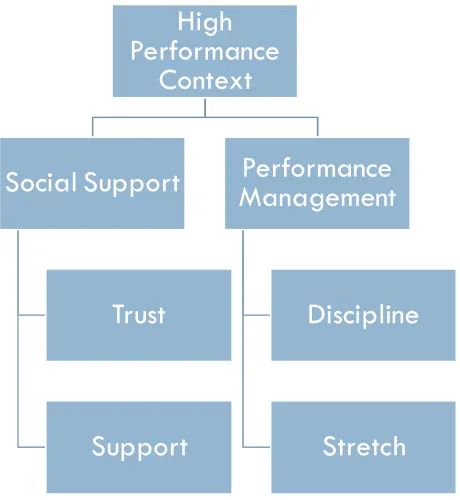
Birkinshaw and Gibson (2004) argued that an organization’s context was defined by four
separate attributes, namely discipline, stretch, trust, and support. When paired up, stretch and
discipline combine to form the construct of performance management and is centered on
enabling employees to deliver consistent quality results while also holding them accountable for
their actions. Social support is a result of the combination of trust and support and centers on
providing employees with the latitude and security necessary to perform at a high level. Within
the concept of contextual ambidexterity, performance management and social support are
symbiotic and equally important. When both are present, Birkinshaw and Gibson (2004) argued
that a high-performance organizational context is created and a true ambidextrous organization is
born. They also argued that if there is an imbalance in these characteristics, or an overall
deficiency of one or the other, or both, a suboptimal organization will exist. One such context is
the lack of social support in an organization with a high performance management context.
Birkinshaw and Gibson (Gibson and Birkinshaw 2004) termed this a burnout context where
40
context and therefore employees will not be contextual ambidextrous. When this ambidexterity
is not achieved, overall unit execution falls short being high performance.
Birkinshaw and Gibson (2004) also argued that increased performance management within the
business unit was positively related to achieving contextual ambidexterity and therefore also
positively related to increased business unit performance. In addition, previous research,
including that by Birkinshaw and Gibson (2004) is impacted by burnout and has demonstrated
that employee burnout has negatively related moderating impact on performance management, in
that as burnout increases, performance management decreases.
Birkinshaw and Gibson (2004) argued that social support within the business unit was positively
related to achieving contextual ambidexterity and therefore also positively related to increased
business unit performance. Social support is typically characterized by trust within the
organization, alignment between employee expectations and organizational culture, employee
communication and participation programs, and employee emotional support.
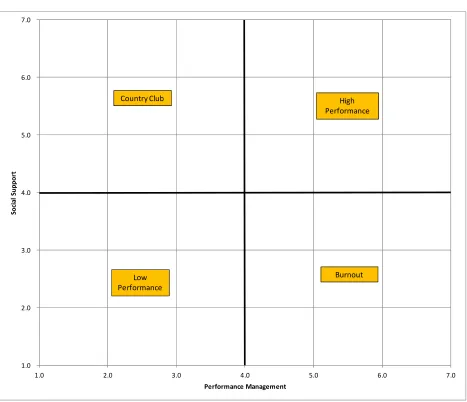
Therefore, the conceptual model utilized in this research study is the two dimensional table first
proposed by Birkinshaw and Gibson (2004) where the horizontal axis measures performance
management and the vertical axis measures social support. In addition, the model is divided into
four distinct quadrants representing low performance, a ‘country club’ environment, a burnout
environment, and a high performance environment. Individuals, departments, and organizations
would be placed in the model based on diagnostic survey results. An illustration of the model
can be found in Figure 1. In this illustration, the numerical scales align with the seven point
scale embedded in the questionnaire utilized by Birkinshaw and Gibson (2004). This model was