ISSN: 1992-8645 www.jatit.org E-ISSN: 1817-3195
ERHR-EFFICIENT AND RELIABLE HETEROGENEOUS
ROUTING PROTOCOL FOR SENSOR NETWORKS
1THOTA SIVA RATNA SAI, 2DR. SRIKANTHVEMURI
1
M.Tech Student, Department of Computer Science and Engineering, KL University, India.
2
Professor, Department of Computer Science and Engineering, KL University, India.
E-mail: [email protected] , [email protected]
ABSTRACT
A WSN is a collection of various nodes having the capability to sense the information namely sensor nodes and organized over a distributed region, in that region all nodes are communicated with each other and forms the sensor network. The nodes of sensor network have limited communication interface, resources and computational resources. Moreover, sensor network are used in real life application. Mainly, each application requires different capabilities of sensor devices such as capability of sensing and range of propagation. Consequently, heterogeneous sensor networks are came into existence. Previously, various routing protocols are exist but most of them are concentrating on single issue. Those are data-centric, hierarchical, location based and quality of service. In this article we intend a new routing protocol it will address the heterogeneity of nodes and QOS issues. This protocol is implemented with NS2 and performance of the protocol is compared with standard sensor routing protocol AODV.
Keywords: Heterogeneous wireless sensor networks, Routing, Wireless, Data-Centric, Hierarchical.
1. INTRODUCTION
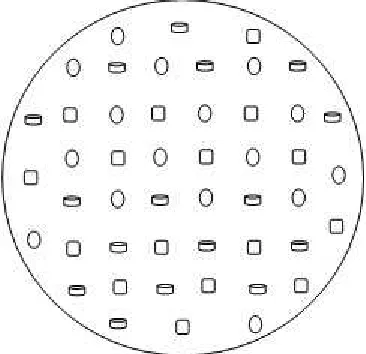
In today’s fast embryonic era and recent advances in the field of wireless communication is conveying vital changes to the field of data and telecommunications [1]. Particularly, 21st century is the most crucial period for wireless sensor networks most of the researchers are working on the WSN due to its ever growing applications of military, healthcare, environmental and building surveillances. A WSN is a collection of various nodes having the capability to sense the information namely sensor nodes and organized over a distributed region, in that region all nodes are communicated with each other and forms the sensor networks [2]. The nodes of sensor network have limited communication interface, resources and computational resources .Moreover, sensor network are used in real life application [3]. Mainly, each application requires different capabilities of sensor devices such as capability of sensing and range of propagation .Consequently, heterogeneous sensor networks are came into existence. Previously [4], most of the researchers are focused on the homogeneous sensor networks as shown in Figure 1 and also working with them but for to meet the today’s requirements we need to go for heterogeneous sensor networks. Because of limited transmission range and interfaces routing in wireless sensor networks is a challenging issue.
[image:1.612.325.508.424.601.2]Traditional routing techniques [5] are not suitable for to route in heterogeneous wireless sensor networks.
Figure 1: Heterogeneous Sensor Network
We need modify the prevailing routing protocols in such a manner to meet the transmission range and interfaces. Generally, in homogeneous wireless sensor networks [6] use symmetric paths between
the two communicating parties but in
ISSN: 1992-8645 www.jatit.org E-ISSN: 1817-3195
consider the reliability, delivery ratio, overhead and scalability [7]. Because these types of networks are mostly used in real life applications. In this paper we propose a new routing protocol which will address the all the general issues with the traditional routing protocols which are delivery ratio, delay, energy of a node and scalability.
2. RELATED WORK
In this section we mainly are focusing on different existing methodologies of wireless sensor networks routing. Sensor network routing protocols are mainly classified into four different categories. Those are data-centric, hierarchical, location based and quality of service.
In information driven steering, the sink sends inquiries to specific neighborhoods and sits tight for information from the sensors positioned in the chose locales [8]. Subsequently data is being queried for through questions, property constructed naming is vital to indicate the properties of information. Twist is the first information driven
convention, which considers information
transaction between hubs so as to wipe out repetitive information and spare vitality. Later, Directed Diffusion has been produced and has turned into an achievement in information driven steering. At that point, numerous different conventions have been proposed either in view of Directed Diffusion or taking after a comparative idea [9].
The principle point of progressive steering is to effectively keep up the vitality utilization of sensor hubs by including them in multi-jump correspondence inside of a specific group and by performing information collection and combination so as to decline the quantity of transmitted messages to the sink [10]. Group arrangement is ordinarily taking into account the vitality store of sensors and sensors nearness to the bunch head [11]. Filter is one of the first various levelled directing methodologies for sensors systems. The thought proposed in LEACH has been a motivation for some various levelled steering conventions.
Furthermost of the directing conventions for sensor systems require area proof for sensor hubs [12]. The majority of the cases area proof is required with a specific end goal to spread among two specific hubs so that vitality ingestion can be evaluated. Therefore, there is no tending to
structure for sensor systems practically
undistinguishable IP addresses and they are globally positioned on a territory, area proof can be exploited in steering information in a vitality
effective way. Case in point, if the area to be detected is known, utilizing the position of sensors, the inquiry can be subtle just to that exact locale which will destroy the quantity of correspondence unfavorably [13]. Few of the conventions thought here are planned prevalently for versatile specially appointed systems and consider the portability of hubs amid the configuration. On the other hand, they are additionally well relevant to sensor systems where there is not as quite a bit of or no versatility [14]. It is substance taking note of that there are other position based conventions intended for remote specially appointed systems, for example, Cartesian and direction based steering [15]. All things considered, sundry of these conventions are not related to sensor systems since they are not vitality mindful. So as to stay with the topic of the examination, we border the likelihood of scope to just vitality mindful area based conventions.
Despite the fact that furthermost of the steering conventions anticipated for sensor systems fit our sorting, some seek after to some degree diverse approach, for example, system stream and QoS. In some methodologies [16], course setup is displayed and tackled as a system stream issue. QoS-mindful conventions consider end to end adjournment prerequisites although setting active the ways in the sensor system. We talk about specimen of these conventions in this area.
3. PROPOSED ROUTING PROTOCOL:
Considerations to build a new routing protocol: Main considerations to develop a new routing protocol in heterogeneous sensor networks are as follows:
1. Energy of sensor node 2. Range of the sensor node
3. Capability to handle the different type of sensor devices
4. Route selection of a sender must be shortest, minimum delay and dropping of packets is less. That is choose less congested path. Efficient and reliable heterogeneous routing (ERHE) protocol we mainly focusing on faster route establishment, minimum delay between sender and target. And also scalable to all over the network.
3.1 ERHE routing protocol:
Neighbor’s discovery:
ISSN: 1992-8645 www.jatit.org E-ISSN: 1817-3195
neighbors, and immediate neighbor’s gives acknowledgement to the sender host. So sender host can store all of its IDs. Like this all the nodes in first step know its immediate neighbors. Before adds to the neighbors list the initiator must checks the following considerations those are energy of a device, mobility of the device. If the device is runs under low battery power it just leaves that not to adds to the neighbors list.
Algorithm To Find Neighbors:
findNeighbors () {
Step1: Every node in the network
broadcasts a “Hi” message.
Step2: If two nodes X and Y can receive each other’s “Hi” message and the corresponding “Ack” of the “hi” message.
Step3: Before adding it as a neighbor it checks its energy and mobility of neighbor.
Step4: Then the sender host adds it as its neighbor list.
}
This routing protocol is efficient in finding the route because it maintains a cache memory to store the recent route information it helps to retrieve route to other nodes in the network also. This algorithm will also give assured delivery of data to the desired hosts in the network because we consider the nodes status also for routing it helps us to improve the performance of the routing protocol. Any node in the network wants to communicate with other hosts first it checks the recent route information (RRI). It desired route is same as present route it will establish and send the data. If not checks all of its neighbors RRI if any neighbor having direct connection it will get the route otherwise it will go for the route finding approach.
3.2 Route finding approach:
Route finding is also a one of the most important process in the sensor routing, in our approach initiator host just sends RFM packet through the network it was received by neighbors of neighbors. These will have a neighbor as a receiver sends this RFM packet to the receiver otherwise forwards the packet. Receiver receives the RFM packet it sends back REM packet back to the sender route is established and communication is takes place.
ERHE Routing Algorithm:
ERHR() {
If (node wants to communicate with other node in the network)
{
Checks recent route in its cache; If (required route = route in cache) {
Forwards data; }
Else if (checks in all of its neighbors) {
If direct connection-> establish route;
} Else {
Go to route finding; }
} }
Algorithm To Route Finding:
findRoute () {
Step1: Sender sends route finding message (RFM) throughout the network; Step2: if the receiver receives the RFM; Step3: it sends back route establishment
message (REM) back to the initiator;
Step4: route is established; }
4. PERFORMANCE ANALYSIS
The replications were performed using Network Simulator 2 (NS-2.35). Particularly, to implement sensor network routing protocol we use mannerism patch in NS2.
Here we use Random waypoint scenario is to produce the mobility circumstances by varying 25 to 100 hosts stirring in a terrain area of 800 X 1000 meters. Hear we uses restrained rate of packet and fluctuating pause times to simulation and we perform simulation to evaluate our routing protocol. And we compare our routing protocol with standard and most widely used existing routing protocol AODV.
ISSN: 1992-8645 www.jatit.org E-ISSN: 1817-3195
Performance metrics:
a. Time to find Route: Time taken to a device to find a route to its desired device in the network.
b. Packet delivery fraction: Fraction to the number of informatics packets send by the initiator to delivered to the target device. c. End to End Delay: latency from initiator to
the target device.
d. Throughput: amount of data packs
received by receiver in a unit time.
[image:4.612.312.519.75.432.2]Here figure-2 shows the comparison of throughput of ERHR routing protocol and AODV routing protocol. ERHE throughput is more than AODV routing protocol. Throughput standards as the amount of information received at targets device. So ERHE delivers more amounts of data then AODV.
Figure 2: Throughput
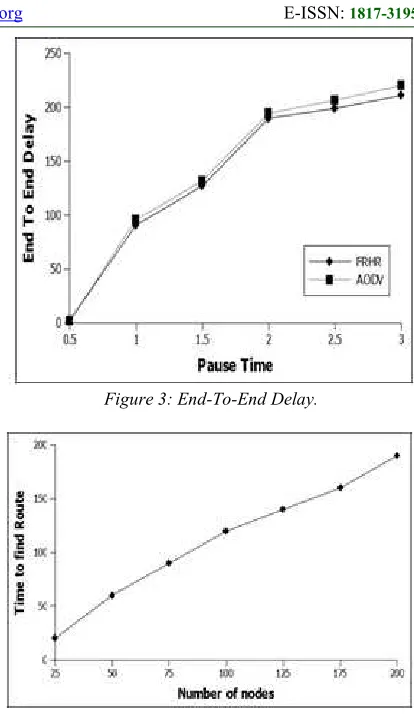
Figure-3 shows the delay from one end of connection to the other end. Here ERHE having less delay than AODV. So ERHE was faster than AODV.
Figure-4 shows the time taken a node to find a route in the network. Here we are varying the number of devices in the network from 25 to 200.
Figure 3: End-To-End Delay.
Figure 4: Route Establishing Time.
And here it was scalable because of property that the nodes before going to route finding it checks the cache for the related route to establish the route faster.
Figure-5 shows the packet delivery fraction of ERHE and AODV. ERHE performs better than AODV. It delivers most of the packets sent by the source host.
[image:4.612.91.295.321.501.2] [image:4.612.316.520.556.694.2]ISSN: 1992-8645 www.jatit.org E-ISSN: 1817-3195
5. CONCLUSION
In wireless sensor networks main issue in routing protocols are handling heterogeneous devices and QOS. In this paper we address these issues. And the performance results show that ERHE performs better than the standard routing protocol AODV.
REFRENCES:
[1] Xiao Chen, Zanxun Dai, Wenzhong Li, Yuefei Hu, Jie Wu, Hongchi Shi, and Sanglu Lu “ProHet: A Probabilistic Routing Protocol with
Assured Delivery Rate in Wireless
Heterogeneous Sensor Networks” IEEE
TRANSACTIONS ON WIRELESS
COMMUNICATIONS, VOL. 12, NO. 4, APRIL 2013
[2] D. L. Guidoni, F. S. H. Souza, J. Ueyama and L. A. Villas “RouT: A Routing Protocol based on Topologies For Heterogeneous Wireless Sensor Networks” IEEE LATIN AMERICA TRANSACTIONS, VOL. 12, NO. 4, JUNE 2014
[3] Fco. Javier Atero, Juan Jose Vinagre, Julio Ramiro, Mark Wilby “A Low Energy and Adaptive Routing Architecture for Efficient FieldMonitoring in Heterogeneous Wireless
Sensor Networks”
978-1-61284-383-4/11/$26.00 ©2011 IEEE
[4] A.Hemalatha, R.Venkatesh “Redundancy
Management in Heterogeneous Wireless
Sensor Networks” 978- 1-4799-3358-7/[4/$3 1.00 ©20 14 IEEE
[5] A. PedaGopi, E. Suresh Babu, C. Naga Raju, S. Ashok Kumar “Designing an Adversarial Model against Reactive and Proactive Routing Protocols in MANETS: A Comparative Performance Study” International Journal of Electrical and Computer Engineering (IJECE) Vol. 5, No. 5, October 2015, pp. 1111~1118. [6] S. Ben Alla, A. Ezzati, A. BeniHssane, and M.
L. Hasnaoui, “Hierarchical adaptive balanced energy efficient routing protocol (HABRP) for heterogeneous wireless sensor networks,” 2011 International Conf. Multimedia Compute. Syst. [7] C. Adjih, P. Jacquet, and L. Viennot, “Computing connected dominated sets with multipoint relays,” Technical Report, INRIA, Oct. 2002.
[8] I. Akyildiz, W. Su, Y. Sankarasubramaniam, and E. Cayicrci, “A survey on sensor networks,” IEEE Commun. Mag., vol. 40, no. 8, pp. 102–116, 2002.
[9] C. L. Barrett, S. Eidenbenz, L. Kroc, M. V. Marathe, and J. P. Smith, “Parametric probabilistic sensor network routing,” in Proc. 2003 ACM International Conf. Wireless Sensor Netw. Appl., pp. 122–131.
[10] A. Behzadan, A. Anpalagan, and B. Ma, “Prolong network lifetime via nodal energy balancing in heterogeneous wireless sensor networks,” inProc. 2011 IEEE ICC, pp. 1–5. [11] X. Chen and J. Shen, “Improved schemes for
power-efficient broadcastin ad hoc networks,” International J. High Performance Comput. Netw. vol. 4, no. 3/4, p. 198–206, 2006. [12] X. Chen, W. Y. Qu, H. L. Ma, and K. Q. Li,
“A geography-based heterogeneous hierarchy
routing protocol for wireless sensor
networks,”in Proc. 2008 IEEE International Conf. High Performance Comput. Commun. pp. 767–774.
[13] B. Deb, S. Bhatnagar, and B. Nath, “Information assurance in sensor networks,” in Proc. 2003 ACM International Conf. Wireless Sensor Netw. Appl., pp. 160–168.
[14] X. Du and F. Lin, “Designing efficient routing protocol for heterogeneous sensor networks,” in Proc. 2005 IEEE International Performance Comput. Commun. Conf., pp. 51–58.
[15] B. Elbhiri, R. Saadane, and D. Aboutajdine, “Stochastic distributed energy-efficient clustering (SDEEC) for heterogeneous wireless sensor networks,” ICGST International J. Comput. Netw. Internet Research, vol. 9, no. II, pp. 11–17, 2009.
[16] I. A. Essa, “Ubiquitous sensing for smart and
aware environments,”IEEE Personal