National Information Network Connection , Resistive
Economy & Decrease of Poverty
Ali Mosallanejad
*, Ali Akbar Drowgar , Mohamad Nikniya
Department of Information Technology, ModernFA International Team, Jahrom, Iran *Corresponding Author: [email protected]
Copyright © 2014 Horizon Research Publishing All rights reserved.
Abstract
Unilateral and illegal sanctions have ever been one of the domination system tools to press the Islamic republic of Iran. Today, Iran economics is experienced the special and unique economics event that has never been in the world until now. Therefore, ideology and innovation has been necessary to resolve the economic challenge from the experts when the special and no pattern condition have been created. According to this event, supreme leader proposed the resistive economy and referred in economic changing direction as important method. Resistive economy means to diagnose the pressure areas and subsequently attempts to control the nullify the impacts and prosperity these pressures. The purpose of the resistive economy is reconstruction and rehabilitation of national economy and to adopt the strategies to utilize of local science and technology in Iran can be apply this theory. Thus, the role of national information network will be determined more than before. Hence, in this article we discuss on national information network Connection & resistive economy & how can we reduce poverty by using IT.Keywords
Resistive Economy, National Information Network, Sanction, Decrease of Poverty1. Introduction
Economy universality all over the world and increasing growth of the world as well as western thoughts and the lack of virtual aspects in the nowadays progressive world has made the world to be encountered with great challenges. While the number of poor and dependent countries are increasing. Colonization is creating a new western discipline which demands all aspects of colonization; it has coiled the world [5]. Economy of a country which has special worldview, which is in contrast with the interests of the superpowers of the world, is considered as special economy. Because being enemy with such country is stable and will occur in any form in every period [4]. Today, Islamic
Republic of Iran is faced with some problems and concepts in economy, which has not experienced so far either in thought arena and textbooks or in the arena of action and human experience. Therefore Islamic Revolution obliged to innovate and theorize and modeling in new economic areas. Every country which demand to conflict with colonization, needs such patterns. One of these concepts is resistive economy. It is an active and dynamic economy based on knowledge, domestic investment and Islamic religious culture in order to make policy, by which we can win the sanctions[3].
If we study all the accumulated knowledge and traditional Economic books, noy theory or complied and continuous experience about resistive economy can be found. Across all economic texts and books, there is no theoretical or practical background for Central Bank Sanctions and since such things have never happened so far, it is obvious to How to react. Even if some studies have been done on this subject, it will be classified into the confidentiality and security categories and the conventional experts won't be able to access to those categories. It is concluded that economist of Islamic Revolution can not use the common theories to solve problems. Hence, software movement and Islamic – Iranian patterns will be renewed and the inspiration of all free Nations.
order to use the information technology in the field of social, economic, education, training related to health and education, agriculture and livestock-related professions and similar examples. Being familiar with these issues can help in empowering the poor and escaping them from the poverty and help them in achieving the sustainable development [9].
One of the main objectives of resistive economy is to reinforce and develop the national production. While there is boycott in our country, the villages are considered as driving cars, so in such condition, removing the poverty and developing the rural are the most important factors in developing the national production and progressing the country. One of the most important ways to accomplish this important goal is to set up a national network of information and the development of ICT in rural and underserved areas. In this paper, we examine the relationship between national information network and resistive economy and removing the poverty. Firstly, we represent the scientific definition of resistive economy. The resistive economy can be defined in four ways which four templates or all their combinations pursued as national projects in our country.
2. Four Definitions of Resistive
Economy
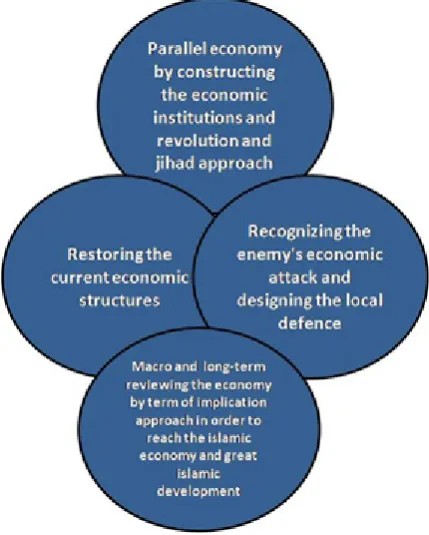
[image:2.595.70.285.440.708.2]Resistive economy includes 4 definitions which is shown in figure 1. We will explain them below.
Figure 1. Four Definition of Resistive Economy
2.1. Parallel Economy
First definition of resistive economy is Parallel economy. Since, Islamic Revolution establishes some institutions such as the Committee for Relief, Jihad for Building, housing foundation and Pasdaran guard , according to its necessary to Revolutionary-based institutions; Today, Islamic Revolution should complete and continue this project in order to provide the objectives of revolution. Because it requires the resistive economy and resistive foundations and also could not overcome the formal economic foundations naturally.
Then Islamic revolution should create the parallel institutions to the functions, it is, we need prime economy in our country. Actually, this doesn't mean that we negate the conventional institutions. We also use simultaneously both institution, Pasdaran guard and Military guard, in order to defend revolution. This pattern exists in the reign models which is conventional in the world, and it is observed in the countries which have more experienced the reign. These countries have multiple policy-making systems and public affairs managing system. For example, we can note the existence of state institutions, NGOs, charities and private firms in Health arena or even in the defense and security arena in developed countries of Western. Although, the most important problem of this model is that it will face new questions due to the specific needs of Islamic Revolution and in applying field. Because, there is no idea of the 'parallel central bank ' and 'organizing the financial-monetary area' of our country in two layer of public and governmental. But we can not consider this model as non-Management and irrational models.
2.2. Corrective Economy
2.3. Defensive Economy
The third definition of the resistive economy is to determine invasion and attack and defend. We must first verify how and by which tools our opponents attack and disturb Iran's economy. Therefore, when we predict or determine the attack tools and methods of our enemies, we can access the resistive economy and accordingly apply the resistance strategy against them. It is obvious that the enemies attack can not be determined unless the good resistance is designed and implemented.
2.4. Template Economy
The fourth definition is that fundamentally the resistance economy is not a short-term privative approach purely defensive measure. Unlike three previous definition which define the resistance economy as short-term or defensive, this approach outlooks to Iran's economy universally and includes a long-term effort. Since, this definition is not far from the views of the Leader, it has positive and affirmative and foresighted approach. In this approach, we pursue the ideal economy which either Islamic or be able to bring our country to top economic position of the region. Top economic position is the economy which effective and inspiring for Muslim world and underling the formation of the great Islamic civilization. Basically, in the Islamic- Iranian model of progress, one of the most important components of the model should include the resistance and applying. Within this context, the resistive economy includes the economy of entrepreneurship and risk-taking and innovation.
All four definitions have private and public relationship with each other, whether short-term or long-term. And they also portray the combination of optimal strategies[1].
3. Poverty
Before defining the poverty, it should be noted that no one can give a definition of poverty to be true for all times and places. Now, the definition of poverty also varies from country to country. Perhaps a sign of poverty in Bangladesh is the lack of food calories your body needs, but the definition of poverty in Sweden is certainly different. Considering these issues, we say that the poverty refers to all factors which can restrict the man's freedom of choice against the reasonable demands and can challenge human security. The phenomena such as the unemployment, low income, illiteracy, and low literacy, lack of sanitation, lack of access to institutions and centers of decision-making, lack of educational and recreational space, sports, lack of informational and political space, lack of free speech, limitation of the press, a weak judicial system, weak government institutions, lack of the competitive environment and informational transparency are all the issues that strongly associated with poverty definition [10].
[image:3.595.314.548.306.436.2]For years, economic circles have not achieved the universal acceptable standard in defining the poverty. Because the poverty is a quality issue not quantity. The definition of poverty varies from point to point. For various reasons, no definition can be comprehensive in all parts of the world because the different characteristics of social, economic in different parts of the world will have different definitions. The poverty varies between 1 to 40$. The World Bank has defined the poverty line one dollar and 25 cents per person in the world according to purchasing power per day, and in this definition a rise of one dollar per three dollars an increase of the consumption in different countries has been recommended in order to justify the differences among the countries. With this definition, more than half population in the developing countries are below the poverty line. The figure 2 shows the percentage of people below the poverty line (2 $ per day) which published by World Bank in 2010.
Figure 2. Percentage of people below the poverty line in 2010-WB
The World Bank report goes beyond the view of income levels in its definition of poverty, suggesting that poverty includes powerlessness, voicelessness, vulnerability, and fear. Additionally, the European Commission suggests that poverty should not be defined merely as a lack of income and financial resources. It should also include the deprivation of basic capabilities and lack of access to education, health, natural resources, employment, land and credit, political participation, services, and infrastructure [11]. An even broader definition of poverty sees it as being deprived of the information needed to participate in the wider society, at the local, national or global level [12].
Poverty in rural areas is more widespread than in urban. Despite the proportion of urban population is generally higher than the rural population from the total population of the country, but according to estimates in 2000, 54% of the total poor below the absolute poverty line are rural poor [13], If we add the relative poor figure to this figures, perhaps it could be said that the majority of those who live in rural areas are poor.
of rural men in this area know the other professions such as masonry, welding, painting and so on. Many people are not able to tolerate this situation and decide to emigrate permanently. The risks were important factors which Turks migrated to different parts of the world with low risks. However, a variety of ways to earn money also could not help reduce poverty in the region. Although a variety of ways to earn money are decided to avoid taking risks, but the poor people are more vulnerable because of the lack of the sufficient means to protect themselves against the risks. Galbraith shows how risks can hinder the creativity and innovation and lead to poverty [14]. Kanbor and Squire 's studies also confirm this finding [15].
In the process of technology transfer, there are undoubtedly many differences between urban and rural communities. Type of technology, its suitability to local conditions, type and usage, efficiency and productivity, the amount and rate of accepting are the determining factors in this regard. Informational and communicational technologies are not excluded and how to accept their presence in the rural environment is a function of these factors. In fact, the rural community has the characteristics which can affect significantly the technology transfer and dissemination. Inaccessibility or remoteness is one of the relatively common characteristics in the rural communities in developing countries. In the development literature, the remoteness or inaccessibility is not only a pure physical concept or a concept dependent on geographical distance but also many urban including the minorities, and other marginalized individuals could be referred to the individuals or communities with low access. Lack of access is a broad concept that cover the concepts such as poverty, inequality in opportunities, exposure to various risks and deprivation, information and knowledge and its specific patterns [10].
In 2000, a comprehensive document which considered as UNO's millennium developing document was signed by all countries in the world. This document follows eight objective from minimizing the absolute poverty to prevent the spread of HIV AIDS and provide the primary education at the global level. These goals can cause unprecedented efforts to meet the needs of the poorest people in the world.
These eight goals are as follows:
• Eradicate extreme poverty and hunger • Achieve the universal primary education • Promote gender equality and empower women • Reducing child mortality
• Improve maternal health
• Prevent AIDS, malaria and other diseases • Ensuring the sustainability of the environment . • Develop a global partnership for development Today, due to the capacity and potential existing in ICT as a powerful infrastructure tool, the ability to achieve most of these goals have been provided .
4. Information Poverty
The rise of personal computers and the internet grows with the expansion of information and communication services for citizens caused access to new services and multiple potential channels access to information [16]. Poverty is one of most terms which was used to from the international relations from the emerge of economic development in 1940 and used as a factor in defining the great parts of the world [17].
Apart from the political and economic challenges, information poverty in the world have lead to serious ethical questions such as the right of access to information technology for inequality development, distribution of information products and high level of informational illiteracy is the cause of global information[8]. Expanding gap between rich and poor has recently pointed to the gap between informational rich and poor [18].
We live in a global village where based mostly on the creation, access, and sharing and use of information. The information is the power and it is important to be transferred to power source. This occurs if there is informational infrastructure and the people have the skills in using the information [19].
There are three main approaches to information poverty: the Information Connectivity Approach , the Information Content Approach, and Information Human Approach that focus on the knowledge and information poor [20].
• Connectivity Approach to Information poverty focuses on lack of access to new information and communication technologies and assume that there is a causal relation between the individual's state and access to information via information technologies. • With regard to the Content Approach to Information
poverty, the main reason of information poverty is lack of high quality information and limited access to information development. Lack of information purchasing power required by the poor is a type of the information poverty.
• Humane approach to information poverty is not dependent on the wealth/poverty. It represents the human attitudes to information. The information is considered as social structure leading to human decision-making and problem solving. However, mere access to information is not enough, but people should also have the ability to use it. This ability is determined by skill level, experience and other traditional factors [19].
of small-scale fishermen have sent a video tape of illegal destructing of Korna trees by the peasants who were politically interested, to congress to be informed of issue. These people expressed their protests against the loss of their residences, by this method.
Out of the developed countries, Sweden was the first country which has applied the Freedom of Information Act. The united States is known for having the most open and transparent government system, while Finland has the least corrupt rate among countries in the world. Approving and codifying the computer network law also requires the provision of citizens ownership and support of government without bureaucracy. Other organizational reforms require the attention to the resistance against the Administrative issues and the increase of commitment to freedom and transparency.
The developed management of hidden information is the treatment of information poverty and the gap between rich and poor in term of the information literacy and information illiteracy can be reduced by the establishment of public information centers. This centers are equipped with the multimedia computers and related software in order to enable those who lack the computer literacy and the use of a mouse and icon [17].
5. Relationship between the National
Information Network & the Resistive
Economy
The country's independence against the economic war is the prerequisite for the resistive economy. Therefore, making decisions for using local science and technology in the country can complete this theory. Accordingly, the national information network plan will emerge more. This policy is used not only for the sanctions but also for long-term duration in order that we can observe the major role of the knowledge-based firms in developing our country's economy. The national macro-projects are considered as the great funds for restoring the research findings; In this regard, the scientific productivity and the research findings of the knowledge-based firms can be commercialized. Thus the resistive economy can be transformed into a global development model through technological view [6].
Today, according to statistics, global standard shows the extent of people access to technology including information technology and the percent of poverty or wealth of the nations in various dimensions. In many parts of the world, the poor classes have little access to information technology that meet only their primary needs; to meet their needs completely, some plans should be designed by which the poor access to information and communication technology increased. The more the amount of the access, the less the poverty in various aspects of economic, cultural and education and it can show the path for sustainable development. There are many examples about these designs
in the underdeveloped countries or developing ones. These designs have been applying by the governmental and nongovernmental foundations. The development designs can increase the access to information and communication technology. The amount of people's participations in public and departmental domain, the use of agricultural market information and also access to various resources in order to meet people 's basic needs. In recent years, Such designs have been widely applied in slum areas of several states of India. Our country, as one of the developing countries that have proceeded the developing process quickly, should proceed the use of the information and communications technology. Fortunately, we have seen the good development in the I.T and I.C.T service area, by the efforts of the government. The development of rural areas in the past three decades were considered as one of the fix objectives in the perspective of Islamic Revolution. Various institutions and centers are serving in this context. But creating a strategic plan for sustainable development of rural with the dimensions of economic, educational, cultural based on information and communication technology by using the international experience needs to create people-based and independent structure which apply and manage these actions with people's assistance and for them. This technology play important role in economic development of the developing countries, including Iran, but what makes the countries to be distinct from others is the type of the strategy which decided for information and communication technology. So that the various policies to use ICT in the countries can make the economic development to be different. Some developing countries have focused on the role of the technology in the development of export. Although this policy may increase the exchange rate but many researchers believe that the role of ICT export in developing countries is not favorite and can not be a factor which transit the economy from subsistence stage to commercial one. Because in this policy, the base of economic activities in the country will not promote and only result in developing in a particular sector (exterior section)and can not be able to provide the total development in the economy. But if ICT is domestic in the country, ie, mainly used in the domestic economy, its effect on the whole economy will be more than before, and can serve as an engine of growth and economic development, and can reduce poverty more than the previous state, provide more opportunities for production and increase the country's GDP growth acceleration.
• Expanding Digital sector: When ICT export sector expands, although the exchange resources of the country increase, but this does not affect the overall economy, but is limited to a particular sector. But if the domestic use of ICT spreads, it causes the extension in digital and human capital sector and consequently will result in the overall economic growth and development.
• Sustained economic growth: the sustainable economic development occurs when the base of the economic activity of the country is a considerable extent. Development of ICT products and services can only produce the knowledge products in a particular sector, which is not generally targeted for local markets, but for the foreign markets. However in the literature of economic growth and development, the market development is not only focused, but also the importance of capital (human capital, technological status) is stressed. It is clear that if ICT products and services affect the economy and population of the country, it could also boost economic growth in external sector and more impact on the economy. Because the internal use of ICT will severely affect the human capital.On the other hand, growth models compatible with the technology showed that the development of ICT will lead to higher economic growth.
• Internal development of information and communication technologies change the demand side of the economy, because the increased domestic demand for IT products and services will expand the domestic production of ICT and knowledge gods and it causes the expansion of intersectional priori or post communications of ICT products and services. it is noted the importance of domestic products and services of this technology, which is more economical than strategy of export growth of ICT products and services.
National information Network play essential role as a platform and infrastructure of the development and common access to IT and internal development of IT, especially in terms of economic sanctions. So its increasing importance is more visible
A successful executive sample is Gharn Abad village. This village is placed between Shahrood and Gorgan. There are another international samples which even more radical than Gharn Abad. An institution called Green Star has implemented similar projects in the far more villages. It is, these projects have been applied in the villages that have no electricity or telephones and are not placed in the traffic roads. They succeeded to implement the advanced but inexpensive type of communication and power generating with decentralized techniques such as dish antennas and solar-powered generators [7].
5.1. Gharn Abad Village
The first comprehensive center for ICT services in rural was founded in order to create a framework for providing the services of the organizations, institutions and governmental agencies to rural and to create an environment for education, research and employment in Gharn Abad Village in Iran in 2004. This center was opened with the prospect of economic development, cultural and social, and using modern ICT approaches. In this center, all governmental organizations provide their centralized and cumulative services to the village.
Moreover, this local center was constructed for rural access to virtual training, virtual library, electronic commerce, electronic banking, remote working and other new services which developing in urban areas through ICT. The approach of creating this center was economic and its programs were so designed to be self-sufficient in the long run, and affected on the villages and make new conditions for entry into the today information society and virtual age. This center provided all needs of the villagers to information and knowledge in the village and also serve to the governmental and nongovernmental organizations which are typically in contact with the village (such as organizations of Agriculture, Ministry of Health, Ministry of Education, etc.) These services include: public education services, scientific conferences and seminars, virtual university services, working remotely, cultural services, economic services. [21].
In the economic services section of this center, according to the new discussions about e-commerce, virtual manufacturing, credit cards, electronic banking, a favorite opportunity has been provided for villagers to gain access to the new economy, to marketing their agriculture and livestock products in domestic and international markets, to do their financial and banking issues electronically. Benefiting from new job opportunities, job placement and remote working are the examples of the economic services in this center. It is typical of rural ICT development that is created as a pilot in Gharn Abad village. In addition to our country It has been considered by international organizations such as World Bank, UNESCO [21].
6. Perform and Development
sufficient that one out of 10 rural have had enough income in order to cover the expenses of other villages. Finally, not only the village entered the communications of twentieth century, but also the culture of the village can be used at global level. Also this project has revenue for that institute and the rural. For example, a piece of local music can be presented electronically around the world. Similar things have been done in our neighboring countries. In some cases, a local drink have become a national drink. Suppose, we have a dairy production called Doogh which used all over the country, and any tourist consume and like it. Now, we have a little creativity and pour it in containers like soda bottles and supply in the markets. If we show initiative again, we can think about exporting Doogh. It is obvious that Doogh is material product. We can easily make the E-Commerce Marketing for a piece of music [7].
[image:7.595.78.274.549.734.2]Any way that can reduce the access to information gap between urban and rural areas will be valuable by the global perspective and in line with the development of the information society. Since all the villagers are not able to provide computer and internet connection and such facilities are not provided in many rural areas, the development of rural ICT service center is one of the best solutions for developing the rural access to internet and communication facilities. Hence in many countries, the different centers have been founded for providing ICT services to the rural population, such as the integrated ICT centers, IT centers, the information kiosk, Access to information points, the cafe net and the remote medical centers. They are usually set up and supported by the government and the private sector. Establishing these centers is a key strategy for reducing the digital gap between the rural and deprived areas. So, founding the rural ICT offices has been offered as government home offices and managed as the national projects by IT and information ministry. In 2011, in the first process 7347 offices founded [21]. The model of rural ICT development was drawn in figure 3, regarding national space of ICT development.
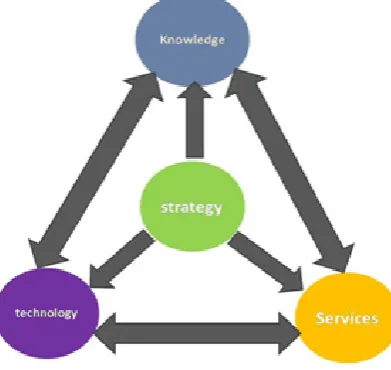
Figure 3. The model of rural ICT development
This model composed of 4 main components, these components interact with each other interchangeably. All these components are changing in the national ICT space. In the other words, the rural ICT is a subset of the national ICT. The development of rural ICT must be accompanied by supporting national ICT (national Information Network) [21].
7. Positive Outcomes
The rural populations often have migrated to big cities or Tehran or even go abroad in order that have vertical social mobility. Through e-learning in Gharn Abad, some projects in the field of the industrial design have been taken from Iran Khodro firm and even from international firms, and implemented. These projects have been able to attract the graduates from the village and neighboring villages. Effectiveness of this project is mutual and the new technologies of the developed countries are used in the villages. Implementing this project is not harmful for the environment; and the Western culture can not be implemented as a model in the rural. On the contrary, the rural culture is spread in the world and even a village can use another rural culture through e-communications. If humanity means the benefit of others, in this way we can see the benefit. Suppose one out of 10 rural reach income-making, it can cover the expenses of other villages. It is humanitarian. It is not necessary for all villages to be income-making. Fortunately, the new technology has made it possible, and in total, performing such acts will have benefits and its risks can cover the losses of other parts.
In fact, the remoteness itself is a score not a weakness. If someone has not wealth, but they are ready and interested, this case is considered as a intellectual capital. The intellectual capital is more important than physical capital, nowadays. If we have an environment where people trust each other and the community have great social cohesion, this is considered as the social capital; and social capital is an important factor in economic growth and development.
required. Some of the areas of information and communication technologies are as follows:
• Providing public Health: the use of this technology for guiding and training the rural areas due to health indices is useful. This information and services includes health and family planning, collecting medical data and statistics, relation and support of health personnel in remote rural areas. By the use of electronic mail and electronic conferencing facilities we can answer to members' questions.
• Creating the economic opportunities: direct communicating with the producers and buyers and eliminating the middleman and the possibility of e-commerce, marketing the products, informing the current price of the products, publishing the propaganda for the products and their marketing, introducing the rural touristic areas and development of tourism industry all are considered the economic services. We can use ICT to provide such services to the rural areas and help in increasing their income. • Learning Network: the extend use of the network is
for literacy and continuing education. Training curriculum through texts and audio-visual materials or videos tapes are possible. And we can directly benefit through the facilities such as direct dialogue. Shows and knowledge obtaining through training and learning can simplify the complex contexts. We can also provide the promotion learning to rural areas through this technology. Information such as warnings and news related to the events and pests and diseases, agricultural meteorological data, special services and the required organization, information concerning products, animal husbandry and veterinary information and so on.
• Environmental protection: the resources use and the management of natural resources is of great importance. In many areas, there are environmental degradations in many rural areas. For managing the natural resources such as forests, grasslands, water resources, fisheries, watershed and etc. we can use ICT.
Most of these positive outcomes are the objectives on which UN Millennium Development Document has focused.
So we should look for solutions and use facilities. We should use the new capitals which are not considered as capitals due to the concept of the twentieth century. But it can play the role capital in twenty-first century. Developed service center of Gharn Abad expose the information and communication technological products to electronic- sale; and this center had been self –confidence in this respect. Gharn Abad service includes e-learning, e-commerce, e-banking and acts out of works. we should create a rule by Gharn Abad model and other models. They should not be the successful project exceptionally [7].
8. Conclusions
Fortunately, nowadays, the international community is looking for new ways for removing the poverty and creating good life opportunities for all strata of humanity. The result of this effort is to set the comprehensive document by signing the countries all over the world , which called millennium development of United Nations document. This document tries to represent the major actions to achieve important humanity goals including making a world more ethical, more humane and less poverty. A part of this document which known as MDG, focuses on the role of information and communication technology development in removing the poverty and empowering the poor communities. For example, access to the information technology in poor areas, is accompanying with better access to education, and it can improve the health indices among poor families and reduce maternal and infant mortality rates. It can progress the training related to dangerous diseases such as AIDS and hepatitis, it also can reduce the costs associated with certain intercity travel through the replacement of electronic communication through the use of telecommunication offices known as Rural ICT, it can help in improving and progressing the poor area and attracting the residents in the part-time positions. It can make the entrepreneurship opportunity.
Paying attention to some points of ICT is important. These points are:
• ICTs will not transform bad development into good
development, but they can make good development better.
• Effective applications of ICTs comprise both a
technological infrastructure and an information infrastructure.
• The application of ICTs in the absence of a
development strategy that makes effective use of them will inevitably result in sub-optimal outcomes.
• While ICTs provide opportunities for development,
desirable outcomes always arise from the actions of people.
What is clear from these facts is that ICT is not a miracle by itself. Beside the IT tools, the efforts, careful planning and strategies can help in achieving our goals.
One other important point is that the developing countries such as Iran can easily proceed the economic development process through the strategy of domestic use of this industry. All people will have access to modern technology, and this strategy will cause the development of modern technologies with high productivity in society.
society and the economy of these countries will be protected against external shocks.
In the discussion of the poverty reduction, the
government and the authorities should consider at least 8 policies in their activities and enactments. These policies include:
• Supporting pro-poor market development • Increasing access to government services • Improving health care delivery
• Expanding microfinance
• Policies to achieve low-cost connectivity • Narrowing the digital divide
• Designing interventions to reach poor people • Spreading the comprehensive rural ICT services
centers
Policy-making in planning and enactments of the government and authorities can positively effect on accomplishing the poverty reduction programs in the country particularly in rural areas. This reduction in villages is of importance because they are the driver engine for reinforcing the national production in the sanction condition. Therefore, the rural development finally will result in national and economic development.
But the major challenge is that how we can encourage the disappointed poor to use information and communication technology in order to meet their basic needs and be able to be familiar with their basic rights. This question can be replied by making the proper culture through information channels such as radio, television and teaching courses and e-citizen. By the efforts of all researchers and managers of information and communication technologies field about IT and its proper use, we hope we can achieve the top position in the field of removing poverty by using IT. To accomplish this, having the fundamental plans due to two important dimensions, the role of people and authorities, are necessary. The authorities as policy-makers in the fields of cultural, economic, social and people as the real executors of this policy have indispensable role in this planning. Departure of authorities from the traditional framework of policy-making regarding the statistics and documents, removing the bureaucratic system, damaging the parallel structures, minimizing the unnecessary costs in planning, accepting the basic principles of using the information by people and coordinating the social and economic systems (in which there is the significant relationship between the people and authorities), as well as culturing and public learning for people by authorities and getting to the non-person services have increased the effectiveness at various levels of the pyramid. Certainly, I.T will be the intermediate ring at the levels of this pyramid which can place our country at the level of the developed countries, beside defending against attacks and sanctions.
Acknowledgements
We are very grateful to experts for their appropriate and constructive suggestions to improve this research.
REFERENCES
[1] Peighami. Adel, resistive economy: defending or restoring economy, the office site of preservation and publication of Hazrat Ayatollah Khamenei's works , office site: www.farsi.khamenei.ir/others-note?id=20551, 28 November 2012.
[2] Jafarzadgan, Amir & Ehsan Ullah Habibi, 2012 , the resistive economy : the concept , necessity, reality, National conference to explain and define the resistive economy , Rasht, Gilan University.
[3] Jafari Anoosh, Ahangari M. 2012, , the strategy of resistive economy , National conference to assess and explain the resistive economy , Rasht, Gilan University.
[4] Ramezanpoor, Ismail, Z. Ayagh and Mary Chehre,2012, Evaluating the role of Knowledge Based Economy and productivity in the resistive economy, National conference to assess and explain the resistive economy , Rasht, Gilan University.
[5] Salehi, M, M Jabbari and Abdullah Abbasi, 2012 , the resistive economy, the needs for and components, National Conference on Culturing and Reforming the economic behaviors in Iran today , Abarkouh, the Islamic azad university of Abarkooh .
[6] Mosallanejad, Ali, the resistive economy could be transformed into the global development model with the technological view, website:
http://daneshgahnews.com/0fa32964idcontent.htm , 23April 2014.
[7] Naseri, Yusef, the role of communication technology, newspaper Iran, No. 3468 , 21- May-2006.
[8] Britz, I. J. & Blignaut, J. N. (2001). Information Poverty and Social Justice. South African Journal of Library and Information Science, 67(2): 63-69.
[9] Darabi Fateme& Nasrin Shafiee, 2012, IT development and enabling the poor, the world of economy magazine, no 2692, p 28.
[10] Bahrami Mohamad Hosein, 2012, a comperhensice article about poverty, college of virtual society of Daneshpajhohan. http://www.pazhoheshkade.ir.
[11] European Commission, Communication from The Commission to The Council and the European Parliament, Information and Communication Technologies in Development, The Role of ICTs in EC Development Policy, Brussels, 14.12.2001 COM (2001) 770 final.
[12] ZEF, Information and Communication Technologies for Development, Centre for Development Research, University of Bonn, 2002.
periodical of social welfare, group of researches and social welfare, the rehabilitation and welfare science university, fourth year, no 17, p 137-164.
[14] Galbraith, Jhon Kent, 1992, the entity of public poverty, translated by Dr. SYED Mohamad Hosein Aadeli, Tehran, information publication, third edition.
[15] Kanbor Ravi & Line Squire, 2003, thought course about the poverty: discover the mutual actions, pioneers of the development economy: future in prospect, edited by Jerald Mir & Jozef Stiglitez, translated by Gholam reza Azad(Armaki), Tehran, Nei publication, first edition, p 223-270.
[16] Spink, A. & Cole, C. (2001). Information and Poverty: Information-Seeking Channels used by African American low-income households. Library and Information Sience Research, 23(1): 45-65.
[17] Haider, J. & Bawden, D. (2007). Conceptions of “information poverty” in LIS: a discourse analysis. Journal of
Documentation. 63(4): 534 - 557.
[18] Chatman, E. A. (1996). The impoverished life-world of outsiders. Journal of American Society for Information Science, 47(33):193-206.
[19] Britz, J. J. (2004). To Know or not to Know: A Moral Reflection on Information Poverty. Journal of Information Science, 30(3): 192-204.
[20] Rahimi Saleh, Bigdeli Zahed, 2010, informational poverty: funds, dimensions & resolutions, informing researches and public library, 16/1, 171-184.