
DISSERTATION
submitted
to the
Combined Faculty for the Natural Sciences and Mathematics
of
Heidelberg University, Germany
for the degree of
Doctor of Natural Sciences
Put forward by:
Sergei Yakneen (Hon BSc)
Born in Krasnoyarsk, Russia
Modern Systems for Large-scale Genomics
Data Analysis in the Cloud
Abstract
Genomics researchers increasingly turn to cloud computing as a means of accom-plishing large-scale analyses efficiently and cost-effectively. Successful operation in the cloud requires careful instrumentation and management to avoid common pit-falls, such as resource bottlenecks and low utilisation that can both drive up costs and extend the timeline of a scientific project.
We developed the Butler framework for large-scale scientific workflow manage-ment in the cloud to meet these challenges. The cornerstones of Butler design are: ability to support multiple clouds, declarative infrastructure configuration manage-ment, scalable, fault-tolerant operation, comprehensive resource monitoring, and automated error detection and recovery. Butler relies on industry-strength open-source components in order to deliver a framework that is robust and scalable to thousands of compute cores and millions of workflow executions. Butler’s error de-tection and self-healing capabilities are unique among scientific workflow frameworks and ensure that analyses are carried out with minimal human intervention.
Butler has been used to analyse over 725TB of DNA sequencing data on the cloud, using 1500 CPU cores, and 6TB of RAM, delivering results with 43% increased efficiency compared to other tools. The flexible design of this framework allows easy adoption within other fields of Life Sciences and ensures that it will scale together with the demand for scientific analysis in the cloud for years to come.
Because many bioinformatics tools have been developed in the context of small sample sizes they often struggle to keep up with the demands for large-scale data processing required for modern research and clinical sequencing projects due to the limitations in their design. The Rheos software system is designed specifically with these large data sets in mind. Utilising the elastic compute capacity of modern aca-demic and commercial clouds, Rheos takes a service-oriented containerised approach to the implementation of modern bioinformatics algorithms, which allows the soft-ware to achieve the scalability and ease-of-use required to succeed under increased operational load of massive data sets generated by projects like International Cancer Genomics Consortium (ICGC) Argo and the All of Us initiative.
Rheos algorithms are based on an innovative stream-based approach for processing genomic data, which enables Rheos to make faster decisions about the presence of genomic mutations that drive diseases such as cancer, thereby improving the tools’ efficacy and relevance to clinical sequencing applications. Our testing of the novel germline Single Nucleotide Polymorphism (SNP) and deletion variant calling algorithms developed within Rheos indicates that Rheos achieves 98% accuracy in SNP calling and 85% accuracy in deletion calling, which is comparable with other leading tools such as the Genome Analysis Toolkit (GATK), freebayes, and Delly.
The two frameworks that we developed provide important contributions to solve the ever-growing need for large scale genomic data analysis on the cloud, by enabling more effective use of existing tools, in the case of Butler, and providing a new, more dynamic and real-time approach to genomic analysis, in the case of Rheos.
Zusammenfassung
Forscher verwenden zunehmend Cloud-Computing, um umfangreiche Genomik-Analysen effizient und kostengünstig durchzuführen. Erfolgreiche Anwendungen in der Cloud erfordern sorgfältige Instrumentierung und ein Management, das häufige Probleme wie Ressourcenengpässe und geringe Auslastung vermeidet, die sowohl die Kosten erhöhen als auch den Zeitplan eines wissenschaftlichen Projekts verlängern können.
Um diesen Herausforderungen zu begegnen, haben wir das Framework Butler für ein umfangreiches Management von wissenschaftlichen Workflows in der Cloud en-twickelt. Die Eckpfeiler des Butler-Designs sind folgende: Unterstützung mehrerer Clouds, Infrastruktur-Konfigurationsmanagement, skalierbarer, fehlertoleranter Be-trieb, umfassende Ressourcenüberwachung sowie automatisierte Fehlererkennung und -wiederherstellung. Butler setzt auf robuste Open-Source-Komponenten, um ein Framework bereitzustellen, das über Tausende von Rechnerkernen und Millionen von Workflow-Ausführungen skalierbar ist. Die Fehlererkennungs- und Selbstheilungs-funktionen von Butler sind einzigartig unter den Frameworks für wissenschaftliche Arbeitsabläufe und gewährleisten, dass die Analysen mit minimalem Eingriff des Menschen durchgeführt werden.
Butler wurde für die Analyse von über 725 TB DNA-Sequenzierdaten in der Cloud verwendet, unter Nutzung von 1500 CPU-Kernen und 6 TB RAM. Damit wurden im Vergleich zu anderen Tools Ergebnisse mit einer um 43% gesteigerten Effizienz erzielt. Das flexible Design des Butler Frameworks ermöglicht eine einfache Über-nahme in andere Bereiche der Biowissenschaften und stellt sicher, dass es hinsichtlich nachgefragter wissenschaftlicher Analysen in der Cloud während der nächsten Jahre skaliert werden kann.
Da viele Bioinformatik-Werkzeuge mit kleinen Stichprobengrößen entwickelt wur-den, ist es oft schwierig, mit Anforderungen an die Datenverarbeitung im dem Maßstab Schritt zu halten, der für moderne Forschungs- und klinische Sequen-zierungsprojekte erforderlich ist. Das Rheos Softwaresystem wurde speziell für der-art große Datenmengen entwickelt. Rheos nutzt die elastischen Rechenkapazitäten moderner akademischer und kommerzieller Clouds und setzt einen serviceorien-tierten, containerisierten Ansatz für die Implementierung moderner Bioinformatik-Algorithmen ein. Dies ermöglicht es der Software, Skalierbarkeit und Benutzerfre-undlichkeit zu erreichen, um so bei hoher Betriebslast erfolgreich große Datensätze, die von Projekten wie dem Internationalem Krebsgenomkonsortium (ICGC) Argo und der Initiative All of Us generiert wurden, zu prozessieren.
Rheos basiert auf einem innovativen, Stream-basierten Ansatz für die Verar-beitung genomischer Daten. Mit Hilfe von Rheos können schnellere Entscheidungen über das Vorhandensein genomischer Mutationen getroffen werden, die Krankheiten wie Krebs auslösen, und so die Wirksamkeit für klinische Sequenzierungsanwendun-gen verbessert werden. Unsere Tests der innerhalb von Rheos entwickelten Tools zum Auffinden neuartiger Keimbahn-Einzelnukleotid-Polymorphismen (SNP) und
mit anderen führenden Tools wie dem Genome Analysis Toolkit (GATK), Freebayes und Delly.
Die beiden von uns entwickelten Frameworks liefern wichtige Beiträge zur Be-wältigung des ständig wachsenden Bedarfs der Analyse großvolumiger genomischer Datensätzen in der Cloud, indem im Fall von Butler die vorhandenen Tools effek-tiver eingesetzt werden und im Fall von Rheos ein neuer, dynamischer und realer Ansatz zur Echtzeit-Genomanalyse geschaffen wird.
Acknowledgements
This work is dedicated to the memory of my mother Elena Gitelson.
I’d like to thank and acknowledge, first and foremost, my immediate family, wife Polina Litvak, and children Anastacia and Alexandra Yakneen for sticking with me through the thick and thin, and putting up with my perennial preoccupation with my research and this document.
I’d like to thank and acknowledge my mentors Jan Korbel and Michael Gertz, for helping me start, continue, and finish this project; for giving me the space to develop my ideas, yet providing the guidance necessary to stay on the right course. I’d like to thank and acknowledge the Faculty of Mathematics and Computer Science at Ruprecht-Karls-Universität Heidelberg for giving me the privilege and opportunity to carry out my doctoral research here.
I have been inspired all my life by my parents’ Elena Gitelson and Vladimir Iakhnin’s dedication to research in medicine and physics, and especially by the example of my grandfather Joseph Gitelson, who today, at 90 years of age, still actively contributes to scientific research. May this work be a contribution worthy of their legacy.
Contents
1 Introduction 1
1.1 Context and Motivation . . . 1
1.2 Challenges and Problem Statement . . . 2
1.3 Proposed Solution . . . 4
1.4 Thesis Outline . . . 10
2 Background and Related Work 11 2.1 Genomics . . . 11
2.1.1 History of Genomics . . . 11
2.1.2 Next Generation Sequencing . . . 13
2.1.3 Cancer Genomics . . . 14
2.2 Computational Methods for NGS . . . 15
2.2.1 File Formats . . . 20
2.2.2 Alignment . . . 33
2.2.3 Raw Data QC . . . 47
2.2.4 Germline SNP Calling . . . 52
2.2.5 Germline Structural Variant Calling . . . 64
2.3 High Performance, High Throughput, and Cloud Computing . . . 72
2.4 Workflow Systems . . . 75
3.1.1 Access to Data . . . 78
3.1.2 Access to Compute Capacity . . . 80
3.1.3 Implementations of Scientific Algorithms . . . 83
3.1.4 Workflow Definitions . . . 84 3.1.5 Workflow Engine . . . 87 3.1.6 System of Record . . . 90 3.1.7 Troubleshooting Errors . . . 90 3.2 Non-functional Requirements . . . 97 3.2.1 Scalability . . . 97 3.2.2 Availability . . . 100 3.2.3 Ease-of-use . . . 101 3.2.4 Interoperability . . . 102
3.3 General Design Principles . . . 102
3.3.1 Existing Open-Source Software . . . 103
3.3.2 Service Orientation . . . 104
3.3.3 Cloud Agnostic . . . 105
3.3.4 Overall System Design . . . 106
3.4 Cluster Lifecycle Management . . . 107
3.4.1 Terraform . . . 107
3.4.2 Terraform Use in Butler . . . 111
3.5 Cluster Configuration Management . . . 112
3.5.1 Saltstack . . . 113
3.5.2 Saltstack Use in Butler . . . 117
3.6 Workflow System . . . 122
3.6.1 Workflow System Overview . . . 122
3.6.4 Workflow Configuration . . . 132
3.6.5 Workflow Runtime Management . . . 133
3.7 Operational Management . . . 137
3.7.1 Monitoring Metric Collection . . . 137
3.7.2 Monitoring visualisation . . . 139
3.7.3 Server Log Collection and visualisation . . . 143
3.7.4 Self-Healing . . . 145
3.7.5 Service Discovery . . . 154
4 Butler - Implementation and Validation 157 4.1 Deployment on EMBL/EBI Embassy Cloud . . . 157
4.2 PCAWG Germline Analyses . . . 162
4.2.1 Variant Discovery . . . 162
4.2.2 Variant Genotyping . . . 168
4.2.3 Variant Filtration . . . 168
4.2.4 Genotype Phasing . . . 169
4.2.5 Data Submission . . . 169
4.2.6 Structural Variant Calling . . . 170
4.3 Experimental Runs . . . 171
4.3.1 Freebayes Common Variant Genotyping . . . 171
4.3.2 Freebayes Variant Genotyping . . . 173
4.3.3 Delly Full Variant Genotyping . . . 174
4.4 Performance Evaluation and Comparison . . . 179
4.5 Butler Framework Recap . . . 184
5 The Rheos Framework 187 5.1 General Framework Design . . . 187
5.2.1 Service-Oriented Data Streaming Model . . . 190
5.3 Domain-specific Problems . . . 197
5.3.1 Read QC Metrics . . . 198
5.3.2 Alignment . . . 203
5.3.3 Simple Germline SNP Calling . . . 213
5.3.4 Germline Structural Variant Calling . . . 221
5.4 Rheos implementation . . . 228 5.4.1 Rheos Service . . . 229 5.4.2 Queueing . . . 233 5.4.3 Partitioning . . . 234 5.4.4 Deployment . . . 238 5.4.5 Services of Rheos . . . 242 5.5 Experimental Validation . . . 248 5.5.1 Deployment . . . 248
5.5.2 Sample Selection and Preparation . . . 250
5.5.3 Germline SNP Calling . . . 251
5.5.4 Germline Deletion Calling . . . 260
6 Discussion and Conclusion 267 6.1 Butler Framework . . . 267
6.2 Rheos Framework . . . 269
Appendix 273
Chapter 1
Introduction
1.1 Context and Motivation
In the 18 years since the publication of the first draft human genome[1] the fields of genomics and molecular biology have undergone a major shift. The direction of this shift is towards an increasing adoption of computational approaches alongside exper-imental methods, bringing both of these fields of study into the realm of information science. This transition has been facilitated by two major factors - the advent of next generation sequencing[2], and the development of the Internet and cloud com-puting[3]. Next generation sequencing has been responsible for bringing down the cost of DNA sequencing to the point where it has become possible to sequence and study entire populations of individuals[4], while the Internet and cloud computing are democratising access to large-scale computational resources, such that compu-tation on big datasets, which was previously only accessible to large institutions, is becoming tractable to a growing group of researchers and citizen scientists.
The continued appetite for sequencing of larger and larger cohorts of individuals by the research community is driven by the desire to better understand the evolutionary history of the human species[5], to identify causes and mechanisms of action of rare genetic diseases that affect a very small proportion of the population[6], and to elucidate and potentially target the genetic component of more common diseases such as cancer[7], heart disease[8], or dementia[9] that place a heavy burden on our society. All of these factors together mean that the need for the generation and interpretation of genomic data is growing at an unprecedented scale.
Yet, the analysis of DNA sequencing data to study human genomes remains a largely unsolved problem. The protein coding sequence of the human genome, its
exome, constitutes roughly 1% of the human DNA and successful studies have carried out exome-based analyses on cohorts at the scale of tens of thousands of individu-als[10]. However, the other 99% of the human genome, it’s non-coding regions, con-tain crucial information such as gene regulatory elements[11] that are essential to our full understanding of the mechanisms and processes that are underlying the human genetic landscape. Given current technologies, Whole Genome Sequencing (WGS) is
considerably more expensive and generates data-set sizes at the petabyte (PB) scale that are challenging for even the largest international consortia to tackle [12]. WGS studies at 100,000 participants scale that are currently ongoing[13] will further in-crease data-set size and complexity by several orders of magnitude, a challenge that is presently unanswered by the current generation of bioinformatics infrastructures and algorithms.
A bigger and more distant challenge is the development of clinical sequencing and genomics, which will truly bring whole-genome sequencing applications to pop-ulation scale. Currently DNA sequencing has limited adoption within the clinical practice with applications mostly limited to rare Mendelian disorders[14] and cer-tain types of cancers[15] where a small set of genomic loci is interrogated via a gene panel[16] with a set of well-delineated disease sub-types based on these genetic markers. The use of whole-genome sequencing for clinical applications is presently nearly non-existent due to its high cost compared to the clinical utility of its find-ings, yet the potential for the impact of this approach remains substantial as certain genomic variants such as Structural Variations (SVs) typically have a large effect on an individual’s phenotype due to their size[17], but are generally not amenable to interrogation via gene panels.
The magnitude of the opportunity for improvement in the space of DNA sequenc-ing and genomics is thus clear to us - we seek a way to improve the current methods of DNA data analysis such that it becomes tractable and cost-effective to undertake whole-genome sequencing studies within research and clinical contexts at the scale of hundreds of thousands to millions of human genomes.
1.2 Challenges and Problem Statement
Let’s examine the key challenges that need to be addressed in order to enable ef-ficient genomic data analysis at the scale that is desired by the research and clinical communities.
Several broad groups of challenges are identified below and further examined throughout this thesis:
Data Set Size - The size of the raw genomic data generated by population-scale studies will be hundreds to thousands of petabytes making it impractical to move and make copies of the data[18].
Data Retention - The cost of generating the data is significantly higher than the cost of storing the data, thus making it impractical to throw away the raw data after initial analysis[19].
Data Formats - The data formats used for storing genomic data are primarily large size character and binary files (FASTA, SAM, BAM, VCF)[20, 21] that have loose specifications and scale poorly to large cohort sizes. File indexing
structures typically support indexing by genomic coordinate only, thus limiting queryability.
Data Fragmentation - The data will be generated at multiple sequencing centres located in different jurisdictions with a wide variety of genomic data handling requirements. Data processing must proceed at multiple locations that respect the requirements of each jurisdiction[22].
Data Type Diversity - Comprehensive characterisation of a person’s genome that is useful in a clinical setting implies the collection and integrative analysis of many diverse data types - including germline[23] and somatic[24] genomic variants, transcriptomics[25], epigenomics[26], metabolomics[27], and clinical information. Uniform collection, processing, and integration of these data types is required to successfully associate the role of this genomic variation on disease phenotypes[15].
Data Processing Stages - Data processing for genomics analysis proceeds
through a sequence of stages from base-calling, to quality-control, to genome alignment, to variant calling, to annotation, to downstream analysis[28]. Each stage typically has non-trivial computational requirements needing several days on a multi-core machine to complete with increased failure risk as a function of data set size. Intermediate results from one stage are often required as input for downstream stages. Fully sequential processing makes inefficient use of the data by redundantly loading and interrogating the data in memory over a series of passes through the sample.
Toolset Fragmentation - Although comprehensive genomic characterisation of each sample is typically of interest to researchers, specific bioinformatics tools only provide solutions to a limited subspace of the overall problem, thus re-quiring integration of multiple tools that may produce incongruent outputs and compete for resources producing computational bottlenecks.
Having listed these challenges we attempt to restate the problem in simpler terms before providing a high level overview of the types of approaches and solutions that will be developed and considered in detail in the body of this thesis in order to deliver a conceptual and practical framework for the effective management of genomic data at the desired scale.
Our problem statement is then as follows:
Human genomic data sets will, in the future, be generated for analysis in various locations throughout the world, at the aggregate rate of multiple petabytes of data per day in the context of disease and clinical practice. The desired outcome of these analyses is the comprehensive characterisation of genomic features and their associ-ation with phenotypic variables of interest[29]. The goal of the research community is in capturing the maximum number of samples – N, with high accuracy – A, to
increase statistical power of studies[30], while the interest of clinicians is to capture specific individuals with high accuracy – A, and in the shortest possible time –T, in
possible total cost – C = cg +cs +ca +cr, taking into account the cost of data generation, cost of data storage, cost of data analysis, and cost of subsequent data retrieval. Because of the high cost of generating this data each time, the data, once generated, will need to be stored for the foreseeable future. The overwhelming data set size prevents data movement between locations, requiring analysis algorithms to be colocated with the data.
The analysis is hampered by reliance on data formats that have not been de-signed for operation at such large scale and the necessity to execute a variety of computational algorithms[32, 33, 34, 35] on the data that have been individually developed by different authors within an academic context, using different technolo-gies that compete with each other for computational resources, and at-times produce contradictory results that require human intervention to integrate. The underlying assumption of genomic coordinate-sorted ordering and traversal of the data made by most algorithms limits the modes of reasoning about the dataset to a series of pre-processing steps, followed by another series of coordinate-wise traversals through the data, which impose severe processing time costs, such as the requirement to have generated, seen and sorted all of the data, before an analysis can proceed as well as the inability to stop and interpret analysis results mid-processing.
The optimisation problem of maximising N, and A, while minimising C for
re-search purposes remains unsolved for values ofN above 3000 samples when it comes
to high-coverage whole genome sequencing, while the problem of maximisingA, and
minimising T, and C is presently not solved in the clinical setting for any sample
size. It is our proposed solution for tackling these issues that we turn to next.
1.3 Proposed Solution
We assume that N, the number of samples that can be successfully sequenced will
depend almost entirely on the total cost C, which itself, among other factors, is
determined by the desired accuracy and processing time. We thus focus most of our efforts on the joint optimisation of cost, accuracy, and time as necessary conditions for the maximisation of effective sample size N and enablement of whole genome
sequencing for clinical practice.
We note that the cost of data generation C is dependent on the sequencing
tech-nology used, the underlying chemistry, and the cost of the reagents[36]. Improving these characteristics falls outside the scope of our discussion, and we assume the cost of the data generation component cg of C to be constant throughout this thesis.
Analysis accuracy A is evaluated along the usual dimensions of sensitivity
(pro-portion of true positive cases identified) and specificity (pro(pro-portion of true negative cases identified) and can generally be improved by generating more data for a given sample up to a theoretical maximum inherent in the sequencing technology used and the nature of the analysis algorithms employed. Generation of more data naturally leads to increased analysis timeT and costC. The time to accomplish the analysis
but less accurate algorithms[37]), by increasing the level of parallelisation within the computational pipeline i.e. parallelising steps that are currently sequential[38], or by utilising additional computational resources, thereby increasing costs. The various components of cost, in turn, can be optimized by improved data storage and retrieval structures[39] (via multi-level caches and hybrid storage media, for example), by improved-efficiency analysis algorithms, and by reduction of analysis accuracy and increase of analysis time (via cheaper hardware).
It is clear from the discussion above that cost, accuracy, and processing time are not orthogonal concerns i.e. changes in one may lead to changes in the other two. It thus appears that no optimisation effort is likely to simultaneously satisfy the requirements of all parties that are interested in large scale genomic analysis, and a successful computational framework for delivering such analyses must allow efficient and dynamic optimisation of these parameters to fit the needs of the end user. This is typically not the case for present day genomics frameworks because of the sequential way they look at data[40, 41] i.e. all of the data is generated before it is processed by downstream tools, and accuracy and processing time need to be decided on before launching a set of tools because they step through the genome in coordinate-wise manner.
To address these challenges we develop and describe within this thesis two new computational frameworks, called Butler and Rheos. Butler is a sophisticated scien-tific workflow framework that allows the analyst to make maximum use of existing tools and algorithms for analysis of genomic data, by facilitating large scale com-putation on various cloud computing environments. Butler helps keep analyses of massive data sets tractable by providing an anomaly detection and self healing system that analyses comprehensively collected operational metrics, and takes auto-mated action to resolve errors when they occur (see Figure 1.1). Rheos is a genomic data analysis framework that is based on the concepts of data streaming, cloud com-puting, and service orientation to provide a comprehensive toolset for genomic data analysis that can potentially scale to processing of millions of genomes while arming its users with the capability to make timely, responsive, and principled decisions about the tradeoffs between analysis cost, accuracy, and duration.
Butler is different from other popular workflow systems such as Toil[42], Nextflow[43], or Galaxy[44] because it provides comprehensive functionality in four key areas of concern, while other frameworks typically focus only on workflow execution. These areas are:
Provisioning - Is the set of activities associated with creating, destroying and con-figuring virtual infrastructure, including network configuration and security. Butler can deploy to virtually any major cloud computing environment and provides helpful tools to make these activities easier.
Configuration Management - Is the ability to load and configure arbitrary soft-ware package combinations on a variety of platforms. Butler provides ready recipes for the deployment and configuration of any necessary underlying soft-ware packages, such as databases, queues, web servers, as well as a wide variety of bioinformatics software.
Figure 1.1: High level architecture of the Butler framework.
Workflow Management - Is the system responsible for defining, executing, and monitoring workflows that operate on large data sets. Butler’s workflow engine has been tested on clusters with thousands of CPUs, and several ready-made workflows for genomic analysis are available out of the box.
Operational Management - Is the set of systems responsible for keeping track of the overall health of the system, including the underlying virtual infras-tructure, and any running analyses. There are currently no comparable func-tionality to Butler’s self-healing system in any available scientific workflow software.
We have deployed Butler on a variety of cloud computing environments including OpenStack, Amazon AWS, Microsoft Azure, and Google Compute Engine. We successfully performed large-scale genomic analyses using Butler, and demonstrated their superior performance, as described in the Butler manuscript[45] (in press at Nature Biotechnology).
Three distinct characteristics set Rheos apart from the current generation of ge-nomic analysis frameworks and each of these allows us tackle some of the issues and challenges described above. These are:
• Service Orientation
• Event and Data Streaming • Random Data Ordering
Service orientation[46] allows us to decompose the overall problem of comprehen-sively reasoning about genomic data into a set of small loosely-coupled components, each of which is optimised to tackle a particular well-defined subset of the com-plete set of requirements of the system. Each service has a contract that it makes with its clients, it has an explicit set of inputs that it knows how to process, it has an interface that defines the modes of communication it supports, it has a set of outputs that it produces according to its capabilities, and it has a set of opera-tional characteristics that makes explicit commitments about the service’s reliability, speed, etc[47]. This has a number of benefits - a service can be small enough that it optimises the solution to a particular problem without being subject to the same competing constraints that larger tools are subject to, which provides opportunities for improved performance and hardware utilisation. As long as the service respects its input and output commitments it is free to maintain arbitrary internal represen-tations of the data enabling optimisation of data storage and query costs (csandcr). A service can be monitored such that hardware is allocated elastically up and down based on demand to ensure optimal utilisation, as well as providing a continued measure of whether the service is meeting its operational reliability requirements to its clients[48]. This is especially useful in contexts where demand for certain calculations is highly variable.
The issue of inter-service communication is of major importance because of the large size of the data-set and the potential for various difficult-to-debug run-time race and error conditions inherent in a distributed system[49]. Currently, most bioinformatics tools do not communicate with each other directly via an API, instead they use popular file formats such as SAM/BAM/CRAM[20, 50], and VCF[21], as well as a myriad of more esoteric file formats not only as a storage medium but also as a means of communicating information between each other. This paradigm hurts the ultimate scalability of the entire system because of the necessity to write data to disk and possibly move it over the network in order to enable communication across tools. Furthermore, a file-based information exchange mechanism forces a coarse-grained, sample-level, communication between components that wish to avoid tight coupling between each other, even though most of the reasoning about genomic data occurs at locus, or small locus-neighbourhood, levels[51].
Figure 1.2 shows the high level architecture of the Rheos system. Rheos adopts a data and event stream approach to accomplish scalable fine-grained communication between services[52]. This approach allows each service to listen to and produce data at the level of granularity that it needs to make decisions, and that its downstream
dependencies are interested in (for instance at read, locus, or breakpoint levels). When primary data is ingested into the Rheos system (from a sequencer, or a data repository) the data stream can start to be analysed immediately[53], unlike file-based systems that need to wait for the entire sample to transmit before beginning. This approach can potentially enable real-time analysis given sufficient allocation of computational resources[54]. Since the raw data is extremely large, it is advanta-geous to move this data between machines, and between disk and RAM as little as possible, thus instead of passing the raw data around the network various services pass around events of interest about the raw data amongst themselves[55]. When a particular service needs the raw data (rather than the corresponding events) for its decision-making it can be shipped this data as necessary, or it can be instructed to run on the host that has already cached this data in memory. Data streaming allows for extreme scalability, but a key challenge when dealing with data streams is that one is no longer guaranteed to ever be able to see ”all of the data” for a particular sample, at least in any meaningful amount of time[56]. Because genomic algorithms frequently make use of various summary statistics accumulated over the data-set[57, 58], not being able reason over all the data at once means that approximations for these summary statistics are required. Rheos uses approximations calculated within time windows over the data stream[59, 60] and we consider their properties in detail in the body of this thesis.
Figure 1.2: High level architecture of the Rheos framework.
A key assumption made by nearly all algorithms in the genomics space that participate in variant calling and reason over sequence reads is that the reads are coordinate-sorted with respect to the reference genome to which they are aligned[20, 61, 62, 63]. The algorithms then proceed by traversing the genome in coordinate-wise fashion from the beginning of chromosome 1 to the end of chromosome Y interrogat-ing each locus in turn by examininterrogat-ing the set of reads that overlap that locus (a read pileup)[20]. Getting the reads into a state that is usable by these algorithms then requires, at a minimum, that all the reads for a given sample have been generated, have gone through QC[64], have been aligned[37], have been investigated for PCR duplicates[41], and have been sorted[41]. Each of these steps can take hours or even days to complete, especially on high coverage whole genome samples. We take a different approach with Rheos by relaxing the requirement for the reads to have
been sorted before any variant calling can take place, and instead develop a set of variant calling algorithms that do not assume any particular order within the data that they observe. This allows Rheos to make use of sequence data as soon as it comes off the sequencing machine, thereby dramatically reducing the total time T
required to process genomic data compared to the current generation of algorithms. Rheos accomplishes this by employing the service- and stream-based approaches dis-cussed above to process each read on-the-fly as it moves through the system. The read is first assessed for quality, then aligned to a reference genome by the align-ment service. This service emits an event with a coordinate that corresponds to the alignment. Variant calling services listen to this event stream and incorporate the evidence for genomic variation supplied by this read into their models of the genomic features that exist at that particular locus for that sample via a statistical framework based on an iterated application of Bayes’ rule[65, 66].
Because current generation tools can see all of the data for a particular locus at once they can incorporate all of the evidence supplied by this data in a minimal number of calculations, corresponding to each particular algorithm[20, 61]. Rheos, on the other hand, to incorporate the same amount of evidence will need to perform a larger number of calculations in a redundant manner, incorporating the data as it is observed. This cost is compensated for, however, by the fact that Rheos can im-mediately incorporate new data about a particular locus when it becomes available without the need to have accumulated all of the data for all of the loci, generating significant time savings. Furthermore, because data arrives in no particular order the set of variant calls produced by Rheos at any given point in time represent a comprehensive characterisation of the sample as if the sample was sequenced at an average coverage consistent with the amount of data that has been observed so far. Observing more data is equivalent to raising the average coverage uniformly throughout the genome, thereby improving call accuracy[67]. This provides us with a framework to actively and dynamically trade off call-set accuracyAfor processing
time T and cost C as actual data is being observed thereby enabling novel
applica-tions whereby sequencing is abandoned early when issues such as sample-swap[68], or contamination[69] are detected. In addition, when sufficient accuracy is reached based on observed data at a particular locus, the framework may choose to stop look-ing at further data, whereas current generation approaches necessitate committlook-ing to a particular sequencing depth a-priori. Furthermore, because current methods iterate through the data in a coordinate-wise manner, their partial results are not really usable until the entire data-set has been traversed (as they represent only a particular region of the genome), whereas Rheos call-sets represent progressive elaboration of a complete genomic characterisation and are thus usable at any level of accuracy that is fit for the purposes of the underlying analysis. We develop the details of the statistical framework used by Rheos and compare its performance to current generation frameworks in the body of this thesis.
We conceived of Rheos as a modern bioinformatics framework that aims to en-able the large scale genomics studies of the future[13, 70, 71] in both research and clinical contexts by providing a toolset that allows for interpretation and compre-hensive characterisation of high coverage human whole genome samples at the scale of millions of samples. In order to meet the diverse requirements of its users the
framework allows users to make informed and dynamic tradeoffs along the optimi-sation dimensions of of cost, accuracy, and time. Rheos unique abilities rest upon three characteristics that set it apart from current generation tools, these are: ser-vice orientation, data streaming, and random data ordering. Taken together these characteristics enable Rheos to perform at unprecedented levels of scale while re-taining call-set accuracy and reducing per-sample processing time. We dedicate the main body of this thesis to the development of the theoretical framework un-derlying Rheos, exploring its characteristics, benefits and tradeoffs, discussing its implementation, and evaluating and comparing Rheos’ performance to the current best practices in genomics algorithms on real data.
1.4 Thesis Outline
This thesis focuses on the development of the conceptual framework behind the Butler and Rheos platforms, the properties of the various workflows and algorithms employed by these tools, and the implementation and experimental validation of the frameworks on real data. Chapter 2 provides an introduction to the fields of genomics, including cancer genomics and clinical genomics, a survey of the main tools and algorithms that are commonly used in genomics is provided including the details of the underlying statistical models and operational characteristics. The chapter concludes with a look at workflow frameworks that tie individual algorithms together into computational pipelines. Chapter 3 describes the set of requirements necessary for building a large scale scientific workflow framework, and proposes a system architecture the implements these requirements. Chapter 4 describes the actual implementation of the Butler framework and provides a detailed analysis of system performance in the context of real projects. Chapter 5 sets up and describes the conceptual framework underlying Rheos based on the approaches of Service Orientation, Data Streaming, and Random Data Ordering, mentioned above. We describe the overall architecture (Section 5.2) as well as the model behind individ-ual services that comprise Rheos and investigate the properties of the algorithms that underlie Rheos-based genomic analysis (Section 5.3). Section 5.4 describes the actual implementation of the Rheos framework’s components and investigates their operational characteristics. Section 5.5 is dedicated to the experimental evaluation of Rheos in comparison to other extant frameworks and algorithms using real ge-nomic data. We conclude this work in Chapter 6 with a discussion of the results and an examination of the future direction of Butler and Rheos development.
Chapter 2
Background and Related Work
2.1 Genomics
The field of genomics is closely related to, yet distinct, from the field of genet-ics, which itself stems from the work of such seminal figures as Charles Darwin[72] and Gregor Mendel[73]. While genetics largely focuses on the study of single (or relatively small numbers of) genes - thegenotype, and how genetic variation and mu-tation affect the physical traits of a given cell or organism - its phenotype, genomics focuses on larger scale events and mechanisms that tend to act on the entirety of an organism’s genome, shaping its architecture and ultimately affecting its survival.
2.1.1 History of Genomics
Each living cell is a bio-chemical machine that carries out a number of com-plex behaviours such as interactions with the surrounding environment, motility, metabolism, and reproduction, that are necessary for its survival and proliferation, based on a genetic program that is encoded within the cell’s DNA. The DNA is nominally subdivided into functionally distinct areas known as genes. The cell utilises the program within each gene by firsttranscribingthe DNA into an interme-diary information-carrier molecule called RNA, and then translating this RNA into molecules called proteins that are utilised by the cell to carry out the majority of its functions. Understanding and interpretation of the underlying genetic program thus underpins our ability to comprehend the entirety of the different behaviours that each cell undertakes.
The success of this undertaking is contingent, first and foremost, on our ability to effectively read off the information encoded in the DNA, an activity known as se-quencing. We are able to sequence DNA thanks to the pioneering work of researchers Rosalind Franklin[74], James Watson, and Francis Crick[75] who first elucidated the physical structure of DNA, then followed by the work of Fred Sanger[76, 77] who devised the first effective DNA sequencing method. The sequencing method allows
us to transform information that is physically encoded on the DNA molecule via a sequence of four distinct types of basepairs - Adenine, Cytosine, Guanine, and Thymine into a string stored on a computer using a four-letter alphabet - A,C,T, and G, thus turning DNA interpretation into a digital information processing prob-lem.
While the entire length of the DNA of an organism ranges from several hun-dred thousand basepairs for simple organisms like viruses and bacteria, to about 3,000,000,000 basepairs for a human, to over 150,000,000,000 for certain plants[78] the limitations of Sanger DNA sequencing technology are such that the sequencing machine can only produce DNA fragment strings, known as reads that are 800 -1,000 basepairs long[76]. Reconstituting the original complete DNA sequence from partial overlaps between reads is thus a costly, time consuming, and computation-ally intensive problem known as de-novo assembly[79]. Once one such full sequence (known as areference sequence) is assembled however, sequencing other individuals of the same (or closely related) species becomes a significantly easier undertaking. Rather than assembling the sequence de-novo one can search for a position on the reference sequence that provides the best matchingalignment between the reference and each read obtained for the specimen under study. This technique is known as
genomic alignment[32] or mapping and yields for each fragment a coordinate that
represents where on the reference sequence the fragment maps to. Furthermore, because the DNA of any two organisms of the same species is largely identical, with differences occurring at about 0.1% of all sites (although this depends on DNA mutation rate)[80] researchers are able to significantly reduce the amount of infor-mation that is required to fully represent the genome of a specimen by retaining only the information that describes the sites where that specimen is different from the reference sequence for that species.
A general approach has thus emerged, where each new species of interest under-goes a relatively costly de-novo assembly process for the first genome, which then becomes the reference genome for that species. The sequencing of further individuals of that species utilises, relatively cheaper, alignment and identification of variants
(sites where the individual differs from the reference) to investigate the effect these variants may have on different phenotypes of interest such as disease susceptibility and survival[81].
Although genomicists study many different types of organisms the study of human genomes garners by far the most attention and research funding due to the natu-ral desire of humans to better understand ourselves and influence, where possible, genetic factors impacting human longevity and health. Subsequent to the develop-ment of DNA sequencing methods by Fred Sanger one of the most audacious and crucial projects for the development of genomics as a branch of science has been The Human Genome Project[1] - an international effort to sequence and de-novo
assemble the first complete human genome consisting of chromosomes 1-22, X, and Y (as well as mitochondrial DNA) and totalling approximately 3 billion basepairs. The project ran for over 10 years, completing in 2001, and cost more than $3 billion USD. Although the main project effort was completed using the Sanger sequencing method, a competing version of the human genome was simultaneously published by a commercial company led by JC Venter[82], using a new sequencing method
called shotgun sequencing[83], a method that formed the basis for a new revolution in sequencing technology, now termed Next Generation Sequencing[2].
2.1.2 Next Generation Sequencing
The Next Generation Sequencing methodology[84] relies on fragmenting the DNA of a subject into millions of fragments that are between 100-500 basepairs (bp) in length, then sequencing all of the short fragments and aligning all the reads to the reference with the aid of a relatively fast algorithm[37]. Because NGS sequencing methods are prone to certain errors and biases[85], it is necessary to sequence enough DNA fragments to overlap (or cover) every location in the genome several times (typically 10-30), in order to build a statistical model that will be able to determine the underlying sequence, known asgenotyping[86], with a high degree of confidence. Thus, at present, a single sequenced DNA sample will typically contain 1 billion reads with a file size of 150GB when compressed.
Figure 2.1: Cost of DNA sequencing (taken from [87])
Figure 2.1 shows the change in the cost of DNA sequencing over the course of the past 15 years. The precipitous drop in sequencing cost observed since 2008 coincides with wide adoption of NGS methodologies. This drop in price has made tractable a new set of large scale genomics sequencing projects that aim to characterise human genetic diversity at population scale, projects such as the 1000 Genomes Project[88], and the large scale sequencing of the Icelandic population[4].
2.1.3 Cancer Genomics
Cancer is a genetic disease that has an extremely high burden on the human pop-ulation. In 2012, the global incidence of new cases worldwide has been estimated as 14.1 million, and deaths at 8.2 million[89]. The economic cost of cancer to the European Union has been estimated at 126 billion euro in 2009[90], and in the US $124.5 billion USD in 2010[91]. Because of the genetic nature of the disease studying genomes of cancer patients helps uncover the mechanisms behind the development and evolution of cancer[92].
Cancerous tumours arise from a single cell that over time accumulates a series of somatic mutations that cause it to exhibit properties such as: increased mu-tation rate, increased proliferation, anchorage independent growth, and resisting cell death[93] . Only certain mutations, however, contribute to the development of cancer, while others are benign. Cancer genomics studies aim to identify and char-acterise those mutations that are cancer drivers and play a role in the formation or progression of tumours[92].
Studying cancer genomes is more complex and expensive than studying the genomes of healthy individuals because each patient requires that two DNA sam-ples are collected - that of the normal tissue, and that of the tumour. This is necessary to identify those mutations that are somatic - i.e. only occur in the tumour cell population[94].
Figure 2.2: Sequencing sample size required by mutation rate (taken from [95]). Although there is a large number of identified mutations that are implicated in cancer (2,002,811 SNV, 10,534 gene fusions, 61,299 genome rearrangements, 695,504 CNV segments in COSMIC v70; August 2014)[96], each mutation has a low chance of being present in any given tumour. Figure 2.2 demonstrates the sample size
required to have 90% statistical power to identify 90% of the variants that occur with a set frequency in tumours with varying background mutation rates. Thus, identifying 90% of the mutations occurring with a frequency of at most 1% in Lung Adenocarcinoma requires a sample size of at least 10,000 patients. The necessity to sequence large cohorts of patients in order to be able to comprehensively detect cancer related genomic variants has led to the creation of several large scale cancer sequencing studies.
2.2 Computational Methods for Next Generation
Sequencing
Because the size of a typical genome is millions to billions of basepairs long, and current DNA sequencing technology frequently generates errors during the sequenc-ing process[85], requirsequenc-ing multiple samples of each genomic location to be generated, the amount of data required to be examined in order to characterise even a single sample is well beyond the capabilities of any human. Thus, a multitude of compu-tational approaches are required in order to make the task tractable for individual samples as well as cohorts, and entire populations.
The task of comprehensive characterisation of genomic data for an individual is typically decomposed into a series of computational steps, each with its own data representation, and typically developed by a separate research group, which are then assembled into computational pipelines and executed by workflow engines on diverse computing environments[97]. Our goal in this section is to enumerate and describe the individual steps and to provide a survey of the key computational tools and data formats that presently form the set of best practices in this rapidly evolving branch of science. Since Rheos is designed to improve upon these best practices we identify in each section the key mathematical and algorithmic ideas that underpin each approach in order to adapt and translate them into the Rheos framework.
The data that is used in virtually all modern genomics studies is generated on a next generation DNA sequencing machine. Several types of sequencers have been developed but the most frequently used ones are made by Illumina. The raw data produced by such a sequencer is a set of image files, where the colour of each pixel represents the corresponding nucleotide base in a DNA strand that is being se-quenced in each micro-well of a flowcell, representing the sample of interest. The succession of images produced by each cycle of sequencing then results in a set of reads, a collection of randomly ordered DNA fragments that are further analysed by downstream tools. The first challenge in generating these reads is the accurate inter-pretation of pixel colours and mapping them to the corresponding nucleotide bases, known as base-calling[98]. Because all of the currently available DNA sequencing methodologies are imperfect at reading the underlying DNA sequence a number of errors is introduced into the process at various stages and special QA software is required in order to detect and assess the location and severity of the errors[99]. A typical output of the QA process is a filtered set of reads where the lowest quality reads have been filtered out and each base within each read is assigned a quality
score, which represents the best current estimate of the probability that the base has been called incorrectly. The currently most frequently used file format for storing DNA sequence reads along with their read qualities is a text file known as FASTQ. Depending on whether the organism under study has previously been sequenced there may already exist a reference sequence for it i.e. a file that for each genomic location describes the most frequently occurring nucleotide for that species at that location. Humans, and many other species of organisms already have reference se-quences available. If the reference sequence for the organism under study is available then the next processing step involves searching for the position in the reference se-quence that best matches each read that has been generated for the sample under study in the previous step. The coordinate of the best match is then assumed to be the location in the genome where that particular read has originated from. This process is known as genome alignment and it is very resource intensive for species with large genomes such as humans ( 3 billion bases) because a typical sequencing effort will generate at least 1 billion reads for a single sample, and each read needs to be mapped to the reference genome[100]. This problem is made more difficult by the fact that an organism’s genome typically has a large proportion of repeated sequence fragments and thus the generated reads do not uniquely align to a single location on the reference. A list of matching positions is generated instead, where each match needs to be scored and the highest scoring match is assumed to be the true origin of the read. Many alignment algorithms exist but the most accurate and fast ones use a two step process of indexing, implemented via hash tables or prefix/suffix tries, to generate a short list of promising match locations, followed by a more exact local alignment that uses dynamic programming to generate a best match. The alignment process is further complicated by the presence of sequencing errors, various genomic variants, and disease state such as cancer, all of which gener-ate significant (and sometimes drastic) differences between the obtained reads and the reference genome, thus necessitating inexact matching approaches. The best algorithms that are currently available have a typical runtime of 24-48 hours on a modern 8-core machine. The most widely adopted standard for storing the align-ment data on disk is the SAM[20] (and its binary and indexed counterpart BAM) format developed in the context of the 1000 Genomes Project. In addition to the sequence data and base qualities that are already available in fastq, the SAM format adds a reference coordinate to each read, an overall mapping quality for the read, and whether each position in the read matches the reference sequence, along with other useful metadata.
When a reference sequence does not exist, or when it is undesirable to use one, genome alignment tools are inapplicable and a different approach, called de-novo assembly, is used[101]. Under this approach each read is broken into smaller sub-sequences called k-mers (of length k), these k-mers are then used to build a graph structure called a de Bruijn graph[102]. Unique paths through the graph represent possible arrangements of reads that correspond to the underlying sequence and the highest scoring path is chosen as the true sequence. Using the de-novo assembly approach has some advantages over alignment-based methods because it models the structure of the organism’s genome directly as it is observed rather than in relation to a reference. This is because no reference is perfect, but instead each reference
has its own set of errors that were introduced in its construction. Furthermore, ge-nomic structural variants, which represent large (hundreds to millions of basepairs long) sequences that may be deleted, duplicated, or inverted within a given genome challenge alignment software because of the alignment errors that they introduce and require sophisticated algorithms to later detect, whereas in the de-novo assem-bly approach these variants are directly modelled as they occur in the underlying sequence and are thus easier to identify. De-novo assembly has its own set of chal-lenges however related to difficulties dealing with repetitive sequences that are found within the genome, as well as the extremely high resource requirements of de-novo assembly algorithms, especially when it comes to memory. The de Bruijn graph is typically built in memory and can be multiple terabytes in size, thus requiring com-puters with extremely high memory to process. Since, even when using in-memory graph construction the runtime for a single sample is typically several days, it is impractical to move the graph representation to disk without dramatically increas-ing the algorithm runtime to the point where its duration becomes unreasonable. In practice whole genome de-novo assembly is currently rarely used for processing human genomic data because of the challenges described above. Instead, modern algorithms supplement read alignment with local assembly of particular genomic regions of interest in order to reap some of the benefits offered by assembly-based methods without incurring all of the costs.
Once the reads have been aligned they are typically sorted by genomic coordinate so that all of the reads that overlap a given coordinate can be examined together at once. This is an expensive sorting step that does not lend itself well to parallelisation and takes several hours to complete per sample[103]. Subsequent to the sorting step is another round of data QA, which aims to throw out low quality reads that poorly align to the reference. Care must be taken however, because these low quality reads may not only signal underlying data or sequencing issues like sample contamination, or lane-swap, but may also signal the presence of structural variants or integration of retrovirus DNA into the host under study, both of which are of high interest to properly identify. Thus, it is common to split the sample into reads of high quality that are further assessed with one set of algorithms and a set of reads that map with low quality, or fail to map at all, to be assessed with a different set of algorithms.
At this point the data is ready to begin the process of variant calling, that is, identifying the genomic features of the sample that are different from the reference sequence for that organism (i.e. mutations). It is important to distinguish germline variant calling from somatic variant calling at this time. In germline variant calling we are trying to identify the set of variants that have been passed to the individuals under study from their parents and are thus present in every cell of the organism forming the underlying genetic background of that individual where some variants may be neutral to the organism’s survival, some may be beneficial, and some may be deleterious. Comprehensively identifying and classifying these is of significant research and clinical interest as they confer susceptibility or resistance to certain disease vectors as well as potential medical remedies and may act as biomarkers to predict disease prognosis or response to treatment within the groups of patients that harbour them[104].
Somatic mutations are those that each individual cell accumulates over its lifetime and they are of especial interest in the context of cancer where a certain set of mutations accumulated in a particular sequence and over a period of time disrupt the normal cell lifecycle and result in the formation of a malignant tumour[105]. In this context researchers typically sequence both healthy cells (such as those drawn from the patient’s blood) and cancerous cells. Mutations are identified in both and the difference between these sets of mutations is then stipulated to be the set of somatic mutations present within that tumour. Just like in the germline case, not all of the somatic mutations contribute to the formation of the cancer and the appropriate identification and classification of those mutations that do (so-called cancer drivers) is an important question of significant clinical and research importance, which we consider further below[24]. From a technical standpoint calling somatic variants is significantly more complex than calling germline variants because healthy cells generally conform to the underlying genetic characteristics of the organism, such as the number of chromosomes and ploidy (23 chromosomes, diploid, for humans), whereas in the cancer cells these characteristics can be severely disrupted with entire chromosomes missing or present in amplified copy number, requiring different and more complex statistical models to accurately identify. An additional complexity that is unique to somatic variant calling is the concept of sub-clonal mutations[62]. These are mutations that have been acquired only by some of the cells within a tumour. Since sequencing samples data from a large number of cells within a tumour the reads from which are all pooled together, only a comparatively low number of reads will contain information about sub-clonal mutations, thus making them more difficult to detect, even though such mutations may have a significant impact on the tumour phenotype and thus would be very important to properly identify.
We typically think of three classes of genomic variants that are identified by dif-ferent methods and oftentimes by separate tools. The simplest to accurately detect, and most frequently occurring are Single Nucleotide Polymorphisms (SNPs), in the germline case, and Single Nucleotide Variants (SNVs), in the somatic case. These are single basepair substitutions where the germline genome differs from the refer-ence sequrefer-ence by a single letter (for SNPs), or the somatic genome differs from the germline genome by a single letter (for SNVs). SNPs are quite common in humans and occur at the rate of approximately 1 per 1,000 bases on average, or, equiv-alently, 3 million per individual. Somatic SNVs have a widely varying incidence rate depending on the type of cancer involved with typical rates between (INSERT RATES HERE). For humans, which are diploid (i.e. have two copies of each of the chromosomes, except for the sex chromosomes X and Y), we classify SNPs and SNVs as being either heterozygous (with one reference allele and one variant allele) or homozygous (with both alleles being variant). Methods to detect and accurately genotype SNPs and SNVs typically rely on counting the reads that overlap a given genomic position and evaluating a statistical model that contrasts the probability of the site being reference versus the probability of the site being variant in the face of potential sequencing errors, which are expressed as base quality scores and map-ping quality scores (as previously described)[86]. The models employed for somatic SNV detection and genotyping are significantly more complex than the models for germline variant detection because of the possibility of sub-clonal mutations (as pre-viously described) as well as regions of amplified copy number (i.e. regions where
the organism is no longer diploid but can have any number of additional copies of a chromosomal region, or an entire chromosome). More advanced methods output not only lists of variant sites for a sample but calculate a distribution of genotype likelihoods, i.e. all the possible genotypes at a given variant site along with their relative probabilities so that these can be integrated into the models of downstream statistical analyses in a comprehensive manner[61].
Indels represent sequence insertions and deletions that are anywhere from 1 base-pair (bp) to about 50 basebase-pairs long. There is no strict upper bound on the length of an indel and individual tools typically decide on their own cutoffs for length al-though pretty much all tools place their cutoff at a length that is smaller than the typical read length (150 - 500 bp presently). Indel callers typically look for several mismatched bases in a row between the reference and the sample under study and classify the entire length of the mismatched sequence as an insertion or deletion cor-respondingly. Other indel callers borrow some of the methodology from structural variant callers, since structural variants are similar to indels, only typically bigger in size, and are potentially more complex[106].
Structural variants (SVs) are more large scale genomic rearrangements that oc-cur in both germline and somatic genomes and can have a very drastic effect on the organism’s phenotype because they can affect a large number of genes at once, resulting in the loss of function of particular important genes, or the creation of gene fusions where, because of a rearrangement, one gene comes under the program-matic control of another gene thereby disrupting important cellular processes. The most common types of structural variants include insertions, deletions, segmental duplications, inversions, and translocations. Simpler structural variants sometimes combine to produce more complex events that are especially difficult to detect prop-erly. The methods for calling and genotyping of structural variants typically rely on looking at the reads that are deemed low quality for the SNP calling process[107]. These are reads that fail to map to the reference genome, split-reads, which are reads where one part of the read maps to one location on the reference and another part of the read maps to another location, and divergently mapped reads (sequencing is frequently done on read pairs where two ends of a DNA fragment of standard size are sequenced in the opposite directions generating a pair of reads with a standard distance, called inner size, in-between them), with a shorter or longer than expected inner size. SV callers break down these reads into smaller fragments (k-mers) and attempt to map these k-mers to the reference sequence. The goal is to determine the location of breakpoints, which are positions on the sample genome where a DNA strand break is thought to have occurred as part of the genomic rearrangement that has taken place. Once a list of breakpoints is obtained the algorithm attempts to reconstruct the most likely event sequence that these breakpoints could have arisen from, pairing up adjacent breakpoints that are the result of a sequence deletion, for example. Thus, each pair of breakpoints typically gives rise to a single SV call in the final output of the caller. SV calling is a complex and error-prone process that generates double-digit false-positive and false-negative rate, especially in the somatic case, where patient genomes can undergo drastic rearrangements as a re-sult of cancer-related processes such as chromothripsis[108] and are thus extremely difficult to resolve with accuracy.
Once variants (SNPs/SNVs, Indels, and SVs) have been comprehensively called, a filtering step is necessary because callers are typically initially tuned for highest sensitivity in order to detect the most variants, thus admitting an increased number of false positive calls. Additionally, because calling of SNPs and SVs typically occurs separately by different tools there can be significant call-set overlap where the SNP caller sees a region as a group of SNPs, whereas the SV caller will see it as a single breakpoint. These overlaps need to be resolved in order to avoid redundant calls. A number of filtering approaches exist, some of which rely on heuristics such as strand bias, or read support to filter out low quality variants. Other filtering approaches rely on curated variant databases or machine learning methods in order to reduce the number of false positive calls. One popular filtering approach involves ensemble calling where several different variant calling methods are used on the same dataset and a variant is excluded unless it is called by multiple tools. These methods are typically able to reduce the false positive rate of the call-set by 5-10% while only nominally affecting the false negative rate[41].
When a filtered high quality call-set has been prepared it is of interest to deter-mine which of the variants are likely to have an effect on the organism’s phenotype and which variants are likely to have no consequence. This is accomplished via variant annotation[35]. The annotation process consults a database of known genes and other genomic elements (promoters, enhancers, etc.) to determine the likely consequence of each variant based on the type of mutation that it represents i.e. a synonymous mutation (that does not change the underlying amino acid) is likely to have no phenotypic effect, whereas a stop gain mutation inside the coding region of a known gene may indicate a potential loss of function of that gene and may thus have a considerable effect on the observed phenotype. When annotating somatic mutations it is important to consider known cancer genes and delineate whether mutations are ”passengers” or ”drivers” depending on whether they are thought to be driving the carcinogenesis process by constitutively activating a cancer gene or deactivating a tumour suppressor, or they are simply acquired as part of the genomic instability that is induced by carcinogenesis. An outcome of the variant annotation process then, is a list of somatic or germline variants accompanied by a designation of the known genomic features that they fall in, along with an assigned functional impact. This is typically the last step of an NGS analysis pipeline after which the variant call-set is considered completed and can be used for any number of downstream analyses depending on the particular research question or clinical application being considered. For instance, the variants may be used as input into a Genome Wide Association Study (GWAS)[109], a Quantitative Trait Locus (QTL) analysis[110], a rare variant association study[111], or as input into the computation of a clinical biomarker[112].
2.2.1 File Formats
DNA sequencing studies generate large amounts of data - a single whole-genome sample sequenced at 30x coverage on a modern Illumina sequencer generates roughly
109 reads, which are strings of length 150 characters and take 100 GB of space on
thousand individuals needs to grapple with the efficient management of hundreds of terabytes of data. Because of the size of these datasets data storage, access, and exchange formats play a major role in determining the speed, cost, and ef-ficiency with which large-scale analyses can be undertaken. The field of genomics has developed in bursts associated with the major international projects that have been undertaken in the past 30 years, including the Human Genome Project[1], the HapMap Project[113], and the 1000 Genomes Project[88]. It is the latter project that has given rise to most of the currently adopted file format standards in use today, including FASTA/FASTQ for raw sequence data, SAM/BAM for reference-mapped sequence data, and VCF for representing genomic variants. Because these file formats have become the primary information exchange medium in the field of genomics they have a large influence on software tools and data access patterns that are in common use today and thus warrant a closer look.
FASTA/FASTQ
The FASTA/FASTQ file format is a text file format developed at The Sanger Insti-tute for representing genomic sequencing reads[114]. Each read in the file consists of four lines:
• The first is a unique identifier (that encodes some information about the se-quencing process). For example - HWUSI-EAS100R:6:73:941:1973#0/1 • The second is the read sequence itself: S = {si : s ∈ {A, C, G, T, N}}. For
example - ACGTCCCGTCCCTNTCCA • The third is a+ sign acting as a separator.
• The fourth is a set of per-base quality scores, represented on the Phred scale, that represent an estimate of the probability that the base has been called cor-rectly. If the error probability is defined asthen Qphred =−10×log10()and
conversely = 10
−Qphred
10 . In the actual file Phred scores are represented with
ASCII characters from !”#$%&’()*+,-./0123456789:;<=>?@ABCDEFG HI-JKLMNOPQRSTUVWXYZ[\]_̂àbcdefghijklmnopqrstuvwxyz{|}~ordered by increasing quality, where ! is the lowest possible quality and ~is the high-est.
Figure 2.3: Excerpt from a FASTQ file. /1 and /2 at the end of read ID indicate whether read is first or second in pair.
Since FASTQ is a large text file with highly repetitive content it is typically stored in a compressed manner.
SAM/BAM
The Sequence Alignment Map (SAM) text file format and its accompanying binary compressed version BAM was created for sequencing data storage and analysis in the context of the 1000 genomes project[20]. These files provide additional fields on top of the ones available in FASTA/FASTQ in order to relay information related to sequence alignment to a reference genome, and are the most widely used format for storing DNA sequencing data today. A SAM file consists of a header and a body. These are described below. All tables, descriptions, and definitions in this section are reproduced or adapted from the SAM file specification at https://sam-tools.github.io/hts-specs/SAMv1.pdf.
SAM Header Each line of the header begins with the character ‘@’ followed by a header record (see Table 2.1). Each line is TAB-delimited and, apart from @CO lines, each data field follows the format ‘TAG:VALUE’ where TAG is a two-character string that defines the format and content ofVALUE.
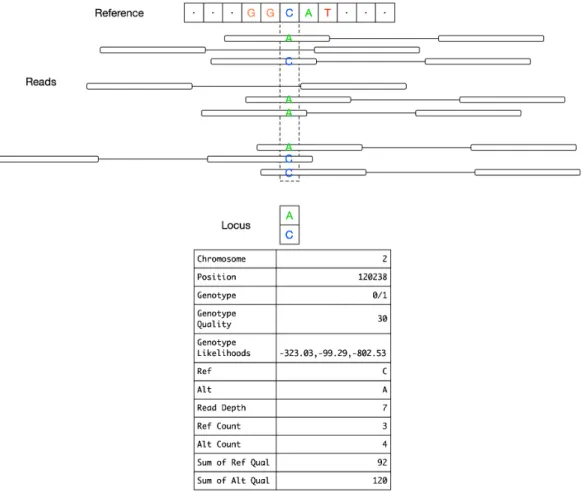
![Figure 2.7: Comparison of several aligners on simulated a)long reads >1000 bp, and b) short reads 150bp (taken from [123]).](https://thumb-us.123doks.com/thumbv2/123dok_us/1356284.2681443/51.892.152.723.126.404/figure-comparison-aligners-simulated-reads-short-reads-taken.webp)
![Figure 2.10: Create suffix tree by coalescing non-branching paths into single nodes (taken from [125]).](https://thumb-us.123doks.com/thumbv2/123dok_us/1356284.2681443/53.892.193.686.117.450/figure-create-suffix-coalescing-branching-paths-single-nodes.webp)
![Figure 2.12: Aid search by storing index of substring in leaves (taken from [125]).](https://thumb-us.123doks.com/thumbv2/123dok_us/1356284.2681443/54.892.191.727.123.368/figure-aid-search-storing-index-substring-leaves-taken.webp)
![Figure 2.15: Performance comparison of Bowtie 2 to other callers on simulated data a) 100 and 150 bp unpaired, b) 100x100 and 150x150 paired, and c) 250 and 400 long reads (taken from [38]).](https://thumb-us.123doks.com/thumbv2/123dok_us/1356284.2681443/58.892.253.661.116.785/figure-performance-comparison-bowtie-callers-simulated-unpaired-paired.webp)
![Figure 2.16: Performance of multiple aligners on simulated single-end and paired- paired-end 101 bp reads (taken from [58]).](https://thumb-us.123doks.com/thumbv2/123dok_us/1356284.2681443/62.892.242.664.106.692/figure-performance-multiple-aligners-simulated-single-paired-paired.webp)
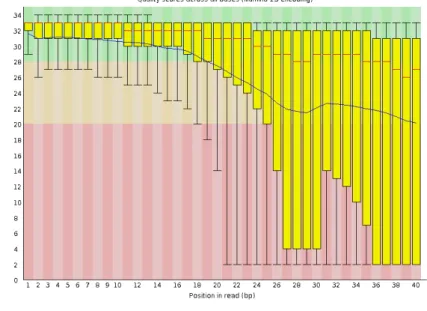
![Figure 2.19: Frequency of wrong base calls in Illumina reads based on position in the read from 5’ to 3’ (taken from [85]).](https://thumb-us.123doks.com/thumbv2/123dok_us/1356284.2681443/66.892.201.705.101.604/figure-frequency-wrong-calls-illumina-reads-based-position.webp)
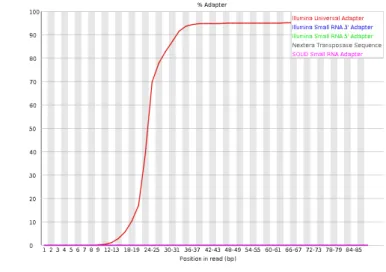
![Figure 2.24: Distribution of mutations by population frequency against phenotypic effect size (taken from [154]).](https://thumb-us.123doks.com/thumbv2/123dok_us/1356284.2681443/69.892.136.735.102.512/figure-distribution-mutations-population-frequency-phenotypic-effect-taken.webp)
