THE IMPACT OF POSITIVE BEHAVIORAL INTERVENTIONS AND SUPPORTS IN SECONDARY SCHOOL SETTINGS
by
ELISE M. GUEST
A DISSERTATION
Presented to the Department of Educational Methodology, Policy, and Leadership
and the Graduate School of the University of Oregon in partial fulfillment of the requirements
for the degree of Doctor of Education
DISSERTATION APPROVAL PAGE Student: Elise M. Guest
Title: The Impact of Positive Behavioral Interventions and Supports in Secondary School Settings
This dissertation has been accepted and approved in partial fulfillment of the requirements for the Doctor of Education degree in the Department of Educational Methodology, Policy, and Leadership by:
Dr. Gerald Tindal Chairperson Dr. Keith Hollenbeck Member
Dr. Scott Baker Member
Dr. K. Brigid Flannery Member
Dr. Nathaniel Teich Outside Member and
Richard Linton Vice President for Research and Graduate Studies/Dean of the Graduate School
Original approval signatures are on file with the University of Oregon Graduate School. Degree awarded June 2011
DISSERTATION ABSTRACT Elise M. Guest
Doctor of Education
Department of Educational Methodology, Policy, and Leadership June 2011
Title: The Impact of Positive Behavioral Interventions and Supports in Secondary School Settings
Approved: _______________________________________________ Dr. Gerald Tindal
Educators are responsible for helping students develop academic and behavior skills and for creating safe environments that promote these outcomes. Achieving these outcomes has become increasingly difficult due to disruptive, anti-social student
behavior. Researchers identified Positive Behavioral Interventions and Supports (PBIS) as an evidence-based approach, integrating primary, secondary, and tertiary interventions that provide benefit for students, schools, and educational communities. However, an extensive PBIS literature and research review identified a limited application of PBIS in secondary school settings. The purpose of this dissertation was to broaden the scope of research by examining the impact of PBIS on school-wide discipline outcomes and student academic performance in a secondary school setting using case study methodology.
The case study was conducted in a large, urban Pacific Northwest high school that expressed interest in improving the general school expectations and positive interactions between students and staff members. Study participants were members of a student cohort from grade 9 to grade 12. The case study provided a descriptive analysis of
students’ social behavior outcomes (as measured by Office Discipline Referrals, Suspensions/ Expulsions, and Attendance Rate) and their academic performance (as measured by students’ Grade Point Averages and Course Credits). An ordered time-series display was applied to analyze behavior and achievement outcome trends. Results
showed an increase in students’ Grade Point Average, Course Credits, and Attendance Rate and a decrease in students’ Office Discipline Referrals and Suspensions/ Expulsions.
This study’s findings are discussed in the context of its impact on students’ social engagement and academic achievement. Evidence of students’ academic and behavior outcomes has the potential to assist in the development of material and approaches to guide, replicate, and extend current PBIS practices to secondary school settings.
CURRICULUM VITAE NAME OF AUTHOR: Elise M. Guest
GRADUATE AND UNDERGRADUATE SCHOOLS ATTENDED: University of Oregon, Eugene
DEGREES AWARDED:
Doctor of Education in Educational Methodology, Policy, and Leadership, 2011, University of Oregon
Master of Science in Special Education, 2001, University of Oregon Bachelor of Arts in English, 1997, University of Oregon
Bachelor of Arts in French, 1997, University of Oregon AREAS OF SPECIAL INTEREST:
Academic and Behavioral Interventions Education Policy and Methodology PROFESSIONAL EXPERIENCE:
Assistant High School Principal, David Douglas School District, 2006 - 2011 Special Education Teacher, Beaverton School District, 2002 - 2004
English Teacher, Chintheche, Malawi Peace Corps Volunteer, 1997 - 2000 PUBLICATIONS:
Flannery, K.B., Guest, E.M., & Horner, R. (2010). Schoolwide positive behavior supports. Principal Leadership, 11, 38-43.
ACKNOWLEDGEMENTS
I wish to express sincere appreciation to the members of the Dissertation Committee. I sincerely thank Dr. Gerald Tindal and Dr. Scott Baker for their guidance and assistance throughout the doctoral program. A special thanks to Dr. Keith Hollenbeck who has provided unwavering support, direction, and laughter throughout the challenges of a demanding educational program. I thank Dr. K. Brigid Flannery for her continued mentorship and support during the masters and doctoral program as well as professional growth. Additionally, my gratitude is extended to Nathaniel Teich, who has provided recommendation over the past 17 years. These committee members were critical in the planning, development, and completion of this dissertation.
DEDICATION
As an educator, I dedicate this work to my colleagues, who impact the field of education through the provision of academic and social supports to all students.
As a daughter and niece of educators, I dedicate this work to the educators in my family: Anne P. Guest; Thomas Pauly, Ph.D.; and Suzanne Pauly, whose appreciation of life-long learning and provision of unconditional encouragement made it possible for me to complete the challenges of a doctoral program and to grow as an educational leader.
TABLE OF CONTENTS
Chapter Page
I. INTRODUCTION ... 1
Secondary School Challenges... 4
Preparing Students for Success in a Competitive Future... 4
Instructing Students to Reach Successful Academic Outcomes... 7
Addressing Student Behavior within a Safe Learning Environment ... 9
II. EXAMINATION OF POSITIVE BEHAVIORAL INTERVENTIONS AND SUPPORTS ... 13
Principles of PBIS... 14
Prevention ... 14
Theory and Evidence-Based Practices... 17
Systems Implementation... 18
III. LITERATURE REVIEW OF PBIS... 21
Literature Review... 23
Types of Studies... 23
School Level Analysis ... 34
Missing Elements of PBIS Research at the Secondary Level... 37
Unique Characteristics of High School... 38
PBIS Research in Secondary School Settings ... 44
Chapter Page
IV. METHODOLOGY ... 48
Methodology ... 49
Research Design... 49
Setting and Participants... 50
Intervention ... 52
Fidelity of Treatment ... 57
Dependent Variables... 60
Data Collection Procedures... 66
Training of Data Collectors ... 69
Data Analysis ... 72
V. RESULTS ... 74
Implementation Measures... 75
Schoolwide Evaluation Tool... 75
School Year 2007-2008 ... 77
School Year 2008-2009 ... 78
School Year 2009-2010 ... 78
Summary of SET Data ... 79
Benchmarks of Quality ... 79
School Year 2009-2010 ... 80
Summary of BoQ Data... 81
School-wide PBIS-HS Student Outcomes ... 81
Chapter Page
Attendance Rate ... 84
Office Discipline Referrals ... 87
Suspensions/expulsions... 90
Grade Point Average... 92
Core Credits Earned... 95
Summary of School-wide PBIS-HS Student Outcome Results... 97
PBIS-HS Cohort Graduate Outcomes... 99
Grade Point Average... 99
Attendance Rate ... 101
Summary of PBIS-HS Cohort Graduates’ GPA and Attendance Rate... 103
Specific Student Subgroup Outcomes ... 104
Student Subgroups ... 104
Summary of Specific Student Subgroup Outcomes... 111
Individual Student Outcomes... 112
Individual Student Profile ... 112
Summary of Individual Student Outcomes... 119
Summary of Results... 120
V. DISCUSSION ... 122
Review of Findings ... 122
Interpretation of Implementation Measures... 124
Summary of the SET and BoQ ... 129
Chapter Page
Summary of Student Outcomes ... 139
Study Limitations... 139
Summary of Limitations ... 143
Future Research ... 143
Conclusions... 145
APPENDICES A. SCHOOLWIDE EVALUATION TOOL... 147
B. BENCHMARKS OF QUALITY ... 155
C. PRIDE COMMUNICATION FLOW CHART... 174
LIST OF FIGURES
Figure Page
1. Continuum of School Wide Instructional and PBIS ... 16
2. Four PBIS Elements... 20
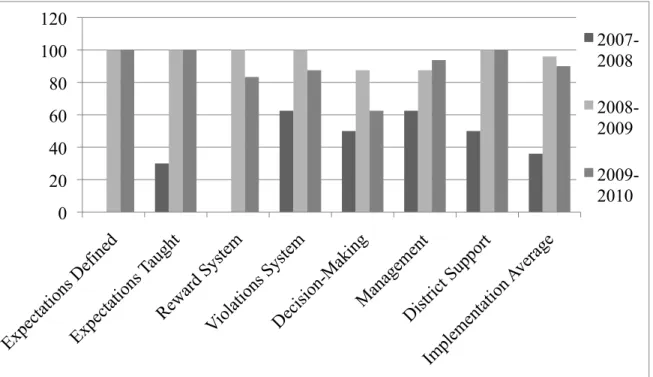
3. Schoolwide Evaluation Tool (SET) data, 2007 to 2010 ... 77
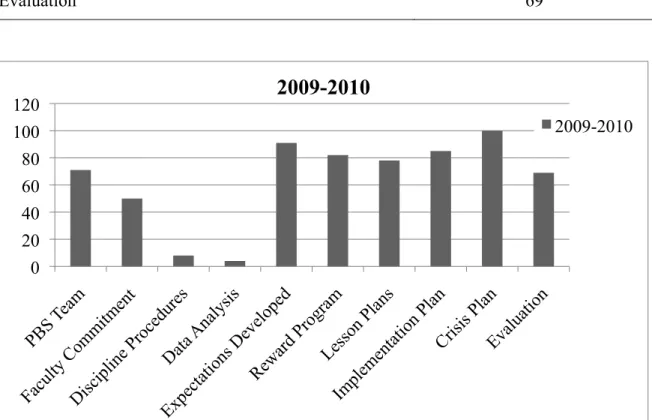
4. Benchmarks of Quality (BoQ) data, 2009 to 2010 ... 80
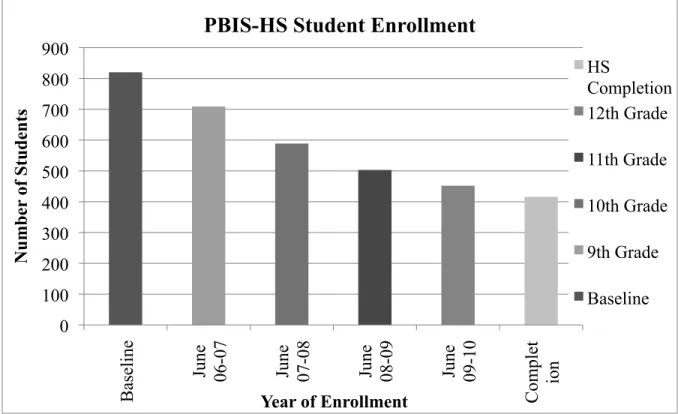
5. PBIS-HS Student Enrollment, 2006 to 2010 ... 83
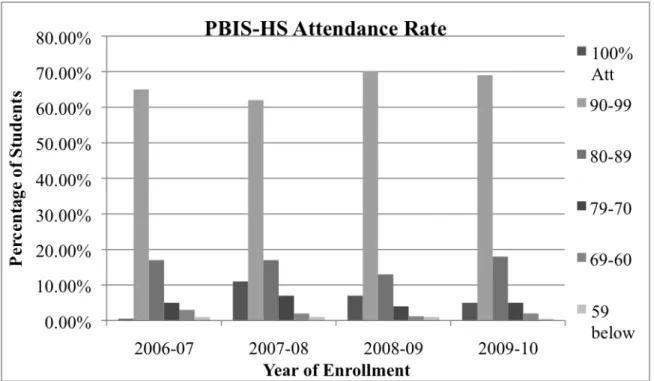
6. PBIS-HS Attendance Rate, 2006 to 2010 ... 86
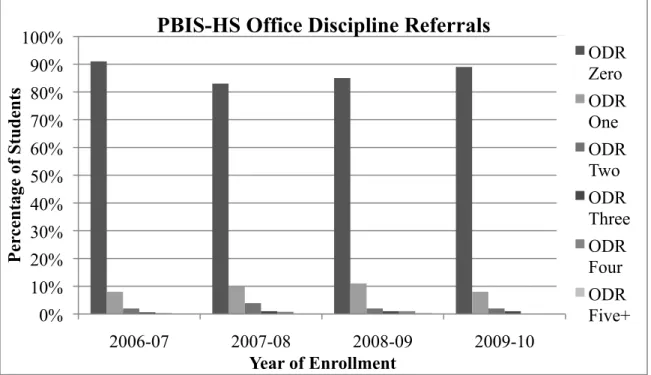
7. PBIS-HS Office Discipline Referrals, 2006 to 2010 ... 89
8. PBIs-HS Suspensions/Expulsions, 2006 to 2010... 91
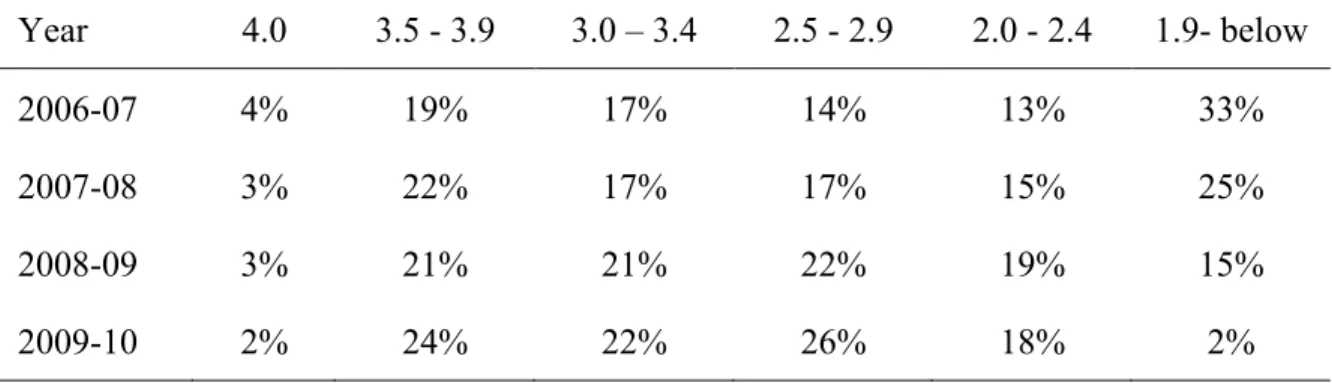
9. PBIS-HS Grade Point Average, 2006 to 2010... 94
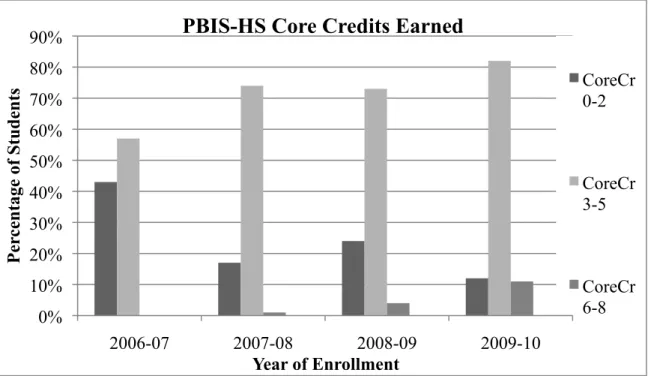
10. PBIS-HS Core Credits Earned, 2006 to 2010... 97
11. Grade Point Average of PBIS-HS Cohort Graduates, 2006 to 2010 ... 101
12. Attendance Rate of PBIS-HS Cohort Graduates, 2006 to 2010 ... 103
13. PBIS-HS Distribution of ODRs by Subgroups, 2006 to 2010... 107
14. PBIS-HS Distribution of ODRs by Race, 2006 to 2010... 110
15. PBIS-HS Individual GPAs, 2006 to 2010... 115
16. PBIS-HS Individual Attendance Rate, 2006 to 2010... 116
17. PBIS-HS Individual ODRs, 2006 to 2010 ... 117
LIST OF TABLES
Table Page
1. Summary of Studies Included in this Synthesis... 22
2. Demographics of Participating School ... 52
3. Dependent Measures... 61
4. Schoolwide Evaluation Tool (SET) data, 2007 to 2010 ... 76
5. Benchmarks of Quality (BoQ) data, 2009 to 2010 ... 79
6. PBIS-HS Student Enrollment, 2006 to 2010 ... 82
7. PBIS-HS Attendance Rate, 2006 to 2010 ... 85
8. PBIS-HS Office Discipline Referrals, 2006 to 2010 ... 88
9. PBIS-HS Suspensions/expulsions, 2006 to 2010... 91
10. PBIS-HS Grade Point Average, 2006 to 2010... 94
11. PBIS-HS Core Credits Earned 2006 to 2010... 96
12. Grade Point Average of PBIS-HS Cohort Graduates, 2006 to 2010 ... 100
13. Attendance Rate of PBIS-HS Cohort Graduates, 2006 to 2010 ... 102
14. PBIS-HS Distribution of ODRs by Subgroup, 2006 to 2010 ... 107
15. PBIS-HS Distribution of ODRs by Race, 2006 to 2010... 110
16. PBIS-HS Individual GPAs, 2006 to 2010... 115
17. PBIS-HS Individual Attendance Rate, 2006 to 2010... 116
18. PBIS-HS Individual ODRs, 2006 to 2010 ... 117
CHAPTER I INTRODUCTION
Today’s educators are responsible for helping students develop academic and behavior skills and for creating safe environments that promote these outcomes (Lassen, Steele, & Sailor, 2006). Achieving these outcomes, however, has become increasingly difficult across multiple school levels due to prevalent disruptive and anti-social student behavior that is detrimental to the students, schools, and educational community (Barrett, Bradshaw, & Lewis-Palmer, 2008). In a recent national survey of middle and high school teachers, 76% indicated they could be better able to educate their students if behavior problems were less prevalent (Public Agenda, 2004). With behavioral problems so common, educators are challenged to identify and implement effective strategies to promote successful academic and behavioral outcomes for all students (McCurdy, Kunsch, & Reibstein, 2007).
Teachers’ efforts to help students achieve have become progressively more hindered by unsafe learning environments (Lassen et al., 2006). One of the greatest challenges for educators is working under conditions that are counterproductive for learning (Warren et al., 2006) while providing instruction in core subjects such as reading, writing, and mathematics. An example is educators teaching students whose anti-social behaviors are serious impediments to their own learning as well as their peers’ (Warren et al., 2006). The Surgeon General’s 2001 report to Congress stated that the rate of less violent, antisocial crimes, such as fighting, theft, and disruptive conduct, have continued to escalate (U.S. Department of Health and Human Services, 2001). The
identification of preventative practices is necessary to enable educational communities to reduce antisocial behaviors and to develop students’ skills (Warren et al., 2006).
McIntosh, Flannery, Sugai, Braun, and Cochrane (2008) stated that the “interaction between problem behavior and academics reaches a critical mass in high school” (p. 245). McIntosh et al. defined critical mass as the accumulation of years of persistent academic failure and negative social interactions that dramatically affect students’ school experience. When daily academic successes and necessary teacher-student connections continually decrease, teacher-students often respond with negative behaviors that are confirmed by their teachers’ and peers’ negative reactions (Bohanon, Flannery, Malloy, & Fenning, 2009). McIntosh et al. (2008) suggested this interaction between poor academic performance and negative behavior could be a powerful predictor of an increase in high school dropout rates.
In the United States, the National Center for Education Statistics (2007) defined a dropout as a “student who was enrolled at any time during the previous school year who is not enrolled at the beginning of the current school year and who has not successfully completed school. Students who are out of school due to illness are not considered dropouts” (p. 9). The most recent national report on dropout rates, High School Dropout and Completion Rates in the United States: 2007, reported 10.3% of people between 16 and 24 years old and 32.2% of people between 16 and 19 years old were considered dropouts (NCES, 2007). Specifically, males (9.8%) were more likely than females (7.7%) to drop out. Hispanic students (21.4%) were more likely to drop out than their Black (8.4%) or White peers (5.3%) (NCES, 2007). The challenge is for educators to identify the issues that might affect drop out in high school and the additional supports that might
promote high school completion (McIntosh et al., 2008). It is especially important, when identifying preventative interventions to keep students socially and academically engaged throughout their high school experience, to understand that dropping out is not an isolated event (McIntosh et al., 2008).
The consequences of dropping out of high school are serious. In addition to economic disadvantages, school dropouts experience increased rates of poor adult outcomes, such as unemployment, health problems, substance abuse, and dependence on governmental social assistance programs (McIntosh et al., 2008). These consequences potentially cost taxpayers billions of dollars in welfare, unemployment, crime prevention, and prosecution (McIntosh et al., 2008). School communities’ efforts to address the high rate of dropouts and the long-term effects for students have been of great concern
(Bohanon et al., 2009).
Studies (Slavin, 1999; Spaulding et al., 2010; Tobin & Sugai, 1999) have
analyzed poor academic performance and problem behavior as two variables that predict high school dropout. Slavin (1999) noted that constant low academic skills inhibited students’ daily academic success and development of positive teacher-student
relationships. Persistently negative academic experiences were identified as risk factors for continued failure in high school and possible dropout. Tobin and Sugai (1999) indicated that problem behavior presented a barrier to high school completion due to the disruption in school and application of exclusionary discipline measures (e.g., suspension or expulsion). Analyzing both variables, academic performance data and problem
behavior data, is appropriate when exploring predictors of student outcomes and successful high school completion (Spaulding et al., 2010).
Concerns about such detrimental effects have led researchers to focus on preventative, research-based approaches effective in increasing academic success and decreasing behavior problems (Lassen et al., 2006). These concerns are emphasized in secondary school settings where educators are facing high student drop out rates and a need for preventative interventions. These results challenge prevention-minded educators to (a) prepare students for success in a competitive future, (b) instruct students in
reaching successful academic outcomes, and (c) address student behaviors within a safe learning environment.
Secondary School Challenges
In this section, I examine current research literature that investigates three challenges in the context of secondary schools (grades eight or nine through 12): (a) preparing students for success in a competitive future, (b) instructing students in reaching successful academic outcomes, and (c) addressing student behaviors within a safe
learning environment.
Preparing Students for Success in a Competitive Future
To examine students’ preparation for a competitive future, it is important to analyze trends in U.S. students’ academic performance when compared to their national and international peers (NCES, 2009a). Addressing growth trends can improve educators’ efficiency with essential information to transition students to successful outcomes, such as school-to-career or post-secondary education, (Bohanon et al., 2009). Congress charged the National Center for Education Statistics (NCES) to examine national and international academic trends to “ensure U.S. students receive a world-class education
that provides expanded opportunities for college and career success” (National
Governors’ Association, the Council of Chief State Officers, & Achieve, Inc., 2009, p. 5). National trends. NCES (2009a), in The Condition of Education, examined
national academic growth trends. In relation to students’ performance on reading
assessments, NCES (2009a) reported that 12th grade students scored five to seven points lower on the reading assessment in 2005 than in 1992. This score decrease occurred with White, Black, and Hispanic students. The percentage of 12th graders who were proficient readers was lower in 2005 than in 1992 (35% versus 40%) (NCES, 2009a). NCES (2009a) defined students’ proficient scores as a mastery of skills and content knowledge that is developed beyond basic level but not as superior as the advanced level. These decreasing trends are concerning to educators who are challenged to engage students in a positive learning environment that supports the development and mastery of required reading and communication skills favored in post-secondary options and jobs (National Governors’ Association et al., 2009).
International trends. It is important to determine whether these national trends mirror international trends in order to learn from the top performers and innovators as exemplars for improvement (National Governors’ Association et al., 2009). A partnership among the National Governors’ Association, the Council of Chief State School Officers, and Achieve, Inc. (2009) compiled and compared performance outcomes from other countries to outcomes in the United States. This process, known as benchmarking,
provided an opportunity to learn from global top performers and to inform the refinement of the U.S. education system to promote better outcomes (National Governors’
illustrated that U.S. high school students ranked 25th in math and 21st in science achievement, as measured on an international assessment conducted in 2006 (National Governors’ Association et al., 2009). In the same year, the United States had the third largest gap in science scores between students from different socioeconomic groups and the second highest college dropout rate of 27 countries (National Governors’ Association et al., 2009).
The National Governors’ Association et al. (2009) asserted that education is the most important lever to prepare our students for competitiveness and prosperity in this age of globalization. The NCES (2009a) and the National Governors’ Association et al. (2009), however, provided data illustrating disturbing achievement trends. If math performance in the United States were raised to the performance levels of the other countries, students would potentially gain a 12% increase in future earnings (National Governors’ Association et al., 2009). These national and international data trends challenge educators to expand students’ learning opportunities in preparation for a competitive future.
A Bill and Melinda Gates Foundation (2003) report stated, “Our civic, social, and economic future depends on our ability to dramatically increase the percentage of
students that leave high school ready for college, work, and citizenship” (p. 1). The focus for educators is to address these academic achievement trends, both nationally and internationally, by improving the quality of education, creating a positive learning environment, increasing students’ rates of proficiency, addressing student dropout rates, and promoting skills that will prepare students for future outcomes (Sugai, Flannery, & Bohanon-Edmonson, 2004).
Instructing Students to Reach Successful Academic Outcomes
In conjunction with legal mandates and academic pressures, as defined in the next section, schools face multiple obstacles in increasing student engagement and students’ overall achievement towards successful academic outcomes.
Legal pressures. At the federal level, under the No Child Left Behind Act of 2001 (NCLB, 2001), the mandate is that schools must create safe learning environments that support and enable all students to learn and achieve. This challenge is further complicated at the state and district level by decreasing resources, multiple competing initiatives, and fewer qualified teachers (Sugai & Horner, 2006). Under legal pressures, schools are “challenged to document that students are safe, are learning the social skills that will make them contributing members of our culture, and are in environments with sufficient social order to allow and encourage academic achievement” (Horner et al., 2004, p.3).
To meet the needs of all students, the Individuals with Disabilities Act of 2004 (IDEA, 2004) added to the complications of mandated provisions. IDEA required the consideration and use of special education and interventions when developing and implementing an Individualized Education Plan (IEP) for students with disabilities (Warren et al., 2006). IDEA mandated specific guidelines when applying interventions to students who are experiencing poor academic and behavior outcomes (Warren et al., 2006). Together, NCLB and IDEA provide the mandated framework that requires educators to establish supportive learning environments to encourage successful student outcomes.
Academic pressures. Academic achievement remains the primary focus
School Graduates (NCES, 2005), NCES analyzed high school transcripts to gain insight into the types of courses taken, the number of credits earned, and the overall Grade Point Average (GPA) earned by graduating 12th grade students. The priority for schools today is for students to earn credits in core academic areas and raise individual grade point averages (NCES, 2005). High school graduates earned 26.8 credits in 2005 and 23.6 credits in 1990. Of these additional three credits, graduates in 2005 earned two additional credits in core content subjects (notably English, Math, and Science) and one additional credit in other academic fields (NCES, 2005). When translated into Carnegie units, a time-based measurement for educational attainment, these additional three credits represented an additional 120 hours of classroom instruction. Approximately 81% of instruction in 2005 was dedicated to credit courses versus 71% for 1990 graduates (NCES, 2005). Even though the number of school days and the length of the school day have remained nearly unchanged over the 15 years of the NCES analysis, the number of instructional hours has increased (NCES, 2005).
Furthermore, in 2005, the average GPA was 2.98 and in 1990 it was 2.47 (NCES, 2005). This increase in GPAs represents a change from a C grade average to nearly a B grade average for today’s high school graduates. Although critics have argued that grade inflation practices account for the rise in GPAs, others have argued that the GPA increase represents a growth in student performance to meet the high expectations of
post-secondary options (NCES, 2005). For example, 68% of 2005 high school graduates completed a range of higher-level courses (e.g., Physics and Calculus), which represented a 28% increase over 1990 graduates (NCES, 2005). To support higher expectations as
reported by NCES (2005), teachers must expand learning opportunities that enable students to successfully enter into post-secondary college and career options. Addressing Student Behavior within a Safe Learning Environment
As noted earlier, the future of education is riddled with challenges and pressures. Student enrollment in public elementary and secondary schools is projected to increase from 43.5 million in 1993 to 54 million in 2018 (NCES, 2009a). In some regions of the U.S., like the South, local enrollment numbers could increase 18% between the years 2006 and 2018 (NCES, 2009a). Dramatic increases in student enrollment may impact school processes and systems, including their ability to manage student behavior.
An important consideration to increasing enrollment is that discipline problems have been positively related to school size (NCES, 2009b). The national report,
Indicators of School Crime and Safety (NCES, 2009b), reported that as the size of a school population increases so does the likelihood that student discipline problems will be reported. In 2007-2008, 52% of schools with 1,000 or more students reported student verbal abuse of teachers, student acts of disrespect for teachers other than verbal abuse, gang activity, and widespread disorder in the classroom (NCES, 2009b). In comparison, 10% to 22% of schools with fewer than 1,000 students reported similar discipline problems during the school year (NCES, 2009b). Three years earlier, a similar NCES (2003) publication reported approximately 89% of schools with 1,000 students or more had a violent incident, compared with 61% of schools with fewer than 300 students. Rapid enrollment increases have the potential to impact school communities and teachers’ ability to adequately educate their students while responding to student discipline problems (Bohanon et al., 2006).
Irvin, Tobin, Sprague, Sugai, and Vincent (2004) stated, “Recently, the antisocial, and even violent behavior of some children in schools has become a most pressing concern” (p. 131). In response to concerns about school-related discipline problems, creating a safe learning environment transitions to the forefront of educational issues (Storch et al., 2003). Key to this issue is the role of classroom teachers who must manage disruptive student behaviors that impede the learning process. In a national poll of middle and high school teachers, over one-third of teachers reported they had seriously
considered quitting the teaching profession because of student discipline and behavior problems (Public Agenda, 2004). Although not all students with challenging behaviors and potential emotional and behavioral problems commit violent acts, they do consume a significant amount of teachers’ instructional time and resources (Lassen et al., 2006).
Response to student problem behaviors. In response to student behavior problems, many school discipline policy initiatives employ a get tough approach (Bohanon et al., 2009). With highly publicized school shootings and school-related violent acts, high schools promoted exclusionary, punitive consequences (e.g., suspension or expulsion) to decrease the likelihood of future violent incidences (Bohanon et al., 2009). This get tough approach includes (a) repeating and increasing the severity of the consequences, (b) enforcing a zero tolerance policy, (c) excluding the student from privileges (e.g., after school activities), and (d) implementing alternative options for schooling (Sugai & Horner, 2002). Examples of get tough policies are hiring school security officers, installing metal detectors, and operating surveillance cameras (Sugai & Horner, 2002).
The get tough approach, unfortunately, has not been associated with decreasing violent acts and promoting safer schools (Sugai & Horner, 2006). Sugai and Horner (2006) noted, “evidence indicates that students with the most severe problem behavior are the least likely to be responsive to these strict consequences, and the intensity and frequency of their behavior is likely to get worse instead of better” (p. 246). Increases in the use of these reactive discipline policies only provide short-term responses to the problem, rather than a long-term reduction in the prevalence of the behavior (Sugai & Horner, 2002). Furthermore, such strict discipline actions do not appear to promote any long-term results in producing positive behavior (Lassen et al., 2006).
In addition, inferences have been made regarding the association of suspensions and expulsions with students’ probable entry into the juvenile justice system. This association has informally been termed the school to prison pipeline, and is used to describe how school discipline data mirrors that of the juvenile justice system (Bohanon et al., 2009). While investigating this potential association, Bohanon et al. (2009) noted, “When students are removed from school, there is an increased likelihood of their subsequent entry into the juvenile justice system and probability of school dropout” (p. 35). Proactive responses to problem behavior, however, may interrupt the school to prison transition with more successful outcomes, such as secondary education or vocational options.
To test the association between school discipline and students’ connection to school, McNeely, Nonnemaker, and Blum (2002) examined the results from the National Longitudinal Study of Adolescent Health (Add Health) survey. McNeely et al. (2002) found that students’ overall feeling of connectedness was low in schools that practiced
extreme discipline measures (e.g., assigning suspension to non-violent behaviors, such as theft), and high in schools with less restrictive discipline responses for similar
misbehaviors. This finding may suggest that schools should rethink the get tough
approach and refine their discipline policies. Overall, the school discipline literature and research illustrates many challenges schools face to promote student connectedness.
The literature and research highlight that proactive discipline measures may help create a school learning climate that decreases behavior discipline issues and improves successful academic and social outcomes more than punitive consequences (Bohanon et al., 2009; Lassen et al., 2006; Luiselli et al., 2005; McIntosh et al., 2008; Muscott et al., 2008). In this next chapter, I will review the collection of literature and research with the goal of providing an examination of Positive Behavioral Interventions and Supports, as an alternative approach to get tough consequences. The result will be the identification of a need to conduct research on PBIS in an urban, secondary school setting to address students’ academic and social outcomes.
CHAPTER II EXAMINATION OF
POSITIVE BEHAVIORAL INTERVENTIONS AND SUPPORTS
In this chapter, I provide an examination of Positive Behavioral Interventions and Supports (PBIS), a systematic approach that includes a three-tiered model of prevention and intervention applications based on a pyramid model. The purpose of my examination is to provide research-based evidence of school-wide PBIS to support the development of positive, safe learning environments where educators develop students’ academic and behavior skills and ultimately promote long term, successful student outcomes.
Identifying effective academic and behavioral interventions within a safe educational environment is a priority (Kincaid, Childs, Blasé, & Wallace, 2007). An alternative approach to the get tough consequences for antisocial behaviors and
decreasing achievement scores is Positive Behavioral Interventions and Supports (PBIS) (Lassen et al., 2006). In the past fifteen years, school-wide PBIS has emerged as an approach to establishing a positive learning environment while addressing individual student problem behavior (Sugai & Horner, 2006). To examine PBIS, I first review universal intervention research literature on school-wide PBIS. I (a) define PBIS principles, (b) review the research assessing overall PBIS systems, (c) describe areas of PBIS that have not been investigated empirically, and (d) propose a need for research on PBIS in secondary school settings. The focus of my examination is to provide an
Implications of my examination can present evidence on the impact of PBIS on high school students’ academic and social outcomes in preparation for adulthood.
Principles of PBIS
PBIS is the “integration of valued outcomes, behavioral and science, empirically validated procedures, and systems change to enhance quality of life and minimize or prevent problem behaviors” (Sugai & Horner, 2006, p. 246). Principles of PBIS are rooted in the application of research-based strategies in which an observer is able to analyze students’ behavior by focusing on the context and environment in which the behavior occurs (Sugai & Horner, 2006). Features of PBIS, as described in this section, are (a) prevention, (b) theory and evidenced-based practice, and (c) systems
implementation (Sugai & Horner, 2002). Horner, Sugai, Todd, and Lewis-Palmer (2005) stated, “the foundation of school-wide PBIS lies in the application of these features to the whole school context in an effort to prevent, as well as change, patterns of behavior” (p. 360).
Prevention
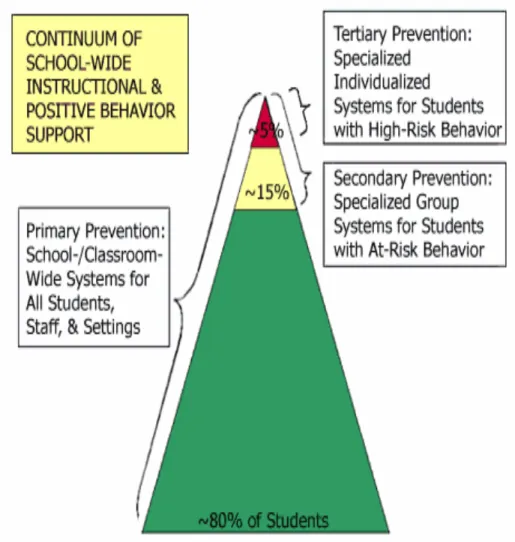
PBIS employs a school-based prevention model that emphasizes a three-tiered continuum of interventions (see Figure 1) (Sugai & Horner, 2006). The application of interventions is intended to prevent the development of problem behaviors, reduce the occurrence of significant problem behaviors, and decrease the impact and intensity of the problem behaviors upon the school community (Sugai & Horner, 2006). With a
systematic tiered approach, trained staff implement evidence-based interventions strategies to create positive, safe, learning environments and promote appropriate behaviors (Warren et al., 2006).
Primary prevention. Primary prevention, or the green zone, is directed toward preventing problematic behaviors for all students and providing a positive learning environment for the entire school community (Sugai & Horner, 2006). Primary
prevention focuses on the teaching of relevant social skills and appropriate behaviors by providing frequent reinforcements for expected behaviors and consequences for
inappropriate behaviors. School-wide prevention also includes instructional practices, relevant curriculum, and organizational structures that support the development of
positive relationships between staff and students. This level of intervention is expected to meet the needs of approximately 80% of the students, those who are able to respond appropriately to school-wide prevention practices and thus do not receive behavior referrals. Primary prevention is the base of the triangle in Figure 1.
Secondary prevention. The yellow zone (see Figure 1) is Secondary prevention, and involves specialized prevention systems for a small portion of students who exhibit at-risk behaviors (Sugai & Horner, 2006). Intended for approximately 15% of students, this level of prevention utilizes group-based intervention strategies to support academic support (e.g., tutoring, writing lab, etc.), personal support (e.g., group counseling, addiction support, etc.), and social support (cultural based groups, interest based groups, etc.). Secondary prevention also employs simple individualized programs that target specific problem behaviors. An example is a Check-in Check-out program that partners an individual student with an adult mentor who conducts regular checks to provide increased adult attention and monitoring interventions for improved academic and behavioral outcomes. With additional group and individual supports, students exhibiting inappropriate behaviors will receive the additional support needed to modify their
behavior, avoid additional behavior referrals, and meet the behavioral expectations of the school setting.
Figure 1. Continuum of School Wide Instructional and Positive Behavioral Interventions and Supports - http://www.pbis.org/
Tertiary prevention. The Tertiary level, which is portrayed as the tip of the triangle (see Figure 1), is the third phase of the continuum, involving about 5% of the student population. Illustrated as the red zone, this level of intervention includes highly individualized and intensive prevention measures for students who do not respond to the primary and secondary prevention practices (Sugai & Horner, 2006). Typically at this
behavior interventionists) work collaboratively to implement individualized behavior supports. Together, the team collects data on the individual student’s behavior and response to the behavior supports. Decisions about interventions are based on this collection of data. Regular monitoring of the student’s behavior is highly structured, specific, and focused. The goal of the team is to decrease the student’s anti-social behavior and teach alternative behaviors.
Prevention model summary. Sugai et al. (2004) summarized essential features present when applying the PBIS three-tiered model (see Figure 1). One important feature is students’ ability to describe and provide examples of the behavioral expectations for specific, predictable school settings (Sugai et al., 2004). As a result, problem behaviors are reduced, the removal of students from the classroom is decreased, and the potential for students to engage in learning is increased. Teachers have the opportunity to spend more time providing academic instruction rather than addressing disruptive problem behaviors. Key to these features is that adults and students are able to share more positive interactions in a learning environment (Sugai et al., 2004).
Theory and Evidence-based Practices
PBIS is directly based on applied behavior analysis, a behavioral theory that emphasizes “the ability to affect behavior through environmental manipulations” (Sugai & Horner, 2006, p. 247). PBIS is deeply rooted in behavior analysis and a foundation of research that focuses on the behavior of an individual and the contexts or environment in which the individual’s behaviors are observed (Sugai & Horner, 2006). Sugai and Horner (2006) asserted, PBIS “is based directly on behavioral theory (applied behavioral
physiology and environment, and ability to affect behavior through environmental manipulations” (p. 247). Furthermore, Warren et al. (2006) defined PBIS as “an applied science that uses educational methods to help individuals develop socially appropriate behaviors while also facilitating change in a broader social system that influences the individual’s behavior and general quality of life” (p.188). Applying behavioral theory and empirical evidence to support decisions is fundamental to PBIS.
Features of applied behavioral analysis include a team-based approach to implementing interventions identified when analyzing the purpose, or function, of the misbehavior (Sugai & Horner, 2006). Functional Behavior Assessments and Behavior Intervention Plans are two components to effective implementation of school-wide PBIS. For example, a team of teachers addressing a student’s continuous disruptive behaviors may conclude the function of the behaviors is to avoid class work and gain attention from peers. A key feature is the use of data (e.g., office discipline referral data) and the
application of data collection systems to inform decision-making regarding effective, efficient, relevant, and durable intervention practices (Sugai et al., 2004). With a
foundation of theory and evidence, PBIS has “evolved into a viable process for assisting schools to identify, adopt, adapt, implement, and evaluate evidence-based school-wide, classroom, and individual student interventions” (Sugai et al., 2004, p. 2).
Systems Implementation
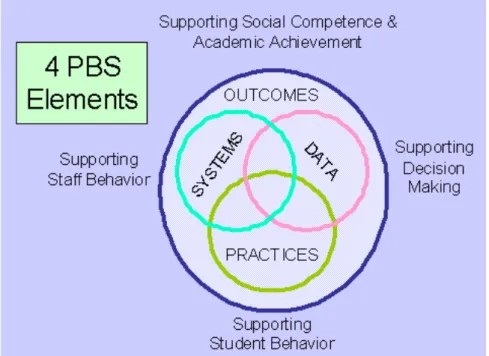
Successful implementation of school-based PBIS is guided by four major
elements (Sugai & Horner, 2006). Sugai and Horner’s (2006) four major elements are: (a) measurable long-term goals, (b) school-based outcomes, (c) use of data, and (d) system supports. See Figure 2 for the Systems Implementation illustration.
Measurable long-term goals. First, schools must establish measurable long-term outcomes for behavioral targets that are supported by the school community. Behavioral targets, such as decreasing disruptive behaviors in the classroom, are explicitly taught in a specific context, the classroom, by all staff members. The expected behavior of non-disruptive actions are reinforced through systematic processes and corrected with multiple prevention efforts. Throughout this process, staff members continue to review and revise efforts to meet the long-term goal to reduce the targeted behavior (Sugai & Horner, 2002).
School-based outcomes. Second, practices to achieve school-based outcomes must be relevant and applicable to the educational setting (Sugai & Horner, 2002). For instance, lessons on expected behaviors should be age-appropriate to the student
audience. In elementary school, the focus may be on exhibiting simple forms of respect. In high school, the focus may be on more adult-like behaviors, such as exhibiting integrity or perseverance inside and outside of the classroom. The notion of relevance is based on the developmental stage and interest of the students and their learning
environment (Sugai & Horner, 2002).
Use of data. The third component to PBIS systems is the use of data. Sugai and Horner (2002) claim that developing a sound organizational system to collect, organize, and communicate data is essential to informing decisions at all levels of implementation. School staff must use data to document behavioral outcomes and guide decision-making processes on the effectiveness and relevance of interventions. Examples of school level data include standardized test scores, attendance records, and grades. Classroom data may include performance on curriculum-based assessments as well as discipline referrals.
Individual data may include behavior support plans, functional behavior assessments, and Individualized Education Program progress. All levels of data can be used to guide effective decision-making so that staff can monitor and adjust practices and make sound decisions to effectively address students’ targeted behaviors.
Figure 2. Four PBIS Elements – http://www.pbis.org/
System supports. Finally, the school must establish system supports (e.g.,
funding, training, and resources) to effectively implement PBIS. A team of school leaders must identify and allocate the supports needed to apply PBIS practices with fidelity (Sugai & Horner, 2002). In summary, Figure 2 illustrates the organization of these four elements as interrelated, collaborative elements sustaining a school-wide PBIS system (Sugai & Horner, 2006).
CHAPTER III
LITERATURE REVIEW OF PBIS
PBIS research focuses primarily on the practices, processes, and assessment of school-wide PBIS systems. To investigate PBIS, I conducted a literature review of studies that examined the impact of school-wide PBIS implementation on student behavior and academic outcomes in secondary schools. I searched for studies that examined the impact of school-wide PBIS implementation on student behavior and academic outcomes in secondary schools by referring to a citation list compiled by Horner and Sugai (2009), reference lists, and online searches (e.g., ERIC, PsychInfo, and www.pbis.org). I also scanned peer-reviewed journals that published PBIS research literature on primary prevention implementation (the green zone) within the last decade, such as Journal of Positive Behavior Interventions, Journal of Applied Behavioral Analysis, and Education and Treatment of Children. This search procedure resulted in a collection of 32 studies. They are organized, in terms of key design features, to answer the following questions: (a) What type of research designs are used to examine the impact of universal, school-wide PBIS in a school community? and (b) What unit of analysis is examined in most of the universal, school-wide PBIS research? Accordingly, patterns became clear when answering these literature review questions, which are illustrated in Table 1.
Table 1
Summary of Studies Included in this Synthesis (32 total studies).
Types of Study Number Percent (%)
Experimental Quasi-experimental Qualitative
Mixed Case Study
Types of Measure Used to Assess Impact
Standardized Academic Assessment (e.g., SAT) Intervention or Behavior Tracking
6 13 1 1 11 6 11 19 41 3 3 34 19 34
Office Discipline Referral (e.g., ODR) 17 53
Teacher Interview or Observations (e.g., TIC) 15 47
Student Interview or Observations 3 9
Student Product (e.g., GPA) Student Attendance
2 1
6 3 Implementation Assessment (e.g., SET, BoQ)
Validity/ Reliability Information
Validity/Reliability Information Provided No Validity/Reliability Information 18 20 12 56 60 40 Level of School Studied
Pre-School Elementary School Middle School High School Mixed/ Transition Elementary/ Middle Middle/ High 2 12 5 1 1 1 6 38 16 3 3 3
Table 1 (continued) State-wide/ District-wide Publication Date 2000-2005 2006-2010 10 17 15 31 53 47 Literature Review
Research patterns, as illustrated in Table 1, are discussed next. Types of Studies
A growing collection of research studies in the last decade has employed quality measures to document both implementation of core PBIS features and effects on
students’ academic and behavior outcomes (Horner & Sugai, 2009). The collection of research continues to expand the PBIS database by publishing their findings, sharing their observations, and providing implications for potential future research and practice (Sugai et al., 2004). Between 2000 and 2010, slightly more than half (53%) of the reviewed studies were published between 2000 and 2005, with the remaining 47% published between 2006 and 2010. Consistent examination of universal, school-wide PBIS allows researchers to examine the replication, sustainability and continuous improvement of PBIS implementation (Algozzine et al., 2010).
Experimental. Six of the 32 reviewed studies (19 percent) applied an experimental design to examine the relation between PBIS and student outcomes
(Bradshaw, Koth, Bevans, Ialongo, & Leaf, 2008a; Bradshaw, Reinke, Brown, Bevans, & Leaf, 2008b; Bradshaw, Koth, Thornton, & Leaf, 2009a; Bradshaw, Mitchell, & Leaf, 2009b; Duda, Dunlap, Fox, Lentini, & Clarke, 2004; Horner et al., 2009). Bradshaw et al. (2008a, 2008b, 2009a, & 2009b) conducted the majority of these reviewed experimental
studies, examining PBIS in 37 elementary schools representing approximately 2,590 staff members, between 2002 and 2007. All the experimental studies were conducted in elementary school settings.
In the first study, Bradshaw et al. (2008a) established the fidelity of PBIS
implementation by using the Schoolwide Evaluation Tool (SET) to measure the presence of school-wide PBIS components. Using a randomized group trial of PBIS, 21 schools received training and implemented PBIS and 16 schools did not receive training but implemented a PBIS model. The SET data of these two groups was analyzed to
determine the impact of training in PBIS on school-wide PBIS implementation fidelity. Bradshaw et al.’s (2008a) analyses showed no significant differences in overall SET scores. Controlling for school district effects, data analyses indicated that schools trained in PBIS had greater fidelity than non-trained schools. Conclusions from the study
included an enhanced understanding of how PBIS components are applied, adapted, and maintained in a school setting.
Next, Bradshaw et al. (2008b, 2009a) examined the impact of PBIS training on improvements in school climate as measured by reports of school employees’
organizational health. Bradshaw et al. (2008b, 2009a) used the Organizational Health Inventory for Elementary Schools (OHI), which targeted five aspects of healthy functioning (e.g., institutional integrity, staff affiliation, academic emphasis, collegial leadership, and resource influence). Staff reports from the trained and non-trained schools were collected annually. Initial findings suggested that PBIS training is associated with higher overall OHI scores and significant improvements in three areas of healthy school functioning: (a) resource influence, (b) staff affiliation, and (c) academic emphasis. After
PBIS implementation, scores in the two remaining OHI areas—institutional integrity and collegial leadership—were enhanced. Bradshaw et al. (2008b, 2009a) concluded that PBIS training and implementation were associated with an enhancement of schools’ organizational health.
Continuing this examination, Bradshaw et al. (2009b) investigated the impact of training on student Office Discipline Referrals (ODR). They conducted three analyses of ODRs to investigate differences in rates of ODRs between the trained and non-trained schools. Bradshaw et al. (2009b) found that schools trained in PBIS reported significant reductions in both the percentage of students receiving referrals and the overall rate of ODRs.
Summary of experimental studies. The strength of experimental design studies documented the fidelity of implementation with strong evidence-based practices and outcomes (Horner & Sugai, 2009). Bradshaw et al.’s work (2008a, 2008b, 2009a, & 2009b) illustrated the impact of school-wide PBIS, on staff training and application practices, school climate, and student behavioral outcomes. Such preliminary
experimental study findings offer a starting point for drawing evidence-based conclusions when analyzing the application of universal PBIS systems as a preventative approach for school communities.
Quasi-experimental. In addition to the experimental studies using random assignment, researchers conducted thirteen quasi-experimental studies (41%) to examine PBIS at the (a) state, (b) district, and (c) school or classroom level.
State level. Initial examination of large-scale PBIS practices and effects on student outcomes were conducted in Hawaii (Nakasato, 2000), Iowa (Mass-Galloway,
Panyan, Smith, & Wessendorf, 2008), Maryland (Barrett et al., 2008), and New Hampshire (Muscott, Mann, & LeBrunn, 2008). To establish the application of school-wide PBIS, researchers used the SET, the Team Implementation Checklist (TIC), and the Coaches Checklist. To measure student outcomes as an effect of PBIS interventions, researchers collected and analyzed student ODR data.
Researchers (Barrett et al., 2008; Mass-Galloway et al., 2008; Muscott et al., 2008; Nakasato, 2000) found schools with high levels of implementation fidelity experienced a reduction in the rate of ODRs per-day and per-month. For example, Maryland schools (K-12) with PBIS training experienced 72% fewer ODRs than schools that did not complete the training (Barrett et al., 2008). Similar ODR reductions in multi-year examinations provide preliminary evidence in support of large-scale PBIS training and universal implementation (Mass-Galloway et al., 2008; Muscott et al., 2008; Nakasato, 2000). Recommendations from state-wide examinations included: (a) investment in PBIS as a preventative approach (Barrett et al., 2008; Mass-Galloway et al., 2008; Muscott et al., 2008), (b) continued evaluation of schools’ maintenance of PBIS (Barrett et al., 2008; Mass-Galloway et al., 2008; Muscott et al., 2008), (c) embedded PBIS practices in pre-existing school-wide programs or initiatives (Mass-Galloway et al., 2008), and (d) continued data collection to examine PBIS (Nakasato, 2000).
District level. Two quasi-experimental studies of district-wide PBIS investigated building district-level capacity and system changes to maintain large-scale PBIS
programs (George & Kincaid, 2008; Nersesian, Todd, Lehmann, & Watson, 2000). George and Kincaid (2008) expanded on the School-wide PBIS Implementers’ Blueprint and Self-Assessment (Algozzine, 2010) by providing an examination of collaboration
practices applied in a Florida school district, and Nersesian et al. (2000) applied similar research methods in the Eugene School District in Oregon. George and Kincaid (2008) and Nersesian et al. (2002) used the Schoolwide Evaluation Tool (SET), the Teachers’ Implementation Checklist (TIC), the Coaches’ Checklist, and the Benchmarks of Quality (BoQ) to measure implementation fidelity. Student attendance rate, grades, and ODRs were used to measure students’ outcomes affected by PBIS. Both researchers suggested that district personnel support and prioritize PBIS practices by allocating the funding, creating policies, and embedding PBIS in already existing initiatives (George & Kincaid, 2008; Nersesian et al., 2000).
School or classroom level. Consistent with state and district-level study designs, researchers examined small-scale PBIS practices in a school or classroom setting
(Benedict, Horner, & Squires, 2007; Blonigen et al., 2008; Lassen et al., 2006; McIntosh et al., 2008; Metzler et al., 2001; Nelson et al., (2009)). Lassen et al. (2006) and McIntosh et al. (2008) applied implementation measures (e.g., SET) and collected extant student data accessed through archival databases maintained by school districts. The extant data included individual student grades, state-level assessment scores, and discipline records. Study results illustrated PBIS as an effective intervention in reducing student problem behavior, improving academic performance, and increasing students’ time in the
classroom (Lassen et al., 2006; McIntosh et al., 2008). Lassen et al. (2006) also asserted that their study extended existing PBIS literature by examining indicators of student academic and behavior outcomes.
An alternative to analyzing extant data was used by Benedict et al. (2007) and Metzler et al. (2001) to collect time-series discipline reports, acknowledgement system
tallies, teacher surveys, and implementation process data. Benedict et al. (2007) noted the limitation to the data collection process was the inconsistent timing of PBIS initiation throughout the school year. For example, PBIS was implemented in some classrooms in March, others in April, and one classroom during the week before the last day of school. Metzler et al. (2001) observed that many of the schools’ practices and interventions were not able to be controlled and could potentially confound the sensitive, time-series data. Benedict et al. (2007) and Metzler et al. (2001) concluded that student reports, teacher reports, and school records all showed consistent evidence of an improved, predictable, safe school climate.
Luiselli et al. (2005) and Nelson et al. (2009) conducted similar longitudinal studies to assess the extent of a school-wide PBIS model to achieve expected behavior and academic outcomes. Students’ behavior was measured by ODR data, and academic performance was measured by standardized tests of reading and math skills. Luiselli et al. (2005) conducted the study over three years. The pre-intervention phase and baseline began in the 1999-2000 school year. The intervention development and implementation occurred during 2000-2001. The third year, 2001-2002, was the post intervention year. Luiselli et al. (2005) reported that student discipline problems decreased and academic performance improved following PBIS intervention. Findings illustrated the rate of ODRs decreased from 1.3 referrals per day in 1999-2000 to 0.54 referrals per day in 2001-2002. Both reading comprehension and math percentile ranks improved between the pre-intervention and intervention test dates, increasing by 18 and 25 percentage points, respectively.
Nelson et al. (2009) reported similar findings to Luiselli et al. (2005) when analyzing a school-based PBIS program. A cohort longitudinal model was used to assess the impact of a three-tiered behavior model. The results confirmed that universal
interventions might prevent the onset of behavior problems among low-risk students. Results also confirmed gains with children who received selected and indicated interventions and were sustained with universal interventions over time. However, the generalizability of this study is questionable, as there were multiple limitations, such as discrepancies between schools’ organization structure, instructional practices, and demographic characteristics. Thus, although these studies offer insights, they should be viewed cautiously.
Qualitative. Chapman and Hofweber (2000) modified the PBIS model to address behavior problems in provincial schools in British Columbia. The British Columbia Council of Administrators of Special Education committed five years to large-scale PBIS implementation, including regional staff trainings, action plans, and data collection. More than 600 teachers and administrators participated in the PBIS implementation process. Key findings from qualitative measures, (e.g., field notes, training feedback, and interviews) were: (a) implementation takes time, (b) implementation demands strong leadership, (c) on-going training is essential, (d) on-going evaluation and data collection is necessary, and (e) program systems must be embedded into pre-existing practices for sustainability. Chapman and Hofweber (2000) provided anecdotal evidence to PBIS processes that added descriptive detail to the collection of PBIS research.
Mixed methods. A review of PBIS literature illustrates limited research has applied PBIS to urban, secondary settings. Bohanon et al. (2006) conducted the one
research study that focused on the features of PBIS that make application of PBIS at the high school level distinct from that at the elementary and middle schools. Bohanon et al. (2006) applied a mixed-method study design to implement PBIS and associated
interventions used to enhance student outcomes. Three quantitative measures were used: (a) the SET, to measure the fidelity of implementation; (b) the Effective Behavior Support Survey, to measure the level of implementation across the school, classroom, nonclassroom, and individual students; and (c) ODRs, to measure the rate of student discipline problem outcomes. Qualitative measures included: (a) interviews of staff, (b) school document reviews, and (c) comprehensive field notes from the researchers.
Bohanon et al. (2006) stated that the study’s outcomes must be filtered with considerations of a high school setting. During the study, many staff members questioned the age appropriateness of the PBIS acknowledgement system, which is typically used in elementary and middle school settings. Another challenging component was encouraging staff to teach and reinforce the expected behaviors regularly throughout the study. Staff continued to voice concern about the loss of content-focused instructional time that was dedicated to teaching and re-teaching appropriate behaviors. A common assertion was that these teachers presumed that appropriate behaviors should be taught in the home environment. Ultimately, the need for staff to buy-in to the process was identified as a priority for sustainable, positive outcomes.
Bohanon et al. (2006) claimed that initial research data suggested that school-wide implementation of PBIS in high school settings may be beneficial to students and staff in terms of outcomes, such as reducing ODRs and increasing instructional time. Future research questions they suggested, based on their preliminary study outcomes,
included: (a) identifying best practices to establish a school-based PBIS model and (b) longer-term evaluations focused on the sustainability of PBIS in a secondary school setting (Bohanon et al., 2006). Implications of Bohanon et al.’s (2006) study provided preliminary findings to document initial evidence to effective PBIS practices at the secondary level.
Case study. Thirty four percent of the reviewed research literature used a case study design to examine the effectiveness of a PBIS model by identifying implementation processes, tracking the rate of students’ behavior, and monitoring students’ academic outcomes. All 13 studies collected data in three different educational settings: (a) school, (b) classroom, and (c) non-classroom.
School setting. Implementation processes were analyzed in four school settings to identify the critical factors and procedural steps that a school must use to establish a proactive PBIS system (Colvin & Fernandez, 2000; Lohrmann et al., 2000; Luiselli, Putnam, & Sunderland, 2002; Taylor-Greene & Kartub, 2000). Conclusions highlighted the need for an annual commitment to implementing a PBIS model and the formation of a PBIS leadership team when initiating PBIS systems. Schools also needed to create data collection systems to use for decision-making. When staff experienced the beneficial outcomes of a PBIS model in creating a positive school environment with applied quality behavior management and instructional strategies, staff were motivated to sustain the PBIS system (Colvin & Fernandez, 2000; Lohrmann et al., 2000; Luiselli, Putnam, & Sunderland, 2002; Taylor-Greene & Kartub, 2000).
Putnam, Luiselli, Handler, and Jefferson (2003) and Sadler (2000) expanded on implementation case studies to investigate the impact of PBIS on the rate of students’
problem behaviors as measured by the frequency of office referrals. An ABC sequential design was used in which A was the baseline data, and B and C were the application of a classroom PBIS intervention and subsequent data results. Putnam et al. (2003) found office referrals decreased from 3.2 referrals each week to 1.4 referrals. One teacher, who was responsible for 18% of the total school discipline referrals during the baseline condition, reported only 2% of the total referrals by the end of the yearlong study.
Similar ODR decreases were illustrated when Sadler (2000) found that school-wide daily student discipline referrals decreased by 35% between 1998 and 1999. Referrals during lunchtime decreased from 10% in 1998 to 4% in 1999. Incidences of aggressive behavior decreased from 10% to 4%, and inappropriate behaviors decreased from 33% to 12%. Beginning data from both Putnam et al. (2003) and Sadler (2000) illustrated potential successful outcomes of a PBIS system on students’ behavior in school. In both cases, the researchers recommended inclusion of the effects of PBIS models on students’ academic performance in future studies.
Classroom setting. One case study examined 26 students in a General Education Social Studies classroom led by a 6th grade teacher with over 20 years of teaching experience (DePry & Sugai, 2002). The focus of the intervention was to reduce the rate of minor behavioral incidents, which are typically handled by the teacher and consume a significant amount of the teacher’s instructional time. Examples of observed minor incidents included: (a) students who were not engaged in the lesson, (b) eating in the classroom, (c) not following teachers’ directions, (d) note passing from peer to peer, (e) out of seat, and (f) copying another student’s work. Study procedures involved the collection of baseline observation data, teacher training (e.g., active supervision,
pre-correction, behavior reinforcement, and behavior re-teaching), daily data collection training, and two phases of applied interventions.
DePry and Sugai (2002) demonstrated a relation between the use of a PBIS intervention model and the reduction in minor behavioral incidents in the teacher’s classroom. They suggested that the use of a classroom-based PBIS model presented a potential preventative intervention for handling students’ minor behavioral incidents. They recommended further testing of the model across grades and school settings.
Non-classroom setting. When considering recommendations for PBIS across school settings, the available research collection of specific non-classroom settings had limited empirical support for large-scale intervention investigations (Lewis, Colvin, & Sugai, 2000). Hirsch, Lewis-Palmer, Sugai and Schnacker (2004) identified procedures for analyzing bus discipline referral databases for researchers to follow when analyzing non-classroom setting discipline. Hirsch et al. analyzed the patterns of students’
misbehaviors and defined preventative strategies to meet the implementation needs of the participating district. They found referrals to be an untapped wealth of information, providing insights into factors that led to students exhibiting misbehaviors. Analysis of non-classroom referrals could improve application of preventative measures (e.g., PBIS) to remediate students’ behavior and reduce the rate of discipline referrals.
Three case studies applied the referral analysis procedures identified by Hirsch et al. (2004) to examine the effectiveness of a PBIS model, which included teacher driven social skills review, pre-corrections, and active supervision, on the rate of students’ problem behaviors (Lewis et al., 2000; Lewis et al., 2002; Putnam et al., 2003). Lewis et al. (2000) and Lewis et al. (2002) used a multiple baseline design across target recess
periods to examine intervention effects on an elementary school playground. Putnam et al. (2003) applied a similar design to examine the effects of two intervention cycles on improving middle school students’ bus-riding behavior. Results from these
non-classroom case studies indicated that applying PBIS interventions reduced the overall rate of observed problem behavior during unstructured playground or bus-riding activities.
Summary of types of study. The analysis of PBIS study designs can illustrate patterns of research procedures, assessment applications, and data examinations. Patterns of research procedures provide common steps to initial PBIS implementation,
suggestions for professional development trainings, active application of PBIS components, and continuous examination of implementation fidelity. Patterns of assessment applications include common measurements, such as the SET and TIC, to measure implementation fidelity as well as ODR and academic reports when measuring student outcomes. Patterns of data examinations include pre- and posttest analyses that provide evidence of decreased students discipline referrals and increased academic performance. These study design patterns can assist researchers and educators in making informed decisions about maintaining and sustaining effective, school-wide PBIS
systems that promote successful student outcomes (Safron & Oswald, 2003). School Level Analysis
Research studies on PBIS implementation at various school levels have shown improvements in student outcomes, such as a reduction in discipline referrals, an improvement of behavior in nonclassroom settings, and an increase in academic
performance. Three school levels studied empirically include (a) elementary, (b) middle, and (c) high school settings.
Elementary school. Thirty-eight percent of the reviewed PBIS research was conducted in elementary school settings. Much attention has been given to identifying effective intervention practices with young students to prevent the development and intensification of problem behavior (Sugai et al., 2004). Addressing the behavioral needs of children in their early development and school years may be a preventative measure to decrease the occurrence of worsening behavior. This large collection of research provides documented evidence to inform effective PBIS implementation practices and support evidence-based decisions regarding elementary students’ behavior and academic development. The result is a research-based understanding of effective implementation practices and maintenance strategies of PBIS systems in elementary school settings.
Middle school. Sugai et al. (2004) asserted it is equally important to prevent the occurrence of problem behavior in pre-adolescent and adolescent youth as it is in younger students. The result is a focus on PBIS practices that are unique to middle schools.
Sixteen percent of the reviewed research literature examined PBIS processes in middle schools and provided evidence to support effective practices specific to middle school settings. Middle school level research continues to identify effective, evidence-based practices for school-wide PBIS systems that meet needs unique to adolescence.
High school. The obvious gap in the reviewed research literature is the absence of high school based studies. Bohanon et al. (2006) conducted a research study examining PBIS in a large, urban high school in the Chicago Public Schools. The PBIS components implemented across two-years were: (a) the development and direct teaching of
behavioral expectations, (b) the application of an acknowledgement system for continuous and intermittent reinforcement, and (c) the participation in staff trainings,