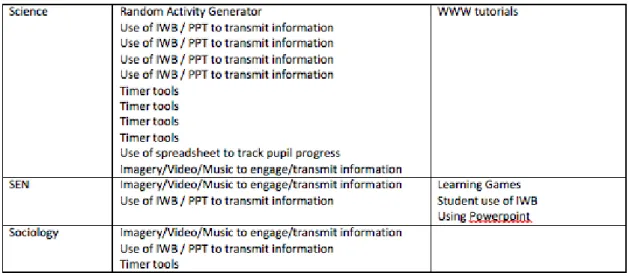
The Integration and Use of ICT
Across the Secondary School
Ruth Margaret Farmery
Thesis presented for award of Doctor of Education
Cardiff University
Page | i
Declaration
Page | ii
Abstract
Many different technologies are available to support teaching and learning in schools and their role is a key topic for debate in contemporary education (Selwyn, 2011b; Lankshear & Knobel, 2006; Collis & Moonen, 2001). Evidence shows that although some technologies are adopted and used successfully within schools, others are not (Straub, 2009). This study was conducted in a technologically-rich secondary school where first-order barriers (Ertmer, 1999) were not expected to affect the use of ICT, and yet there are problems with the adoption of ICT across the curriculum. This study has followed two separate but connected lines of inquiry – how second-order barriers affect the integration and use of ICT and how ICT is used in practice. This includes the roles of the teacher, students and managers in terms of delivery and provision (Moyle, 2006; Eynon, 2010; Wastiau et al, 2013), with a particular focus on the implementation and use of a VLE and e-portfolios for end of Key Stage 3 assessment (Stefani et al, 2007).
Following a case study methodology, the research investigated the use of technology within a large secondary school in the South West of England. Data were gathered through the use of VLE logs, questionnaires and group interviews with Year 9 students, questionnaires and interviews with staff, and document analysis of lesson planning and the e-portfolios created by these students. The data shows that, despite good technology provision and access to resources, ICT use is variable within and between departments and despite the SLT vision for student-centred use of ICT, its use is mainly teacher-led. Issues such as how differences in understanding and interpretation of policy between SLT and teaching staff affect ICT use in practice and how teachers’ beliefs affect their practice are identified.
By considering the role of second-order barriers on the integration of technology, the research examines the ‘messy realities’ of technology use in education. The key findings show the importance of the SLT and how their practice is central to implementing their vision for ICT use, the importance of the ICT department in supporting development of practice across the curriculum and how teachers’ beliefs about students’ home use of ICT affects their practice.
Page | iii
Acknowledgements
I would like to thank my supervisors, Robert Evans and Carina Girvan, for their advice, encouragement and constructive feedback throughout the development of this thesis. Thanks are extended to the staff and students at the school, for their participation within the research project and their continued support.
Page | iv
Contents
Declaration ... i Abstract ... ii Acknowledgements ... iii Contents ... ivIndex of Figures ... viii
Index of Tables ... x
Chapter 1: Introduction ... 1
1.1 Introduction ... 1
1.2 Background to the Study ... 1
1.2.1 Reasons for Undertaking the Study ... 1
1.2.2 School Profile ... 2
1.2.3 School IT Infrastructure ... 3
1.3 Research Questions ... 4
1.4 Structure of the Thesis... 5
Chapter 2 Supporting Successful ICT Integration ... 7
2.1 Introduction ... 7
2.2 ICT Integration and Innovation ... 7
2.3 Leadership ... 9
2.3.1 Role of the SLT ... 10
2.3.2 Policy ... 11
2.4 Role of the Teacher ... 12
2.4.1 Teacher Knowledge ... 13
2.4.2 Teacher Role Identity ... 14
2.4.3 Teachers’ Beliefs ... 15
2.5 Continuing Professional Development ... 18
2.6 Conclusion ... 21
Chapter 3 - ICT and Pedagogy ... 22
3.1 Introduction ... 22
3.2 Role of ICT in Education ... 23
3.3 Pedagogy of ICT ... 26
Page | v
3.3.2 Teacher Effectiveness Enhancement Programme (TEEP) ... 28
3.4 Virtual Learning Environments (VLEs) ... 29
3.4.1 How VLEs are Used... 30
3.4.2 Policy and Pedagogy Relating to VLEs ... 32
3.5 e-portfolios ... 36
3.6 Student Use of ICT ... 40
3.7 Conclusion ... 42
Chapter 4: Research Methods ... 44
4.1 Introduction ... 44
4.2 Methodology ... 44
4.3 Research Design ... 46
4.4 Data Collection – Questionnaires ... 48
4.4.1 Student Questionnaires ... 49
4.4.2 Teacher Questionnaires ... 52
4.3.3 Parent Questionnaire ... 54
4.4.4 Data Analysis ... 54
4.5 Data Collection – Interviews ... 55
4.5.1 Student Group Interviews ... 56
4.5.2 Senior Leadership Team and Teacher Interviews ... 56
4.5.3 Data Analysis ... 58
4.6 Data Collection – Observations ... 60
4.6.1 ICT Lesson Observations ... 60
4.6.2 Lesson Observations – ICT Use Across the Curriculum ... 61
4.6.3 Data Analysis ... 63
4.7 Naturally Occurring Data Sets... 63
4.7.1 Lesson Plans ... 64
4.7.2 VLE Usage Statistics ... 65
4.7.3 E-portfolios ... 66
4.8 Triangulation ... 67
4.9 Insider Research ... 68
4.10 Ethics ... 70
4.11 Conclusion ... 74
Chapter 5 – Why ICT is Used and Not Used ... 75
Page | vi
5.2 School Policy and Leadership of ICT ... 76
5.2.1 TEEP and School Policy ... 77
5.2.2 Vision, Support, and Guidance ... 79
5.2.3 Visible Use of ICT by the SLT ... 81
5.2.4 Summary... 83
5.3 What is Effective use of ICT?... 83
5.3.1 Using ICT ... 84
5.3.2 Presenting Information Using the Interactive Whiteboard (IWB) ... 87
5.3.3 Supporting Teachers ... 89
5.3.4 Summary... 90
5.4 Power and Control... 91
5.4.1 Vison and Innovation ... 91
5.4.2 ICT and Classroom Practice ... 93
5.4.3 Summary... 96
5.5 Continuing Professional Development ... 96
5.5.1 Organization of CPD and Coaching Within the School ... 97
5.5.2 The Role and Effectiveness of CPD for ICT Within the School ... 99
5.5.3 The Effect of Working With or Within the ICT Department ... 102
5.5.4 Summary... 106
5.6 Conclusion ... 106
Chapter 6 - Use of ICT Across the Curriculum ... 109
6.1 Introduction ... 109
6.2 Use of ICT Across the Curriculum ... 110
6.2.1 Supporting Teaching ... 110
6.2.2 Supporting Learning ... 115
6.2.3 Summary... 118
6.3 Use of the VLE ... 118
6.3.1 How the VLE is Used ... 119
6.3.2 Who Uses the VLE ... 122
6.3.3 Non-use of the VLE ... 126
6.3.4 Summary... 128
6.4 Introduction of E-Portfolios for Assessment of Key Stage 3 ICT ... 128
6.4.1 Use of E-portfolios ... 129
Page | vii
6.4.3 Summary... 135
6.5 Student Perceptions of ICT Use ... 135
6.5.1 How Students Make Use of ICT at Home ... 136
6.5.2 How Do Teacher Perceptions of Student Home Use Affect Their Practice? ... 142
6.5.3 Summary... 145
6.6 Conclusion ... 146
Chapter 7 Discussion and Recommendations ... 148
7.1 Introduction ... 148
7.2 Discussion ... 149
7.2.1 To what extent do conflicts and contradictions between policy and practice affect the use of ICT? ... 149
7.2.2 How do teacher beliefs affect the use of ICT to support teaching and learning? .. 151
7.2.3 How is teacher knowledge, of policy, new technologies and the pedagogy of ICT, developed? ... 152
7.2.4 How is ICT used to support teaching and learning in practice, including how students, parents and teachers understand and negotiate their roles when using the VLE and e-portfolios ... 153
7.2.5 To what extent is ICT use influenced by factors such as the students’ ‘digital literacies’ and, in particular, the ways in which students access and use ICT in and out of school? ... 154
7.3 Recommendations... 156
7.4 Limitations of the Study ... 161
7.5 Contribution of the Thesis ... 162
References... 165
Appendix A – Information Sheets and Consent Forms ... 192
Appendix B – Student Questionnaires... 196
Appendix C – Teacher Questionnaires... 205
Appendix D – Parent Questionnaire ... 209
Appendix E – Student Interviews ... 211
Appendix F – Teacher Interview ... 215
Appendix G – SLT Interview... 217
Appendix H – Observation Schedule ... 219
Page | viii
Index of Figures
Figure 1: Pedagogical technological content knowledge (from Mishra & Koehlar, 2006, p1025)
... 13
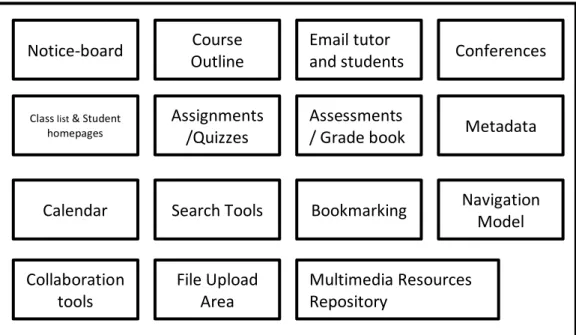
Figure 2: Typical VLE functionality (Britain & Liber, 1999, p5) ... 30
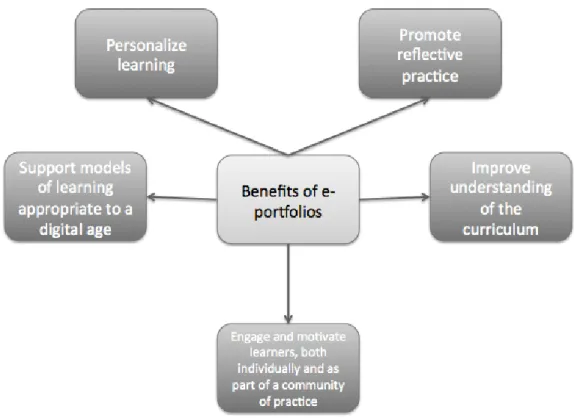
Figure 3: Why e-portfolios matter, adapted from JISC (2008) ... 38
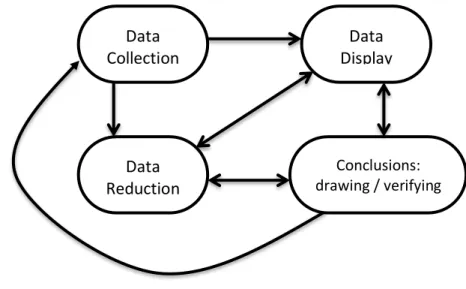
Figure 4: Components of data analysis (Miles & Huberman, 1984, p12)... 58
Figure 5: Initial codes and themes within data analysis ... 59
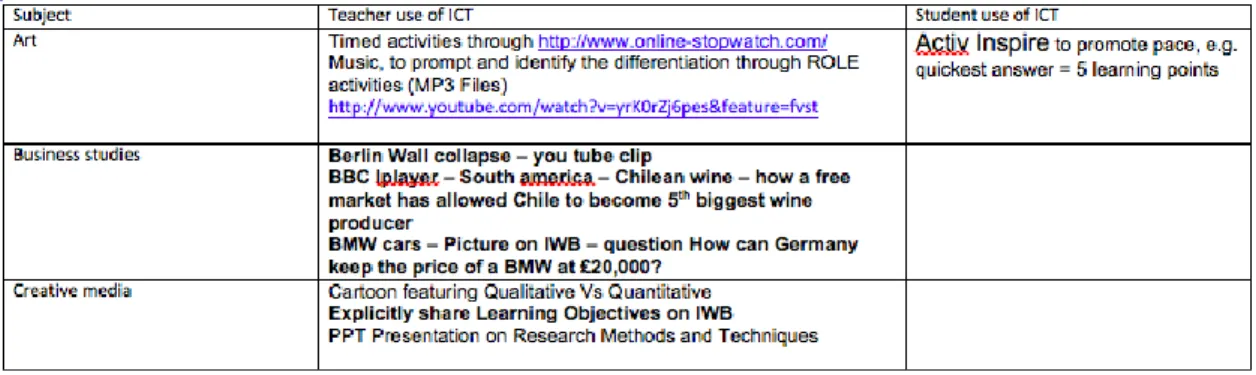
Figure 6: Initial analysis of lesson plans ... 64
Figure 7: Analysis of lesson plans... 65
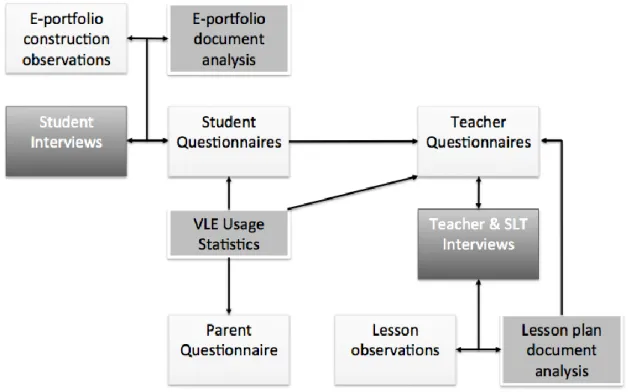
Figure 8: Triangulation of data ... 67
Figure 9: Use of ICT to support teaching ... 89
Figure 10: Teacher attitude to ICT and sharing of practice with colleagues ... 101
Figure 11: Views of ICT and involvement with ICT department ... 104
Figure 12: Lesson plan analysis – teacher-led use of ICT ... 111
Figure 13: Lesson plan analysis – student-led use of ICT ... 111
Figure 14: Student use of ICT to create multimedia representations and staff confidence in own use of ICT ... 117
Figure 15: How the VLE was used over three representative weeks ... 120
Figure 16: Use of the VLE, showing time of day for all actions... 121
Figure 17: Staff and student VLE use ... 122
Figure 18: Student views of the VLE... 123
Figure 19: Departmental use of the VLE ... 124
Figure 20: E-portfolio contents by subject ... 129
Page | ix
Figure 22: Student views of e-portfolio use ... 133
Figure 23: Percentage home computer access ... 136
Figure 24: Percentage home internet access ... 136
Figure 25: How students make use of the internet at home ... 138
Figure 26: Teacher views of student home use of ICT and use of ICT to support teaching and learning ... 144
Page | x
Index of Tables
Table 1: ICT skill levels for teachers, adapted from Franssila & Pehkonen (2005) and Kirschner
& Davis (2003)... 19
Table 2: Behaviourist and constructivist viewpoints (Dillon, 1998, p34) ... 27
Table 3: Expected changes in education from industrial to information society (Pelgrum, 2001, p164) ... 28
Table 4: Details of the TEEP Model (Ragbir-Day et al, 2008) ... 29
Table 5: Research timeline ... 47
Table 6: Sample response rate and interview cohort for students ... 50
Table 7: Sample response rate and interview cohort for staff ... 53
Table 8: Student interview cohort demographics ... 56
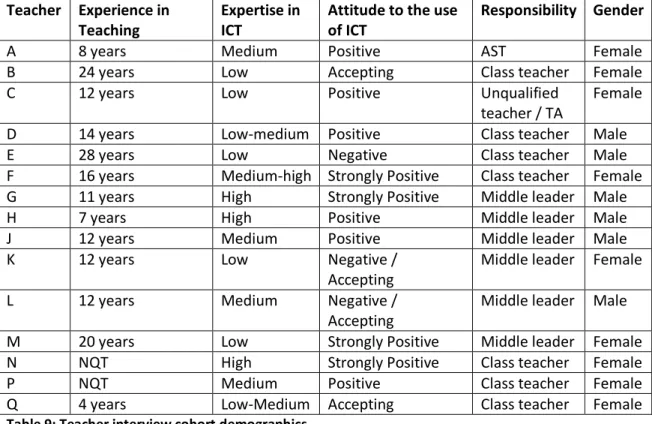
Table 9: Teacher interview cohort demographics ... 57
Table 10: Codes generated in data analysis ... 60
Table 11: Learning walk observations ... 62
Table 12: Issues with insider research ... 69
Table 13: Interpretation of BERA Guidelines (Hammersley & Traianou, 2012) ... 71
Table 14: Contrasting views of the SLT and teaching staff ... 76
Table 15: Teacher-reported confidence in ICT ability and attitude to ICT ... 100
Table 16: Teachers' home use of technology and attitude to ICT ... 100
Table 17: VLE use and involvement with ICT department ... 103
Table 18: Observation of ICT use, identifying connection with ICT department ... 105
Table 19: How frequently staff make use of the VLE ... 123
Table 20: Amount of internet access in a typical week ... 137
Table 21: Location of internet access... 137
Page | 1
Chapter 1: Introduction
1.1
I
NTRODUCTIONThis thesis presents research conducted within a secondary school in England in order to explore the integration and use of ICT across the curriculum. The study has investigated two separate but connected areas of inquiry – how second-order barriers (Ertmer, 1999) influence ICT integration and use, and how ICT is used in practice – in order to identify how ICT can be developed to further support teaching and learning across the curriculum. Following Selwyn (2011b), a descriptive case study approach has been used to draw attention to:
“…the contradictions, compromises and conflicts that lie behind the realities of technology use in education.” (Selwyn, 2011b, p. iix)
In considering these contradictions, compromises and conflicts, three groups within the school were identified and investigated: the Senior Leadership Team (SLT), classroom teachers, and students. Crook (2012) states that it is important to understand the tensions and contradictions between the aspirations and needs of these groups in order to make more effective use of ICT in education. Therefore, recommendations arising from the study address how the school can develop ICT practice within each of these three groups.
1.2
B
ACKGROUND TO THES
TUDYThis section explains the reasons for undertaking the study and provides context for the research setting.
1.2.1 Reasons for Undertaking the Study
The issue of ICT in education is complex and, while it is accepted that ICT is not a ‘silver bullet’, it continues to play an important role in education (Underwood, 2014). Lankshear & Knobel (2006) and de Winter et al (2010) state that ICT has enabled new or more efficient ways of doing things and provides new tools that facilitate students'
Page | 2 construction of learning. Yet studies show that ICT use, particularly by students, remains limited (European Union, 2013) therefore developing understanding of how and why ICT is used and not used continues to be of interest.
Within the literature, explanations for the limited use of ICT distinguish between first order barriers that relate to ICT infrastructure and support and second order barriers such as organizational culture and teachers’ beliefs (Snoeyink & Ertmer, 2001). In terms of the research site, the school studied here is of particular interest as its high quality ICT infrastructure (described in more detail below) is expected to eliminate first-order barriers (Ertmer, 1999). Instead, it is the role of second order barriers that becomes significant as, despite school policies that promote ICT as an integral part of planning ‘good’ lessons, its use by staff remains variable.
This study will add to research literature in terms of the realities of ICT use in the secondary school and add to understanding of the impact of teachers’ beliefs on the use of ICT. Within the literature it is identified that there is still the need to develop an understanding of the relationship between education and ICT in terms of how and why ICT is actually used within educational settings, rather than concentrating on how it could or should be used (Selwyn, 2010).
1.2.2 School Profile
The school is situated in a small town in the South West of England and moved to new premises in 2010 under the new build scheme. The school holds Technology College specialism (DfES, 2003), and as part of this specialism developing the use of technology across the curriculum, including ICT, is viewed as important. In terms of student demographics, as is typical of the South West of England, the school has low numbers of ethnic minorities with 95% being of white-British origin and 2.8% of pupils believed to have a first language that is not English (RAISEonline, 2011). As noted by the RAISEonline data (2011), the school has below average proportion of students eligible for free school meals (8.4%) and above average proportion of students with special educational needs (SEN) (23%). In terms of staffing, there are seven members of the SLT and an additional seventy members of teaching staff. There are a further fifty
Page | 3 support staff, including cover supervisors, administrative Heads of Year and teaching assistants. IT support is subcontracted to a local firm.
Through external OfSTED inspection in December 2009 and subsequent Local Authority monitoring inspection in May 2010, it was found that the quality of teaching within the school was unsatisfactory. At this time the percentage of lessons graded good or outstanding was found by these external agencies to be 54% and 45% respectively.
In response to this OfSTED judgement and at the outset of this study, the SLT had recently introduced TEEP as the core strategy for teaching and learning across the school, including the focus on ‘effective use of ICT’. Through whole school INSET training, all teachers were introduced to TEEP and the school’s teaching and learning policy identifies that it is expected that all lessons are planned formally using the TEEP principles. The most recent OfSTED inspection, in 2012, judged the school as ‘good’ in all categories.
1.2.3 School IT Infrastructure
The school is well equipped with IT infrastructure, the majority of which was new at the time of this study. This comprises approximately 50 servers, including file servers, website and Virtual Learning Environment (VLE) hosting, 400 desktop machines and 540 laptops. As software was also bought new at this time, the school systems run Windows 7, with Office 2010 and Adobe CS5 collection, for example. The school has both wired and wireless network access throughout, with internet services being provided by South West Grid for Learning (SWGfL). All classrooms throughout the school have a wide screen interactive whiteboard (IWB) and visualizer, with many departments also having access to other peripherals such as digital cameras and SMART Response or ActivExpressions voting pads.
A number of the desktop machines are organized in dedicated ICT suites in the ICT, Design Technology and Music departments, with specialist hardware and software such as 3D printers and music recording and editing provision respectively. In
Page | 4 addition, the school has a TV studio and a ‘Digital editing suite and Animation room’. Both these rooms are well equipped with Apple computers and a variety of cameras, lighting and sound hardware. Whilst these are primarily used for Creative Media courses at GCSE and A Level, the creative media team also support other subjects in making use of these resources to enrich learning across the curriculum.
In addition, all members of teaching staff, including the SLT, have a personal laptop supplied by the school and a number of staff have iPads and other mobile devices provided. All teaching rooms within the school have a desktop machine for dedicated staff use, and a large number of staff have offices, also equipped with desktop machines.
1.3
R
ESEARCHQ
UESTIONSAs stated above, the study focuses on two separate but connected areas of inquiry through the following research questions:
How second-order barriers affect the integration and use of ICT:
To what extent do conflicts and contradictions between policy and practice affect the use of ICT?
How do teacher beliefs affect their ICT practice?
How is teacher knowledge, of policy, new technologies and the pedagogy of ICT, developed?
How ICT is used in practice:
How is ICT used to support teaching and learning in practice, including how students, parents and teachers understand and negotiate their roles when using the VLE and e-portfolios
Page | 5
To what extent is ICT use influenced by factors such as the students’ ‘digital literacies’ and, in particular, the ways in which students access and use ICT in and out of school?
The questions were developed from the literature, as will be described further within chapters 2 and 3, and also consider the current situation of the school in terms of sustaining improvement following OfSTED judgements at the outset of the study. The introduction of e-portfolios for assessment of ICT at the end of Key Stage 3 is one example of how innovations in ICT use fare in practice. The portfolio was intended to allow students to present evidence of their ICT capabilities created in discrete ICT lessons, across the curriculum and at home in a single environment. In practice, however, it exposed many of the difficulties associated with using ICT in education, including how student use of ICT across the curriculum and at home contributes to their ICT capabilities, how both teacher and student perceptions of ICT affect their use of ICT, and how unanticipated concerns and problems undermine the effectiveness of the new technology. Through investigation of these questions, this study aims to build on existing literature and develop understanding of how and why ICT is used, in order to provide recommendations for further development.
1.4
S
TRUCTURE OF THET
HESISThe thesis is organized in seven chapters, beginning with this introduction outlining the reasons for undertaking the study, through to conclusions and recommendations for further study.
Chapter 2 presents the literature review, identifying potential problems with the integration of ICT in education and what factors promote successful ICT integration. In particular, chapter 2 focuses on the role of leadership, Continuing Professional Development, and the role of the teacher in ICT adoption. Chapter 3 focuses on ICT within education, outlining how and why ICT is used and also considers conflicts between ICT and education. Literature relating to the use of VLEs and e-portfolios is also explored, in order to provide context for the planned introduction of e-portfolios within the school studied. Chapter 4 describes the research methods and
Page | 6 methodology and explains the choice of case study. The research instruments and process of analysis are described. The ethical issues are discussed, particularly with respect to working with children and my position as insider researcher.
Chapters 5 and 6 present the data gathered. Chapter 5 considers why ICT use varies across the school, given the school’s ICT infrastructure and resources. Chapter 6 describes how ICT is used, considering the use of ICT across the curriculum, students’ use of ICT at home, use of the VLE, and the introduction of e-portfolios. Chapter 7 concludes by discussing the findings, evaluating the study and making recommendations for future research.
Page | 7
Chapter 2 Supporting Successful ICT Integration
2.1
I
NTRODUCTIONThis study is concerned with two connected lines of inquiry, this chapter considers the literature relating to the first of these strands – how second-order barriers affect the integration and use of ICT. Many authors identify barriers to successful ICT integration. These barriers include: lack of access to hardware and software, poor software design, lack of shared vision for ICT use, lack of adequate professional development and lack of support and leadership (Kopcha, 2012; Wachira & Keegwe, 2011; Rezaei et al, 2011). In addition, a number of barriers identified relate to the teacher: their beliefs in terms of the efficacy of ICT, negative impact on teachers’ time, teachers’ lack of pedagogical knowledge, teachers’ lack of confidence in their own ICT skills, teachers’ fear of losing authority due to a changing role (Kopcha, 2012; Wachira & Keegwe, 2011; Rezaei et al, 2011).
Ertmer (1999) categorized barriers into first and second order groupings, where first-order barriers relate to external issues such as access to suitable hardware and software, and second-order barriers relate to internal issues such as teacher beliefs. It is expected in the school studied here that, due to the recent investment in IT infrastructure through the new-build process, first-order barriers do not have a significant impact on ICT use and therefore second order barriers are investigated in more detail. This chapter discusses successful ICT integration along with issues raised by literature in terms of the role of the Senior Leadership Team (SLT), the role of the teacher and the role of Continuing Professional Development (CPD).
2.2
ICT
I
NTEGRATION ANDI
NNOVATIONThroughout the literature, a number of authors highlight issues relating to the implementation and integration of technology in schools (Zwaneveld & Bastiaens, 2010; Pittard, 2004; Higgins, 2003; Kanuka & Rourke, 2008; Collins & Halverson, 2010; Solomon & Schrum, 2007). This section outlines the integration process, including
Page | 8 factors that may lead to successful ICT integration, as are important for the school within this study to consider.
ICT integration is an on-going process for schools and teachers. Zwaneveld & Bastiaens (2010) identify three phases of implementation:
1. ICT is used primarily to automate existing processes
2. ICT is used to make some changes to the teaching and learning process 3. New systems of teaching and learning pedagogies are implemented.
The initial introduction of ICT may be facilitated using a top-down or bottom-up method. A top-down approach involves the introduction of the technology by the organization, with teachers expected to use it. A bottom-up approach is where teachers themselves introduce the technology and share this with colleagues (Zwaneveld & Bastiaens, 2010). It is likely that a combination of both these approaches is most effective, but it is critical for the school to have a culture where innovation and experimentation is encouraged and mistakes are allowed (Zwaneveld & Bastiaens, 2010).
For ICT integration to be successful, the fit between existing practices and promoted use of the technology should be considered for both teacher and school level factors (de Koster et al, 2011; Donnelly et al, 2011). ICT integration should first identify what ‘good’ learning is then look at how ICT can facilitate development, rather than focus on the technology (Ertmer & Ottenbreit-Leftwich, 2013). ICT integration may be in conflict with other school priorities, including external assessment and curricula where the focus may be on knowledge acquisition rather than knowledge creation (Hennessy et al, 2005; Yang, 2012). Bertram & Waldrip (2013) caution that teachers might make use of ICT because they feel expected to, rather than for meaningful pedagogic purposes. Where ICT use is linked to the existing pedagogical philosophy and practice of the teachers and school, a more positive impact may be seen (Underwood & Dillon, 2011). Differences arise both between and within schools in terms of how ICT is used
Page | 9 to support teaching and learning, particularly in different subject areas within the secondary school (Tondeur et al, 2007; Erixon, 2010; Sutherland et al, 2004).
Developing the use of ICT across the curriculum places a burden on teachers to develop new methods of teaching and learning that integrate technology, as highlighted above. Therefore it may take time before improvements, if any, are seen (Pittard, 2004; Higgins, 2003; Kanuka & Rourke, 2008). For many schools, this culture of innovation and tolerance of mistakes is in conflict with external pressures such as OfSTED and league tables of results where there is a perceived need for continual improvement (Vasagar, 2012). This pressure to show continual improvement may make schools and teachers reluctant to develop the use of ICT, if improvements are not readily apparent (Pittard, 2004; Higgins, 2003; Kanuka & Rourke, 2008). In addition, in order to embrace ICT, teachers and students have to adapt certain roles, values and attitudes to teaching and learning (Sangra & Gozalez-Sanmamed, 2010; Zandvliet & Fraser, 2004; La Velle & Nichol, 2000; Harris, 2002).
In summary, this section has provided an overview of ICT integration to illuminate the context of the study. While there are external and internal imperatives for education to make use of ICT, as will be discussed further in chapter 3, integration is not straightforward. ICT integration places a burden on both teachers and students in changing their approach to teaching and learning and also requires investment in time and money from the school. The study considers the three phases of ICT adoption noted above (Zwaneveld & Bastiaens, 2010) identifying how the school can develop its use of ICT. The following sections will describe, in more detail, a number of these aspects including the role of the SLT, the role of the teacher and CPD.
2.3
L
EADERSHIPThe importance of the SLT, in particular the head teacher, in the use of ICT for teaching and learning is identified by a number of authors (Flanagan & Jacobsen, 2003; Schiller, 2002; Afshari et al, 2009; Gibson, 2002; McGarr & Kearney, 2009; Tondeur et al, 2008; Dale et al, 2004 and Yee, 2000). This section examines the role of the SLT in successful integration of ICT, including the role of policy and vision.
Page | 10 2.3.1 Role of the SLT
Leadership is particularly important for successful ICT integration, Moyle (2006) emphasizes the role of the head teacher and SLT in developing the use of ICT across the curriculum and stresses that the SLT should lead not just support ICT use. SLT vision and visible use of ICT by the SLT that supports this vision is needed (Newhouse, 2010; Lee & Gaffney, 2009). It is important to develop a whole school approach to ICT integration (Newhouse, 2010; Lee & Gaffney, 2009). However, as is identified above, the school may have other priorities for development that make a whole school approach complicated and expensive in terms of both time and money.
Moyle (2006) suggests that a transformational leadership style can be effective in promoting successful ICT integration identifies a number of aspects of school-leadership including:
Development of a strategic plan that includes vision, goals and strategies for use
Vision statement that incorporates ICT and shared staff knowledge of this vision
School culture that encourages risk-taking, inquiry and reflection in teaching
Whole-school approach to ICT where ICT use is seen as a natural part of school-processes
Appropriate infrastructure, budget and provision for ICT
A lack of guidance by senior leadership in terms of implementing ICT policy may lead to innovation being isolated and limited to a few ICT enthusiasts (Franssila &
Page | 11 Pehkonen, 2005). This role of the SLT in leading the use of ICT includes a number of key leadership aspects such as leading effective integration through ensuring equality of access, developing a shared vision and ensuring effective CPD is in place (Flanagan & Jacobsen, 2003). CPD will be considered in more detail in section 2.5 below.
The pedagogical views of the SLT are key in terms of policy development, including policy relating to ICT use and the impact the SLT have on how teachers use ICT to support teaching and learning (Robertson, 2003; McGarr & Kearney, 2009; Schiller, 2002; Tondeur et al, 2008; Vanderlinde et al, 2012; Law et al, 2010; Vanderlinde, van Braak & Dexter, 2012). The head teacher and other members of the Senior Leadership Team lead the development of ICT within a school in terms of vision and ethos, and it is important for them to be seen to support the use of ICT by integrating ICT into their own practice (Baylor & Ritchie, 2002; Afshari et al, 2009). It is important for the SLT to be visible learners in the use of ICT alongside staff and students (Yee, 2000). This therefore places additional burdens on the SLT, not only to develop the strategic vision for ICT integration, but also to develop their own understanding and use of ICT alongside teaching staff, as discussed further below.
2.3.2 Policy
As mentioned above, one aspect of the role of the SLT is that of development of school policy with respect to the use of ICT and the implementation of national policies. School policy on the use of ICT in lessons is a factor in developing practice (Windschitl & Sahl, 2002; Lim & Barnes, 2002; Hernandez-Ramos, 2005). Variation between schools is identified in terms of how ICT is used and how national policy is implemented, leading to gaps between policy and practice that need to be investigated (Tondeur et al, 2007). Policies covering the use of ICT are formulated at school, local, and national level. These include, for example, the school’s Teaching and Learning policy, Local Authority guidance on the use of new technologies, and national publications, from the DfE and other agencies such as Naace and Becta. The importance of ICT policy is explained in terms of its effect on the integration of ICT within teaching and learning (Cox et al, 1999; Vanderlinde et al, 2012). Where staff are
Page | 12 involved in policy development they may also develop shared understanding of how ICT is used to support teaching and learning (Vanderlinde et al, 2012).
Issues between policy and practice are identified whereby a lack of encouragement for use of ICT from senior leaders and issues of access are significant impediments (Murphy & Greenwood, 1998). In terms of national and local policy and practice, tensions may also arise as a result of a lack of shared vision with respect to pedagogy (Coutts et al, 2001).
The leadership style of the SLT is key to take up of ICT within the school and it is important that SLT are visible leaders of ICT integration. The SLT are responsible for the school vision and policy with respect to teaching and learning that sets out what makes ‘good’ teaching and learning within the school context. However, there may be other priorities for school development and development of ICT requires both time and money commitments from the SLT and all staff. As will be discussed further in section 3.3.2, the school studied here has identified the Teacher Effectiveness Enhancement Program (TEEP) method of lesson planning as signifying ‘good’ teaching and learning. In practice, how this vision is understood and implemented by classroom teachers affects the use of ICT and will be investigated within the study. The next section investigates the role of the teacher.
2.4
R
OLE OF THET
EACHERAs is indicated above, the integration of technology in the teaching and learning process places a burden on teachers in terms of their own technical skills and pedagogical knowledge required. Many authors identify the teacher as the most important factor in explaining why ICT is or is not used, and focus on teachers’ beliefs as a barrier to ICT integration (Celik & Yesilyurt, 2013; Kreijns et al, 2013; Wastiau et al, 2013; Ertmer & Ottenbreit-Leftwich, 2010). This section discusses the role of teacher knowledge and skills, teacher role identity including how ICT affects the role of the teacher and investigates the role of teachers’ beliefs in ICT integration.
Page | 13 2.4.1 Teacher Knowledge
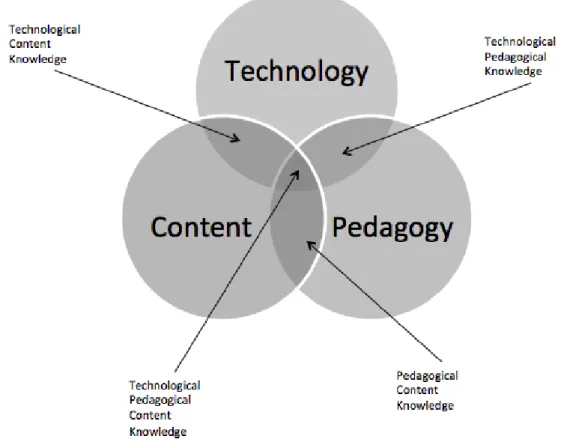
Teachers make use of a range of knowledge in order to effectively do their job and the integration of technology into teaching and learning involves a knowledge base for teachers that is new and therefore needs to be developed through appropriate professional development (Mishra & Koelhar, 2006; Loveless, 2011). Mishra & Koelhar (2006) explain this concept as the qualities of teacher knowledge required in order to integrate technology within pedagogy. For ICT to support teaching and learning, pedagogy and what teachers need to know to successfully incorporate the technology must be considered (Mishra & Koelhar, 2006). This is referred to as Technological Pedagogical Content Knowledge (TPCK), shown below in figure 1.
Figure 1: Pedagogical technological content knowledge (from Mishra & Koehlar, 2006, p1025)
Mishra & Koelhar (2006); Unwin (2007) and Voogt et al (2013) describe this model of teacher knowledge as including content, the subject specialist knowledge; pedagogy, knowledge of techniques of teaching and learning; and pedagogical content knowledge, based on Shulman’s definition (Shulman, 1986). This definition sets out the
Page | 14 knowledge used to make the subject comprehensible to others and the requirements for teacher knowledge. It includes an understanding of how ICT can be used to provide forms of representation not available without the technology, knowing the range of technologies available to support teaching and learning and being able to choose appropriate technologies and pedagogic strategies to use.
Therefore, the rationale for CPD for teachers should focus on the technology alongside content and pedagogy, rather than see technology as a separate issue (Mishra & Koelhar, 2006; Price & Kirkwood, 2010; Chen et al, 2009). Harris et al (2009) also identify the added complexity of the rate of change of technology that makes keeping up with developments even more challenging and time consuming for teachers. Ertmer & Ottenbreit-Leftwich (2010) support this and emphasize the need for teachers to be given time to develop and establish new practices.
This section has identified that the use of ICT to support teaching and learning places a burden on teachers to develop new knowledge and skills to be able to integrate ICT effectively. Therefore, CPD is important in supporting teachers to develop this knowledge and skills, and is discussed further in section 2.5.
2.4.2 Teacher Role Identity
In addition to developing skills and knowledge of ICT and pedagogy, how teachers view their role and how they understand what ‘good’ teaching and learning is affects how they make use of ICT (Mumtaz, 2000; Ertmer et al, 1999). This section discusses teacher professional identity and the role of the teacher.
Teacher professional identity is influenced by school culture, classroom teaching context, teaching experience, teacher’s own school and learning experiences and subject taught (Goodson, 1992; Knowles, 1992; Beijaard et al, 2000). Teacher professional identity directly relates to how the teacher perceives what is ‘good’ practice within teaching and learning for them (Ball, 2012a). Teacher professional identity affects teachers’ ability to cope with change and willingness to implement innovation (Beijaard et al, 2000). Teacher identity includes both the personal and
Page | 15 professional, where both in-school and out-of-school experiences influence how teachers view themselves and their role (Prestridge, 2012; Halse, 2010).
The role of the teacher embraces a number of responsibilities including the design of the learning environment, managing people and resources, mediating student learning, and improving practice. Teachers who are confident in their subject-specific curriculum knowledge are more likely to innovate within their practice (Hartnell-Young, 2009). However, developments in the use of ICT make the role of the teacher more complex and require specific skills relating to the technology and pedagogy, which take time to develop (Webb & Cox, 2004).
In practical terms, ICT is described as encapsulating a changing range of tools and concepts (Hammond, 2004). It is noted that the ICT experience within the private lives of teachers is related to their use of ICT to support teaching and learning. Teachers might not make innovative use of ICT in school, if they do not use it themselves outside of the school environment (Underwood & Dillon, 2011).
There is a burden placed on teachers in terms of developing their knowledge, both of the technology and of appropriate pedagogy, thereby increasing teacher workload. In addition, teachers may see their role change as a result of technology integration and need support (Hennessy et al, 2010). Through CPD, teachers increase their own skills and this increase is personal skills often leads to an increase in confidence and likeliness to use ICT within the classroom (Lynch & Campos, 2014) but it is important for CPD to consider the contexts of teachers lives and of the school (Halse, 2010). Further discussion of CPD is outlined below in section 2.5 and the next section examines further how teachers’ beliefs affect their use of ICT.
2.4.3 Teachers’ Beliefs
Throughout the literature many authors refer to teachers’ beliefs as having a significant impact on the integration of ICT, as teachers’ beliefs are reflected in their classroom practice (Ottenbreit-Leftwich et al, 2010). However, teachers’ beliefs are difficult to articulate, as they are often tacit and implicit in practice (Donnelly et al,
Page | 16 2011). This section considers teachers’ beliefs further, including beliefs about pedagogy, attitude to the use of ICT, confidence and competence in using technology, and also the relationship between these aspects.
It is suggested that teachers integrate and use ICT in ways that support their existing beliefs in terms of student-centred or teacher-centred pedagogies (Palak & Walls, 2009; Ertmer et al, 2012). Liu (2011) suggests that while some studies find that teachers use ICT in ways that support their beliefs in terms of teacher-centred or student-centred learning, beliefs in student-centred learning are not always translated into practice. This may be due to time-constraints or external pressures such as curriculum and assessment requirements (Conlon & Simpson, 2003; Ertmer et al, 2012).
Kim et al (2013) focus on teacher beliefs in investigating why technology is integrated differently by teachers. They identify variances in how teachers view the efficacy of ICT and beliefs about student-centred or teacher-centred pedagogy in terms of what is considered to be effective teaching and the nature of knowledge and learning. Kim et al (2013) explain that these beliefs are connected, as how teachers view the nature of knowledge and learning affects their views of what is effective teaching and how ICT is used to support this. John (2005) identifies how teachers of different secondary school subjects integrate and view ICT differently based on how they view their subject. Meyer et al (2011) find that collaborative support from other teachers can develop positive beliefs in the use of ICT to support teaching and learning. Teachers need to have a positive attitude towards ICT to make use of it in the classroom and teachers who develop their own skills often have a more positive attitude (Kreijns et al, 2013). Ertmer & Ottenbreit-Leftwich (2010) explain that teacher-level factors affecting ICT use include self-efficacy, but this takes time to develop. Teachers do not need high levels of personal ICT competence to use ICT in the classroom but need a high-level of personal confidence to make use of it (Loveless, 2003).
ICT integration is affected by second-order barriers, in particular teacher beliefs about their attitudes to ICT and skills (Mueller et al, 2008). Teachers’ personal use of ICT
Page | 17 impacts on their professional use and ICT skills often take time to develop, particularly due to the changing nature of ICT. How teachers make use of ICT themselves directly relates to how they expect students to use it, for example teachers that use ICT to create multimedia content also set this as an activity for students whereas teachers who do not themselves use ICT to create multimedia content are unlikely to expect students to do this (Hsu, 2011). Teachers who choose to develop their own ICT skills often have a positive belief in the use of ICT to support teaching and learning (Meyer et al, 2011).
Hammond et al (2011) identify teacher-level factors affecting ICT use including subject taught, self-efficacy, and beliefs in terms of whether ICT has a positive impact on learning. Teachers who are confident in their own skills make more use of ICT and teachers who believe that ICT will have a positive impact on learning make more use of ICT. Teacher confidence and ICT competence is positively related to how they make use of ICT in the classroom (Wastiau et al, 2013). Also teachers who are more confident in their own ICT ability are more likely to make use of ICT in student-centred ways (Wastiau et al, 2013). Kreijns et al (2013) find that teacher confidence and competence are linked but the causal relationship is unclear.
Celik & Yesilyurt (2013) consider relationships between teachers’ computer anxiety, self-efficacy, attitudes towards ICT use and use of ICT to support teaching and learning. They find that low anxiety, high self-efficacy and a positive attitude to ICT use are all indicators of likelihood to use ICT within the classroom and that teachers who develop positive attitudes to ICT also increase their confidence and decrease anxiety.
In summary, developing the use of ICT to support teaching and learning across the curriculum places burdens on teachers in terms of developing required knowledge and skills. As discussed above, the SLT set out the policy and identify what makes ‘good’ teaching and learning within the school context but it is up to teachers to implement this in practice. In addition to interpreting school policy, teachers’ own assumptions, beliefs and experience affect how they view ICT and subsequently how they make use of it. This study will investigate how teachers’ beliefs affect their practice. The role of
Page | 18 the teacher is complex and burdens are placed on teachers in developing knowledge of technology and pedagogy. Therefore it is expected that CPD is important in developing teacher knowledge, as is described further in the next section.
2.5
C
ONTINUINGP
ROFESSIONALD
EVELOPMENTThe importance of CPD has been highlighted above in terms of implementing the SLT vision for ICT, supporting teachers in developing knowledge and skills and addressing teachers’ beliefs. This section explores in more detail the factors affecting ICT based CPD (Corfield & Pearson, 2007).
CPD, alongside effective leadership, is integral in enabling successful integration of ICT in teaching and learning (Finger & Pugh, 2004; Daly et al, 2009). In developing appropriate ICT provision, there is a need for relevant vision and guidance from SLT as school structures can inhibit CPD and, in particular, that CPD for ICT pedagogy and practice is often overlooked (Daly et al, 2009). While a great deal of money has been put into the professional development of teachers’ ICT competence; the changing nature of ICT, as has been discussed above, means that it is important to continue to invest in training (Clark-Jeavens, 2004). Training should include a number of key elements including reflection, the ability to explore technology at own level, practical uses and support (Clark-Jeavens, 2004; Arntzen et al, 2008). It is also necessary to consider the social and cultural influences and contexts of ICT use, as ICT has personal, professional, social, cultural, political and economic significance, meaning and values (Clark-Jeavens, 2004; Arntzen et al, 2008).
CPD programs should be designed for the needs of individual or groups of teachers rather than a blanket approach, and teachers should be involved in the design of CPD to ensure that their own learning needs are considered (Wadmany, 2011; Donnelly et al, 2011). Both Newhouse (2010) and Lynch & Campos (2014) identify the need for schools to recognize the instructors’ training needs, as often schools make use of other teachers within the school to provide training opportunities to their colleagues. Kopcha (2012) identifies mentoring as an effective CPD strategy whereby a sustained
Page | 19 two-year program of one-to-one support for teachers is put in place but recognizes the demand this would place on school resources.
There are a number of different aspects for CPD to encompass, in order to support teachers in integrating ICT: software skills, using ICT to support existing curriculum; changes to curriculum and pedagogy and changes to teachers’ role that may occur as a result of using ICT. It is also important to focus on student use of ICT and pedagogy rather than teacher use of ICT (Rezaei et al, 2011), as this is highlighted as an area for development for many schools in a wide range of countries (European Union, 2013). Ertmer & Ottenbreit-Leftwich (2013) state that ICT tools change regularly due to the pace of technology developments but it is likely that pedagogical goals remain generally constant, therefore ICT integration and CPD should focus on pedagogy rather than the technology. Teachers need to develop knowledge of pedagogy of ICT use to make the most of ICT to support teaching and learning (Harris & Hofer 2011; Ertmer & Ottenbreit-Leftwich, 2013). Teachers face pressure to conform within school culture therefore a shared definition of ‘good’ teaching, that includes pedagogy of ICT use, is important to develop (Ertmer & Ottenbreit-Leftwich, 2010).
Minaidi & Hlapanis (2005), Kirschner & Davis (2003) and Franssila & Pehkonen (2005) all give models of progression for ICT based CPD with three main phases – acquiring skills, integrating technology into the current educational process and developing and changing practice through use of ICT that mirror the phases of ICT integration given above in section 2.2. These phases are summarized in table 1 below
Skill Level Description
1 Developing competency with ICT for personal use and principles for ICT use in teaching.
2 A range of pedagogical uses of ICT including more interaction oriented ICT applications.
3 Using ICT for assessment; understanding policy and training to serve as pedagogical IT support for other colleagues.
Table 1: ICT skill levels for teachers, adapted from Franssila & Pehkonen (2005) and Kirschner & Davis (2003)
Page | 20 Some teachers need regular training in order to keep up with new hardware and software tools. However, effective CPD, in terms of developing the use of ICT to support teaching and learning, should not focus only on how to use software but also include time and space for teachers to share experiences and ideas (Christensen, 2002; Franssila & Pehkonen, 2005; Pachler et al, 2010; Bradshaw et al, 2011). Professional learning communities can be effective in developing ICT use (Wachira & Keegwe, 2011; Duncan-Howell, 2010; Triggs & John, 2004; McDermott & Archibald, 2010). Teachers who form communities of practice (Lave & Wenger, 1991) with colleagues and have technical and pedagogical support from the school are more successful in terms of ICT integration (Donnelly et al, 2011). CPD should allow teachers to have positive experiences with ICT and observe others that are successful (Mueller et al, 2008) in order to develop positive views of ICT.
Sections 2.3 and 2.4 above identified that CPD is likely to be important in developing teacher knowledge of school policy and pedagogy, as it was highlighted that teachers need to develop new knowledge to successfully integrate ICT, following Mishra and Koelhar (2006). In addition, CPD is likely to need to be an ongoing programme, as ICT changes are continual thereby placing a burden on schools and teachers to provide and make use of this training alongside other development requirements. A focus on pedagogy, as opposed to specific tools, is likely to be more productive due to the changing nature of these tools. However, as is noted above, some teachers may also require training in how to use ICT tools. For CPD to be most effective it should be tailored to the individual needs of each teacher, thereby placing a burden on the school in terms of time and money. While Kopcha (2012) identified that individualized one-to-one mentoring is most successful, in reality this is unlikely to be achieved due to time and money constraints. As described in section 2.4.3, teachers’ beliefs and personal use of ICT affect how they expect students to use ICT to support learning and CPD is important both in developing teachers’ own use of ICT and in allowing teachers to form communities of practice that develop and shape their beliefs and practice. The study will evaluate the CPD processes within the school and provide recommendations for development.
Page | 21
2.6
C
ONCLUSIONThis chapter has examined the literature relating to the integration of ICT within the teaching and learning process. It shows that ICT integration is not straightforward and that ICT may in fact be in conflict with school structures. Ertmer (1999) identified first and second order barriers that affect ICT integration and this study will focus on the effects of second-order barriers as discussed above including leadership, CPD and the role of the teacher. Examination of the literature has identified the following research questions:
To what extent do conflicts and contradictions between policy and practice affect the use of ICT?
How do teacher beliefs affect their ICT practice?
How is teacher knowledge, of policy, new technologies and the pedagogy of ICT, developed?
This study will examine how differences between policy and practice affect the use of ICT and will also look in more depth at the beliefs of the teacher, the underlying pedagogical assumptions and the effect of these on explaining these differences. This study will also examine further this development of teacher knowledge of policy, ICT advancements and of their relationship to pedagogy. The following chapter discusses literature relating to how ICT is used in practice.
Page | 22
Chapter 3 - ICT and Pedagogy
3.1
I
NTRODUCTIONThe role of ICT in education is discussed by a number of authors e.g. Loveless (2003); Beetham & Sharpe (2007); Selwyn (2011b) and Livingstone (2012). Shahmir et al, (2011) demonstrate the complexity of the term ICT, encapsulating the parameters of its meaning as:
“Information technology is a combination of communication, reservation, processing and multimedia capabilities” (Shahmir, Hamidi, Bagherzadeh & Salimi, 2011, p370)
It is this complexity of ICT in education that this chapter investigates, using published material. There is a wealth of literature promoting the importance of ICT in education and in everyday life including, for example, the Welsh Assembly Government (2008); McMillan & Morrison (2006); Webb & Cox (2004); La Velle & Nichol (2000); Collis (1999); Tondeur et al (2007); McCormick (2004); Thang & Wong (2010); Tas (2011); Yang (2012) and Loveless (2011). There are also numerous studies into the effect of ICT on teaching and learning, which establish this as a complex and contested issue (Condie & Munro, 2007; Harrison et al, 2003; Somekh, 2004). Livingstone (2012) provides a synthesis of various studies and finds that there is no conclusive evidence for the positive effect of the use of ICT. It is interesting therefore, that ICT continues to be promoted despite this lack of evidence.
This chapter provides an overview of ICT in education; including how technology use has developed and to what extent teaching and learning practices have changed as a result. Virtual Learning Environments (VLEs), including an exploration of one specific provider (Moodle) and the use of e-portfolios, are considered in more detail. These technologies are central to this study due to the research focus on the use of the school’s Moodle VLE and an investigation of the introduction of Moodlbased e-portfolios within the ICT curriculum. This chapter concludes by examining student use
Page | 23 of ICT at home and how this contributes to their learning in school, as VLE use is seen as important in bridging the home-school divide.
3.2
R
OLE OFICT
INE
DUCATIONThe issue of ICT in education is complex and it is difficult to say unequivocally that ICT does or does not have a positive effect on learning, as there are social aspects of learning that should be included in the consideration (Tolmie, 2001). Various studies and media reports of education technology, such as the introduction of video and computer-based training, the micro-computer, multimedia and the World Wide Web, have identified expected benefits of technology in education (Oliver, 2006). However, there is still the need to develop an understanding of the relationship between education and ICT in terms of how and why ICT is actually used within educational settings, rather than concentrating on how it could or should be used (Selwyn, 2010). Hague & Williamson (2009) identify that schools have a role to play in preparing students for participation in technology-rich environments of their future jobs and society, therefore it is important that schools make use of ICT to support teaching and learning. Hawkridge (1990) identifies four rationales behind the use of ICT in schools and, despite the age of Hawkridge's writing, these rationales are still evident within education policy today (DfE, 2011). They are:
social – to prepare students for the use of ICT in everyday life;
vocational – to prepare students for using ICT at work;
pedagogic – ICT improves teaching and learning;
catalytic – ICT can change what is taught and how.
It is evident that ICT has enabled change in both the process and content of learning. It has provided new tools for education that facilitate students' construction of learning and enabled new or more efficient ways of doing things (Abi-Raad, 1997; Boshuizen &
Page | 24 Woperis, 2003; de Winter et al, 2010; Hennessy et al, 2005). Wise et al (2011) consider use of ICT in music, identifying that the music industry makes use of digital technologies and this is changing the way music is taught in schools to include such technology. Wise et al (2011) identify challenges for music teachers in adapting to changes in technology and the curriculum, but find that the use of ICT raises achievement, particularly in composition tasks. Ott & Pozzi (2011) focus on cultural heritage education where the internet and World Wide Web have enabled museums to provide free digital archives of artefacts. Through the use of ICT tools such as pan and zoom, artefacts can be viewed from different perspectives and in a greater level of detail. In addition, historical objects can be contextualized and reconstructed as they would have been, giving particular examples of ancient Greek and Roman ruins. Using ICT allows for communication and knowledge sharing with a wider range of people, collaborative learning and personalized inquiry based learning (Ott & Pozzi, 2011). Lehtinen’s (2010) meta-analysis of ICT based studies identified four common themes in terms of students’ learning – they learn more, learn faster, gain in terms of motivation, and improve social interaction – but that the inclusion of ICT does not inevitably lead to enhancements in learning. The positive motivational effects of ICT on pupils in terms of behaviour, learning and achievement are most likely when ICT is used to support both learning and teaching (Passey et al, 2003; Holley & Dobson, 2008). Hill et al (2012) state that students express preference for use of multimedia and ‘entertainment’ and a number of authors identify the use of the Interactive Whiteboard (IWB) to present media-rich content to students (Reedy, 2008; Liang et al, 2012; Slay et al, 2008; Twiner et al, 2010; Henessy et al, 2007; Heemskerk et al, 2014). However, teachers within Hill et al’s study (Hill et al, 2012) suggest that this conflict between education and entertainment detracts from ‘learning’ where students are not actively engaged in reflection, discussion and interacting with others when consuming multimedia content. When students care about and enjoy what they are doing, they are more likely to learn and more likely to take part in ‘difficult’ activities (Resnick, 2004). Resnick (2004) and Wishart & Triggs (2010) highlight how museums work hard to provide engaging activities for children and other visitors. Madej (2003), in
Page | 25 considering the history of children’s literature including digital productions, states that entertainment within education is not new and in fact these debates started in the 1700s when authors began to write enjoyable but educational children’s literature. Madej (2003), Murray (2006) and Gee (2007) all identify how computer games are beneficial for learning. However, Craig & Amernic (2006) and Okan (2003) disagree and state that teachers should be concerned with ‘education’ not ‘entertainment’ seeing these as mutually exclusive. Okan (2003) suggests that where students expect learning to be entertaining, they are inadequately prepared for the ‘hard work and serious study’ that is required. This is in contrast with Resnick (2004), Madej (2003), Gee (2007) and Murray (2006) who identify how students develop resilience and are willing to ‘work hard’ when playing computer games, for example.
In terms of digital literacy and other learning skills, ICT can be used to support teaching and learning by making use of the internet to extend the learning network beyond the classroom (Law et al, 2002) as is discussed further below in terms of use of the VLE (section 3.4) and how students use ICT at home (section 3.6). ICT is also increasingly used to develop home-school links with parents by providing messages and access to information about their child and involving parents in students’ learning (Selwyn et al, 2011; Zieger & Tan, 2012). However, there is a mixed reception from parents in terms of limited use of these systems and a lack of two-way communication. These methods also place pressure on teachers and increase accountability as parents and schools expect more from teachers via these communication routes (Selwyn et al, 2011; Zieger & Tan, 2012).
This section briefly outlined reasons for the use of ICT in education, but noted that this integration is not straightforward, with a number of authors contesting the compatibility of ICT and education. ICT is important within education in providing new or more efficient ways of doing things, and by motivating and engaging students through this use of ICT. However, ICT use is not a ‘silver-bullet’ and the way in which it is used requires consideration of pedagogy. The following section addresses pedagogy and practice within the secondary school.
Page | 26
3.3
P
EDAGOGY OFICT
The previous section illustrated the rationale for the use of ICT in education, and this section discusses further the pedagogy and practice associated with the integration of ICT across the secondary curriculum. This section includes a particular focus on the Teacher Effectiveness Enhancement Program (TEEP) (Ragbir-Day et al, 2008), the method of lesson planning adopted by the school in this study. This is important, as the culture of the school, particularly with respect to beliefs about what constitutes ‘good teaching’, has significant impact on how ICT is used (Windschitl & Sahl, 2002; Lim & Barnes, 2002) as discussed in chapter 2.
3.3.1 Pedagogy and Practice
The discussion of pedagogy relating to the use of ICT frequently centres on constructivism and behaviourism (Jeffries et al, 2007). Jeffries et al (2007) describe these philosophical standpoints as characterising how teachers and students interact and equate behaviourism with a teacher-centred model of teaching and learning and constructivism as a student-centred model. Constructivism, often described as based on the ideas of Piaget (1977) and Vygotsky (1978), is defined by Duffy & Cunningham (1996) as:
“Learning is an active process of constructing rather than acquiring knowledge and instruction is a process of supporting that construction rather than communicating knowledge.” (Duffy & Cunningham, 1996; p. 171)
One way in which teachers demonstrate their ideology is through the use of ICT tools (Leidner & Javenpaar, 1995; Jeffries et al, 2007) and so a consideration of behaviourism and constructivism is particularly pertinent to this study. Dillon (1998) provides a comparison of the main viewpoints, shown below in table 2.
Page | 27
Behaviourist Constructivist
An objective view of knowledge;
Serial structuring of material and program control;
Regular review and testing against pre-specified criteria.
A provisional view of knowledge; Flexible approaches to interaction with equipment;
Attention to the social context of learning.
Table 2: Behaviourist and constructivist viewpoints (Dillon, 1998, p34)
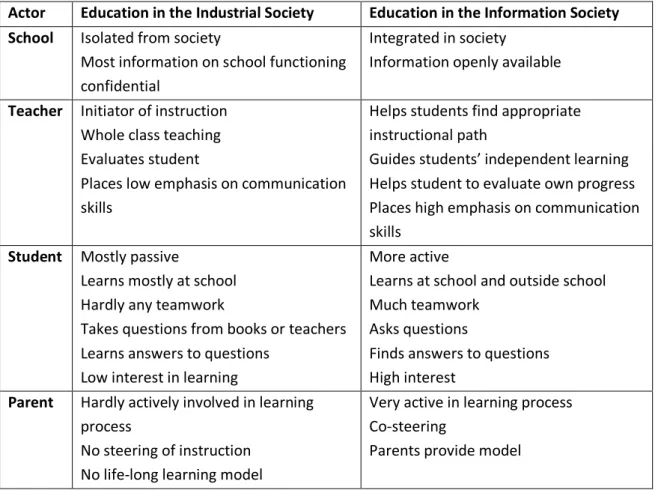
Although this comparison appears to indicate that either position is compatible with the use of ICT in teaching, often the use of technology reinforces behaviourist pedagogy (Attwell & Hughes, 2010). The use of ‘drill and practice’ software and the use of technology to enhance teacher presentation support behaviourist pedagogy, and so behaviourist pedagogy can be viewed as knowledge instruction and constructivist pedagogy as knowledge construction (Gibson, 2001). As described in chapter 2, ICT integration aims to develop student-centred pedagogy, as this is seen as more effective in terms of how ICT can be used to support teaching and learning (Ertmer et al, 2012; Ertmer & Ottenbreit-Leftwich, 2013). However, in their studies, Windschitl & Sahl (2002), Lim & Barnes (2002) & Reedy (2008) found that ICT is used more frequently in lessons for teaching than for learning, i.e. supporting the teacher, particularly the use of ICT to enhance teacher presentations, rather than supporting the learner. This is important here, as this study will investigate how ICT is used within the school, paying attention to whether ICT use is teacher or student led in practice. Pelgrum (2001) describes greater technology adoption as moving from an industrial to an information society and while these ideas may be contested, they imply a move from a manufacturing economy to a ‘knowledge’ or ‘information’ based economy (Castells, 2010; van Weert, 2004). Table 3, below, summarizes the expected changes in education that follow from this transition to a knowledge based economy (Pelgrum, 2001).
Page | 28 Actor Education in the Industrial Society Education in the Information Society School
Isolated from society
Most information on school functioning confidential
Integrated in society
Information openly available
Teacher
Initiator of instruction Whole class teaching Evaluates student
Places low emphasis on communication skills
Helps students find appropriate instructional path
Guides students’ independent learning Helps student to evaluate own progress Places high emphasis on communication skills Student Mostly passive
Learns mostly at school Hardly any teamwork
Takes questions from books or teachers Learns answers to questions
Low interest in learning
More active
Learns at school and outside school Much teamwork
Asks questions
Finds answers to questions High interest
Parent
Hardly actively involved in learning process
No steering of instruction No life-long learning model
Very active in learning process Co-steering
Parents provide model
Table 3: Expected changes in education from industrial to information society (Pelgrum, 2001, p164) Pelgrum’s (2001) view of education in the information society is particularly pertinent to this study as it closely links with the ideas of TEEP (Ragbir-Day, et al; 2008) and is investigated further in the next section.
3.3.2 Teacher Effectiveness Enhancement Programme (TEEP)
The TEEP programme focuses on an approach to lesson planning that puts student-centred learning at the core of the teaching and learning process and explicitly identifies ‘core underpinning elements’ that lead to good learning outcomes, including the ‘effective use of ICT’ (Ragbir-Day et al, 2008). The TEEP model, shown below in table 4, demonstrates how the programme is reflective of Pelgrum’s (2001) view of learning in the information age: for example, by putting ‘effective use of ICT’, ‘thinking for learning’, ‘collaborative learning’ as explicit elements of lesson plans.
Page | 29
TEEP Section Description
Six-part Learning Cycle Prepare for Learning
Agree Learning Outcomes Present New Information Construct Meaning Apply to Demonstrate Review
Underpinning Elements Assessment for Learning
Collaborative Learning Effective use of ICT Accelerated Learning Thinking for Learning
Key Behaviours Effective Learner Behaviours
Effective Teacher Behaviours