The Influence of School Organization on School Performance at Selected Low and High Performing Elementary Schools in Georgia
A Dissertation submitted to the Graduate School Valdosta State University
in partial fulfillment of requirements for the degree of
DOCTOR OF EDUCATION
in Leadership
in the Department of Curriculum, Leadership, and Technology of the College of Education and Human Services
October 2019
Willie Lee Batts Jr.
M. Ed, Albany State University, 2007 B.S., Fort Valley State University, 2004
© Copyright 2019 Willie Batts All Rights Reserved
FAIR USE
This dissertation is protected by the Copyright Laws of the United States (Public Law 94-553, revised in 1976). Consistent with fair use as defined in the Copyright Laws, brief quotations from this material are allowed with proper acknowledgement. Use of the material for financial gain without the author’s expressed written permission is not allowed.
DUPLICATION
I authorize the Head of Interlibrary Loan or the Head of Archives at the at the Odom Library at Valdosta State University to arrange for duplication of this dissertation for educational or scholarly purposes when so requested by a library user. The duplication shall be at the user’s expense.
Signature____________________________________________________
I refuse permission for this dissertation to be duplicated in whole or in part
ABSTRACT
Georgia elementary schools had not made adequate gains in school performance as measured by the College and Career Readiness Index (CCRPI) score. The purpose of this study was to determine if the presence of specific school organization themes
influenced school performance at selected low and high performing elementary schools. This quantitative comparative correlational study examined if there was a significant difference in the influence of school organization themes on school performance at selected low and high performing elementary schools in Georgia and if there was a significant relationship between the influence of school organization themes on school performance at selected low and high performing elementary schools in Georgia.
Elementary schools in Georgia perform below acceptable standards, as evidenced by low student scores in reading and mathematics (Georgia Department of Education, 2015). The study was quantitative in methodology and used the parametric statistical analyses of independent sample t-tests and Pearson correlation analysis to address the objectives. The required assumptions of these statistical analyses included normality, linearity, and homoscedasticity. Each of these assumptions was tested. Results of the independent sample t-test showed there was a statistically significant difference in the measure of school organization themes in high performing selected schools in Georgia based on the School Culture Survey. Results of the Pearson correlation analyses showed there was a statistically significant positive correlation between school organization themes in high performing selected schools in Georgia, as measured by the School Culture Survey.
TABLE OF CONTENTS
Chapter I: INTRODUCTION………..1
Overview………...1
Statement of the Problem ...2
Purpose ...4
Research Questions ...4
Significance of Study ...4
Conceptual Framework ...6
Methods ...7
Limitations and Delimitations ...7
Definition of Terms ...8
Summary ...10
Chaper II: LITERATURE REVIEW ... 12
Key Factors Playing a Role in School Effectiveness and Climate ...16
Principals ... 16
Teachers ... 17
Students... 19
School Climate ...20
Collaborative decision-making ... 21
Concern for school and stakeholders ... 23
Continual school improvement focus ... 25
Empowerment ... 26
Human resources needs ... 29
Intent/direction ... 30
Management of excellence ... 38
Professionalism ... 39
Teaming ... 41
Relationship Between School Climate and School Organization Themes ...43
Summary ...46
Chapter II: METHODOLOGY ... 48
Research Design ...49
Research Setting ...50
Rights of Participants and Ethics ...52
Role of the Researcher ...53
Instruments ...54 Data Collection ...57 Data Analysis ...58 Validity ...60 Reliability ...63 Chapter Summary ...63
Chaper IV: RESULTS ... 65
Introduction ...65
Data Collection Summary ...65
Results ...65
Test of required assumptions of parametric statistical analysis ... 70
Results of independent sample t-test for Research Question 1 ... 76
Results of Pearson correlation analysis for Research Question 2... 79
Summary ...82
Interpretation of the Findings ...85
Norms ………….. ... 86
Beliefs ….. ... 88
Core Values ... 90
Implications of the Findings ...91
Conceptual Framework ... 91
Research ... 92
Practice ... 92
Limitations of the Study ...93
Recommendations for Future Research ...94
Summary and Conclusions ...95
REFERENCES ... …..99
Appendix A: School Culture Survey ………..117
LIST OF TABLES
Table 1. Scoring Instructions of the 10 School Culture Survey Themes of the Subscales of Norms, Beliefs, and Core Values ... 56 Table 2. Breakdown of School Performance for the 2016-2017 School Year per
Elementary School ... 67 Table 3. Descriptive Statistic Summaries of Scores of Different School Culture Survey
Themes between Low and High Performing Elementary Schools ... 68 Table 4. Skewness and Kurtosis Statistics of Scores of School Culture Survey Themes 71 Table 5. Results of Levene's Test for Equality of Variances ... 76 Table 6. Independent Sample t-Test of Difference of Measure of School Organization
Effectiveness Themes Based on the School Culture Survey Between Low and High Performing Elementary Schools in Georgia ... 79 Table 7. Results of Pearson Correlation Analysis Between School Culture and School
LIST OF FIGURES
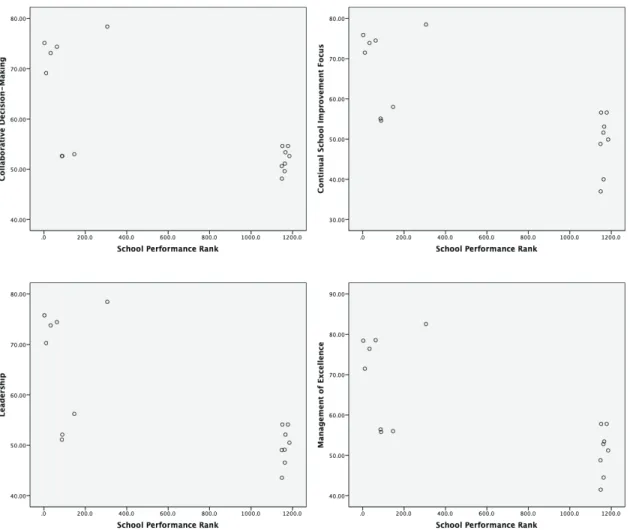
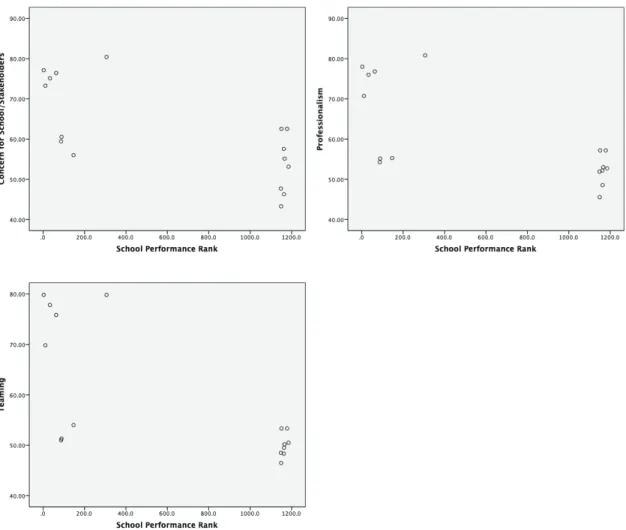
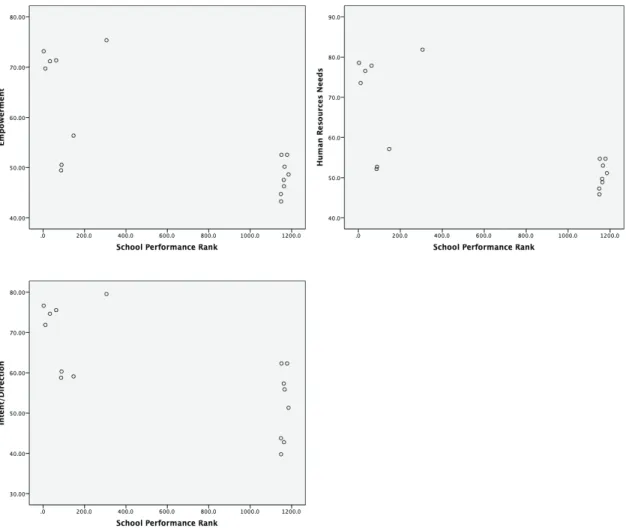
Figure 1. Linear plots of linear relationships between school performance and school organization effectiveness subscale of norms. ... 73 Figure 2. Linear plots of linear relationships between school performance and school
organization effectiveness subscale of beliefs. ... 74 Figure 3. Linear plots of linear relationships between school performance and school
ACKNOWLEDGMENTS
I cannot express enough thanks to my committee members for their continued support and encouragement: Dr. Robert Green, my committee chair; Dr. Daesang Kim; Dr. William F. Truby, and Dr. Jiri Stelzer. I offer my sincere appreciation for the learning opportunities provided by my committee.
Finally, to my caring, loving, and supportive family, my deepest gratitude. Your encouragement when the times got rough is much appreciated and duly noted. It was a great comfort and relief to know you were praying for my strength and endurance while I completed my work. My heartfelt thanks.
DEDICATION
I would like to dedicate my work to my family for their unwavering support of me completing this assignment. Felicia, Tre, Matthew, Winter, Willie Sr., Viola, Sylvia, and Shirley, I love you guys.
Chapter I INTRODUCTION
Overview
The No Child Left Behind (NCLB) Act of 2002 required states to implement accountability plans to the U.S. Department of Education (Yoon, Duncan, Lee, Scarloss, & Shapley, 2007). The focus of these plans included student performance, public reporting of performance results, and consequences for academic underperformance (Yoon et al., 2007). Consequences for not meeting standards included requiring schools: (a) to offer students the opportunity to attend a school which met the required
benchmarks, (b) to provide additional education services to students, and (c) to close the institution if the standards were not met after several years in a row. Since the
implementation of the NCLB Act, the focus on student performance continued to
intensify, putting immense pressure on students, teachers, and educational leaders (Yoon et al., 2007).
State leaders decided to develop and implement the Common Core State
Standards to measure performance and help teachers ensure students had the knowledge needed to be successful in life (Common Core State Standards Initiative, 2019).
Adopting the Common Core Standards provided an opportunity for students, teachers, and parents to have a clear set of expectations or skills needed at each grade level. According to Metlife (2010), a sizable percentage of teachers and principals surveyed believed possessing core skills and having elevated expectations for students were critical
in student performance. There are no mandated data collection requirements for states implementing the Common Core Standards. The assessment of the standards varies based on the discretion of each state (Common Core State Standards Initiative, 2019).
Education reforms continued with the U.S. Department of Education (2009) introducing the Race to the Top grant initiated by the Obama Administration. This grant pushed the education system to improve teacher effectiveness, pursue higher standards, and adopt new strategies to help struggling schools. States had to meet the rigorous program eligibility requirements and guidelines. Successful Race to the Top programs spread school reforms across states and the country (U.S. Department of Education, 2009). Leaders of Race to the Top also offered rewards to states demonstrating success in raising student performance (U.S. Department of Education, 2009).
The No Child Left Behind Act of 2002, the Common Core Standards, and the Race to the Top grant all placed accountability in schools to ensure students demonstrate a minimum level of academic performance (Common Core State Standards Initiative, 2019; Yoon et al., 2007). Leaders created these educational reforms to emphasize the importance of organizational themes to influence positive change within the school system, including the performance of students (Schwartz, Stiefel, Rubenstein, & Zabel, 2011). Even though there is little consensus on what organizational characteristics promote student performance, school culture and school performance have been highly correlated (Schwartz et al., 2011).
Statement of the Problem
Over the past two decades, states have responded to national school reform directives focused on improving school performance by contributing vast amounts of
human, financial, and fiscal resources. During this time, Georgia elementary schools had not made adequate gains in school performance as measured by the College and Career Readiness Index (CCRPI) score. The College and Career Readiness Index is a
comprehensive school improvement, accountability, and communication platform for all educational stakeholders to promote college and career readiness for all Georgia public school students (Georgia Department of Education, 2015). The variations in
organizational themes of educational institutions are challenging due to many components that can influence the success of schools (Danielson, 2002). School organization themes can be instrumental in affecting various aspects of educational institutions, such as student success, teacher effectiveness, and organizational
commitment (Danielson, 2002). Subsequently, Danielson (2002) stated effective school organization may challenge students while ensuring their success. Furthermore, class schedules of students must be correct for students to make accurate choices based on their educational goals (Danielson, 2002). Students should be viewed as learners who can complete any task (Swindlehurst, Shepherd, Salembier, & Hurley, 2015). Research indicates small schools yield better results than larger schools and teachers who
collaborate and work as teams are more beneficial to students (Swindlehurst et al., 2015). Many current school reforms are costly, controversial, or political (Jacob & Rockoff, 2011). However, (Schwartz et al., 2011) posted there was consensus regarding the best school organization that promotes student performance. Additionally, Scheerens and Creemers (1989), observed how school effects can occur in a multi-level context: the individual student level, the classroom level, and the school level.
Purpose
The purpose of this study was to determine if the presence of specific school organization themes influence school performance at selected low and high performing elementary schools in Georgia. The School Culture Survey (Edwards, Green, Lyons, 1996) was used to determine the school organization theme of the sixteen selected elementary schools. The 10 themes central to the School Culture Survey instrument included collaborative decision-making, concern for school/stakeholders, continual school improvement focus, empowerment, human resources needs, intent/direction, leadership, management of excellence, professionalism, and teaming. Archived data from the Georgia Department of Education were used to measure the school performance of the eight selected elementary schools and to determine the two study groups: (a) high performing schools and (b) low performing schools.
Research Questions
The following research questions guided the study:
RQ1: Is there a statistically significant difference in the measure of school organization themes based on the School Culture Survey between selected low and high performing elementary schools in Georgia?
RQ2: Is there a statistically significant correlation between school organization themes as measured by the School Culture Survey and school performance in selected low and high performing elementary schools in Georgia?
Significance of Study
This study addressed the lack of improvement in Georgia’s elementary schools and how the schools’ structures contribute to teachers’ ability to make adequate gains in
school performance as measured by the College and Career Readiness Index (CCRPI) score. The significance of this study will support efforts to determine if the presence of specific school organization themes influence school performance at selected low and high performing elementary schools in Georgia. The findings of the study will support national policy makers, federal and state departments of education, university and college teacher preparation programs, regional and local education units on how to better
structure schools, using specific school organization effective themes to improve school performance. The results of the study could be used as justification for emphasizing positive organizational characteristics to boost school performance.
This study may assist principals and district level administrators in better understanding the relationship between school performance and specific school organization themes, such as collaborative decision-making, concern for
school/stakeholders, continual school improvement focus, empowerment, human
resources needs, intent/direction, leadership, management of excellence, professionalism, and teaming, in selected low and high performing elementary schools in Georgia. The findings in this study may enrich the content shared in principal development programs and in district and school improvement plans.
The Race to the Top grant has helped drive states to reach higher standards, improve teacher effectiveness, use data effectively in the classroom, and adopt innovative approaches to help struggling schools (U.S. Department of Education, 2009). Race to the Top has directed meaningful changes in the education system, particularly in placing accountability on school organizations to influence positive student outcomes. The
results of the study could lead to information to help leaders address organizational themes factors in which could improve the academic performance of students.
Conceptual Framework
The conceptual framework of the study was rooted on the organizational structure of schools and its role with reforms and school improvement (Bryk, 2010; Schoen & Teddlie, 2008). Danielson (2002) defined school organization as “how schools arrange the resources of time, space, and personnel for maximum effect on student learning” (p. 1). School organization can create an environment for success (Hughes, 2009) and influence student behavior (Cusick, 1978; Lee & Burkman, 2002). According to Barth et al. (2004), the organizational structure of a school is one of the most crucial factors affecting the learning of students, even more than the role of school leaders and administrators.
Recognizing school as a type of organization, researchers then noted the conceptual framework was also rooted in organizational behavior theory. Based on organizational behavior theory, the alignment of appropriate structures with behaviors was expected to produce positive results (Ott, Parkes, & Simpson, 2008). Based on the review of literature as the foundation and the tenets of organizational structure and behavior theory, organizational themes and school performance was examined using the School Culture Survey (Edwards et al., 1996). The rationale for using the School Culture Survey derived from recognizing the organizational structure as a component of
Methods
The study was quantitative in methodology, examining if there was a significant difference in the school organization themes of low and high performing elementary schools in Georgia and if there was a significant relationship between the school organization themes and school performance in elementary schools in Georgia.
Quantitative research involves the quantification of attitudes, behaviors, or problems into numerical data using statistical tools (Creswell, 2013). The rationale for using a
quantitative research method was to compare how two study groups differed based on school organization themes and examine how variables were related with each other using numerical data.
The research design of the study was comparative and correlational in nature, utilizing t-test analysis and Pearson’s correlational analysis. T-test analysis was used to compare if there was a significant difference between two groups based on a given variable (Slavin, 1992). In this study, the two groups were high performing schools and low performing schools, and the variables were school organization themes. Pearson’s correlational analysis using the correlation coefficient (r) is a common statistical technique utilized to examine how two variables related with each other (Mertler & Vannatta, 2005).
Limitations and Delimitations
Limitations pertain to methodological factors which can affect the validity of the study. This study had one limitation. Cause and effect conclusions could not be made regarding school organization themes and school performance because the research design was only comparative and correlational in nature. Comparative and correlational
design researchers determine significant difference between study groups and significant relationship between variables (Creswell, 2013). Another limitation of the study was the single geographical setting. Even though the results may be generalized to elementary schools in Georgia, the results may not be applicable to all elementary schools in the United States.
Delimitations pertain to methodological factors intentionally excluded from the study. This study excluded middle and high schools in Georgia because learning tends to be more critical within the elementary years. This study also excluded the perceptions of students and administrators, focusing only on the perspectives of teachers. This decision was influenced by the ethical responsibility to protect young children from possible harm as participants in the study. Finally, school performance was delimited to using archived records from the Georgia Department of Education.
Definition of Terms
The following key terms are defined:
College and career readiness index is a comprehensive school improvement, accountability, and communication platform for all educational stakeholders to promote college and career readiness for all Georgia public school students (Georgia Department of Education, 2015).
Collaborative decision making pertains to a working practice by which
individuals work together for a common purpose to achieve business benefits (“What is Collaboration,” 2019). In this study, collaborative decision-making refers to the
Concern for school/stakeholders refers to a climate wherein the people working in the school care about the success of the educational institution regardless of job
description (Malinen & Savolainen, 2016; Sarafidou & Chatziioannidis, 2013).
Continual school improvement focus refers to a school climate that encourages continued enhancement and advancement of the school as an educational institution (Cook, 2014; Weishaar, 2015).
Empowerment is the process of enhancing the capacity of the individuals to make transforming choices to achieve the desired actions and the outcomes (“What is
Empowerment,” 2011).
Human resources needs pertain to the ability of leaders to provide for the needs of the people working in the school (Zhang & Sternberg, 2011).
Intent/Direction refers to the shared beliefs about how the school should be operated (Edwards, Green, Lyons, 1996).
Leadership is the capacity and commitment contributed beyond the classroom with the teachers (Fullan & Hargreaves, 1996).
Management of excellence refers to a climate with a systematic plan for managing excellence in the school (Connelly, 2013).
Organization effectiveness entails the ability to perform functions that will be at optimal levels representing the inputs and outputs of an organization (Gish, 2005).
Professionalism refers to the way a person conducts, aims, or entails the qualities that characterize a profession (Merriam-Webster.com, 2019).
School climate refers to the quality and character of school life. School climate is based on patterns of students’, parents’ and school personnel’s experience of school life
and reflects norms, goals, values, interpersonal relationships, teaching and learning practices, and organizational structures (Haynes, Emmons, & Ben-Avie, 1997).
School culture is defined as the beliefs, perceptions, relationships, attitudes, and written and unwritten rules shaping every aspect of the functions of a school (“School Culture”, 2013).
School organization refers to the arrangement of the school pertaining to the resources, time, space, and personnel representing the maximum effect of student learning (Danielson, 2002).
School performance is positive effects of school and its actors to attaining the goals, related to the academic achievement and personal development of students (Cobb, 2014).
Teaming is the collaboration between workers or professionals to achieve a specific educational purpose or goal (Bullough, 2015; Mandel & Eiserman, 2016).
Summary
Georgia elementary schools have not made adequate gains in school performance as measured by their scores in the CCRPI. The purpose of the quantitative comparative correlational study was to examine if there was significant difference in the influence of school organization on school performance at selected low and high performing
elementary schools in Georgia, and if there was a significant relationship between the influence of school organization on school performance. The conceptual framework of the study derived from the organizational structure of schools, organizational behavior, and the role on reforms and school improvement (Bryk, 2010; Ott et al., 2008; Schoen & Teddlie, 2008). The study was significant because the findings could support policy
makers at the state and federal levels, university and college teacher preparation program developers, and regional and local education leaders on how to structure schools better by using specific school organization themes to improve school performance.
This dissertation is organized into five chapters. Chapter 1 introduced the study, identified the problem, outlined the purpose, listed the research questions, and explained the significance of the study. The review of relevant literature on organizational structure as it relates to the themes in the School Culture Survey and organization themes makes up Chapter 2. Chapter 3 reviews the methodology, population, research questions and respective hypotheses, survey instrumentation, and data analysis. The fourth chapter contains the findings from the study and a detailed discussion of the data analysis, and Chapter 5 consisted of the final discussion and summary.
Chapter II
LITERATURE REVIEW
The general problem of this study was the continued deficient performance of elementary school students in the state of Georgia, as seen from the comparatively lower performance scores students attained in reading and mathematics. Over the past two decades, leaders of states have responded to national school reform directives focusing on improving school performance by contributing vast amounts of human, financial, and fiscal resources to improve school performance (Common Core State Standards Initiative, 2019; U.S. Department of Education, 2009; Yoon et al., 2007). During this period, Georgia elementary schools have not made adequate gains in school performance, as measured by their College and Career Readiness Index (CCRPI) scores (Georgia Department of Education, 2015).
According to research conducted for the National Assessment of Educational Progress (NAEP) in 2015, only 31.8% of Georgia’s students were at or above proficient in reading and math (National Center for Education Statistics (NCES), 2015). Moreover, a drop in proficiency was observed between Grades 4 and 5; 8.35% of the state’s fourth-grade students were at or above proficient in math, while 34% were at or above proficient in reading, which was slightly above the national average (NCES, 2015). For Georgia’s eighth-grade students, the number who was at or above proficient decreased to 28% for math and 30% for reading, which was below the national average (NCES, 2015). Several scholars and policymakers have attempted to address this problem, and one promising
solution is using organizational behavioral theories to restructure schools to maximize students’ performances (Cobb, 2014).
Scholars have presented a relationship between school organization, school climate, and student performance (Bear, Gaskins, Blank, & Chen, 2011; Cobb, 2014; Bruggencate, Luyten, Scheerens, & Sleegers, 2012). However, despite the potential of school organization to influence school performance, few studies have been conducted on whether a school’s culture and its specific school organization themes correlate with overall school performance.
The purpose of the quantitative comparative correlational study was to examine if there was significant difference in the influence of school organization on school
performance at selected low and high performing elementary schools in Georgia, and if there was a significant relationship between the influence of school organization on school performance at selected low and high performing elementary schools in Georgia. There was a gap in the literature regarding the correlation between a school’s culture, its specific school organization themes, and a school’s overall performance. By addressing this gap in the literature, a more thorough understanding was gained regarding the relationship between specific school organization themes and school performance. Two research questions were posed in the study:
RQ1: Is there a statistically significant difference in the measure of school organization themes based on the School Culture Survey between selected low and high performing elementary schools in Georgia?
RQ2: Is there a statistically significant correlation between school organization themes as measured by the School Culture Survey and school performance in selected low and high performing elementary schools in Georgia?
The lack of improvement in Georgia’s elementary schools was addressed by examining the school organization themes of low and high performing elementary schools and determining if school organization themes and school performance were significantly related. The significance of this study may support efforts to determine if the presence of specific school organization themes influenced school performance at selected low and high performing elementary schools in Georgia. The findings of the study could be useful in developing school organizations that could cultivate
organizational success regarding the academic enhancement of students.
The articles for this review of related literature were gathered from the following databases: EBSCOHost, JSTOR, ScienceDirect, PsychArticles, and Google Scholar. The search terms used were as follows: school organization, school organization themes, school culture, school climate, school environment, principal roles, teacher roles, counselor roles, student roles, school improvement, collaborative decision-making, concern for school and stakeholders, continual school improvement focus, empowerment, human resources needs, intent/direction, leadership, management of excellence,
professionalism, teaming, student performance, empowering, human resources, management, organizational theory, organizations, and school organizations.
This chapter is divided into several sections that can further illuminate the research problem. These sections include the following: (a) conceptual framework, (b) key actors who play a role in school effectiveness and school climate, (c) school climate,
and (d) the relationship between school climate and school organization themes. Lastly, a summary of the key themes of the literature review is provided, and a transition to the next chapter is outlined.
The academic learning of students primarily occurs in classrooms, where they interact with their teachers about a subject matter (Bryk, 2010). The success of this interaction relies on how the school, as a social context, helps the teaching process and maintains student engagement (Bryk, 2010). In other words, the organizational structure of a school significantly affects the classroom interaction between teachers and students, and by extension, the academic learning of students (Bryk, 2010; Schoen & Teddlie, 2008). Danielson (2002) defined school organization as “how schools arrange the resources of time, space, and personnel for maximum effect on student learning” (p. 1). School organization can create an environment for success (Hughes, 2009) and influence student behavior (Cusick, 1978; Lee & Burkman, 2002). According to Barth et al.
(2004), the organizational structure of a school is one of the most crucial factors affecting the learning of students, even more than the role of school leaders and administrators.
Bryk (2010) enumerated five organizational features of successful schools: a coherent instructional guidance system, professional capacity, strong parent-community-school ties, a student-centered learning climate, and leadership that drives change. Schools with elevated levels of most of the supports mentioned above were found to be 10 times more likely to improve, as compared to schools with low levels of the supports (Bryk, 2010). To improve schools, Bryk (2010) noted all five supports must be
maintained together, as weaknesses in one support could decrease the effectiveness of other supports and minimize school improvement.
Recognizing school as a type of organization, the conceptual framework was based on organizational behavior theory, in which the alignment of appropriate structures with behaviors was expected to produce positive results (Ott et al., 2008). School
organizational themes and school performance was examined using the School Culture Survey (Edwards et al., 1996). The rationale for using the School Culture Survey as a tool to examine organizational themes was based on recognizing organizational structure as a component of organizational culture (Schoen & Teddlie, 2008).
Key Factors Playing a Role in School Effectiveness and Climate
In this section, the key factors involved in the organizational themes and positive school climate of educational institutions are presented. Because of the dedicated support for the key role of school climate in numerous positive outcomes for both students and teachers, multiple studies have been conducted to reveal how to create and maintain a positive school climate to influence organizational themes. When evaluating school climate and school effectiveness, one must consider the various roles played by different school community members. Key factors contributing toward the formation of a school climate and organizational themes include the principals, teachers, and students (Cobb, 2014).
Principals. School principals play an integral part in the school community, as
they are tasked with providing instructional leadership to shape school climate and influence school effectiveness (Hallinger & Lee, 2013; Hallinger & Wang, 2015). Based on the seminal research conducted by Hallinger and Murphy (1985), school principals must accomplish three tasks; define a school mission, manage the instructional program, and develop a positive school learning climate. School principals must ensure their
schools have a clear direction in advancing the development of their students (Hallinger & Murphy, 1985). School principals must also be able to coordinate with teachers and other school staff in their shared goal of teaching students (Hallinger & Murphy, 1985). Lastly, school principals must be able to develop a positive school climate, marked by ambitious standards for their students and a drive to develop and improve their learning process (Hallinger, Dongyu, & Wang, 2016; Leithwood & Sun, 2012).
School principals have the responsibility of choosing and enforcing the school’s activities relevant to its educational and instructional aims (Hallinger & Wang, 2015). These activities are chosen to help students’ academic and social progress. In the state of Georgia, the Leaders Keys Effectiveness System (LKES) provides standards for these activities, stipulating the school’s activities must help the progress, transmission, execution, and assessment of the school mission, which leads to positive school climate and continuous school improvement (Georgia Department of Education, 2012). In this manner, the role of principals is to provide leadership; serve as role models for the teachers, staff, and students; and steer their schools’ direction toward the fulfillment of the school mission (Ali & Hale, 2009; Hallinger & Wang, 2015). When principals are perceived by teachers as good examples, building trust and working together toward a common goal become easier and lead to better relations among teachers, principals, and students (Beauchamp & Parsons, 2012; Handford & Leithwood, 2013; Voight, Austin, & Hanson, 2013).
Teachers. The role of teachers can be understood as an extension of the
principal’s role, in that teachers often follow the lead of principals in the pursuit of specific goals for the school. Thus, they help bring about the principal’s vision for the
school’s climate. According to Le Cornu (2009), the perceptions, expectations, and behaviors of teachers play a key role in the development and maintenance of a positive school climate, thus boosting overall student performance. Teachers’ perceptions about their students’ current performances in class can influence how the students perceive themselves and their performances. Cobb (2014) provided the following example: When teachers believed their students were intelligent, this belief influenced the students to become more confident in themselves and their abilities, which could lead to better student performance. Conversely, when teachers believed their students were
unintelligent, this belief influenced their students to lose confidence, which could lead to even worse student performance (Cobb, 2014). This example illustrates the key role teachers’ perceptions play in the development of their students. Because students often admire their teachers and view them as role models, teachers’ perceptions can influence the teachers’ actions, which can then influence students’ perceptions, and ultimately students’ actions.
Another way teachers can influence students’ performances is in teachers’ perceptions of students’ future performances (Le Cornu, 2009). This perception can manifest itself when teachers perceive certain students as good or bad, college material or not (Cobb, 2014). If a teacher thinks one of the students has good potential to enter college, it would be more likely for the teacher to set high standards for the student’s performance, thus helping the student prepare for a college education (Cobb, 2014). If a teacher feels otherwise, he or she may limit students’ exposure to topics and issues the teacher deems too difficult, which can negatively affect the students’ future college prospects (Cobb, 2014).
Le Cornu (2009) explained these possibilities as an illustration of how teacher expectations can influence student performance. Teachers can over and underestimate students’ performances, which can lead to either a self-fulfilling prophecy effect or a sustaining expectation effect (Cobb, 2014). Cobb (2014) noted teachers should remain positive in their expectations for their students, as this was the most significant role they could play in creating a positive school climate.
Students. Students have a role as well in the pursuit of a positive school climate,
beyond attending class and progressing academically. School leaders must consider perceptions and opinions of students whenever they institute school policies to determine whether these policies serve the best interests of the students (Cobb, 2014). This aspect is especially important today due to an increasing awareness of the marginalization of certain subgroups of students—mostly because of race or ethnicity, gender, or
socioeconomic status rendering them as passive recipients of school policies that may not serve their best interests (Irizarry, 2009).
In previous decades, students were often unable to participate in the formulation and implementation of school policies (Cobb, 2014), and they were treated more as a data source, rather than active participants in the school community (Mitra & Gross, 2009). Today, there is convincing evidence of the value of including student experiences, opinions, and perceptions in the development of a positive school climate (Mansfield, Welton, & Halx, 2012). Hence, the role of students can be understood as providing other members of the school community with insight on how they perceive the school’s
School Climate
Scholars have offered numerous definitions of school climate, and no consensus has been reached on an absolute definition. Haynes et al. (1997) defined school climate as the degree and frequency with which members of the school community interacted with one another, in ways that affect the students’ development cognitively, socially, and psychologically. Cohen, McCabe, Michelli, and Pickeral (2009) shared this definition and added safety, which may derive from safety concerns emerged in recent years, such as school shootings.
According to Bear, Yang, Pell, and Gaskins (2014), Haynes et al. (1997) and Cohen et al. (2009) shared the same concern for social interactions and relationships between students and the members of the school community, both of which were
important aspects of a positive school climate. This emphasis on how social interactions between members of the school community can influence the development of the
school’s students may be taken as the essential feature of school climate, and it has been supported by a number of studies conducted recently (Handford & Leithwood, 2013; O’Malley, Voight, Renshaw, & Eklund, 2015).
Based on the literature review on the operationalization of school climate, the construct can be measured in terms of the School Culture Survey instrument. The School Culture Survey components include 10 themes central to school climate. These
behavioral practices, beliefs, and core values influencing school climate include collaborative decision-making, concern for school/stakeholders, continual school improvement focus, empowerment, human resources needs, intent/direction, leadership,
management of excellence, professionalism, and teaming. Each of these themes is discussed in this section of the review.
Collaborative decision-making. Collaborative decision-making is considered
part of a positive school climate (Malinen & Savolainen, 2016; Sarafidou & Chatziioannidis, 2013). A healthy school climate is likely to occur when there are favorable relationships among principals, teachers, and school staff (Kilinc, 2014). Sarafidou and Chatziioannidis (2013) found collaborative decision-making could be instrumental in the development of teachers sharing their expertise and showing concern for the effective management of schools.
The implementation of reform initiative can play a vital role in the success of collaborative decision-making (Siebersma, Wheeler-Clouse, & Backus, 2011). Critical to the implementation of reforms is the presence of a collaborative culture: a supportive atmosphere where trust is prevalent, where teachers are allowed to discuss problems and practices freely, and where it is a priority for staff to receive continuous learning
opportunities (Henderson & Mapp, 2002).
An effective collaborative culture is the professional learning community (PLC). According to Dufour (2004), a PLC is defined as “a systematic process in which teachers work together to analyze and improve their classroom practice” (p. 17). Collaborative communities or PLCs ensure all staff members have a voice, including those resistant to change. Resistance may weaken or disappear once individuals are given the opportunity to share their concerns and are reassured, making them feel more at ease with any changes (Henderson & Mapp, 2002). Collaboration of teachers and administrators
& Mapp, 2002). Henderson & Mapp, (2002) stated seeing success can boost morale and is a critical incentive. Being able to acknowledge and identify mistakes allows learning to occur for one’s self and from others.
Moore (2009) noted decision making was prevalent daily in the field of education. Some decisions can be made easily, while others must be analyzed to achieve the best outcome. Educators should become relevant practitioners, which means they would need to be briefed on the school’s approach on problem-solving and decision-making. PLCs have been used as a successful way to focus on student learning. A shared commitment to learn and act continually on learning in ways to influence students’ experiences is the focus of these communities. The climate and culture of a school can be shown by studying how teachers develop the learning environments of their classrooms.
Identifying the kind of school environment that would best advance a collaborative mindset in the decision-making process is important. Data should be collected for this placement regarding the students in the least restrictive environments. The decisions need to be based on the best interests of the students. The essence of making group decisions allows for the “administrators, teachers, parents, and students” (Moore, 2009, p. 14) to work together by determining the placements appropriate for the student. However, decision making is difficult for administrators in situations where they must prioritize the information they deem most necessary in pursuing the best outcome. Administrators must “have focus for a school vision that is positive, have learning performances for students, and include the students with disabilities in this decision making” (Moore, 2009, p. 14).
Concern for school and stakeholders. Having care and concern for the school and the stakeholders, such as parents and students, is another factor that influences a positive school climate (DiPaola & Tschannen-Moran, 2014; Somech, 2016; Talebloo, Basri, Hassan, & Asimiran, 2015). The stability of the school system depends on the leadership teams of key stakeholders, who must always keep in the mind the best interests of the school and stakeholders (Talebloo et al., 2015). The stakeholders are important to the effectiveness of the school. Stakeholders are individuals who are affected by the success or failure of a system. Obvious stakeholders in the education system include students, faculty, and administration. Additional stakeholders include parents and the community where the school is located.
Concern for the school and stakeholders can be understood in terms of the presence of organizational citizenship behaviors among leaders, teachers, and the school staff (DiPaola & Tschannen-Moran, 2014). Organizational citizenship behaviors can be beneficial to schools because of the care and concern for the success of schools, even if no direct personal benefits can be achieved (Somech, 2016). For instance, teachers who have high organizational citizenship behaviors are more likely to contribute to the success of their schools regardless of their job descriptions (Talebloo et al., 2015).
Parents contribute to the students’ time management skills, study habits, eating practices, and personal safety (Waters, 2011). Parent participation in school functions, the decision making, and overall school process can influence the success of the school. The National Education Association (2015) contended students’ success in school significantly affected their futures in society. Parents can influence appropriate behavior of children through four key actions for families to close the performance gap: provide an
environment at home that prioritizes the importance of learning, support the schools’ and teachers’ high expectations for their students, engage in discussions with teachers and staff, and remain active in school decision-making (McDougall, 2016). The U.S. Department of Education (2009) reported the communication between parents and teachers must increase to improve student performance.
Community cultures often make change difficult. Anaxagorou (2007) found differences between rural and urban school communities. Teachers and community stakeholders in rural areas demonstrated openness in their communication and relations. In contrast, results from the research indicated urban communities were more limited in their cooperation and relations. All participants agreed community and school
collaborations benefited everyone. School leaders recognized the need for community support in meeting educational performance standards and securing financial resources (Cunningham, 2002). Learning more about trends within the community will also allow for identifying risk factors that may lead to a decline in student performance. As
Cunningham notes, “The entire community benefits from understanding social and health conditions that interfere with learning” (Cunningham, 2002, p. 6), and school leaders must be prepared to work with the communities they serve and understand how important they are to the process.
According to Anaxagorou (2007), progress needs to be made in extending and improving school-community relations. Anaxagorou conducted a comparative study of rural and urban communities of primary teachers and community stakeholders concerning perceptions of school-community relationships. Results indicated teachers and
be more limited. Teachers and stakeholders in rural sites within this study were more willing to extend communication and relationships. All participants affirmed that through school and community collaboration, benefit occurs for both the school, as a system or as individuals, as well as the community.
Continual school improvement focus. Continual school improvement focus is
another factor that can influence the school climate of educational institutions (Simmons, Graham, & Thomas, 2015; Weishaar, 2015). The need for continuous improvement is often regarded as natural tendency for individuals (Cook, 2014). School leaders must never be complacent and should seek to improve their performance every year. The impetus for continual school improvement is sometimes based on the need to secure sustainable funding from the federal government (Weishaar, 2015). However, continual school improvement can also be motivated by the desire of teachers and principals to provide the most effective instruction to students (Pourrajab, Basri, Daud, & Asimiran, 2015).
The No Child Left Behind Act of 2002 has been perceived as an impetus to aim for improving the quality of schools (Cook, 2014). Continual school improvement can be exhibited from various professionals within the school, which include principals,
teachers, or guidance counselors (Domingo, Caballero, & Barrero, 2013). According to Cook (2014), the need for continual improvement can often be led by leaders, but this can also affect the entire school climate, particularly in the behaviors and beliefs of teachers and other school staff.
According to Ah-Teck and Hung (2014), continual school improvement can be understood in the following two dimensions: (a) leadership and (b) teaching/learning.
Leadership provides an opportunity for continual school improvement because of leaders’ authenticity, ethics, and values. Regarding the role of teaching/learning in the continual school improvement, Ah-Teck and Hung (2014) stated that transformation of students, teacher leadership, and authentic leadership were important factors to be considered. This framework had both practical and theoretical relevance in the continual
improvement of schools.
Professional development is one of the strategies that school leaders, such as principals, use to ensure continued school improvement (Jones, Stall, & Yarbrough, 2013; Watson, 2014). When teachers regularly face professional development, their knowledge and skills continue to improve (Jones et al., 2013). Through participation in professional development, teachers face a learning community, allowing these educators to be agents of change in their schools (Watson, 2014).
Empowerment. Empowerment involves having teachers being heard within the
school. Empowerment is a crucial factor influencing positive school climate because of the belief that everyone can affect positive change within the educational institution (Liu, Ding, Berkowitz, & Bier, 2014). Empowerment can manifest in terms of delegation of work and responsibilities, the provision of individualized support and concern,
articulation of vision, and fostering an environment that encourages collaboration among different professionals (Lee & Nie, 2017).
According to Hume (2006), leaders should be able to empower teachers within the schools, which is one of the most daunting challenges for change within the school. The process of change should involve everyone who is part of the organization.
be able to listen to the needs of others instead of internal dialogue. Additionally, leaders must be able to listen to others and realize when there is resistance involved. These skills can eliminate many of the barriers to creativity within the workplace.
In education, improvements must be identified by the weaknesses within the schools and, followed by the learners utilizing the 360-degree review within their schools. For this process to work, trust should be established between the leaders and coworkers. One of the major components in the process is for the leaders to be able to listen; leaders can then assess employees within the organization on different tasks (Hume, 2006).
Empowering can be used in many ways within an organization. According to Miller (2009), teachers must be able to work collaboratively on adjusting practices for students, which is done to meet the academic needs of students. There should be cohesion with a well-developed purpose and implementation of a vision shared with the school, where modeling of student performance is present in a positive manner.
Moreover, leadership is exemplified by all the employees who can ask questions, take risks, and learn within the organization. Additionally, principals must be willing to share leadership by utilizing the exemplary teachers within the school building. This is done so the school can be successful without the using an excessive amount of resources. These teachers are educated on how to use the existing, effective instructional approaches and how to work with the personalities prevalent within the community.
Miller (2009) continued to note leaders redefining the elements within the school. Principals can develop new planning and assessment strategies by empowering the
within the school. Principals should ensure teachers are not resistant to making changes but rather are prepared to take the role of being an informal leader. Likewise, leaders should be able to redefine the informal teacher leaders. One of the most essential ways of using an effective leader is by grasping leadership from those who are fresh with
innovative ideas within the organization.
Miller (2009) concluded leaders should be able to balance and incorporate a group consensus with the teacher leaders in discussions leading to effective cohesion and
collegiality. The leaders should engage in this process by showing how conflicts should be handled. To thrive with leadership, teacher leaders must be part of a culture that gives them the opportunity to voice their different opinions and view opportunities to learn. Principals should capitalize on the talents of others within the school by modeling and creating a culture that will promote collegiality. This type of culture within the school will guide the students to reach their maximum potential. Support should be provided by the principals on how to implement this type of culture by establishing times for teachers to have discussions. When this type of atmosphere is present, the teachers can utilize instructional strategies useful and effective in raising student performance.
Edwards, Green, and Lyons, (1996) found empirical support for the role of teacher empowerment as an element of school organizational themes in predicting the variance in the performance of low and high performing schools in South Georgia and Florida. Data were based on the scores of students on the Criterion Referenced
Competency Tests (Georgia schools) and the Florida Comprehensive Assessment Test. According to Edwards, Green, and Lyons, (1996), the association between teacher empowerment and school performance indicated the synergy generated in organizations
could be critical in the promotion of collective positive outcomes, underscoring the importance for school leaders to ensure teachers were empowered as educators.
Human resources needs. Being able to address the needs of human resources is
important to educational institution leaders, teachers, and the school staff who play a crucial role in the schools (Boudreaux, Martin, & McNeal, 2016). For instance, access to resources can contribute to teachers’ abilities to be effective in their instruction
(Boudreaux et al., 2016). When human resources have adequate support, their work tends to support the overall success of educational institutions (Rania, Siri, Bagnasco, Aleo, & Sasso, 2014).
Zhang and Sternberg (2011) indicated creativity as one of the key resources needed in the workplace. There are two approaches to this concept, namely person and context centered. A person-centered approach includes individuals outlining more emphasis on the inner person, and the context approach focuses on the interaction of the individual’s external context. The person-centered emphasis is on the creativity
displayed and rooted from psychometric traditions. Individuals are provided with tasks of creative problem solving. Conversely, the contextual factors examine the factors within the environment that influence creativity.
Six identified resources focus on creativity exhibiting intelligence. The first creative resource entails intelligence. There are three types of intelligences: synthetic, analytical, and practical. The second creativity resource is knowledge. There are students using knowledge. This process occurs when creative ideas and behaviors are addressed. Third, the creativity resource is the intellectual style which refers to a person using his or her abilities. Three creative abilities stand out: legislative, global, and liberal
styles. Fourth, creative resource is personality. A person needs to be working to overcome obstacles that become creative. The person should be responsible and take risks. Fifth, the creativity resource focuses on motivation. The person must be intrinsic and task motivated. Sixth, the creativity resource involves the environment. The environment is important because without the external environment supporting and rewarding, the creative ideas and creativity of the person would not be displayed (Zhang & Sternberg, 2011).
Intent/direction. Intent/direction can be operationalized as the shared beliefs
about how the school should be operated (Edwards et al., 1996). Shared beliefs involve having collective responsibility, continuous improvement, and non-defensiveness
(Rudasill, Snyder, Levinson, & Adelson, 2017). When shared beliefs exist in educational institutions, the intent or direction of the school is clearly defined to the members, such as leaders, teachers, parents and students, and the school staff (Rudasill et al., 2017).
Schools can be improved in unique ways (Vesely, 2010). Change with educational accountability can involve the adaptation of content standards along with state assessments. Data driven decision making can enable the schools and leaders to use the data as a reflective process to drive school improvement. Furthermore, teachers must have a focus on content and leaders must be knowledgeable on how to use data. There is an urgent need for the administrators to focus on the students who are at risk. Leaders should use the research and evidence based analysis to drive solutions for the at risk population (Vesely, 2010).
Incentives for teachers are an additional way school leaders can improve student performance. Bonuses can be given to the teachers for performances in the top
percentile, according to student performance. District leaders have the right to develop their own incentive programs for teacher performance; however, if annual evaluations were developed to oversee the implementation of the merit pay within the districts, these evaluations could be used by specific district leaders to enhance their own incentive programs. A program called the Quality Compensation for Teachers, based on teacher advancement, includes a career ladder, as well as professional development given to the teachers as part of the requirement for the program (Exstrom, 2006).
Other elements of school improvement will signify teachers utilizing a
collaborative analysis regarding student performance. This process starts with having strategic learning communities where teachers are engaged in the collaborative inquiry. Teachers must conduct collaborative analysis of student learning because teachers are tasked with analyzing the relationship between their instruction and the performances of students. Components of this collaborative analysis include classroom assessments, writing samples, and standardized testing, all of which were chosen to provide a holistic picture of the students’ progress. Teachers must be able to collaborate with each other, as well as with school leadership, to strengthen the school leaders’ policies and practices on how to educate the students (Langer, 2005).
Different processes must be used with different students, which can complicate the process of teaching. Teachers must determine which strategies work for which students, going beyond general interventions to developing specific interventions for certain students with their peers or other teaching professionals. Working collaboratively on the cases of individual students can help the teacher develop specialized interventions for their students in need, and thus provide them a better chance at learning (Langer,
2005). School improvements can be utilized with formative assessments in the classroom. The use of formative assessments can be one of the strategies used by the students as the traditional way of teaching the students from each grade level. Goals are essentially important for this process within the school. The reason to use this approach is to utilize learning shortfalls with the low performing students because students learn differently.
Core values pertain to the goals of leaders and teachers, especially their aspirations for their students and the school (Edwards et al., 1996). A clear direction within an organization allows for good execution and increases the likelihood of success within that organization (Murphy & Torre, 2015). Two aspects of core values are discussed: (a) having shared goals and (b) having concern for the school and the stakeholders.
A positive school environment can be created by leadership practices with cooperative relationships and a vision that is shared (Murphy & Torre, 2015). Organizations that develop practices where everyone participates can promote
cooperative relationships and indicate a shared vision. The emphasis of collaborative thinking with the relationships can bring about the ease, commitment, and task accomplishments that are significant for the organization (Brunner, 1997).
A collaborative process involves the students feeling empowered where they will identify their cultural values. Administrators within the schools must exercise their collaborative styles instead of utilizing the authoritative types of leadership. Students and administrators will have more effective communication within the school by utilizing the collaborative model of communication when addressing the needs of the students. A
researcher found students could not relinquish their objectives of monitoring their school cultures (Brunner, 1997). Additionally, Brunner (1997) revealed students underestimated the amount and rigor of discourse required to promote collaboration.
Charter schools are shifting the direction of the educational system. This educational reform provides an alternative from the requirements imposed by the local districts. Innovative and new educational ideas can be implemented, designed,
demonstrated, and evaluated. These programs must meet specific state standards and criteria representing the allowed designs and methods for such schools. The mission of the charter schools is to enhance intellectual development, technology literacy, and leadership development.
There are other ways to enhance and provide direction to schools. According to White (2007), leaders or managers should recognize the positive behaviors through the vision and the plan of action for the school. The leaders must be able to keep everyone focused and active in their pursuit of educating children. The leaders must be able to get the followers to carry out this task by putting the children first. When the education of the children is put first, positive results will exist within the organization. The
performances of the students will improve, and the school districts will be recognized and rewarded for their efforts.
Leadership. Leadership can influence the school climate of educational
institutions (Ross & Cozzens, 2016). According to Cook (2014), leadership is important in the academic growth of students and professional development of teachers.
positive behavioral practice and beliefs within a school can be passed on despite transitions and changes in leadership (Cook, 2014).
According to the Common Core State Standards Initiative (2019), “standards alone will not improve schools and raise student performance, nor will they narrow the performance gap. It will take implementation of the standards with fidelity by school leaders and teachers to significantly raise student performance” (p. 30). Effective leaders have been found to produce this kind of influence by providing guidance, developing people, and ensuring everything required to make the organization work is present (Leithwood, Louis, Anderson, & Wahlstrom, 2004; Ross & Cozzens, 2016). Through a positive school climate of strong leadership, principals can continuously provide an avenue for growth and improvement regardless of changes in leadership (Cook, 2014).
Syed (2013) reported that to implement the Common Core Standards, five practices were identified for effective principals. These practices included: (a) shaping a vision for academic success, (b) creating a climate hospitable to education, (c) cultivating leadership in others, (d) improving instruction, and (e) managing people, data, and
processes (Syed, 2013). Setting the tone for a strong vision of academic success can be obtained by ensuring all students are receiving the same rigor and high quality education. Effective principals must ensure leadership teams within the school regard each other as partners who share the same guiding vision as the school. This understanding will allow the leaders to engage the diverse relationships prevalent in the school and marshal them towards the shared goal of educating children.
Leaders seek optimal learning environments for every child. According to
conduct collaborative decision making. Effective leaders create a climate where teachers feel they are part of a professional community (Syed, 2013). Rogers (2001) indicated administrators or leaders operating from a hierarchical structure faced difficulty with involvement in teachers’ professional development, in addition to other managerial duties. To meet instructional goals, leaders must promote collaborative collegial relationships in authentic ways. To achieve this kind of collaboration, school leaders must openly support the fostering of social relationships among staff and students within the schools.
Leaders can set the tone of inquiry in the school. Building meaningful relationships among administrators and faculty promotes loyalty and commitment. Furthermore, it creates an optimal learning environment (Syed, 2013). In addition to leaders’ relationships with teachers, Syed (2013) also highlighted cultivating and promoting a positive attitude toward students created a climate hospitable to education. This climate will help the students to feel safe as well as supported. The parents will feel welcomed at the schools and begin getting involved.
The principals are the primary entities of a positive school organization and can create focus for the improvement of the school. Syed (2013) studied student performance and leadership in early childhood elementary schools and suggested principals must realize the need for teachers and staff to receive professional development geared specifically to their needs. Additionally, a study of school leadership indicated student performance increased in the areas of math and reading when leadership came from a variety of persons (Syed, 2013). Not only principals but also teachers, staff members,
and others were said to influence this improvement. With current standards, a
collaborative effort and effective leadership are vital to success within the school system. The influence of principals on leadership can hardly be overstated. Finnigan, Daly, and Stewart (2012) used organizational learning theories to reveal how educators from school leaders under sanctioning chose their reform strategies to comply with higher standards of school accountability and how their schools’ climate and culture affected such decisions. The authors found because of the high-stakes situation and short timelines the educators found themselves in, they rarely produced innovative ideas on how to improve their student outcomes (Finnigan et al., 2012). Instead, the educators from these schools often engaged in recycling ideas and approaches that could not meet the standards set by policymakers, and teamwork was not prioritized (Finnigan et al., 2012). For example, teachers from these schools were found to operate individually and seldom mentored other teachers or visited other classrooms (Finnigan et al., 2012). This kind of school climate can be seen to come from the principals’ ineffectiveness in rallying all members of the school community to work together and improve the student outcomes (Finnigan et al., 2012).
School leaders should follow and use ethical principles. According to Toor and Ofori (2009), leaders should maintain their ethical integrity to ensure their effectiveness and success. Leaders often face more stringent moral standards than their subordinates, and these standards are demonstrated by leaders in their “everyday practices, actions, decisions, and behaviors” (Toor & Ofori, 2009, p. 533). Philosophers and religious leaders have emphasized the importance of ethics by school leaders. This emphasis is essential if they are to attain effective governance to decrease the number of unethical
school leaders who engage in behaviors that undermine the mission and vision of the school. These behaviors, if left unchecked, may lead to negative consequences for everyone in the school and stem the learning of students.
The standards and demands for school leaders seem to be greater than ever before. School leaders are no longer just expected to provide guidance for the overall direction of a school. They are now also expected to establish relationships, promote teamwork, and coordinate with all members of the school community to best serve their students’ diverse needs (Beachum & Dentith, 2004; Handford & Leithwood, 2013; Leithwood & Sun, 2012).
To this end, it has been found that transformational leadership is most suited for the development and maintenance of a positive school climate. In contrast to a
transactional leadership style, where rules are instituted and strictly enforced with very little room for creativity (Inandi, Tunc, & Gilic, 2013), a transformational leadership style values competence, consistency, openness, and respect (Handford & Leithwood, 2013), which promotes a climate of creativity in the organization (Inandi et al., 2013). Given that school leadership involves the management of many different people and interests, school leaders must foster a sense of community and listen to innovative ideas.
Transformational leaders are often most needed in schools with negative school climates, as these leaders are charismatic and can help shepherd everyone toward the same shared values and goals (Sagnak, 2010).
Even though educational leadership is more commonly associated with principals (Finnigan et al., 2012; Handford & Leithwood, 2013; Leithwood & Sun, 2012), teacher leadership can also be an integral part of school climate (Kilinc, 2014). For instance,