University of Huddersfield Repository
Khorshid, Amir Mahdi Development, Validation and Testing of an Islamic Work Ethic Scale Original Citation Khorshid, Amir Mahdi (2016) Development, Validation and Testing of an Islamic Work Ethic Scale. Doctoral thesis, University of Huddersfield. This version is available at http://eprints.hud.ac.uk/id/eprint/32631/ The University Repository is a digital collection of the research output of the University, available on Open Access. Copyright and Moral Rights for the items on this site are retained by the individual author and/or other copyright owners. Users may access full items free of charge; copies of full text items generally can be reproduced, displayed or performed and given to third parties in any format or medium for personal research or study, educational or notforprofit purposes without prior permission or charge, provided: • The authors, title and full bibliographic details is credited in any copy; • A hyperlink and/or URL is included for the original metadata page; and • The content is not changed in any way. For more information, including our policy and submission procedure, please contact the Repository Team at: [email protected]. http://eprints.hud.ac.uk/DEVELOPMENT, VALIDATION AND TESTING OF AN
ISLAMIC WORK ETHIC SCALE
AMIR MAHDI KHORSHID
A Thesis Submitted to the University of
Huddersfield in Partial Fulfilment of
the Requirements for the Degree of Doctor of Philosophy
The Business School
University of Huddersfield
Copyright Statement
The author of this thesis (including any appendices and/or schedules to this thesis) owns any copyright in it (the “Copyright”) and she/he has given the University of Huddersfield the right to use such copyright for any administrative, promotional, educational and/or teaching purposes.
Copies of this thesis, either in full or in extracts, may be made only in accordance with the regulations of the University Library. Details of these regulations may be obtained from the Librarian. This page must form part of any such copies made.
The ownership of any patents, designs, trademarks and any and all other intellectual property rights except for the Copyright (the “Intellectual Property Rights”) and any reproductions of copyright works, for example graphs and Tables (“Reproductions”), which may be described in this thesis, may not be owned by the author and may be owned by third parties. Such Intellectual Property Rights and Reproductions cannot and must not be made available for use without the prior written permission of the owner(s) of the relevant Intellectual Property Rights and/or Reproductions.
ABSTRACT
Despite the varying levels of religiosity held by employees, in many cases representing deeply held beliefs, religiosity is usually overlooked and ignored in research in organizational behaviour and human resource management. In light of this paradox, the aim of this study is to further develop Ali’s (1988) Islamic work ethic (IWE) scale using conventional psychometric methods (Hinkin, 1995). Following theoretical development, item generation and testing of an item pool with 643 lecturers at a university in Kurdistan, the item pool was reduced to 24 items to produce a balanced multidimensional scale. The four dimensions are Work and Society, Justice, Self-Motivation and Work Principles capture the IWE scale which fits with the two resources of IWE construct (Quran and teachings of the Prophet (PBUH)).
To provide evidence for scale validity, and drawing on social exchange and reciprocity theory, the relationships between the Islamic ethics scale, job satisfaction, affective, normative and continuance commitment and organisational citizenship behaviour were hypothesised and tested. Findings suggest that the Islamic work ethic plays a significant role in Islamic work settings and that the Islamic work ethic may change some widely reported relationships between variables observed in Western contexts. Findings reveal that the Islamic work ethic is a stronger predictor of citizenship behaviour than affective commitment and job satisfaction and is consistent with a strong influence of Islam on all aspects of Muslim life.
Dedication
I dedicate this work to my family, especially my parents and more specifically my mother whom without their constant support from early childhood and as being as a source of encouragement, inspiration and support I would have not be able to continue my study to this level. This work is also dedicated to the Kurdistan Regional Government (KRG) for granting me this opportunity to study abroad.
Acknowledgement
First of all, thanks to Almighty Allah for granting me the life, chance, energy and faith to continue this work who has been the main source of self-inspiration and self-motivation. I also appreciate my supervisor, Professor Stephen Swailes for his endless support, encouragement, and patience. My colleagues and friends who helped and encouraged me throughout my long journey from the primary school to this stage of study.
Table of content
1 CHAPTER ONE: THESIS OVERVIEW ... 12
1.1 INTRODUCTION ... 12
1.2 RESEARCH BACKGROUND ... 13
1.3 THE RESEARCH PROBLEM ... 15
1.4 SIGNIFICANCE OF THE STUDY ... 20
1.5 AIM, OBJECTIVES AND RESEARCH QUESTIONS ... 21
1.6 IRAQI KURDISTAN ... 22
1.6.1 Higher education ... 25
1.6.2 Choice of the context ... 27
1.7 THESIS STRUCTURE ... 28
2 CHAPTER TWO: ISLAMIC WORK ETHIC ... 29
2.1 INTRODUCTION ... 29
2.2 RELIGIOSITY AND SPIRITUALITY IN THE WORKPLACE ... 30
2.3 Work ethics from Islamic, Christian and Judaic perspectives ... 33
2.4 Overview of Islam ... 34
2.4.1 Islamic Work Ethic ... 35
2.4.2 Origin of the Islamic Work Ethic ... 36
2.4.2.1 Quran ... 36
2.4.2.2 Teachings of the Prophet (Sunnah) ... 37
2.5 PRINCIPLES OF THE ISLAMIC WORK ETHIC ... 37
2.5.1 Work and society ... 38
2.5.2 Hard work and dedication to work ... 39
2.5.3 Commitment ... 40
2.5.4 Accountability ... 40
2.5.5 Justice ... 41
2.5.6 Sincerity and generosity ... 41
2.5.7 Self-independece and self-dignity... 42
2.5.8 Fair wages ... 43
2.5.9 Consultation (Al-Shura) and advice (Al-Nasiha) ... 43
2.5.10 Teamwork and cooperation... 44
2.5.11 Good human relationships in the workplace ... 44
2.5.12 Honesty ... 45
2.6.1 Human resource management practices from an Islamic perspective and reality 47
2.7 RESEARCH GAP ... 50
2.8 WHY AN ISLAMIC WORK ETHIC SCALE IS NEEDED ... 51
2.9 IMPORTANCE OF WORK IN ISLAM ... 55
2.10 CORRUPTION IN MUSLIM COUNTRIES ... 56
2.11 IMPLICATIONS OF THE ISLAMIC WORK ETHIC IN THE WORKPLACE .... 59
2.12 RELEVANCE OF THE ISLAMIC WORK ETHIC ... 61
2.13 TEN COMMANDMENTS IN ISLAM... 63
2.14 CHAPTER SUMMARY ... 64
3 CHAPTER THREE: THE CONCEPTUAL FRAMEWORK ... 66
3.1 INTRODUCTION ... 66
3.2 SOCIAL EXCHANGE THEORY ... 68
3.3 SOCIAL EXCHANGE IN A RELIGIOUS CONTEXT ... 69
3.4 JOB SATISFACTION AND ORGANISATIONAL COMMITMENT ... 71
3.5 ORGANISATIONAL CITIZENSHIP BEHAVIOUR ... 73
3.6 JOB SATISFACTION, COMMITMENT AND CITIZENSHIP BEHAVIOUR ... 74
3.7 HYPOTHESIS DEVELOPMENT ... 74
3.7.1 Islamic Work Ethic and Organisational Citizenship Behaviour ... 74
3.7.2 Job Satisfaction and Organisational Citizenship Behaviour ... 78
3.7.3 Organisational Commitment and Organisational Citizenship Behaviour ... 79
3.7.4 Islamic Work Ethic and Organisational Commitment ... 81
3.7.5 Islamic Work Ethic and Job Satisfaction ... 85
3.7.6 Job Satisfaction and Organisational Commitment ... 88
3.8 CHAPTER SUMMARY ... 89
4 CHAPTER FOUR: RESEARCH METHODOLOGY ... 92
4.1 INTRODUCTION ... 92
4.2 RESEARCH DESIGN ... 92
4.2.1 Research philosophy ... 92
4.2.2 Deduction ... 95
4.2.3 Research strategy ... 95
4.2.4 Survey as a research strategy ... 95
4.2.5 Self- administrated questionnaire ... 96
4.2.5.1 Translation of the questionnaire ... 97
4.3 ETHICAL CONSIDERATIONS ... 98
4.4 SCALE DEVELOPMENT AND TESTING ... 99
4.4.1 Step 1: Construction definition and specification ... 102
4.4.2 Step 2: Item generation (item pool) ... 102
4.4.3 Pilot study ... 103
4.4.4 Step 3: Scale refinement and validation ... 103
4.4.5 Factor analysis ... 104
4.4.5.1 Exploratory factor analysis ... 104
4.4.6 Sample size for factor analysis ... 105
4.4.7 Step 4: Cross-validation ... 106
4.4.8 HIERARCHICAL MULTIPLE REGRESSION (HMR)... 106
4.5 SUMMARY OF THE PROCESS ... 107
4.6 RESEARCH POPULATION AND SAMPLING ... 107
4.7 MEASUREMENT AND EVALUATION ... 108
4.7.1 Islamic Work Ethic ... 109
4.7.2 Organisational Commitment ... 109
4.7.3 Organisational Citizenship Behaviour ... 110
4.7.4 Job Satisfaction ... 110 4.7.5 Demographic variables ... 110 4.7.6 Reliability ... 110 4.7.7 Validity ... 111 4.7.7.1 Face validity ... 112 4.7.7.2 Discriminant validity ... 112 4.7.7.3 Content validity ... 113 4.7.7.4 Internal validity... 113
4.7.8 Assessing Common Method Variance ... 113
4.8 CHAPTER SUMMARY ... 114
5 CHAPTER FIVE: DATA ANALYSIS ... 115
5.1 INTRODUCTION ... 115
5.2 DESCRIPTIVE ANALYSIS ... 115
5.2.1 Normality of distribution ... 116
5.2.2 Scale reliability ... 117
5.2.3 Validity of the scales ... 118
5.3 EVALUATING COMMON METHOD VARIANCE (CMV) ... 120
5.4.1 The Kaiser-Meyer-Olkin (KMO) and Bartlett’s Test of Sphericity ... 121
5.4.2 Exploratory factor analysis for Islamic Work Ethic ... 121
5.4.3 Exploratory factor analysis for dimensions of Commitment ... 123
5.4.4 Exploratory factor analysis for Job Satisfaction ... 124
5.4.5 Exploratory factor analysis for Organisational Citizenship Behaviour ... 124
5.4.6 Confirmatory Factor Analysis ... 125
5.4.6.1 Model Fit Indices ... 126
5.5 THE NEW ISLAMIC WORK ETHIC SCALE ... 128
5.6 CORRELATION ANALYSIS ... 129
5.7 DEMOGRAPHIC INFLUENCES ON ISLAMIC WORK ETHIC ... 131
5.8 ASSUMPTIONS OF MULTIPLE REGRESSION ANALYSIS (MR) ... 132
5.8.1 Multicollinearity ... 132
5.8.2 Normality of residuals... 132
5.9 HIERARCHICAL MULTIPLE REGRESSION ... 133
5.9.1 First stage, HMR controlling for demographic variables ... 133
5.9.2 Second stage, hierarchical multiple regression controlling for components of organisational commitment ... 134
5.10 MULTILAYER PERCEPTRON NEURAL NETWORK ... 136
5.11 CHAPTER SUMMARY ... 138
6 CHAPTER SIX: DISCUSSION AND CONCLUSIONS ... 139
6.1 INTRODUCTION ... 139
6.2 THE RELATIONSHIP BETWEEN ISLAMIC WORK ETHIC AND ORGANISATIONAL CITIZENSHIP BEHAVIOUR ... 139
6.3 THE RELATIONSHIP BETWEEN JOB SATISFACTION AND CITIZENSHIP BEHAVIOUR ... 140
6.4 THE RELATIONSHIP BETWEEN ORGANISATIONAL COMMITMENT AND ORGANISATIONAL CITIZENSHIP BEHAVIOUR ... 141
6.5 THE RELATIONSHIP BETWEEN ISLAMIC WORK ETHIC AND DIMENSIONS OF COMMITMENT ... 143
6.6 THE RELATIONSHIP BETWEEN ISLAMIC WORK ETHIC AND JOB SATISFACTION ... 144
6.7 THE RELATIONSHIP BETWEEN JOB SATISFACTION AND DIMENSIONS OF ORGANISATIONAL COMMITMENT ... 145
6.8 SUMMARY OF THE MAIN FINDINGS FROM KURDISH AND WESTERN CONTEXT’S PERSPECTIVES ... 148
6.9 RESEARCH IMPLICATIONS AND CONTRIBUTION ... 149
6.9.2 Practical implications ... 152
6.9.3 Limitations ... 159
6.9.4 Directions for future studies... 160
6.10 CONCLUSION ... 161
Appendices ... 163
Appendix 1 References to IWE principles from Quran ... 163
Appendix 2 Questionnaires ... 164
Appendix 2.1 The English version of the questionnaire ... 164
Appendix 2.2 The Kurdish version of the questionnaire ... 170
Appendix 2.3 The IWE Questionnaire (43 items) for Pilot study- the Kurdish version .... 178
Appendix 2.4 The official letter from Ministry of Higher Education (KRG) ... 183
Appendix 3 The results of normality... 184
Appendix 3.1 Histogram describing the normality of the error terms... 184
Appendix 3. 2 Normal probability Plot: Standardized Residuals ... 184
Appendix 3.3 Cook's Distance test for checking normality of the residual statistics ... 185
Appendix 3.4 Results of factor analysis ... 186
Appendix 3.4.1 Exploratory factor analysis for four dimensions of IWE ... 186
Appendix 3.4.2 Exploratory factor analysis for job satisfaction ... 186
Appendix 3.4.3 Factor Correlation Matrix for IWE ... 186
Appendix 3.4.4 Factor correlation Matrixa for organisational commitment ... 187
Appendix 3.4.5 Total Variance Explained for Organisational citizenship behaviour .... 187
Appendix 3.4.6 Total Variance Explained for Organisational commitment ... 187
Appendix 3.4.7 Checking Multicollinearity ... 188
Appendix 4 Demographic differences based on adherence to IWE ... 189
Appendix 4.1 Independent sample-t-test for Gender... 189
Appendix 4.2 Independent sample t-test for marital status ... 189
Appendix 4.3 One way Anova for position at the organisation ... 190
Appendix 4.4 One way Anova for educational level ... 190
List of Tables
Table 1-1 Individualism and power distance according to Hofstede (1980) ... 19
Table 2-1 The influences of religious elements on organisational and individual levels ... 32
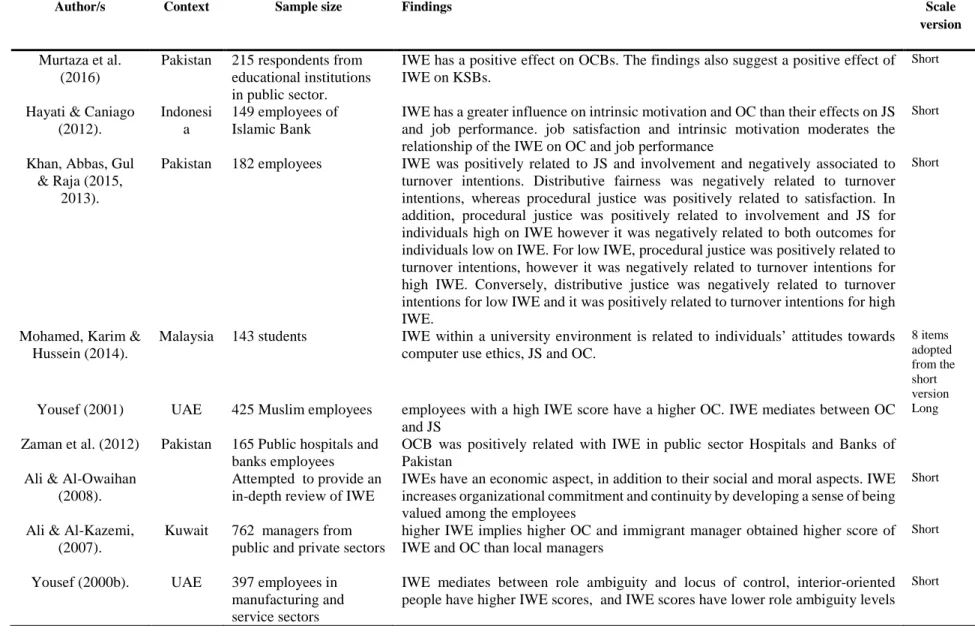
Table 2-2 Previous work on IWE in terms of sample size and used version of IWE scale .... 53
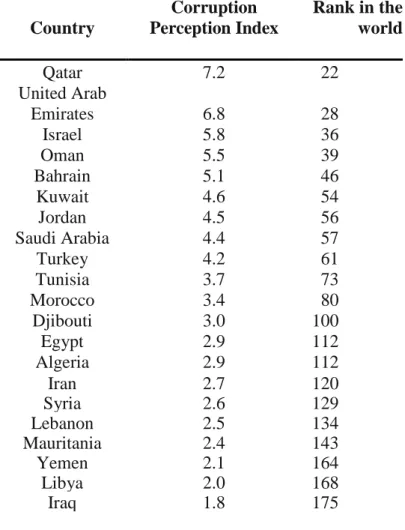
Table 2-3 The PCI indicator for corruption for some MENA countries ... 58
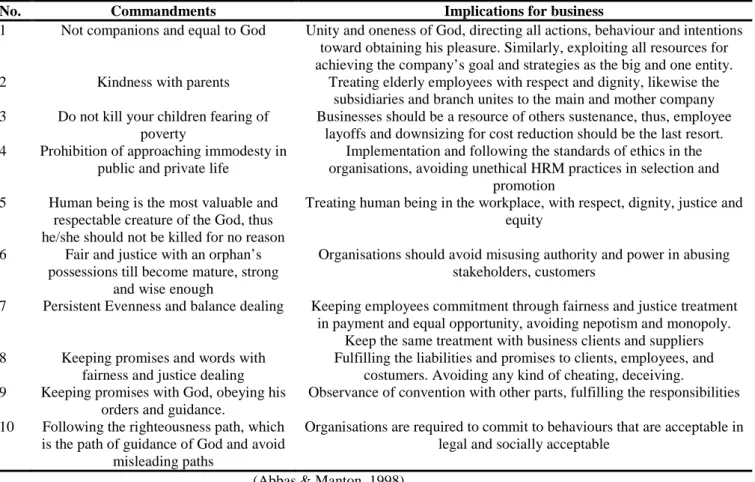
Table 2-4 Islamic Ten Commandments and Business Implications ... 64
Table 5-1 Frequency and percentages of demographic variables ... 116
Table 5-2 Kolmogorov-Smirnov and Shapiro-Wilk test of normality... 117
Table 5-3 Discriminant validity of the variables ... 119
Table 5-4 Harman’s one factor test for assessing CMV ... 120
Table 5-5 KMO and Bartlett's tests for all variables ... 121
Table 5-6 Pattern Matrixa For the new IWE scale ... 122
Table 5-7 Pattern Matrixa for Organisational Commitment ... 123
Table 5-8 Pattern Matrixa for Job Satisfaction ... 124
Table 5-9 Factor Matrixa for Organisational Citizenship Behaviour ... 124
Table 5-10 Factor loadings of the new IWE scale in CFA ... 126
Table 5-11 Summary of the IWE model fit indices compared to the cut-off values ... 127
Table 5-12 the four dimensions of the new IWE scale and their items ... 129
Table 5-13 Spearman’s rho, Mean, SD and Cronbach’s Alpha ... 130
Table 5-14 Summary of Hierarchical MR when the demographic variables are controlled . 134 Table 5-15 Summary of HMR controlling for dimensions of Organisational Commitment . 135 Table 5-16 Summary of hypotheses testing ... 136
Table 5-17 the importance of the Independent Variables in predicting the OCB ... 137
List of Figures Figure 1.1 Location of Iraqi Kurdistan ... 24
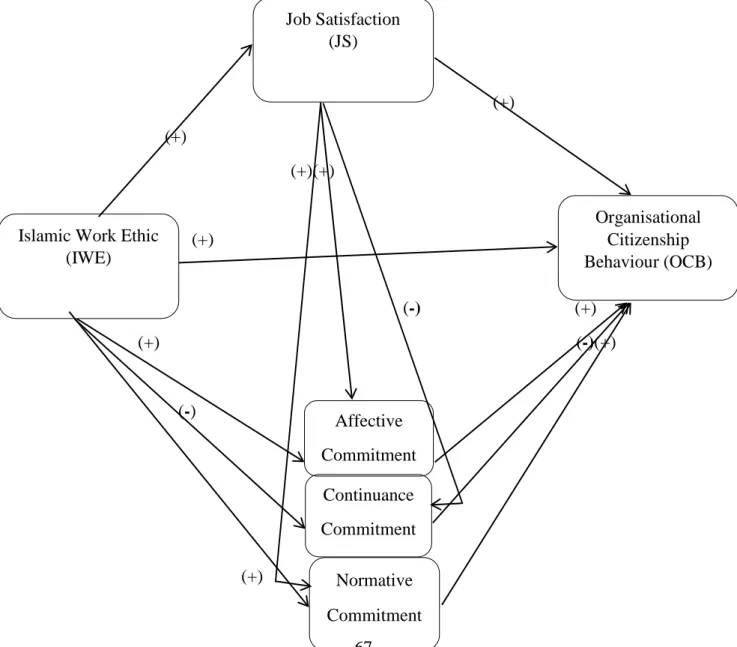
Figure 3.1 The conceptual framework of the association between Islamic work ethic, job satisfaction, affective, normative and continuance commitment and organisational citizenship behaviour... 67
Figure 4.1 Summary of the development process of IWE scale ... 101
Figure 5.1 The new Islamic work ethic scale and its dimensions ... 128
List of Abbreviations
AC Affective Commitment CC Continuance Commitment CFA Confirmatory Factor Analysis CITC Corrected Item-Total Correlation CMV Common Method Variance CPI Corruption Perception Index DCS Drop and Collect Method DF Degree of Freedom DV Dependent Variable
EFA Exploratory Factor Analysis FA Factor Analysis
GDP Gross Domestic Product
HMR Hierarchical Multiple Regression HRM Human Resource Management IV Independent Variable
IWE Islamic Work Ethic JS Job Satisfaction
KRG Kurdistan Regional Government ME Middle East
MHE Ministry of Higher Education and Scientific Research
MMCs Muslim Majority Communities MR Multiple Regression
NC Normative Commitment OAQ Organizational Assessment
Questionnaire
OC Organisational Commitment OCB Organisational Citizenship
Behaviour
OCS Organisational Commitment Scale PBUH Peace Be Upon Him
PWE Protestant Work Ethic
PDM Participation in Decision Making SD Standard Deviation
1 CHAPTER ONE: THESIS OVERVIEW
1.1 INTRODUCTION
The competitive global economy requires organisations to remain productive and effective. After decades of marginalisation, religious beliefs and values have attracted the attention of practitioners and academics given their influence on work related behaviours (Dana, 2009). However, religion in general and Islam specifically are under-researched in organisational studies (Essers & Benschop, 2009) even though work ethics has been a hot topic in organisational research literature. Increasing levels of unethical behaviour, globalisation, privatisation and transitions to market economies are likely to give more importance to this topic than ever before (Burgess & Mullen, 2002). Spirituality and religiosity affect millions of people across the world in their daily life especially in the workplace. However, the influences and implications of these two components are rarely addressed in organisational research (Davidson & Caddell, 1994; Weaver & Agle, 2002).
Globalisation and complexity of business have led organisations to take into account the standards of work ethics besides the standards of profitability and efficiency in order to enhance competitive advantage (Al-Bashir, 2008; Asaar, 2005). Generally, it is argued that some people behave less ethically than before (Rizk, 2008). As organisations are aware that their greatest asset is the effectiveness of their human resources and successful organizations need employees who continually adopt positive attitudes and behaviours at workplace. The work ethic is defined by Ip (2010, p. 97) as “the way a business practices its ethic in a country”. In addition, the expression of ethics is defined as “the activity of applying a moral precept to concrete problems” (Wines & Napier, 1992, p. 883). Ethics are considered as one of the key components of any organization’s core values (Carroll & Buchholtz, 2009; Rice, 1999; Schwartz & Carroll 2007). According to Parker (1998) business ethics recognise the links between organisations, business communities and the good of the individual. Ethics are the core of science aiming at achieving individual and organisational prosperity through emphasising security, goodness, trust, safety and cordial relationships between people.
Increasing corporate scandals and unethical behaviour at all organisational levels have increased the need for codes of ethics to help organisations (Al-Bashir, 2008; Rokhman, 2010). These problems underlined the need to review the effectiveness of accounting standards, auditing regulations, code of work ethics and corporate governance principles. Studies on work
ethics and ethical behaviour have gained significant interest in organizational behaviour and since 2001 we have witnessed a series of financial information frauds involving Enron Corporation, WorldCom, Arthur Andersen, Telecommunications Company Qwest and Sunbeam, among other well-known corporations (Marri et al., 2012; Rokhman, 2010; Yousef, 2001). Other matters include the increasing proliferation of ethics scandals and corruption of management at the workplace (Asaar, 2005). Corruption slows economic growth and decreases investment (Smarzynska & Wei, 2000; Wei & Shleifer, 2000). Without ethics and morality there would be more chaos, corruption, dissatisfaction, unfair practices and discrimination. Ethics in the workplace vary across time and context. Islamic work ethic support cooperation, consultation, equity, unity and spirituality at work and spirituality is considered as key component of IWE. Practicing Islamic Ethics at work leads towards creativity, honesty and trust (Dannhauser, 2007). This empirical study examines the association between Islamic work ethic and employee satisfaction, commitment and organisational citizenship behaviour in the higher education sector in Iraqi Kurdistan. This empirical study develops Ali’s (1988) Islamic work ethic scale and tests it in relation to attitudes and behaviour of lecturers at the University of Salahaddin. Social exchange theory and the norm of reciprocity are used to create a conceptual framework and principles of IWE are linked to social exchange theory and the norm of reciprocity in order to better understand the linkage between important variables in OB/HRM research.
1.2 RESEARCH BACKGROUND
Professional ethics cover the principles set out to govern the desirable behaviour of members of a given profession, which serve as criteria for evaluating their performance in positive or negative terms (Al-Sa’adan, 2005), while Pride, Hughes and Kapoor (2014, p. 37) indicated that “work ethics are criteria of individual ethics applying to the different job situations”. Studies on work ethics started with the Protestant Work Ethics (PWE) of Max Weber (1905) and (Siedenburg, 1922). Ethics are moral principles that differentiate right from wrong. Ethics are a key element of business activities that spread awareness of moral dimensions and ethical business practices and have become an important field of businesses, academia and government (Ahmed et al., 2003; Crane & Matten, 2007). An ethical workplace is accountable, transparent, feasible and supportive which enable the management to retain their employees which in return positively and significantly contributes to organisational success (Kaptein, 2011).
Max Weber (1905) and Siedenburg (1922) who introduced the Protestant Work Ethic (PWE) are considered as the first in this area. Most studies on work ethics occur in American and European contexts and mainly have focused on PWE (Lim & Lay, 2003; Rice, 1999) and the role of religon and work ethics in relation to workplace outcomes in developing countries is mainly overlooked. This seems paradoxical given the strong influence of religion, particularly Islam, on individual thoughts and behaviour (De George, 1986; Jones, 1995; Lee et al., 2003). Workplaces are now more diversified in terms of religions, culture, ethnicity and languages than they used to be. Different factors affect an individual’s ethical behaviour such as situational factors, culture, personal morals, stage of moral development, values, life experiences, family and peer influences. Influence and experiences differ in the West from those reported in Middle East or East Asian communities and it stands to reason that examining ethics in a non-Western setting is important (Rizk, 2008). Separating an individual’s religious beliefs from their identity is very difficult due to the difficulty of holding two different identities for religious people. In other words he or she is the same person who holds all identities in oneself (Borstorff & Arlington, 2011). Accordingly, managing a diverse workforce in terms of various religions and cultures is a challenge (Abdullah et al., 2012). In an Islamic organisation context, self-reform and advising others or correcting them, helps avoid committing sinful acts and spread and develop an ethical culture within the workplace (Kaptein, 2008). Islamic traditions and teachings urge people to self-correct or self-monitor to help individuals stay focused and positively contribute to organisational development (Koltko-Rivera, 2006).
Performing religious activities significantly affects individual prosperity and brings harmony and life satisfaction among members of society (Ismail & Desmukh, 2012). The importance of work quality is emphasised in Islam, as Ali (1992, p. 507) stated (e.g., ‘Persist in your action with a noble mind …. Failure to perfect your work while you are sure of the reward is injustice to yourself’). The Islamic work ethic which has a rich theoretical yet poor empirical literature is originated in the Quran and the teachings of the prophet Mohamad (PBUH) (Ali & Al-Kazemi, 2007). From an Islamic point of view, work is a virtue and hardworking causes sins to be absolved as the Prophet (PBUH) stated that: ‘‘no one eats better food than that which he eats out of his work’’. A purposeful engagement in work is the keystone of the IWE that engagement facilitates personal and societal goals (Ahmad, 1976; Ali, 1992). Ethics are strong and key components of organisational culture (see Rice, 1999; Schwartz & Carroll, 2007) that induce employee involvement (Fodor, 1990; Randall & Cote, 1991) and facilitate economic
development (Congleton, 1991). Islam as a religion based on Quran and the teachings of the Prophet Mohammed (PBUH) governs all aspects of Muslim life including economic and social activities (Arham, 2010; Naqvi, 1981).
1.3 THE RESEARCH PROBLEM
According to Jalil et al. (2010), ethics and ethical behaviour will continue to be a hot topic in business society for years to come. This is partially due to the scandals and unethical behaviour of some individuals which have had destructive implications on business and organisations in terms of their efficiency, profitability and survival which sometimes had led to bankruptcy and the global financial crises (Marri et al., 2012). The motivation for conducting this study is to understand the relationship and influence of Islamic work ethic on individual attitudes and behaviour. This study argues that IWE have a strong influence on attitudes and behaviour in an Islamic workplace setting.
To test this proposition, the study addresses a gap in understanding the extent to which Islamic work ethic is related to job satisfaction, affective, continuance, and normative commitment and citizenship behaviour. Workplace spirituality is found to have positive implications such as trust, creativity, commitment and honesty which ultimately improve organisational performance (Burack, 1999; Krishnakumar & Neck, 2002). Due to a lack of empirical studies, the extent of implications that religion and spirituality make in the workplace is not clear (Mellahi & Budhwar, 2010; Possumah, Ismail & Shahimi, 2013). Accordingly, this study will contribute to identifying the extent to which religion and spirituality affect individual attitudes and behaviour in an Islamic workplace setting. On one hand, religious beliefs influence the lives of billions of people yet they are mainly ignored in organisational research (Hashim, 2010; Spilka et al., 2003; Weaver & Agle, 2002). On the other hand, the daily lives of some Muslims do not match Islamic teachings (Beekun & Badawi, 2005; Muatasim & Katharina, 2012). Some Muslim countries are among the richest countries in terms of possession of natural resources, yet they are not wisely exploited, their economic performance is relatively poor and corruption and misuse of public wealth are suspected reasons for this backwardness (Ali, 2005). For instance, based on the Corruption Perception Index (CPI) (2011), many Muslim countries are among the most corrupted countries and Iraq is the third most corrupted (Izraeli, 1997; Mujtaba, Tajaddini & Chen, 2011). An example of economic crime is that the estimated amount
of the annual US gross national product is the survey conducted by Joseph Wells, a prominent US fraud auditor that is attributed to fraud at astounding US $400 billion (Aras & Crowther, 2008; Pomeranz, 1997). Diffusion of unethical behaviour and practices which violate organisational and societal values points to the importance of adopting ethical systems (Balkır, 2005; Hodgetts & Luthans, 2000) due to a lack of work associating work ethics with poor management, abuse and misuse of authorities and public resources (Primeaux & Stieber, 1994). Wasta has positive and negative implications on the society and organisations. Wasta is a popular term in the Middle East derived from the roots of the Arabic word for “middle” and the problem of Wasta is similar to the proverbial elephant in the room-everyone knows it exists but mentioning it is avoided due to the sensitivity of the subject (Ramady, 2016). Historically, in the Arab World, Wasta was significantly used as a means to manage the relationships between families and tribes by a third party as intermediary usually known as Sheikh who is invited to intervene between the conflicting parties (Cunningham & Sarayah, 1993). However, overtime, the goal of Wasta has changed to intercession from conflict resolution as a mean of survival. Therefore, the concept of Wasta has implications for the person who intercedes/mediates and the act of intercession and mediations (Cunningham & Saryrah, 1993). Arab Spring uprisings asked for serious changes that would contribute to decreasing Wasta and promoting justice and fairer competition (Ramady, 2016). Understanding Wasta helps to better understand how decisions are made in Middle Eastern and Arab culture because of its key role in the most significant decisions (Whiteoak et al., 2006). The English translation of Wasta include clientelism, nepotism, cronyism and touting; in French is known as piston. In Western-dominated cultures it is seen as negative and immoral and model of a bureaucratic system which is implemented with objectivity and not treating all with equitably. For example, Lackner argues that in some cultures Wasta is seen as a positive virtue. For instance, the concept of ‘big man’ in Nigeria and Guanxi in China are praised. In such societies it is perceived as an expression of group solidarity at the level of family, clan, tribe or country (Ramady, 2016).
Generally, Wasta may have some positive effects but is normally considered as a negative phenomenon due to its influences on decision making processes in all organisational levels in Middle Eastern societies because under-skilled or poorly skilled people obtain good jobs because of it. Wasta sometimes is linked to the wealthy and oil-rich countries that can afford the negative implications of Wasta but others cannot (Sultan et al. 2011; Weir et al. 2011). Wasta is a controversial practice however, it is sometimes praised for its role in overcoming
severe bureaucratic procedures and solving conflicts. Likewise, Wasta is a force that decreases uncertainty in decision making and also it lessens the bureaucracy and the long and time consuming procedures of routine. For others it is favouritism based on family connections or political affiliations (Ali et al. 2003). Studies have shown that more educated people are more against using Wasta as it is seen to interfere with good businesses (Mohamed & Hamdi, 2008). Wasta is more used in recruitment and promotion particularly in the public sector (Ramady,
2016)
Hofstede (1984) shows that Middle Eastern (see Table 1-1 below) countries tend toward collectivism rather than individualism. Wasta has a negative reputation yet it relates to favouritism which involves using connection or mediators to reach specific goals and it is connected to officialdom and politics. Wasta can be found in most aspects of Muslim and Arab life including government services, education, allocating projects, admission, job application and government decisions. Wasta can be fully included in the concept of social capital and contributes to the reproduction of social inequality. Wasta is more effective with weak political and legal institutions in a society where family connections and political affiliations become the “state within a state” (Ramady, 2016). In the case of weak institutions, bribery is a strong alternative to Wasta which can be positive or negative depending on the intention behind using it. For people who refuse to accept Wasta there is always an option of leaving the system or institution. In such collectivist communities (Muslim and Arab) saying a direct “yes” is a possible option by doing nothing later or to say tomorrow (bukra) or if God wants (in shaa Allah), but saying a direct and face to face no is not easy. Wasta is rarely highlighted and it is generally seen as a negative phenomenon that can be more precisely understood within a particular environment and culture and there is little qualitative differences between Wasta and social capital (Ramady, 2016).
In the Arab World establishing connections and links occurs prior to the establishment of the business itself but failure to honour them implies the end of the business relationship. Three factors underpin business practices in the Arab World (Weir et al., 2016). First, the global philosophy of Islam based on Muslim practices rather than Islamic dogma. Second, the expectations that Muslims will practice the good practices of Islam and third, since Muslim societies are networked that business activities revolve around these networks (Ramady, 2016). Another benefit of Wasta is mediation binding both families and societies into peaceful and prosperity in a hostile community (Cunningham & Saryrah, 1993). When there is more demand and applicants for one opportunity or vacancy only the strongest one can obtain it. Although
Wasta is criticised for being a negative phenomenon, the same critiques seek to prove another positive sides of Wasta. Wasta will remain until there is a serious call for making cultural and societal changes, political reforms and activities and modernisation and the disadvantages of Wasta are decreased (Cunningham & Saryrah, 1993). For those who have experienced a negative consequences of Wasta, it has a negative face and feels like injustice. Corruption can be defined “the abuse of entrusted power for private gain” (Ramady, 2016). A “connection” expects to benefit from a service in return or will use his or her influence for family members and Western perspective on Wasta will probably consider this as a form of corruption, while it is widely perceived as something “natural” and not criminal in most Middle Eastern societies. According to Askari and Arfaa (2012, p.31), “there is no relationship between economic growth and the level of corruption simply because a country is Islamic”. Furthermore, a fundamental problem with Wasta in Muslim, Arab and MENA countries concerns is its incompatibility with Islamic principles, and under the wider umbrella of corruption, Wasta operates freely in both public and private sectors. Islam is against any form of unethical conduct such as corruption, Wasta, bribery or harassment (Ramady, 2016). In summary, Wasta is embedded in Arabic cultures and while seen by outsiders as a negative influence it does enable positive outcomes in some situations. Its effects are not always bad and it is a social force that will remain influential in Arab societies.
Although Islamic teachings go against nepotism, Wasta, and favouritism these unethical behaviours are widespread in many Muslim countries albeit with different levels (Al-Remahy, 1995; Iles, Almhedie & Baruch, 2012; Yeganeh & Su, 2008). Enhancing the principles of IWE in the workplace can contribute to reducing levels of unethical behaviour and corruption in Muslim countries. In accordance with this, studies have found that religion reduced corruption (Dreher, Kotsogiannis & McCorriston, 2007; Paldam, 2001; Treisman, 2000). For instance, Sandholtz and Koetzle (2000) found that the strength of the Protestant religion reduced the level of corruption.
Table 1-1 Individualism and power distance according to Hofstede (1980)
The index only covers the Middle East and Turkey Country Individualism Power distance
Egypt 25 70 Iran 41 58 Iraq 30 95 Jordan 30 70 Kuwait 25 90 Lebanon 40 75 Morocco 46 70 Syria 35 80 Saudi Arabia 25 95 UAE 25 90 UK 89 35 Norway 69 31
Source: http://geert-Hofstede.com; Accessed 2015-04-02.
Most literature on HRM in Arab and Muslim contexts is grounded on the applications of Western HRM practices and HRM practices in Islamic contexts is overlooked (Budhwar & Mellahi, 2006; Tayeb, 1997). Due to cultural contexts and national socio-economic differences, further attention should be given to addressing HRM practices in an Islamic context (Rahwar & Al-Buraey, 1992). Most public organisations are accused of corruption and recruitment mostly does not fit with Islamic teachings (Ali, 2005). Since individual spiritual and religious needs are not usually taken into account in Western management and HRM practices, they do not fit with an Islamic context and culture and Western theories of work values and work motivation may not be appropriate for an Islamic context (Bjerke & Al-Meer, 1993; Chew, 2005; Goldstone, 2012; Rahwar & Al-Buray, 1992). The emergence of various HRM models in Muslim majority communities is another issue, where there is a lack of unified HRM practices that fit with Islamic teachings (see Ahmed, 2006; Aycan, 2006; Chew, 2005). The concept of Islamic work ethic has emerged in the literature starting from the work of Ali (1988)
who first developed an IWE scale. Much of the literature on work ethics predominantly comes from American and European contexts (Ahmad, 2011; Lee et al., 2003; Parnell & Crandall, 2003) and tends to rely on Weber’s Protestant Work Ethic (PWE). European countries in particular follow the PWE for job commitment and job satisfaction (Yousef, 2001). The development of the IWE scale is a main aim of this study because the original scale of IWE Ali (1988) is long, old, unidimensional and some items were inconsistent when the English and Arabic versions of the scale are compared and only Arab students who studied in the USA were involved in the original scale creation. To assist research into religiosity at work this scale needed to be developed to a modern, shorter and more likely, a multidimensional scale. The initial unidimensionality of the IWE scale is inconsistent with the two main sources of IWE (Quran and teachings of the Prophet (PBUH). Accordingly, this study uses Hinkin’s (1995) approach as a guideline for scale development. To the best of my knowledge this study is the first to adopt a systematic and academic approach to develop the IWE scale. Hinkin’s scale development approach was followed because it is a model of good practice and straightforward guide to the development of measures of abstract concepts. By carefully following the process outlined in Hinkin’s paper researchers have a better chance of creating measures that are efficient in terms of item content and usable in a range of research settings. In addition to following Hinkin’s (1995) approach, the English and Arabic versions of the scale are compared to prepare more reliable, valid and accurate items. The items were translated into Kurdish and compared with English and Arabic versions. Findings show that IWE is a strongest predictor of OCB than dimensions of commitment and job satisfaction indicating the importance and influence of religious beliefs (IWE) on individual attitudes and behaviour in an Islamic context.
1.4 SIGNIFICANCE OF THE STUDY
This study is motivated by contributing to the theoretical and empirical literature on IWE and its implications in the workplace as the first to develop the IWE scale in a systematic way. A multidimensional scale with four factors is produced. The strong predictive ability of Islamic work ethic underscores the influence of religious beliefs in an Islamic workplace context and research. In the presence of high IWE some unusual findings occur which contradict those normally found in non-Islamic contexts (European and America). Unexpected results include finding continuance commitment unrelated to job satisfaction (usually negatively related) and
positively related to citizenship behaviour (usually unrelated or negatively related). These findings contribute to a new understanding and insight to dimensions of commitment where continuance commitment may have different meanings in an Islamic context. This study also contributes to the literature on social exchange theory by proposing a religious component where exchange in an Islamic context with God is free of risk or uncertainties. This leads to the establishment of trust and more exchange relationships will occur in the workplace because employees are going to reciprocate with God and they will receive benefits in the hereafter. Implementing the principles of IWE in the workplace will have positive implications in terms of increasing employee satisfaction and affective commitment and they will be more ready to engage in citizenship behaviour. Likewise, promoting IWE in public organisations can significantly contribute to reducing unethical behaviour since in some Arab countries, managerial decisions are significantly affected by nepotism, favouritism and personal connections (Atiyyah, 1992).
1.5 AIM, OBJECTIVES AND RESEARCH QUESTIONS
The main aim of this study is to develop the Islamic work ethic scale (Ali, 1988) and to test a new scale in a series of relationships with job satisfaction, affective commitment, normative commitment, continuance commitment and organisational citizenship behaviour. This study also aims to investigate the extent to which IWE affects the attitudes and behaviour of lecturers at the University of Salahaddin in Iraqi Kurdistan. This study proposes that IWE is a strongest predictor of citizenship behaviour relative to job satisfaction and dimensions of commitment. This study explores the influence of religion and spirituality on individual attitudes and behaviour. Accordingly, this study is guided by the following objectives:
1- To develop an improved version of the Islamic Work Ethic scale.
2- To examine how IWE, affective, normative and continuance commitment are related to citizenship behaviour in an Islamic context.
3- To examine how job satisfaction relates to affective, normative and continuance commitment.
A managerial understanding of the influence of religiosity and spirituality on individual attitudes and behaviour can help to enhance components of religiosity and spirituality in order
to enhance individual positive attitudes and behaviour. Islamic work ethic is thought to have positive impacts on many organisational outcomes such as commitment, satisfaction, citizenship behaviour and performance. Research questions are:
1- How do individual levels of commitment to IWE affect job satisfaction, commitment and citizenship behaviour?
2- How are job satisfaction and commitment related to citizenship behaviour? 3- How job satisfaction is related to dimensions of commitment?
4- To what extent is IWE is important and influential in an Islamic context?
1.6 IRAQI KURDISTAN
Kurdistan or land of the Kurds refers to a portion of Turkey, Iraq, Syria and Iran. Iraqi Kurdistan (see Figure 1.1) is located in northern Iraq and contains the three main provinces of Duhok, Suleimani and Erbil (Stansfield, 2011). Indeed, Kurds are the largest nation (ethnic group) in the world without their own state. The estimated population of the Kurdish is around 35 million. CIA Fact Book estimates the population distribution as follows 14.5 million in Turkey (18%), 6 million in Iran (10%), about 5 to 6 million in Iraq (17.5%) and less than 2 million in Syria (9.7%). This adds up to close to 28 million Kurds in Kurdistan and adjacent regions (Central Intelligence Agency, 2014). The Kurdistan Regional Government (KRG) has been an a semi- autonomous region of Iraq since the end of the first Gulf War in 1991 and the Kurdish uprising and a no-fly zone protected the region from attack by the Iraqi regime and their independence is recognised by the federal constitution (Park, 2014; Viviano, 2006; Wikitravel, 2012). Kurds often say they have “no friends but the mountains” (Natali, 2010). In early 1980s Iraq had one of the highest per capita food availability among Middle Eastern countries where the share of Iraqi-Kurdistan was 25-30 % of the total Iraqi production (WFP Iraq-North Coordination Office, 2001). The Iraqi regime carried a series of Anfal campaigns against Kurds in Iraqi Kurdistan between 1987 and 1988 and 182,000 civilians lost their life. Based on a satellite study by Mubareka and Ehrlich (2010) which concentrated on changes in land-use in two areas in Iraqi Kurdistan (Jafayati in Suleimani province) showed that vast cultivated areas were converted into grasslands after the Anfal campaign. A similar situation in Duhok is reported (Human Rights Watch, 1993; Hardi, 2011). Since the fall of Saddam’s
regime in 2003 the KRG has experienced rapid urban development in many sectors mainly due to increased foreign investments and oil revenues. The Ba’ath regime withdrew its administration from Kurdistan after the Gulf war in 1992. The KRG established the university of Suleimani and Duhok while Koya, Soran and Hawler Medical Universities are recently established. Since then due to many political conflicts and disputes agricultural development in Iraq Kurdistan is impeded, leading to a significant reliance on importing food (Hardi, 2011; Meyer & Califano, 2006; Mubareka & Ehrlich, 2010). After the liberation (occupation/ invasion) of Iraq in 2003, perhaps Iraqi- Kurdistan obtained the most benefits. Currently the Kurds in Iraqi- Kurdistan have the highest level of foreign investments, security and living standard in Iraq (Rubin, 2008). Kurdistan regional government and through laws of Investment Law (Law No. 4) and Petroleum Law (Law No. 22) in July 2006 attempted to attract the foreign investment to the region.
Kurdistan has become the main “gateway to Iraq” with development of tourism and infrastructure. Nouri al-Maliki (the former prime minister of Iraq) has put considerable effort to halt every step in the process of building the oil infrastructure and exporting oil through blacklisting of oil companies operating in Kurdistan to cutting of the share of KRG from the national budget. Taking into account cutting the budget of KRG by central government in Baghdad, collapsing the oil price and existence of around 1.8 million refugees the economy is suffering severely (Glover, 2015). As a result, large wage and salary arrears have been accumulated by the government. Employees of many contractors have not been paid for months which has mainly affected the construction sector and small companies have declared bankruptcy. Poverty has increased from 3.8 per cent in 2014 to 8.1, and social protection systems require further support. Welfare in KRG has been profoundly affected by the crisis in Iraq and Syria. The main priority of KRG has been maintaining security and the war against ISIS thus an increasing share of public finance is diverted toward security and defence spending particularly after the city of Mosul was seized by ISIS in 2014.
On August 3, 2014, ISIS forces moved into KRG and the disputed territories. The Peshmerga were out-gunned due to initially being without allies and inferior military equipment (Gunter, 2015). Since early 2012 up to now the situation in KRG has turned into a full-blown humanitarian crisis due to the influx of refugees from Syria and later IDPs in 2014. By the beginning of 2015, there were 257,000 Syrian refugees and 1,003,300 Iraqi IDPs in addition to the 250,000 an internally displaced persons (IDPs) who came to the region before 2014. In early 2015 the total number of refugees and IDP reached up to 1.5 million in Iraqi Kurdistan.
Combining the influence of Syrian refugees and Iraqi IDPs are linked to human development sectors including education, health, food security, social safety nets which needs around $846 million (3.5 per cent of GDP) in 2015. The main source of economic growth in KRG is oil. The oil infrastructure and exports are operated by 47 international companies from 17 countries. The private sector in KRG is underdeveloped and comparatively small but has grown but from a low base. The number of private sector firms has increased from 2004 to 2014 due to foreign investment in the region. A non-official referendum was held in January 2005 with the Iraqi National Assembly election and about 98 per cent of the Kurds in Iraqi Kurdistan voted in favour of independence.
1.6.1 Higher education
The higher education system in Iraq including Kurdistan universities is argued to be the best of its kind in the Middle East and Gulf region. Most of professors in the Gulf universities have accomplished their degrees from Iraqi universities. However, higher education, similar to other sectors, has been through a prolonged period of relative isolation. Higher education in Iraqi- Kurdistan was under two sanctions, one from UN and the other from the Saddam regime (Kaghed & Dezaye, 2009). Currently, higher education comprises of six public universities, two public technical institutes and four private universities. A Ministry of Higher Education and Scientific Research was established in 2006 which was a department within the Ministry of Council. Most public universities provide a range of subject and disciplines except Hawler Medical University which was established in 2006. The colleges include dentistry, pharmacy and nursing, and medicine and comprise about 70,000 students, 3500 academics and more than 2000 staff. Among the public universities in Kurdistan, the three older universities are Salahaddin in Erbil, Duhok and Suleimani which are the most productive (Noruzi & Abdekhoda, 2014).
After the Iraq invasion (for some considered as liberation) in 2003, thousands of Iraqi students fled to Kurdistan as a more stable area which boosted the local economy. Over the last ten years many new universities have opened and the KRG allowed those students to complete their study in Kurdistan (Anderson, 2011). Among the universities, two use English exclusively in their teaching. September 2006 was the first academic year for the University of Kurdistan-Hawler, while the American University of Iraq-Suleimani is established in 2007. There are other private universities that have recently opened such as Cihan University, Sabis University and Ishik University (Kurdistan Regional Government, 2010). Various ways have been taken into account to develop higher education such as being home to Iraqi higher education by opening branches of the American University of Iraq, the BMU Lebanese French University, British Royal University for Science and Technology, and other European and American educational institutes. An ambitious reform has been launched over the past few years by the KRG about the basic and secondary education and it is prolonged and expanded so university education and tertiary technical can be included (Vernez, Culbertson & Constant, 2012). To ensure economic stability and, similar to the governments of other countries, the Kurdish government needs to develop its national human capital in which development of the education system is one of the ways (Gabriella, 2008). Kurdistan regional government and for the purpose
of preparing and developing a qualified and capable workforce has introduced the Human Capacity Development Program (HCDP) Scholarship with an annual budget of 100 million US dollars (Ministry of Higher Education & Scientific Research, 2010). As part of the scholarship, eligible students were funded to study abroad and around 1000 students were awarded the scholarship per year until 2014 (Tennessee Independent Colleges & Universities Association (TICUA), 2011). An initial needs evaluation was carried out by the University of Exeter in the UK for the sectors in KRG in December 2005. This university was chosen due to their prior links and dialogue with the KRG. A number of observations were made (University of Exeter, 2006) in a report which concluded that there is a significant demand for English language because it was seen to be vital for economic, educational and political progress. Generally, the status of research laboratories is very poor besides inadequate equipment. Some departments do not have enough supplies, staff training and development and university presidents need greater power to improve the performance of their universities.
The Council of the universities positively received the report and attracted the attention of academics (Kaghed & Dezaye, 2009). The issues related to empowerment are clearly reflected in IWE such as establishing trust, increasing satisfaction and affective commitment and engagement in citizenship behaviour which all lead to development of individual and organisational performance. Additional to the Exeter report, there was series of international conferences on higher education in Iraq. The University of Westminster organised the first two in 2004 and 2005. The Ministry of Higher Education and Scientific Research in Kurdistan organised another conference in October 2006 entitled, ‘For a Contemporary Education’. In December 2007, the Ministry organised another conference in Erbil in collaboration with the ministry of higher education and scientific research in Iraq and the London-based Iraq Higher Education Organising Committee. Similar to the outcomes of the University of Exeter’s report (Iraqi Higher Education Organising Committee, 2007), this conference concluded that the teaching faculties are the core of universities and universities are playing a leading role in the society, specialisations in higher studies are needed, quality research should be developed to meet the needs of employers a quality assurance board should be set up; and steps should be taken to decentralise higher education. As expected, the quality of study material provided to students need to be developed. Similar to the outcomes of the previous conference, the lack of empowerment and participation in decision making were serious issues. It is suggested here that applying the principles of IWE can considerably contribute to development and improvement of the quality of education in Iraqi Kurdistan.
1.6.2 Choice of the context
Conducting this study in the higher education sector in Iraqi Kurdistan has an added benefit as explained below. First, this study contributes to higher education in KRG through highlighting the importance of higher education in development of the region. Second, this study contributes to an understanding of staff attitudes in Iraqi Kurdistan universities because so far, very little is done on evaluating the performance of academics (Noruzi & Abdekhoda, 2014). Third, universities are a big employer. Similar to other Middle Eastern countries, Iraq, needs the knowledge generated by its universities to replace oil money with high technology employment. They need universities with good quality graduates. Fourth, the public sector is the main employer and the quality of graduates is not at acceptable levels in terms of skills and qualitifications. When it comes to private businesses and as a common perspective, financial liquidity is more important than education and the threat of sudden dismissal is high in private companies. Accordingly, job seekers in particular those with limited skills or low academic qualification and fresh graduates, look for public employment due to its job security in spite of low salaries (Khodr & Zirar, 2013). Similar to most Arab Gulf countries, the public workforce in KRG suffers from a lack of skilled manpower (Achoui, 2009; Rubin, 2012). Comparable to many Middle Eastern and Arab countries, the KRG is the main employer in the Kurdistan region (Mellahi & Budhwar, 2006), most university graduates and high school students join the public sector (Al-Hadithi et al., 2010). Based on the latest official report by Kurdistan Region Statistics Office, 45 per cent of the total Kurdish workforce work in private sector and 51.5 per cent work in the public sector (Kurdistan Region Statistics Office, 2012).
Fifth, the poor quality of education makes it difficult to meet labour market demands. For example, the UNESCO (2010) report emphasises the need to reform education system to improve schooling and vocational education in Iraq and Iraqi Kurdistan. Accordingly, over the recent years, the KRG has relied on foreign skilled labour in reconstructing and rebuilding the region (Khodr & Zirar, 2013; Kurdistan Board of Investment & General Consulate France, 2011). According to the Ministry of Education (2009) in KRG, teaching methods need to change and improve. Sadkhan (2010) addressed the main challenges that universities in Iraq face and analysed the quality of scientific research in those universities. Challenges include strategy, funding problems, information technology, the lack of available research infrastructures and organizational and management challenges. Sixth, this study contributes to the literature of organisational citizenship behaviour, since the literature shows a lack of studies on the associations between religiosity, OCB and related variables (Khalid et al., 2009).
1.7 THESIS STRUCTURE
This thesis consists of six chapters. Following this introduction, Chapter 2 explores the nature of an Islamic work ethic and justifies the development of a new scale. Chapter 3 utilises social exchange and reciprocity theory to develop a theoretical framework and a set of hypotheses linking Islamic work ethics to other influential variables. Chapter 4 gives a detailed account of the research methods followed in scale development and hypothesis testing. Results of scale validation and the relationships between Islamic ethics, satisfaction, commitment and citizenship behaviour are presented in Chapter 5. The overall findings are discussed in Chapter 6 in relation to the aims and objectives of the study. The conclusions and contributions arising from this study are also set out in Chapter 6.
2 CHAPTER TWO: ISLAMIC WORK ETHIC
2.1 INTRODUCTION
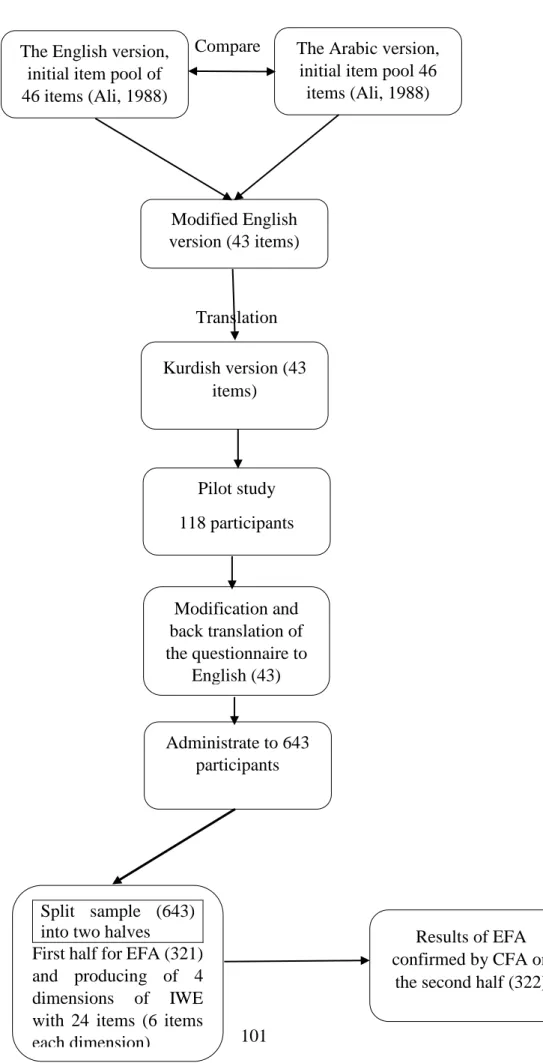
Islamic Work Ethic (IWE) is a new concept with a rich theoretical yet poor empirical literature for reasons addressed in this chapter. The implications of religiosity and spirituality in the workplace are also covered. Work ethics from Islamic, Christian and Judaic perspectives cover the main differences and similarities of work ethics from these three main religions (IWE, PWE and Judaic). A brief introduction to work ethics, IWE and its main principles is presented based on the two main resources of IWE. Literature reveals that most HRM practices in Muslim countries contradict the Islamic normative faith and Islamic HRM practices and this is considered as one of the main reasons for diffusion of unethical behaviours in those societies. Human resource practices and the influence of Wasta or nepotism is prevalent in some Muslim countries, indicating differences between an Islamic HRM practices and how actually these practices are affected by cultural factors which deviate them from being purely Islamic HRM practices. The research gap section covers reasons for the lack of empirical work on IWE and how this study attempts to contribute to its theoretical and empirical literature. Contrary to previous work, this study has employed a large sample (see Table 2.2). Moreover, as one of the main objectives of this study, a new scale for measuring IWE is developed because from reviewing the literature it is clear that the IWE scale is old, long, unidimensional and some items are found to be inconsistent when the English and Arabic versions are compared (see summary of the development of IWE scale in Figure 4.1). The next section addresses the importance of work in Islam as the core of the faith and how business has contributed to diffusion of Islam in some regions. Corruption in some Muslim countries has had destructive consequences on their economic and social systems, where in spite of their various resources their economic performance is relatively poor. These problems all make establishing an ethical and healthy system in all sectors especially public ones a necessity where Islamic HRM practices are implemented particularly in recruitment in order to lessen the role of Wasta, nepotism, political affiliation or family connections.
2.2 RELIGIOSITY AND SPIRITUALITY IN THE WORKPLACE
Religion refers to the set of behaviours that reflect the values of an individual’s faith (Park & Smith, 2000). Believing in God and commitment to adhere to the principles set by God is also called religiosity (McDaniel & Burnett, 1990). Syed and Metcalfe (2014; 2015) argue that the serious consideration of religious ethics cannot be neglected in work ethics bearing in mind that some people are spiritually motivated by religion to achieve specific goals (Ali et al., 1995). However, some studies consider secular variables rather than spiritual variables when explaining workplace outcomes (King, 2008; Tracey, 2012). On one hand many believe that religious beliefs do not play a major role in decision making and question whether religious beliefs should affect work ethics at all (Fort, 1996). On the other hand, in some situations productivity increases when a spiritual/religious component is provided by organisational leaders (Toney, 2002). In the same line, employee morale and productivity may be reduced due to merely concentrating on social and cultural effects on leadership if the potential influence of religious beliefs on leader-follower exchanges in the workplace is neglected (Morgan, 2004). Religious studies have proposed that religion has a great impact on an individual’s beliefs and their external work values (Parboteeah et al., 2009).
Previous work has found that an individual’s religious identity can influence several workplace outcomes like work meaningfulness, job satisfaction and organisational commitment (Davidson & Caddell, 1994; Rosso et al., 2010; Werner, 2008). The impacts of religion on organisational and individual levels is shown in Table 2.1 below. The literature on work ethics based on religion argues that IWE comprises larger degrees of spiritualism than Chrisitianity (PWE) yet relating these results to this theoretical literature would necessarily be unclear (e.g., Ahmad & Owoyemi, 2012; Feess, Mueller & Ruhnau, 2014). Spirituality can increase the connection of the employee with their work and create an association between spirtualiy and employee attitudes (Anderson, 2005; Dannhauser, 2007; Fleming, 2004; Oster, 2004). Kazemipour, Mohamad Amin and Pourseidi (2012) found that workplace spirituality positively affected OCB and AC of nurses. It is also a crucial component of ethical behaviour (Velasquez, 2002).
Workplace spirituality leads to honesty, creativity, trust, personal fulfilment, commitment and eventually leads to improving organisational performance (Burack, 1999; Krishnakumar & Neck, 2002). This is consistent with what Graafland et al. (2006) and Lee et al. (2003) reported regarding how religion can shape the behaviour of executives. In addition, religions have
particular degrees of impact on social and cultural attributes (Abdullah, Boyle & Joham, 2012), ethical behaviour (Rizk, 2008) and play an obvious role in adjusting people’s behaviour in all societies (Abbasi & Rana 2012; Borstorff & Arlington, 2011). Studies have addressed the impact of religious beliefs on people’s social behaviour (Anand & Kumar, 1982; Luqmani et al., 1987; LaBarbera, 1987; Michell & Al-Mossawi, 1999; Uppal, 1986).
Many forms of human interaction and the values that people hold are significantly affected by different religions (Spilka et al., 2003). They also determine the way people act, behave, perform their job, eat and dress (Calkins, 2000; Miller & Ewest, 2013; Tilson & Venkateswaran, 2004) and influence people’s undestanding of ethics and the way decisions are made (Quddus et al., 2009). Addressing the linkage between religious beliefs and spirituality with management has attracted some attention where various faiths are linked to different aspects of businesses like ethical behaviours in the workplace (Mellahi & Budhwar, 2010; Niles, 1999; Saeed, Ahmed & Mukhtar, 2001), effectiveness and leadership styles (Reave, 2005), practices of employment (Budhwar & Fadzil, 2000), job satisfaction (King &Williamson, 2005), legal challenges related to dealing with religious diversity and its issues in the workplace (Morgan, 2005) and impacts on ethical judgements in different societies (e.g. Beekun & Westerman, 2012; Pace, 2013; Walker et al., 2012). However, it is argued that the extent of changes that these implications could make is unclear due to lack of the empirical work (Muatasim & Katharina, 2012; Mellahi & Budhwar, 2010; Possumah, Ismail & Shahimi, 2013). Furthermore, empirical work has shown that high ethical values are found in some societies regardless of the religious beliefs that their people hold (Weaver & Agle, 2002). For instance, for specific behaviour like dishonesty or cheating no differences between religious and nonreligious people is found in terms of individual behaviour (Weaver & Agle, 2002). However, it is argued that people’s beliefs about work differ over time, place, level of religious commitment and culture. For instance, Muslims are not permitted to eat pork (Abuznaid, 2009). Religion is one of the main factors participate in forming the national culture (Hofstede, 1980; Weber, 1930).
Allport and Ross (1967) conceptualised two types of religiosity; intrinsic and an extrinsic religious orientation such that in extrinsic religious orientation individuals are interested in obtaining some benefits from being part of a religious affiliation such as improving the financial situation of a person, comfort, sociability and distraction, safety and self-justification. In contrast, people with an intrinsic religious orientation use religion in their life all the time and do not change their principles with a change of circumstances and show high commitment
to their doctrine. As Allport and Ross (1967, p. 434) stated: "the extrinsically motivated individual uses his religion, whereas the intrinsically motivated individual lives his religion".
The sample for this study represents an intrinsic stance with taking to account the current situation in Kurdistan (see section 1.6).
Table 2-1 The influences of religious elements on organisational and individual levels
Source (Niles, 1999)
Believing in the unity and oneness of Allah and viewing all Muslims as one community behaving based on the same principles as brothers and sisters are the two dimensions of unity in Islam as it is indicated in Quran that, all believers are brother and sisters (Ibnomer, 1987; Rice, 1999) and ‘act justly; Truly, God loves those who are just’ (Quran, 43: 9). This pillar provides a holistic and comprehensive understanding concerning the integration of Muslims in their societies and organisations as it is clearly asserted in the Al-Qur’an Al-ikhlas 112:1 and Al-baqara (2:186) (Ahmad, 2006). Ehrenberg and Smith (2016) argued that the conventional economic system is affected by the philosophy of materialism by referring to work as one of the ways of increasing wealth. However, from the Islamic perspective, for Muslims as servants of God, work and increasing wealth are not the main aim of life. Sen (1987) stated that the detachment between economic and ethics is a key insufficiency of contemporary economic theory.
Category Authors Impacts
Religion (Individual Level) (Pargament et al., 2004; Regnerus & Smith, 2005;Tischler et al.,
2002).
Creativity, honesty and trust, personal fulfilment, commitment, motivation and JS, and OC.
Religion
(organisational Level) (Brotheridge and Lee, 2007; Duffy, 2010; Ebaugh, 2003).
Emotional development and spiritual competence, encouraged holistic ways of working, developed community at work, empowered the workforce and human society, risk aversion and ethics,
stress management and career
2.3 Work ethics from Islamic, Christian and Judaic perspectives
It is suggested that the major reason behind differences in ethical beliefs in business actions across nations and countries is mainly attributed to cultural and religious differences (Ruhe & Lee, 2008). Furthermore, religion is a significant element of attitudes, values and beliefs of a society (Keegan & Green, 2008). The three major religions, Christianity, Judaism and Islam have the same source and are known as Abrahamic religions. For instance, these three main religions go against bribery, fraud and cheating, dishonesty, discrimination, corruption and injustice (Quddus, Bailey & White, 2009) and they have similar stances on interest and employee compensation (Abou-Zaid & Leonce, 2014). Likewise, they share some similar assumptions where principles such as avoiding using unethical ways of accumulating wealth, dedication to work, commitment, cooperation, competitiveness at the workplace, work creativity, and hard work (Ali,1988; Khan, Abbas, Gul & Raja, 2015; 2013; Yousef, 2000, 2001). Islam, Christianity and Judaism share some elements. However, Islam provides a particular and unique perspective on work such as considering it as a worship, the core of faith and perfection in work is a religious duty which brings prosperity and balance to the society (Ali, 2009). In addition, IWE emphasises more on cooperation at the workplace than PWE, and consultation is a way to avoid mistakes and overcome obstacles (Yousef, 2000).
Unlike PWE, IWE is a collectivist religion through emphasising the principle of “Islamic Ummah” and it emphasises more the intention rather than the results of actions (Yousef, 2000a). Therefore, from the concept of Islamic Ummah (nation), another importan dimension of IWE could be presented. In prior studies, this dimension is addressed under the concept of generosity (Ali, 1988). The spirit of unity and collectivity affects all aspects of Muslim life. Work ethics literature argues that Christianity (PWE) comprises smaller degrees of spirituality than IWE though, relating these results to this theoretical literature would not necessarily be clear (e.g., Ahmad & Owoyemi, 2012; Feess, Mueller & Ruhnau, 2014).
Taking into account these similarities, this raises the possibility of using the IWE in a mix context of Muslims and Christians. Whether the IWE scale can be considered as a purely an Islamic work ethic scale or as a general and good scale for measuring work ethics for the purpose of conducting a comparative study whereby the scores of Muslim and non-Muslim can be compared remains unclear. These similarities may lead some non-Muslims to find the items of IWE scale interesting and matching their religious beliefs. For instance, businesses or economic activities that harm society or other religions are prohibited in Islam. However, in spite of their similarities and differenecs other non-Muslims participants may score high on