SYNTHESIS OF NANO TiO
2
-SiO
2
COMPOSITE USING SOL-GEL
METHOD: EFFECT ON SIZE,
SURFACE MORPHOLOGY AND
THERMAL STABILITY
K.Balachandaran
Research Scholar, Research and Development Centre, Bharathiar University, Coimbatore – 641 046, Tamilnadu, India
Present Address : Department of Science and Humanities, R.V.S.College of Engineering and Technology, Coimbatore
Dr.R.Venckatesh*
Department of Chemistry, Government Arts College, Udumalpet – 642 126, Tamilnadu, India
Dr.Rajeshwari Sivaraj
Department of Biotechnology, Karpagam University, Coimbatore-641 021, Tamilnadu, India
Abstract
The study presents the synthesis of Nano TiO2/SiO2 composites (NTSC) using sol-gel method by hydrolysis of Titanium tetra isopropoxide with ethanol and water mixture as Titania source and Silicic acid as Silica source, a solid that can advantageously replace bulk titania samples as catalyst support. Comparison of their physical properties with the results presented in literature for bulk samples evidenced that these TiO2/SiO2 solids are promising in term of thermal stability. NTSC particle was characterized by XRD, SEM-EDS, FTIR and TG-DTA studies. From the FTIR results, peaks were observed at 3400 cm-1and 1650 cm-1 in both samples due to stretching and bending vibrations of -OH groups. The particle size of NTSC was found to be 7-10nm. Thermal stability of both samples was analyzed by TG-DTA. TiO2-SiO2 particle was stable upto 1100oC. Addition of SiO2 to TiO2, altered the size, shape, and thermal stability.
Key words: TiO2, TiO2-SiO2 nano particles, Sol-gel, Composite, SEM-EDS, XRD
1. Introduction
Particles smaller than tens of nanometers in primary particle diameter (nanoparticles) are of interest for the synthesis of new materials because of their low melting point, special optical properties, high catalytic activity, and unusual mechanical properties compared with their bulk material counterpart [1].
The physical and chemical properties of TiO2 in the nanometer size range depend on phase composition, grain size, and dispersity [14]. Nanosized TiO2 crystals of less than 10 nm show significant differences with bulk TiO2 in many aspects due to the quantum size effect [15-16]. TiO2 hydrosols consisting of highly crystallized nanoparticles have been widely studied in the fields of photocatalytic degradation of pollutants [17-18], self-cleaning windows [19], sensors [20–22], solar cells [23], and electron chromic devices [24].
In this work, we report novel sol-gel method to synthesis TiO2, TiO2-SiO2 nano composites at room temperature and the composite was analyzed for grain size by XRD, surface morphology by SEM-EDS, band gap by UV, metal oxide bonds by FTIR and thermal stability by TGDTA.
2. Experimental
2.1. Materials
All reagents used were of analytical grade purity and were procured from Merck Chemical Reagent Co. Ltd. India.
2.2 Preparation of NTSC
In the synthesis of TiO2 particles, Titanium tetra isopropoxide was used as a precursor and was mixed with HCl, ethanol and deionised water mixture, stirred for half an hour, in pH range of 1.5. 10 ml of deionised water was added to the above mixture and stirred for 2 hours at room temperature. Finally the solution was dried at room temperature and the powder was heated at 120oC for 1 hour.
Silica particles were prepared from silicic acid and were stirred with THF for 1 hour. Then titania gel was slowly added to the silica particles. The mixture was stirred for 3 hours and dried at room temperature. Finally the mixture was heated at 120oC for 1 hour.
2.3 Characterization
The prepared Nano particles were characterized for the crystalline structure using D8 Advance X-ray diffraction meter (Bruker AXS, Germany) at room temperature, operating at 30 kV and 30 mA, using CuKα radiation (λ = 0.15406 nm). The crystal size was calculated by Scherrer’s formula. Surface morphology was studied by using SEM-EDS (Model JSM 6390LV, JOEL, USA), UV–Vis diffuse reflectance spectra were recorded with a Carry 5000 UV-Vis-NIR spectrophotometer (Varian, USA) and FTIR spectra were measured on an AVATAR 370-IR spectrometer (Thermo Nicolet, USA) with a wave number range of 4000 to 400 cm−1. The thermo gravimetric analysis (TGA) was performed using a Perkin-Elmer, Diamond TD/DTA, at a heating rate of 10◦C/min, under a nitrogen atmosphere.
3. Result and Discussion
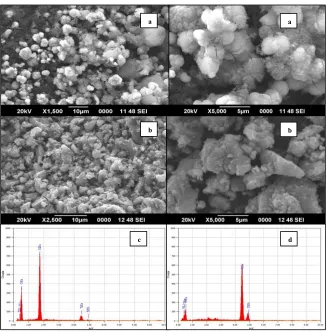
Fig.1 shows the SEM-EDS images along with the particle size distribution of the pure TiO2 sols and of the colloidal TS nano composites. The pure TiO2 particles exhibited irregular morphology due to the agglomeration of primary particles and with an average diameter of 15-20nm. On the other hand, the colloidal TS nanocomposites exhibited regular morphology (Fig.1) since the TiO2 cores were coated by SiO2 particles. The average particle size of the colloidal TS nano composites was measured to be 7 -10nm.
Fig.2a shows the XRD patterns of sol-gel derived TiO2 and nano TiO2-SiO2 composites. The crystallite type of the TS nano composite particles was the pure anatase. The most intense reflection at 2θ = 25.3o is assigned to anatase (d101). Not much difference has been detected between patterns of TiO2 and TiO2–SiO2. The powders showed the crystalline pattern and the observed d-lines match the reported values for the anatase phase. The intensity of reflections appeared to be decreased for TiO2–SiO2 as compared to TiO2 due to inclusion of amorphous SiO2. The average crystallite size was determined by carrying slow scan of the powders in the range 24–27o with the step of 0.01omin–1 from the Scherrer’s equation using the (101) reflections of the anatase phase assuming spherical particles. An estimate of the grain size (G) from the broadening of the main (101) anatase peak can be done by using the Scherrer formula below:
G = 0.9λ \ Δ(2θ) cos θ (1)
Where λis the Cu Kα radiation wavelength and Δ(2θ) is peak width at half-height. The nanocrystallite sizes
content, which is consistent with the literature [25, 27]. The major differences were the narrower first maximum and the broader second maximum.
Fig.2b represents the FT-IR spectra of sol-gel derived TiO2, TiO2-SiO2 composites. The peaks at 3400 and 1650 cm−1 in the spectra are due to the stretching and bending vibration of the -OH group. In the spectrum of pure TiO2, the peaks at 550 cm-1 shows stretching vibration of Ti-O and peaks at 1450 cm-1 shows stretching vibrations of Ti-O-Ti .The spectrum of TiO2-SiO2 show the peaks at 1400cm-1,450-550cm -1 exhibiting stretching modes of Ti-O-Ti, 1100cm-1 shows Si-O-Si bending vibrations and peak at 950cm-1
shows Si-O-Ti vibration modes which is due to the overlapping from vibrations of Si-OH and Si-O-Ti bonds. This result indicates that the TS nano particles were prepared by a combination of TiO2 with SiO2 nano particles. [26]. SEM-EDS results show the presence of metal oxide bonds in both samples.
Fig.1 SEM and EDAX analysis of TiO2+SiO2 composite and TiO2 (a) SEM photograph of TiO2+SiO2 composite
(b) SEM photograph of TiO2 (c) EDAX analysis of TiO2+SiO2 composite (d) EDAX analysis of TiO2
Fig. 2c and 2d represents TGA curves of TiO2, TiO2-SiO2 composites .The major weight loss was in the range of 80-100oC. The thermal stability of the hybrids was investigated by measuring the major decomposition temperature, which was determined from the first derivative of the TGA curves. In TiO2, second weight loss occurred at 220oC, which indicates decomposition of organic molecules; For TiO2-SiO2 sample second weight loss occurred at 290oC which indicates decomposition of hydroxyl groups and organic molecules beyond which there is no weight loss for both samples and it may be assumed that amorphous phase has changed to crystalline phase. The TiO2 composite was stable up to 900oC and TiO2-SiO2 particles were stable up to 1100oC. This indicates that SiO2 doped sample is more stable than pure TiO2. The result indicates that the thermal stability of the hybrid materials was significantly improved compared with the bulk compound
UV–vis absorption spectra of composite after drying show a good transparency between 400 and 1400 nm (Fig.2e and 2f). Actually, the band edge of bulk anatase is ≈3.2 eV and is also shown on the same graph. After heat treatment, a small modification was observed, due to the presence of anatase nano
b
c d
a a
crystallites. Indeed, the gel was highly transparent, and any absorbance which appeared at energies below the band gap energy was a result of interference fringes and of the high refraction index of titania. When Si was present, four additional small peaks were observed in the absorption corresponding to the 3P2, 3P1, 3P0 and 1D2 manifolds as seen in Fig.2e and 2f. Furthermore, presence of SiO2 content results in higher transparency in the visible region, due to the smaller particle size and higher dispersity [27].
3.1 Phase analysis
The gel-derived specimen obtained after being thermally treated at 823 K for 6 hwere all non-crystalline as evidenced by XRD analysis. It is known that at about 823 K the equilibrium phase should be cristobalite for SiO2 and anatase for TiO2. Accordingly, it is suggested that TiO2 and SiO2 be mixed uniformly at the atomic scale in the sol-gel conversion may occur simultaneously; however, one of them would be the dominant process at the given conditions. Continuous proceeding of the condensation reaction causes the chain-like structures to have a fast interaction between unreacted ORÿ groups and form interchain bonding, which increases the strength of gel structure. Heat treatment will collapse the structures of the resultant cross-linked gels, resulting in the formation of particles with irregular shape, wider particle size distribution and low specific surface area .The monomers obtained interact with each other to establish a three dimensional network structure via condensation and form solids with textures like fragments of monolith Although heat treatment spheroidize these fragments, the calcined particles give a high specific surface areas, due to residual voids in the network structures Then, the monomers of M(OH)z react with each other to form particle-like polymers The specific surface areas of these materials after heat treatment are low since the hydrogen bonding between the particles makes the particles pack more efficiently [28]
Fig.2 (a) XRD studies of NTSC and TiO2 (b) FT-IR studies of NTSC and TiO2 (c)TG-DTA studies of NTSC
(d)TG-DTA studies of TiO2 (e) UV-Visible studies of NTSC (f) UV-Visible studies of TiO2
3.2 Forming mechanism of stable pure TiO2 and SiO2-modified TiO2 hydrosols
Titania is a Lewis acidic oxide [29]. For pure TiO2 hydrosol, in the hydrolysis process, Ti(OH)4 was formed after Titanium tetra isopropoxide was hydrolyzed by ethanol and deionised water mixture. In the
acid-Ti TiO2– SiO2
a
b
c d
peptization process, a certain amount of HCl, was added and in the neutralization process, the added −OH first neutralized the extensive free H+ in the mixture and later attacked Ti–OH+2.
Ti –OH + H+ Ti-OH+2 (2)
The pure TiO2 colloid particle can be illustrated as below. For SiO2-modified TiO2 hydrosols, Ti–O–Si bonds were formed as indicated from FTIR. The model proposed by Tanabe et al. [30] assumes that the doped cation enters the lattice of its host and retains its original coordination number. Since the doped cation is still bonded to the same number of oxygen, even though the oxygen atoms have a new coordination number, a charge imbalance is created. The charge imbalance must be satiated, so Lewis sites and Brönsted sites are formed when the charge imbalance is positive and negative, respectively. The charge imbalance is calculated for each individual bond to the doped cation and multiplied by the number of bonds to the cation. SiO2 is tetrahedrally coordinated with each oxygen atom bonded to two silicon atoms.TiO2 is octahedrally coordinated with each oxygen atom bonded to three titanium atoms. Since the radius of Si4+ is much smaller than that of Ti4+, the Ti4+ could be substituted with Si4+, and Ti–O–Si bonds were formed. If a silicon atom enters a titania lattice, each of its four bonds is now attached to an oxygen having 4/6 anion bond. The charge imbalance is 4×(1−4/6) =+4/3. Since the imbalance is positive, Lewis sites are formed and more hydroxyl groups would be absorbed on the colloid core of TiO2–SiO2 [31].
4. Conclusion
The water-based colloidal TiO2/SiO2 core/shell nanocomposites were successfully synthesized as anatase TiO2, TiO2-SiO2 particles by Sol-gel method. FTIR spectroscopy showed the Ti-O, Ti-O-Si bonds were formed and addition of SiO2 particles alters the size and shape of the TiO2 particles and also it increases the thermal stability of TiO2 particles. The addition of SiO2 could effectively suppress the particle growth and improve the stability of TiO2 hydrosol s. It was also confirmed that the titania/silica mixture had high thermal stability, which results in the suppression of phase transformation of titania from anatase to rutile. The crystallite size of prepared particles decreased and the surface area monotonically increased with an increase of the silica content.
References
[1] R.W. Siegel, (1991): Cluster-assembled nanophase materials. Ann. Rev. Mater. Sci., 21, pp.559
[2] K.C. Yi, J.H. Fendler, (1990): Between the Head groups of Langmuir-Blodgett Films. Langmuir. 6, pp.1519.
[3] H.C. Youn, S. Baral, J.H. Fendler, (1988): Preparations of nanosized TiO2 in reverse micro emulsion. J. Phys. Chem. 92 pp.6320.
[4] J.H. Fendler, (1987): Atomic and molecular clusters in membrane mimetic chemistry. Chem. Rev. 87 pp. 877
[5] M. Toba, F. Mizukami, S. Niwa, T. Sano, K. Maeda, A. Annila, V. Komppa, (1994): Effect of the Type of Preparation the Properties of Titania/Silicas. J. Molec. Catal., 1 pp.277.
[6] X. Gao, E. Wachs, (1999): Titania-Silica as Catalysts: Molecular Structural Characteristics and Physico-Chemical Properties. Catal. Today, 51 pp.233.
[7] D.A. Ward, E.I. Ko, (1995) : Preparing Catalytic Materials by the Sol−Gel Method. Ind. Eng. Chem. Res., 34 pp.421.
[8] Z. Liu, R.J. Davis, (1994): Investigation of the Structure of Microporous Ti-Si Mixed Oxides by X-ray, UV Reflectance, FT-Raman, and FT-IR Spectroscopies. J. Phys. Chem., 98 pp.1253.
[9] M. Schraml-Marth, K.L. Walther, A. Wokaun, (1992): Porous silica gels and TiO2/SiO2 mixed oxides. J. Non-Cryst. Solids, 143
pp.93-111.
[10] G.M. Pajonk, (1991): Aerogel Catalysts. Appl. Catal., 72 pp.217. [11] M. Dusi, T. Mallat, A. Baiker, (1999): J. Molec. Catal. A: Chem., 138 15. 1
[12] J.L. Sotelo, R. van Grieken, C. Martos, (1999): Catalytic aerogel-like materials dried at ambient pressure for liquid-phase epoxidation. Chem. Commun., 549.
[13] J.N. Hay, H.M. Raval, (1998): Solvent-free synthesis of binary inorganic oxides. J. Mater. Chem., 8 pp.1233-1239.
[14] L.Y. Wang, Y.P. Sun, B.S. Xu, (2008): Comparison study on the size and phase control of nanocrystalline TiO2 in three Ti-Si
oxide structures, J. Mater. Sci. 43 pp.1979-1986.
[15] Y.X. Jia, W. Han, G.X. Xiong, W.S. Yang, (2008): Diatomite as high performance and environmental friendly catalysts for phenol hydroxylation with H2O2. J. Colloid Interface Sci. 323 (2) pp.326-331.
[16]Y. Zhao, C. Li, X. Liu, F. Gu, H.L. Du, L. Shi, (2008): Appl. Catal. B 79 pp.208.
[17] T.X. Liu, F.B. Li, X. Z Li, (2008): TiO2 hydrosols with high activity for photocatalytic degradation of formaldehyde in a gaseous
[18]Y.B. Xie, C.W. Yuan, (2005): Transparent TiO2 sol nanocrystallites mediated homogeneous-like photocatalytic reaction and
hydrosol recycling process. J. Mater. Sci. 40 pp.6375-6383.
[19] Y. Paz, Z. Luo, L. Rabenberg, A. Heller, (1995): Photo-oxidative self-cleaning transparent titanium dioxide films on glass. J. Mater. Res. 10 pp.2842.
[20] H. Zhao, D. Jiang, S. Zhang, K. Catterall, R. John, (2004): Anal. Chem. 76, pp.155
[21] M.C. Carotta, M. Ferroni, D. Gnani, V. Guidi, M. Merli, G. Martinelli, M.C. Casale, M. Notaro, (1999): Sens. Actuators B, 58
pp.310.
[22] S. Zhang, H. Zhao, D. Jiang, R. John, (2004): Photoelectrochemical determination of chemical oxygen demand based on an exhaustive degradation model in a thin-layer cell. Anal. Chim. Acta 514 pp.89-97.
[23] B. O’Regan, M. Gräzel, (1991): A low-cost, high-efficiency solar cell based on dye-sensitised colloidal TiO2 films. Nature, 353
pp.737-740.
[24] R. Cinnsealach, G. Boschloo, S.N. Rao, D. Fitzmaurice, (1999): Sol. Energy Mater. Sol. Cells, 57 pp.107.
[25] A. Ennaoui, B.R. Sankapal, V. Skryshevsky, M.Ch. Lux-Steiner, (2006), TiO2 and TiO2–SiO2 thin films and powders by one-step
soft-solution method: Synthesis and characterizations, Solar Energy Materials and Solar Cells, 90, pp.1533–1541
[26] A.A. Belheker, S.V. Awate, R. Anand, (2002): Photocatalytic. Activity of Titania Modified Mesoporous Silica for Pollution. Control. Catal. Commun. 3 pp.453-458.
[27] Meihong Zhang, Liyi Shi, Shuai Yuan, Yin Zhao, Jianhui Fang, (2009):Synthesis and photocatalytic properties of highly stable and neutral TiO2/SiO2 hydrosol, J.Colloid and Interface Science, 330, pp.113–118
[28] Hsuan-Fu Yu, Shenq-Min Wang, (2000): Effects of water content and pH on gel-derived TiO2-SiO2, Journal of Non-Crystalline
Solids 261, pp.260-267
[29] P.K. Doolin, S. Alerasool, D.J. Zalewski, J.F. Hoffman, (1994): Acidity studies of titania-silica mixed oxides. Catal. Lett. 25 pp.209.
[30] K. Tanabe, T. Sumiyoushi, K. Shibata, T. Kiyoura, J. Kitagawa, (1974): A new hypothesis regarding the surface acidity of binary metal oxides. Bull. Chem. Soc. Jpn., 47, pp.1064.