Electronic Supplementary Information
Thermodynamics of halogen bonded monolayer
self-assembly at the liquid-solid interface
W. Song,a,b N. Martsinovich,d W. M. Heckl,a,b,c and M. Lackingera,b,c
a Department of Physics, Technische Universität München, James-Franck-Str. 1, 85748 Garching, Germany.
bNanosystems-Initiative-Munich & Center for NanoScience (CeNS), Schellingstr. 4, 80799 Munich, Germany.
c Deutsches Museum, Museumsinsel 1, 80538 Munich, Germany.
d Department of Chemistry, University of Sheffield, Sheffield S3 7HF, U.K.
Tel: +49 89 2179-605; E-mail [email protected]
Table of content
1 Experimental details...2
1.1 STM experiments...2
1.2 Sublimation enthalpy measurement...2
1.3 Dissolution enthalpy measurement...3
2 Additional STM data...4
2.1 Split image...4
2.2 Overview image...5
3 Entropy estimation...6
3.1 Translational entropy...6
3.2 Rotational entropy...7
4 Density Functional Theory...8
4.1 Calculational Details...8
4.2 Additional results...9
1 Experimental details
2,3,6,7,10,11-Hexabromotriphenylene (HBTP) was purchased from TCI Europe N.V. with a
purity of >98%. 1-Heptanoic acid (7A) was purchased from Sigma-Aldrich with a purity of
≥99%. Both compounds were used as received without further purification.
1.1 STM experiments
Scanning Tunneling Microscopy (STM) experiments were conducted with a home-built
low-drift instrument operated with a commercial ASC500 control electronics (attocube Systems AG,
Munich). Highly Oriented Pyrolytic Graphite (ZYB grade, Optigraph GmbH, Berlin) was used
and freshly cleaved prior to each experiment. Images were acquired directly at the liquid-solid
interface with mechanically cut Pt/Ir tips. To avoid inaccuracies in the concentration dependent
experiments due to spilling of solution or solvent evaporation, a rimmed sample holder was used
with a relatively high solution volume (~40 µL).
The critical concentration ccrit was determined by probing solutions with different concentrations
in STM experiments. The samples were obtained by diluting a stock solution prepared from 3.41
mg ± 0.10 mg HBTP and 10.0 mL heptanoic acid, corresponding to a concentration of 486
µmol/L. The relative volume error for the dilution is estimated as 4 %. Accordingly, the total
concentration error related to solution preparation amounts to ~ 7 %.
In the STM experiments full monolayer coverage was still observed for a concentration of 30.4
µmol/L, whereas no adsorbed structures could be discerned anymore for a concentration of 27.0
µmol/L. Using a concentration of 30.4 µmol/L the self-assembled monolayer could be imaged in
the above discussed concentration uncertainty of ~7 % into account results in an upper and
lower boundary for ccrit of 32.5 µmol/L and 25.1 µmol/L, respectively. For evaluation of
translational entropy the average value of 28.8 µmol was used, and in the manuscript an error
margin of ± 3.7 µmol/L was stated.
1.2 Sublimation enthalpy measurement
The sublimation enthalpy Hcrystvac was derived from the temperature dependence of the HBTP
vapour pressure by applying the Van’t Hoff equation. The vapour pressure of a compound is in
good approximation proportional to its effusion rate from a Knudsen cell (a vacuum sublimation
deposition source). Effusion rates were measured with a quartz crystal microbalance (QCMB,
crystal diameter 1.4 cm, nominal eigenfrequency 6.0 MHz) for different crucible temperatures in
a high-vacuum chamber at ~10-7 mbar. A home-built Knudsen cell was used,1 where the crucible
temperature was measured with a type K thermocouple and held constant with a Eurotherm
2416 temperature controller (Invensys Systems GmbH, Limburg an der Lahn). A commercial
Q-pod thickness monitor was used to drive and readout the QCMB (Inficon). The crucible
temperature was varied between 225 °C and 270 °C (increment 5 °C). In all cases the f vs. t
traces were perfectly linear, indicating a stable and constant effusion rate. The resulting Van’t
Hoff plot is also perfectly linear, thereby confirming the validity of the chosen approach.
1.3 Dissolution enthalpy measurement
The dissolution enthalpy Hcrystsol was derived from the temperature dependence of the HBTP
solubility in 7A by applying the Van’t Hoff equation. The solubility was measured by UV-Vis
absorption spectroscopy of saturated solutions for temperatures between 22 °C and 54 °C
(increment 3 °C). According to the Lambert-Beer law the absorbance is a measure for the
changes in the overall shape of the UV-Vis absorption spectra, the total absorbance was obtained
by integration over the absorption band from = (270 .. 340) nm.
The experimental setup consists of an ISS-UV-Vis light source combined with an USB4000
optical spectrometer (Ocean Optics). A quartz glass cuvette with 10 mm optical path length was
used which was heated by two sideways mounted Peltier elements (TEC1-03504). The solution
temperature was measured directly in the cuvette by an immersed type K thermocouple and held
constant with a Eurotherm 2416 temperature controller. UV-Vis absorption spectra were
acquired only after an equilibration time of 24 h when a new temperature was adjusted. UV-Vis
absorption spectra of pure 7A solvent at the respective temperature served as references.
Similarly, this approach results in a perfectly linear Van’t Hoff plot.
2 Additional STM data
Fig. S1. High-resolution STM image of a HBTP monolayer acquired at the 7A-graphite
interface. In the lower part, the HBTP superstructure was imaged with typical tunneling
parameters of Vsample = -300 mV, I = 60 pA. In the upper part, the tunneling resistance was
reduced by two orders of magnitude through switching the tunneling voltage to -3.0 mV.
Consequently, the underlying graphite substrate could be imaged with atomic resolution. This so
called “split-image” reveals an alignment of the graphite with the HBTP lattice vectors. The
black rhombus indicates the HBTP unit cell. The white dashed rhombus also indicates the HBTP
unit cell, but has been laterally shifted to illustrate the alignment between HBTB and graphite
lattice vectors.
2.2 Overview image
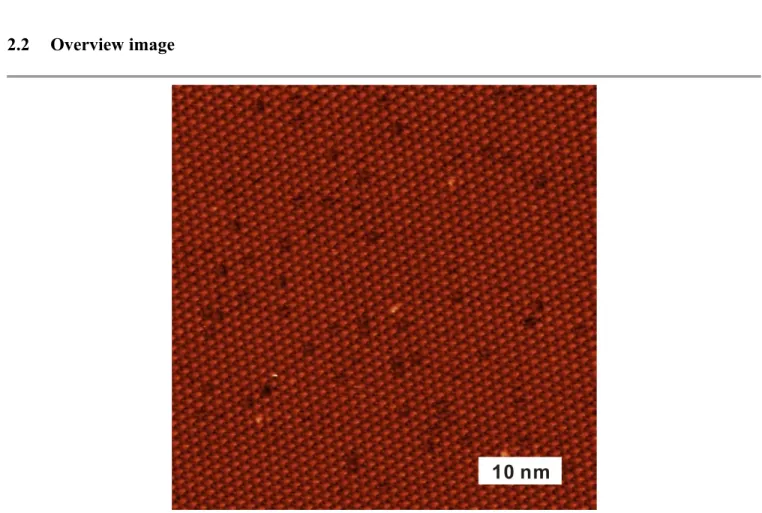
Fig. S2. Overview STM image of a HBTP monolayer acquired at the 7A–graphite interface
of a periodic contrast modulation, i.e. a Moiré pattern, indicates similar adsorption sites of all
3 Entropy estimation
The total entropy change S of monolayer self-assembly is partitioned into translational,
rotational, vibrational, and conformational entropy as proposed by Whitesides et al.,2 and as
similarly applied in previous studies.3, 4 Since HBTP is a rigid molecule without rotatable bonds,
conformational entropy is not further considered. Also vibrational entropy does not significantly
change upon supramolecular self-assembly, and can hence similarly be neglected. The dominant
contributions to S arise from changes in translational entropy Strans and rotational entropy
Srot. Both Strans and Srot are relatively small in the adsorbed state as compared to the dissolved
state, and are hence assumed to be zero within the monolayer. Accordingly, the total entropy is
obtained from ΔS= ΔSrot + ΔStrans = Srot(adsorbed) – Srot(sol) + Strans(adsorbed) – Strans(sol)= 0 – Srot(sol) + 0 –
Strans(sol) = - [Srot(sol) + Strans(sol)], whereby Srot(sol) and Strans(sol) refer to entropies of HBTP in solution.
In other words, ΔS is estimated as the sum of translational and rotational entropy of HBTP
molecules in solution.
3.1 Translational entropy
Translational entropy was evaluated by the Sackur-Tetrode equation:
Strans(sol)=−Rln
[
1c
(
2πm kBT e5/3
h2
)
3/2
]
(1)R is the gas constant, c the solute concentration, T the temperature, kB the Boltzmann constant, h
Planck’s constant, e Euler’s number, and m the absolute mass of a HBTP molecule. The
Sackur-Tetrode equation was originally derived for gases. To avoid overestimation of translational
solvent molecules are dimerized in the liquid phase. The free volume Vfree of the 7A solvent was
estimated with the hard cube approximation:2
Vfree=8(
√
3Vave−√
3Vmolec)3Vave is the average available volume of a 7A-7A dimer in the liquid phase, Vmolec corresponds to
its van der Waals volume. With a mass density of 7A solvent of 0.92 g·cm-3 and a van der Waals
volume of 278.6 Å3 per 7A dimer, V
free is estimated as 32.6 mL per liter 7A. This free volume
correction can also be viewed as an apparent concentration enhancement by a factor of ~31. For
the numerical evaluation of Strans(sol) the experimentally derived critical concentration of 28.7
µmol L-1 and a temperature of T=298 K were used, resulting in S
trans(sol) = Strans = -222.3 J·mol
-1·K-1. Owing to the logarithmic dependence of S
trans on c, the experimental uncertainty in ccrit of ±
3.7 µmol/L results in a negligibly small uncertainty of ~1 J·mol-1·K-1 in S
trans that is not further
considered.
3.2 Rotational entropy
Rotational entropy was estimated using the rigid rotator model:
Srot(sol)=−Rln
[
π1/2
γ
(
8π2k
BTe h2
)
3/2
(
I1I2I3)
1/2]
(2)I1, I2, and I3 are the principal moments of inertia of a HBTP molecule. γ is the symmetry number
and depends on the symmetry point group of the molecule. HBTP belongs to D3h, resulting in
=6. I1, I2, and I3 were obtained from the optimized geometry of an isolated HBTP molecule. For
the numerical evaluation a temperature of T=298 K was used, resulting in Srot(sol) = Srot = -150.6
4 Density Functional Theory
4.1 Calculational Details
Initially, a free standing HBTP monolayer was simulated and optimized with the Quantum
ESPRESSO program,5 using two density functional theory (DFT) based approaches: (I) a
GGA-PBE functional6 with an empirical dispersion correction (D2) proposed by Grimme (PBE+D),7
and (II) a van der Waals density functional (vdW-DF).8 All DFT calculations were conducted
with periodic boundary conditions. The accuracy of DFT derived energies for halogen bonds
was first tested against higher level calculations: the PBE+D binding energy of a Br···N halogen
bond in a pyridine-bromobenzene dimer (-11.4 kJ/mol) was very similar to the value obtained
using MP2 (-8.9 kJ/mol) and to a published CCSD(T) value (-9.1 kJ/mol).9 The energetic
minimum for a free standing HBTP monolayer was found for a lattice parameter of a = b =
(12.48±0.01) Å, =120 (PBE+D calculations) and a = b = (12.50±0.05) Å, =120 (vdW-DF
calculations). The binding energy per molecule with respect to vacuum corresponds to -45.5 kJ/
mol (PBE+D) or -48.3 kJ/mol (vdW-DF). The structure was constrained to a hexagonal lattice,
but no further symmetry constraints were applied.
The underlying graphite was included in further calculations to estimate the total binding energy
of HBTP in the adsorbed monolayer. In the first step a free standing HBTP monolayer was
optimized with its lattice parameters constrained to the commensurate superstructure, i.e. A = B
= 5 agraphite = 12.32 Å and = 120°. This optimized HBTP structure was then adsorbed on a two
layer graphite slab such that the positions of the HBTP triphenylene cores mimic the
AB-stacking of graphite. For the final optimization of the combined system only the atomic
coordinates of the lower graphite layer were fixed, while all atoms of the HBTP monolayer were
indicating either a relatively flat potential energy hypersurface or that this configuration already
corresponds to an energy minimum.
The total binding energy of HBTP in the adsorbed monolayer on graphite including
molecule-molecule and molecule-molecule-surface interactions was calculated as:
Hmono = Egraphite+monolayer - Egraphite - Emolecule = -229.6 kJ/mol
The adsorption energy of HBTP on graphite, i.e. the contribution of molecule-surface
interactions, was calculated as:
Eads = Egraphite+monolayer - Egraphite - Emonolayer = -186.1 kJ/mol
(Emolecule corresponds to the energy of a single isolated HBTP molecule in the gas phase with
similar structure as in the adsorbed monolayer; Egraphite+monolayer / Emonolayer and Egraphite are referred to
4.2 Additional results
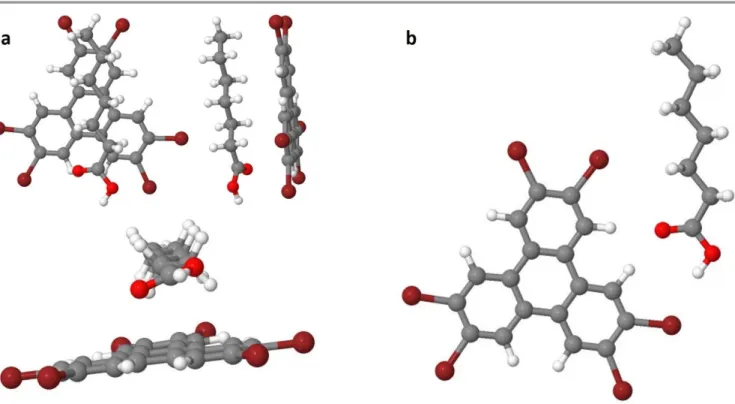
Fig. S3. Optimized structures of 7A + HBTP aggregates simulated with periodic boundary
conditions using a 22 × 22 × 22 ų large super-cell. These simulations were carried out to
estimate the strength of solute-solvent interactions for a semi-quantitative comparison to
solvent-solvent interactions. (a) different views of a configuration with 7A on top of HBTP;
binding energy: -49.8 kJ/mol. (b) configuration with 7A attached sidewise to HBTP through the
combination of hydrogen bonds: 7A-carbonyl ··· hydrogen and 7A-hydroxyl ···
5 References
1. R. Gutzler, W. M. Heckl and M. Lackinger, Rev. Sci. Instrum., 2010, 81, 015108.
2. M. Mammen, E. I. Shakhnovich, J. M. Deutch and G. M. Whitesides, J. Org. Chem., 1998, 63,
3821-3830.
3. W. Song, N. Martsinovich, W. M. Heckl and M. Lackinger, J. Am. Chem. Soc., 2013, 135,
14854-14862.
4. W. Song, N. Martsinovich, W. M. Heckl and M. Lackinger, Phys. Chem. Chem. Phys., 2014, 16,
13239-13247.
5. P. Giannozzi, S. Baroni, N. Bonini, M. Calandra, R. Car, C. Cavazzoni, D. Ceresoli, G. L.
Chiarotti, M. Cococcioni and I. Dabo, Journal of Physics: Condensed Matter, 2009, 21, 395502.
6. J. P. Perdew, K. Burke and M. Ernzerhof, Phys. Rev. Lett., 1996, 77, 3865.
7. S. Grimme, J. Comput. Chem., 2006, 27, 1787-1799.
8. K. Lee, E. D. Murray, L. Kong, B. I. Lundqvist, and D. C. Langreth, Phys. Rev. B 2010, 82,
081101.