Performance Test of IC Engine Using Blends
of Ethanol and Kerosene with Diesel
Er. Milind S Patil1, Dr. R. S. Jahagirdar2, Er. Eknath R Deore3,
1. Sr. Lecturer in Mechanical Engineering 2. Principal 3. Asst Prof. Shri Shivaji Vidya Prasarak Sansthas Bapusaheb Shivajirao Deore College of Engineering, Dhule (MS) India
ABSTRACT
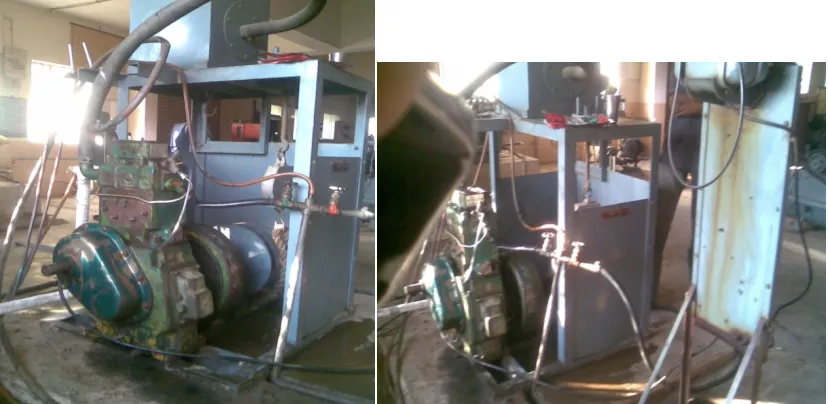
3.75 kW diesel engine AV1 Single Cylinder water cooled, Kirloskar Make was used to test blends of diesel with kerosene and Ethanol. Engine test setup was developed to carry the trials using these blends. This paper presents a study report on the performance of IC engine using blends of kerosene and ethanol with diesel with various blending ratio. The engine performance studies were conducted with rope break dynamometer setup. Parameters like speed of engine, fuel consumption and torque were measured at different loads for pure diesel and various combination of dual fuel. Break Power, BSFC, BTE and heat balance were calculated. Paper represents the test results for blends 5% to 20%
Keywords: IC Engine,Diesel, Blends,fuel properties, heat balance, engine performance
Introduction
Increase in petroleum prices, threat of global warming has generated an interest in developing alternative fuels for engine. Technologies now focusing on development of plant based fuels, plant oils, plant fats as an alternative fuel. Biodiesel is described as fuel comprised of mono-alkyl esters of long chain fatty acids derived from vegetable oils or animal fats. Biodiesel and ethanol can be produced from feedstocks that are generally considered to be renewable. Since the carbon in the biodiesel originated mostly from CO2 in the air, the full cycle CO2 emissions for biodiesel contribute much less to global warming than fossil fuels. Although biodiesel cannot entirely replace petroleum- based fuels, biofuels and diesel fuel blends can be used on existing engines to achieve both environmental and energy benefits. Ethanol is a low cost oxygenate with high oxygen content (35%) that has been used in ethanol– diesel fuel blends. The use of ethanol in diesel fuel can yield significant reduction of particulate matter (PM) emissions for motor vehicles (Ahmed, 2001;Lu¨ et al., 2004; He et al., 2003; Zhang et al., 2004) However, there are many technical barriers to the direct use of ethanol in diesel fuel due to the properties of ethanol, including low cetane number of ethanol and poor solubility of ethanol in diesel fuel in cold weather. In fact, diesel engines cannot operate normally on ethanol–diesel blend without special additives (McCormick and Parish, 2001; Gerdes and Suppes, 2001).
Experimental Setup
Commercial diesel fuel used in India which was obtained locally is used as a base line fuel for this study. Ethanol used in this study is anhydrous ethanol (99.7%) purity. Fuel and its blends density and heating value were measured in a laboratory with hydrometer and bomb-calorimeter. Properties of test fuels were reported in Table – 1.
Sr. No Fuel Density CV % change in Heating Value
1 Diesel 822 42188 -
2 5%K+ Diesel 821 42348.6 +0.38
3 10%K+ Diesel 820 42509.2 +0.76
4 15%K+ Diesel 819 42669.8 +1.14
5 20%K+ Diesel 818 42830.4 +1.52
6 5%E+ Diesel 822 41398.6 -1.87
7 10%E+ Diesel 821 40609.2 -3.74
8 15%E+ Diesel 820 39819.8 -5.61
9 20%E+ Diesel 819 39030.4 -7.49
Table – 1
All experiments were performed with Kirloskar make single cylinder diesel engine. Table 2 shows the engine specifications. All experiments were performed after ensuring the full warm-up.
Engine Specifications
Make Kirloskar AV1
Number of Cylinder 1 Number of Stroke 4
Bore 85 mm
Stroke 110 mm
Power 3.75 Compression Ratio 25:1
Table – 2
The engine performance tests were conducted with a rope brake-diesel engine set up. The parameters like speed of engine, fuel consumption and torque were measured at different loads for diesel and with various combinations of dual fuel. Brake power, brake specific fuel consumption and brake thermal efficiency was calculated using the collected test data
Results and Discussion Fuel Consumption
The influence of fuel consumption on break power for various blends of fuel is represented here under. It is observed that the fuel consumption for low % of mixture of kerosene fuel consumption was higher than pure diesel. Ethanol blend and the pure diesel are having the consumption which is almost same. It is observed that for 15 % and 20 % fuel blend (ethanol and diesel) fuel consumption was about 0.67 and 0.66 kg/hr. where as for kerosene and diesel blend it is observed as 0.64 and 0.62 kg/hr. for a constant output of 2.138 kW. For pure diesel the consumption was 0.62 kg/hr. which is lower than other fuel blends. However for a output of 00 to 1.614 kW ethanol blend is having fuel consumption lower than pure diesel and that of kerosene blend.
0.000
0.100 0.200 0.300 0.400 0.500 0.600 0.700 0.800
0.000 0.545 1.083 1.614 2.138
Fuel Consumption
(kg/hr)
Brake Power(kW)
10%K+D 10%E+D D
0.000 0.100 0.200 0.300 0.400 0.500 0.600 0.700
0.000 0.545 1.083 1.614 2.138
Fuel Consumption
(kg/hr)
Brake Power(kW)
20%K+D 20%E+D D
0.000 0.100 0.200 0.300 0.400 0.500 0.600 0.700 0.800
0.000 0.545 1.083 1.614 2.138
Fuel Consumption (kg/hr)
5%K+D 5%E+D D
0.000 0.100 0.200 0.300 0.400 0.500 0.600 0.700 0.800
0.000 0.545 1.083 1.614 2.138
Fuel Consumption
(kg/hr)
Brake Power(kW)
Break Thermal Efficiency
The effect of break thermal efficiency is represented here. It is observed that the break thermal efficiency of pure diesel is almost higher than any other blend upto 15 % of mixture. (both for ethanol and kerosene) Also BTE for ethanol with 20 % mixture in diesel is more than that of pure diesel for a given break power.
Volumetric Efficiency
Volumetric efficiency of ethanol and diesel blend is higher for any % mixture compare with pure diesel or kerosene blend except for 5 % mixture for which it is almost same for all blends. For 20 % ethanol blend volumetric efficiency decreases from 73 % to 68.44 % which is quiet better than diesel which varies from 71.58 % to 67.34 % for a given output
0.00 5.00 10.00 15.00 20.00 25.00 30.00 35.00
0.000 0.545 1.083 1.614 2.138
BT
E(
%)
Brake Power (kW)
5%K+D 5%E+D D
0.00 5.00 10.00 15.00 20.00 25.00 30.00 35.00
0.000 0.545 1.083 1.614 2.138
BT
E(
%)
Brake Power (kW)
10%K+D 10%E+D D
0.00 5.00 10.00 15.00 20.00 25.00 30.00 35.00
0.000 0.545 1.083 1.614 2.138
BT
E(
%)
Brake Power (kW)
15%K+D 15%E+D D
0.00 5.00 10.00 15.00 20.00 25.00 30.00 35.00
0.000 0.545 1.083 1.614 2.138
BT
E(
%)
Brake Power (kW)
Exhaust Gas Temperature
Exhaust gas temperature for kerosene blend from 5 % to 20 % was observed as highest compare with any of the other blends. Highest gas temperature for all fuel blends were recorded as in the range of 200 to 225 Degree Celsius. Minimum exhaust gas temperature were observed for pure diesel
65.00 66.00 67.00 68.00 69.00 70.00 71.00 72.00
0.000 0.545 1.083 1.614 2.138
η
Vol
(%)
Brake Power (kW)
5%K+D 5%E+D D
64.00 65.00 66.00 67.00 68.00 69.00 70.00 71.00 72.00 73.00
0.000 0.545 1.083 1.614 2.138
η
Vol
(%)
Brake Power (kW)
10%K+D 10%E+D D
64.00 65.00 66.00 67.00 68.00 69.00 70.00 71.00 72.00 73.00 74.00
0.000 0.545 1.083 1.614 2.138
η
Vol
(%)
Brake Power (kW)
15%K+D 15%E+D D
64.00 65.00 66.00 67.00 68.00 69.00 70.00 71.00 72.00 73.00 74.00
0.000 0.545 1.083 1.614 2.138
η
Vol
(%)
Brake Power (kW)
Conclusion
For all fuel sample tested it is observed that with the loading of the engine at 2.138 kW (@57 %) BTE of pure diesel and blend of diesel and ethanol was almost same. That of kerosene BTE was low compare with diesel and ethanol blend. For 20 % mixture of ethanol blend with diesel has a very good efficiency compared with pure diesel and blend of kerosene. Also it is observed that the 20 % ethanol blend is having higher volumetric efficiency compare with diesel and kerosene blend. Exhaust gas temperature for ethanol blend has not shown any substantial increase compare with pure diesel. Hence blending of ethanol at about 20 % can lead to a better performance of engine compare with pure diesel.
References
[1] Investigation on Performance and Emission Characteristics of Diesel Engine with Jatropha Biodiesel and Its Blends, D Ramesh and Sampathrajan, Agricultural Engineering International: the CIGR journal. Manuscript EE 07 013 Vol X March 2008.
[2] A study of some fuel Properties of Local Ethanol Blended with Diesel fuel, Ajav, E. A. and O. A. Akingbehin Agricultural Engineering International: the CIGR journal. Manuscript EE 01 003 Vol IV March 2002.
0 50 100 150 200 250
0.000 0.545 1.083 1.614 2.138
Ex haust Gas T e mpreture (
0C )
Brake Power (kW)
5%K+D 5%E+D D
0 50 100 150 200 250
0.000 0.545 1.083 1.614 2.138
Exhaus t G a s T e mpreture (
0C )
Brake Power (kW)
10%K+D 10%E+D D
0 50 100 150 200 250
0.000 0.545 1.083 1.614 2.138
Ex haust Gas T e mpreture (
0C )
Brake Power (kW)
15%K+D 15%E+D D
0 50 100 150 200 250
0.000 0.545 1.083 1.614 2.138
Ex haust Gas T e mpreture (
0C )
Brake Power (kW)
[3] Experimental Study of DI Diesel Engine Performance Using Three Different Biodiesel Fuels, J. Patterson, M. G. Hassan, A. Clarke, K Hellgardt and R Chen, 2006-01-0234, Department of Aeronautical and Automotive Engineering Loughborough University UK