204 | P a g e
A SURVEY ON OBJECT RECOGNITION
TECHNIQUES
Manju
1, Dr. Ankit Kumar
2 1Research Scholar, Department of computer science,
Baba Mastnath University, Rohtak (India)
2
Assistant professor, Department of computer science,
Baba Mastnath University, Rohtak (India)
ABSTRACT
Learning-based techniques for perceiving objects in regular pictures have gained vast ground throughout the
most recent years. For unmistakable article classes especially in countenances and vehicles, there is dependable
and productive finders are accessible which depends on the mix of capable low-level elements. The machine can
recognize and differentiate between objects based on their attributes. This paper studies various techniques to
recognize the objects based on their attributes.
Keywords: Object Recognition, Classification, Attribute, Object
1 INTRODUCTION
Object acknowledgment is performed by coordinating the key purposes of the specimen with the key focuses
put away in database of preparing tests. The uncertain elements can results wrong matches. No less than 3 A
Clusters of components are distinguished to perceive an item. These groups have much higher likelihood of
being right than individual element matches. The examples in which the separation proportion is more
noteworthy than 0.8, are disposed of to dispense with the false matches [1].
A normal picture contains 2,000 or more components which may originate from various items and foundation
mess [1]. The separation proportion test will permit us to dismiss a number of the false matches emerging from
foundation mess that won't expel matches from other substantial articles and we frequently still need to
distinguish right subsets of matches. The accomplishment of article acknowledgment [1] frequently depends
more on the amount of accurately coordinated key focuses instead of their right rate coordinating for some
applications.
Learning-based techniques for perceiving objects [2] in regular pictures have gained vast ground throughout the
most recent years. For unmistakable article classes especially in countenances and vehicles, there is dependable
and productive finders are accessible which depends on the mix of capable low-level elements, i.e. Filter or
HoG. Frameworks require a great deal of physically marked preparing information to accomplish great grouping
exactness, ordinarily hundreds to a large number of case pictures for every class to be scholarly.
Applications for recognition systems are manifold and their number is steadily growing with the rapid
205 | P a g e
and provide an abundance of data that needs to be processed. A recent space shuttle mission to map the surfaceof the earth produced more than 12 Terabytes of data, corresponding to over 20,000 CDs or approximately the
content of the Library of Congress. More and more large databases of texts and images are becoming available
publically on the internet. CNN plans to make its entire archive searchable over the internet, while the New
York Times has already done so. There is no possibility of processing such large amounts of data by hand.
Therefore, automatic tools that understand or at least extract useful information from images are needed. Object
recognition would be key. Interaction with machines is often difficult and cumbersome, if not impossible, unless
these machines understand something about their environment, in particular the objects and creatures they
interact with. In order to navigate in any environment, vision is the most important sensory modality. In
interactions between humans, visual input is almost as important as auditory information. This suggests that
vision should play a crucial role in human-machine interactions. Examples include computer interfaces in
general, computer games, interactions with appliances or automobiles, as well as the problem of surveillance.
Automobiles now have vision-based systems that drive autonomously or at least assist the driver in keeping up
with the changes in the outside environment. It is of great importance that these systems be able to detect objects
such as roads, pedestrians, traffic signs, and other vehicles. Another rapidly expanding area in computer vision
is medical image processing. Here, machines that can accurately detect objects such as bones, organs,
boundaries between different types of tissues, or tumors would be of great practical usefulness. Such biological
objects lend Vital to comprehension pictures is the issue of perceiving articles in pictures. People can perceive
questions easily and are seldom even mindful of the adjustments in an item's appearance that happen, for
instance, because of alters in review course or a shadow being thrown over the article. We likewise promptly
gather occasions of items, for example, autos, confronts, shoes, or houses into a solitary article class and
disregard the contrasts between the individual individuals. In the meantime, we can in any case separate on a
sub-unmitigated level, expressing, for instance, "Here comes Peter, strolling my dog!". On the other hand,
everybody who has ever managed a PC has unavoidably encountered that even the littlest change in the data
gave to a PC can, and frequently makes, all the distinction on the planet. Instructing a machine to perceive items
is about showing it which contrasts in the crude picture data matter and which don't. The center of this theory is
on the issue of learning principled representations of articles naturally from tactile signs, and on how such
representations can be utilized to identify objects. What precisely do we mean by "articles" and "protest classes
or classifications?" It is difficult to give a formal definition, since the term is utilized as a part of an
exceptionally expansive way. We consider an item to be a part of, or token in, a tactile sign. The exact
representation of the item inside the sign can experience changes, for example, scaling, interpretation, or
different miss-happenings, or it can be defiled by commotion or be somewhat blocked. These progressions offer
ascent to a whole accumulation or class of signs which would all be able to even now be connected with the first
protest. Objects in signs regularly compare to physical items in this present reality environment from which the
signs have been recorded. This is the situation for articles in pictures of normal scenes. In any case, articles can
likewise be characterized exclusively in the universe of signs. For instance, an example in a recording of a
birdsong or an in recording of neural movement may be characterized as an item. Classes of items are
accumulations of articles that are comparative. The likeness may be founded on abnormal state subjective
206 | P a g e
epitomize or build up some comprehension of these ideas so as to recognize objects of the class. In a moretractable situation, the similitude to a great extent shows itself at the level of the sign representation. For
instance, bits of the signs of two distinct articles from the same class could be indistinguishable. We utilized the
expression "tactile sign" above, since we trust that our techniques are not confined to picture information. They
have been effectively connected by Burl et al. to the issue of acknowledgment of transcribed characters and
words, in view of a representation of the ink follow as far as point directions after some time. We have
additionally had starting accomplishment in characterizing neural spike trains speaking to data about scents in
the olfactory knob of the grasshopper [2].
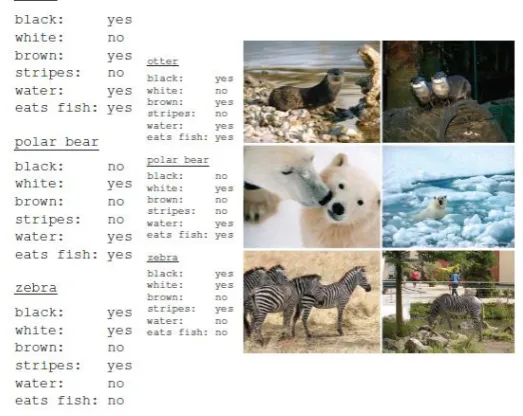
Fig 1: Example for Object Recognition (Animal with Attributes)
II RELATED WORK
David G. Lowe et. al.[3] (2004) presents a technique for removing unmistakable invariant components from
pictures which can be utilized to perform dependable coordinating between various perspectives of an article or
scene. The elements are invariant to picture scale and revolution and are appeared to give strong coordinating
over a significant scope of relative mutilation, change in 3D perspective, expansion of clamor, and change in
brightening. This exploration has additionally exhibited techniques for item acknowledgment. They have
depicted employments of inexact closest neighbor lookup, a Hough change for distinguishing groups that concur
on article posture, slightest squares posture determination, and last confirmation. Other potential applications
incorporate perspective coordinating for 3D reproduction, movement following and division, robot confinement,
picture display gathering, epipolar adjustment, and any others that require distinguishing proof of coordinating
areas between pictures. Neeraj Kumar et. al.[4] (2011) presented the utilization of describable visual
characteristics for face confirmation and picture look. Describable visual traits are marks that can be given to a
picture to portray its appearance. This exploration concentrates on pictures of appearances and the credits used
to portray them, in spite of the fact that the ideas likewise apply to different spaces. They indicate how one can
207 | P a g e
nonattendance or degree to which a property is communicated in pictures. These classifiers can then naturallymark new pictures. They indicated execution practically identical to or superior to the best in class in all parts of
the work that are trait characterization, face check and hunt (subjectively). They have likewise made two
expansive and integral datasets for use by the group to gain further ground. Erik G. Mill operator et. al.[5]
(2000) characterize a procedure in which components of a dataset (pictures) are carried into correspondence
with each other together , delivering an information characterized model which is called as solidifying. It is
based after minimizing the summed part astute (pixel shrewd) entropies over a constant arrangement of changes
on the information. They show a system for adequately carrying test information into correspondence with the
information characterized model delivered in the coagulating procedure. They additionally take note of that the
hardening technique and likelihood connected with the going with change can be utilized as a part of
conjunction with any classifier, for example, bolster vector machines. They are at present exploring whether a
group of changes in light of these representations can give us better execution on the one-specimen classifier
issue.
Ryan Rifkin et. al.[6] (2004) concentrated on multiclass characterization precision. Looking at changed machine
learning calculations for rate is famously troublesome. They are no more judging numerical calculations
however are rather judging particular executions. Be that as it may, some potentially helpful general perceptions
can be made. Observationally, SVM preparing time has a tendency to be super straight in the quantity of
preparing focuses. OV A plan will prepare more gradually than an A V A plan. they watch roughly a 15%
distinction in preparing times, while for their second biggest information set (letter, 15,000 preparing focuses),
OV An is six times slower, demonstrating that the measure of the information set alone is not very prescient of
the span of the distinction. J. Winn et. al.[7] (2005) presented a model which utilizes a generative probabilistic
model to consolidate base up prompts of shading and edge with top-down signs of shape and stance. This model
is called as LOCUS (Learning Object Classes with Unsupervised Segmentation). A key part of this model is that
the item appearance is permitted to change from picture to picture, taking into consideration critical inside class
variety. They demonstrate that LOCUS effectively takes in an item class model from unlabeled pictures, whilst
likewise giving division correctnesses that adversary existing administered strategies. LOCUS accomplishes
synchronous limitation, posture estimation, division and acknowledgment of items in still pictures or video.
Li Fei-Fei et. al.[8] (2006) said that the Learning visual models of item classes famously requires hundreds or a
large number of preparing illustrations. They demonstrate that it is conceivable to learn much data around a
class from only one, or a modest bunch, of pictures. The key understanding is that, instead of gaining sans
preparation, one can exploit information originating from already learned classifications, regardless of how
diverse these classes may be. They investigate a Bayesian execution of this thought. Object classes are spoken to
by probabilistic models. Earlier information is spoken to as a likelihood thickness capacity on the parameters of
these models. Their trials, directed on pictures from 101 classifications, are empowering in that they
demonstrate that not very many preparing cases produce models that are as of now ready to accomplish a
recognition execution of around 70-95 percent. Marc'Aurelio Ranzato et. al.[9] (2007) present an unsupervised
strategy for taking in a chain of importance of scanty element indicators that are invariant to little moves and
contortions. The subsequent component extractor comprises of various convolution channels, trailed by a point
208 | P a g e
inside adjoining windows. Preparing a managed classifier on these components yields 0.64% blunder onMNIST, and 54% normal acknowledgment rate on Caltech 101 with 30 preparing tests for every classification.
Enhancements could be acquired through pooling over scale and through utilizing position-subordinate channels
rather than convolutional channels. All the more imperatively, as new datasets with all the more preparing tests
will get to be accessible, they expect their learning-based system to enhance in contrast with different techniques
that depend less on learning. Antonio Torralba et. al.[10] (2007) considered the issue of recognizing an
expansive number of various classes of items in messed scenes. Customary methodologies require applying a
battery of various classifiers to the picture, at numerous areas and scales. This can be moderate and can require a
considerable measure of preparing information since every classifier requires the calculation of a wide range of
picture components. Specifically, for freely prepared finders, the (runtime) computational multifaceted nature
and the (preparation time) test many-sided quality scale straightly with the quantity of classes to be
distinguished. They display a multitask learning methodology in light of supported choice stumps that decreases
the computational and test multifaceted nature by discovering regular elements that can be shared over the
classes (and/or sees). They have connected the calculation to the issue of multiclass, multi view object
identification in mess. The mutually prepared classifier essentially beats standard boosting when they control for
computational expense.
Neeraj Kumar et. al.[11] (2008) said that the main picture internet searcher construct altogether with respect to
faces. Utilizing straightforward content questions, for example, "grinning men with light hair and mustaches,"
clients can seek through more than 3.1 million confronts which have been naturally marked on the premise of a
few facial properties. Faces in their database have been removed and adjusted from pictures downloaded from
the web utilizing a business face locator, and the quantity of pictures and credits keeps on developing every day.
They indicate best in class grouping results contrasted with past works, and exhibit the force of their engineering
through a practical, substantial scale face web index. Their structure is completely programmed, simple to scale,
and processes all names disconnected, prompting quick on-line seek execution. Their methodology
demonstrates the force of joining the qualities of various calculations to make an adaptable engineering without
giving up arrangement precision. Philipp Zehnder et. al.[12] (2008) proposed a novel multi-class object finder,
that advances the identification costs while holding a coveted discovery rate. The locator utilizes a course that
joins the treatment of comparable article classes while isolating off classes at proper levels of the course. No
earlier learning about the relationship between classes is required as the classifier structure is naturally decided
amid the preparation stage. The outcomes exhibit an expansive effectiveness pick up that is especially
noticeable for a more noteworthy number of classes. Likewise the unpredictability of the preparation scales well
with the quantity of classes. Moreover, the preparation unpredictability is low. At the point when separate falls
or a mass course just give unusable results, their common methodology conveys great location. Joost van de
Weijer et. al.[13] (2009) said that the shading names are required in certifiable applications, for instance, picture
recuperation and picture remark. For the most part, they are discovered from a gathering of checked shading
chips. These shading chips are named with shading names inside an overall portrayed trial setup by human
guineas pig. In this investigation, they inquire about how shading names picked up from shading chips appear
differently in relation to shading names picked up from certifiable pictures. To keep up a vital separation from
209 | P a g e
exhibit that their balanced interpretation of the PLSA model beats the standard PLSA demonstrate basically andthe use of regional information is profitable for shading name comment. C. H. Lampert et. al.[2] (2009)
presented learning for disjoint preparing and test classes. It formalizes the issue of taking in an item arrangement
framework for classes for which no preparation pictures are accessible. They have proposed two techniques for
trait based order that tackle this issue by exchanging data between classes. The exchange is accomplished by a
middle of the road representation that comprises of abnormal state, semantic, per-class characteristics, giving a
quick and simple approach to incorporate human learning into the framework. They handle the issue by
presenting property based characterization. It performs object discovery in light of a human-indicated abnormal
state depiction of the objective items as opposed to preparing pictures. The depiction comprises of discretionary
semantic properties like shape, shading or even geographic data. The exploratory result demonstrates that by
utilizing a property layer it is in fact conceivable to assemble a learning object identification framework that
does not require any preparation pictures of the objective classes. In 2009, Huang Cheng-Hoand Wang Jhing-Fa.
entitled the basic issue in multi-class plan on support vector machines was the decision run, which made sense
of if a data outline have a place with an expected class. To overhaul the precision of multi-class portrayal, and
proposed a multi-weighted larger part voting figuring of support vector machine (SVM), and associated it to
annihilation complex facial security application. Girish Kulkarni et. al.[14] (2011) presents a framework to
consequently create common dialect depictions from pictures that adventures both measurements gathered from
parsing extensive amounts of content information and acknowledgment calculations from PC vision. The
framework is extremely successful at delivering significant sentences for pictures. Human assessment accepts
the nature of the produced sentences. One key to the accomplishment of their framework was consequently
mining and parsing vast content accumulations to get factual models for outwardly distinct dialect. The other is
exploiting cutting edge vision frameworks and joining these in a CRF to deliver contribution for dialect era
techniques.
Walter J. Scheirer et. al.[15] (2012) demonstrates to build standardized "multi-characteristic spaces" from crude
classifier yields utilizing procedures taking into account the measurable Extreme Value Theory. Their strategy
adjusts every crude score to a likelihood that the given characteristic is available in the picture. They portray
how these probabilities can be utilized as a part of a basic approach to perform more precise multi quality
pursuits, and in addition empower characteristic based comparability seeks. A huge preferred standpoint of their
methodology is that the standardization is done afterward, requiring neither alteration to the characteristic
grouping framework nor ground truth quality comments. They have demonstrated that their principled
probabilistic way to deal with score standardization significantly enhances the exactness and utility of face
recovery utilizing multi-quality pursuits, and takes into consideration the new ability of performing closeness
looks in light of target properties in question pictures. Amar Parkash et. al.[16] (2012) proposed a learning
worldview in which the learner conveys its conviction (i.e. anticipated name) about the effectively picked case
to the educator. The educator then affirms or rejects the anticipated name. All the more essentially, if rejected,
the instructor imparts a clarification for why the learner's conviction wasn't right. This clarification permits the
learner to engender the input gave by the educator to numerous unlabeled pictures. This permits a classifier to
better gain from its mix-ups, prompting quickened discriminative learning of visual ideas even with few named
210 | P a g e
assortment of visual acknowledgment situations, for example, picture characterization and comment. They showthe force of this input on an assortment of visual acknowledgment applications including picture arrangement
and explanation on scenes and appearances. Most energizing about ascribes is their capacity to take into account
correspondence amongst people and machines. This work makes a stride towards misusing this channel to
assemble more astute machines all the more proficiently. Christoph H. Lampert et. al. [17] (2013) examined the
errand zero-information which tells about the issue of item acknowledgment for classifications for which they
have no preparation illustrations, likewise called as zero-shot learning. This circumstance has barely been
contemplated in PC vision research, despite the fact that it happens as often as possible: the world contains a
huge number of various article classes and for just few of them picture accumulations have been framed and
appropriately clarified. To handle the issue they presented property based order in which articles are recognized
which depends on an abnormal state portrayal that is expressed as far as semantic characteristics, for example,
the item's shading or shape. In this examination they likewise present another dataset, Animals with Attributes,
of more than 30,000 pictures of 50 creature classes, commented on with 85 semantic qualities. A few explores
has acknowledged SVM for multiclass course of action utilizing one versus all approach. The said approach has
high time multifaceted nature. Particular bits are interested in be utilized with SVM game-plan. The bit choice is
still an issue. The wrong confirmation of bit can outright reduction the precision measures.
III CONCLUSION
The object classification when the training and test images are different, in other words when no suitable
training examples for the target is available have not been focused in computer vision research. But the world
contains millions of different visual object and only few of them are annotated with suitable class labels. This
can be done by information sharing using the attribute transfer. Such information can be transferred by pairing
attributes with the object classes. The pairing assumes that the testing and the training examples are different.
The information transfer for visual object categorization requires the unification of the zero shot learning with
the supervised learning
REFERENCES
[1] D. G. Lowe, “Distinctive image features from scale-invariant key-points”, International Journal on
Computer Vision (IJCV), vol. 60, no. 2, 2004.
[2] C. H. Lampert, H. Nickisch, and S. Harmeling ,“Learning to detect unseen object classes by
between-class attribute transfer”, in IEEE Conference on Computer Vision and Pattern Recognition (CVPR),
2009.
[3] David G. Lowe et. al. ,“Object Recognition from Local Scale-Invariant Features”, Proc. of the
International Conference on Computer Vision, Corfu (Sept. 1999).
[4] N. Kumar, A. Berg, P. Belhumeur, and S. Nayar ,“Describable visual attributes for face verification
and image search”, IEEE Transactions on Pattern Analysis and Machine Intelligence (PAMI),vol. 33,
211 | P a g e
[5] E. Miller, N. Matsakis, and P. Viola, “Learning from one example through shared densities ontransforms”, in IEEE Conference on Computer Vision and Pattern Recognition (CVPR), 2000.
[6] R. Rifkin and A. Klautau, “In defense of one-vs-all classification”, Journal of Machine Learning
Research (JMLR), vol. 5, 2004.
[7] Winn and N. Jojic, “LOCUS: Learning object classes with unsupervised segmentation,” in IEEE
International Conference on Computer Vision (ICCV), vol. I, 2005.
[8] F. F. Li, R. Fergus, and P. Perona ,“One-shot learning of object categories”, IEEE Transactions on
Pattern Analysis and Machine Intelligence (PAMI), vol. 28, no. 4, 2006.
[9] M. Ranzato, F. J. Huang, Y.-L. Boureau and Y. LeCun ,“Unsupervised learning of invariant feature
hierarchies with applications to object recognition”, in IEEE Conference on Computer Vision and
Pattern Recognition (CVPR), 2007.
[10]A. Torralba and K. P. Murphy, “Sharing visual features for multiclass and multiview object detection”,
IEEE Transactions on Pattern Analysis and Machine Intelligence (PAMI), vol. 29, no. 5, 2007.
[11]N. Kumar, P. N. Belhumeur, and S. K. Nayar, “Facetracer: A search engine for large collections of
images with faces”, in European Conference on Computer Vision (ECCV), 2008.
[12]P. Zehnder, E. K. Meier, and L. J. V. Gool, “An efficient shared multi-class detection cascade,” in
British Machine Vision Conference (BMVC), 2008.
[13]J. Van De Weijer, C. Schmid, J. Verbeek, and D. Larlus ,“Learning color names for real-world
applications”, Image Processing, IEEE Transactions on, vol. 18, no. 7, pp. 1512–1523, 2009.
[14]G. Kulkarni, V. Premraj, S. Dhar, S. Li, Y. Choi, A. C. Berg, and T. L. Berg ,“Baby talk:
Understanding and generating simple image descriptions”, in IEEE Conference on Computer Vision
and Pattern Recognition (CVPR), 2011, pp. 1601–1608.
[15]W. J. Scheirer, N. Kumar, P. N. Belhumeur, and T. E. Boult, “Multi attribute spaces: Calibration for
attribute fusion and similarity search”, in IEEE Conference on Computer Vision and Pattern
Recognition (CVPR), 2012.
[16]A. Parkash and D. Parikh, “Attributes for classifier feedback”, in European Conference on Computer
Vision (ECCV), 2012.
[17]Christoph H. Lampert et. al ,“Attribute-Based Classification for Zero-Shot Visual Object
Categorization”, IEEE Transactions On Pattern Analysis And Machine