Factors influencing use of ICT in Technical &
Vocational Education to make teaching-learning
effective & efficient: Case study of Polytechnic
institutions in Bangladesh
Md. Rashedul Huq Shamim 1, Md. Aktaruzzaman 2, Che Kum Clement 3
1, 2, 3
Department of Instructor Training and General Studies (ITS) Islamic University of Technology (IUT)
Board Bazar, Gazipur-1704, Bangladesh 1
2
Abstract— Educational attainment is recognized as one of the fundamental indicators of development of a nation. The present world can not think development of a country without Technical and Vocational Education & Training (TVET).The purpose of the study was to indicate the factors which influencing use of information and communication technology (ICT) in teaching – learning process to make teaching learning more effective & efficient in Technical and Vocational Education & Training (TVET). Out of 45 polytechnic institutions nine polytechnic institutes were considered as sample for this study. Comprehensive questionnaires were sent to these institutions. From data analysis it was found that the teachers of the polytechnic institutions are very much in favour of information & communication technology. Because of, if ICT is used in teaching-learning process in technical & vocational education, the quality of the education will be improved. On the other hand, the factors those stimulating the teachers of polytechnic institutions to use of ICTs in teaching learning are: economical, time saving, easy to prepare, attractive, easy to motivate the students, easy to administer, communication is easier, easy to integrate. Training on ICT & available ICT tools are influenced them to use in T-L process.
Keywords
—
ICT(Information & Communication Technology), Teaching – Learning(T-L), Technical and vocational education (TVE).I. INTRODUCTION
All countries, developed and developing, are undertaking the important and complex task of restructuring the education and training systems to meet the development requirements in the context of changing environment. TVET systems are expected to produce a new breed of competent workforce who can compete and excel in a rapidly changing environment and improve the country's economy. TVET makes the single largest contribution in developing human resources in this age of technology. One can measure the technological development of a nation by looking at its TVET
system.Technical education components are also continually generating a number of innovation and reforms in various aspects of technical education occurring at diploma and degree levels.
Asian Development Bank (2008) press statement said on 10 June, 2008 that the Asian Development Bank (ADB) is helping thousands of unemployed and underemployed Bangladeshi adults attain better wage and employment prospects by improving the country’s technical skills training system. ADB has approved a $ 50 million loan for the Ministry of Education of Bangladesh to make its technical and Vocational Education and Training (TVET) program market-oriented, short-term and relevant especially for the poor who were not able to finish the eighth grade. All things are now set to flourish the TVE sector of Bangladesh with the blessing of ICT [1].
Asia-Pacific Development Information Programmed, (2007), research emphasize the use of ICT in promoting social and economic development and change within Asia. The research aims to reinstate human development at the core of ICT strategies and deployment. The central focus in this study is thus on human development, including the attainment of greater substantive freedoms in human life and society [2].
At the same time UNESCO, UNDP, Asian south pacific Bureau of Adult Education and some other international organization has done very impressive work in the field of ICT to improve the overall life style of the people of South Asian Pacific region including Bangladesh [3].
Village. As we are living in the global village our aim is to provide the maximum facilities to each employee, user and visitor through ICT. Hence the National ICT policy 2002 of Bangladesh states that “The Government of Bangladesh shall implement ICT systems to provide nation-wide coverage and access by any citizen to government databases and administrative systems which can be used to extend public services to the remotest corner”[4]
EU commission, (2005) represents the current and possible use of information and communication Technology in initial Vocational Education and Training carried out by Ram boll Management for the European commission, DG Education and culture in 2004 [5].
Bangladesh has an ICT policy formulated for human resource development (HRD) that states the country must prepare itself to compete effectively in the global ICT market. As the demand for skilled manpower in ICT is growing worldwide, the country needs to produce a large number of ICT professionals. Specifically, policy statements endorse the need for widespread introduction of ICT training in public and private educational institutions as a prerequisite for producing skilled ICT manpower.
The internet facilities are not widely available in most places of the Bangladesh. Internet is one of the main technologies which can help to use the ICT efficiently. To get benefit from ICT the educational policy make must ensure the availability of Internet in every Institution both micro and macro level. Ministry of Science and Technology has been renamed on April 2002 as “Ministry of Science and Information and Communication Technology “BTRC (Bangladesh Telephone Regulatory Commission) was set up in Jan, 2002 [6].
"The application of ICT offers multiple learning pathways and widespread access to TVE, breaking down barriers for learning and teaching connected to distance and location, so vocational educators can easily have opportunities to update and upgrade their knowledge and skills". Over the last 10 years UNESCO has helped developing TVE in the Asia and Pacific Region, mainly through its International Centre for Technical and Vocational Education and Training (UNEVOC), encompassing system and policy development, research, and information, communication and networking [7].
UNESCO (2006), reports that the use of ICT in education and training has been a priority in most European countries during the last decade, but progress has been uneven. Most schools in most countries, however, are in the early phase of ICT adoption, characterized by patchy uncoordinated provision and use, some enhancement of the learning process, some development of e-learning, but no profound improvement in learning and teaching [8].
This study is intended to find out the prospect of ICT in TVE system of Bangladesh. It will also help policymakers to define a framework for the appropriate and effective use of ICT in the educational system by first providing a brief overview of the potential benefits of ICT use in education and the ways by which different ICT have been used in education. Second, it addresses the four broad issues in the use of ICT in education—effectiveness, cost, equity, and sustainability.
The specific objectives of the study are to 1) recall knowledge about Information &
Communication Technology (ICT).
2) determine factors that stimulating to use of ICT in teaching – learning.
3) explain the innovations of T-L process in TVE by using ICTs.
II. METHODOLOGY
This research was undertaken actually to find out knowledge about ICT, different factors which stimulate the introduction of innovations of ICT in Technical & Vocational education to enhance the teaching-learning process. In brief, the impact of using ICT in TVE to make teaching–learning process more effective & efficient.
In this study, the population is teachers of the Government polytechnic institutes of Bangladesh. There are 45 government polytechnic institutes in Bangladesh. In this research clustered sampling was used to select nine polytechnic institutes out of six administrative divisions of Bangladesh. Total number of teachers including part time teachers (1403+97 approx.) = 1500. Sample size: 8% of the population = 1500*.08 = 120.
A structured questionnaire is used for collecting data from the respective teachers. The questionnaires were validated with the expert opinions. The questionnaire had mainly the questions regarding the opinions of the respondents on different aspects of ICT used in their institutions which was to be answered on five point rating scale.
The Likert Scaling Technique
Table 1: The value of Likert scale (Five point scale) :
Responses Ranks
Strongly Agree 5
Agree 4 Undecided 3
Disagree 2
Strongly Disagree 1
Collected data was analysed by using following statistical methods and techniques of analysis. The data were tabulated in the form of frequency distribution, percentage and chi-square ( χ2 ) values have been calculated for each of the items.
For chi-square (χ2 ) the level of significance has been checked at 0.05 levels.
Percentage of respondents =
Size Sample
spondents of
No. Re
x 100
The weighted average is used to represent the following criterion
Table 2: Weighted average and its performance level
Weighted Average Responses
WA>4.5 Strongly Agree
4.5WA>3.5 Agree
3.5WA>2.5 Undecided
2.5WA>1.5 Disagree
1.5WA>0 Strongly Disagree
Weighted average indicates the importance given the respondents to each item or statement.
Chi-Square test
Chi- Square test is a nonparametric test. It is used to identify whether the opinion of the respondents are significant or insignificant. Chi-square (χ2) values were calculated by using the formula
Such as
Chi-Square, χ02 =
e e
f
f
f
0
2
1) The observed frequencies (fo) were tabulated from
the questionnaire.
2) Expected frequencies (fe) were considered with equal
probabilities.
Degrees of freedom:
df = (C-1)*(R-1), Where, C = Number of Columns, R = Number of rows.
After obtaining the value of χ02 from the above formula it
was compared with the critical value of χc2 obtained from the
degree of freedom (df) table.
χ02 = Obtained value by calculating data
χc2 = Critical value from the table
Interference was made on the basis of the value of χ02 and
χc2 whether the difference is significant or not. If χ02 > χc2, the
response will be taken as significant in favour of the statement.
Analysis and Interpretation of Data
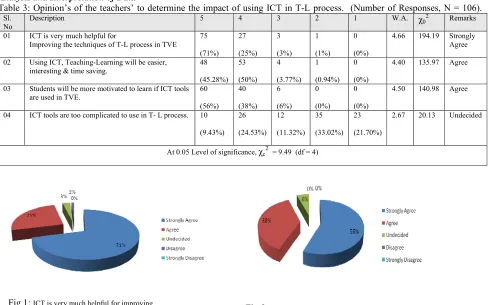
Table 3: Opinion’s of the teachers’ to determine the impact of using ICT in T-L process. (Number of Responses, N = 106).
Sl. No
Description 5 4 3 2 1 W.A. χ02 Remarks
01 ICT is very much helpful for
Improving the techniques of T-L process in TVE 75
(71%) 27
(25%) 3
(3%) 1
(1%) 0
(0%)
4.66 194.19 Strongly
Agree
02 Using ICT, Teaching-Learning will be easier, interesting & time saving.
48
(45.28%) 53
(50%) 4
(3.77%) 1
(0.94%) 0
(0%)
4.40 135.97 Agree
03 Students will be more motivated to learn if ICT tools are used in TVE.
60
(56%) 40
(38%) 6
(6%) 0
(0%) 0
(0%)
4.50 140.98 Agree
04 ICT tools are too complicated to use in T- L process. 10
(9.43%) 26
(24.53%) 12
(11.32%) 35
(33.02%) 23
(21.70%)
2.67 20.13 Undecided
At 0.05 Level of significance, χc2 = 9.49 (df = 4)
Fig 1: ICT is very much helpful for improving
Table 4: Opinions of the teachers’ knowledge about information and communication technology
Table 5: Opinion’s of the teachers to identify the innovations of T-L process in TVE by using ICT.
Table 6: Opinion’s of the teachers to find out the roles of ICT in TVE. (N=106)
Sl. No Description 5 4 3 2 1 W.A. χ02 Remarks
01 ICT is very much needed
for development of TVE. 62
(58.49%) 41
(38.68%) 3
(2.83%) 0
(0%)
0
(0%)
4.56 143.88 Strongly Agree
02 Government has enough
policy to improve the present condition of ICT in TVE.
18
(16.98%) 34
(32.08%) 41
(38.68%) 11
(10.38%) 2
(1.89%)
3.52 49 Agree
At 0.05 Level of significance, χc2 = 9.49 (df = 4)
The responses regarding “ICT is very much helpful for improving the techniques of T-L process in TVE” is Strongly Agree (WA= 4.66). Whereas χ02 > χc2 (194.19>9.49) which
indicates that the null hypothesis is rejected & the response is significant.
The responses regarding “Using ICT, Teaching - Learning will be easier, interesting & time saving” is Agree (WA= 4.40). Whereas χ02 > χc2 (135.97>9.49) which indicates that
the null hypothesis is rejected & the response is significant.
The responses regarding “Students will be more motivated to learn if ICT tools are used in TVE” is Strongly Agree (WA= 4.50). Whereas χ02 > χc2 (140.98>9.49) which
indicates that the null hypothesis is rejected & the response is significant.
The responses regarding “ICT tools are too complicated to use in T- L process” is Undecided (WA= 2.67). Whereas χ02 > χc2 (20.13>9.49) which indicates that the null
hypothesis is rejected & the response is significant.
The responses regarding “There is lack of understanding about the knowledge of ICT among the TVE teachers’ in Bangladesh” is Agree (WA= 4.32). Whereas χ02 > χc2
(118.63>9.49) which indicates that the null hypothesis is rejected & the response is significant.
The responses regarding “TVE teachers don’t have sufficient skills for using ICT” is Agree (WA= 3.58). Whereas
Sl. No.
Description 5 4 3 2 1 W.A. χ02 Remarks
01 TVE should replace the traditional teaching aids by new ICT tools to improve the teaching-learning.
47
(44.34%) 48
(45.28%) 11
(10.38%) 0
(0%) 0
(0%)
4.34 112.59 Agree
02 ICT is necessary in Teaching–
Learning process in TVE.
68
(64.15%) 36
(33.96%) 2
(1.89%) 0
(0%) 0
(0%)
4.62 173.73 Strongly
Agree
03 ICT tools can improve the efficiency of TVE teachers.
65
(61.32%) 37
(34.91%) 4
(3.77%) 0
(0%) 0
(0%)
4.58 158.62 Strongly Agree
At 0.05 Level of significance , χc2 = 9.49 ( df = 4)
Sl. No .
Description 5 4 3 2 1 W.A. χ02 Remarks
01 There is lack of understanding about the knowledge of ICT among the TVE Teachers’ in Bangladesh.
52
(49.06%) 45
(42.45%) 2
(1.89%) 5
(4.72%) 2
(1.89%)
4.32 118.63 Agree
02 TVE teachers don’t have sufficient skills for using ICT.
25
(23.58%) 47
(44.33%) 9
(8.49%) 15
(14.15%) 10
(9.43%)
3.58 46.84 Agree
χ02 > χc2 (46.84>9.49) which indicates that the null hypothesis
is rejected & the response is significant.
The responses regarding “TVE should replace the traditional teaching aids by new ICT tools to improve the teaching-learning” is Agree (WA= 4.34). Whereas χ02 > χc2
(112.59>9.49) which indicates that the null hypothesis is rejected & the response is significant.
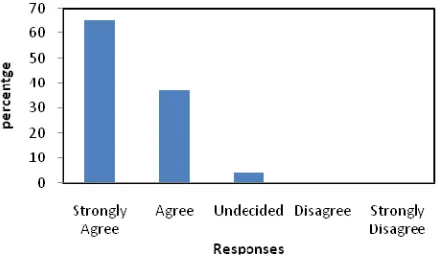
Fig 3: ICT tools can improve the efficiency of TVE teachers.
The responses regarding “ICT is necessary in teaching– learning process in TVE” is Strongly Agree (WA= 4.62). Whereas χ02 > χc2 (173.73>9.49) which indicates that the
null hypothesis is rejected & the response is significant. The responses regarding “ICT tools can improve the efficiency of TVE teachers” is Strongly Agree (WA= 4.58). Whereas χ02 > χc2 (158.62>9.49) which indicates that the
null hypothesis is rejected & the response is significant.
The responses regarding “ICT is very much needed for development of TVE” is Strongly Agree (WA= 4.56). Whereas χ02 > χc2 (143.88>9.49) which indicates that the null
hypothesis is rejected & the response is significant.
The responses regarding “Government has enough policy to improve the present condition of ICT in TVE” is Agree (WA= 3.52). Whereas χ02 > χc2 (49>9.49) which indicates
that the null hypothesis is rejected & the response is significant.
Table 7: Opinion’s on the needs of ICT training.
Statement Teachers opinion Percentage
Need of ICT training 98 92.45%
Most of the respondents 92.45% thought that training on ICT contribute to enhance their performance in teaching learning and the quality education as well. That’s why more than 90% of the respondents thought that they are very much in need of ICT training. And only few such as around 7.55%
of the respondents said that they don’t need ICT training as they are satisfied with their present condition or they are confident enough to handle the newest ICT tools for teaching learning purpose with their present skill.
Table 8: Opinion’s on the factors stimulating to use of ICT. (Multiple answer were accepted from the respondent)
Factors Teachers Opinion Percentage
Economical 80 75.47%
Time saving 90 84.91%
Communication is easier 75 70.75%
Easy to prepare 76 71.70%
Easy to motivate students 82 77.34%
Attractive 75 70.75%
Easy to integrate 65 61.32%
Easy to administer 70 66.04%
It reveals that every factor stimulates to use ICT for effective & efficient learning. That means all factors tabulated in the table have the greater role for influence to use of ICT in TVE sector of Bangladesh. However more than 80% of the teachers said that time saving (84.91%), easy to motivate students (77.34%) & Economical (75.47%) have significant impact to use ICT in TVE in Bangladesh. Around 70% of the teachers said that Communication is easier (70.75%), Easy to prepare (71.70%), Attractive (70.75%) have a great impact that influences to use ICT in TVE. Around 60% of the teachers said that Easy to administer (66.04%) & Easy to integrate (61.32%) have a great impact to use ICT in TVE sector
III.FINDINGS
Finding based on teachers’ opinion
A. Knowledge about Information and Communication Technology (ICT).
(i) From the responses it is found that most of the teachers’ know what is ICT?
(ii) For development of the teaching-learning process every institution should have enough facilities about teaching aids.
(iii) Majority of the respondents are in favour that they have enough ICT tools.
(iv) Majority of the respondents are in favour that they have internet facility in their institutions.
(v) Some of the respondents are in favour that there is lack of understanding about the knowledge of ICT among the TVE teachers’ in Bangladesh.
B. Factors influencing used of ICT in Teaching – Learning Process to make teaching learning activities more effective & efficient.
(i) Majority of the respondents are in favour of that ICT is very much helpful for improving the techniques of T-L process in TVE.
(ii) It is found that the class room situation is friendly in polytechnic institution to use ICT for teaching- learning.
(iii) Most of the respondents are given there opinion’s that if ICT tools are used in TVE, students will be more motivated to learn. ICT which is using for the teaching-learning process is very much helpful for time saving as well as easy to understand.
(iv) Most of the respondents are given their opinion that ICT will inspire to improve the quality of T-L process.
(v) Majority of the respondents are given their opinion that they are feeling interest by using computer, internet, & Multimedia that these will make the teaching learning effective & efficient. (vi) Majority of the respondents said that they are encouraging their students to use ICT tools for their learning.
C. Innovations of T-L process in TVE by using ICT.
(i) Most of the respondents are Strongly Agree that ICT is necessary in teaching–learning process in TVE. (ii) Most of the respondents said that ICT tools can
improve the efficiency of TVE teachers.
(iii) Most of the respondents are in favour that TVE should replace the traditional teaching aids by new ICT tools to improve the quality of teaching- learning activities.
(iv) Most of the respondents think that internet is a new ICT tool in teaching-learning process.
(v) Majority of the respondents are in favour of “No” because they did not develop any new technique for T-L by using ICT?
(vi) Majority of the respondents are in favour of “No” because they did not modify any existing technique of teaching to suit their classroom teaching-learning by using ICT tools?”
D. Opinion’s of the teachers’ about the need of training on ICT.
Most of the respondents thought that training on ICT contribute to enhance their performance in teaching learning and the quality education as well. That’s why most of the respondents thought that they are required training on ICT.
E. Factors stimulate to use of ICT in TVE.
Majority of the respondents are in favour that ICT tools stimulate for effective & efficient teaching-learning. ICT tools have the greater role for influencing in teaching-learning process in TVE sector of Bangladesh. However majority the teachers said that it is time saving, easy to motivate students, & Economical have significant impact to use ICT in TVE in Bangladesh. Most of the teachers said that Communication is easier, Easy to prepare & Attractive have a great impact that influences to use ICT in TVE.
F. Factors that limit the use of ICT
Majority of the teachers said that lack of training, lack of availability of modern ICT tools have significant impact to limit the use of ICT tools in education. And a considerable portion of the teachers said that lack of knowledge about the use of ICT, lack of skill on ICT tools and lack of awareness have a great impact to limit the use of ICT tools in education.
IV.CONCLUSION
The education sector of Bangladesh has suffering from many deficiencies including quality teachers, contents, infrastructure, environment etc. So, at present, the great challenge to be faced by Bangladesh is to create a ‘Knowledge Based Society’ and ensure that the citizens are equipped with the required ICT knowledge and skill. There is a big potential of using ICT in the development of the Education Sector of Bangladesh.
The proper policy development and its subsequent implementation for integration of ICT with economic and social activities can make a quantum shift in status of Bangladesh economy. Bangladeshi people can not participate in the global ICT revolution, since they will not be connected, there is no point in discussing our ICT potential if we do not build the highway to connect it; Rural Bangladesh will suffer from the digital divide, being left further in terms of assess to markets, education, social and health services. The barrier of the teaching learning activities lack of ICT skills of instructional staffs (teachers), inappropriate instructional materials to meet the objectives of teaching and learning , inadequate motivational techniques to increase the interest to learn. Also lack of training of the teachers on ICT is a major barrier to improve the quality of the education. Updating of these skills may improve the quality of the present education.
V. RECOMMENDATION
From research findings as outlined in this chapter and the discussion on emerging factors resulting from the evidence of gathered data, the researcher formulated recommendations for future actions to achieve greater impact in both areas of teaching and learning in the polytechnic institutions of Bangladesh.
ICT tools should be provided to each polytechnic institution. Teachers should give their attention to use information & communication technology in their teaching-learning process. Students should use internet for collecting necessary information for their education. Government should provide enough budgets to ensure the requirement of ICT tools and machineries for each classroom. Government should formulate proper policy to train up the teachers for their respective field as well as in information & communication technology.
Education should be free from political factors. In this study it was found that teachers’ motivation is a critical factor in ICT adoption. Policies in this area should include measures raising the confidence levels of the teachers (by giving appropriate in-service and initial teacher training on ICT) and also by rewarding them for the use of ICT.
The technology is ever changing. Depending on the future demand, government should take appropriate action to introduce ICT in school level. Research should be done for improving the present situation of education.
REFERENCES
[1] Asian Development Bank, (2008), ADB: New release- Bangladesh
Vocational Education System Improvements to Increase Job Prospects, Philippines, Asia-Pacific Development Information Programmed 2005. [2] APDIP, (2007), ICT skill Development in the Asia – Pacific Region
Part two: Bridging the gap between demand and supply, UNDP [3] Ali, Mohammad ,(2003), Education case study, ASPBAE research on
information and communication technology( Bangladesh), Asian South Pacific Bureau of Adult Education (ASPBAE), Dhaka Ahsania Mission-2003.
[4] Hoque, (2007) mentions that government of Bangladesh has been
striving to achieve higher living standard for the people of Bangladesh through planned development of ICT
[5] EU Commission, (2005), the use of ICT for learning and teaching in initial Vocational Education and Training Final Report to the, EU Commission, Dg Education & culture- November 2005.
[6] Ministry of Science and Information & Communication Technology, (2002), Government of the People’s Republic of Bangladesh 2002. [7] Technical & Vocational Education and Training (UNEVOC), (2003),
New Project on ICT Use in Technical and Vocational Education. UNESCO, Bangkok-2003.