R E V I E W
Open Access
The 2nd DBCLS BioHackathon: interoperable
bioinformatics Web services for integrated
applications
Toshiaki Katayama
*, Mark D Wilkinson, Rutger Vos, Takeshi Kawashima, Shuichi Kawashima, Mitsuteru Nakao,
Yasunori Yamamoto, Hong-Woo Chun, Atsuko Yamaguchi, Shin Kawano, Jan Aerts, Kiyoko F Aoki-Kinoshita,
Kazuharu Arakawa, Bruno Aranda, Raoul JP Bonnal, José M Fernández, Takatomo Fujisawa, Paul MK Gordon,
Naohisa Goto, Syed Haider, Todd Harris, Takashi Hatakeyama, Isaac Ho, Masumi Itoh, Arek Kasprzyk, Nobuhiro Kido
, Young-Joo Kim, Akira R Kinjo, Fumikazu Konishi, Yulia Kovarskaya, Greg von Kuster, Alberto Labarga,
Vachiranee Limviphuvadh, Luke McCarthy, Yasukazu Nakamura, Yunsun Nam, Kozo Nishida, Kunihiro Nishimura,
Tatsuya Nishizawa, Soichi Ogishima, Tom Oinn, Shinobu Okamoto, Shujiro Okuda, Keiichiro Ono, Kazuki Oshita,
Keun-Joon Park, Nicholas Putnam, Martin Senger, Jessica Severin, Yasumasa Shigemoto, Hideaki Sugawara,
James Taylor, Oswaldo Trelles, Chisato Yamasaki, Riu Yamashita, Noriyuki Satoh and Toshihisa Takagi
* Correspondence: [email protected] Database Center for Life Science, Research Organization of Information and Systems, 2-11-16 Yayoi, Bunkyo-ku, Tokyo, 113-0032, Japan
Abstract
Background:The interaction between biological researchers and the bioinformatics tools they use is still hampered by incomplete interoperability between such tools. To ensure interoperability initiatives are effectively deployed, end-user applications need to be aware of, and support, best practices and standards. Here, we report on an initiative in which software developers and genome biologists came together to explore and raise awareness of these issues: BioHackathon 2009.
Results:Developers in attendance came from diverse backgrounds, with experts in Web services, workflow tools, text mining and visualization. Genome biologists provided expertise and exemplar data from the domains of sequence and pathway analysis and glyco-informatics. One goal of the meeting was to evaluate the ability to address real world use cases in these domains using the tools that the developers represented. This resulted in i) a workflow to annotate 100,000 sequences from an invertebrate species; ii) an integrated system for analysis of the transcription factor binding sites (TFBSs) enriched based on differential gene expression data obtained from a microarray experiment; iii) a workflow to enumerate putative physical protein interactions among enzymes in a metabolic pathway using protein structure data; iv) a workflow to analyze glyco-gene-related diseases by searching for human homologs of glyco-genes in other species, such as fruit flies, and retrieving their phenotype-annotated SNPs.
Conclusions:Beyond deriving prototype solutions for each use-case, a second major purpose of the BioHackathon was to highlight areas of insufficiency. We discuss the issues raised by our exploration of the problem/solution space, concluding that there are still problems with the way Web services are modeled and annotated, including: i) the absence of several useful data or analysis functions in the Web service“space”; ii) the lack of documentation of methods; iii) lack of compliance with the SOAP/ WSDL specification among and between various programming-language libraries;
and iv) incompatibility between various bioinformatics data formats. Although it was still difficult to solve real world problems posed to the developers by the biological researchers in attendance because of these problems, we note the promise of addressing these issues within a semantic framework.
Background
Life Sciences are facing a new era where unprecedented amounts of genomic-scale data are produced daily. To handle the data from, for example, next-generation DNA sequencers, each major genomics institute has been developing local data-management tools and analytical pipelines. Even small laboratories are now able to plan large sequencing projects due to significantly reduced sequencing costs and the availability of commodity or contract-based sequencing centers. However, once in the hands of biological researchers, these sequences must still undergo significant analyses to yield novel discoveries, and research groups frequently create their own in-house analytical pipelines. Such “boutique” analyses can, therefore, become a significant bottleneck for genomics research when data sets are large. To overcome this, it is necessary to improve the interaction between biological researchers and the bioinformatics tools they require. To address these needs, researchers at the Database Center for Life Science [1] have initiated a series of BioHackathons that bring together researchers from the global bioinformatics and genomics communities to address specific problems in a collaborative setting.
The first DBCLS BioHackathon [2] focused on standardization of bioinformatics Web services, and in particular on standardizing data-exchange formats to increase interoper-ability in support of simplified bioinformatics workflow construction. Nevertheless, to make these interoperability initiatives operational for Life Science researchers - genome biologists in particular - end-user applications need to be aware of, and support, these best practices and standards. To this end, the second BioHackathon gathered developers of mashup services and Web service providers together with genome biologists who pro-vided exemplar data to evaluate the ability of participating services and interfaces to address real world use cases.
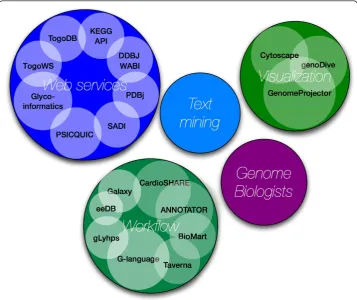
The second DBCLS BioHackathon took place March 11-15, 2009 in Japan, jointly hosted by the DBCLS and the Okinawa Institute of Science and Technology (OIST [3]). DBCLS is a national project responsible for developing services to integrate bioin-formatics resources, while OIST hosts a research unit focusing on marine genomics. The researchers and developers attending the second DBCLS BioHackathon repre-sented key resources and projects within a number of related domains (Figure 1):
Web GUI, Perl API). In addition, there were representatives of projects developing domain-specific Web services and standards for data formats and exchange proto-cols (PSICQUIC [17], Glycoinformatics [18]). Lastly, there were representatives from the Semantic Automated Discovery and Integration framework (SADI [19,20]).
• Workflows - While individual data and analytical tools are made available through Web services, biological discovery generally requires executing a series of data retrieval, integration, and analysis steps. Thus, it is important to have environ-ments within which Web services can be easily pipelined, and where high-through-put data can be processed without manual intervention. Among the projects that enable this were participants from ANNOTATOR [21], MOWserv [22]/jORCA [23], IWWE&M [24], Taverna [25] and RIKEN Life Science Accelerator (EdgeEx-pressDB [26]). In addition, there were representatives from BioMart [27], Galaxy [28] and SHARE [29]. BioMart is a query-oriented data management system that is particularly suited for providing‘data mining’-like searches of complex descriptive data. Galaxy is an interactive platform to obtain, process, and analyze biological data using a variety of server-side tools. The SHARE client is designed specifically for the SADI Web service framework, where it parses a SPARQL query and auto-matically maps query clauses to appropriate Web services, thus autoauto-matically creat-ing a query-answercreat-ing workflow.
•Text mining- Although a significant portion of our knowledge about life science is stored in a vast number of papers, few linkages exist between the rich knowledge “hidden” in the scientific literature and the rich data catalogued in our databases. To bridge them automatically, we first need to annotate those papers manually. Among the BioHackathon participants were researchers/developers from such annotation projects, namely Kazusa Annotation [30], and Allie [31].
•Visualization- Biological data visualization involves not only providing effective abstractions of vast amounts of data, but also effective and facile ways to find, retrieve and store data as-needed by the biologist for a fast and complete visual exploration. To achieve this, both data providers and tool developers need to work collaboratively as much of the data that we need to visualize is complex and dis-persed among a wide variety of non-coordinating providers. To complicate the field even further, biologists work at a wide range of scales as they attempt to dis-cover new insights - from meta-genomic, multi-genome comparisons, to single genomes, to interactome, to single gene or protein, to SNP information. Each scale and type of data requires a different approach to visualization. At the BioHacka-thon there were representatives from a number of visualization projects. The gen-oDive [32] is a genome browser for viewing schematic genome structures and associated information in 3D space with the ability to execute a“semantic zoom” (i.e. a zoom which is aware of its context). This novel representation of genomic information provides an alternative to the more common 2D-track displays. Geno-meProjector [33] is a tool based on the Google Map API to combine different views for the genomic data in context of genome, plasmid, pathway and DNA walk. In addition, there were representatives from Cytoscape [34,35] and GBrowse [36,37]. GBrowse is a genome viewer and Cytoscape is a visualizer of the biomole-cular interaction networks.
The participants from these different domains collaboratively challenged real world issues in genome biology based on use cases described in the Methods section. How-ever, beyond deriving prototype solutions for each use case, another major purpose of the BioHackathon series is to identify problems and weaknesses in current technolo-gies, such that“bio-hackers”can return to their respective groups with a clear focus on areas of immediate need. As such, we conclude the paper with an extensive discussion of the issues raised by our exploration of the problem/solution space; in particular, issues related to data formats, the complexity of Web service interoperability, and the need for semantics in bioinformatics data and tools.
Methods
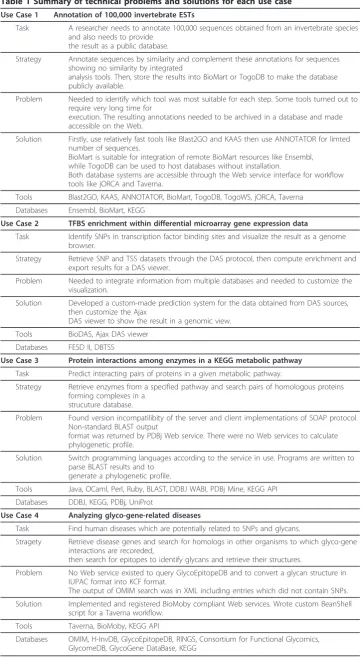
The BioHackathon followed a use-case-driven model. First, genome biologists having developmental, evolutionary, genetic and medical interests explained their data retrie-val, integration and analysis requirements. From these, four use-cases were developed spanning three general domains of genomics data.
Table 1 Summary of technical problems and solutions for each use case
Use Case 1 Annotation of 100,000 invertebrate ESTs
Task A researcher needs to annotate 100,000 sequences obtained from an invertebrate species and also needs to provide
the result as a public database.
Strategy Annotate sequences by similarity and complement these annotations for sequences showing no similarity by integrated
analysis tools. Then, store the results into BioMart or TogoDB to make the database publicly available.
Problem Needed to identify which tool was most suitable for each step. Some tools turned out to require very long time for
execution. The resulting annotations needed to be archived in a database and made accessible on the Web.
Solution Firstly, use relatively fast tools like Blast2GO and KAAS then use ANNOTATOR for limted number of sequences.
BioMart is suitable for integration of remote BioMart resources like Ensembl, while TogoDB can be used to host databases without installation.
Both database systems are accessible through the Web service interface for workflow tools like jORCA and Taverna.
Tools Blast2GO, KAAS, ANNOTATOR, BioMart, TogoDB, TogoWS, jORCA, Taverna
Databases Ensembl, BioMart, KEGG
Use Case 2 TFBS enrichment within differential microarray gene expression data
Task Identify SNPs in transcription factor binding sites and visualize the result as a genome browser.
Strategy Retrieve SNP and TSS datasets through the DAS protocol, then compute enrichment and export results for a DAS viewer.
Problem Needed to integrate information from multiple databases and needed to customize the visualization.
Solution Developed a custom-made prediction system for the data obtained from DAS sources, then customize the Ajax
DAS viewer to show the result in a genomic view.
Tools BioDAS, Ajax DAS viewer
Databases FESD II, DBTSS
Use Case 3 Protein interactions among enzymes in a KEGG metabolic pathway
Task Predict interacting pairs of proteins in a given metabolic pathway.
Strategy Retrieve enzymes from a specified pathway and search pairs of homologous proteins forming complexes in a
strucuture database.
Problem Found version incompatilibity of the server and client implementations of SOAP protocol. Non-standard BLAST output
format was returned by PDBj Web service. There were no Web services to calculate phylogenetic profile.
Solution Switch programming languages according to the service in use. Programs are written to parse BLAST results and to
generate a phylogenetic profile.
Tools Java, OCaml, Perl, Ruby, BLAST, DDBJ WABI, PDBj Mine, KEGG API
Databases DDBJ, KEGG, PDBj, UniProt
Use Case 4 Analyzing glyco-gene-related diseases
Task Find human diseases which are potentially related to SNPs and glycans.
Stragety Retrieve disease genes and search for homologs in other organisms to which glyco-gene interactions are recoreded,
then search for epitopes to identify glycans and retrieve their structures.
Problem No Web service existed to query GlycoEpitopeDB and to convert a glycan structure in IUPAC format into KCF format.
The output of OMIM search was in XML including entries which did not contain SNPs.
Solution Implemented and registered BioMoby compliant Web services. Wrote custom BeanShell script for a Taverna workflow.
Tools Taverna, BioMoby, KEGG API
following sections summarize successes and failures for each use case in the context of the tool or framework being applied, and an evaluation of each tool in comparison to alternatives. In general, the participants achieved operational results within the time span of the BioHackathon, which demonstrates some of the strengths of Web services in being accessible from any of the participants’computers and, in principle, program-mable in any language.
Use Case 1 - Annotation of 100,000 invertebrate ESTs
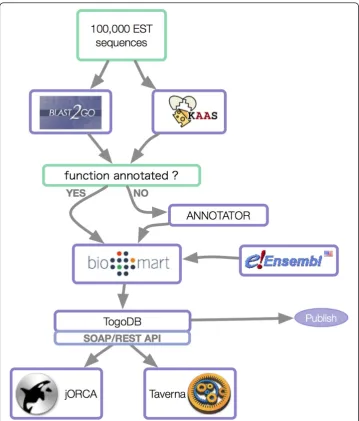
As the number of sequences in this case is relatively large, sequences should first be annotated using a high-throughput system such as Blast2GO [38] or KAAS [39]. BLAST2GO is a tool to annotate many sequences at once with gene ontology (GO) definitions based on BLAST sequence similarity. KEGG Automatic Annotation Server (KAAS) is a service for functional annotation of sequences by assigning them to KEGG pathways. After using these tools, ANNOTATOR can be used to perform deeper ana-lysis on the remaining difficult-to-annotate sequences, as ANNOTATOR provides highly detailed analysis. Specifically, ANNOTATOR provides functionality to predict protein function based on physicochemical characteristics such as secondary structure of a protein or prediction of transmembrane regions, which can give insight to predict molecular characteristics and cellular functions of the protein. To accomplish this, ANNOTATOR integrates various bioinformatics algorithms and Web services that sometimes take very long time to run. This is why the prototype used ANNOTATOR for only those proteins that are difficult to annotate by sequence similarity. BioMart can subsequently be used to join annotated sequences stored in a local BioMart server with related annotation in the remote Ensembl [40] database. Finally, finished annota-tions can be published as a simple database using TogoDB and the result can be inte-grated into workflow managers like jORCA or Taverna through (TogoWS) Web services. Figure 2 shows the steps of this workflow.
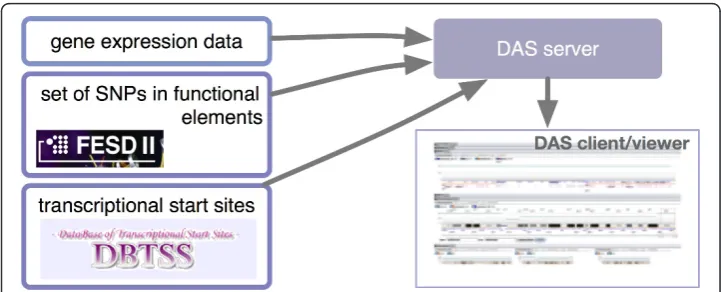
the results using an Ajax DAS viewer [44]. The components of this system are shown in Figure 3.
Use Case 3 - Protein interactions among enzymes in a KEGG metabolic pathway
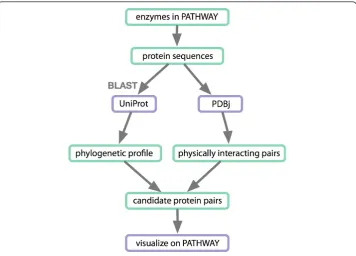
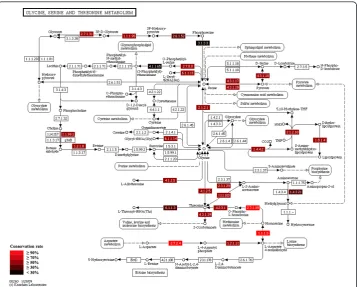
for each protein sequence against PDB for each species in the phylogenetic profile. If two protein sequences (of the same species) have homologs in the same PDB entry, they are inferred to be in physical contact, and hence predicted to be an interacting pair, v) output image files highlighting the conserved and interacting proteins in the pathway map. Figure 4 shows the steps in this workflow; an example of the produced visualizations is shown in Figure 5. To implement the workflow outlined above, partici-pants first identified the SOAP and REST APIs of DDBJ [5], KEGG [10] and PDBj [8] for data retrieval. These were connected to each other and to the UniProt BLAST ser-vice using a workflow written mainly in Java.
Use Case 4 - Analyzing glyco-gene-related diseases
A researcher needs to analyze glyco-gene-related diseases by searching for human homologs of glyco-genes in other species, such as fruit flies, and retrieving their phe-notype-annotated SNPs. The approach was to use OMIM [47] to search for diseases related to loci of human homologs of target glyco-genes from other species, such as fruit fly, and retrieve any SNPs that are known to be related. To address this use case, participants agreed that the available Web services were insufficient, so as a starting point, participants first developed a workflow to retrieve H-Inv entries containing OMIM IDs for entries containing a particular disease-related keyword. Then, focus was on the development of Taverna workflows accessing existing and de novo -con-structed Web services from the following glycobiology- related sites: GlycoEpitopeDB [48], RINGS [49], Consortium for Functional Glycomics [50], GlycomeDB [51], and GlycoGene DataBase [52], and an annotated database of human genes H-InvDB [53]. Two BioMoby [54,55] Web services for accessing GlycoEpitopeDB were constructedde novo:getGlycoEpitopeIDfromKeywordwhich queries GlycoEpitope DB using a keyword and retrieves all IDs of entries containing the keyword, and getIUPACfromGlycoEpito-peID which retrieves glycan structures in IUPAC format using GlycoEpitope IDs. In order to handle the data returned from these services, an additional Web service called
data mining Web services in RINGS. The steps of this workflow are visualized in Figure 6.
Results
Web services
Figure 5Evolutionary conservation rate of proteins on a KEGG pathway. Evolutionary conservation rate is defined as the ratio of the number of conserved proteins, i.e. homologs, over the number of species. Conservation rate is color-coded for each node in the pathway (see legend). See text and Figure 4 for more details.
Figure 6Workflow for analyzing glyco-gene-related diseases. In the first step of this workflow, GlycoEpitope DB entries are searched for disease-related keywords by a newly developed BioMoby service calledgetGlycoEpitopeIDfromKeyword. The identifiers of matching entries are then used to retrieve glycan structures in IUPAC format by another newly developed BioMoby service called
wrapped, the service becomes available for inclusion in a workflow like any other service. Thus, if the resource an end-user requires is not available as a Web service, it is possible for the end-users themselves to create this service simply by using the traditional Web interface of the resource provider. An extension of Daggoo that allows it to semi-auto-matically generate SADI-compliant Semantic Web services is near completion. With these tools available, the barrier encountered during our use-case analyses resulting from not having a tool or resource available as a Web service would be somewhat alleviated.
Also, among the Web service domain experts at this BioHackathon, developers of the G-language project implemented Web service interfaces to the G-language GAE in order to increase interoperability. The RESTful Web service [58] provides URL-based access to all functions of the G-language GAE, which makes them easily accessible from other tools. The SOAP interface provides a WSDL file [59] containing descrip-tions for all available programs in the G-language GAE. This WSDL can be readily loaded in Taverna 2 workbench, thus making these G-language functions available within Taverna workflows.
Workflows
Researchers and developers of workflow tools used the BioHackathon to jointly investi-gate interoperability of their interfaces and evaluate their utilities by applying them to several real-world problems. Using data provided by the genomics researchers in atten-dance, participants addressed the powers, limitations and interoperability of a number of tools, including BioMart-Galaxy, BioMart-GBrowse, BioMart-Cytoscape and Galaxy-GBrowse. Collaborating with Galaxy, GBrowse and Cytoscape developers, those work-flow system and data visualization tools gained better integration with BioMart Web services. Notably, established two-way communications within BioMart-GBrowse and Galaxy-GBrowse enable users to import data from and send data back to the relevant database from GBrowse. Furthermore, participants extended Galaxy to allow it to con-sume data from the TogoWS developed and maintained at DBCLS, which enables Galaxy users to easily incorporate several bioinformatics resources that TogoWS pro-vides such as KEGG, DDBJ, PDBj, NCBI and EBI. The group also introduced interna-tionalization codes into Galaxy so that non-ASCII characters can be displayed correctly and the interface can be localized for non-English native users.
dramatically simplified the task of SADI Service provision, and this will make the fra-mework more attractive to data and service providers in the future. Since the majority of workflow tools primarily facilitate manual workflow construction, the BioHackathon provided an opportunity to present work on semantically supported automated work-flow construction to other workwork-flow tool authors, and share ideas around successes and failures. These ideas are detailed in the “Motivating arguments for semantics“
portion of the Discussion.
Text mining
Participants investigated existing text-mining systems, such as automatic ontology-based tagging tools, and interfaces that enabled manual annotation of biological “objects” within life science research papers. During the BioHackathon, we explored automatic annotation services that include BioCreative MetaServer Platform [60,61], Whatizit [62] and iHOP [63,64], and collaborative annotation environments that include WiredMarker [65], XConc Suite [66], Kazusa Annotation [30] and Bionotate [67]. In addition, participants discussed how such annotation tools could facilitate the generation of networks of papers, based on an enriched set of metadata generated by them.
Participants noted that integrating automatic annotation tools with collaborative ones would bring about benefits to life science researches. Several groups have developed those tools that can be used for it and each one has its own strength. For example, Wired Marker and XConc Suite provide efficient manual annotation environments while Whatizit can annotate plain text on-the-fly. If an automatic annotation tool can be used through a collaborative one, annotation tasks will be more efficient. In addi-tion, an ontology-mediated common data format adopted by several tools to represent annotated documents enables integration of various annotation results created by mul-tiple study groups, and thereby literature or knowledge can be searched in more semantic ways.
Visualization
During the BioHackathon a variety of tools were demonstrated, each having some novel and some overlapping visualization features. Among these was GenomeProjec-tor’s Google Map API feature, which provides three distinct aspects: genomic context, pathway context and DNA walk. Two demonstrated tools provide contextual semantic annotation based on the user zooming in ("semantic zoom”): these where genoDive and GBrowse. Yet another demonstrated approach is to explore genomes using huge, wall-sized projections. Lastly, in a tool developed at the BioHackathon, the exclusive Musical Instrument Digital Interface (MIDI) was used as a controller to navigate multi-dimensional, comparative genome data.
Discussion
The need to create new services in order to answer typical biological use cases speaks to two general problems in the bioinformatics Web service community: (1) the insuffi-ciency of current offerings by data and tool providers, and (2) the difficulty data and service providers face in predicting what services are needed by their end-users. By solving common bioinformatics use-cases, participants discovered that many straight-forward, yet non-obvious operations were lacking. For example, given a set of gene names, return a phylogenetic profile, or, given a set of BLAST hits, group them accord-ing to other shared features such as annotations or motifs. Clearly, if a researcher is constructing a workflow, and the next required function is not available as a Web ser-vice or it is embedded inside a more complex Web serser-vice, then a dead-end is reached in the workflow construction. This was observed repeatedly during the BioHackathon.
To resolve the pathway and glycoinformatics use cases, participants found that sev-eral services needed to be written de novo, in part because the required services did not exist, and in part because there were incompatibilities between Java and Perl Web services due to their respective SOAP libraries. Importantly, it was noted that most of the workflow was dedicated to file-format conversions (referred to as “shims” in the workflow community [68]), which in some cases led to building the workflows at the code level, rather than in a workflow design tool. Some conversions may be automated by newly developed Web services, for example using TogoWS’s URL API for convert-ing between a number of commonly-used flat file formats or to translate any flat file to JSON or XML (and in the future to RDF). However, these are nevertheless a nui-sance for biologist end-users, and it is suspected that even with the availability of “shim”Web services, a non-trivial amount of coding for format conversions is inevita-ble as new technologies (and therefore new data formats) appear increasingly rapidly. It was also noted that the non-standard output format of BLAST search in PDBj sequence navigator caused additional problems. Taken together, these nuisances pro-vided a strong lesson to data providers that they should, where possible, stick rigor-ously to standard formats for which tools exist.
Given the difficulty in anticipating what Web services might be needed for any given research question, one might therefore speculate whether it will ever be possible for non-programmer end-users to build their analyses entirely in a workflow client; how-ever, we contend there are ways to mitigate this problem given adherence to some simple best practices the participants identified at the BioHackathon and which we will outline below.
Proposed guidelines
From these observations, participants have derived several guidelines that they will adopt as they continue to develop their respective tools; it is hoped that these guide-lines will be useful to other groups facing similar problems. In brief, the biological Web service guidelines propose standard specifications for methods of REST and SOAP to search for, retrieve and convert formats of database entries. They also pro-pose the format of query strings and recommended data types. Finally, they require the preparation of sample codes and documents. The full descriptions of these guidelines are available at the BioHackathon website [69].
While participants do not propose these guidelines as a formal international stan-dard, it is strongly encouraged that bioinformatics resource providers examine these suggestions and follow those that are relevant to their own resources in order to maxi-mize their usability and interoperability. The activity to maintain and update these guidelines continues, both as individual providers and as the wider BioHackathon com-munity, and participants are continuing to observe and evaluate new technologies such as the Semantic Web and Semantic Web services.
An important conclusion from these guidelines is that participants believe resource providers should be as comprehensive as possible in making all data manipulation and analysis resources available as Web services - attempt to anticipate all the ways that users might want to manipulate data records and try to make these functions available as individual Web services. Also, resource providers should attempt to be as fine-grained and modular as possible in the Web services they implement. If a Web service, for example, applies a data transformation on the incoming data prior to executing its ana-lysis, then providers should consider publishing both the transformation and the analysis as separate services, as it is likely that both functions will be independently useful in workflows that the provider cannot anticipate.
One might argue, however, that by adopting this approach the situation becomes worse by increasing the complexity of workflows. Fortunately, modern workflow tools such as Taverna allow users to publish sets of connected Web services as individual, reu-sable workflow modules. Thus, from the perspective of consumers, they have the ability to see whatever level of granularity they need to see - either the entire sub-workflow as a single function, or the sub-workflow as a set of highly granular and re-usable modules that they can splice together as they see fit.
Motivating arguments for semantics
Schema and Schema-based Web services (i.e. WSDL) posed barriers to interoperability and integration, and the feasibility of alternatives.
Though the compelling argument in favor of XML Schema is the availability of a wide range of compatible tools, such tooling is rapidly becoming available for RDF/ OWL also, thus this advantage becomes less significant every day. Moreover, as an increasing number of bioinformatics data providers begin publishing their data natively in RDF (e.g. UniProt [70]), it will soon become necessary not only to map XML Schema to one another to achieve interoperability, but also to map RDF-Schema to XML Schema (e.g. using SAWSDL [71]) in order to utilize traditional Web services. Representatives from the SADI project pointed out that this growing trend, in itself, should be sufficient motivation to look at alternatives to standard WSDL-based Web services.
Finally, our reliance on XML Schema has had other unintended consequences that not only thwart interoperability, but are making the problem worse over time. In a recent keynote address, Charles Petrie observed that“there are no practical Web ser-vices!” [72]. What he meant is that problems of data formatting, lack of annotation, lack of semantics, and the resulting complexity of workflow construction have all led to the situation where Web services are seldom modeled as modular units that can be “cobbled together”in various ways to achieve a variety of ends; rather, they are more often large multi-functional units with very low granularity (and therefore low re-usability in novel workflows). While Petrie was describing primarily business-oriented Web services, the situation in bioinformatics is not entirely dissimilar, and it is pre-cisely this lack of fine-grained services that was identified by the BioHackathon partici-pants as lacking. The movement to RDF/OWL-based data representation will, we propose, naturally lead to finer-grained data models and APIs simply because there is no advantage whatsoever in using RDF/OWL to pass complex, opaque documents. This, in itself, should provide the incentive to break these documents into richer, more granular structures, and this in turn will lead to the creation of more fine-grained APIs that can operate over them.
Increasing the granularity of the workflow almost invariably increases the granularity of data-types (e.g. serving only a small fragment of a PDB record, rather than the entire PDB record). The problem of data-type granularity has long been of interest to the BioMoby project. The data-type ontology in BioMoby was specifically designed to offer a much higher level of granularity in data representation than the typical bioin-formatics flat-file, and it is this enhanced granularity that has enabled the creation of tools like Daggoo that can semi-automatically wrap existing Web resources. In prac-tice, however, few data providers utilize the higher granularity of the Moby data-type ontology, preferring to simply consume and produce the same opaque flat-file formats they did before, but with a BioMoby object wrapper. As such, there was a general feel-ing at the BioHackathon that BioMoby did not offer a useful solution to this particular problem.
of data based on its semantic properties, or could be used by workflow construction tools to automate the conversion of one data format to another equivalent or related data format, thus simplifying the “shim” problem. The SADI initiative is already demonstrating the advantage of using RDF/OWL in Web services.
Conclusions
The First DBCLS BioHackathon [2] focused on bringing data and analytical tool provi-ders together with the goal of harmonizing their approach to making bioinformatics resources available as Web services (in the loosest sense of the term, including both programmatic APIs as well as REST-like services). The Second DBCLS BioHackathon brought together data providers, middleware providers, interface designers and end-users with the goal of evaluating our ability to address real-world biological problems through utilizing Web services to create data “mashups” with existing tools. In this evaluation, compatibility between many projects was leveraged, revealing a network of interoperable resources with high connectivity in some areas, as shown in Figure 7. However, the evaluation also revealed that there are still problems with the way we are modeling and annotating our Web services, including the lack of documentation of methods, lack of compliance with the SOAP/WSDL specification among and between various programming-language libraries, incompatibility between various bioinformatics data formats, and a dearth of useful data and analysis functions in Web services. Sol-ving the real-world challenges posed by the biological researchers in attendance proved difficult to complete given these problems. Therefore, the need for semantic technolo-gies was a common thread throughout the Second DBCLS BioHackathon, and it was determined that Linked Data and the Semantic Web initiative should be the core theme for the Third DBCLS BioHackathon.
Funding and acknowledgements
The Integrated Database Project (Ministry of Education, Culture, Sports, Science and Technology of Japan) and the Okinawa Institute of Science and Technology, Japan financially supported the BioHackathon 2009.
We sincerely appreciate Dr. Sydney Brenner and Dr. Yoshiki Hotta for helping us organize the BioHackathon 2009 in OIST and for providing an ideal place to have this international collaborative meeting.
Authors’contributions
All authors attended the BioHackathon 2009. TK, MDW and RV primarily wrote the manuscript. TK, TaK, ShuK, MN, YY, HWC, AY, ShiK and TT organized the BioHackathon 2009. All authors read and approved the final manuscript.
Competing interests
The authors declare that they have no competing interests.
Received: 1 April 2011 Accepted: 2 August 2011 Published: 2 August 2011
References
1. Database Center for Life Science.[http://dbcls.rois.ac.jp/].
2. Katayama T, Arakawa K, Nakao M, Ono K, Aoki-Kinoshita K, Yamamoto Y, Yamaguchi A, Kawashima S, Chun H-W, Aerts J, et al:The DBCLS BioHackathon: standardization and interoperability for bioinformatics web services and workflows.Journal of biomedical semantics2010,1:8.
3. Okinawa Institute of Science and Technology.[http://www.oist.jp/].
4. Kwon Y, Shigemoto Y, Kuwana Y, Sugawara H:Web API for biology with a workflow navigation system.Nucleic Acids Research2009,37:W11-W16.
5. Web API for Biology (WABI).[http://xml.nig.ac.jp/index.html]. 6. DDBJ.[http://www.ddbj.nig.ac.jp/].
7. PDBj.[http://www.pdbj.org/].
8. PDBj Mine: REST API.[http://www.pdbj.org/doc/help.cgi?PDBj%20Mine:REST%20API]. 9. KEGG: Kyoto Encyclopedia of Genes and Genomes.[http://www.genome.jp/kegg/]. 10. KEGG API.[http://www.genome.jp/kegg/soap/].
11. Kanehisa M, Araki M, Goto S, Hattori M, Hirakawa M, Itoh M, Katayama T, Kawashima S, Okuda S, Tokimatsu T, Yamanishi Y:KEGG for linking genomes to life and the environment.Nucleic Acids Research2008,36:D480-484. 12. Kanehisa M, Goto S, Furumichi M, Tanabe M, Hirakawa M:KEGG for representation and analysis of molecular
networks involving diseases and drugs.Nucl Acids Res2010,38:D355-D360. 13. TogoDB.[http://togodb.dbcls.jp/].
14. TogoWS.[http://togows.dbcls.jp/].
15. Katayama T, Nakao M, Takagi T:TogoWS: integrated SOAP and REST APIs for interoperable bioinformatics Web services.Nucleic Acids Research2010,38:W706-W711.
16. Arakawa K, Mori K, Ikeda K, Matsuzaki T, Kobayashi Y, Tomita M:G-language Genome Analysis Environment: a workbench for nucleotide sequence data mining.Bioinformatics (Oxford, England)2003,19:305-306. 17. PSICQUIC: Protemics Standard Initiative Common QUery InterfaCe.[http://code.google.com/p/psicquic/]. 18. Glycoinformatics.[http://glycomics.ccrc.uga.edu/GlycomicsWiki/Informatics:Cross-Database_Search_%28WGGDS%29]. 19. Wilkinson M, McCarthy L, Vandervalk B, Withers D, Kawas E, Samadian S:SADI, SHARE, and the in silico scientific
method.BMC Bioinformatics2010,11:S7.
20. Semantic Automated Discovery and Integration.[http://sadiframework.org/content/].
21. Schneider G, Wildpaner M, Sirota F, Maurer-Stroh S, Eisenhaber B, Eisenhaber F:Integrated Tools for Biomolecular Sequence-Based Function Prediction as Exemplified by the ANNOTATOR Software Environment.InData Mining Techniques for the Life Sciences. Volume 609.Edited by: Carugo O. Eisenhaber F: Humana Press; 2010:257-267. 22. Ramírez S, Muñoz-Mérida A, Karlsson J, García M, Pérez-Pulido A, Claros G, Trelles O:MOWServ: a web client for
integration of bioinformatic resources.Nucleic Acids Research2010,38:W671-W676.
23. Martín-Requena V, Ríos J, García M, Ramírez S, Trelles O:jORCA: easily integrating bioinformatics Web Services. Bioinformatics (Oxford, England)2010,26:553-559.
24. Interactive Web Workflow Enactor & Manager.[http://ubio.bioinfo.cnio.es/biotools/IWWEM/].
25. Hull D, Wolstencroft K, Stevens R, Goble C, Pocock M, Li P, Oinn T:Taverna: a tool for building and running workflows of services.Nucleic Acids Research2006,34:W729-732.
26. Severin J, Waterhouse A, Kawaji H, Lassmann T, van Nimwegen E, Balwierz P, de Hoon MJ, Hume D, Carninci P, Hayashizaki Y,et al:FANTOM4 EdgeExpressDB: an integrated database of promoters, genes, microRNAs, expression dynamics and regulatory interactions.Genome biology2009,10:R39.
27. Smedley D, Haider S, Ballester B, Holland R, London D, Thorisson G, Kasprzyk A:BioMart - biological queries made easy.BMC Genomics2009,10:22.
28. Blankenberg D, Von Kuster G, Coraor N, Ananda G, Lazarus R, Mangan M, Nekrutenko A, Taylor J:Galaxy: a web-based genome analysis tool for experimentalists.Current Protocols in Molecular Biology2010,Chapter 19.
29. cardioSHARE.[http://biordf.net/cardioSHARE/]. 30. Kasuza Annotation.[http://a.kazusa.or.jp/].
31. Allie: A Search Service for Abbreviation.[http://allie.dbcls.jp/]. 32. genoDive.[http://genodive.org/].
33. Arakawa K, Tamaki S, Kono N, Kido N, Ikegami K, Ogawa R, Tomita M:Genome Projector: zoomable genome map with multiple views.BMC Bioinformatics2009,10:31.
34. Shannon P, Markiel A, Ozier O, Baliga N, Wang J, Ramage D, Amin N, Schwikowski B, Ideker T:Cytoscape: a software environment for integrated models of biomolecular interaction networks.Genome research2003,13:2498-2504. 35. Cline M, Smoot M, Cerami E, Kuchinsky A, Landys N, Workman C, Christmas R, Avila-Campilo I, Creech M, Gross B,et al:
36. GBrowse.[http://gmod.org/wiki/Gbrowse].
37. Stein L, Mungall C, Shu S, Caudy M, Mangone M, Day A, Nickerson E, Stajich J, Harris T, Arva A, Lewis S:The generic genome browser: a building block for a model organism system database.Genome research2002,12:1599-1610. 38. Conesa A, Götz S:Blast2GO: A comprehensive suite for functional analysis in plant genomics.International journal of
plant genomics2008,2008:1-13.
39. Moriya Y, Itoh M, Okuda S, Yoshizawa A, Kanehisa M:KAAS: an automatic genome annotation and pathway reconstruction server.Nucleic Acids Research2007,35:W182-W185.
40. Flicek P, Aken B, Ballester B, Beal K, Bragin E, Brent S, Chen Y, Clapham P, Coates G, Fairley S,et al:Ensembl’s 10th year.Nucleic Acids Research2010,38:D557-562.
41. Kang HJ, Choi KO, Kim B-D, Kim S, Kim YJ:FESD: a Functional Element SNPs Database in human.Nucleic Acids Research2005,33:D518.
42. Yamashita R, Wakaguri H, Sugano S, Suzuki Y, Nakai K:DBTSS provides a tissue specific dynamic view of Transcription Start Sites.Nucleic Acids Research2010,38:D98-D104.
43. Dowell R, Jokerst R, Day A, Eddy S, Stein L:The Distributed Annotation System.BMC Bioinformatics2001,2:7. 44. Jimenez R, Quinn A, Garcia A, Labarga A, O’Neill K, Martinez F, Salazar G, Hermjakob H:Dasty2, an Ajax protein DAS
client.Bioinformatics (Oxford, England)2008,24:2119-2121.
45. Altschul SF, Gish W, Miller W, Myers EW, Lipman DJ:Basic local alignment search tool.Journal of Molecular Biology 1990,215:403-410.
46. Apweiler R, Bairoch A, Wu CH, Barker WC, Boeckmann B, Ferro S, Gasteiger E, Huang H, Lopez R, Magrane M,et al: UniProt: the Universal Protein knowledgebase.Nucleic Acids Research2004,32:D115-D119.
47. Amberger J, Bocchini C, Scott A, Hamosh A:McKusick’s Online Mendelian Inheritance in Man (OMIM).Nucleic Acids Research2009,37:D793-796.
48. GlycoEpitope Database.[http://www.glyco.is.ritsumei.ac.jp/epitope/]. 49. RINGS.[http://www.rings.t.soka.ac.jp/].
50. Consortium for Functional Glycomics.[http://www.functionalglycomics.org/]. 51. GlycomeDB.[http://www.glycome-db.org/].
52. GlycoGene DataBase.[http://riodb.ibase.aist.go.jp/rcmg/ggdb/].
53. Yamasaki C, Murakami K, Takada J, Sato Y, Noda A, Sakate R, Habara T, Nakaoka H, Todokoro F, Matsuya A, Imanishi T, Gojobori T:H-InvDB in 2009: extended database and data mining resources for human genes and transcripts. Nucleic Acids Research2010,38:D626-632.
54. Wilkinson M, Links M:BioMOBY: an open source biological web services proposal.Briefings in bioinformatics2002, 3:331-341.
55. Vandervalk B, McCarthy L, Wilkinson M:Moby and Moby 2: Creatures of the Deep (Web).Brief Bioinform2009, 10:114-128.
56. Gordon P, Barker K, Sensen C:Programming-by-Example Meets the Semantic Web: Using Ontologies and Web Services to Close the Semantic Gap.Visual Languages and Human-Centric Computing, IEEE Symposium on2010, 133-140.
57. Daggoo.[http://www.daggoo.net/].
58. REST Service for G-language System.[http://rest.g-language.org/]. 59. G-SOAP WSDL.[http://soap.g-language.org/g-language.wsdl].
60. Leitner F, Krallinger M, Rodriguez-Penagos C, Hakenberg Jr, Plake C, Kuo C-J, Hsu C-N, Tsai RT-H, Hung H-C, Lau W, et al:Introducing meta-services for biomedical information extraction.Genome biology2008,9(Suppl 2):S6. 61. BioCreative MetaServer.[http://bcms.bioinfo.cnio.es/].
62. Whatizit.[http://www.ebi.ac.uk/webservices/whatizit/]. 63. iHOP Web Services.[http://ubio.bioinfo.cnio.es/biotools/iHOP/].
64. Fernández J, Hoffmann R, Valencia A:iHOP web services.Nucleic Acids Research2007,35. 65. Wired-Marker.[http://www.wired-marker.org/].
66. XConc Suite.[http://www-tsujii.is.s.u-tokyo.ac.jp/GENIA/home/wiki.cgi?page=XConc+Suite]. 67. BioNotate.[http://bionotate.sourceforge.net/].
68. Hull D, Stevens R, Lord P, Wroe C, Goble C:Treating“shimantic web”syndrome with ontologies.AKT Workshop on Semantic Web Services; Milton Keynes, UK2004.
69. Guideline for Web Services (Manifesto ver.2.0).[http://hackathon2.dbcls.jp/wiki/GuidelineForWebService]. 70. UniProt RDF.[http://dev.isb-sib.ch/projects/uniprot-rdf/].
71. SAWSDL.[http://www.w3.org/2002/ws/sawsdl/].
72. Petrie C:Practical Web Services.IEEE APSCC Workshop on Semantic Web Services in Practice (SWSIP 2009); Singapore 2009.
doi:10.1186/2041-1480-2-4