*
Structure and Reactivity of
Microporous and Oxide Catalysts
Dewi W yn Lewis
Ph,D. Thesis
University College London
ProQuest Number: 10016795
All rights reserved
INFORMATION TO ALL USERS
The quality of this reproduction is dependent upon the quality of the copy submitted.
In the unlikely event that the author did not send a complete manuscript and there are missing pages, these will be noted. Also, if material had to be removed,
a note will indicate the deletion.
uest.
ProQuest 10016795
Published by ProQuest LLC(2016). Copyright of the Dissertation is held by the Author.
All rights reserved.
This work is protected against unauthorized copying under Title 17, United States Code. Microform Edition © ProQuest LLC.
ProQuest LLC
789 East Eisenhower Parkway P.O. Box 1346
Abstract
M icroporous and metal oxide heterogeneous catalysts have been investigated using a range of com putational techniques. The results of studies of the factors influencing the synthesis, structure and activity of these materials are presented here.
A study of the interactions betw een zeolitic fram eworks and organic tem plates has dem onstrated how the efficacy of a tem plate can be determ ined and an energetic rationalisation of tem plating ability is dem onstrated. The location of tem plates w ithin frameworks are found to be accurately determ ined and subtle differences in fram ew ork structure are rationalised in terms of the tem plate used. We have been able to determine the tem plating action of l?zs-quaternary amm onium cations in the alum inophosphate DAF-1, results which have allowed the synthesis of new compositions of this material. We have further used these results to design a new tem plate w hich will not form DAF-1 and which w e propose as a tem plate which m ay favour a new material. We dem onstrate that such com puter-aided design of tem plates can be used to assist the search for new materials.
We have successfully m odelled the local geometry of the iron and Bronsted acid site in Fe-ZSM5 using atomistic sim ulation techniques. A broad range of cation T sites are predicted to be occupied by iron, w ith T19 and T18 being the m ost energetically favourable. The accuracy of the calculations is dem onstrated by the reproduction of the experimental EXAFS. We further propose im proved models w hich better describe the local environm ent and which improve on the fit to experim ental data. The effect of the inclusion of iron on the physical properties and catalytic activity is determ ined and compared to similar results for A1-ZSM5. The subtle differences betw een these two materials is reproduced. Iron incorporation modifies the pore dimensions, reducing the m axim um pore dimension by 0.4Â, an effect which can be correlated to experimental data on the selectivity of the material. Calculations on the interaction of the iron and the template, the first of their kind, have provided a m odel for understanding the experimental data on this material.
particular they stabilise untrapped oxygen holes. A mechanism for the
im proved catalytic performance of the m aterial on doping w ith Cl is presented. Ch is found to be strongly surface segregated and to compete for the lithium w ith the oxygen holes, forming [LiCl] defect centres. These calculations also allow us to comment on the relative activity of the different sites and to draw further conclusions on the reaction mechanism.
Acknowledgements
First and foremost I w ish to acknowledge my supervisor Professor Richard Catlow for providing the opportunity, motivation, stim ulation and support for this work. I can only hope that the result is w hat he was after! Thanks m ust also go to Stuart Carr at Unilever for suggesting areas of interest and for the
additional financial support and to Dr. Sally Price for being m y 'other' supervisor.
The research group of Professor Richard Catlow and the Royal Institution has provided not only a highly stimulating w orking environm ent b u t also good friends. So, in no particular order, and often w ith scant regard for their contribution, thanks go to: Rob, Julian, Ashley, A drian, Andrew , Dave, Sasha, Jason, Tim, Robin, Dave W, Mike, Yvonne, Shy am, Phil and all those other members, both perm anent and visitors, who have arrived and departed in the last three years.
Of course, the other members of the DFRL have also contributed not only to this w ork but to life in general over the past three years. The experimental group of Prof. J. M. Thomas has provided not only m any of the problem s which have been investigated in this w ork but also a great deal of help in understanding the field of catalysis. Thanks to Prof. Thomas, Paul (for believing me!), Sankar (for the introduction to EXAFS), Phil and Fernando. The other mob, the group of Prof. Day, have also had their say: thanks to M ark (especially for putting up w ith being dragged along to Welsh gigs), Simon, Mo, Mike, Chris, Cameron and Anthony.
Diolch hefyd i'r hogia adra, yn Llundain a dram or am yr hw yl a'r rwdlan; yn enwedig Glyn, Rheinallt, Richard ac Euryn.
Now for the m ushy bit. None of this w ould have been possible w ithout the support of m y family. Thanks to Mam and Dad and my brother Dyfrig for their love and support. My inherited family in London have also been a great source of support, questions and entertainment! A special m ention to my
Table of Contents
CHAPTER 1: INTRODUCTION AND AIM S...1
CHAPTER 2: CATALYSIS...5
2.1. HETEROGENEOUS CATALYSIS...6
2.2. ZEOLITES...8
2.2.1. Zeolite S tru ctu re... 8
2.2.2. Zeolite C hem istry... 10
2.2.3. Zeolite Synthesis... 11
2.2.4. Modification of Zeolite S tructure...13
2.2.4.1. Modification of framework composition during synthesis...23
2.2.4.2. Modification of framework composition post-synthesis... 13
2.2.4.3. Cation exchange... 14
2.3. METAL OXIDE CATALYSTS... 14
2.3.1. M etal Oxide Catalysts for the Oxidative Coupling of M e th a n e ... 16
2.3.1.1. The Need for Gas Conversion... 16
2.3.1.2. Catalytic Conversion o f M ethane...16
2.3.2. MgO based C atalysts...17
2.4. THEORETICAL APPLICATIONS IN HETEROGENEOUS CATALYSIS... 18
2.5. REFERENCES... 19
CHAPTER 3: ATOMISTIC SIMULATION THEORY AND METHODOLOGIES ... 25
3.1. INTRODUCTION...26
3.2. INTERATOMIC POTENTIALS AS A DESCRIPTION OF INTERATOMIC FORCES 26 3.2.1 Interatomic Potential Functions for Ionic Born M odel S y stem s... 27
3.2.1.1 The Ewald Summation... 30
3.2.1.2 The Shell Model of Ionic Polarisability... 31
3.2.2 Molecular Mechanics Forcefields - a bond based approach...33
3.3.1 Steepest D escen t... 37
3.3.2 Conjugate G ra d ie n t... 37
3.3.3 N ew ton-R aphson... 38
3.4. DERIVATION OF POTENTIAL PARAMETERS...38
3.4.1 Empirical F ittin g ... 39
3.4.2 Ab-initio Energy Surface Fitting... 39
3.4.3 Electron Gas Interactions... 40
3.5. SIMULATION TECHNIQUES BASED ON THE BORN MODEL... 42
3.5.1 Perfect Lattice Simulations... 42
3.5.1.1 Bulk S y ste m s... 42
3.5.1.2 Surfaces... 43
3.5.2 Defective Lattice Sim ulations... 43
3.5.2.1 B ulkSy/stem s... 45
3.5.2.2 Surfaces... 47
3.6. SIMULATION TECHNIQUES BASED ON MOLECULAR MECHANICS... 48
3.7. REFERENCES... 48
CHAPTER 4: QUANTUM MECHANICAL THEORY AND METHODOLOGIES... 55
4.1. INTRODUCTION...56
4.2. THE SCHRÔDINGER EQUATION...56
4.2.1 The Bom -Oppenheim er A pproxim ation... 57
4.2.2 M olecular Orbital Theory... 58
4.2.3 Basis Set E xpansion... 59
4.3. HARTREE-FOCK THEORY... 60
4.4. SELF-CONSISTENT FIELDS... 62
4.5. CORRELATION CORRECTIONS...63
4.5.1 MoUer-Plesset theory... 64
4.6. GEOMETRY OPTIMISATION AND SADDLE POINT LOCATION...65
4.7. TREATMENT OF EXTENDED SOLIDS... 65
4.8. SEMI-EMPIRICAL QUANTUM MECHANICAL METHODS... 68
4.9. REFERENCES...70
CHAPTER 5: PREDICTING THE TEMPLATING ABILITY OF ORGANIC MOLECULES FOR THE SYNTHESIS OF MICROPOROUS MATERIALS....73
5.1. SUMM ARY...74
5.2. INTRODUCTION... 74
5.3. METHODOLOGY... 78
5.3.1 M olecular Dynamics - Sorbate Conformation Searching... 79
5.3.2 M onte Carlo D ocking...80
5.3.3 Energy M inim isation...82
5.3.4 Simulated A nnealing...83
5.3.5 Fram ework / Template Interaction Energy... 84
5.3.6 Forcefields...85
5.4. RESULTS AND DISC USSIO N... 86
5.4.1 Com parison of Forcefields... 86
5.4.2 The Energetics of Host-Template Interactions...88
5.4.2.1 Non-bonding Interactions between Templates and Host...88
5.4.3 Calculated Structural Properties of the Tem plate-Host In teractions...98
5.4.3.1 NU-3 / N-methylquinuclidinium...98
5A.3.2 NU -3 / 1-aminoadamantane...98
5.4.3.3 Z SM -5 / tetrapropylammonium (T P A )...100
5.4.3.4 ZSM-13 / C18H36N33+...101
5.4.4 Effect of Neglecting Coulombic Interactions... 103
5.4.5 Predicting Templating A bility... 108
5.4.5.1 Tetraalkyl ammonium cations...108
5.4.5.2 Bis-quaternary ammonium cations...I l l 5.4.6 Packing Considerations...115
5.4.6.1 Tetraalkyl ammonium salts...116
5.4.6.2 Bis-quaternary ammonium cations...117
5.4.7 C onclusions... 121
5.5. APPLICATIONS... 122
5.5.1 Tem plating of NU-3... 122
5.5.1.1 Location of Rotational Conformers and Partially Occupied Conformations... 124
5.5.2 Selection and Design of a Template Molecule for the Formation of a N ew M icroporous
A lum inophosphate M aterial... 130
5.5.2.1 Templates in D A F -1...132
5.5.2.2 Designing a Template to Form a New Material...136
5.5.2.3 Template Interactions in other A P O Structures...139
5.5.2.4 Polymeric Templates...142
5.6. REFERENCES... 148
CHAPTER 6: THE STRUCTURE OF IRON SUBSTITUTED ZSM -5... 156
6.1. SUM M ARY... 157
6.2. INTRODUCTION... 157
6.3. METHODOLOGY... 162
6.3.1 Potential Param eters... 162
6.3.2 Extended X-ray A bsorption Fine Structure (EXAFS) spectroscopy... 171
6.4. RESULTS AN D DISC U SSIO N ... 173
6.4.1 Calcined System ...173
6.4.1.1 Isolated Fe Substitutional...173
6.4.2.2 Fe Substitutionals compensated with Bridging Hydroxyls... 175
6.4.1.3 Comparison to Experimental EXAFS data...181
6.4.1.4 Ejfect of Iron Incorporation on the Pore Dimensions o f the M PI Structure...186
6.4.1.5 Effect of Iron Substitution on the Unit Cell Volume...186
6.4.1.6 The Acidity o fF e-Z S M 5...188
6.4.2 Tem plated S ystem ... 191
6.4.2.1 Verification o f the Model and Parameters fo r the Templated S y ste m...196
6.4.2.2 Modification to the TPA+ Structure in Fe-ZSM 5...200
6.4.2.3 Comparison to Experimental EXAFS data... 201
6.5. CONCLUSIONS...204
6.6. ACKNOWLEDGEMENTS...204
6.7. REFERENCES...205
CHAPTER 7: THE DEFECT CHEMISTRY OF MgO CATALYSTS... 212
7.1. SUMM ARY...213
7.2.1 Partial Oxidation of M ethane... 213
7.2.2 The role of chlorine in the partial oxidation of m ethane b y MgO and L i/M g O ...215
7.2.3 The Effect of M orphology and the N ature of Active Sites in pure M g O ...216
7.2.4 Atomistic Simulations of Alkali M etal doped Alkaline Earth Oxides...216
7.3. METHODOLOGY... 217
7.3.1 Potential Param eters... 217
7.3.2 Polaron States... 221
7.3.3 Solution Energies... 222
7.4. RESULTS AN D D ISC USSIO N... 224
7.4.1 Verification of Potentials...224
7.4.2 Defect and Surface Structure of MgO and L i/M g O ... 227
7.4.2.1 Bulk Defects...228
7.4.2.2 Untrapped Polaron States...230
7.4.2.3 Solution Energies...230
7.4.2.4 Lithium Trapped H oles...231
7.4.3 The Perfect Surface of M g O ... 231
7.4.3.1 Construction of a Low-Coordinate Step Site... 232
7.4.4 Surface Polaron S tates...235
7.4.5 The Lithium Trapped Hole and Related Defects at Surface Sites... 238
7.4.5.1 Surface Stability and Surface Segregation...238
7.4.5.2 Surface Solution Energy...240
7.4.5.3 Defect Clustering...241
7.4.5.4 Defects at Step Sites...243
7.4.5.5 Protosteps...245
7.4.5.6 Defect Migration...249
7.4.5.7 Migration to and from low coordinate sites...252
7.4.6 The role of Chlorine in the partial oxidation of m ethane by MgO and L i/M g O ...253
7.4.6.1 Results and D iscussion... 253
7.5. COMMENTS ON THE REACTION MECHANISM... 261
7.5.1 [Li]^ centres... 261
7.5.2 U ntrapped Holes as Active Sites... 262
7.5.3 Active Sites in Pure M g O ... 263
7.5.4 M orphological Effects and A ctivity...264
7.5.5 Catalyst D e-activation...264
7.6. SUM M ARY...265
CHAPTER 8: QUANTUM MECHANICAL STUDIES OF HYDROGEN
ABSTRACTION FROM METHANE BY MgO CATALYSTS...273
8.1. INTRODUCTION... 274
8.2. METHODOLOGY... 276
8.2.1 Basis S e ts ...276
8.2.2 Point Charge A rrays...279
8.3. RESULTS AN D DISC U SSIO N ... 284
8.3.1 Gas Phase R eaction... 284
8.3.2 The Surface R eaction...290
8.3.2.1 O -stability...290
8.3.2.2 0 - H bond dissociation...291
8.3.2.3 Surface Effects on the Reaction Pathway...292
8.3.3 Surface Reaction Profiles... 293
List of Figures
Figure 2-1. Elements of zeolite structure... 9
Figure 3-1. Illustration of the shell m odel of ionic polarisability...31
Figure 3-2. Diagram matic representations of a typical m olecular mechanics forcefield...34
Figure 3-3. Representation of an Energy H y p ersurface...36
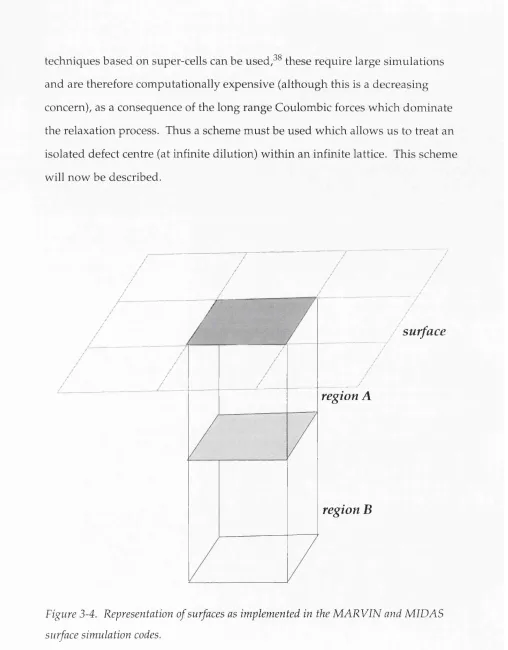
Figure 3-4. Representation of surfaces as im plem ented in surface sim ulation codes... 44
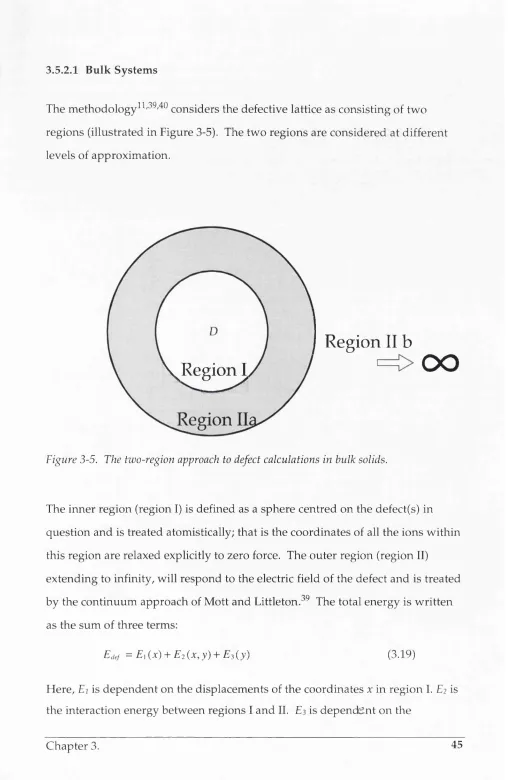
Figure 3-5. The two-region approach to defect calculations in bulk solids... 45
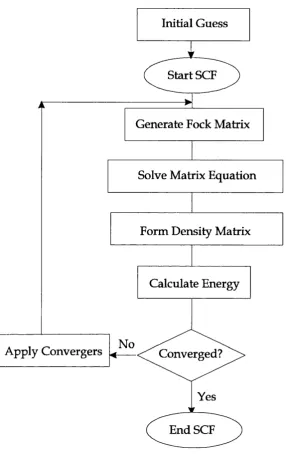
Figure 3-6. The two-region approach to defect calculations m odified for surfaces of solids 47 Figure 4-1. Schematic of the self-consistent field procedure... 63
Figure 4-2. Construction of a bulk point charge array for M gO ...67
Figure 4-3. Construction of a surface point charge array for M g O ... 68
Figure 5-1. Schematic of the Docking P rocedure... 79
Figure 5-2. Schematic of a typical sim ulated annealing cycle... 84
Figure 5-3. Com parison of Forcefields... 87
Figure 5-4. Com parison of the m ost stable conformations of diam ines in ZSM-5...88
Figure 5-5. Structures of some of the tem plates investigated...90
Figure 5-6. Interaction Energy of experimental fram ew ork / tem plate combinations as a function of non hydrogen atom s... 91
Figure 5-7. Interaction Energy of experimental fram ew ork / tem plate combinations as a function of molecular volum e...93
Figure 5-8. Interaction Energy of experimental fram ew ork / tem plate combinations as a function of tem plate surface area... 94
Figure 5-9. Molecular structures of the cyclic tem plates used in calculations w ith the zeolite Dodecasil 3C...96
Figure 5-10. Fram ework structure of Dodecasil 3C ...96
Figure 5-11. Com parison of the calculated and experim ental location of both N-m ethylquinuclidinium and 1-aminoadamantane in NU -3... 99
Figure 5-12. Com parison of the calculated and experimental location of the N-m ethylqum uclidinium template in NU-3...99
Figure 5-13. Com parison of the calculated and experim ental location of the 1-am inoadam antane tem plate in NU-3... 100
Figure 5-14. Com parison of calculated and experim ental positions of TP A in ZSM-5...102
Figure 5-15. Calculated position of the triquatem ary amine tem plate in ZSM-18... 102
Figure 5-16. Interaction energies of tetraalkylam m onium cations in siliceous ZSM5...106
Figure 5-18. Calculated location of the experim ental tem plate / zeolite combinations for the
tetraalkylam m onium tem plates... 110
Figure 5-19. The channel and pore structure of EU-1... 112
Figure 5-20. Calculated positions of tem plates in E U -1...114
Figure 5-21. Calculated packing geometries of tri-, hepta- and octam ethonium in ZSM-23 120 Figure 5-22. Schematic of the structure of the LEV fram ew ork... 123
Figure 5-23. The rotational conformers of 1-am inoadam antane in NU -3... 125
Figure 5-24. The rotational conformers of N -m ethylquinuclidinium in NU-3... 126
Figure 5-25. Illustration of the shape and size of the organic tem plates and the hydrated calcium cation in Levyne... 129
Figure 5-26. The strucure of DAF-1. The two channel system s view ed perpendicular to the channel direction...131
Figure 5-27. The strucure of DAF-1. The two channel systems view ed parallel to the channel direction...131
Figure 5-28. The calculated locations of the octam ethonium tem plate in DAF-1... 134
Figure 5-29. The calculated locations of the décam éthonium tem plate in DAF-1... 135
Figure 5-30. Packing of octamethonium, décam éthonium and dodecam ethonium in DAF-1.. 138
Figure 5-31. The m inim um energy conformation of dodecam ethonium in AIPO4-5...141
Figure 5-32. The m inim um energy conformation of hexam éthonium in AIPO4-I7... 142
Figure 5-33. DABCO polym er structure...143
Figure 5-34. Structure of the hexadim ethrine m onom er...143
Figure 5-35. The structure of polyhexadim ethrine... 145
Figure 5-36. The m inim um energy configuration of polyhexadim ethrine in MAPO-36...146
Figure 6-1. Illustration of the channel topology of ZSM -5... 158
Figure 6-2. The crystallographic structure of ZSM-5... 158
Figure 6-3. The gas phase optim ised geom etry of the TPA+ cation...166
Figure 6-4. Illustration of labelling scheme for the TPA+ ion used throughout... 169
Figure 6-5. The T site notation for ZSM-5...170
Figure 6-6. Schematic representation of EXAFS... 172
Figure 6-7. Substitution energy of an isolated iron (III) for a silicon...174
Figure 6-8. Substitution energy of an iron (III) and a bridging hydroxyl...176
Figure 6-9. Ball and stick illustration of the geom etry of m ost stable Fe-OH site... 179
Figure 6-10. Com parison of the experimental data and the Fourier Transform ed Fe K-edge EXAFS of the calculated geometries. First oxygen coordination shell... 183
Figure 6-11. Fourier Transform of the Fe K-edge EXAFS for the calcined m aterial...185
Figure 6-12. Effect of iron substitution on the pore dim ension in Fe-ZSM-5...187
Figure 6-13. Final calculated position of TPA+ in Fe-ZSM-5 in the straight channel...192
Figure 6-14. Final calculated position of TPA+ in Fe-ZSM-5 in the sinusoidal channel... 193
Figure 6-16. Displacement of the TPA+ ion in Fe-ZSM5 from the position in ZSM-5... 195
Figure 6-17. Final geom etry of the TPA+ ion in the fully siliceous silicalite structure... 198
Figure 6-18. Final geometry of the TPA+ ion in the A1-ZSM5 structure... 199
Figure 6-19. Calculated and experimental FT of TP A / (Fe,Si)-ZSM-5...203
Figure 6-20. Calculated and experimental FT of TP A / (Fe,Si)-ZSM-5. Closeup of the carbon and nitrogen shells at 4.5Â and 5.5Â...203
Figure 7-1. Phonon dispersion curves for M gO ...227
Figure 7-2. Schematic representation of the definition of Surface Energy... 232
Figure 7-3. The unrelaxed and relaxed surface energies for the series of surfaces (1 0 x )... 235
Figure 7-4. The structure of the (1 0 11) surface of M gO ... 236
Figure 7-5. The step in the (1 0 11) surface of M gO ... 237
Figure 7-6. D epth profile for the Li+ substitutional, the small polaron and the [Li]° centre... 240
Figure 7-7. The form ation energies of protostep structures on the (1 0 0) surface of M gO ... 246
Figure 7-8. The change in defect formation energy of the [Li]° centre on reducing the coordination num ber of the site... 249
Figure 7-9. Hole hopping around a Lithium substitutional...250
Figure 7-10. Trapped hole decay by the "hopping aw ay" m echanism ...250
Figure 7-11. Lithium ion m igration in MgO via a vacancy m echanism ...250
Figure 7-12. Lithium ion m igration on the (1 0 0) surface of M gO ...251
Figure 7-13. Depth profile of CT and [LiCl ] defects... 255
Figure 8-1. Close-up of the RUMPL surface block showing the surface rum pling... 281
Figure 8-2. Close-up of the ion displacement in the OHOLE surface point charge array ...282
Figure 8-3. Close-up of the ion displacement in the LIHOLE surface m odel...283
Figure 8-4. UHF Geometries and Energy of the m ethane and m ethyl radical... 285
Figure 8-5. MP2 UHF Geometries and Energy of the m ethane and m ethyl radical...285
Figure 8-6. Gas phase reaction profile and the transition state geom etry at the HF level...288
Figure 8-7. Gas phase reaction profile and the transition state geom etry at the MP2 level...289
Figure 8-8. Rotational sym m etry of the m ethyl group... 293
Figure 8-9. Reaction profile and the transition state geometry w ith the PERF surface... 298
Figure 8-10. Reaction profile and the transition state geom etry w ith the RUMPL surface... 299
Figure 8-11. Reaction profile and the transition state geom etry w ith the OHOLE surface... 300
List of Tables
Table 2-1. Examples of catalysts and reactions... 8
Table 2-2. Catalytic reactions involving zeolite catalysts... 12
Table 2-3. Reaction types and m etal oxide m aterials which catalyse them ... 15
Table 2-4. M etal Oxides for the oxidative coupling of m ethane...17
Table 5-1. Fram ework types and Templates investigated... 89
Table 5-2. Interaction energies of tem plates and Dodecasil 3 C ... 97
Table 5-3. Relative solubilities of tem plates used for Dodecasil 3C synthesis... 97
Table 5-4. Interaction energies of tetraalkylam m onium cations in siliceous ZSM5... 104
Table 5-5. N on-bonded interactions energy of tetraalkyl am m onium cations in various fram ew orks... 109
Table 5-6. Interactions energies of bis-quatem ary amines in various fram ew orks... I l l Table 5-7. Possible templates during the synthesis of Dodecasil 3C using trim eth o n iu m ... 115
Table 5-8. Stabilisation energy of tetraalkyl am m onium tem plate / fram ew ork combination w hen tw o adjacent tem plate molecules are included... 116
Table 5-9. Stabilisation energy of bis-quaternary am m onium tem plates in EU-1 w hen m ultiple tem plate molecules are included... 117
Table 5-10. Stabilisation energy of bis-quaternary am m onium tem plates in ZSM-23 w hen m ultiple tem plate molecules are included...119
Table 5-11. Templates in the different LEV structures... 128
Table 5-12. The interaction energies of tem plates in the structure of DAF-1...133
Table 5-13 ; The interaction energies at the calculated lowest energy configuration of m ethyl-and ethyl-h's-quatem ary amines w ithin the structure of DAF-1...137
Table 5-14. N on-bonded interactions energy of bis-quatem ary amines in zeolites... 139
Table 5-15. Energy m inimisation results for the polyhexadim ethrine chains in vacuum ...144
Table 5-16. Interaction energies of the polym er chains in siliceous MAPO-36 and ALP0 4-5.... 147
Table 6-1. Zeolite Framework Potential Param eters - Buckingham Potentials...164
Table 6-2. Zeolite Framework Potential Param eters - Morse potentials...164
Table 6-3. Zeolite Fram ework Potential Param eters - Shell M odel Param eters... 164
Table 6-4. Zeolite Framework Potential Param eters - Three body term s... 165
Table 6-5. Zeolite Fram ework Potential Param eters - Fram ework Ion C harges... 165
Table 6-6. Potential param eters for the intram olecular interactions in TPA+ and the intermolecular non-bonding param eters... 167
Table 6-7. MNDO calculated M ullikan charges on the TPA+ cation... 169
Table 6-8. M ean geometries of an isolated Fe3+ substitutional at each tetrahedral site... 175
Table 6-9. M ean geometries of Fe3+ substitutional w ith adjacent OH at all 96 unique sites... 177
Table 6-11. EXAFS sim ulation p a ram eters... 181
Table 6-12. Param eters for the various first oxygen shell m odel... 182
Table 6-13 Bond lengths around the Fe for the calcined sam ple... 185
Table 6-14. Calculated and experimental unit cell volumes for silicalite and (Fe,Si)-ZSM-5 187 Table 6-15. Binding Energies of Fe3+ and hydroxyl groups...189
Table 6-16. The binding energy of AP+ and hydroxyl groups... 190
Table 6-17. Distances in TPA+/ (Fe,Si)-ZSM-5: those around the iron site...194
Table 6-18. Calculated displacem ent of TPA+ in (Fe,Si)-ZSM-5 from that in TPA+/ZSM-5 195 Table 6-19. Com parison of MNDO and ab-initio charges... 197
Table 6-20. Displacement of TPA+ in tw o m odels for ZSM -5... 200
Table 6-21. Final param eters from fit of calculated shells to experim ental d a ta ...202
Table 7-1. Electron Gas Potential Param eters...219
Table 7-2. Shell m odel param eters... 219
Table 7-3. Potential Param eters for the study of chloride in M gO ...220
Table 7-4. Structural param eters of LiCl and MgClz...220
Table 7-5. Param eters used in the calculation of the solution energies...224
Table 7-6. Perfect Lattice Properties of M gO...225
Table 7-7. Perfect Lattice Properties of LizO...226
Table 7-8. Bulk Defect Formation Energies in M g O ... 228
Table 7-9. Bulk defect formation energies in L i/M gO and solution energies of LizO in M g O .. 229
Table 7-10. Results for the series of surfaces (1 0 x) w ith x=0..11... 234
Table 7-11. Polaron form ation energies at various sites in M gO ... 237
Table 7-12. The form ation energies and surface segregation energies of defects... 239
Table 7-13. Surface solution of lithium oxide in m agnesium oxide...241
Table 7-14. Clustering energies for the form ation of [Li]° clusters in the bulk stru ctu re...242
Table 7-15. Surface Clustering Energies for the form ation of [Li]® clusters... 243
Table 7-16. Formation energies of defects at the (1 0 11) step site... 244
Table 7-17. Chlorine containing D efects... 254
Table 7-18. Ca^+ containing defect clusters...259
Table 8-1. MgO basis sets... 277
Table 8-2. Basis sets for M ethane... 278
Table 8-3. Calculated bond lengths...286
Table 8-4. Gas phase bond dissociated energies... 286
Table 8-5. The energy of the O defect in the different surface blocks... 291
Table 8-6. Equilibrium bond length and dissociation energy of the OH product in the different surface m odels...292
Table 8-7. Structural param eters at the transition state for the different surfaces...297
Chapter 1
Solid heterogeneous catalysts pose m any challenges to the investigation of their structure, activity and the mechanism by which they catalyse reactions. The complex and ill-defined nature of m any such catalysts prohibits a detailed investigation of their structure. Furthermore, techniques for determ ining the structure and mechanistic param eters are often incompatible w ith the conditions un d er which the catalysts are active. Com putational techniques therefore have extensive applications in the study of heterogeneous catalysis. The past 20 years have seen not only a dramatic increase in the range and availability of such techniques, as a result of the rapid developm ent in com putational pow er, but also the developm ent and acceptance of such techniques as viable techniques in their ow n right for the investigation of heterogeneous catalysis.
The aim of this thesis is to apply a range of computational techniques to investigate two classes of heterogeneous catalysts: zeolites and related m icroporous materials, and metal oxides. Com putational m ethods will be applied to study aspects of the synthesis, structure, defect chemistry, reactivity and physical properties of these materials.
There is increasing interest in the 'design' of new catalysts and this has been m ost evident in the field of m icroporous materials. To date the 'art' of zeolite synthesis has been based on empirical and Edisonian principles. The
developm ent of techniques which w ould allow the almost routine design and synthesis of materials w ith pre-determ ined properties is obviously attractive. One particular feature of zeolite synthesis is the use of organic molecules as structure directing agents or templates, w hich lead to the form ation of specific m aterials or structural motifs. Although there is m uch debate as to the extent of this effect, attem pts to design novel zeolite structures have, to date, concentrated on designing templates w ith specific features which were expected to manifest themselves in any microporous material synthesised. In chapter 5 we shall investigate this effect, concentrating on the interactions betw een the zeolitic fram ew ork and the organic species, to determine if it is possible to predict tem plating ability. These techniques will then be applied to investigate
particular subtle tem plating effects. Furthermore, we shall attem pt to design a new m aterial from a detailed understanding of the tem plating in a know n material.
The catalytic activity of a material is inextricably linked to its composition and structure. The solid acid properties of zeolites are no exception and the
achieved by the substitution of the fram ework alum inium by an isovalent metal ion, producing m aterials w ith different physical and catalytic properties, w hilst m aintaining the same topological structure. Iron substituted ZSM-5 is a case in point and possesses different acid and catalytic properties to the alum inium containing ZSM-5. The structure and properties of Fe-ZSM-5 are investigated in C hapter 6. Of particular interest will be the modifications to the overall pore architecture, the local environm ent of the iron and the consequent effect on the physical properties of the material. Com parison will be m ade w ith Al-ZSM-5. The influence of the iron on the tem plating ion will also be discussed.
The conversion of m ethane to more useful chemical feedstocks and more readily transportable hydrocarbons has been the subject of exhaustive research over the past 20 years. Many metal oxide based catalysts for the oxidative coupling of m ethane, producing ethane, ethene and higher hydrocarbons, have been identified. Of these, one of the m ost prom ising for commercial exploitation is lithium doped m agnesium oxide. Consequently, L i/M gO has been the subject of extensive research, which has attem pted to characterise the active sites and to elucidate the mechanism of its activity. However, m any questions rem ain unansw ered.
In chapter 7, sim ulation techniques are applied to investigate the defect chem istry of MgO based catalysts. The formation, stability and siting of the proposed active site, a lithium trapped oxygen hole, is investigated. Particular attention is paid to the structure of defects at surface sites. A dditional doping of these catalysts has proved fruitful in im proving their catalytic performance. The addition of chloride to Li/M gO has proved to be particularly effective and sim ulation techniques are applied to determ ine a mechanism for this effect. Finally, in chapter 8, em bedded cluster quantum mechanical techniques are used to study the reaction pathw ay of the abstraction of hydrogen from m ethane by an oxygen hole. Experimentally this has been determ ined to be the initial and rate determ ining step in the oxidative coupling reaction. Particular attention will be paid to the description of the MgO lattice used in the
em bedding technique. Previous studies have treated the surface as a simple term ination of the bulk. However, this w ork will show how an accurate
description of the surface has a significant effect on the resulting reaction profile. The w ork described in this thesis breaks new ground in three m ain areas:
CHAPTER 2
2.1. Heterogeneous Catalysis
"Many bodies., .have the property of exerting on other
bodies an action which is very different from chemical affinity. By means of
this action they produce decomposition in bodies, and form new compounds
into the composition of which they do not enter. This new power, hitherto
unknown, is common both in organic and inorganic nature...1 shall...call it
catalytic power. I shall also call catalysis the decomposition of bodies by this
force"
J. J. Berzelius, Edinburgh N ew Philosophical Journal, XXI (1836), 223. Thus w rote Berzelius to define catalysis. O ur knowledge now allows us to begin to understand the processes alluded to here. Thermodynamics, kinetics, structure determination and mechanistic studies enable us to determ ine the effect, action and composition of the catalysts involved.
Since this early definition, catalysts and more im portantly the processes which they catalyse have been as im portant industrially as they have been in the laboratory of the academic scientist.^ Indeed, the catalytic use of platinum was patented 5 years before the w ork of Berzelius quoted above.^ The industrial application of catalysts has produced the strongest im petus for their study. The use of catalysts in such processes results in the production of billions of pounds w orth of fuel and chemicals each year. Furthermore, the production of catalysts is estim ated to be a business w orth more than £2500m per annum w orldwide. Many of the discoveries and advances in catalysis have been as a result of Edisonian (try it and see) research and serendipity. This m anner of research is partly a consequence of the nature of the catalysts themselves, m any being multicom ponent and poorly characterised. Furthermore, in industrial processes, additional factors such as the scale-up of the process, catalyst lifetime and
catalysis, of both fundam ental and applied aspects, is an im portant and ever expanding field.
Catalytic processes can be classified as either homogeneous, heterogeneous or enzymatic. This thesis shall be concerned w ith the study of solid heterogeneous catalysts. This class of catalysts poses num erous problem s for the investigator w hich are not present w ith liquid phase heterogeneous catalysts or those used in hom ogeneous processes. Heterogeneous solid state catalysis is effected by the surface of the material. It is at this surface that the active sites, which w e w ish to study, are located. However, this surface is often, under the conditions used, ill- defined. Furthermore, experimental techniques useful for probing such surfaces are also ill-suited to the environm ent of the reaction. Many surface science techniques not only require clean surfaces b u t also operate under ultra-high vacuum . Thus the study of catalysts and catalysis has led to m any innovative and exciting developments in such techniques. The techniques are varied; bulk structure determination by X-ray and neutron diffraction, local structure and geom etry by EXAFS and solid state NMR and surface structure and activity by infrared. Auger spectroscopy and surface EXAFS. Furthermore, techniques are available for the in-situ analysis of catalyst (and reactant) structure under reaction c o n d itio n s .C o m p u ta tio n a l methodologies are also becoming increasingly im portant in the study of catalysts and catalytic processes.
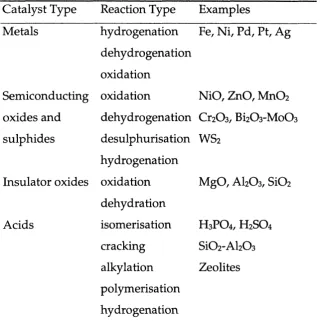
Catalyst Type Reaction Type Examples
Metals hydrogenation
dehydrogenation oxidation
Fe, Ni, Pd, Ft, Ag
Semiconducting oxidation NiO, ZnO, MnOz oxides and dehydrogenation CrzOs, BizOs-MoOs sulphides desulphurisation
hydrogenation
WS2
Insulator oxides oxidation dehydration
MgO, AI2O3, Si02
Acids isomérisation H3PO4, H2SO4
cracking Si02-Al203
alkylation polymerisation hydrogenation
Zeolites
Table 2-1. Examples of catalysts and reaction types.
2.2 .
Zeolites
2.2.1. Z eolite Structure
Zeolites are a class of crystalline aluminosilicate m icroporous materials, which have three-dimensional structures arising from a fram ework of [Si0 4 ]^ and
[A1 0 4]^' tetrahedra which are linked by com er sharing. This results in structures w hich contain voids, cavities and channels. Typical structures arising from this sharing of tetrahedra are illustrated in Figure 2-1. These aluminosilicate
structures have the generalised formula of
M"^+x/m • [Sii-xAlxOz] * nHzO
Non-fram ew ork cations are present as charge compensating ions w hen
alum inium or another heteroatom (see below) is present in the framework. A non-neutral framework can also be charge compensated by the form ation of Bronsted acid sites at the bridging oxygens, which im parts solid acid
characteristics on the material.
Further substitution of the tetrahedral atoms (T atoms) in the fram ew ork is also possible w ith a w ide range of cations such as Fe,^^ Ti^^ and G a P Thus the composition of the framework can be modified and this has a direct bearing on the physical properties of the m aterial - both of the fram ework itself and of the non-fram ew ork species w ithin the material.
(e)\jL A jL y (f)\jcy -\jcy (g)
Figure 2-1. Elements of zeolite structure, (a) Tetrahedra are linked through shared
oxygen atoms to form (b) chains and (c) cages and rings, (c) and (d) show the sodalite
cage, the latter omitting the oxygen positions for clarity. Also shown in this manner are
the structures of(e) Sodalite, (f) Zeolite A and (g) Faujasite.
It is the ability to absorb and desorb w ater which gives the nam e to this class of materials. Zeolite literally m eans boiling stone - from the Greek Çeiu (boil) and XiGog (stone) - from the observation of Cronstedt^^ in 1756 that the natural m ineral stilbite froths and gives off steam w hen heated. Furtherm ore, these materials can freely absorb and desorb m any species w ithout change in the overall structure of the framework itself. This property is one of the
Although the term zeolites refers strictly to aluminosilicates, there are num erous related systems of microporous materials. Of particular importance are the alum inophosphates (APOs) which arose from work at Union Carbide in the early 1980's/^'^^ and which are composed of alternating tetrahedra w ith A1 and P as the T atom resulting in an overall composition of [AIPO4] • nHzO, a neutral fram ework which we can consider as consisting of alternating [AIO2] and [POzj^ units. This framework neutrality results in organophilic and non-acidic
materials. Partial aliovalent substitution of the fram ework T-atoms thus results in m aterials which have an ion exchange capacity and acidity - desirable
properties for catalysts. The term zeolite will be used throughout this thesis as a general term for all these types of m icroporous materials.
Zeolites are microcrystalline, w ith a typical particle size of 0.1 - 5 pm. In contrast to almost all other solid catalysts in which the catalytic activity is restricted to the external surface, the microporous nature of zeolites m eans that much of the internal surface is also available. This results in effective surface areas of 300 - 700 m^g-i which implies that, for a typical crystallite size, ca. 98% of the total surface is internal.
2.2.2. Z eolite Chemistry
Zeolites possess four major physical properties which are related to their catalytic activity:
1. cation exchange capacity
2. sorption properties of the pores and channels 3. shape selectivity of the pores and channels 4. the acidity of the materials.
m ordenite which are relatively inexpensive. However, synthetic zeolites are also used. For example zeolite A is extensively used in the detergency industry as a replacement for w ater softening agents such as sodium tripolyphosphate. Sorption behaviour and shape selectivity are related properties which have been exploited in the field of liquid^® and gas separation.^^ Im portant industrial applications of this property are the PAREX process^° which separates mixed xylenes and the oxygen enrichment of air by the selective sorption of nitrogen on zeolites. However, catalytically, it is the acidity of zeolites which is m ost
im portant (although it cannot be considered in isolation from, and is influenced by, the other properties of the material). Exchange of cations w ith protons produces a strongly acidic framework, resulting in a solid acid catalyst which, due to its open pore architecture, is shape selective. The concentration of these acid sites, both Bronsted and Lewis sites, is directly related to the catalyst's composition (particularly the A l/S i ratio in aluminosilicates). Their acidity is also related to the local environment; being strongest for an isolated Bronsted sited next to a framework aluminium. This acidity has been exploited in a w ide range of applications, some of which are sum m arised in Table 2-2.
2.2.3. Z eolite Synthesis
including gel (or solution) composition, pH, tem perature, tem plate effects, time, pressure, gel ageing, seeding effects and agitation. As a result the chem istry of synthesis of m icroporous materials is still the subject of m uch investigation and speculation.
Reaction Catalyst References
Fluid catalytic cracking Y, ZSM-5, 21
Dewaxing ZSM-5, M ordenite, 22,23
Ferrierite, ZSM-23
Friedel-Crafts reactions H-p, H-Y 24
Butene isomérisation DAF-1, SAPO-11 25
M ethanol to gasoline conversion H-ZSM-5 26
Synthesis of amines H-ZSM-5, ferrisilicates 27
Fischer-Tropsch reactions K-Fe-L 28
Oxidation w ith H2O2 of e.g. Ti-Silicalite (TS-1) 29 cyclohexane, phenol, propene
NOx reduction Cu-ZSM-5, Ni-Y 30
Oligomerisation of light alkenes SAPO-11, Ni-ZSM-5, 31 Ni/Zn-ZSM -5, MeAPO-11
C2H2 - benzene Ni-Y 32
Table 2-2. Catalytic reactions involving zeolite catalysts. Laboratory, Pilot and Industrial scale processes are included.
m odify the gel composition but also act as spacefilling and structure directing agents w hich modify the crystallisation process. A com putational study of tem plating is presented in this thesis.
2.2.4. M odification o f Zeolite Structure
As m entioned previously, the composition of a zeolite structure can be m odified in such a w ay that the framework topology is unchanged. These modifications result in local changes in the structure and lead to changes in the physical and catalytic properties of the zeolite. These can be brought about in num erous ways:
2.2.4.1. M odification of framework composition during synthesis
The addition of metal oxides (for example FezOs, TiOz, GeOz) to the synthesis gel can result in the formation of frameworks w ith the metal atoms substituting for Si on a T site - as A1 does in aluminosilicates. This has led to num erous
m aterials with a range of heteroatoms being substituted in a num ber of fram ew ork types. For example, Fe can be substituted into the fram ework of silicalite-I (siliceous ZSM-5),^^ silicalite-II (siliceous ZSM-11),^^ ZSM-23,^^ zeolite and zeolite Ti can similarly be inserted into silicalite-I^^ and s ilic a lite -II.T h is m ethod of fram ework modification is the m ost suitable for producing well characterised materials w ithout the formation of fram ework defects and extra-framework nanoparticles, as can occur w ith the m ethod described in section 2.2.4.2.
2.2.4.2. Modification of framework composition post-synthesis
The removal of T atoms and the substitution of T atoms post-synthesis is also possible. The de-alumination of zeolites is common^^ resulting in the
T atoms, it is possible to re-insert a different T atom. This can be Si, resulting in higher Si/A1 ratios,^^ or other heteroatoms.'^^'^^
2.2.4.3. C ation exchange
The ability to exchange extra-framework cations is one of the fundam ental properties of zeolites. In addition to being a useful process in itself (as in w ater softening using zeolite A) it can also be used to modify the activity and
selectivity of the zeolite as a catalyst or as a molecular sieve. An example is the exchange of potassium ions for sodium in zeolite A. Na-A is accessible to small hydrocarbons and alcohols, whilst they are excluded in the presence of the larger K ions which block the pore entries.
The effect of isom orphous substitution of Fe atoms into the fram ework of ZSM-5 structures will be investigated in this thesis. There has been considerable
interest in this material as a result of its catalytic properties which are subtly different to those of purely aluminosilicate Z S M -5 .E x p e rim e n ta l techniques have determ ined that the iron substitutes into the framework^^ and elucidated some detail of the local geometry of the iron."^^ However, they cannot give any indication of the siting of the iron and the effect of the local geometry changes on the overall structure. Com putational techniques have been applied to investigate this and to model other physical properties of the material.
2.3. Metal Oxide Catalysts
concentration and coordination of such dopants is crucial. This was elegantly dem onstrated by the study of Stone^^ where a range of materials was form ed based on the doping of varying concentrations of transition metal ions in MgO. It was found that the activity of the materials for N2O decom position was highest w hen the metal ions were highly dispersed and isolated. Likewise, it w as found that Ni^+ had a higher activity in MgO than ZnO, suggesting that the activity was influenced by a change in the coordination from octahedral to tetrahedral. Defect chemistry, especially the surface defect structure, is of great importance in understanding the catalytic properties of these materials. The use of m etal oxides for the oxidative coupling of m ethane will be investigated in this thesis using computational techniques.
Reaction Type Catalyst
Dehydrogenation CrzOs, (Cr,Al)z0 3, M o /A l/O
Selective Oxidation F e /M o /O , B i/M o /O , C u /O , F e /S b /O
NO Oxidation Perovskites
Methanol Oxidation M o/O , A g /O
H ydrocarbon Cracking AI2O3, Si/A lO , S i/M g /O Methanol Synthesis C u /Z n /O
Sulphuric Acid Synthesis K /V /O
2.3.1.
M e ta l Oxide C a ta ly sts f o r the O x id a tiv e Coupling o f M ethane2.3.1.1. The N eed for Gas C onversion
The past 20 years have seen extensive research into the production of chemicals from, and the conversion into transportable liquids of, natural gas sources.^® A lthough an abundant natural resource,* the remote location of reserves and the difficulties of gas transport to the consumer make m any of these reserves
commercially unexploitable. In addition, m uch natural gas is sim ply 'Tlared off", particularly w hen it is associated w ith crude oil production and processing. Consequently, the ability to convert natural gas into liquid fuels or into more useful chemical feedstocks w ould be both economically and environm entally beneficial.
2.3.1.2. Catalytic Conversion of M ethane
Methane, the principal component of natural gas is chemically stable and, although valuable as a fuel, is not a particularly useful feedstock. For example, the commercial route to methanol from m ethane is via oxidation to CO, CO2 and Hz followed by conversion of these products to methanol. Thus processes for the direct conversion via partial oxidation and oxidative coupling of m ethane to more useful products such as m ethanol and ethane have received considerable a tte n tio n .S in c e the pioneering w ork of the 1920s on high pressure gas phase conversions^^ research has concentrated on developing catalytic processes. In particular, this work has concentrated on the developm ent of catalysts for the oxidative coupling of m ethane to yield ethane, ethene and higher
hydrocarbons^^ (rather than methanol production).
A large range of catalysts has proved to be active for the partial oxidation of methane;^^ a selection of the more successful materials is given in Table 2-4.
Indeed, at least two of these catalysts have been evaluated for commercial production at pilot plant scale; a supported manganese oxide^^ and a lithium prom oted m agnesium oxide.^^'^^ This latter m aterial has received considerable attention, due to its good performance and relative simplicity and has, as a result, been extensively investigated in both fundam ental and applied studies.
Catalyst Type Examples
Group IIA Metal Oxide MgO, Li/M gO , Bi/M gO, CaO, N a/C aO , SrO, BaO Lanthanide Oxides LazOs, Li / LazOs, SmiOs, Li/ SmzOs, GdzOs, CeOz, Transition Metal Oxides MnOz/a-ALOs, MnOzCMnOi/SiOz), L i/Z n O
G roup III, IVA and VA ThOs/a-A hOs, SnOz/SiOz, PbO/SiOz, BizOa/AlzOs Metal Oxides
Complex Metal Oxides SrCeo.9Ybo.1Oz.95 SrCeOo, PbMo04, BizSnzOy, LiFeOz, Table 2-4. Metal Oxides for the oxidative coupling of methane.49
2.3.2. M gO based C a ta lysts
The research on MgO based catalysts has included a num ber of detailed studies of the nature of the active sites and the reaction mechanism for m ethane
conversion. The presence of lithium for optimal activity appears crucial. The solution of Li+ in MgO leads to a decrease in surface area and a dramatic
increase in both activity and selectivity for Cz h y d r o c a r b o n s . E v e n very low concentrations (ca. 0.4% by mass) result in this behaviour.^^ Extensive e.p.r. spectroscopy studies by Lunsford and co-workers^^'^^'^^ have show n the
presence of oxygen holes (O ) as a surface species. These holes are stabilised by the form ation of [Li+O ] centres, know n as lithium trapped holes; they shall be denoted as [Li]° for the rem ainder of this work. Evidence of m ethyl radicals during conversion and the direct correlation of the concentration of these
followed by radical combination to form ethane.^^ Furthermore, it has been dem onstrated that this is the rate limiting step.^^
A lthough m any of the fundam ental processes in the partial oxidation reaction over MgO have been identified, m any questions rem ain unansw ered. In particular the location, activity and mobility of the active sites and other defect centres on the catalytic surface are not well understood. The reaction energy pathw ay of the hydrogen abstraction has previously been investigated using quantum mechanical t e c h n i q u e s . H o w e v e r , the effect of surface relaxation and lattice relaxation around defects was not considered. These relaxations m ay have a considerable effect on the calculated enthalpies, activation barrier and the transition state geometry of the reaction. The addition of chloro species to
num erous materials has been effective in increasing catalytic activity^^'^^ and is found to be particularly effective in Li/MgO.^^'^^ However, little is know n about the cause of this effect or the effect of chlorination on the structure of the catalyst. These topics will be addressed in this thesis.
2.4. Theoretical Applications in Heterogeneous
catalysis
molecules during zeolite synthesis, the structure of active sites in zeolites, the structure of metal oxide surfaces and defect chemistry at these surfaces, and an investigation of reactions at m etal oxide surfaces.
2.5. References
(1). J.M. Thomas, R.G. Bell and P.A. W right, "Landm arks In The Evolution Of Heterogeneous Catalysts", Bulletin De La Société Chimique De France (1994), 131,463.
(2). I.M. Campbell, Catalysis at Surfaces, 1st ed.. Chapm an and Hall, London, 1988, pp 250.
(3). J.M. Thomas and G.N. Greaves, "Probing Solid Catalysts U nder O perating Conditions", Science (1994), 265,1675.
(4). J.W. Couves, J.M. Thomas, C.R.A. Catlow, G.N. Greaves, G. Baker and A.J. Dent, "In-situ Studies Of The D ehydration Of Zeolitic Catalysts By Time- resolved Energy-dispersive X -ray Absorption-spectroscopy ", Journal O f Physical Chemistry (1990), 94, 6517.
(5). G. Sankar, J.M. Thomas, D. Waller, J.W. Couves, C.R.A. Catlow and G.N. Greaves, "Time-resolved Energy-dispersive A nd Conventional EXAFS Studies Of The Interactions Of Nitrous-Oxide W ith Supported Copper Catalyst ", Journal O f Physical Chemistry (1992), 96, 7485.
(6). C.R.A. Catlow, R.G. Bell and J.D. Gale, "C om puter M odeling As A
Technique In Materials Chemistry", Journal O f Materials Chemistry (1994), 4, 781.
(8). J. Sauer, ""Molecular Models in Ab-initio Studies of Solids and Surfaces - from Ionic Crystals and Semiconductors to Catalysts"", Chemical Reviews (1989), 89,199.
(9). C M. Freeman, D.W. Lewis, T.V. H arris, A.K. Cheetham, N. H enson, P.A. Cox, A.M. Gorman, S.M. Levine, J.M. Newsam , E. H ernandez and C.R.A. Catlow, ""Simulating the Behavior of Organic Molecules in Zeolites"" in AC S Symposium on Computer Aided Molecular Design: Agrochemicals, Materials
and Pharmaceuticals, C.H. Reynolds, K.M. Holloway and H. Cox Ed., ACS Symposium Series, ACS, W ashington DC, 1995.
(10). R. Szostak, V. Nair and T.L. Thomas, ""Incorporation A nd Stability Of Iron In Molecular-sieve Structures - Ferrisilicate Analogs Of Zeolite ZSM-5"", Journal of the Chemical Society, Faraday Transactions I (1987), 83, 487.
(11). C D. Chang, S.D. Hellring, J.N. Miale, K.D. Schitt, P.W. Brigandi and E.L. Wu, ""Insertion Of Alum inum Into High-Silica-Content Zeolite
Frameworks. 3. Hydrotherm al Transfer Of A lum inum From A I 2 O 3 Into
[Al]ZSM-5 And [B]ZSM-5"", Journal of the Chemical Society, Faraday Transactions I (1985), 81, 2215.
(12). G. Bellusi and V. Fattore, in Zeolite Chemistry and Catalysis, P. Jacobs, N. Jaeger, L. Kubelkova and B. W ichterlova Ed., Studies in Surface Science
and Catalysis, Elsevier, Am sterdam , 1991, Vol. 69, pp 79.
(13). E.G. Derouane, S.B. Abdul-Ham id, I I. Ivanova, N. Blom and P.J. Hojlund- Nielsen, ""Thermodynamic A nd Mechanistic Studies Of Initial-Stages In Propane Aromatization Over Ga-Modified H-ZSM-5 Catalysts"", Molecular Catalysis (1994), 86,371.
(14). A.F. Cronstedt, Handl. Stockholm (1756), 18,120.
(15). S.T. Wilson, B.M. Lok, C.A. Messina, T.R. Carman and E.M. Flanigen, ""AlPO Molecular Sieves: A new classs of M icroporous Crystalline
(16). S.T. Wilson, B.M. Lok, C.A. Messina and E.M. Flanigen, in Proceedings of the 6th International Conference on Zeolites, D. Olson, A. Bisio Eds., Butterworths, 1984, pp97
(17). A. Dyer, A n Introduction to Zeolite Molecular Sieves, 1st ed., John Wiley & Sons, Chichester, 1988, pp 149.
(18). J.W. McBain, The Sorption of Gases and Vapours by Solids, Rutledge and Sons, London, 1932.
(19). D.W. Breck, Zeolite Molecular Sieves, John Wiley and Sons, N ew York, 1984, pp 663.
(20). D M . Ruthven, Principles of Adsorption and Adsorption Processes, Wiley- Interscience, New York, 1984.
(21). P.B. Venuto and E.T. Habib, Fluid Catalytic Cracking, Marcel Dekker, New York, 1979.
(22). J.E. Naber, K.P. de Jong, W.H.J. Stork, H.P.C.E. Kuipers and M.F.M. Post, "Industrial Applications of Zeolite Catalysis" in Zeolites and Related
Microporous Materials: State of the A rt 1994. Proceedings of the 10th
International Zeolite Association, J. W eitkamp, H.G. Karge, H. Pfeifer and W. H olderich Ed., Studies in Surface Science and Catalysis, Elsevier,
Am sterdam , 1994, Vol. 84, pp 2370.
(23). S.J. Miller, US Patent 5,135,638
(25). S. Natarajan, P.A. W right and J.M. Thomas, '"Catalytic Isom erization Of But-l-ene To 2-Methylpropene Over Solid Acids - Com parison Between DAF-1 And Other Shape-selective Magnesium-containing
Alum inophosphates And Aluminosilicates",/owrwfl/ of the Chemical Society-Chemical Communications (1993), 1861.
(26). S.L. Miesel, "Catalysis Research Bears Fruit", Chemical Technology (1988), 32.
(27). W. Holderich, V. Taglieber, H.H. Pohl, R. Kum m er and K.G. Baur, Germ an Patent DE 3,634,247
(28). S.-E. Park, E.K. Shim, K.-W. Lee and P.S. Kim, "Form ation of
m ethylformate during hydrogenation of CO2 over C u/Z nO /A L O s and K-Fe/L zeolite catalysts" in Zeolites and Related Microporous Materials: State of the A rt 1994. Proceedings of the 10th International Zeolite Association Meeting,
J. W eitkamp, H.G. Karge, H. Pfeifer and W. H olderich Ed., Studies in Surface Science and Catalysis, Elsevier, Am sterdam , 1994, Vol. 84, pp 1595. (29). M.G. Clerici and P. Ingallina, "Epoxidation Of Lower Olefins W ith
Hydrogen-Peroxide And Titanium Silicalite", Journal of Catalysis (1993), 140, 70.
(30). S. Sato, Y. Yu-u, H. Yahiro, N. Mizuno and M. Iwamato, "Cu-ZSM-5 Zeolite As Highly-Active Catalyst For Removal Of N itrogen M onoxide From Emission Of Diesel-Engines", Applied Catalysis (1991), 70, LI.
(31). J.S. Vaughan, C.T. O'Conner and J.C.Q. Fletcher, "Propene
Oligomerization and Xyelene and Methyl-Penene Isomerization over SAPO-11 and MeAPSO-11" in Zeolites and Related Microporous Materials: State of the A rt 1994. Proceedings of the 10th International Zeolite Association, J. Weitkamp, H.G. Karge, H. Pfeifer and W. Holderich Ed., Studies in
(32). P.J. Maddox, J. Stachurski and J.M. Thomas, "Probing Structural Changes D uring the Onset of Catalytic Activity by in situ X-ray Diffractometry", Catalysis Letters (1988), 1,191.
(33). R.M. Barrer, Hydrothermal Chemistry of Zeolites, Academic Press, London, 1982.
(34). B.M. Lok, T.R. Carman and C.A. Messina, "The Role of Organic Molecules in Molecular Sieve Synthesis", Zeolites (1983), 3, 282.
(35). J.S. Reddy, K.R. Reddy, R. Kum ar and P. Ratnasamy, "Ferrisilicate Analogs Of ZSM-11", Zeolites (1991), 11, 553.
(36). R. Kumar and P. Ratnasamy, "Isom orphous substitution of Iron in the framework of Zeolite ZSM-23", Journal of Catalysis (1990), 121, 89.
(37). R. Kumar, A. Raj, S.B. Kumar and P. Ratnasamy, "Convenient Synthesis of Crystalline Microporous Transition Metal Silicates Using Complexing Agents" in Zeolites and Related Microporous Materials: State of the A rt 1994. Proceedings of the 10th International Zeolite Association, J. W eitkamp, H.G. Karge, H. Pfeifer and W. Holderich Ed., Studies in Surface Science and Catalysis, Elsevier, Am sterdam , 1994, Vol. 84, pp 109.
(38). P.N. Joshi, S.V. Awate and V.P. Shiralkar, "Partial Isom orphous
Substitution Of Fe^+ In The LTL Fram ework", Journal of Physical Chemistry (1993), 97,9749.
(39). M. Taramasso, G. Perefo and B. Notari, US Patent No. 4,410,501 (1983). (40). G. Bellusi, A. Carati, M.G. Clerici, A. Esposito, R. Millini and F. Buonomo,
Belgian Patent No. 1,001,038 (1989).
(42). V. Nair, R. Szostak, P.K. Agrawal and T.L. Thomas, in Catalysis 1987. Studies in Surface Science and Catalysis, J.W. W ard , Elsevier, A m sterdam , 1988, Vol. 38, pp 209.
(43). W. Lutz, U. Lohse and B. Fahlke, "Chemical-Reactions D uring Alkaline Treatm ent Of Dealuminated Y Zeolites - Impossibility Of A lum inum Reinsertion Into The Framework", Crystal Research A nd Technology (1988), 23, 925.
(44). P. Ratnasami and R. Kumar, "Ferrisilicate Analogs of Zeolites", Catalysis Today (1992), 9,329.
(45). A. Bruckner, R. Luck, W. Wieker, B. Fahlke and H. M ehner, "FPR Study On The Incorporation Of Fe(III) Ions In ZSM-5 Zeolites, Dependence On The Preparation Conditions", Zeolites (1992), 12, 380.
(46). S.A. Axon, K.K. Fox, S.W. Carr and J. Klinowski, "FXAFS Studies Of Iron- substituted Zeolite ZSM-5", Chemical Physics Letters (1992), 189,1.
(47). F.S. Stone, "The Significance for Oxide Catalysts of Electronic Properties and Structure", Journal of Solid State Chemistry (1975), 12, 271.
(48). J.S. Lee and S.T. Oyama, "Oxidative Coupling Of M ethane To Higher Hydrocarbons", Catalysis Reviews - Science A nd Engineering (1988), 30, 249.
(49). G.J. Hutchings, M.S. Scurrell and J.R. W oodhouse, "Oxidative C oupling of Methane using Oxide Catalysts", Chemical Society Reviews (1989), 18, 251. (50). H.D. Cesser, N.R. H unter and C.B. Prakash, "The Direct Conversion Of
M ethane To Methanol By Controlled Oxidation", Chemical Reviews (1985), 85, 235.
(52). C.A. Jones, J.J. Leonard and J.A. Sofranko, ""The Oxidative Conversion Of M ethane To Higher Hydrocarbons Over Alkali-Promoted Mn/SiOz"", Journal of Catalysis (1987), 103, 311.
(53). J.H. Edw ards and R.J. Tyler, ""The Oxidative Coupling of M ethane in a Fluidised Bed Reactor", Catalysis Today (1989), 4, 345.
(54). J.H. Edw ards and R.J. Tyler, in Studies in Surface Science and Catalysis, Elsevier, Amsterdam, 1988, Vol. 36, pp 395.
(55). T. Ito and J.H. Lunsford, "Oxidative Dimerization Of M ethane Over A Lithium-Promoted Magnesium-Oxide Catalyst", Nature (1985), 314, 721.
(56). G.J. Hutchings, M.S. Scurrell and J.R. W oodhouse, "Selective Oxidation Of M ethane In The Presence Of NO - New Evidence O n The Reaction-
M echa.nism", Journal of the Chemical Society-Chemical Communications (1987), 1862.
(57). G.J. Hutchings, J.R. W oodhouse and M.S. Scurrell, "Partial Oxidation Of M ethane Over Oxide Catalysts - Comments On The Reaction Mechanism", Journal of the Chemical Society, Faraday Transactions I (1989), 85, 2507. (58). T. Ito, J.-X. Wang, C.H. Lin and J.H. Lunsford, "Synthesis Of Ethylene And
Ethane By Partial Oxidation Of Methane Over Lithium-Doped Magnesium- Oxide", Journal of the American Chemical Society (1985), 107,5062.
(59). D.J. Driscoll, W. Matir, J.-X. W ang and J.H. Lunsford, in Adsorption and Catalysis on Oxide Surfaces, M. Che and G.C. Bond , Elsevier, A m sterdam , 1986, pp 403.
(61). D.J. Driscoll, W. Martir, J.-X. W ang and J.H. Lunsford, "Form ation Of Gas- Phase Methyl Radicals Over MgO", Journal of the American Chemical Society (1985), 107, 58.
(62). D.J. Driscoll and J.H. Lunsford, "Gas-Phase Radical Formation D uring The Reactions Of Methane, Ethane, Ethylene, A nd Propylene Over Selected Oxide Catalysts", Journal of Physical Chemistry (1985), 89,4415.
(63). J.H. Lunsford, C.-H. Lin, J.-X. W ang and K.D. Campbell, in Microstructure and Properties of Catalysts, M.J. Treacy, J.M. Thomas and J.M. White Ed., M aterials Research Society Symposium Proceedings, Materials Research Society, Pittsburgh, 1988, Vol. 3, pp 305.
(64). N.W. Cant, C.A. Lukey, P.P. Nelson and R.J. Tyler, "The Rate Controlling Step In The Oxidative Coupling Of M ethane Over A Lithium-Promoted M agnesium-Oxide Catalyst", Journal of the Chemical Society-Chemical Communications (1988), 766.
(65). K.J. Borve and L.C.M. Pettersson, "Cas-Phase H ydrogen Abstraction From M ethane Using Metal-Oxides - Theoretical-Study", Journal of Physical
Chemistry (1991), 95, 7401.
(66). K.J. Borve, "Methane Dissociation On A N onplanar MgO(OOl) Surface - Theoretical Modeling Of Surface-Defects", Journal of Physical Chemistry (1991), 95, 4626.
(67). K.J. Borve and L.C.M. Pettersson, "H ydrogen Abstraction From M ethane O n An MgO(OOl) Surface", Journal of Physical Chemistry (1991), 95, 3214.
(68). K. O tsuka, M. Hatano and T. Komatsu, Catalysis Today (1989), 4,409.
(70). R. Burch and S.C. Tsang, ""Investigation of the Partial Oxidation of
Hydrocarbons on Methane Coupling Catalysts"", Applied Catalysis (1990), 65, 259.
(71). R. Burch, S. Chalker and S.J. Hibble, ""The Role of Chlorine in the Partial Oxidation of Methane to Ethene on MgO Catalysts"", Applied Catalysis A (1993), 96, 289.
(72). P.G. Hinson, A. Clearfield and J.H. Lunsford, ""The Oxidative Coupling Of Methane On Chlorinated Lithium-Doped Magnesium-Oxide'", Journal of the Chemical Society-Chemical Communications (1991), 1430.
(73). Computer Simulation of Solids, C.R.A. Catlow and W.C. M ackrodt, Ed., Spinger-Verlag, Berlin, 1982, Vol. 166.
(74). R.G. Parr and W. Yang, Density-Functional Theory of Atoms and Molecules, Oxford University Press, New York, 1989, Vol. 16, pp 333.
(75). Modelling of Structure and Reactivity in Zeolites, C.R.A. Catlow, Ed., Academic Press, London, 1992.
(76). P.A. W right, R.H. Jones, S. Natarajan, R.G. Bell, J.S. Chen, M B. H ursthouse and J.M. Thomas, ""Synthesis And Structure Of A Novel Large-pore
Microporous Magnesium-containing A lum inophosphate (DAF-1)"", Journal of the Chemical Society-Chemical Communications (1993), 1861.
(77). J.L. Casci, M.D. Shannon, P.A. Cox and S.J. Andrews, ""Structure Of The 2-Dimensional Medium-Pore High-Silica Zeolite NU-87"", Nature (1991), 353,417.
(78). N.L. Allan, A.L. Rohl, D.H. Gay, C.R.A. Catlow, R.J. Davey and W.C. Mackrodt, ""Calculated Bulk A nd Surface-properties Of Sulfates", Faraday Discussions (1993), 95, 273.
(80). J.S. Lin and C.R.A. Catlow, "Com puter-m odeling Studies O n MgCL- supported Ziegler-Natta Catalysts", Journal of Materials Chemistry (1993), 3, 1217.
(81). A. Jentys and C.R.A. Catlow, "Structural-properties Of Titanium Sites In Ti-ZSM5", Catalysis Letters (1993), 22,251.
(82). A.R. George, C.R.A. Catlow and J.M. Thomas, "Simulations A nd Quantum- mechanical Studies Of Structure And Reactivity In Ni-zeolite-Y", Abstracts O f Papers O f The American Chemical Society (1992), 203,11.
(83). D.W. Lewis and C.R.A. Catlow, "The Effect of Chloride on the Partial O xidation of Methane by MgO and L i/M gO ", Topics in Catalysis (1994), 1, 218.
Chapter 3
Atomistic Simulation Theory and
3.1. Introduction
Matter at the atomic level can be modelled by constructing a suitable description of the potential energy of the system w ith respect to its stru c tu ré param eters. Such models can then be applied to the investigation of the properties of the system. In contrast to quantum mechanical m ethods (described in C hapter 4), these techniques neglect the explicit treatm ent of the electrons. Nevertheless, these m ethods can be applied successfully to a w ide range of chemical problems, ranging from the solid state^'^ to large organic molecular systems.^ Different approaches to the construction of the potential m odel are used depending on the chemical nature of the system under consideration. Here we will describe the Born model and molecular mechanics approaches. We will then review
m ethods based on these two potential models for investigating bulk and surface structure, defect chemistry and intermolecular interactions.
3.2. Interatomic Potentials as a Description of
Interatomic Forces
Interatomic potentials describe, in an analytical or num erical form, the forces betw een atoms. By evaluating these forces it is possible to calculate the total energy of the system and also to minimise this energy w ith respect to the nuclear coordinates. The potential model usually consists of two parts, the first
describing the long range (Coulombic) interactions and the second describing the short range interactions (such as Pauli repulsion and van der Waals
particularly useful for extended solids and ionic systems. Models based on the Born m odel of the solid use this approach and will be further discussed in detail. The second approach is based on a description of the system in term s of a
covalently bonded network. Here, the total energy is defined by potentials describing bond lengths, bond angles, torsional angles and higher order cross terms. This is know n as the molecular mechanics forcefield approach.^ This forcefield definition is m ost useful for describing molecular systems and has extensive applications in organic chemistry and biochemistry.^
A lthough the param eters for both approaches can be derived in broadly similar ways, there is a distinct difference in the definition of the total energy of the system. The ionic model has a definite unique zero point of the energy of the system, i.e. w hen the constituent ions are infinitely separated. How ever, the energy of the equilibrium state of a particular molecule using a molecular mechanics forcefield is unique and bears no relationship to the energy of a different molecule. Thus it is only strictly correct to compare the energies of different conformers of the same structure and not of different systems. The potential forms and the techniques used to derive them will now be described in detail.
3.2.1 Interatomic Potential Functions for Ionic Born Model Systems
The sum m ation of the long range Coulombic and the short range interactions over all atoms in a system gives the total energy of the system:
E = y ^ + V i (3.1)
,<j